Foot for Thought – Accessible Foraging Trail – Adi Nehoray
Accessibility, vulnerability and landscape
How might architecture reframe accessibility not as a technical requirement, but as a lens to rethink nature, vulnerability, and spatial experience?
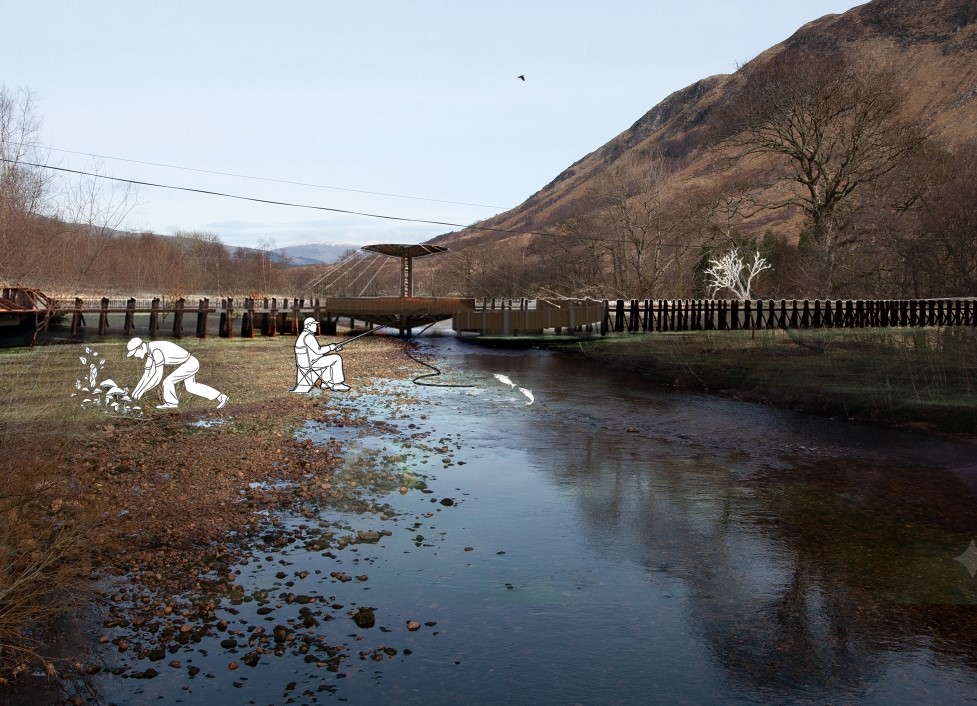
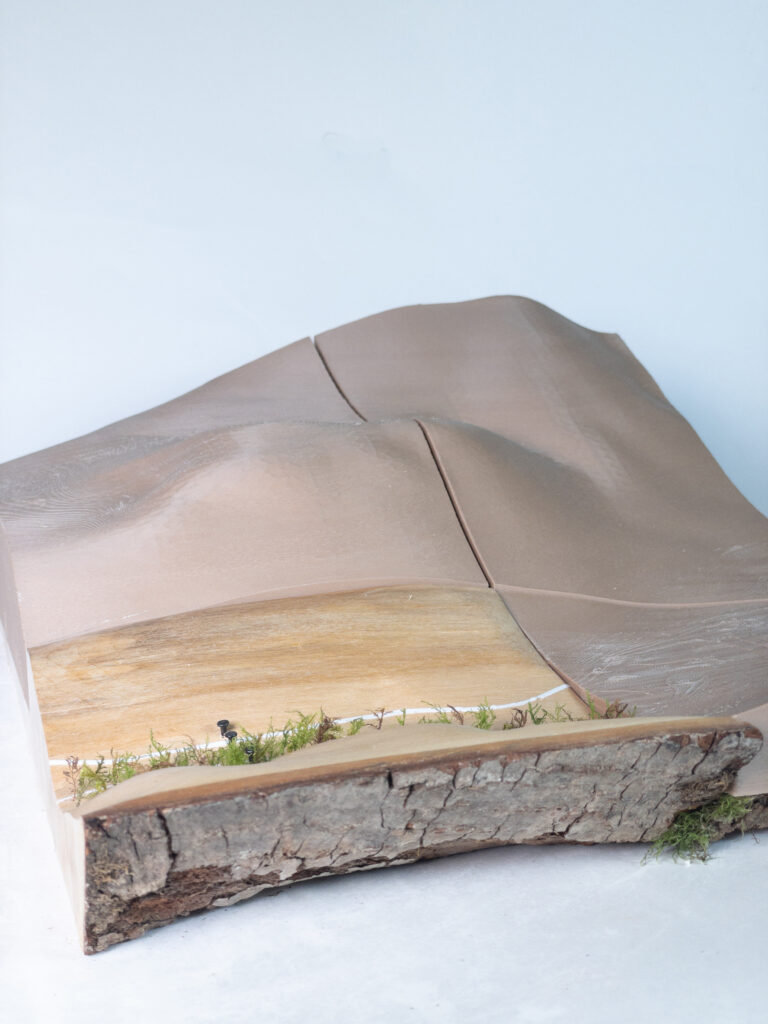
Set within the forested landscape surrounding the Ben Nevis Visitor Centre, this project positions foraging as an act of care rather than control. Inspired by Mesolithic practices in Lochaber, it reframes human engagement with the landscape as reciprocal, gathering only what is needed while supporting regeneration. Foraging becomes both a spatial strategy and a way of maintaining the environment through attentive, ongoing interaction.
The project aim to challenge the idea of nature as untouched or separate from human influence. Instead, it understands landscape as continuously produced through decisions about access, use, and value. In this context, accessibility interventions are not unnatural intrusions but part of an evolving design process that expands who the landscape is for.
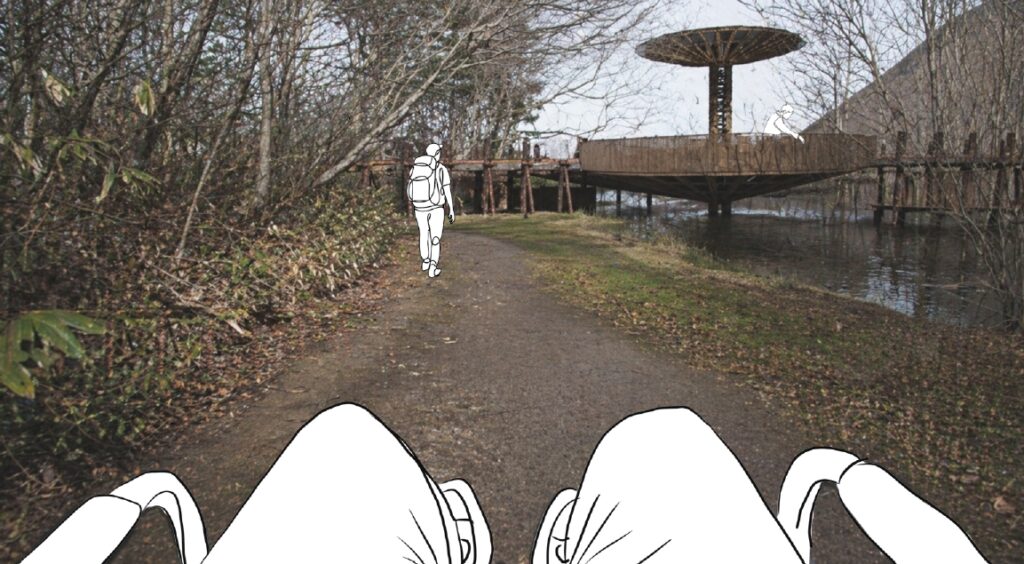
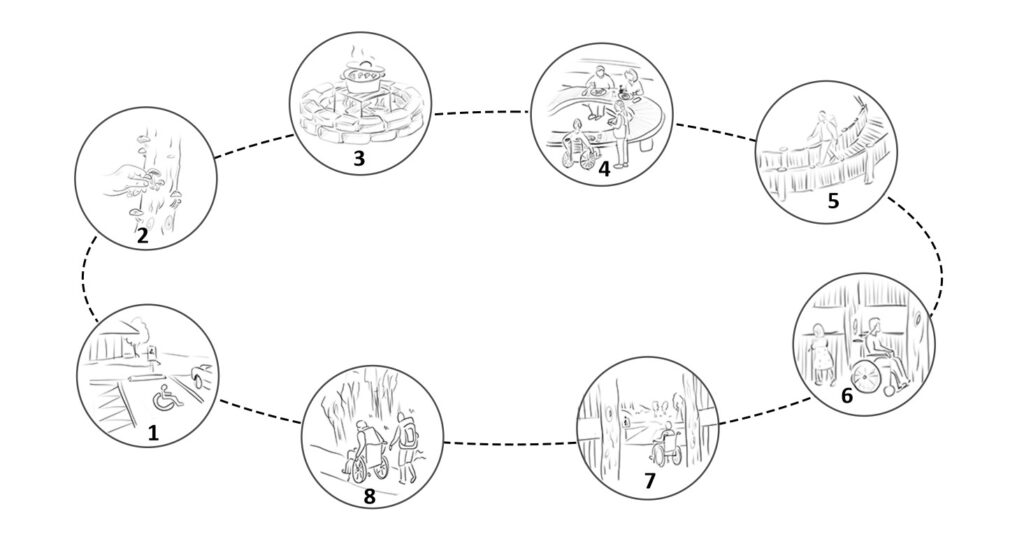
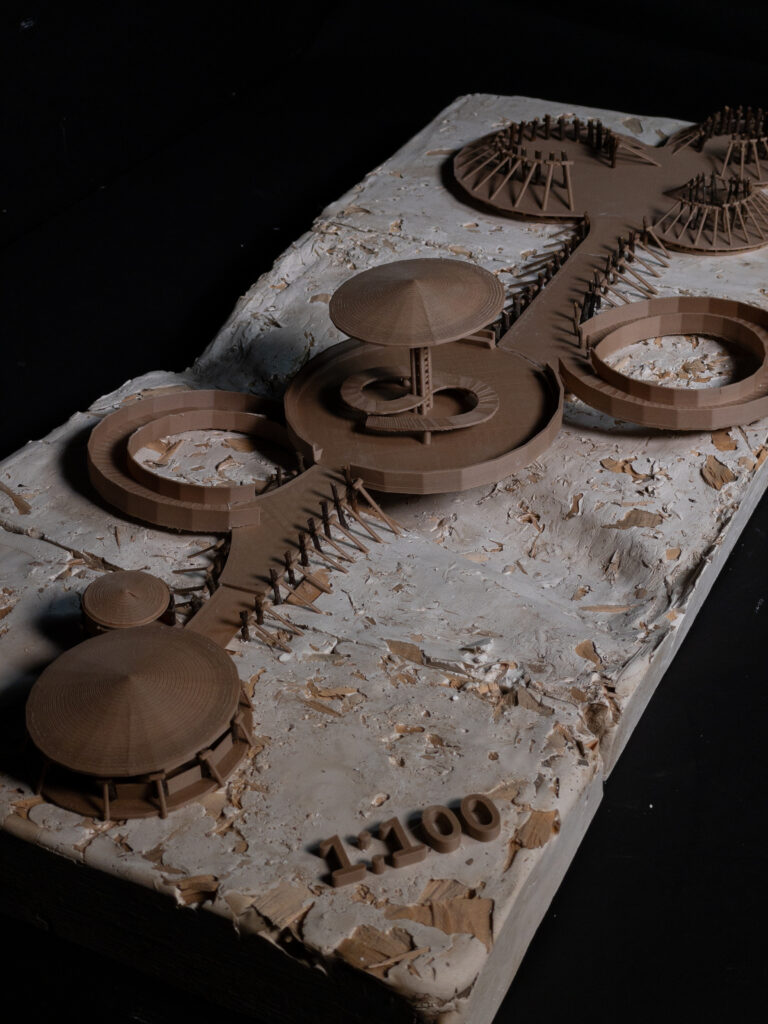
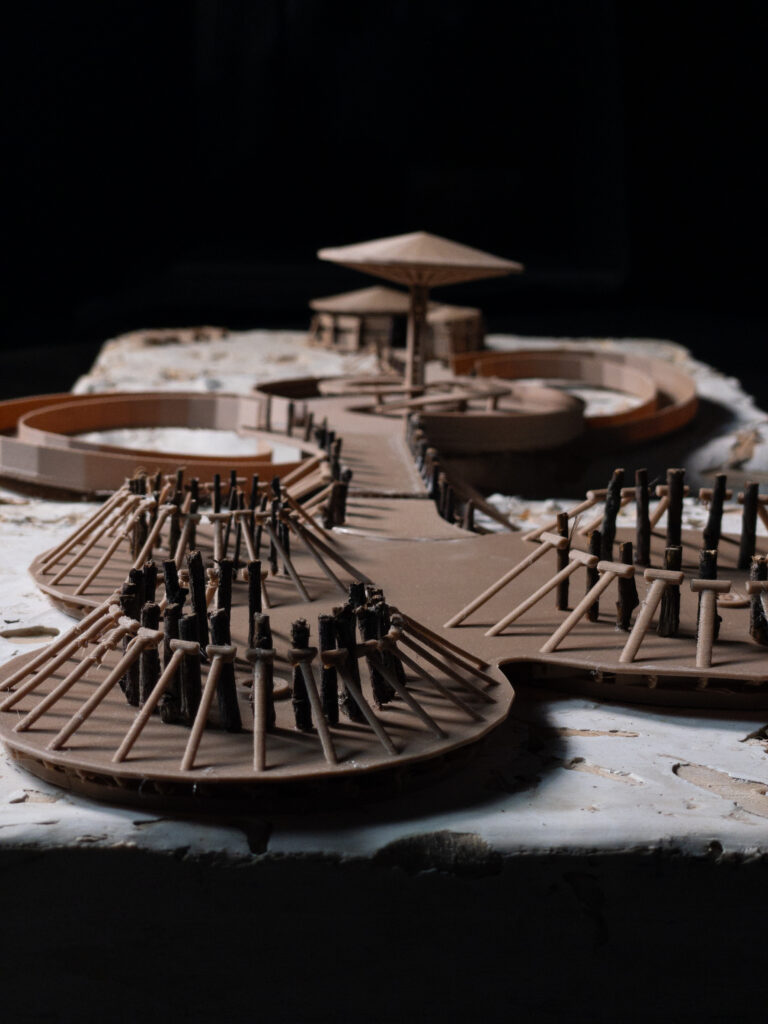
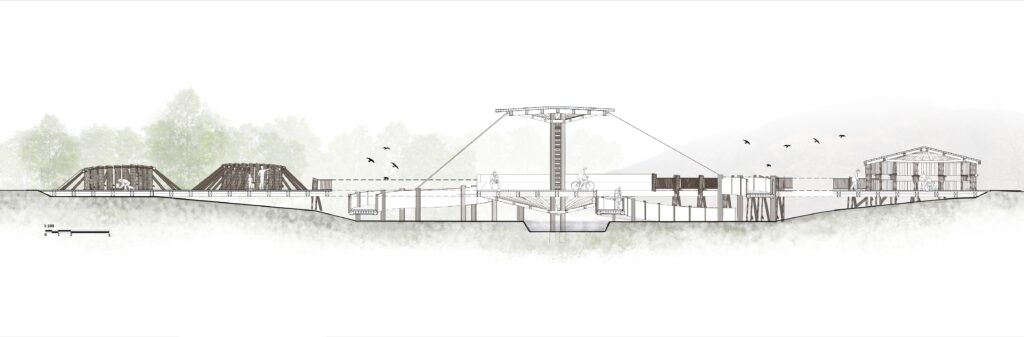
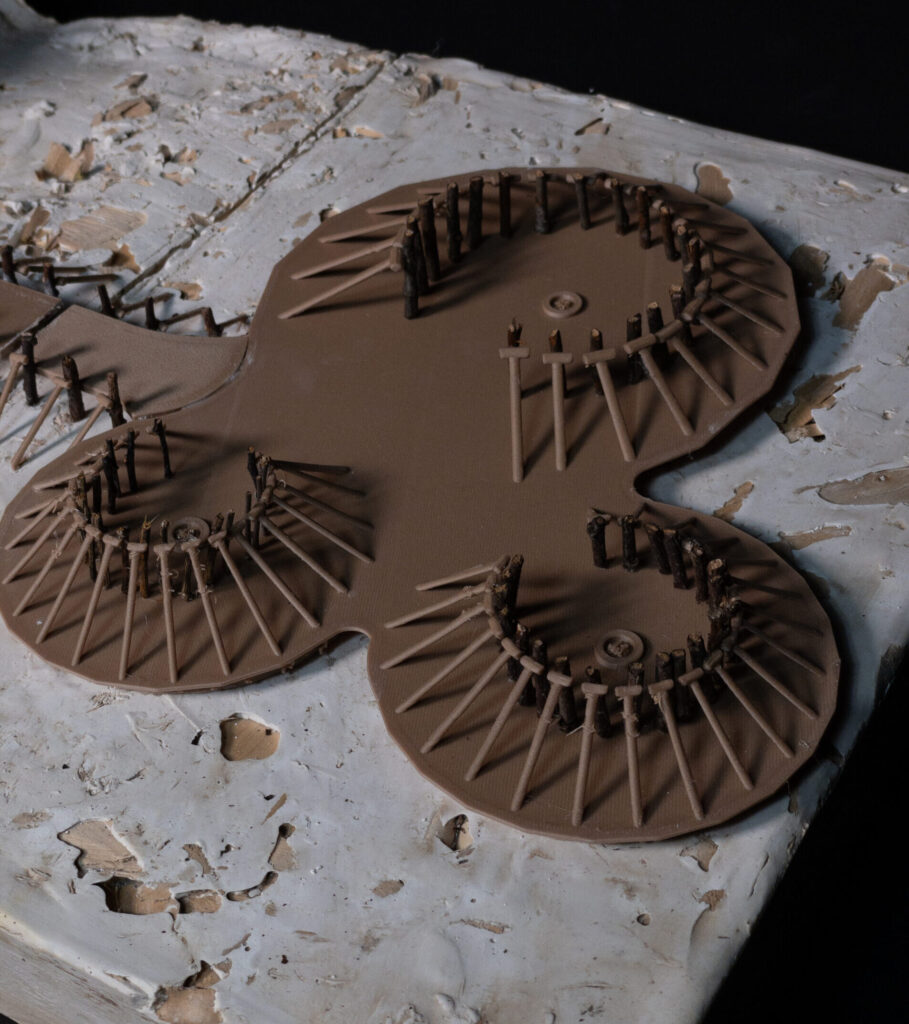
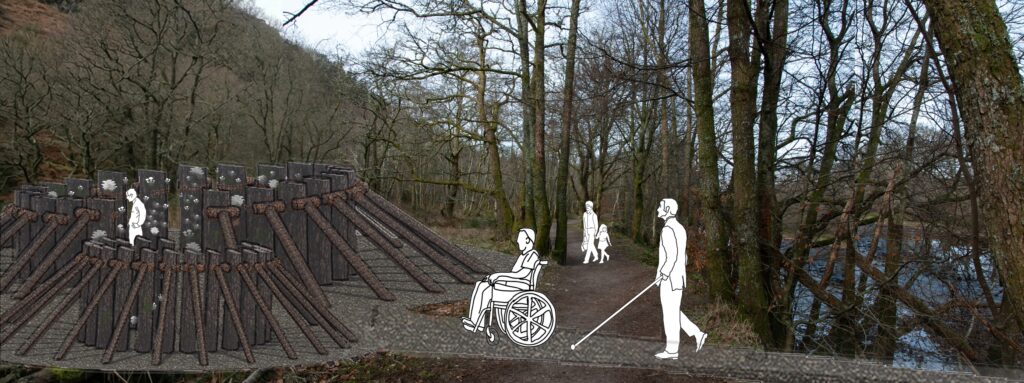
A continuous, accessible path that bridges two points, encouraging slower movement and close sensory engagement. Three moments structure the journey: the “Foraging Kitchen”, a space for cultivation and gathering; the “Dining Bridge”, a communal space lightly touching the ground; and the “Viewpoint”, positioned for light, shelter, and connection to the wider landscape.
Constructed from local, biodegradable materials, the lightweight interventions embrace seasonality, decay, and transformation. They unsettle conventional structural hierarchies as elements typically understood as stable begin to rely on one another, dissolving distinctions between support and supported.
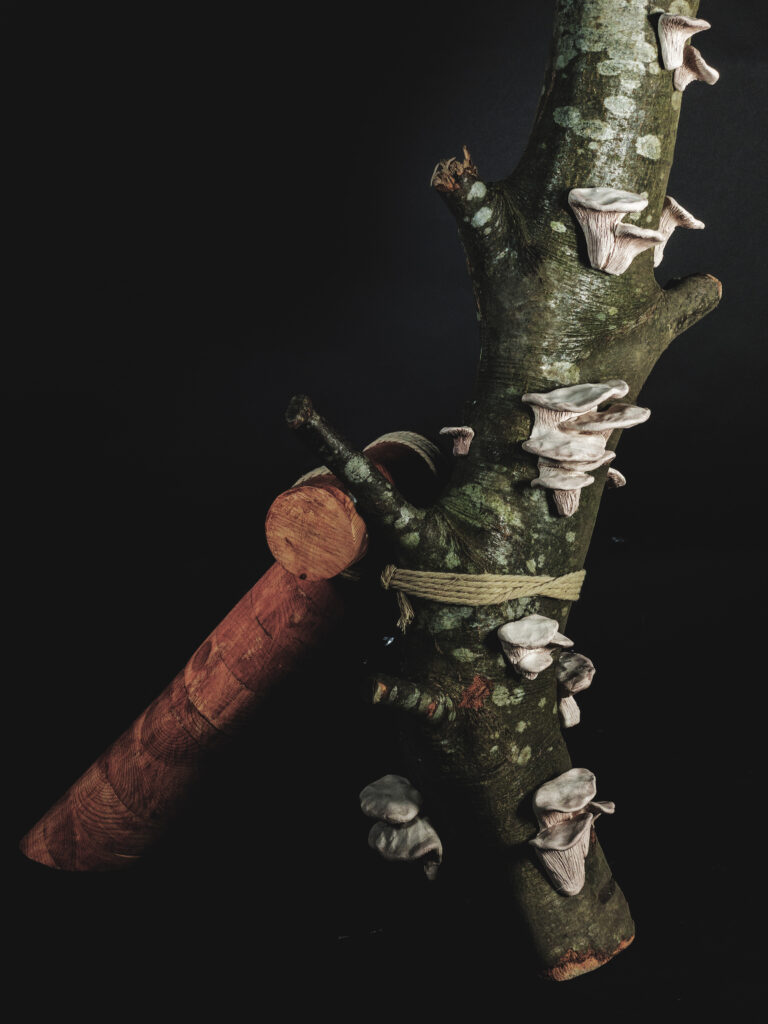
Rooted in the inherent vulnerability of natural systems, where decay and renewal are continuous, the project uses dead wood logs that are considered useless and gives them new life by supporting mushroom growth.
Rather than treating disability as an individual limitation, the project frames it as produced by environmental and architectural conditions. Accessibility becomes a means of reshaping relationships, positioning vulnerability not as weakness, but as a shared and productive condition.