Leah Duncan
(She/Her)
I am a 21-year-old artist born and based in Glasgow. My practice is shaped by both family and lived experience, drawing on personal and family narratives as well as the social realities of the communities around me. Sharing these stories allows viewers to connect with my work on a personal level and understand the sources of my artistic approach. I am interested in how art can function as a tool for communication, care, and advocacy.
As someone who identifies as autistic, often the heart of my work is a commitment to exploring how creative practice can support people with disabilities, while informing viewers of the daily experience some people face. I am passionate about creating accessible visual and sensory-based artworks that challenge barriers to understanding and amplify the voices of those often overlooked within broader society.
My work develops from research to images to tactile, visual, and non-text-based creations. I work alongside the people I am representing, aiming to inspire curiosity and connection. My use of materials varies depending on the context of my projects. Still, I predominantly use painting, printmaking, and installation and experiment with vivid colours, patterns, and textures to create sensorial experiences that invite engagement. These materials enable me to incorporate accessibility elements, often through touch, fostering a sense of inclusion and understanding with my subjects on the topic of disability.
My work isn’t about creating something that looks pretty and perfect, but about highlighting the positives that many perceive as negatives, encouraging respect for different perspectives and experiences.
“The Shape of Understanding”
This project explores language, accessibility, and the many ways people communicate beyond speech. For some individuals, communication barriers are a daily reality that can lead to exclusion, misunderstanding, and isolation. Influenced by growing up with a non-verbal autistic sister who primarily communicates through gesture and learns Makaton at school, I have witnessed firsthand how communication is often limited not by a person’s ability to express themselves, but by society’s expectation that communication must be verbal.
To communicate with my sister, I learned to adapt my communication style, using gestures, visual cues, patience, and observation. This experience taught me that meaningful communication exists far beyond spoken language and that understanding often requires effort from both sides. The work encourages viewers to reflect on their own assumptions about communication and to recognise non-verbal forms of expression as equally valuable and valid.
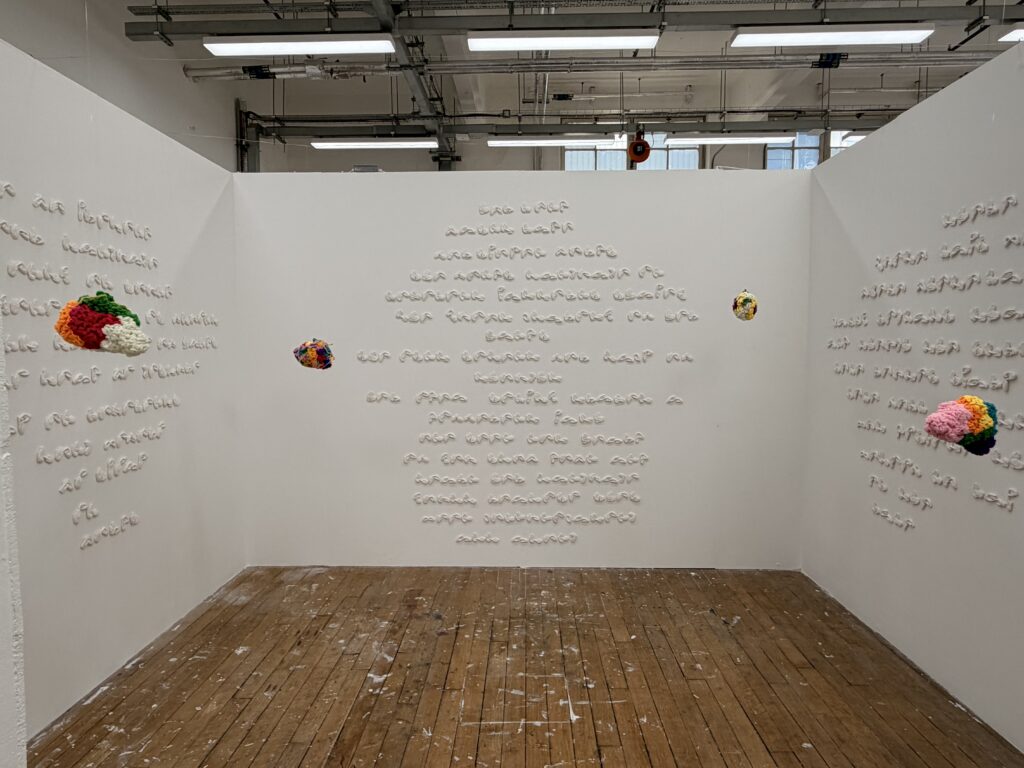
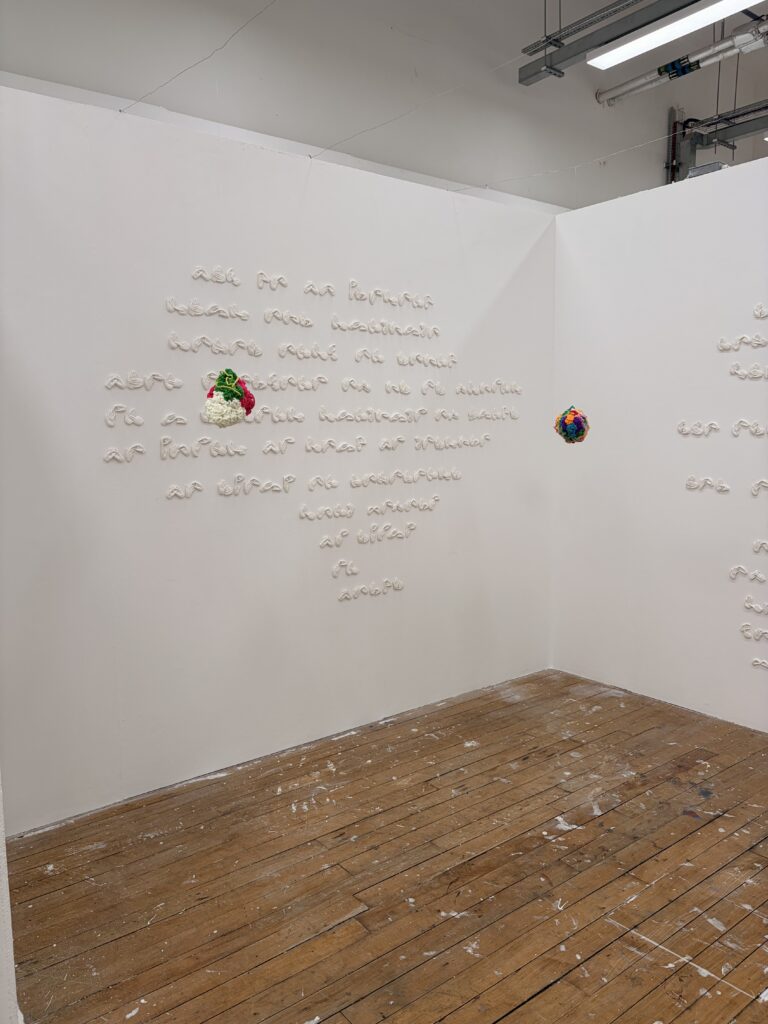
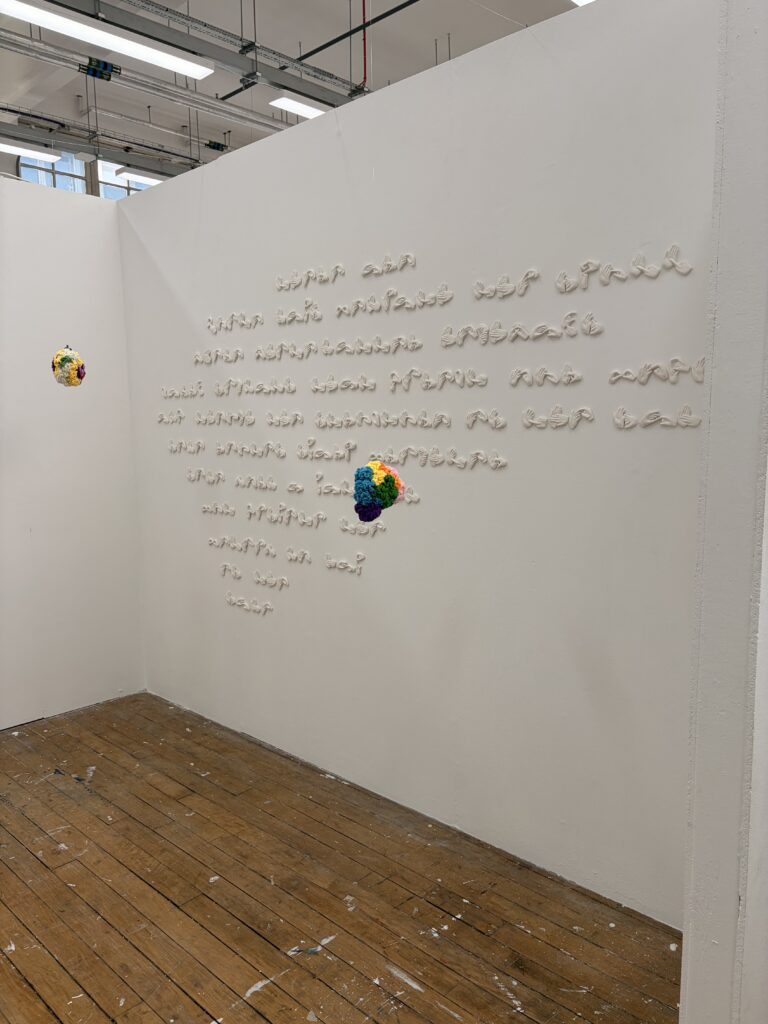
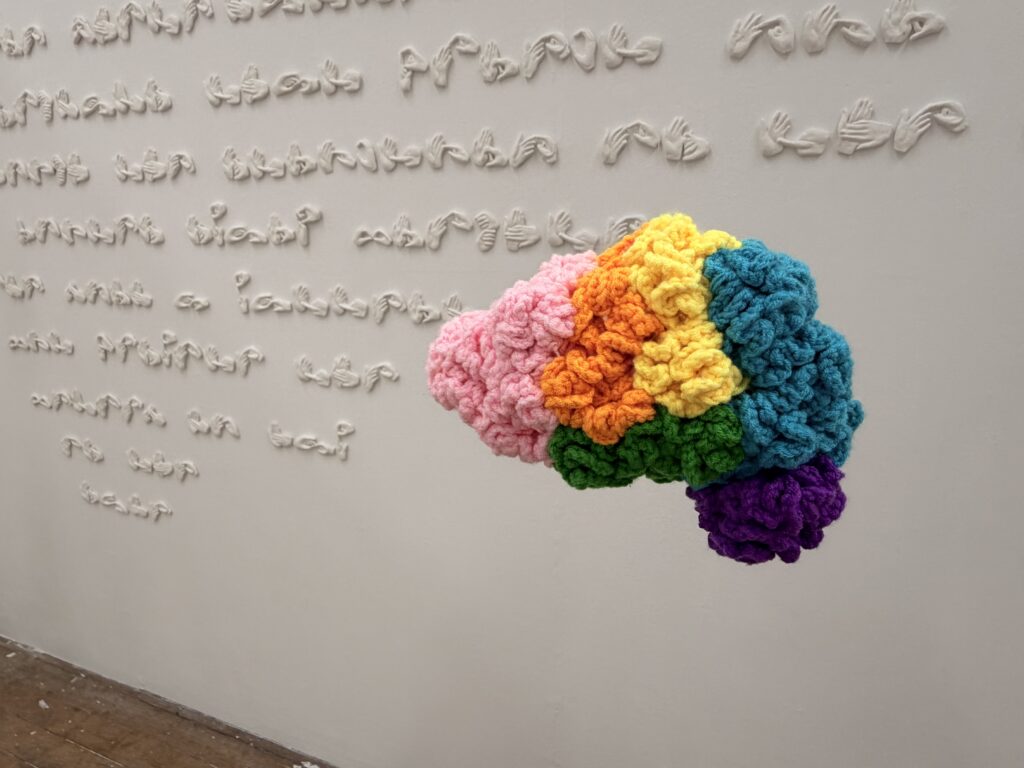
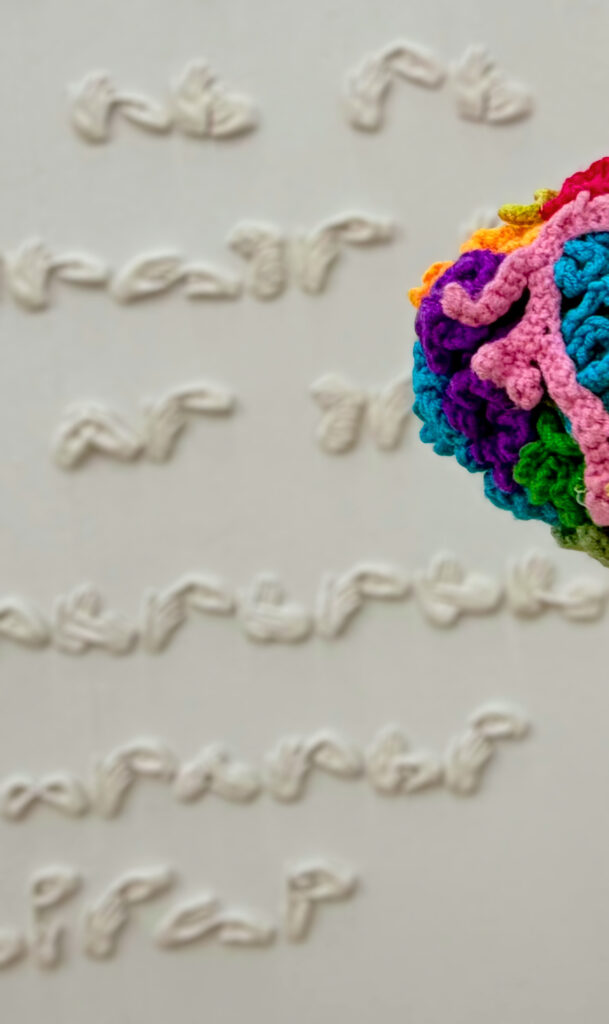
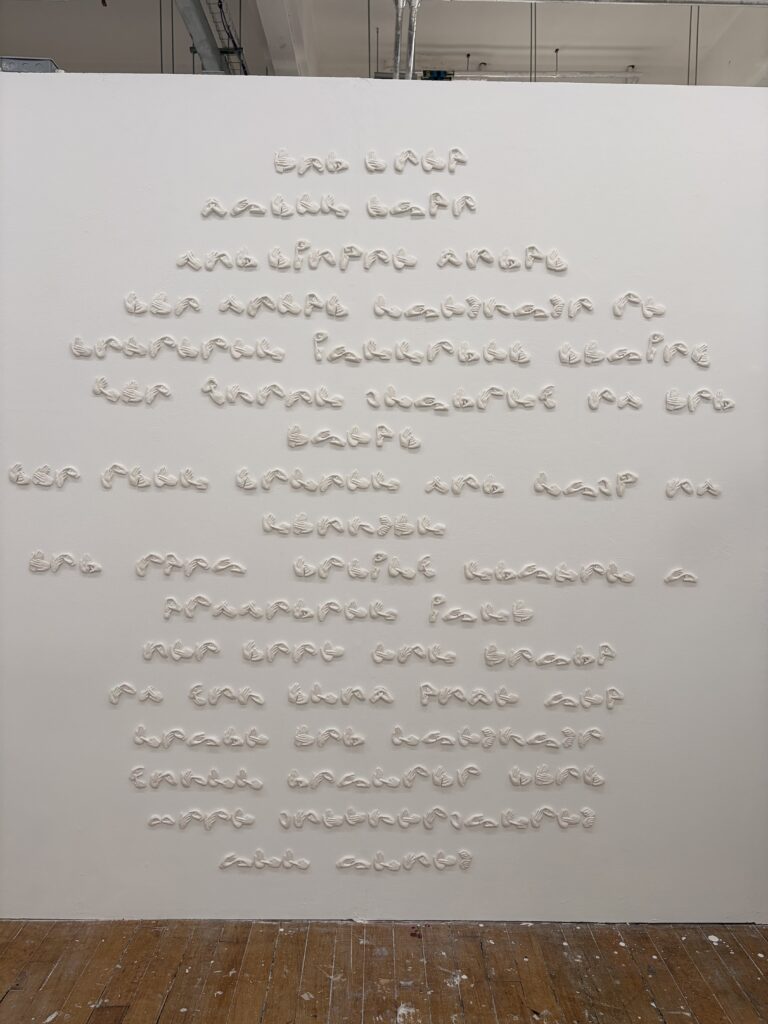
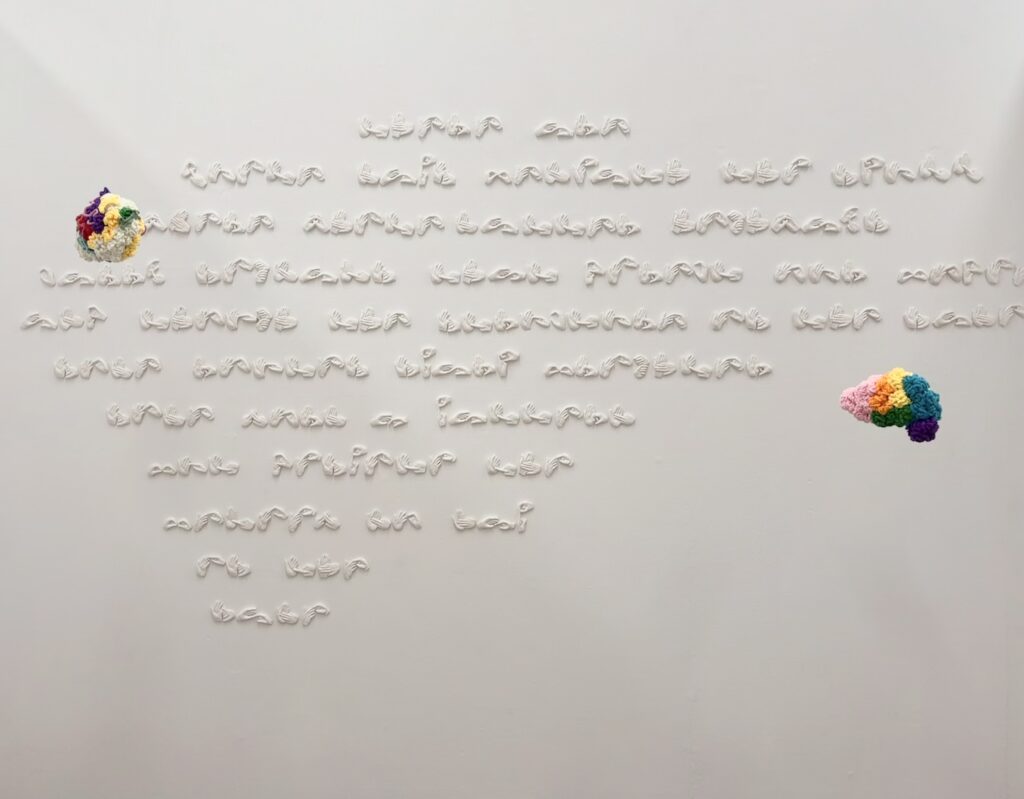
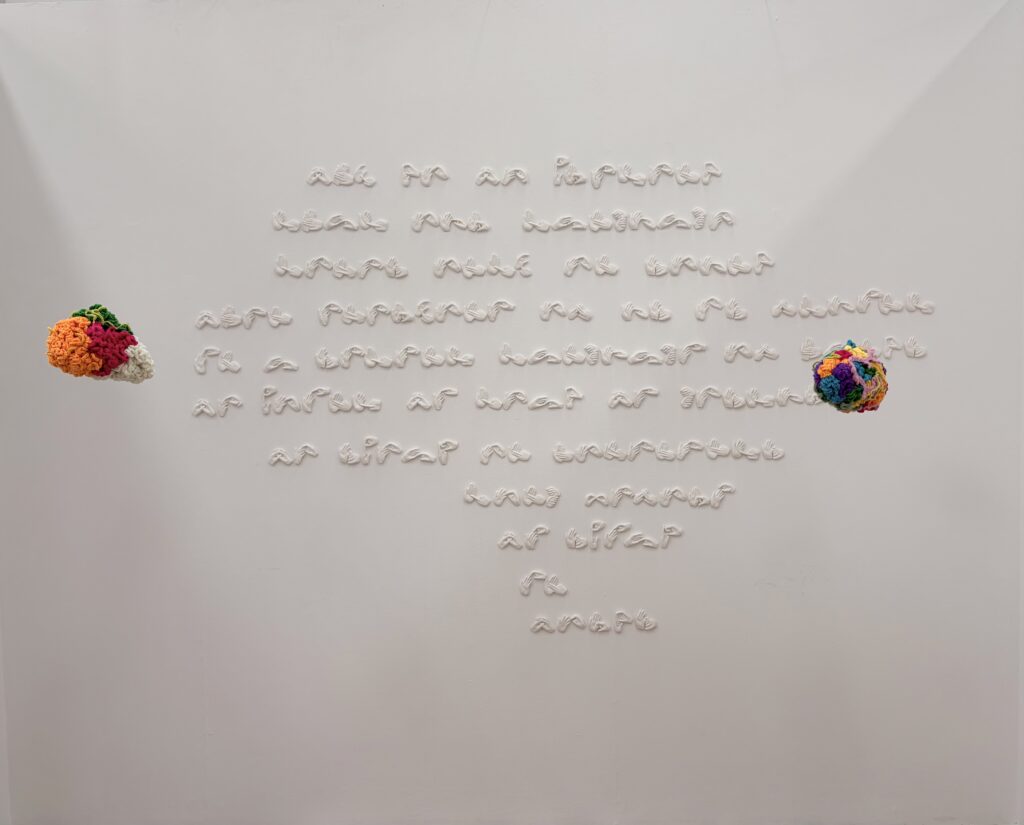
The installation transforms the gallery space into an environment of both communication and disconnection. The surrounding walls are covered with text formed from casts of hands spelling British Sign Language (BSL). At first glance, the text appears familiar, resembling written language arranged into paragraphs, yet for many viewers it remains unreadable. Instinctively, audiences attempt to decipher the message, only to encounter a barrier similar to that experienced by many Deaf, non-verbal, and neurodivergent individuals navigating a predominantly verbal world. Deliberately, no translation is provided. Instead, viewers are invited to sit with the discomfort of not understanding and consider the effort often required of marginalised communities to adapt to systems that were not designed for them.
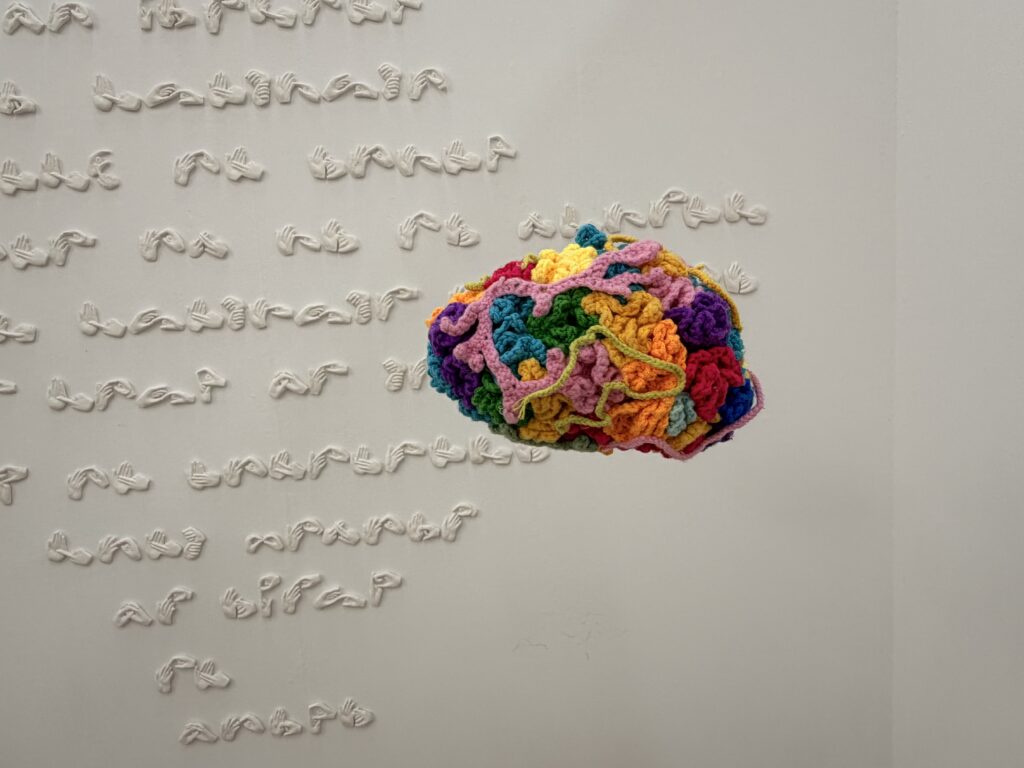
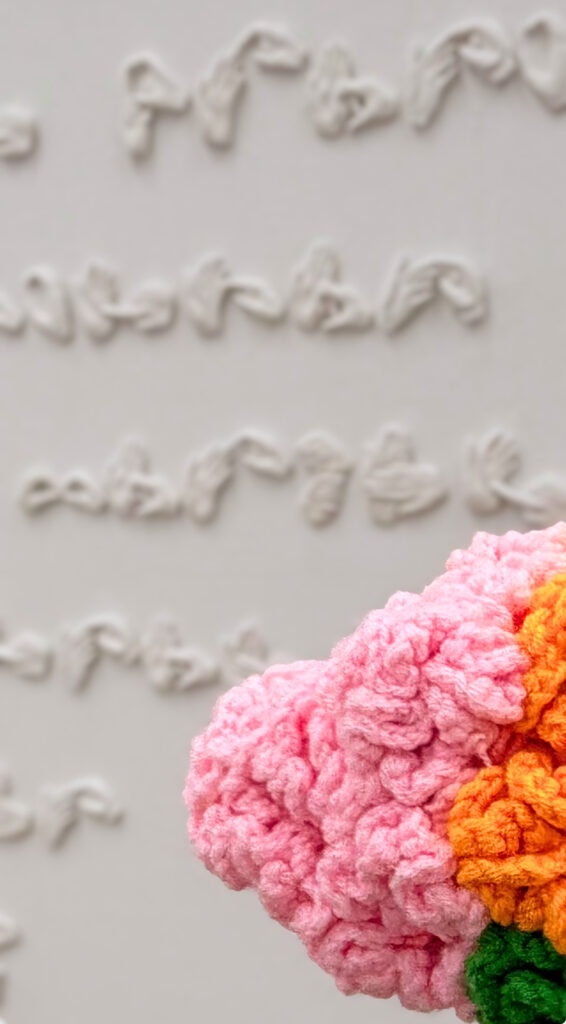
The hand-cast lettering creates a visual tension between language and sculpture. Individual gestures become both physical objects and linguistic symbols, highlighting how communication can be embodied rather than spoken. The repetitive arrangement of the casts across the white walls creates the impression of a familiar written text while simultaneously exposing the exclusivity of language systems that are inaccessible to those who have not learned them.
Suspended throughout the space are brightly coloured crocheted brain forms, each representing different ways of thinking, learning, processing information, and communicating. Their vibrant colours contrast with the monochromatic walls, drawing attention to the diversity of neurological experiences that often remain unseen. These sculptural forms reference a spectrum of cognitive experiences, including neurotypical and neurodivergent ways of processing the world, visual learning styles, sensory differences, autism, ADHD, and other neurological variations. One brain specifically highlights the interconnected regions associated with speech, language processing, and hand movement, emphasising the relationship between neurological function and communication.
By positioning these brains within a landscape of unreadable language, the installation suggests that communication is not solely determined by what we say, but by how our minds process, interpret, and express information. The work invites viewers to consider that every brain experiences the world differently and that these differences should be approached with curiosity, empathy, and respect rather than judgment.
Through the combination of sculpture, text, and immersive installation, the work becomes both confrontational and educational. It challenges conventional ideas of literacy and language while encouraging audiences to question who communication systems are designed for and who they exclude. Ultimately, the project advocates greater awareness of non-verbal communication and celebrates the diversity of human expression, reminding us that understanding often begins when we are willing to learn another person’s language rather than expecting them to conform to ours.