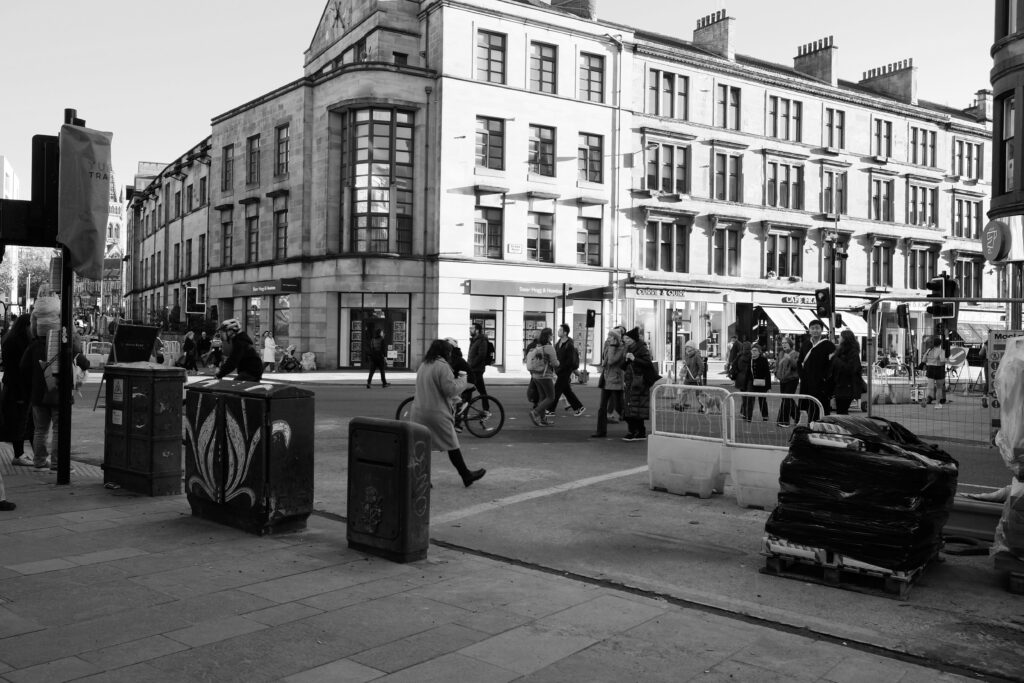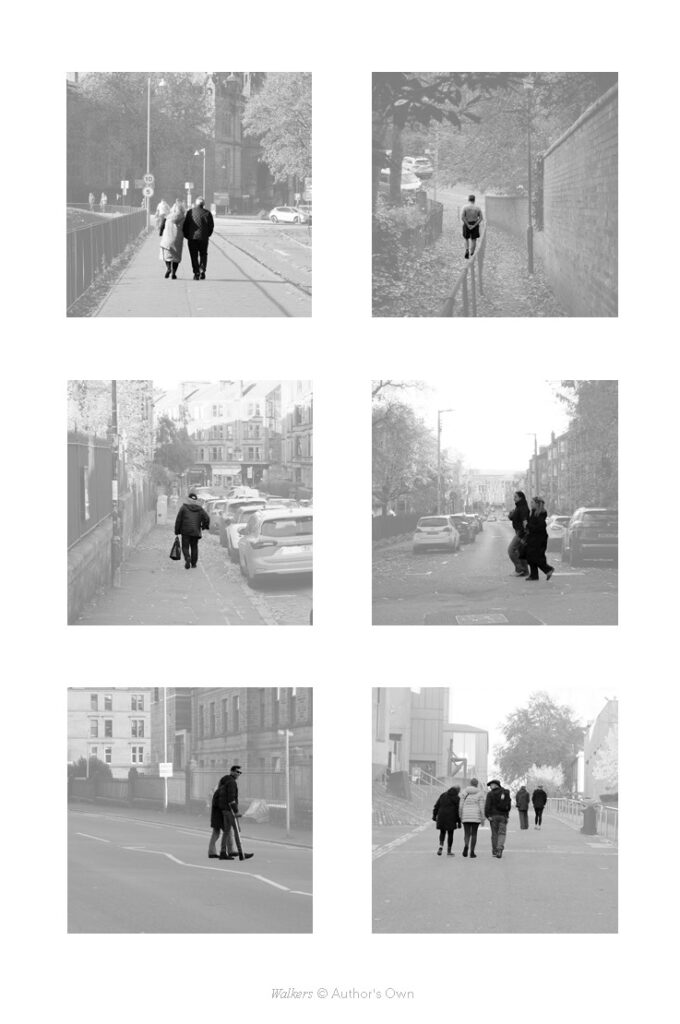
Looking for Connection [Author’s Preamble]
Walking became important to me before I had the language to explain why. It began quietly, as something instinctive rather than deliberate. In the cities I have lived in, walking was never only a way of getting somewhere. It was also a way of thinking, of slowing down, of letting the world arrive at a different pace. I did not always recognise this as a practice. For a long time, it simply felt like the most natural way of being with a place.
Over time, I began to notice that some of my clearest reflections happened while moving. Certain questions became easier to hold while walking. Certain feelings became more legible. Streets, weather, edges, light, and the simple act of continuing forward created a kind of rhythm in which thought could loosen. Walking did not solve anything directly, but it often made things more bearable, more spacious, and sometimes more understandable. It offered not escape, but a different form of attention.
I have lived in eight cities so far. Some I left quickly. Some I stayed in long enough for routine to settle. In all of them, walking became a way of entering into relation with my surroundings. It helped me register distances, atmospheres, habits, and moods. It gave me a bodily sense of where I was, even when I lacked words for what made one place feel open and another withholding, one street calming and another estranging. Long before I thought of this as research, I think I was already using walking to measure closeness.
What interests me in this thesis comes from that long accumulation. It comes from the notion that living in a place is not the same as feeling connected to it, and that familiarity alone does not fully explain why some parts of a city begin to feel more inhabitable, more generous, or more one’s own. I have often known cities well enough to move through them fluently while still feeling at a distance from them. I have also felt unexpectedly close to places I could not yet fully explain. Somewhere within that gap, between use and relation, routine and presence, this enquiry began.
Walking has gradually taught me that attention is not passive. It has to be practised. Cities are easy to experience as background, especially when life becomes crowded by obligation, work, speed, and repetition. Walking, at least for me, has been one way of resisting that flattening. It has been a way of remaining receptive to what a place is doing, and to what I am doing in return. Not every walk is meaningful. Not every pause opens something up. But over time they have given me a method, or something close to one, for reading both the city and my own thresholds within it.
This thesis grows from that personal ground, but it also moves beyond it. It is an attempt to find a clearer language for something I have often felt only indirectly: that connection to a city is not constant, and not guaranteed, but may gather through certain conditions, rhythms, and permissions that become visible only when one slows down enough to notice them. Walking has been the way I learned to begin noticing.