
Jonny Keen
My practice explores transmission, memory and cultural connection through sound, installation, publishing and collaborative research. Working across sculpture, audio and live systems, I use materials associated with communication and infrastructure; copper pipe, playback devices, mapping technologies and recording systems. I use these to examine how voices, histories and relationships are carried, degraded and preserved over time.
Through installations, workshops, performances and publications, I am interested in the social and political structures that shape collective memory, particularly in relation to post-industrial landscapes, nightlife cultures and the changing relationship between Britain and Europe. My work often combines analogue sound processes, participatory systems and improvised sculptural networks, using distortion, repetition and replication as ways of thinking through communication, erosion and cultural identity.
Alongside my studio practice, I work across exhibition production, festivals and public programming, experiences which continue to inform my interest in infrastructure, collaboration and the systems that organise public space and collective experience.
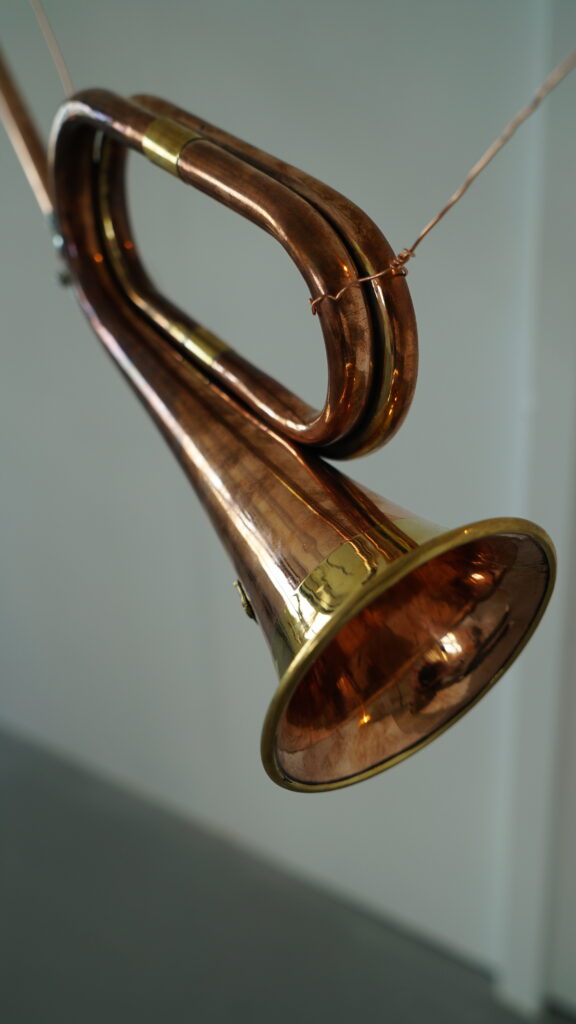
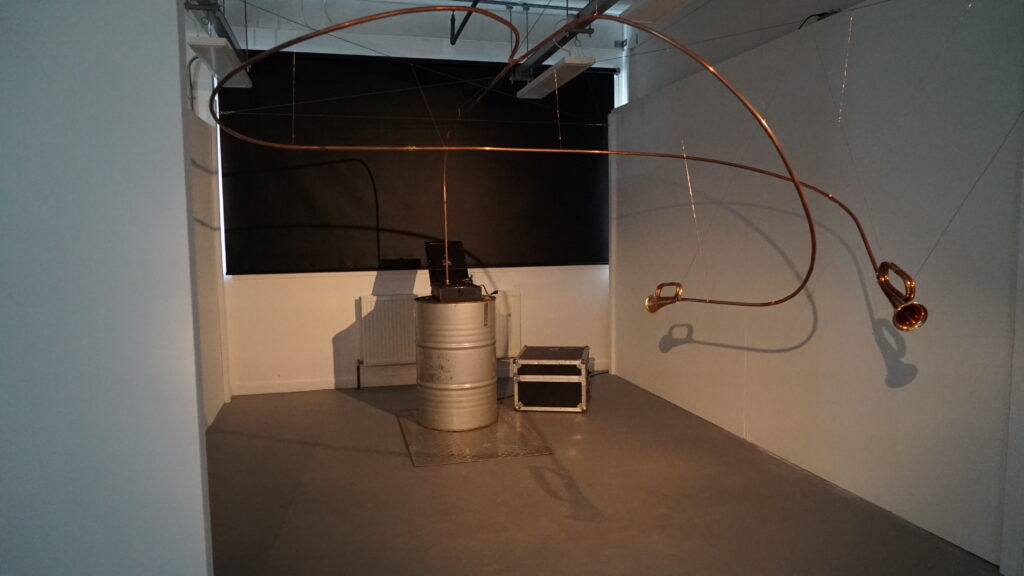
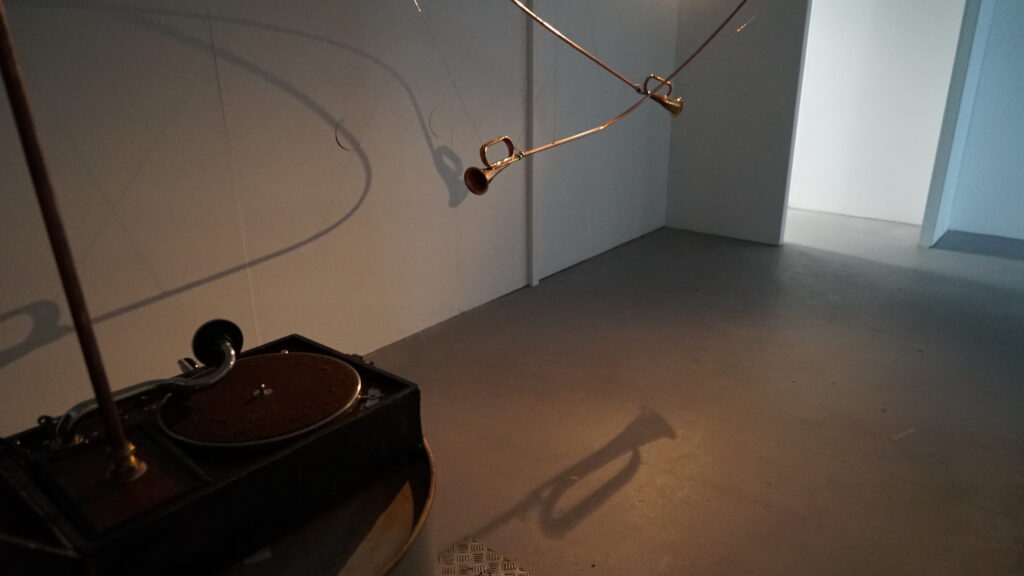
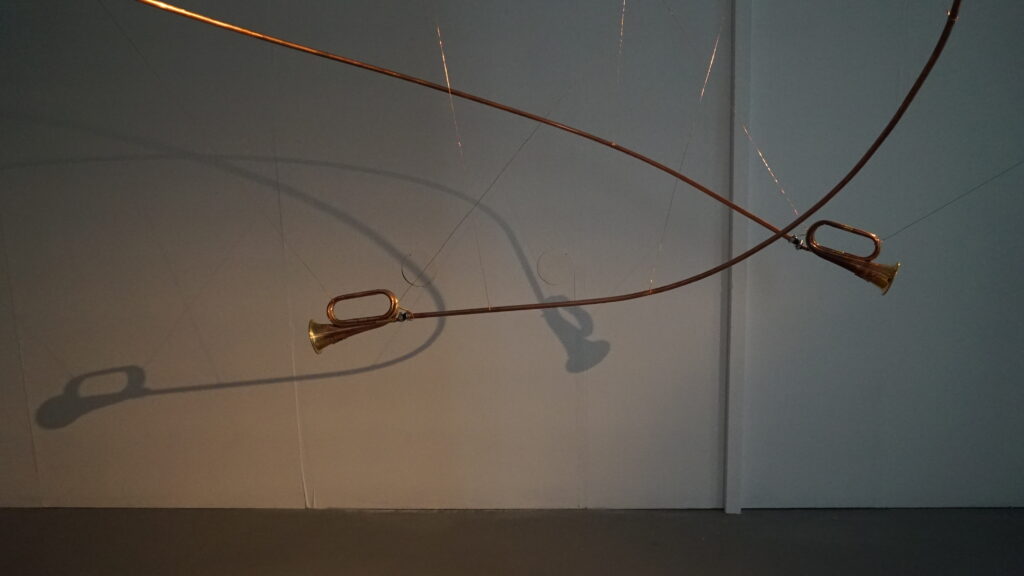
LWTUA LWTU LWT LW L (2026)
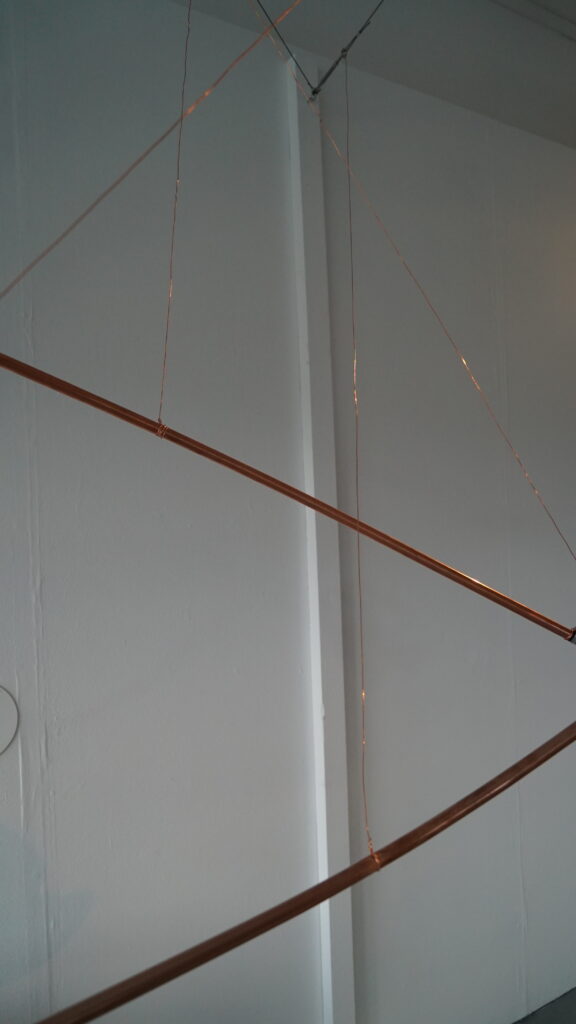
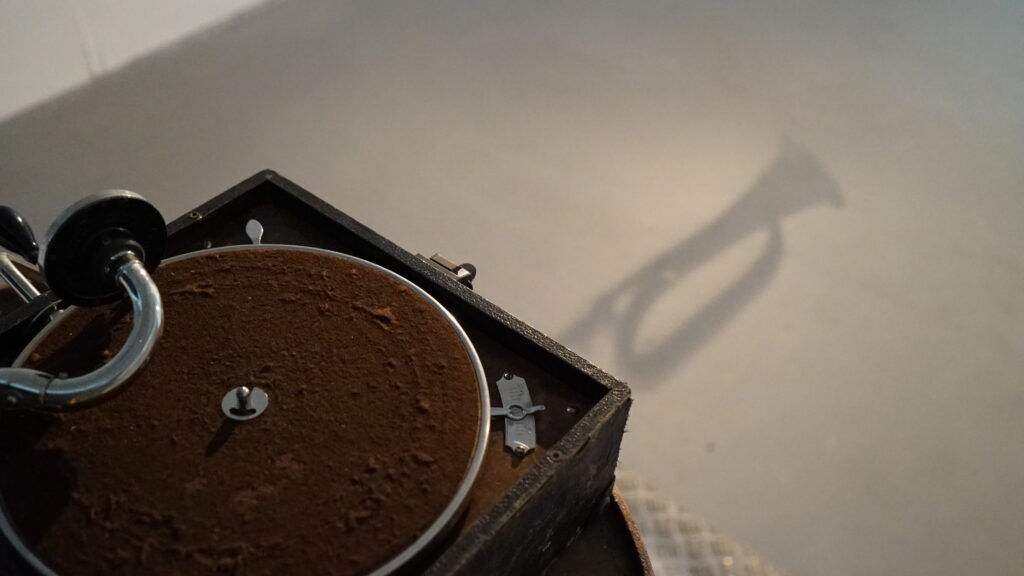
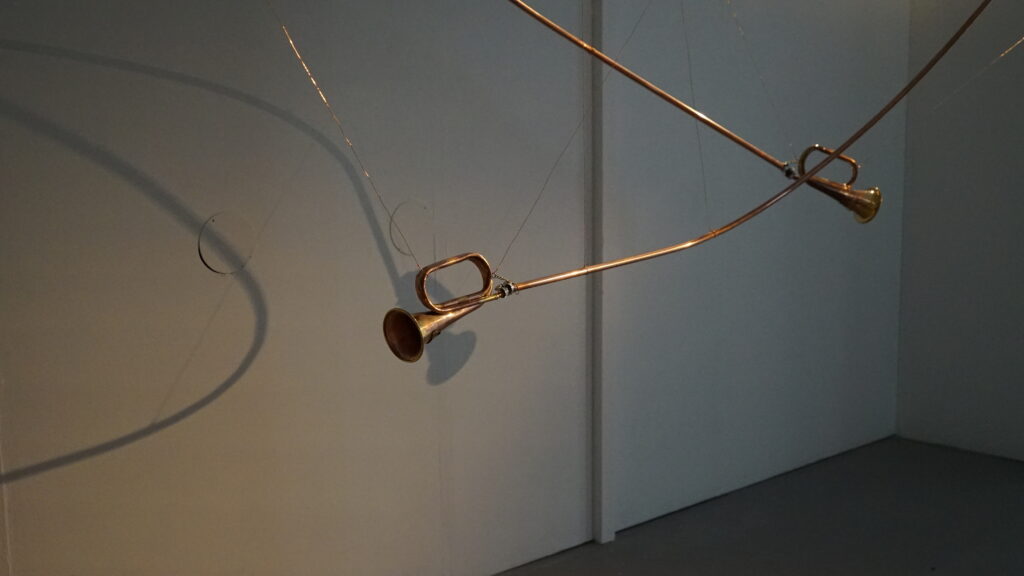
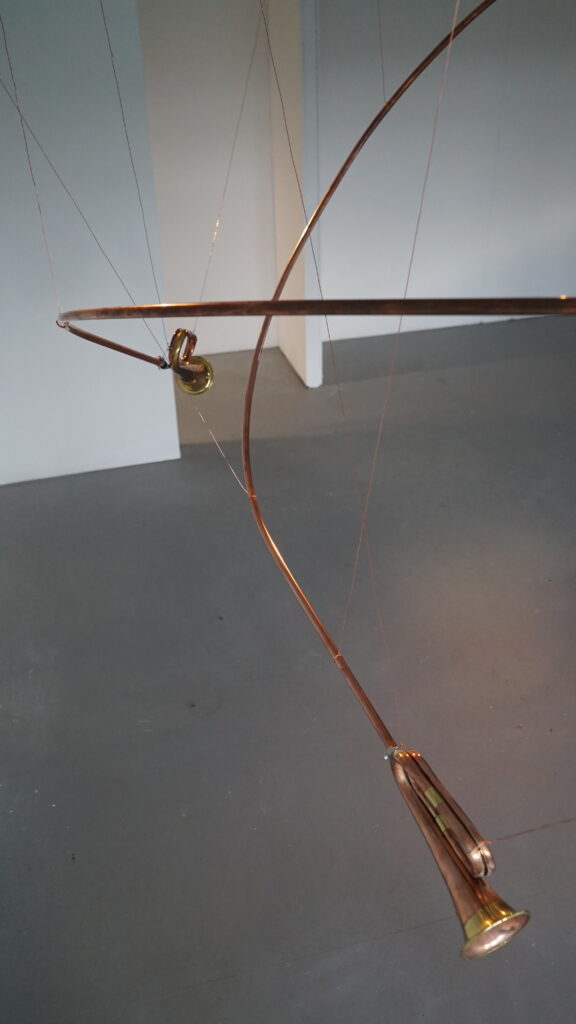
LWTUA LWTU LWT LW L is a sound installation centred around a hand-cranked gramophone playing a series of lathe-cut vinyl records, connected to a suspended network of copper pipes and brass bugles. Through the system, fragmented voices from 30 collaborators across the UK and Europe speak the chorus of Joy Division’s Love Will Tear Us Apart. The 3.5 minute sound piece reflects on cultural distance, transmission and degradation ten years after the Brexit referendum. As sound travels through the suspended pipe network, words become stretched, distorted and partially lost. Materials associated with communication and infrastructure; copper pipe, wire, playback systems and brass instruments, are reconfigured into a fragile sculptural system that carries voices across the space, exploring how collective memory and cultural connection are preserved, eroded and transformed over time.
Human Chess (2024)
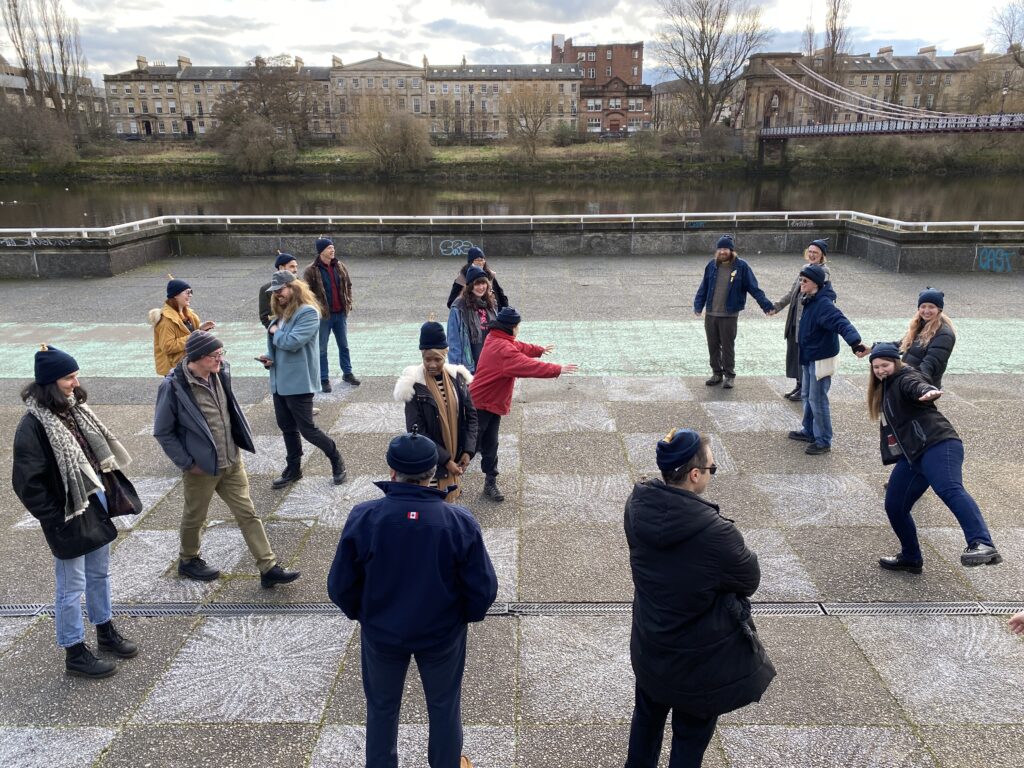
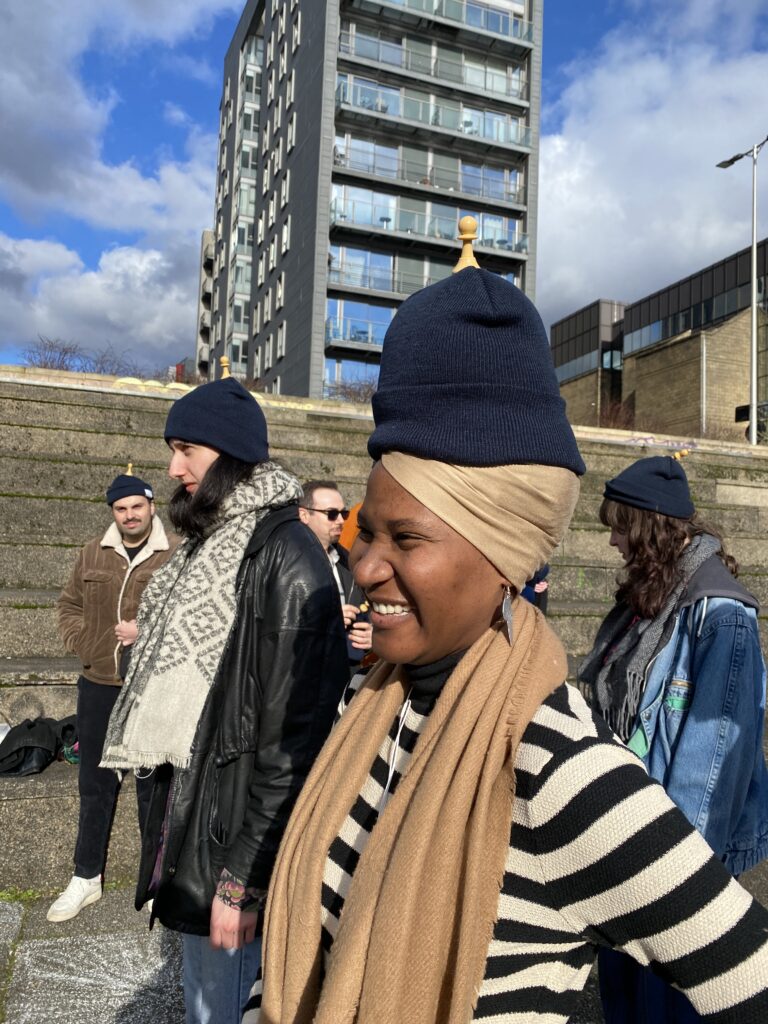
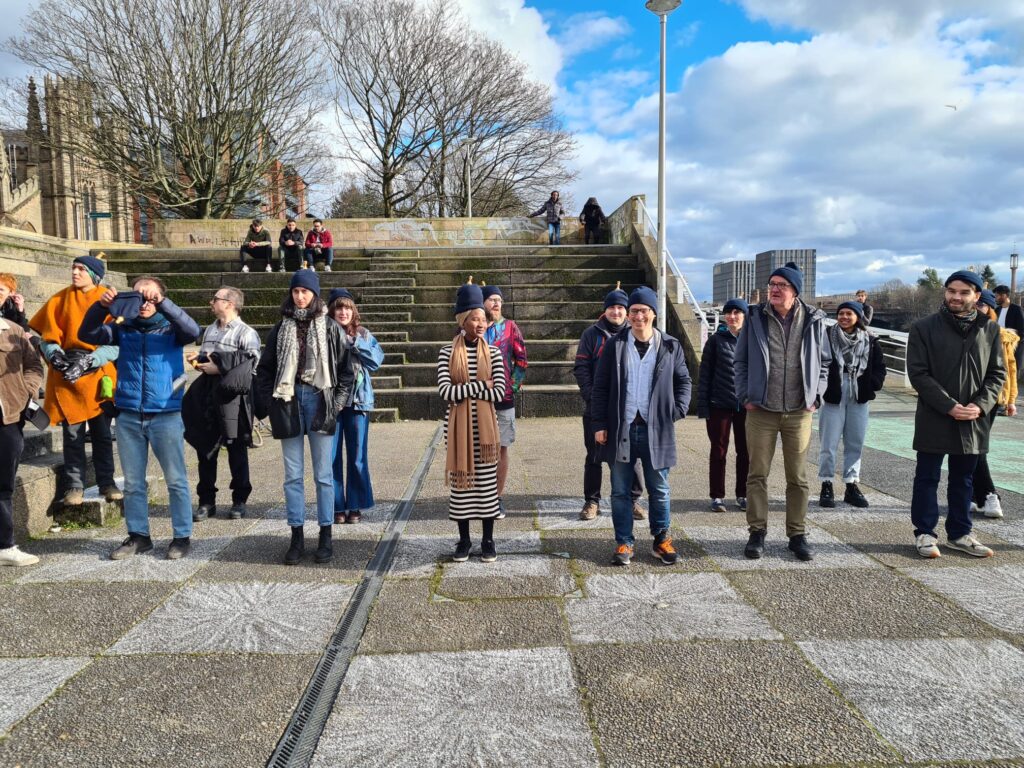
Human Chess was a 30-minute participatory performance staged at the Clydeside Amphitheatre involving 32 participants directed by two chess players. Performers wore sculptural hats representing chess pieces and moved across the board in response to both conventional chess rules and a series of instructional cards distributed throughout the game. Actions included prompts such as “start a union”, “go on strike” and “move yourself once”, gradually disrupting the logic of the system from within. The work used the structure of chess as a model for civil society, exploring authority, collective action, labour, obedience and resistance by pushing a rigid rule-based system towards instability and collapse.

Original Matters (2024)
Original Matters was a simultaneous two-city exhibition co-curated with Ange Sexton, following her return from Glasgow to Melbourne (Naarm). Bringing together 10 artists from Glasgow and 9 artists from Melbourne across parallel exhibitions staged in both cities, the project used 3D scanning, digital modelling and reproduction techniques to replicate and exchange artworks between the two locations, creating exhibitions that contained both original and reproduced works. Sculptures were recreated through 3D printing, while two-dimensional works were digitally reproduced and reprinted, questioning ideas of authenticity, duplication and authorship in an increasingly digital culture.
Timed across opposite hemispheres and time zones, one exhibition closed as the other opened, creating a continuous cycle of transmission between the two sites. Referencing Walter Benjamin’s writing on mechanical reproduction alongside contemporary debates around AI-generated imagery and digital circulation, the project explored how artworks change as they are copied, translated and redistributed across physical and virtual space.