Xinyue Fan
(Evera)
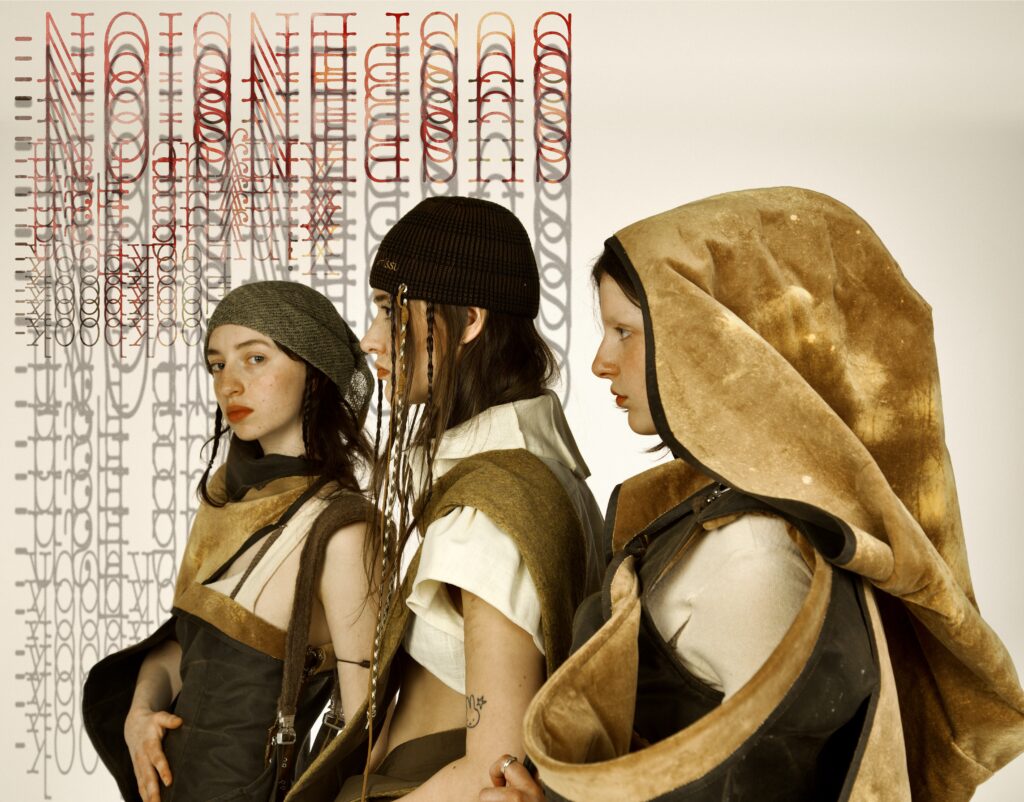
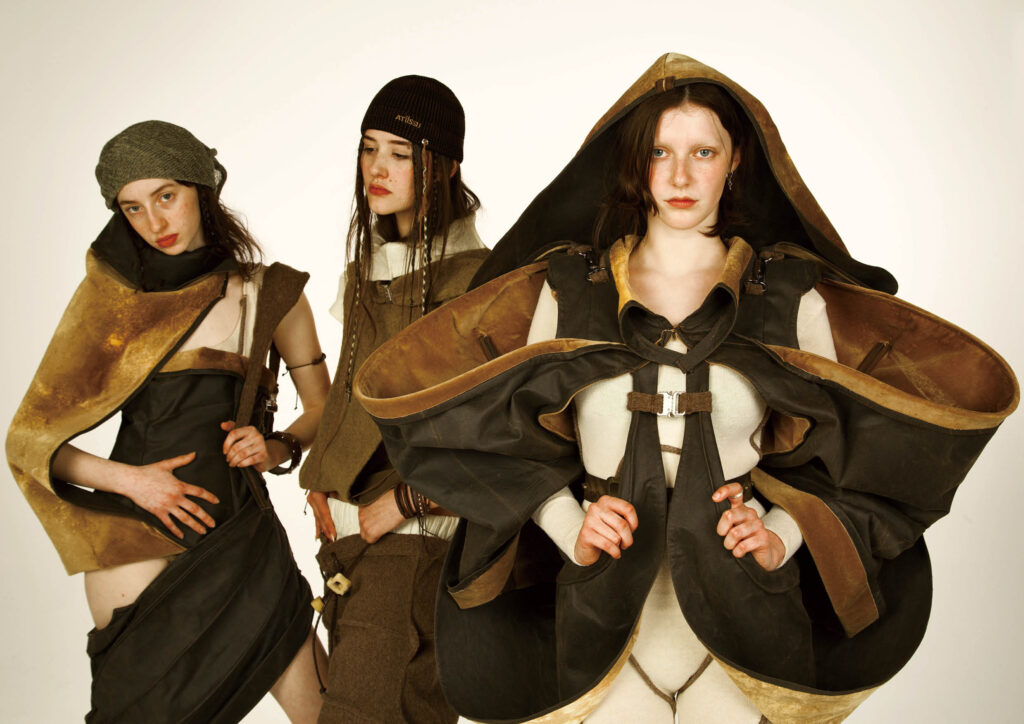
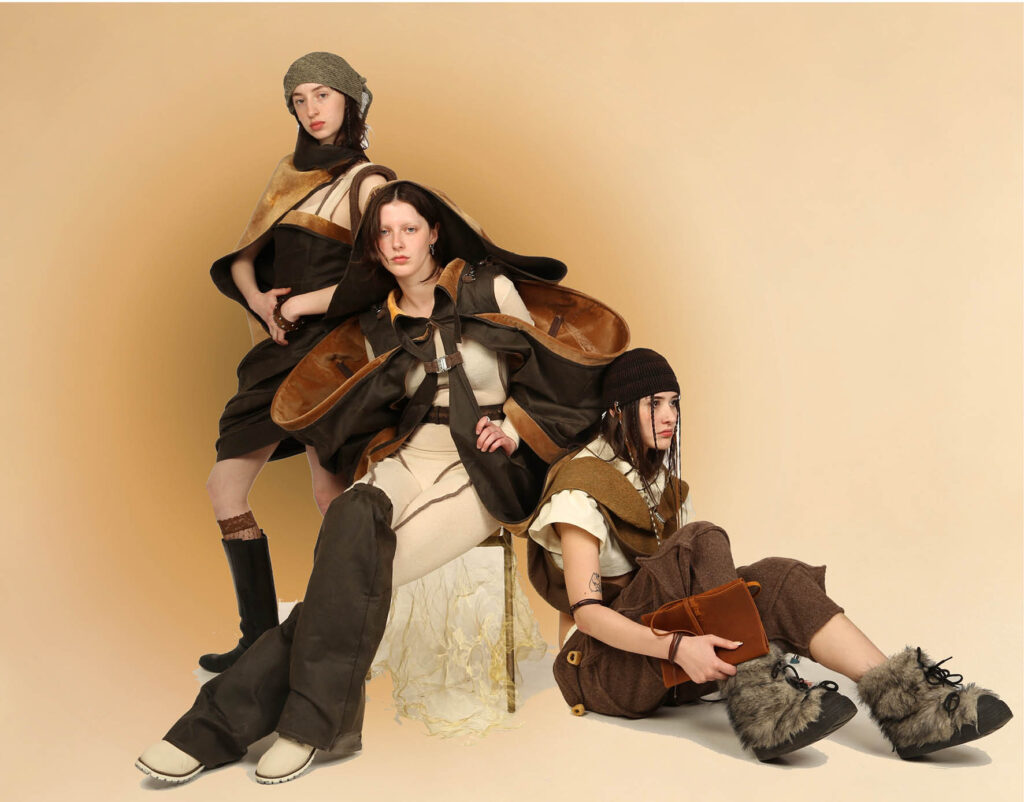
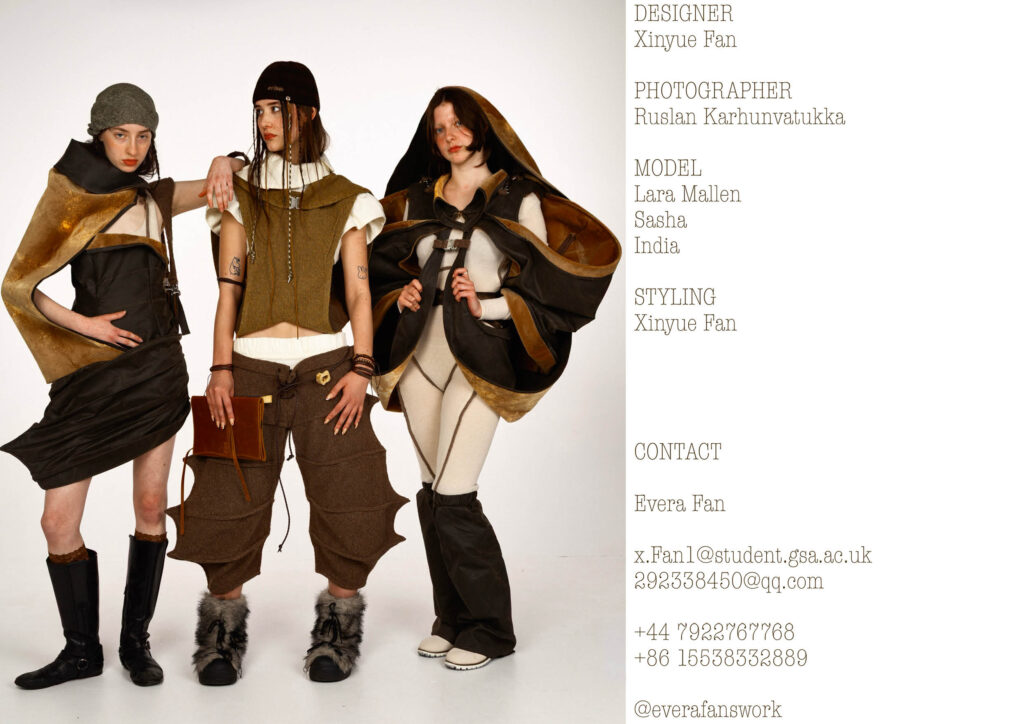
Xinyue Fan explores wind as both material and structure, investigating how invisible forces can distort movement, reshape silhouettes, and transform textile behaviour through tension, drag, and resistance. Referencing wingsuits and parachutes, the work translates aerodynamic principles into sculptural forms of wrapping, suspension, and weighted drape.
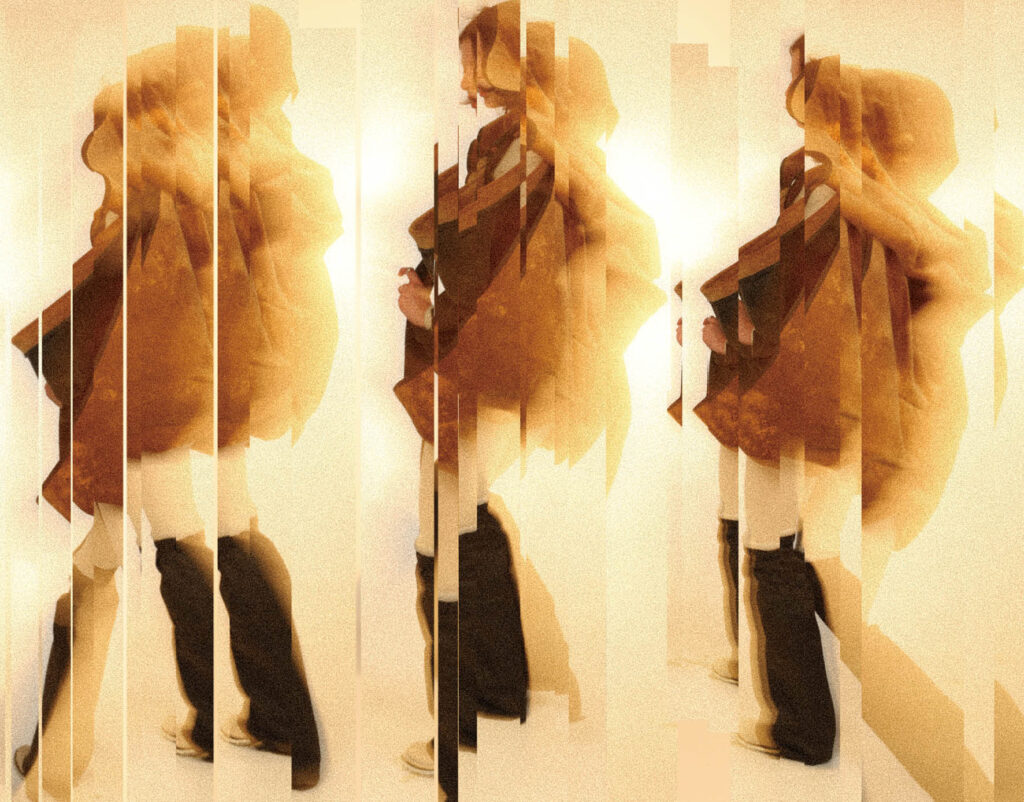
SUSPENSION
这个项目始于我录制的一段视频,记录了人体、衣物和日常物品在强风下的反应。它揭示了一种无形的力量如何扭曲结构、改变运动并影响平衡。
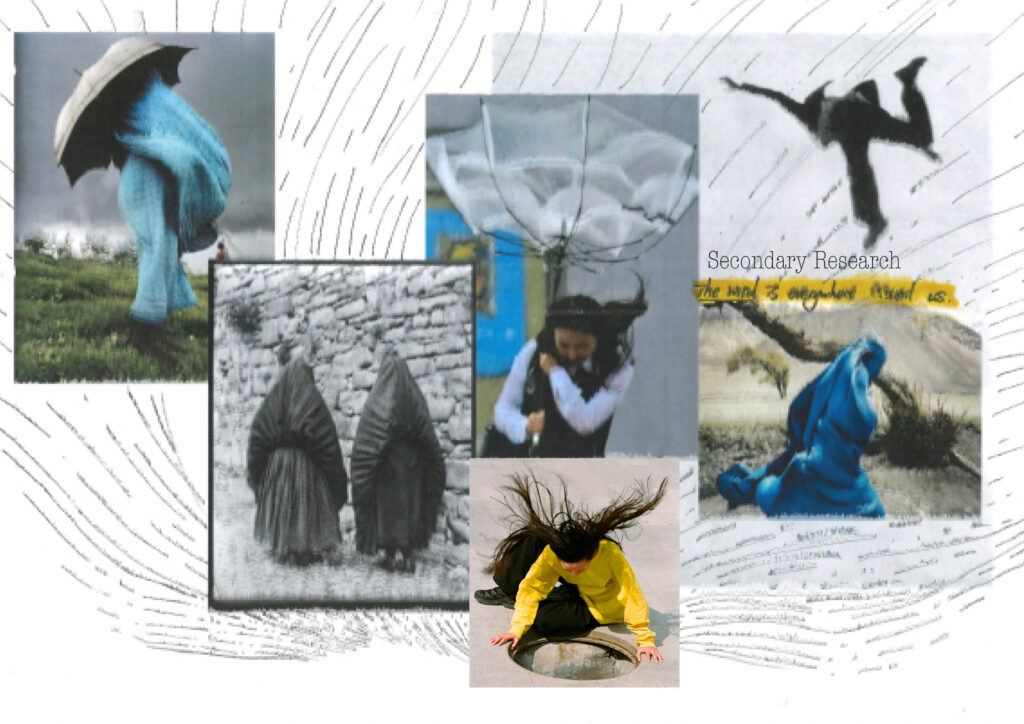
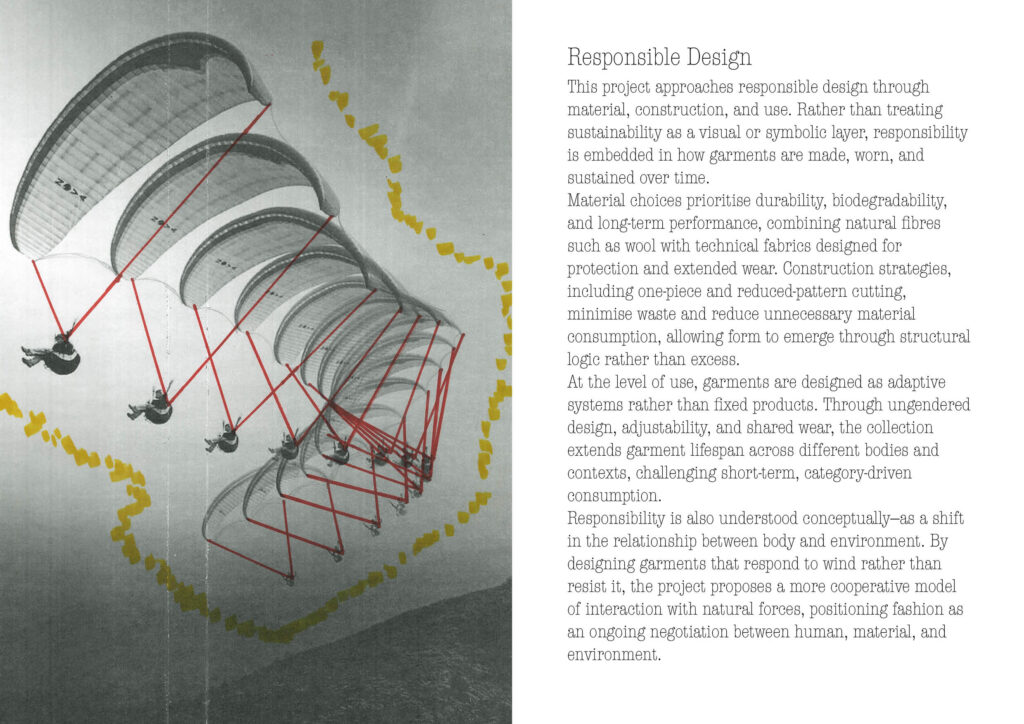
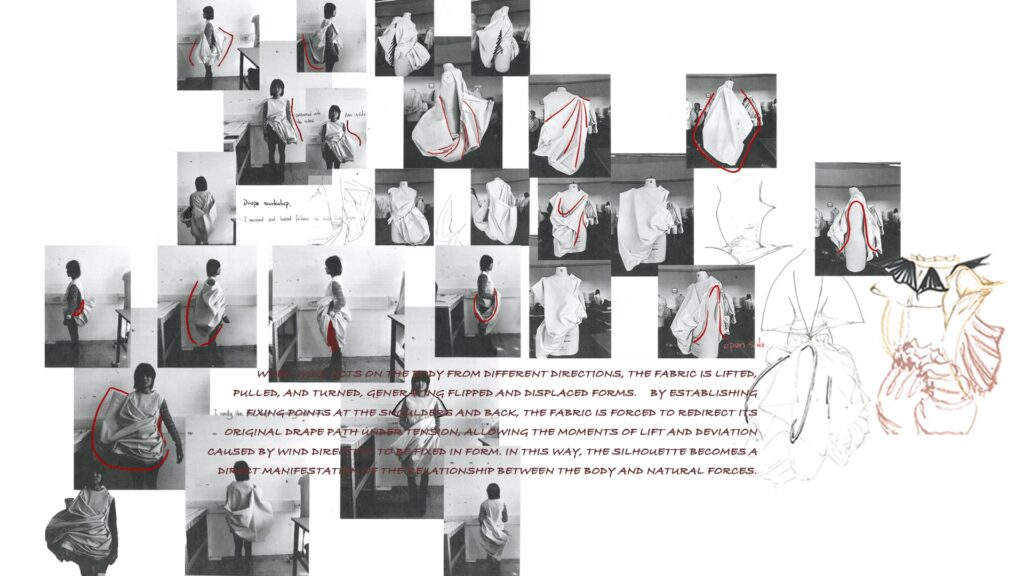
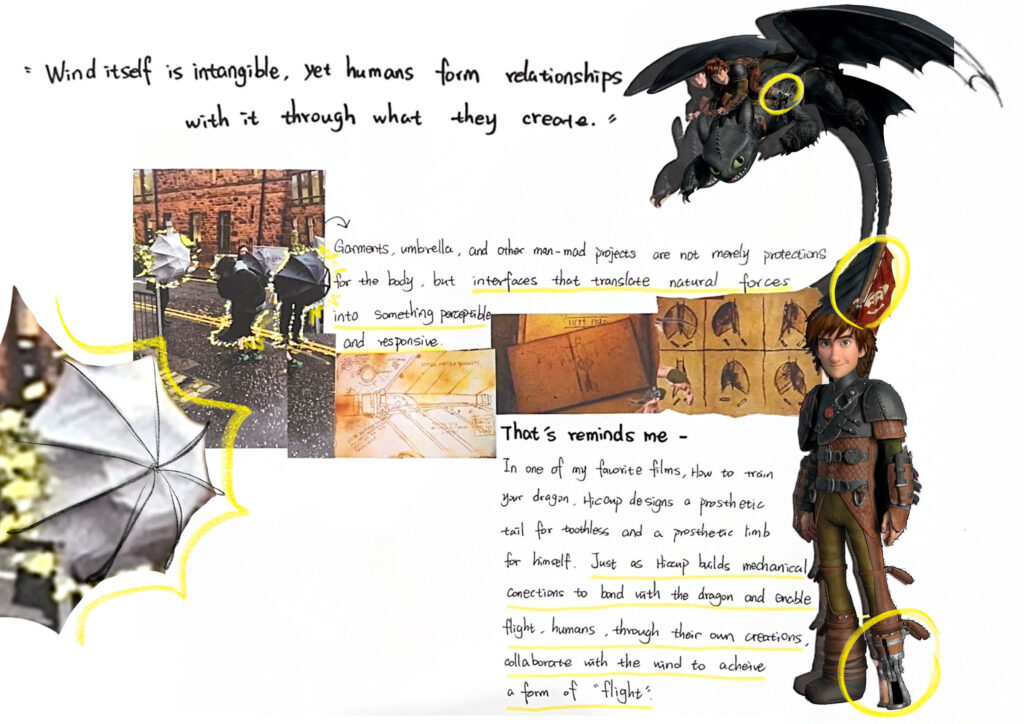
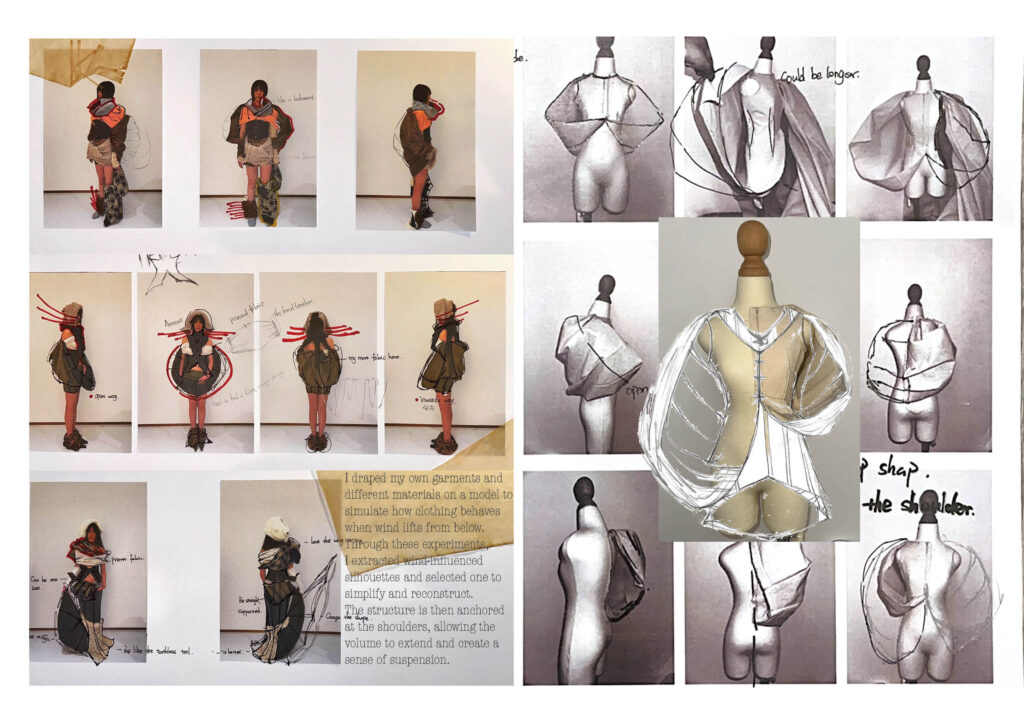
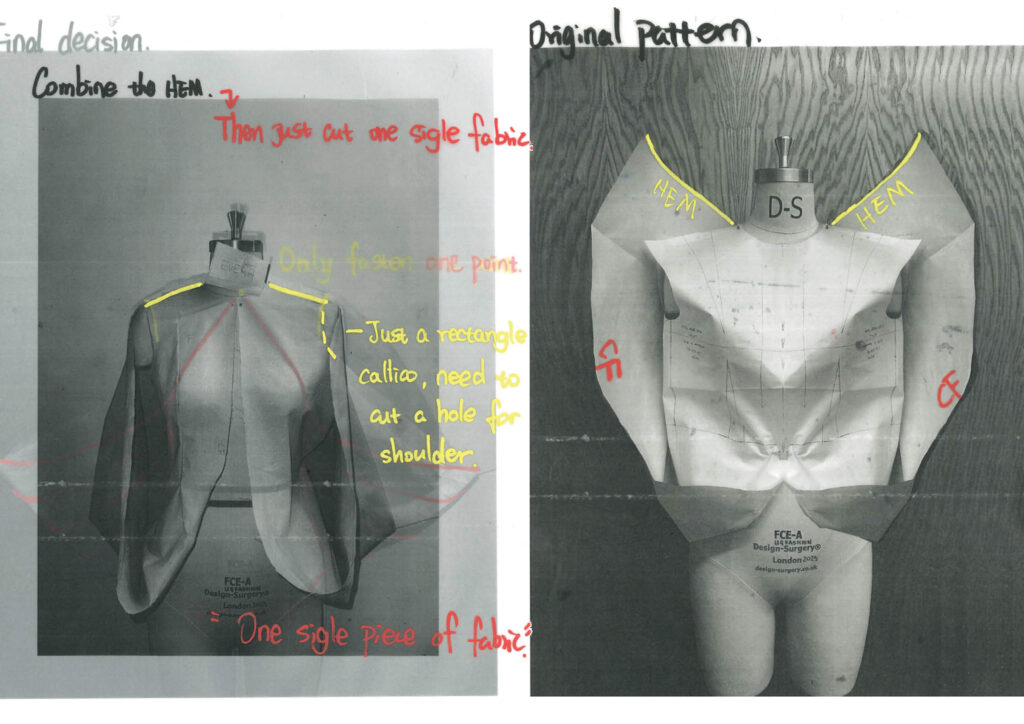
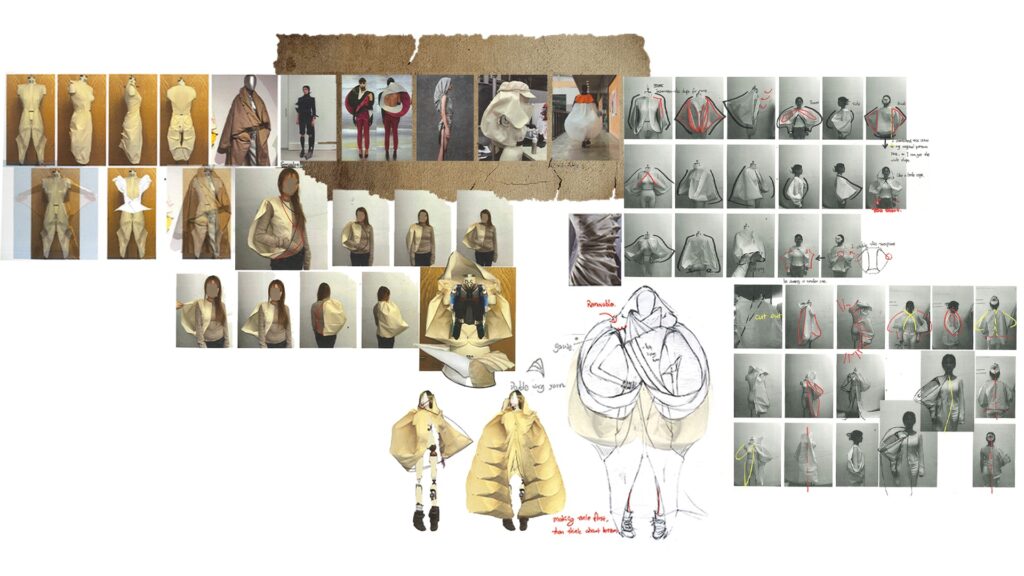
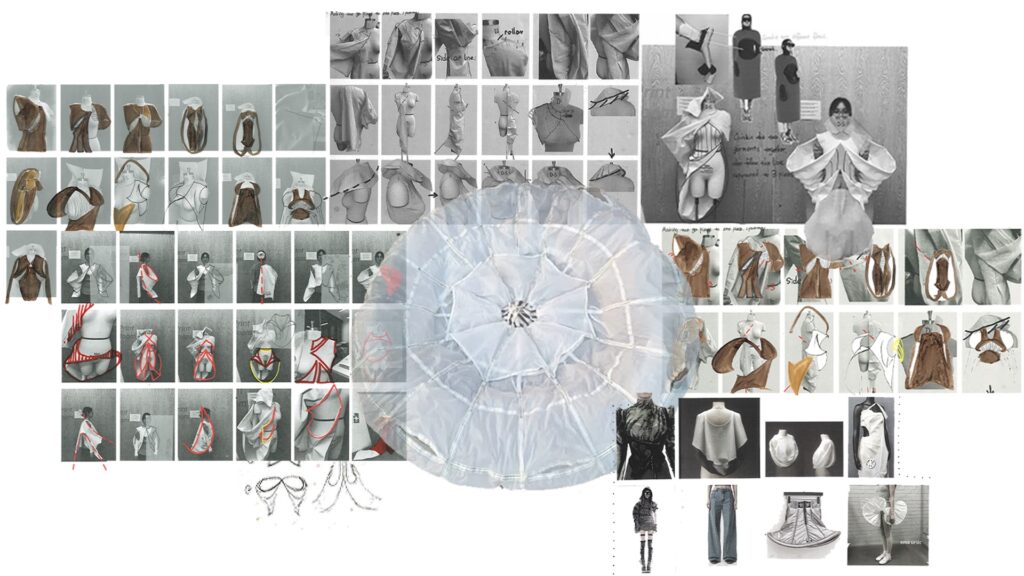
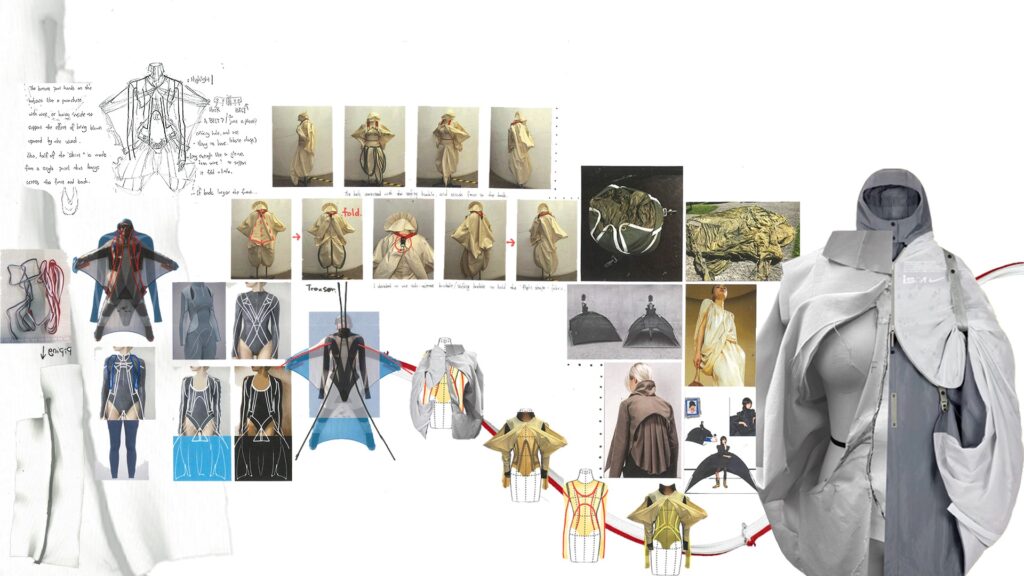
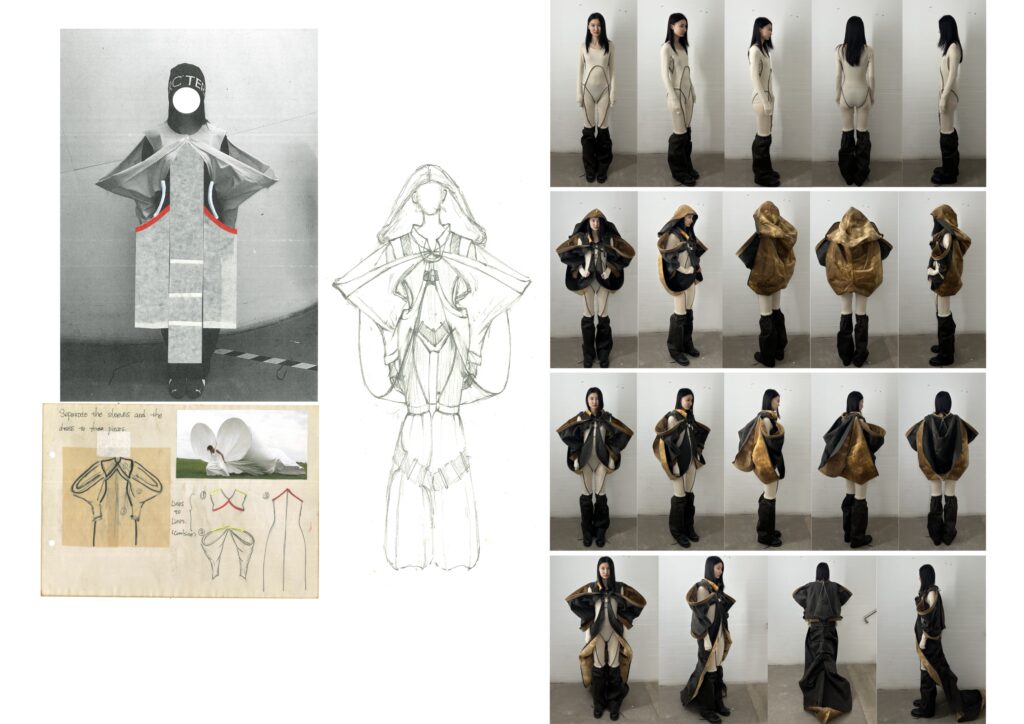
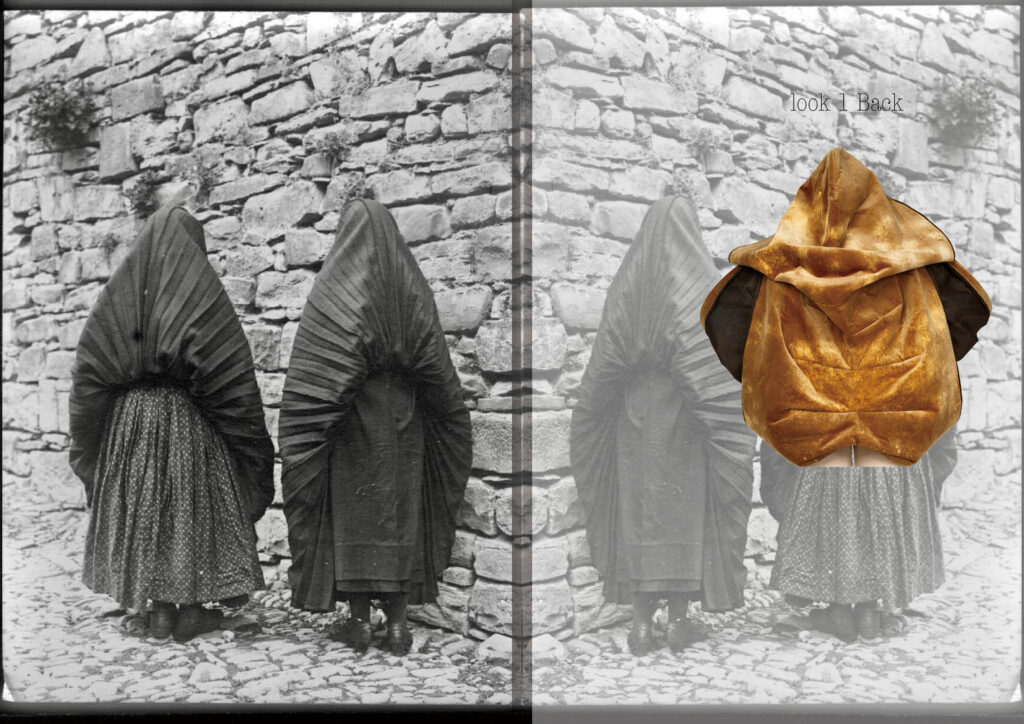
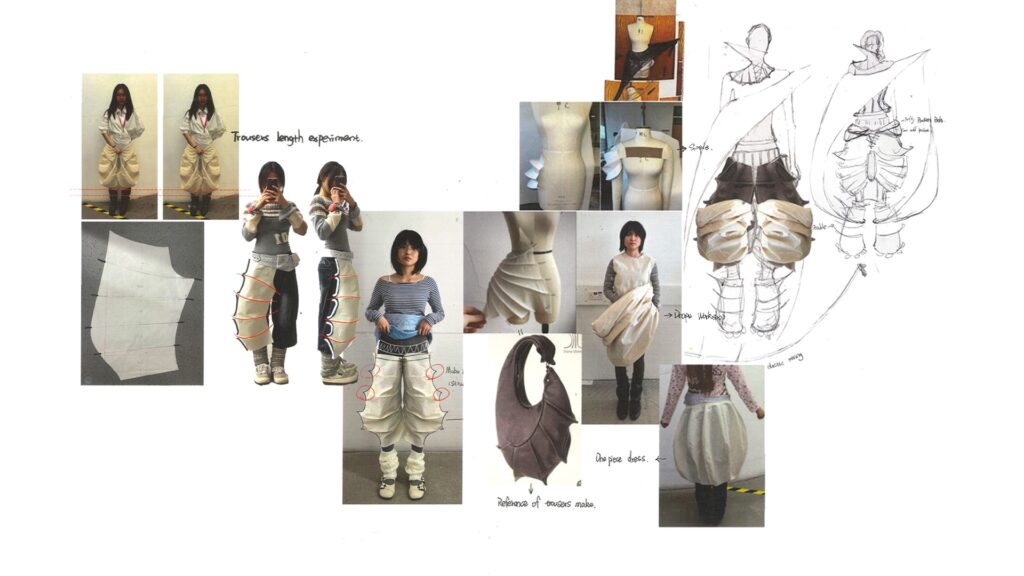
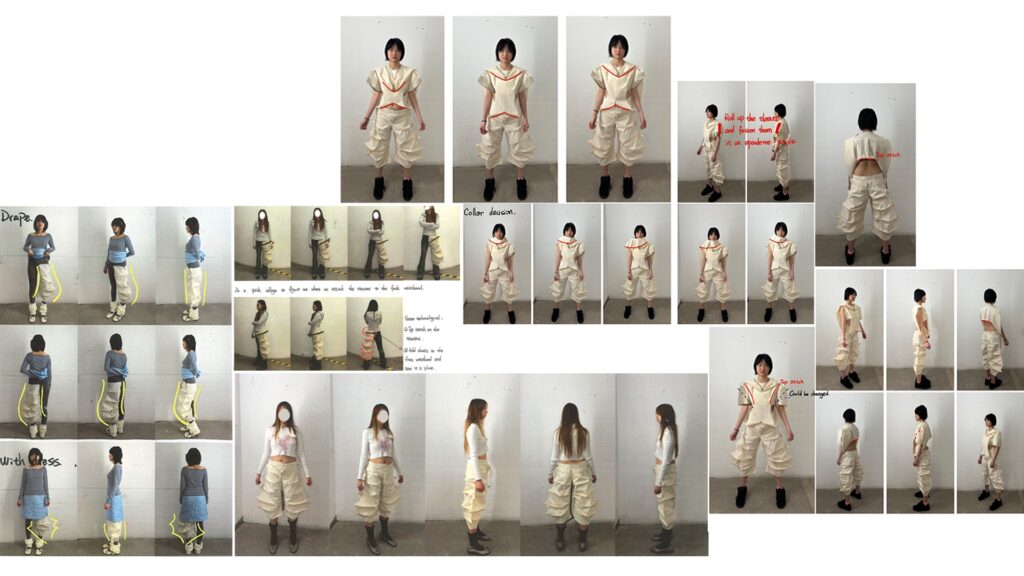
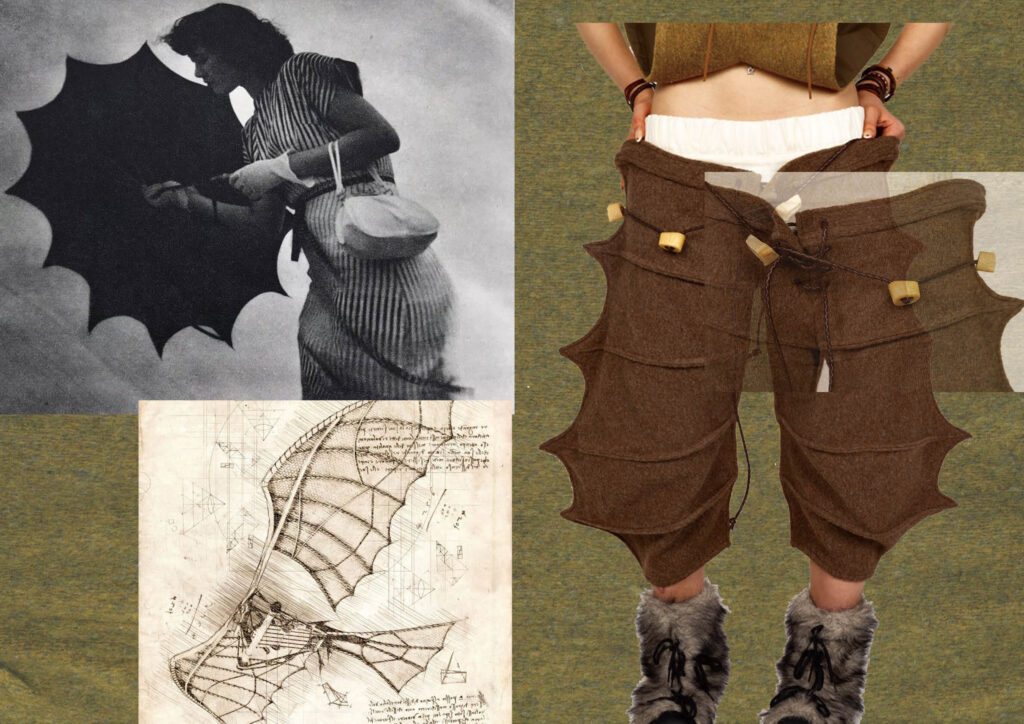
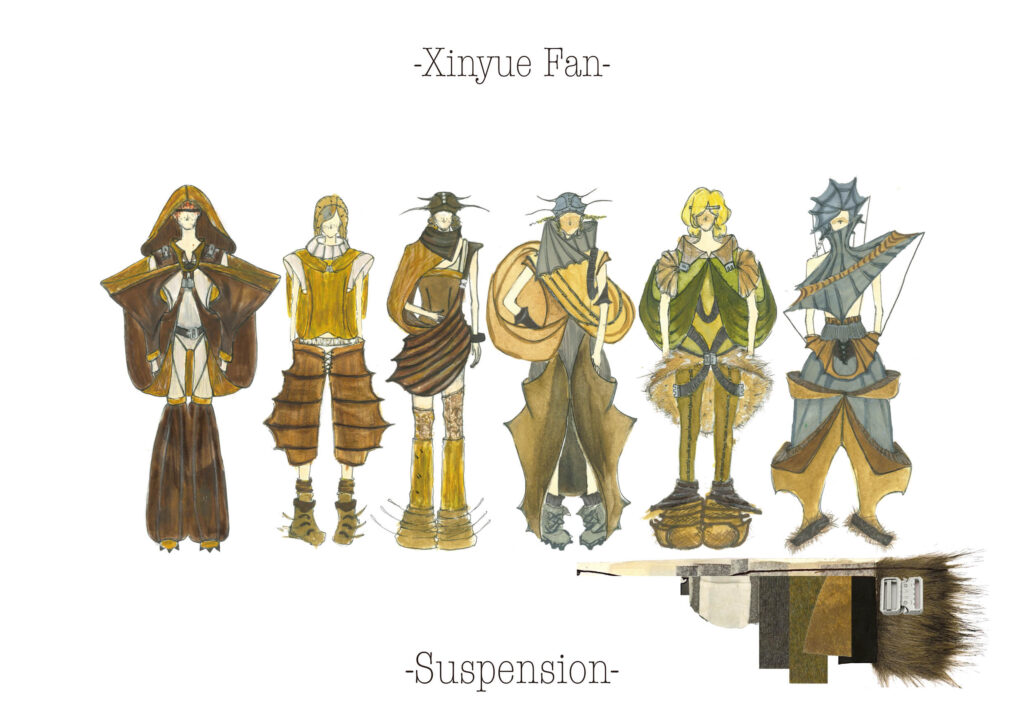
我的主要关注点在于风与人体的关系:在飞行中,风向塑造着姿态和动作,同时也改变了织物的拉伸、提升和下落方式。通过观察风从不同角度吹拂织物和人体——产生开口、张力和阻力——我将这些瞬间转化为服装结构:包裹、束缚和向下垂坠。我还参考了翼装飞行和降落伞的空气动力学原理——利用增大的表面积来产生升力/阻力,并依靠安全带和扣环的固定点来分散力——以此来理解如何将受空气减缓、托举和引导的体验融入到可穿戴的结构中。早期的自由垂坠实验捕捉到了织物与外力之间的动态对话;通过反复调整拉伸方向、固定点和织物张力,我将风的定向力以轮廓和细节的形式呈现出来,因此服装不仅暗示着飞行,更体现了人体被空气推动、支撑和引导的状态。
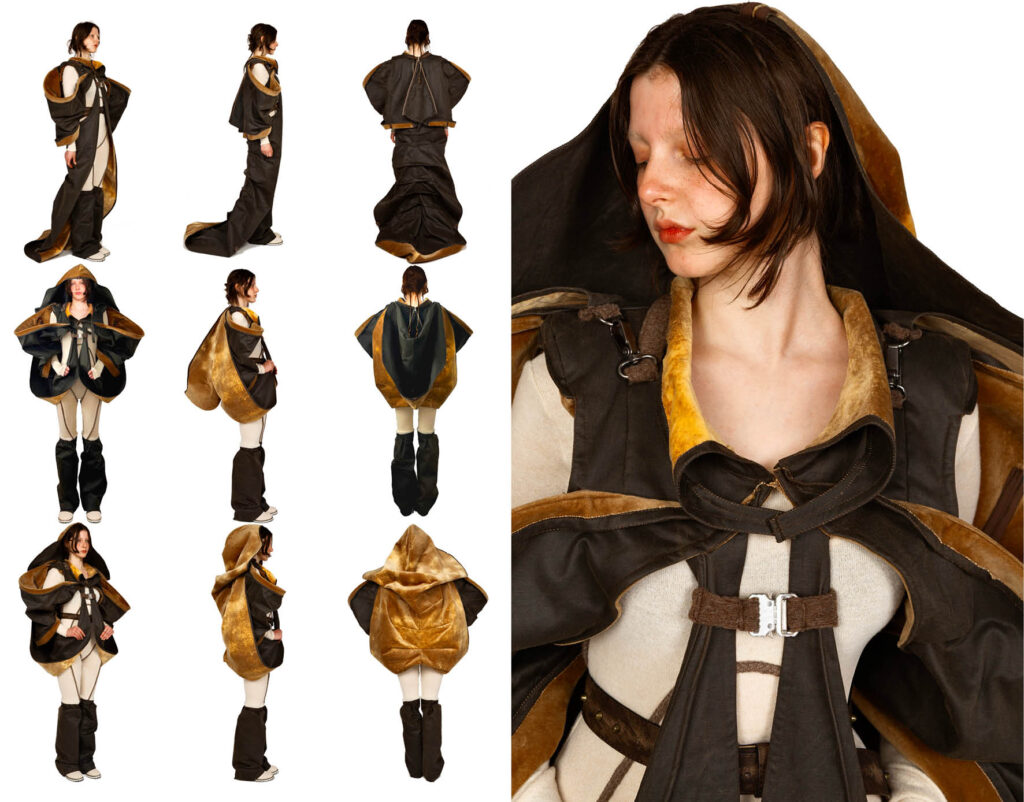
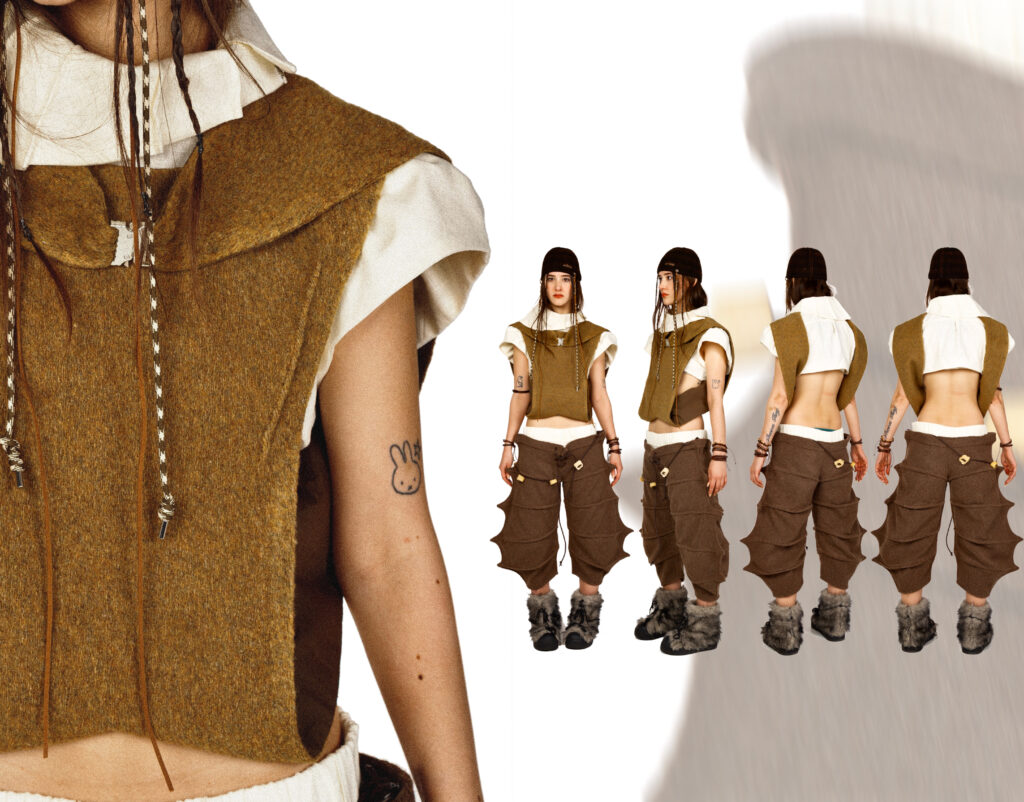
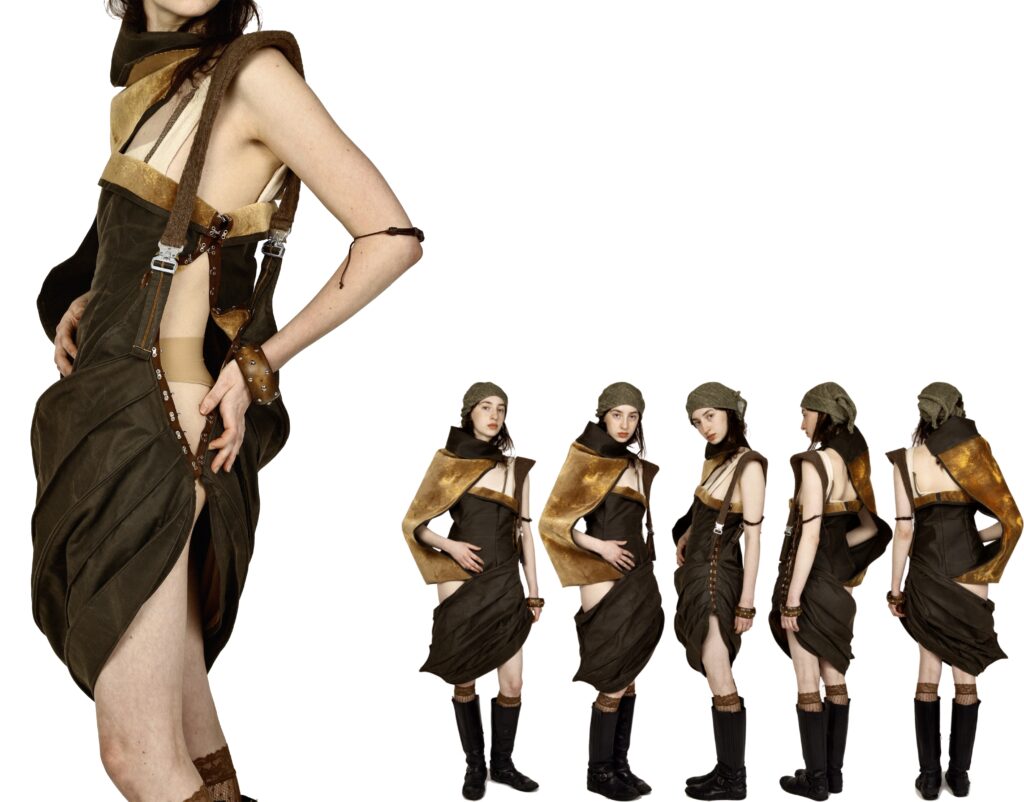
SUSPENSION – Process
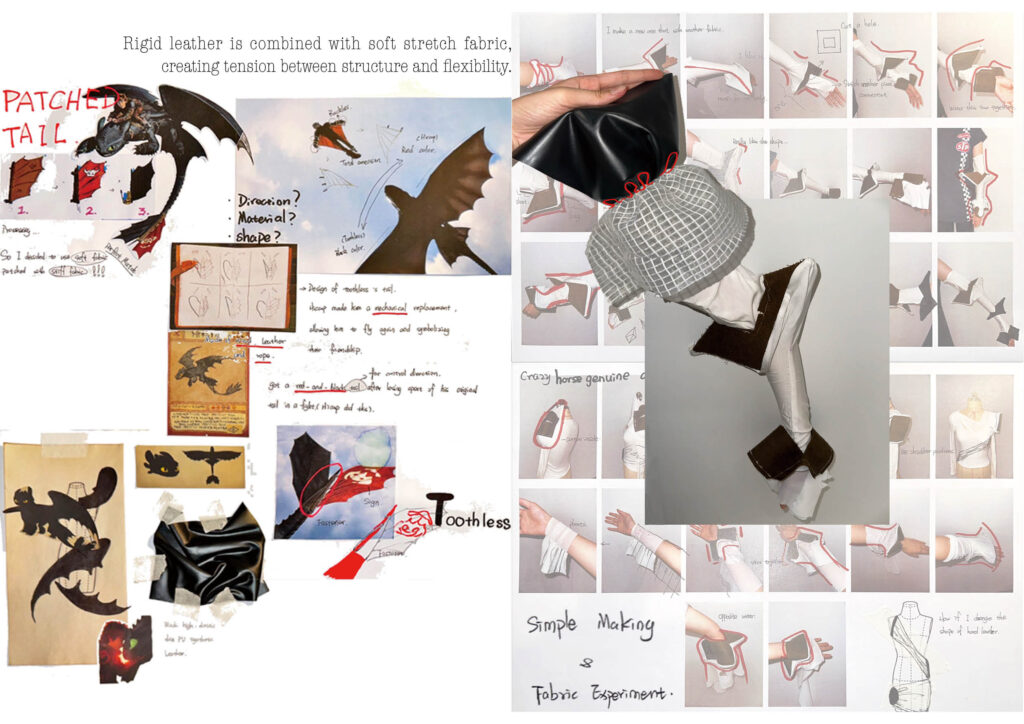
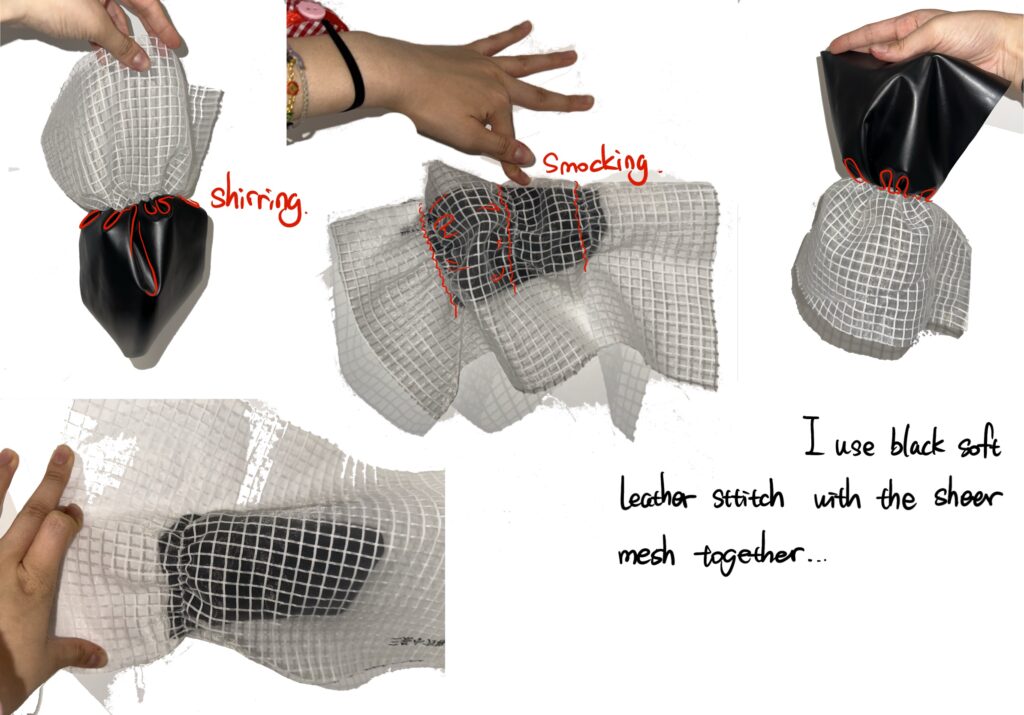
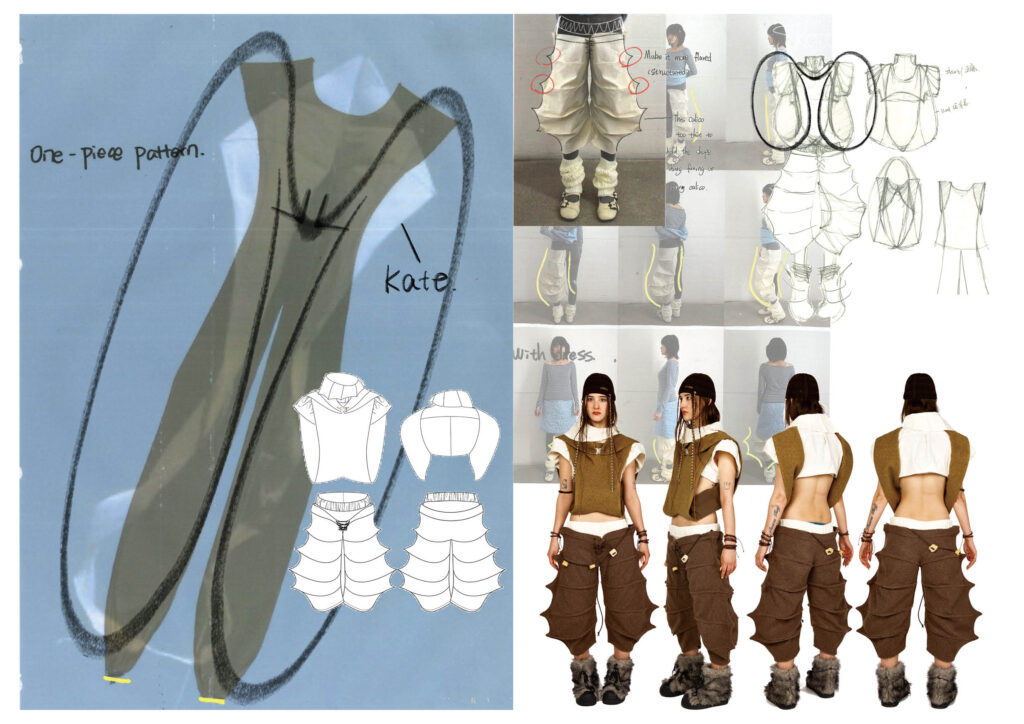
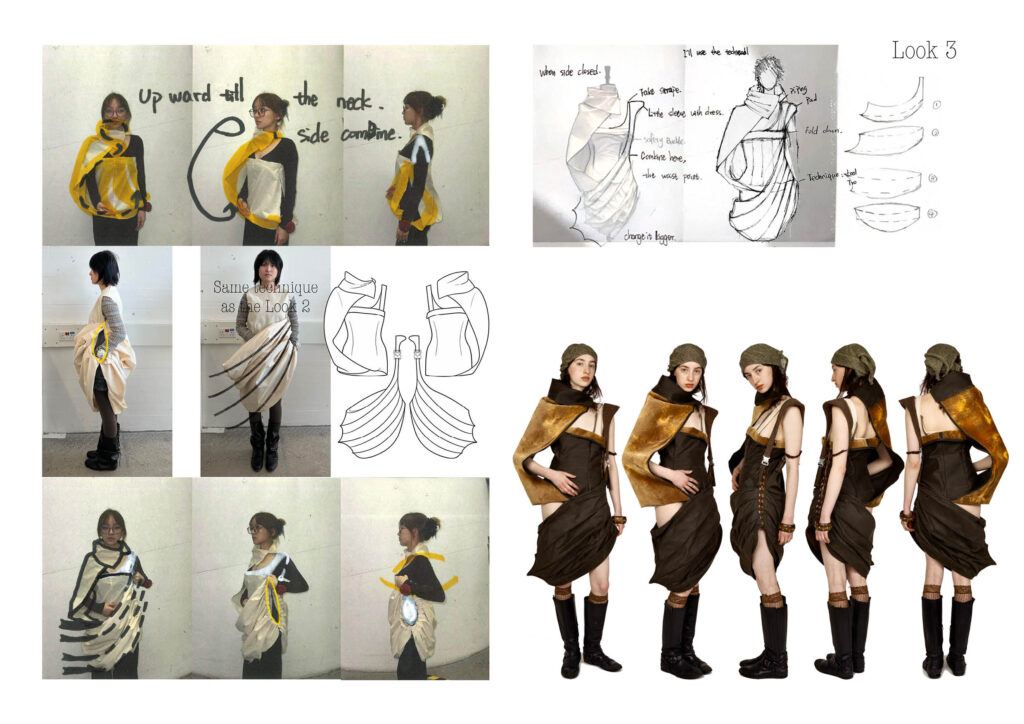
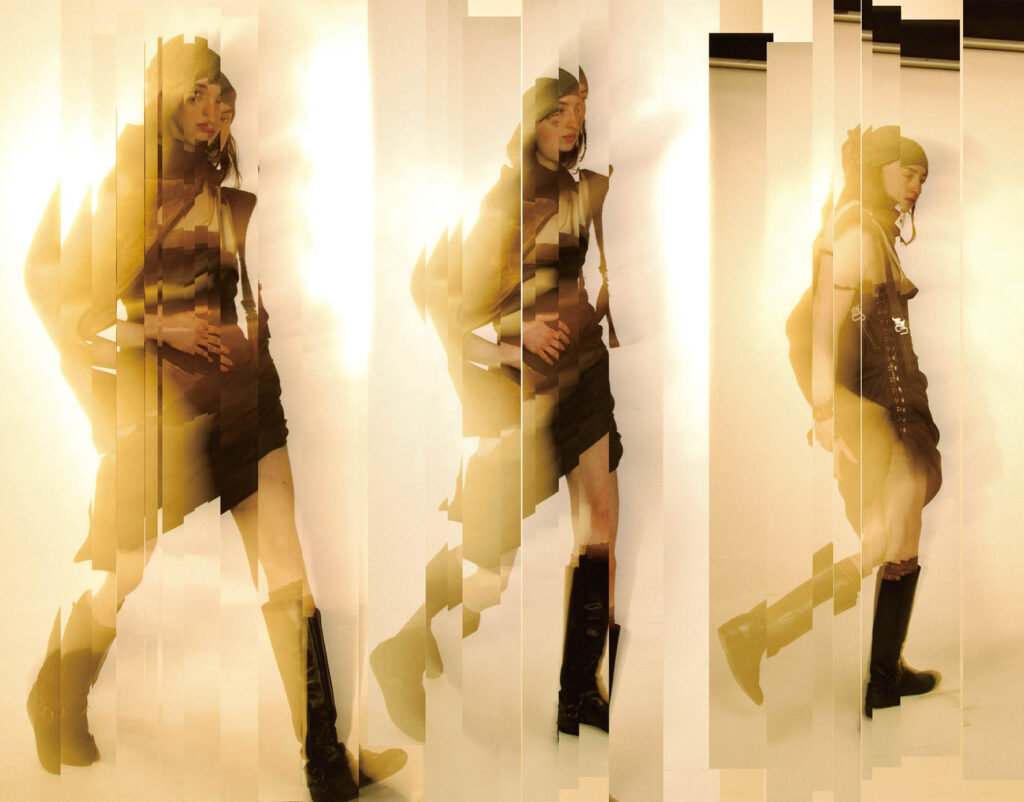
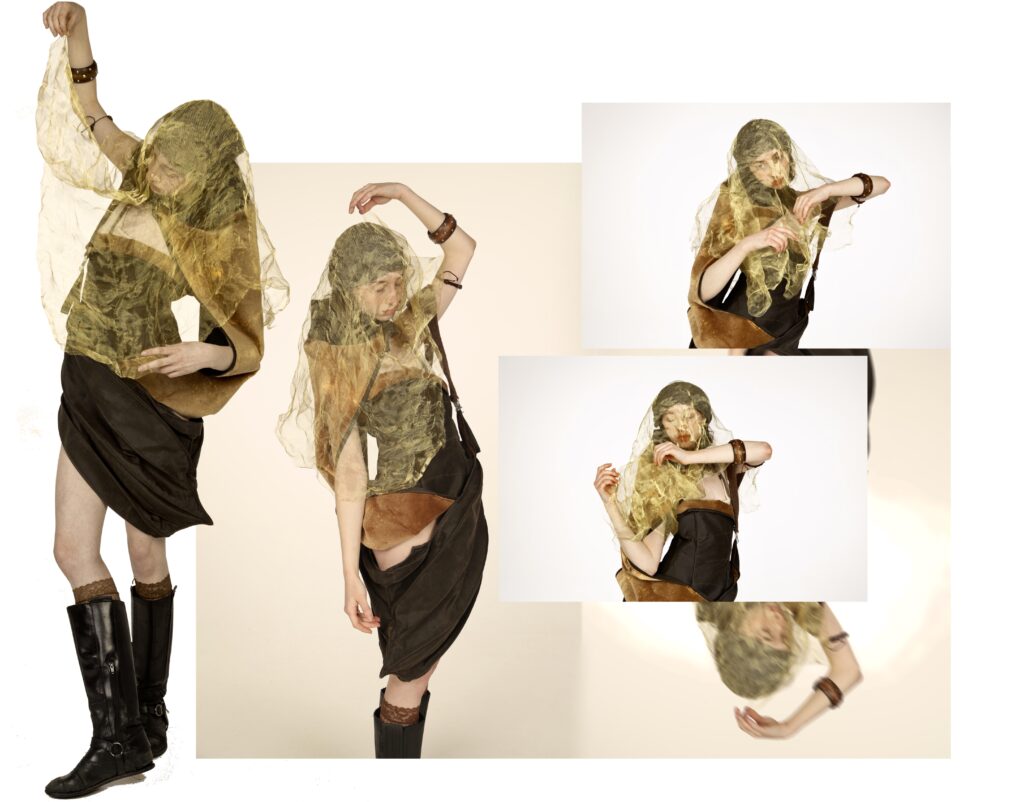
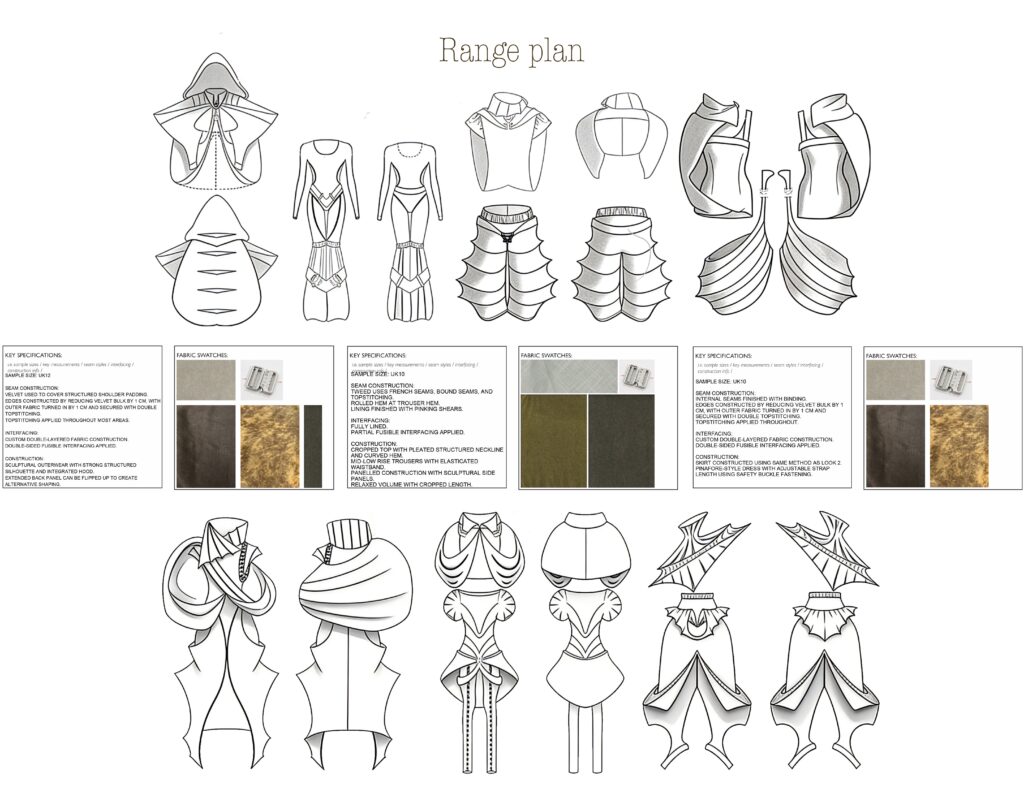
Suspension developed through self-recorded observations of bodies, clothing, and everyday objects exposed to strong wind conditions. The project examines how textiles respond under external force — fabric is pulled, lifted, compressed, opened, and displaced, generating moments of tension, drag, restraint, and release. These observations form the foundation of a garment language constructed through wrapping, tethering, anchoring, and weighted drape.
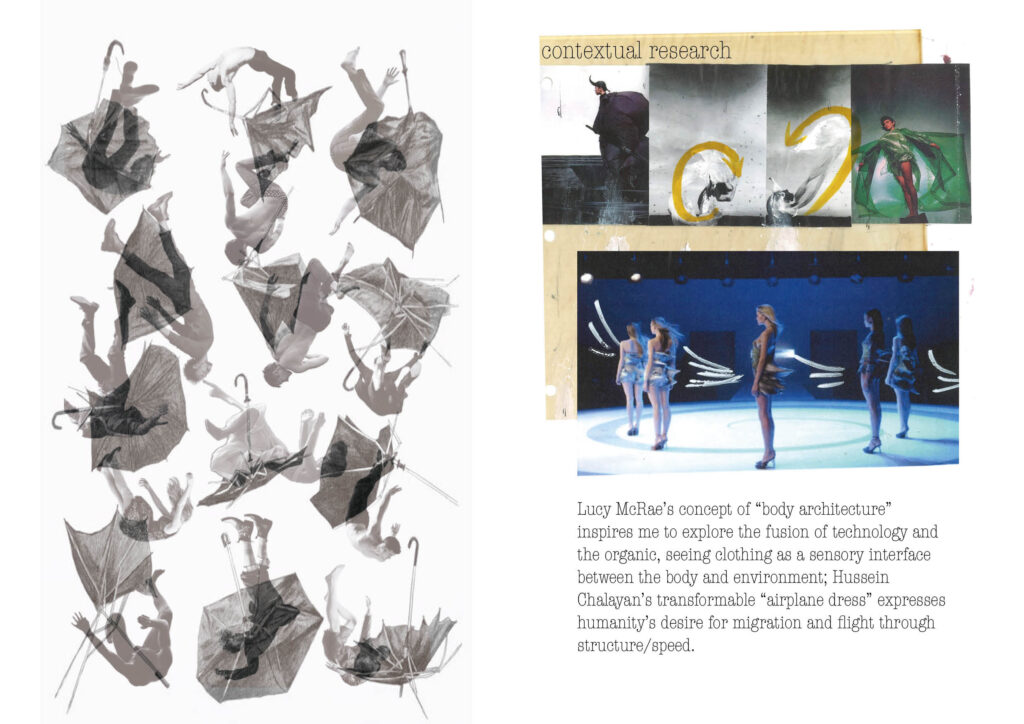
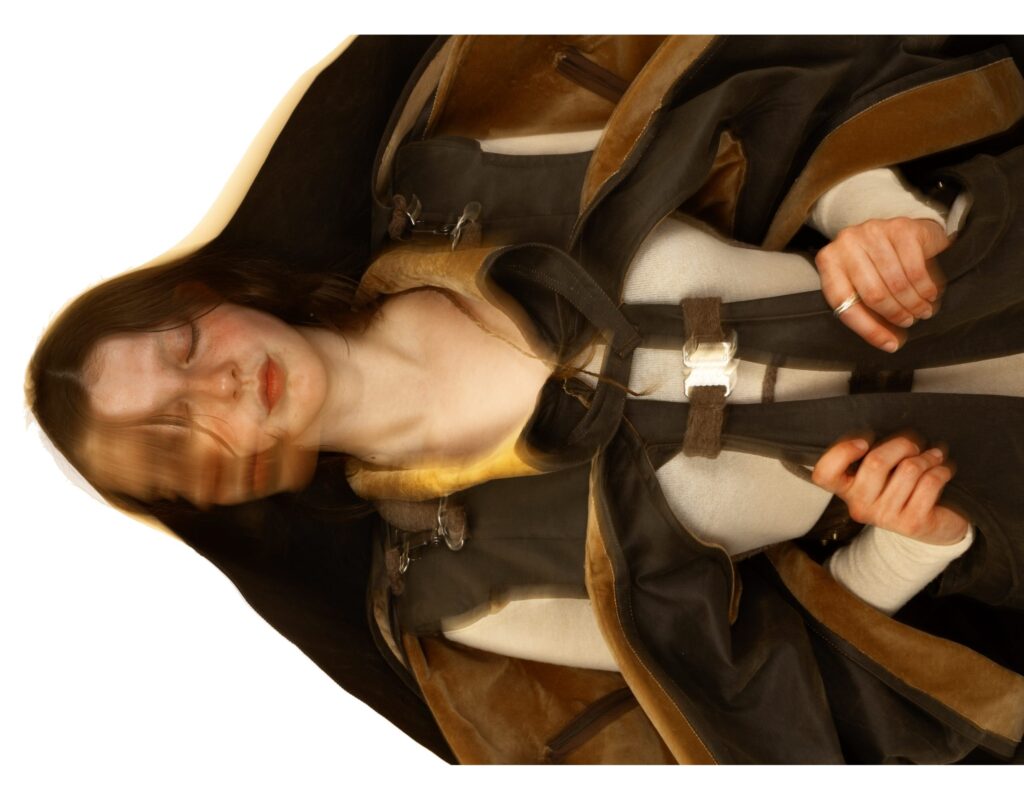
Referencing wingsuits, parachutes, and harness systems, the work explores how aerodynamic principles can be translated into wearable structures. Increased surface area, directional tension, and points of restraint are used to investigate how garments can support the body, slow movement, and make air physically present. Rather than simply suggesting flight, the garments embody the sensation of being pushed, supported, restricted, and guided by wind.
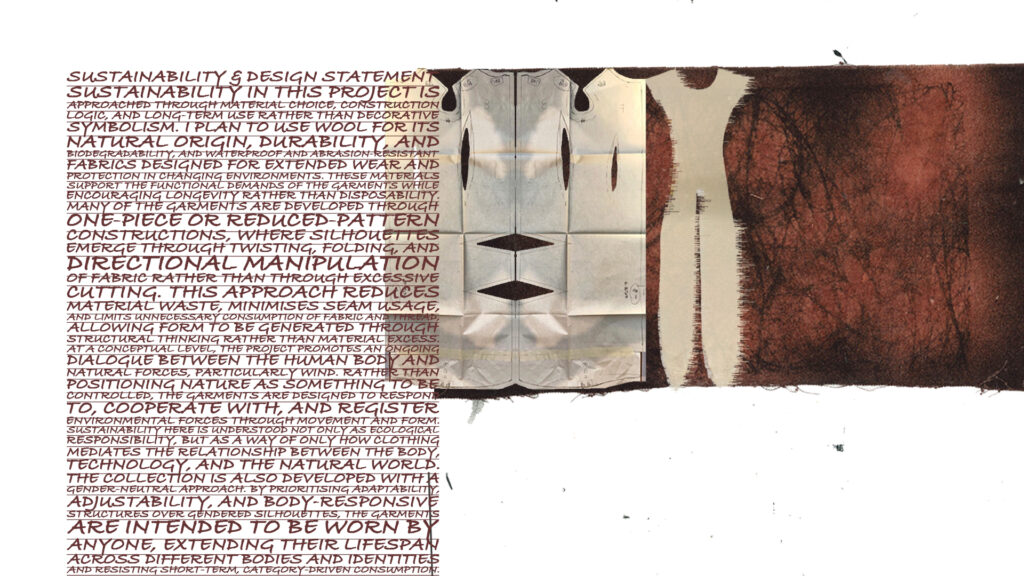
Fabric becomes reactive rather than static — a surface that records pressure and movement. Through minimal construction, one-piece forms, and tactile systems of connection, the garments emerge through force rather than decoration. The body exists suspended between protection and exposure, movement and stillness, control and surrender.
The project positions wind as an active collaborator, allowing invisible force to become visible through textile, silhouette, and bodily negotiation.
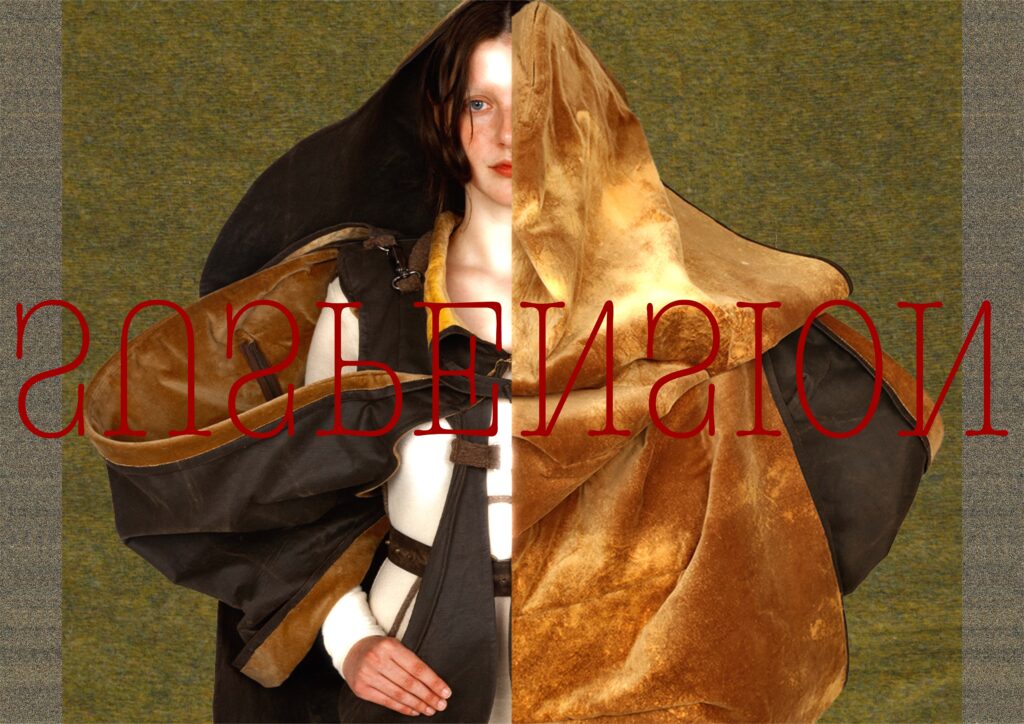
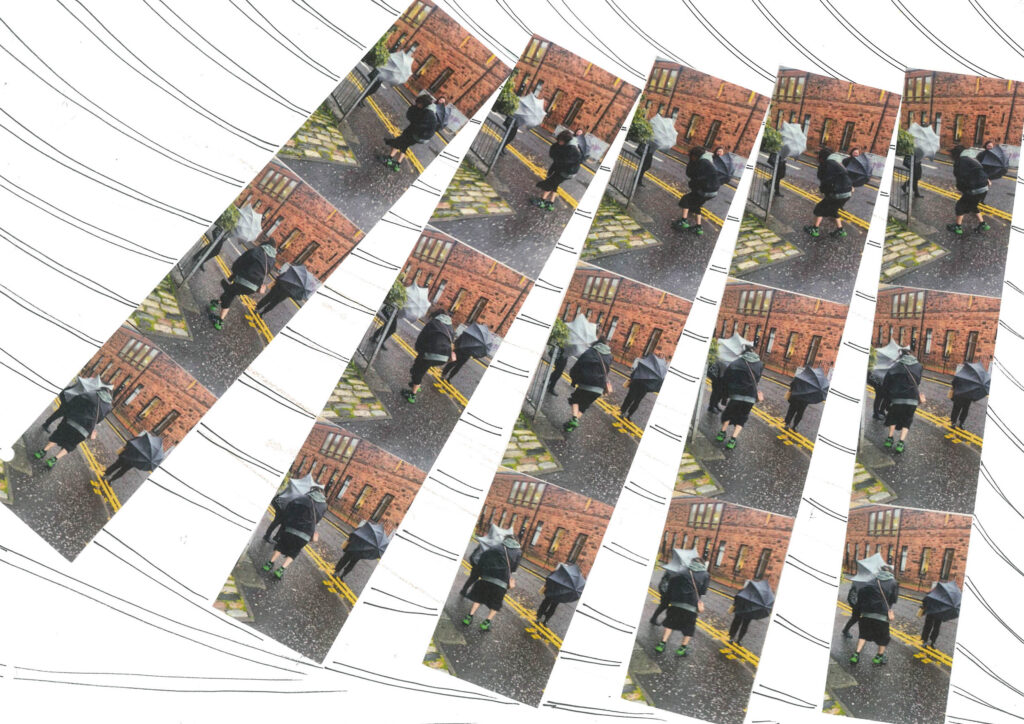
30 September 2022 marked the beginning of my experience studying in the UK. On a cold, rainy, and windy day, I recorded how bodies, garments, umbrellas, and everyday objects reacted to strong wind. I became fascinated by the way air could distort movement, reshape silhouettes, and alter the relationship between the body and its surroundings. This moment became the starting point for a project exploring wind as an invisible force capable of shaping form, tension, resistance, and movement through garment construction.