Qiuyu Wu
My name is QIUYU WU, and I am graduating this year with a BA (Hons) in Fashion Design.
In my design practice, I am particularly interested in the combination of fabrics and the detailed treatment of garment structure. I aim to create designs with depth and visual interest through subtle yet distinctive structural variations. My work often incorporates textures, pleats, and constructed elements attached to the surface of fabrics, using these details to enrich both the visual and tactile qualities of the garments.
I believe that finding inspiration from everyday life is an important part of sustaining my creative process. Transforming personal experiences and the surrounding environment into design language not only allows my work to connect more closely with reality, but also helps me maintain a stronger emotional engagement and motivation throughout the process of creating.
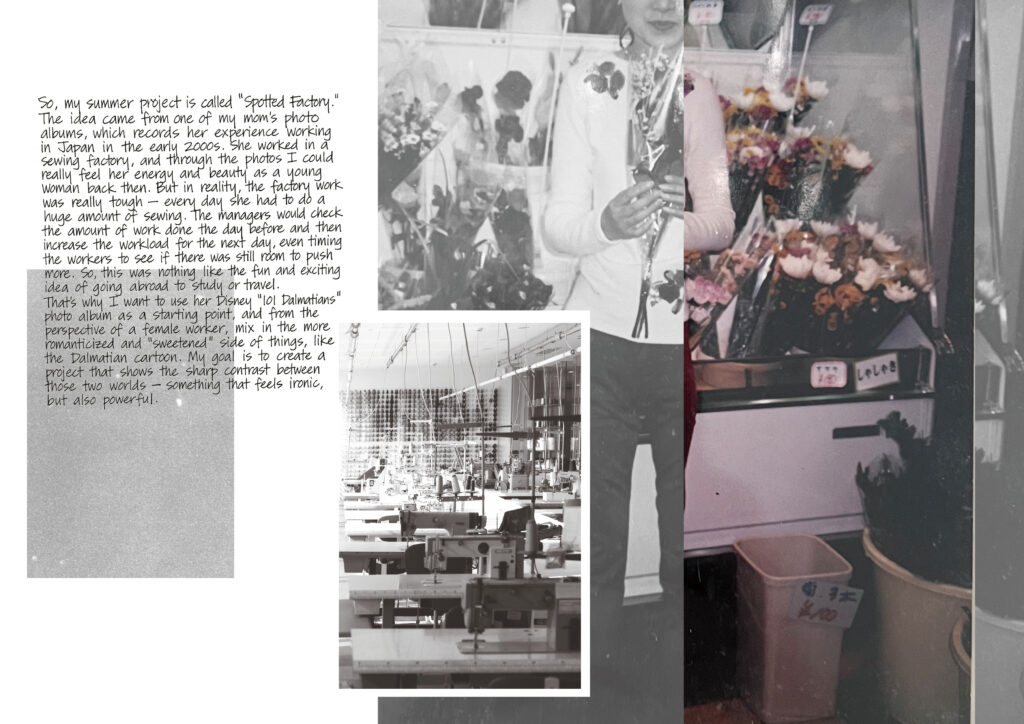
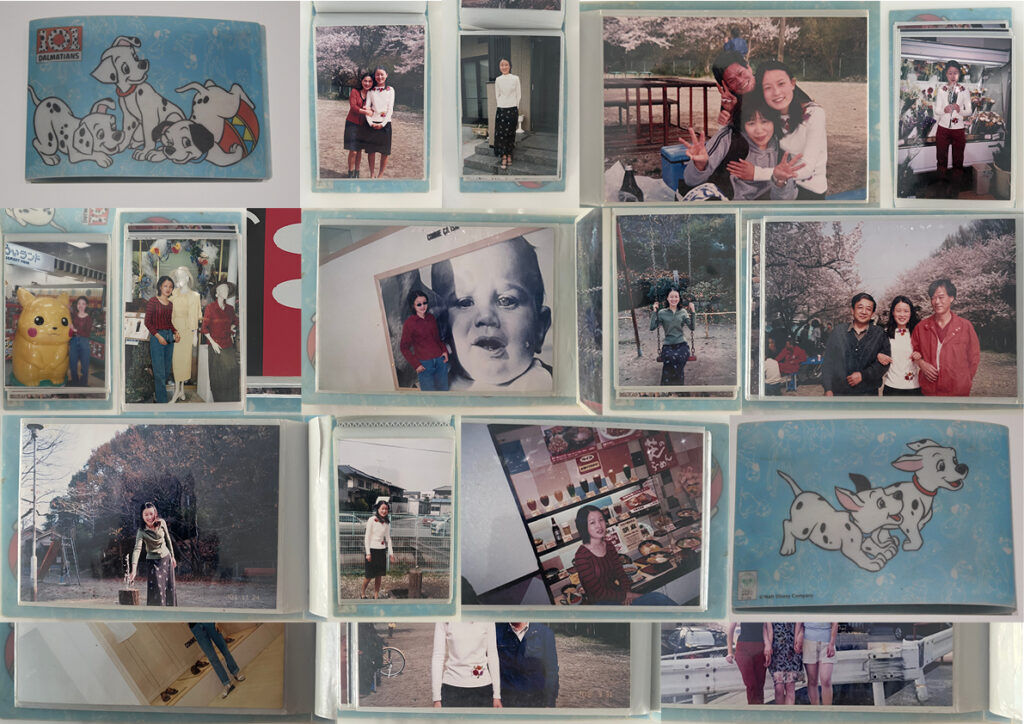
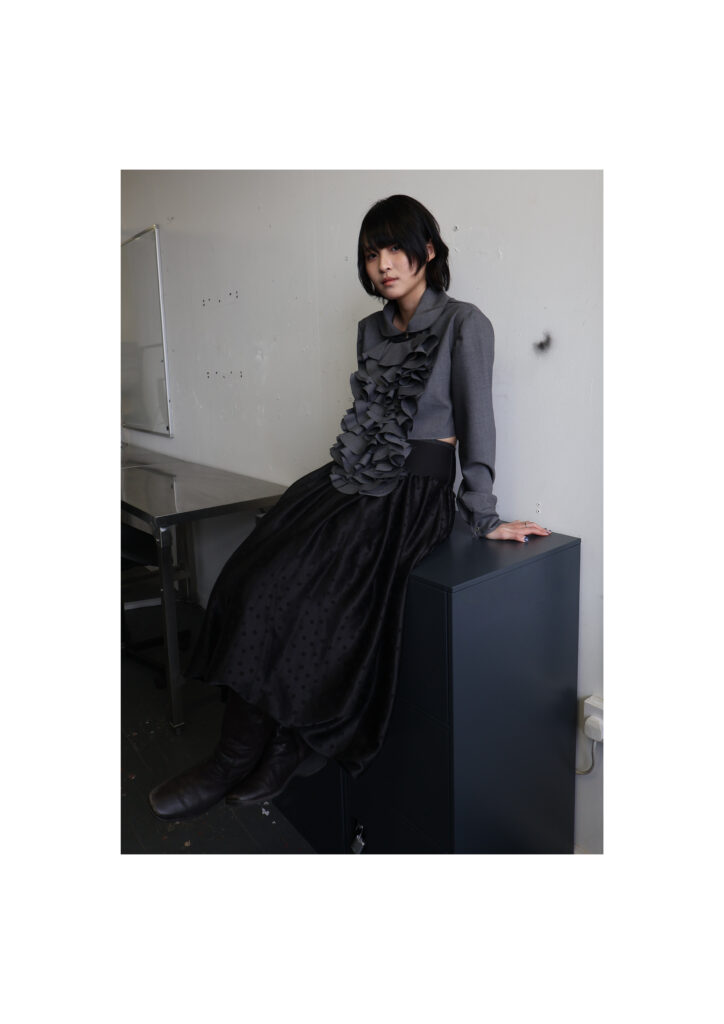
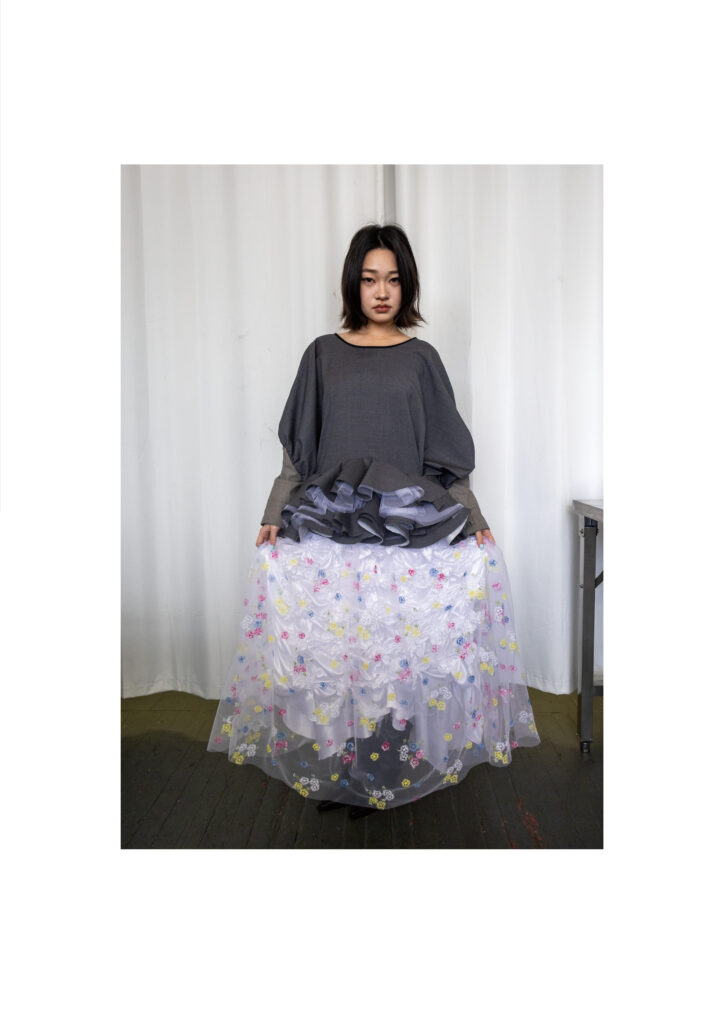
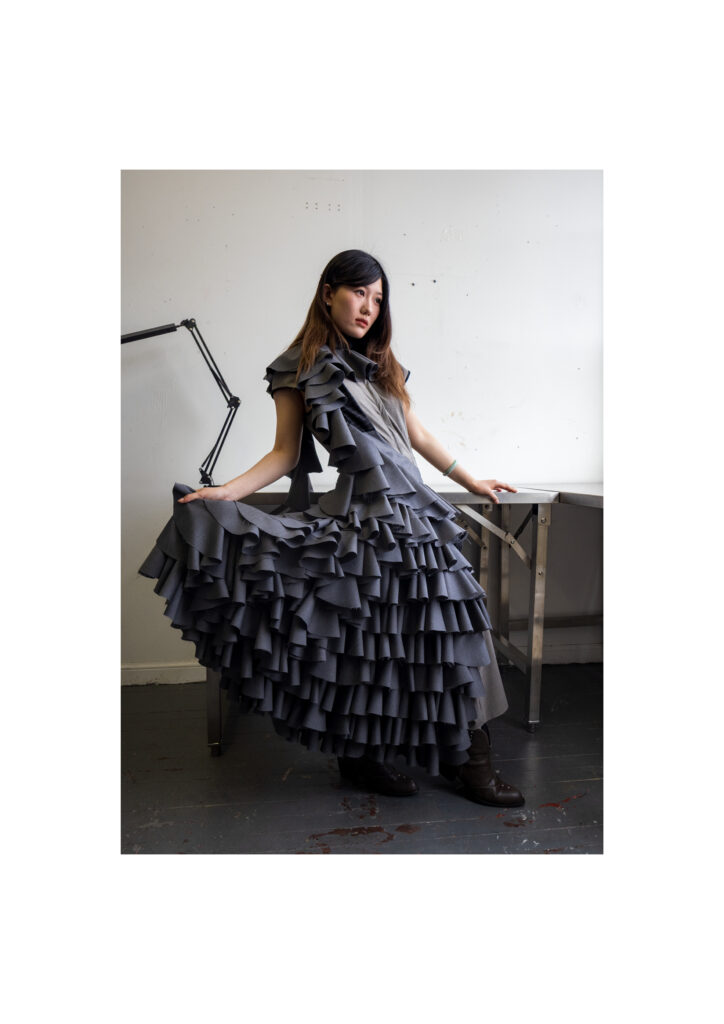
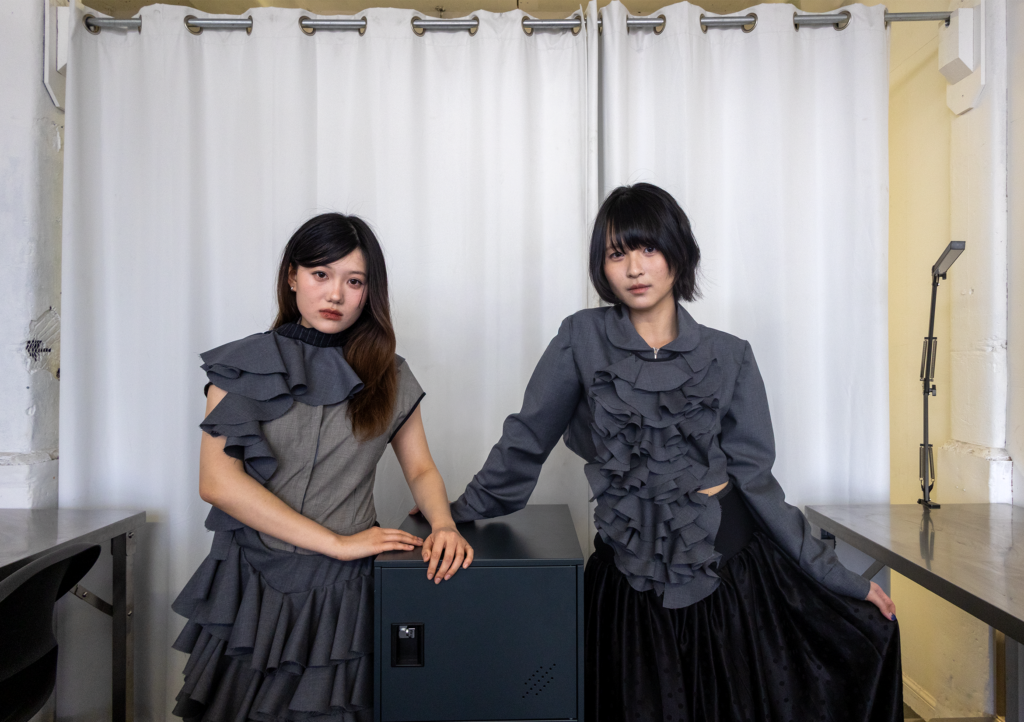
My graduate collection, Spotted Factory, is inspired by my mother’s experience working in Japan during the early 2000s. Using her photo album as a starting point, I reconstruct and reimagine this period of memory, combining the visual culture, social atmosphere, and female working environments of that era, and translating these elements into silhouettes, structures, and material expressions within my designs.
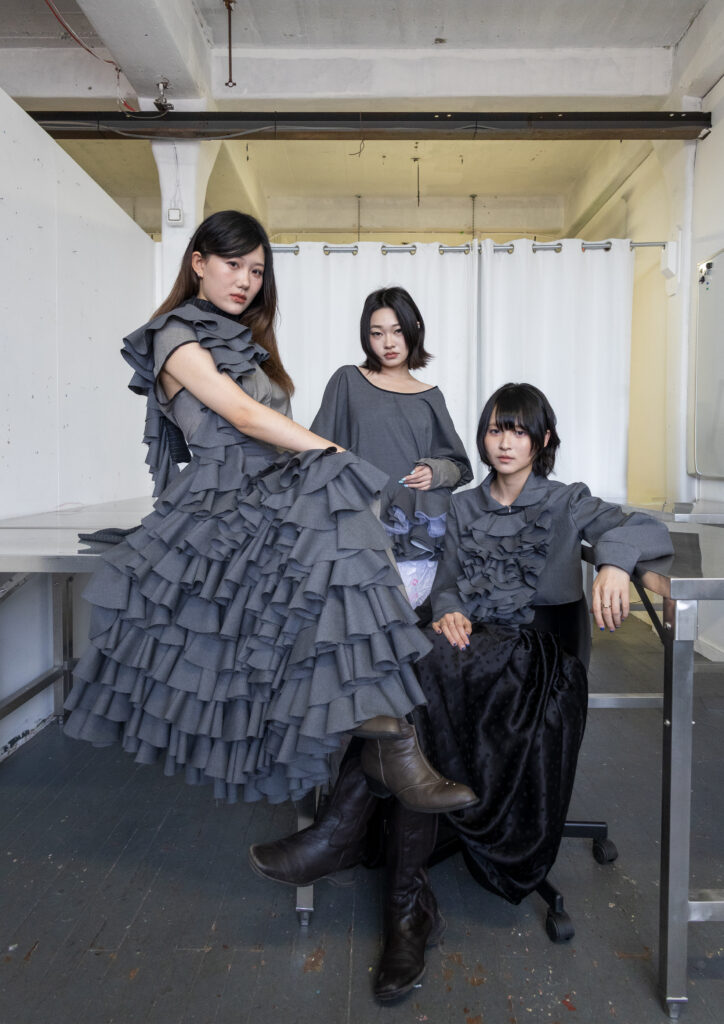
Spotted Factory
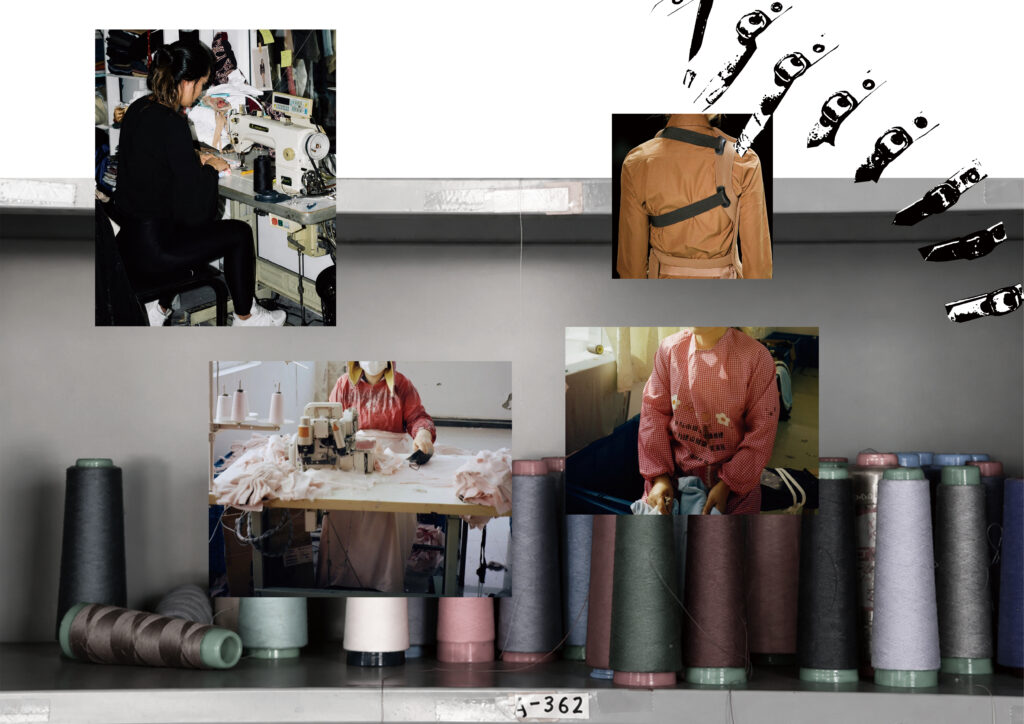
Looking back at memories and scenes from the early 2000s through my mother’s photo album, I became drawn to the constant sound of sewing machines running inside small garment workshops and the quiet endurance of female workers. This led me to explore that period more deeply, particularly the position and transformation of female identity and women’s social roles within working environments at the time.
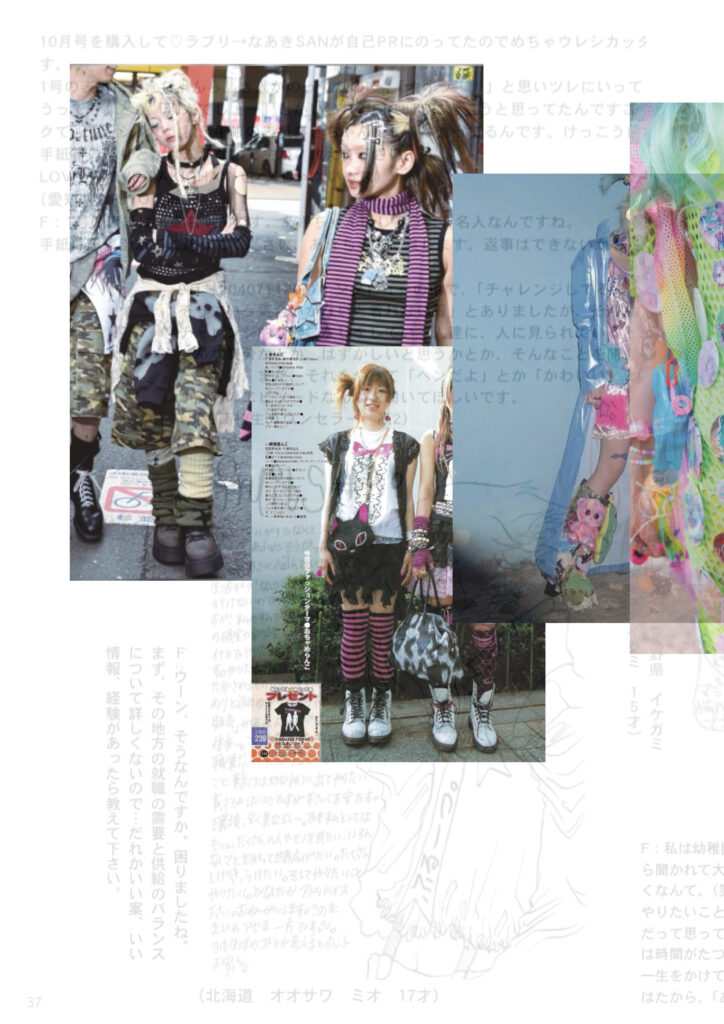
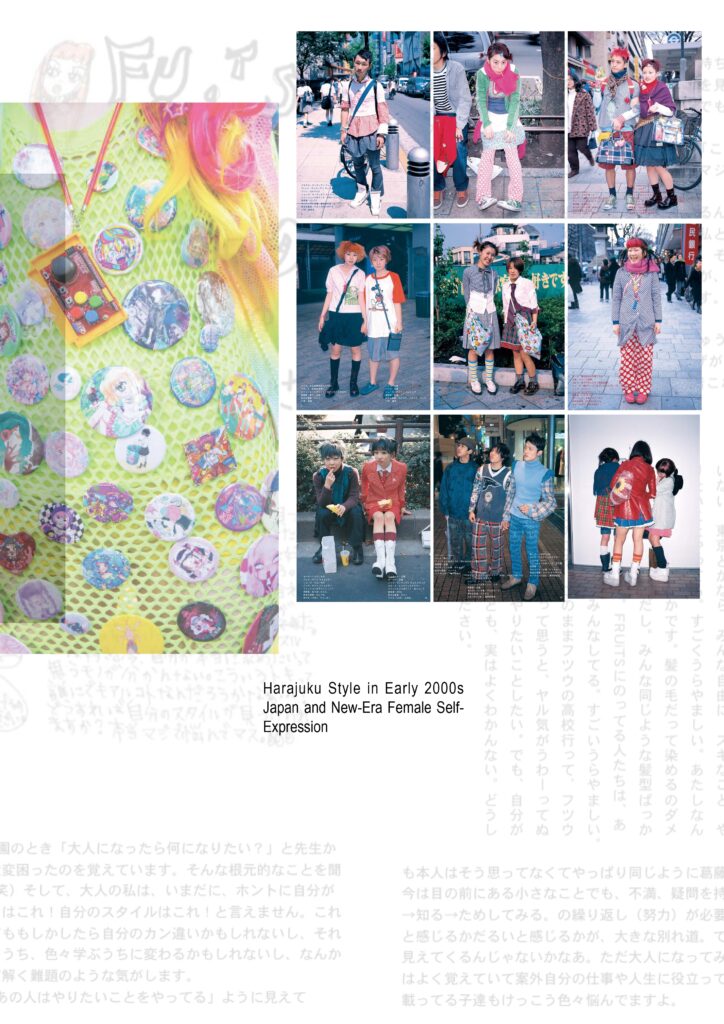
I began considering how fashion could support this kind of visual expression, drawing inspiration from both industrial workwear and the self-expressive Harajuku styles that emerged in Japan during the early 2000s. I wanted to combine two contrasting clothing languages that carry completely different meanings. Workwear, originally designed purely for functionality and durability, embodies an industrial visual language through protective fabrics, reinforced construction, and practical tailoring, while also symbolising order and uniformity. However, as women moved through these environments, these garments gradually began to take on new meanings. In contrast, Harajuku fashion represented a form of self-expression for Japanese youth, not limited to women alone. On the streets of Harajuku, clothing became a radical tool for expressing identity. Layered silhouettes, vibrant colours, and unexpected styling transformed everyday dress into something playful, individual, and rebellious.
This collection explores the meeting point between these two worlds: the discipline of workwear and the freedom of street culture. Through exaggerated silhouettes, layered constructions, and unexpected details, traditional garments associated with labour are reinterpreted to express both strength and individuality. As women’s social roles continue to evolve, the collection asks: what happens when the language of labour uniforms meets the language of self-expression? Can workwear transform into a new symbol of female autonomy, presence, and identity?
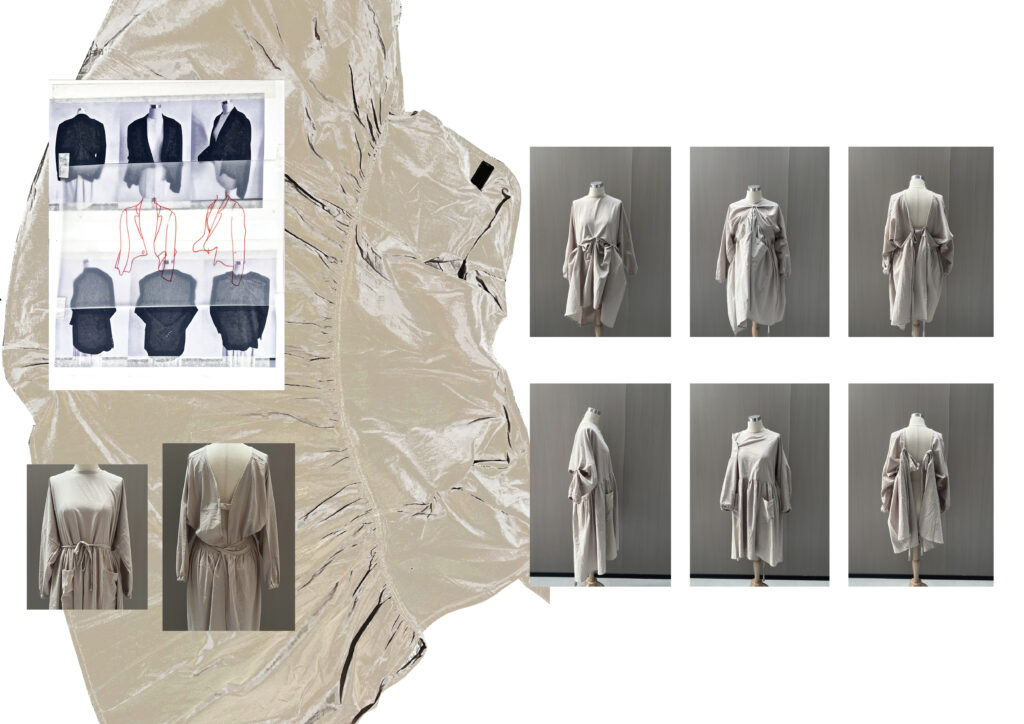
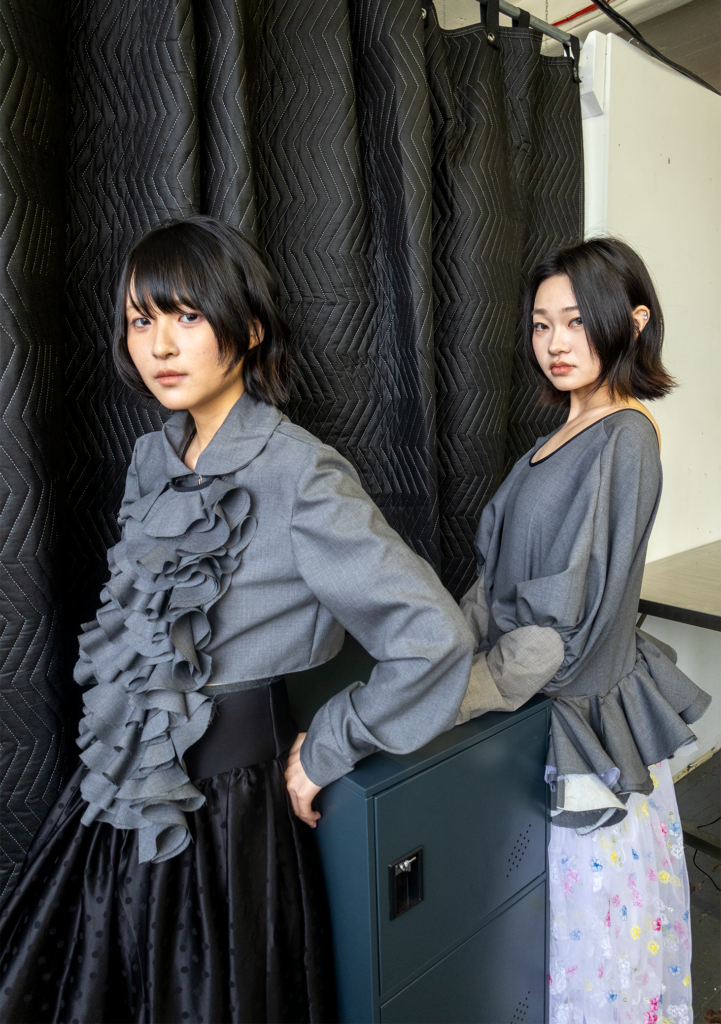
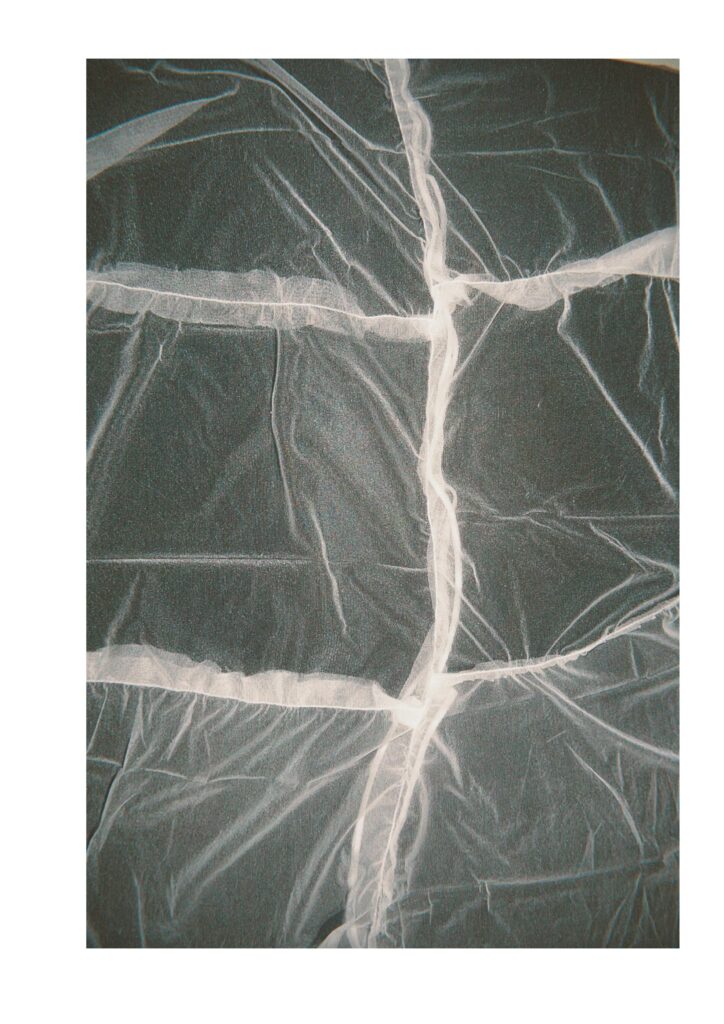
Lightweight tulle fabrics and grey suiting-inspired textiles reflect my exploration of these two contrasting styles. Through the use of ruffles and hand-made pleating techniques, I create layered and alternating textures and forms. Sleeveless smock-like structures, apron silhouettes, and tailored shirt collars all extend the visual language of women’s workwear, bringing richer silhouettes and a wider range of colour and material expression into the designs.