Nicola Craig
(She/Her)
Nicola Craig is an interior designer who trained at City of Glasgow College and Glasgow School of Art. Her Co-Z proposal is shaped by the very nature of Glasgow itself, a city built on resilience, craftsmanship and reinvention. Inspired by the graft and craft that defined the Clyde’s shipyards and the enduring confidence of the city’s architecture, she approaches design as both preservation and transformation. Her practice focuses on adaptive reuse, creating emotionally engaging interiors that celebrate materiality, social connection and a strong sense of place. Nicola holds the perspective that great design should honour what already exists, while boldly imagining what comes next.
Co-Z Adaptive Reuse for Contemporary Urban Living
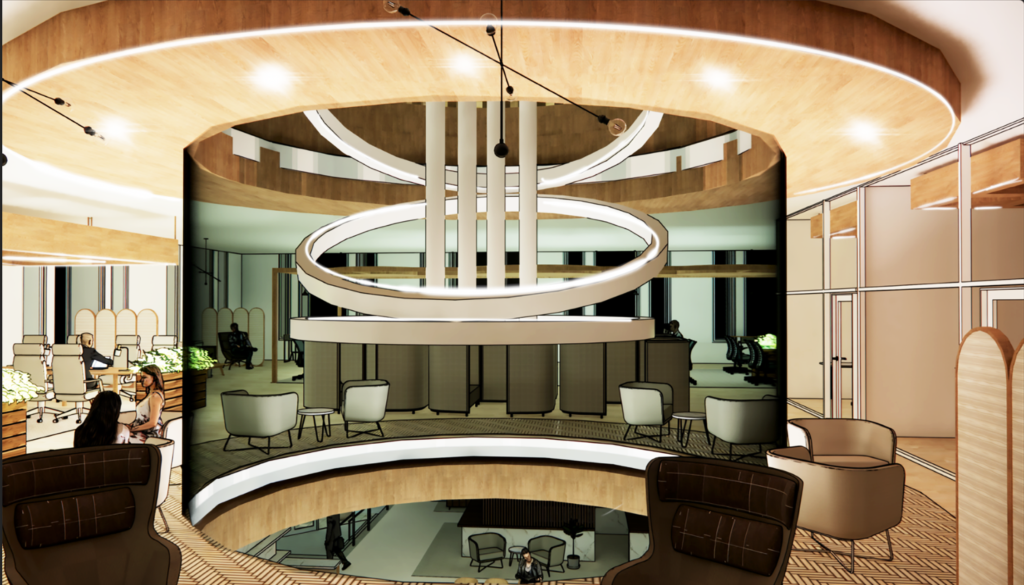
Co-Z reimagines a prominent vacant Glasgow city-centre building as a contemporary co-living and co-working destination. Rooted in adaptive reuse, the project balances Glasgow’s architectural heritage with modern urban living, creating immersive shared spaces positioned around a dramatic multi-level atrium, curated materiality and hospitality-inspired interiors.
Site
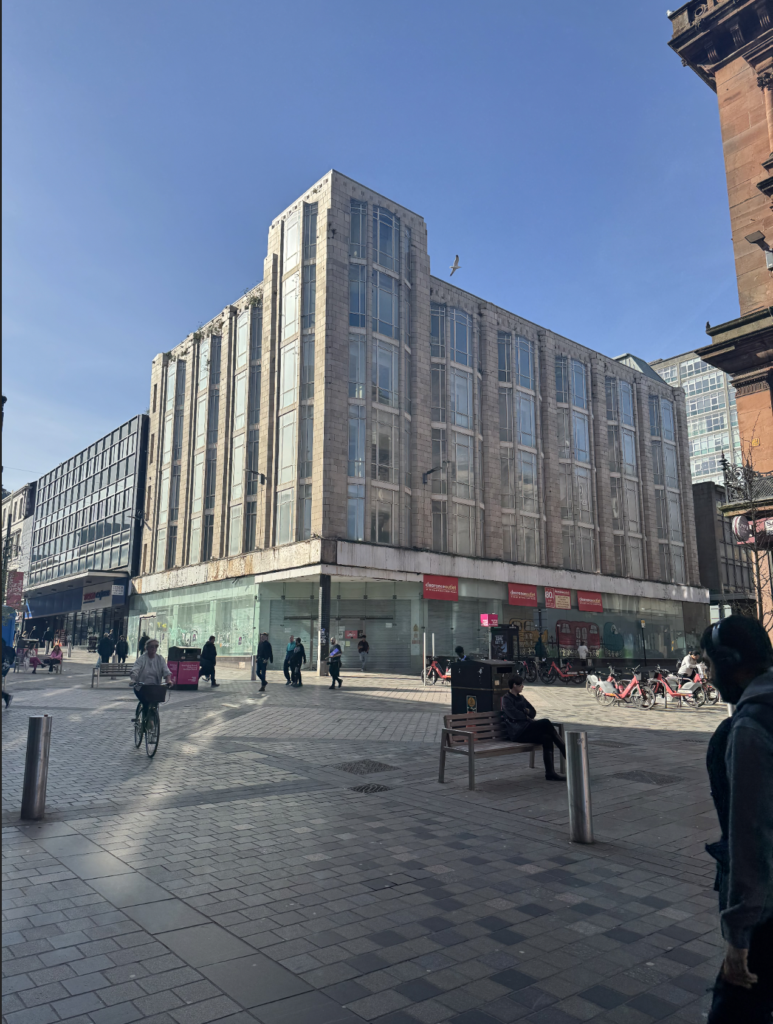
Sauchiehall Street already supports a diverse urban mix of hotels, hospitality, workspaces and cultural activity, creating energy across the day and evening. However, much of this activity remains fragmented, with limited integration between living, working and public social experience. Positioned in Glasgow’s Golden Z, the former C&A building presents an opportunity to respond to this changing context through adaptive reuse. Co-Z builds on what already exists while addressing what is missing, a cohesive design-led, live-work and social destination that contributes to a more vibrant and sustainable city.
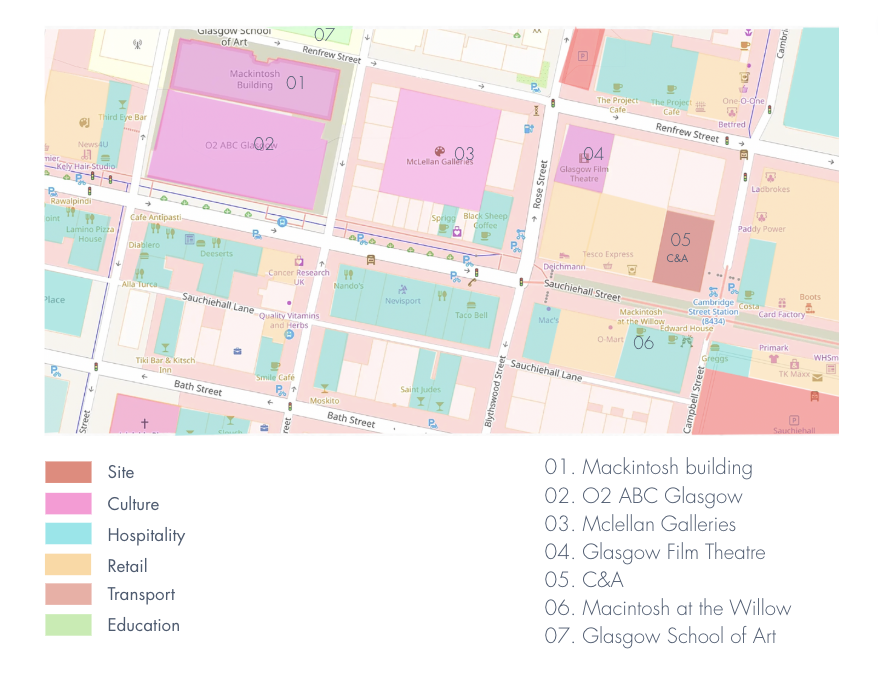
Credit Glasgow City Council Maps
Concept
Project Summary
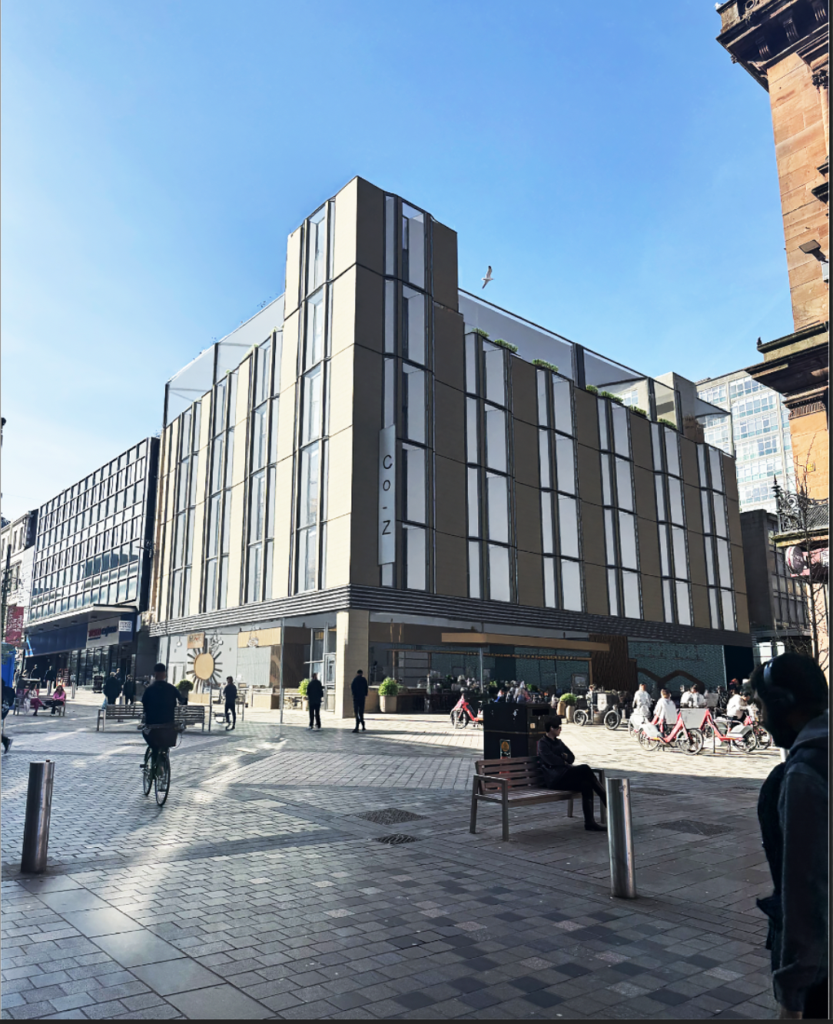
Project Co-Z aims to transform the former C&A Building on Sauchiehall Street into a hybrid co-working, co-living space. The building’s prime corner location, impressive footfall and Art Deco heritage make it an attractive proposition. The building’s scale and openness create an ideal environment for flexible working, living and community spaces.
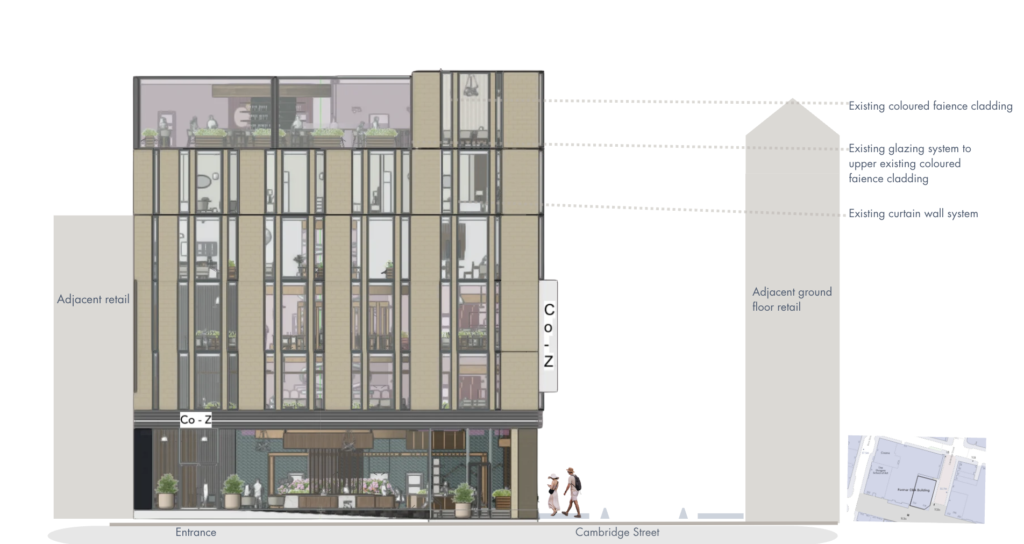
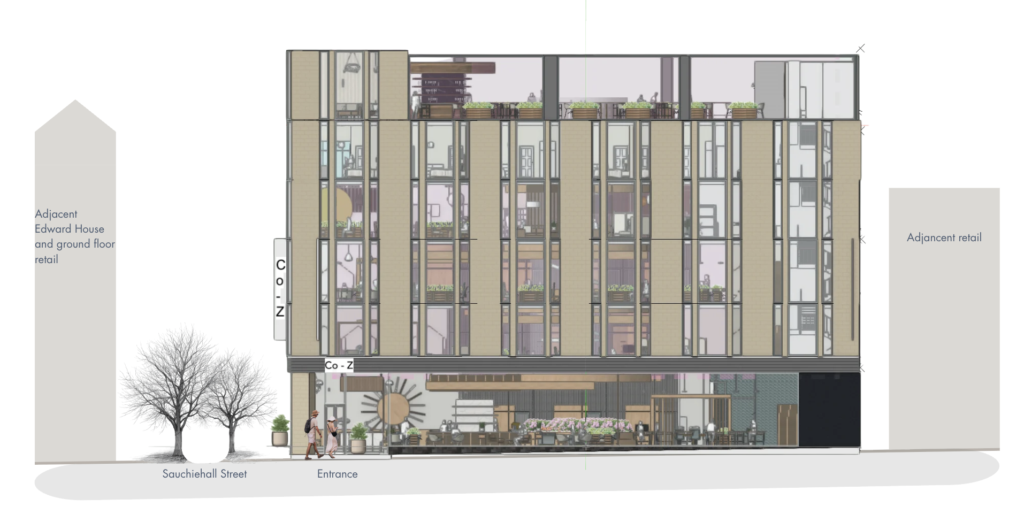
Co-Z is an adaptive reuse project, restoring the building’s original elegance, while introducing modern layers that support contemporary work-life patterns. The project celebrates the Art Deco through facade materials with a modern twist, improving visibility of the building’s architectural prowess.
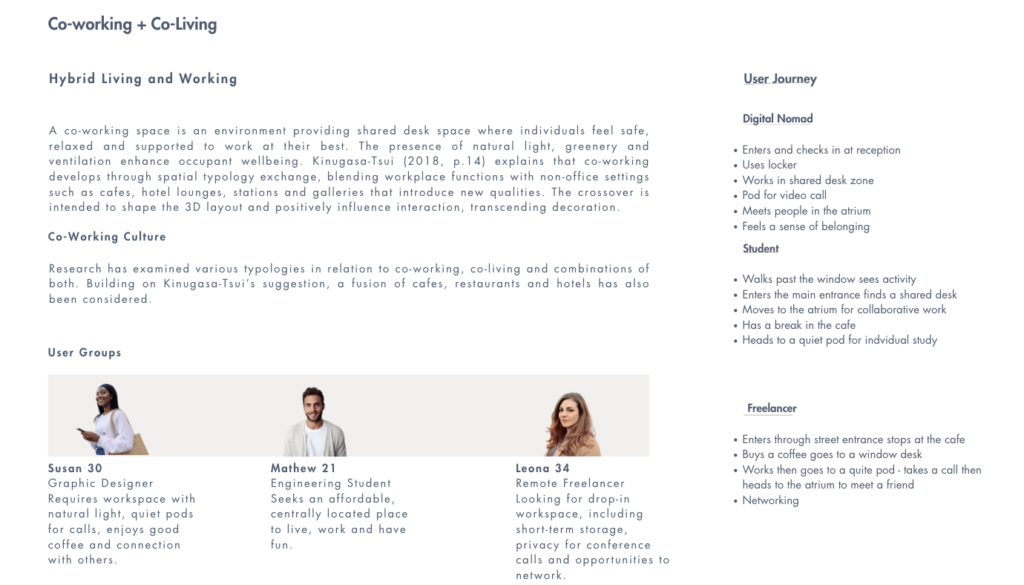
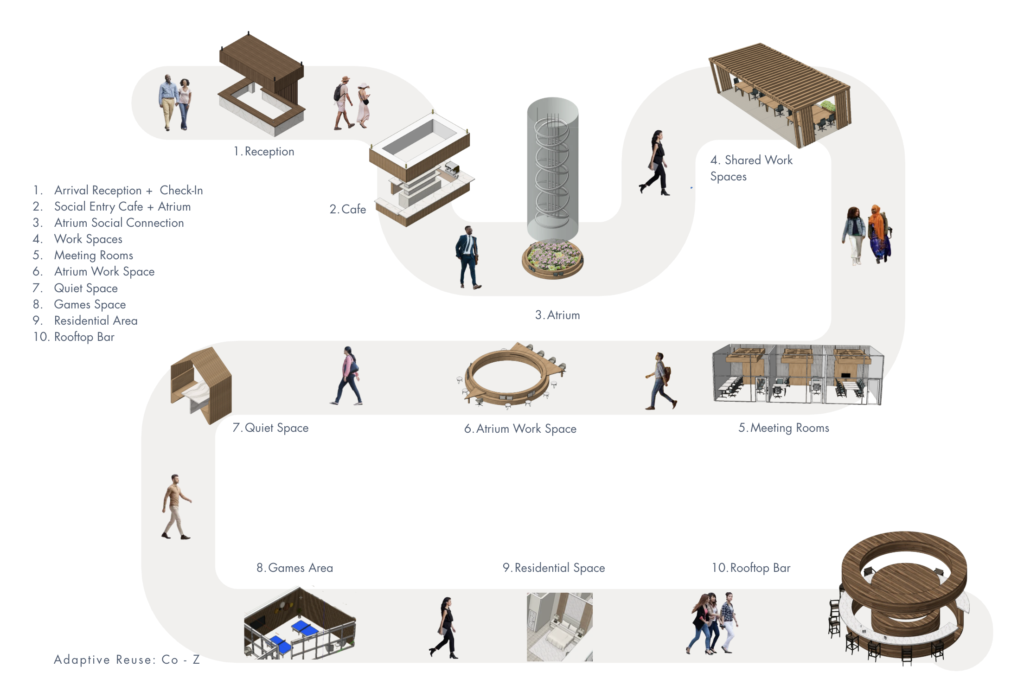
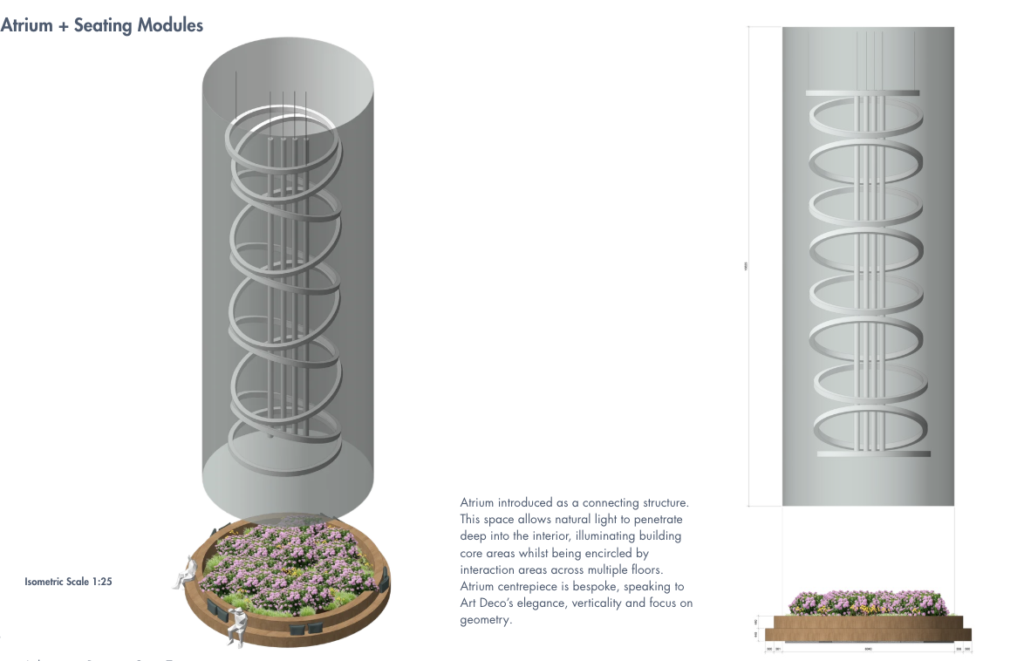
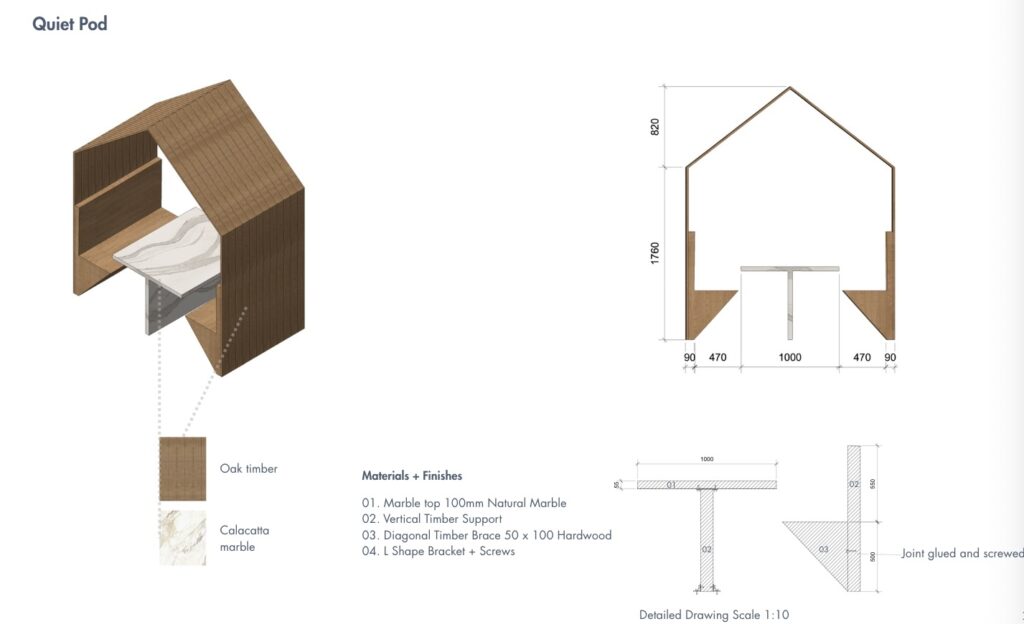
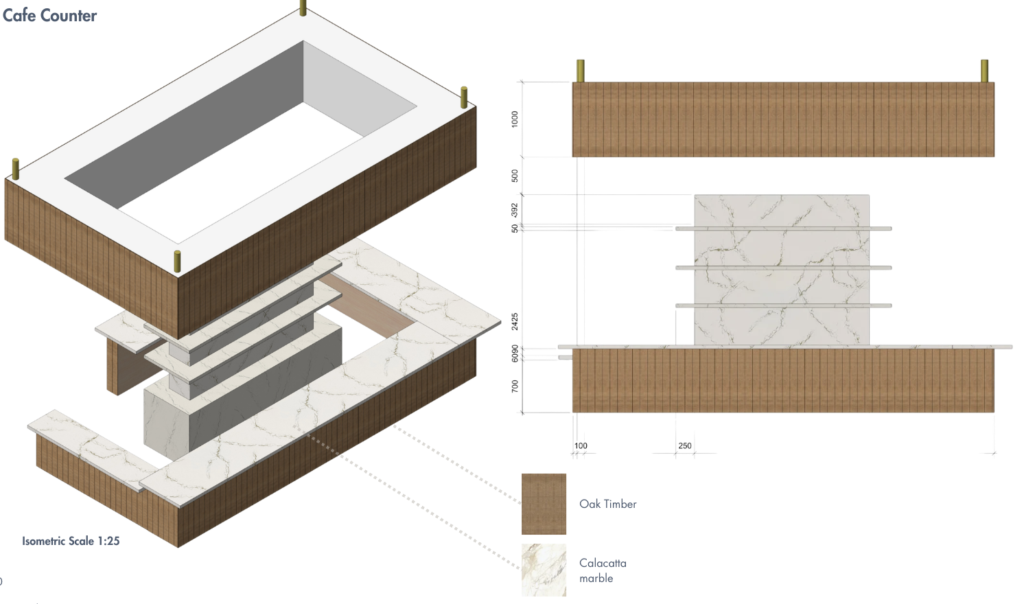
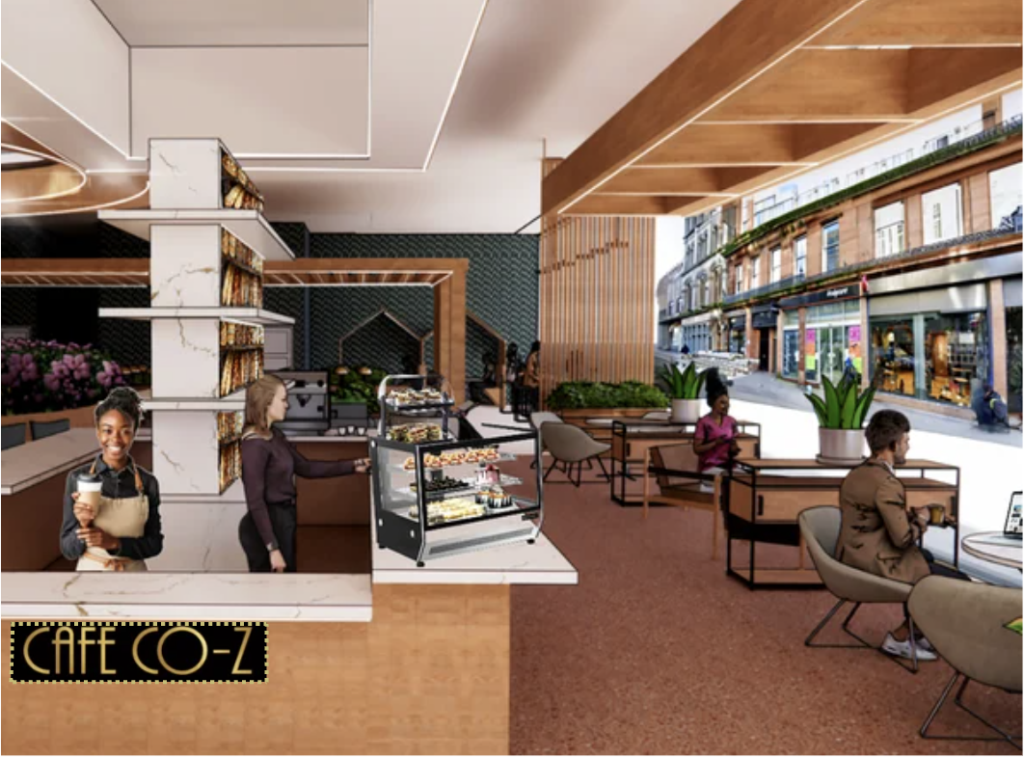
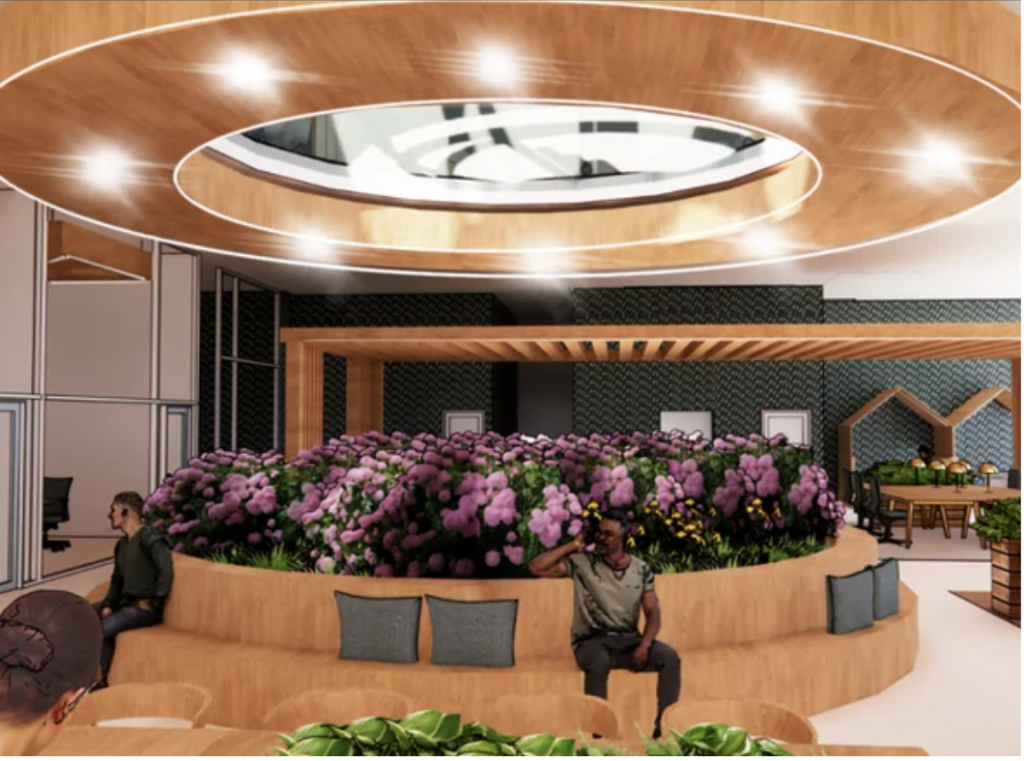
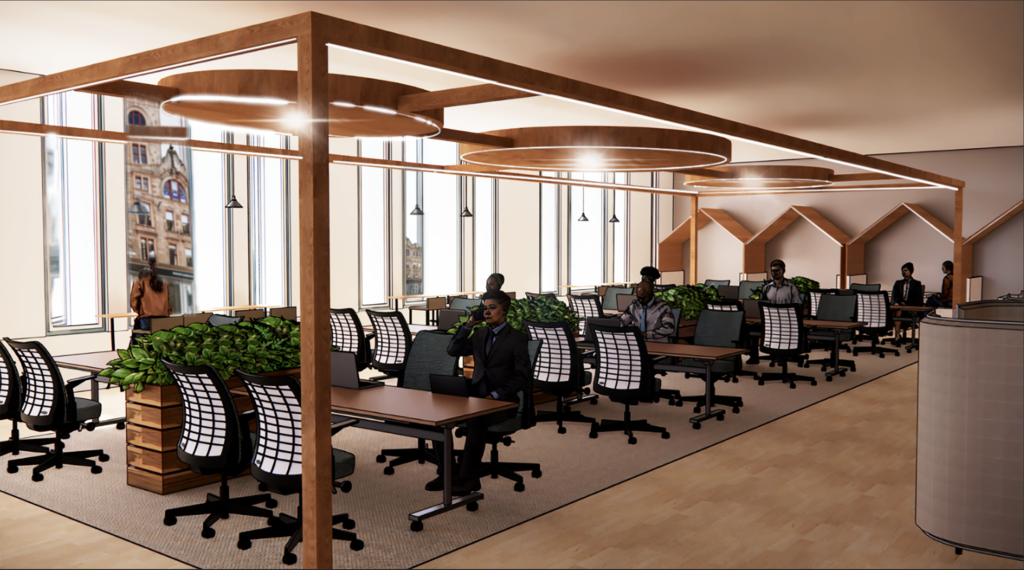
Key areas incorporate the atrium, cafe, social zone, quiet pods and shared desks. The atrium is accentuated to flood the building with natural light, the cafe and social zone provide a strong street connection. Quiet pods, shared desks and alternate spaces cater to various working styles and neurotypes.
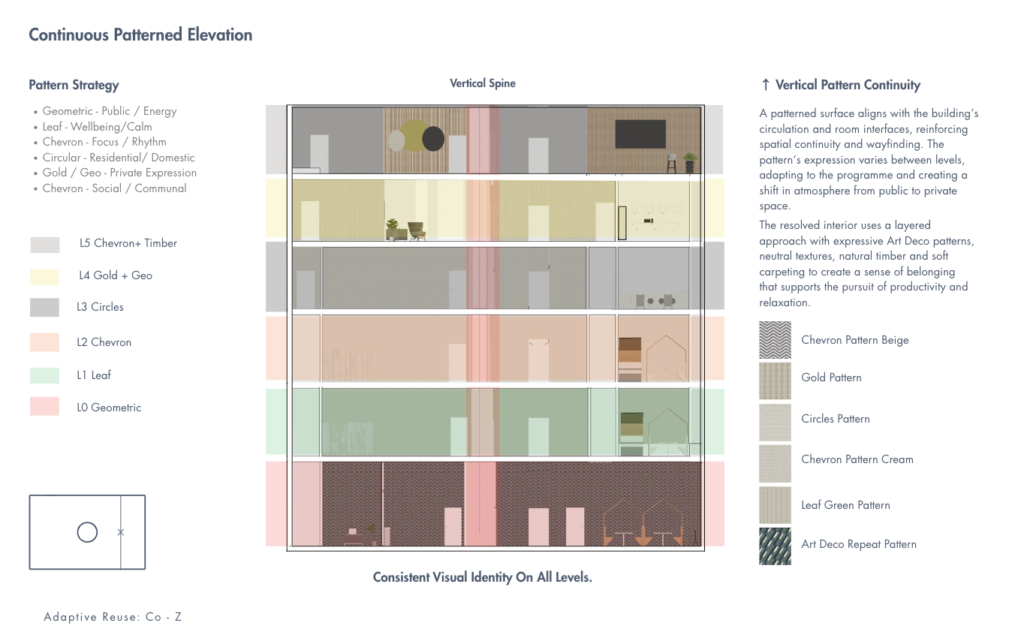
The design palette draws inspiration from the facade, featuring warm tones, metal detailing and geometric patterns. Those elements also feature in the wall designs, ceiling details and more broadly in the building.
This Co-Z proposal supports the urgent need to preserve our high street and Glasgow’s architectural heritage. It directly addresses Glasgow City Council’s Golden Z Plan, focused on regenerating the City Centre. Reactivating a vacant landmark, the project reinforces the value of preserving heritage while adapting it for contemporary use that addresses economic and social needs.
Elevations
Sections
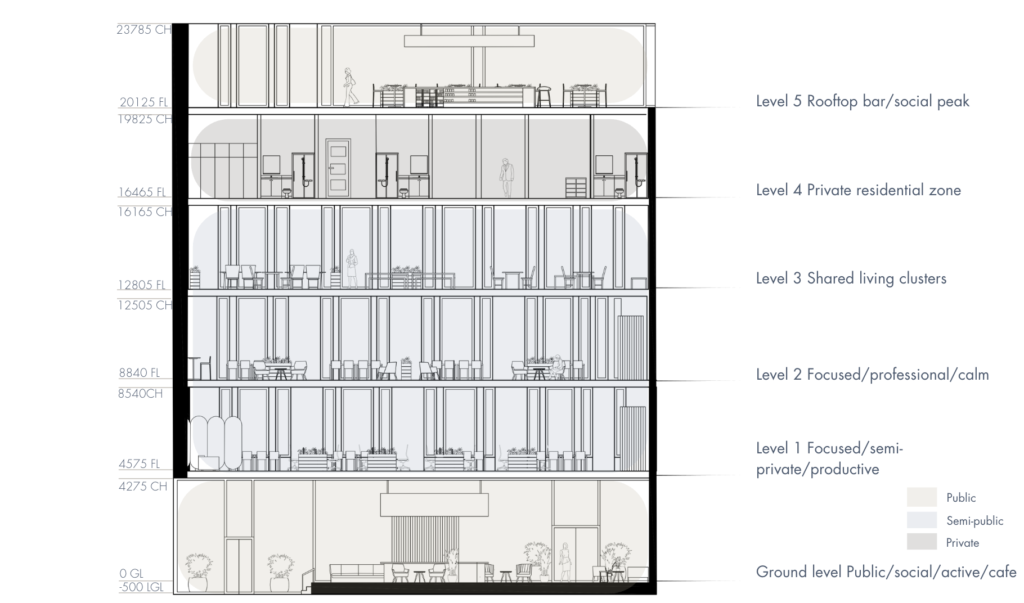
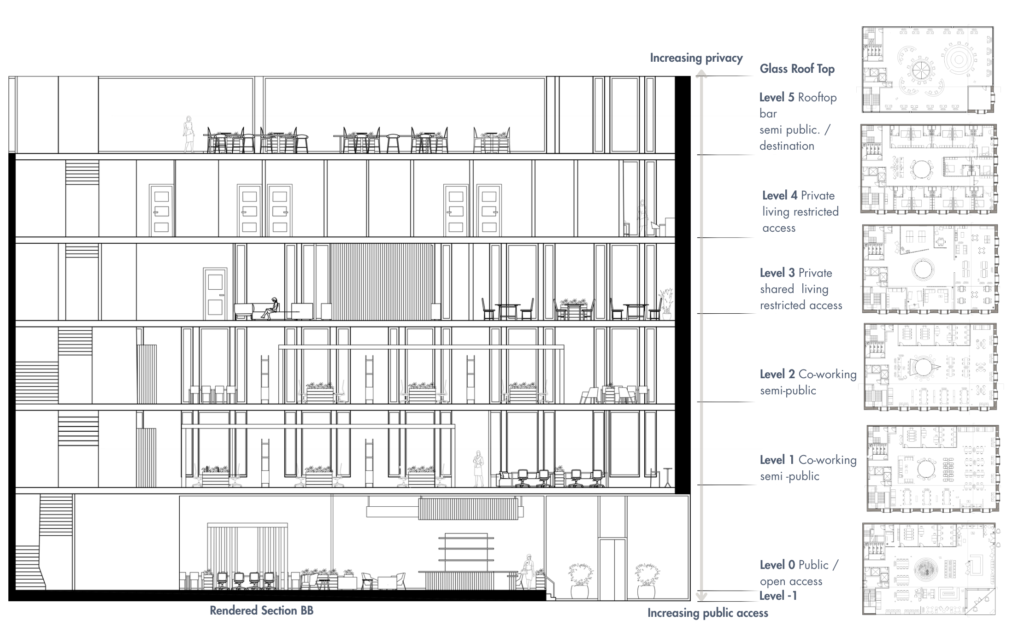
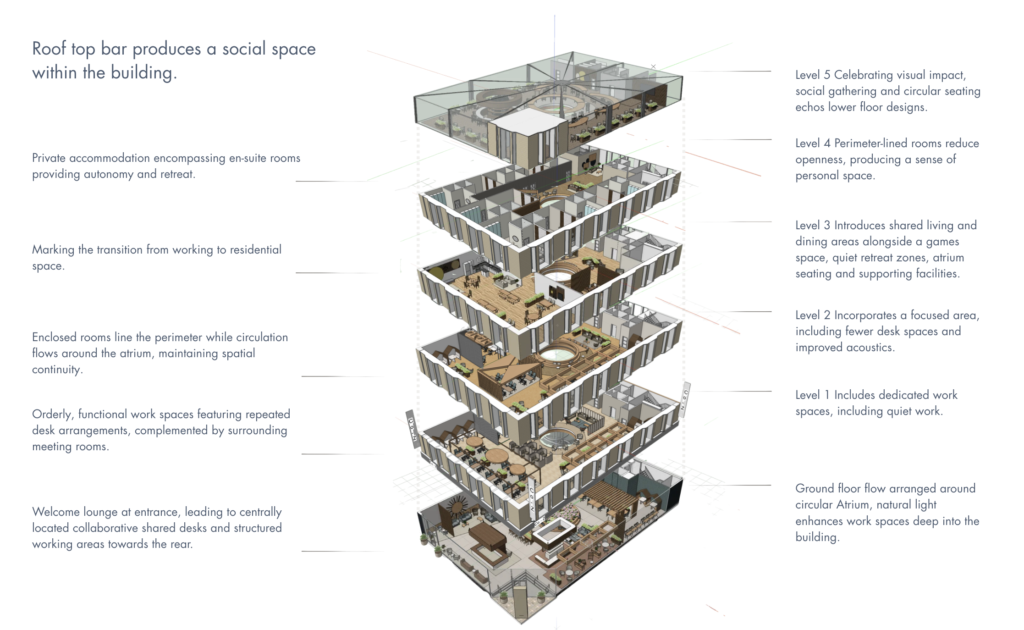
Typology and User Journey
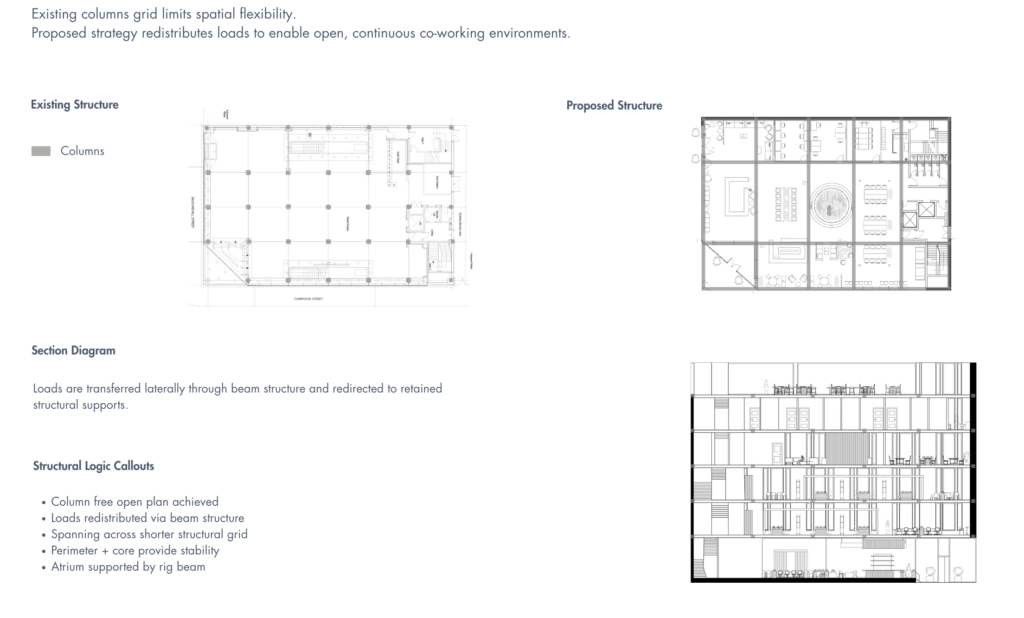
Structural Strategy: Column + Load Redistribution + Right Isometric
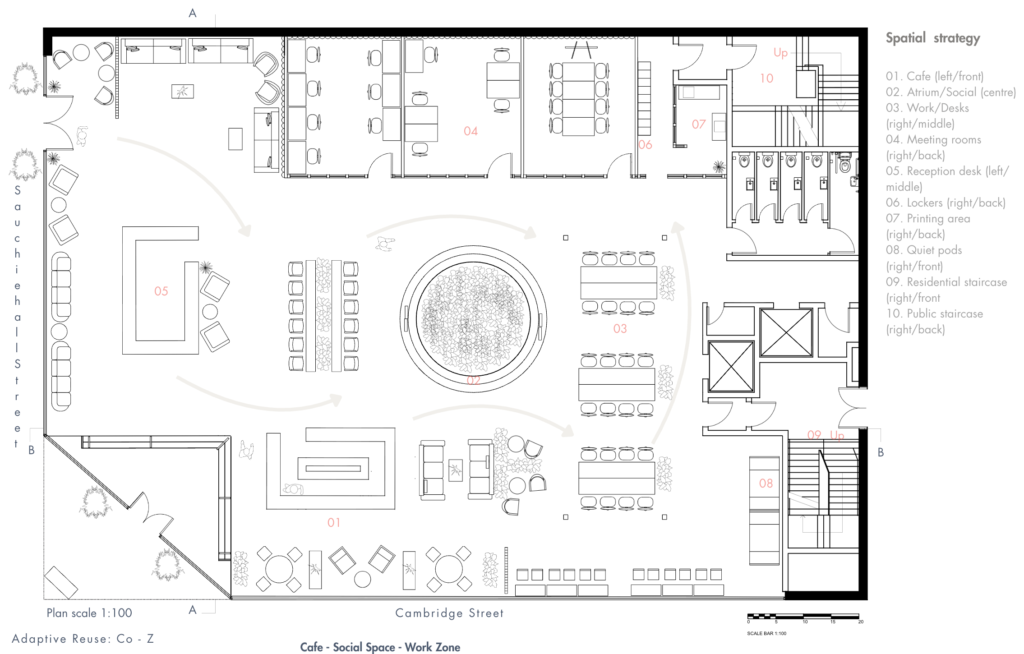
Ground Floor: Expanded Co-Working Proposed Plan
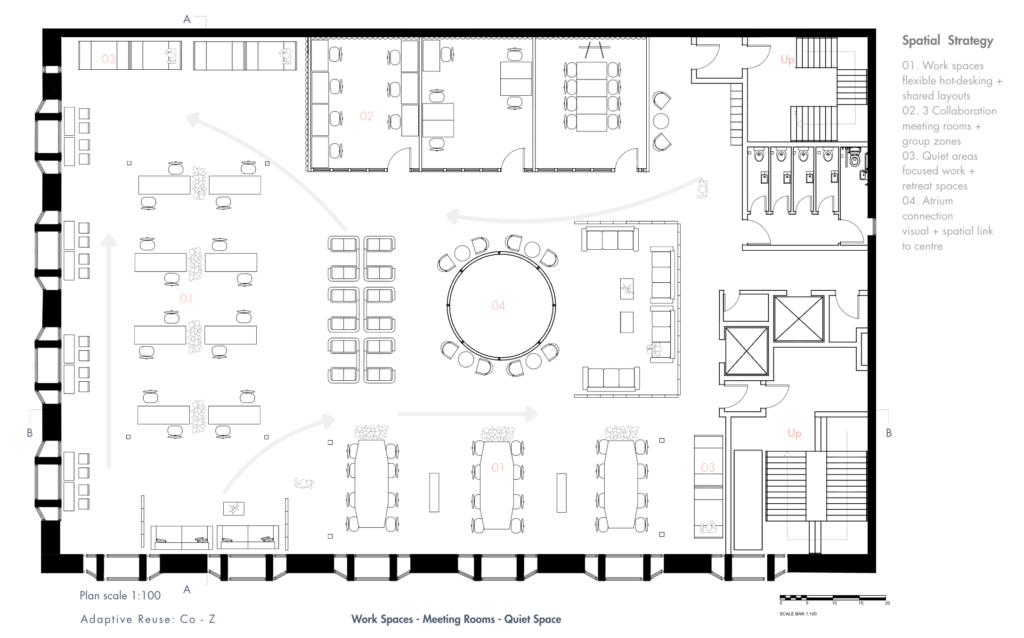
Visuals of atrium, cafe, shared work space, reception and meeting rooms on ground level. Building incorporates vertically integrated co-living and co-working environment, structured around central atrium, visually and spatially connecting each level.
Bespoke Design
First Floor: Expanded Co-Working Proposed Plan
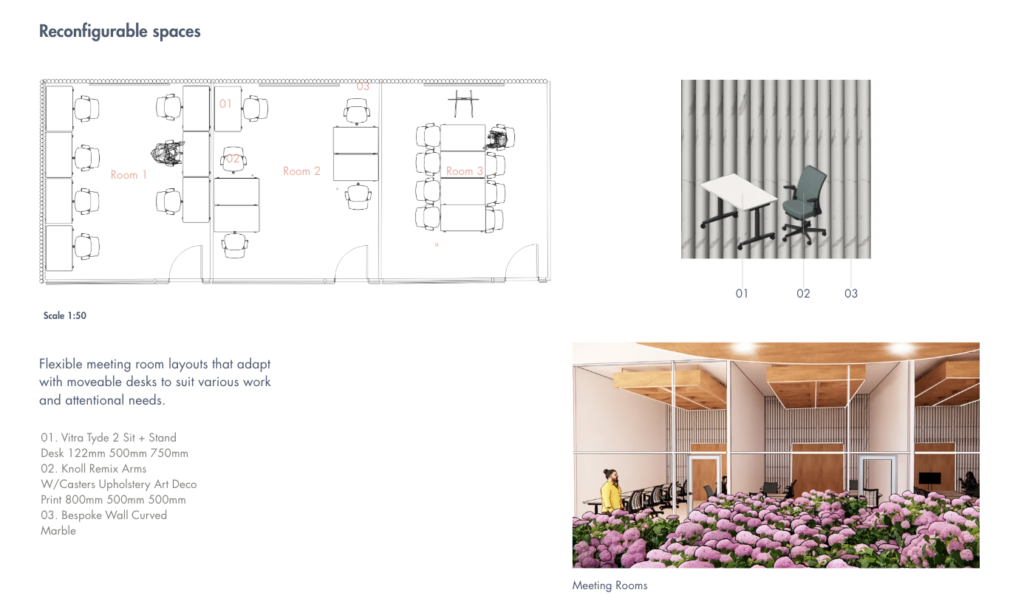
Visuals: Ground Floor
Visuals: First Floor
Second Floor: Expanded Co-Working
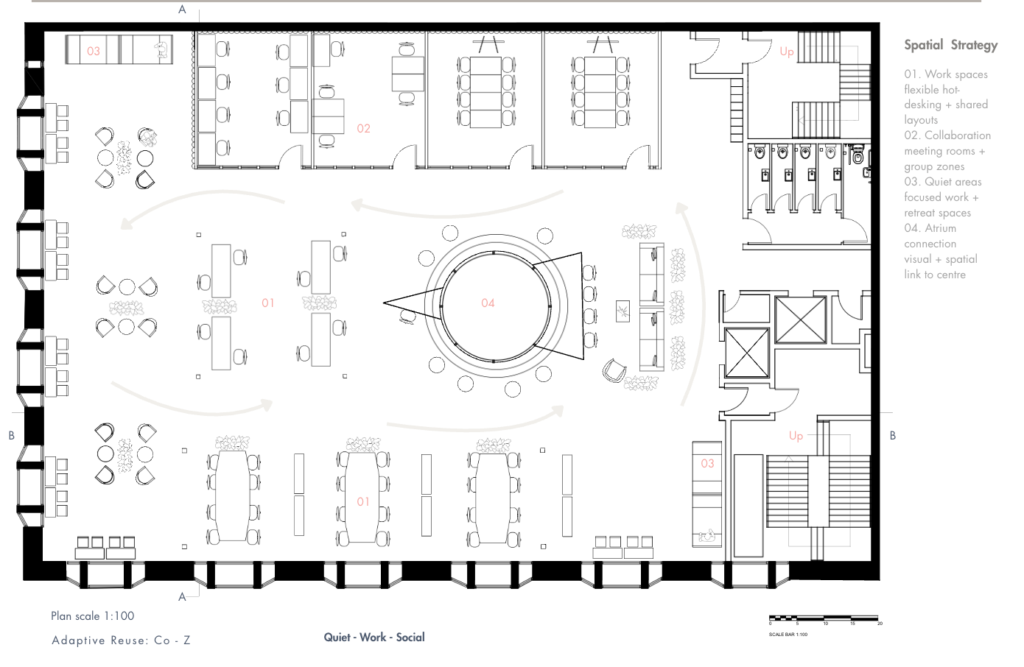
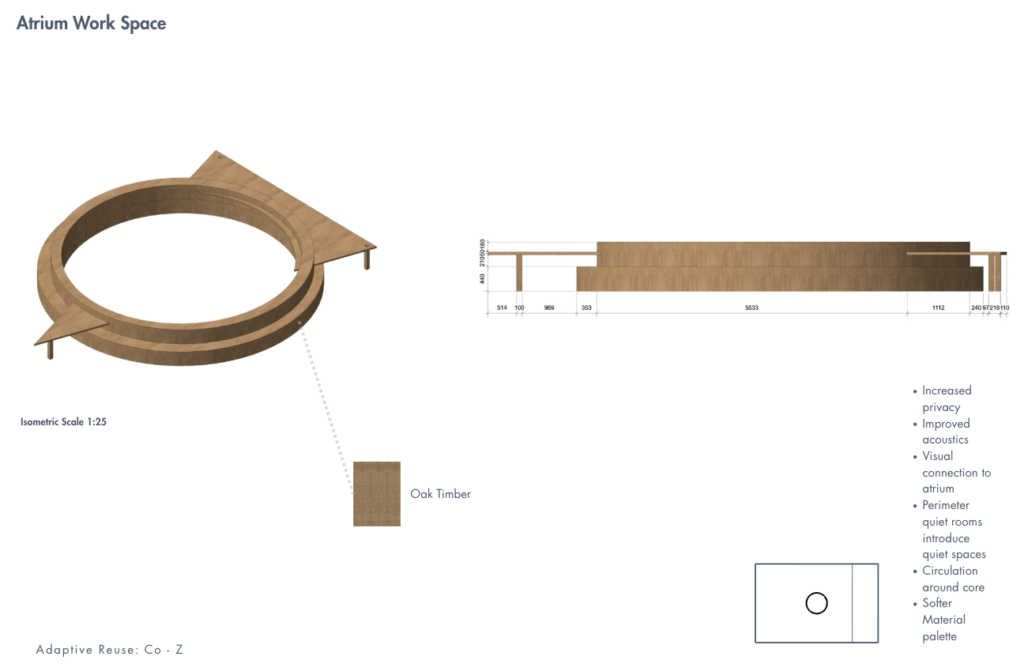
Visuals: Second Floor
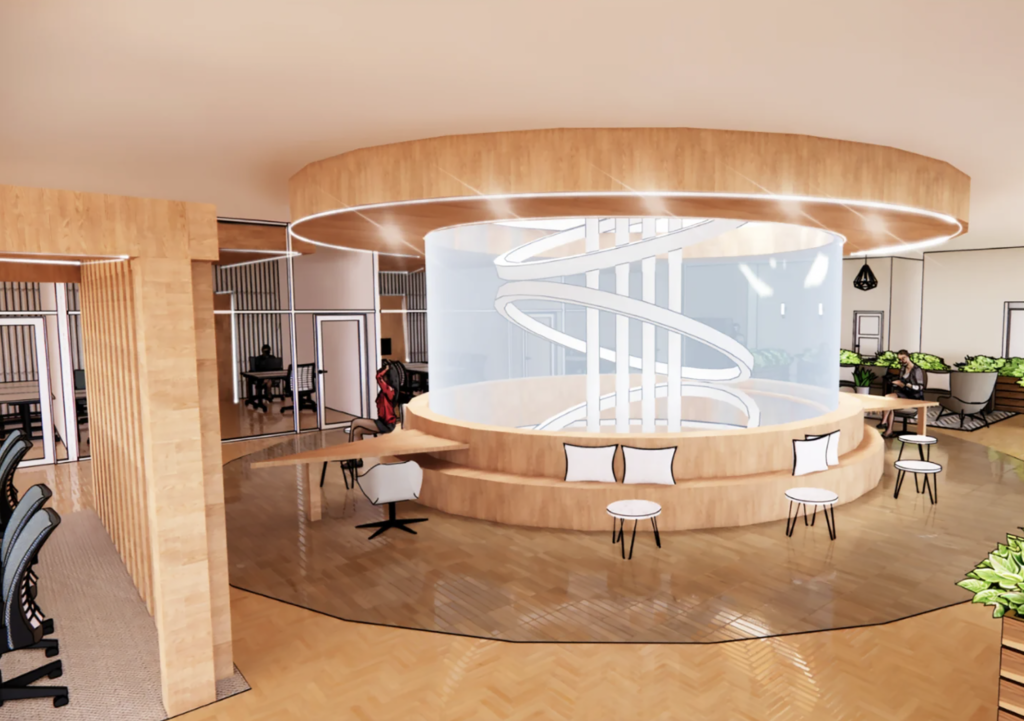
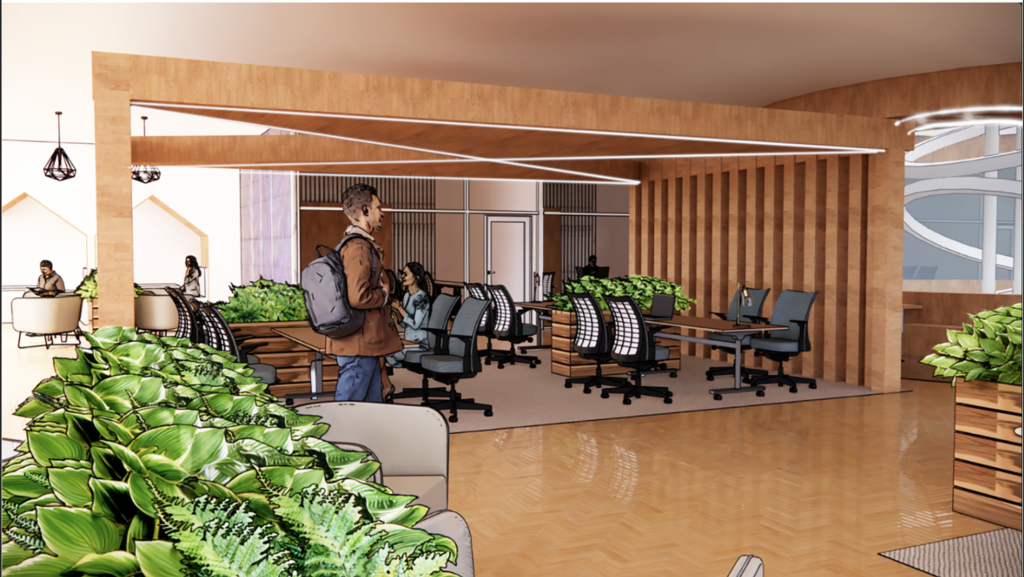
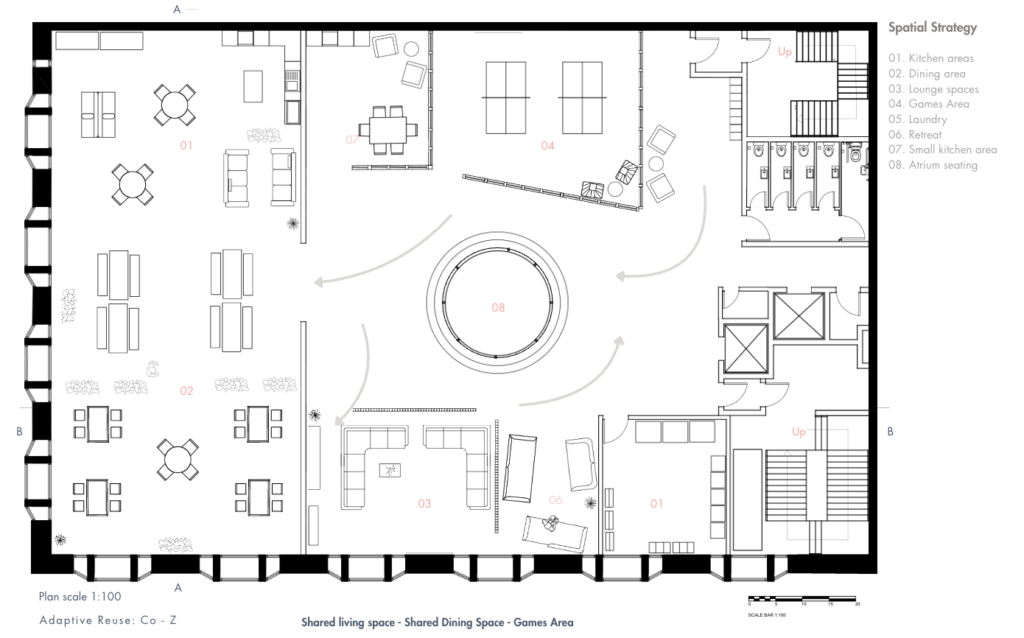
Third Floor: Shared Living Proposed Plan
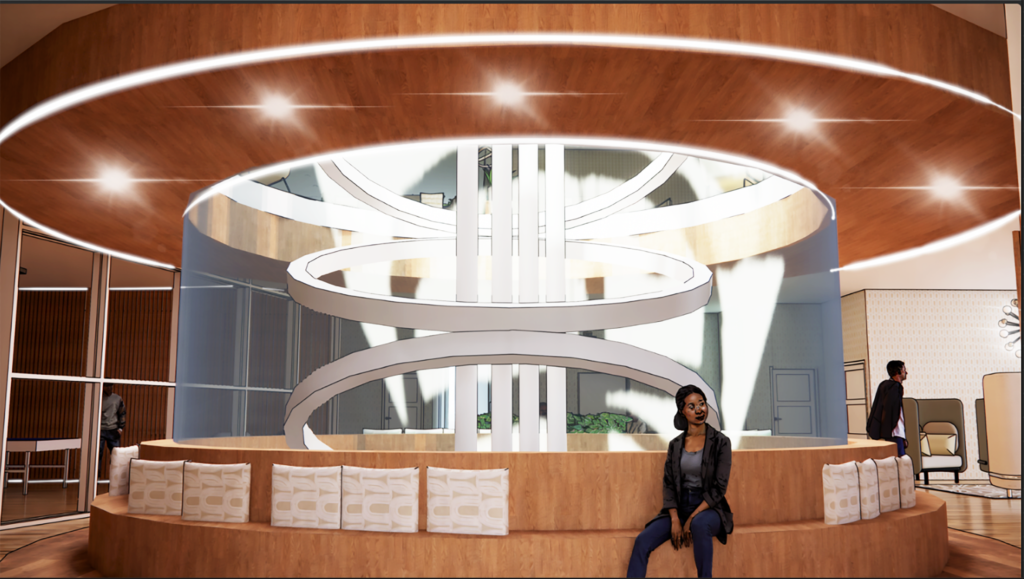
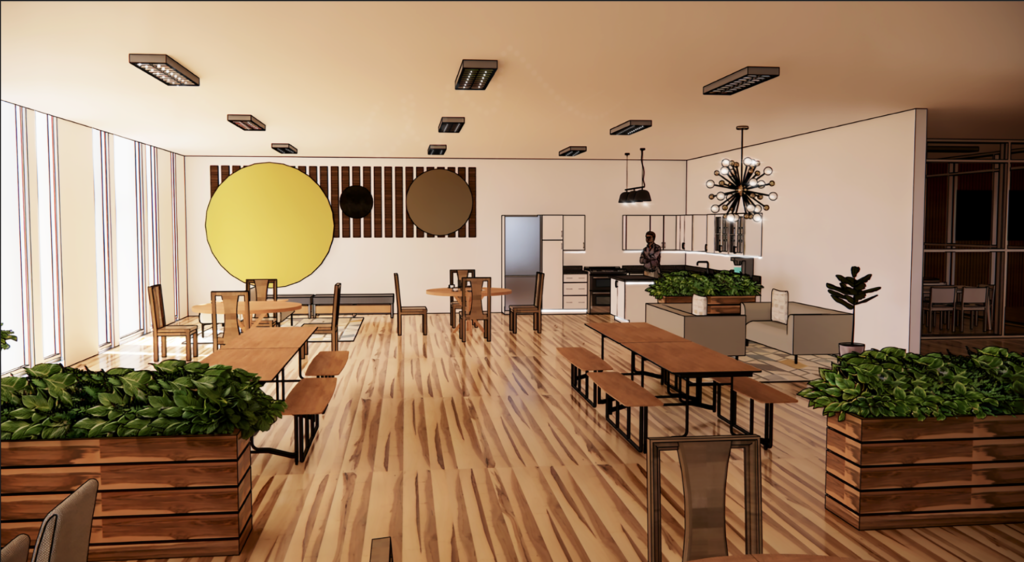
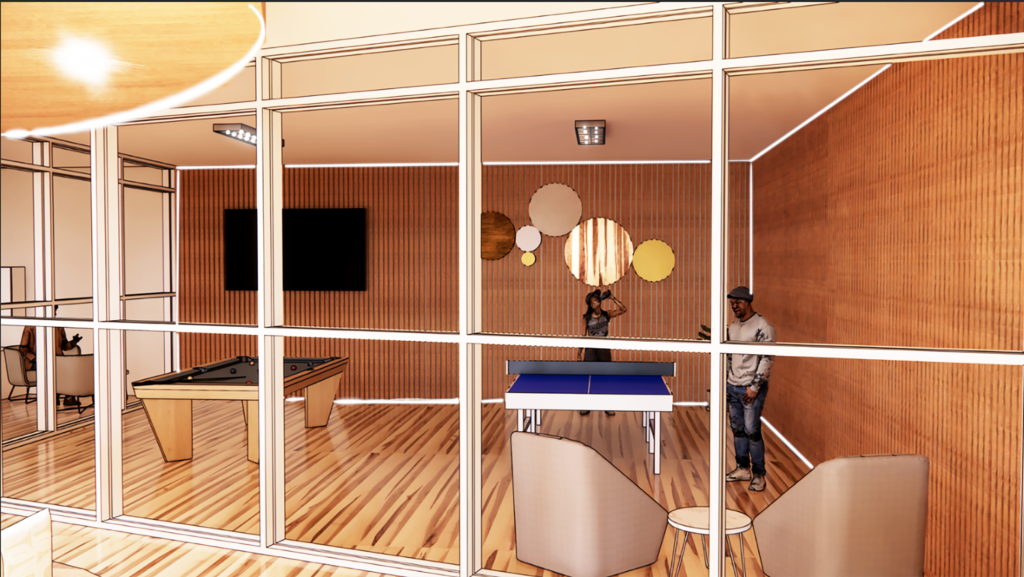
Visuals: Third Floor
Fourth Floor: Private Accommodation Proposed Plan
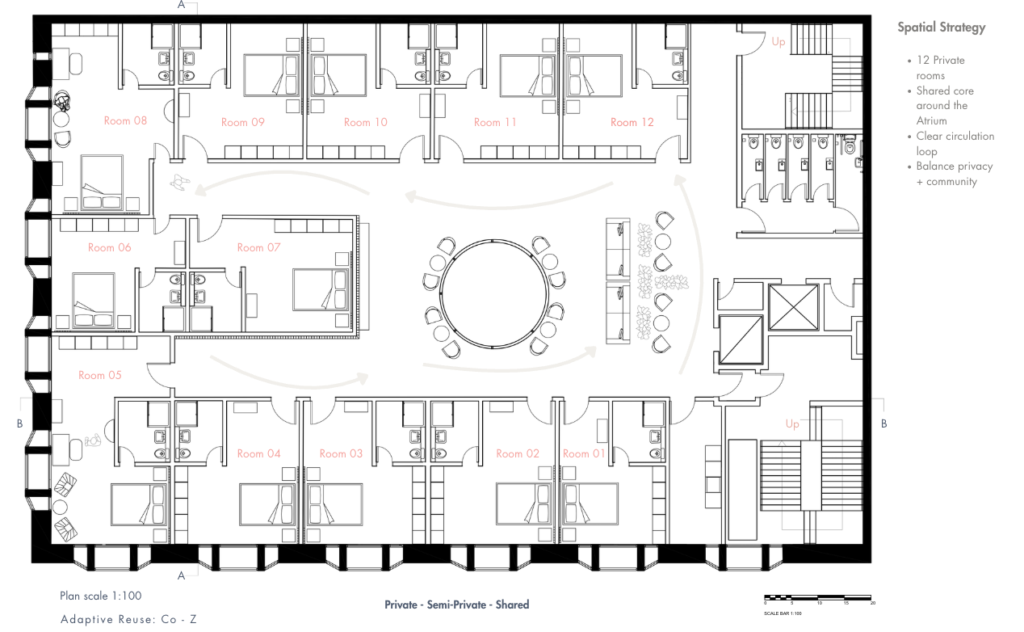
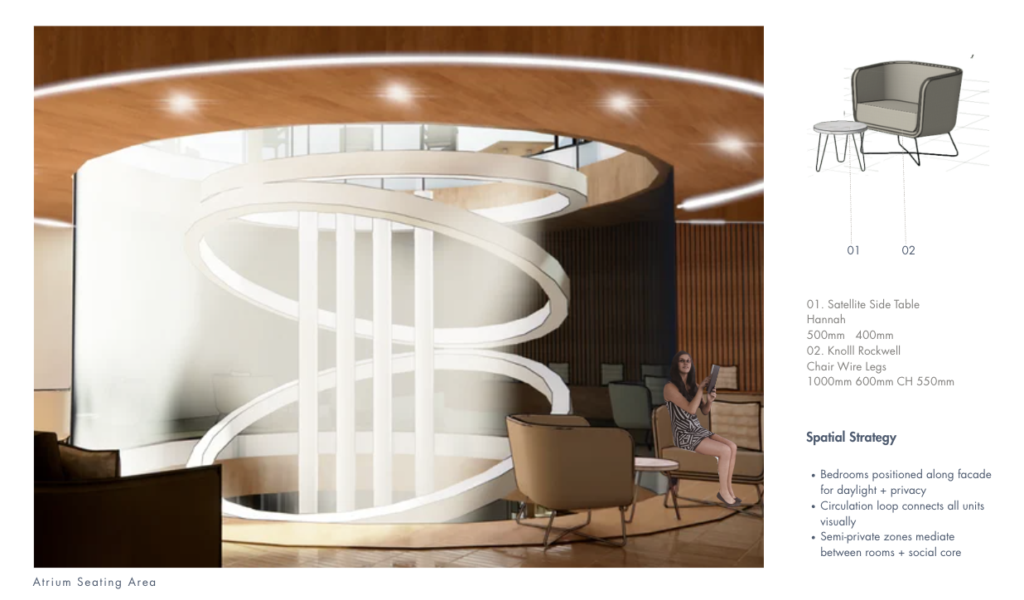
Visuals: Fourth Floor
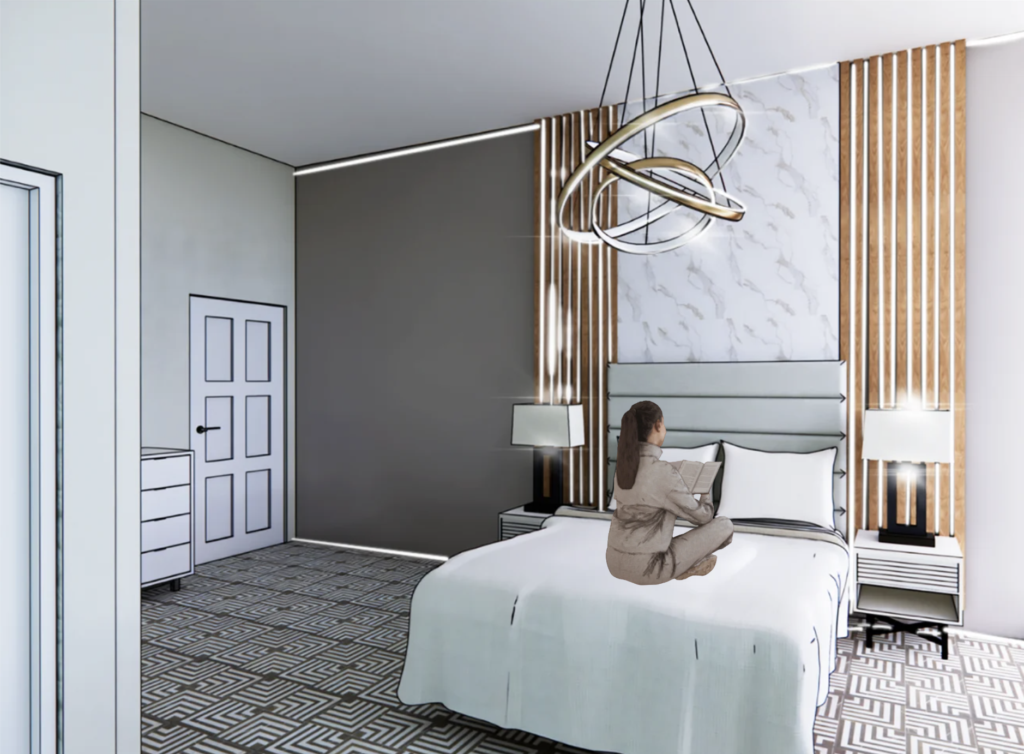
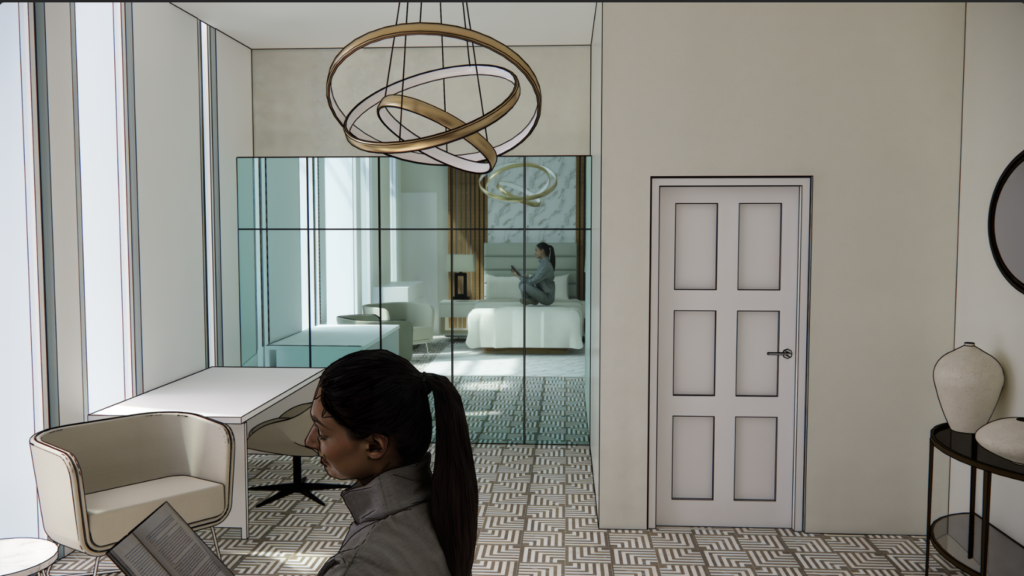
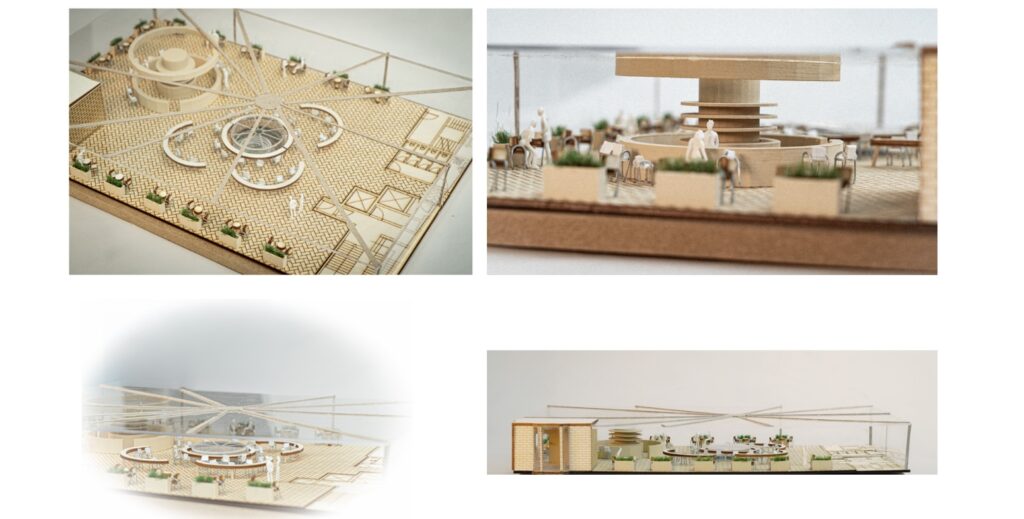
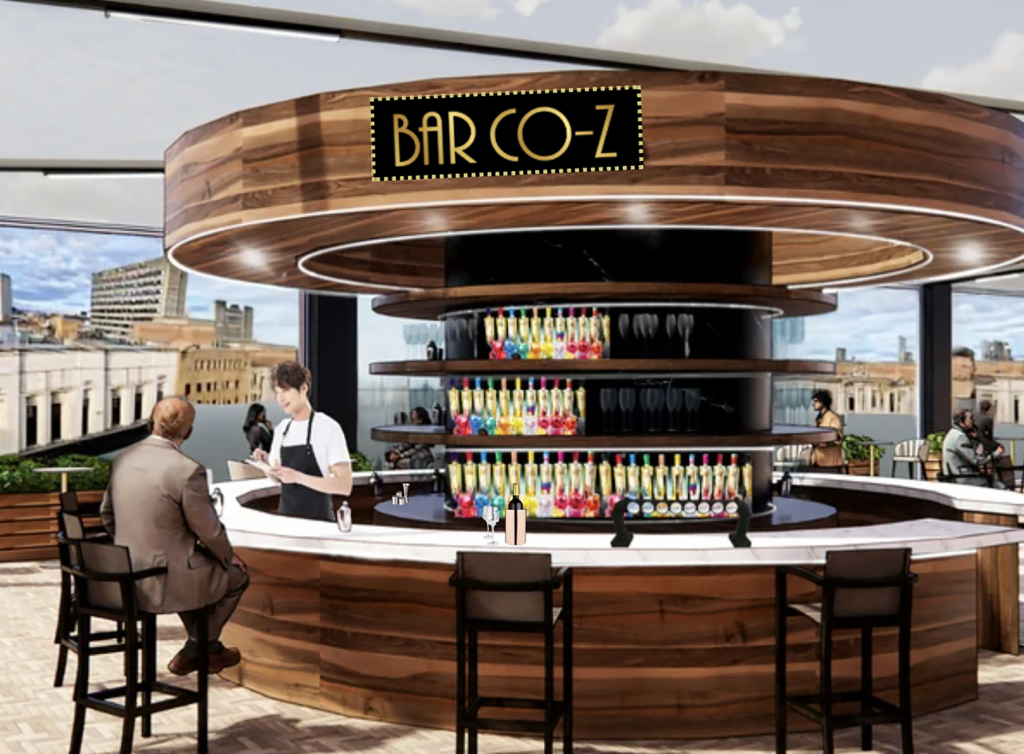
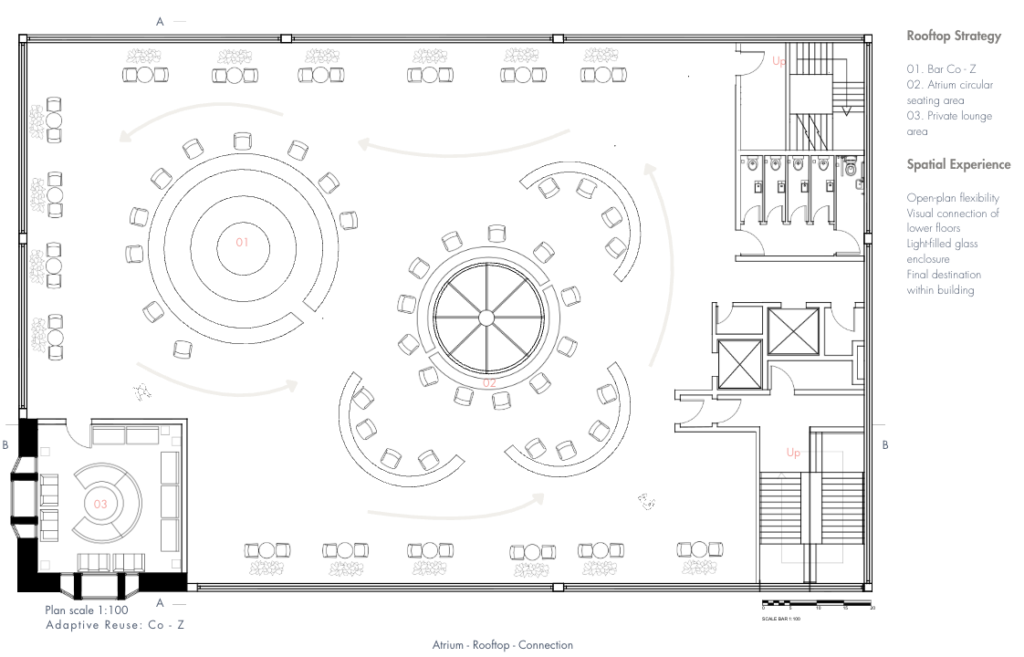
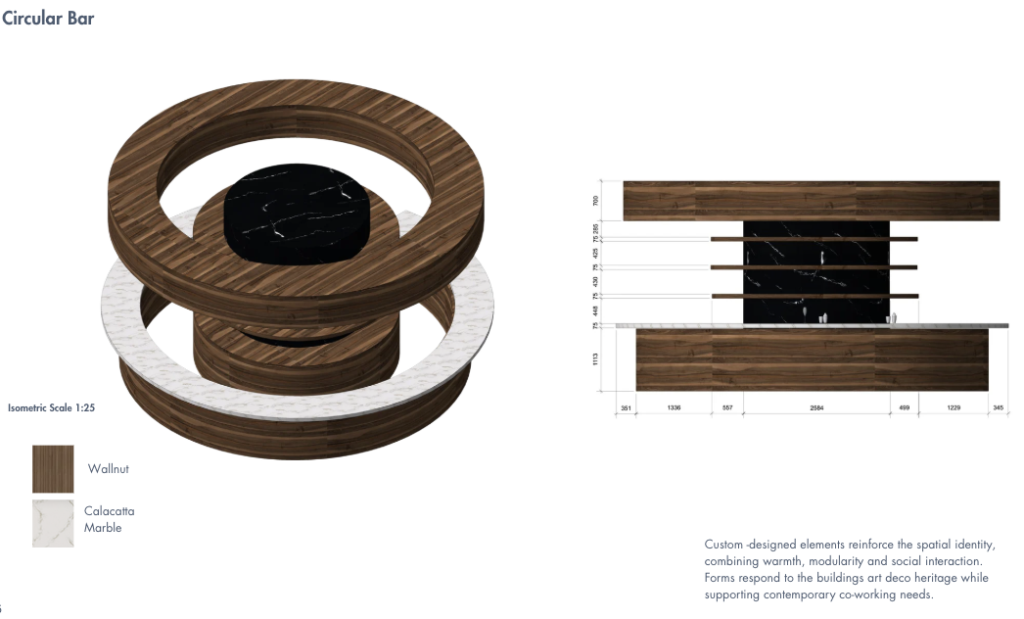
Fifth Floor: Rooftop Bar
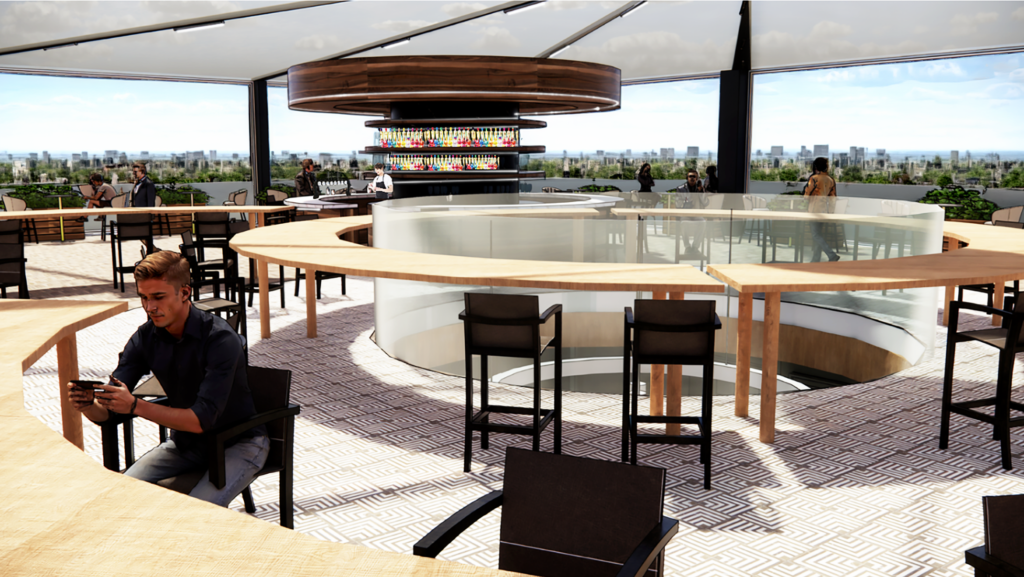
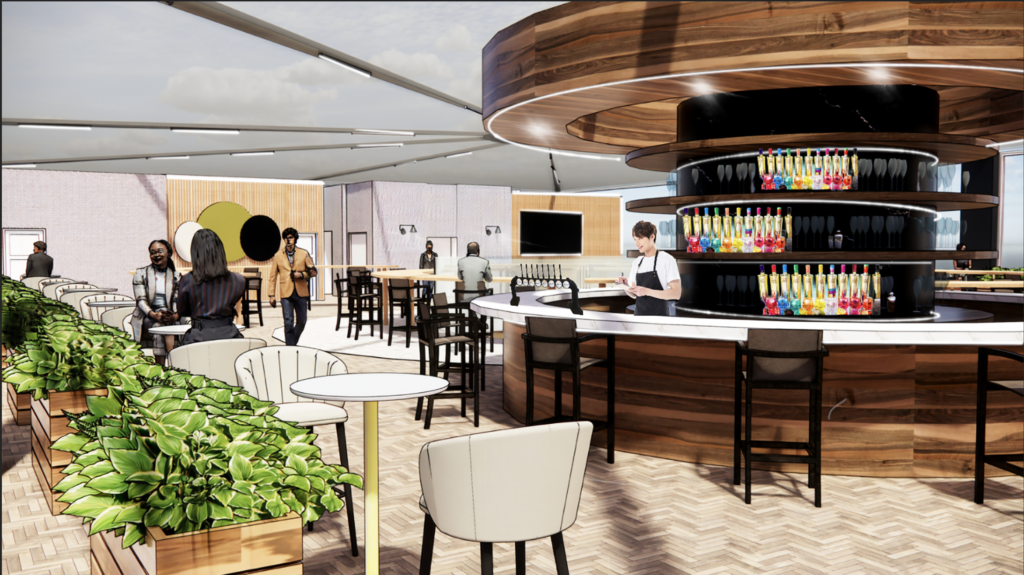
The rooftop bar is a social destination, defined through the vertical journey. elevated above working and residential floors, it offers panoramic views and a relaxed, collective atmosphere.
Visuals: Fifth Floor
Vertical Pattern Spine + Model