Raina Ghose
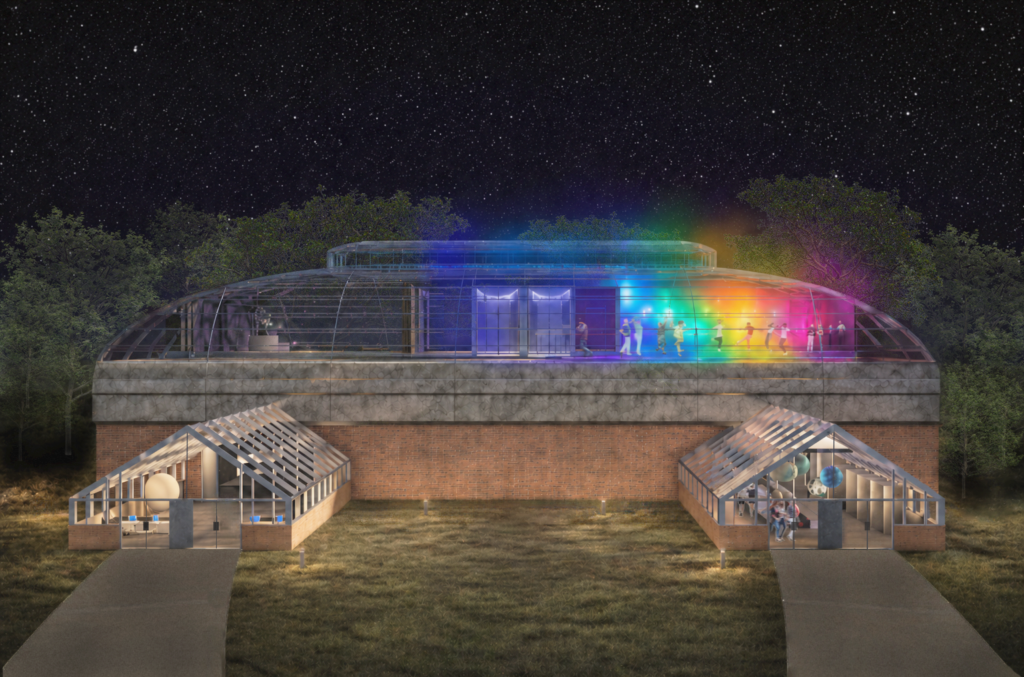
This project proposes the adaptive reuse of the Springburn Winter Gardens in Glasgow as a “Museum of the Universe,” an immersive educational and experiential space designed to engage a wide public audience. Responding to the site’s historical significance and current state of disuse, the design reimagines the A listed glasshouse as a dynamic environment that blends learning, technology, and atmosphere.
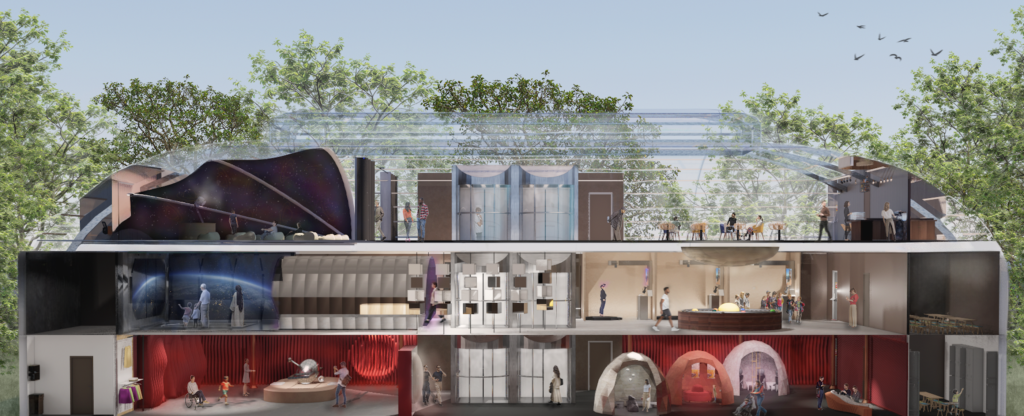
The spatial concept is structured as a vertical journey from Earth to Space and ultimately the Universe, guiding visitors through a sequence of interactive research pods, space simulator, and a planetarium. Through this transformation, the project aims to revitalise a neglected heritage site while creating a unique contemporary destination for education, exploration, and community engagement.
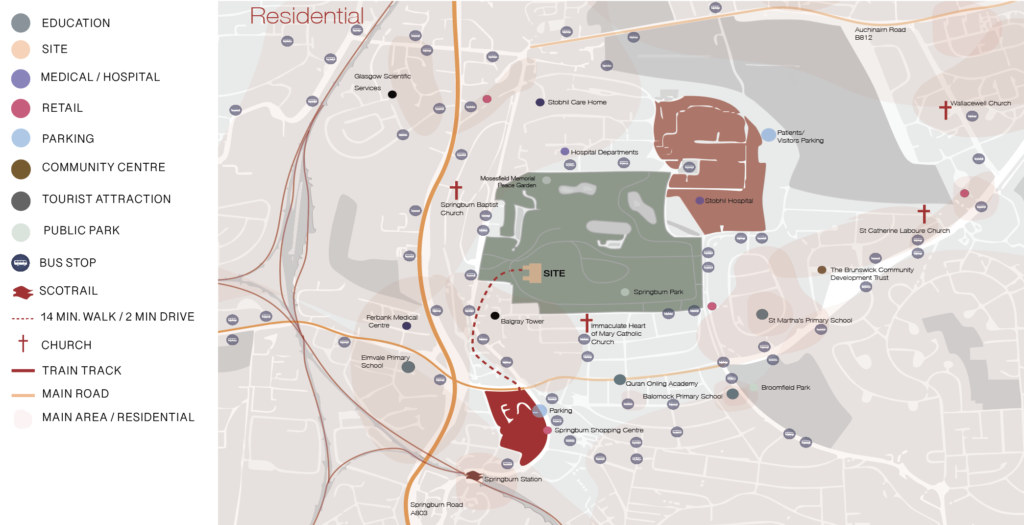
Site Map
Springburn Park, Mosesfield Street, Glasgow, G21 3UD
The Springburn Winter Gardens is a Category A listed Victorian glasshouse located within Springburn Park in North Glasgow. Despite its historical significance, the building has remained derelict since the 1980s, losing its role within the community. Situated within a predominantly residential area, the site benefits from strong transport links but limited access to cultural and educational spaces. Its location within the Springburn Park presents an opportunity for adaptive reuse and regeneration. The proposal seeks to revitalise the building as an immersive Museum of the Universe, reconnecting it with the community and establishing it as an environment for learning and exploration.
Concept + User Experience
The Museum of the Universe is designed as an immersive spatial journey, transforming learning into experience. Visitors move from grounded, research based environments into increasingly atmospheric and abstract environments, using light, projection, and digital interaction. The concept explores themes of curiosity, imagination, and the sublime, allowing users to engage with the universe through both physical space and virtual experiences. The museum becomes a narrative, where each stage reveals a deeper level of exploration.
The museum is designed to engage a diverse audience, including school groups, university students, families, and city visitors, supporting both educational and leisure experiences. The spatial design is centred around an immersive journey, guiding users from structured learning environments into interactive and atmospheric spaces. Through a combination of physical exploration and digital interaction, the experience encourages curiosity, participation, and a deeper connection to the universe. A typical visit lasts approximately 1.5-2 hours, allowing visitors to explore the exhibitions at their own pace. The planetarium show runs separately, with an average duration of 20-30 minutes, offering a focused and immersive experience. The museum operates on an accessible pricing system, with reduced rates for students, children, and senior visitors. The planetarium show is included in the general admission ticket, ensuring a seamless and inclusive experience.
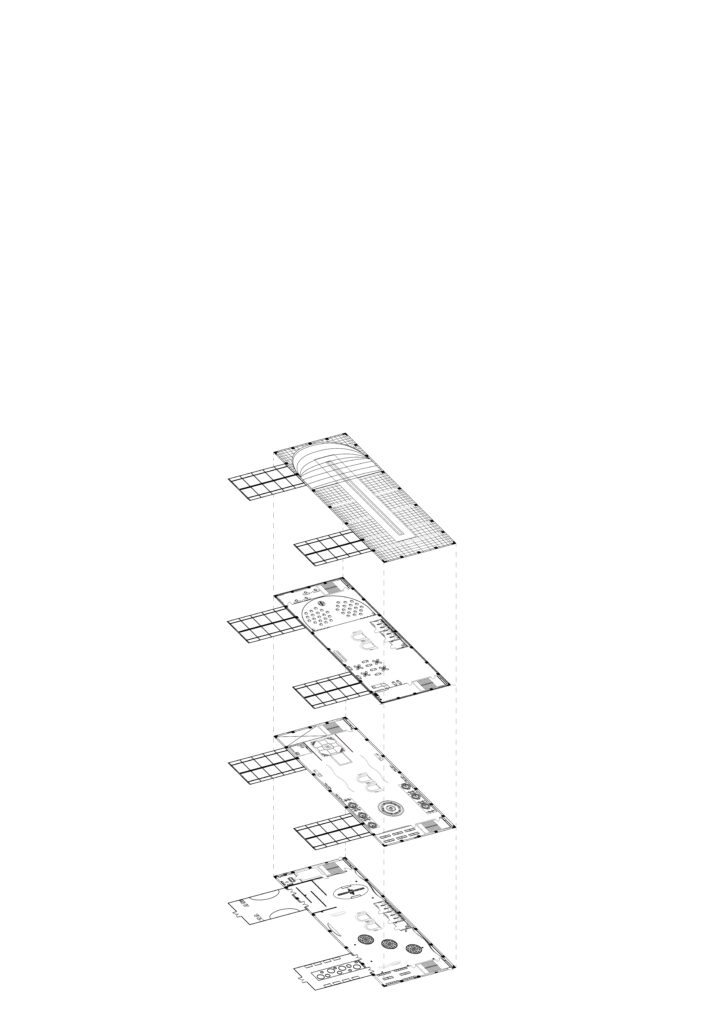
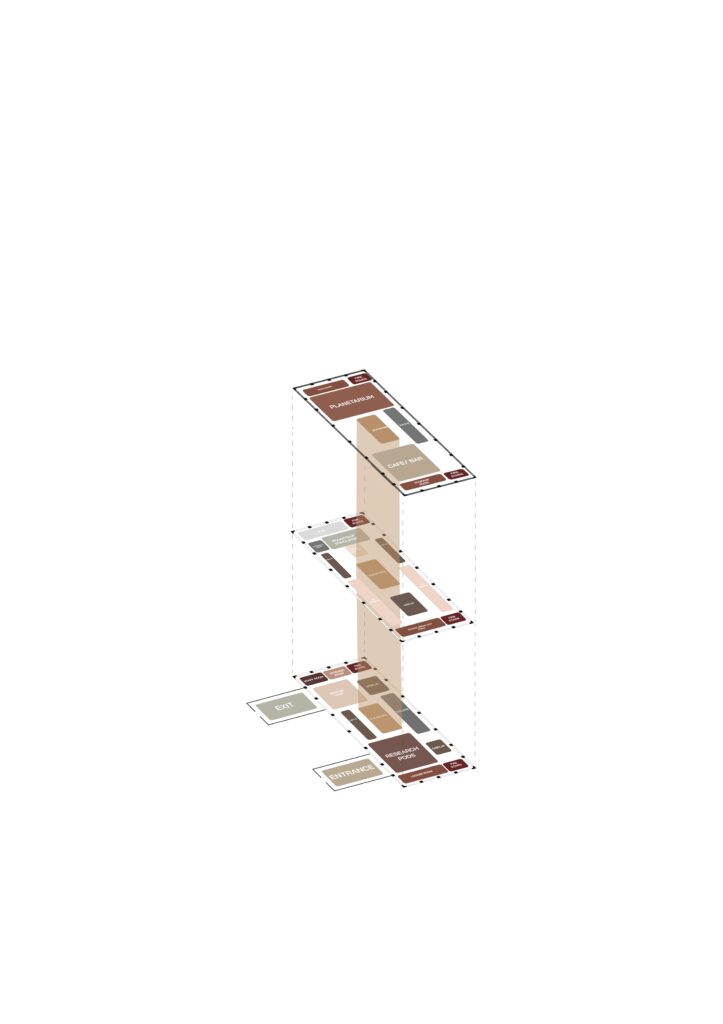
Ground Floor: Arrival (Earth)
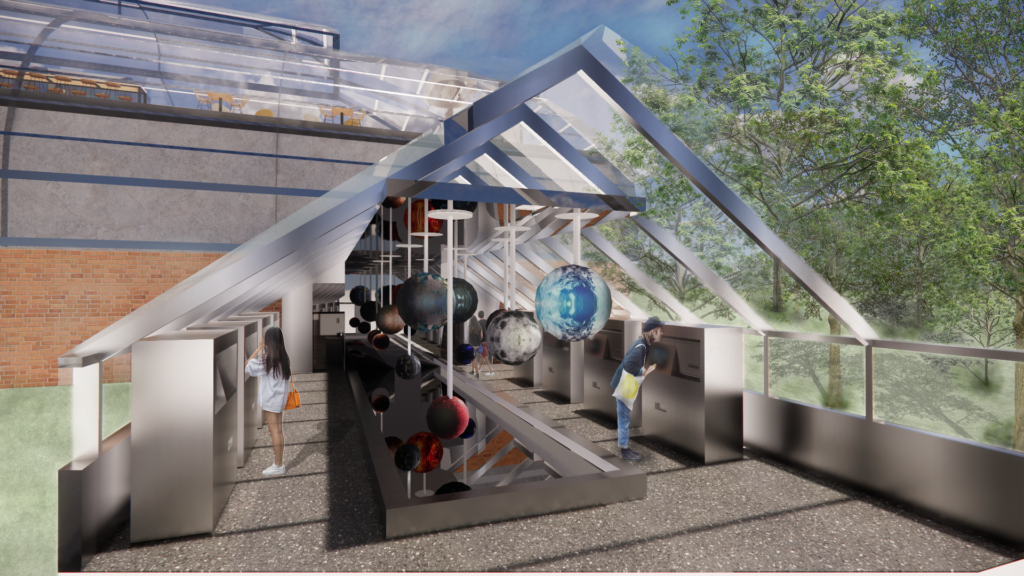
Visitors scan their pre booked tickets at the entrance to receive a scannable bracelet and passport. The bracelet unlocks immersive experiences and tracks their journey, with stamps collected along the way as a keepsake. Visitors can also create an astronaut ID photo for their passport, while staff in each zone provide guidance and explain the exhibits.
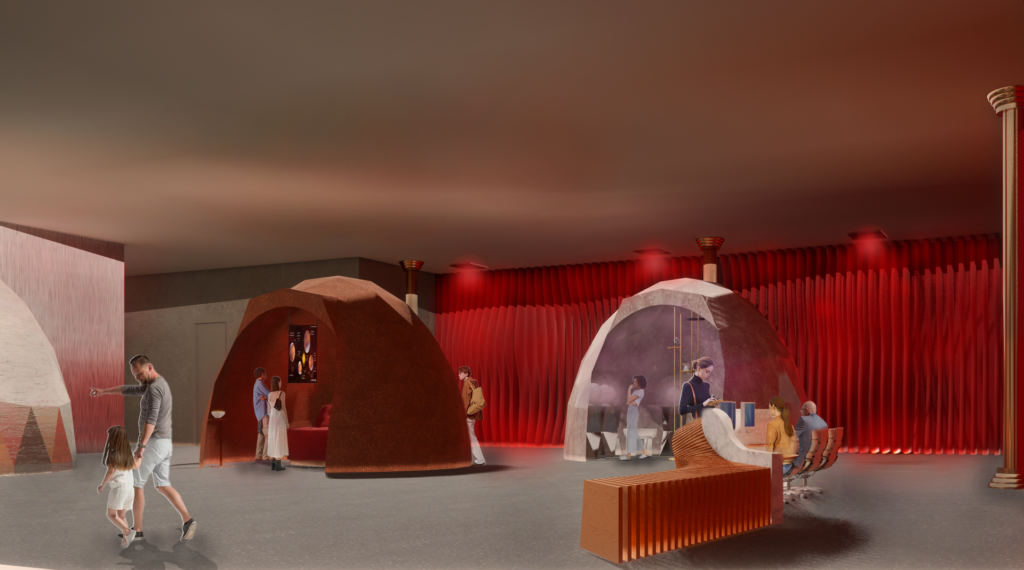
Visitors enter the space after ticketing, where a reception and three immersive research pods draw them in. Inside the pods, staff guide visitors through the experiences and explain the content in a personable way. The warm, enclosed forms create an inviting atmosphere that gently introduces the journey ahead. Visitors who did not book in advance, can purchase tickets at the reception desk.
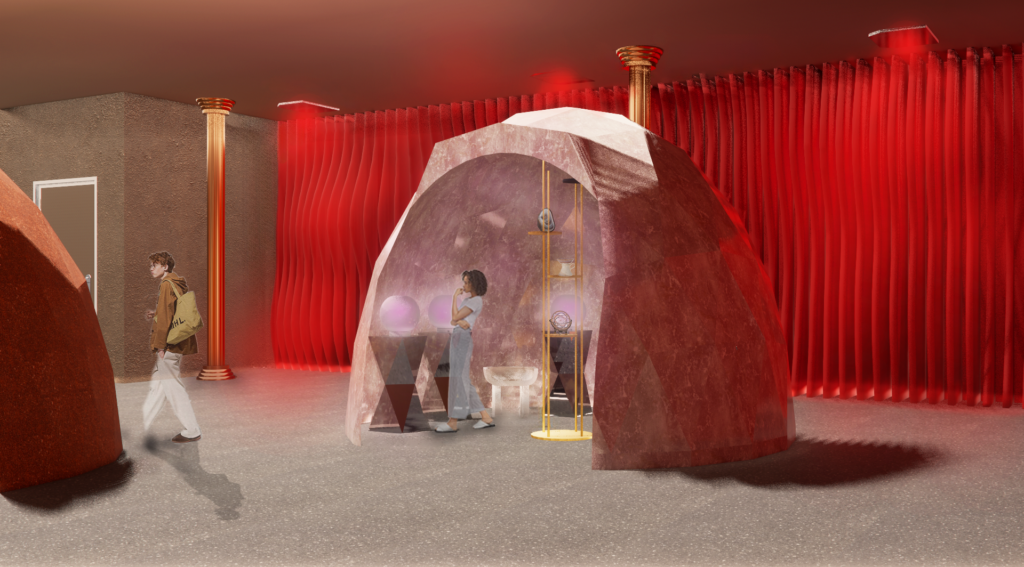
Visitors step into the Venus pod, where the soft pink, rock like enclosure creates a warm, glowing atmosphere inspired by the planet’s surface. Inside, mirrored glass stands display circular information points, encouraging visitors to move around, reflect, and engage with the content from different perspectives. The space feels intimate and surreal, allowing visitors to learn about Venus while experiencing a sense of heat, density, and immersion.
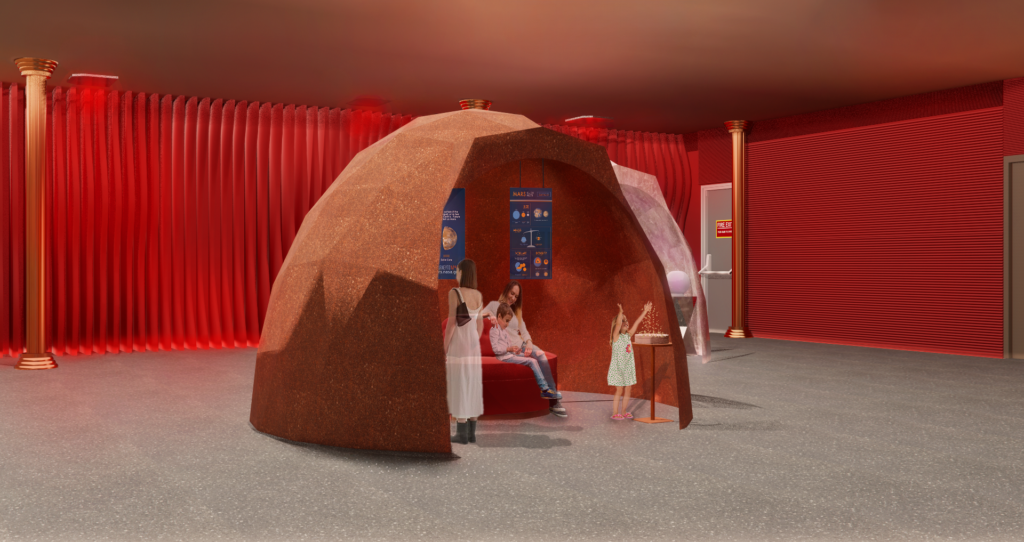
Users step into the Mars pod, where the warm red textured rock like pod creates a grounded, desert atmosphere inspired by the planet’s surface. Inside, a sand filled stand invites physical interaction, allowing visitors to engage with the materiality of Mars while learning about its landscape and conditions. The space feels enclosed and earthy, creating a calm yet immersive environment that encourages curiosity and exploration.
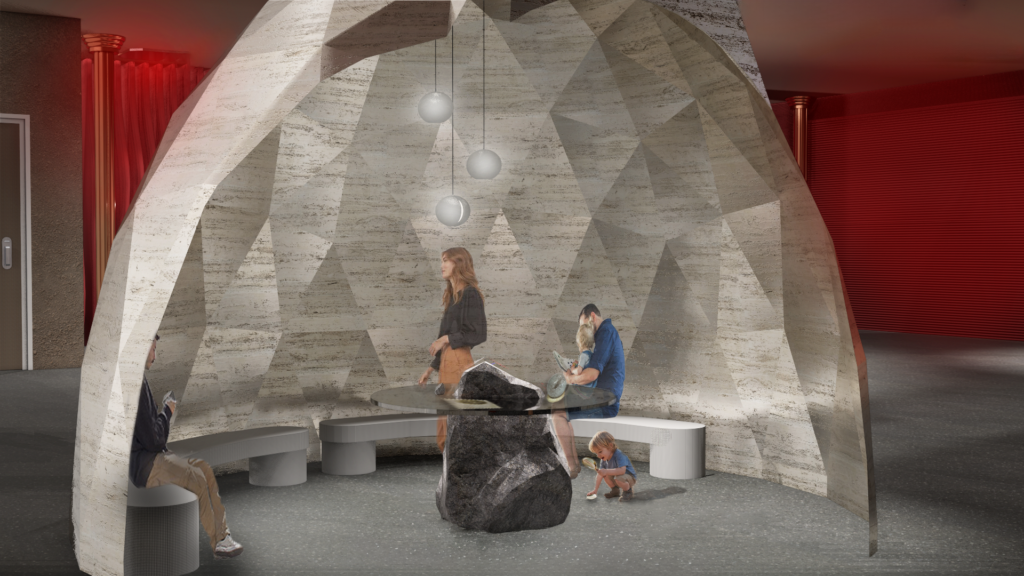
Visitors enter the Moon pod, where a light stone like enclosure with soft lighting creates a calm, reflective atmosphere inspired by the lunar surface. Inside, metal seating and a bespoke glass table centred around a rock encourage visitors to sit, gather, and engage more contemplatively. On the table holds rock samples, a moon map, and other objects. A subtle audio recording of astronauts’ experiences further enhances the immersion, adding an atmospheric layer that reflects the stillness of the Moon.
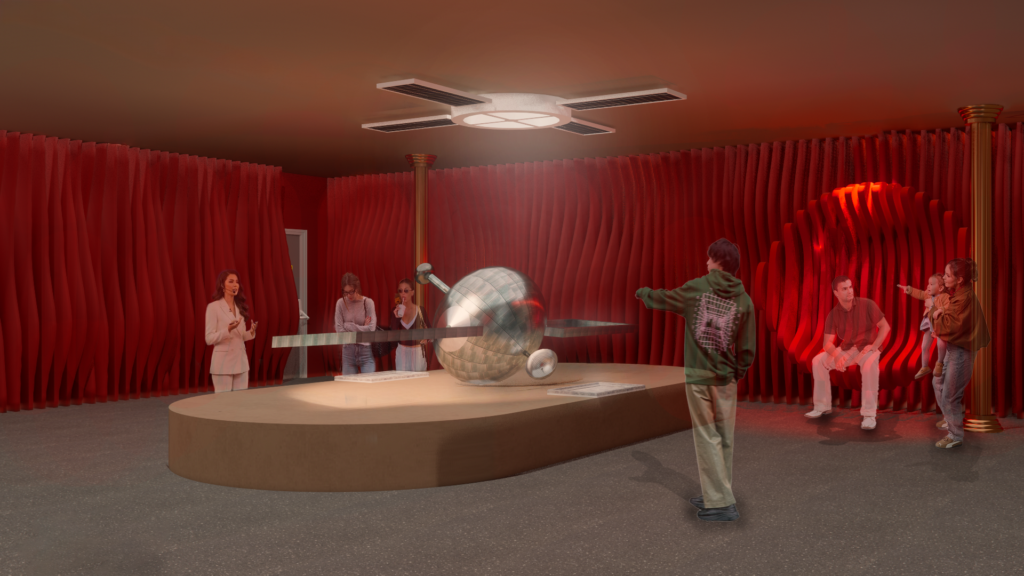
Visitors gather around the central satellite display, where the sculptural form becomes a focal point for learning and interaction. The surrounding curved wall, with its layered and illuminated design, echoes signals and waves moving through space, creating a sense of energy and motion. Together, these elements create an immersive moment where visitors can pause, observe, and connect with the idea of communication and exploration within the universe.
First Floor: Exploration (Space)
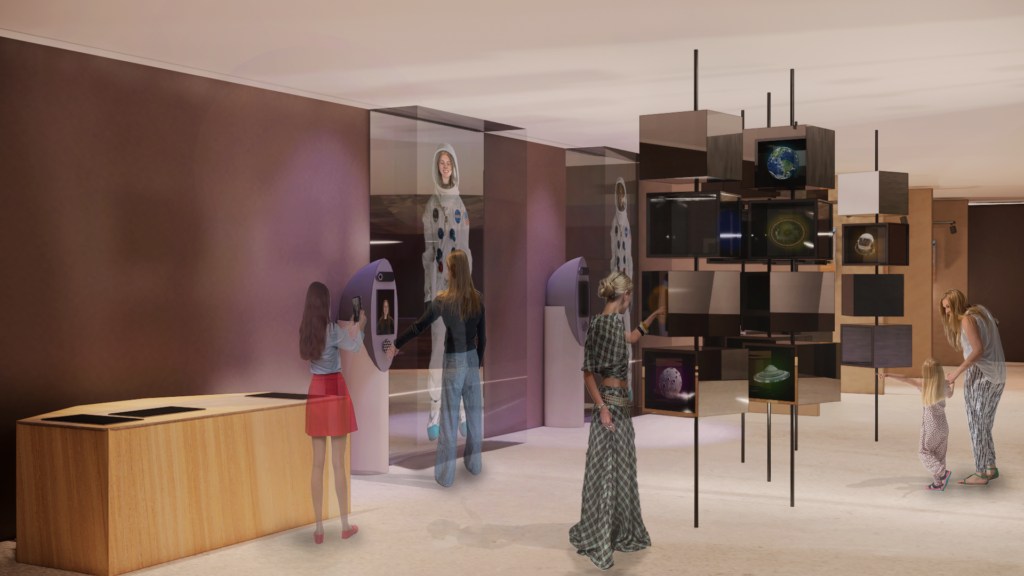
Visitors gather around the interactive table and astronaut stations, where they can scan their bracelet and have their photo taken to use as their passport ID. It’s a simple, playful moment that lets them see themselves as part of the experience. Around them, mirrored glass displays of projected artefacts reflect the space and each other, encouraging visitors to move around and explore from different angles.
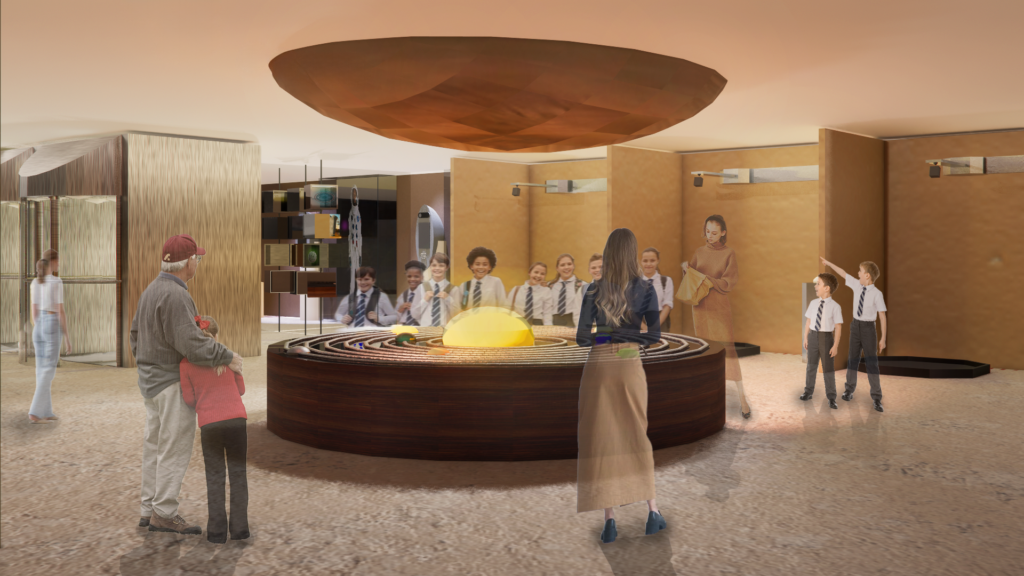
Visitors gather around the planetary table as a central, glowing focal point, where staff guide them through the solar system, explaining each planet and encouraging interaction from multiple sides. The warm lighting and circular layout create a sense of immersion and curiosity, making the experience feel both educational and engaging, rather than static. This shared moment fosters conversation, learning, and discovery, allowing visitors, especially children, to connect with complex information in a more memorable, hands on way.
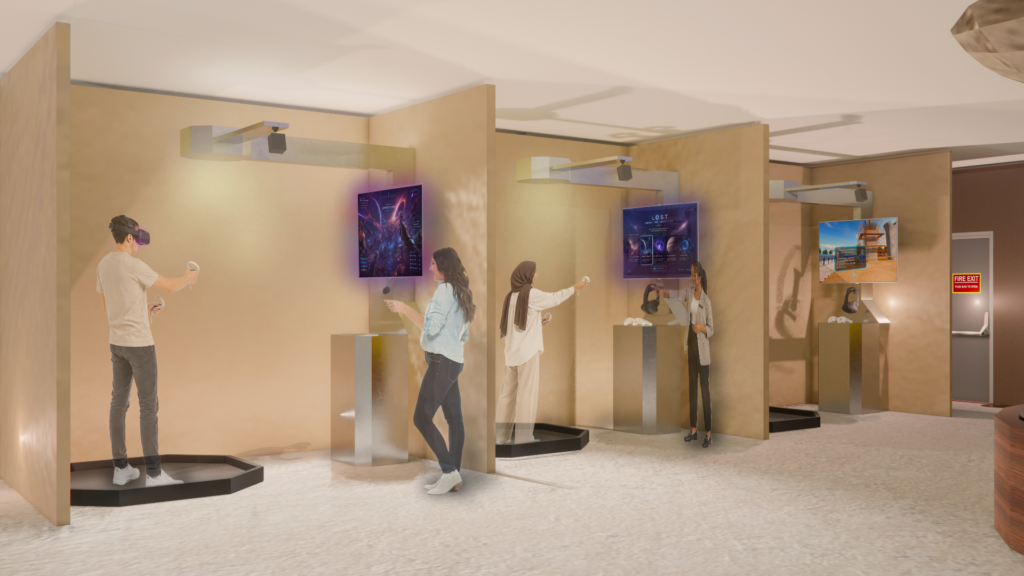
Visitors step into individual VR pods where they can choose what part of the universe they want to explore, with their selection appearing on the screen in front on the TV screen, so that others can see exactly what they’re experiencing. Speakers are on the side creating a more immersive atmosphere. It becomes a shared moment as people watch, react, and decide what they want to explore next, making the experience feel personal but still social and engaging.
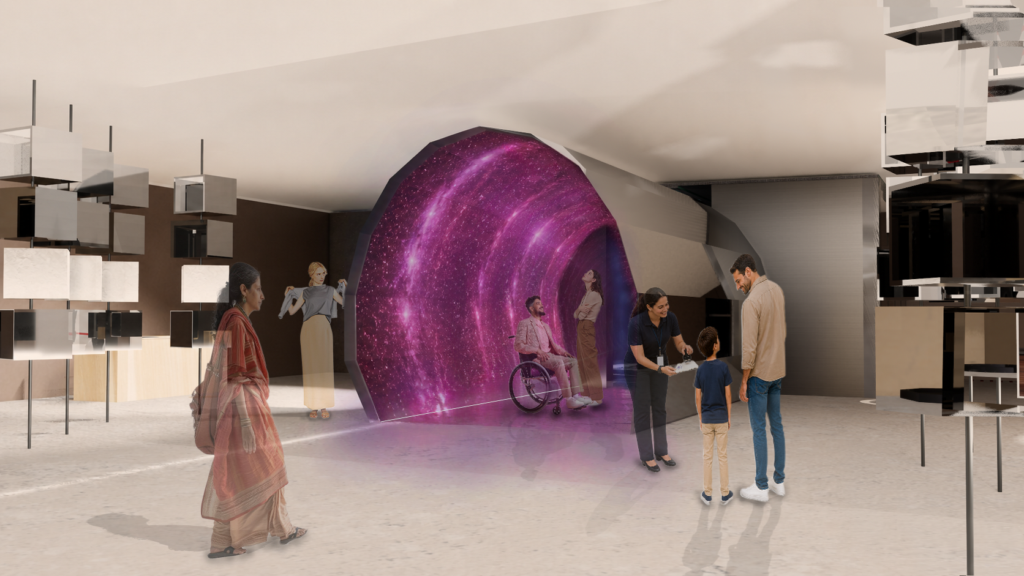
Visitors are drawn into the galaxy hallway, where mirrored surfaces on the outside reflect movement and light, subtly pulling them toward the entrance. As they step inside, the space shifts into an immersive experience, with electronic screens surrounding them in moving galaxies, creating the feeling of travelling through space. The transition builds anticipation and excitement, leading seamlessly into the space simulator, where the journey continues and visitors feel fully transported beyond Earth into space.
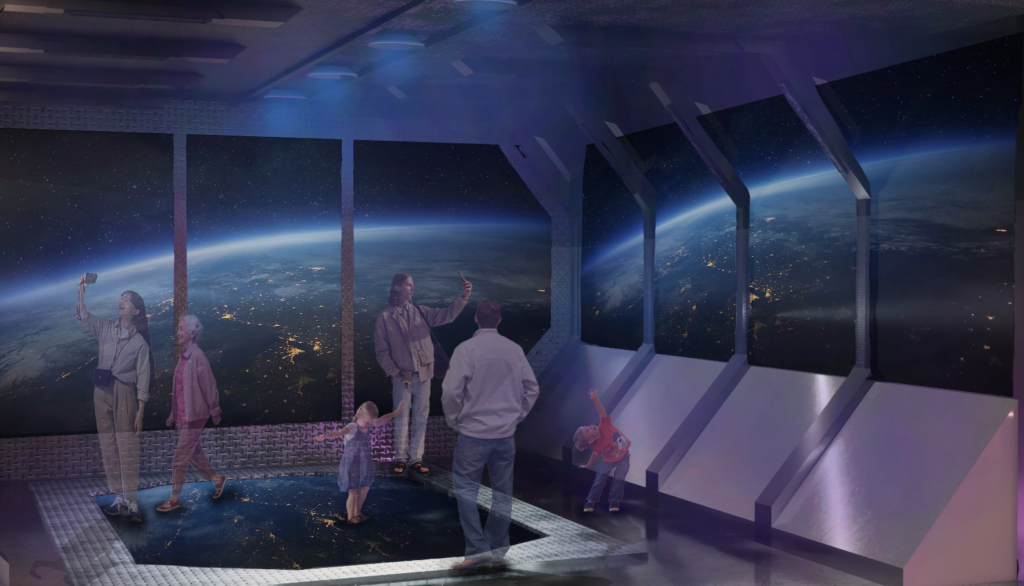
Visitors enter the space simulator directly from the galaxy hallway, where the transition from soft, immersive visuals into a more metallic enclosed space heightens the sense of departure. Surrounded by industrial materials and screen ‘windows’, they experience the feeling of launching from Earth and travelling into space, as moving visuals simulate the journey beyond the atmosphere. The space creates a sense of excitement and anticipation, making visitors feel as though they are part of the mission, turning observation into a fully immersive, cinematic experience.
Second Floor: Immersion (Universe)
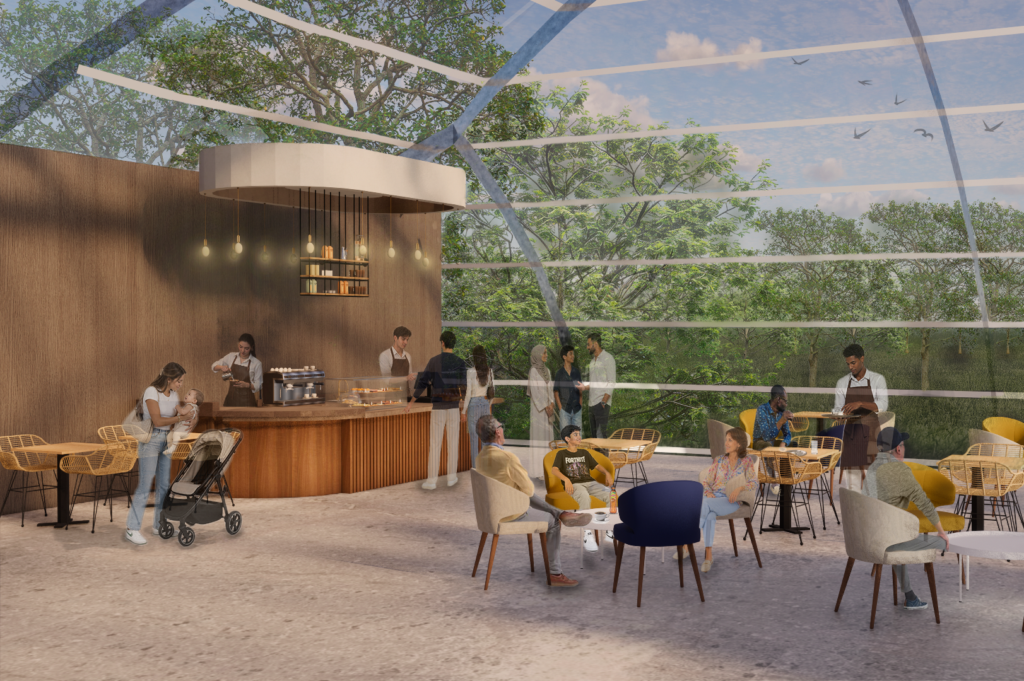
The cafe’s atmosphere shifts to a calm, open space, allowing visitors to pause and reflect after the immersive journey below. Views overlooking Springburn Park, reconnects visitors with the real world while still feeling elevated and part of the overall experience. The relaxed seating and warm materials encourage people to stay, socialise, and unwind, making it both a destination and a moment of rest within the museum journey.
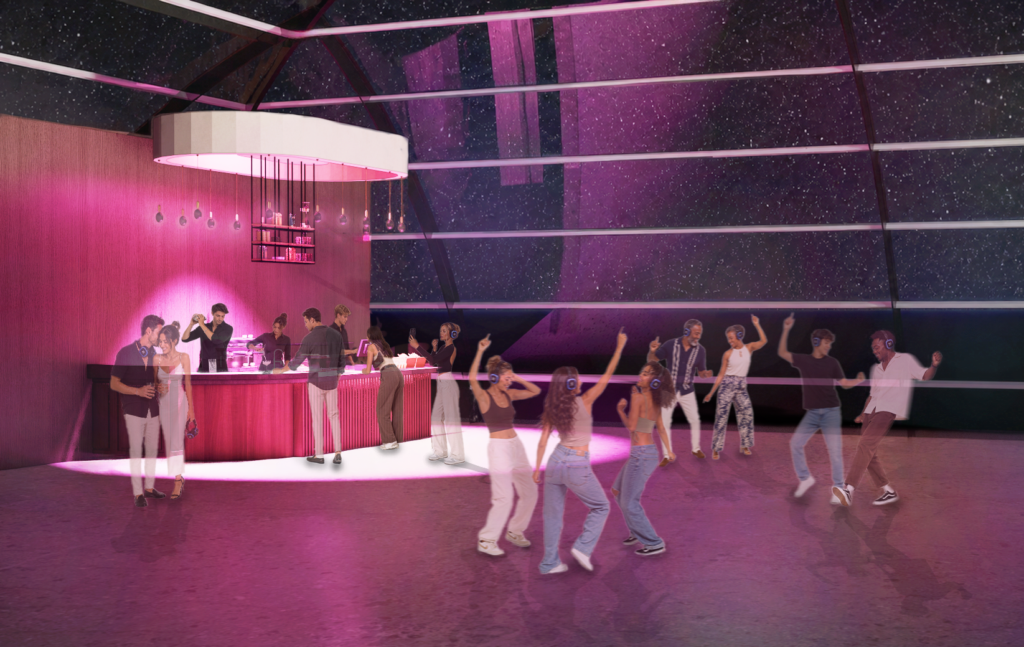
On selected evenings, the museum cafe transforms into a silent disco space, with tables and seating stored away to create a safe and open dance floor while the main museum remains closed. Through immersive lighting and projection, the space continues to reflect the museum’s interactive identity, encouraging visitors to engage with the museum building beyond day time open hours.
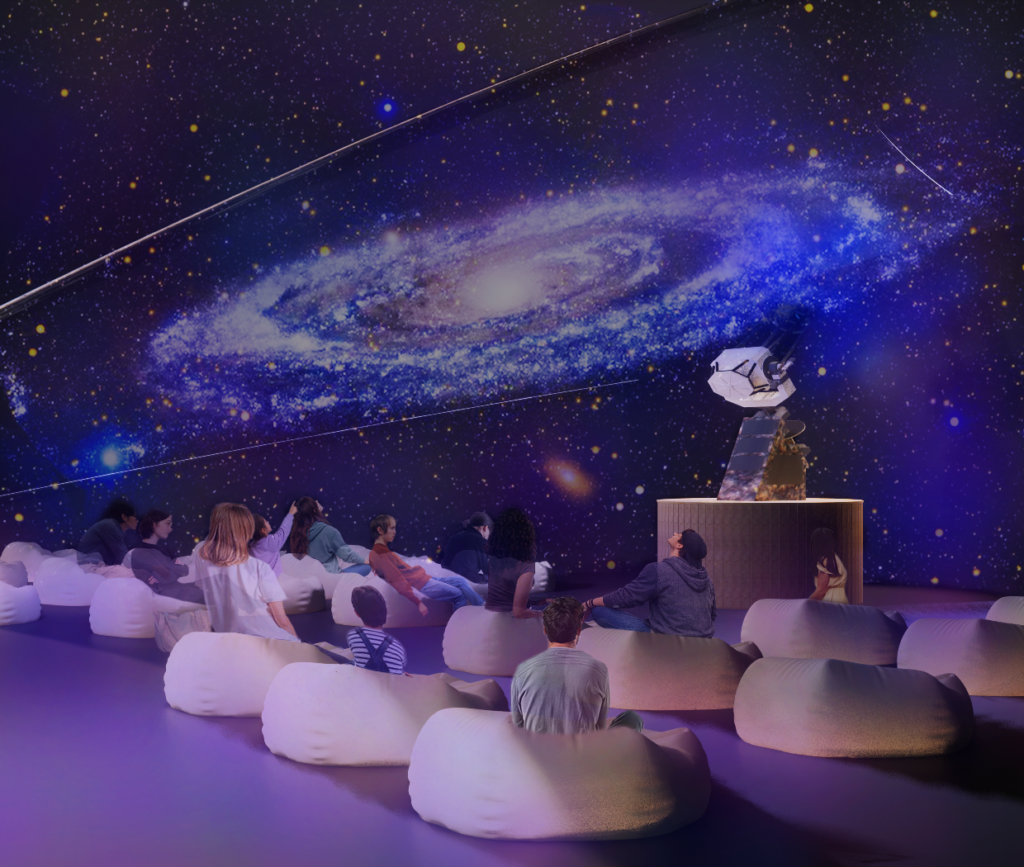
Visitors enter the planetarium settling into soft bean bags that create a relaxed, informal viewing experience. As the show begins, the retractable roof screen rises and transforms the space, with projected visuals of galaxies, the cosmos, and the wider universe surrounding them from above. The combination of darkness, immersive projection, and comfortable seating creates a calm yet awe inspiring atmosphere, allowing visitors to fully disconnect from the outside world and feel immersed within space itself.
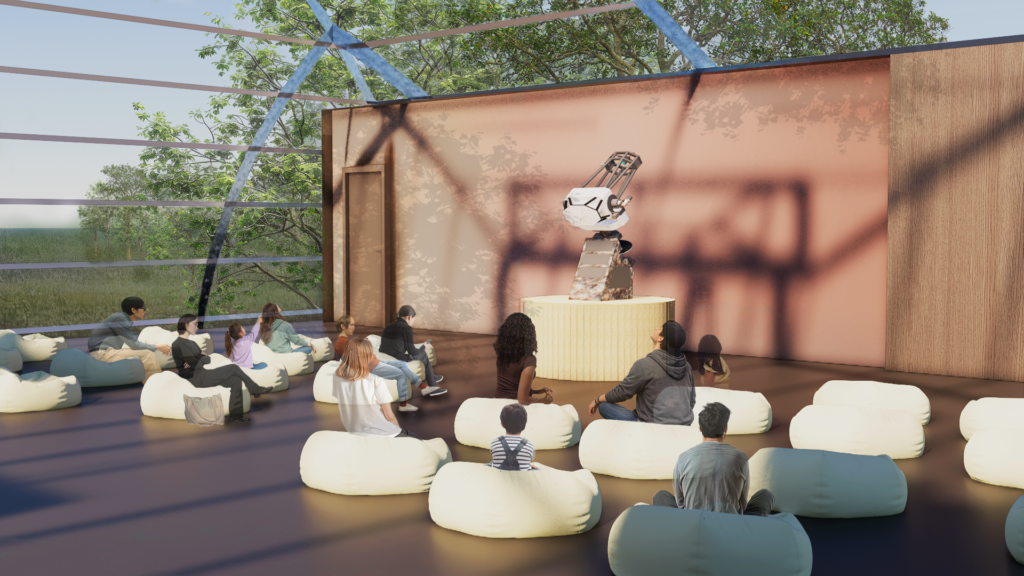
Retractable Roof Screen Structure
The retractable roof screen sits beneath the glass roof, staying hidden most of the time so the space still feels open and filled with natural light. It’s made from a matte black projection fabric that highly absorbs light, supported by a slim aluminium track system built into the structure. When a planetarium event begins, the screen is raised using a simple switch, smoothly extending across the roof to create a dark, continuous surface. This allows the projector to display clear visuals without glare or distractions, making the experience more comfortable and immersive for visitors. Once the show ends, the screen retracts back up, bringing the space back to its original bright, open, and natural state.
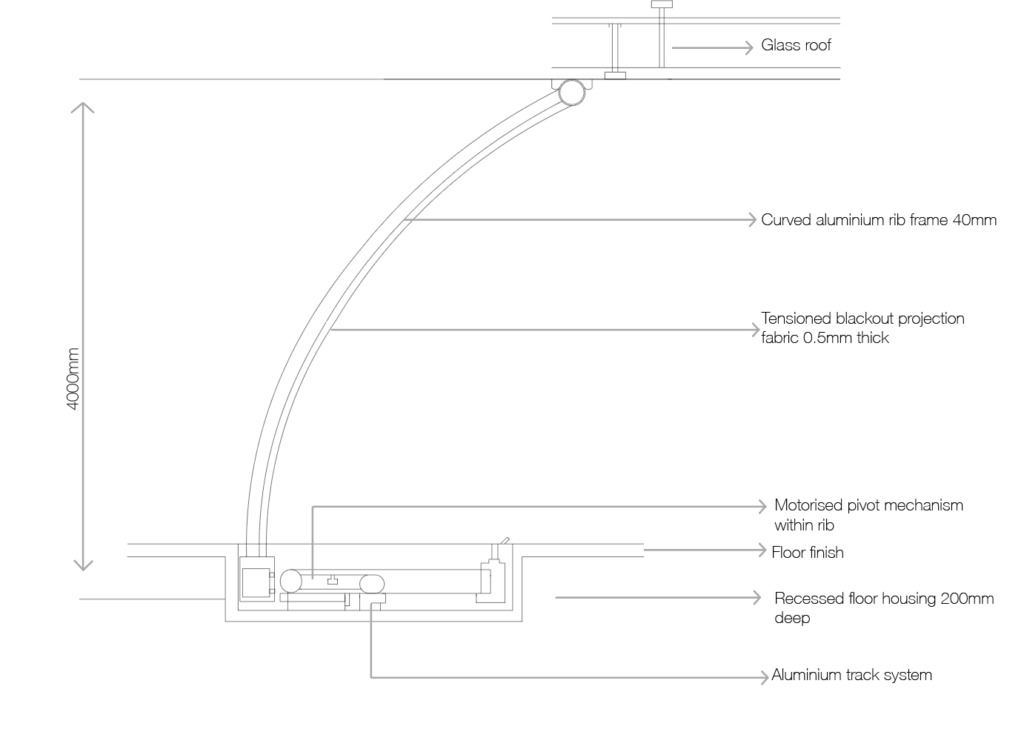

Physical Model
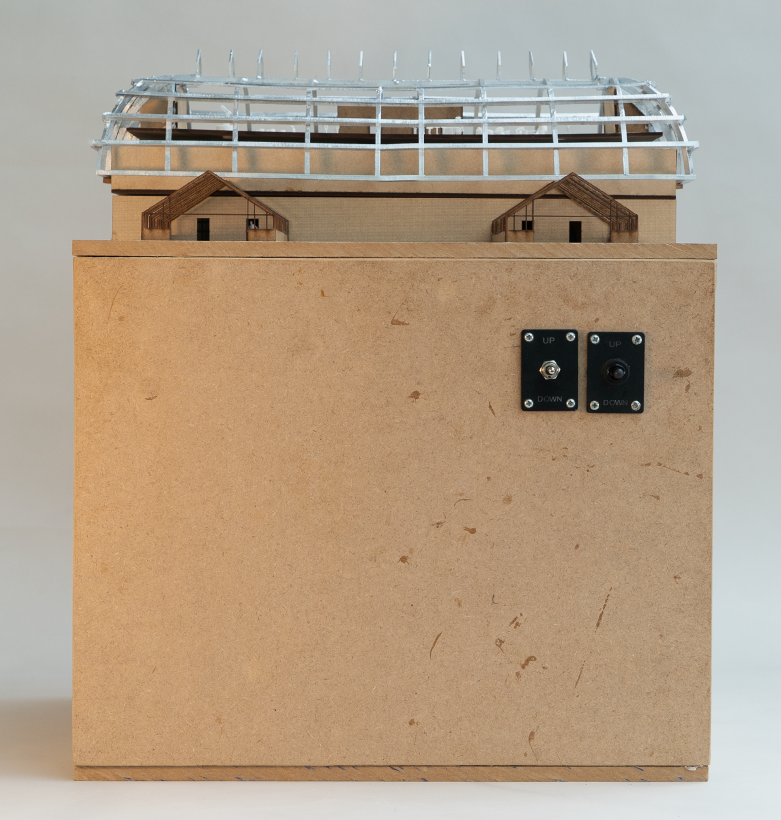
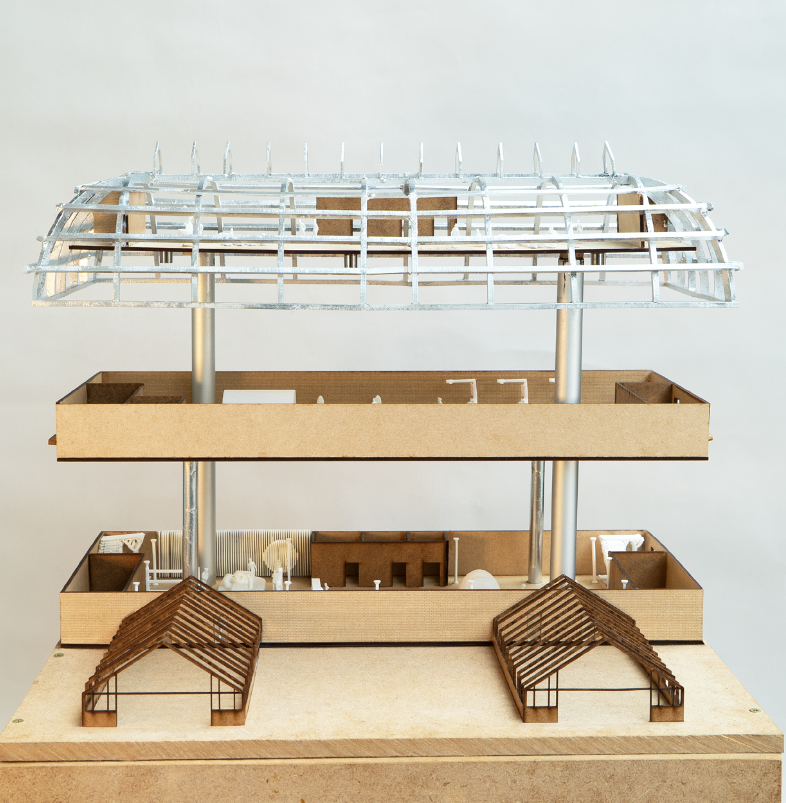
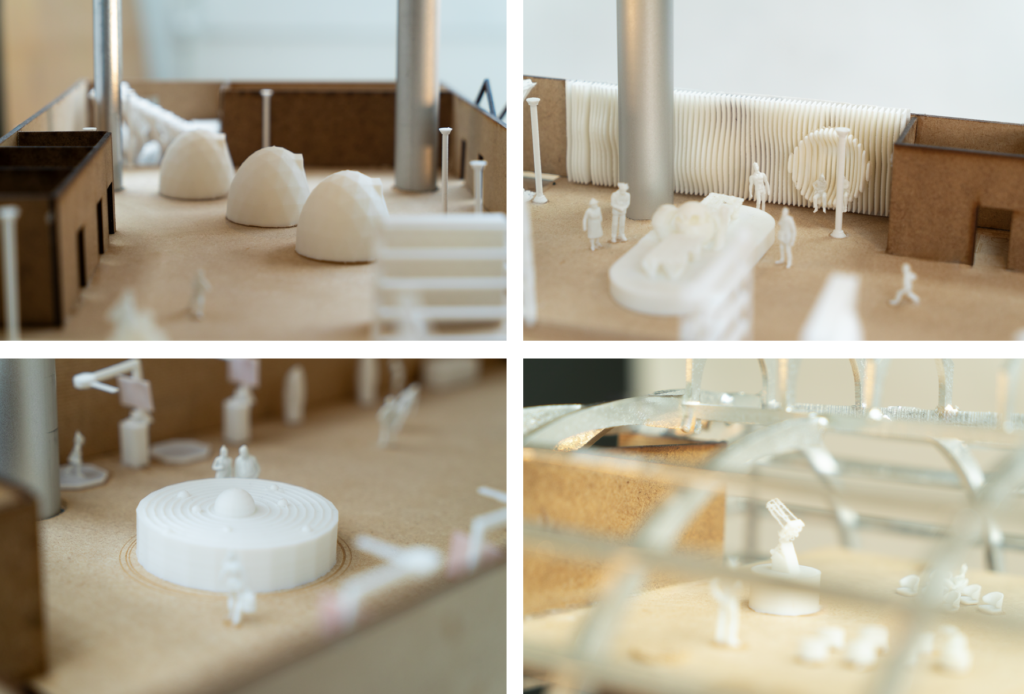
A 1:100 physical model of the whole building was created to better understand the scale of the space and the placement of the main elements within the museum. When exploded, the model clearly separates each floor, helping to explain the journey from Arrival (Earth) to Exploration (Space) and finally Immersion (Universe), making the concept and themes of each level easier to understand. The moving model mirrors the visitor journey throughout the museum, physically revealing each level to reflect the project’s immersive and interactive progression through the universe. Please press link to view a video demonstration of the model in motion.