Nell Burgess
shep
My work is rooted in process. It is also grounded in place and locality which means looking around in curiosity is essential to my work. With process as the focus, design is through trial and error, learning things practically through the tactile. For the last few years wool has been the most exciting medium. So given the opportunity to work with sheep fleeces straight from local farms has been the greatest of pleasures. My skills have grown in sorting, washing, carding and spinning as well as weaving by hand and on the swiss arm loom. Each of which have given me different insights into the nature of this material at the centre of the project. For this collection I have been sponsored by Uist wool, an incredible vertical mill who work as a social enterprise on the Isle of Uist adding value to local wool and cherishing traditions of reliance upon the gifts of the land. Its an honour to feel this project is in parallel with their work.
Having researched the relationship we have to the land in an academic context, I have been looking for other people who might have a similar or different understanding of locality in their practice. With this in mind, I have asked several textile practitioners and wool fanatics to tell me about their relationship to locality in their work. This has become a very wholesome, insightful and personal body of research and I look forward to building on it as my understanding of this cornerstone of my practice develops. For this project I’ve used yarn from Uist Wool, a vertical mill who use ‘material available on their doorstep’ to add value to local agriculture. Working with these fibres has strengthened my connection to locally sourced and traceable materials, reinforcing the relationship between landscape, process, and cloth. The patience and intention required by these processes have deepened my connection to slowness within making. In designing this bespoke wall hanging/ gallery piece I hope to encourage others to take time to consider the its origin and all of the hands involved in its making to be valued for its materiality and craftsmanship, while reminding us that so much of what we need exists within our immediate surroundings. In my experience and understanding, textiles and Land are always linked because fibres are grown and decompose in land through their lifecycle from ‘field to fibre to field’.
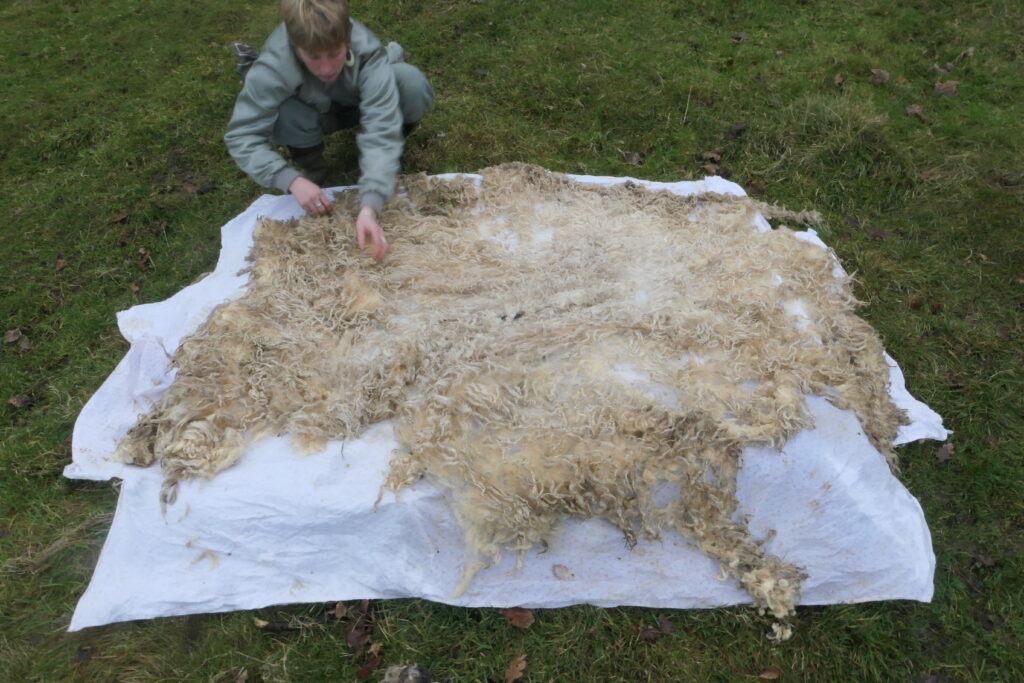
I was gifted a few fleeces whilst researching for my dissertation about our relationship with the land in the North York moors
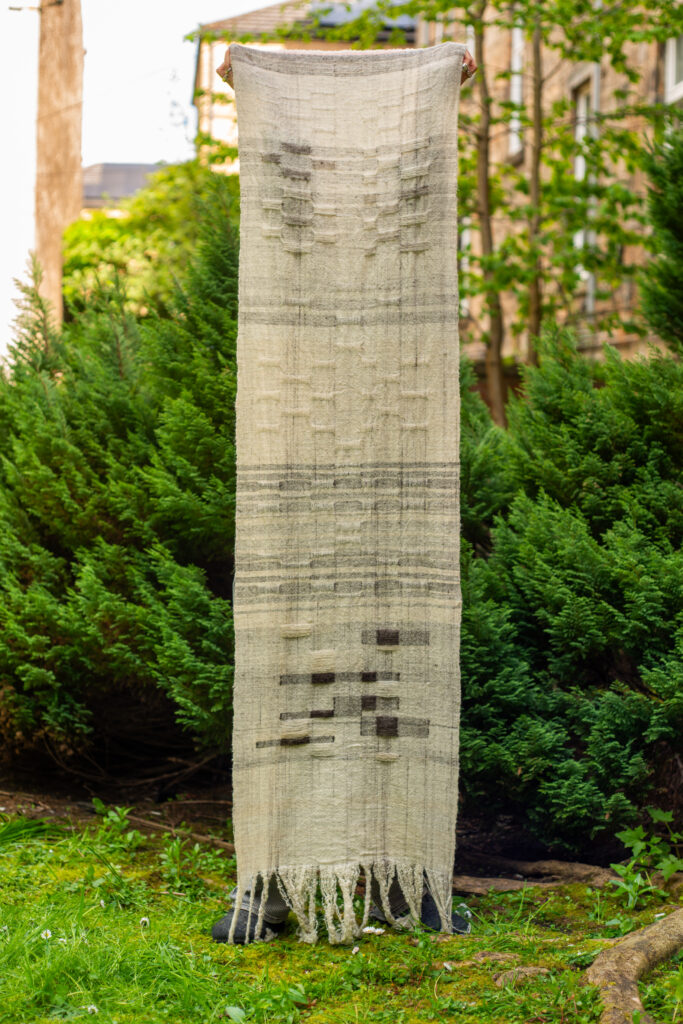
with this piece my only intention was to celebrate the nature of the uist wool i had been given. i wanted to demonstrate the aptness of the material the variety of colours and weights of yarns alongside simple structures.
A word from the dialect of Shetland for small tufts of wool picked up and gathered from fences and fields. Little gifts passed from sheep to land to me.
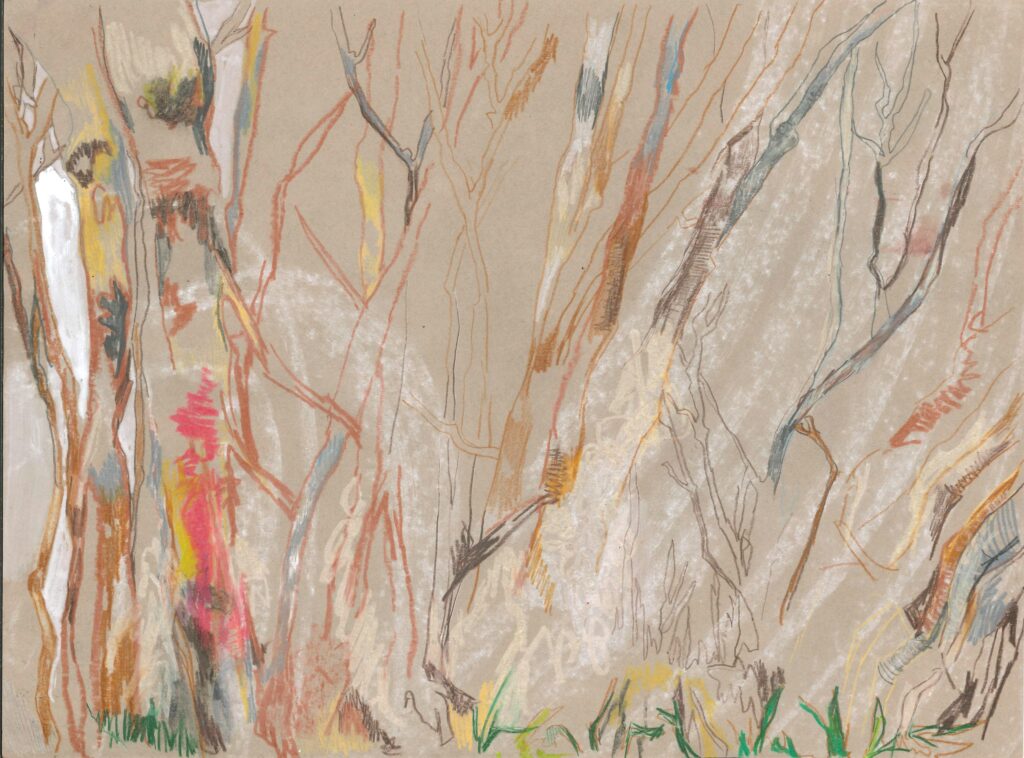
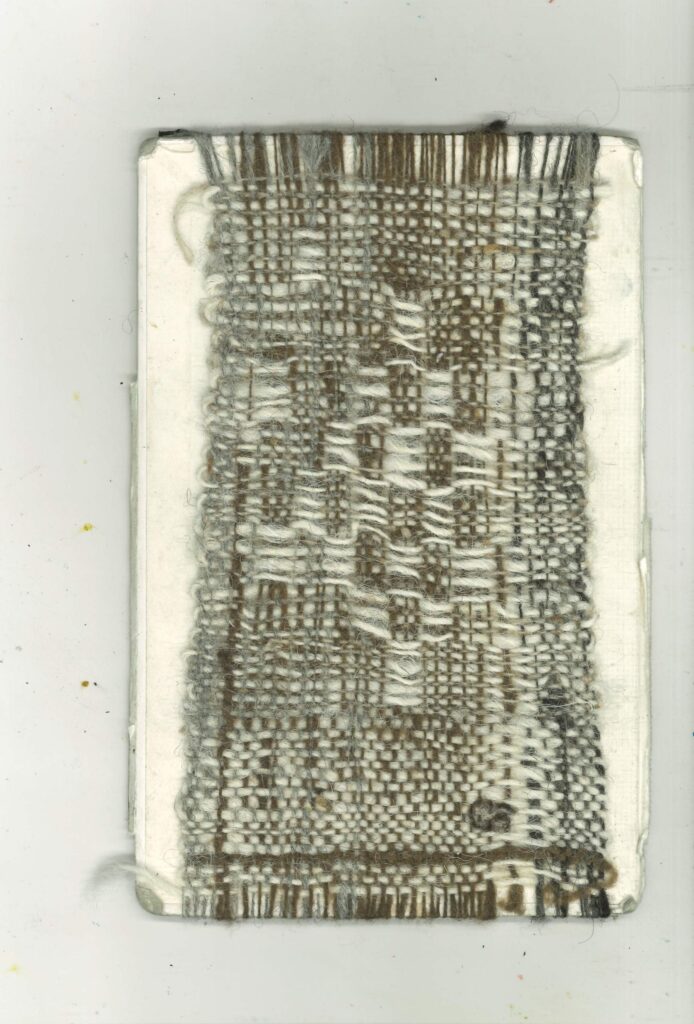
A blur of purple hands
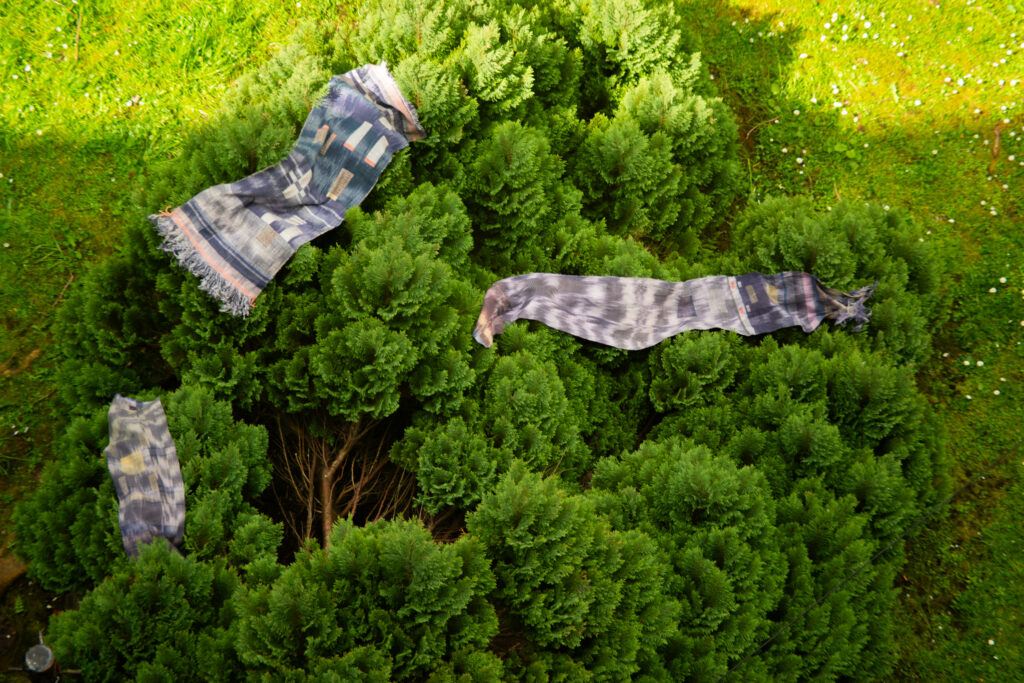
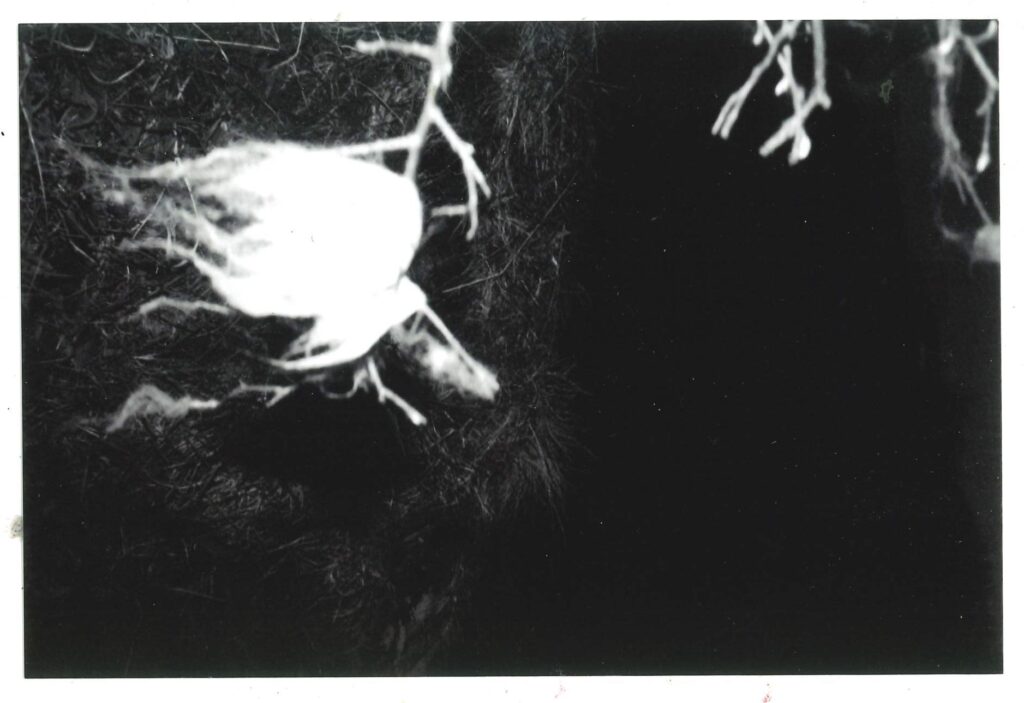
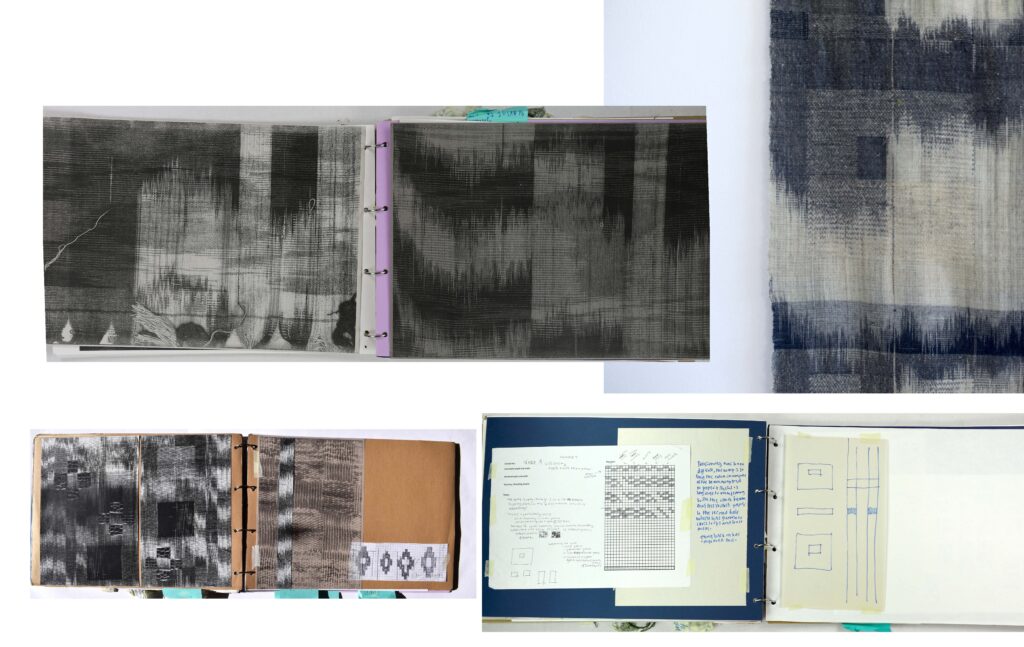
Inspired by photographs that capture fleeting moments of movement, I have developed a collection that embodies this sense of transience and blur. Through this work, I aim to foreground process, as it is central to my practice. Over the past year, I have experimented with and refined techniques that best communicate this research. My approach draws on the traditions of Japanese Kurume Kasuri — kasuri meaning “to blur” — and Ikat, meaning “to bind.” I have long been fascinated by the process of resist dyeing threads prior to weaving, and this interest resurfaced unexpectedly when an unsealed pen leaked onto a reel of cotton. The irregular stain created a soft, organic blur across the wrapped threads, inspiring further exploration within my practice.
Building on my knowledge of natural dyeing, I have become increasingly interested in the creation and production of colour itself. Working with fibres such as Uist Wool has strengthened my connection to locally sourced and traceable materials, reinforcing the relationship between landscape, process, and cloth. The patience and intention required by these processes have deepened my connection to slowness within making. I aim to create fabrics gradually and on a small scale, encouraging them to be valued for their materiality and craftsmanship, while reminding us that so much of what we need exists within our immediate surroundings. Sustainability remains central to my practice.
Whilst imagining the context for my collection I considered capturing the movement within my primary research. I like the idea of my weaves not becoming stagnant pieces of cloth once all of the activities involved in their making have ended. I have visualised them as clothing – bespoke, potentially for performance or to live a life of activity and longevity. For this context a prominent reference has been Unkruid, a collaborative project founded in antwerp, primarly they make clothes. Their process envolves extensive research into shape pattern and finish, with a focus on the process of ageing through wear and washing. I love the idea of designing for longevity and the fabric of these peices evolving through wear and being repaired with care. Although I like to think of the nature of my fabrics being on the bespoke side of textile design I see no reason for things to be made that are too precious to be used. this is the way i understand circluarity, I intend for my work to be grounded in the principles of “field to fabric to field.”
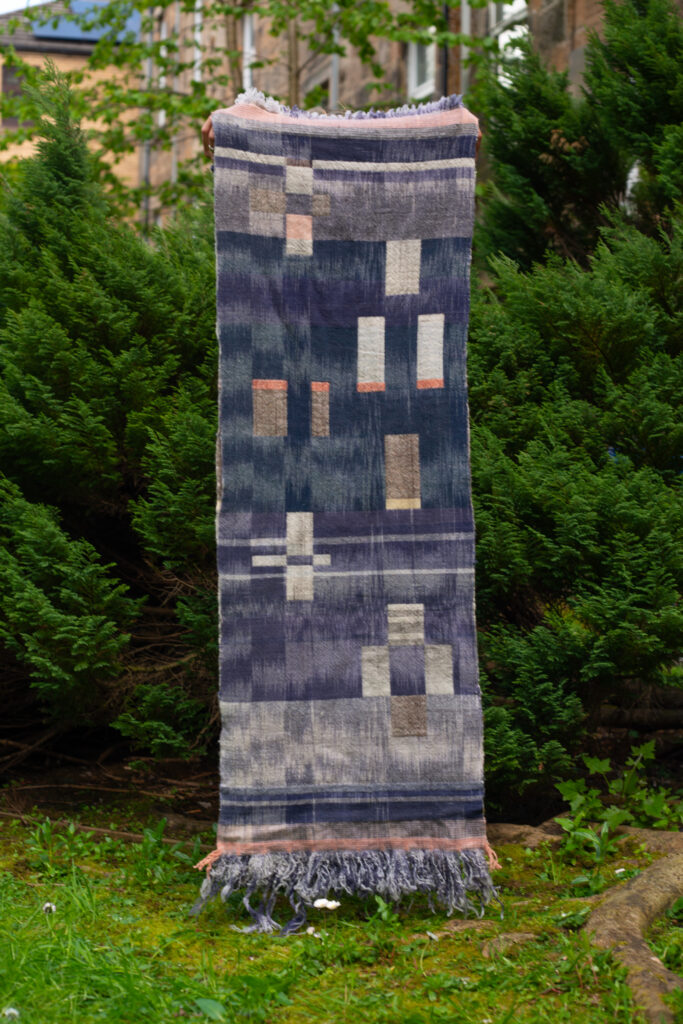
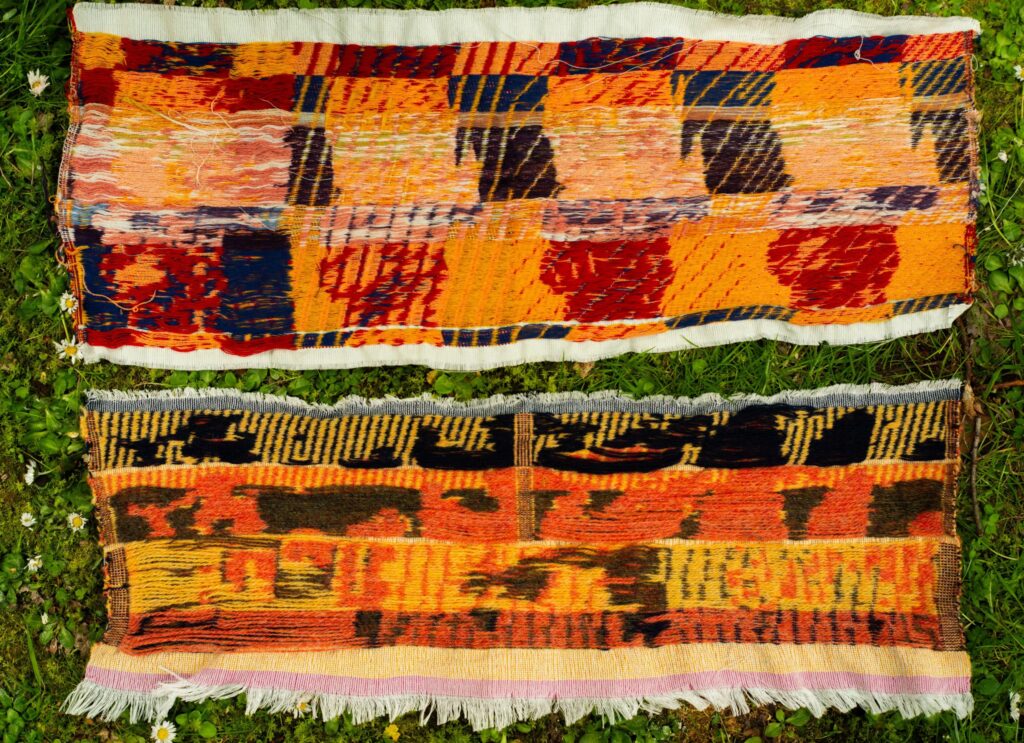
top cloth, warp dyed naturally with logwood woven with deadstock hand dyed cashmere, Uist wool and Jamiesons of shetland weaving yarn
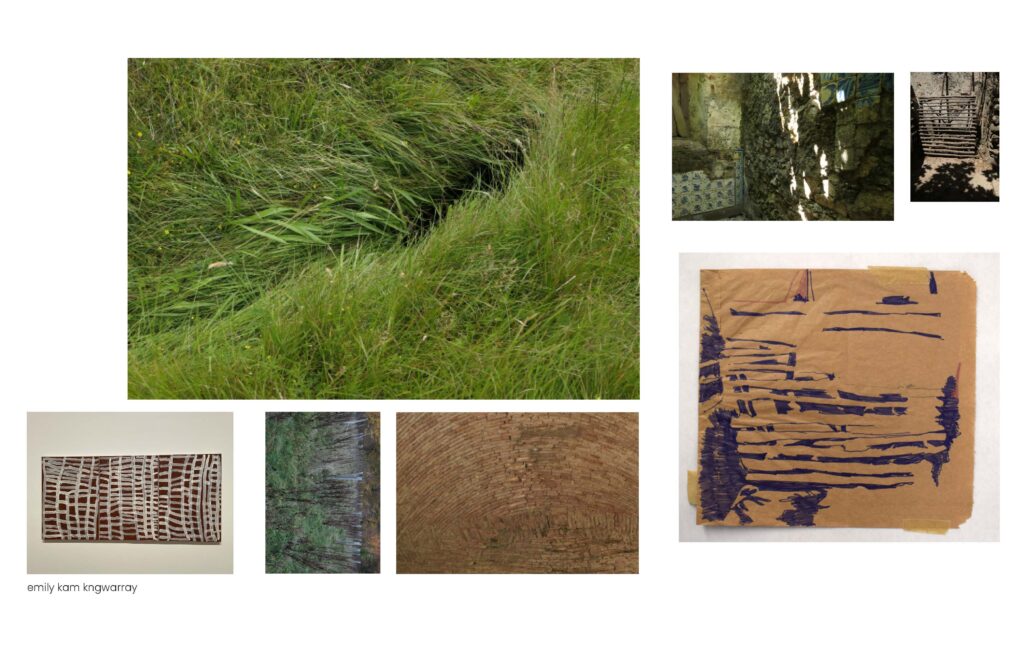
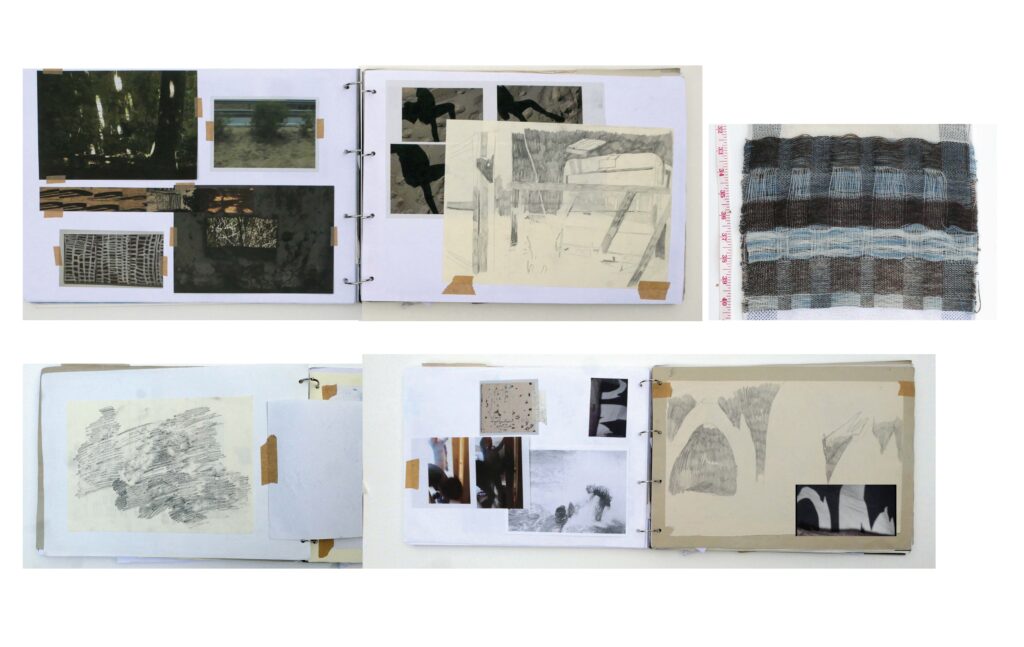
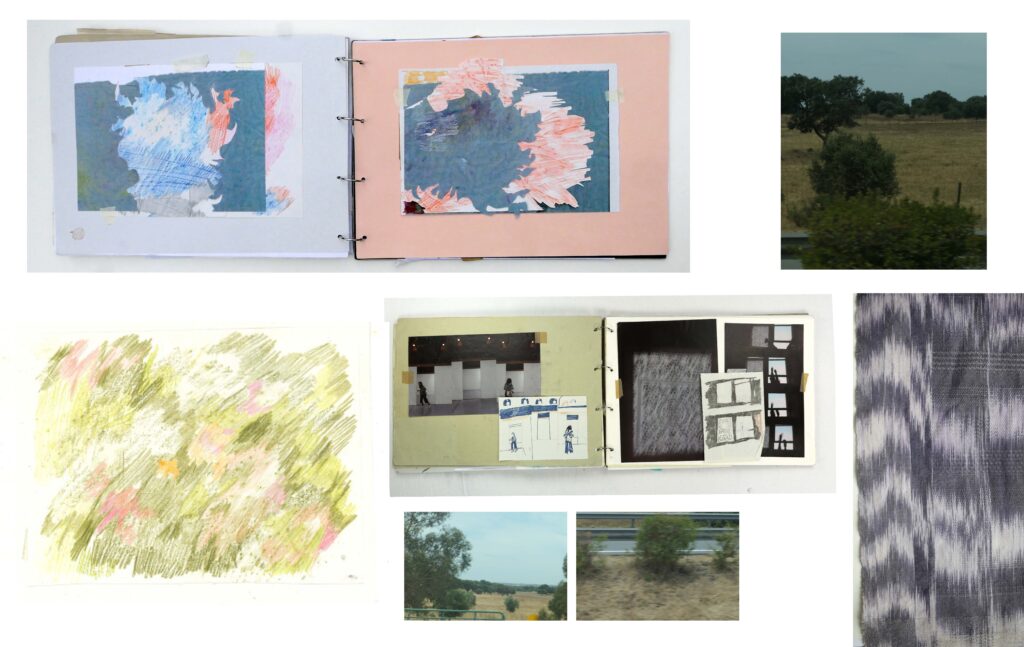
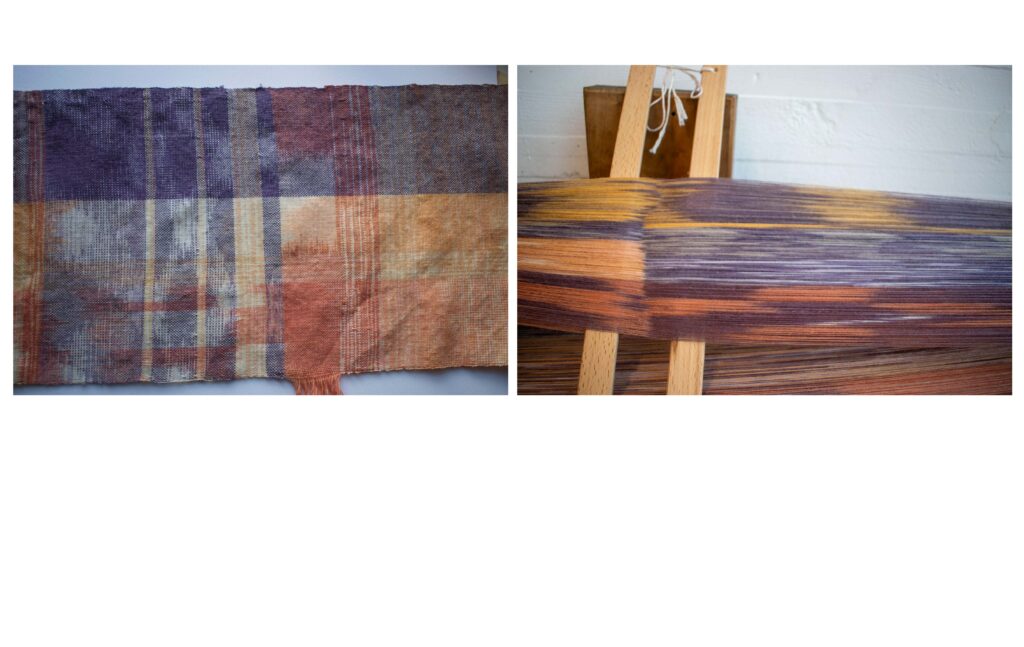
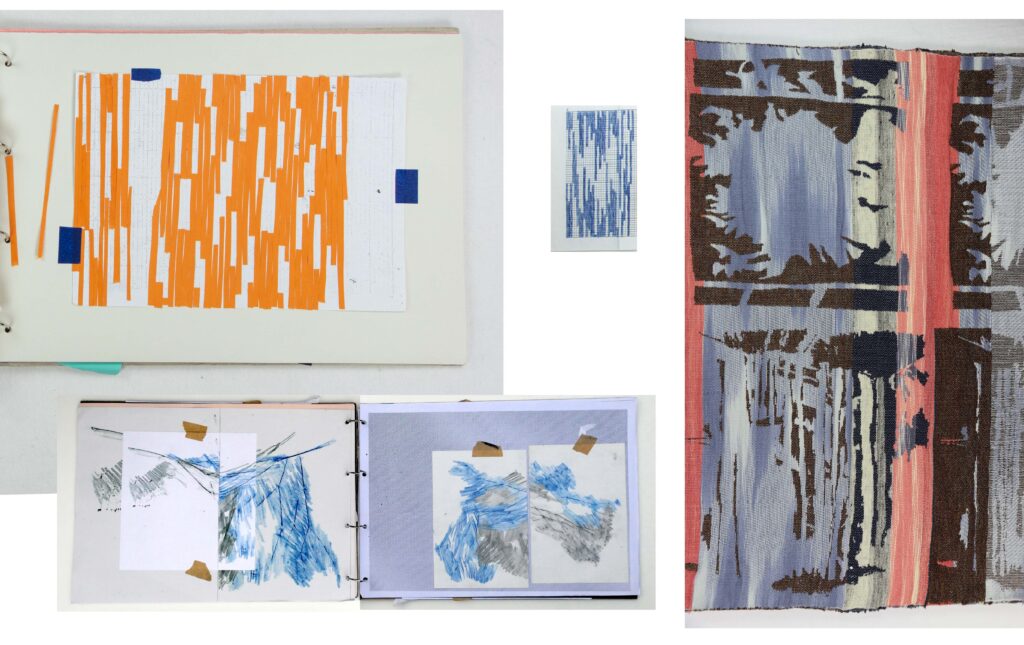
process/ primary research alongside jacquard blanket
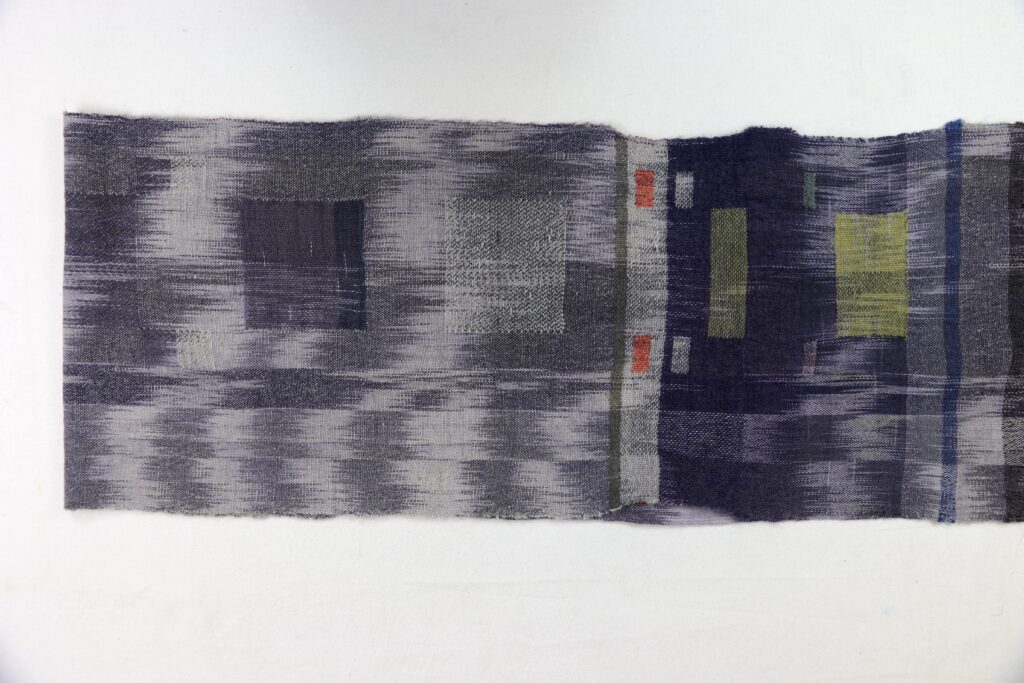
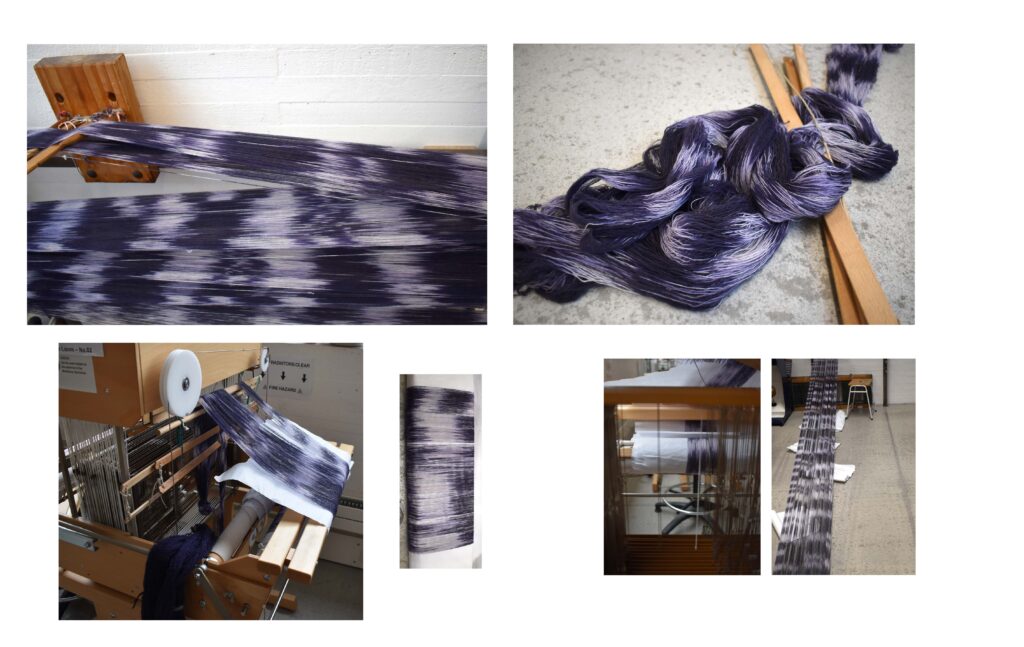
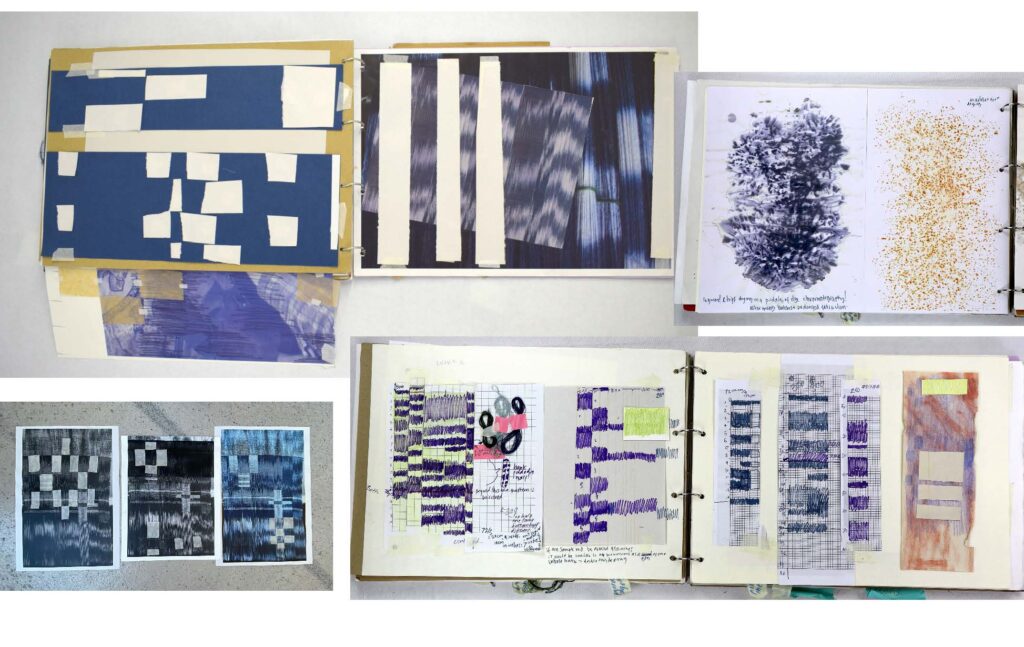
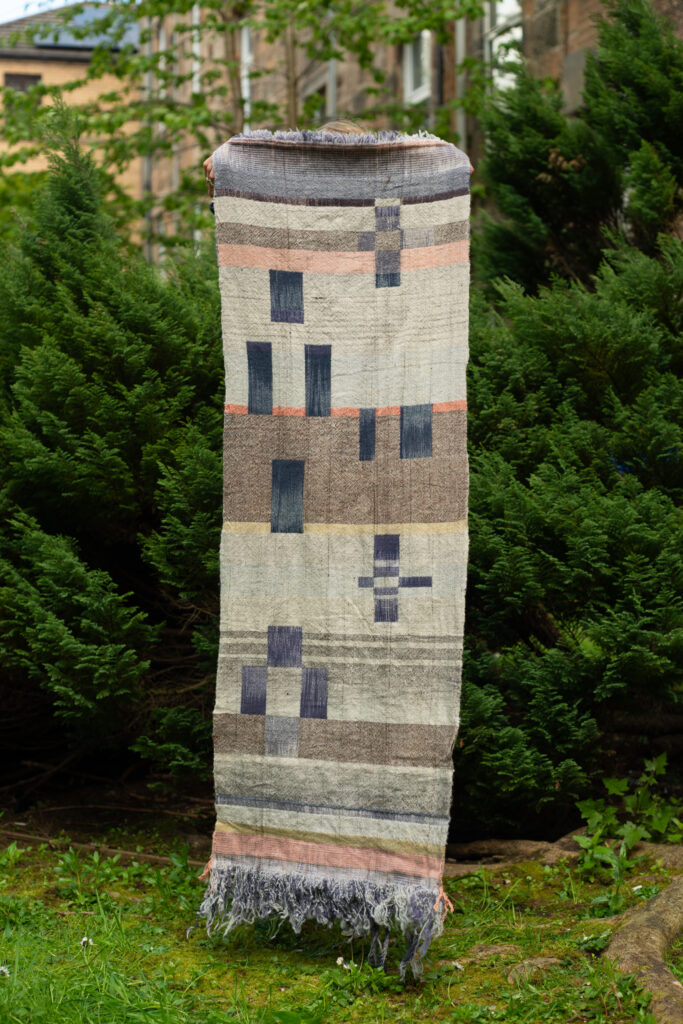
Bottom cloth, Uist historic yarns, very kindly donated woven with deadstock and naturally dyed yarns