Hanan Hussain
(she/her)
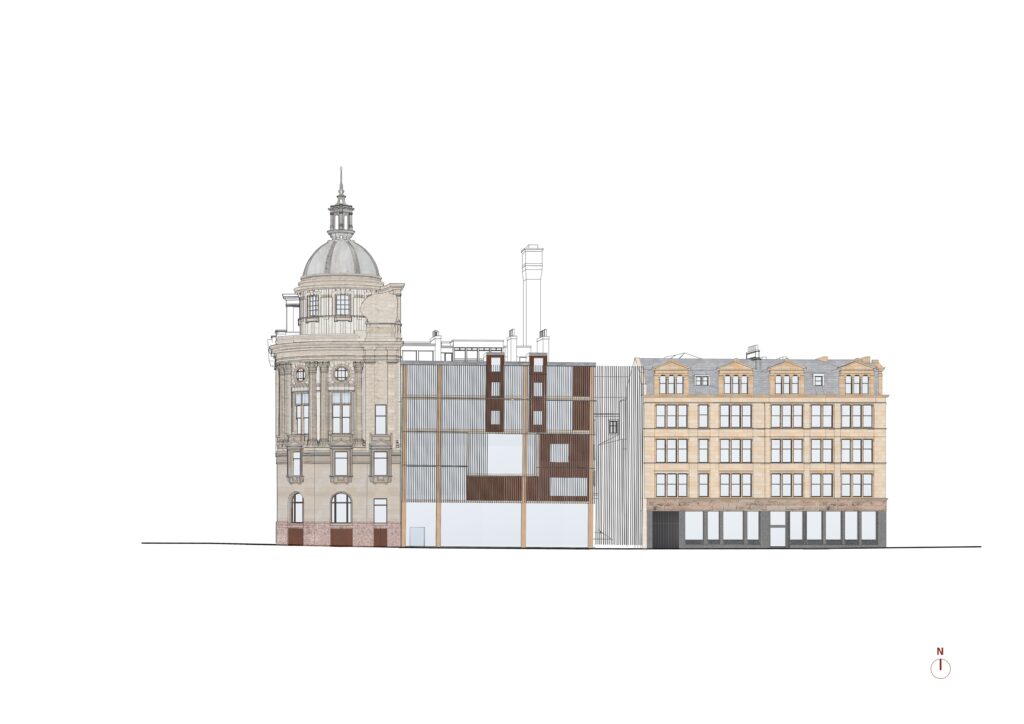
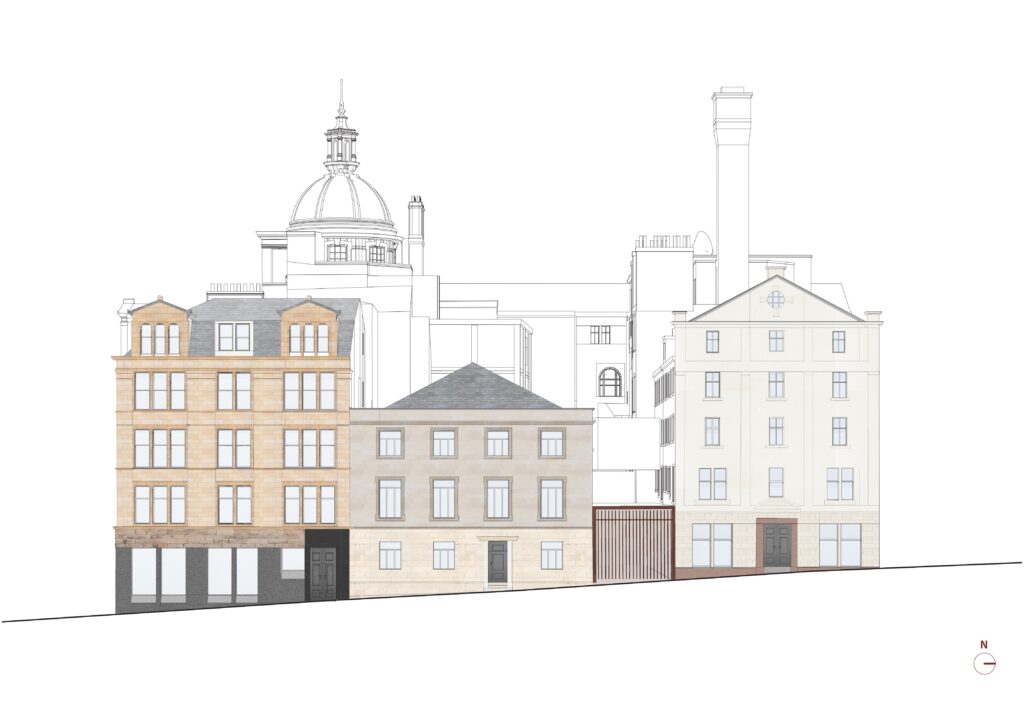
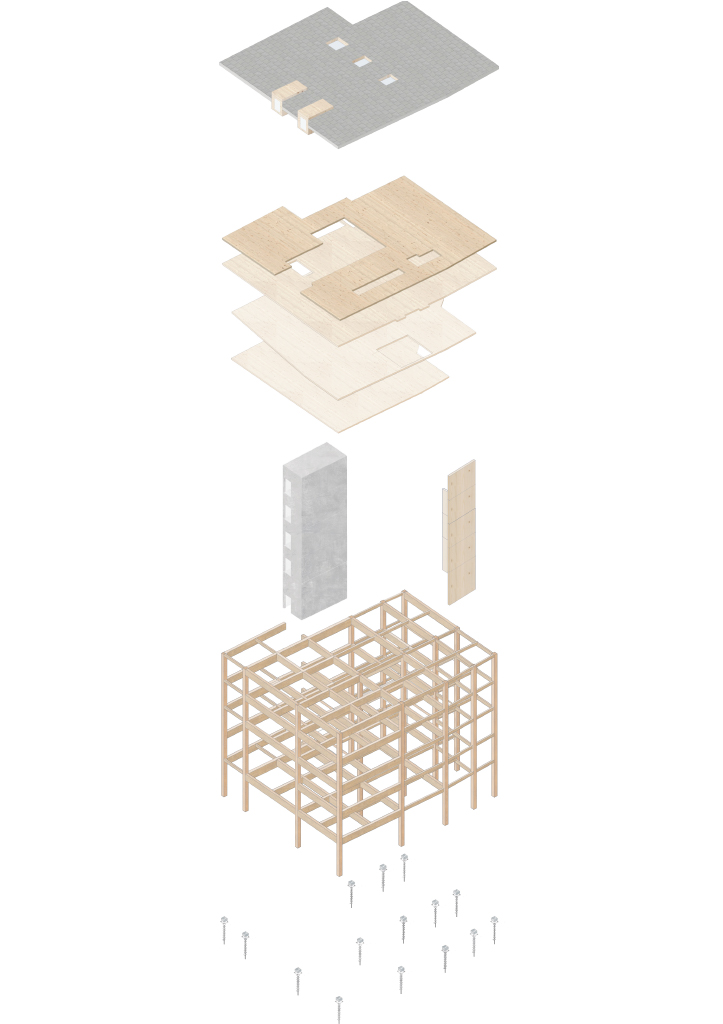
My work is grounded in a close reading of historic and current context as layers that serve to inform new additions to the site. Thus, to question how, at scale, we can pull from Glasgow’s rich history of urban renewal projects (completed or unrealised) to inform changes to the city’s fabric. I delve into material studies to ‘make visible’ the often covered layers that form our structures.
Methods and Context
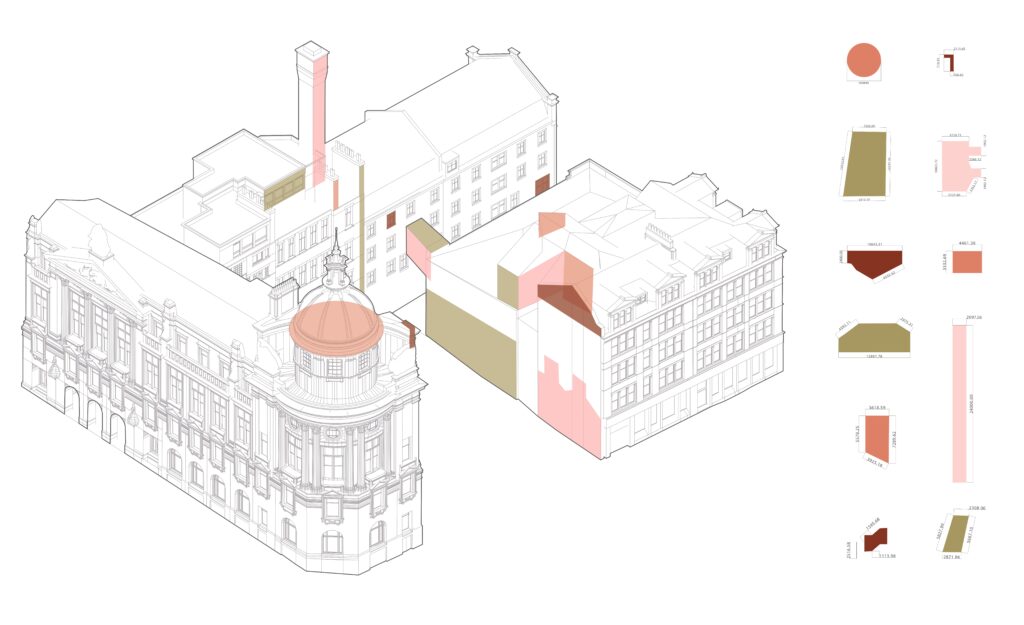
Drawing on the approach employed by Herzog and de Meuron's Serpentine Pavilion (2012), I developed a methodology wherein geometries from the site's internal facades were to become formative volumes within my new structure. The later evolution of these volumes allowed a playfulness to develop around the approach to plan, void and the spaces between floors.
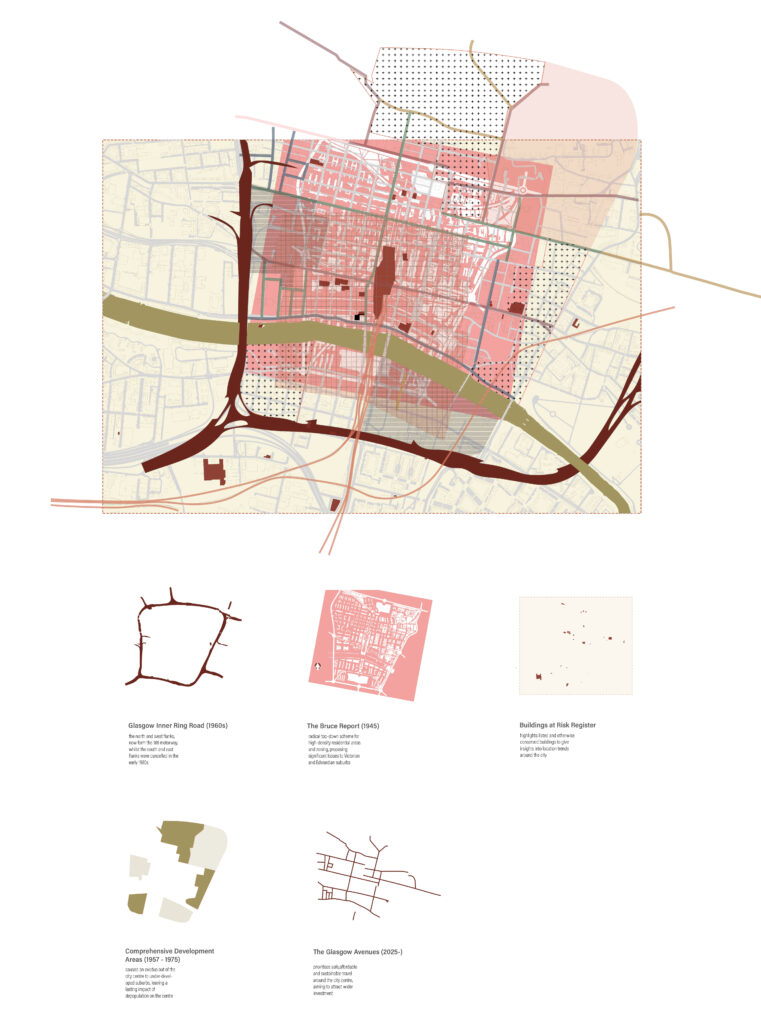
How have previous schemes pushing for the city's 'best functioning' succeeded or failed? I argue that all-encompassing, top-down approaches often fail to tailor to the needs of an inclusive civic realm. Instead, piecemeal methods can perhaps more effectively acknowledge ground conditions and real needs.
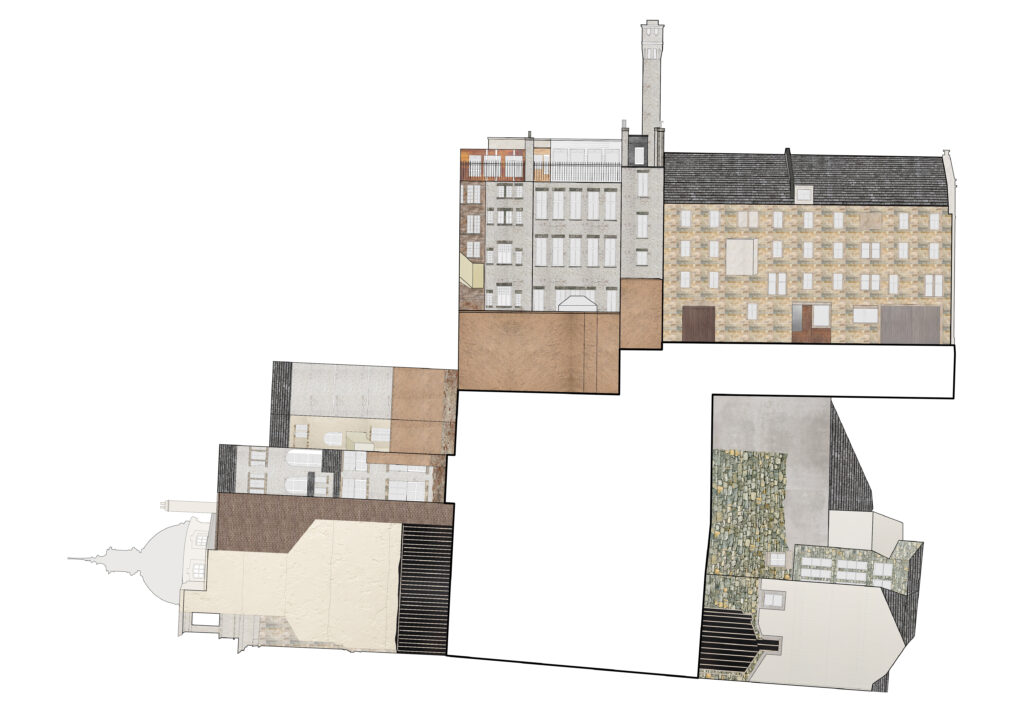
A detailed material study deep dive allowed me to collate a 'library' documenting existing site material to inform the path of new additions, focused on the internal elevations to reference the unique conditions provided by urban gap sites.
An Approachable Monument