
Callum Miller
(He/They)
Transformational adaptation is a method of systematic adaptation to issues first introduced by the International Panel on Climate Change across their AR6 and AR7 reports, described as “… adaptation that changes the fundamental attributes of a system in response to climate and its effects”. It is an increasingly necessary process of change for those systems that prove themselves fundamentally incompatible with sustainability within our planetary boundaries. Some describe the ongoing and complex deterioration of our planet as a polycrisis- while Edgar Morin is considered the first to introduce the term, more recently Adam Tooze (academic at Colombia University) described it as “not just a situation where you face multiple crises. It is a situation like that mapped in the risk matrix, where the whole is even more dangerous than the sum of the parts.” Tooze’s definition is founded in increasing geopolitical conflict, a developing understanding of the severity of planetary collapse, misinformation and social fraying (largely credited to the exponential acceleration of the internet), worsening epidemics and pandemics, economic inflation, hunger, food supply and so on- by its nature, a polycrisis is likely impossible to quantify. In the UK, one of the biggest components of the crisis we experience day to day is the crumbling of our shared socio-political structure that governs us. Far-right politicians, armed with climate conspiracy, class war, misinformation and identity politics are destroying social cohesion, one of the central components of the unfolding polycrisis. We now exist in a time of mitigation and adaptation as a climate response- reversal is impossible. In tandem with swathes of denial and misinformation on the subject, we are only ensuring the responses we ultimately make will need to be more severe. Engaging the problem in its entirety is not an option however- its scale renders this impossible. It is therefore paramount that the response to the polycrisis is something of a poly-response, and that those are transformational adaptations.
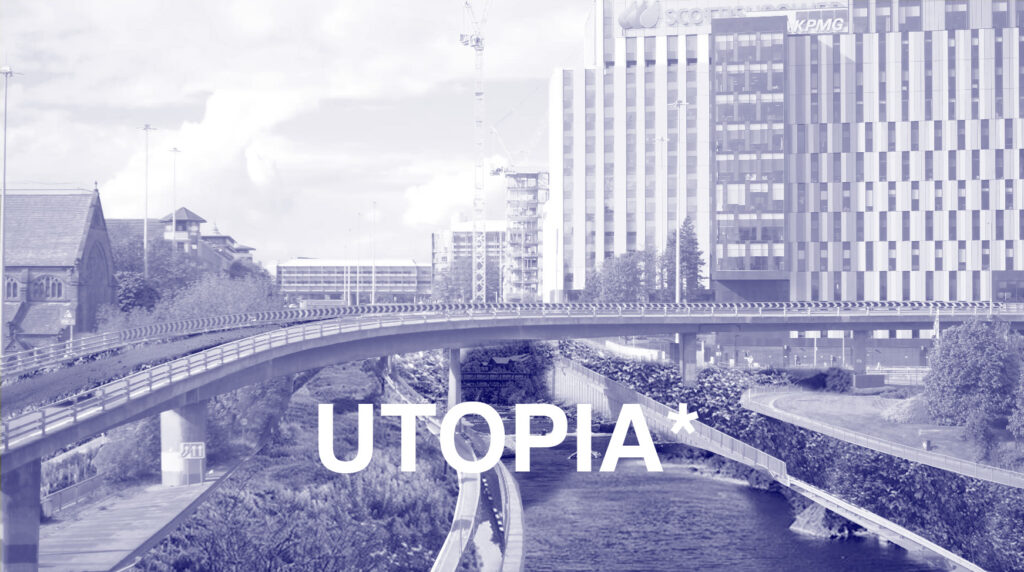
This project particularly applies the methodology of transformational adaptation to a designed socio-political framework, transcending the more widespread application of the idea to ecological adaptations. It aims to propose something closer to a true democracy, something different to what currently exists- and is incompatible with out planetary limits. The project title, Utopia*, suggests a new definition of the word. One that is embedded in the theory established by practitioners such as Frederic Jameson, Ruth Levitas & Rob Hopkins, and ready for a transformative application in post-party-politics. The rhetoric throughout the project configures these interpretations of utopia into one which is, summatively, processual, adaptive, cyclical and incomplete. That is to say, it must permit evolution in the future- the utopia of one place, today, is not the same as the utopia elsewhere, tomorrow. Utopia* does not exist to plan the transition to such futures, nor does it set out to determine what they look like. Instead, its goal is to foster democratic, equitable envisioning of the future, where a collective vision is developed, one that is corroborated and adapted through the connection and deliberation of ideas from a grassroots level. It aspires to create a pathway for ideation systematically different to what exists now, where policy, spending and so on is developed from a collective public opinion. Furthermore, these discussions and ideas are considered against an evolving understanding of planetary impact, platforming those projects which are attuned to ecological, social and political sustainability, creating a mode of politics where we cannot cross those ecological thresholds, and must remain informed by the most recent understandings of broader ecologies in the biosphere.
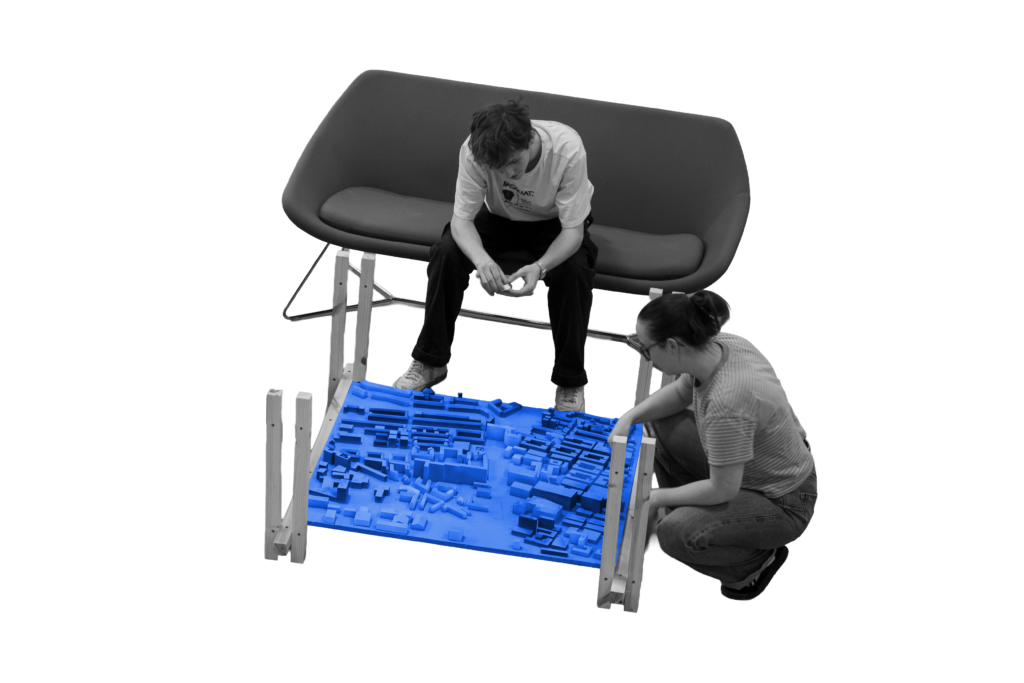
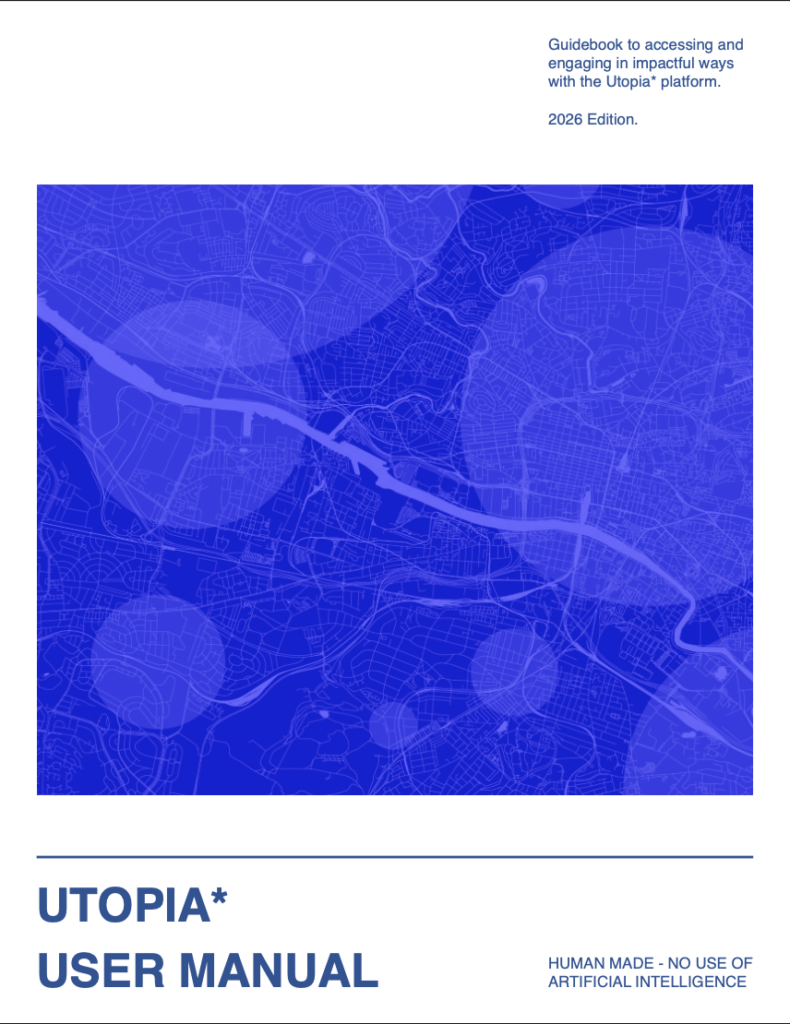
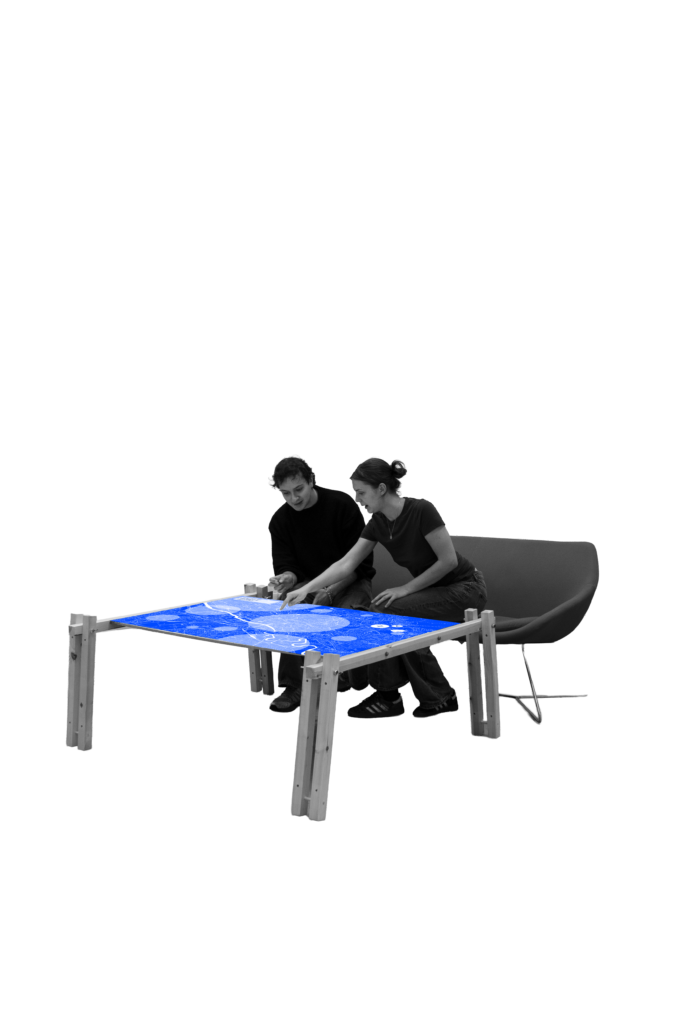
The objectives set out in the abstract are primarily engaged through the development of a new digital democracy platform, Utopia*, which facilitates the direct communication between citizens ideas, ensures ratification of ideas against planetary and social considerations. Individuals can up or down-vote one another ideas, which changes their prominence on the map-based interface, which situates ideas respective to the contexts in which they are imagined and appropriate. It allows the scaling of ideas, with all beginning small, and blossoming as they are adopted by streets, communities and neighbourhoods, some achieving growth taking them to regional and national level. A variety of designed interventions have been created to facilitate this system of utopian ideation. Organisations can become affiliated with the platform, receiving accreditation if they engage with developing ideas. These organisations would be interacting primarily with ideas at their scale- smaller local businesses nurturing more local ideas, and regional organisations tackling larger ones. Furthermore, a learning platform has been developed that gives users of the platform provocations to challenge their thinking, and make developmental progress in expansive and lateral thinking. The workshops built on the learning platform demonstrate use of the platforms receptivity to multi-media inputs- such as video, audio, sketch and reference, which ensure the possibility of participation from the most diverse demographics possible. This diversity is facilitated by public input devices and dedicated assisted access sessions, which retain multi-media support while negating the need for personal devices, internet connection, and digital literacy. Finally, the project has built a world around Utopia*; user manuals, case studies, job roles and a host of physical artefacts. The project itself aims to make this vision accessible, allowing an audience to step in and envisage themselves in the future.