Quizi Zhang
(Qiuzi Zhang)
~
ReciproCare
ReciproCare is a speculative community rehabilitation system that explores how recovery can extend beyond hospitals into everyday life. The project responds to the growing gap between acute medical treatment and long-term post-discharge rehabilitation, where patients are often left to manage repetitive and emotionally demanding recovery processes with limited community support.
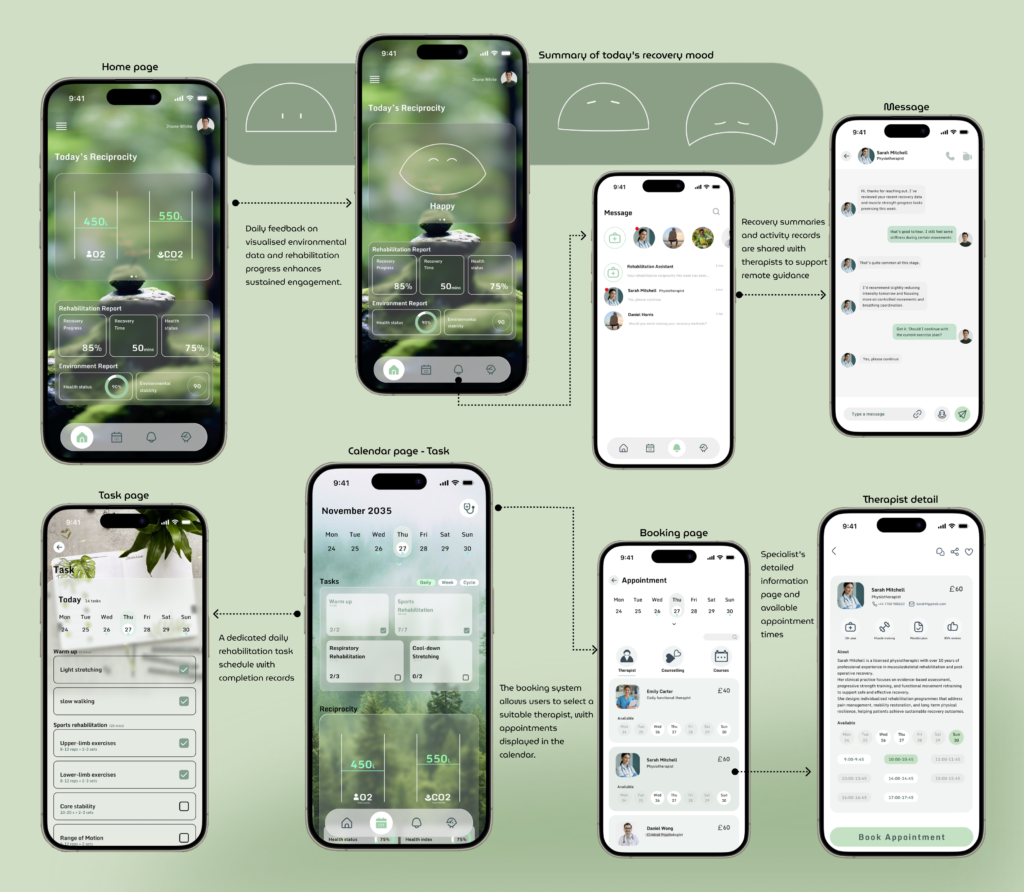
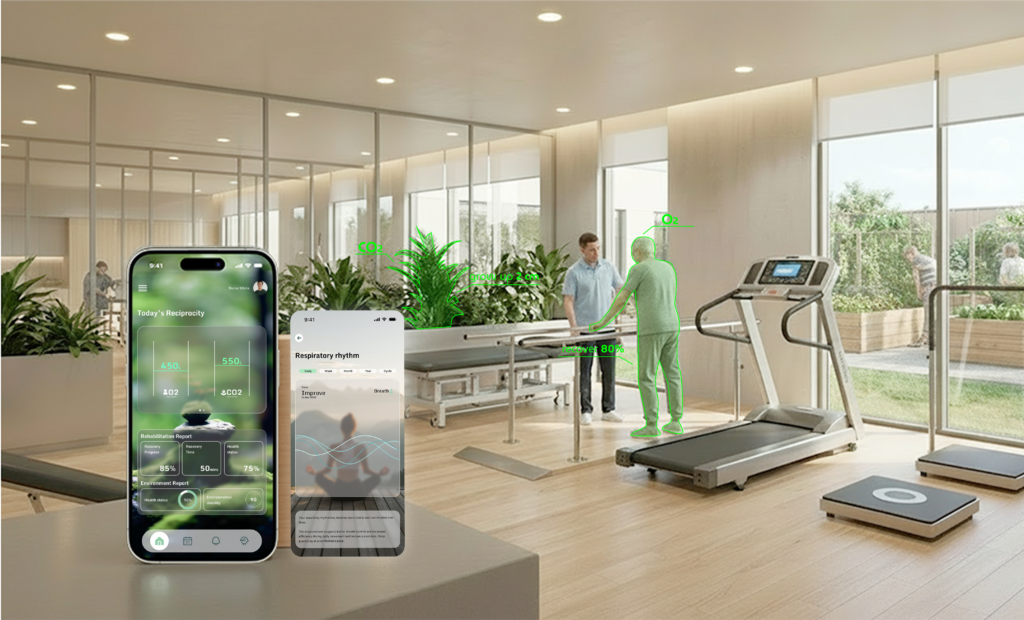
The proposal reimagines rehabilitation as a reciprocal relationship between humans, plants, and the surrounding environment. Rather than treating nature as passive decoration, plants become active participants within the recovery journey, responding to patients’ rehabilitation activities through ecological feedback such as growth, environmental change, and sensory interaction. This allows patients to perceive their recovery progress not only through clinical metrics, but through visible and living systems that evolve alongside them.
Combining service design, interaction design, and therapeutic spatial design, ReciproCare introduces a community-based rehabilitation environment that bridges hospital discharge and home recovery. The system integrates physical, respiratory, cognitive, and psychological rehabilitation programmes within plant-supported spaces, creating a slower, less institutional, and more emotionally supportive recovery experience.
Through reciprocal feedback loops, environmental data, and long-term engagement with ecological systems, the project aims to transform rehabilitation from a repetitive medical routine into a shared process of co-growth. By doing so, ReciproCare explores a future healthcare model where personal wellbeing, community support, and biological systems are deeply interconnected.
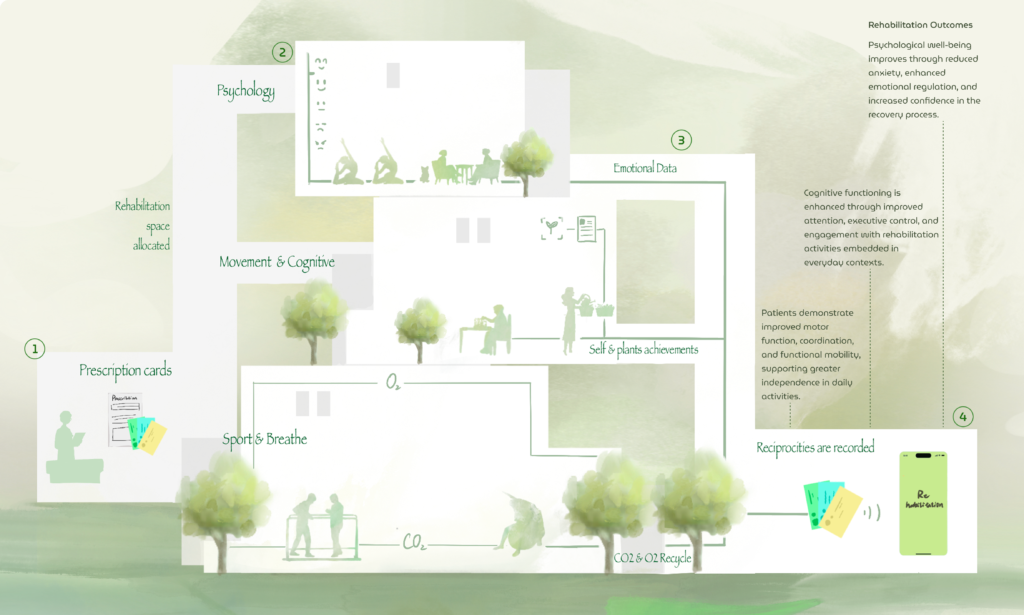
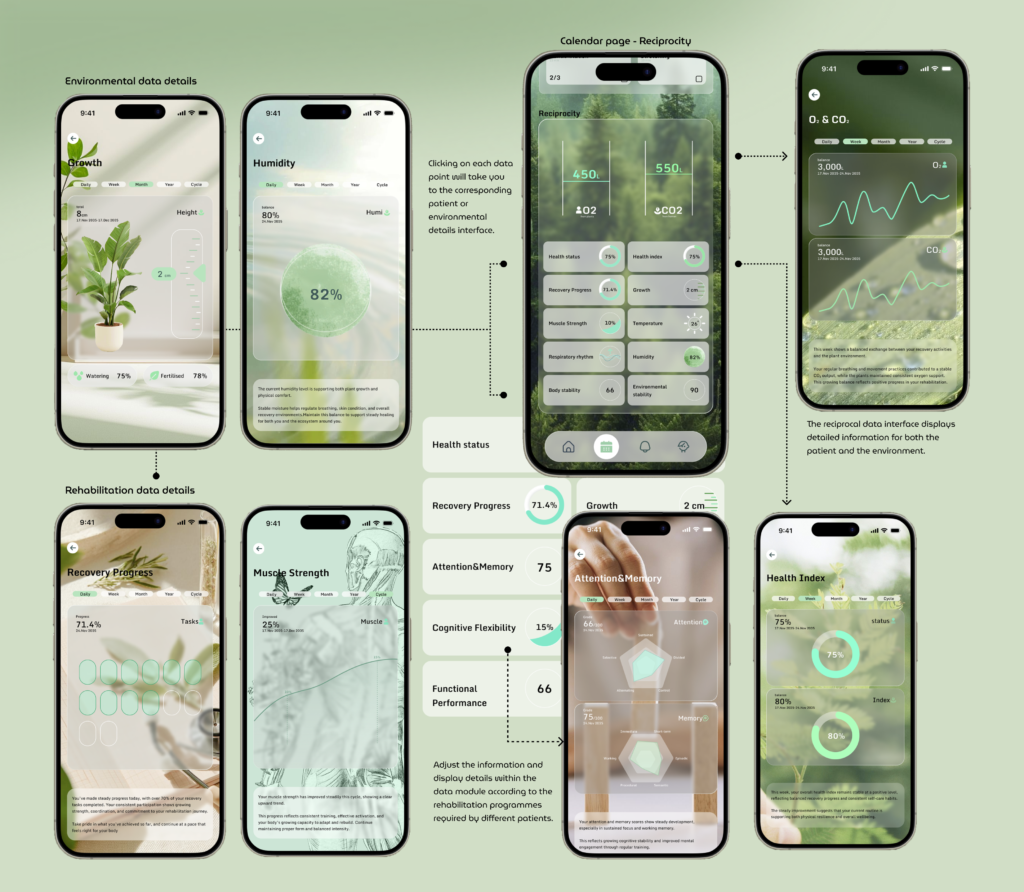
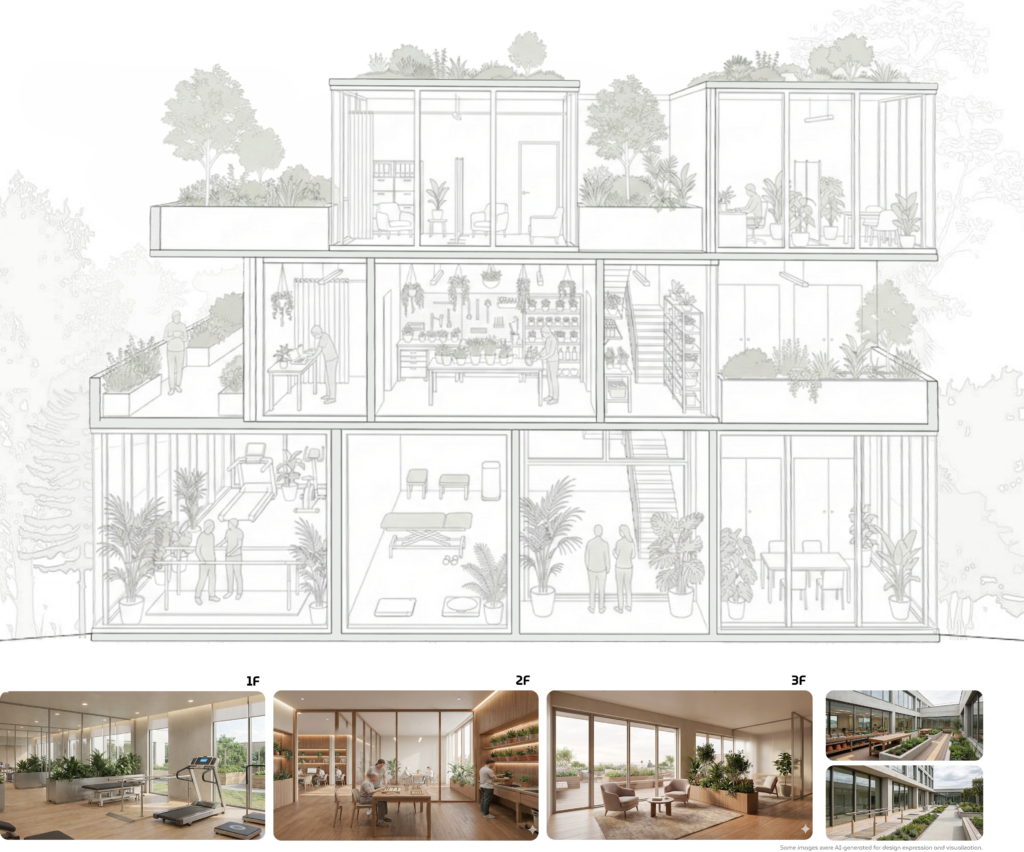
The section represents a community-based rehabilitation building, where healthcare services extend beyond the hospital into a shared neighbourhood setting. Rehabilitation activities are spatially integrated with plant systems.
Flow of Plastic
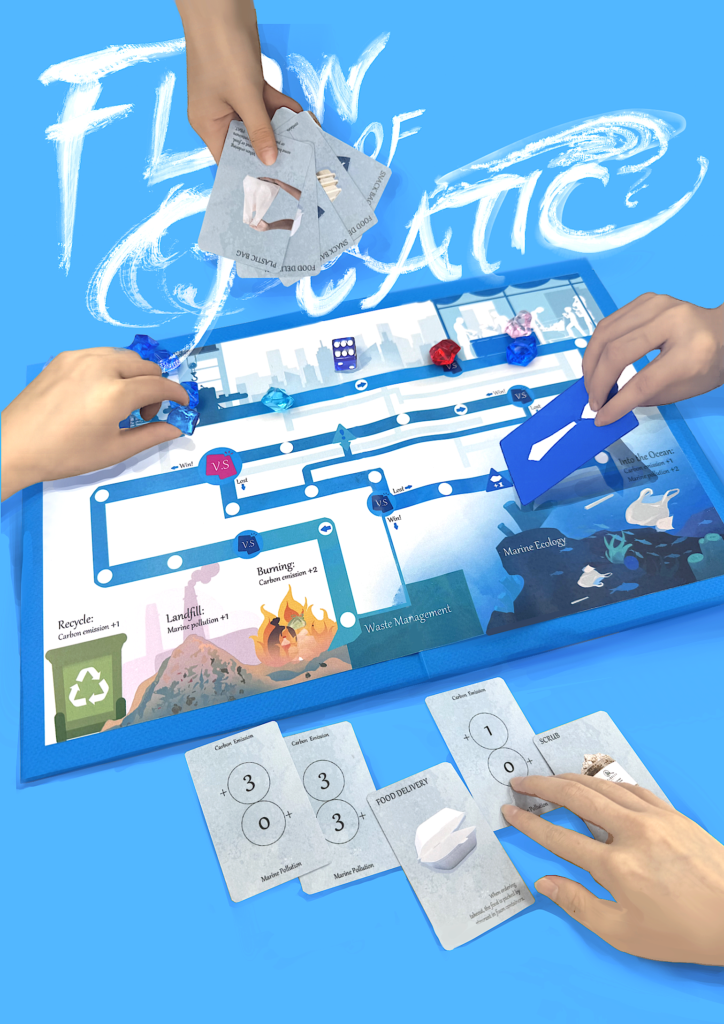
Flow of Plastic is an educational board game designed to help young people understand the hidden relationship between everyday plastic consumption, carbon emissions, waste systems, and marine pollution. Through interactive gameplay, players follow the lifecycle of plastic from manufacturing and urban consumption to waste management, drainage systems, river transport, and eventually the ocean. By making decisions, completing challenges, and comparing pollution values, players experience how individual behaviours contribute to larger environmental systems.
The project emerged from research into environmental literacy and the growing gap between climate awareness and behavioural action among young people. While many students are familiar with topics such as recycling or plastic waste, environmental systems are often perceived as distant, abstract, and difficult to relate to daily life. In response, this project explores how game-based learning and tangible interaction can make environmental processes more visible, understandable, and emotionally engaging within educational contexts.
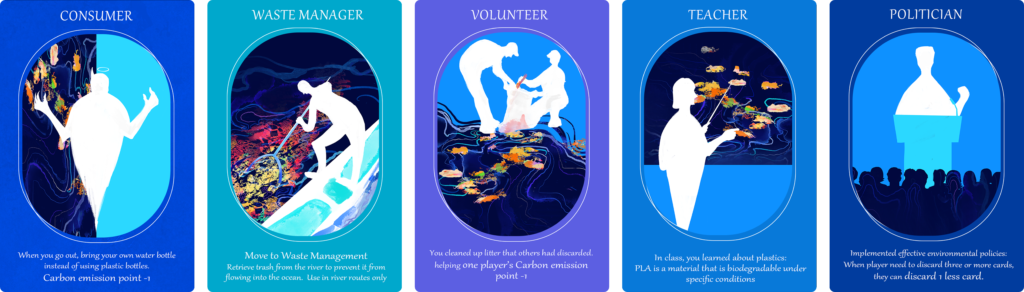
The gameplay combines strategic movement, challenge cards, event cards, and collaborative decision-making. Players must balance Carbon Emission and Marine Pollution values while navigating different pathways such as recycling, landfill, burning, or ocean routes. Special event cards introduce social roles including volunteers, educators, consumers, and waste operators, encouraging players to consider how different people and systems influence environmental outcomes. A physical balance system visualises the accumulation of pollution throughout the game, helping players observe the long-term consequences of their decisions in real time.
Visually, the project simplifies complex real-world environmental systems into accessible and child-friendly pathways inspired by cities, waste infrastructures, waterways, and marine ecosystems. The card designs combine real plastic products with soft watercolour textures and simplified graphics to create an approachable educational aesthetic suitable for middle and secondary school students.
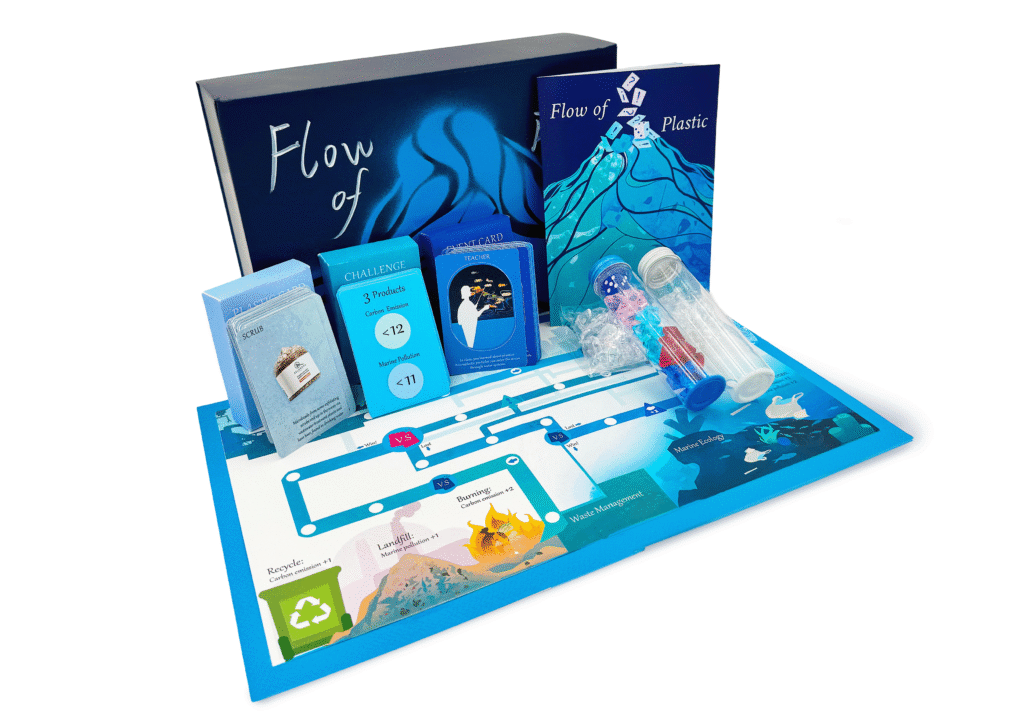
The final outcome includes a fully developed board game system featuring a custom game board, product cards, challenge mechanics, event cards, pollution indicators, player interaction systems, and speculative future storytelling elements. Through playful participation and collaborative learning, the project aims to encourage systems thinking, environmental reflection, and a deeper understanding of how small everyday actions can shape wider ecological futures.
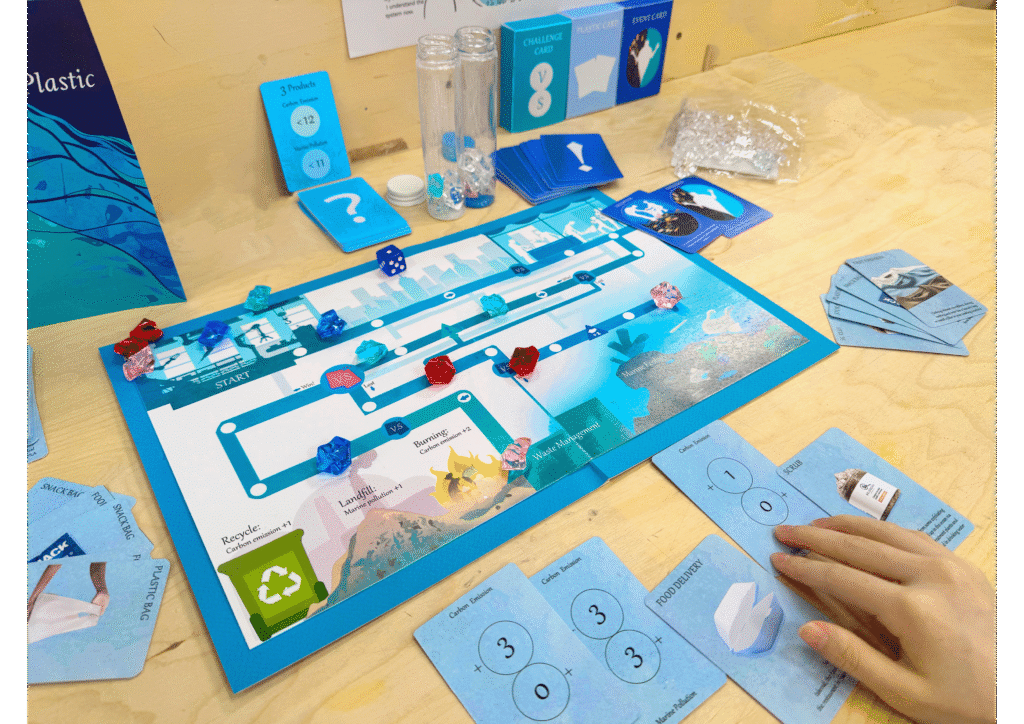
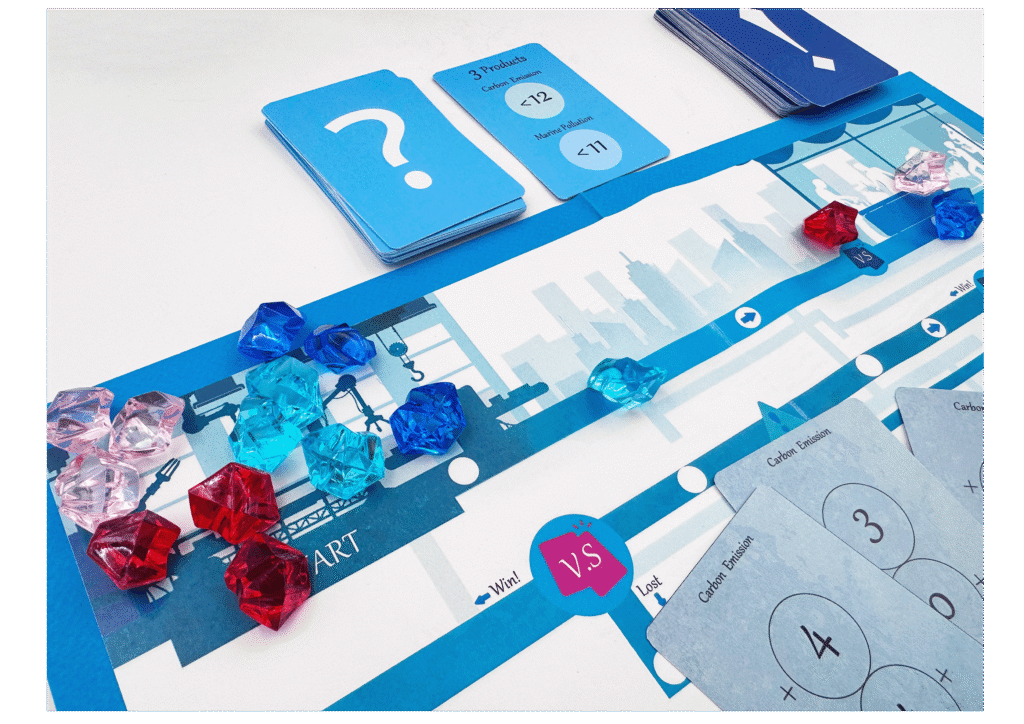
Players begin by drawing plastic product cards and rolling the dice to move their tokens across the board. As they progress through different pathways and “VS” challenge points, they must play product cards and compare the Carbon Emission and Marine Pollution values to meet the challenge requirements. If players successfully complete the challenge, they can continue forward or gain special event cards. If they fail, they may be directed toward higher-pollution routes such as landfill, burning, or the ocean path. Throughout the game, players must also monitor the pollution accumulation shown in the balance tubes, attempting to keep the system balanced and prevent marine pollution from increasing.
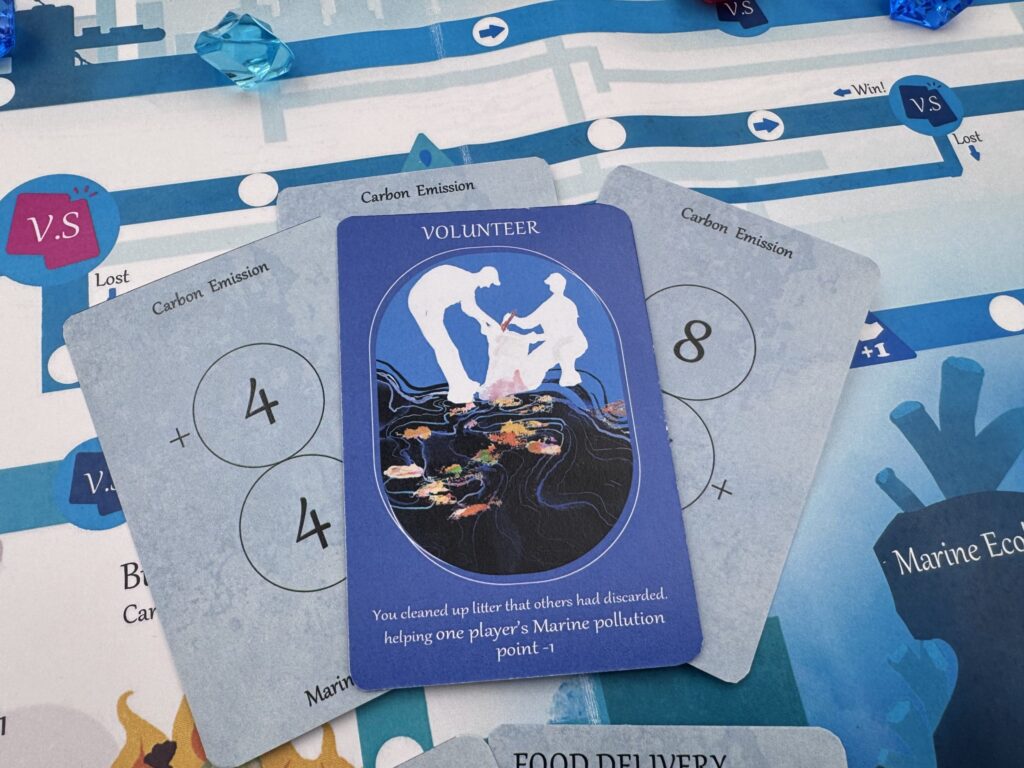
This image shows a player using an event card during gameplay. The “Volunteer” card allows players to reduce another player’s Marine Pollution score, encouraging cooperation and collective environmental action. Players must also compare the Carbon Emission values on their product cards to complete challenges and make strategic decisions.
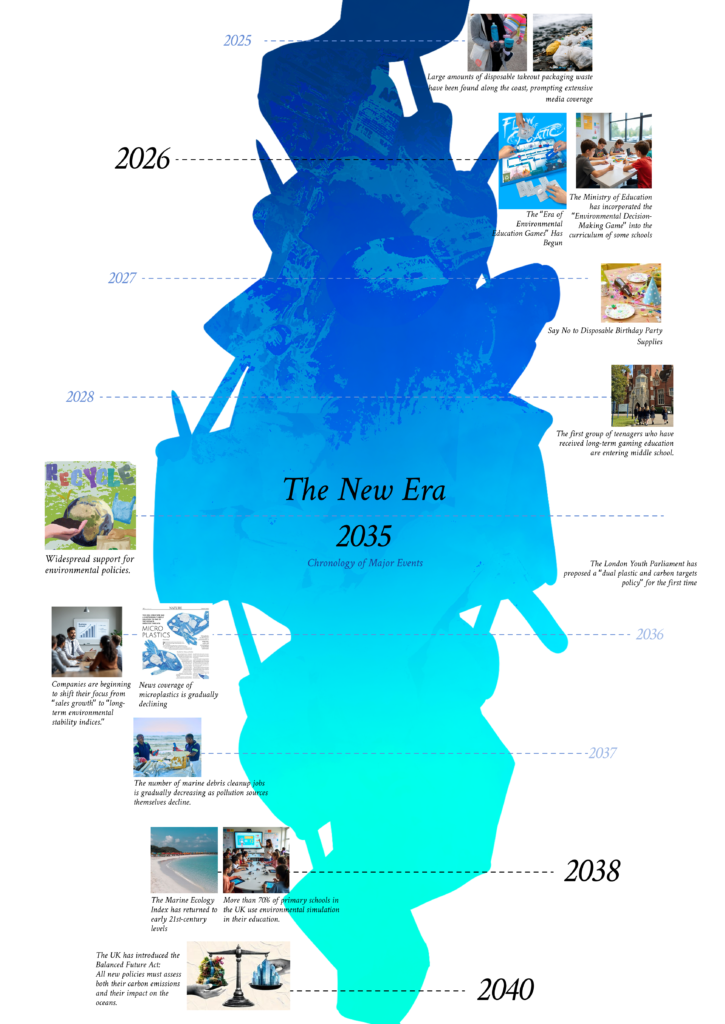
This speculative timeline presents a fictional projection of possible environmental and social changes between 2025 and 2040. Rather than documenting real events, it imagines how increasing awareness of plastic pollution, educational reform, and environmental policies could shape future behaviours and systems. The timeline explores how environmental education games, youth engagement, media attention, and policy changes might gradually influence public attitudes toward sustainability. By presenting an imagined future, the project encourages reflection on how everyday actions and educational interventions today could contribute to long-term environmental change.