Yuanyue Zhao (Moona)
I am a designer interested in transitional living, spatial storytelling, and speculative experience design. My practice explores how memory, objects, and digital systems can shape human connection, belonging, and everyday urban experience.
Before I leave- LOOMIE
The initial idea behind Before I Leave emerged from observing the experiences of “temporary residents”, such as international students, short-term workers, and people temporarily living abroad. Before leaving a city, what do they leave behind? Could the objects, traces, and experiences that are usually forgotten, cleared away, or discarded become the starting point for someone else’s new life in the city?
Based on this reflection, LOOMIE was designed as a transitional living system for students and short-term residents, rethinking the relationship between “leaving” and “arriving” in temporary urban life. Rather than treating leftover objects, spatial traces, and lived experiences as disposable remnants, LOOMIE transforms them into inheritable and reactivatable “urban survival resources,” allowing newcomers to connect with local life without starting from zero.
Within this ongoing cycle, departing residents leave behind fragments of their lives — objects, memories, urban experiences, and personal traces — which future residents can later rediscover, inherit, and reactivate through exploration. In this system, leaving is no longer understood as disappearance, but as a meaningful handover between strangers. Experiences, traces, and local memories continue to circulate among different people and across different timelines, gradually forming a unique “micro-culture” of sharing objects and lived experiences within the city.
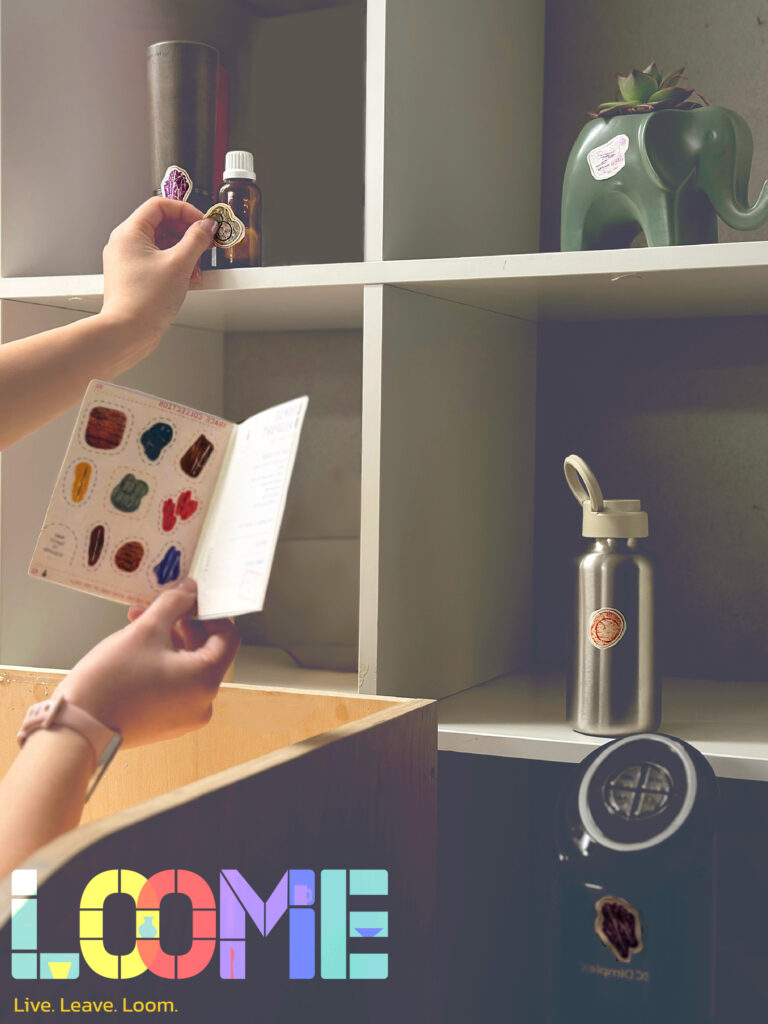
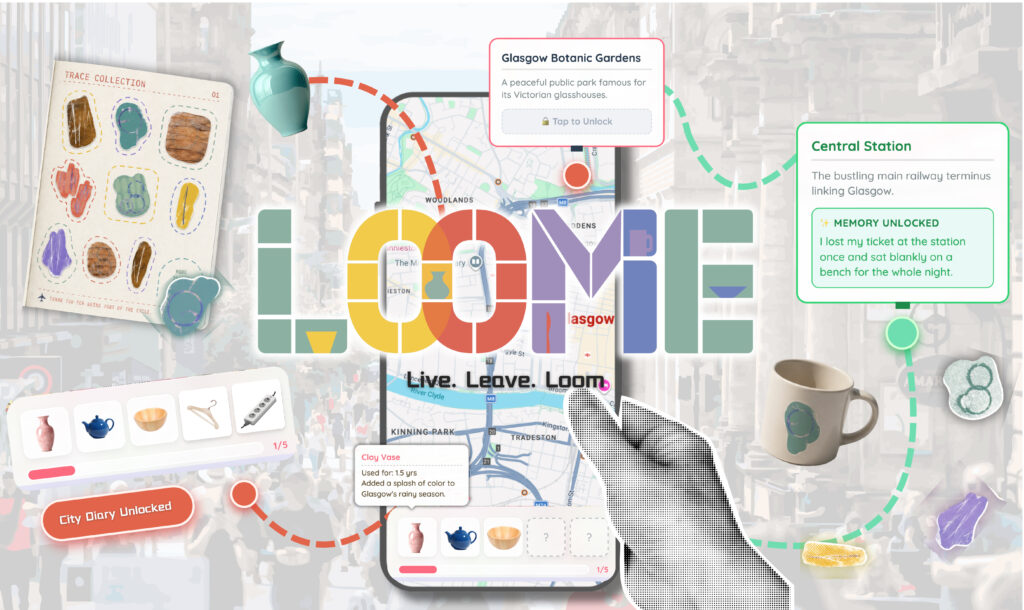
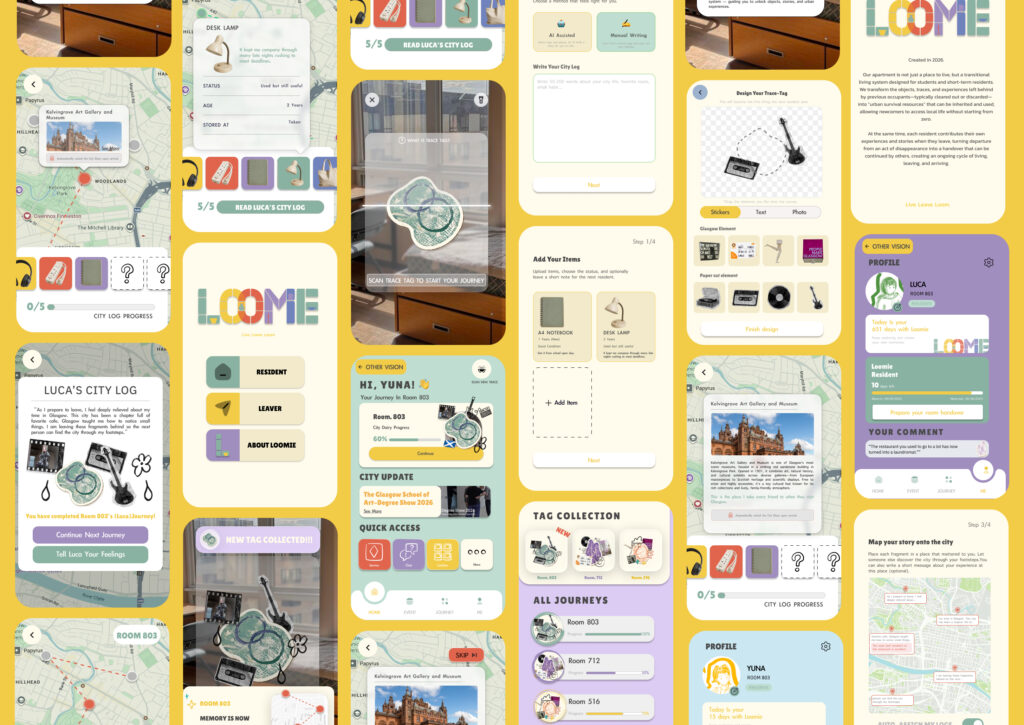
A transitional living platform that transforms traces, objects, and memories left behind by previous residents into inheritable urban experiences for newcomers.
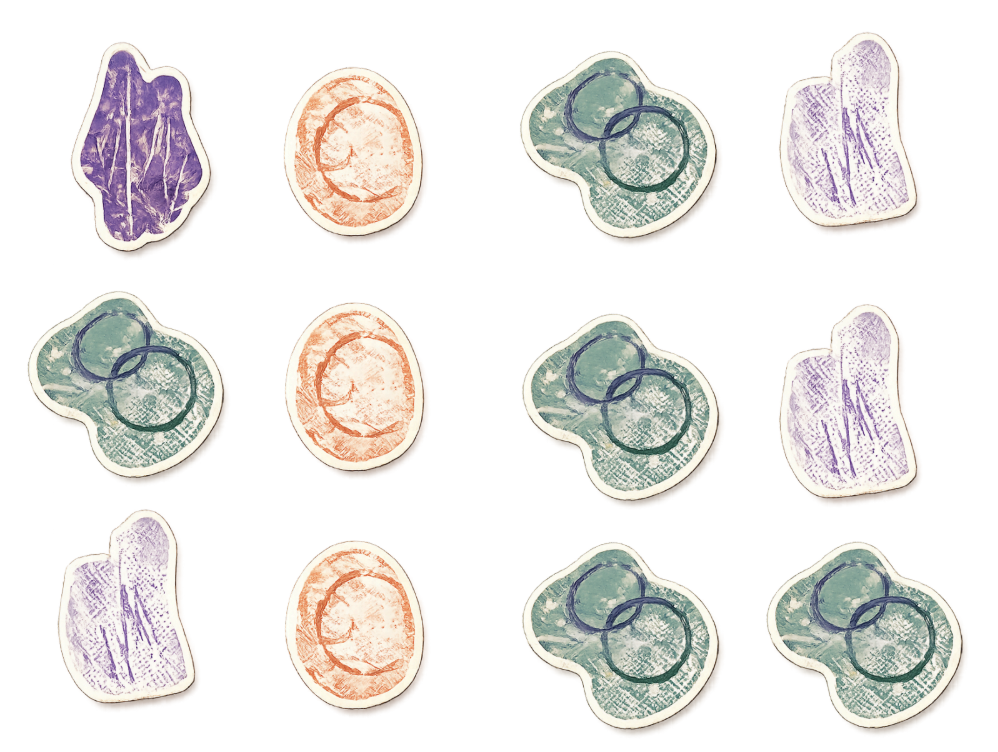
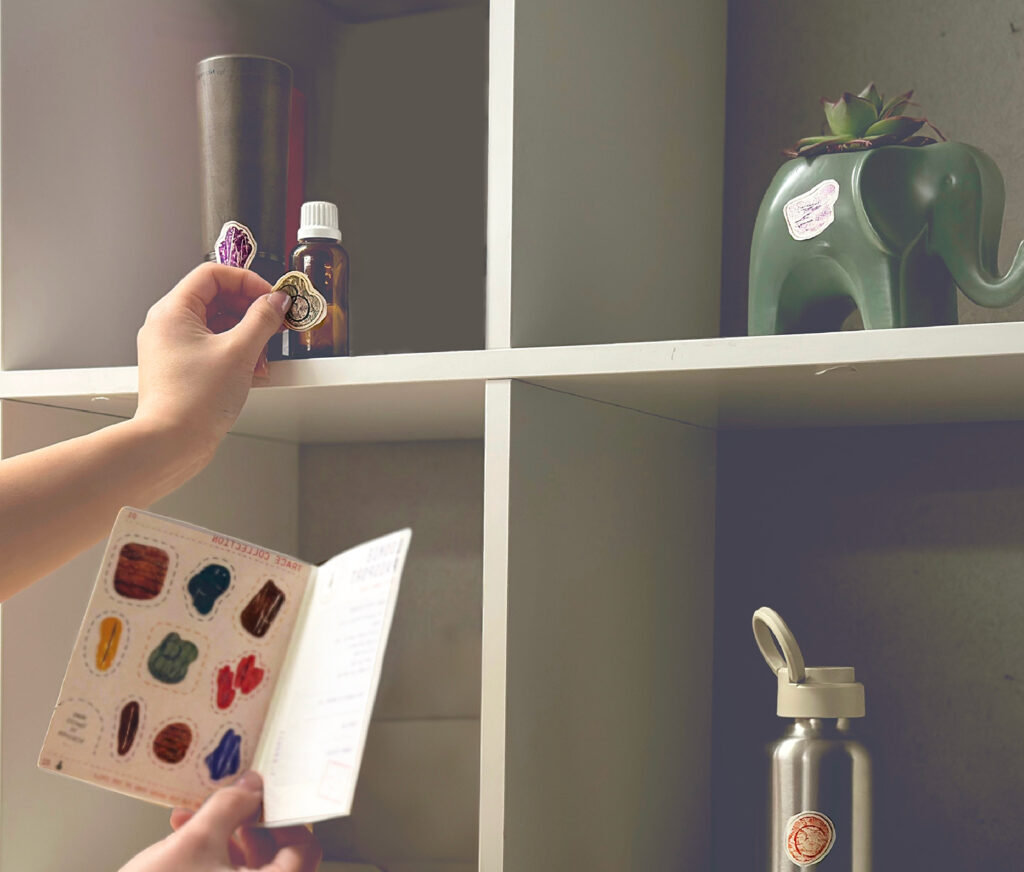
A scannable marker transformed from unnoticed room traces, unlocking inherited memories, objects, and city experiences left by previous residents.
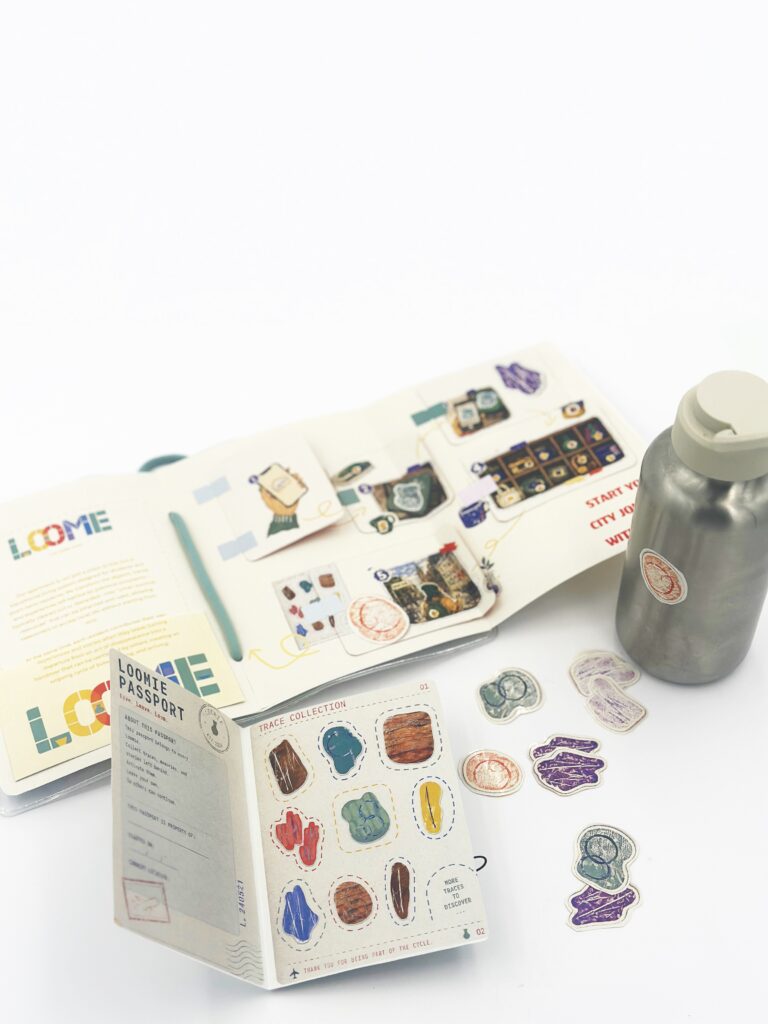
A personal room passport and trace-collection tool that guides residents through inherited stories, objects, and urban experiences.
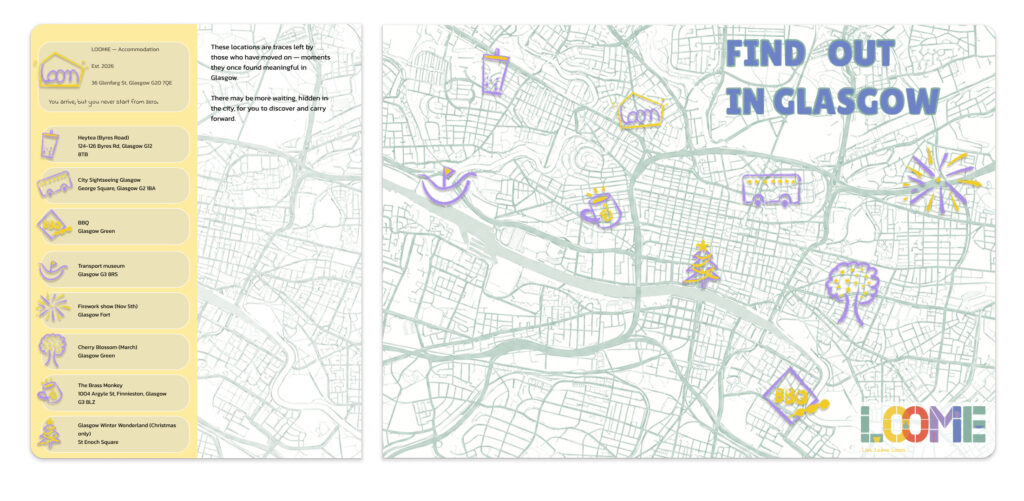
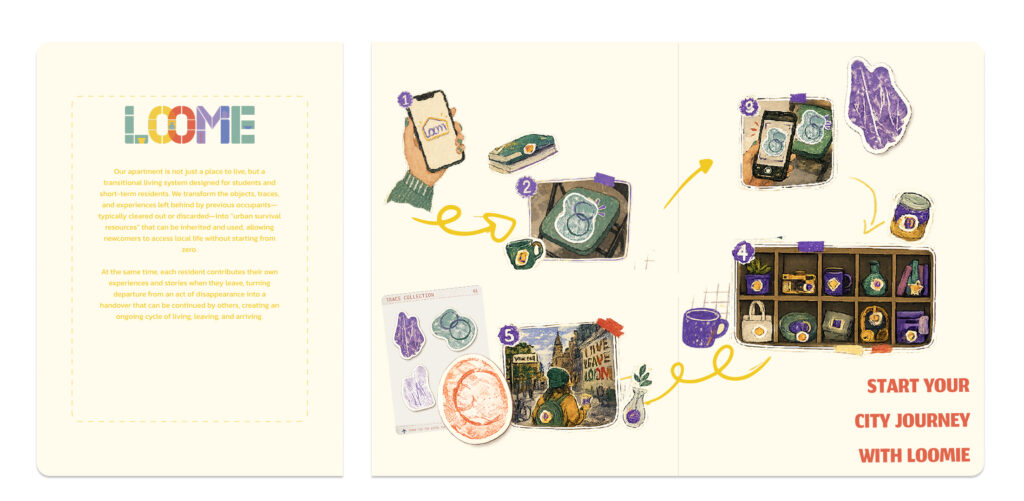
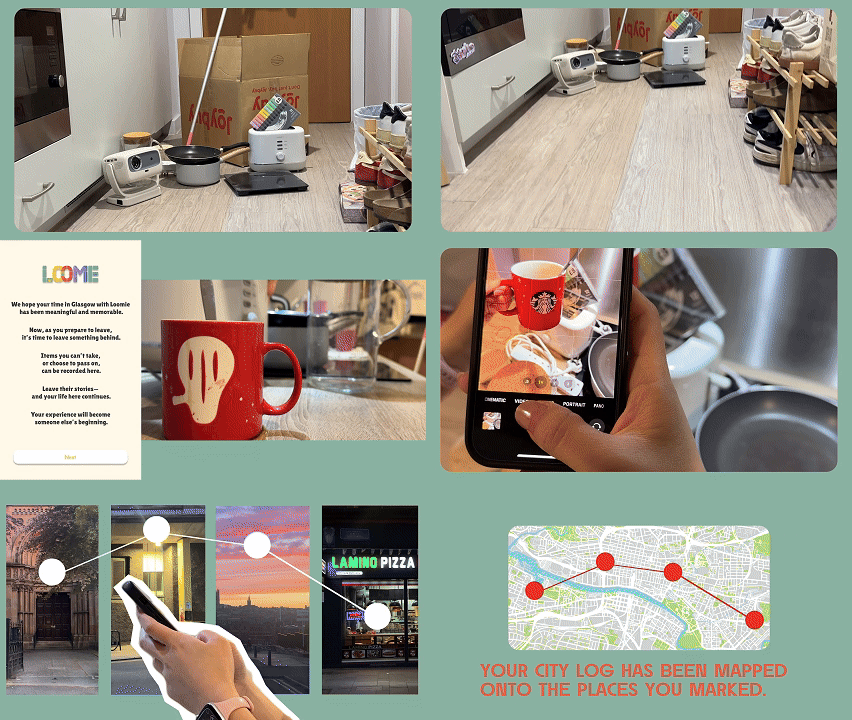
Full video:https://youtu.be/6K1nYR5TGGk?si=jJafIfx2fjrTiwzQ
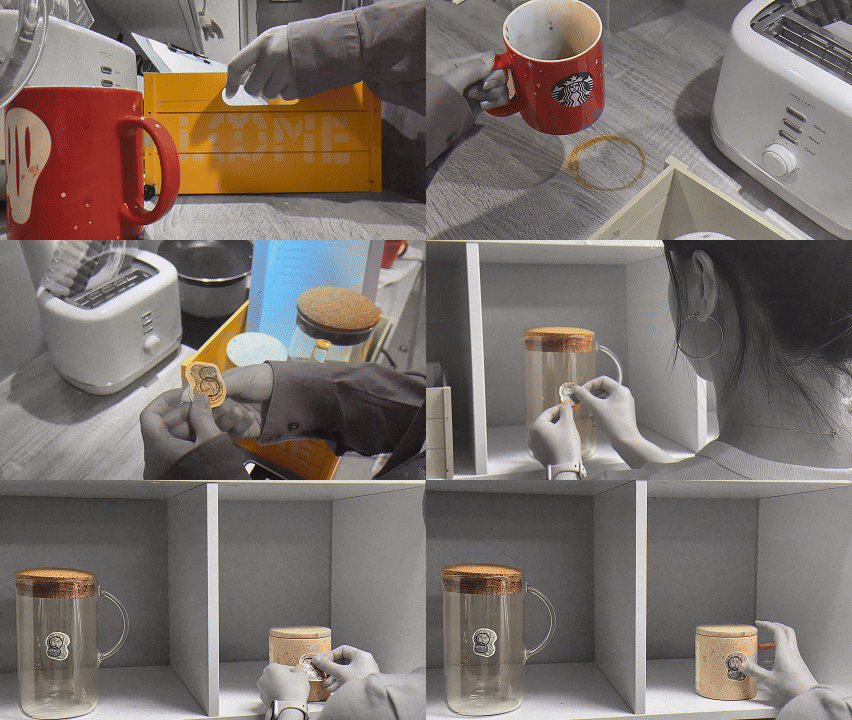
FULL VIDEO: https://youtu.be/SDkwb_MRBVs?si=TmJsdpB0ZOSVb2hv
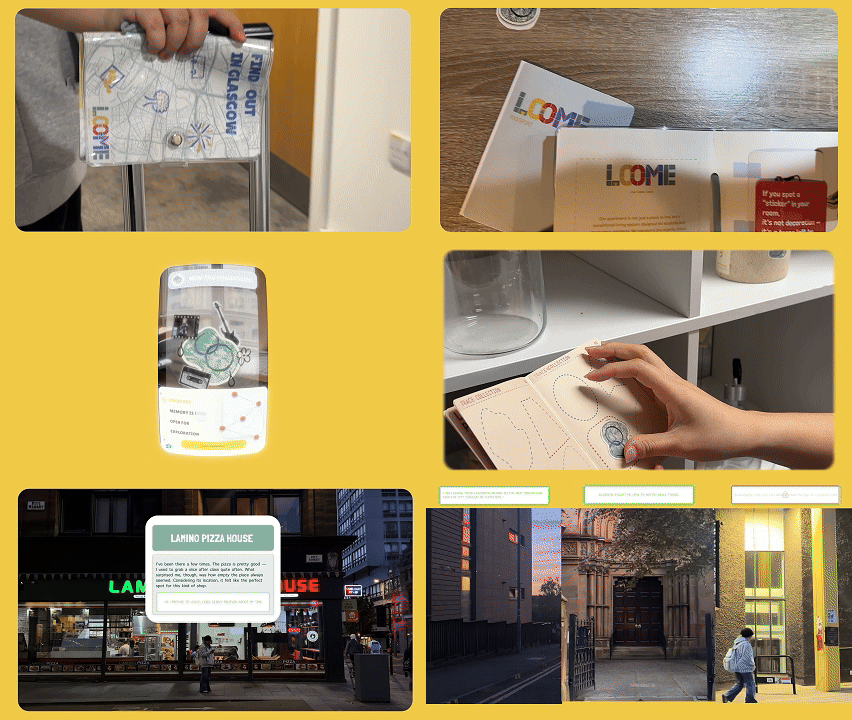
FULL VIDEO: https://youtu.be/6ght5rQ6Fwk?si=Zvw4US65RunbYOgD
Creating Future Experiences – SOFT SIGNAL
SOFT SIGNAL is an individual developed as part of the Creating Future Experience project.
The group project explored a future vision of population health shaped through collective intelligence, shared responsibility, and community participation. Rather than relying entirely on centralized NHS healthcare systems, this future imagines communities becoming active participants in care, supported by AI technologies. It represents a transitional moment from algorithm-led healthcare toward a more human-centred, yet AI-supported model of population health, where trust gradually re-emerges through shared experiences and local connections.
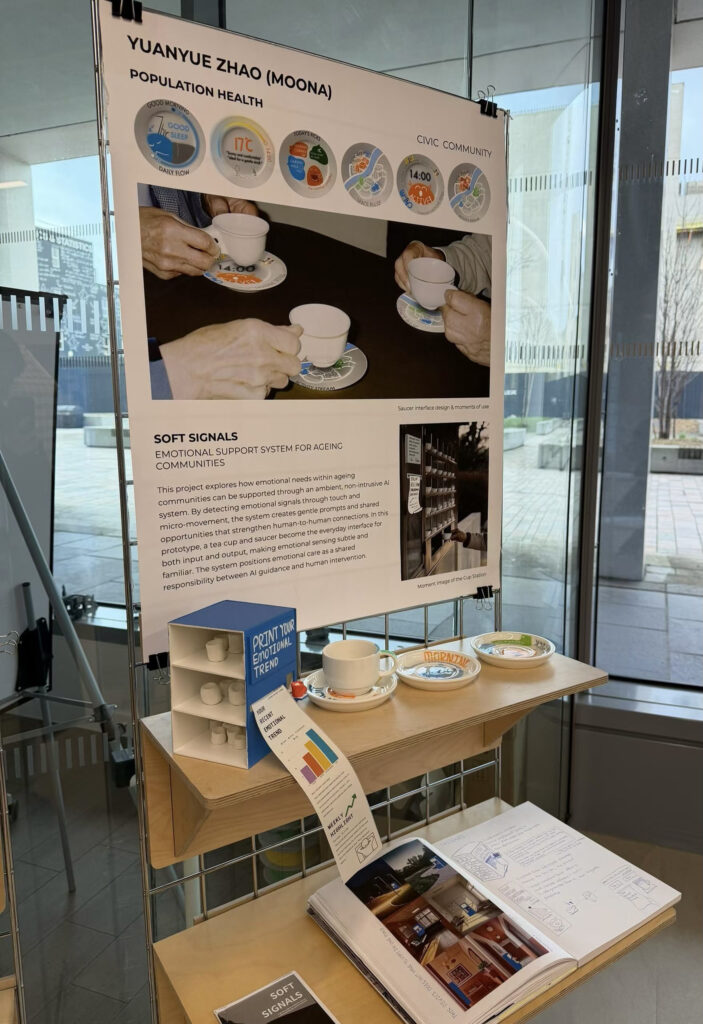
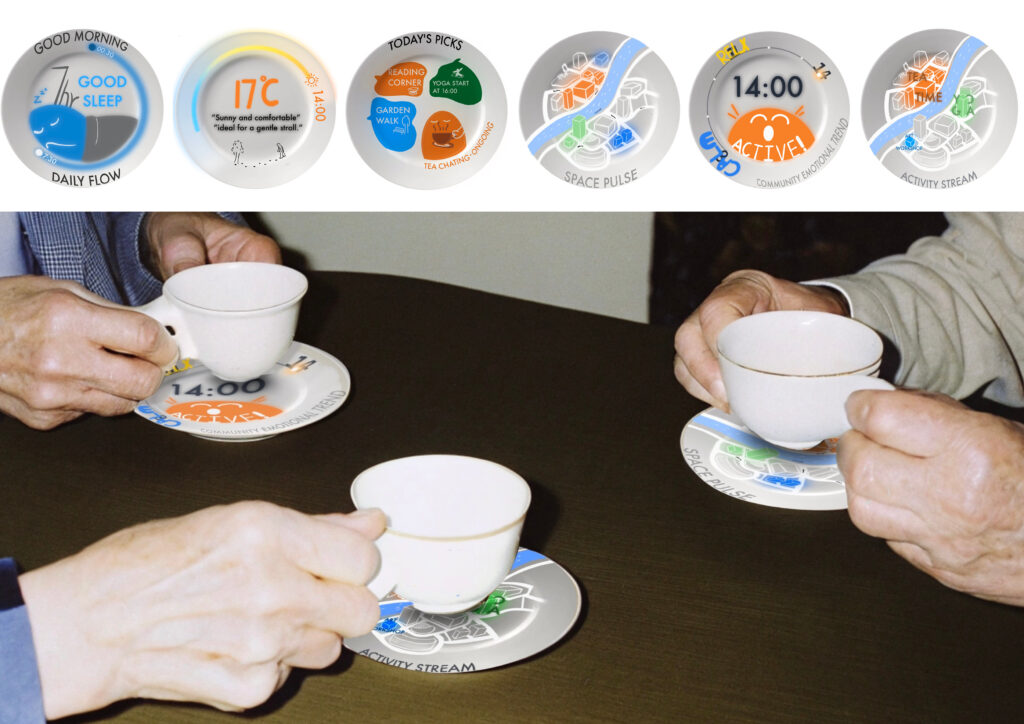
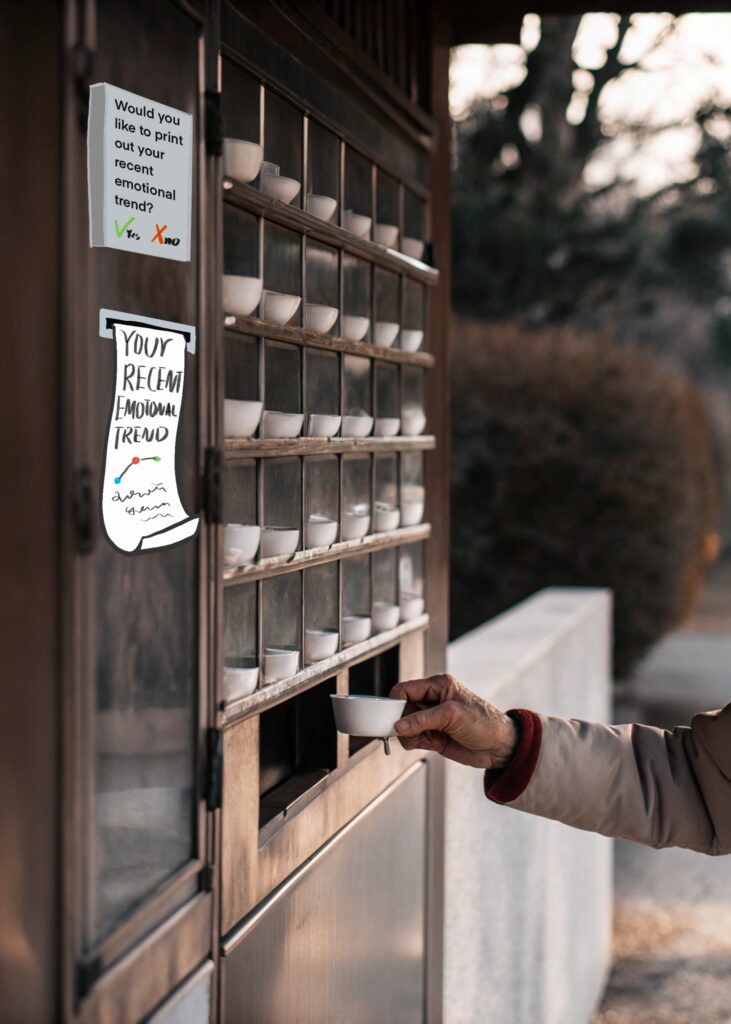
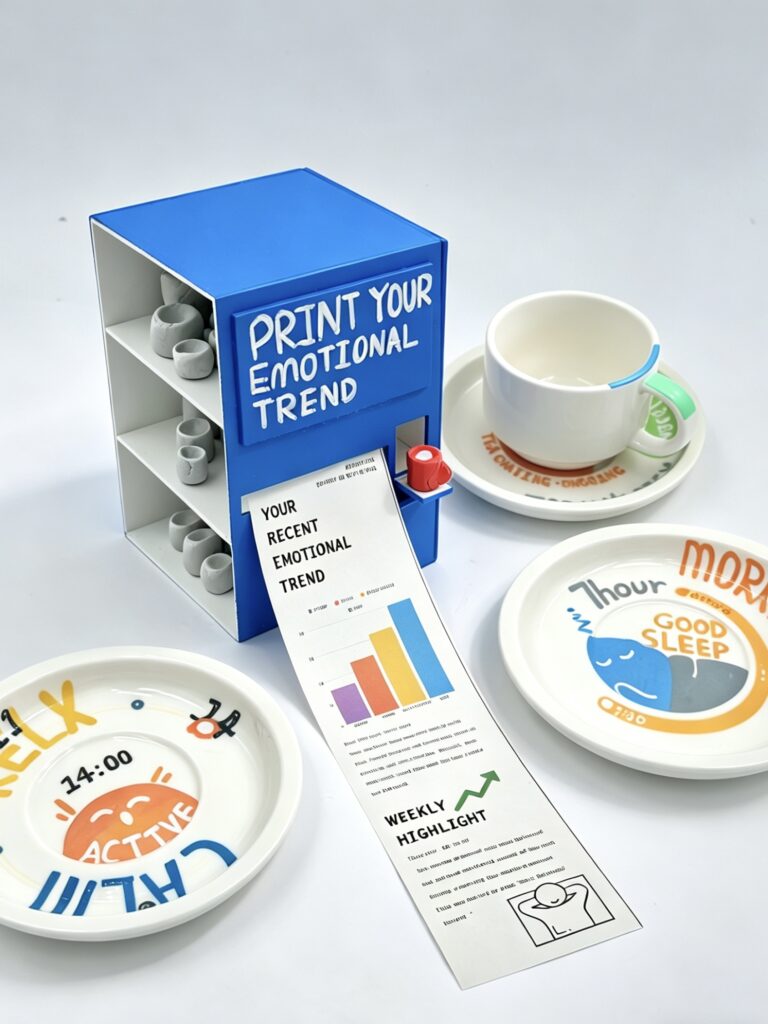
Within this broader future context, my individual project development focused on the emotional needs of ageing communities. *SOFT SIGNAL* explores how emotional well-being can be supported through an ambient and non-intrusive AI care system integrated into everyday life. By detecting subtle emotional signals through touch and micro-movements, the system generates gentle prompts and opportunities for social interaction, encouraging stronger human-to-human connections rather than replacing them.
In the prototype, a tea cup and saucer act as the primary interface for both emotional input and system feedback, transforming a familiar domestic ritual into a subtle communication tool. Through this approach, the project positions emotional care not as an individual responsibility but as a shared relationship between AI guidance, community awareness, and human support.
INK-K
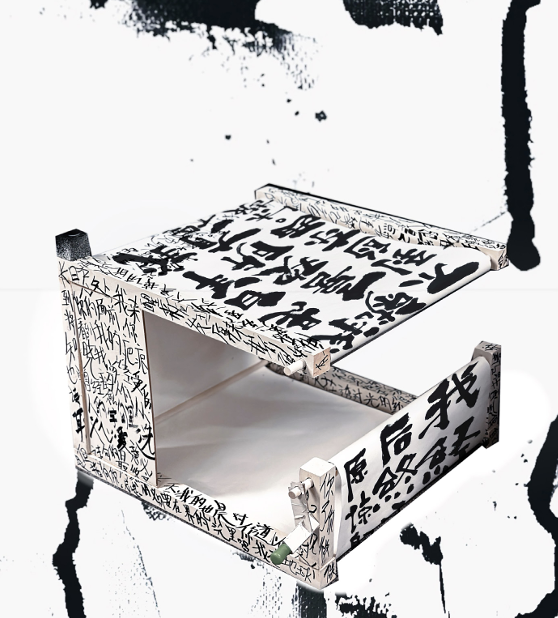
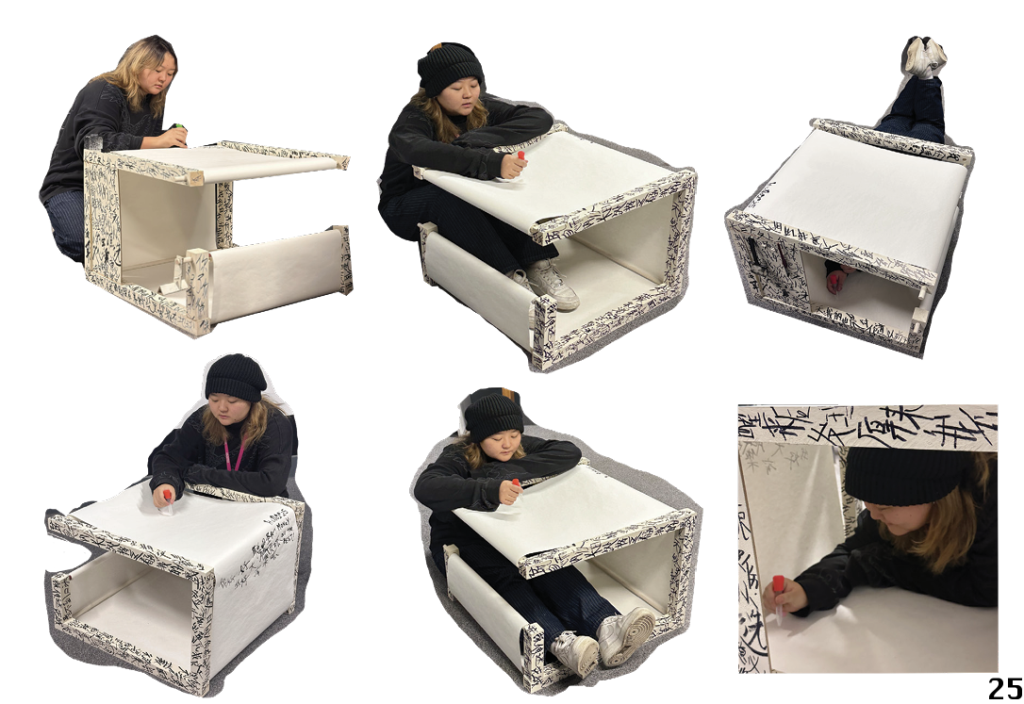
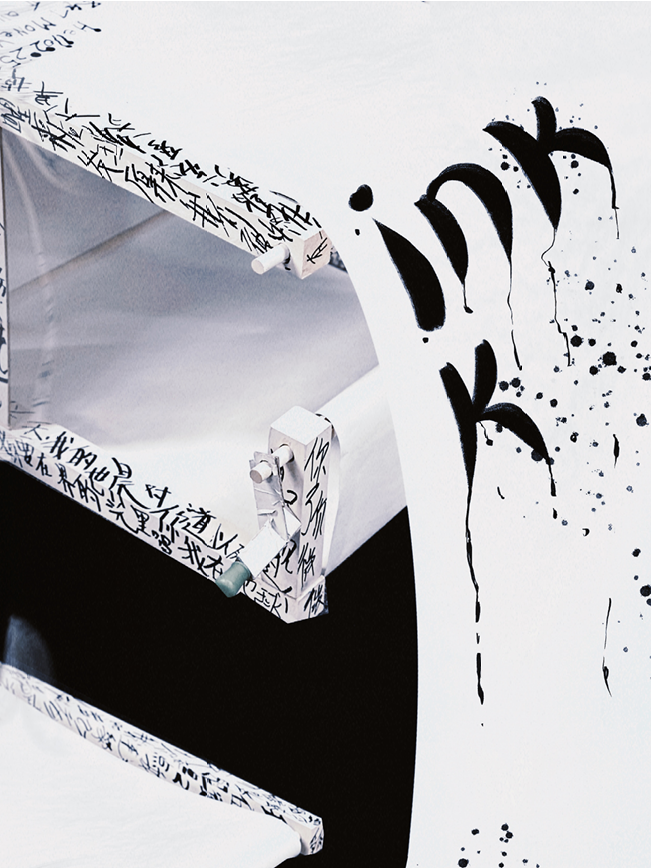
INK-K is a furniture object created during the Object of Desire project in my third year of Product Design.
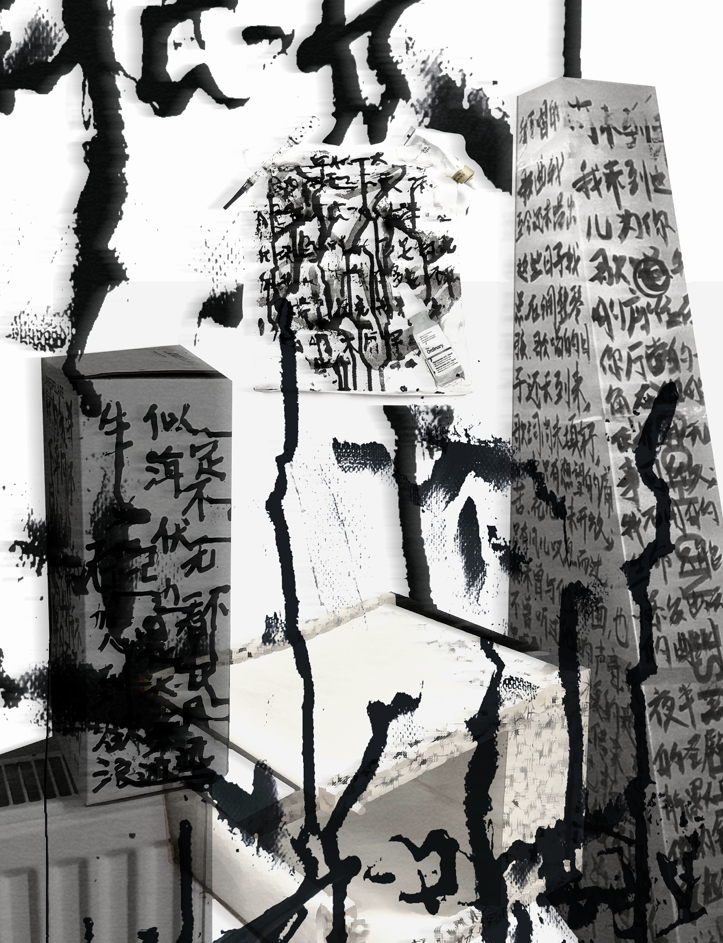
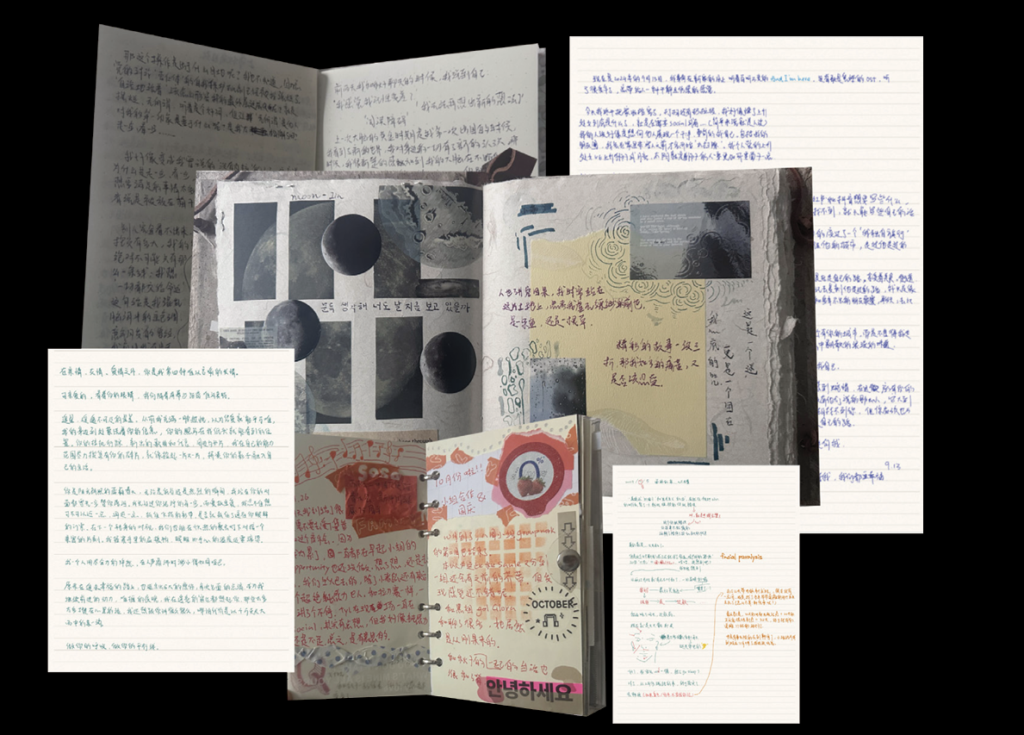
The project began with an exploration of personal desire and everyday habits. Through self-observation, I focused on my continuous habit of writing as a way to release stress, process emotions, and organize thoughts. For me, writing is not simply about recording words, but a physical and emotional action connected to ink, pressure, gestures, speed, and surfaces.
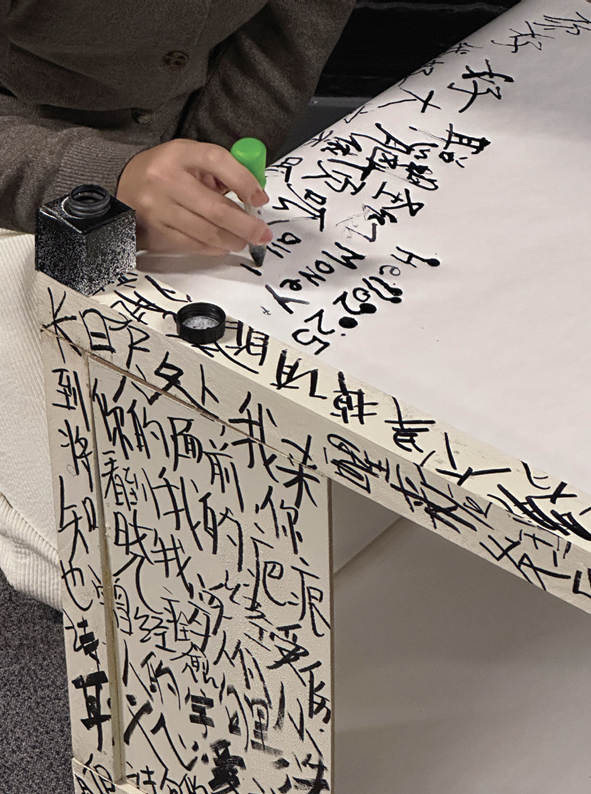
Throughout the project, I experimented with different writing tools, scales, materials, and body movements, exploring how writing could move beyond the limits of notebooks and become a more immersive spatial experience. These experiments eventually led to the development of INK-K — a furniture-like writing object designed around the act of continuous writing.
The outcome combines a rolling paper surface, integrated writing tools, and a customizable writing framework that allows users to physically interact with the object while writing. By transforming writing into a bodily and environmental experience, INK-K turns a private emotional habit into a visible and tactile ritual.