Rachel Houston
(She/Her)
- Stage 5 Sustainability Prize Winner
- Shortlisted Nominee for the Norman Foster Travelling Scholarship 2026

Fælles Vand
The thesis, Fælles Vand, translates from Danish as Common Water. The proposal looks to establish counter-infrastructures for local flood resilience, as a direct response to major infrastructural climate adaptations currently taking place throughout the city of Copenhagen due to climate-change related rainfall and sea rise increases.
The Stage 5 brief the Ethical City provoked an investigation into Copenhagen’s relationship to water, through the lens of sociologist Richard Sennett’s theories outlined in his book Building and Dwelling: Ethics for the City. In the book Sennett mentions the concept of Seed-Planning:
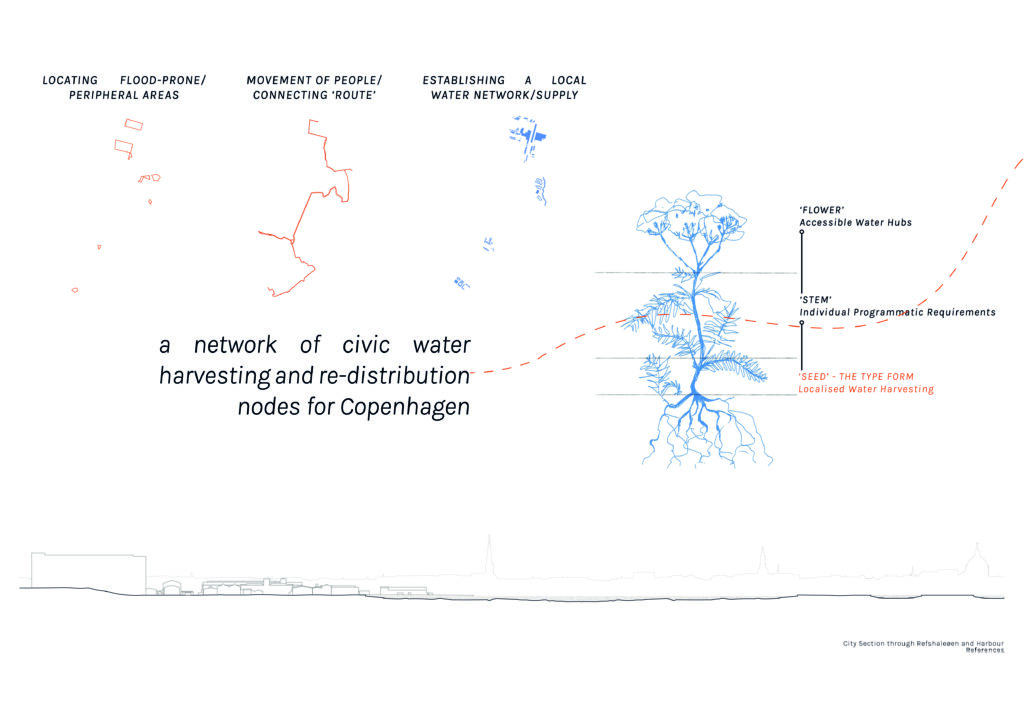
“the same seed sown in different circumstances of water, wind and soil produces different colonies of plants …The seeds serve as type-forms whose manifestations – plants – change character in different circumstances.”
Sennett describes the ways in which it could be possible to work towards the creation of ethical cities, and this concept combined with my desire to address the impact of the climate crisis upon contemporary cities (even one already considered to be a leading world example in its mitigation) led to the development of Fælles Vand’s programme, a network of civic water harvesting and re-distribution nodes for Copenhagen.
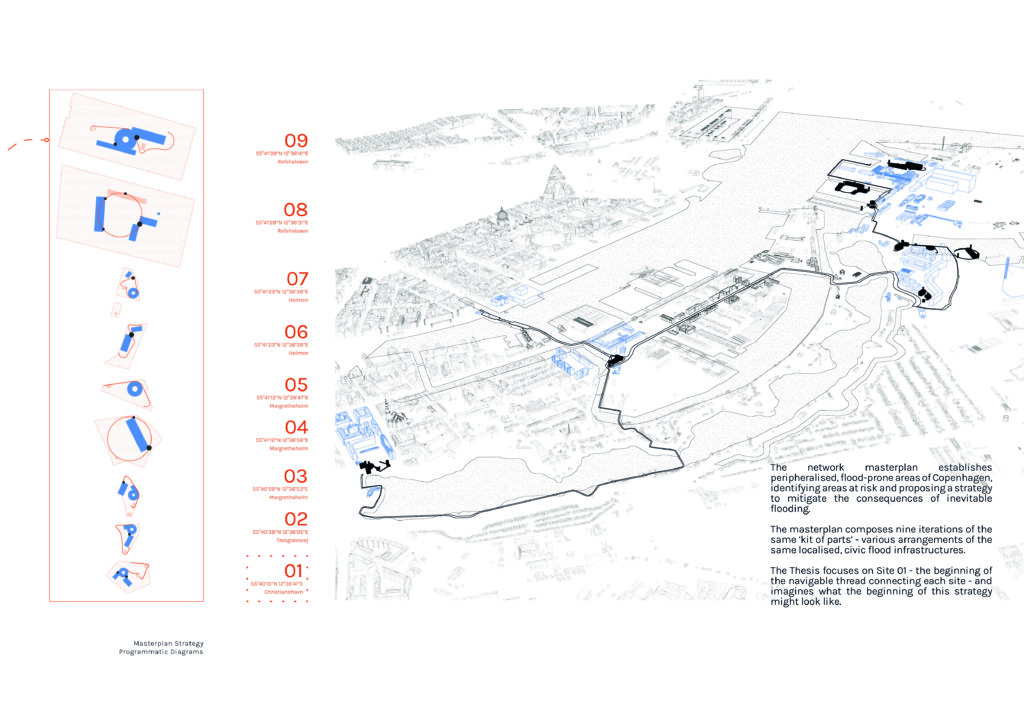
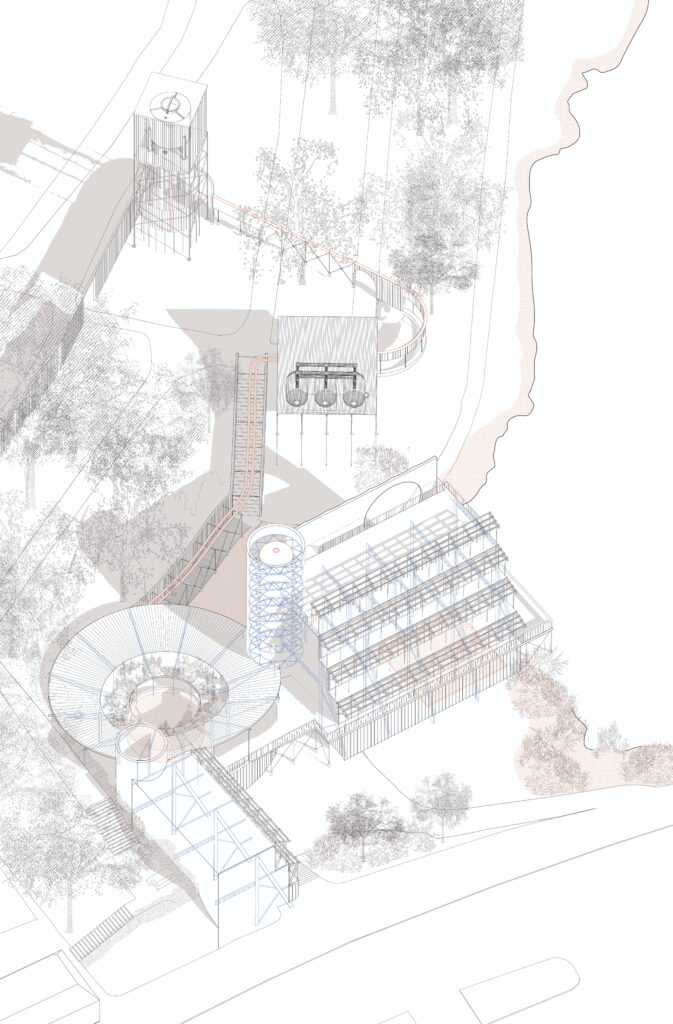
Through analysis of the current urban context and its most flood-prone sites, I was firstly able to determine the imagined locations of my project, (or, the varying conditions of water, wind and soil for which the seeds could be planted) located throughout peripheralized areas of the city and acting as a conceptual continuation of its already-defined medieval core.
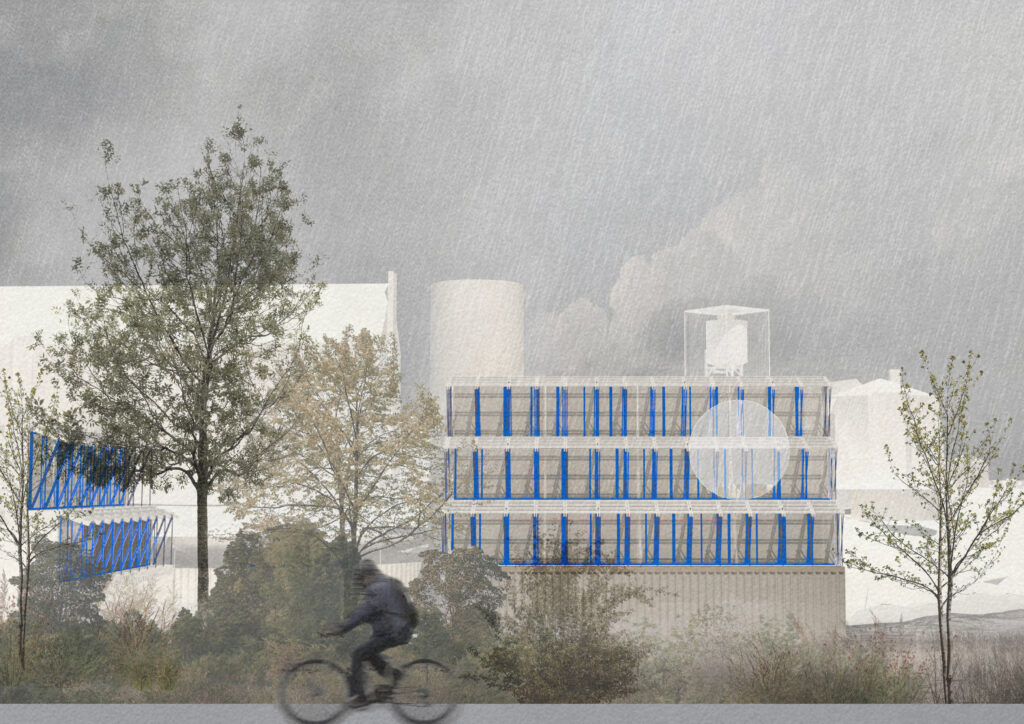
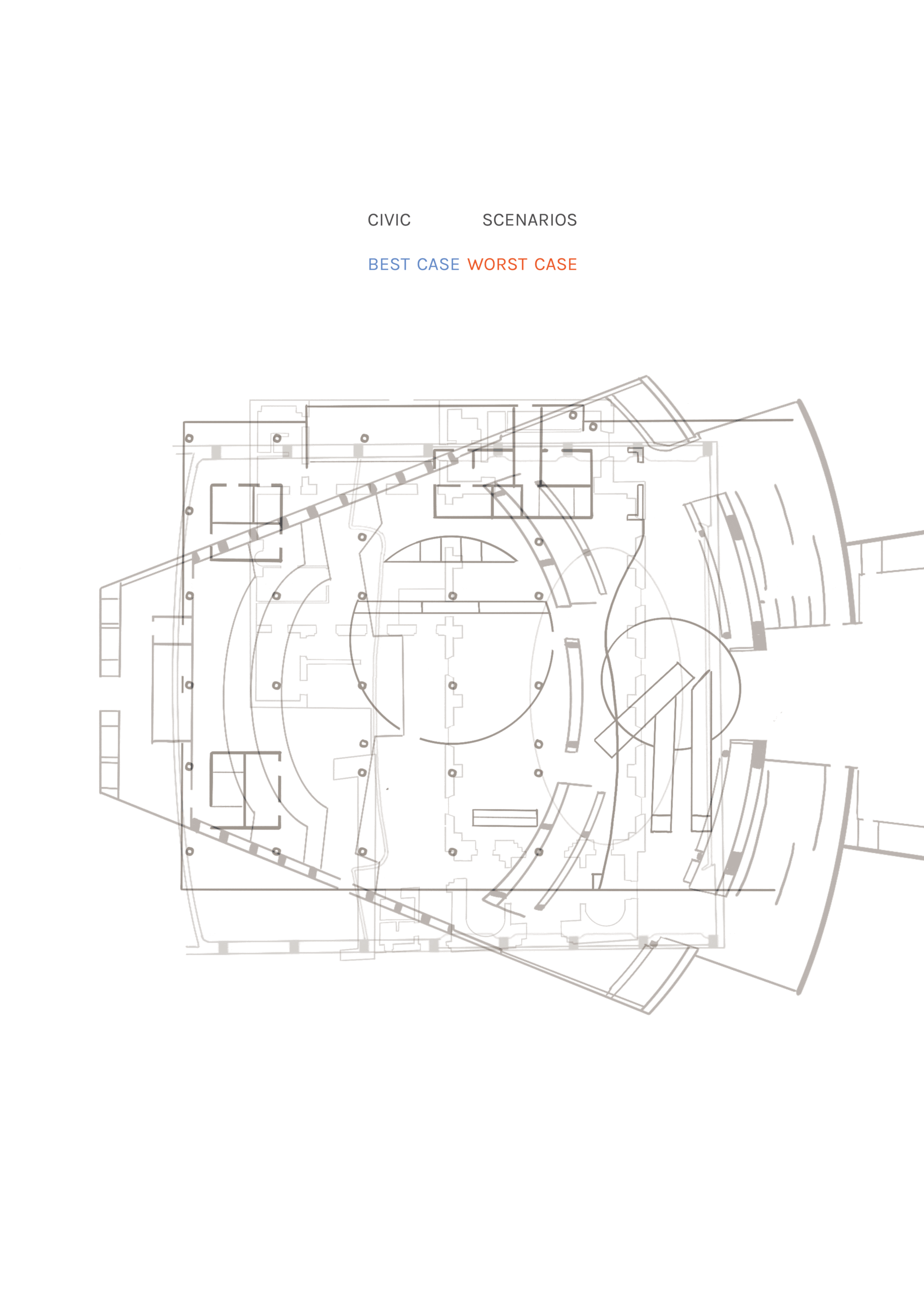
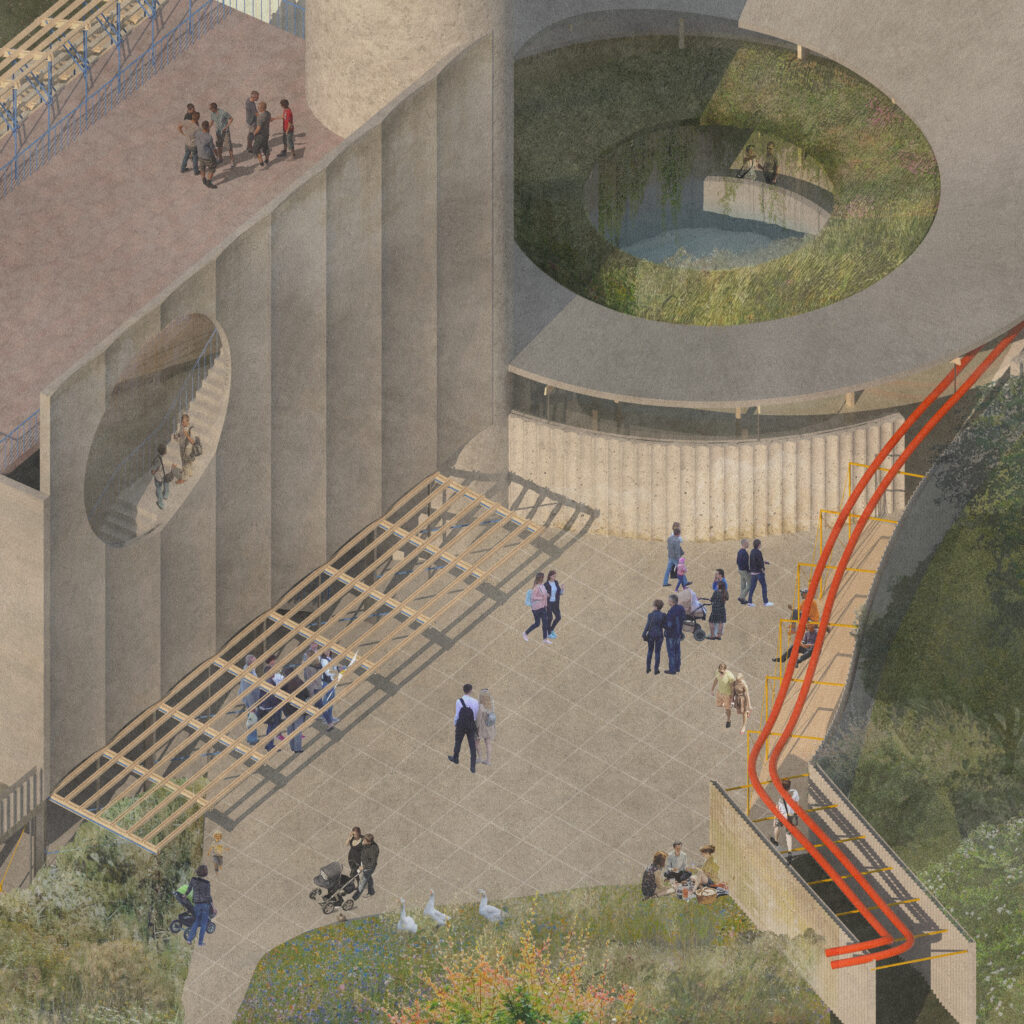
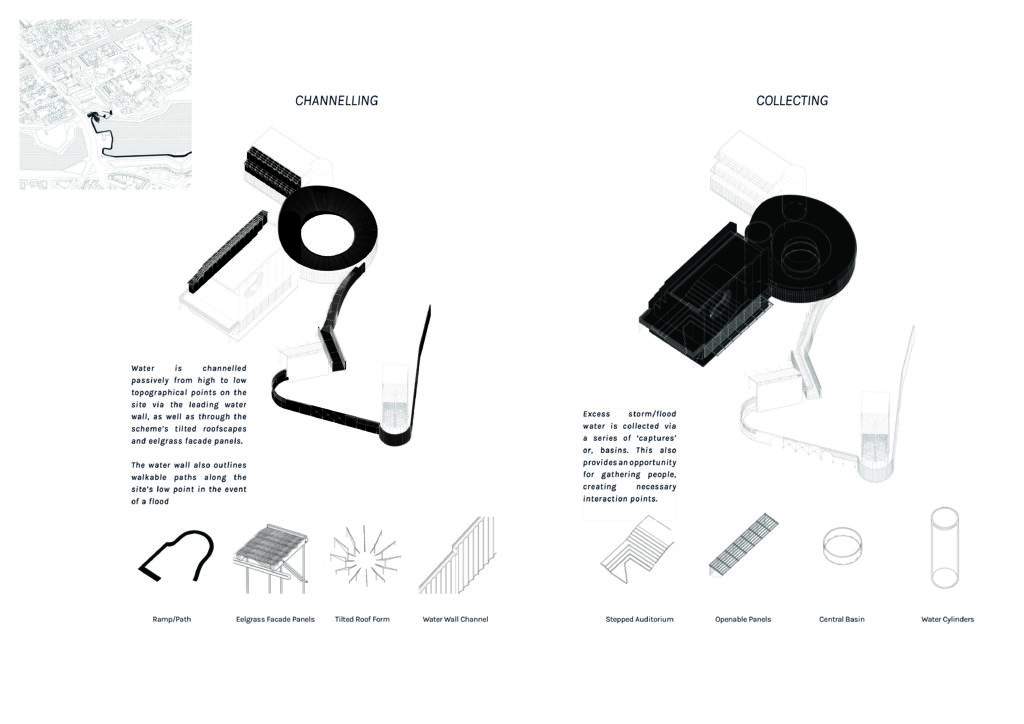
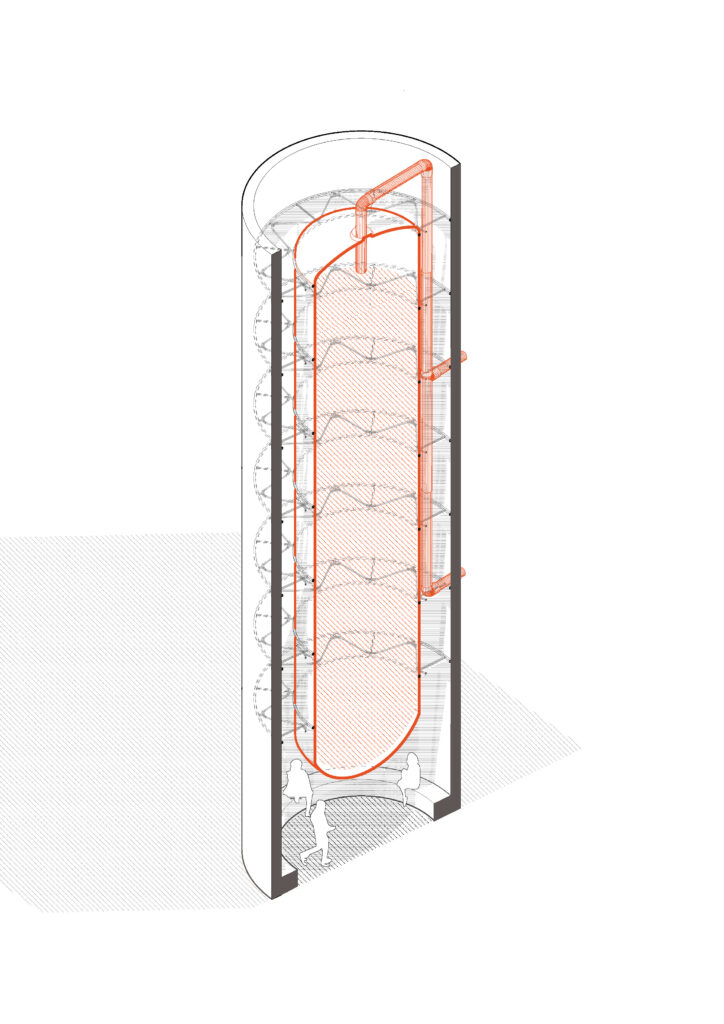
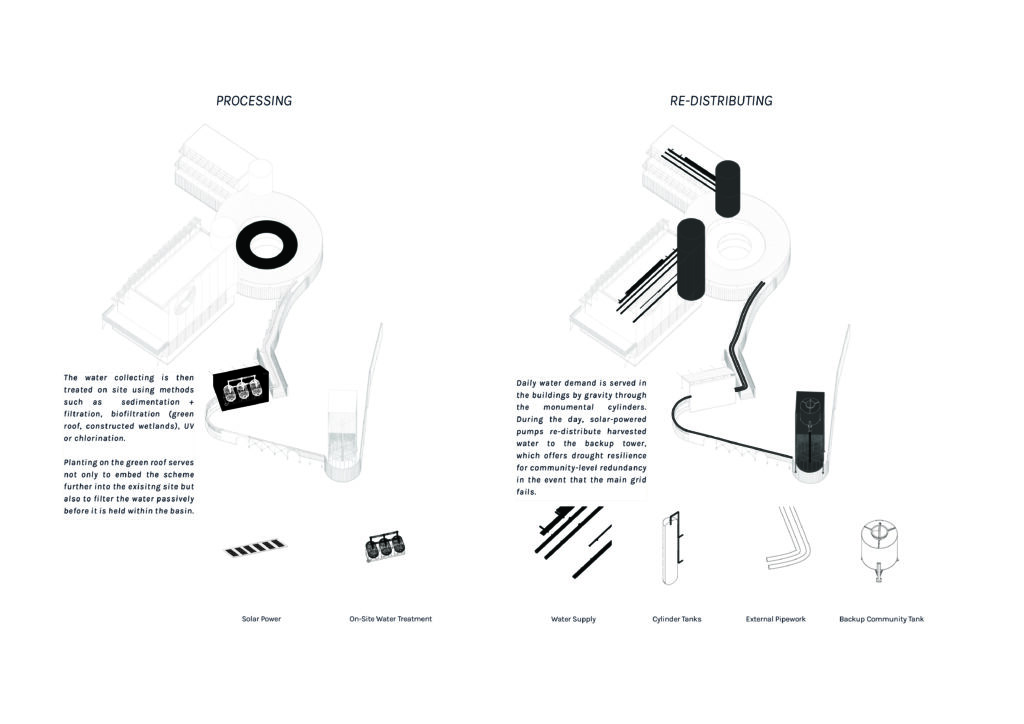
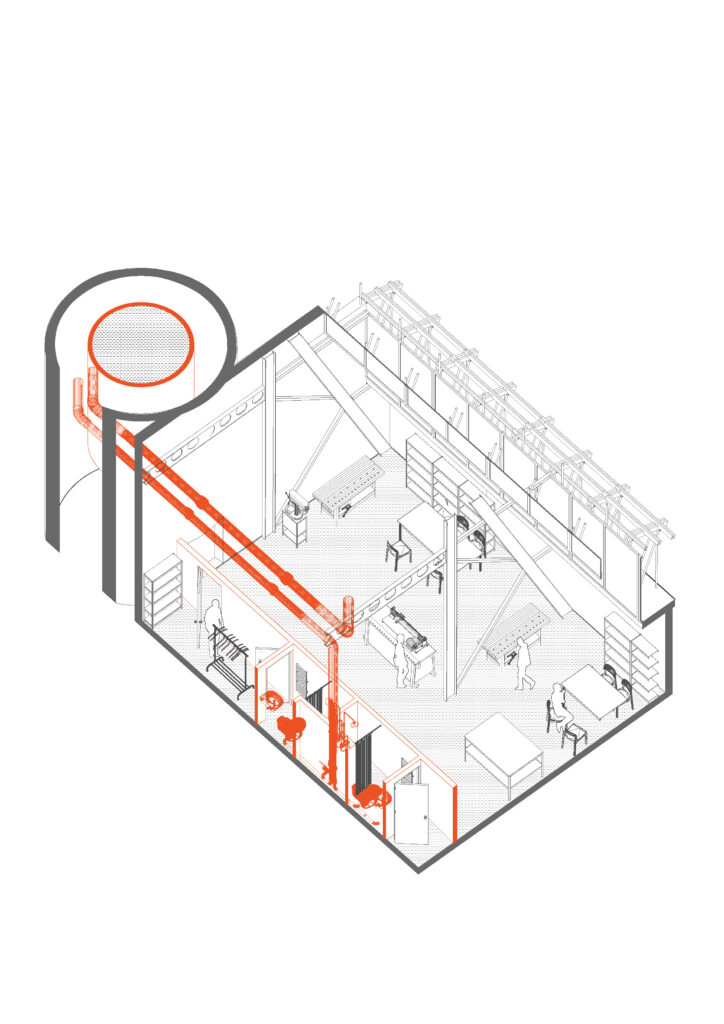
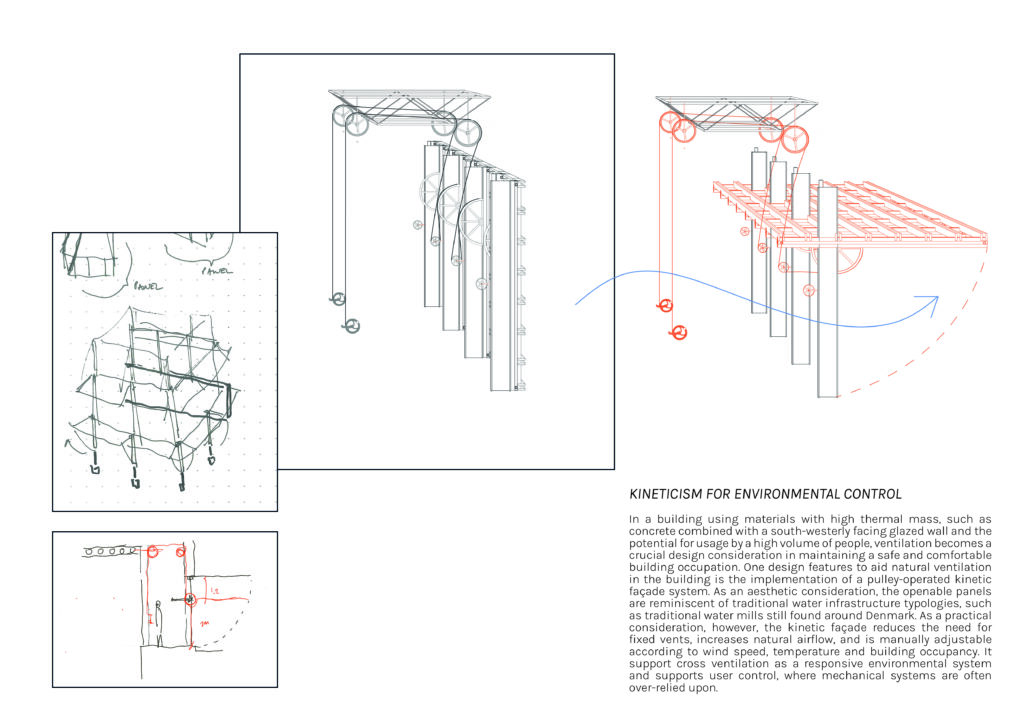
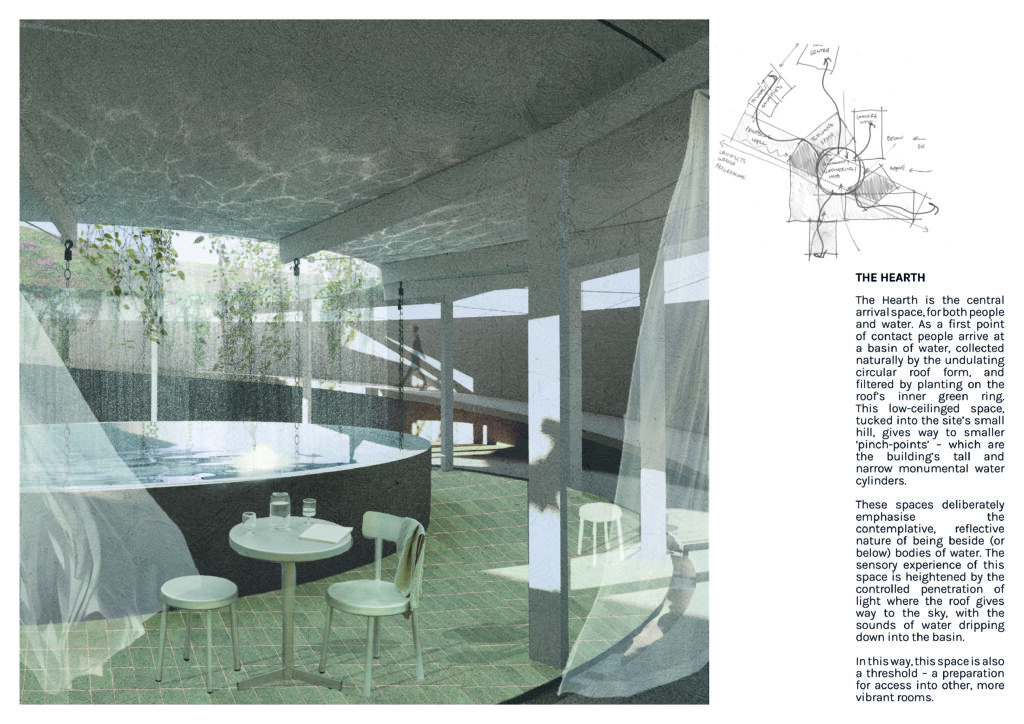
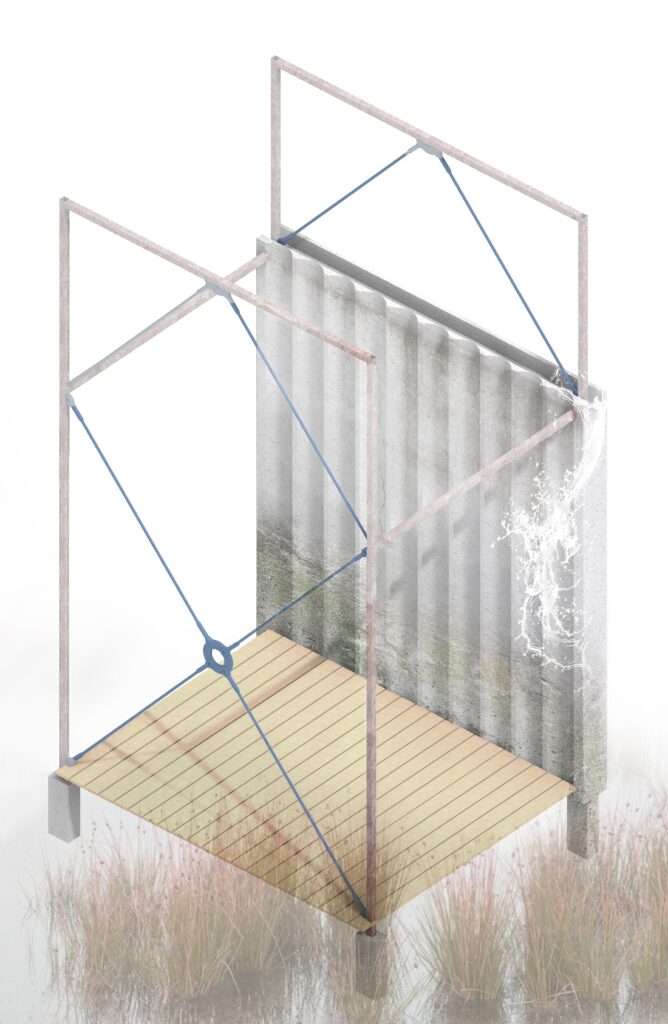
The architecture aims to decentralise the power of top-down planning infrastructures, empowering local communities in the face of a changing environmental and political climate. Through the establishment of flexible, free-to-access, community-driven programmes, these nodes not only serve to manage the impending crisis of excess water, but to autonomously collect, channel, process and re-distribute it for the benefit of the locale.
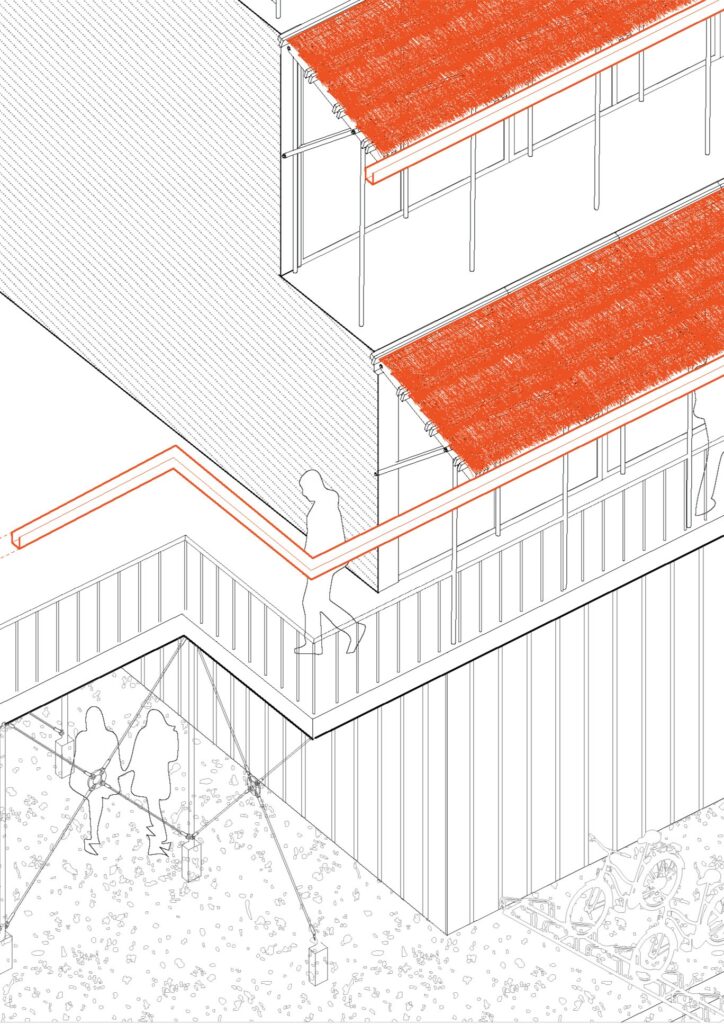
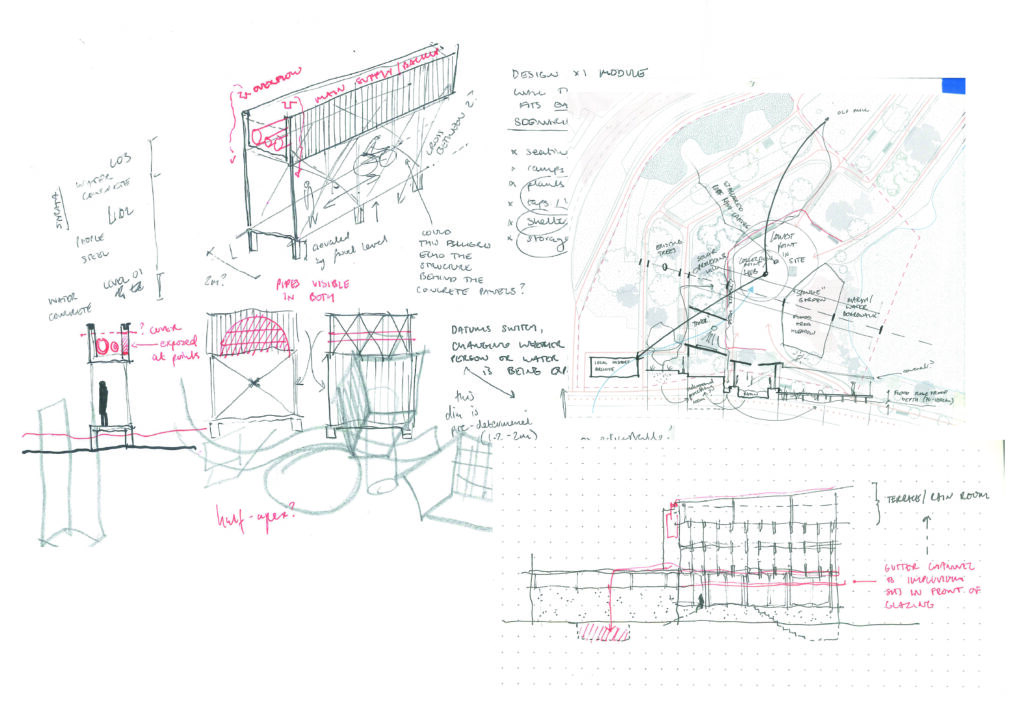
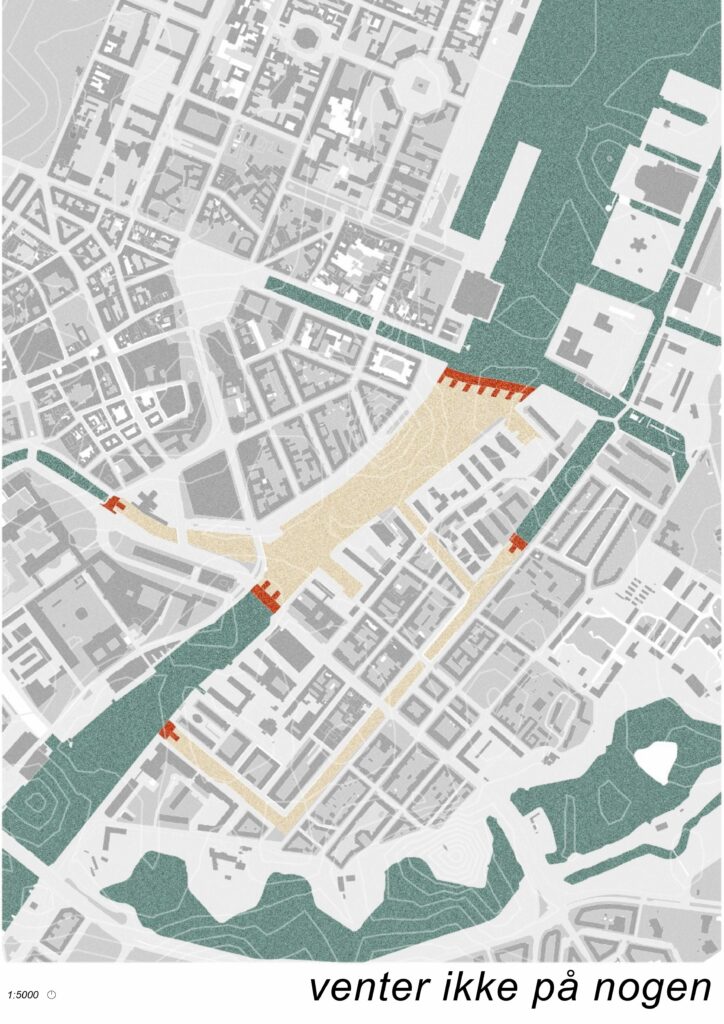
A highlighted floodline connects each site by outlining a safely navigable route directing the movement of people, and is poetically echoed within the scheme through the movement of water via a water wall, acting not only as the main channel for each civic building but also as an interactive pathway. Through water-harvesting systems, the project re-frames stormwater management: water becomes a civic asset, a medium for gathering and a fundamental resource.
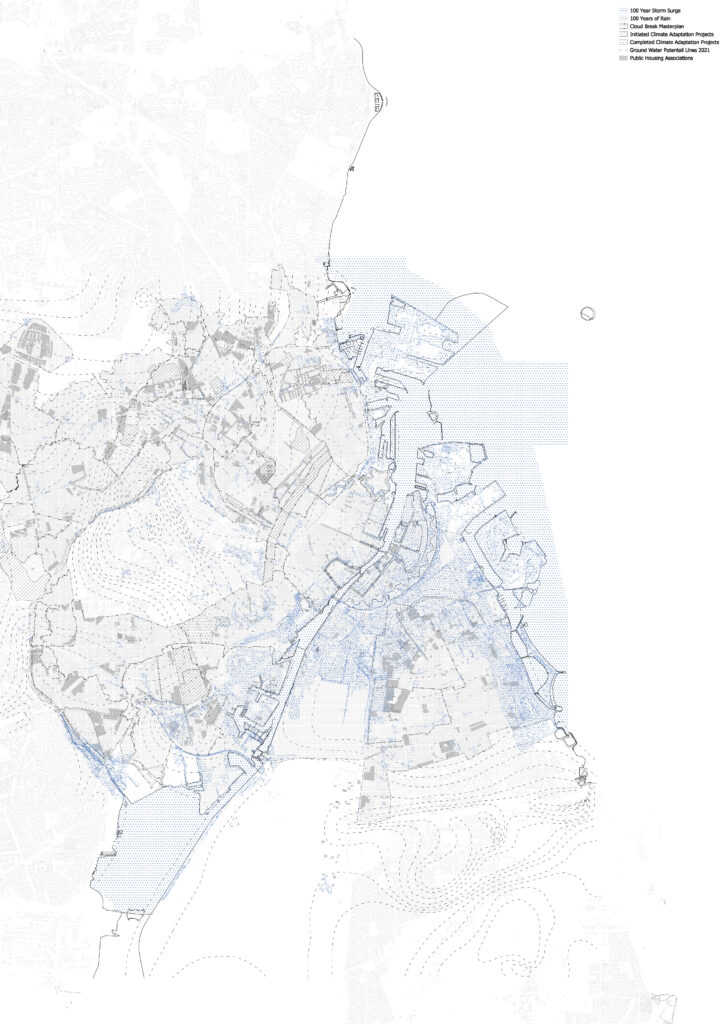
A1, 25000
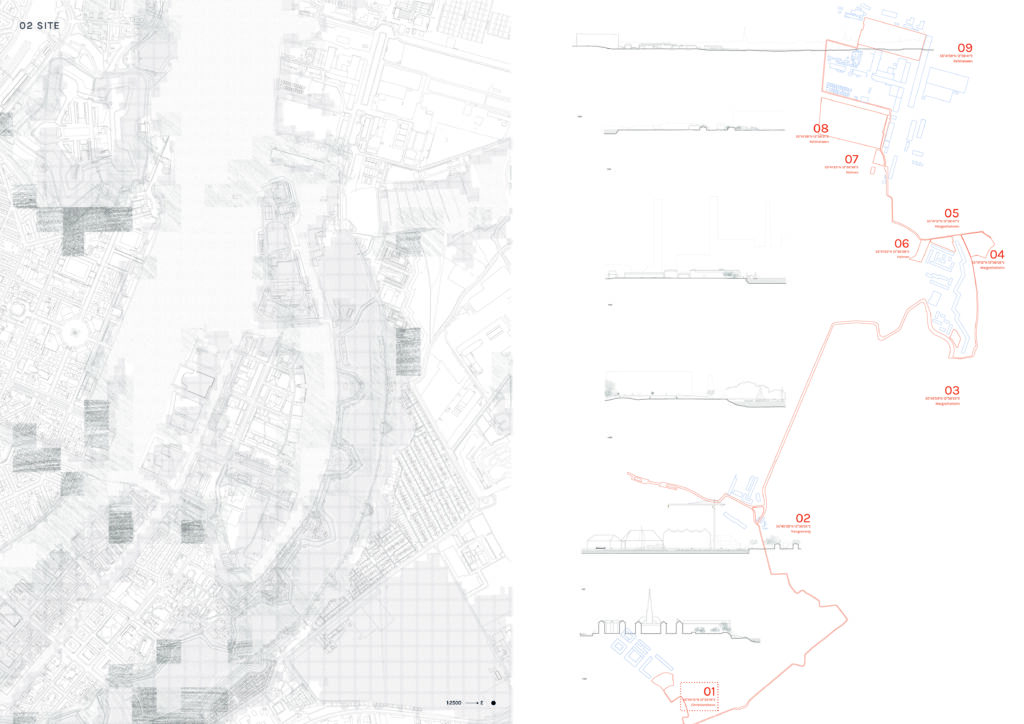
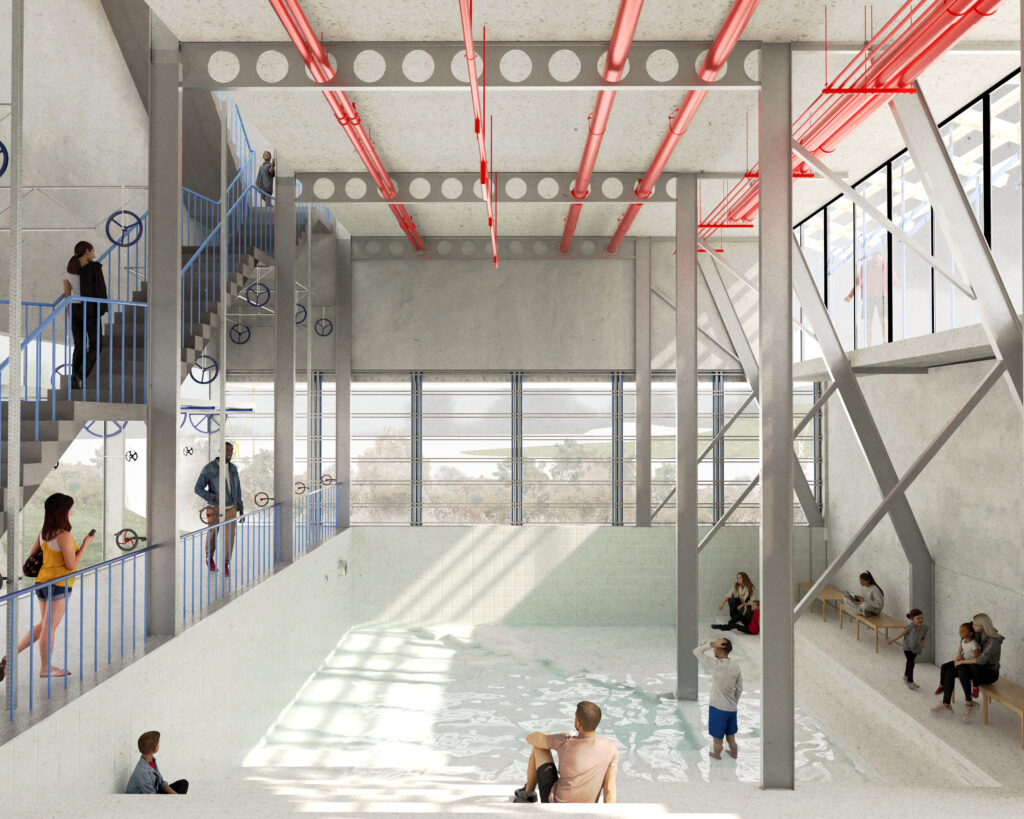
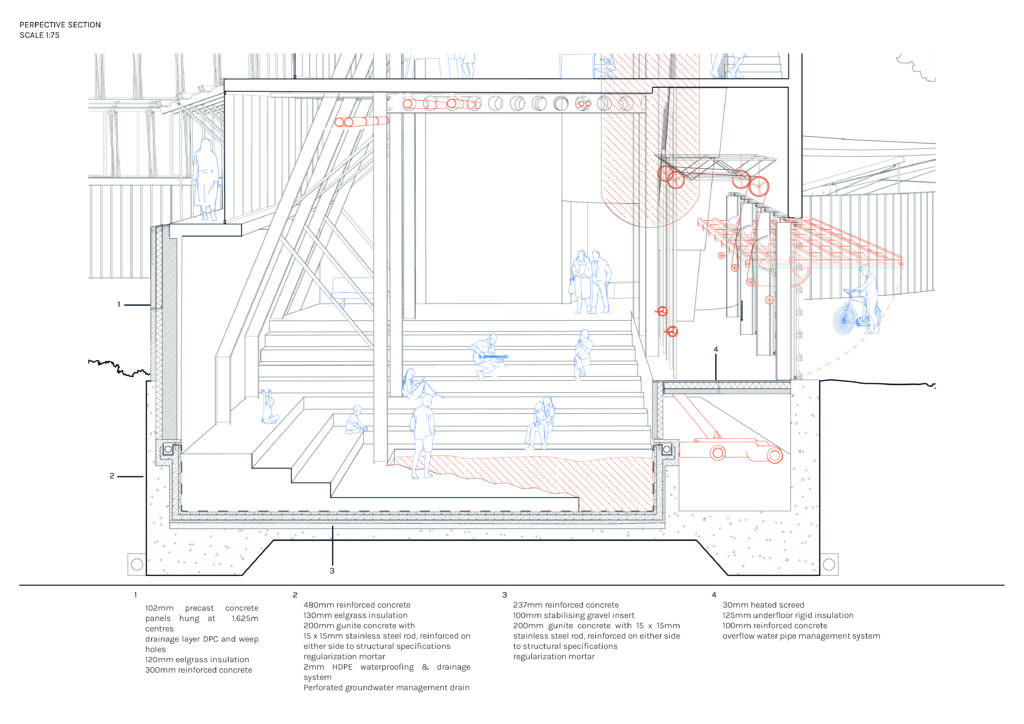
1:75
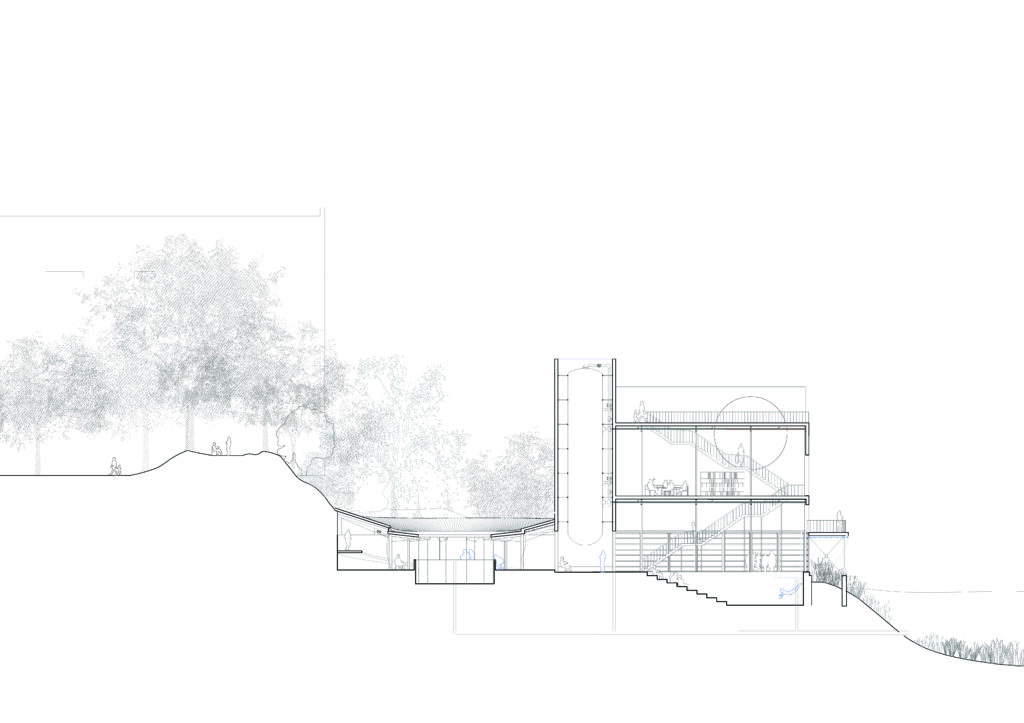
A1 - 1:100
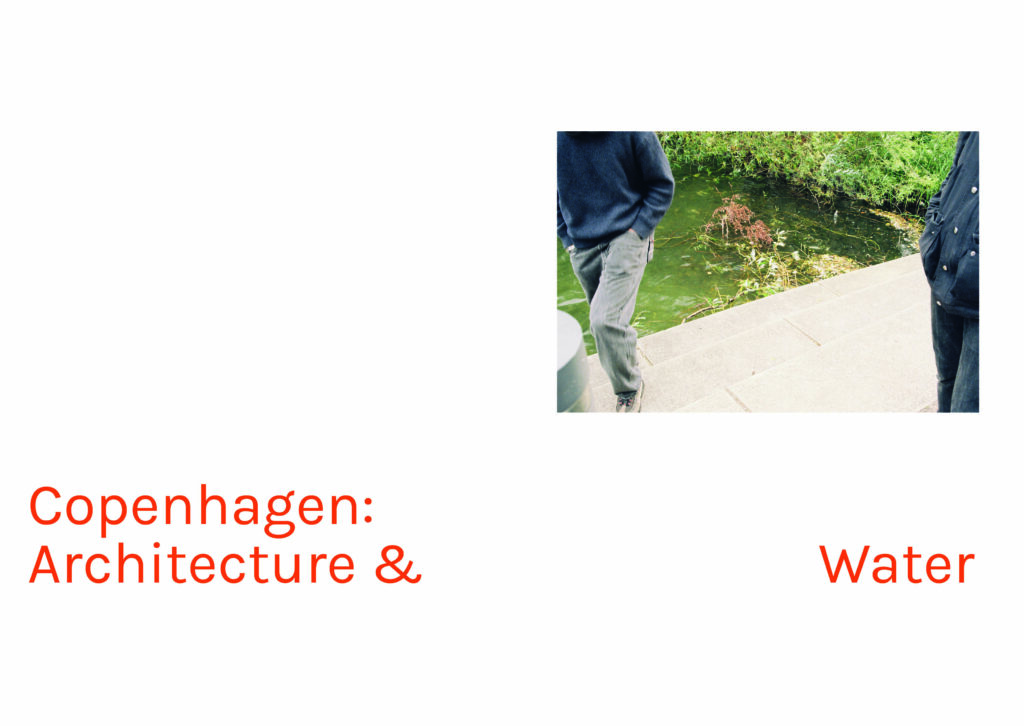
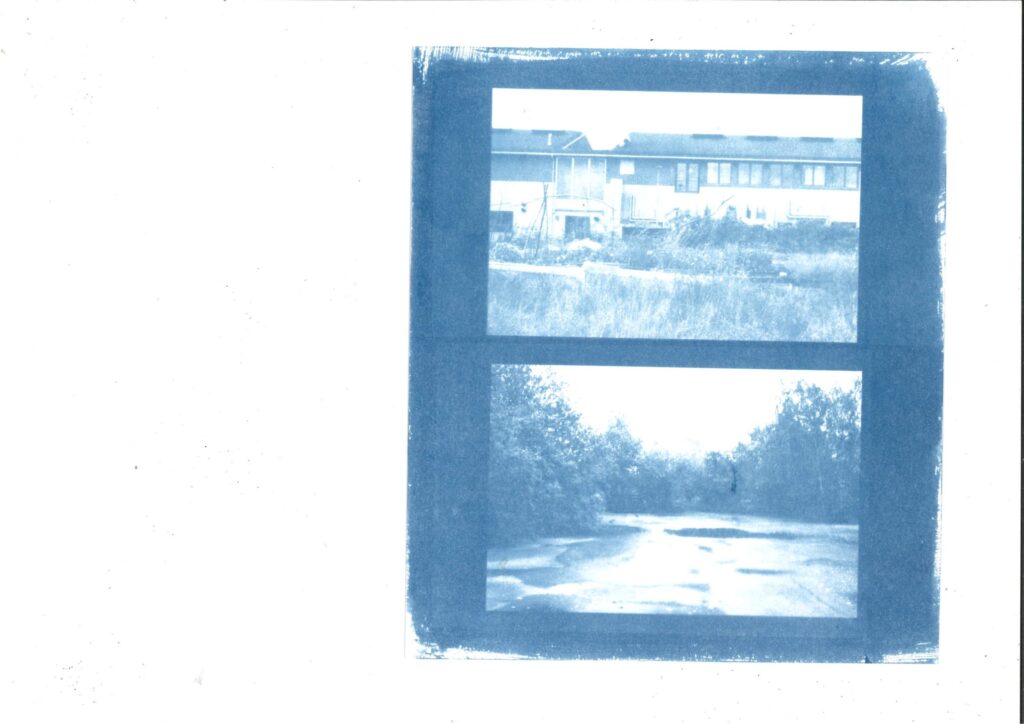
Film made from city visit (October 2025)
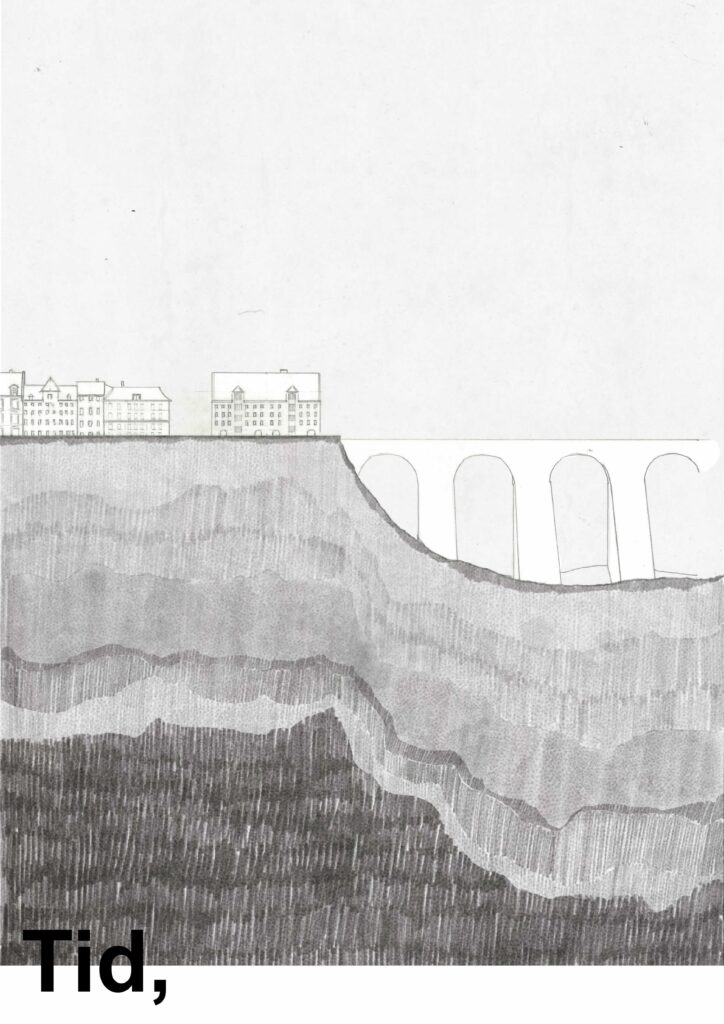
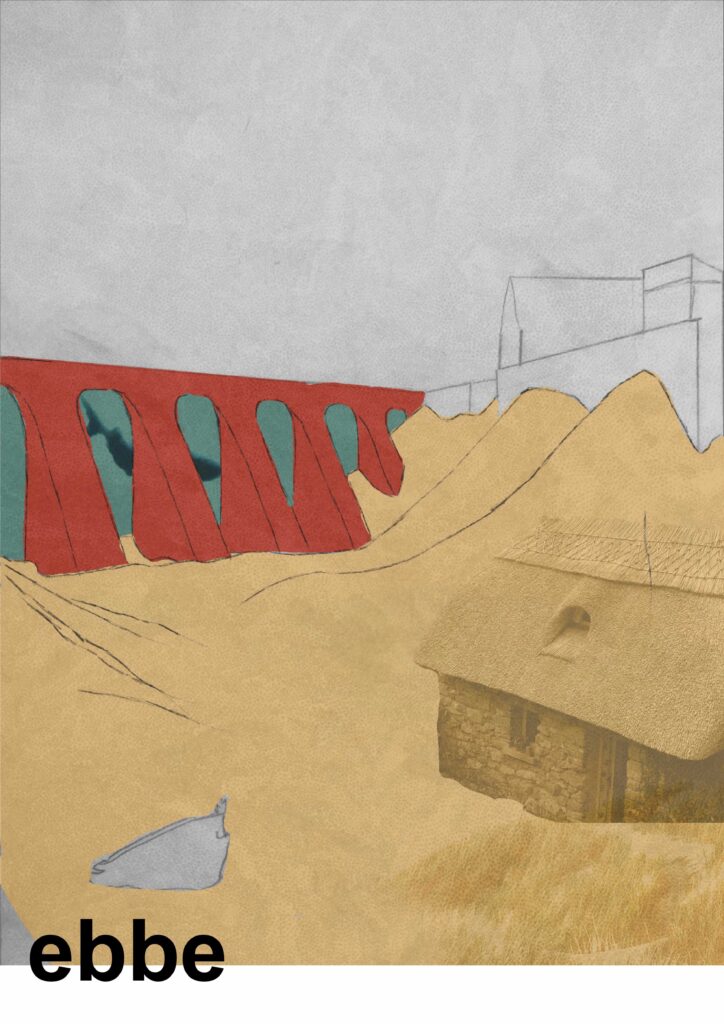
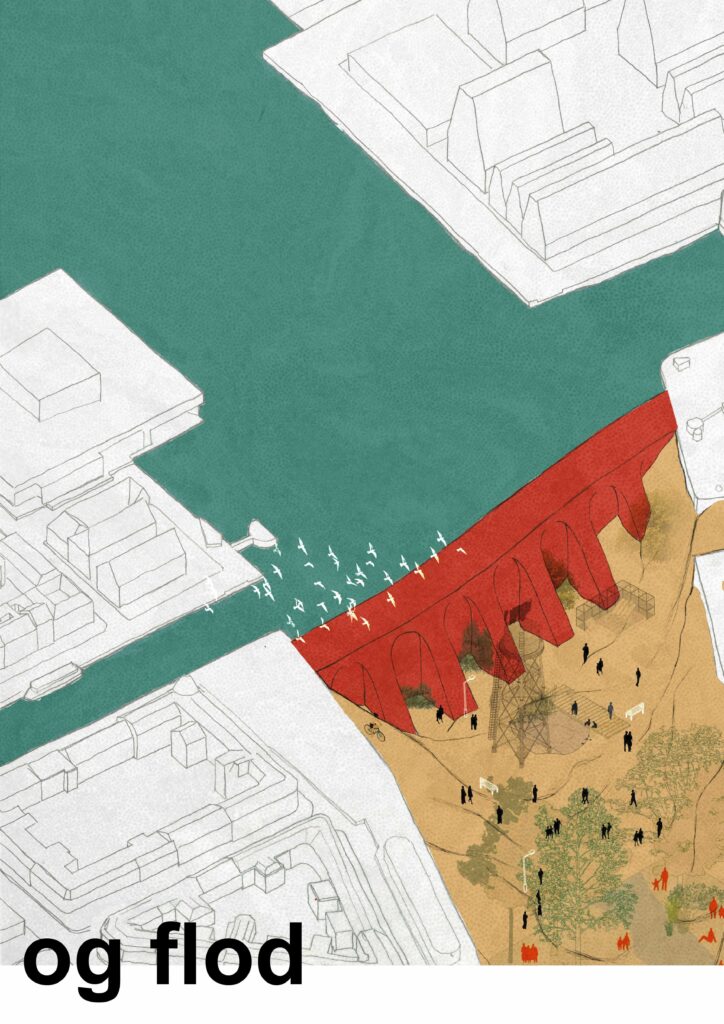
“Time, Tide and River Waits for No One”
Poster Series Output created as part of semester 1 primer task.
‘The ethical way to build in cities accepts the primacy of adaptation… Mitigation and adaptation are basic modes of all building.’
Richard Sennett, Building and Dwelling : Ethics for the City (Allen Lane, 2018), 278
“A conceptual intervention, rupture, or architectural speculation testing the idea of how we live with water today, and how we might live with it tomorrow.”
a. How can the threshold between land and water become a site for intervention, disruption, or renewal?
b. What spatial features might emerge when water is no longer background but a driver of architectural imagination?
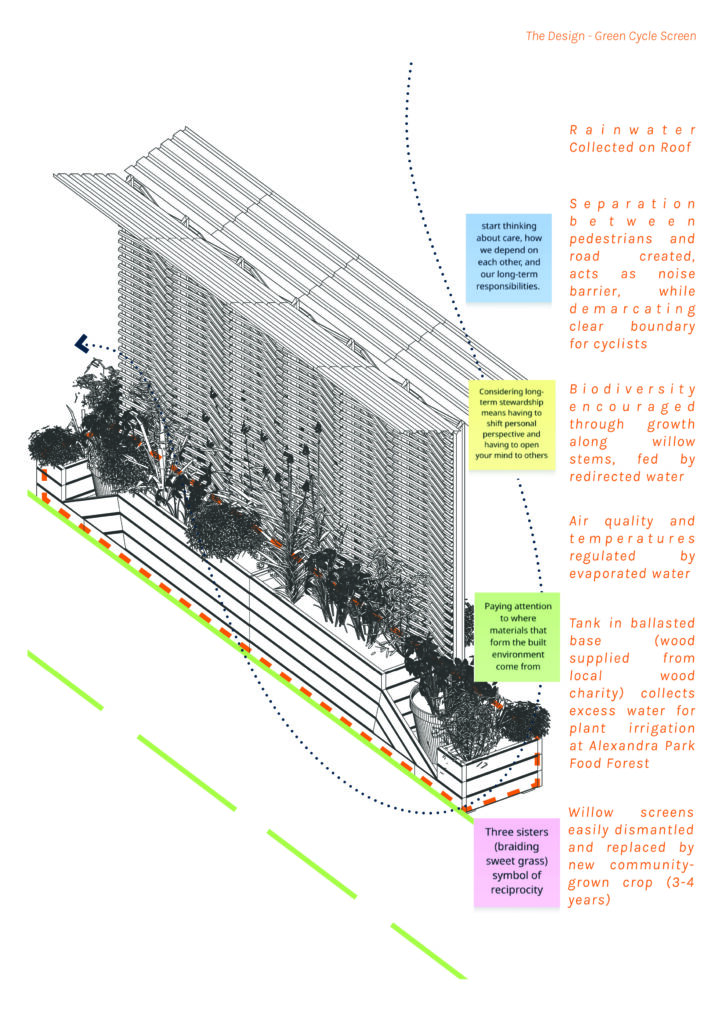
Regenerative Systems: Green Cycle Screens for Dennistoun
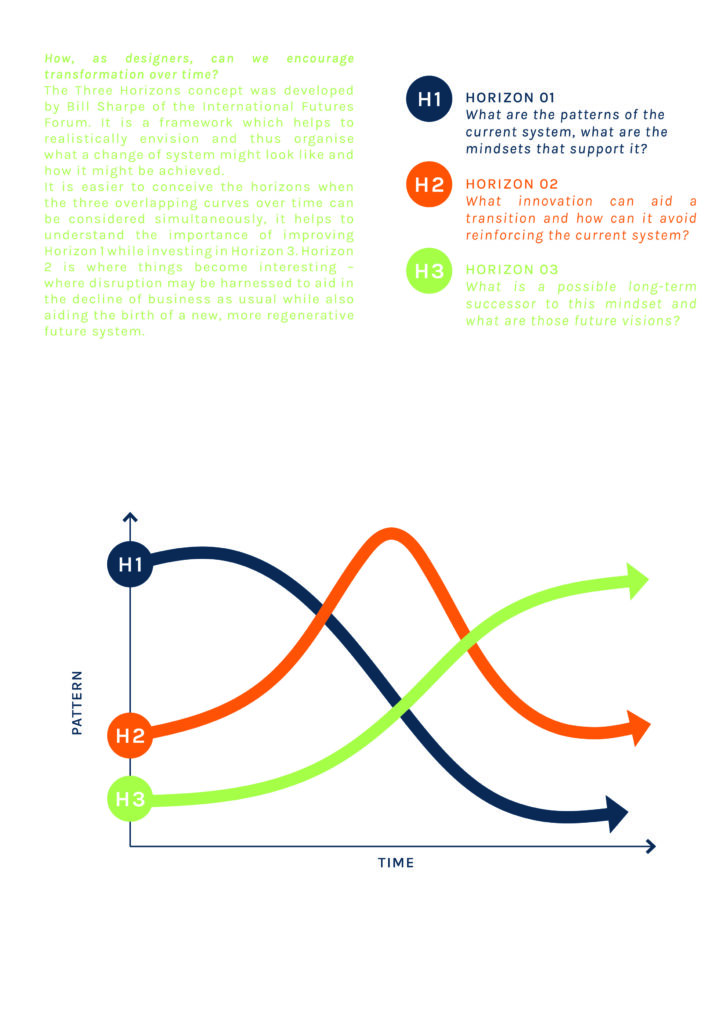
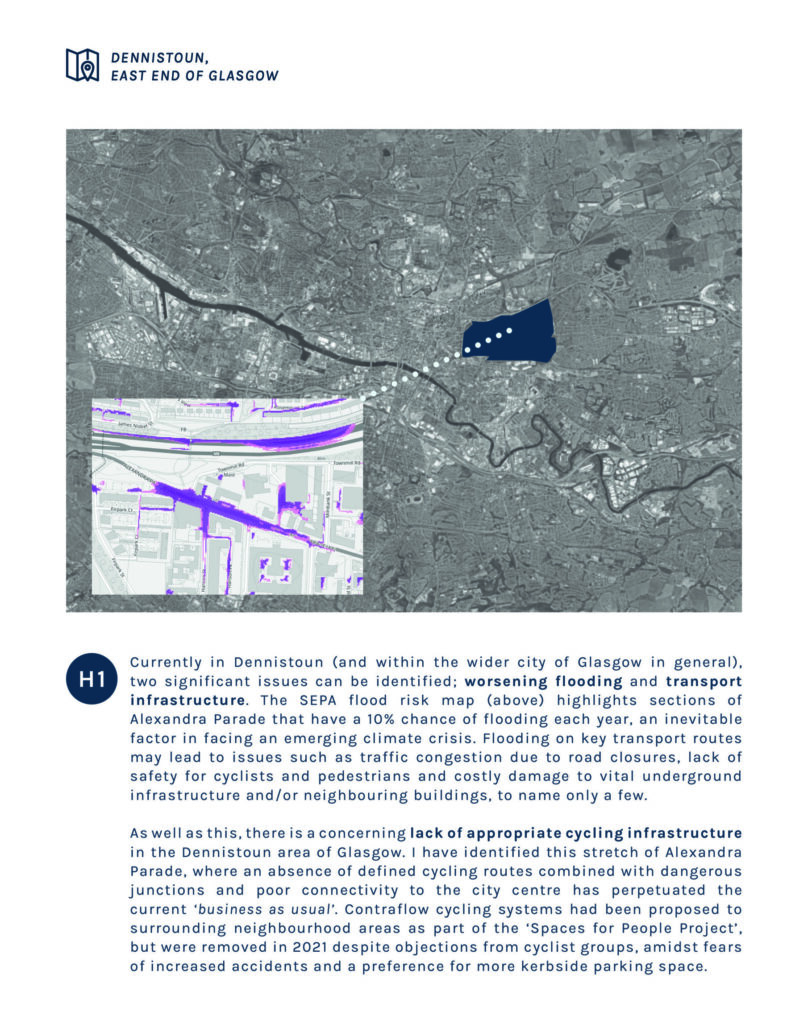
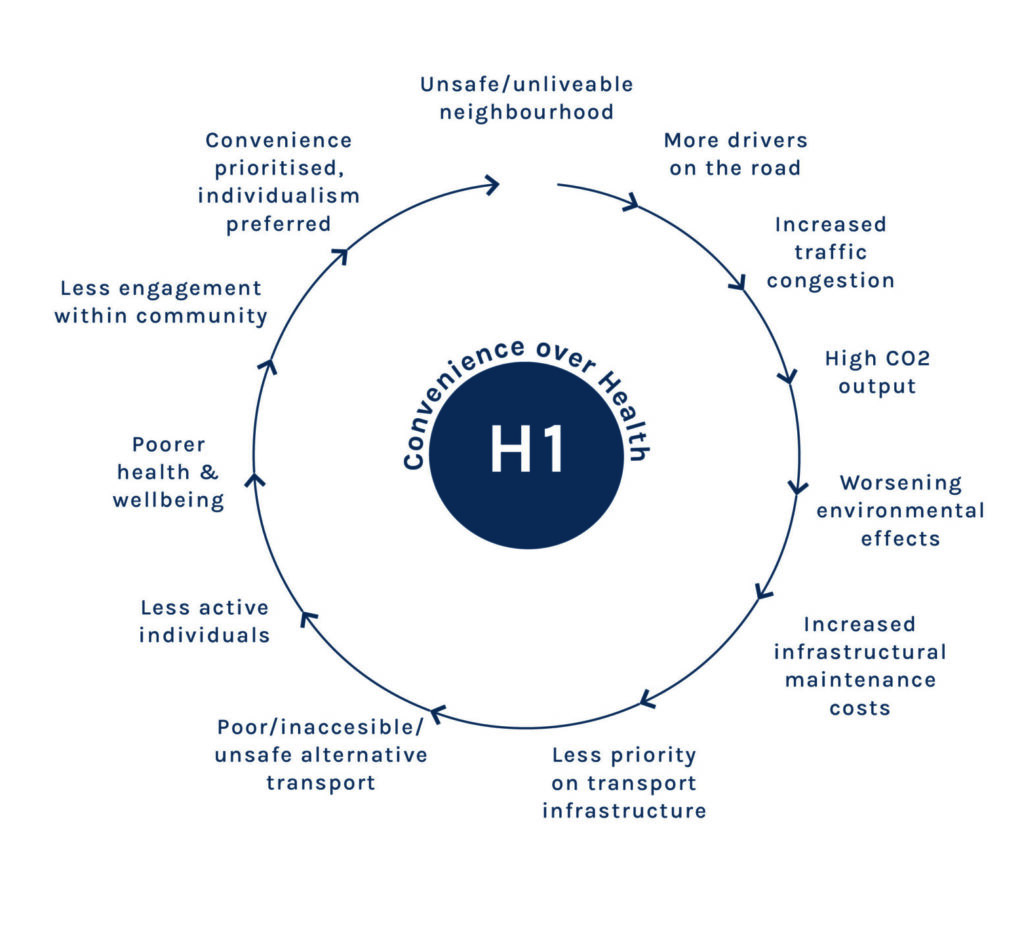
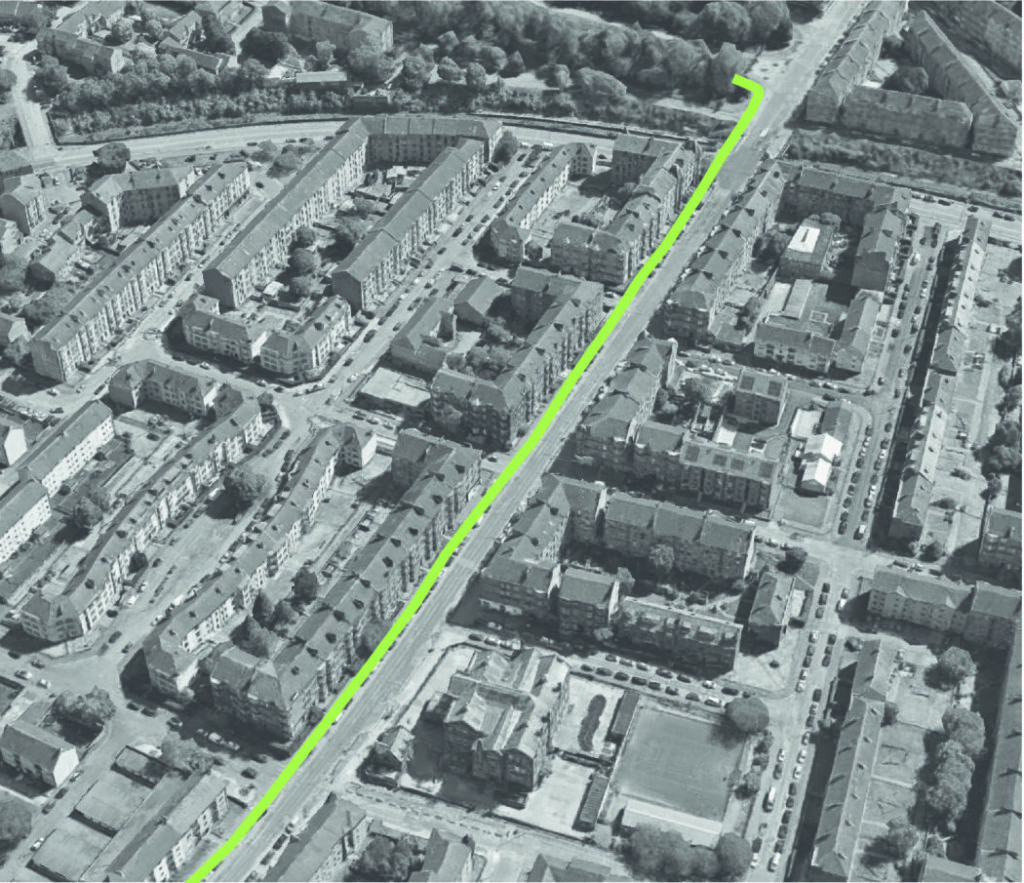
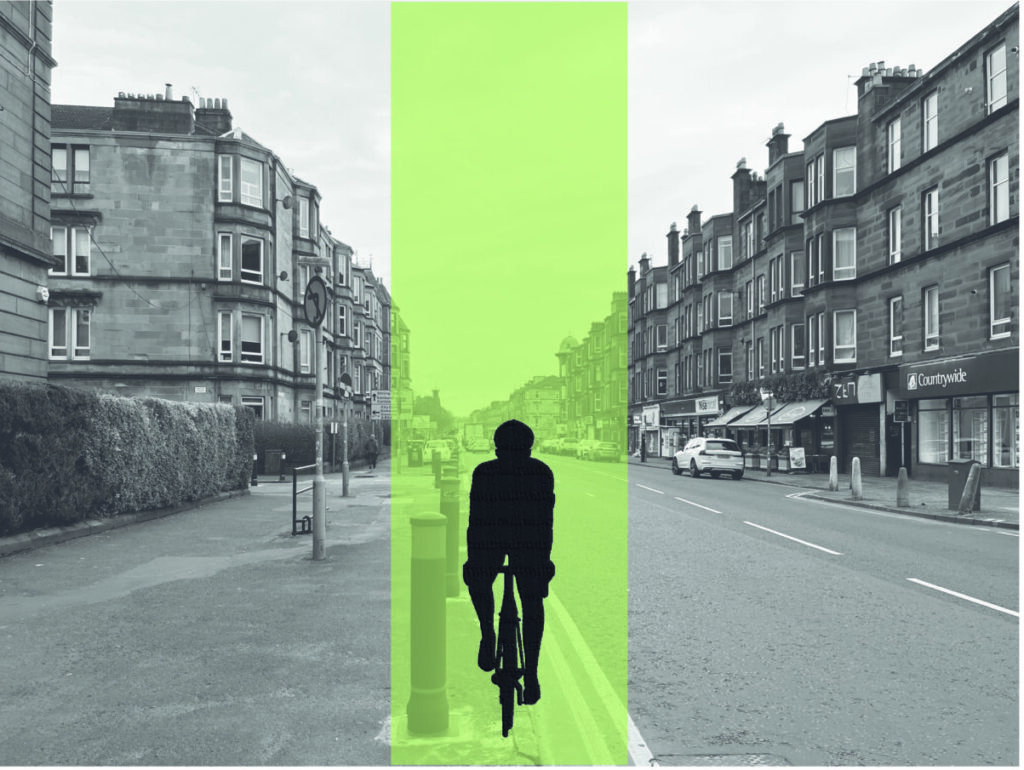
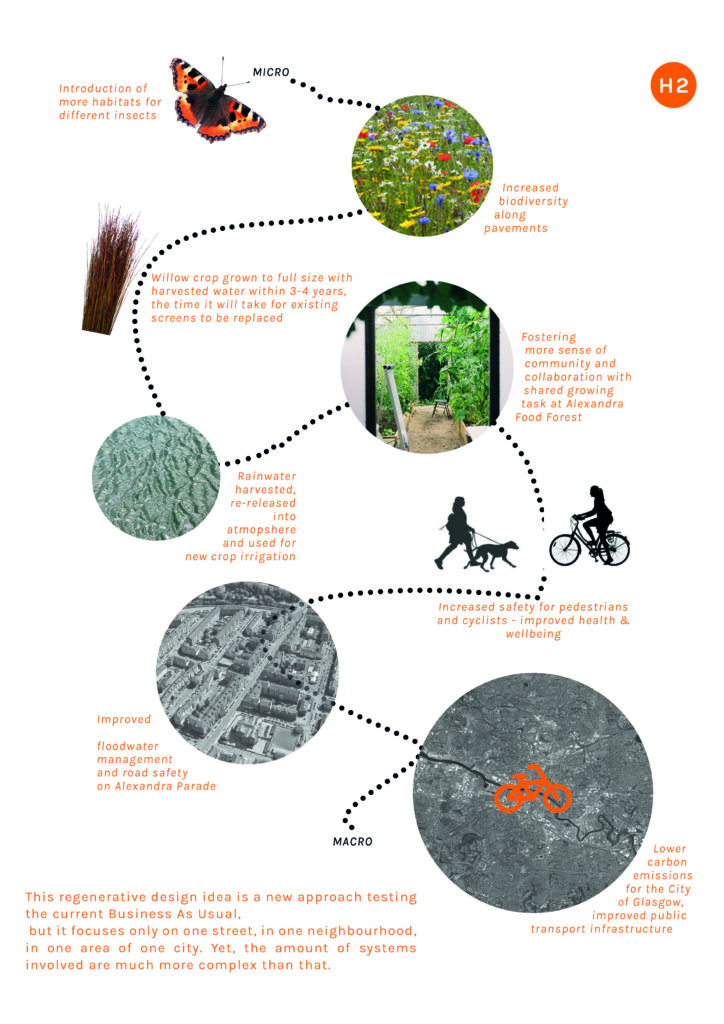
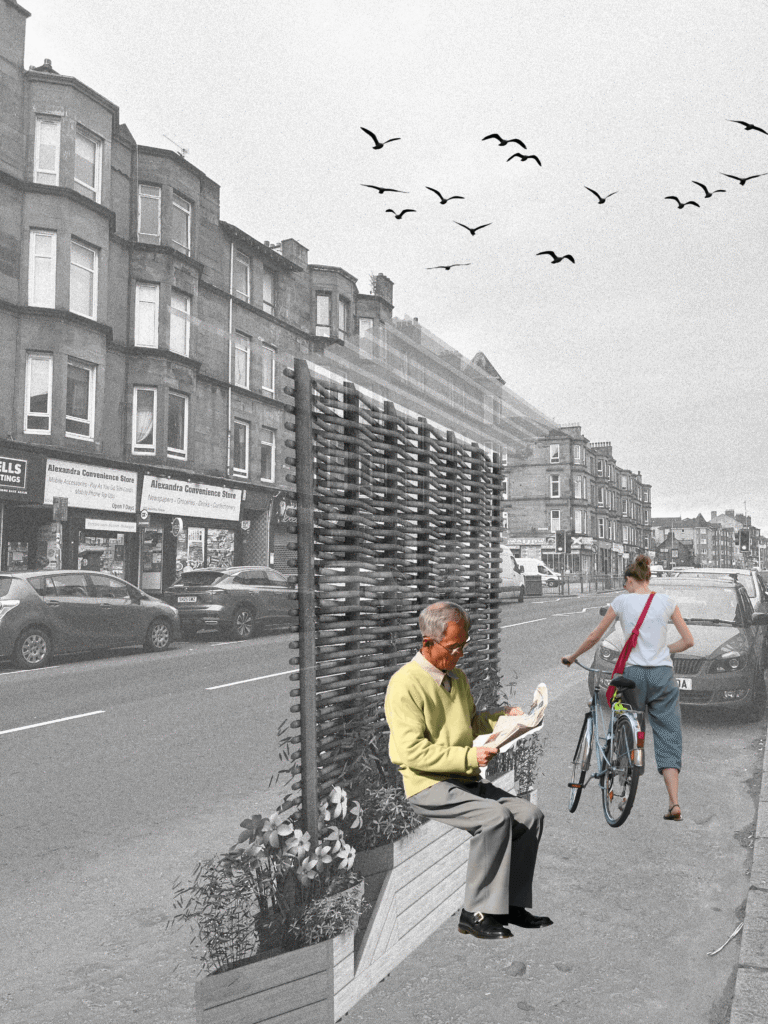
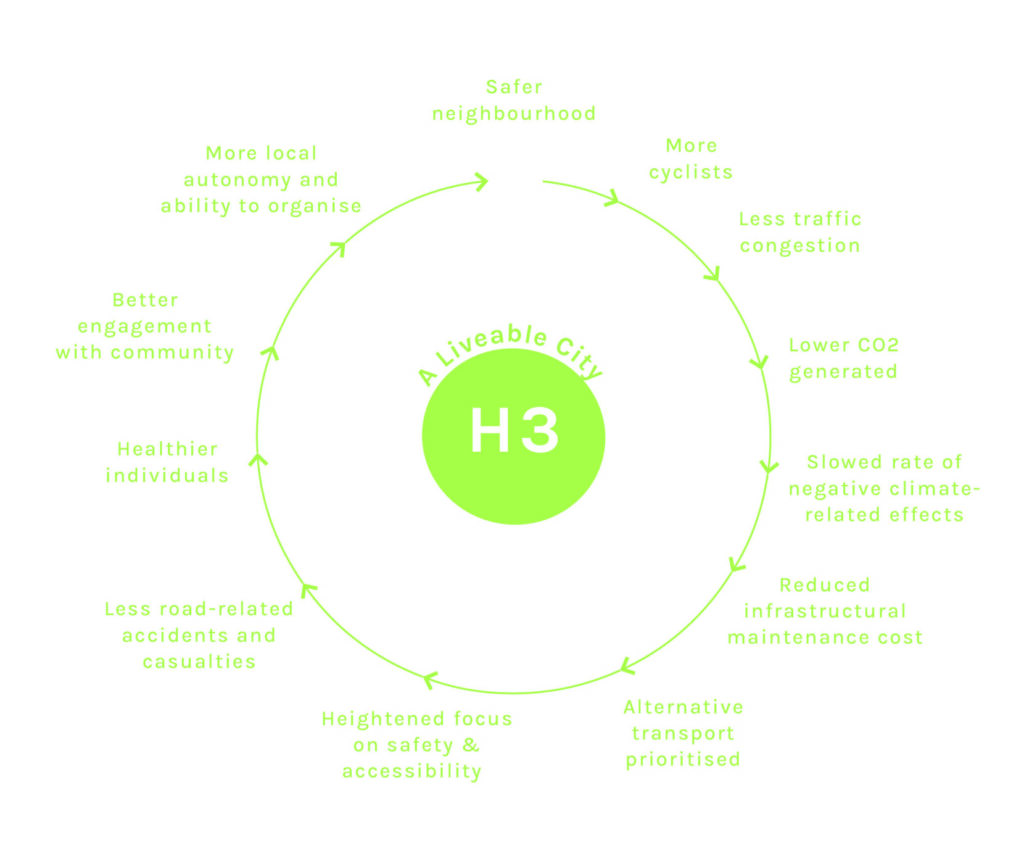
The Green Cycle Screen is proposed to be implemented along the busy Alexandra Parade in Dennistoun. Its main purpose is to fulfil two key regenerative purposes; dealing with excess rainwater and improving road safety for cyclists.
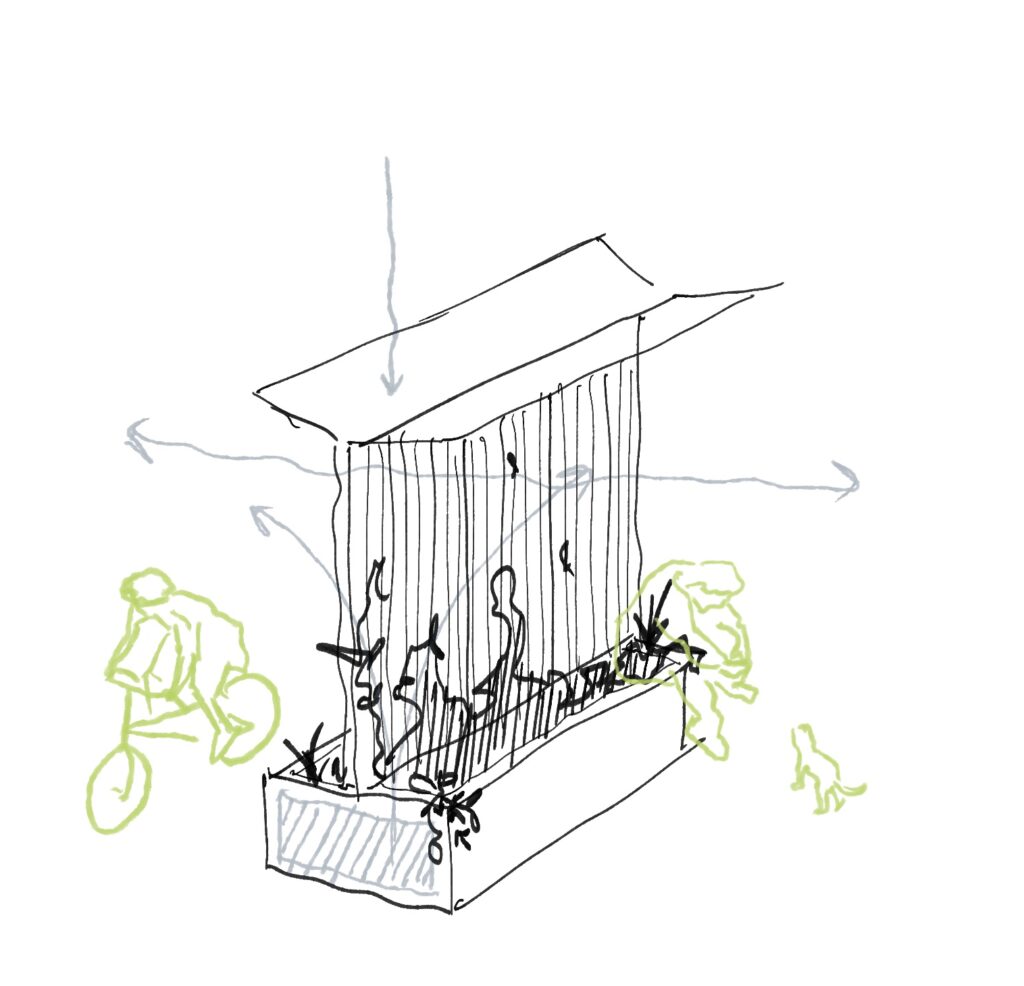
The screens, situated between pedestrian pavements and the main road, work by collecting water from both rainfall and nearby building runoff. Excess water is directed down the length of the screen through gravity and stored at the base of it, offering some relief from direction to already pressured street drainage systems.
Water is slowly evaporated into the atmosphere (helping to regulate air temperature) through the vertical growth along its willow branches. This growth not only encourages biodiversity by offering a new habitat for insects in an otherwise vehicular-dominated street, but also offers somewhat of a noise and safety barrier between pedestrians and the road, as well as creating a distinct lane and therefore safe zone for cyclists.
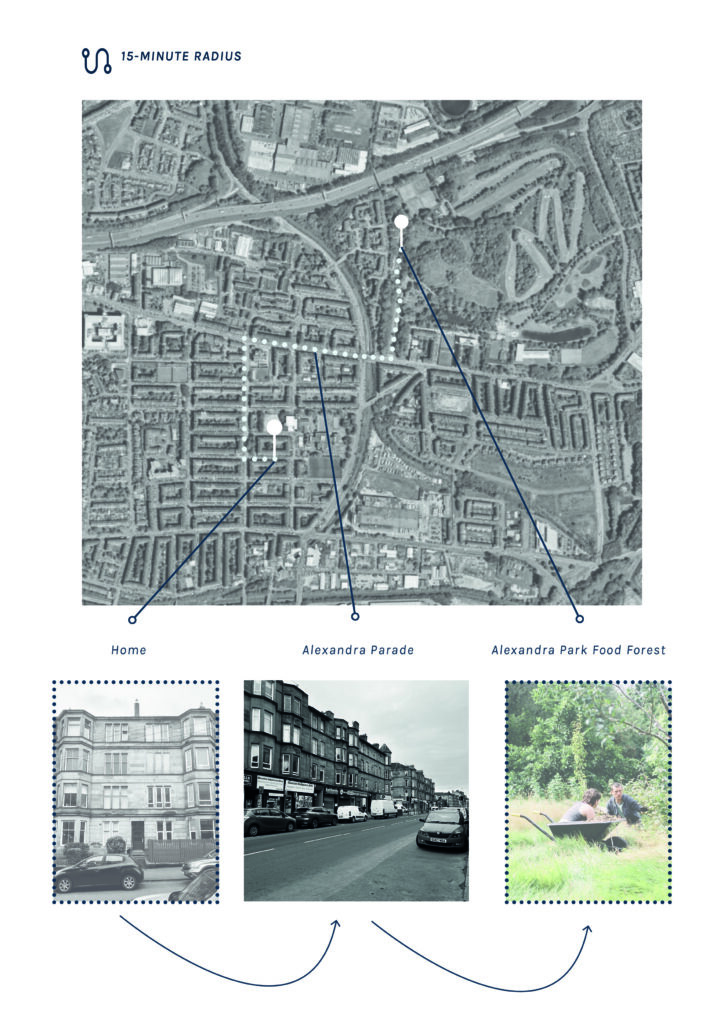
The stored water at the base of the screens is accessible by a hatch and reused in drier seasons for the irrigation of new willow crop, grown by the community at Alexandra Park Food Forest. By the time the willow screen reaches the end of its useable life (3-4 years), the screens can easily be dismantled and replaced and the cycle can start again.