Donnie Reid
- RIBA Silver Medal Nomination
- GSA Chair’s Medal for Architecture Winner
- GIA Fifth Year Award Winner
Exchange Semester 2025: Oslo School of Architecture and Design
I am driven by architectural practice which takes a stance on political, social and environmental issues and which understands the connections between these forces in both urban and rural settings. Truly ethical architecture is that which does not simply align and become assimilated with the current economic and social doctrines but instead works with these forces from within to push boundaries and challenge convention. Architecture can take the stance of activist even without shouting or spectacle. Small decisions by the designer on material, layout, or construction system can quietly influence future interventions all while creating beautiful and high quality spaces.
Adaptive reuse of existing fabric is a key component of this approach. Architecture in my view should be a practice of construction where existing structures are manipulated and material streams are brought together through architectural orchestration. The role of the architect is not a that of an artist creating a triumphant work in their vision, nor as simply another pawn in the neoliberal construction juggernaut. Instead they act as a quiet but determined conductor whose skills facilitate the coming together of all actors and influences in the pursuit of high quality, long lasting and socially and environmentally sound buildings. This is a tricky balance when so much is working against this approach but I strongly believe that this way of operating can become a part of a new social and political status quo this century. Change is required in every part of our society but I see the future of construction as a localised and pragmatic practice which is steered by the ethical determination of those involved.
CONSTRUCTING ECOLOGIES
This project sets out to propose (and provide the infrastructure for) a new stone based build culture in the town of Vardø, a town built of timber in a landscape of no trees. It will do this by proposing the systematic reuse of a white elephant from the extractivist age (Svartnes Harbour breakwater) for the benefit and further self sufficiency of this town which has a complex and at times problematic history. The new use of stone in construction here aims to create a deeper local sense of establishment and right of existence while external geopolitical and economic forces apply more and more pressure on this place. This will allow the people here to enhance their collective identity regardless of their own ethnicity (Sami, Norwegian, Kven, or other).
The thesis critically engages with place, history, futures and theory to shape and explore how new infrastructures can unlock processes through the reframing and reordering of existing materials, resources and ways of life. It aims to utilise a pragmatic, unsentimental and holistic approach to design not burdened by romantic visions from the past or misguided future aspiration. It will question how future societies can begin to look inwards and reengage with with local ecologies in order to create a truly sustainable existence. The thesis is speculative and is carried out from the point of view of imagining what future could be brought about by the people of this place on a local level (not imposed from elsewhere).
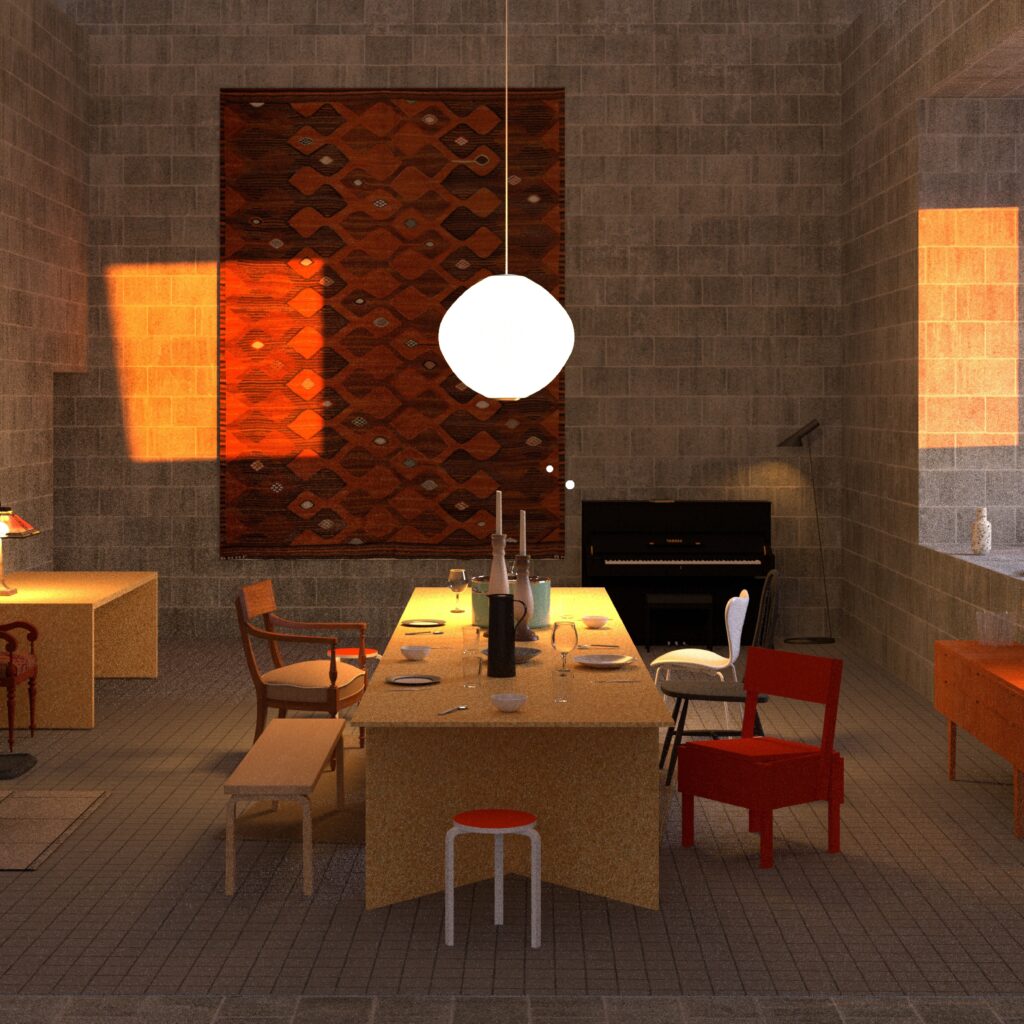
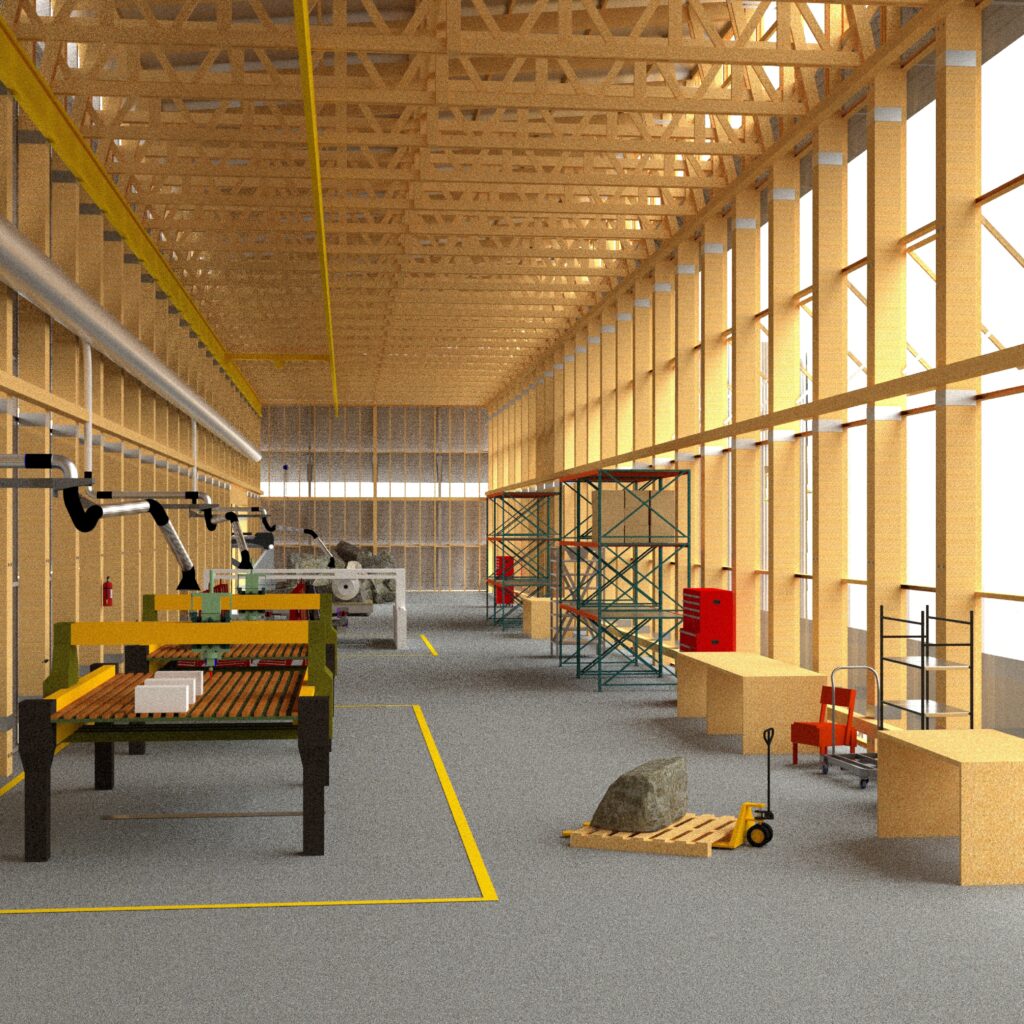
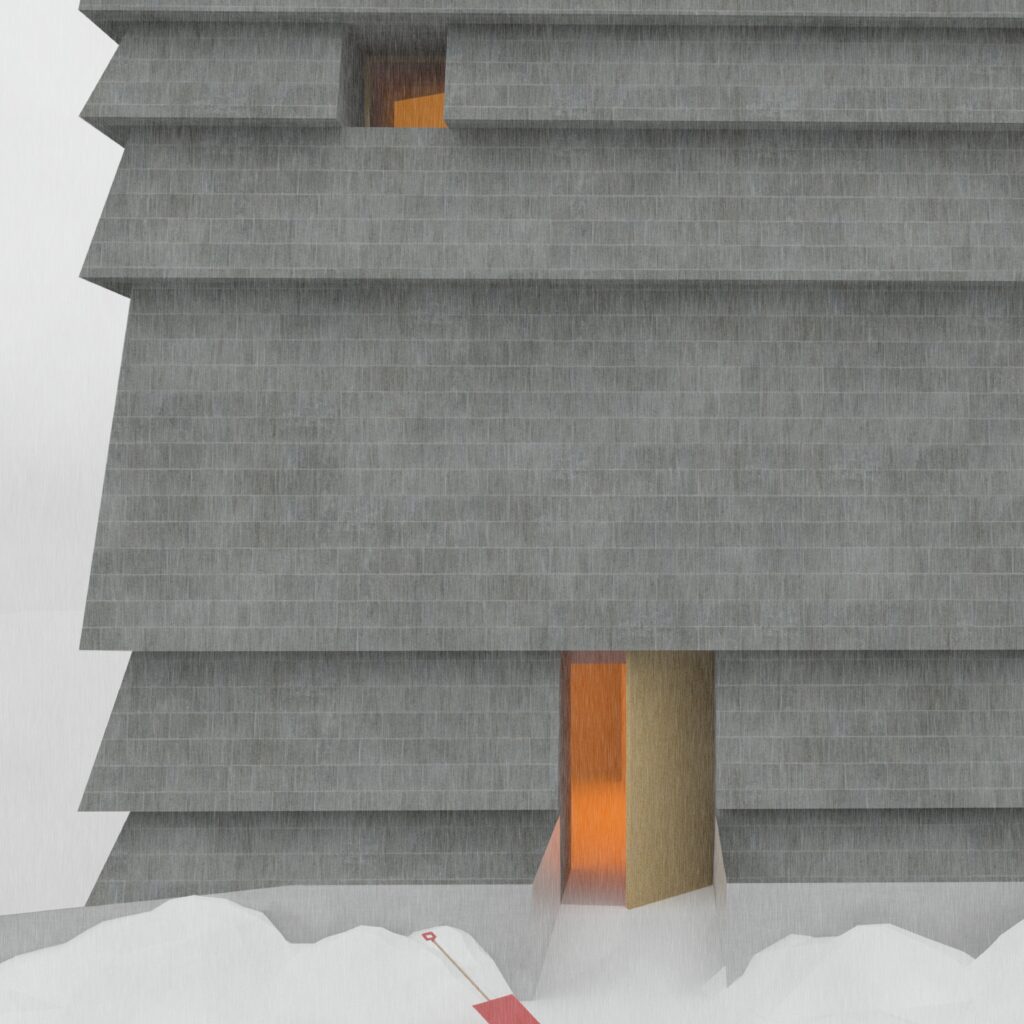
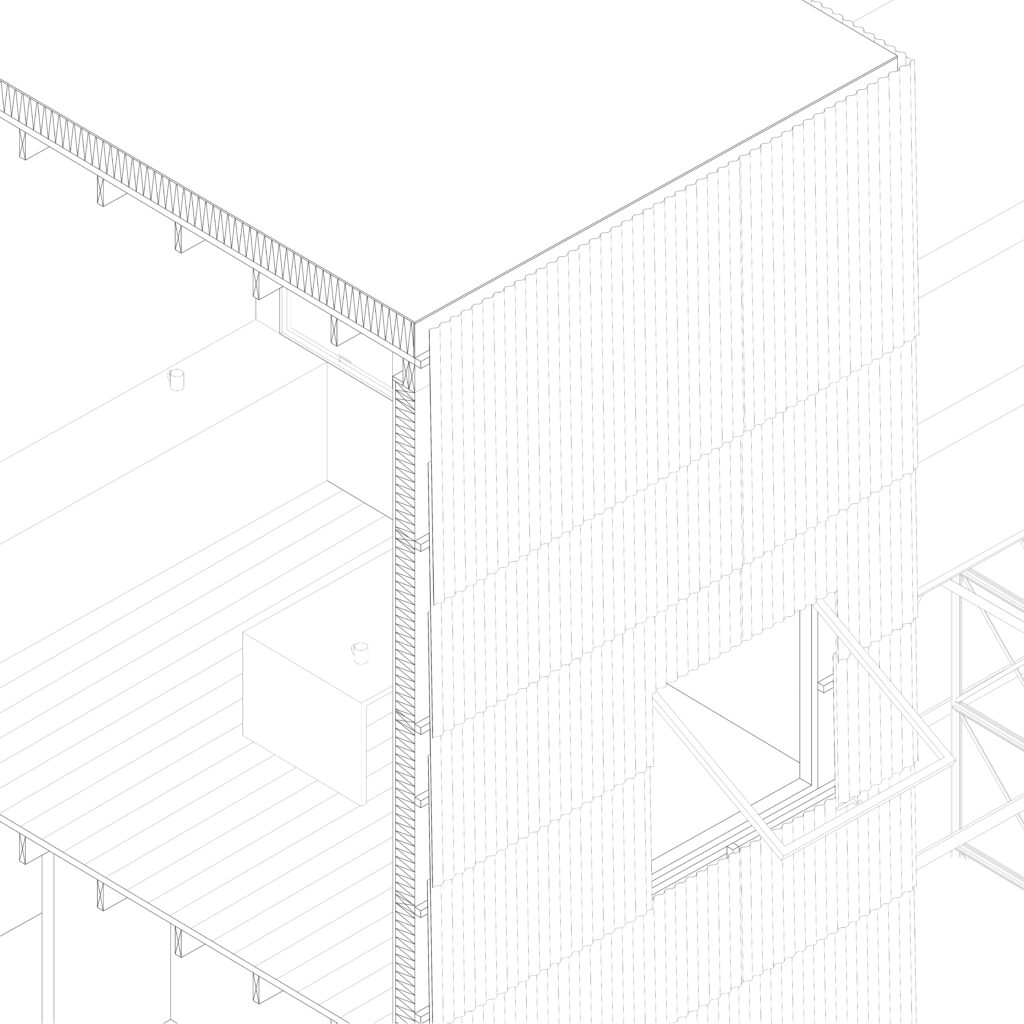
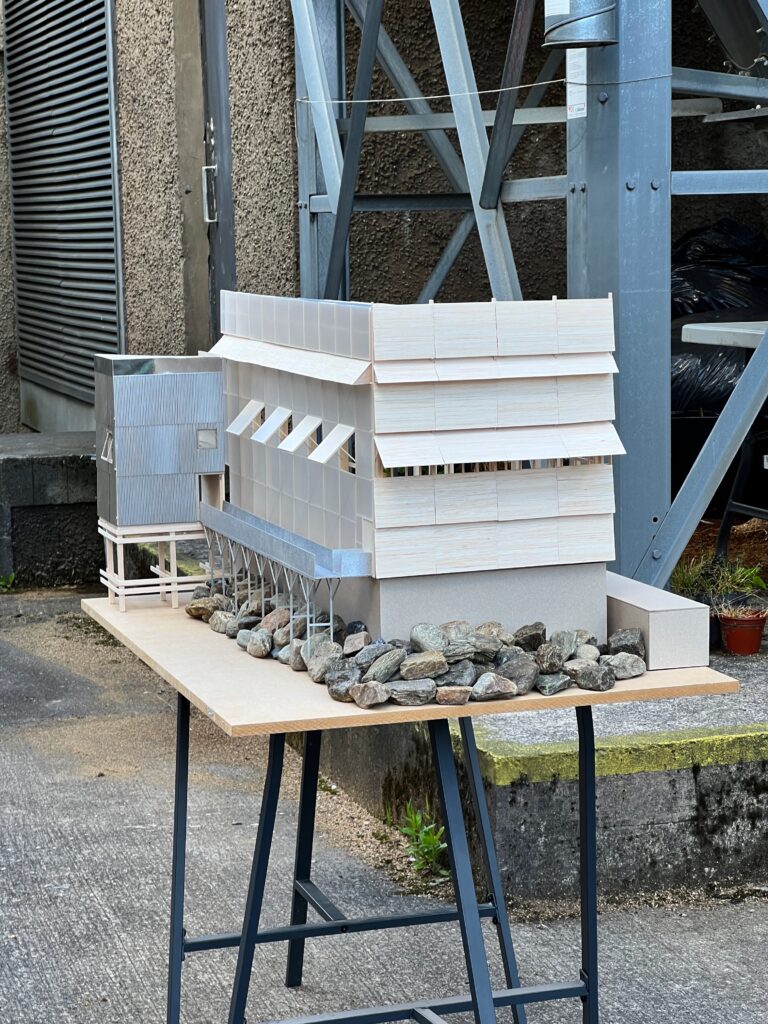
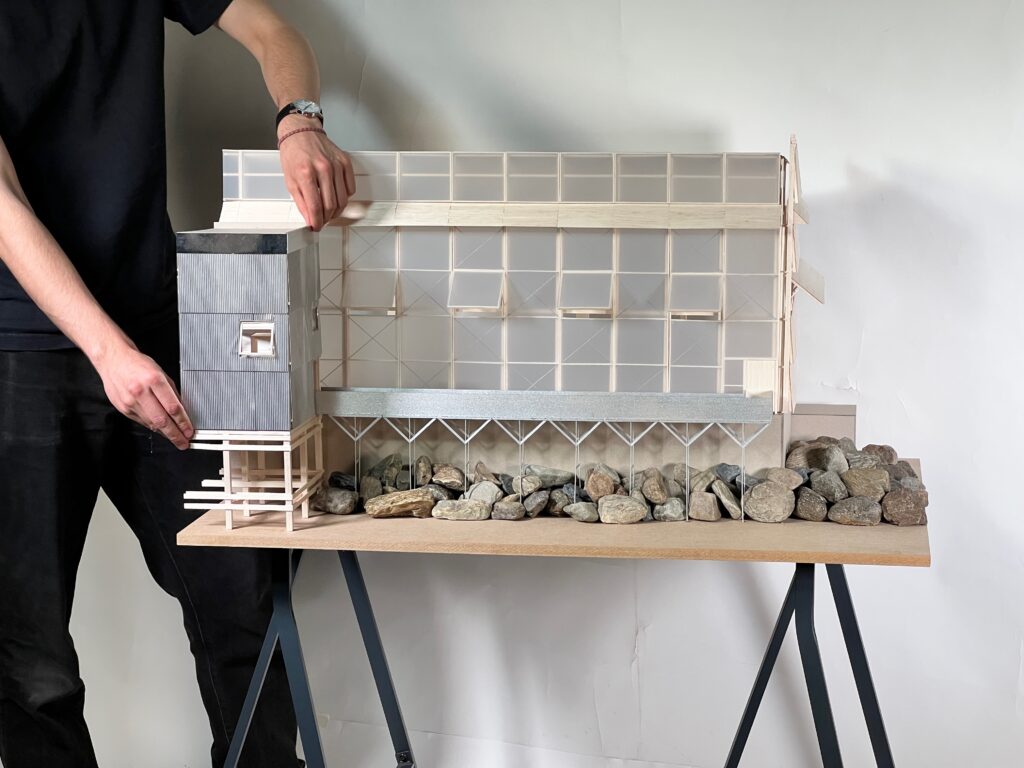
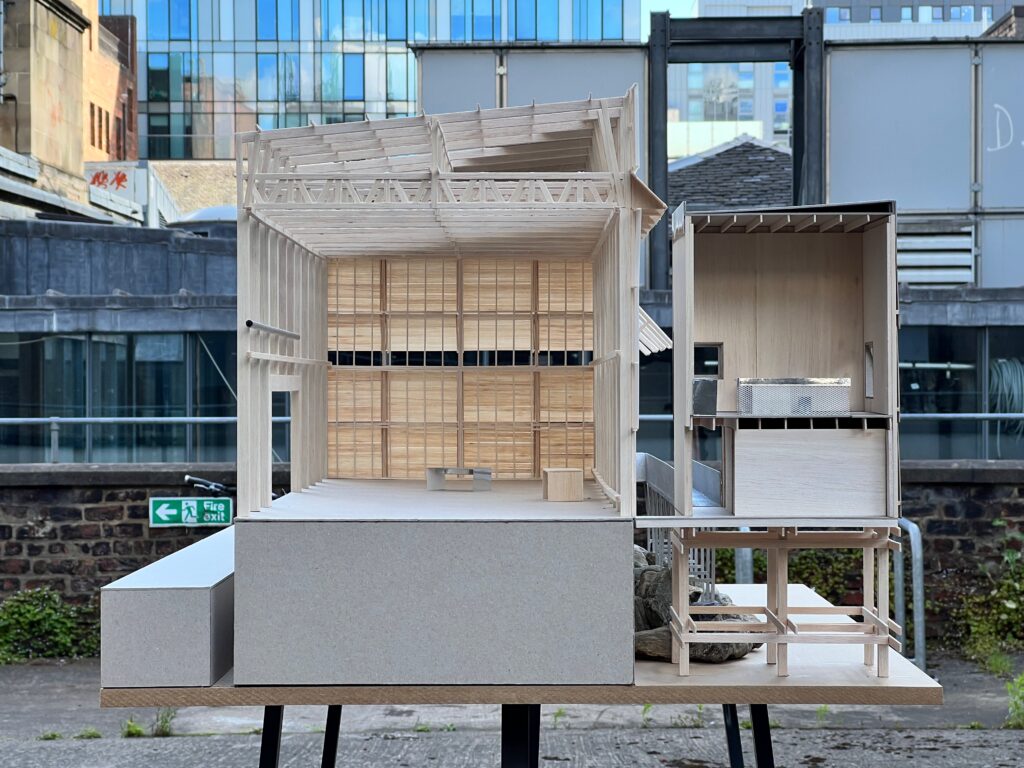
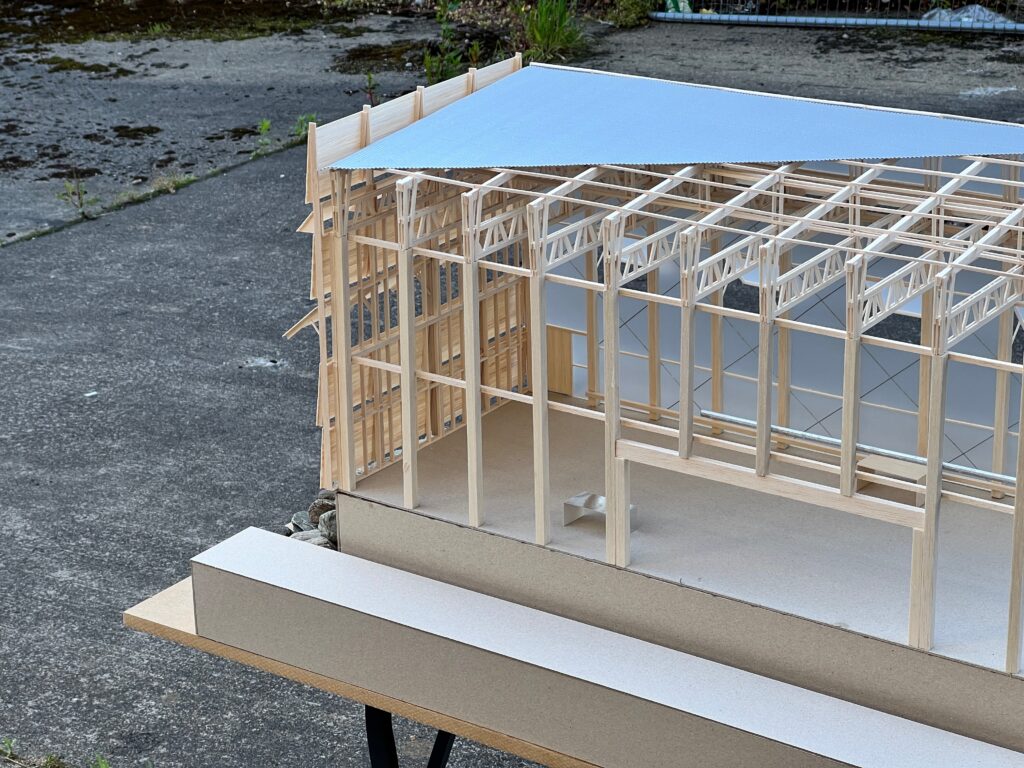
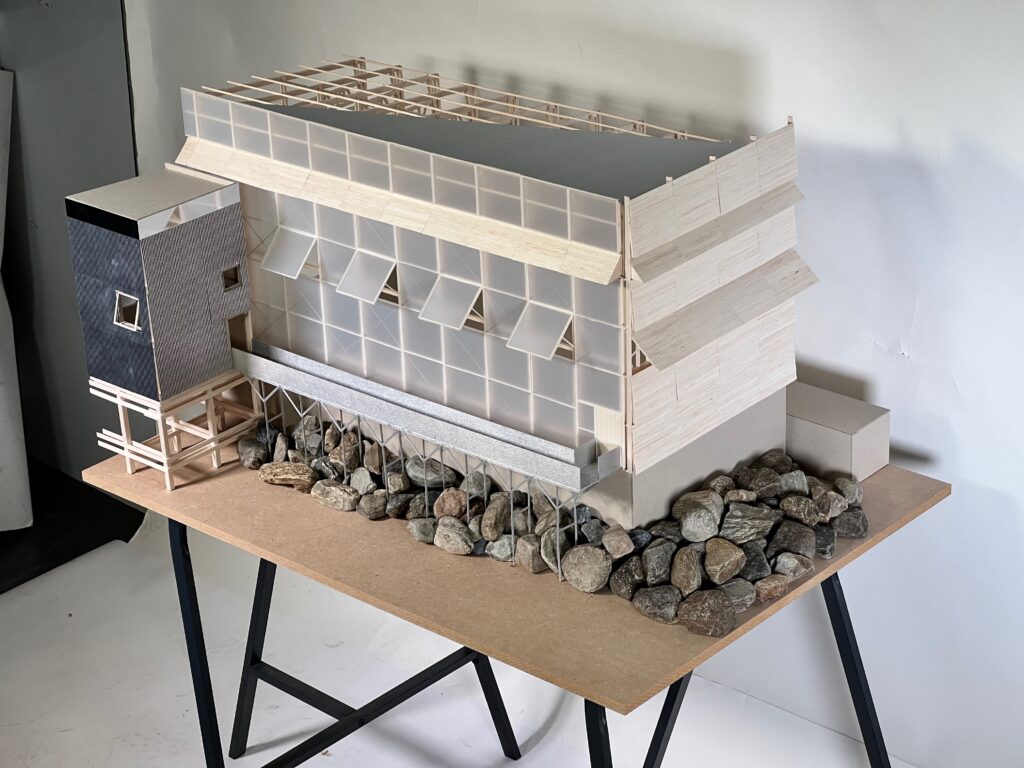
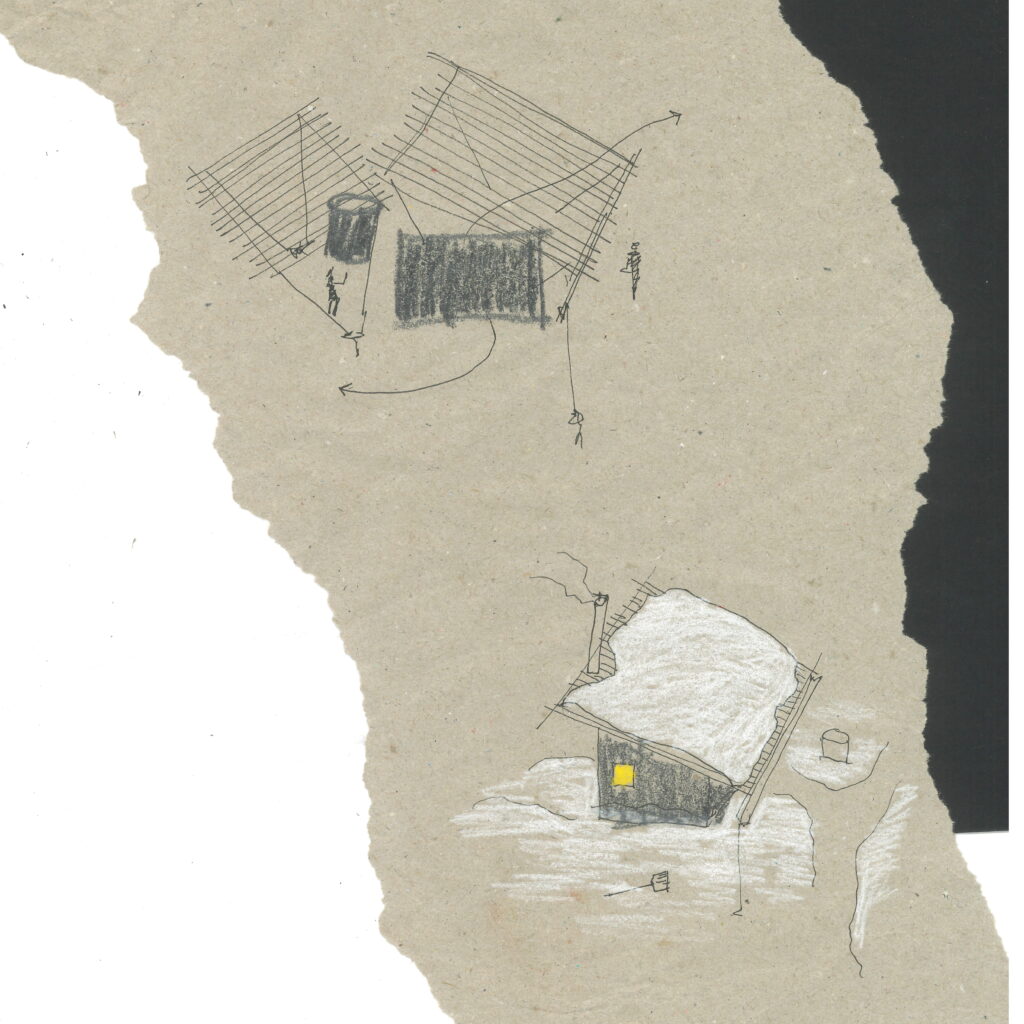
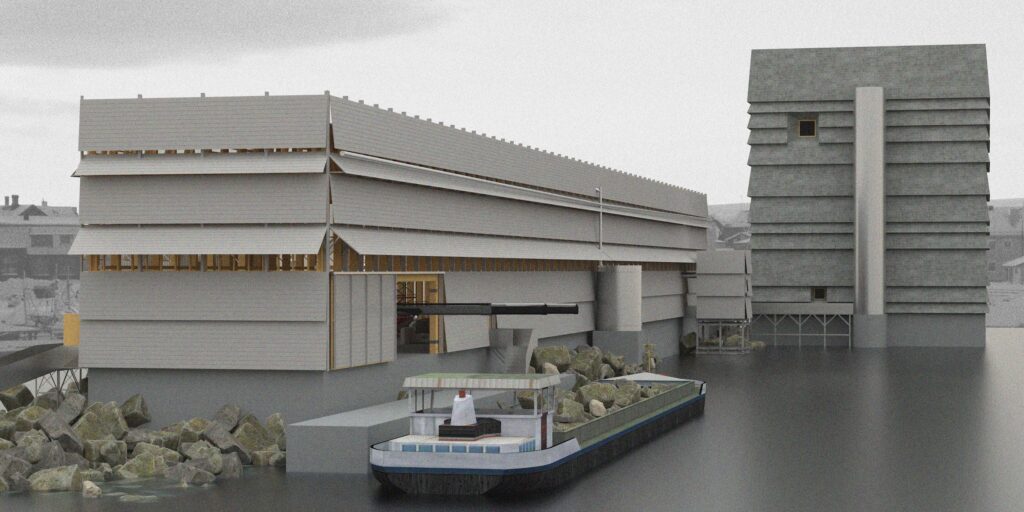
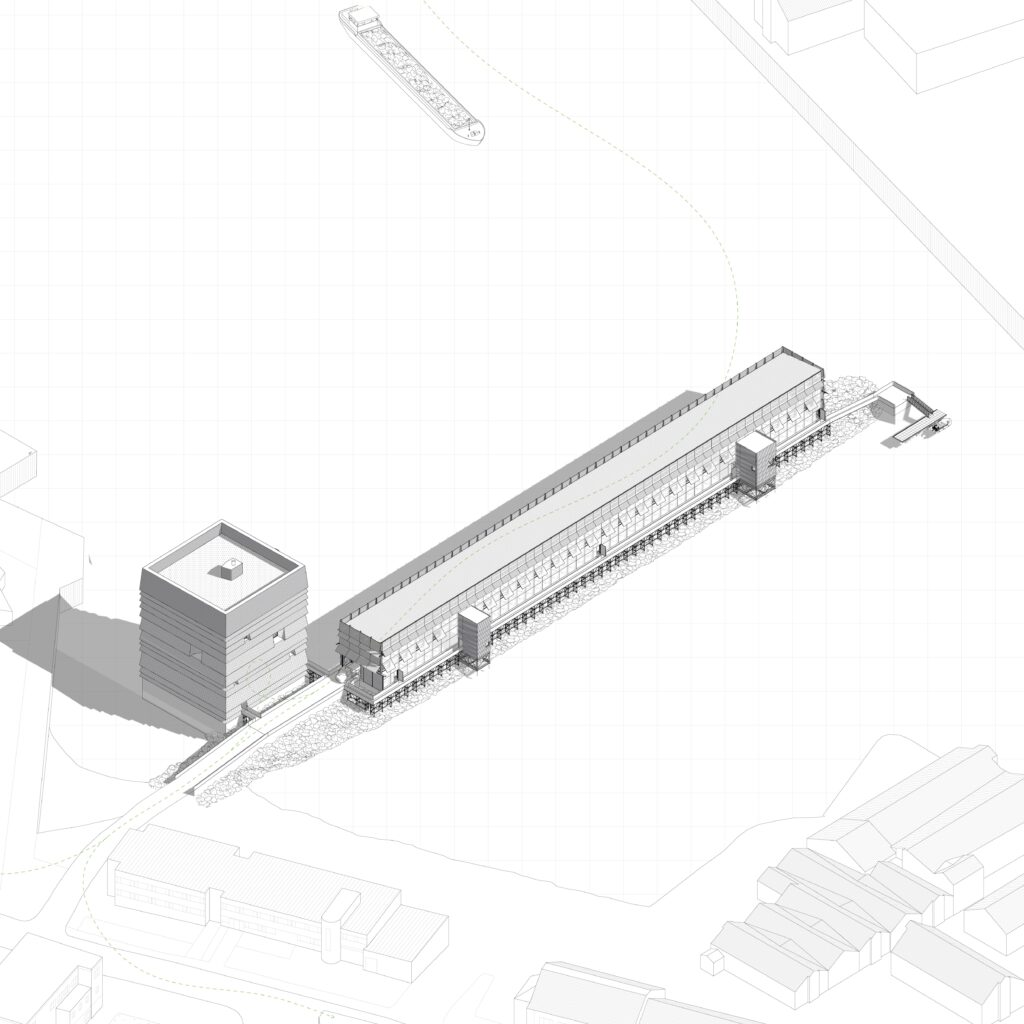
The infrastructure takes the form of two seasonally distinct structures: Firstly a processing facility is constructed out of reclaimed timbers and components salvaged from the many abandoned post-war homes in the town. Set upon a breakwater at the centre of Vardø harbour, the linear form accepts harvested boulders at one end and releases cut and processed stone at the other. Following the activation of this process, Vardø’s first stone building is constructed at its foot. Here some of the processed stone is diverted to be crafted into decorative elements and sculpture by the citizens of Vardø. Over winter shelter can be found within its steadfast embrace and the meticulous task of stone craft can open doors to new cultural expression rooted in the town’s diverse inhabitants and their own stories.
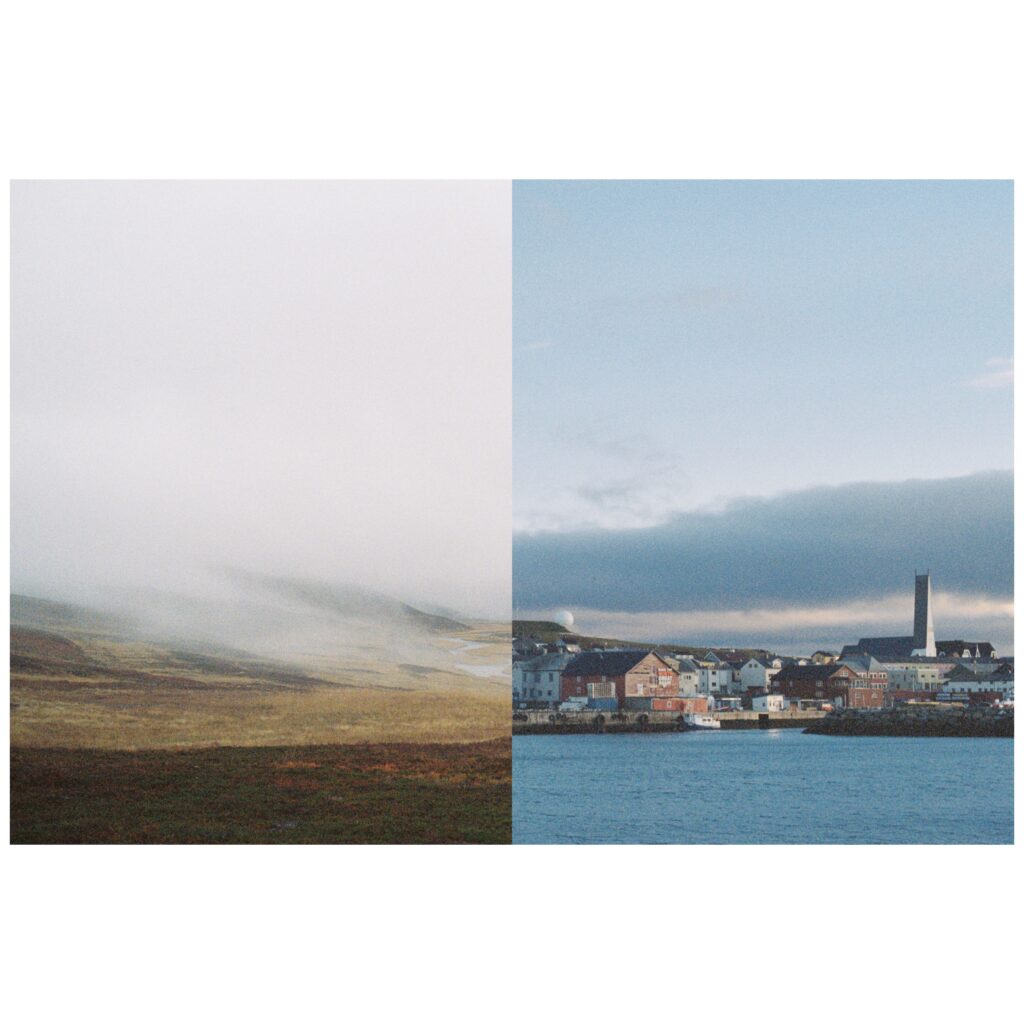
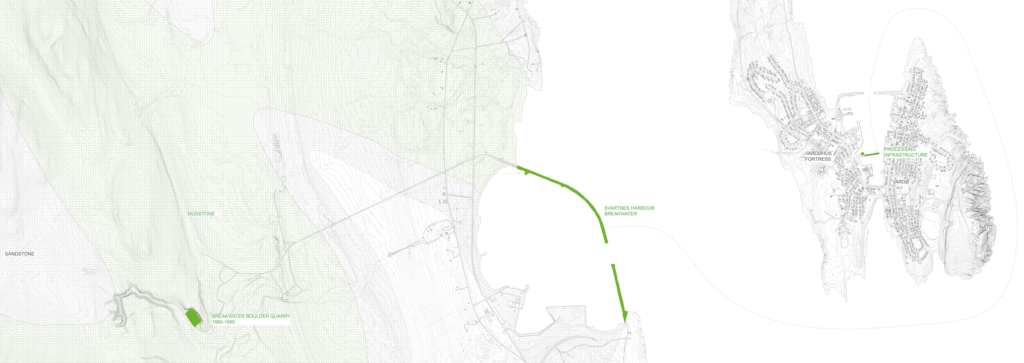
The landscape here is defined by polarities; the vast inland plateau and the numerous coastal fishing communities. The plateau is a landscape shaped by traditional sami reindeer husbandry while the coastal communities are where the majority of the population live. The coast is dotted with villages and hamlets with Vardø being the most significant. The coastal towns and villages are spread along a single road, the E75. This road and the adjacent communications and electricity pylons are critical to nearly all supply lines and life along this coast.
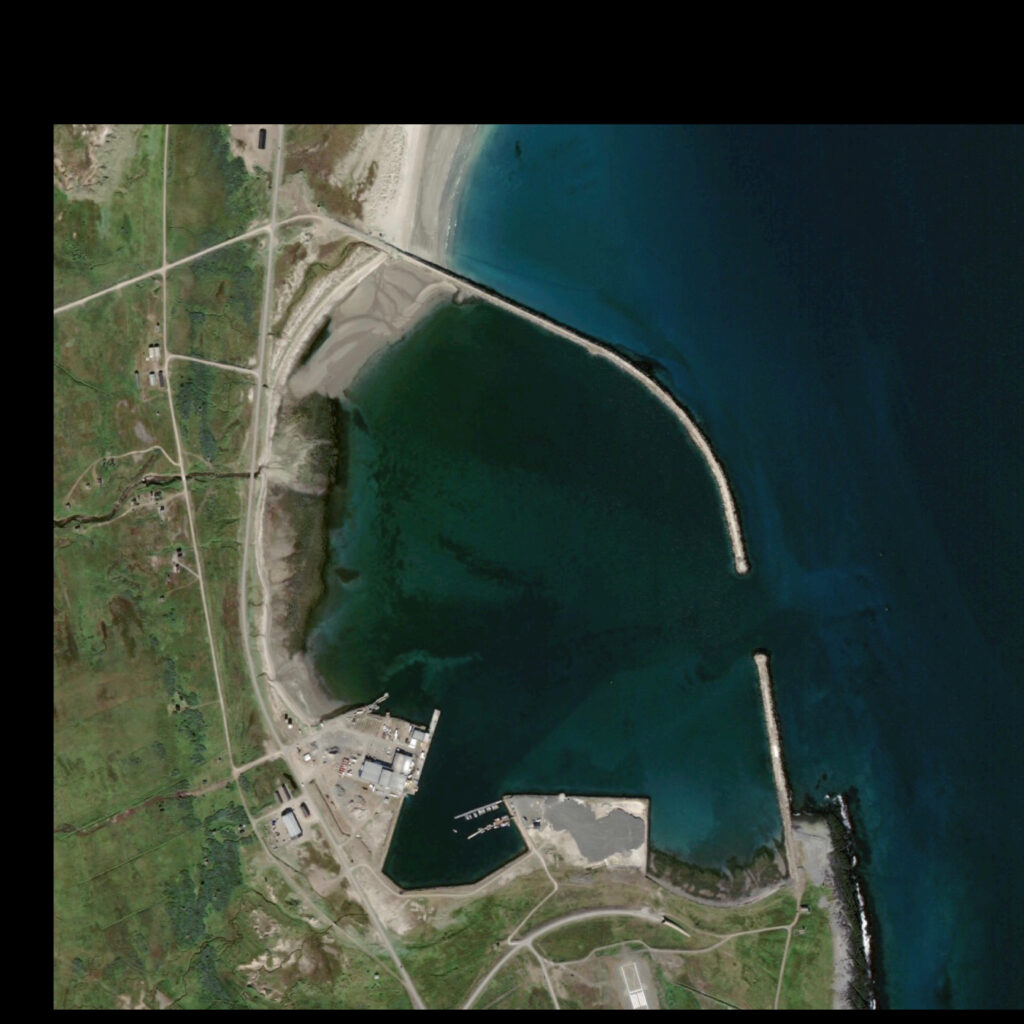
Svatnes Harbour is indicative of failed Neo-liberal decision making in this place and has come to represent the extracitivist forces at play in recent decades. Built in anticipation for an oil industry which never came, it now stands as a redundant white elephant. The boulders from the breakwater will form the basis for the proposed local material ecology.
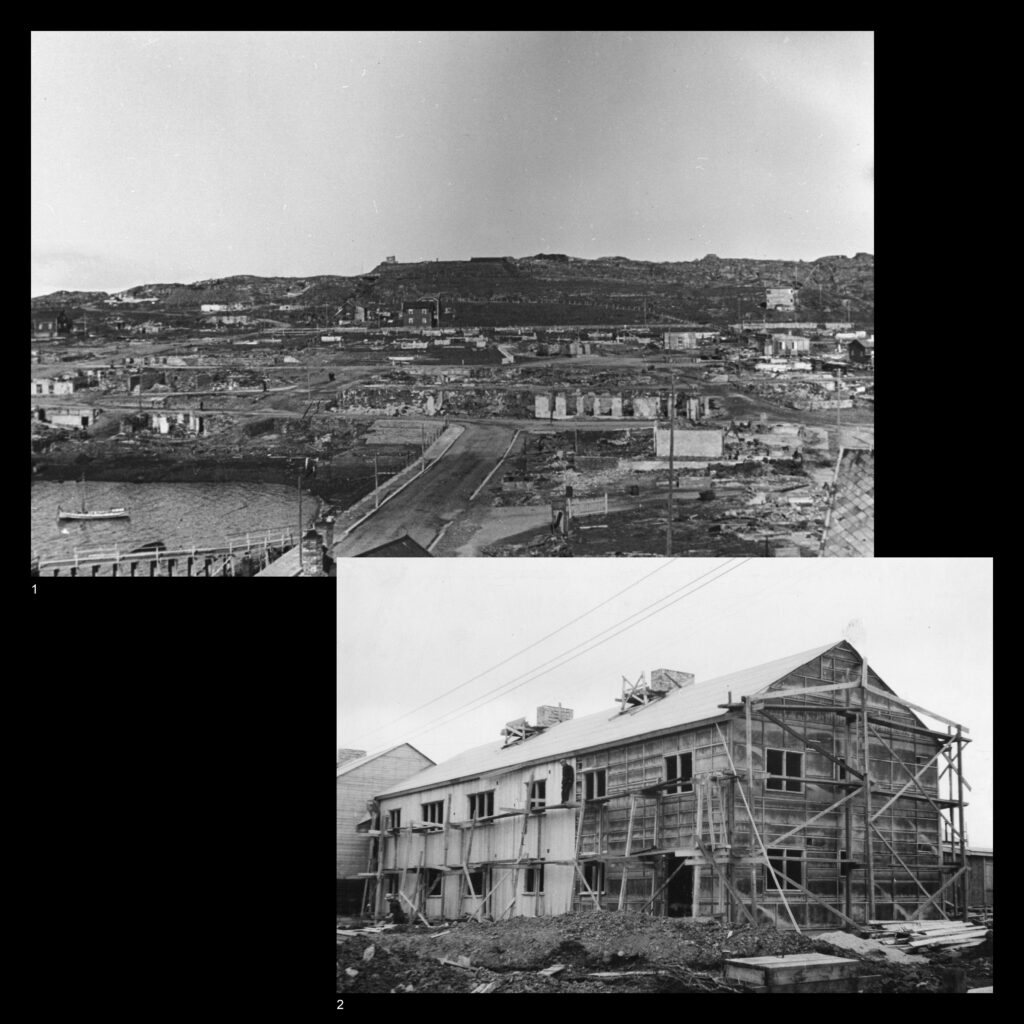
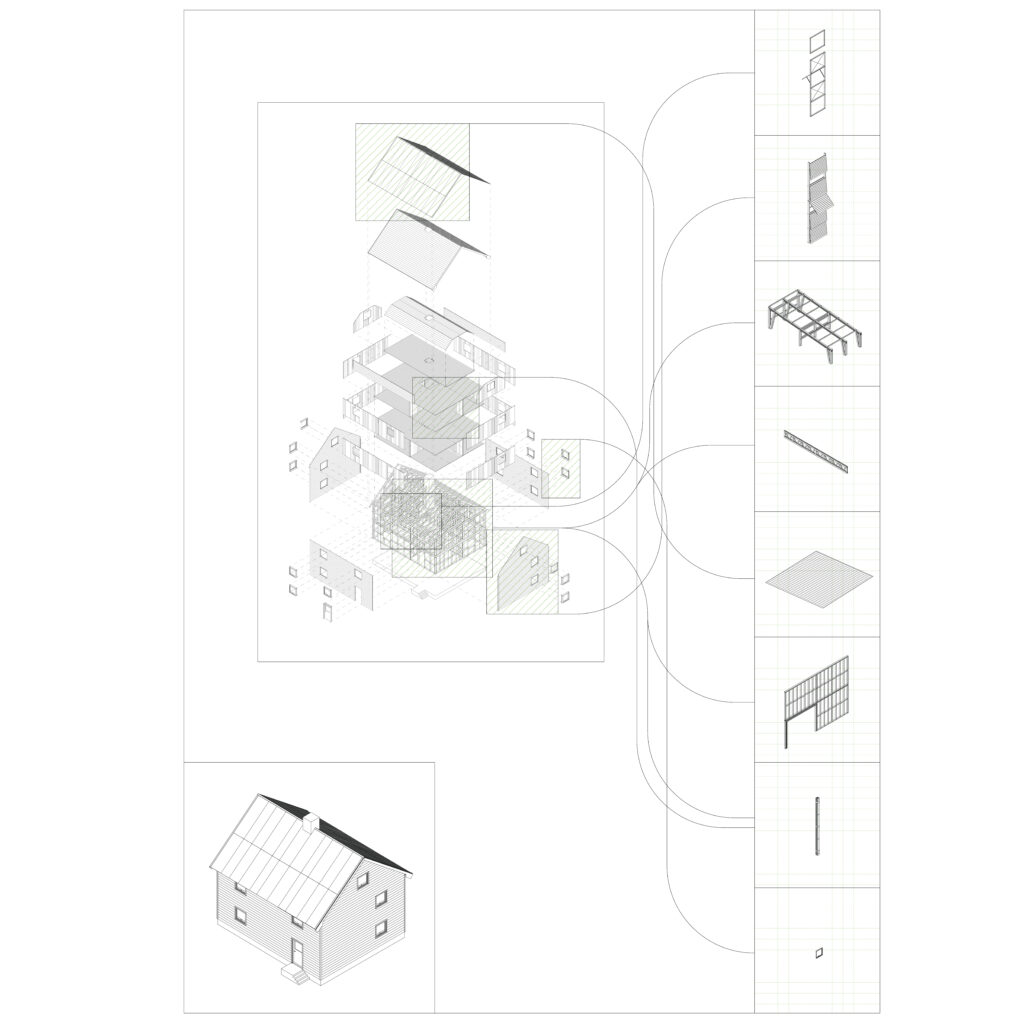
Following the Nazi’s scorched earth retreat, Vardø (and Finnmark) was in ruins [1]. The socialist post-war government in Oslo set about a swift rebuild utilising standard designs and imported components. While successful in rehoming the people of Finnmark, this process is understood now as a further colonial effort. During de-industrialisation, depopulation has occurred leaving dozens of these homes abandoned. This thesis takes these houses as a viable local material supply to construct the infrastructure.
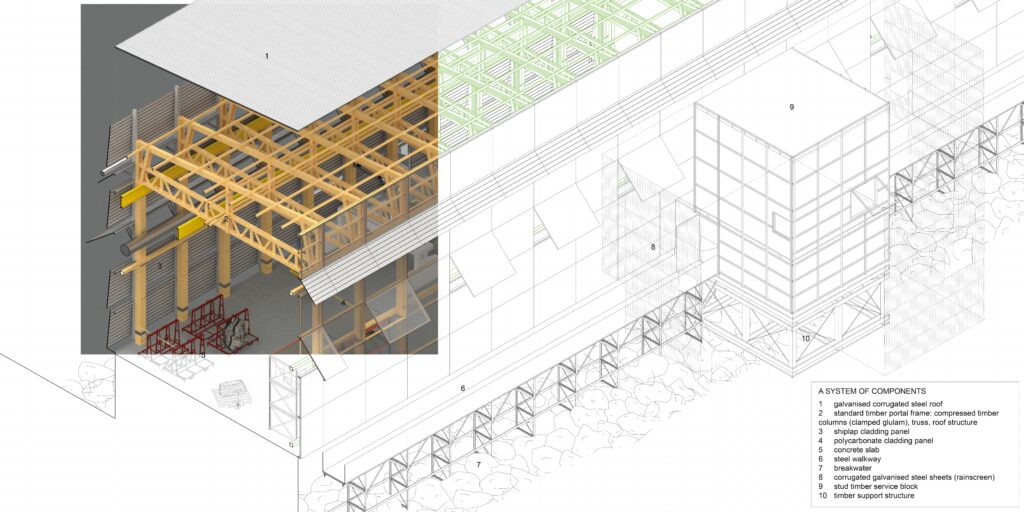
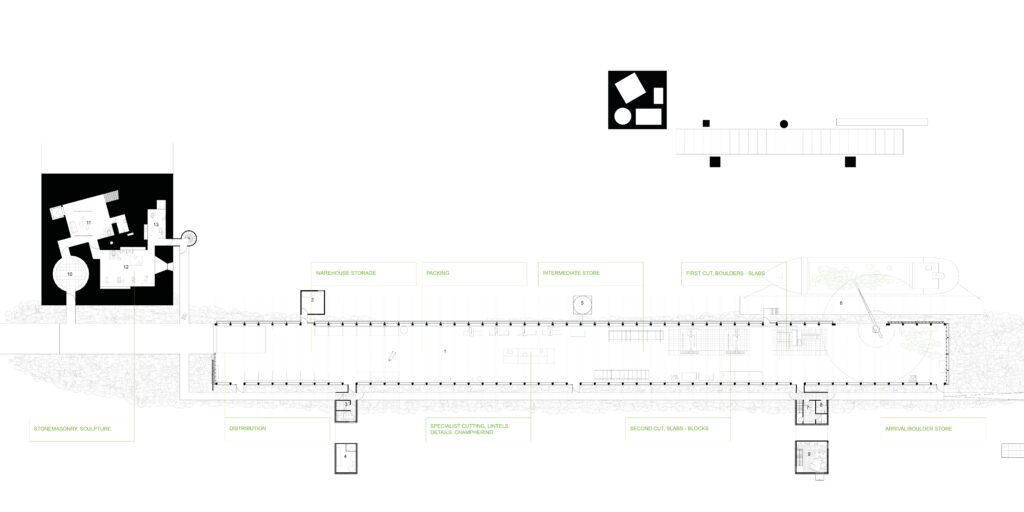
The linear timber form becomes an object in itself set upon its breakwater. It appears confident in its presence and the role it is there to serve. In plan it is joined by service objects on its perimeter. To the north exist services relevant to the functioning of the building and its processes; plant, dust extraction, rainwater collection, and to the south exist services relevant to the well-being of the workers. The planning strategy and modular nature of the architecture stands ready to accept future service objects to suit evolving needs. The winter orientated stone form is the antithesis. It begins as a solid block of load bearing stone. From here the various internal spaces are carved out in plan. Each of these spaces are serviced further by yet more subtraction. The internal spaces begin as insular stonemasonry workshop spaces on the lower floors before opening and becoming double height at the top where over-winter civic spaces exist. These spaces remain steadfast, intimate and with a domestic feel.