Jack Garvin
(he/him)
A recent graduate from the Mackintosh School of Architecture, Jack is passionate about material cultures, language and analogue creation with his research exploring how embodied methodologies of architectural preservation can reveal and uphold intangible cultural heritage. Through his Undergraduate and Postgraduate studies at GSA, he also undertook a semester abroad at ETSAM (Escuela Técnica Superior de Arquitectura de Madrid) and saw professional practice in Dundee.
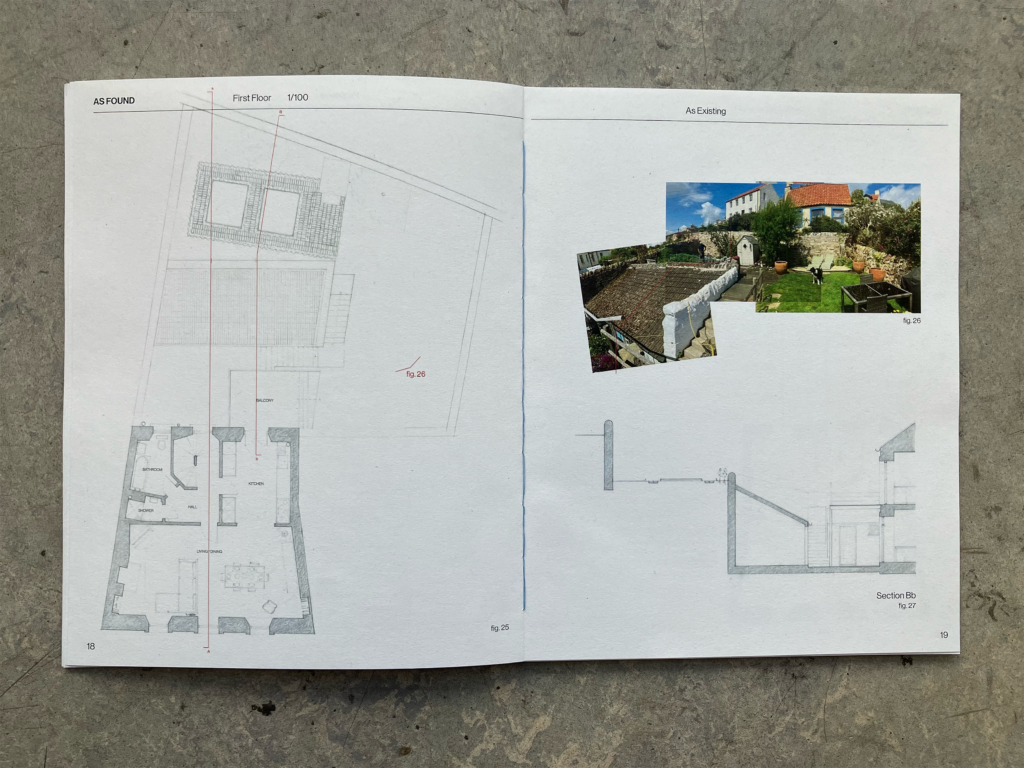
This research project is situated across the territory of material cultures and the role of memory and perception in architectural remaking; it identifies a small, early 19th-century former wash house in the East Neuk of Fife as a repository of personal and collective lived experience(s) for reimagining.
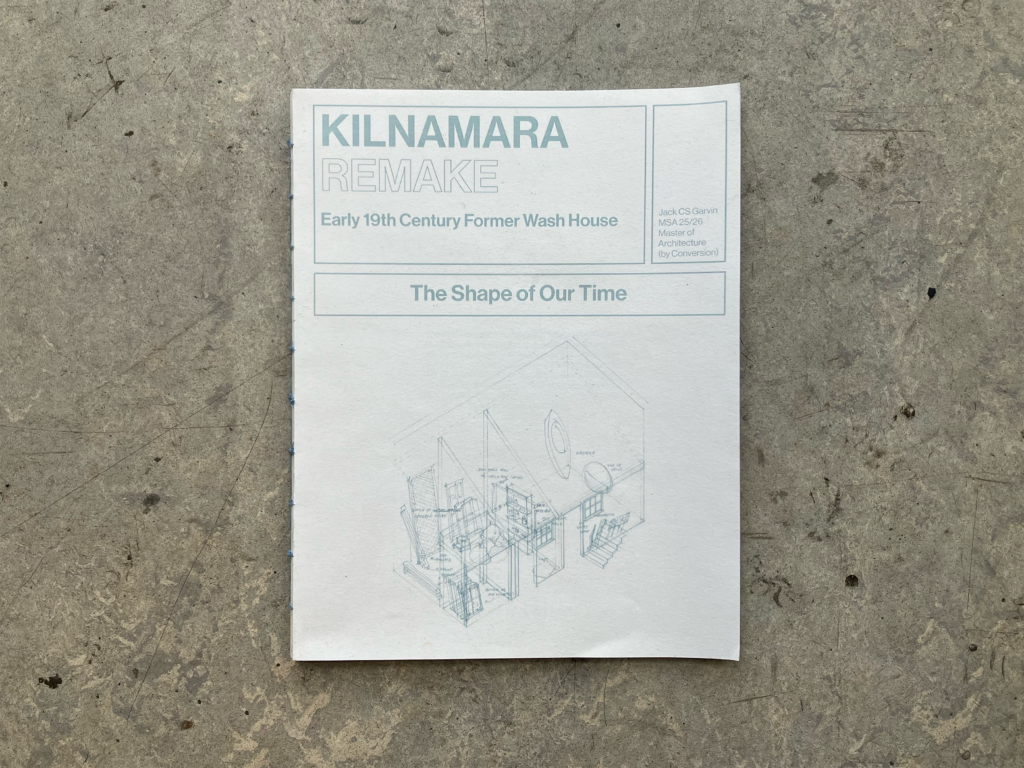
Kilnamara, The Shape of Our Time
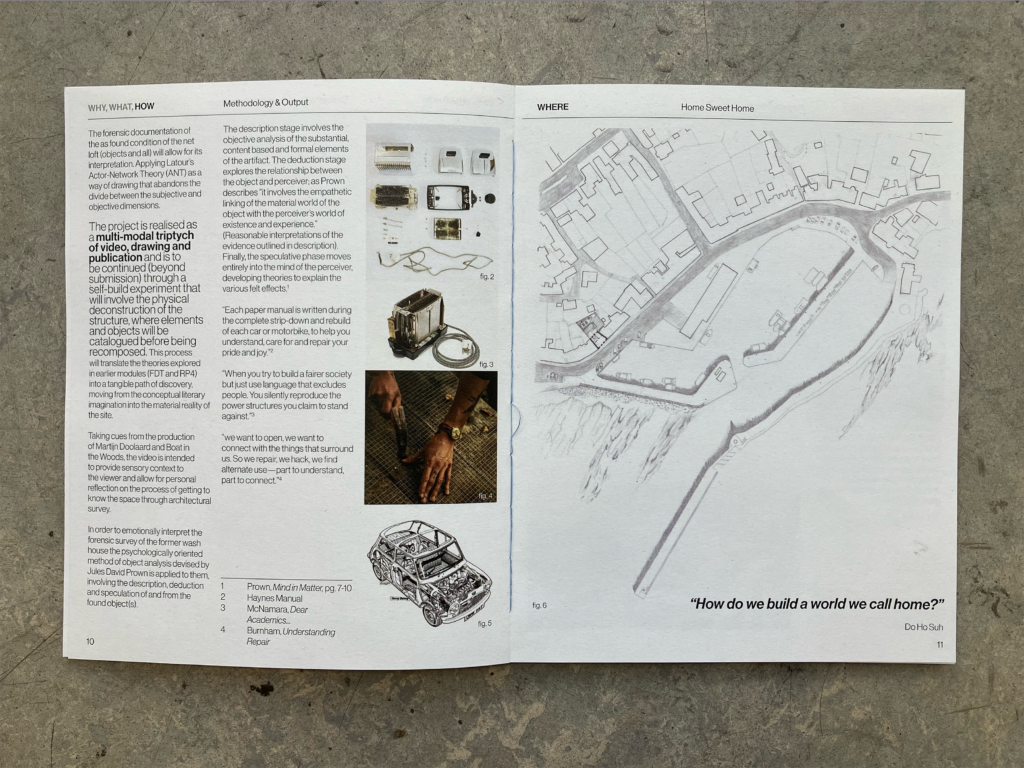
The thesis argues for a slow, circular architecture—a progressive spatial practice that places the forensic documentation and psychological engagement with a building and its objects as agents for creation. Driven by ecology, economy, and emotion, this argument positions the material cultures of place as a critical, ethical site for future works, advocating for care and continuity in the inhabited environment. The research methodology takes an archaeological and ethnographic approach, moving through the study of things to the study with things. Drawing from Sarah Pink’s Doing Sensory Ethnography, Bruno Latour’s Actor-Network Theory and Jules David Prown’s Mind in Matter I document – and interact with – the whole through its parts in a manner that abandons the binary divide between subjective experience and objective data. The result is a meticulous sensory depiction of the net loft in transition, to test how the theoretical attitudes I have developed through my studies may manifest in practice. The project is realised as a multi-modal triptych of film, drawing and publication but is to be continued (beyond submission) through a self build experiment that will involve the physical deconstruction of the structure, where every element and object will be forensically catalogued before being recomposed.
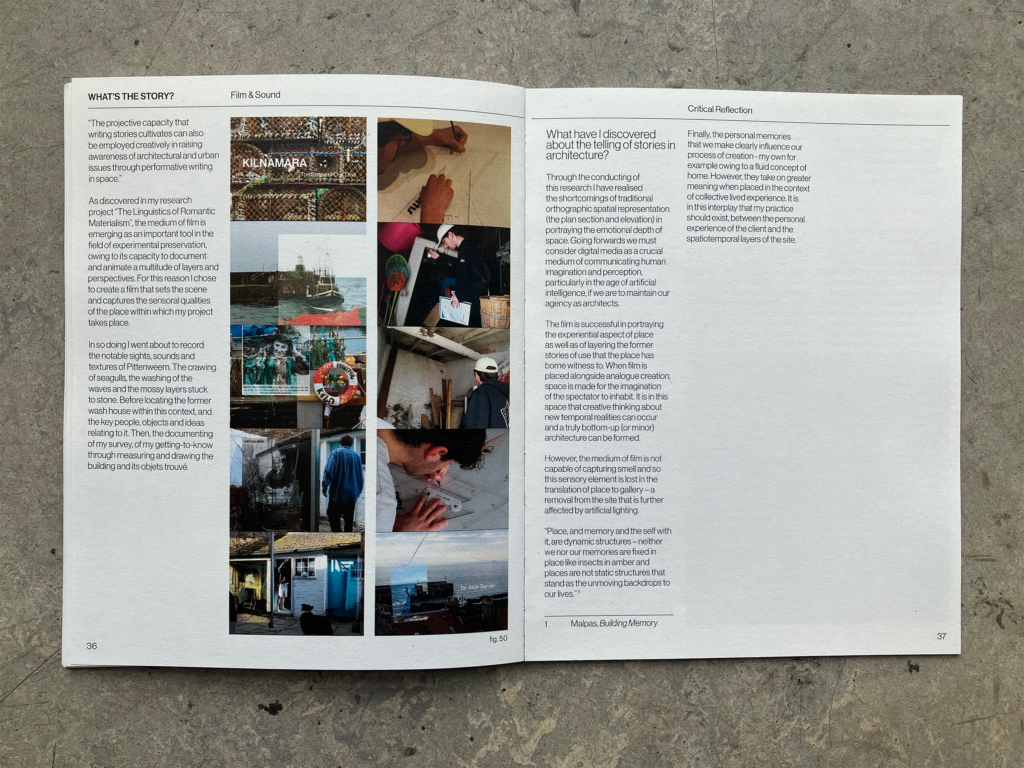
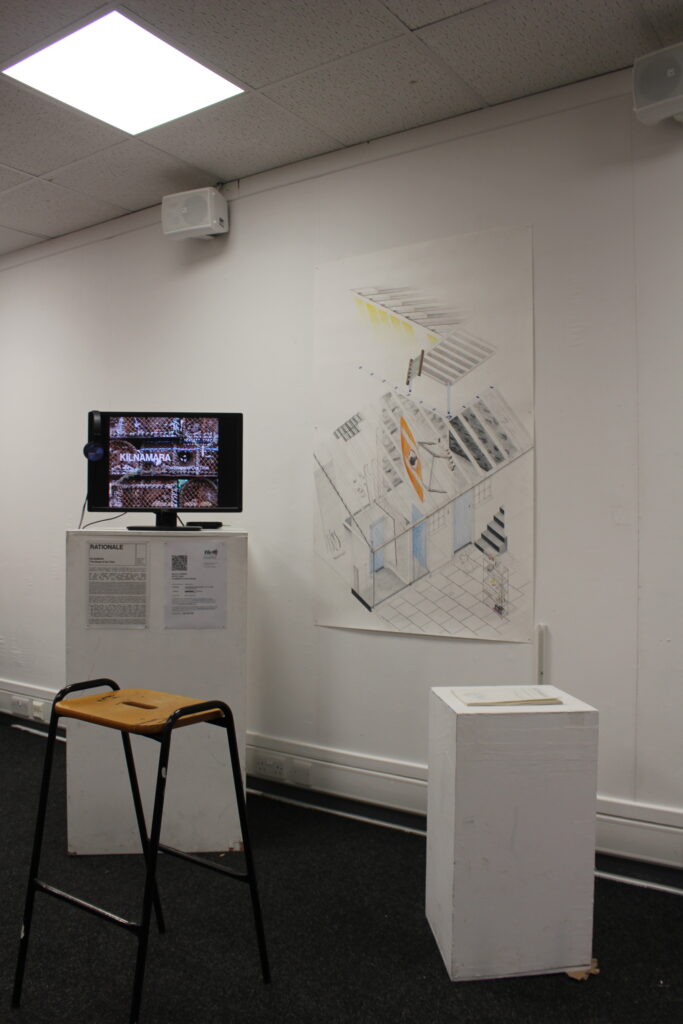
Video & Sound: The video (and associated soundtrack) engages the viewer, documents the essential sensory context and layers lived experience over the place as found.
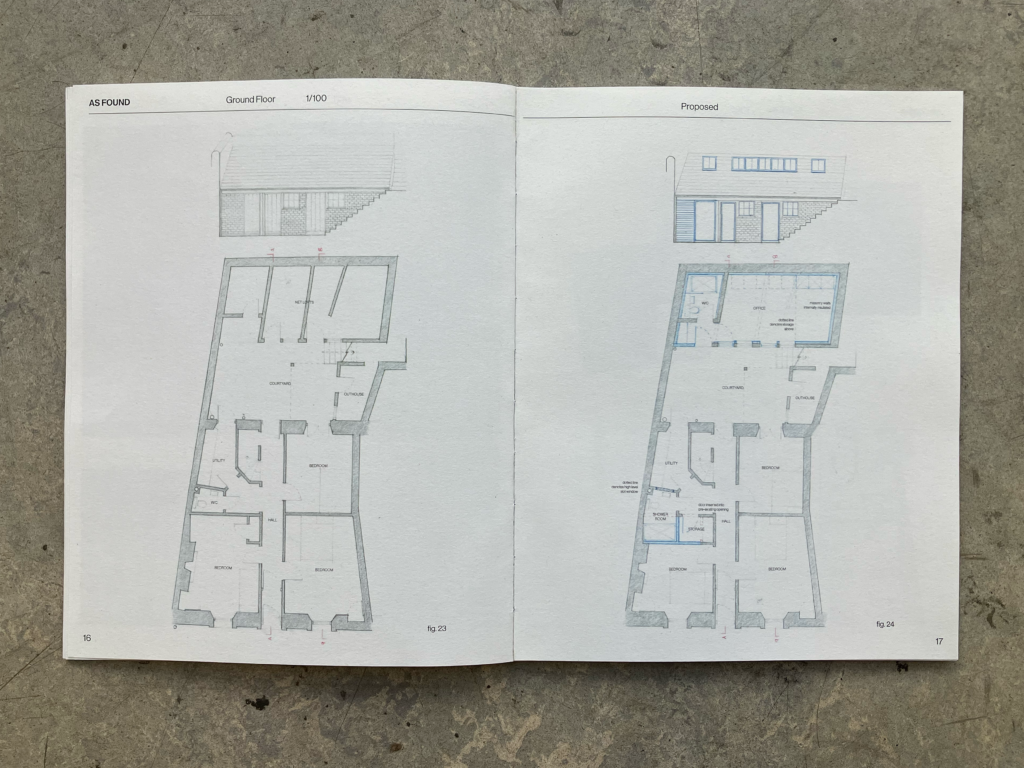
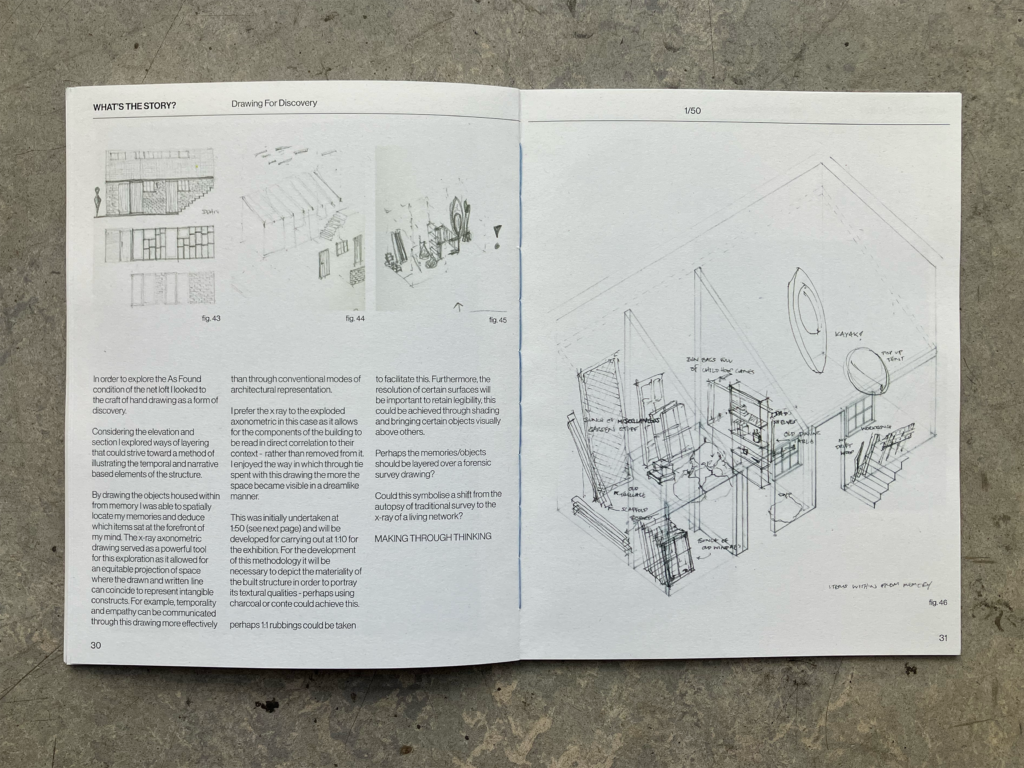
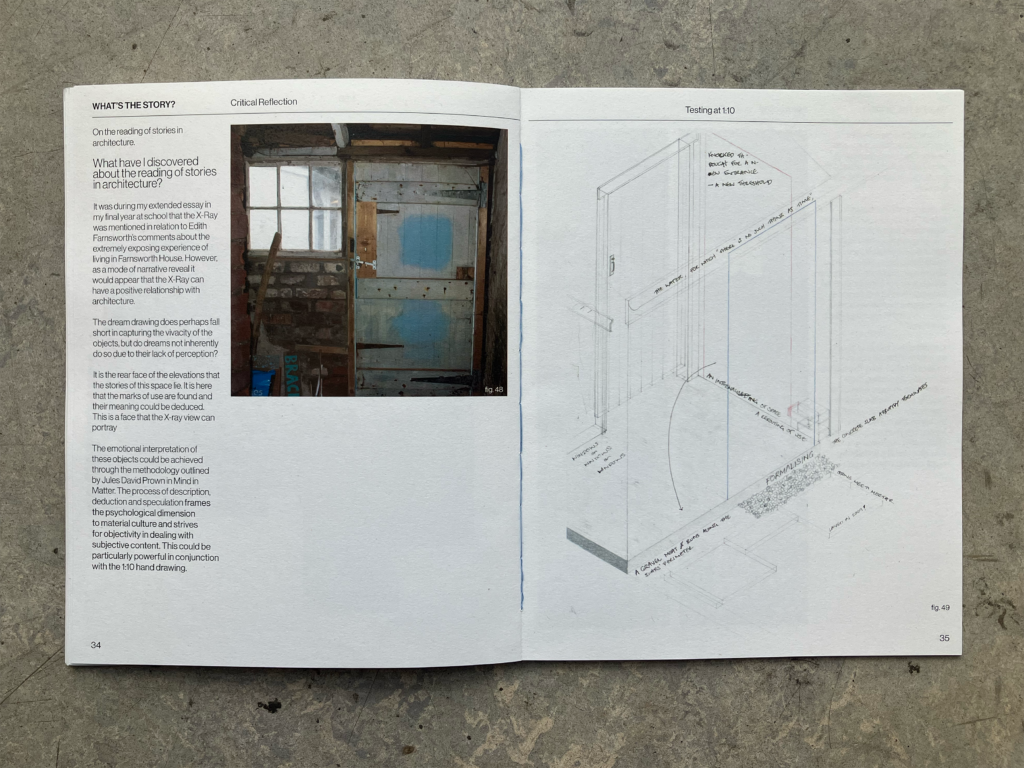
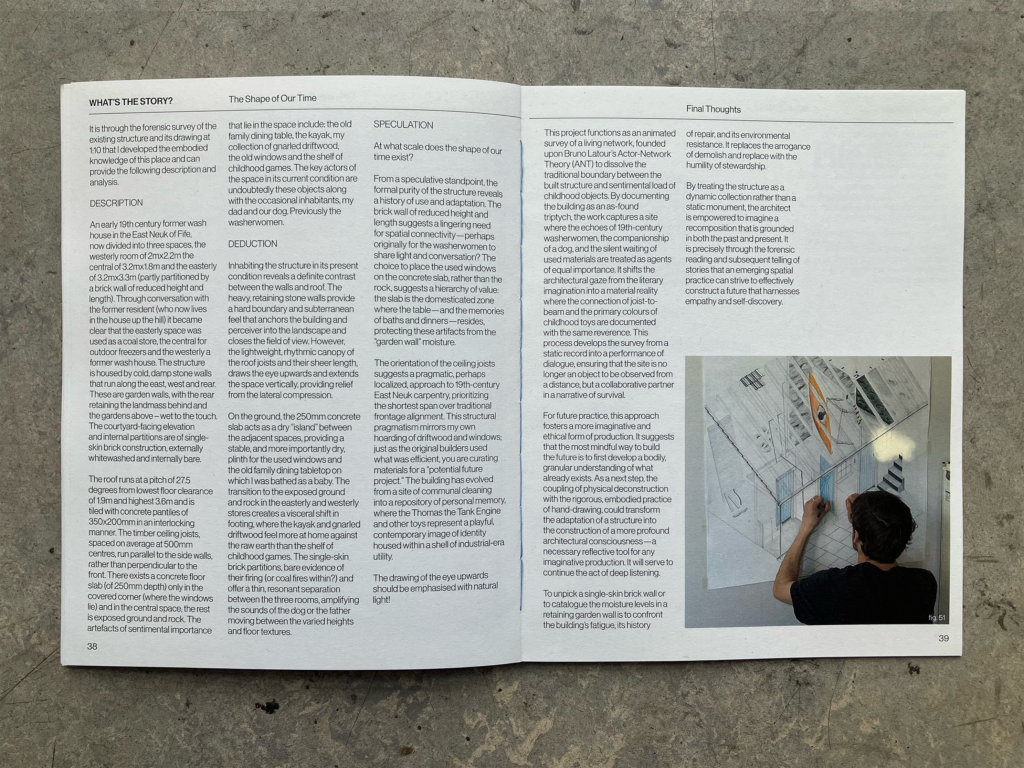
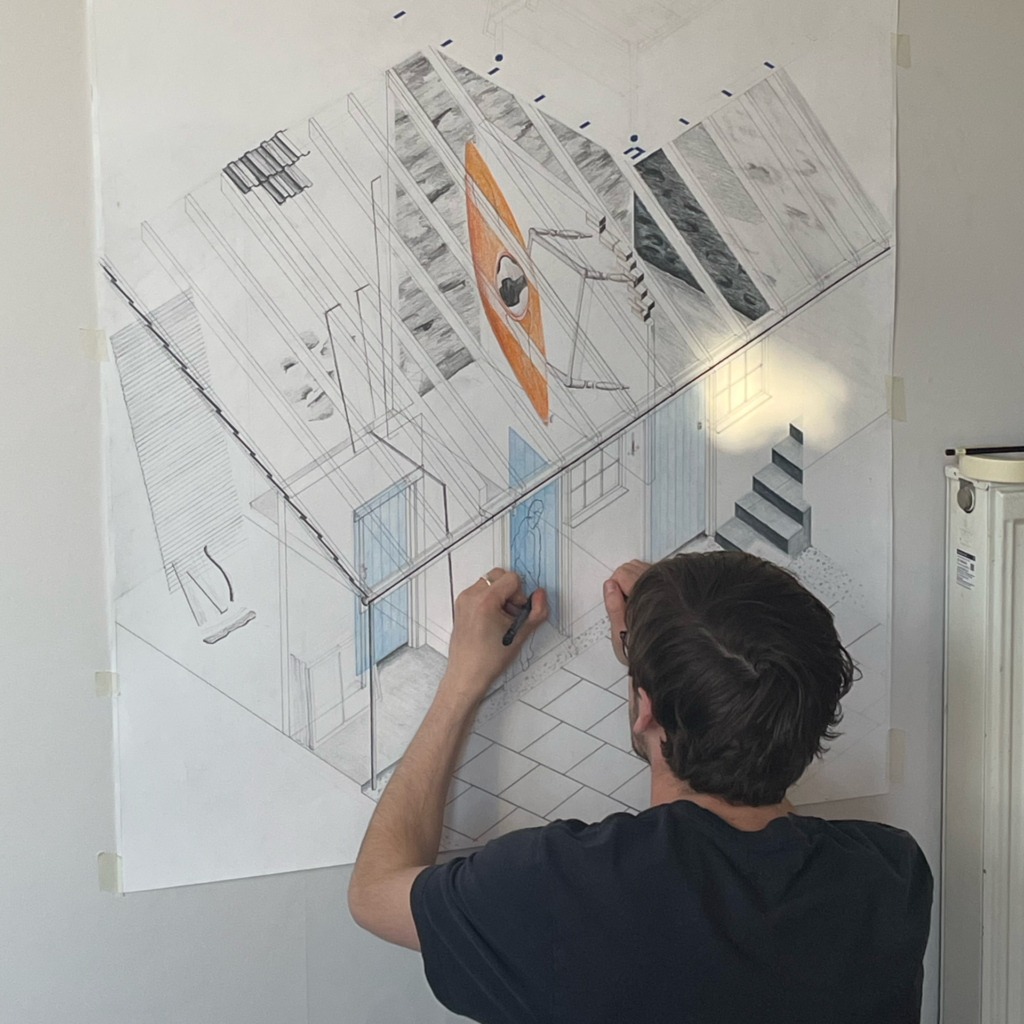
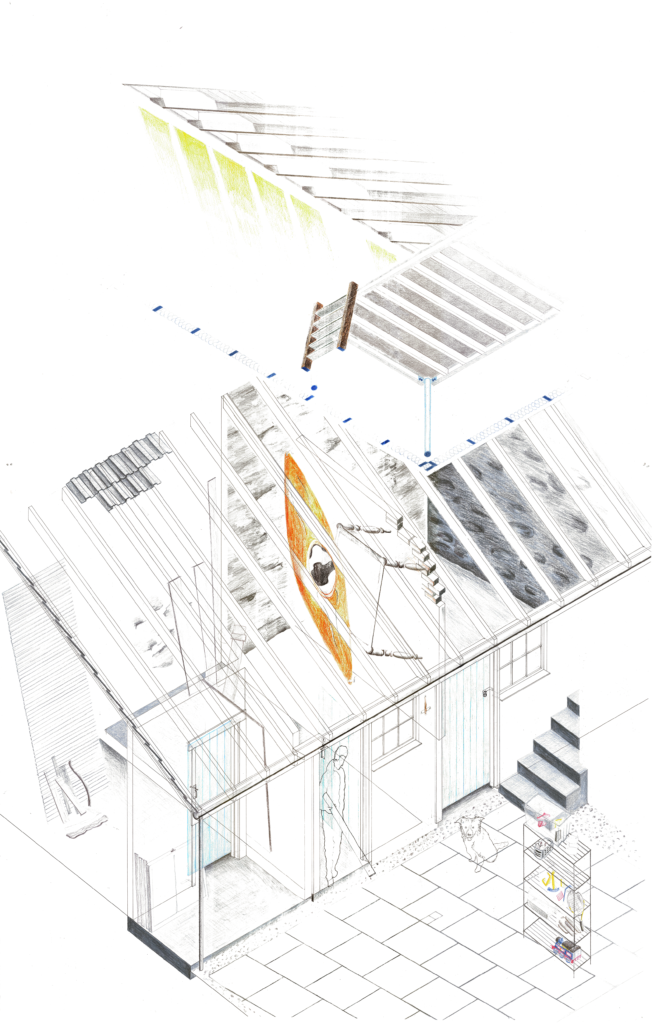
Hand Drawing (1:10): A comprehensive record of the existing as network is presented as a top-down 1:10 X-Ray Isometric drawing. Future uses are projected above in bottom-up projection with the inflection point at eye level in order to achieve a dynamic spatial representation.
The Journal: Elected for its analytical rigour and accessibility, this format translates the project into a democratic, instructional publication for the layman/woman. Adapted in format from a Repair Manual to a Restorying Journal this publication is to be continually referred to in future remaking works.
900m x 1400mm
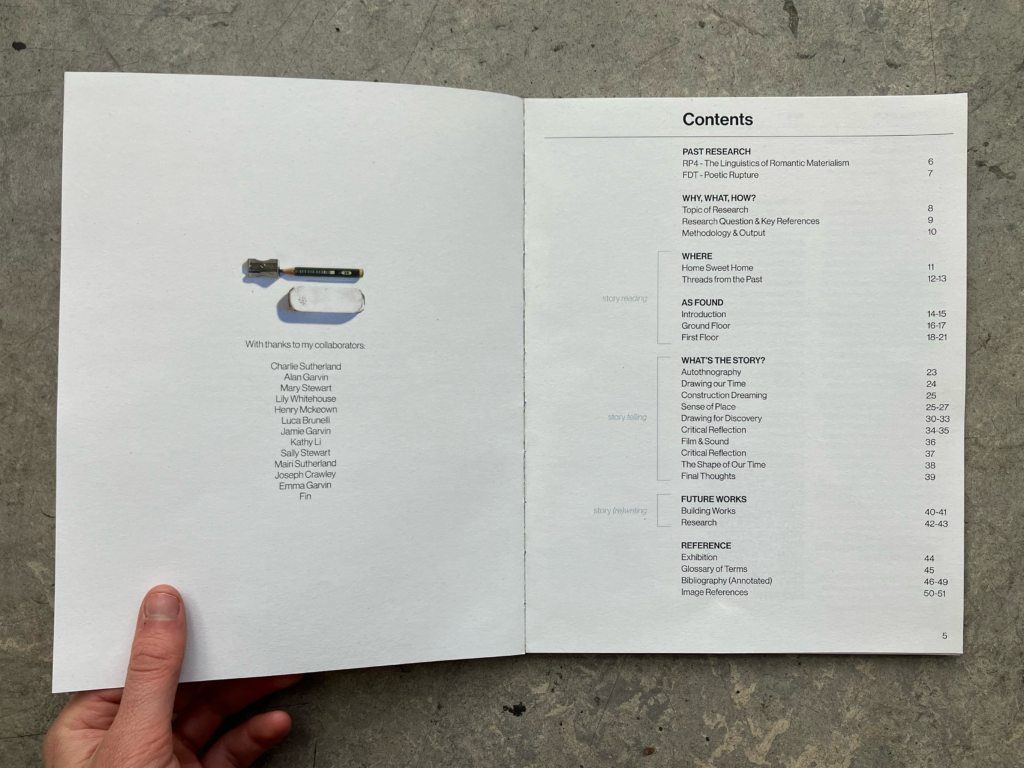
Handbound Publication
How can a multimedia application of Actor-Network Theory dissolve the binarity between structural elements and sentimental artifacts to portray the building as a living, democratic network of agents?
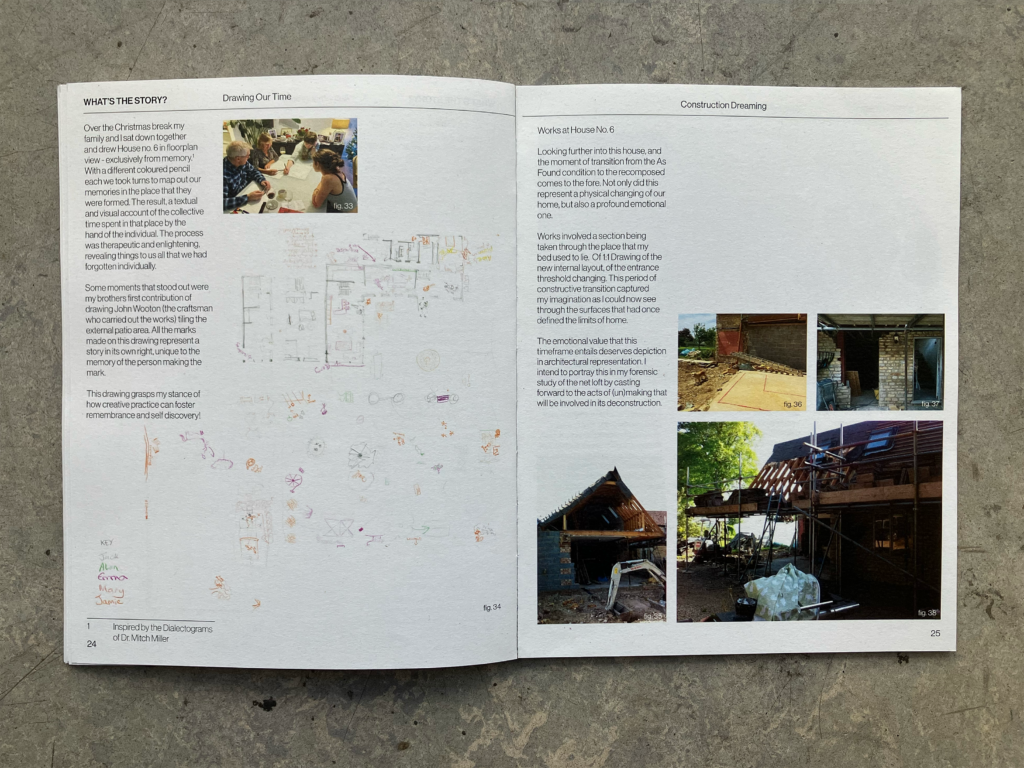
To what extent could an embodied methodology animate the architectural survey and reveal personal/collective lived experience?
Reflecting on the agency of the architect in an era of environmental and economic constraint, this project disassembles its own research process for exhibition to evaluate its effectiveness as a tool for future practice. It concludes that the act of taking things apart—both metaphorically and physically—is a necessary reflective practice for a more mindful, imaginative, and ethical form of production. By suggesting that the most mindful way to build the future is to first develop a bodily, granular understanding of what already exists, the project treats the structure as a dynamic collection rather than a static monument. Ultimately, this empowers the architect to imagine a recomposition grounded in both the past and present, employing a deep listening and forensic reading of place to effectively construct a future that harnesses empathy and self-discovery.