Hannah Serena Krause
(she/her)
I am a fourth year exchange student at GSA, originally from the Bauhaus University Weimar, Germany. I am very glad that I was offered the opportunity to further develop my previous experience and knowledge in an international academic environment while discovering new perspectives and challenges. In the last year I was expanding my academic and professional skills, but also growing personally.
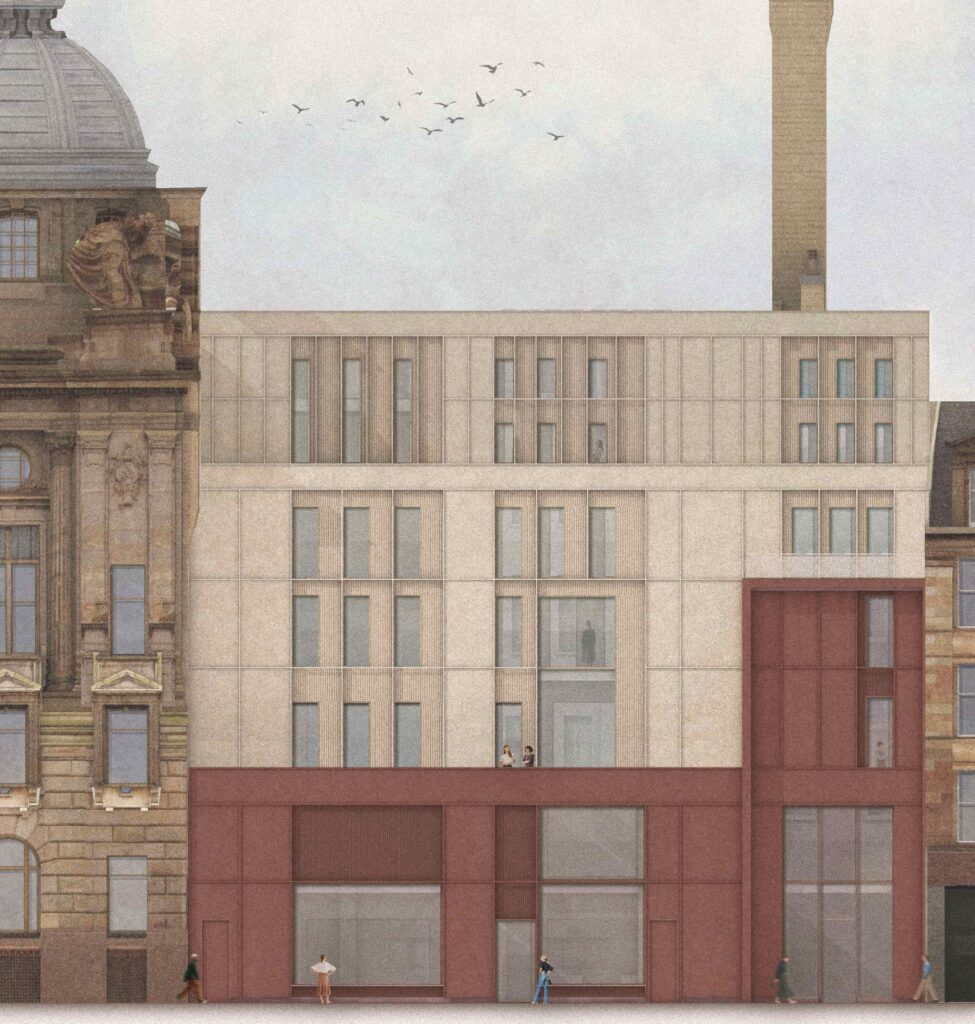
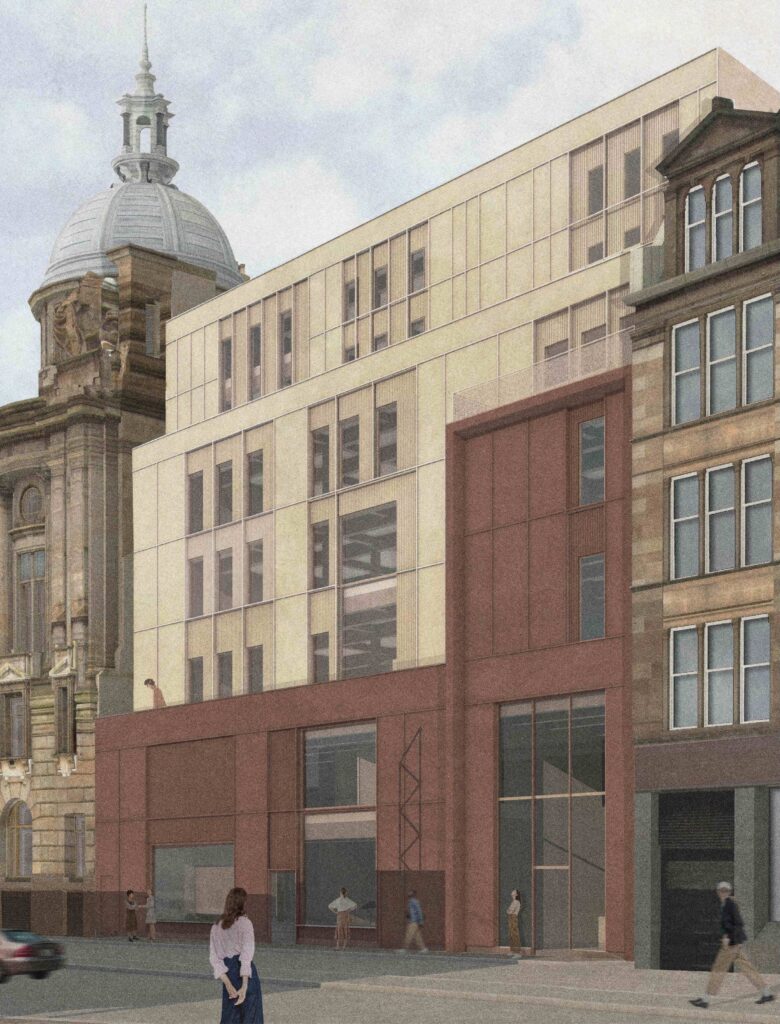
My Urban Building project was informed by understanding Glasgow as a city, Debate as a Process and Architecture as a framework.
Urban Building – Using debate as a tool to shape the city
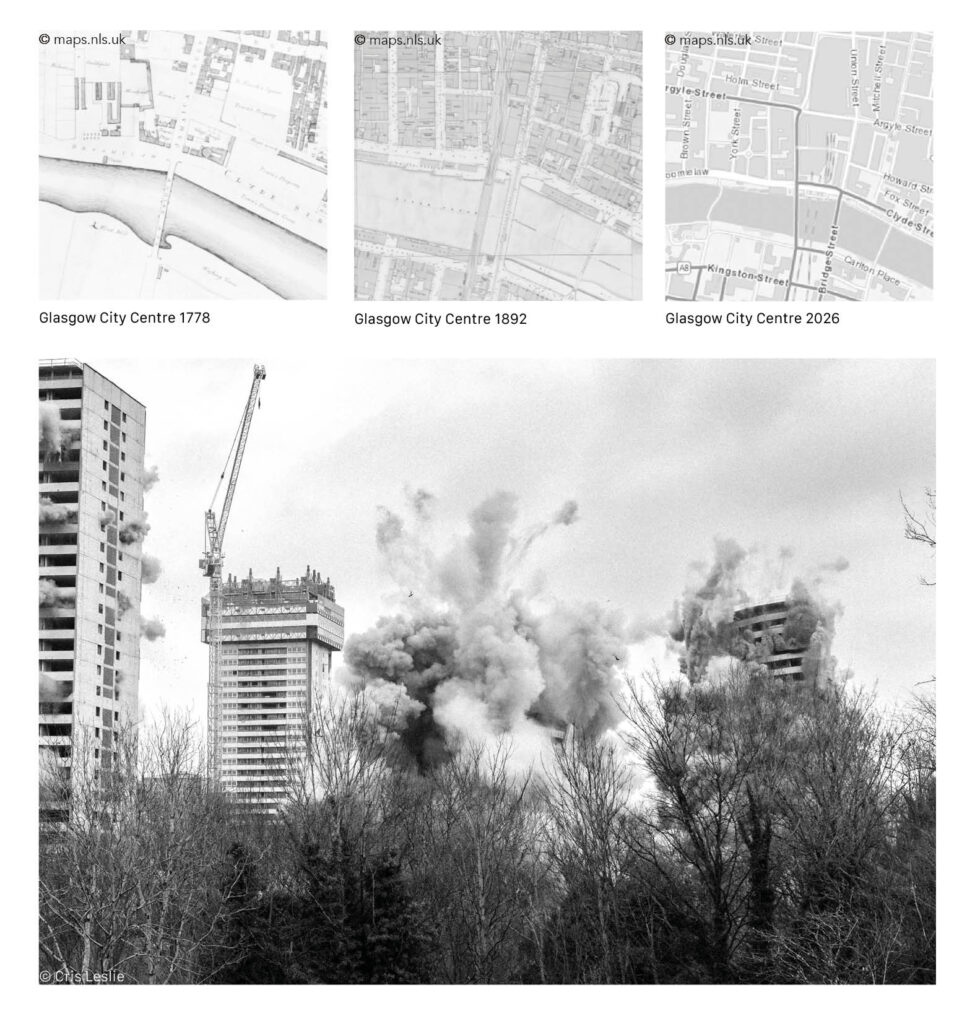
Glasgow is a city historically shaped by large-scale, top-down planning interventions. This was showed by a disconnection between decision-making and public involvement. This project takes the position, that civic participation and shared authorship of a city must be spatially embedded within the architecture of the city. Instead of treating civic engagement as an abstract or exclusively institutional process.
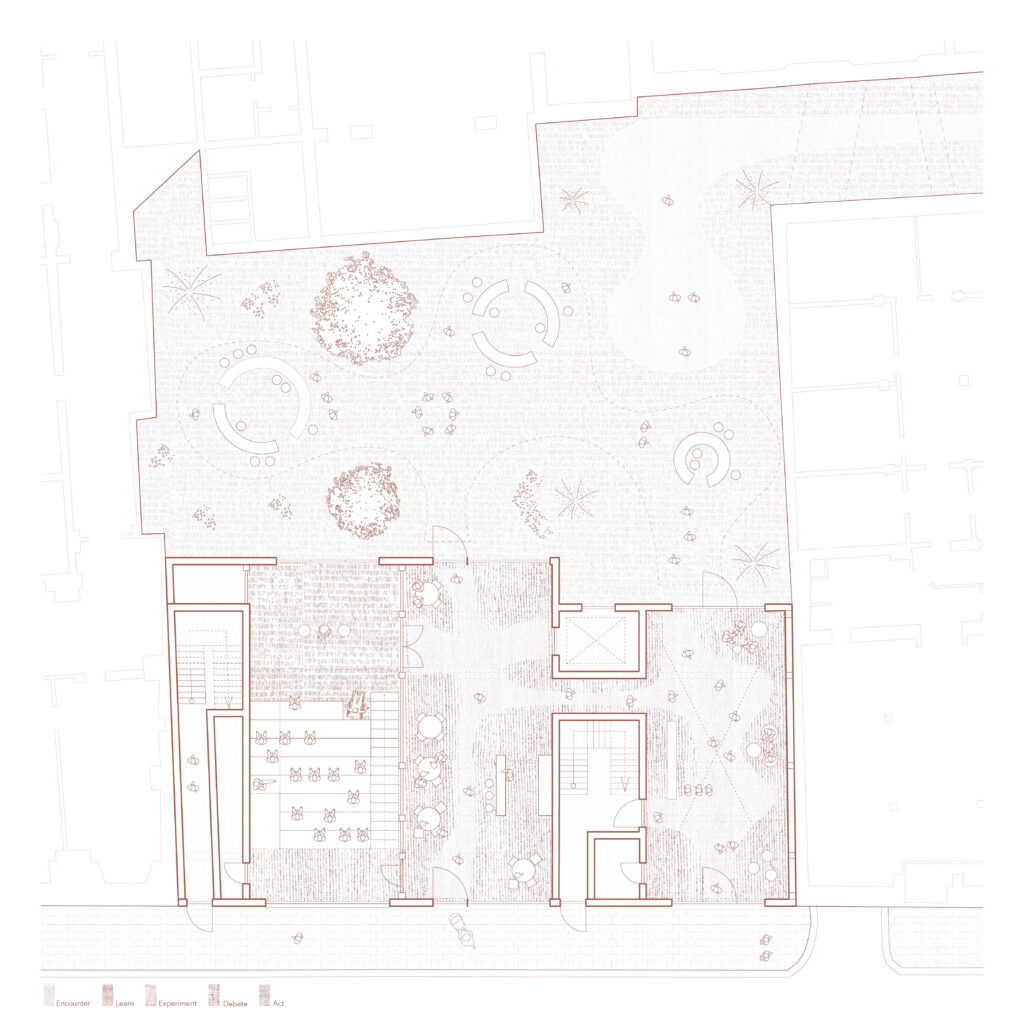
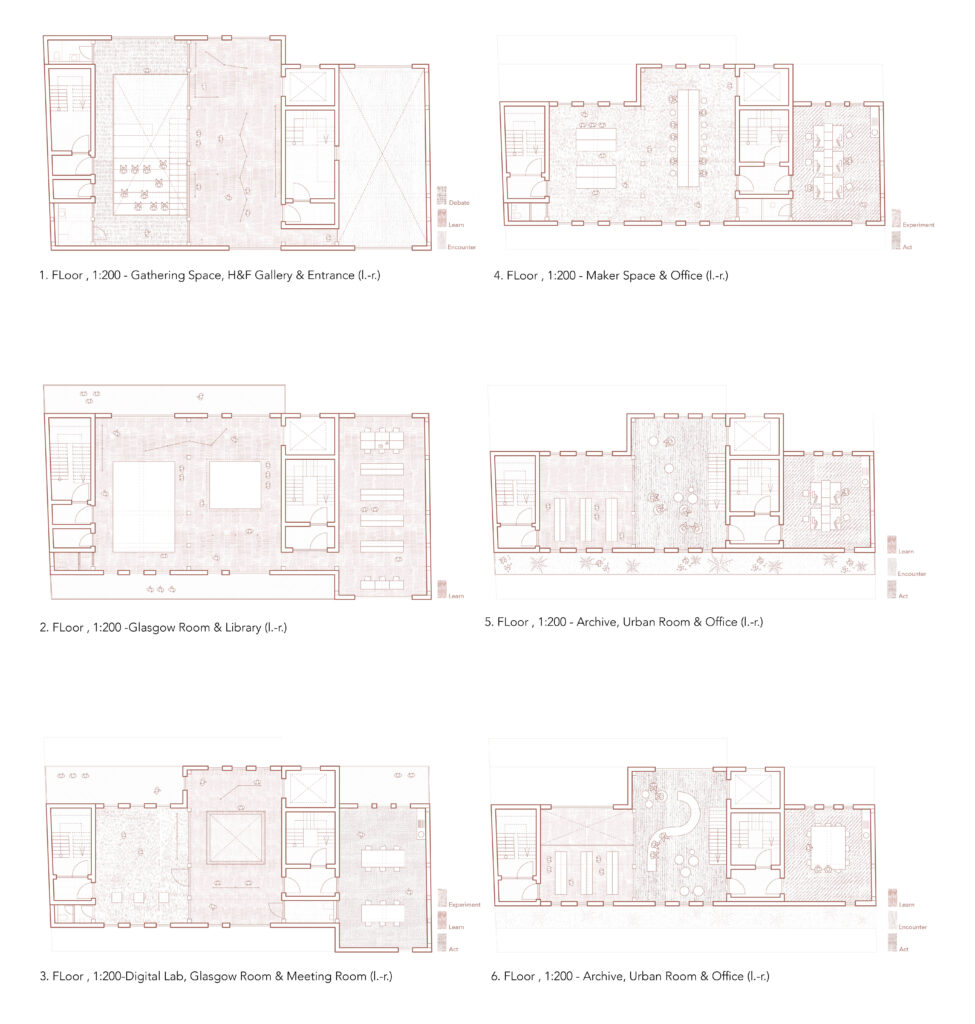
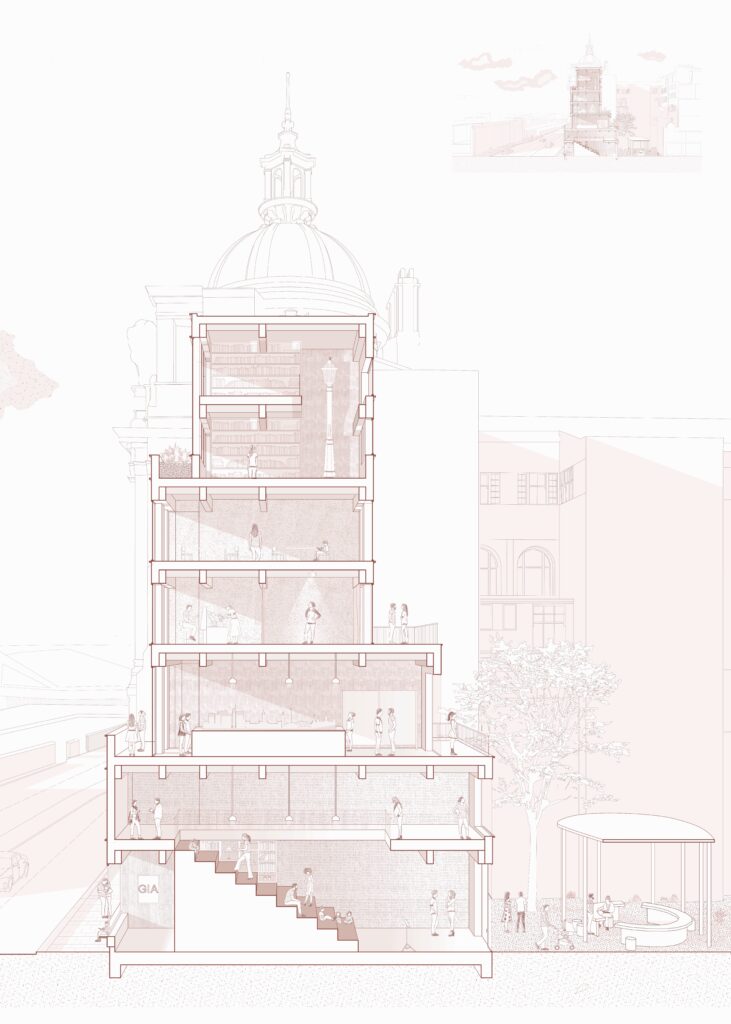
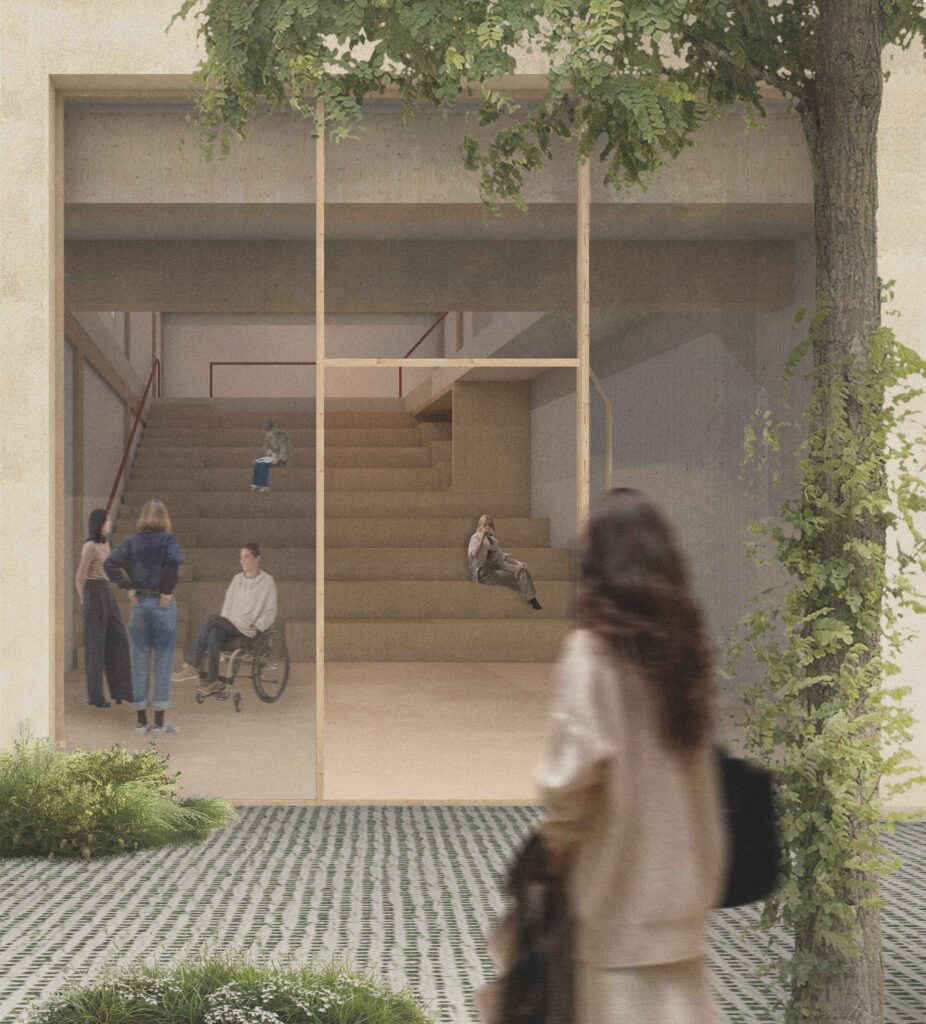
I want to design a low threshold access to public involvement, embedded in the spatial relations of my Proposal. In response, the project proposes an Urban Room as a form of civic infrastructure: a space where processes of debate, learning and decision-making are made visible, accessible and collective. Rather than symbolically representing participation, the building organises it spatially.
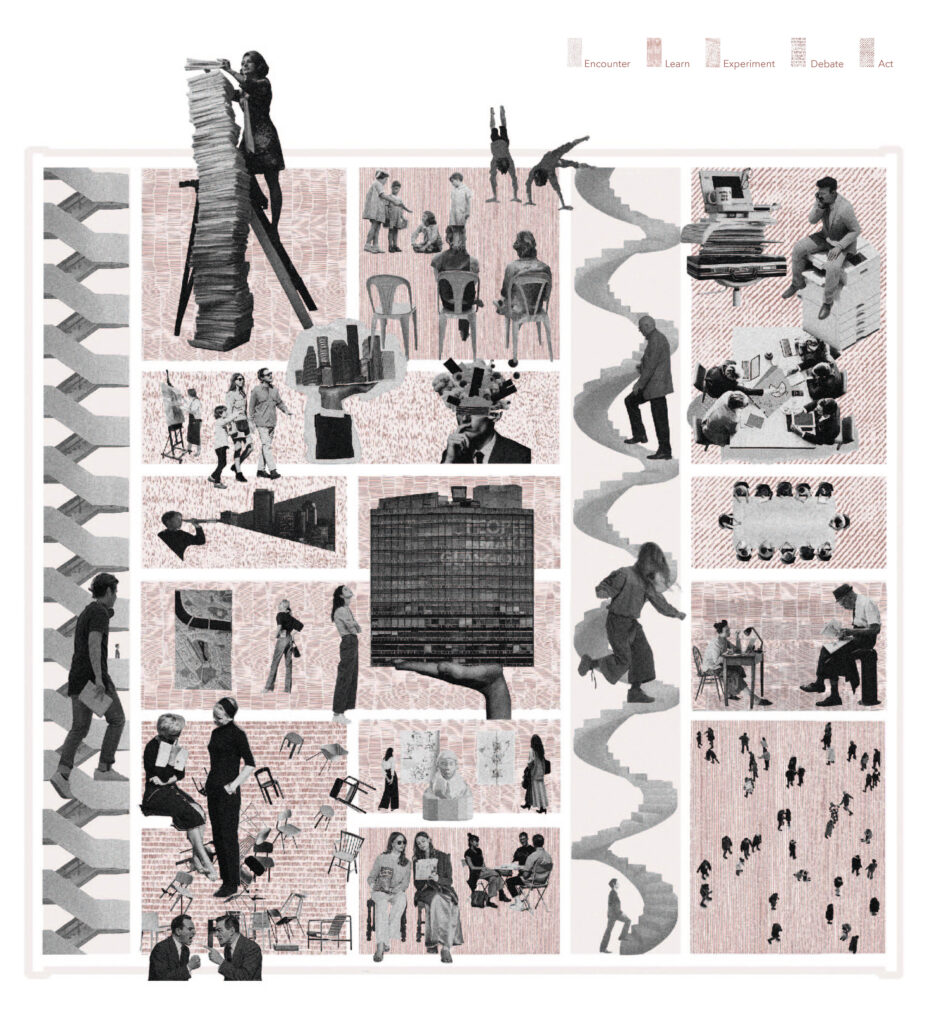
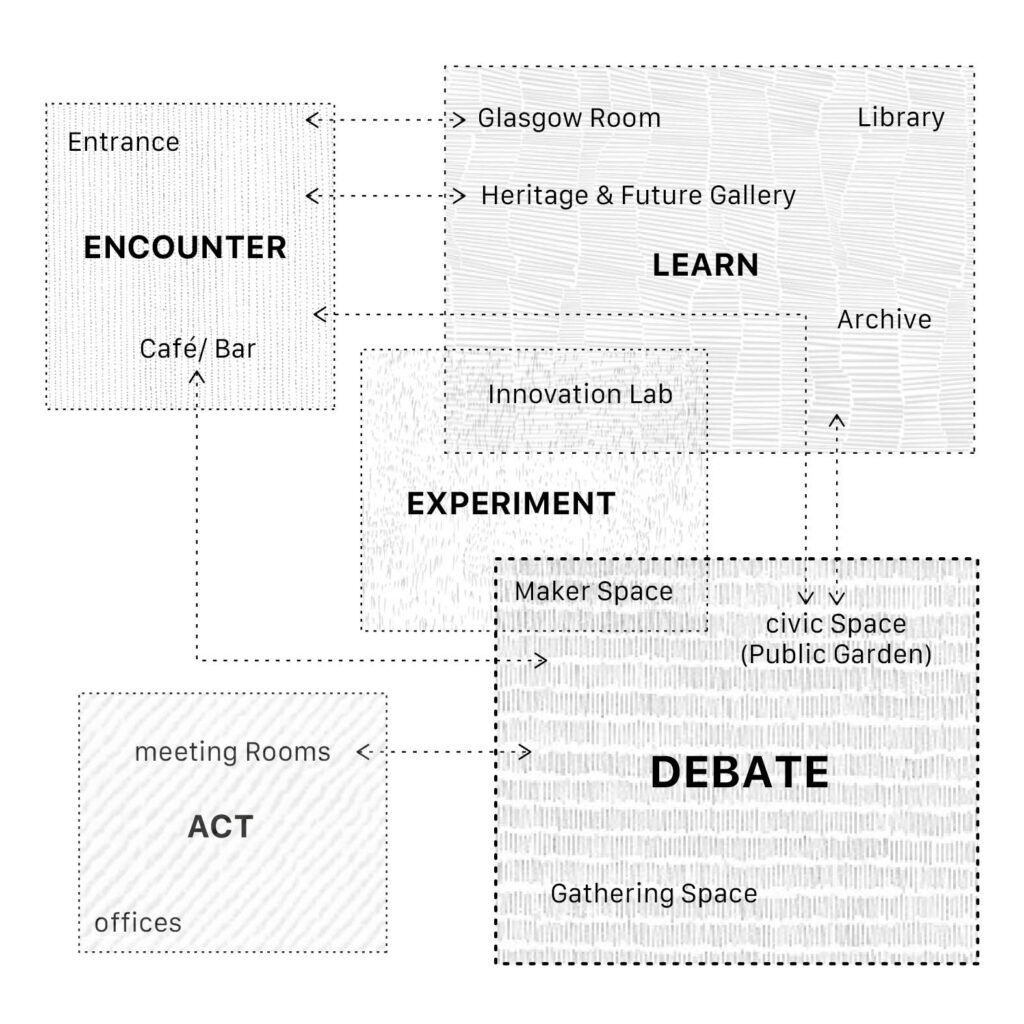
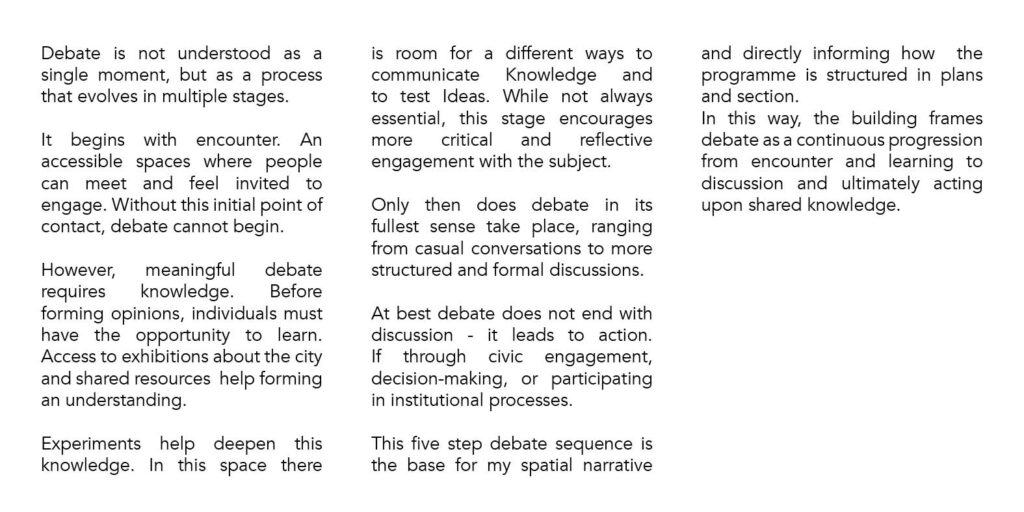
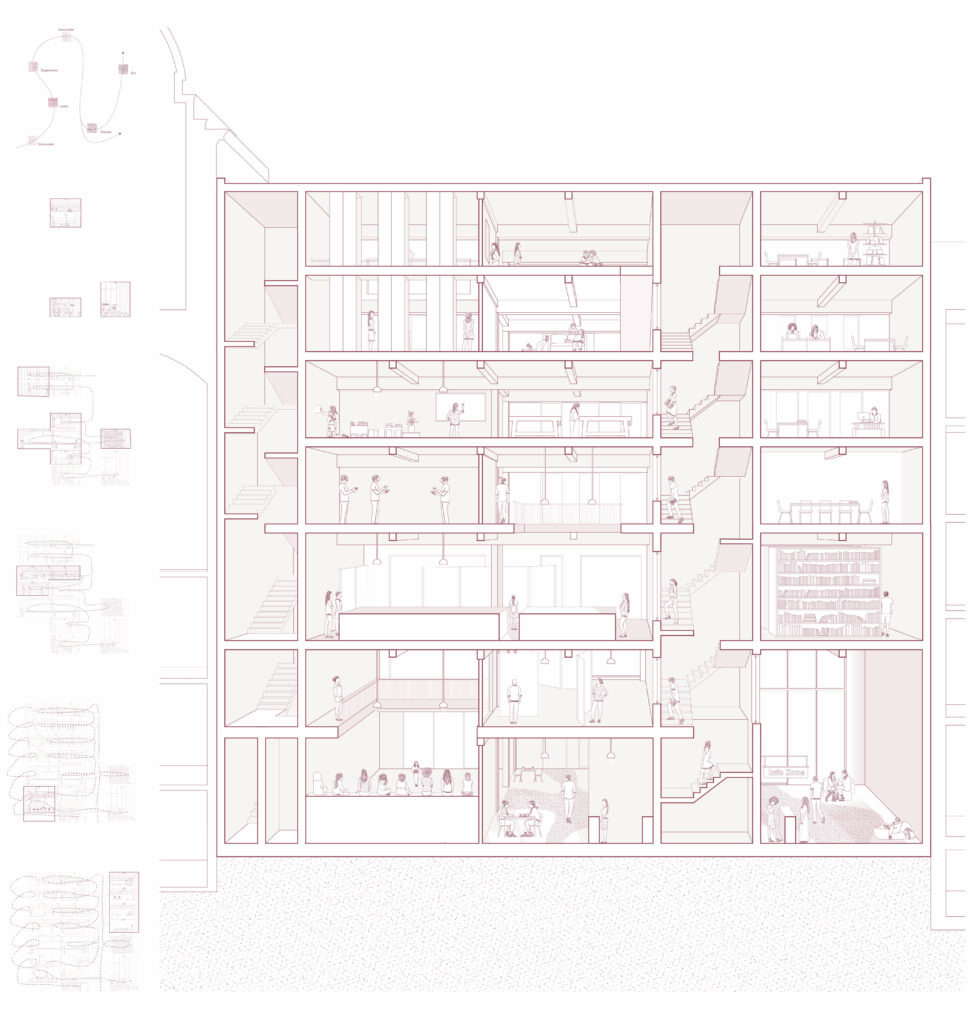
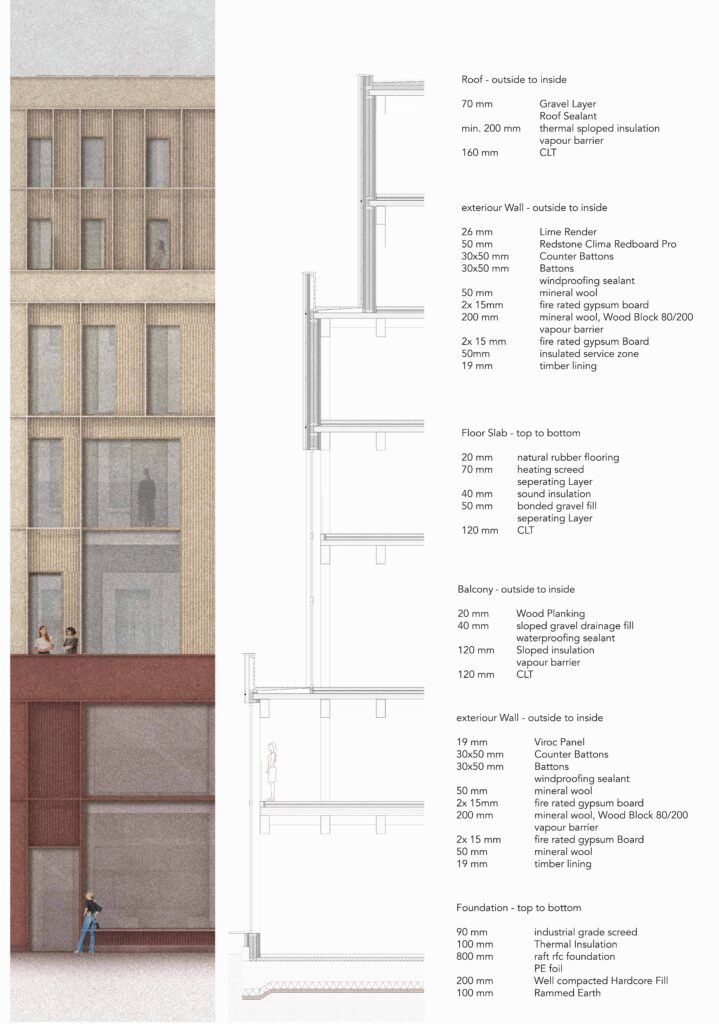
The proposal is structured around a five step sequence of engagement: encounter, learning, experimentation,discussion and action. This is translated into the arrangement of programme, circulation, and thresholds.
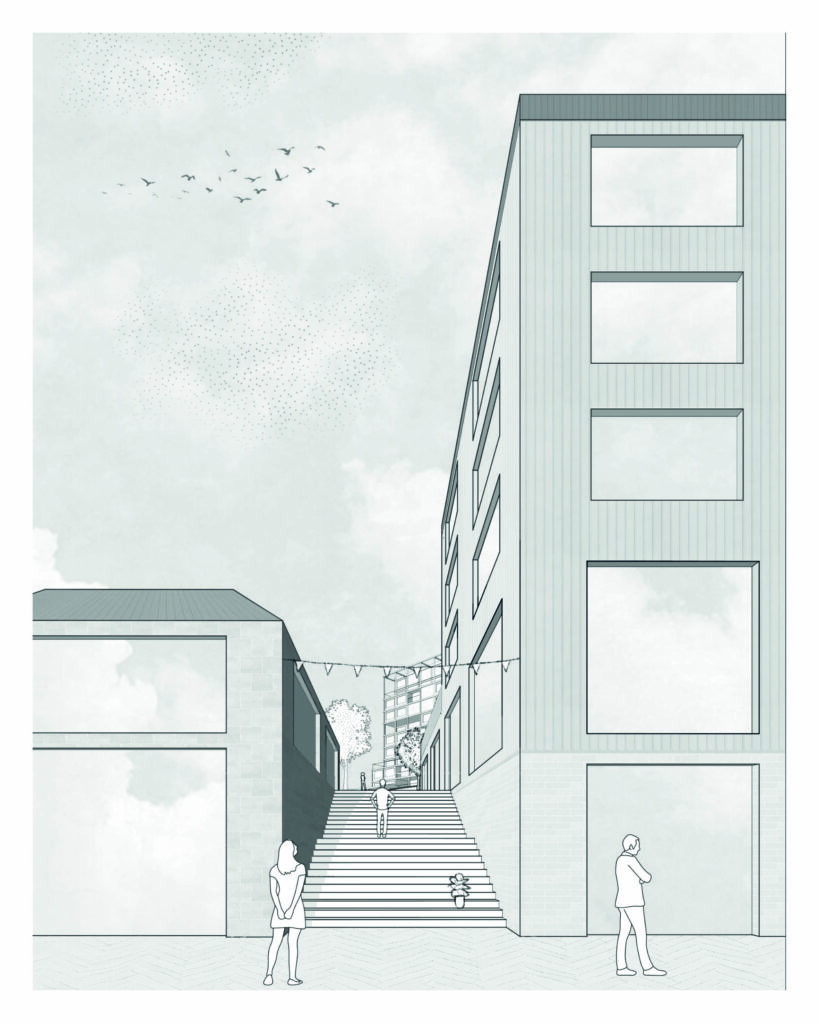
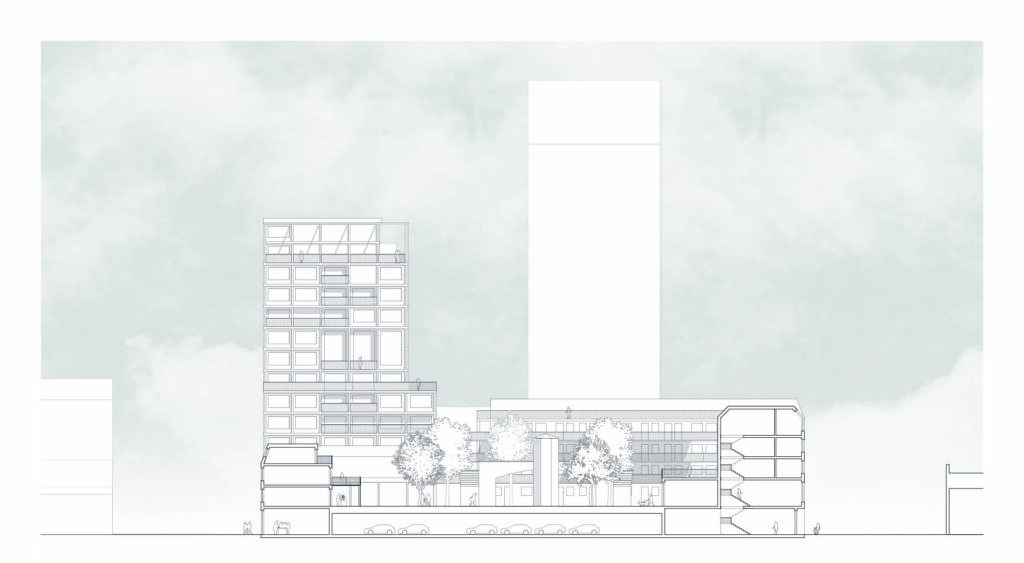
This progression establishes a clear spatial hierarchy. Open, informal public interaction at ground level progress to more focused environments for collective decision-making above.
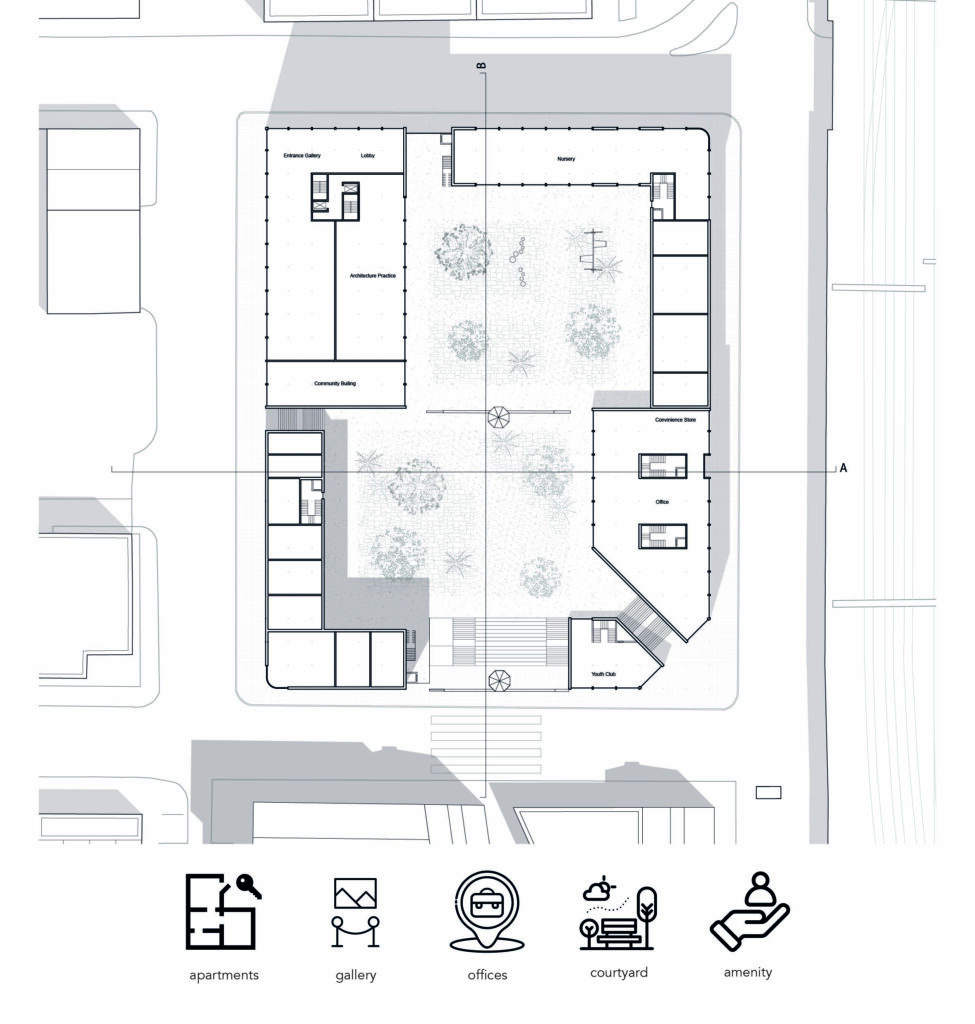
A central civic garden acts as a constant visual and social anchor. Repeating visual connections reinforce the shared nature of participation across all levels of the building. This positions architecture not only as a canvas for civic activity, but also as an active part in shaping the formation of urban agreements.
The building therefore functions as both a public interface and a spatial framework. It is facilitating collective understanding, negotiation, and re-imagining of the city.

Urban Strategy & Housing
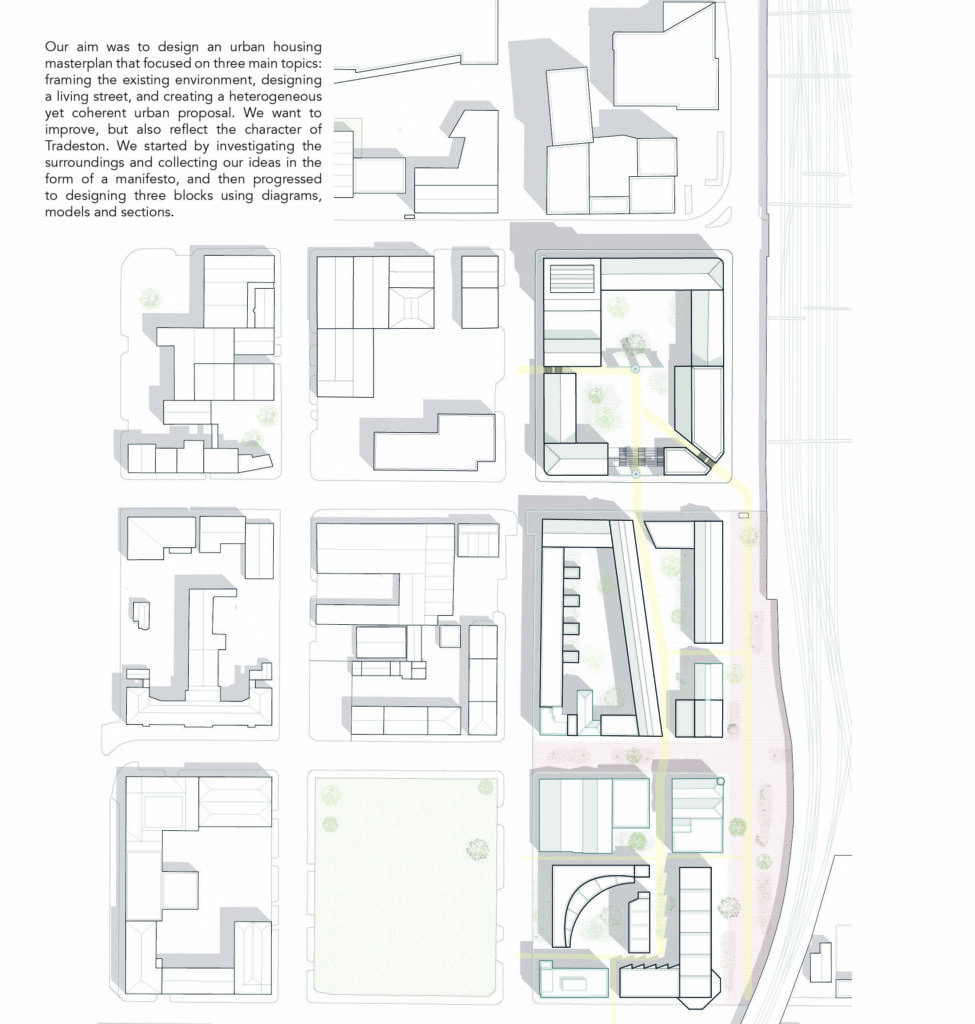
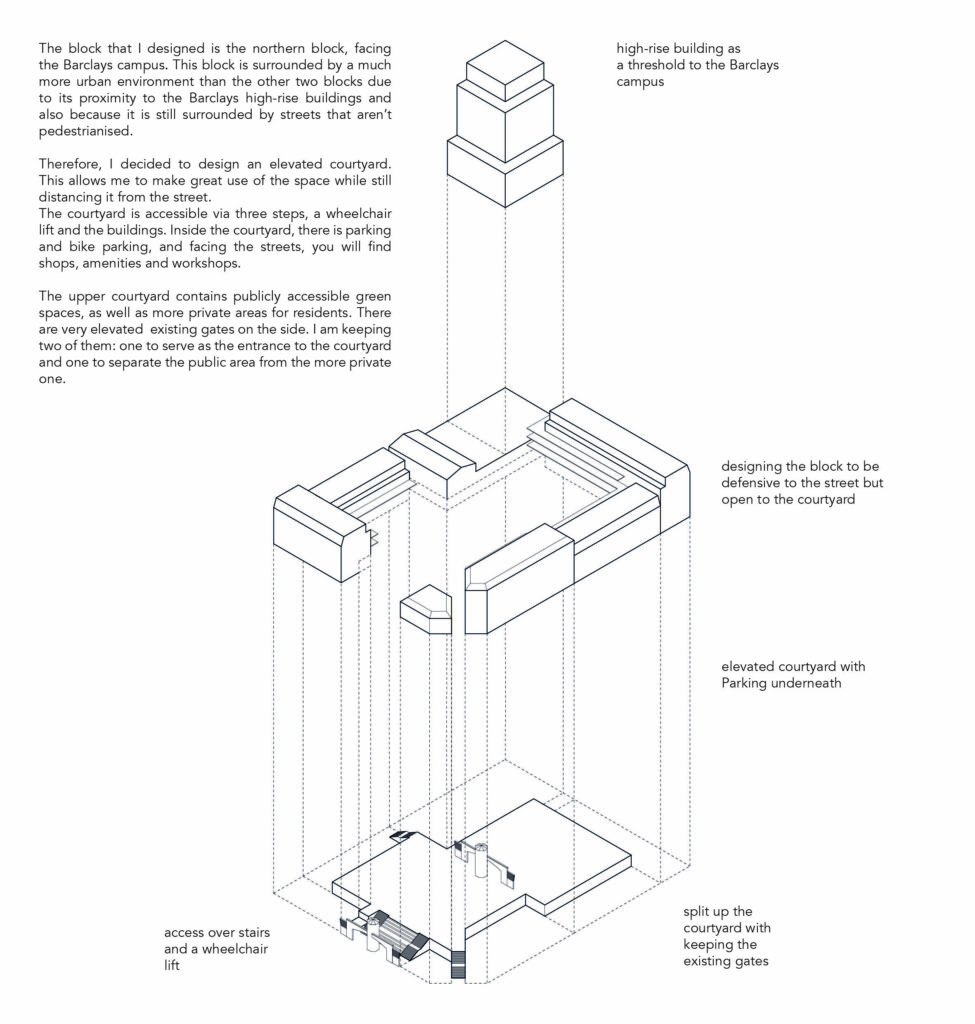
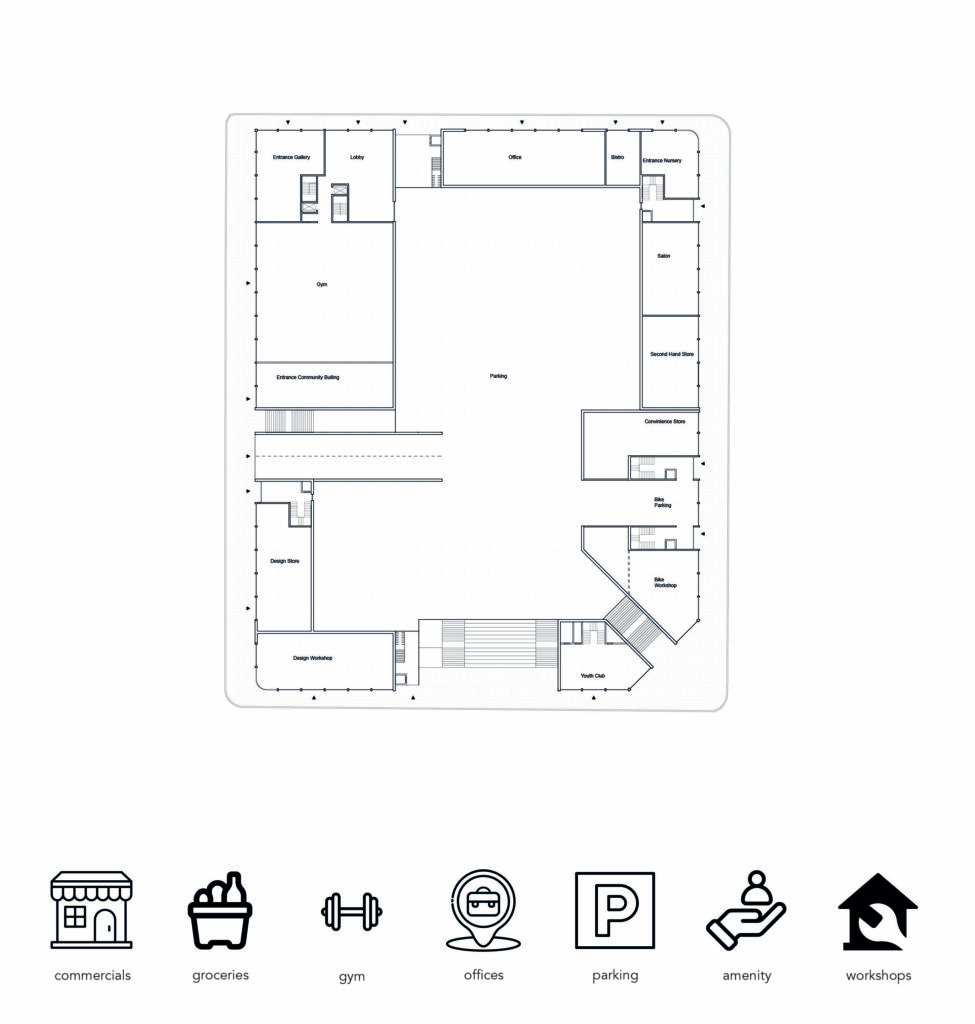
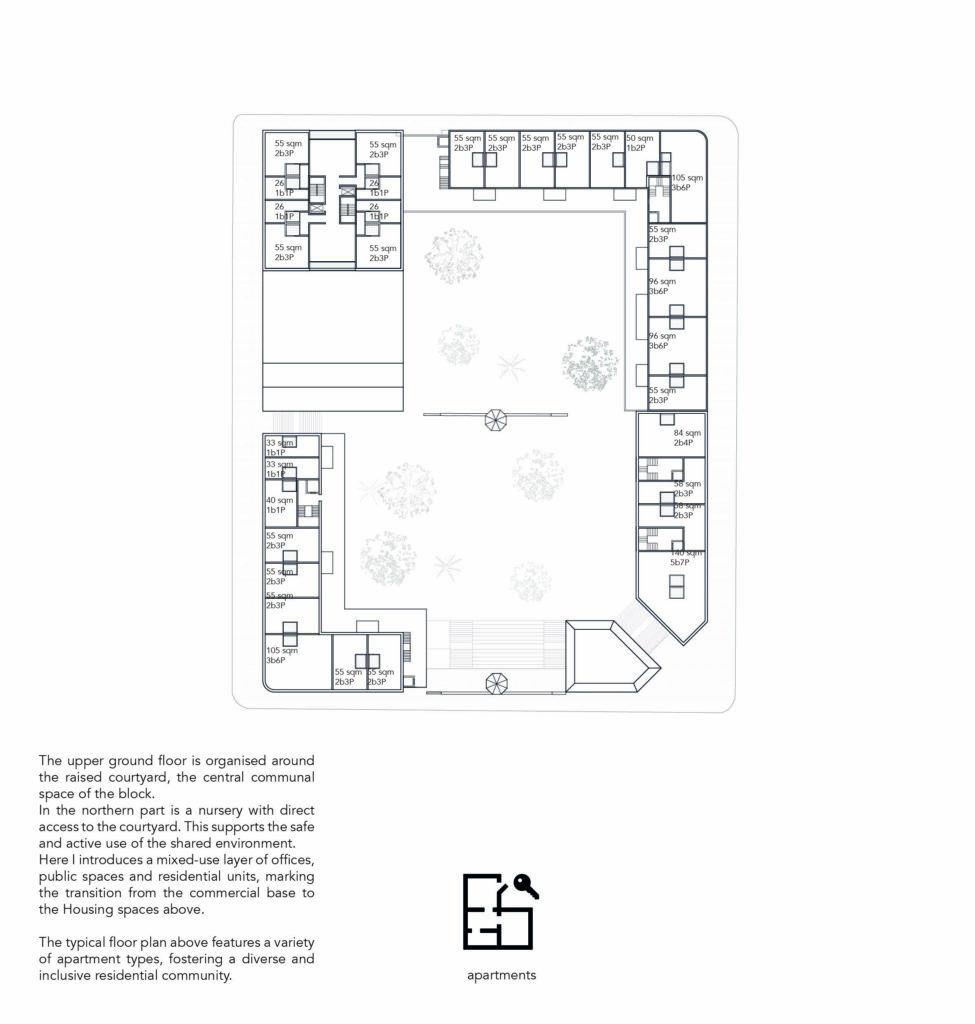
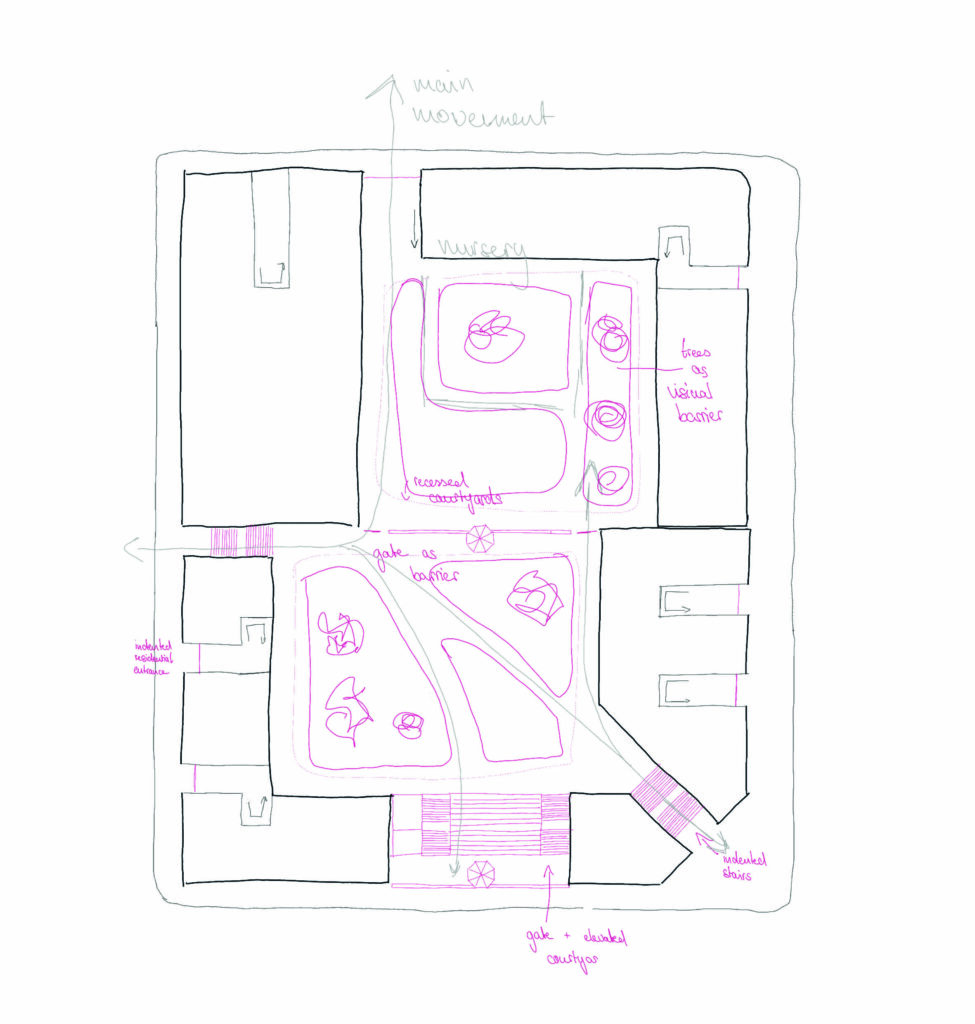
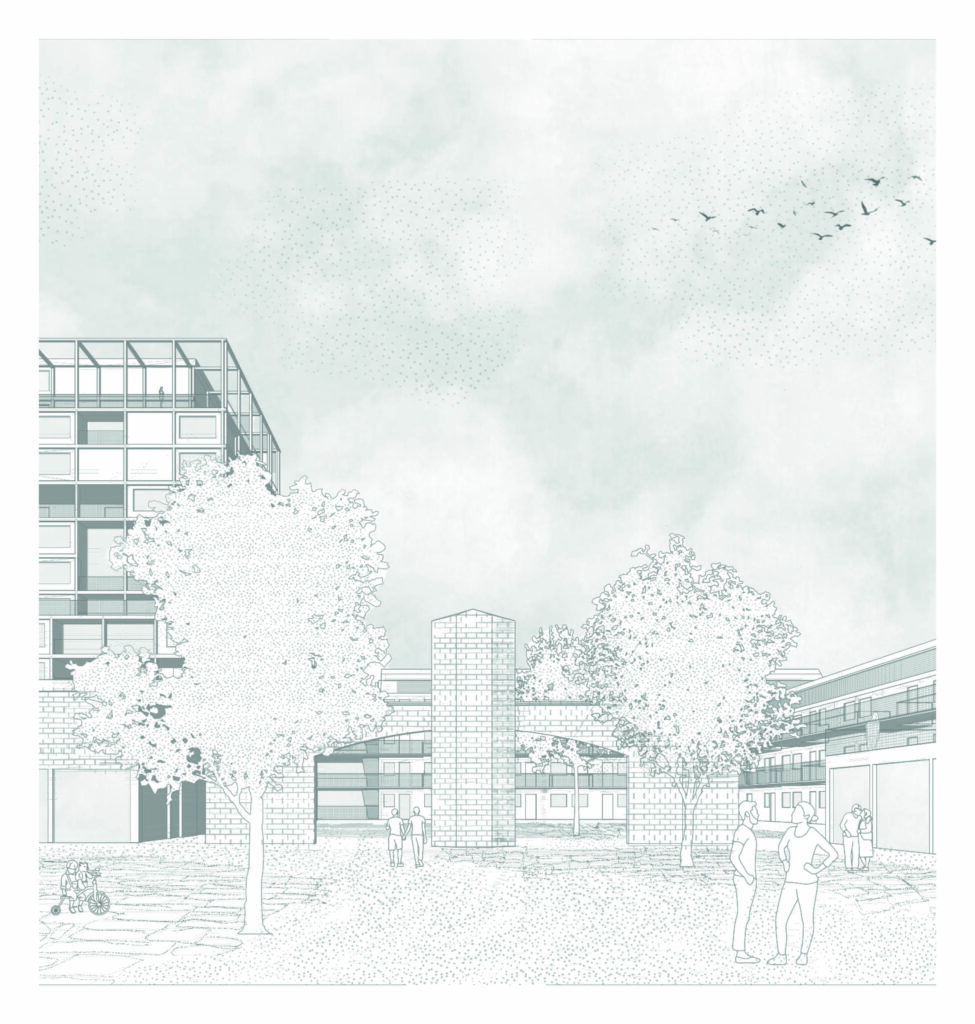
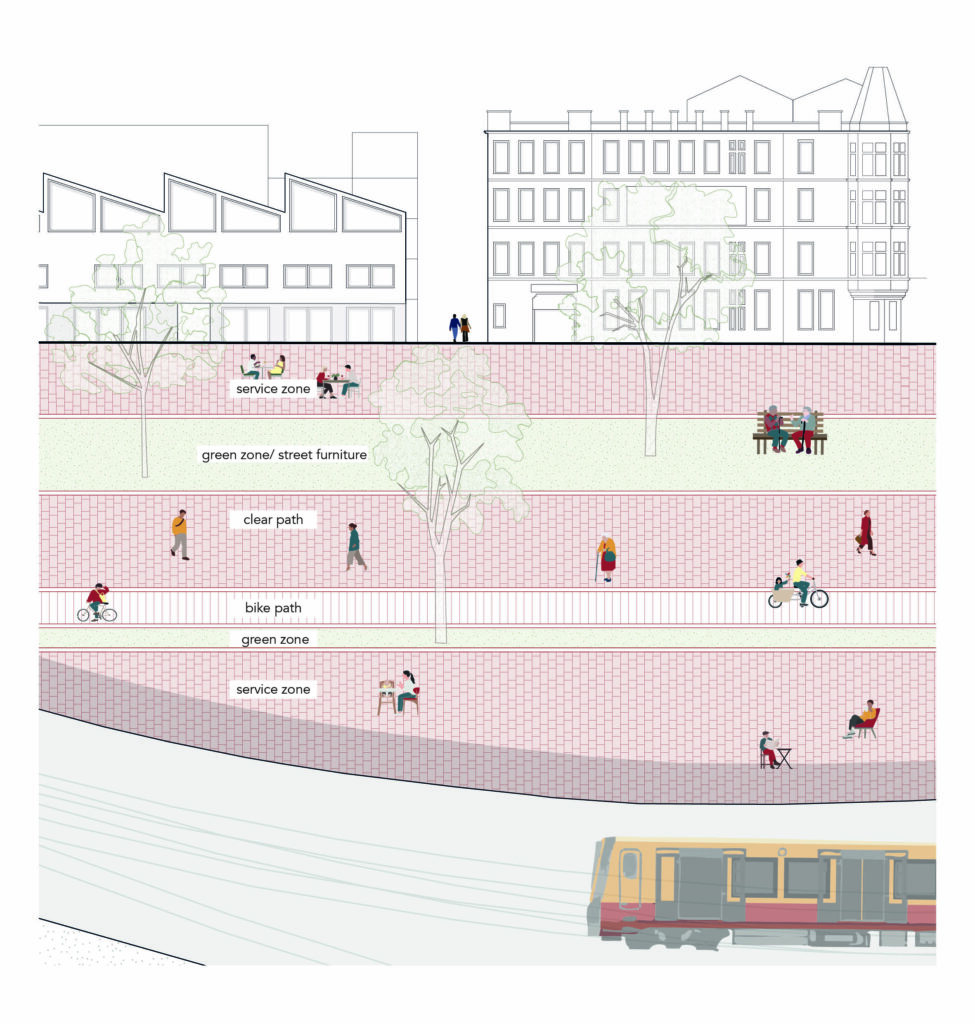
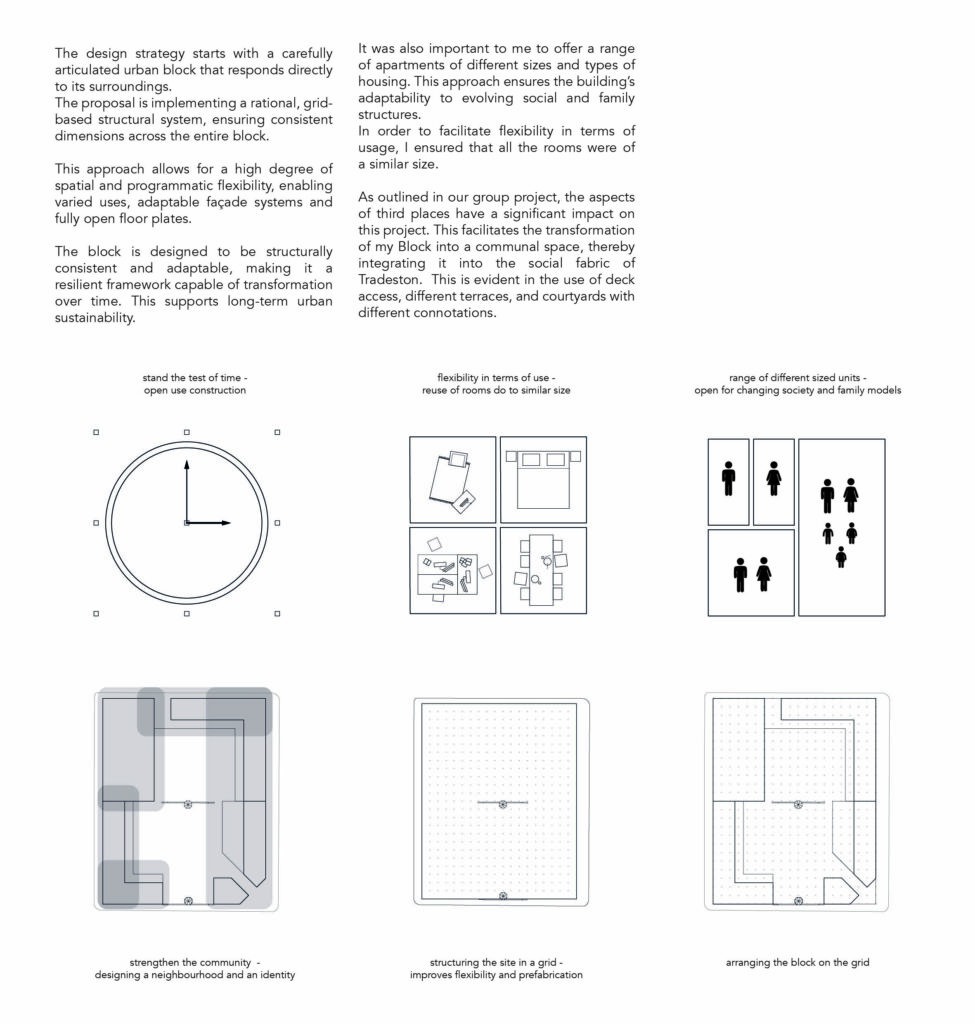
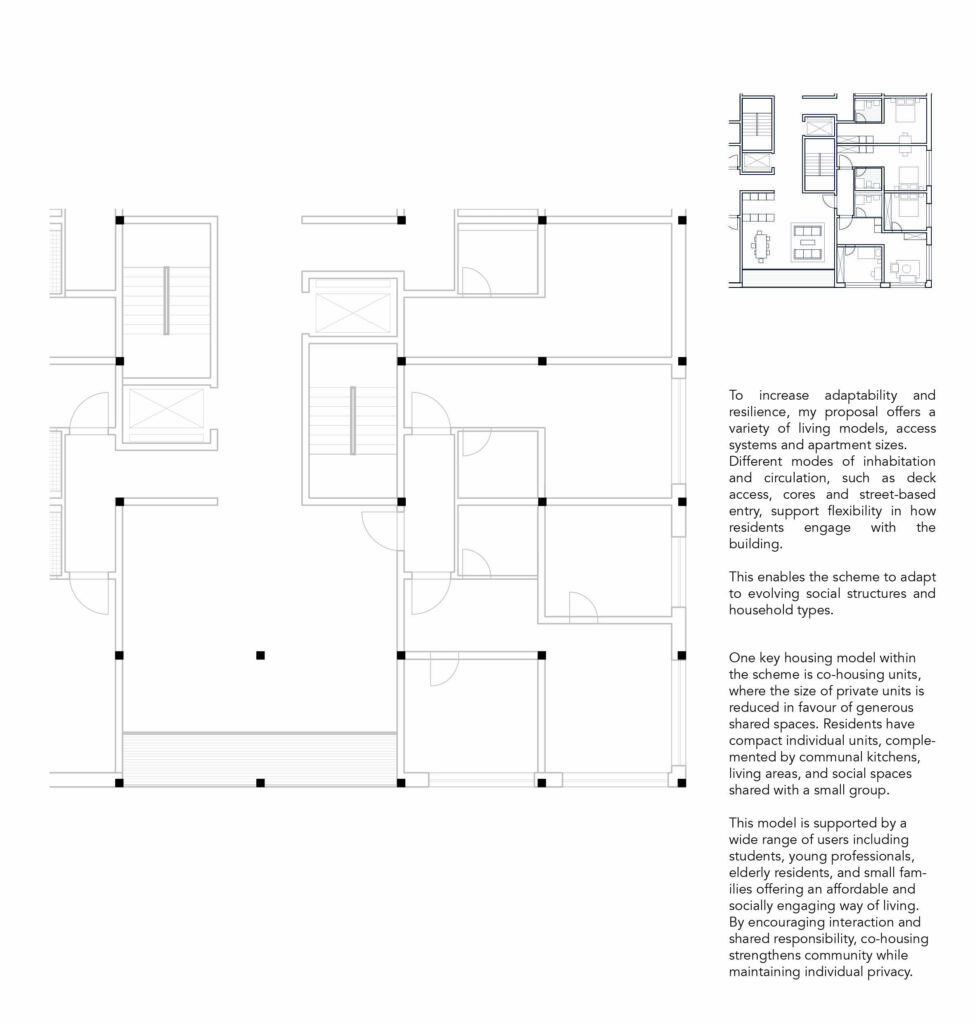
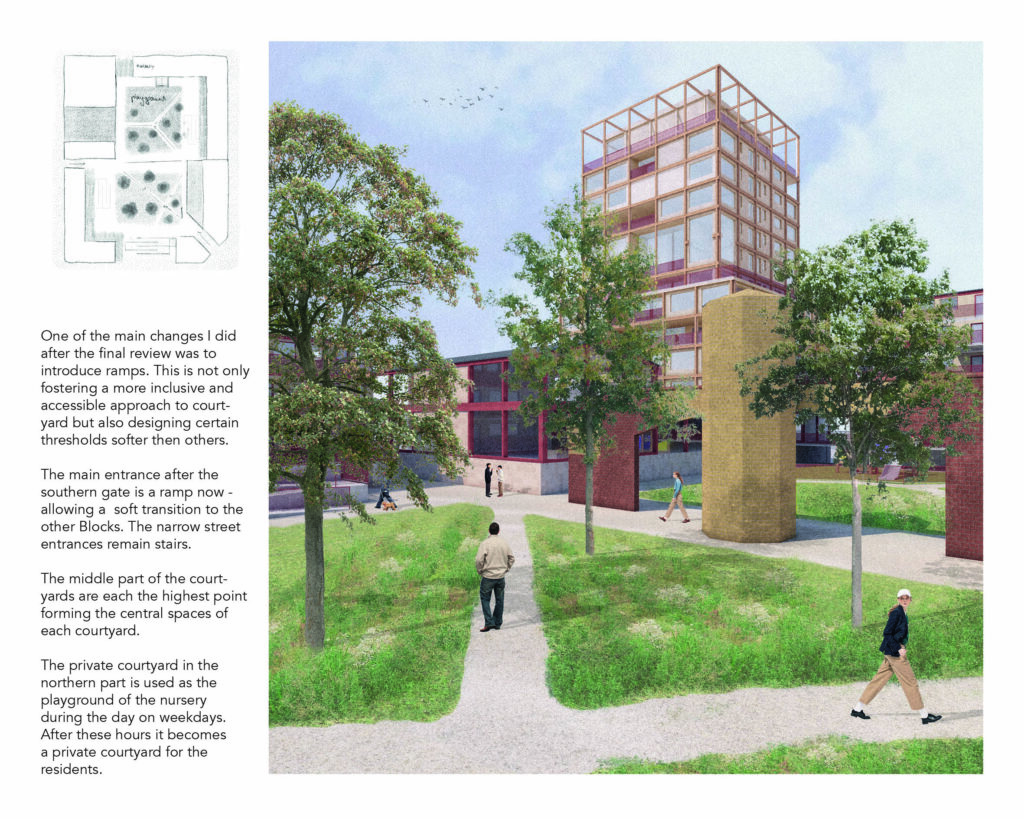
This housing proposal is driven by the question of how to design resilience, both structurally and socially. The use of a grid provides a flexible framework to test a range of housing typologies. It is enabling an exploration of how different forms of living can coexist within a single block. This approach resulted in a diverse and adaptable strategy for designing a dense and liveable urban environment.