
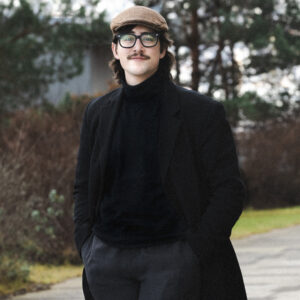
Sebastian Lendenmann
Sebastian Lendenmann (*1992, Thurgau, CH) is a visual artist working between Glasgow and Zürich. His practice begins with photography and expands into installation, moving image, publication, collage, and computational image-making. Across analogue and digital processes, he explores what happens to images when they are handled, translated, broken down, and re-formed through different materials and technologies.
His work often combines darkroom methods, scanning, printing, found materials, and AI-based tools such as retexturing, object detection or image classification. He is interested in these systems not as neutral instruments, but as participatory operators that shape how images are made, read, and understood. Photography becomes both a medium and a way of asking questions: about memory, error, perception, mediation, and the shifting status of visual culture.
Lendenmann is particularly drawn to points where images begin to slip — where control gives way to chance, where surfaces carry residue, and where machine readings fail to align with human intention. Across video, print, installations, and publications, his work brings tactile processes into contact with computational ones, holding open the tension between the handmade and the automated, the visible and the obscured.
Moving between camera-based practice, darkroom experimentation, digital fragmentation, and AI-assisted image production, he considers how contemporary image culture is shaped by both physical gestures and technical systems. Rather than seeking clean conclusions, his work stays with uncertainty and the visibility of those frictions.
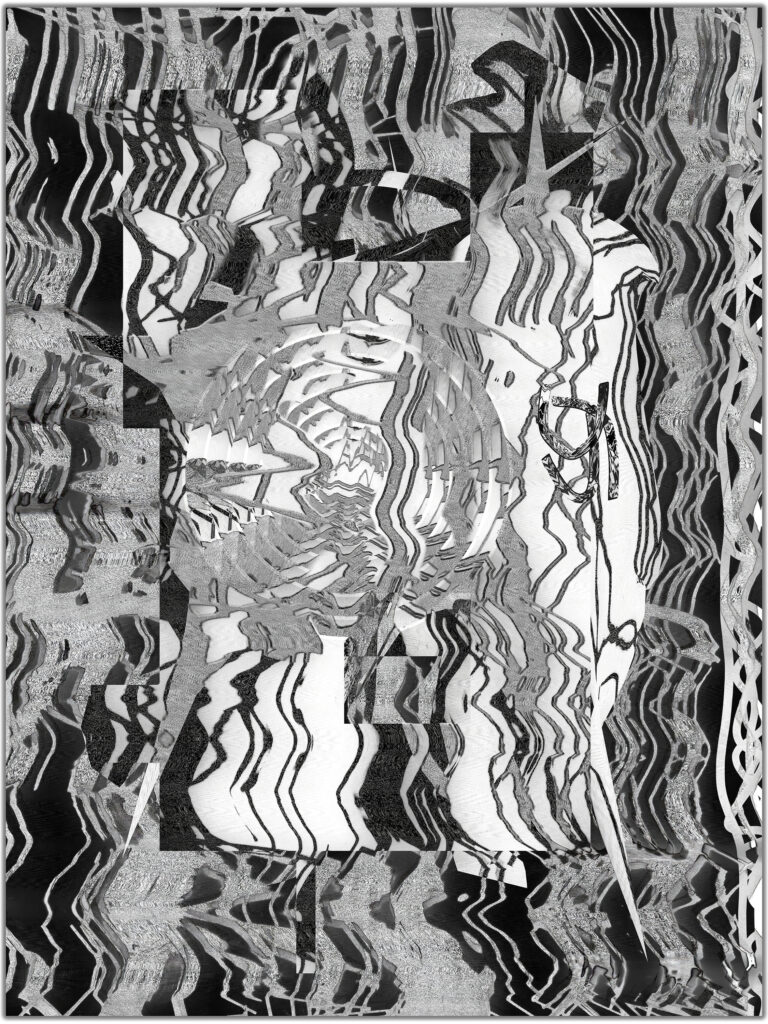
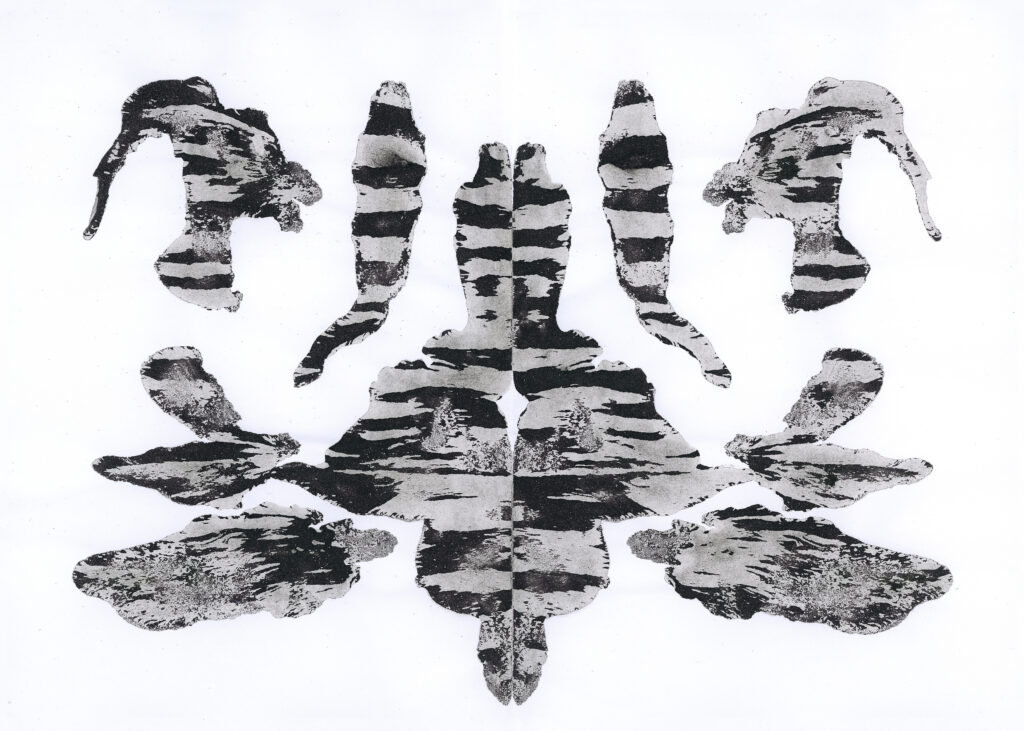
Psychological Patterns: A Misrecognition Study, After Rorschach,2025 & Rorschach Studies, 2025
Psychological Patterns: A Misrecognition Study, After Rorschach,2025 stages a collision between machine perception and human psychology by feeding the series Rorschach Studies, 2025 into a contemporary object detection system via script (custom code). The annotations—generated through CLIP, a detection method similar to that used by ChatGPT and guided by a curated list of artwork descriptors provided by myself—label the inkblots with absurd and sometimes contradictory identifications, rarely recognising them for what they are. Out of my 19 Rorschach images, only one detection run returned the label “Rorschach pattern,” and even then, only partially. The rest offer strange guesses and act as a display of how machine hallucinations are rendered as certainty.
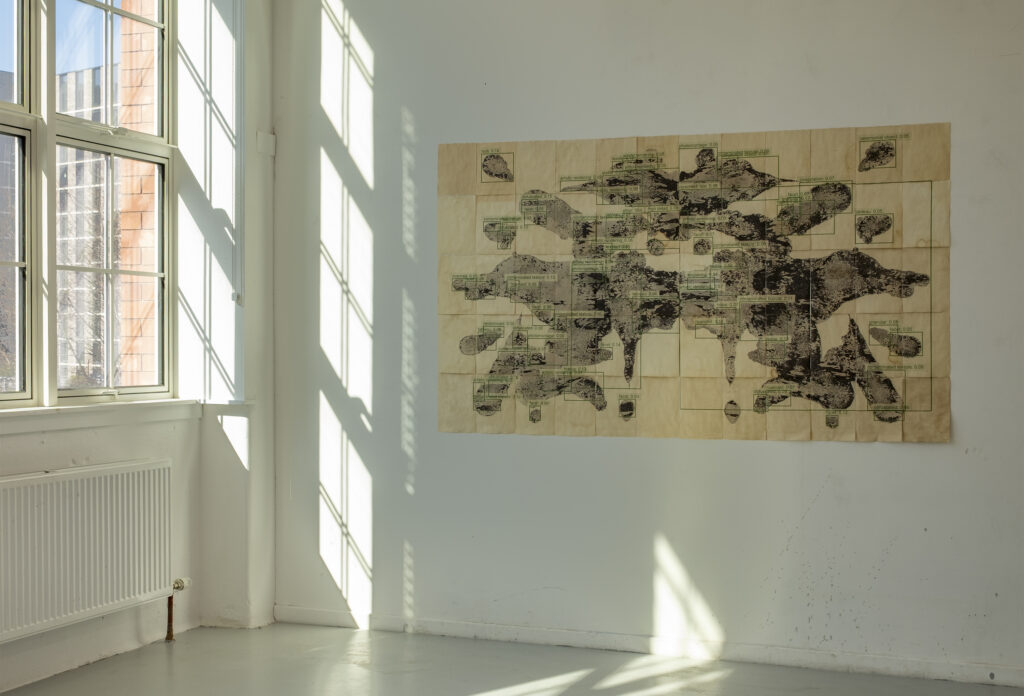
72 stained A4 sheets of paper 1.5 x 2.4 m
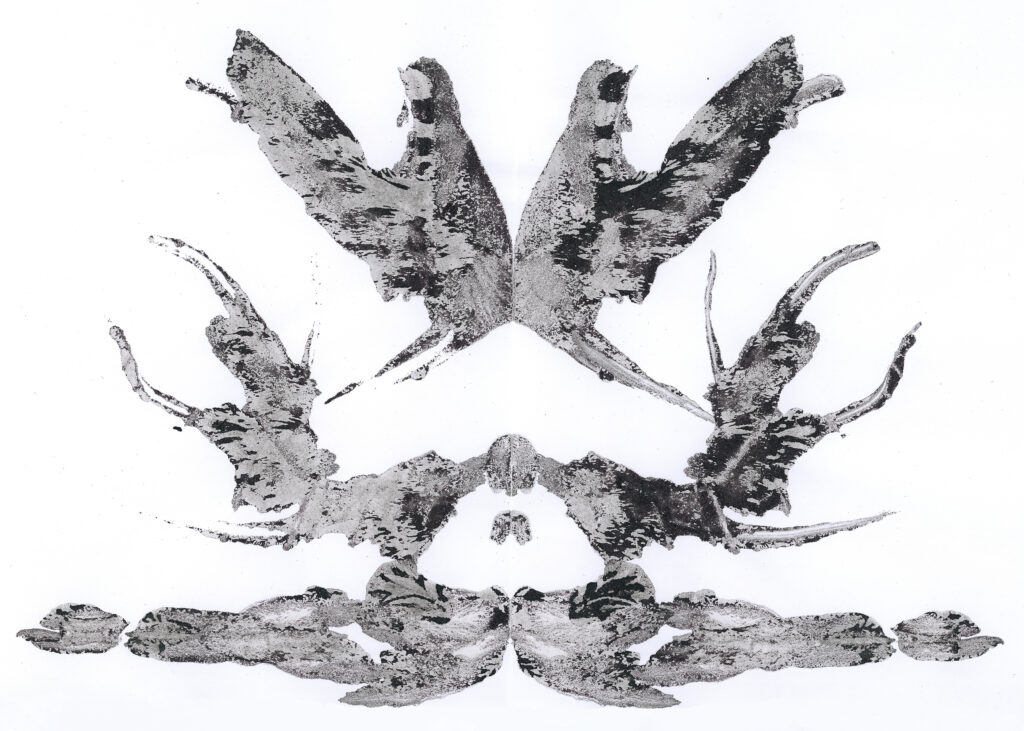
Water & flour paste with dye ink A4 paper
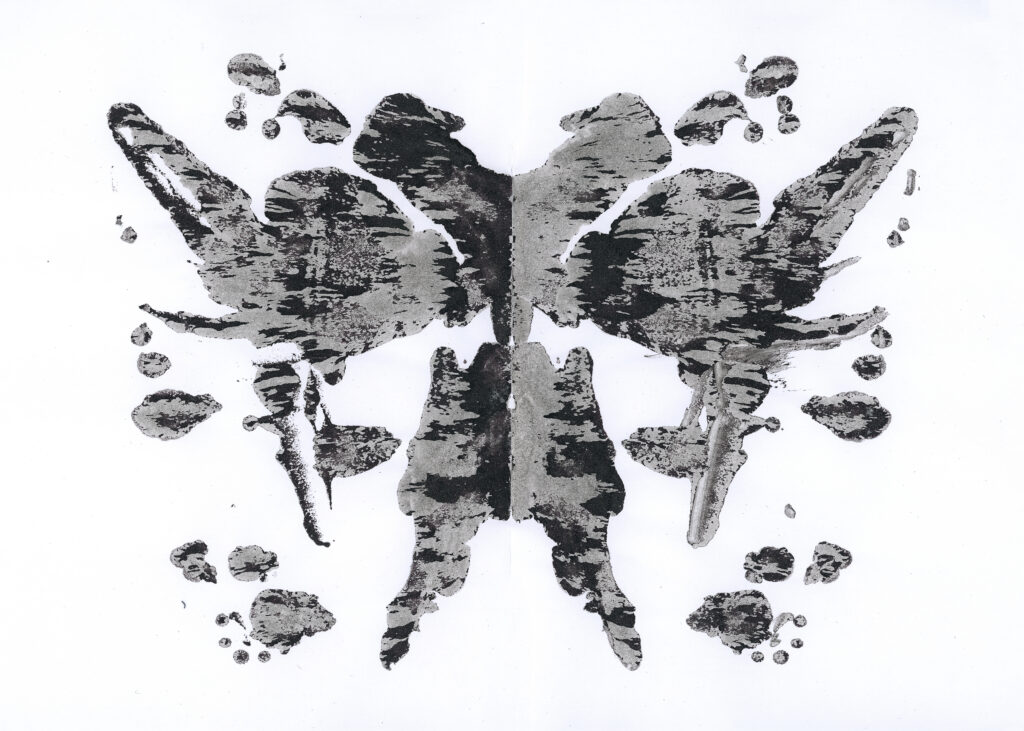
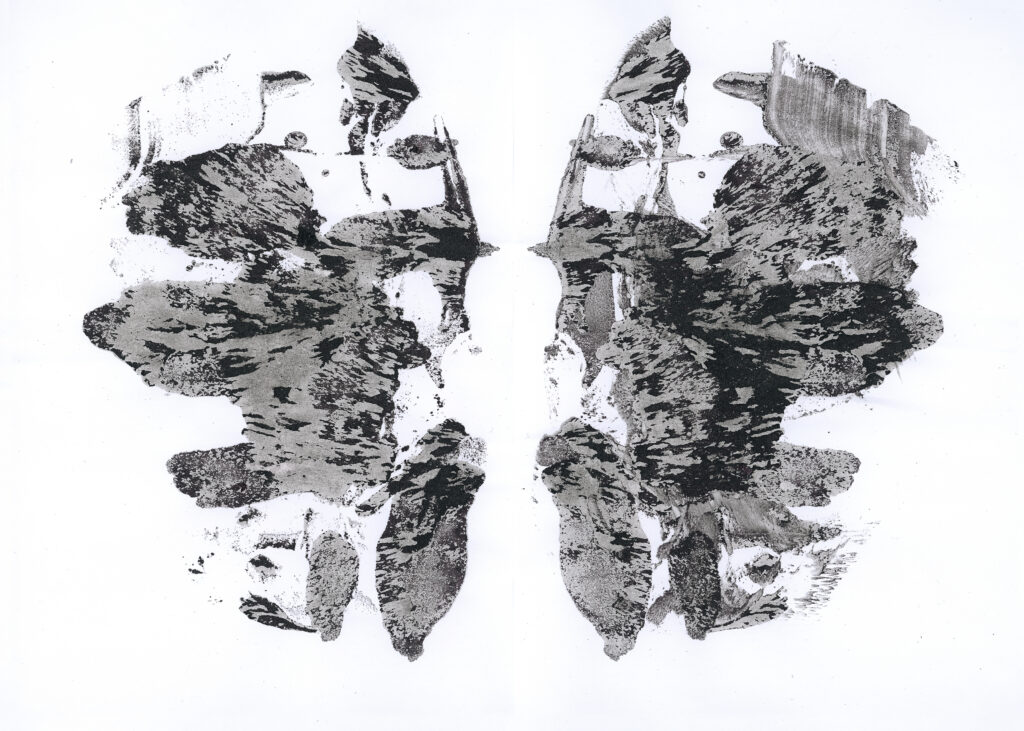
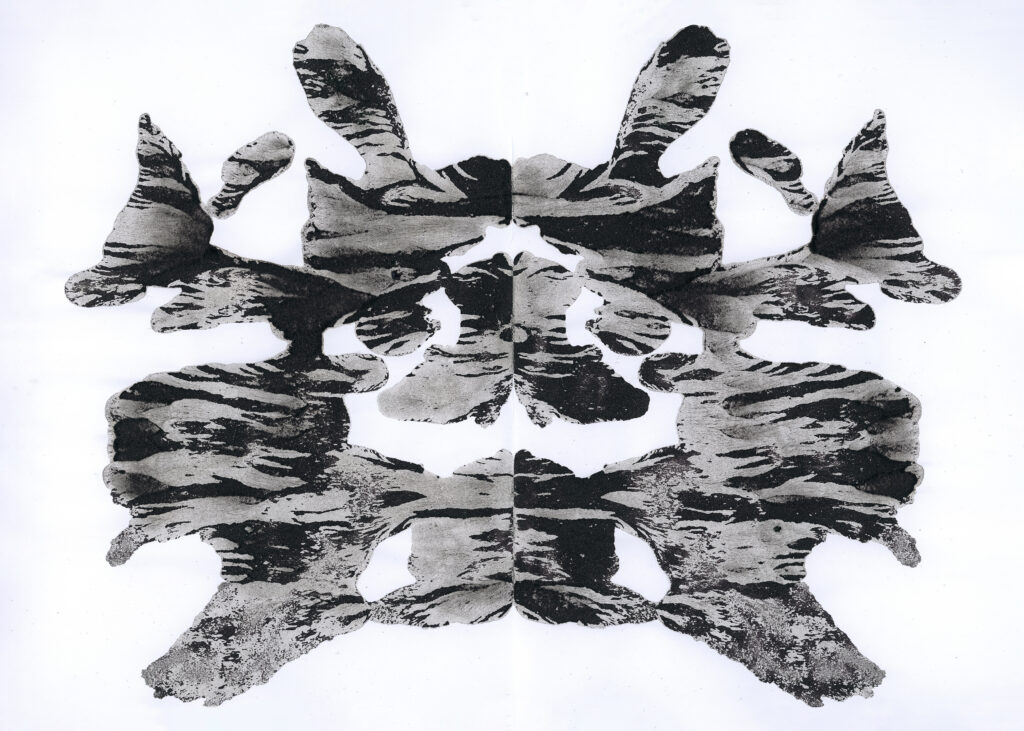
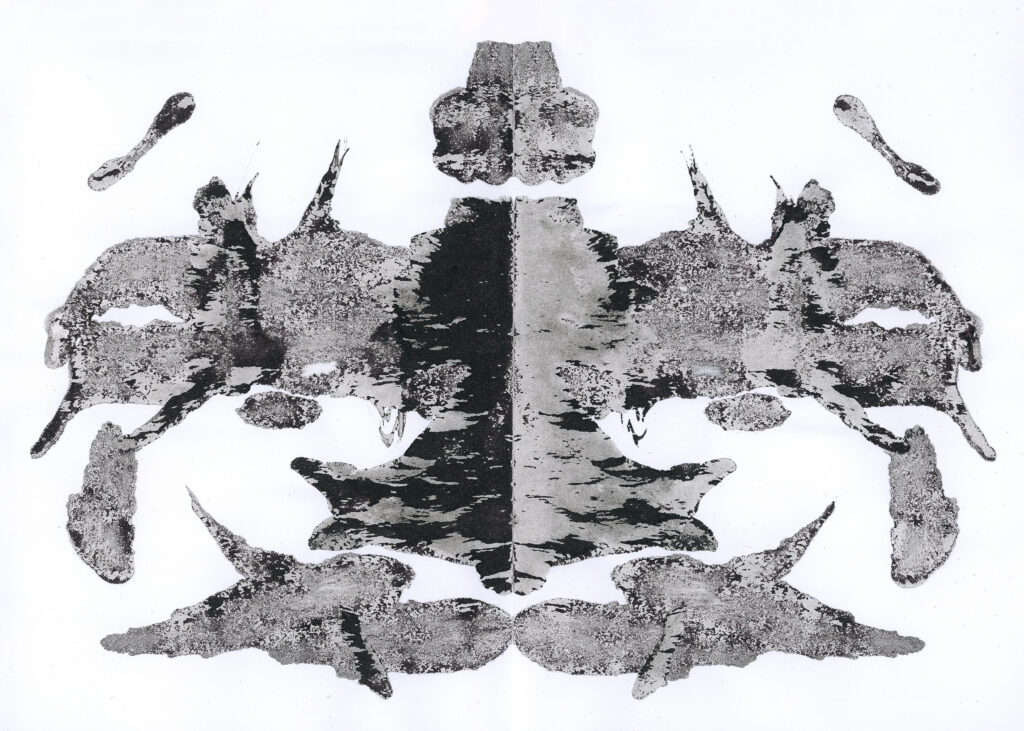
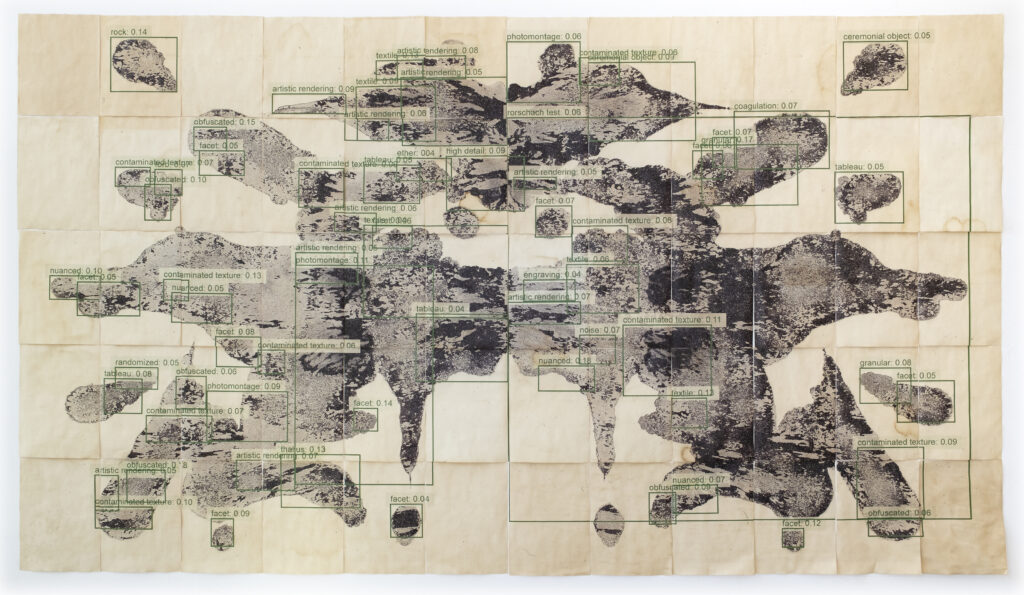
72 stained A4 sheets of paper 1.5 x 2.4 m
Dust Scawung Series I, 2026
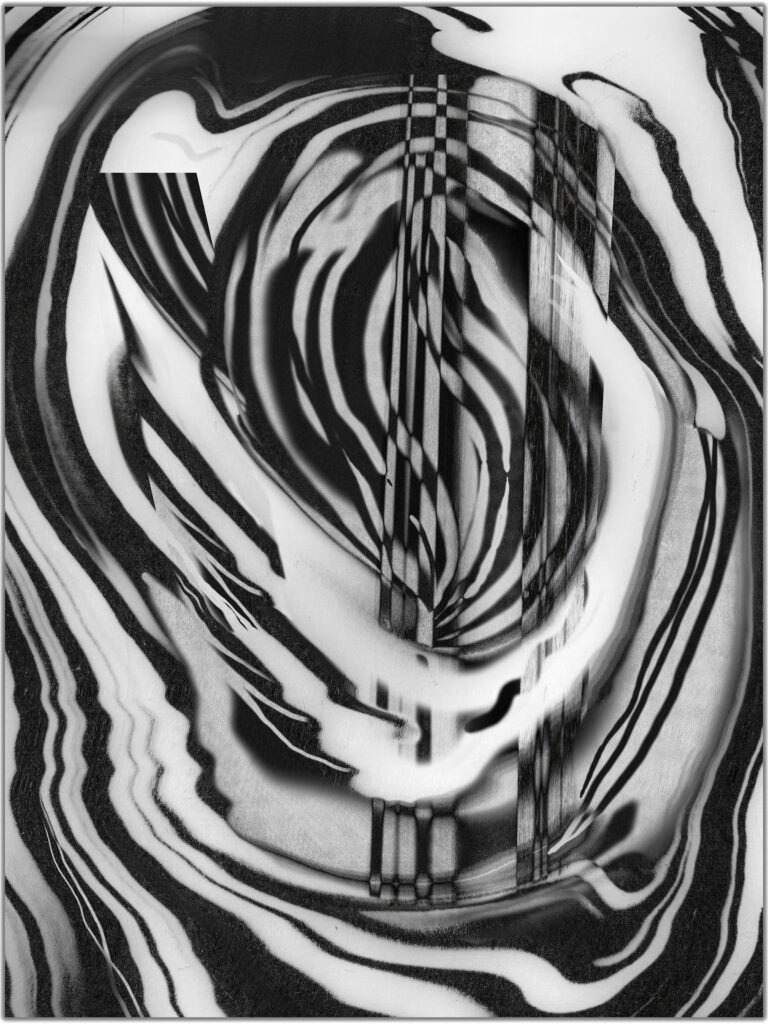
Reactive dye print on Silk Viscose Satin, 185 x 140 cm
For Sale: Price on Request
Reactive dye print on Silk Viscose Satin, 185 x 140 cm
For Sale: Price on Request
After a long daze worked—peer to the built sky of another one for the books, 2026
Once in a while take the time to look up at a sky, wander its horizons paths with your gaze and for a moment come to wonder.
How could you possibly fathom what the ground beneath your feet is really there for?
Recline into motion and assume whatever is written along your way can only ever be temporary.
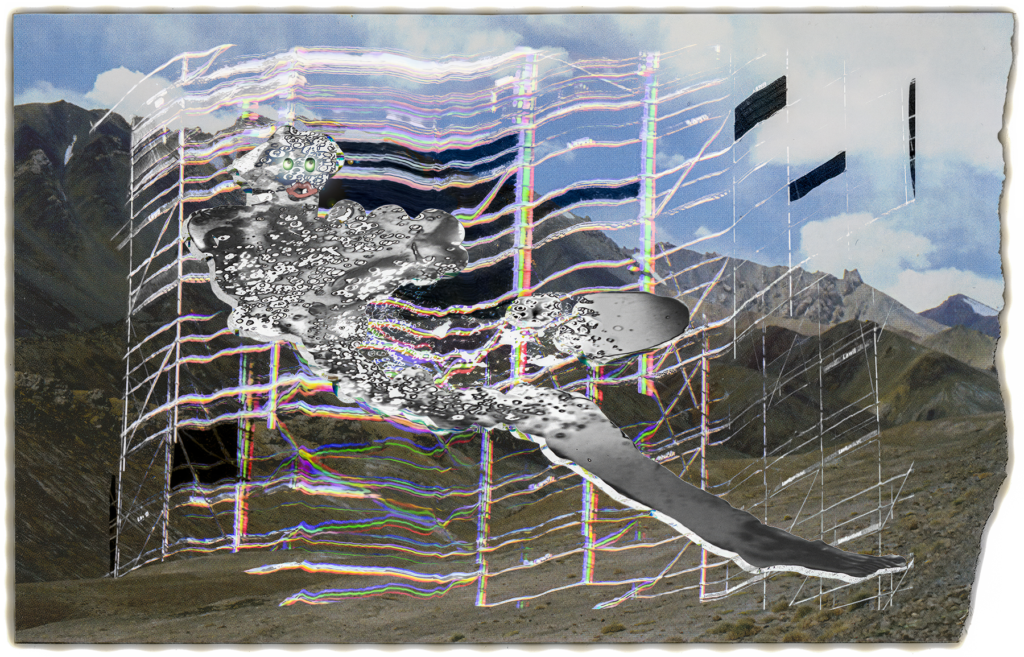
Reactive dye print on Silk Viscose Satin, 125 x 190 cm
For Sale: Price on Request
Dust Scawung Series II
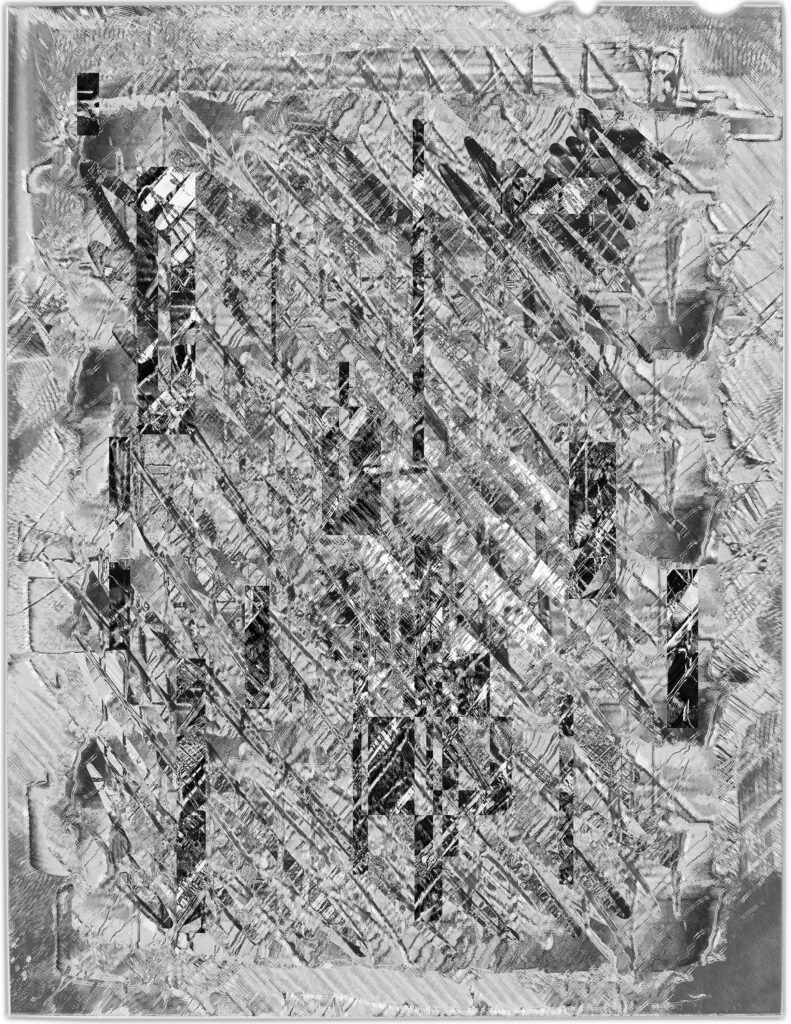
Reactive dye print on Silk Viscose Satin, 135 x 100 cm
For Sale: Price on Request
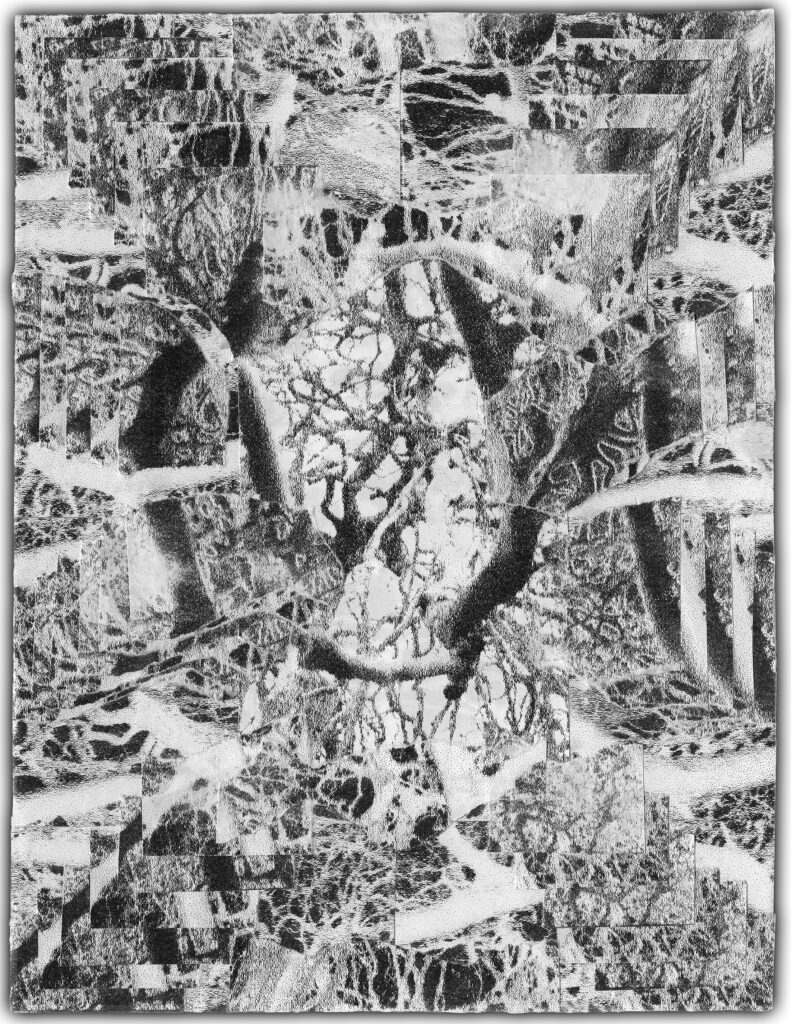
Reactive dye print on Silk Viscose Satin, 135 x 100 cm
For Sale: Price on Request