
Coire Simpson
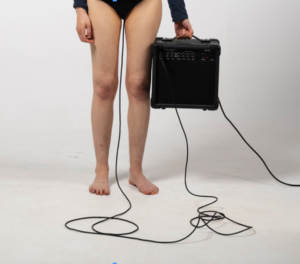
My practice navigates entanglements of time, space and being, approached through embodied knowledge and listening practices. I consider how sensory perception shapes our understanding of self and world, exploring ways of opening to and connecting with the vitality in all we encounter. Working with sound and vibration, I intend to bring attention to our relational existence and create spaces where demands of coherence and composure unravel, where we may become porous.
Before thought, frequencies modulate us. Intensities pass between bodies and environments, producing states that disrupt isolated individualism and hegemonic understanding. I believe sounding and listening can be emancipatory acts which allow for complexity, plurality and responsivity.
My work inhabits these vibrational moments, in which the play between proximity/distance, familiarity/difference, form/formlessness becomes sensible.
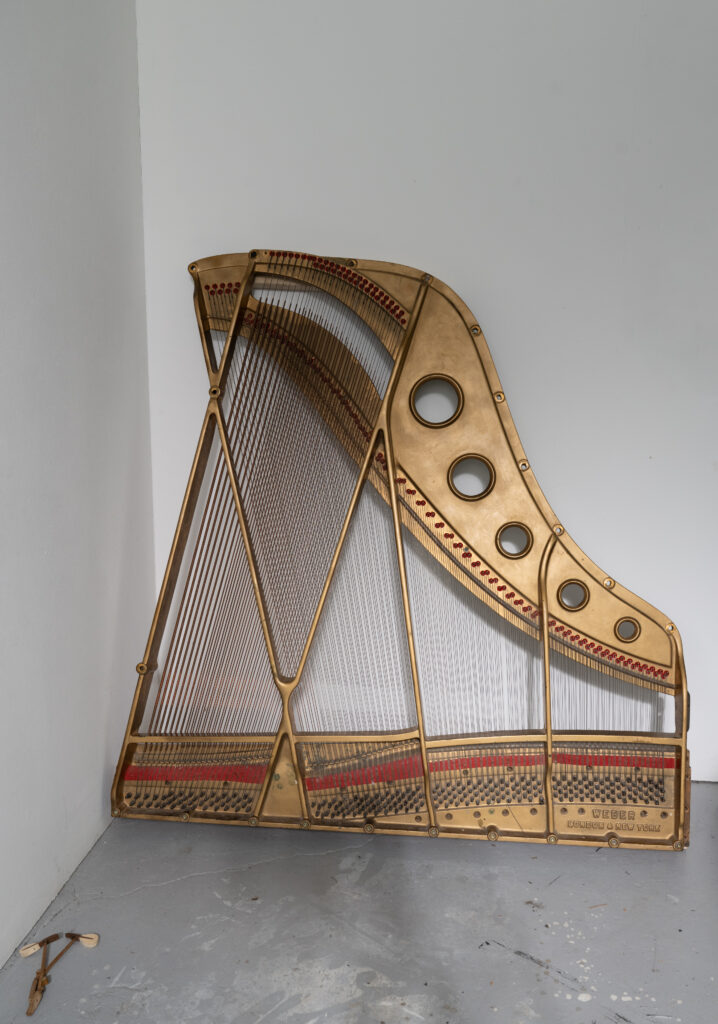
The Piano’s Broken Harp
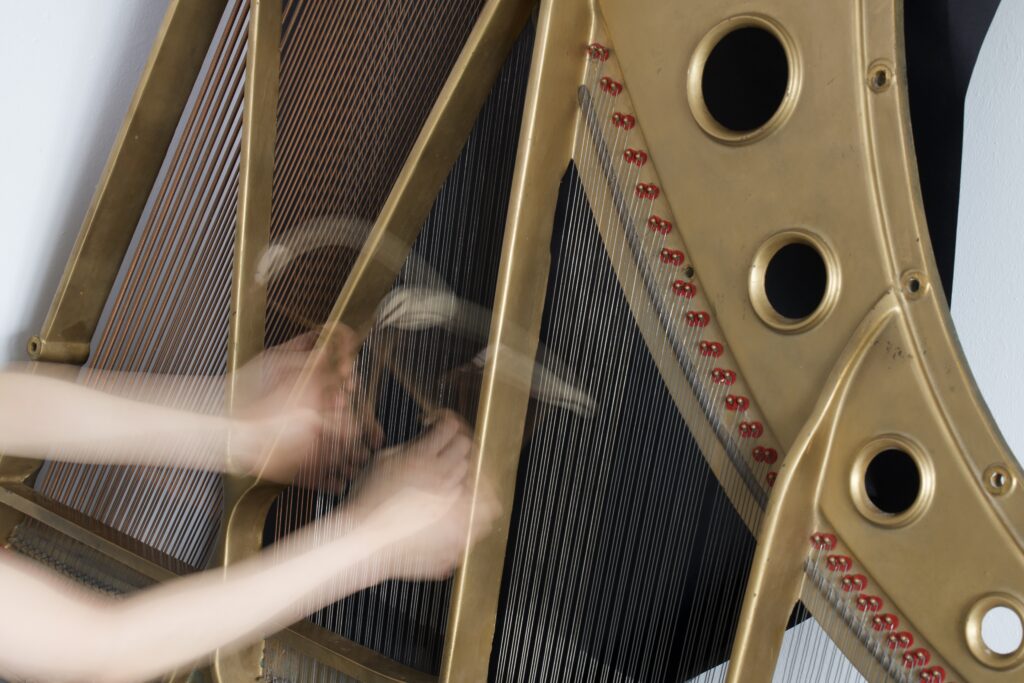
Detached from its austere exterior, detuned over time, the piano’s harp has been broken open. The way it sounds, sometimes tender, sometimes terrifying, is dependent on both its history and how it is touched; what it’s been through and what we bring to it. This wild instrument is not a passive object waiting to be played. It has its own capacity to act, resist and resonate; it invites a way to play free from traditional musical and sonic expectations. Once intended to be civilised and ordered, together with the insides of the piano, we may unravel.
There is no right or wrong way to play.
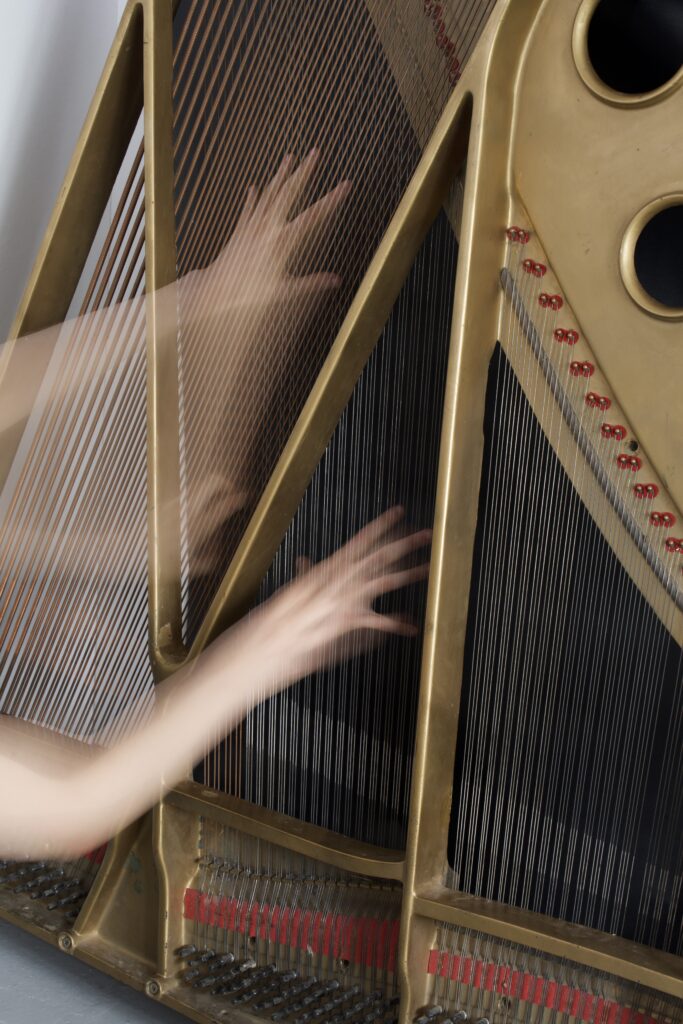
The Piano’s Broken Harp, Interactive installation and performance, piano harp, contact mics, speakers, wood frame, 2026
Chora
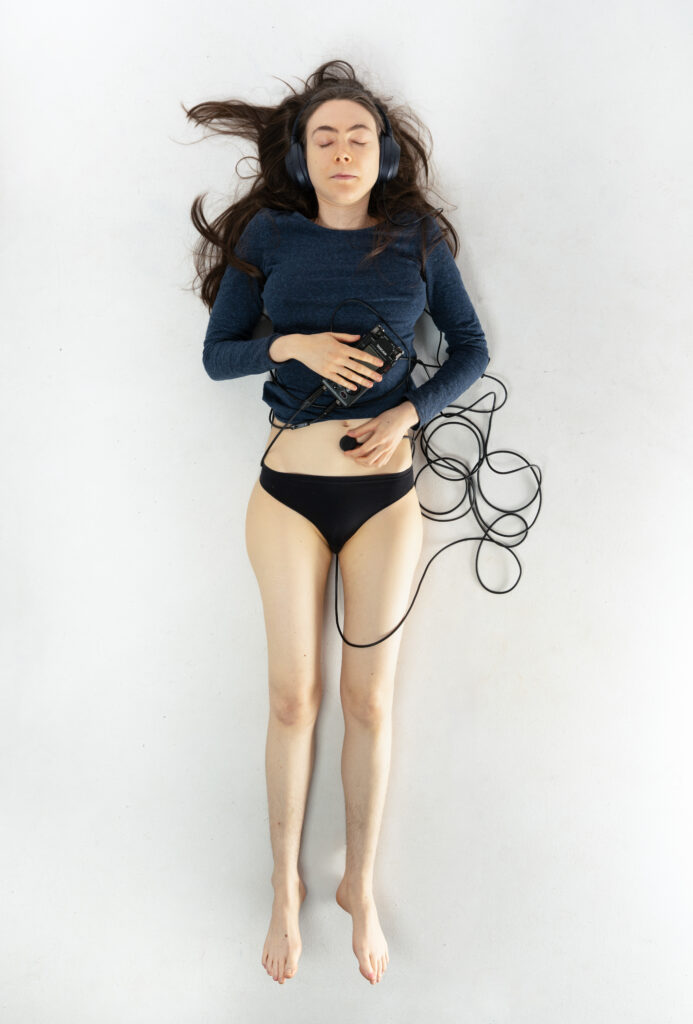
Chora is a vibroacoustic installation which invites you to listen with the whole body. It consists of a surface that emanates sounds I have recorded from within and around my body using a hydrophone and contact mic. What may happen here is a co-modulation, where bodies both conduct and are conducted by these quiet internal utterances. The piece emerged from wonderings about the womb as a sanctuary and a place of transformation. Perhaps this is true for the whole body;
a place we may forget but can always return to. Here we may re-member forms of knowing that precede language and identification, somewhere between comfort and unease, between self and other.
What happens when we rest in this in-between?
Chora, borrowed from philosopher and feminist theorist, Julia Kristeva, names the pre-linguistic space: rhythmic, bodily, prior to language and the formation of self.
Process view: Somatic listening using a contact mic, hydrophone and Tascam. Recordings later featured in the vibroacoustic installation Chora, 2026