Frank Waterton
(he/him)
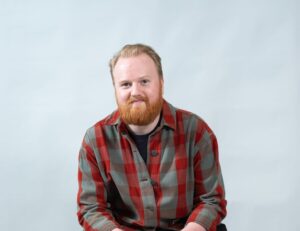
Frank Waterton is an artist based in Glasgow, Scotland.
Grounded in a material response to the natural world, his work addresses themes of movement through space and place. His work acts as a human response to the natural world and is concerned with the relationship between land and human engagement both to and within it, through its built environments, and its interactions with the materiality of wild or natural spaces. Centred on the act of walking, his work engages with the act of journeying through landscapes, exploring the material essence of place and the durational act of movement in location.
In his sculptural works, he creates objects made from organic or natural materials which explore themes of entropy and decay – as they expire over time – but also of renewal and deep time, as they grow and display permanence through plant, rock and soil samples involved within the work.
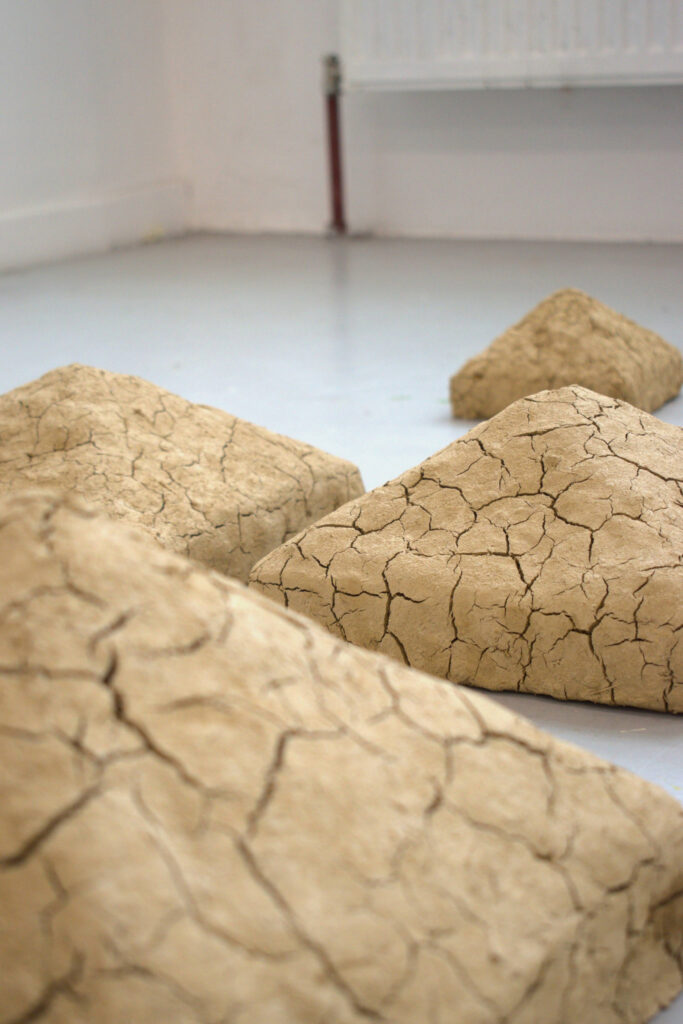
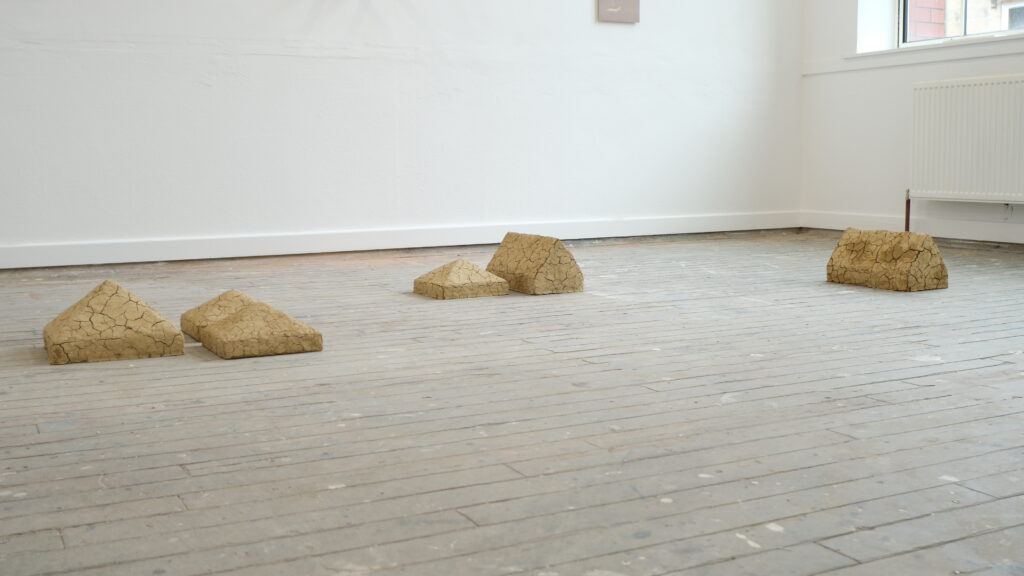
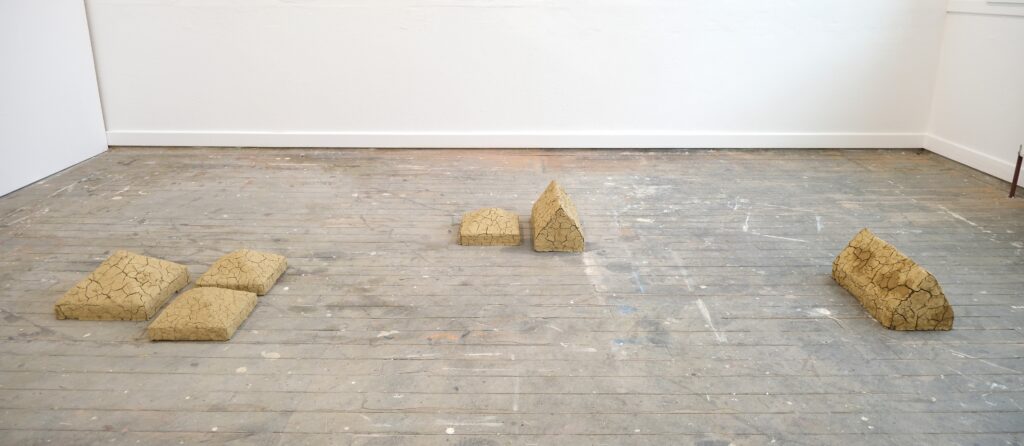
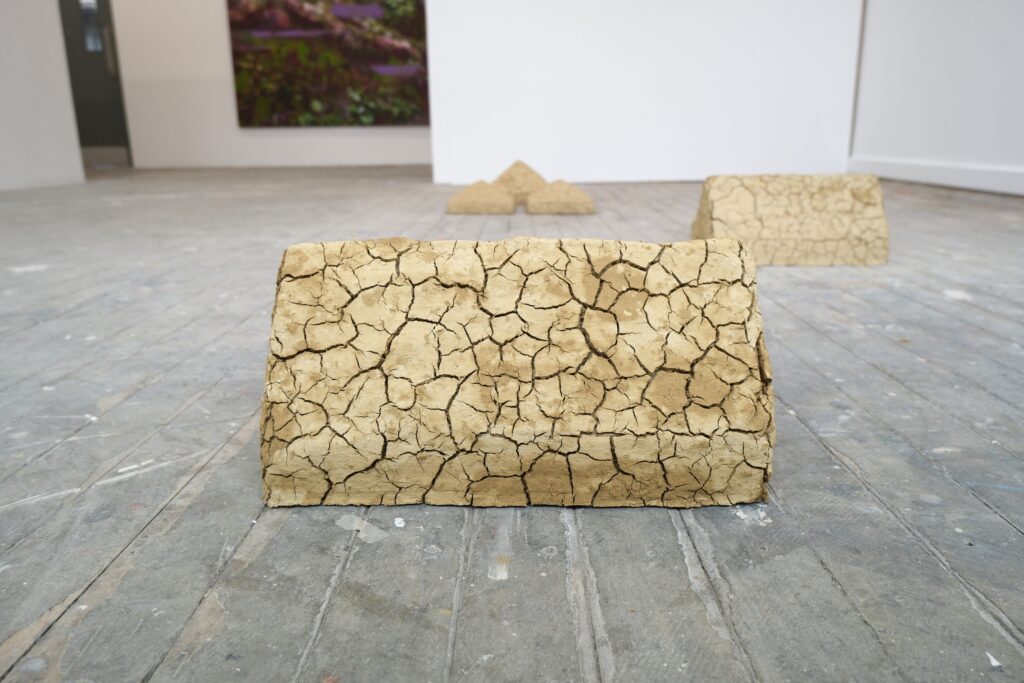
Settlement (2026)
Settlement (2026)
Foraged soil and clay, lime, grass and MDF
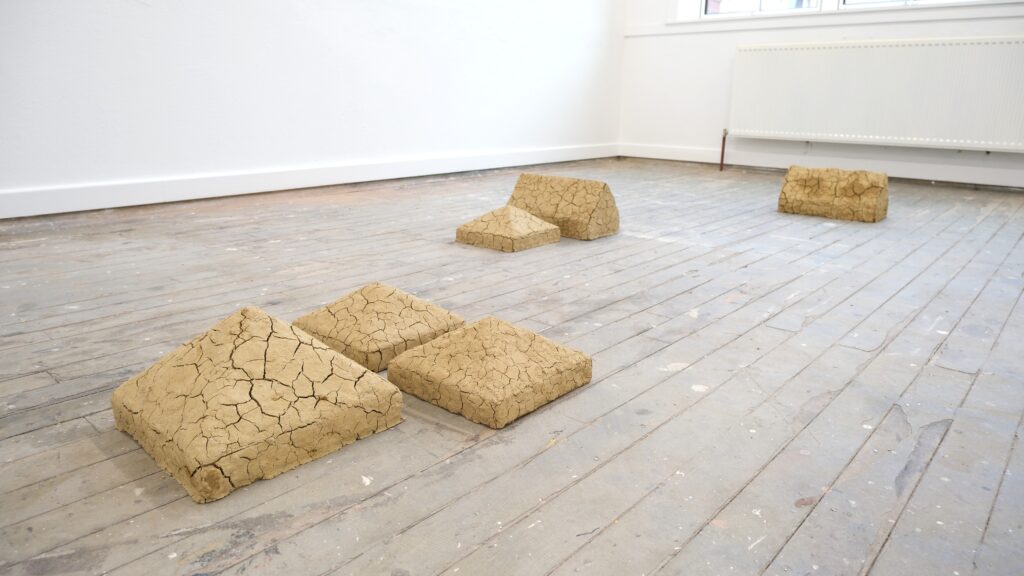
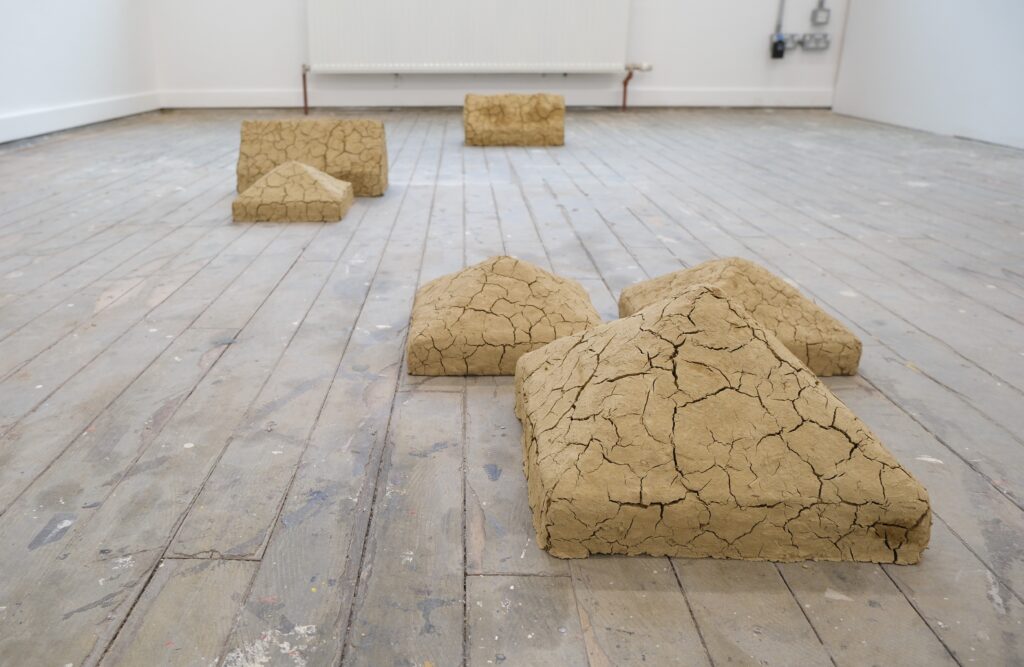
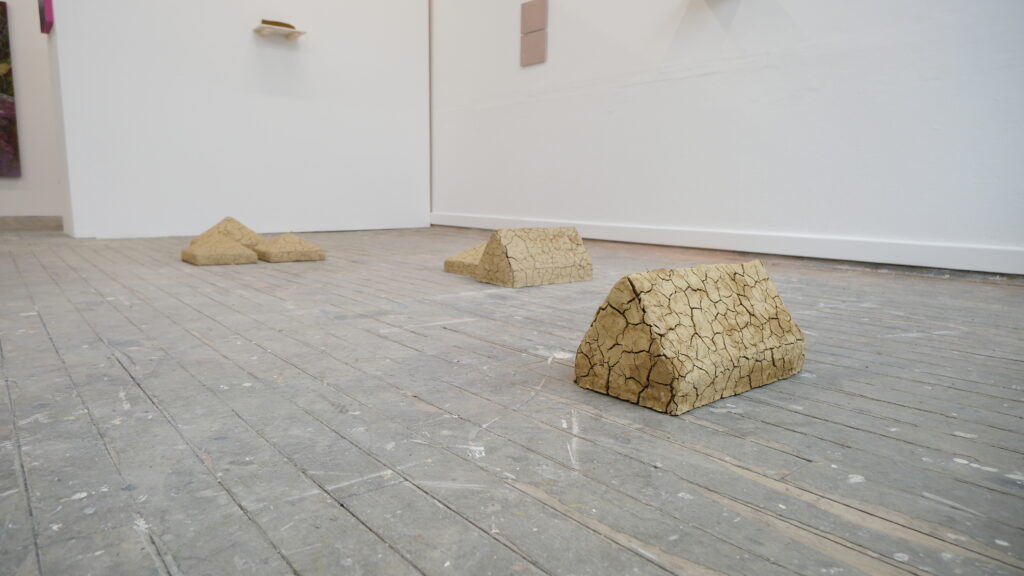
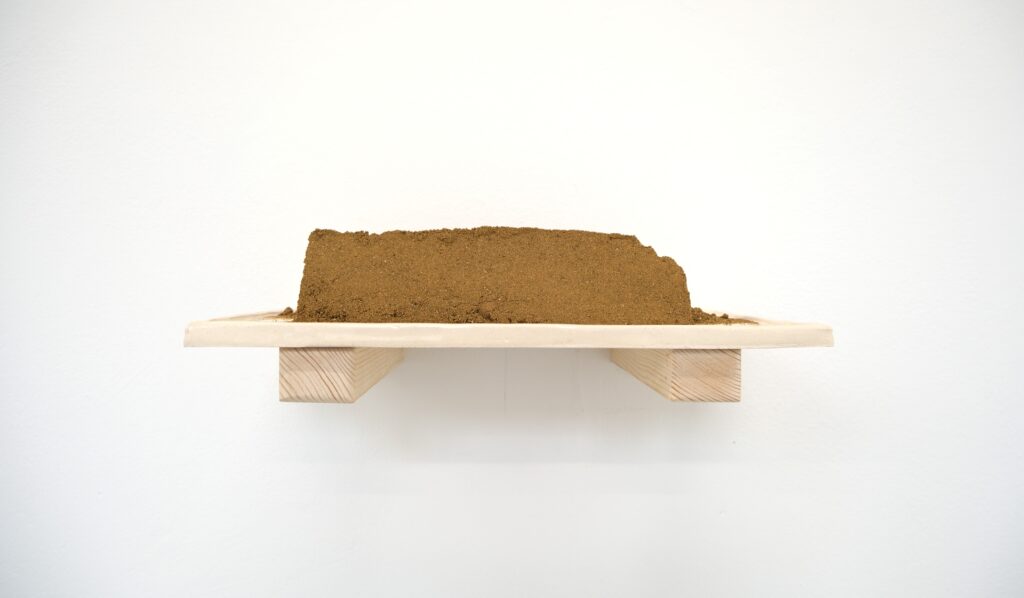
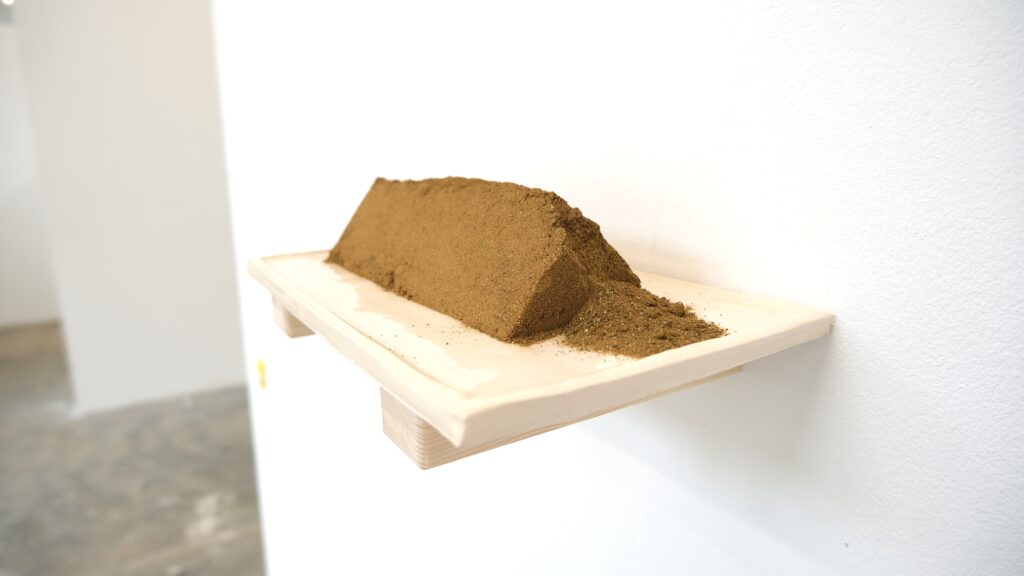
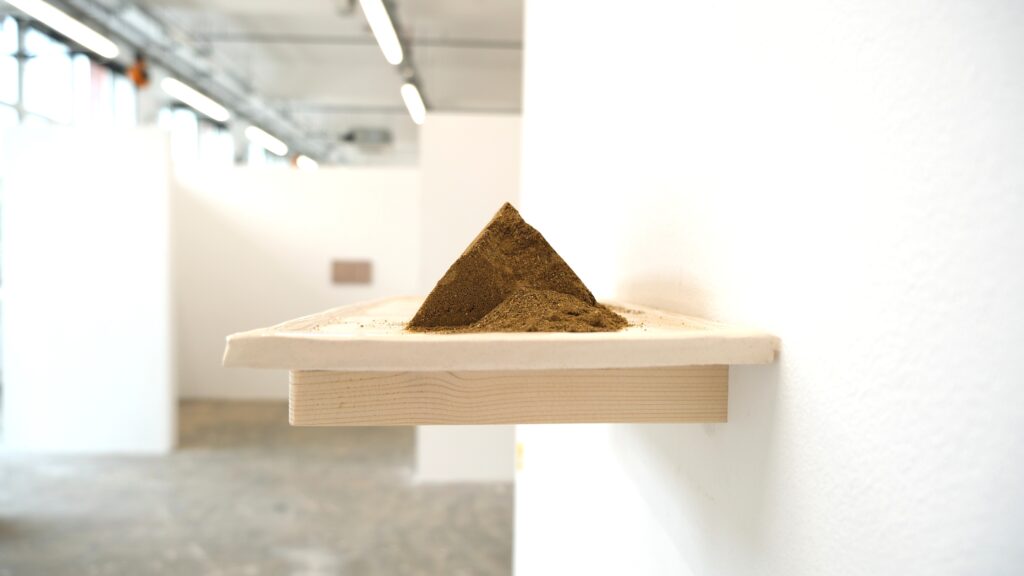
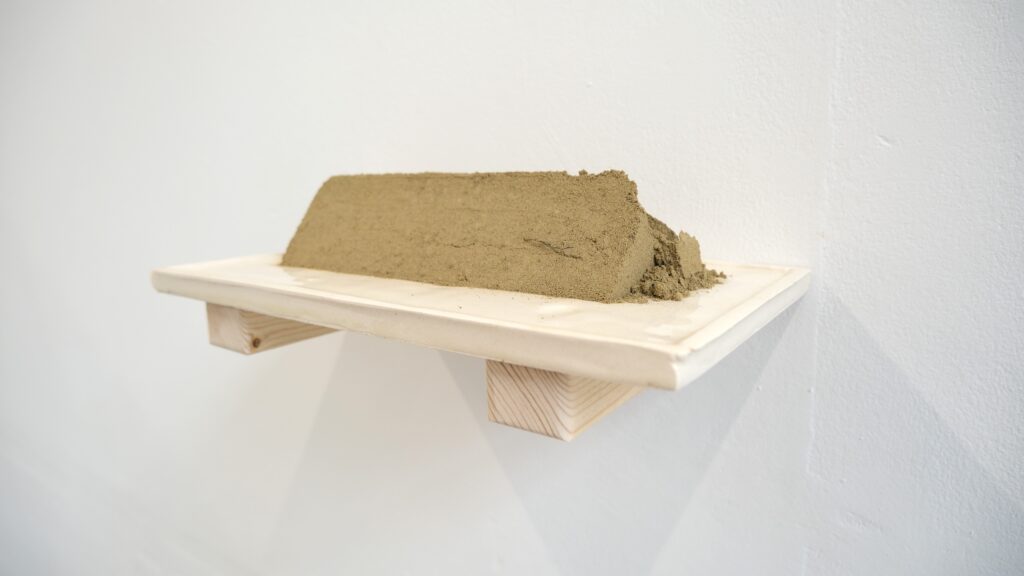
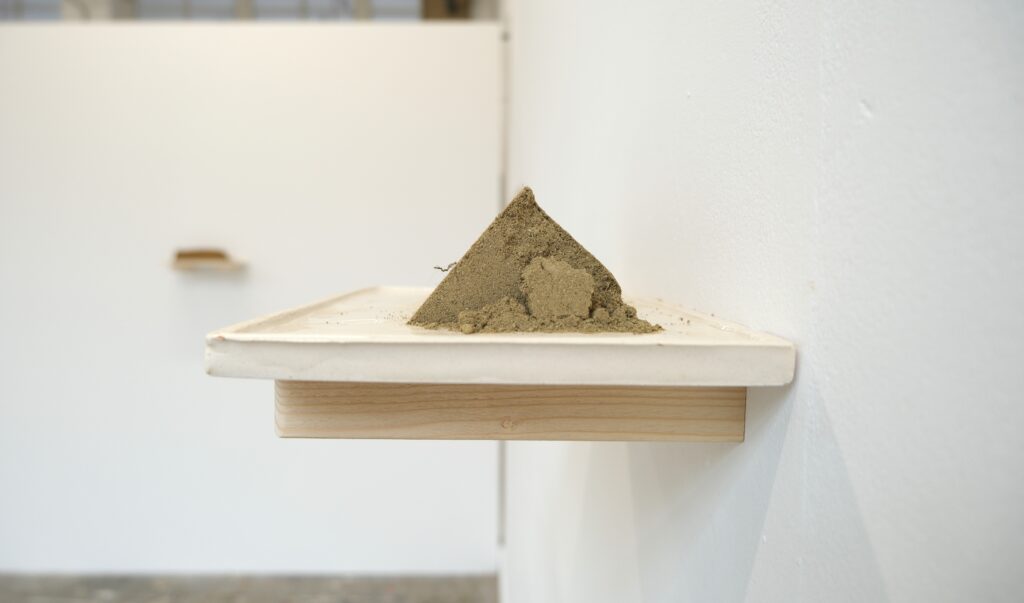
transformations (arachor) series (2026)
transformations (arachor) series (2026)
Foraged soil and clay, ceramic shelf, spruce timber and steel
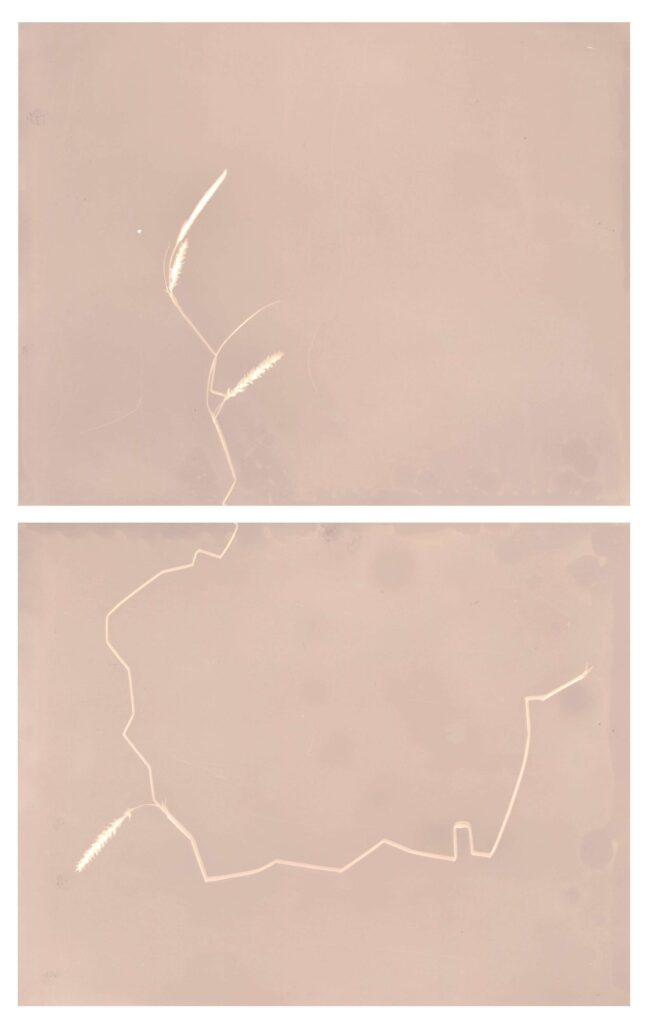
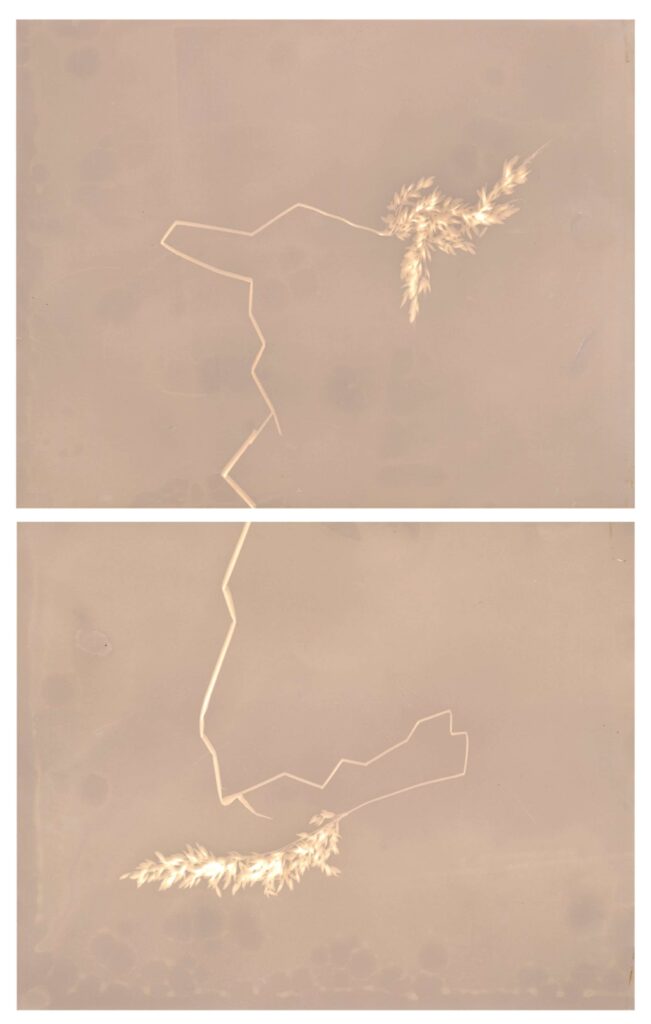
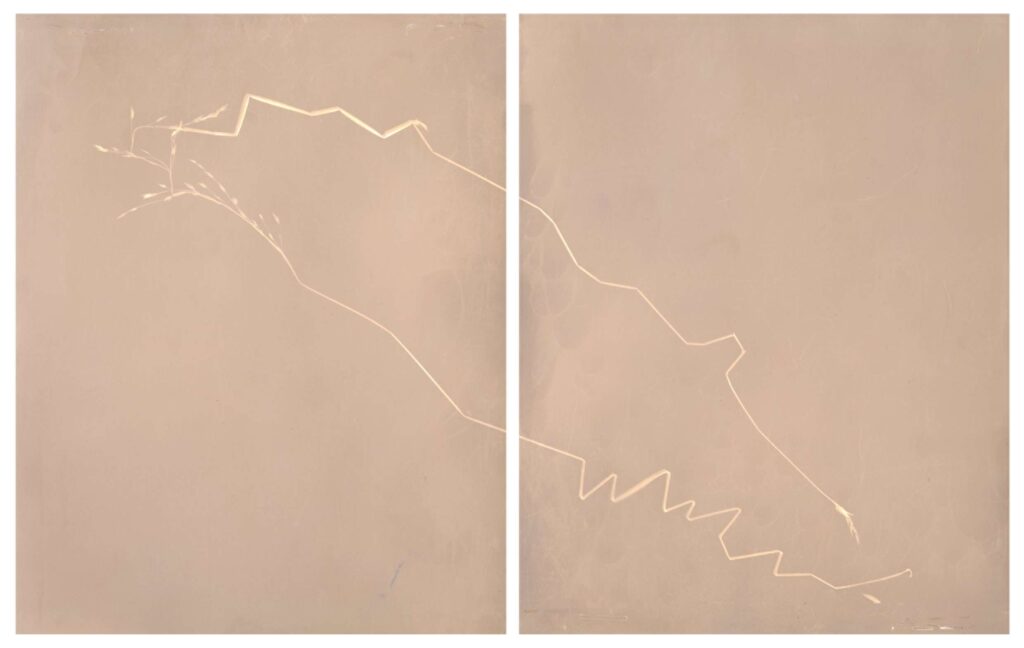
Grass Drawings series (2026)
Grass Drawings series (2026)
Resin coated photographic paper on board
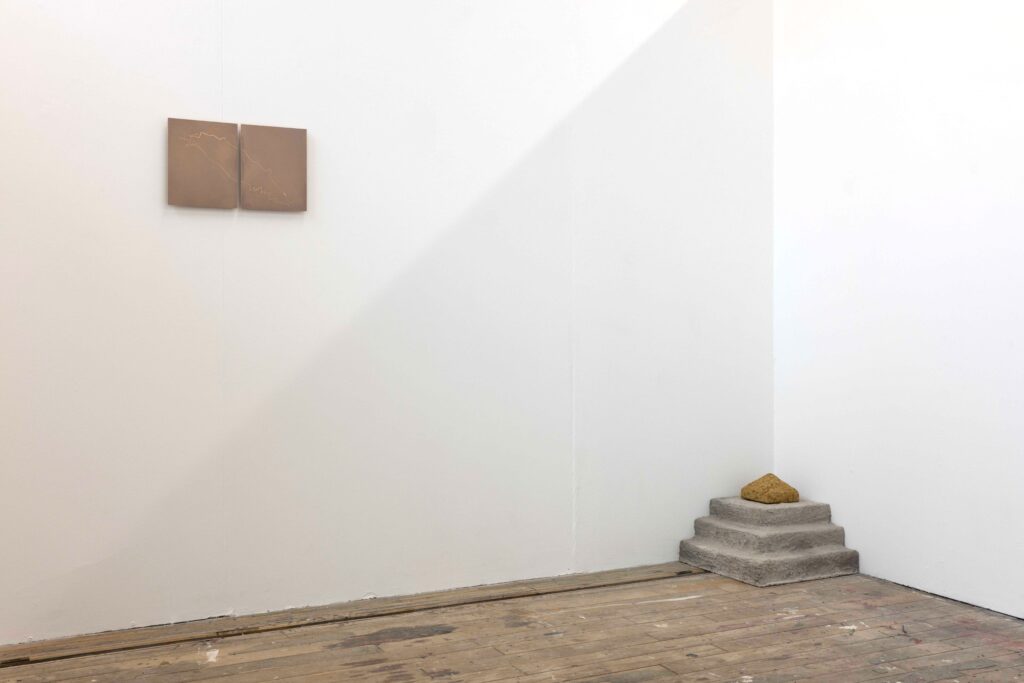
Settlement [cont.] (2026)
Settlement [cont.] (2026)
Foraged soil and clay, lime, grass, MDF and plaster
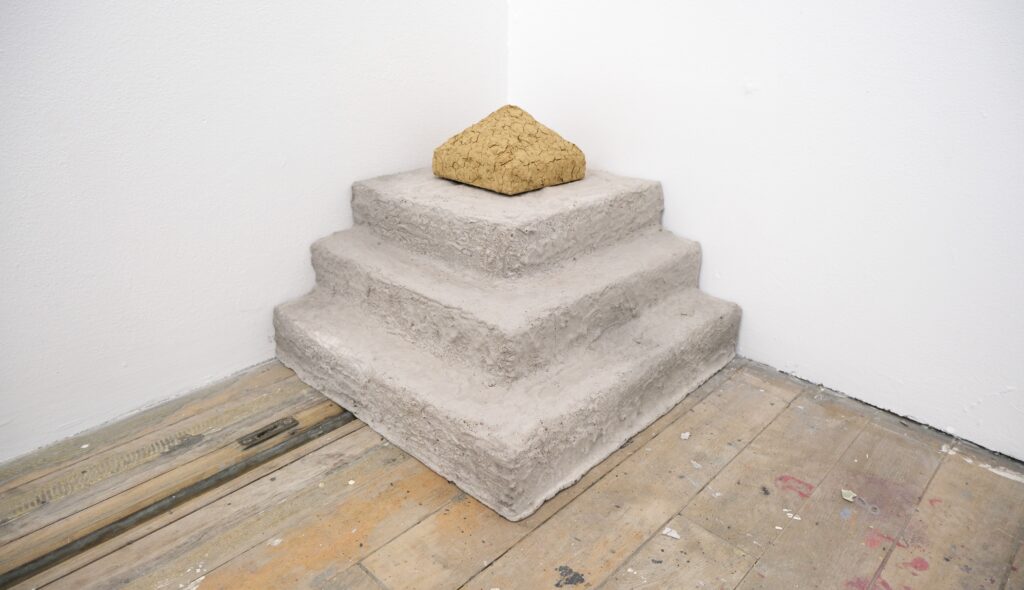
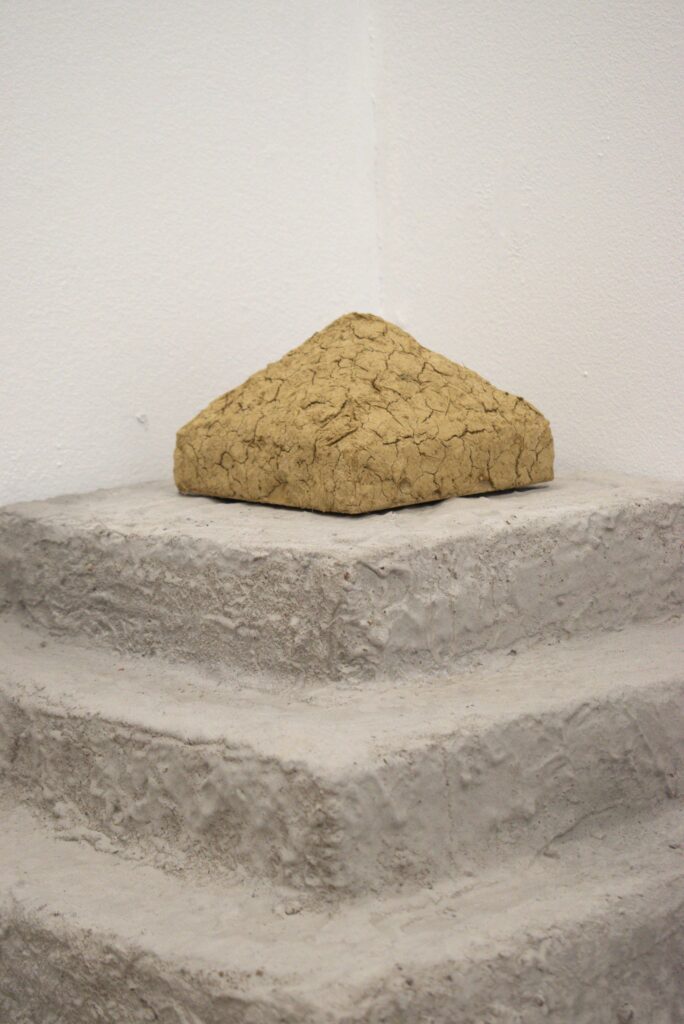
A Landscape of Space (2025-26)
A Landscape of Space, 2025-26
Soil, rock, olive wax and MDF
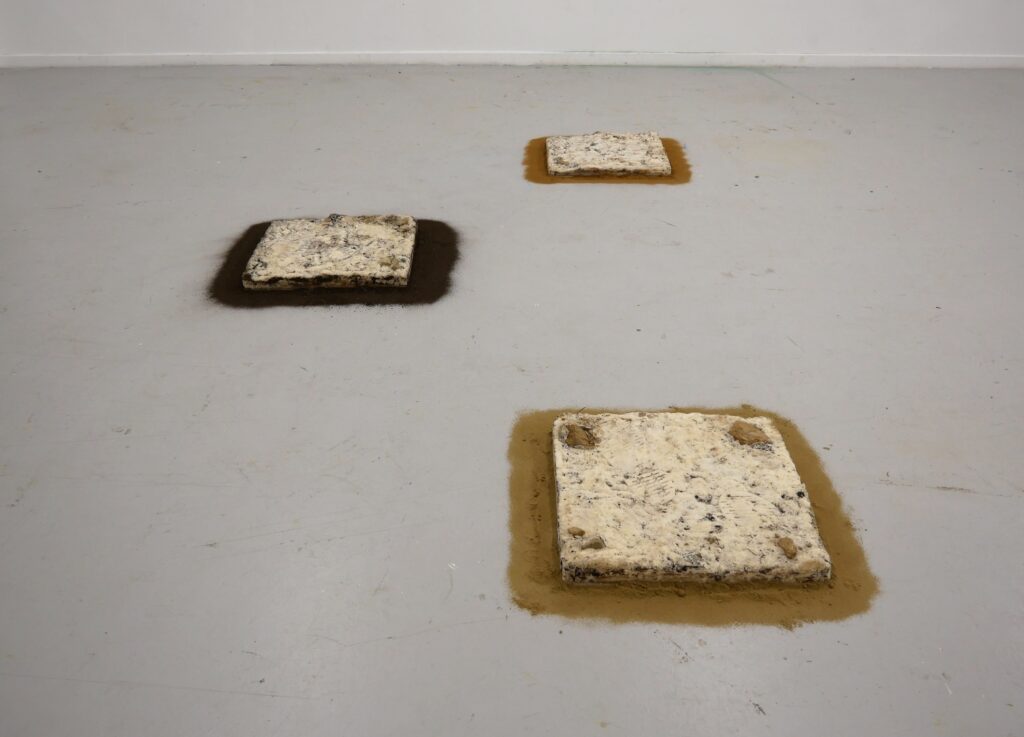
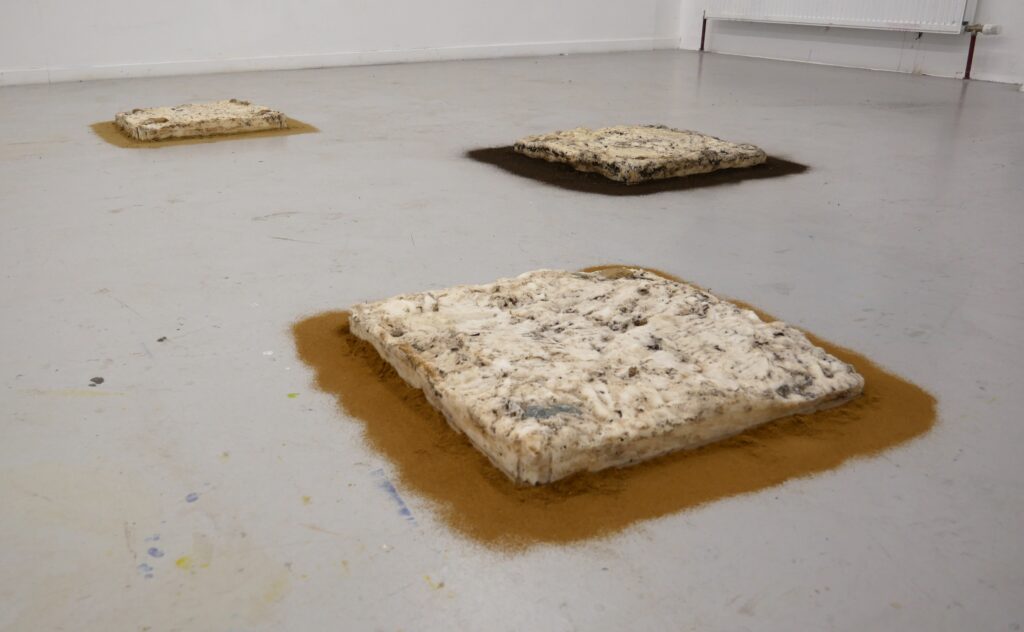
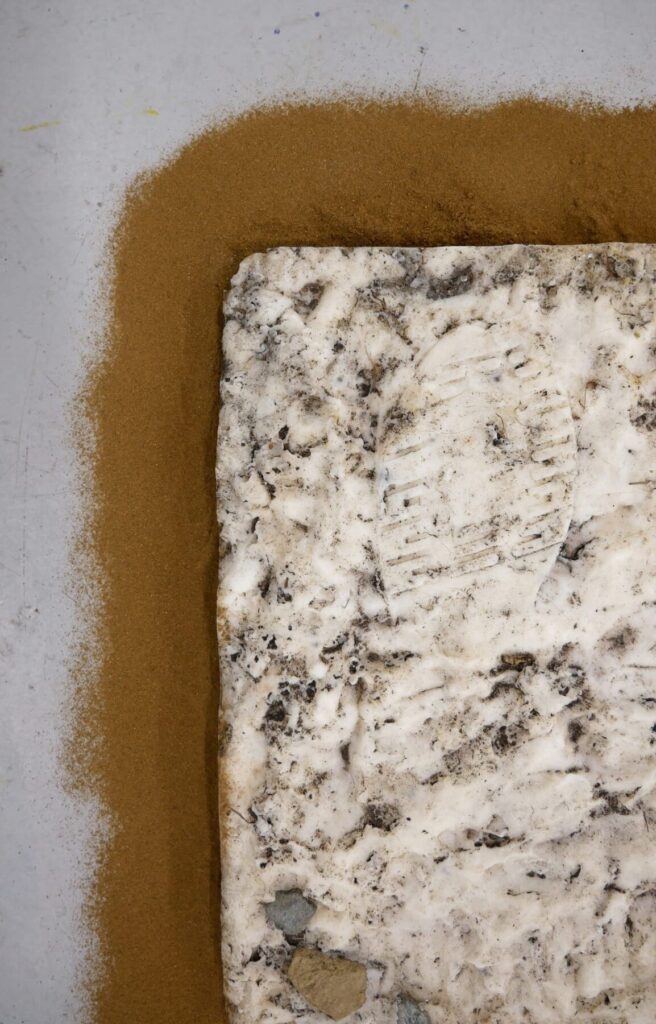
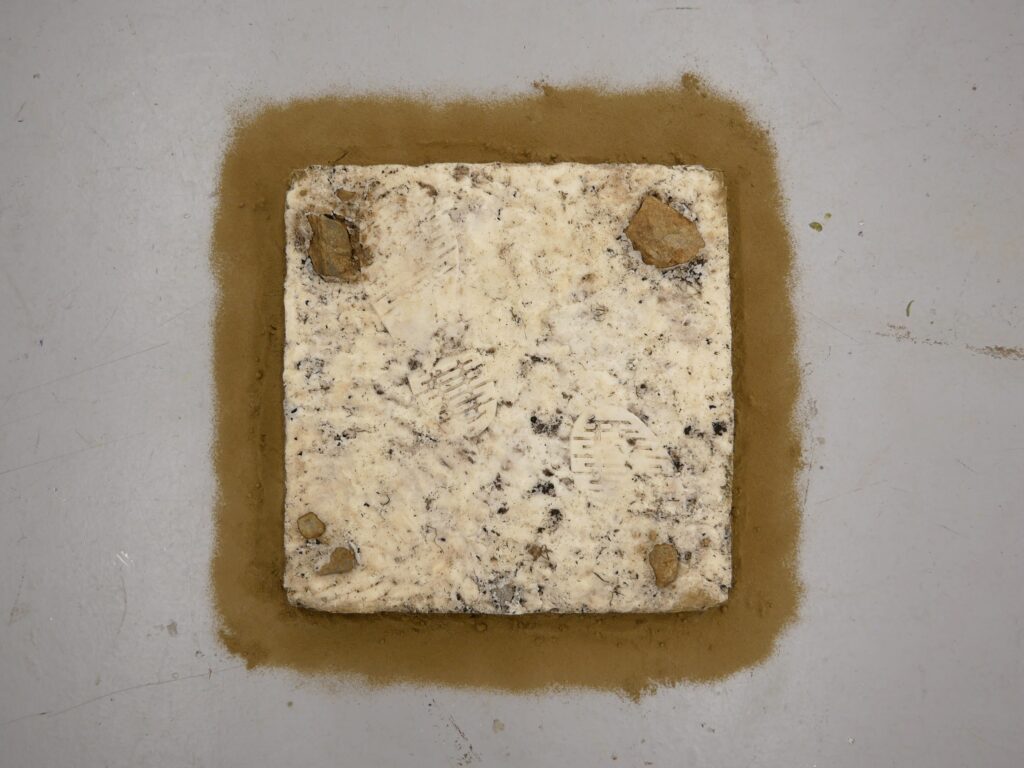
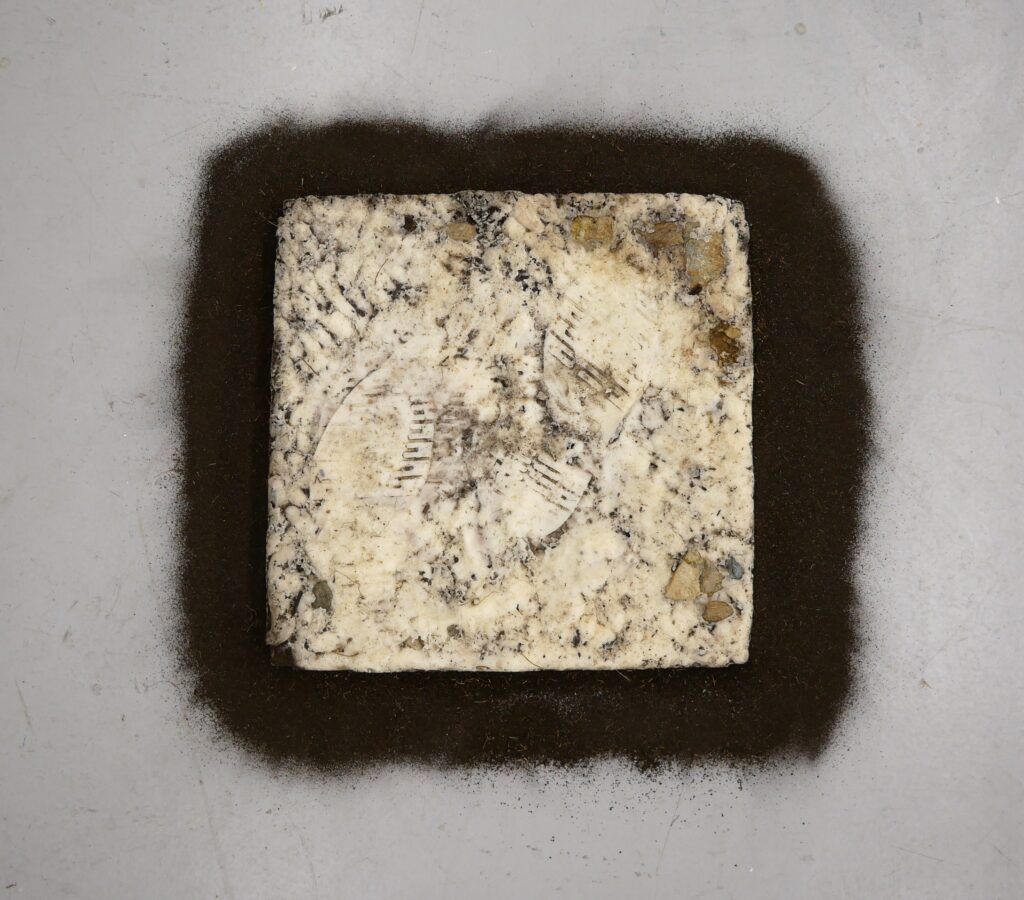
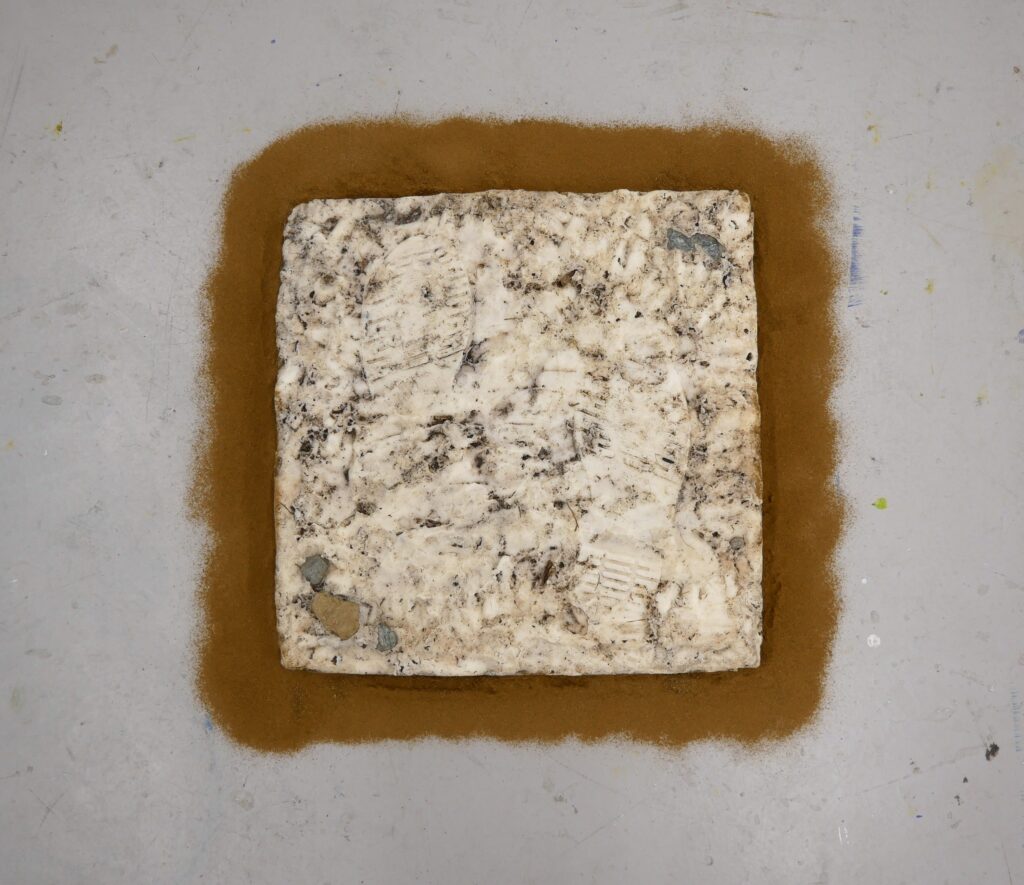
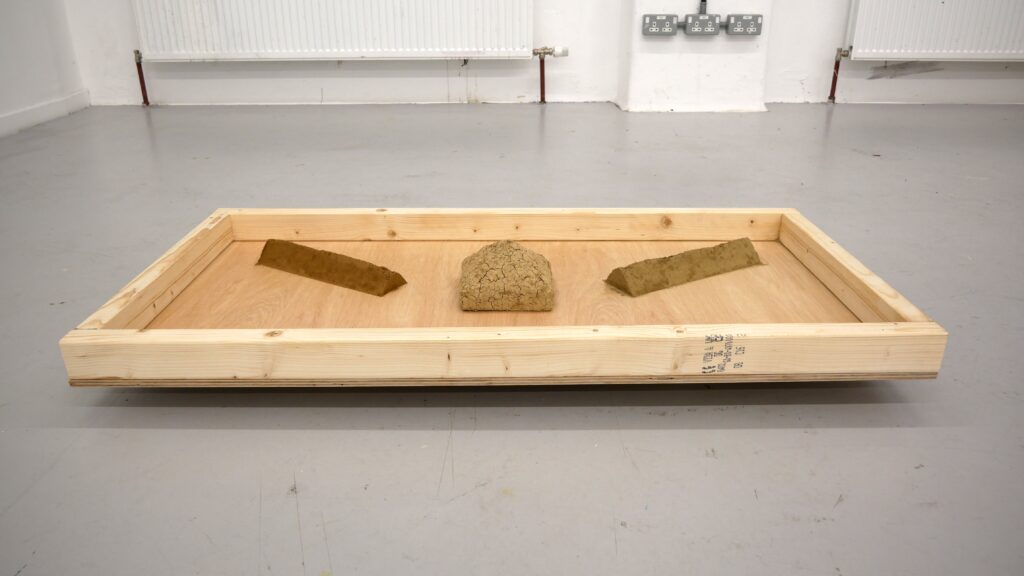
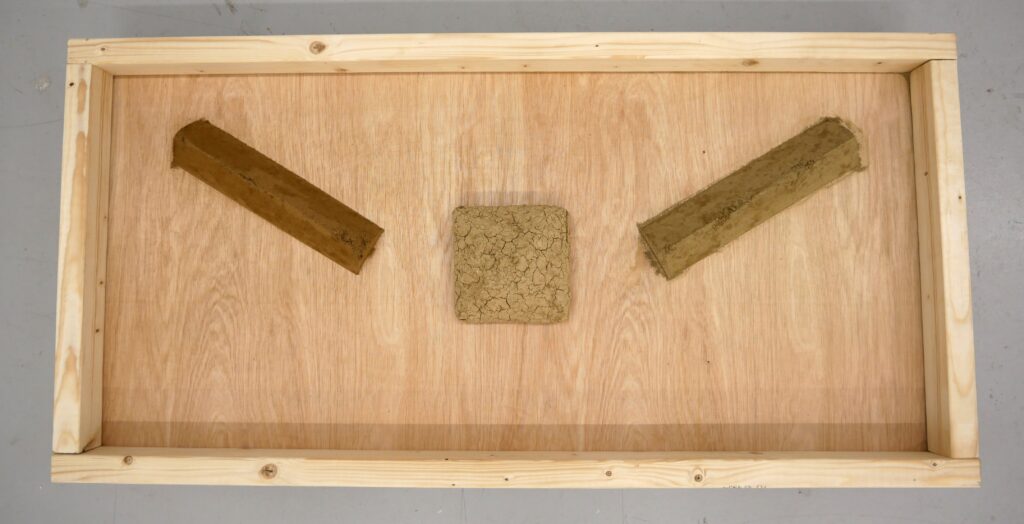
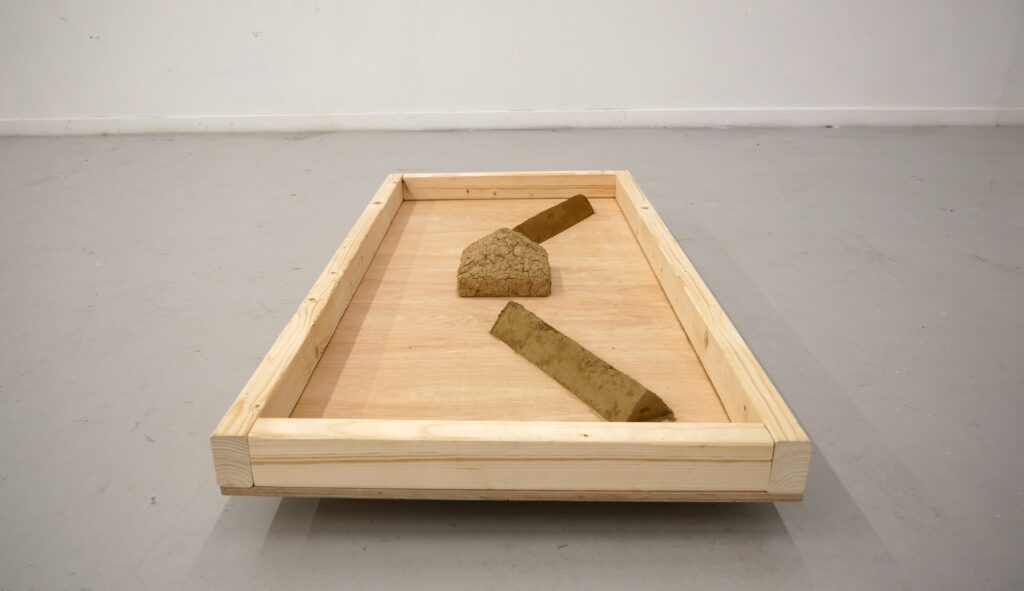
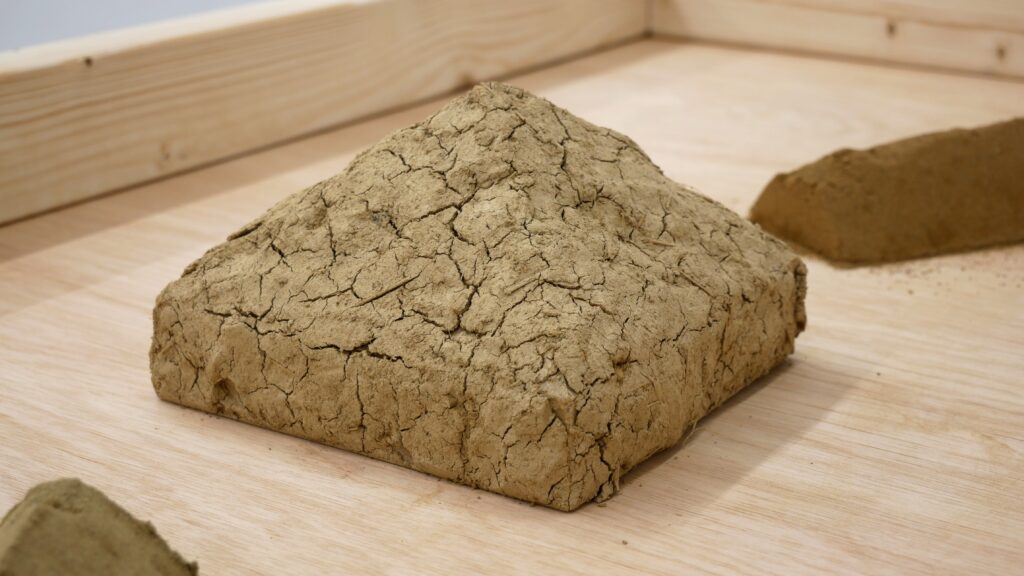
Passing Place (2026)
Passing Place, 2026
Foraged soil and clay, lime, grass, MDF and plywood
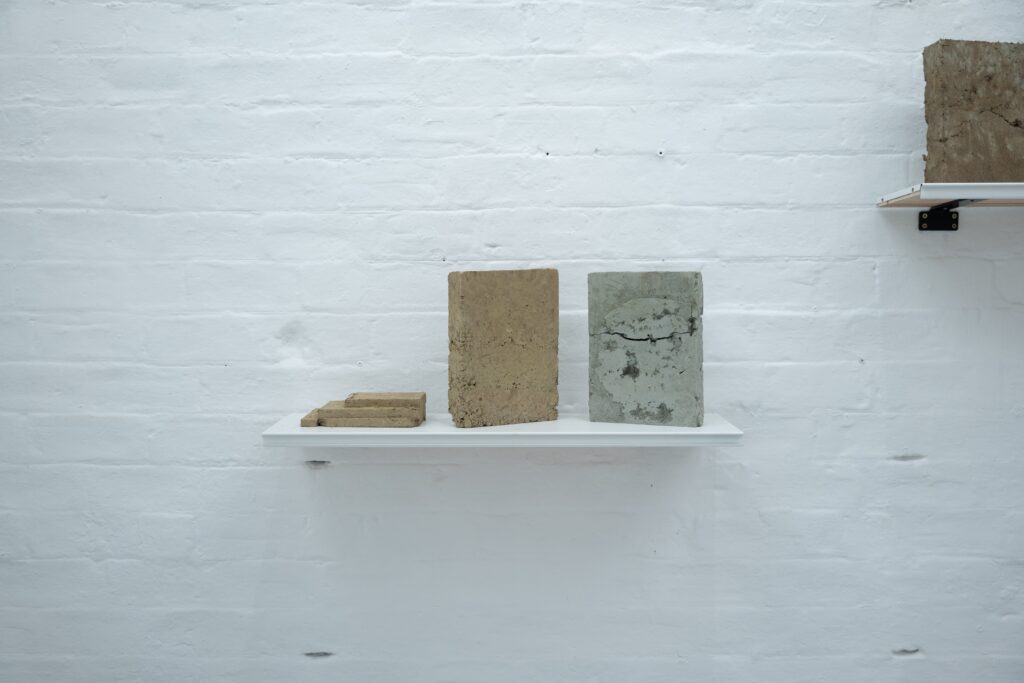
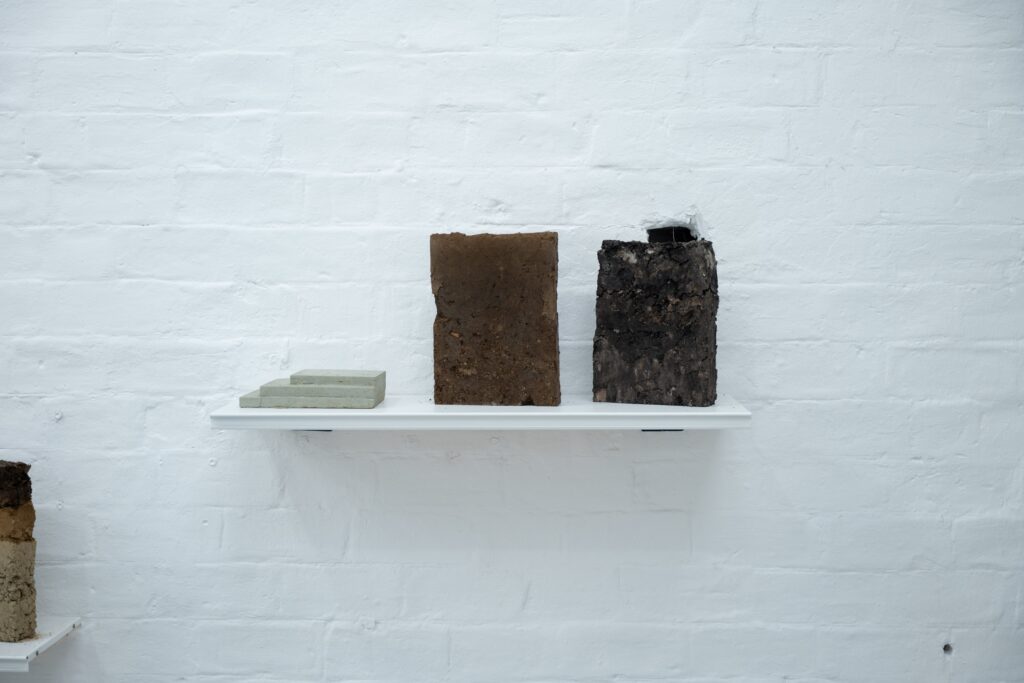
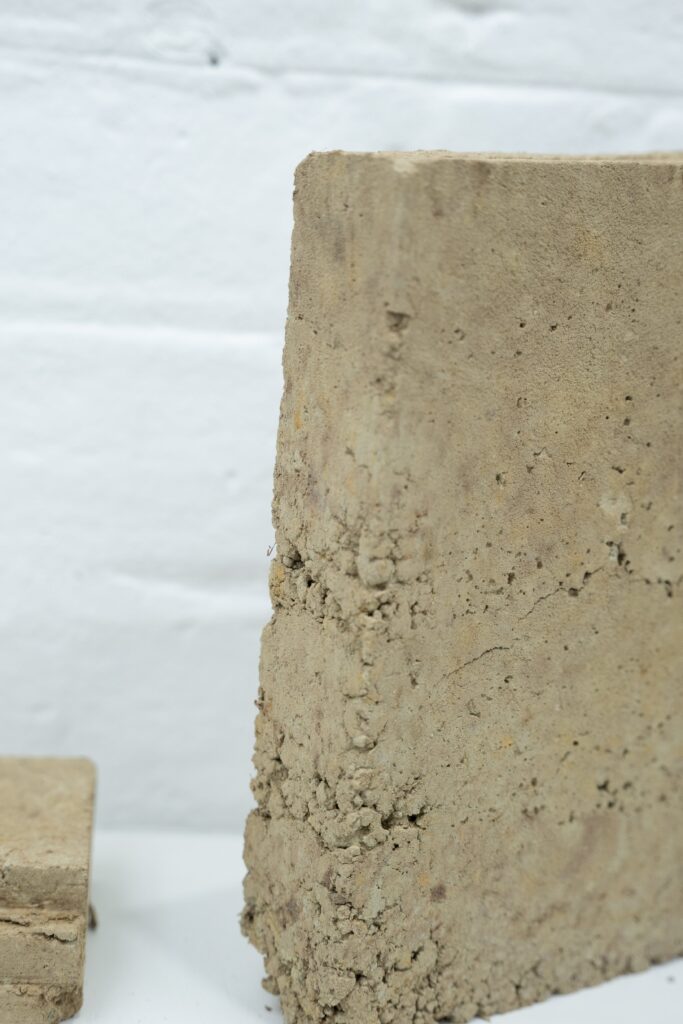
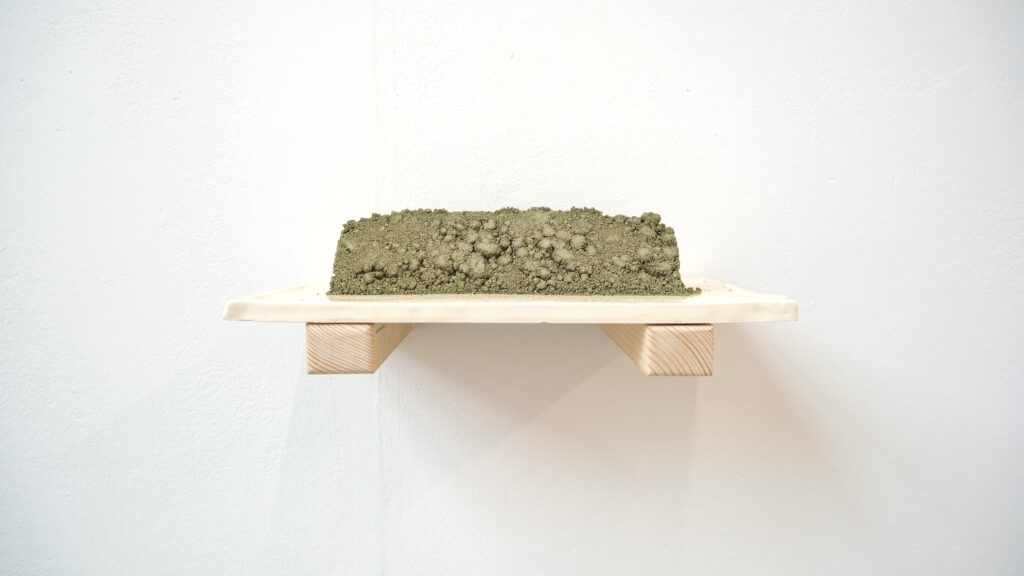
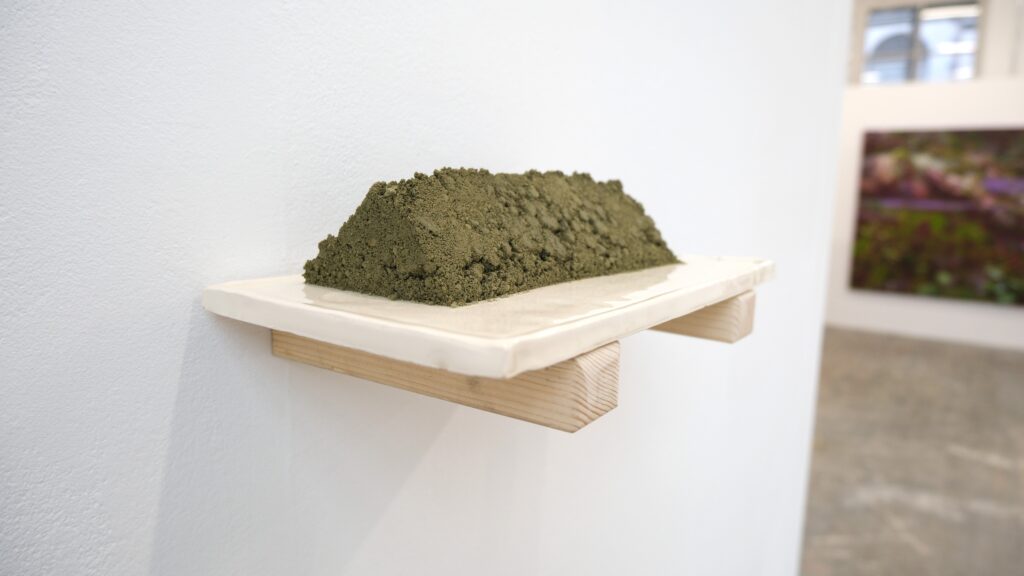
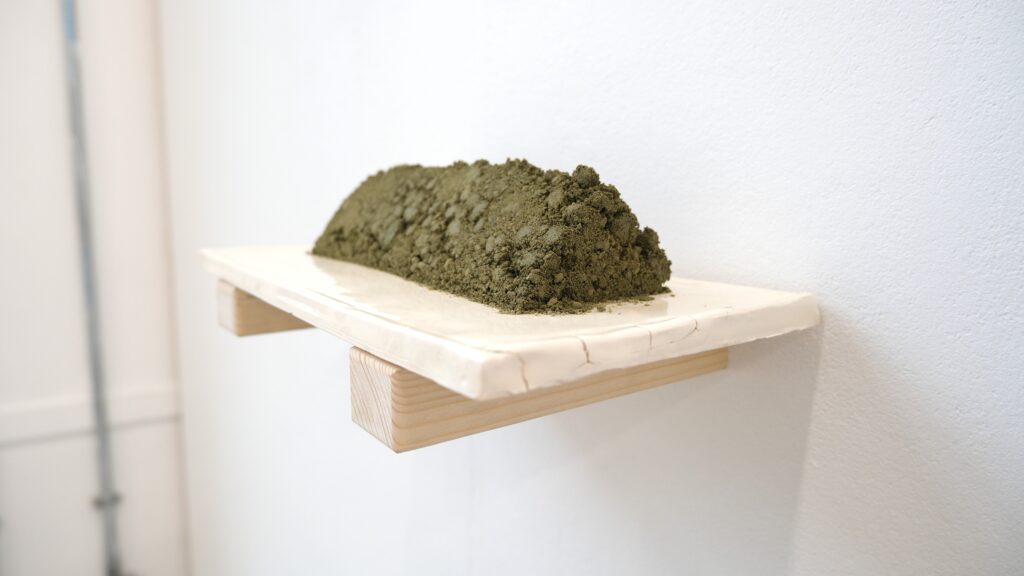
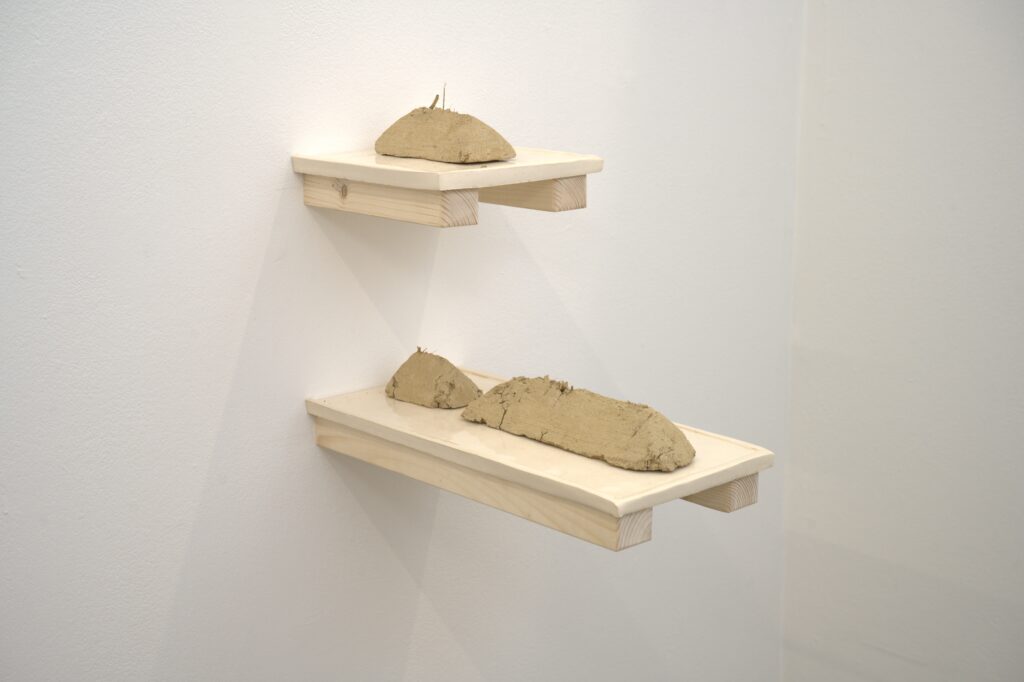
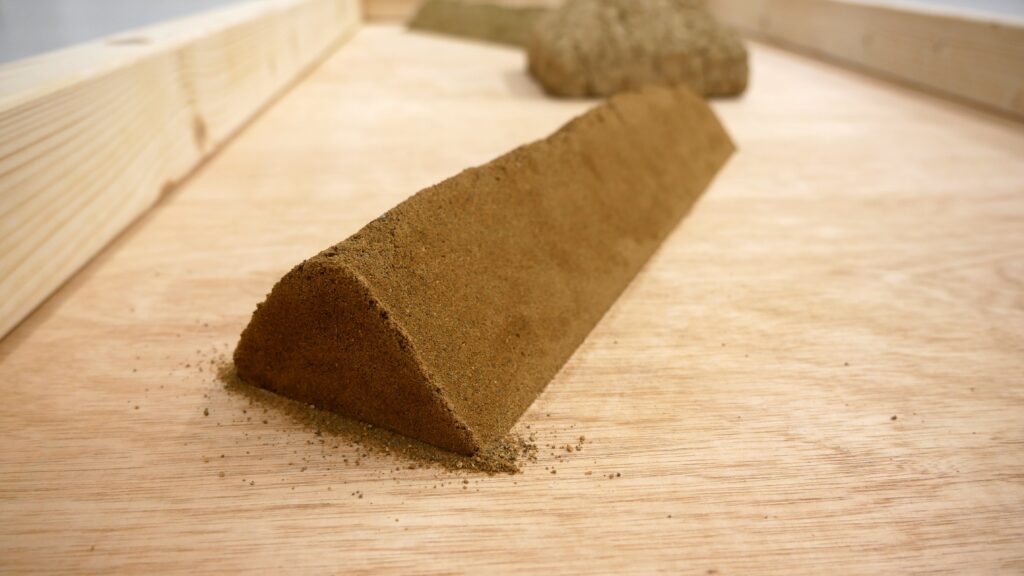
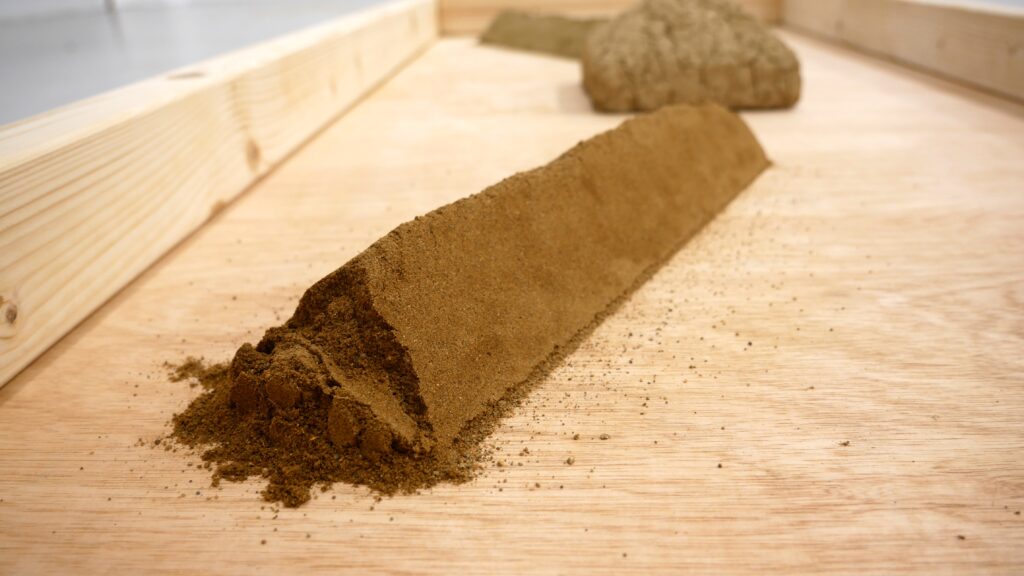
In Passing Place (2026), part of a walking route within the Arrochar Alps is represented by two lines of soil, formed into simple geometric forms which mimic both the archetypal form of a mountain and a line between places. On a micro level the sculptures replicate the effects of geological time in mountain landscapes and will shift and entropy the longer they are exhibited, losing their man-made form and becoming more natural in their appearance.
Centrally to the piece, these two lines of soil are connected by a shared mountainous form which expresses the transmutational effects of mountain landscapes which flit between mountainous form and the human connection to place through the built environment, evoked through the form of a dwelling. Finally, it attempts to become a passage between location, historical connections to land and something devotional in its approach.
Field Recordings: Beinn Narnain (2025)
Field Recordings: Beinn Narnain, 2025
Soil and clay on library shelving
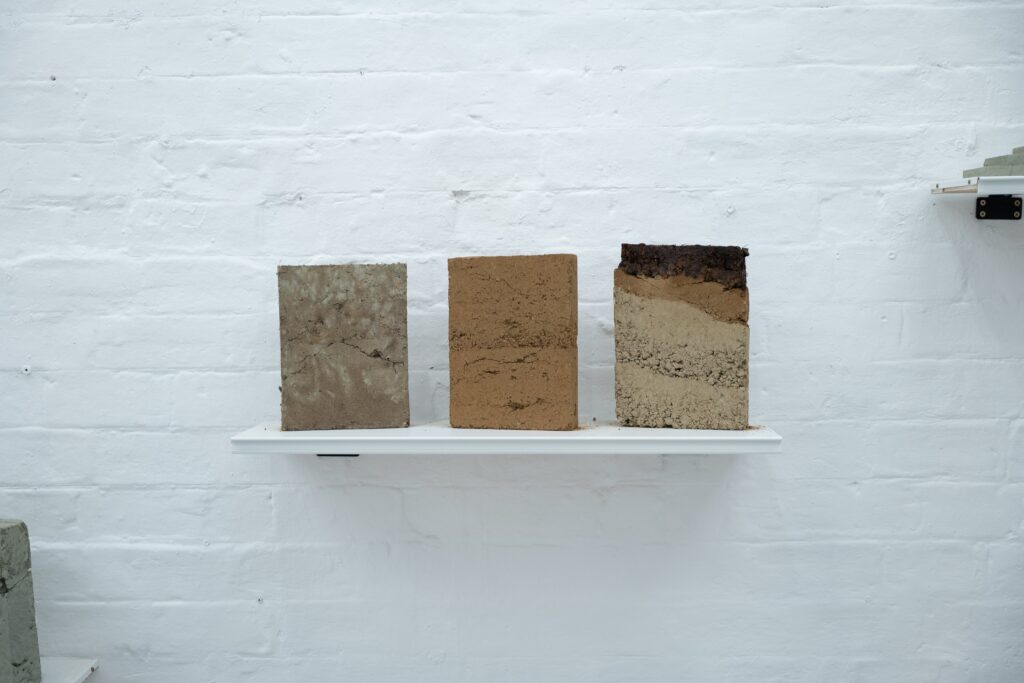
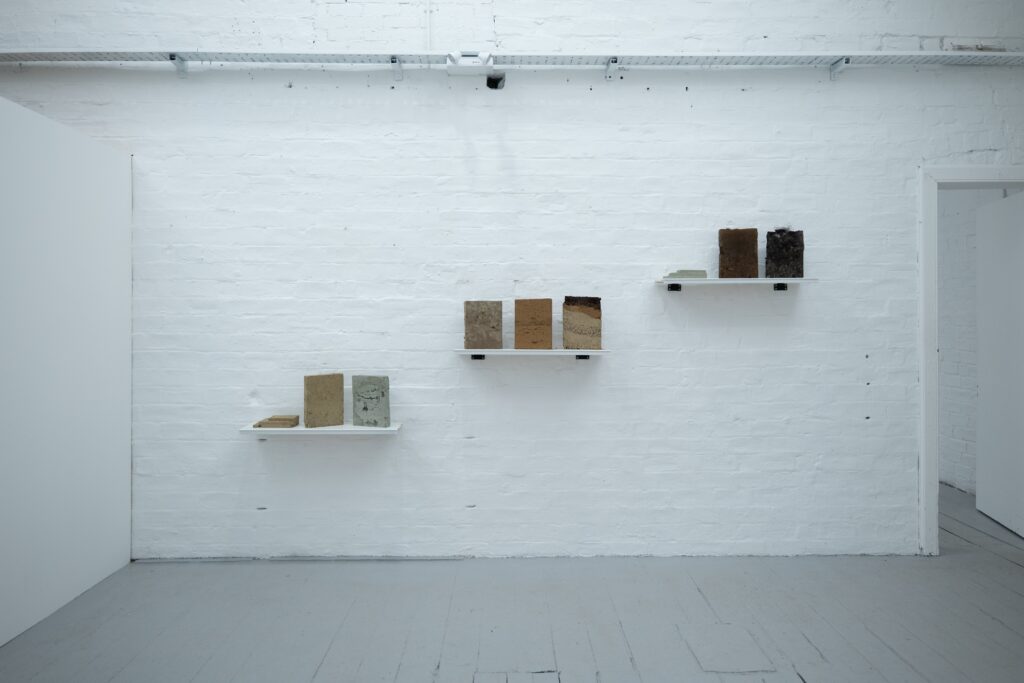
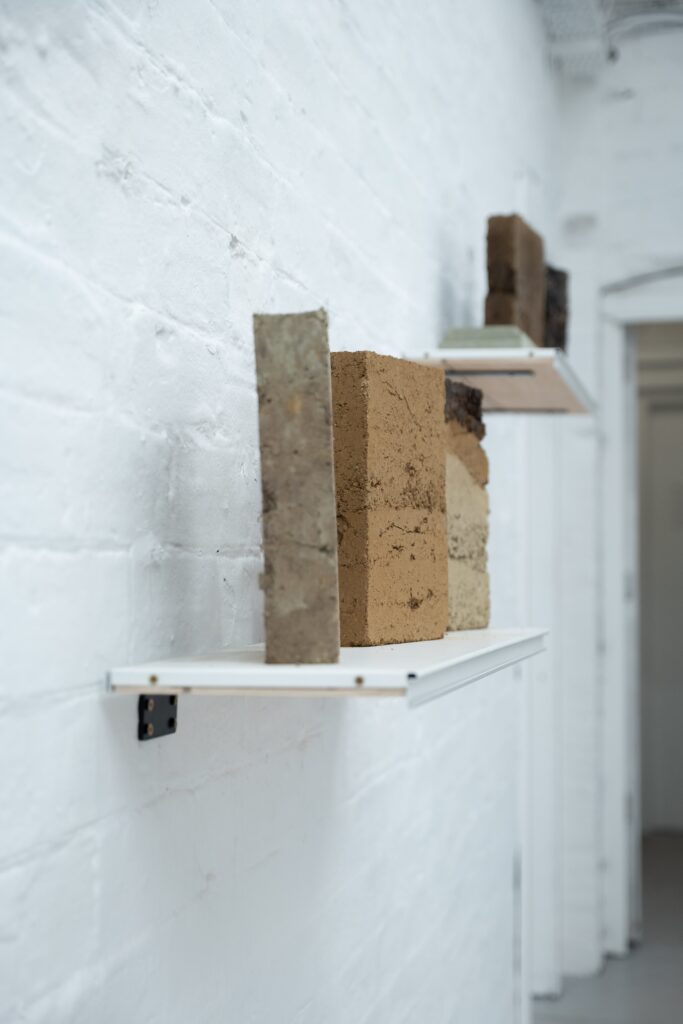
Field Recordings: Beinn Narnain is the culmination of three months of extensive research through several walks in one site.
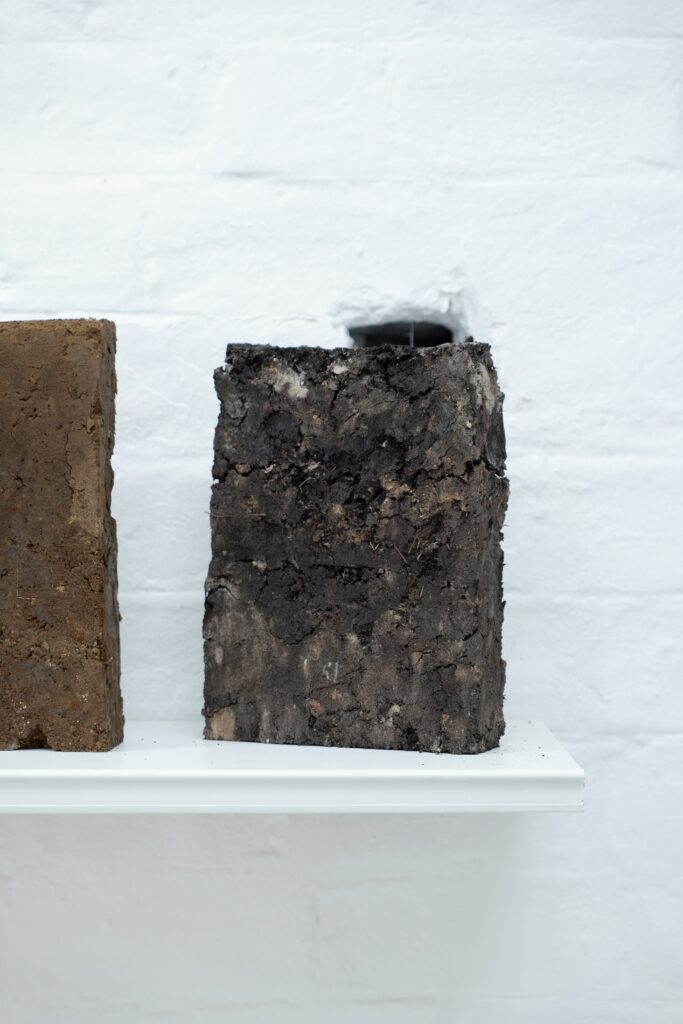
In this work, soil samples were collected from different sites along walks up Beinn Narnain in the Arrochar Alps and compressed into abstract forms, which mimic the shapes of books, and explores the natural diversity of one site to evoke a sense of place.
Through this process, geological time is explored as a method of making and as an exploration of architectural form.
The work is presented as a library, evoking a space of movement and transition and acts as a dialogue between human movement in the land, geological time, and our desire to record and store information. This also indicates a larger intention for the work, where the objects are temporary and will be returned to the environment they came from, and exhibited and recorded, as they entropy back into the land.