Anzhi Ge
Throughout my four years of studying Interior Design, my focus has primarily centered on how spatial design shelters and accommodates human life. The project, In-between the Leaves, represents an evolution of this understanding.
Rather than defining the interior as an exclusively human domain, I sought to explore how a space might equally nurture both ecology and history. This is an attempt to broaden the definition of space for reading — conceiving a shared community library where architecture, knowledge, and untamed vegetation within a balanced, interdependent system.
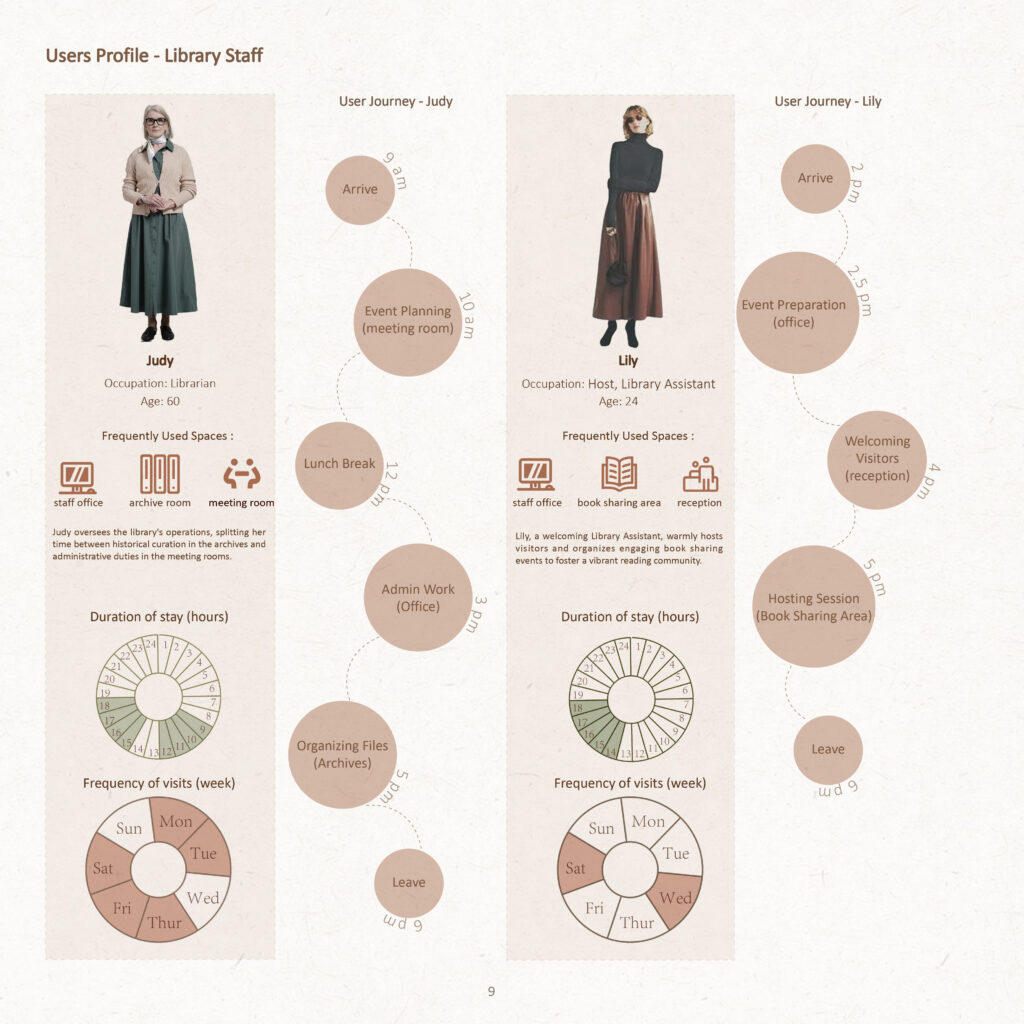
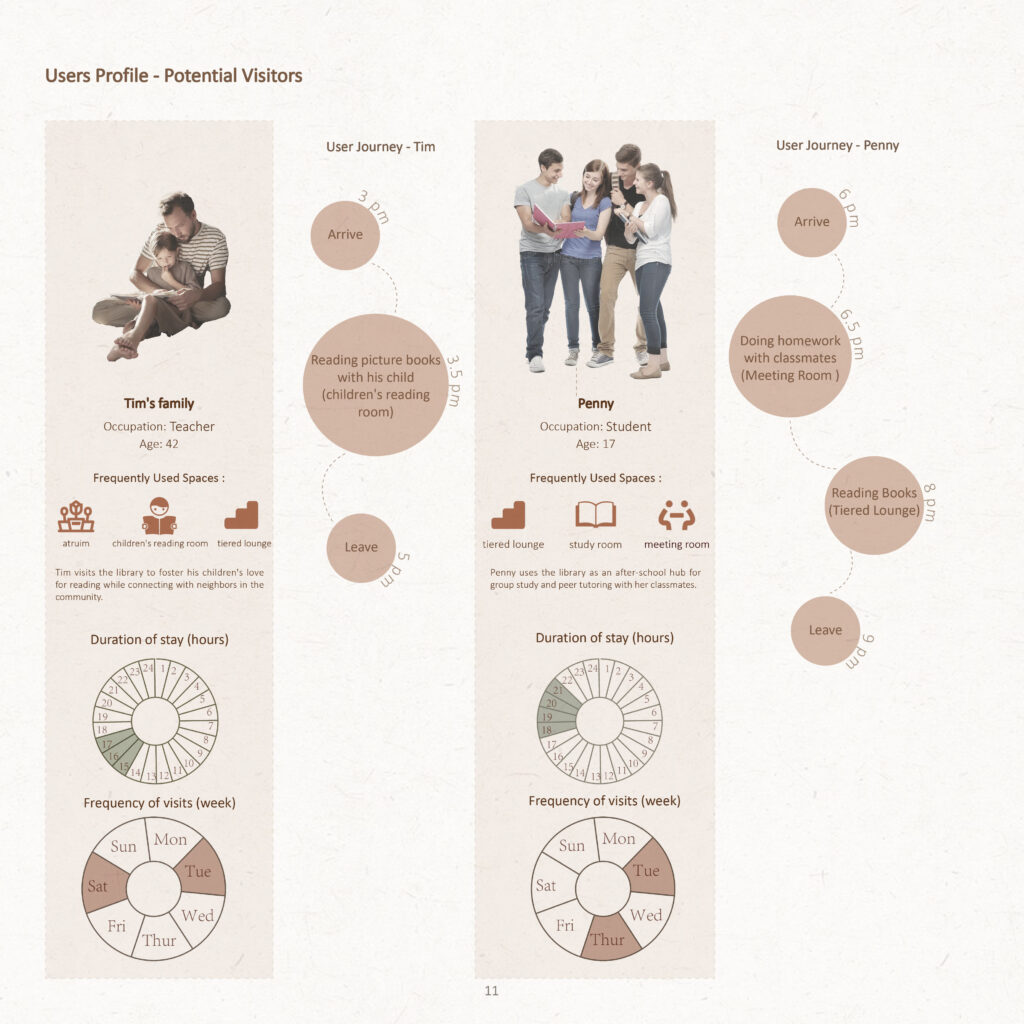
Target People
Understanding target users is a fundamental step in interior design because a space is ultimately defined by the people who use it. By analyzing the distinct behaviors and needs of both the library staff and visitors, I can design a library that goes beyond visual appeal. This analysis ensures that every design choice, from spatial layout to lighting, is highly practical and significantly enhances the overall user experience.
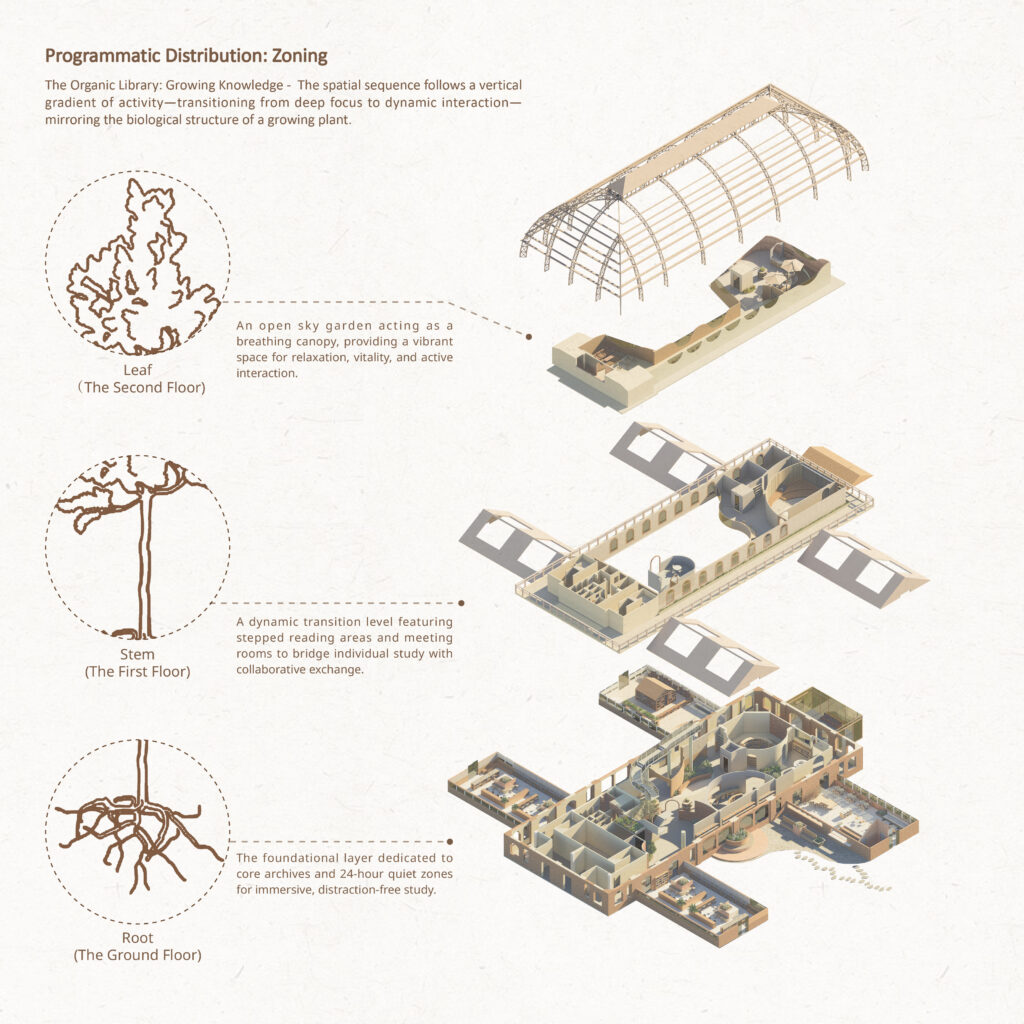
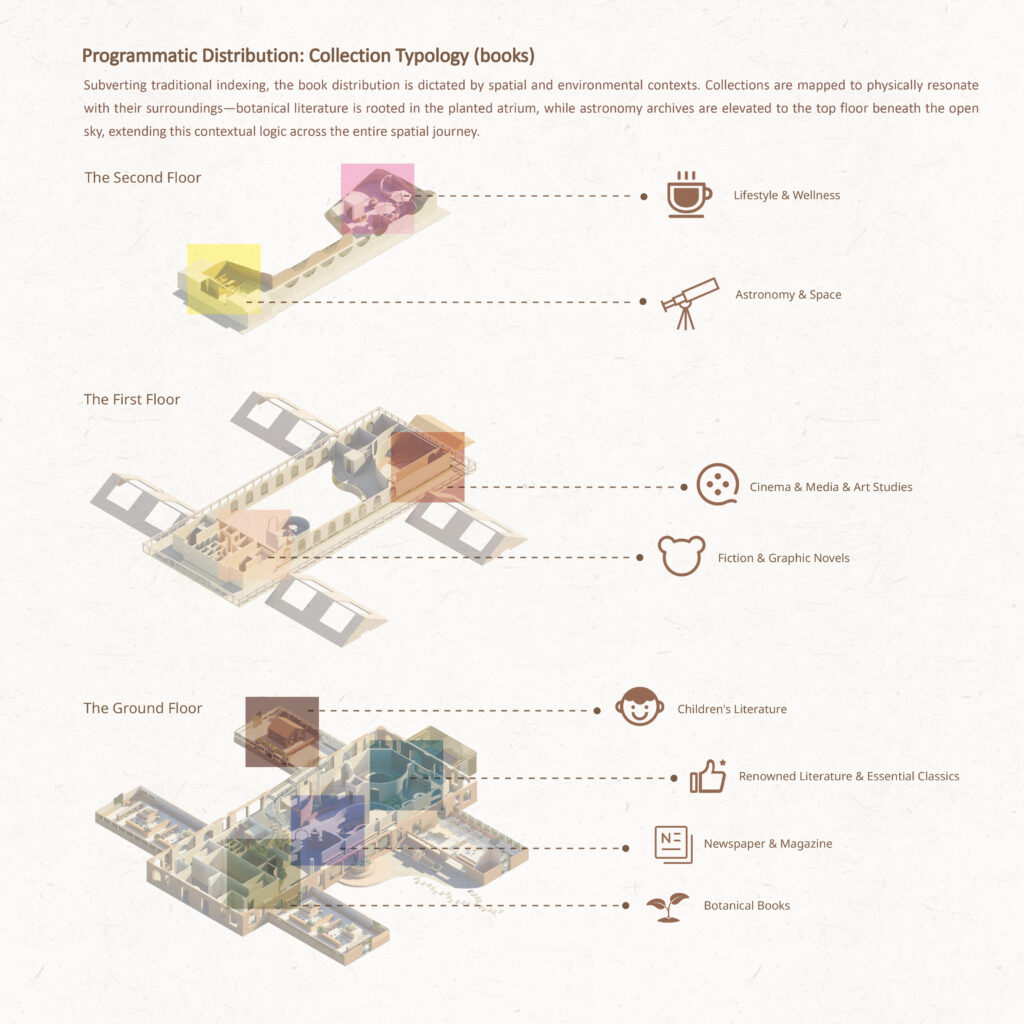
Programmatic Distribution: Zoning; Book Collection Typology
The spatial distribution of this three-story library is inspired by the organic growth of a plant: progressing from roots to stems, and finally to leaves. The ground floor acts as the ‘roots,’ anchoring the deep, foundational knowledge in a secure, introverted archive. The middle floor serves as the ‘stem,’ a semi-open transitional space, while the top floor blossoms into the ‘leaves’—a fully open, breathable area for social exchange.
Therefore, the book typology departs from the traditional A-Z classification. Instead, books are placed based on their relationship with the surrounding environment, allowing readers to discover literature contextually, just as leaves respond to sunlight and air.
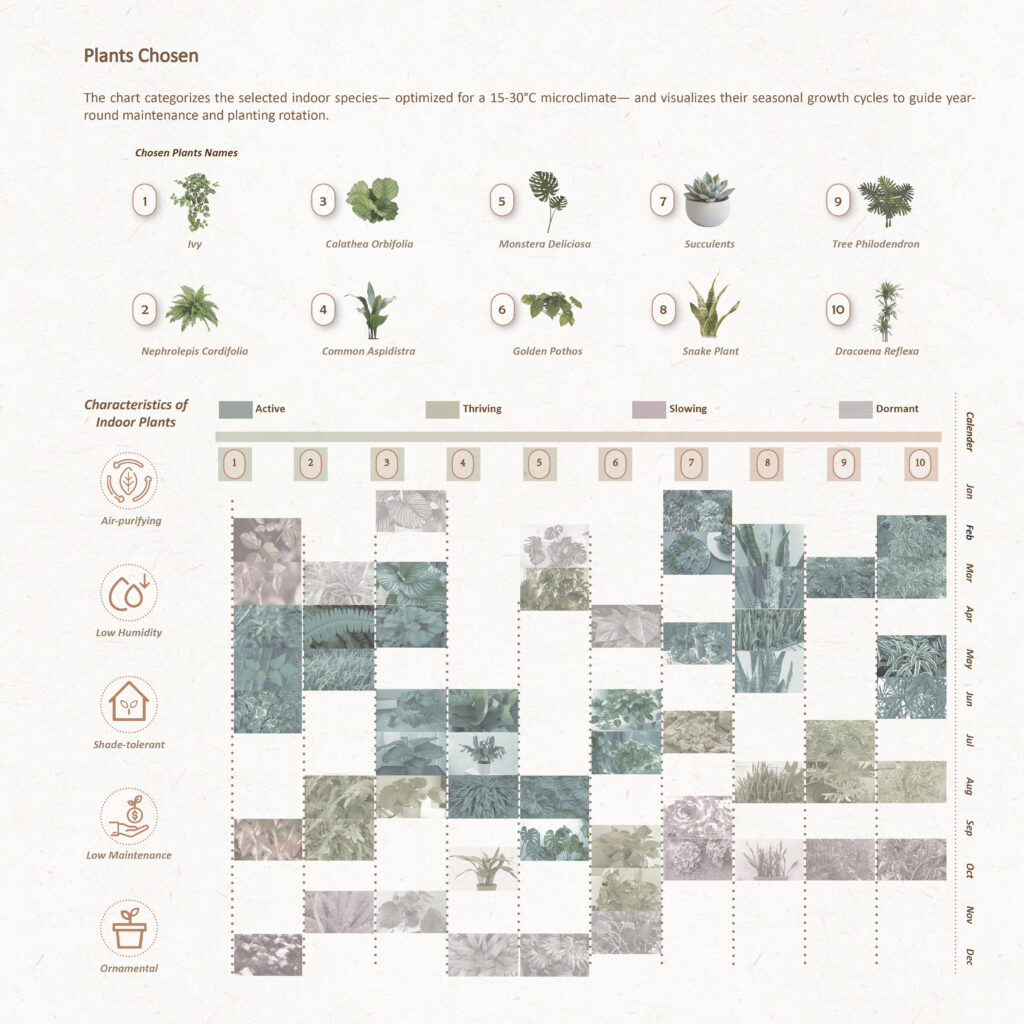
Plants Chosen
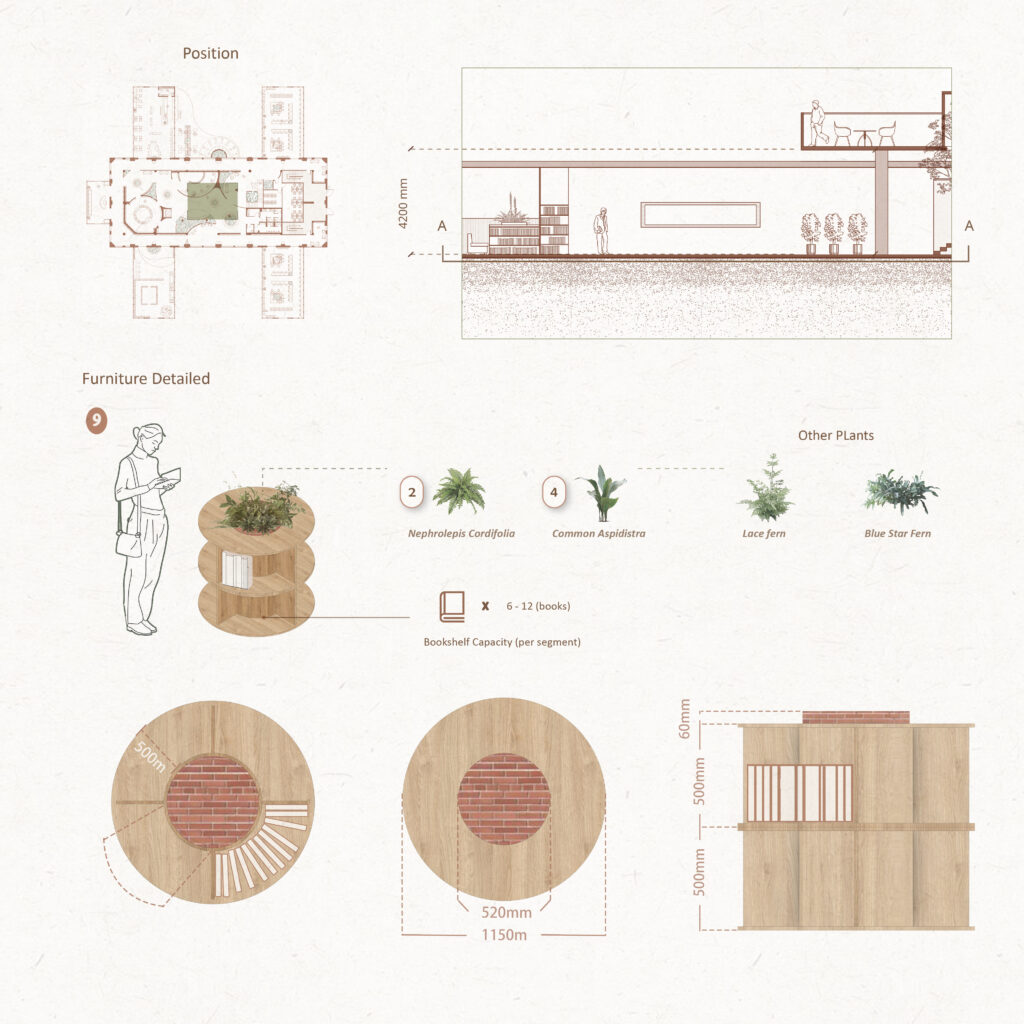
The ‘Plants Chosen’ section presents a curated selection of ten species, specifically evaluated for their indoor resilience and compatibility with a library environment. A primary technical concern was ensuring that the greenery enhances the atmosphere without compromising the preservation of the collection; therefore, I selected varieties that do not attract pests or create excessive humidity. By mapping out the year-round growth cycles of each plant, the design provides a practical maintenance framework for gardeners, ensuring that the library’s living elements remain vibrant and manageable across all four seasons.
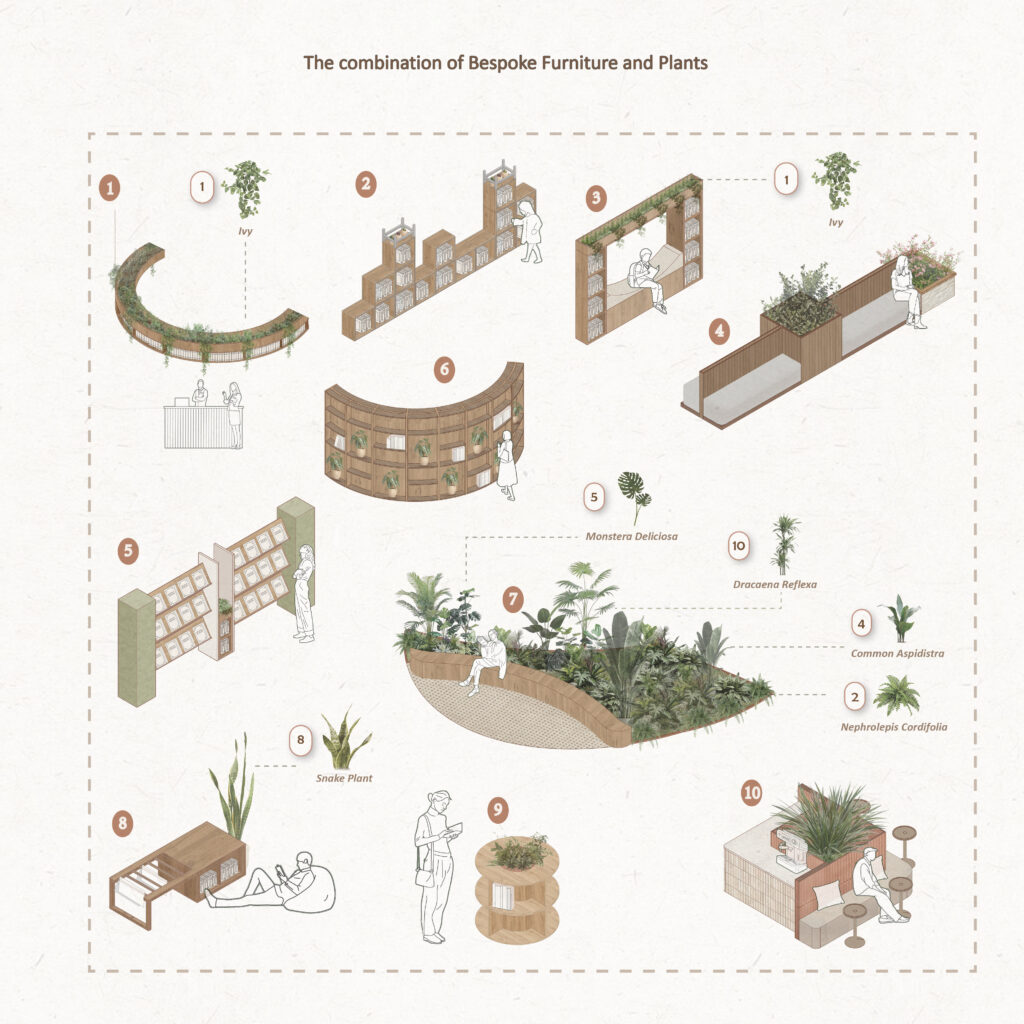
Bespoke Furniture
More than just storage, these bespoke planter-bookshelves are the building blocks of our “knowledge landscape.” By merging natural elements with ergonomic seating niches, they break the strict order of traditional libraries, offering readers a liberated, organically integrated environment to explore.
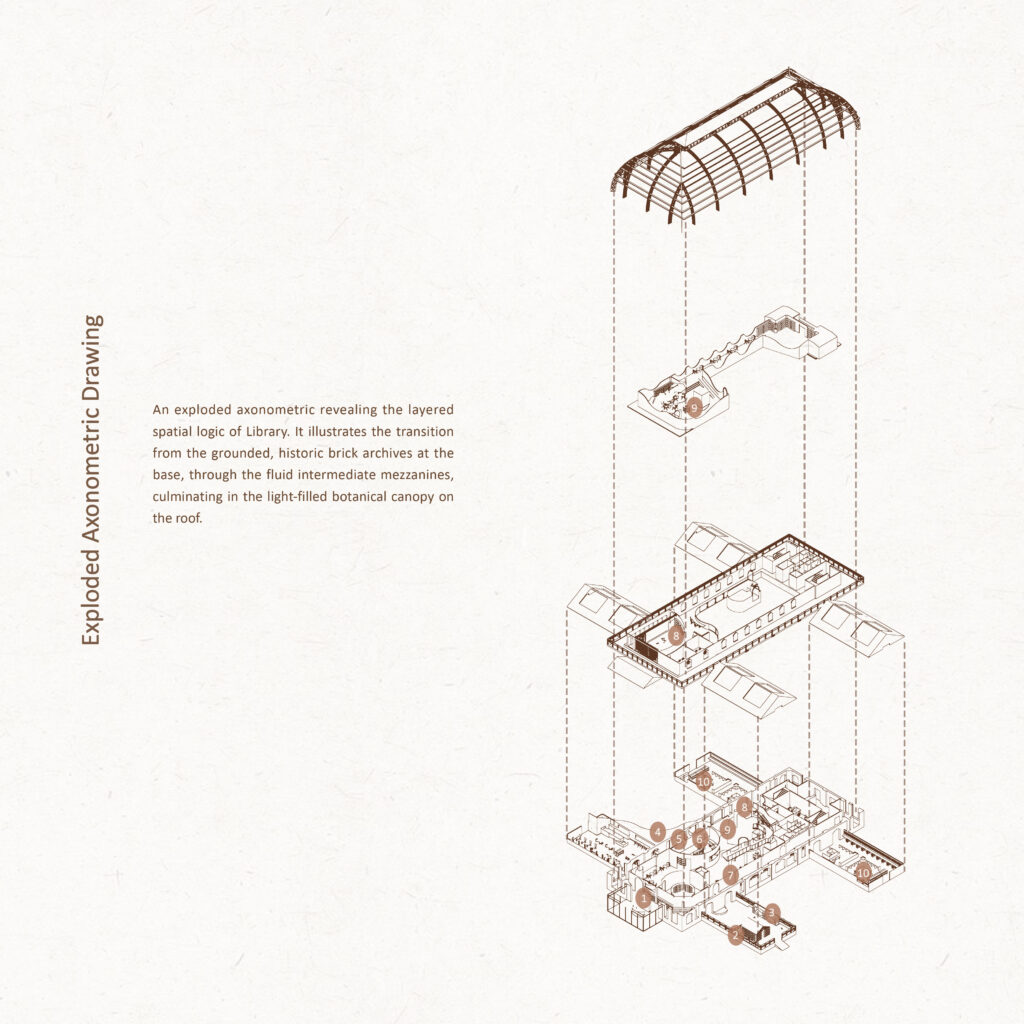
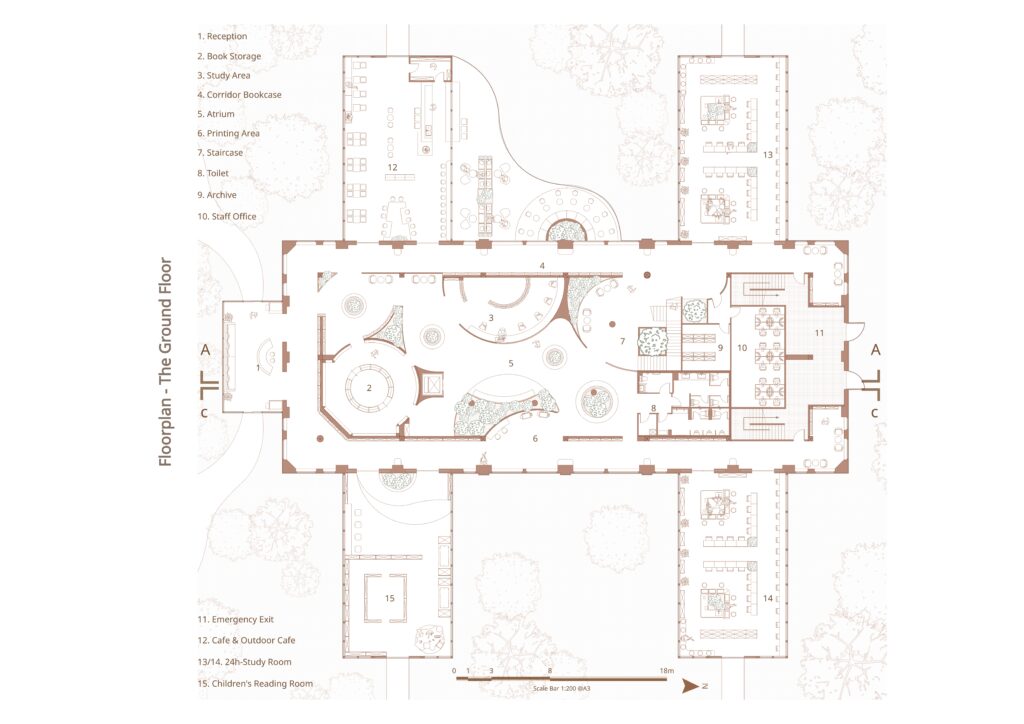
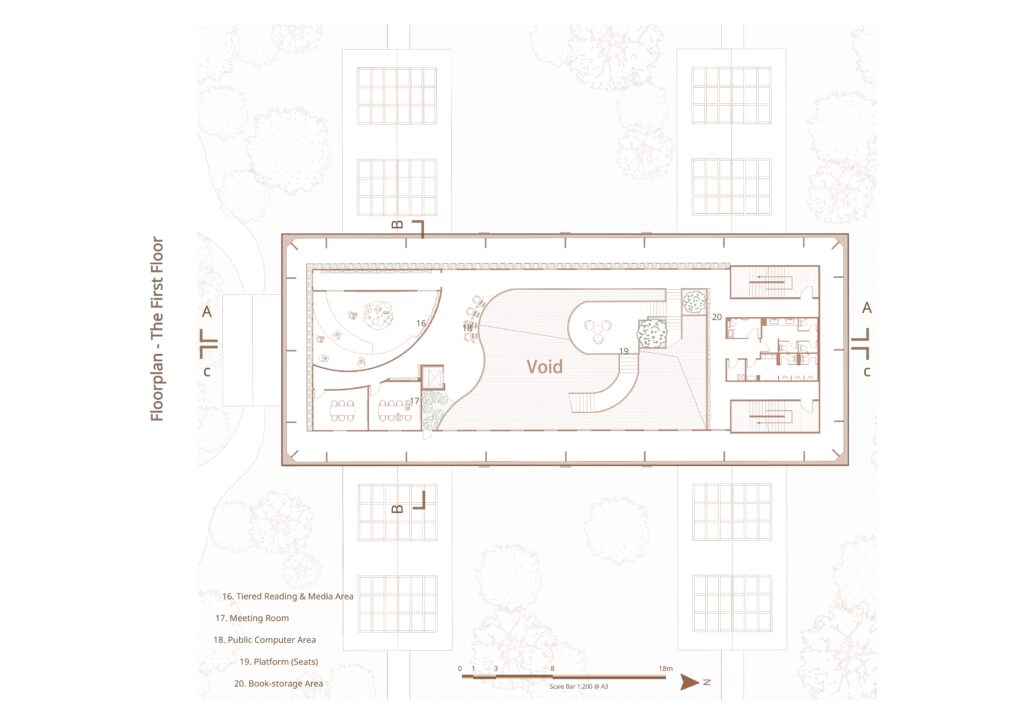
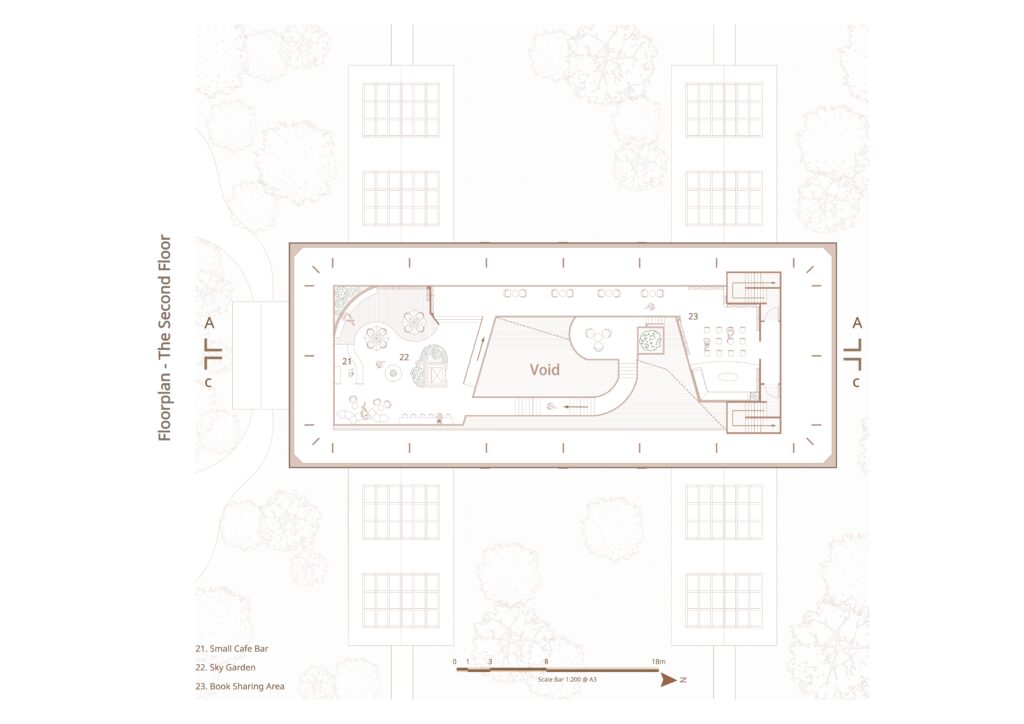
Floorplan
The traditional library aisle is replaced by organic pathways that wind through lush greenery, interspersing study zones with nature. This fluid arrangement supports our ‘environmental curation’ strategy—placing books within the ‘leaves’ to create a soft, immersive learning environment that functions as a living reading & rest area for the community.
Material
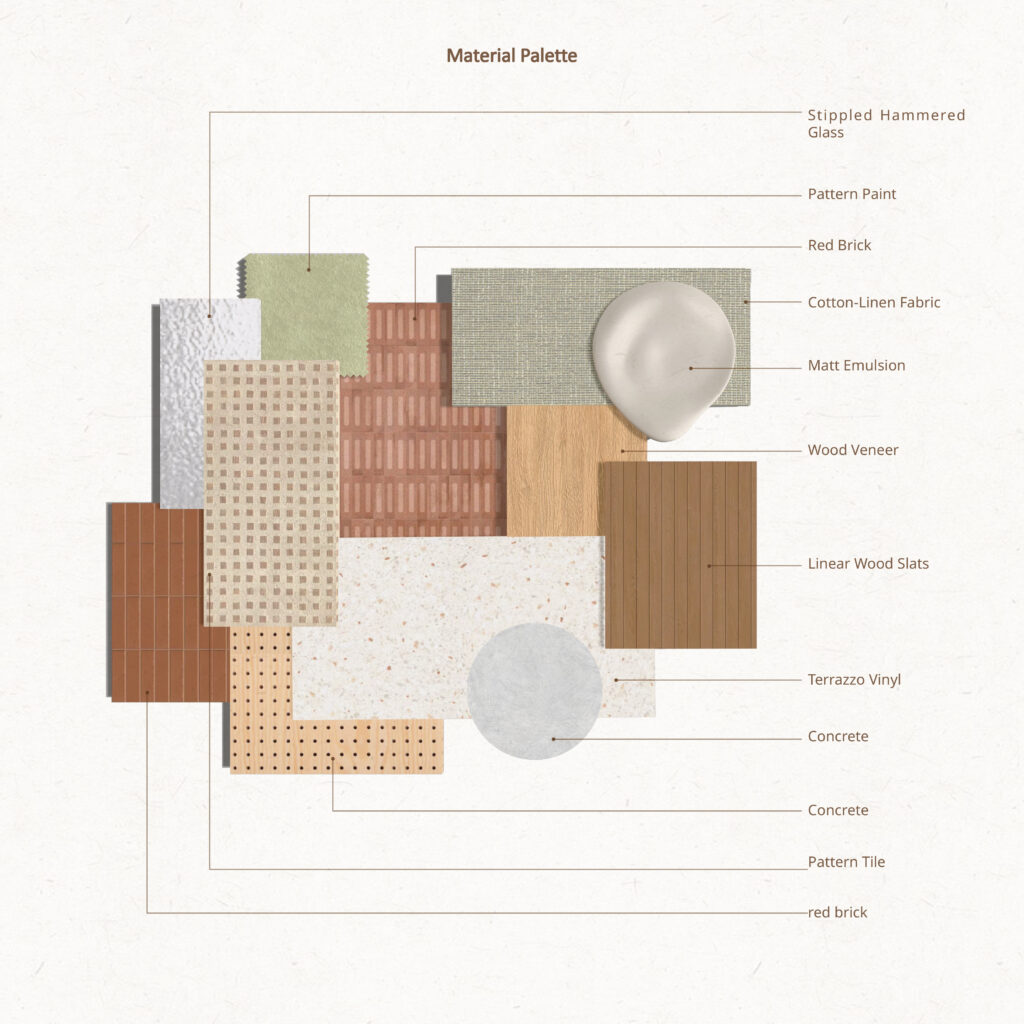
Echoing the “Root, Stem, and Leaf” concept, the library’s material palette translates nature into tactile experiences. At the base, earthy Red Brick and Concrete anchor the building as the solid “Root.” Transitioning upward, the “Stem” utilizes Wood Veneer and Cotton-Linen Fabric to soften the interior, enhancing acoustics and intimacy.
Finally, the “Leaf” canopy employs Stippled Hammered Glass and Matt Finishes to diffuse daylight, mimicking dappled sunlight. Ultimately, this blend of raw, warm, and translucent materials fulfills functional requirements while fostering a sensory-rich reading environment.
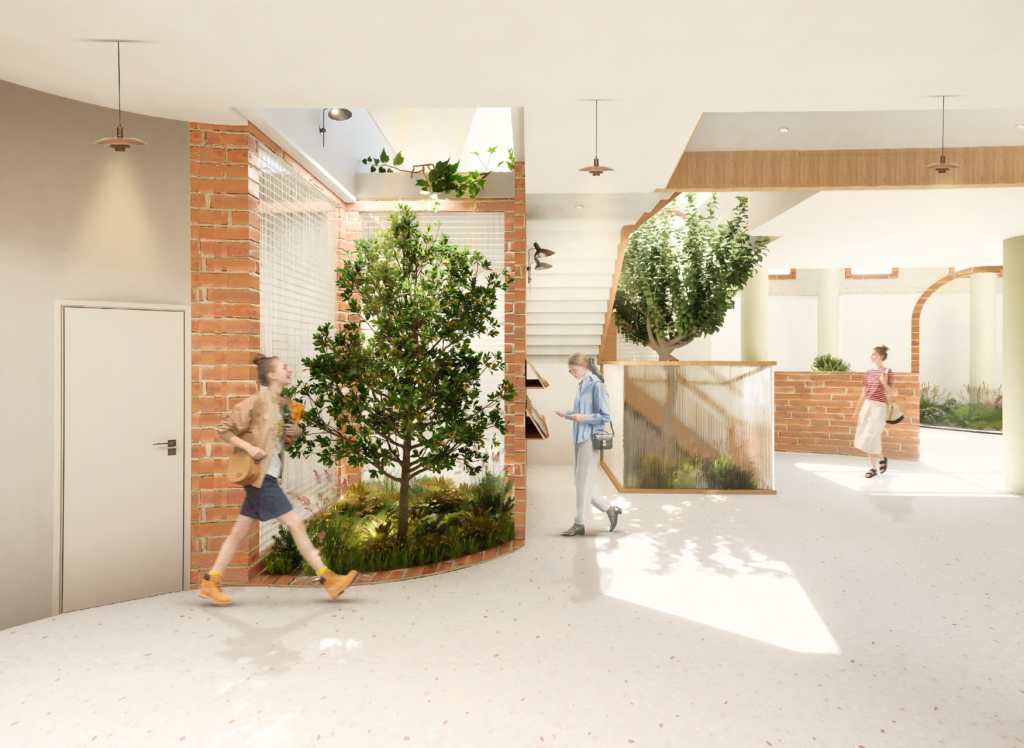
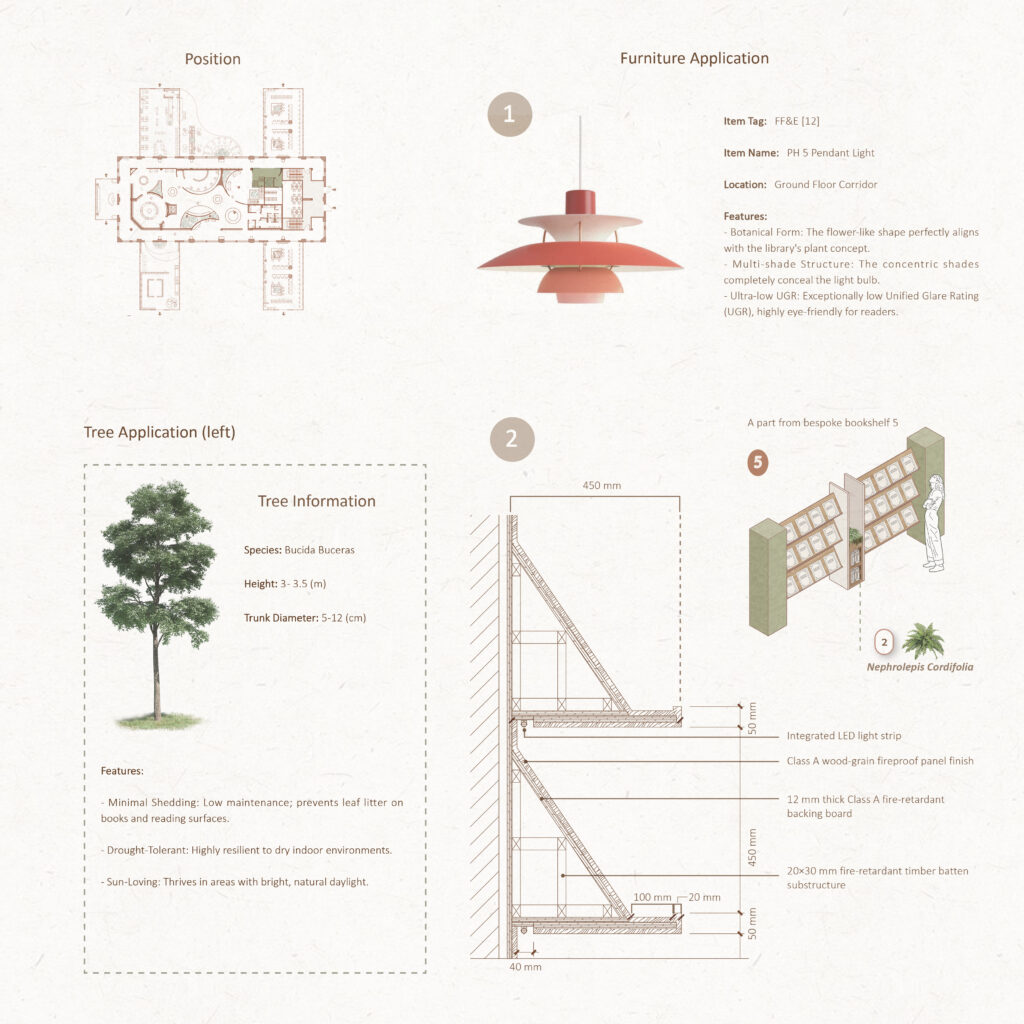
Staircase Visual 1
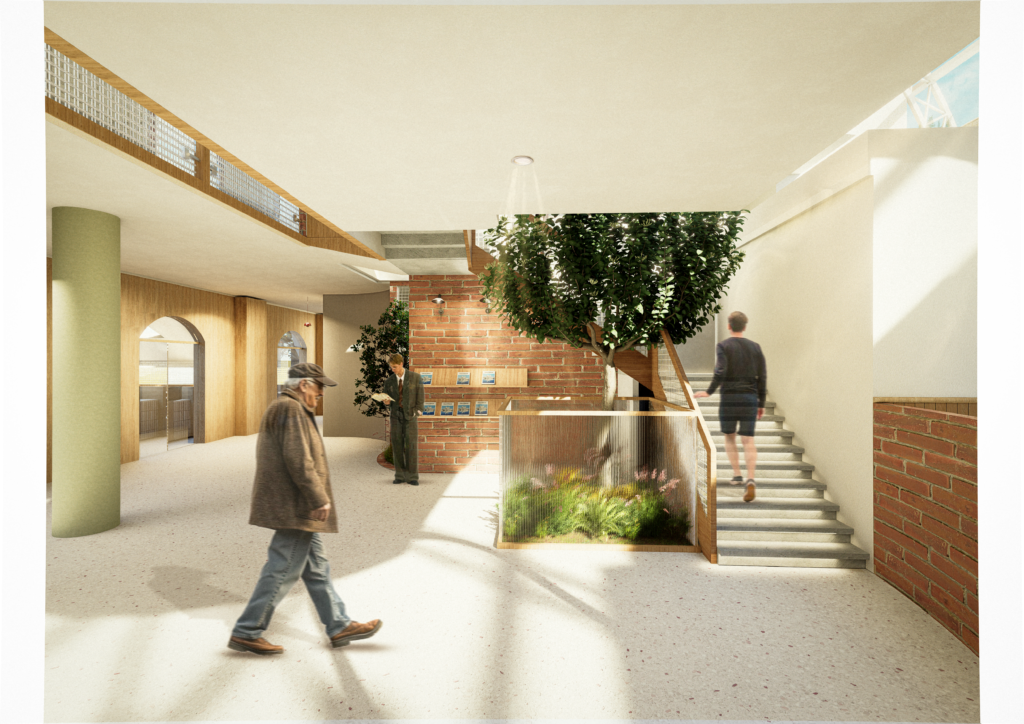
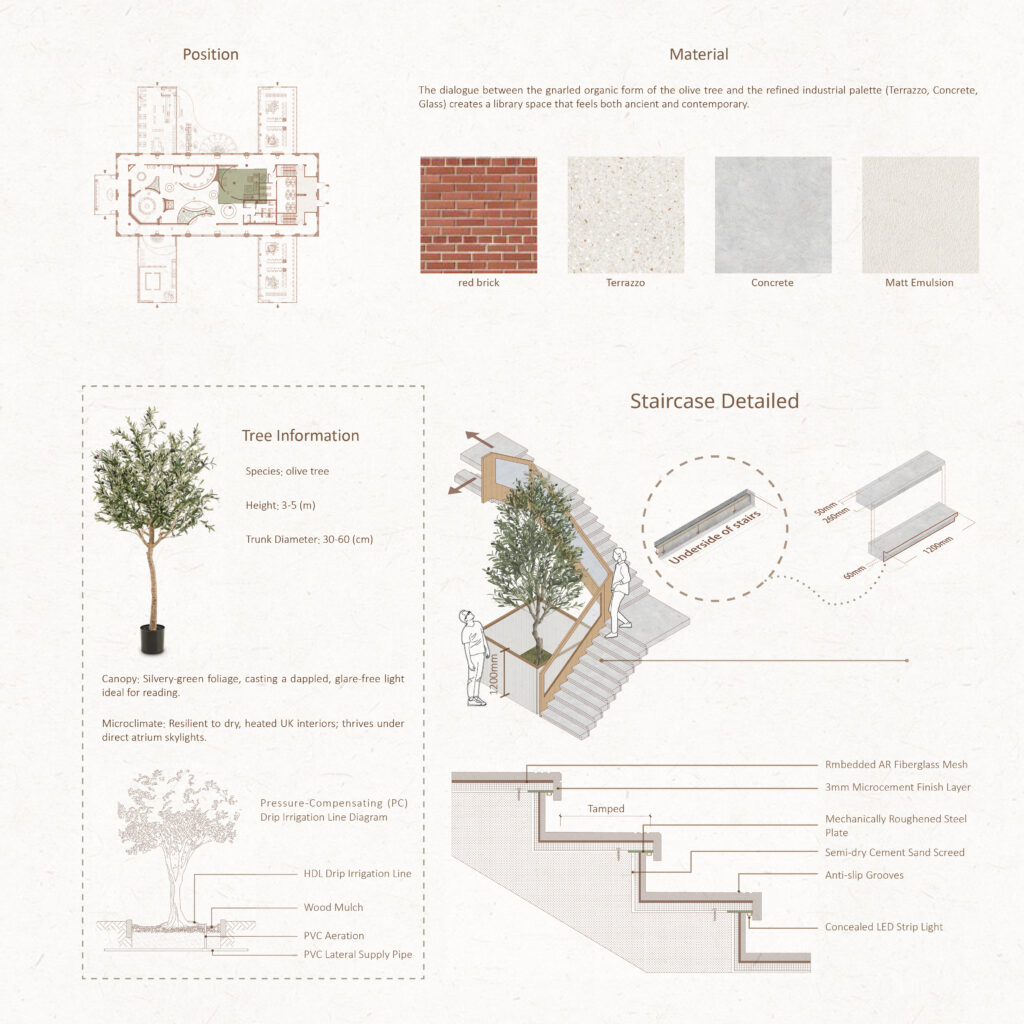
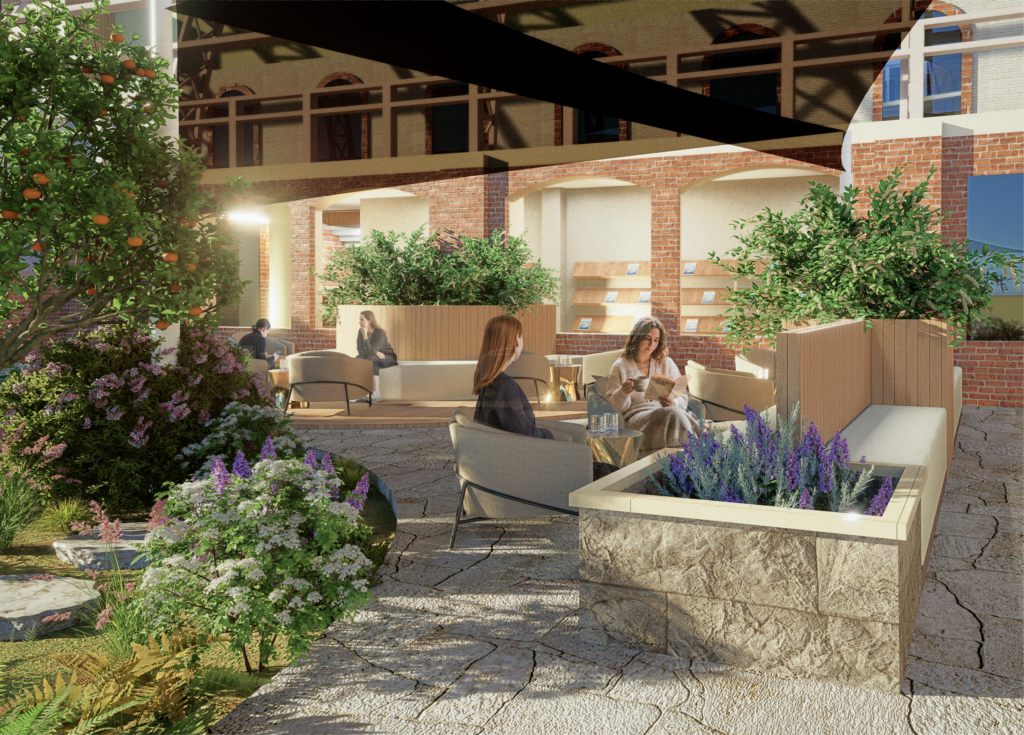
Anchored by a living core, the library outgrows its role as a static institution to become a breathing ecosystem. Rather than caging the greenery, semi-open glass enclosures protect the trees while allowing unrestricted growth and inviting tactile engagement. This creates a setting where the public naturally shares their space with a reclaimed landscape.
Staircase Visual 2
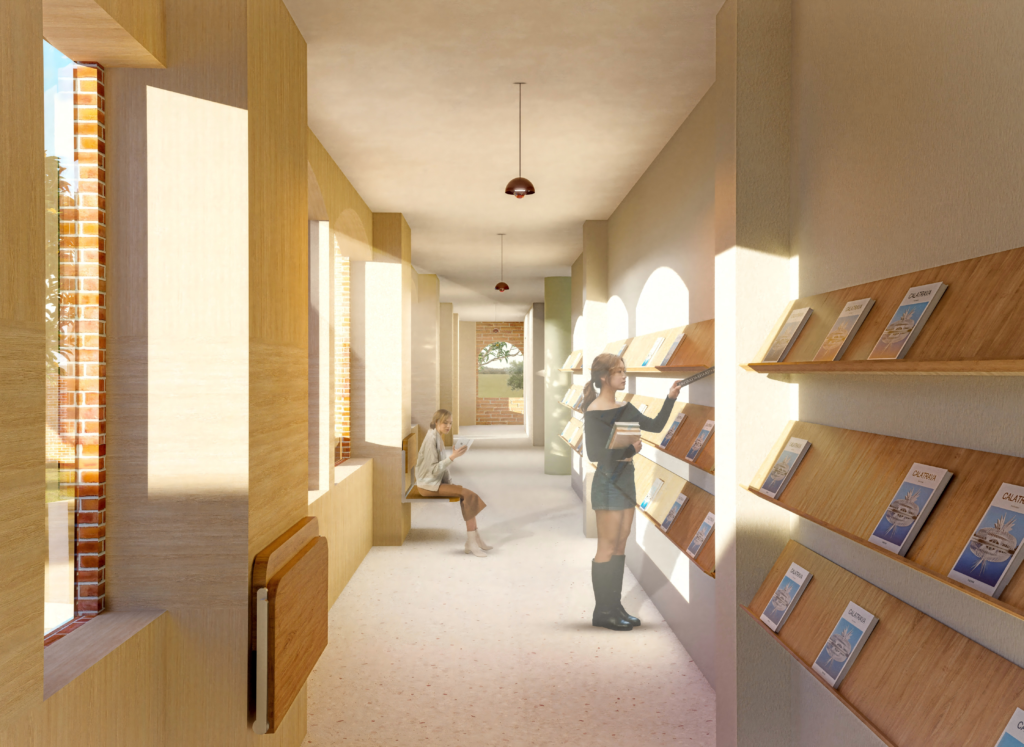
This circulation space uses strategic lightwells to sustain pockets of indoor gardens deep within the building. The juxtaposition of heavy brickwork and translucent screens creates a rhythmic nature journey in the library, inviting visitors to pause and connect with nature as they navigate the library.
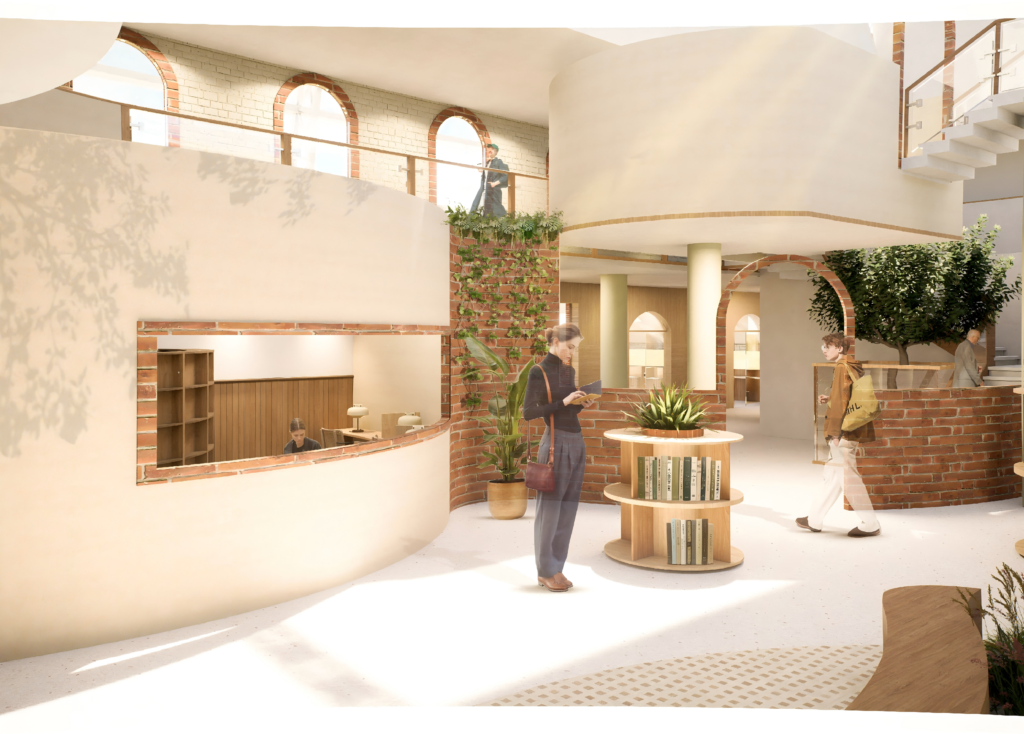
Every space is activated by the integration of bookshelves and greenery, ensuring that literature is always within arm’s reach. This arrangement encourages a spontaneous reading experience, allowing visitors to intuitively pick up a book and immerse themselves in a story from any corner of the space.
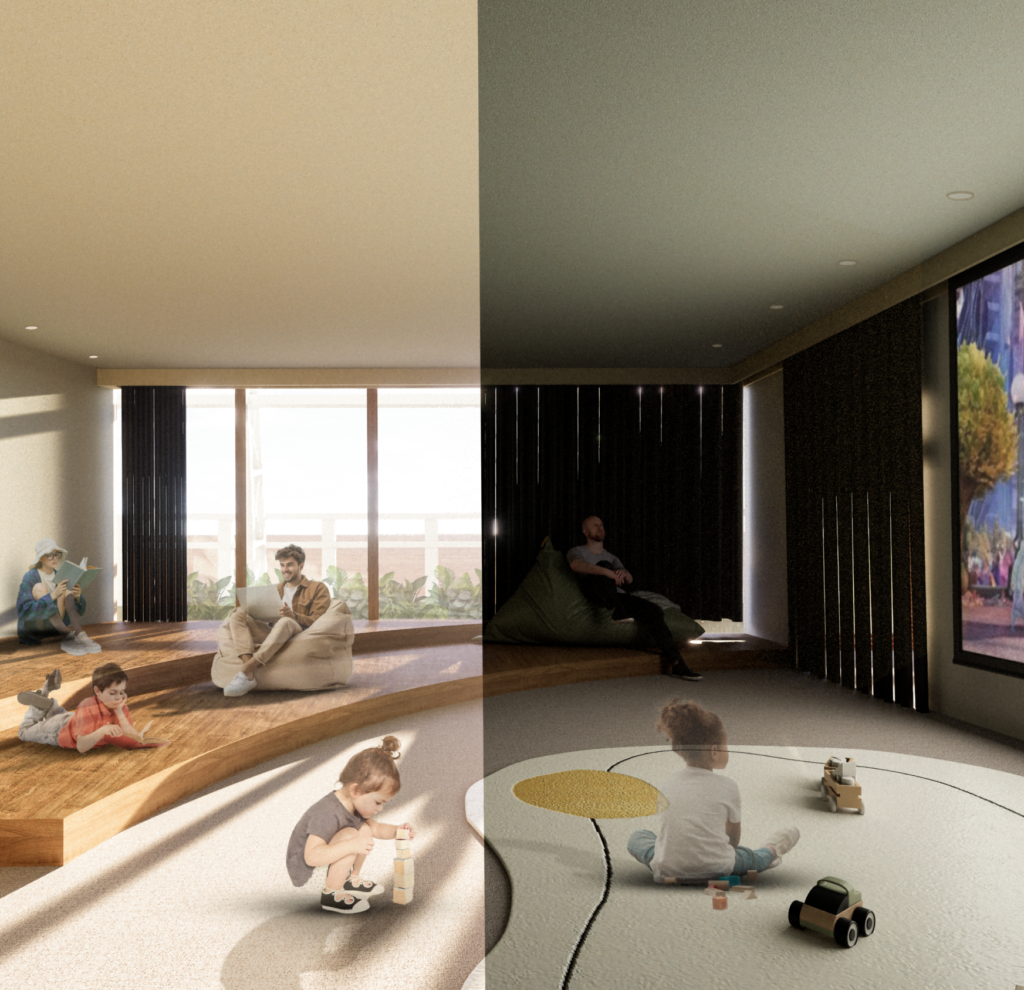
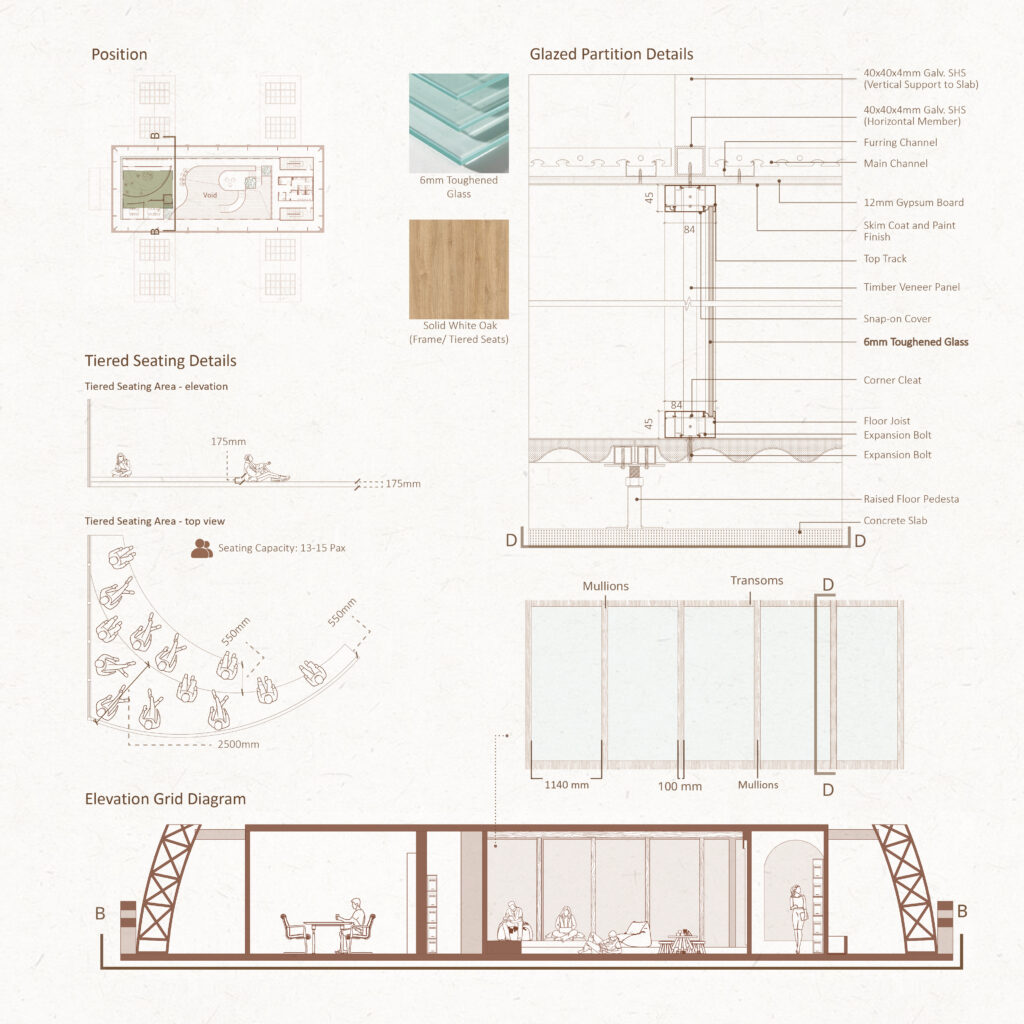
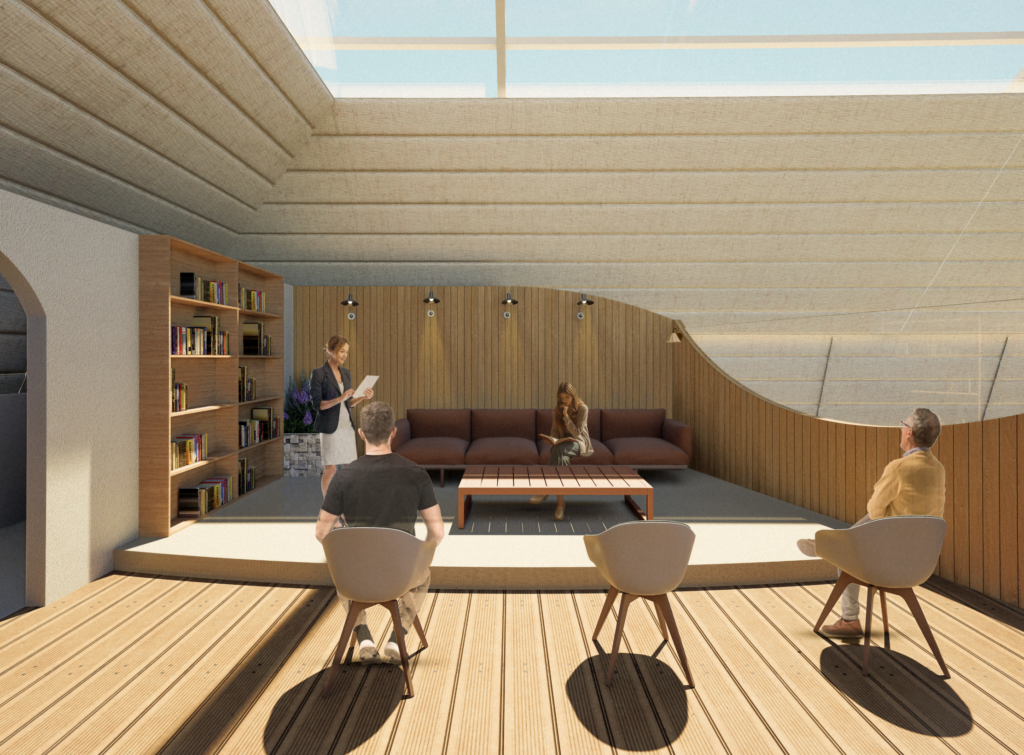
Tiered Reading & Media Area Visual Drawing
This tiered space allows users to easily grab a book and read in any posture—sitting, leaning, or lounging. Additionally, it doubles as a multimedia hall for regular film screenings.
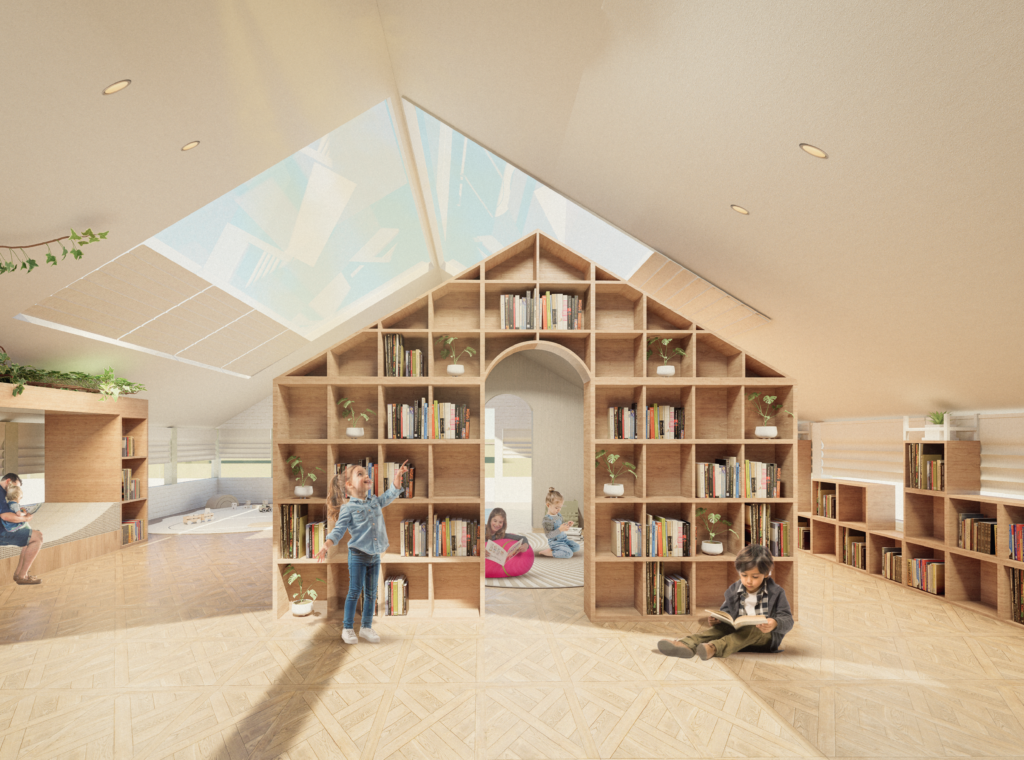
Designed as an inclusive space, the hall welcomes everyone and includes a central toy zone for children to play freely. The enclosure is constructed with fire-resistant acoustic walls and matching fire-rated soundproof glass.
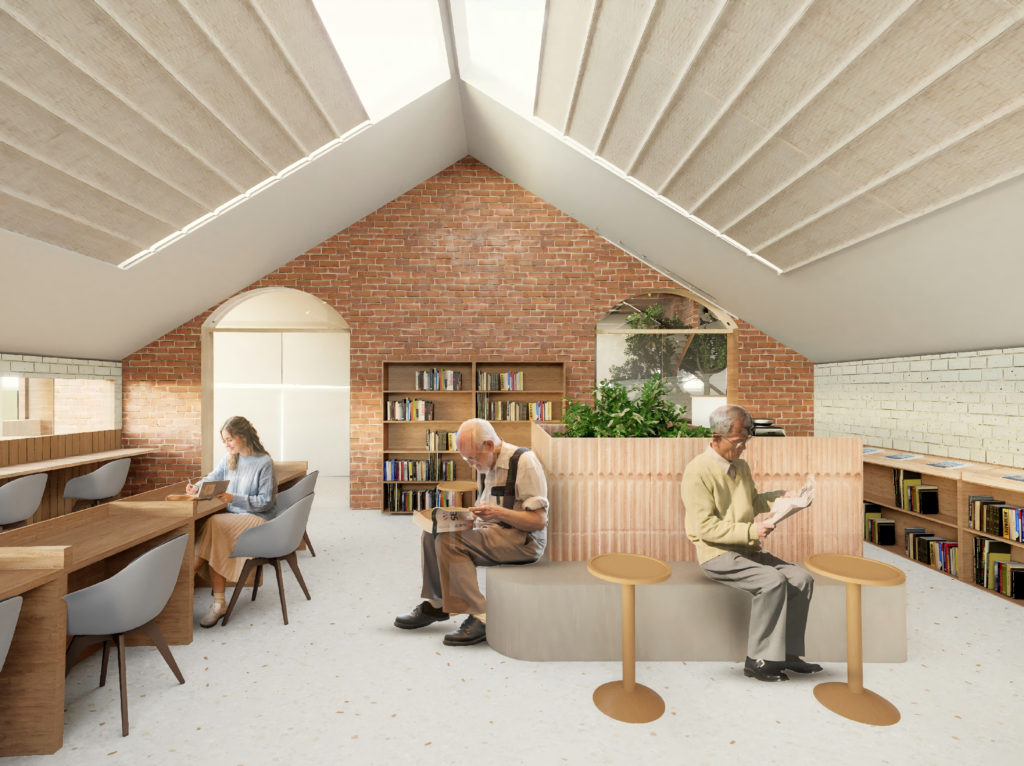
Atrium Visual
The sweeping curved walls, punctuated by exposed brickwork, create a dynamic dialogue between the contemporary and the historic. Horizontal apertures and archways frame views into quieter study zones, ensuring visual connectivity while maintaining acoustic separation.
Concept
Inspiration
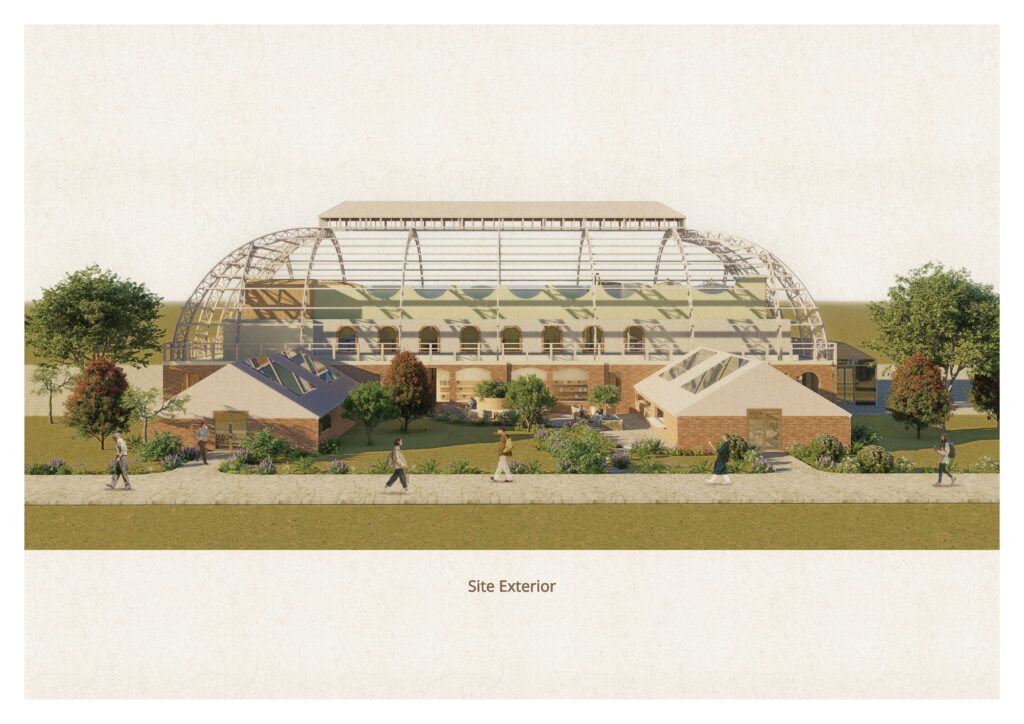
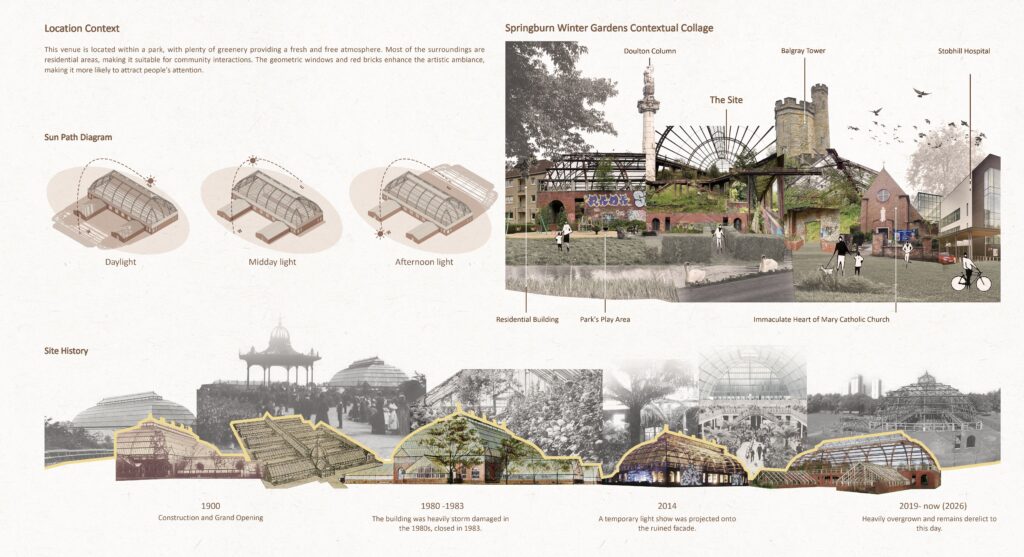
The project is rooted in the interior of an abandoned Victorian glasshouse, specifically the ruined Winter Gardens of Springburn Park, where the rigid, man-made grid of iron and glass has been shattered and reclaimed by wild vegetation.
This space serves as a visual manifestation of the collapse of human control, representing a spatial condition where architecture surrenders to autonomous ecological forces, blurring the boundary between interior and exterior.
Design Concept & Spatial Narrative
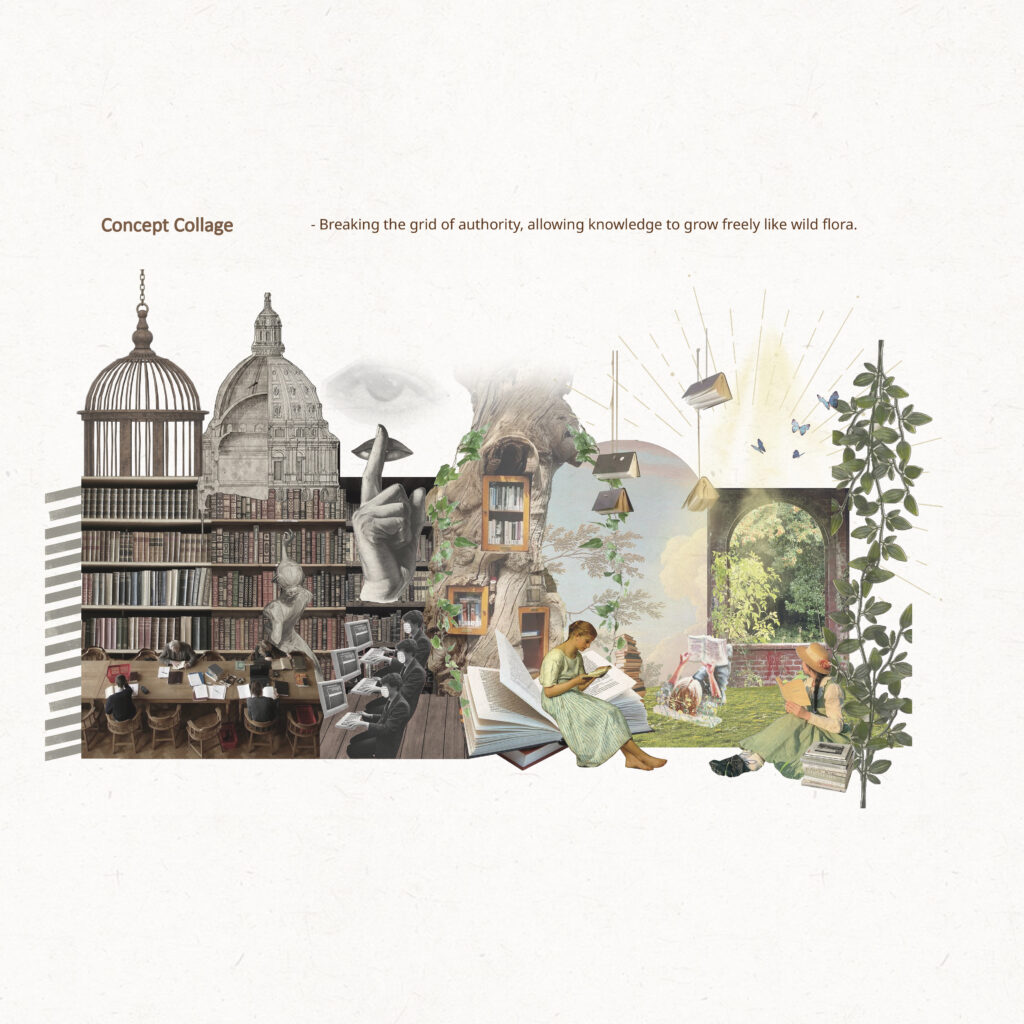
Inspired by the tension between the artificial grid and wild overgrowth, the project translates this “reclaimed interior” into an ecological critique of the traditional library. While traditional libraries represent rigid control and taxonomy, gardens embody unruly, autonomous growth. The design rejects the “caging” of knowledge, reimagining a derelict greenhouse as a library typology where information and ecology grow in untamed synergy.
Design Strategy
To achieve this, the design actively introduces wild vegetation into the interior through bespoke planter-bookshelves, creating an organic landscape where books and plants intertwine. This is supported by a dual lighting system—combining natural daylight, horticultural grow lights, and warm reading lamps—to sustain both the untamed ecosystem and the readers’ comfort.
Outcome
This project demonstrates how a “reclaimed interior” can challenge the traditional archiving of knowledge. It proves that by integrating architectural structures with autonomous ecological forces, we can create spaces that nurture collective memory and support a more inclusive, democratic knowledge ecosystem.
In Collage:
The spatial logic of traditional libraries is rooted in “classification and control,” often imposing a sense of strict authority and oppressive solemnity. This project seeks to break this rigid order, transforming static bookshelves into a dynamic “landscape of knowledge.” Inspired by the organic growth of plants, the design creates a boundless and liberated reading environment, encouraging visitors to explore and read in a relaxed, instinctive state.
Design focuses on the following strategies:
1. Blurring Boundaries with Nature:
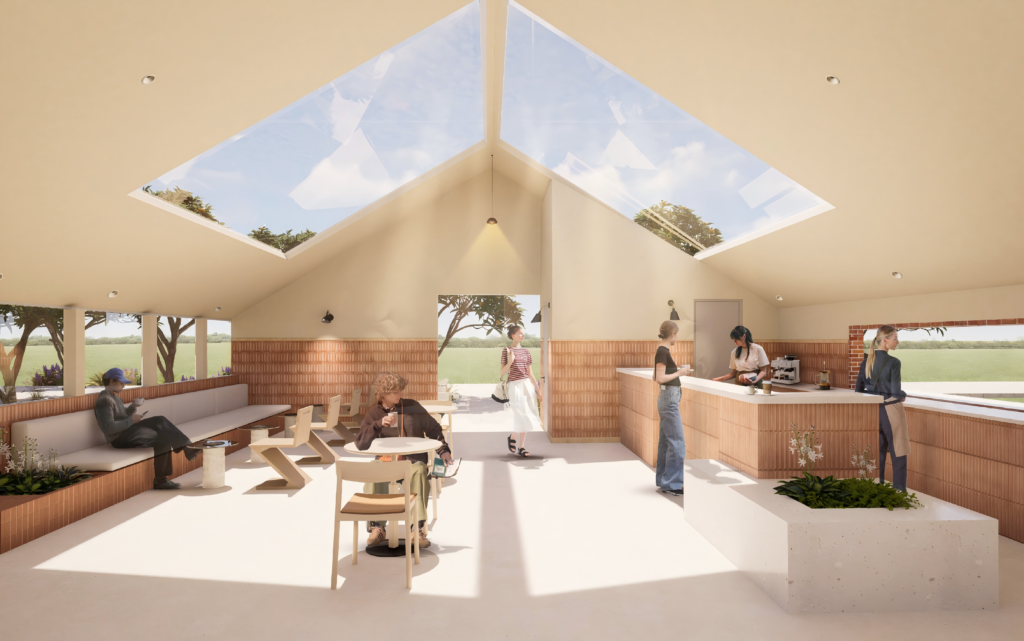
By introducing rich indoor plants and maximizing natural light through the vaulted roof, the design will blur the line between the artificial building and the natural environment.
2. Liberating the Body:
The layout gets rid of traditional, rigid desks and chairs, making the circulation much more flexible. It provides multi-scaled reading areas—from custom fold-down chairs in the corridors to stepped readingw platforms. This allows readers to sit, lean, or lounge freely, just as they would outdoors.
3. Maximizing Spatial Experience:
Custom furniture is arranged at varying heights. This staggered layout not only maximizes the use of vertical space but also creates an uneven, playful landscape, bringing the “organic form” concept to life.
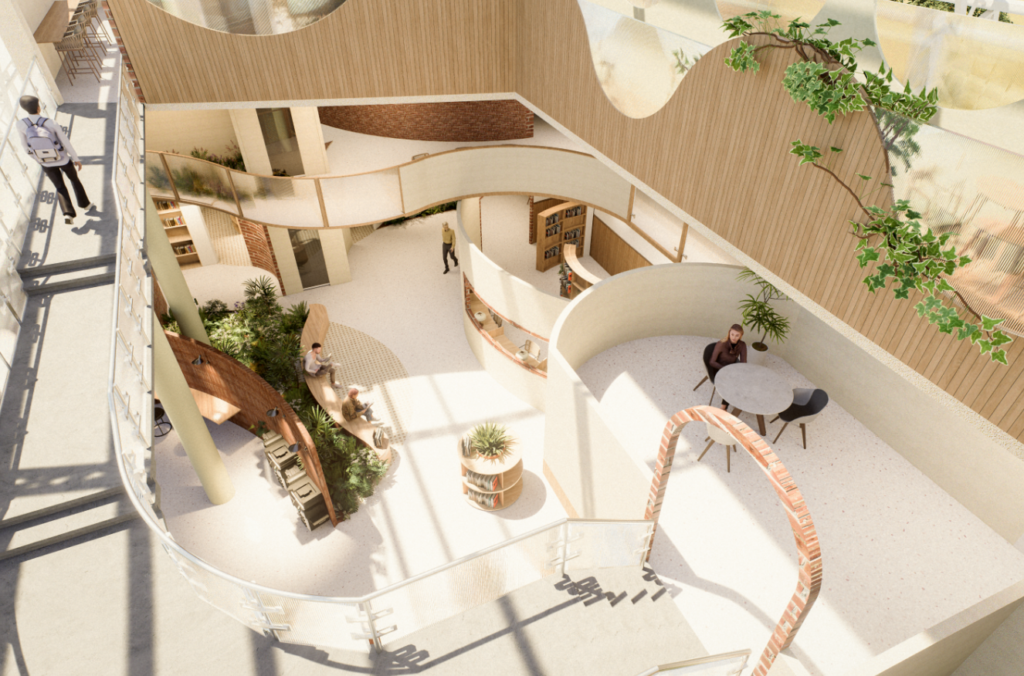
Interior Aerial View
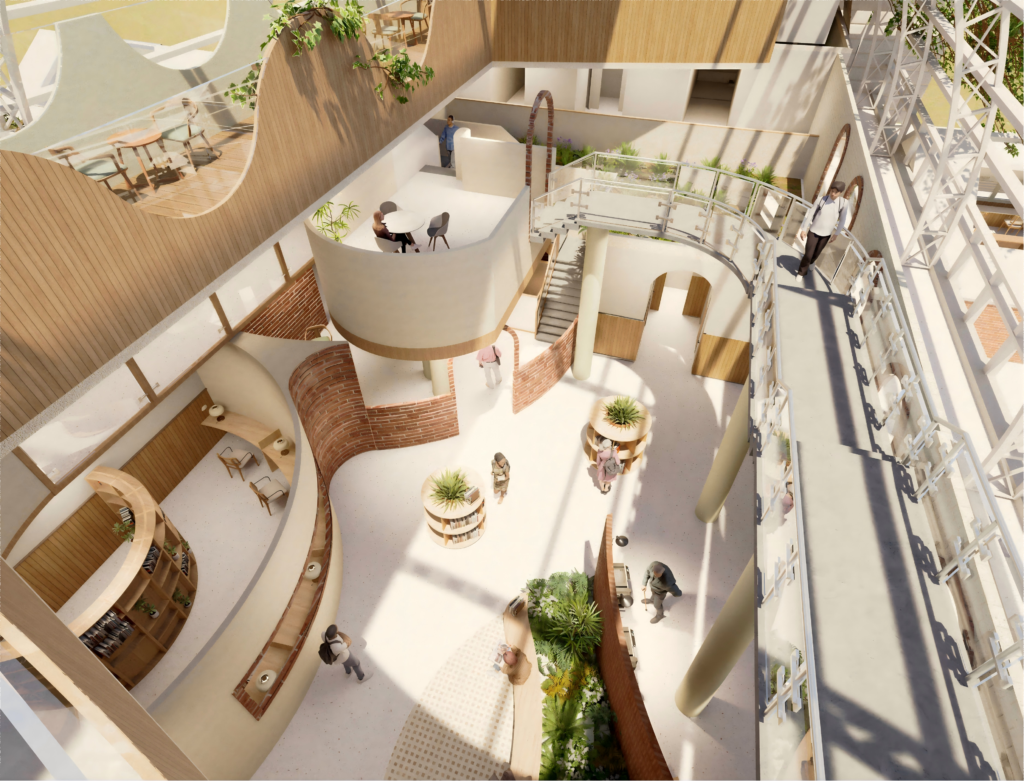
The atrium acts as a vertical lung for the building, where light filters through the levels like sunbeams through a canopy. The sinuous wooden partitions serve a dual purpose: they guide the circulation while creating acoustic buffers for quiet reflection. Looking down from this vantage point, one can see the ‘inter-leaf’ concept in its physical form—a series of overlapping, organic zones that blur the distinction between the built environment and the natural world.
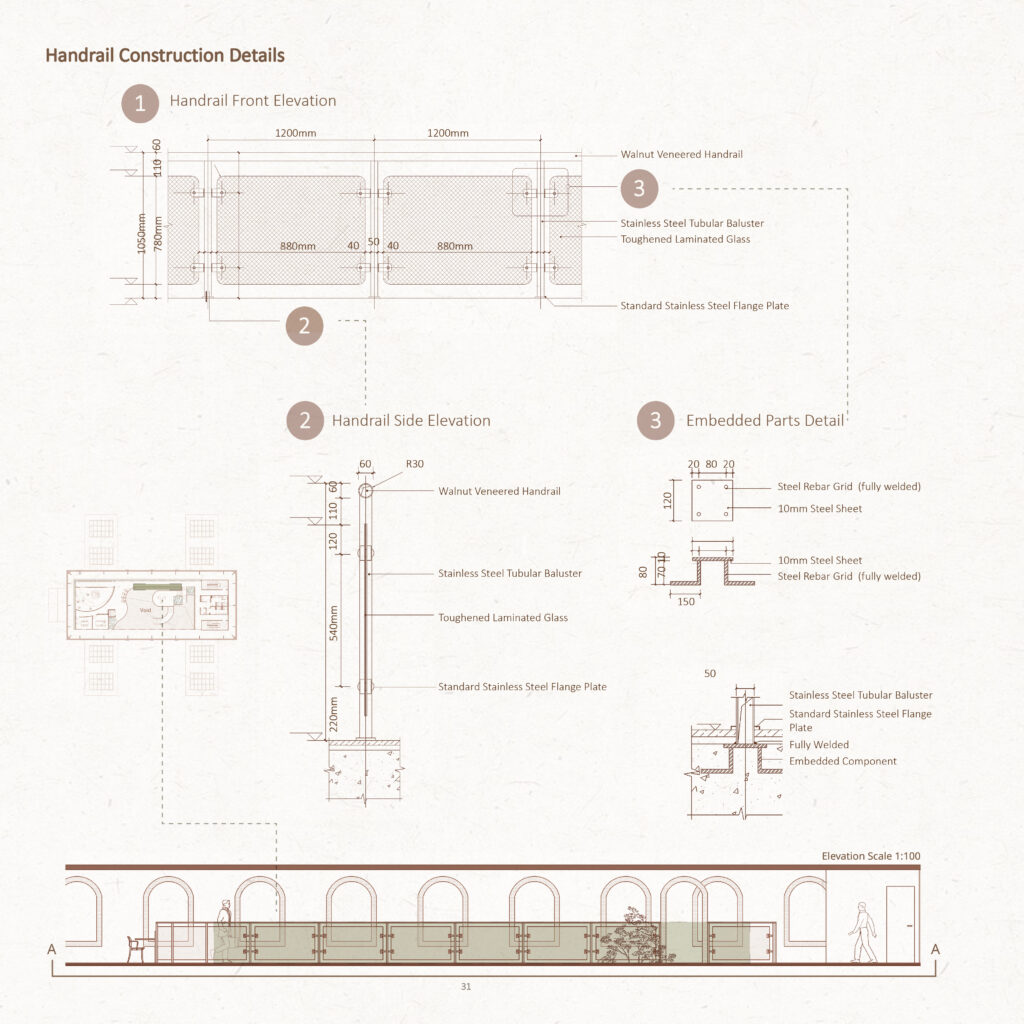
A sense of spatial playfulness is achieved through the sinuous staircase, which winds through the atrium to encourage creative exploration. Structurally, the assembly is grounded by six slender columns (about 400mm), ensuring that the integrity of the design is matched by a feeling of lightness and suspended movement.
The Site
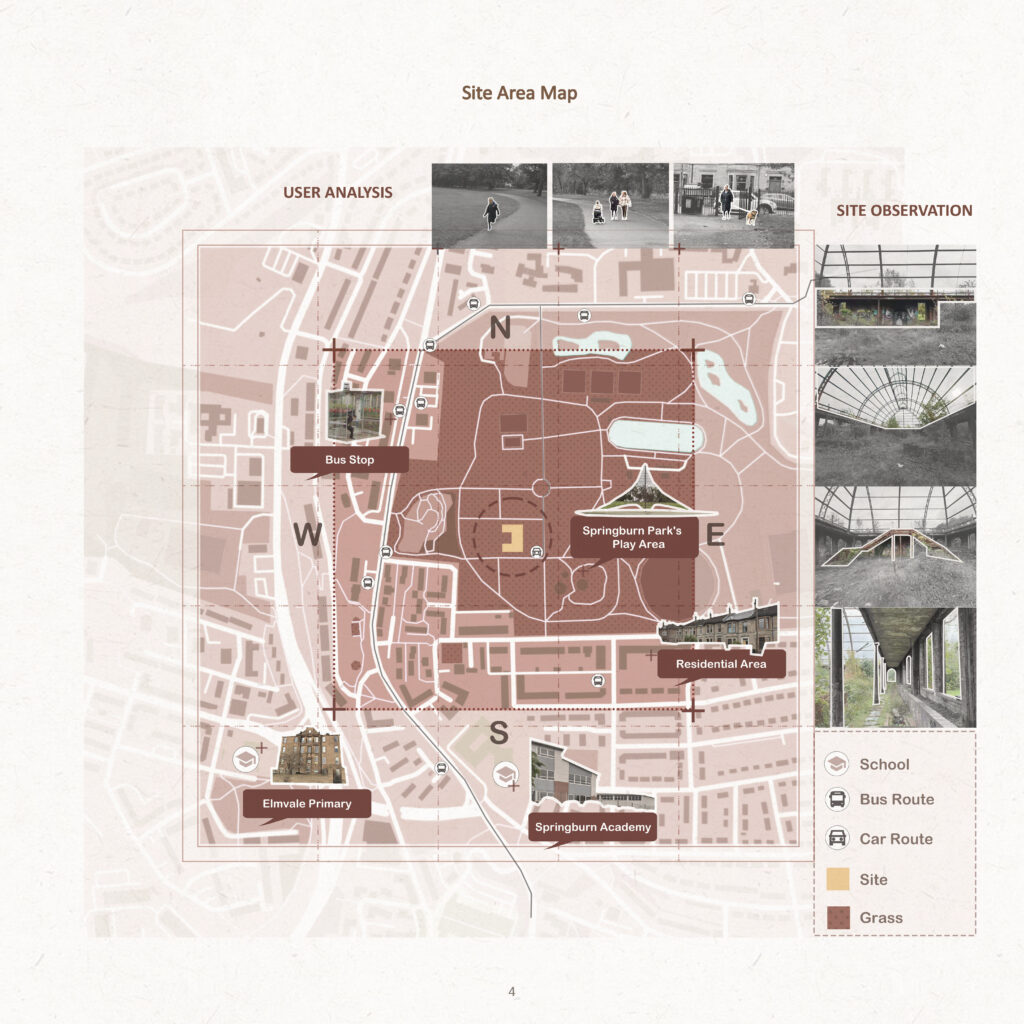
Situated within Springburn Park (G21 3UD) in North Glasgow, this project naturally emerges as a central landmark for the surrounding community. It is perfectly integrated into the local transportation network, benefiting from multiple bus routes and convenient access paths.
Crucially, due to its close proximity to several schools, the new library is positioned to function as a ‘second classroom.’ By repurposing this historical site into a shared learning space, the project aims to provide students and local residents with essential educational and creative resources.
Other Visual Drawings
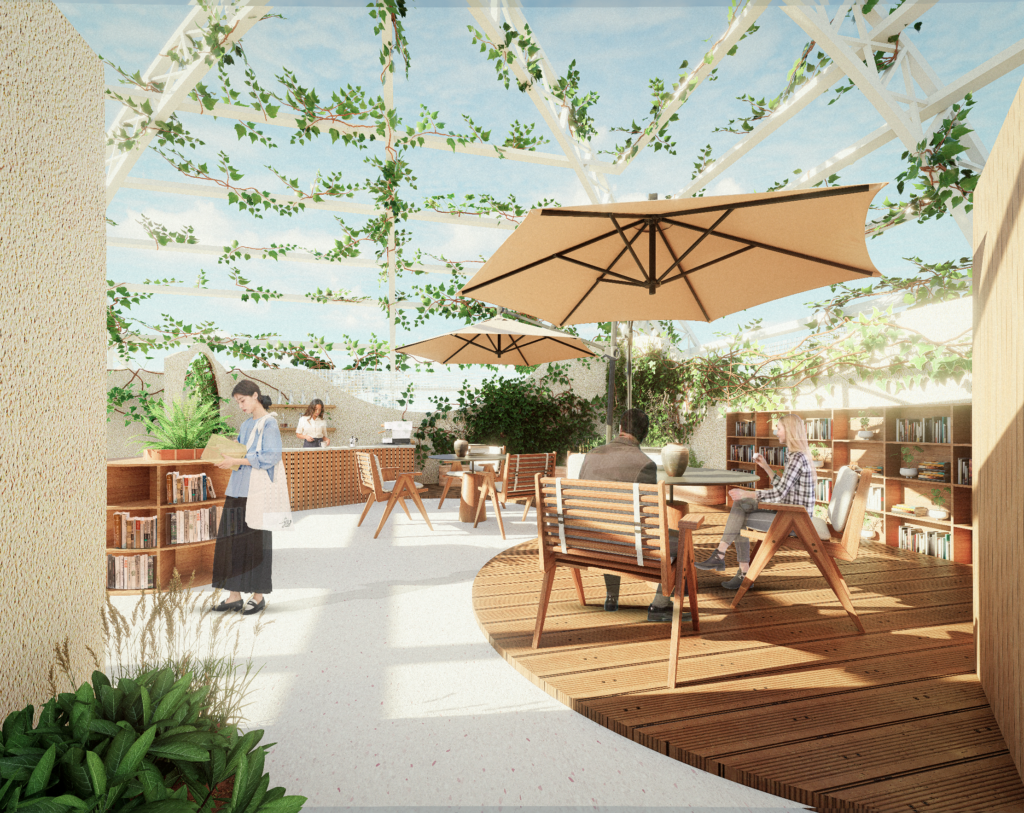
Section C-C
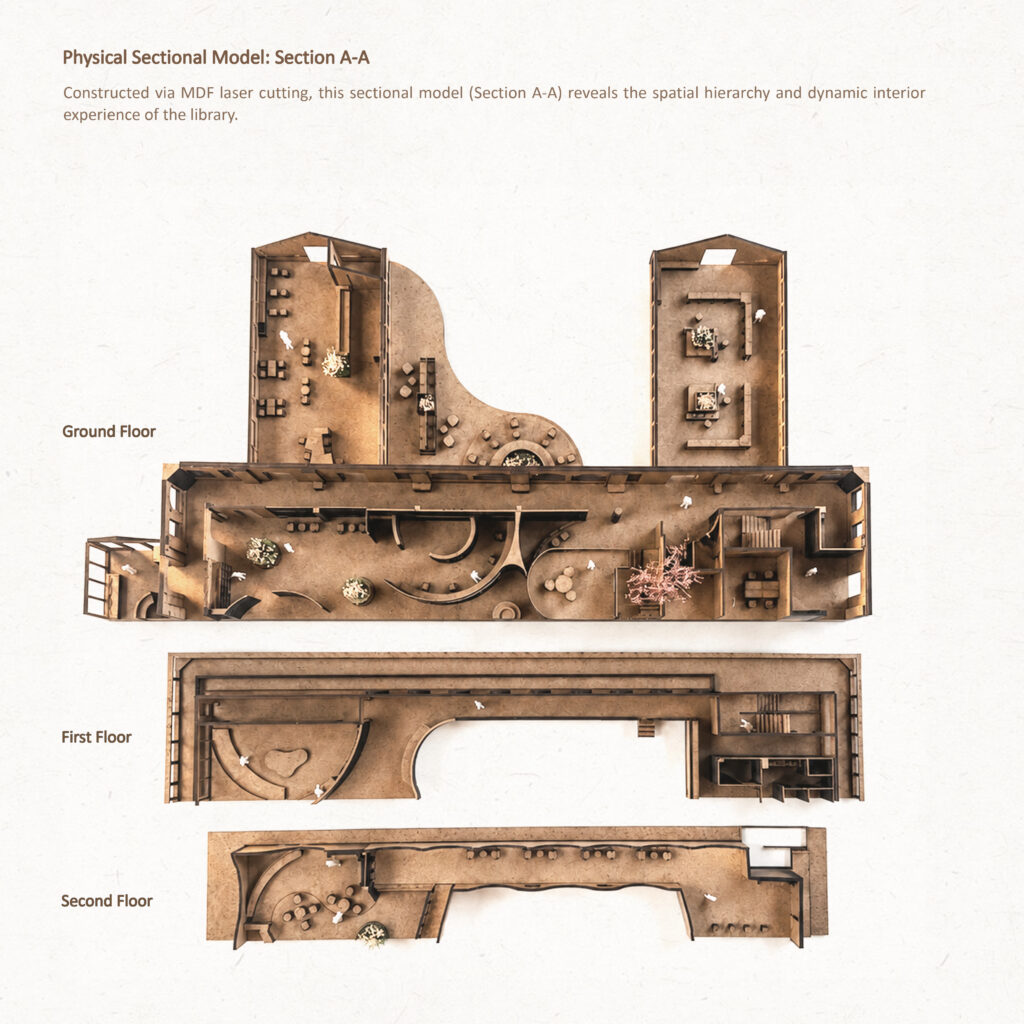
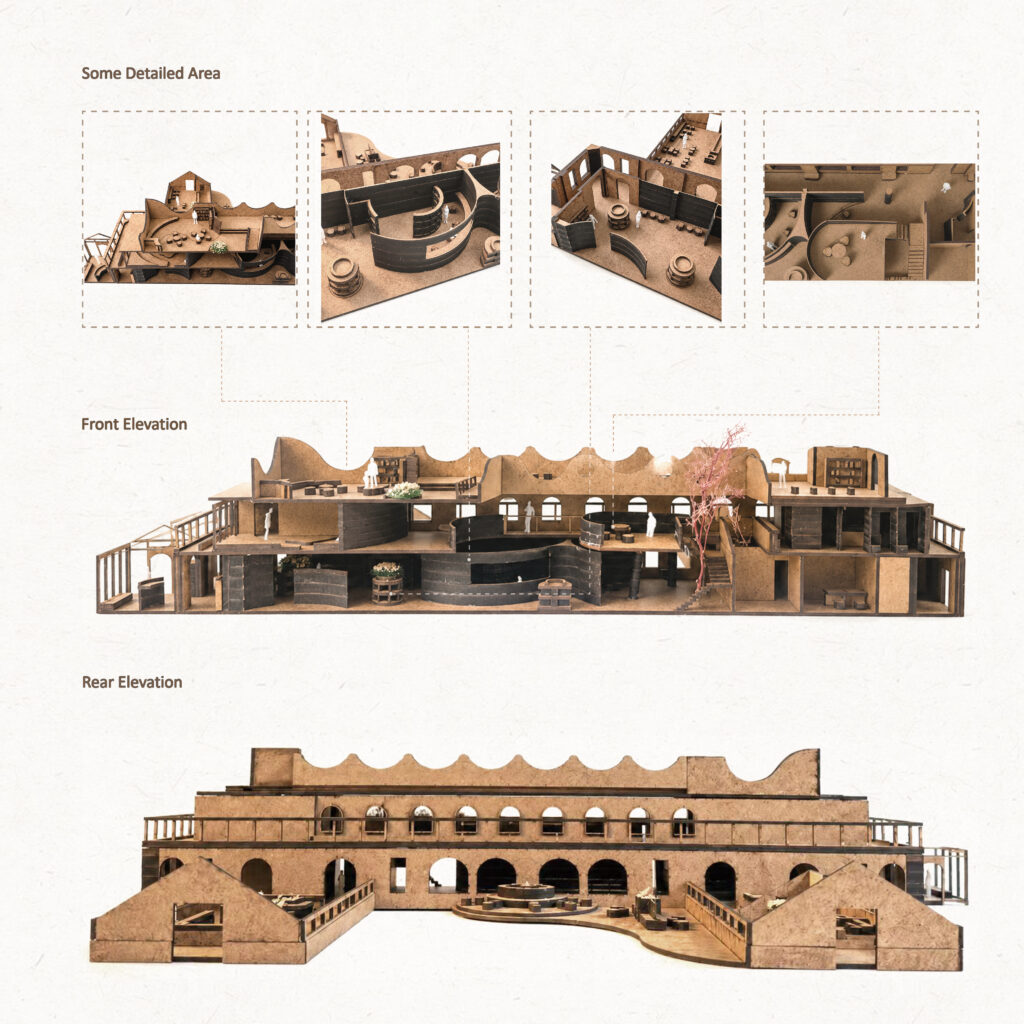
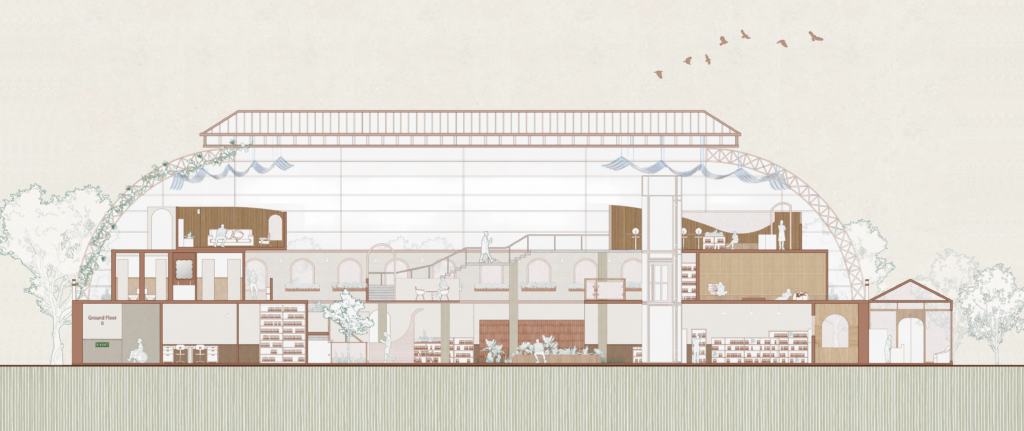
This longitudinal section illustrates the dynamic spatial hierarchy under the expansive vaulted roof. The core of the vertical circulation is the circular staircase, which acts not only as a fluid connection between the tiered reading levels but also as a sculptural focal point within the sunlit atrium, guiding visitors through a shifting spatial experience.
Physical Model