Ayoponinujesu Oyerinde Olatunji
(He/Him)
My academic work is driven by a consistent question: who does architecture serve, and at whose expense? Over 7 years of education and practice, I have gravitated toward sites of tension between public and private interests, extraction and community, exclusion and belonging, using design as both a critical and a propositional tool.
ANTI-MONUMENTS OF EXTRACTION
Norway has committed an architectural crime of omission.
For over half a century, the nation has extracted its wealth from the seabed of the North Sea, burning through Jurassic biomass, funding a welfare state, and financing one of the largest sovereign wealth funds in human history while ensuring that none of this is visible in its capital city. Oslo performs democratic elegance along Karl Johans Gate, civic openness at its waterfront, sustainable progress in its new fjord-facing institutions. The Royal Palace anchors one end of this performance. The Opera House anchors the other. Between them, a choreographed corridor of national identity presents Norway to itself and to the world as a clean, enlightened, post-industrial democracy. It is a lie told in stone and glass.
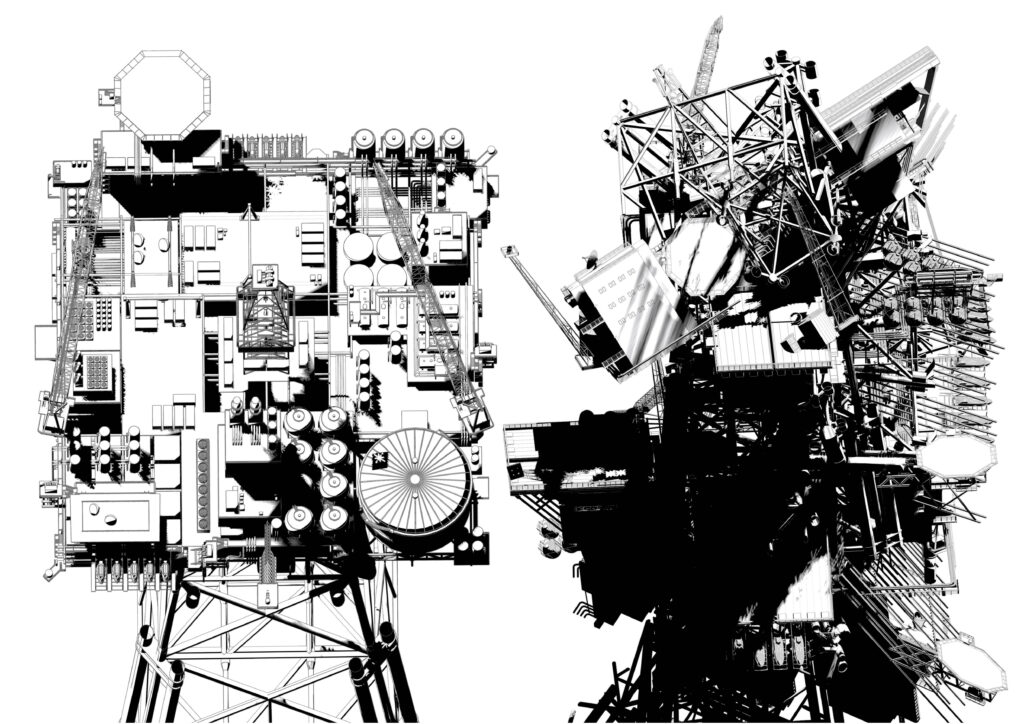
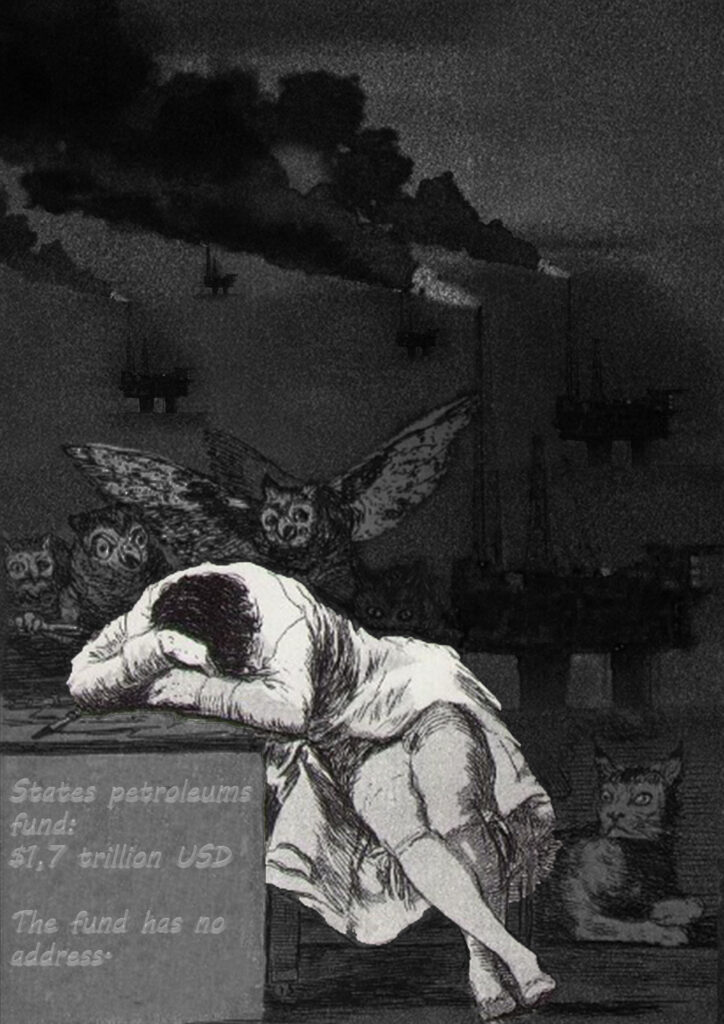
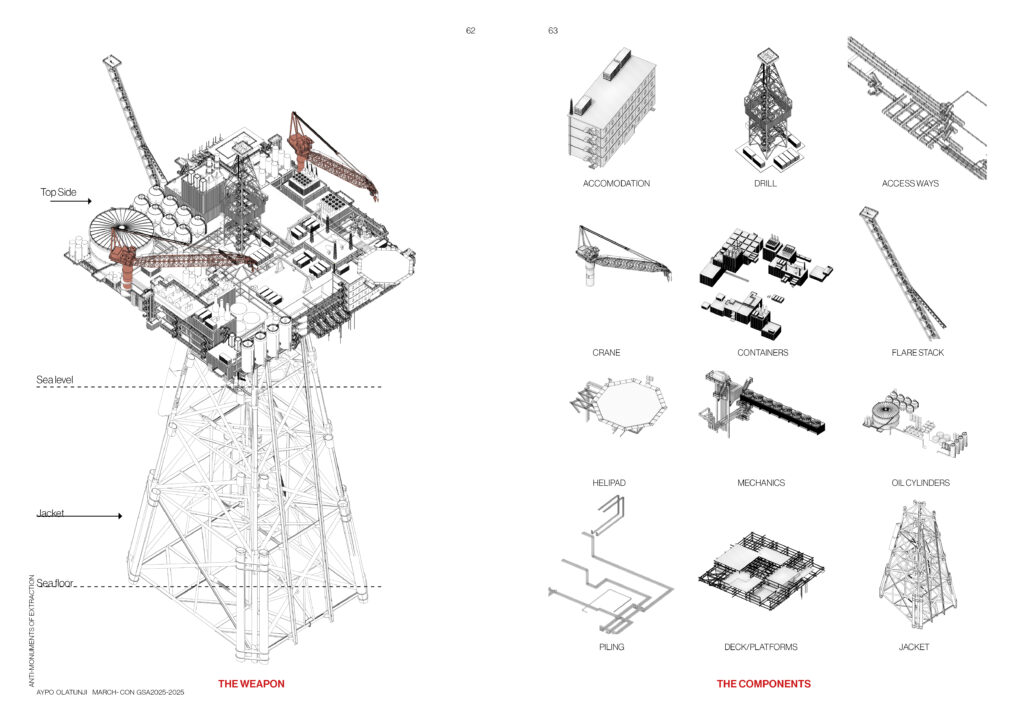
The infrastructures that fund this image the offshore platforms, the wellheads, the pipelines, the drill ships, the 17,000-tonne steel organisms bolted spine to seabed have been deliberately excluded from Oslo’s urban representation. They operate beyond the horizon, invisible by design. Their absence from the city is not accidental. It is a political choice, maintained across five decades of licensing rounds approved in the Storting, capital flows managed through Norges Bank, returns abstracted into a fund so vast and so formless it has no building, no address, no face.
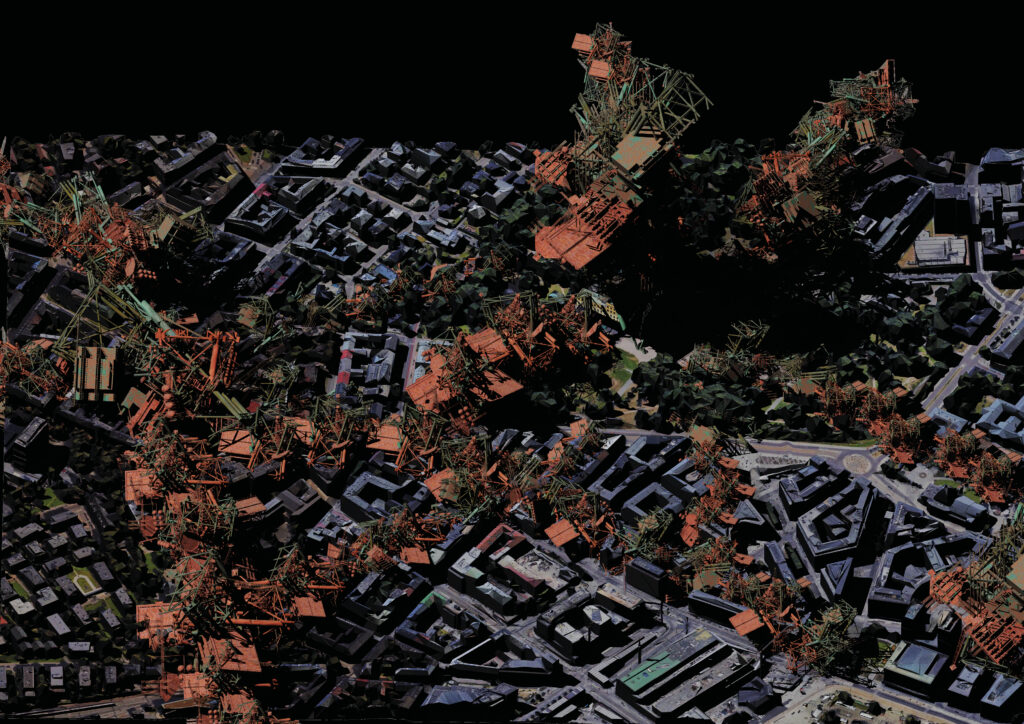
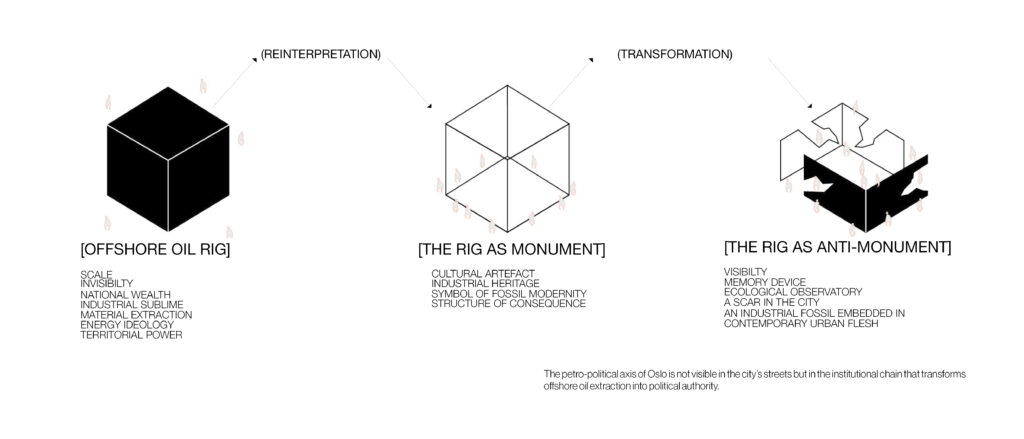
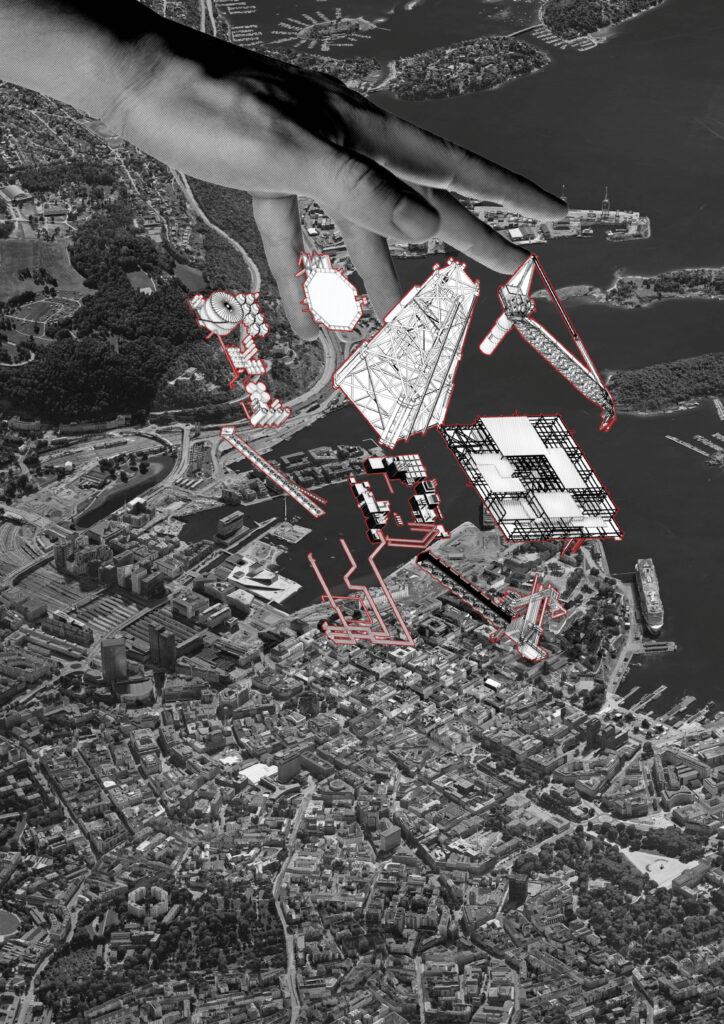
This thesis refuses that absence. It proposes the forced return of what Oslo has expelled: the insertion of decommissioned extraction infrastructure into the symbolic core of the city that extraction built. Not as celebration. Not as heritage tourism. Not as ecological redemption. As confrontation. The rig arrives in Oslo not to be civicised but to make civility impossible. It attaches to the Storting that licensed it. It ruptures the Government Quarter that administered it. It casts its shadow across the palace gardens of the monarchy that legitimised it. It makes the hidden load-bearing.
Norway’s window for this reckoning is closing. As platforms are decommissioned and scrapped, the material evidence of petro-modernity is being erased at the same speed as the political will to confront it. This thesis operates in that closing window not as an act of cultural repair, but as an act of architectural prosecution.
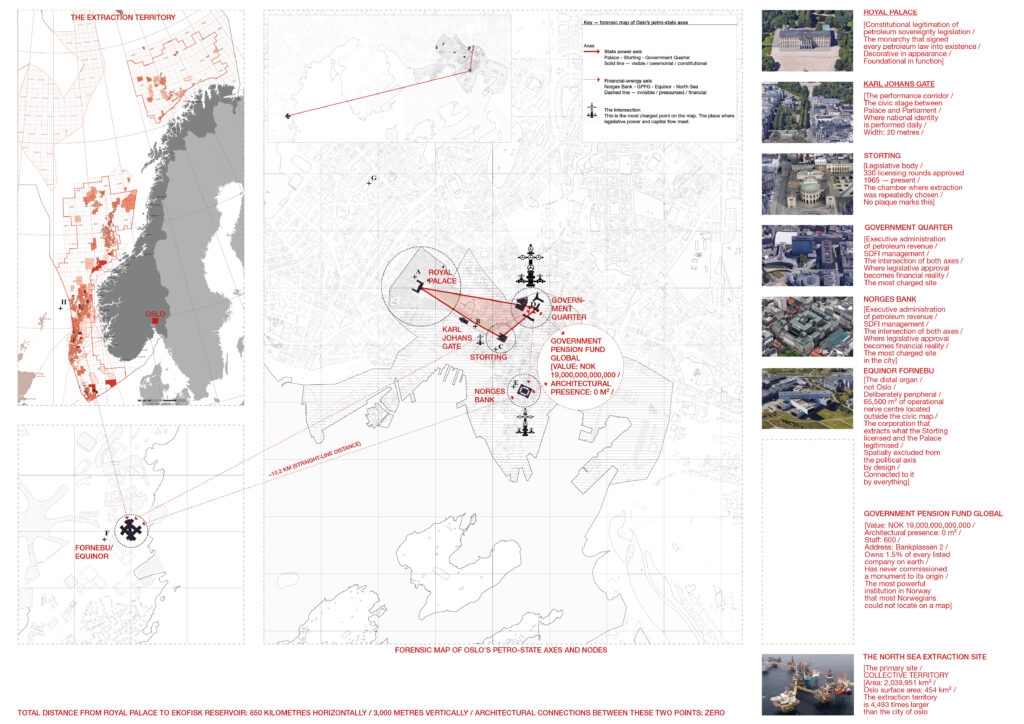
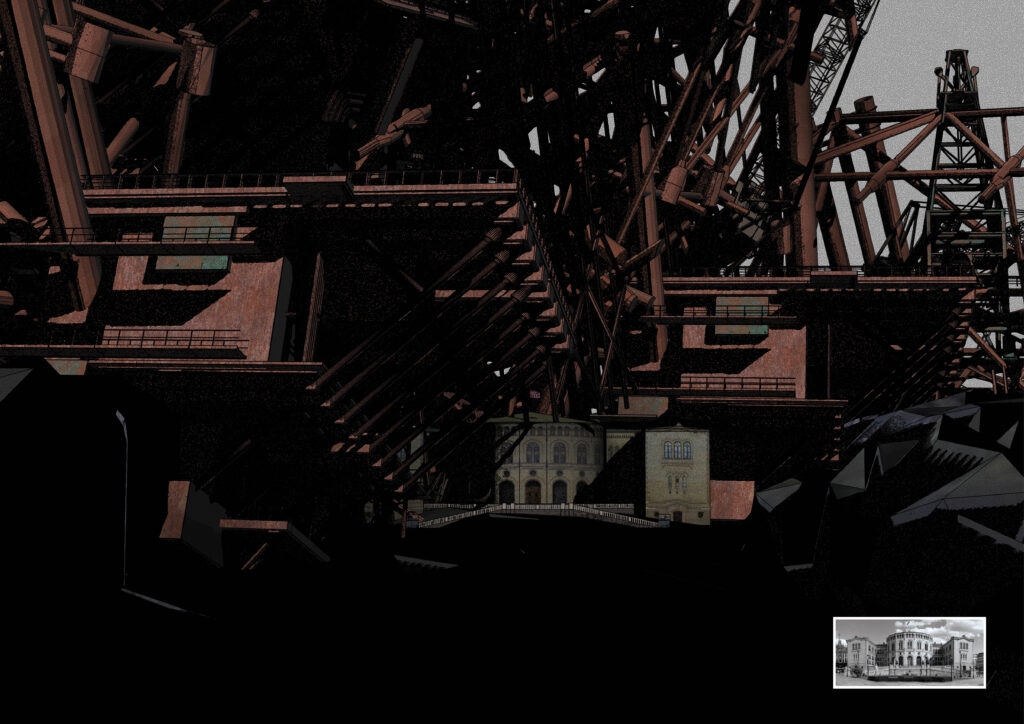
The licensing chamber over 330 acts of authorization
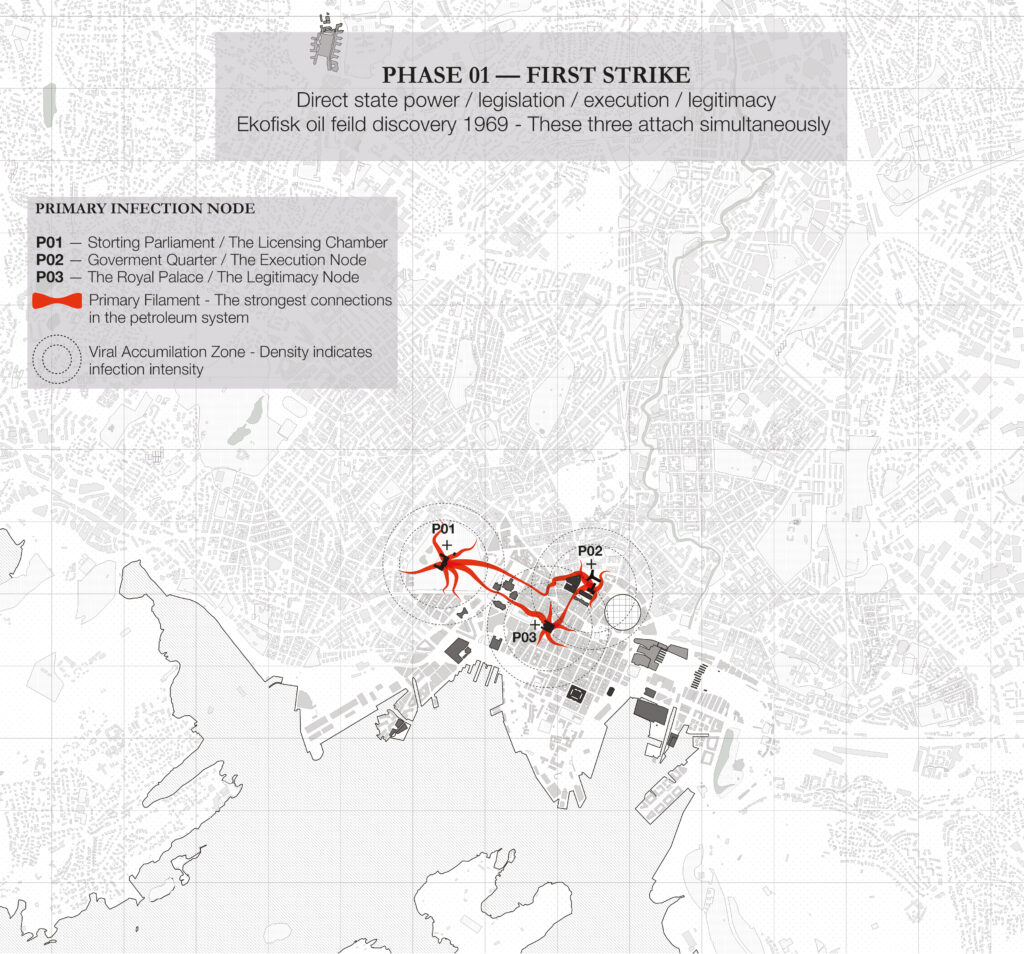
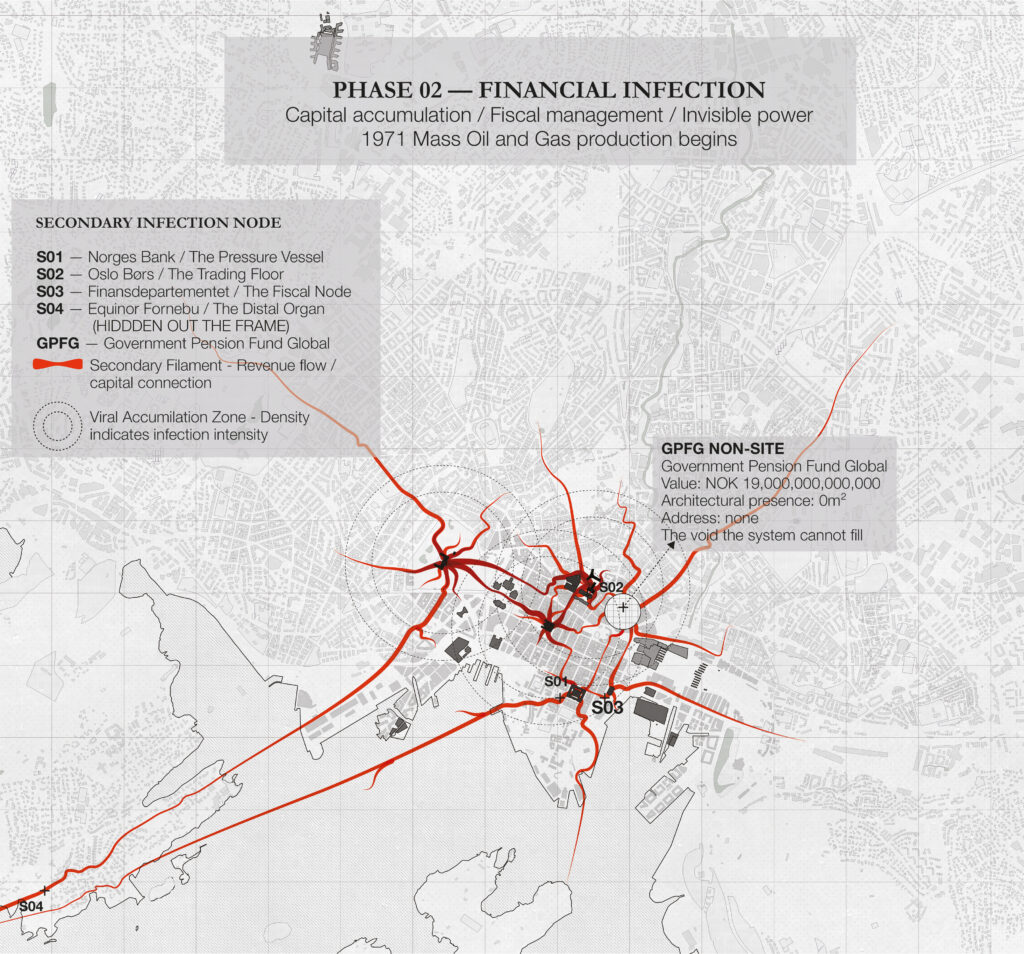
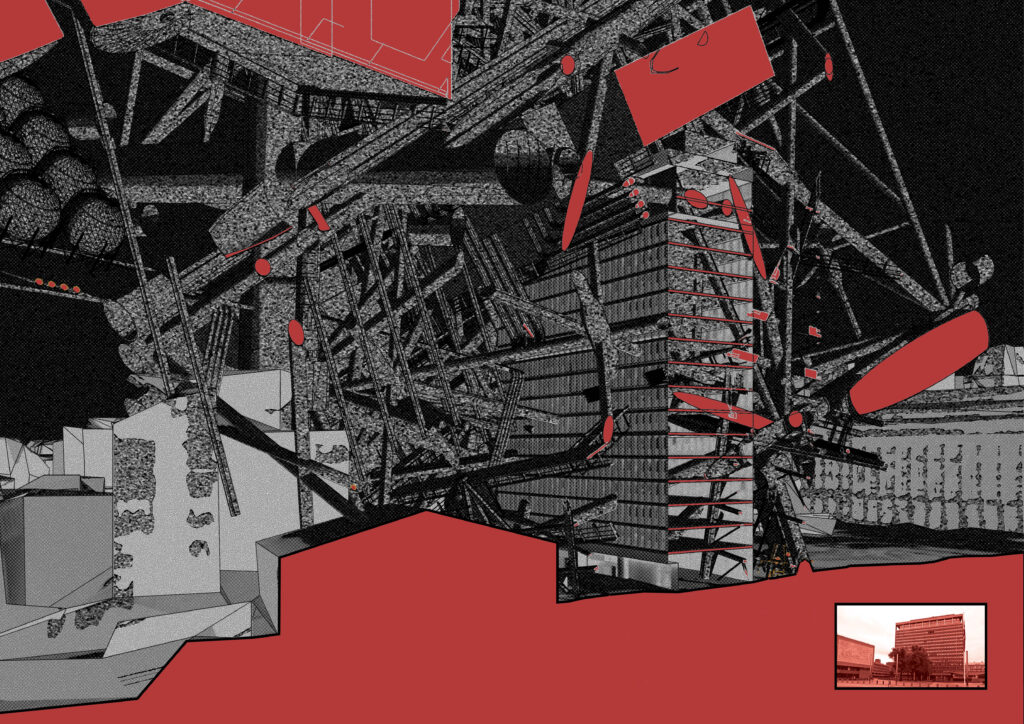
The revenue processor where extraction became welfare
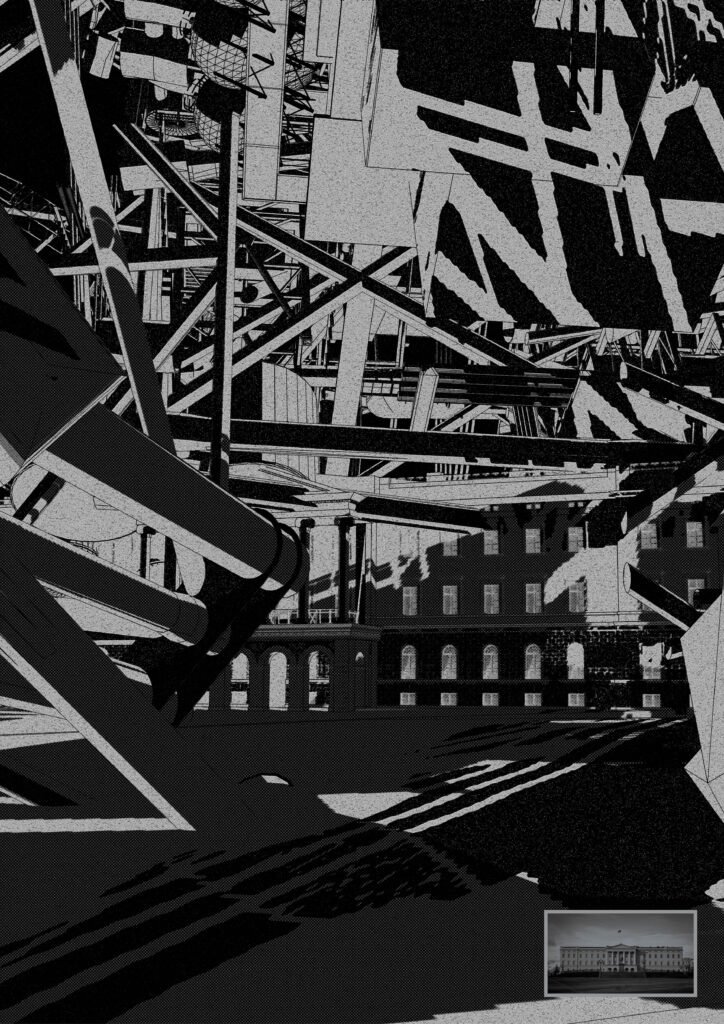
The seal of legitimacy, the building that made extraction constitutional
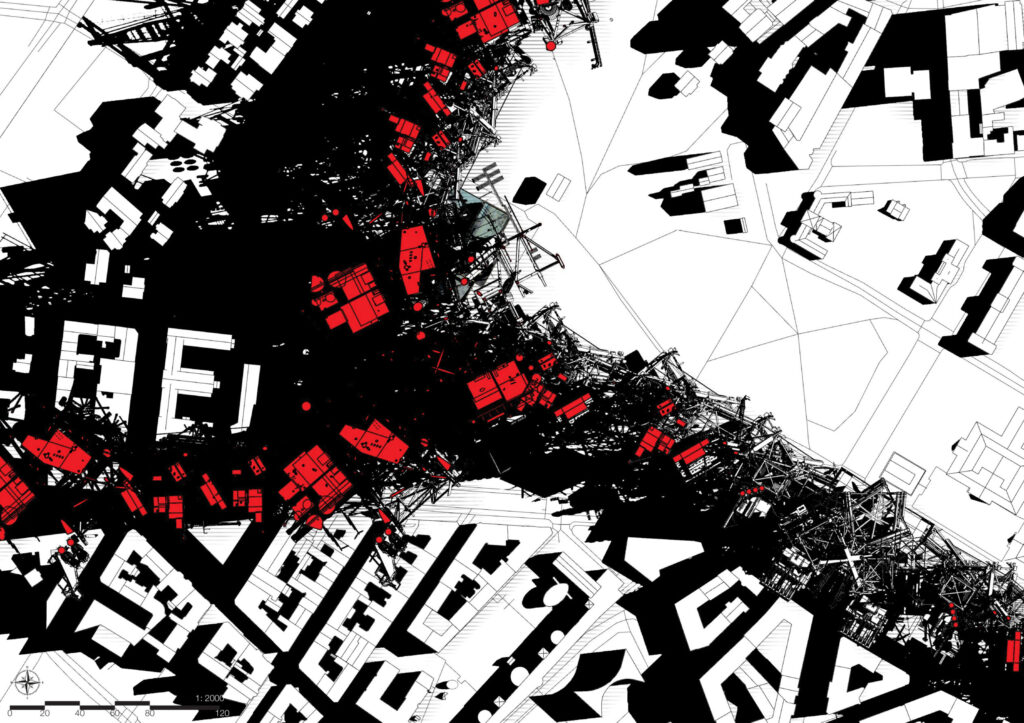
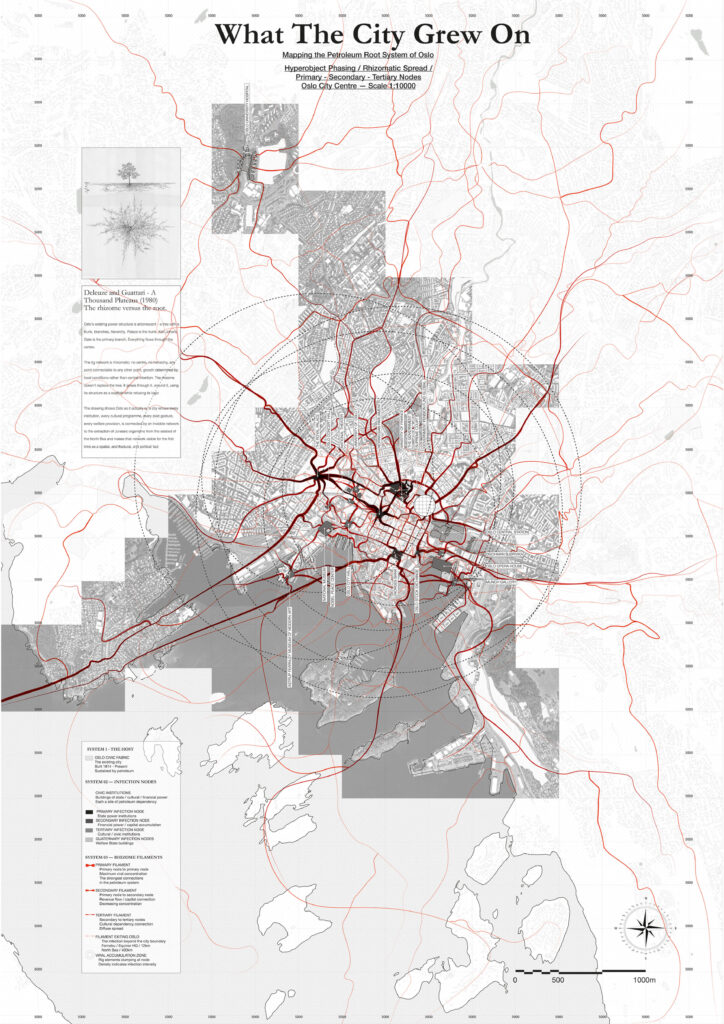
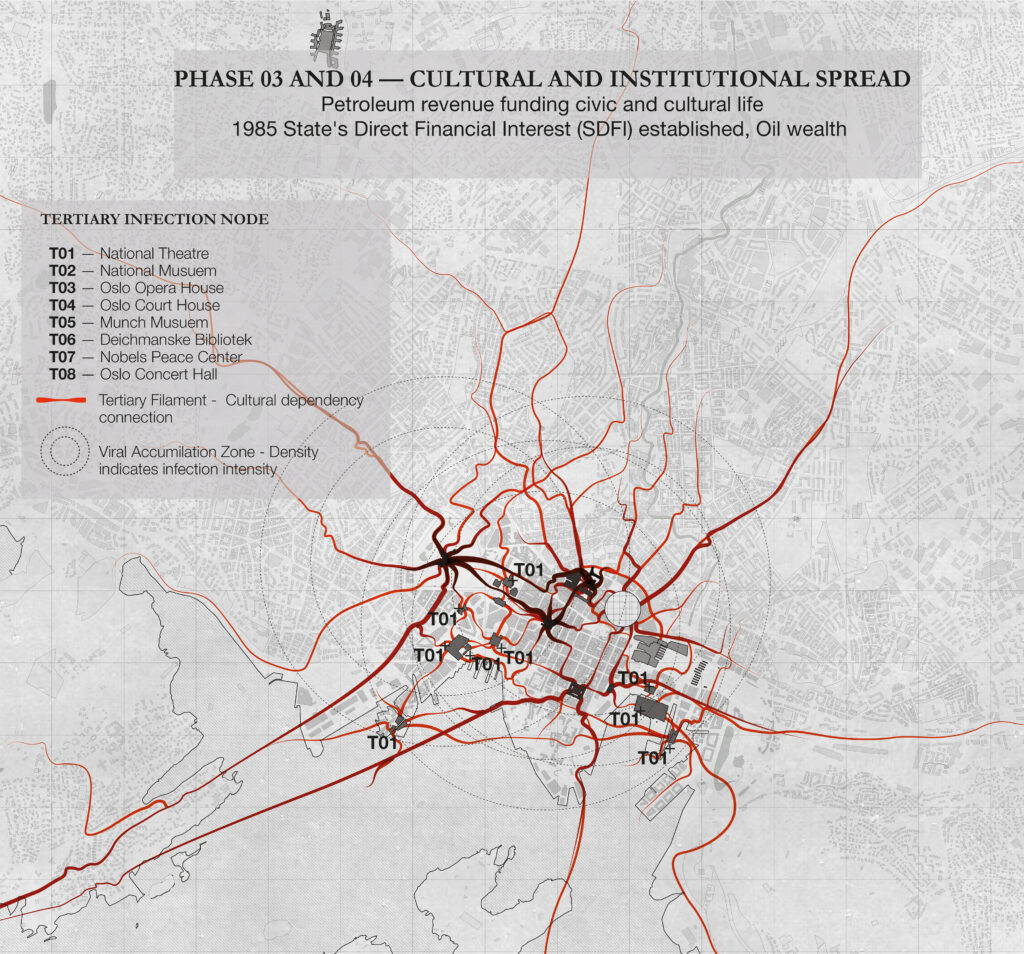
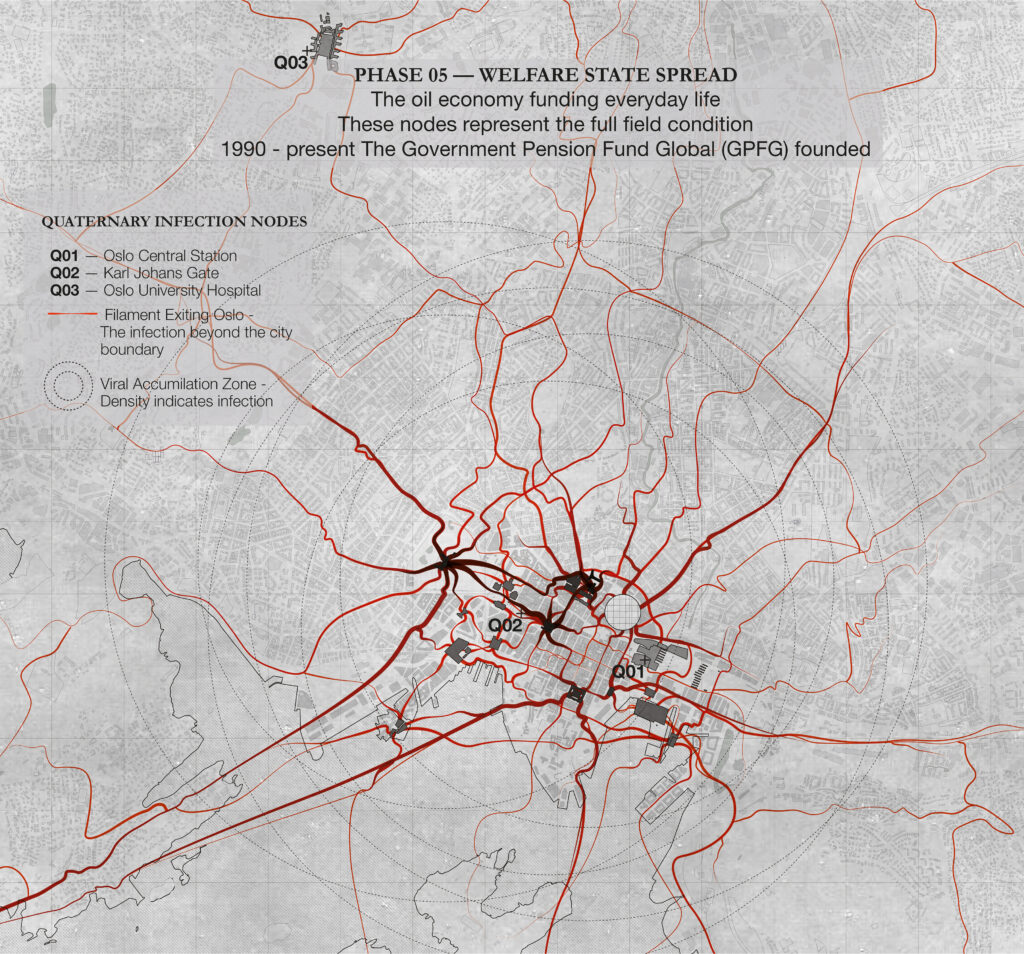
What the City Grew On maps Oslo not as a city built on oil, but as a city infected by it the petroleum economy entering existing civic structures. Following Deleuze and Guattari, the rhizomatic spread of the network grows through Oslo's arborescent power structure
Full infection - Oslo after
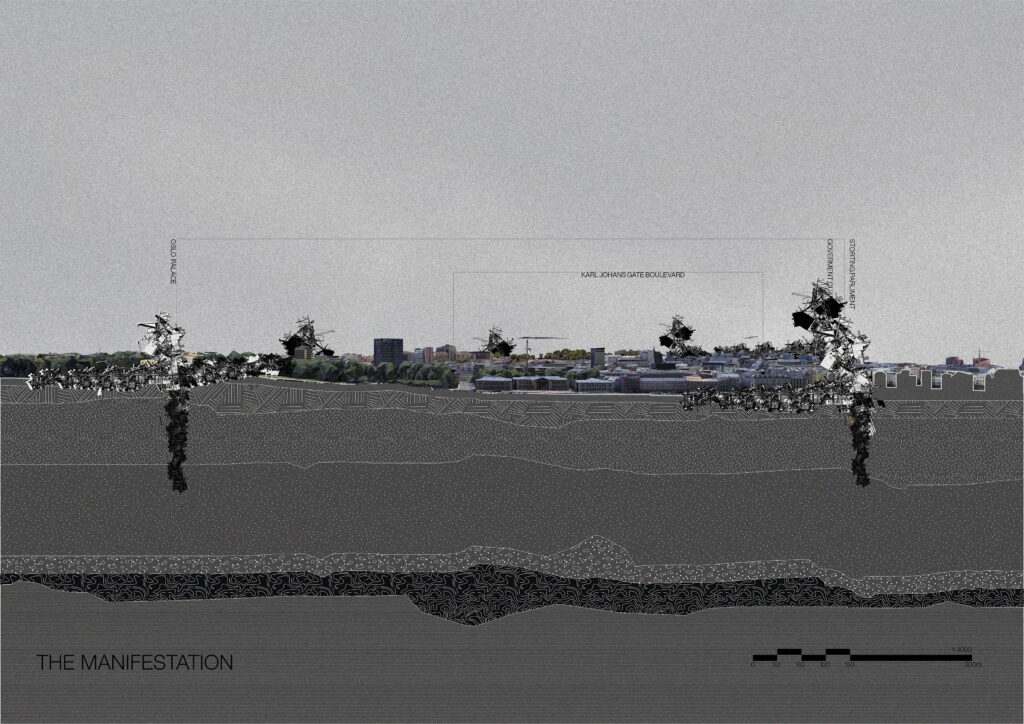
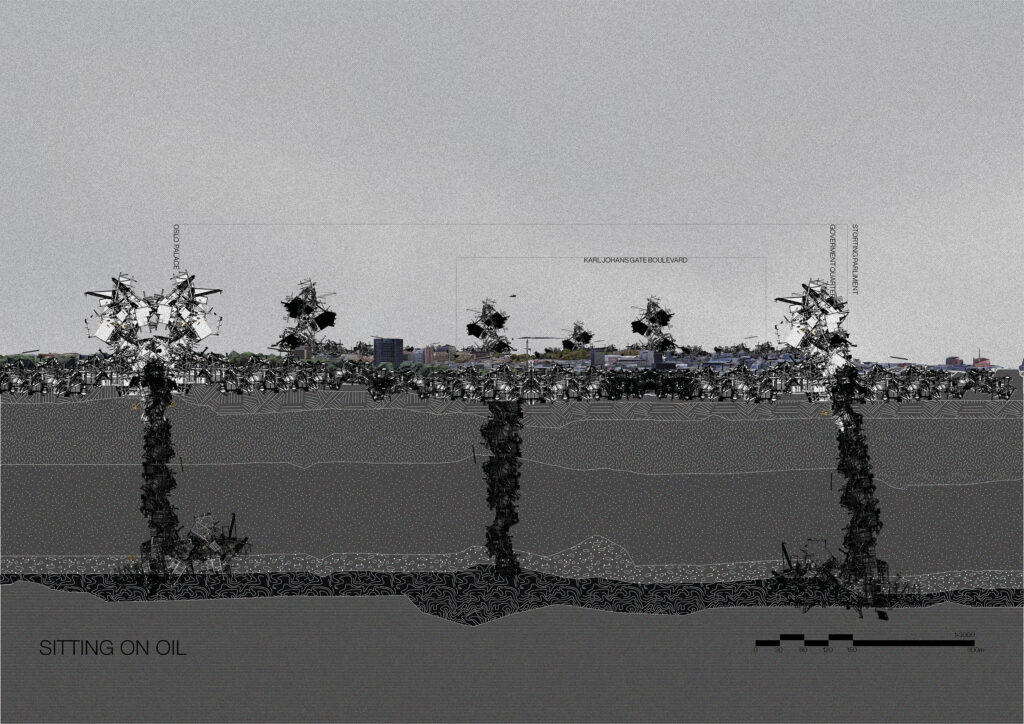
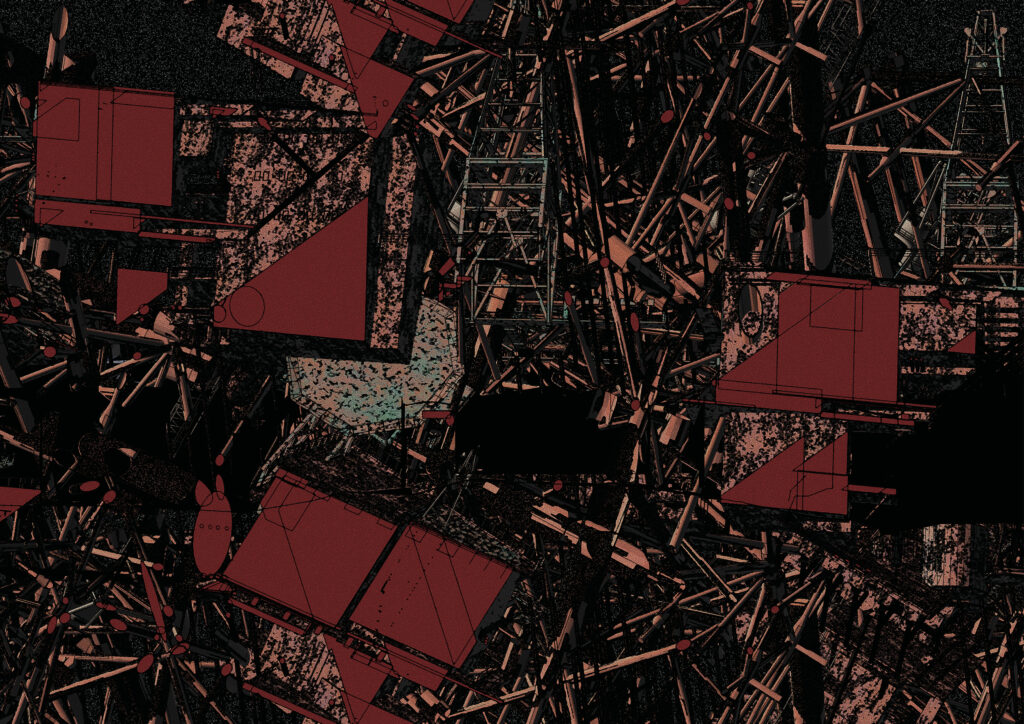
The Anti-Monument Overload
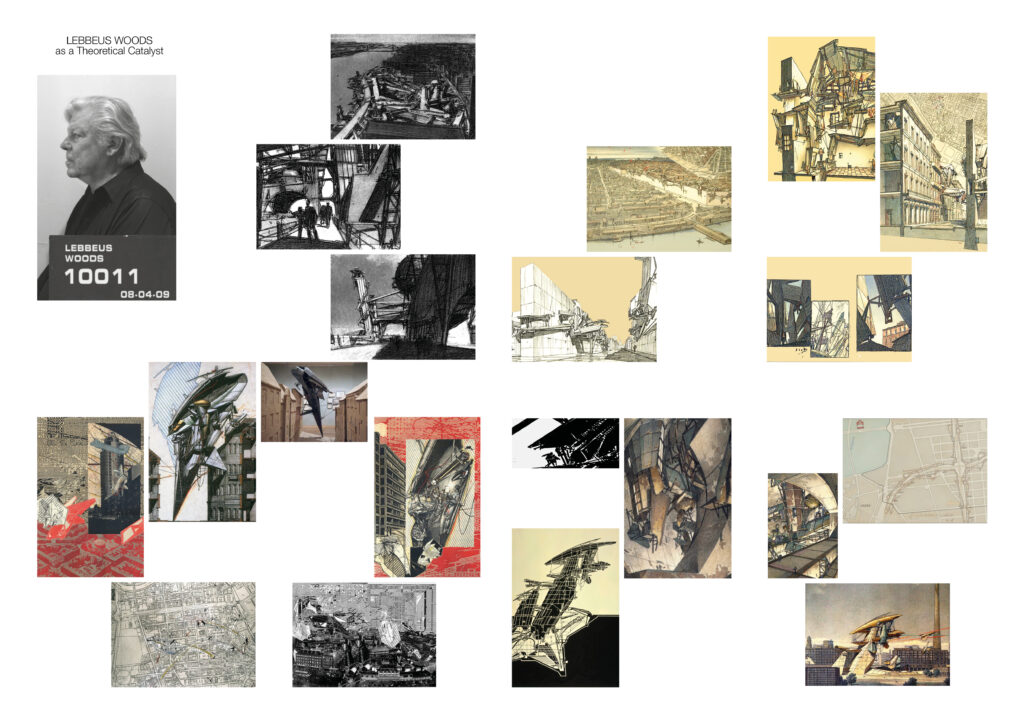
Woods offers a critical and generative lens. He provides a conceptual vocabulary through which to reconceive the oil rig not as industrial infrastructure but as a spatial and political force capable of confronting public space. Woods’ central propositions around heterarchy, rupture, intrusion, parasitism, and experimental inhabitation allow this project to transform the rig into an anti-monumental architecture that challenges the cultural and political order of central Oslo.