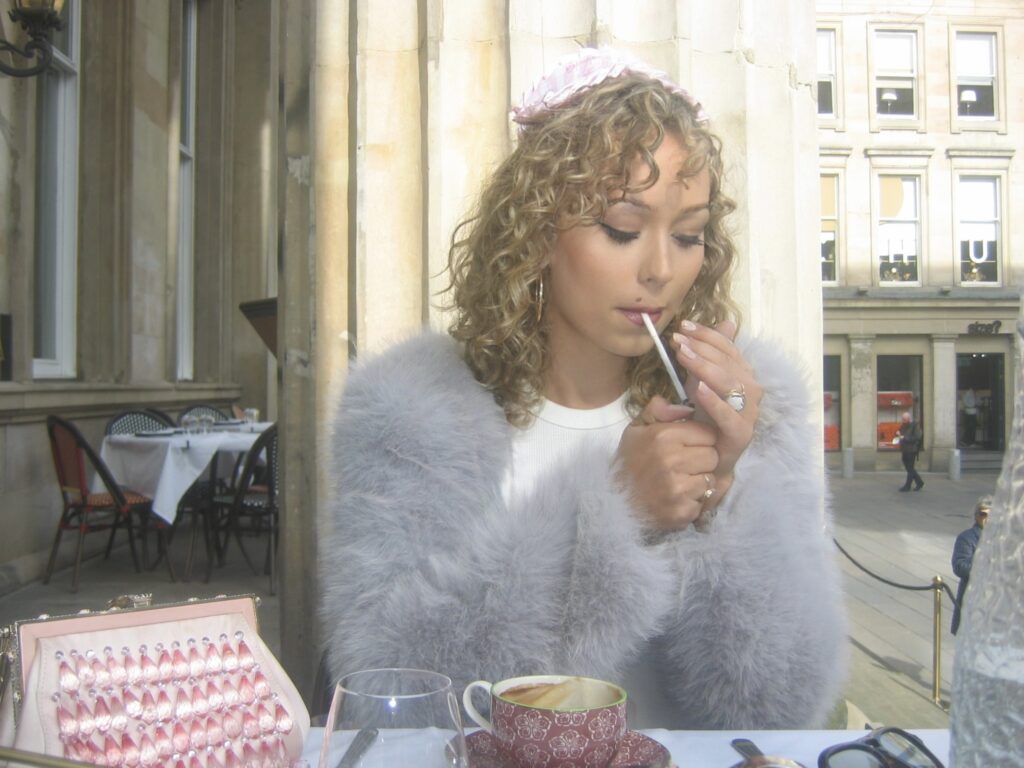

Beier Dai(Belle)
(She/Her)
Raised in Shanghai, creatively shaped in Glasgow, and soon based in Tokyo. I create bold, cinematic photography focused on expressive portraiture, food culture and atmospheric storytelling, blending Eastern aesthetics with playful visual narratives.
Ichigo-Ichie(一期一会), 2026
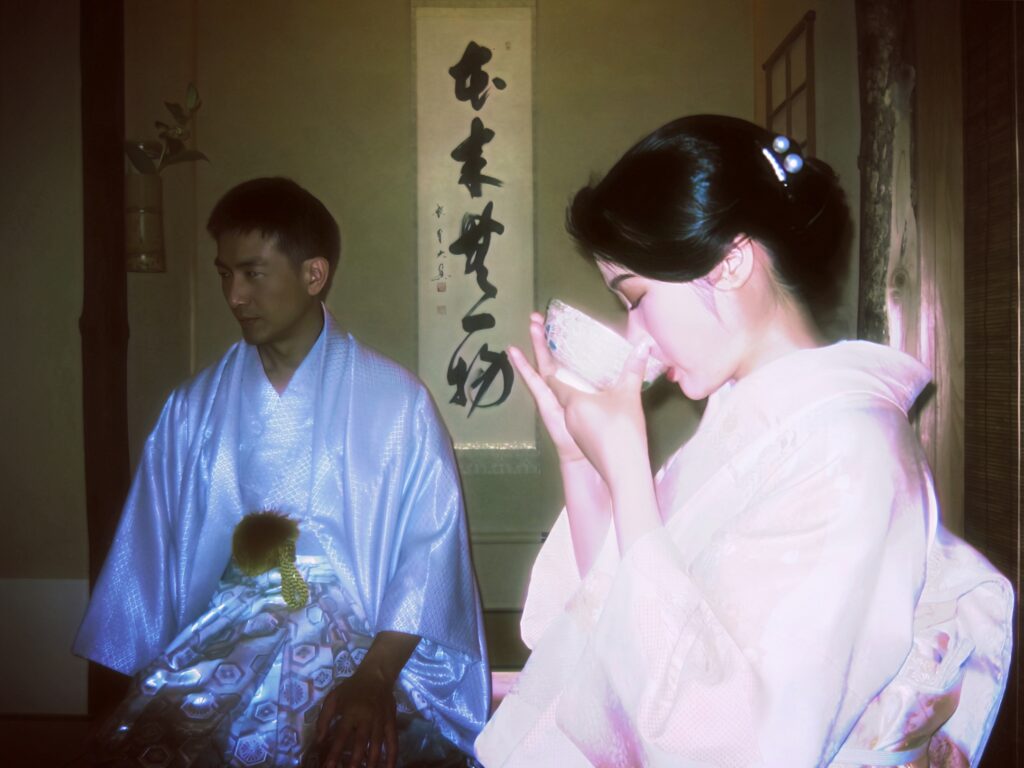
This project weaves together two intertwined Eastern philosophical pillars: the tea ceremony principle of ichigo-ichie (“one time, one meeting”/ 一期一会), and the Zen Buddhist tenet Honrai Muichimotsu (“originally, nothing is possessed”/ 本来无一物).
My conceptual foundation for ichigo-ichie was deeply influenced by my 2025 short film Dak Haan Yum Cha (得闲饮茶), in which I staged an improvised tea ritual on a public beach in Dubai. Through unpacking tea utensils from a luxury handbag and performing a fleeting tea ceremony within a transient landscape, I became increasingly aware of how rituals create fragile moments of intimacy that can never be repeated in the same way. The work revealed to me how temporary encounters, gestures and atmospheres gain emotional significance precisely because of their impermanence. Later, a serendipitous reconnection with the photograph I took in 2023 of my parents participating in a tea ceremony in Kyoto anchored the project within the Zen Buddhist principle of Honrai Muichimotsu. What had once seemed to me as a decorative scroll phrase gradually acquired profound personal resonance following my family’s cross-border relocation. It evolved from a poetic backdrop into a meditation on release, impermanence and the acceptance that no experience, relationship or possession can ever be fully held. Together, these philosophies frame my inquiry: ichigo-ichie honours the singular, unrepeatable quality of every encounter, while Honrai Muichimotsu reminds us to let go of the urge to cling to those moments, exploring meaning through absence rather than preservation.
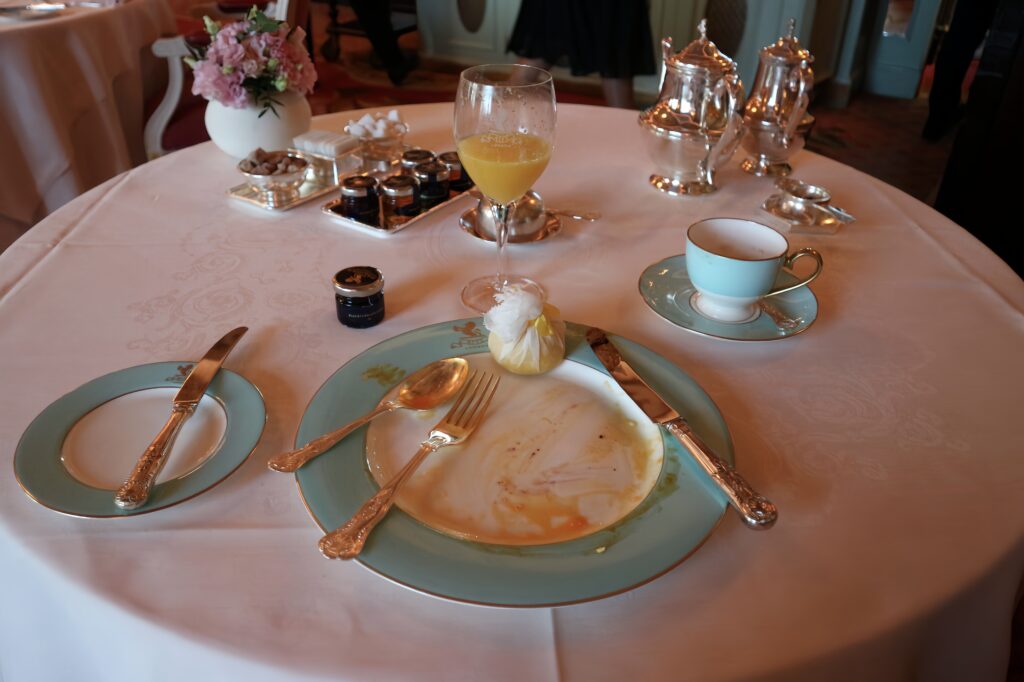
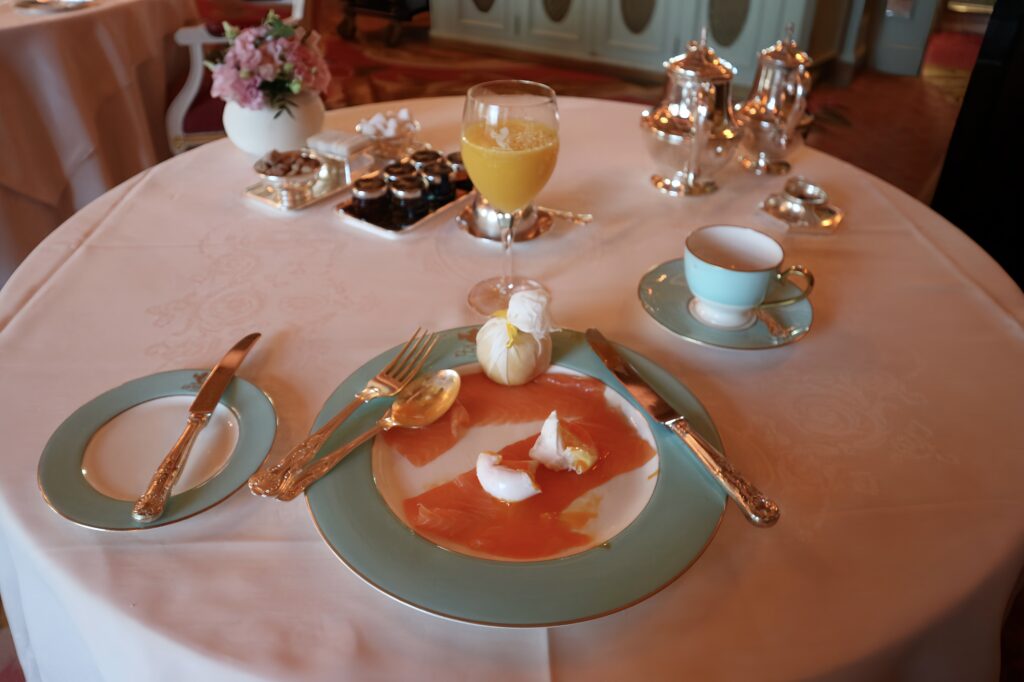
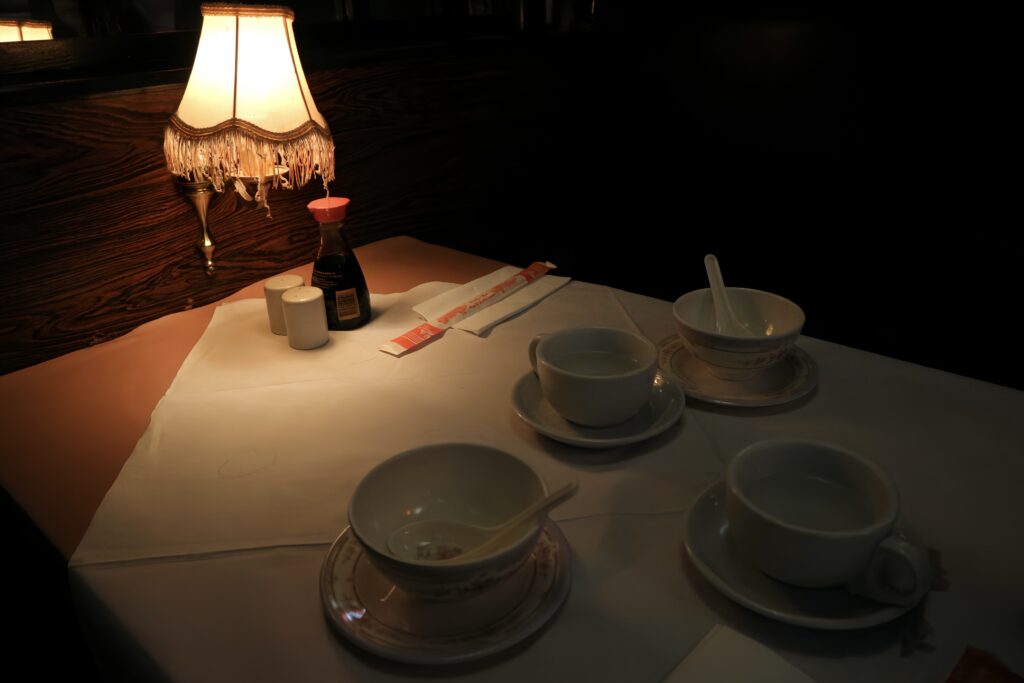
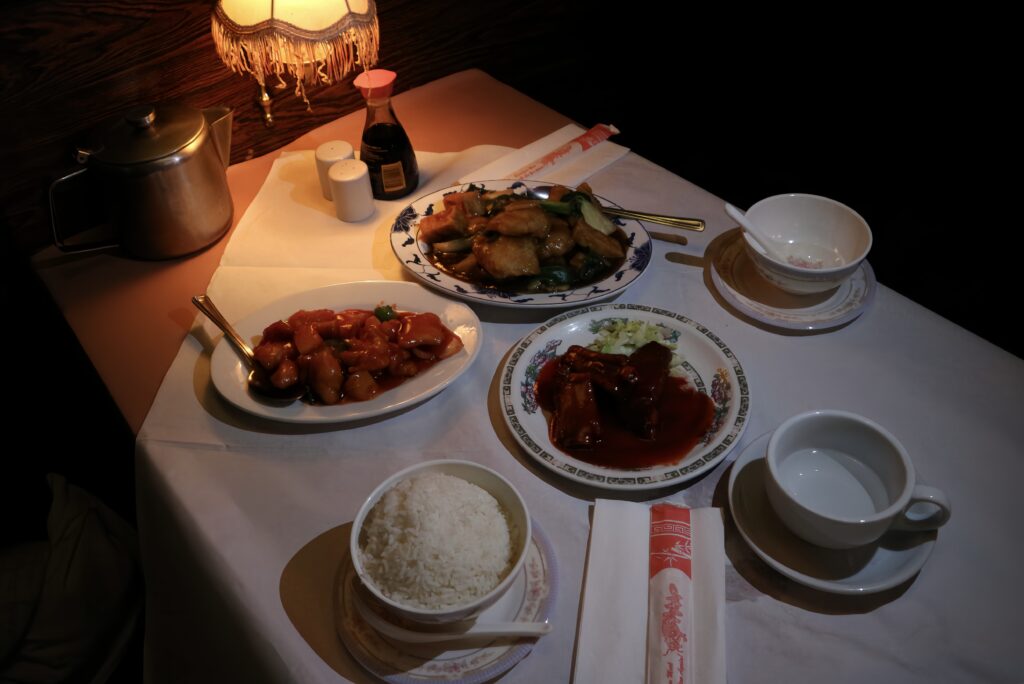
Guided by the restraint and mindfulness of traditional tea culture, I centre quiet transformation within everyday dining rituals, structuring the work around four paired transitional states: pre-meal and post-meal, pre-serving and post-serving. I employ lenticular prints as my core medium to materialise this dual philosophy visually. Unlike static photography, lenticular technology embeds two-layered images on a single surface, which shift and unfold only as the viewer moves. Circling the work slowly, audiences observe subtle shifts from prepared order to quiet emptiness, from ritual setup to its gentle conclusion—an interactive visual metaphor for the fleeting singularity of ichigo-ichie, paired with the “letting-go” ethos of Honrai Muichimotsu.
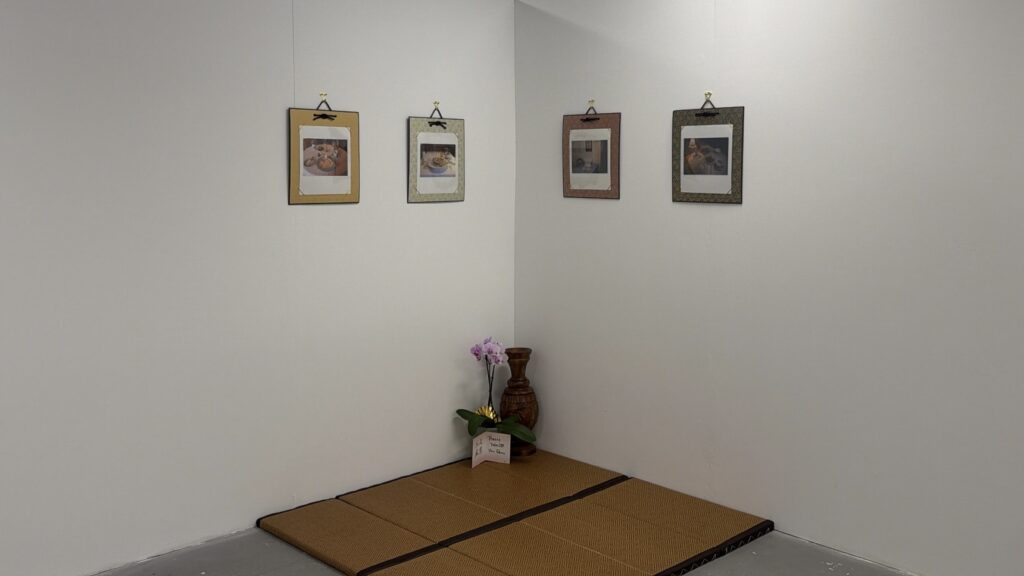
The installation is staged as a tea-room-inspired corner, anchored by tatami mat flooring and hanging-scroll-style framing to evoke the slow, intentional ritual of tea practice. The lenticular medium and immersive spatial design compel deliberate, unrushed viewing, merging classical tea ceremony aesthetics with responsive photographic technology. Ultimately, this work invites viewers to embrace the transience of time: to fully inhabit the unrepeatable magic of ichigo-ichie encounters, while finding peace in the Zen truth of Honrai Muichimotsu, discovering beauty and presence not in holding onto moments, but in honouring their gentle passing.
For Sale
For Sale
For Sale
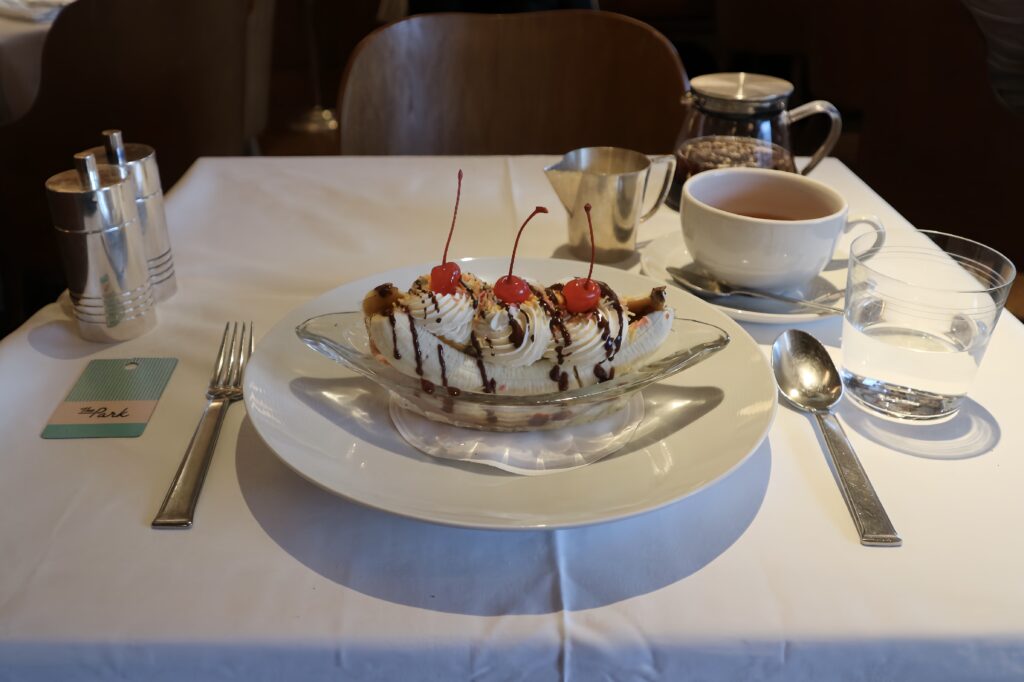
For Sale
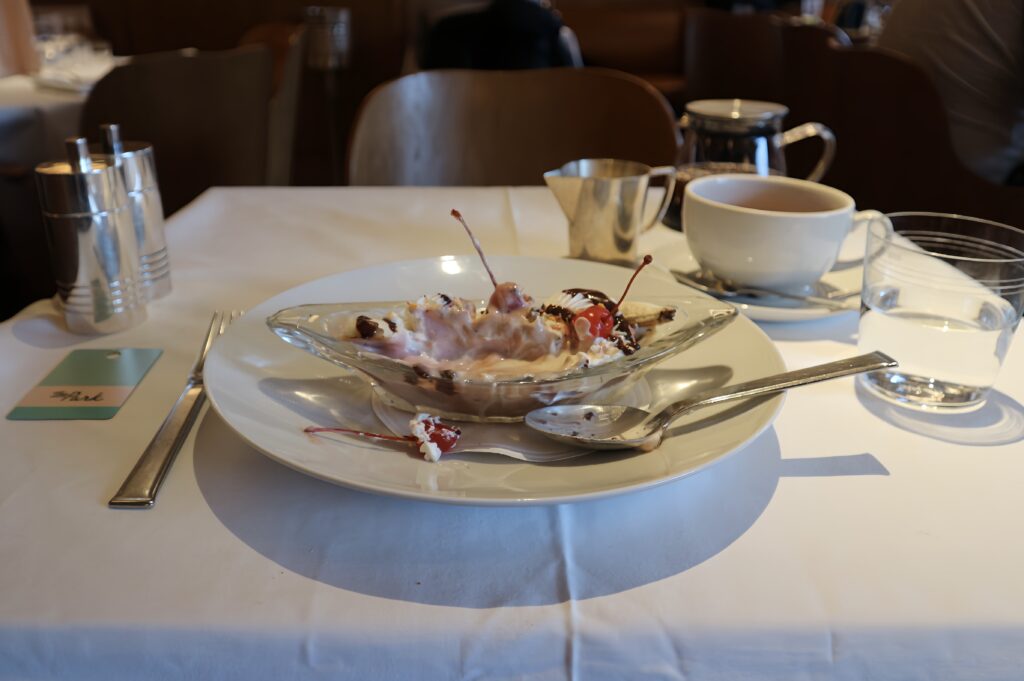
For Sale
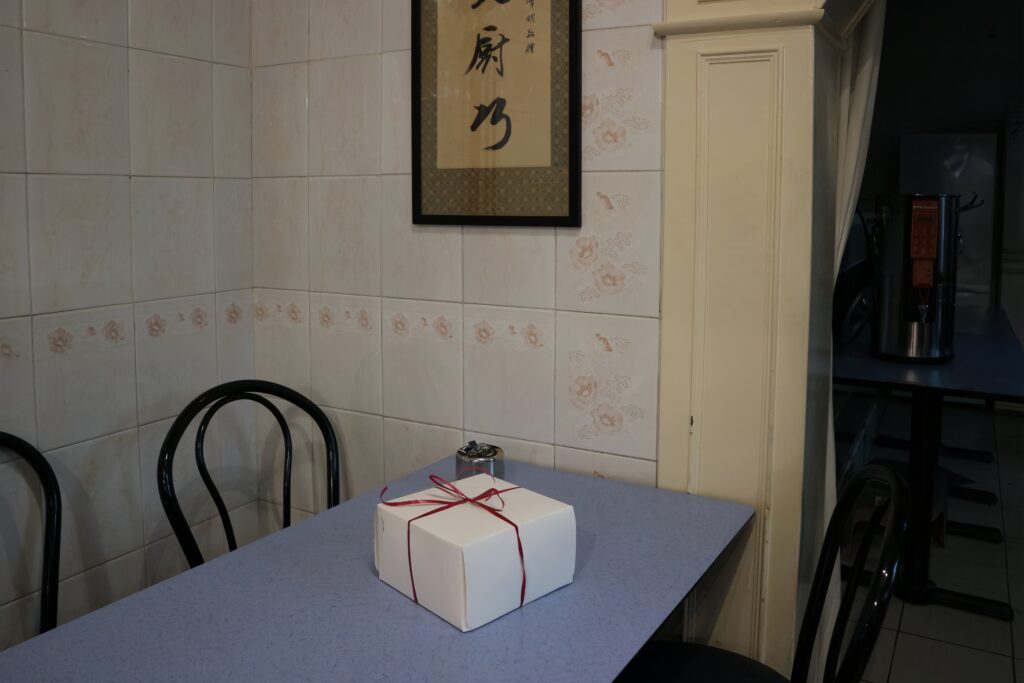
For Sale
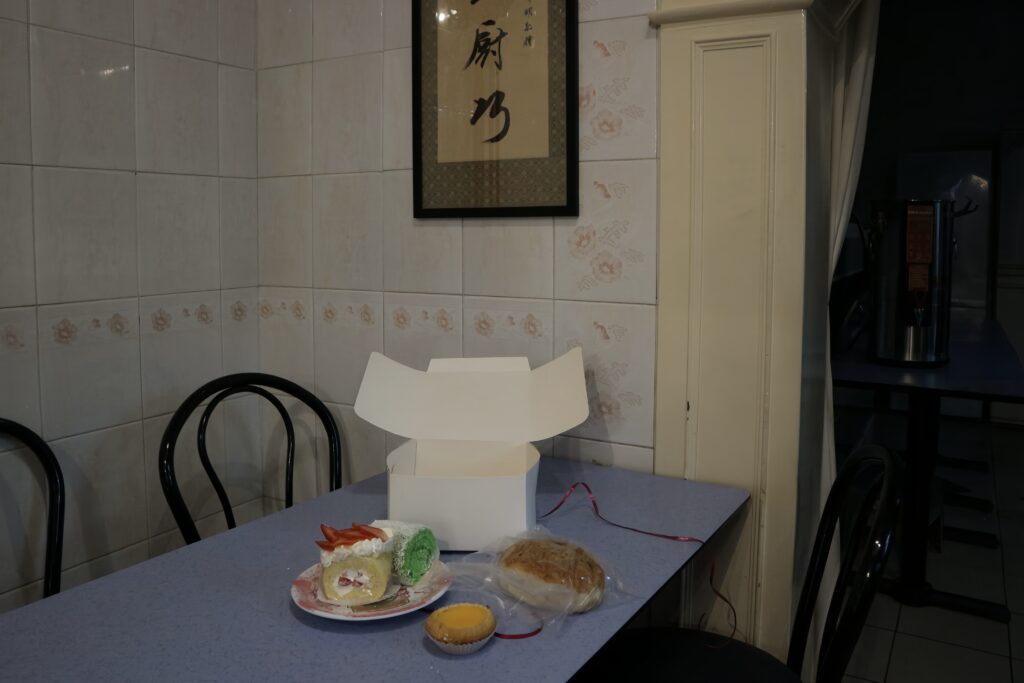
For Sale
For Sale
For Sale
Dak Haan Yum Cha(得闲饮茶), 2025
Dak Haan Yum Cha (得闲饮茶) (A common greeting and invitation in Cantonese-speaking regions, representing a relaxed and carefree attitude, taking time out of a busy schedule to get together with family and friends) reimagines the ritual of tea drinking within an unexpected landscape: the beach. Borrowing visual language from home videos, travel documentation, and domestic performance, the work stages an intimate tea ceremony beneath the harsh sunlight and drifting shadows of palm trees. A luxury handbag becomes a vessel for tea utensils, transforming consumer objects into carriers of ritual, memory, and cultural displacement.
The work explores how traditions migrate and mutate through diasporic experience. Removed from the controlled architecture of the tea room, the act of preparing tea becomes improvised, theatrical, and slightly absurd. The sandy environment destabilises the precision and refinement usually associated with tea culture, yet simultaneously reveals its resilience. Tea here is no longer bound to a fixed geography or authenticity; instead, it becomes portable — a temporary performance assembled wherever the body chooses to pause.
Through close attention to gestures, textures, and spoken subtitles, the video reflects on the emotional weight carried by ordinary rituals. The repetitive actions of unpacking, pouring, and serving slow down the surrounding world, creating a fragile moment of contemplation within a transient environment. Influenced by the philosophy of ichigo-ichie (“one time, one meeting”/ 一期一会), the work embraces the fleeting nature of encounters and the impossibility of fully preserving them.
At the same time, Dak Haan Yum Cha questions ideas of value and possession. The objects presented — silver cups, porcelain, branded accessories — appear precious, yet the ritual itself remains ephemeral, disappearing as quickly as the tide. The work, therefore, situates tea not simply as a beverage but as a performative act through which intimacy, nostalgia, migration, and impermanence are continuously rehearsed.
Blossoms Shanghai(春), 2024
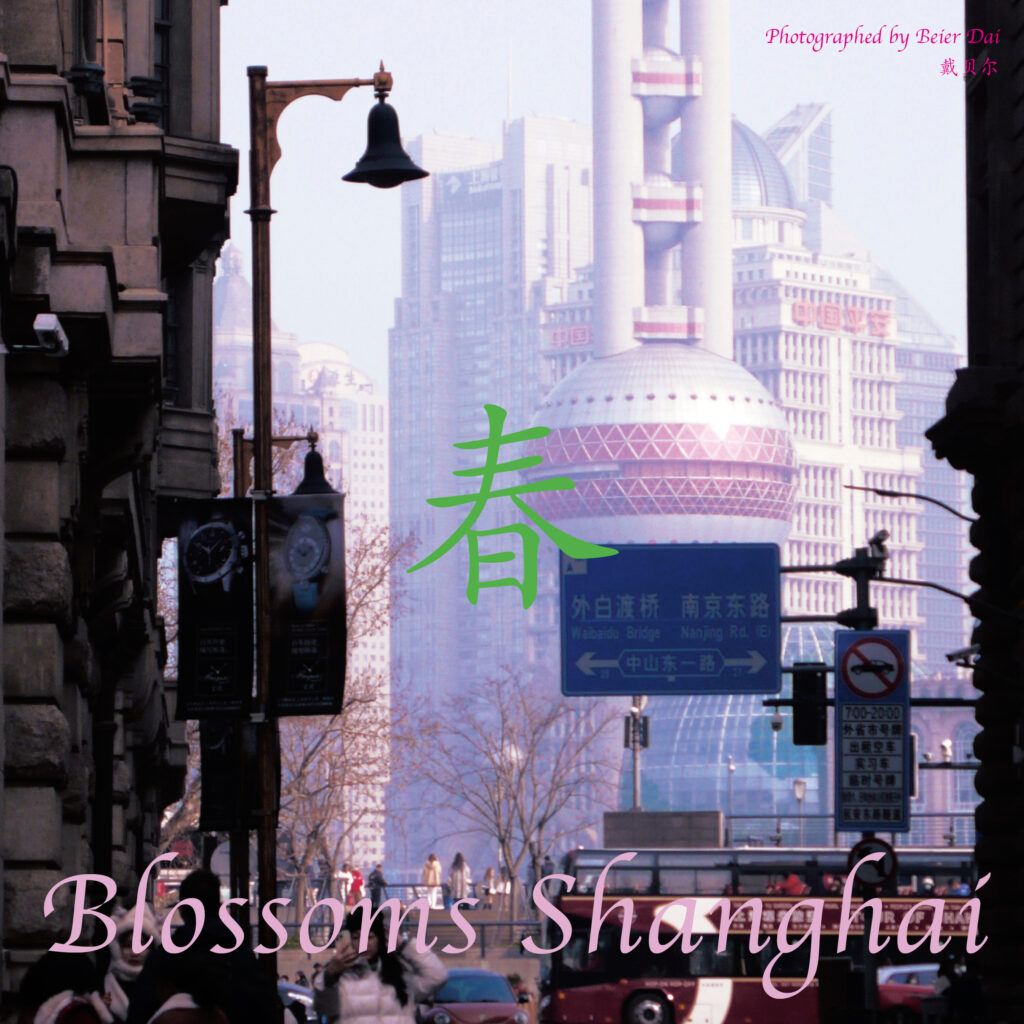
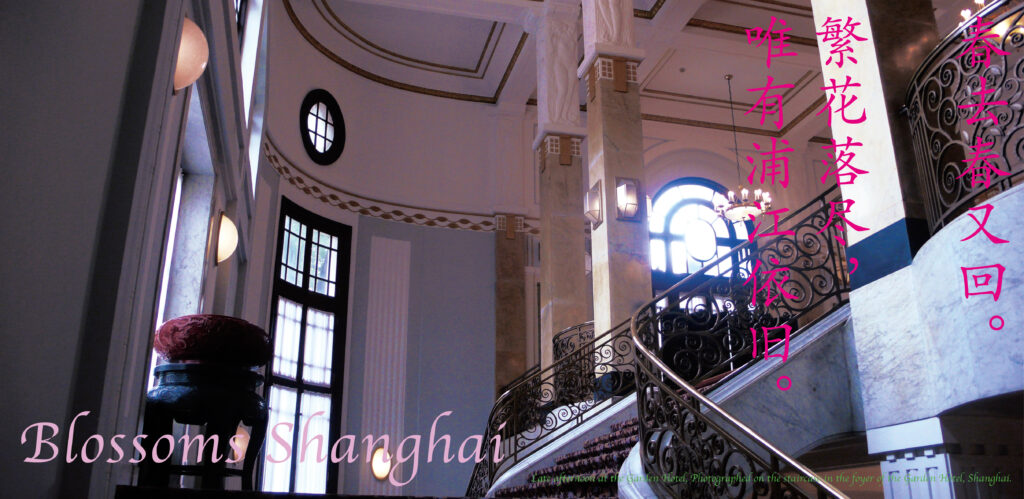
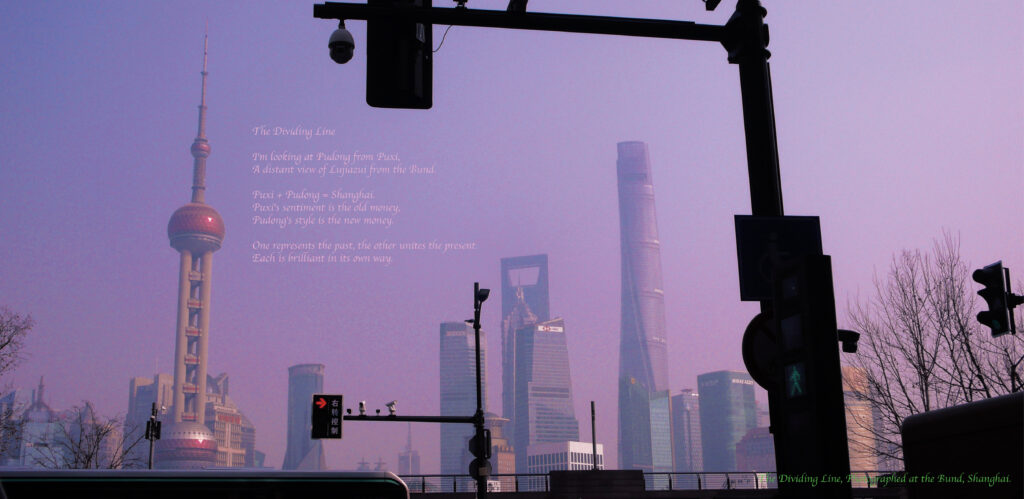
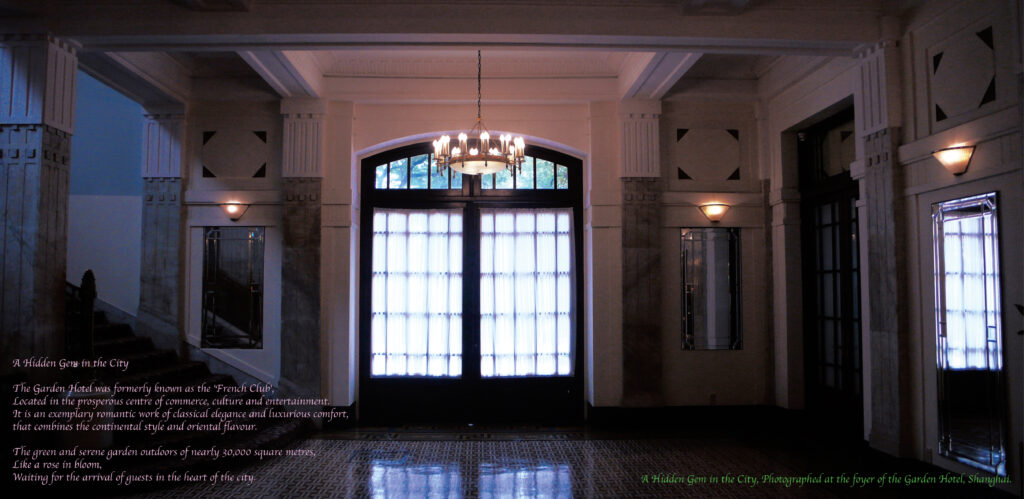
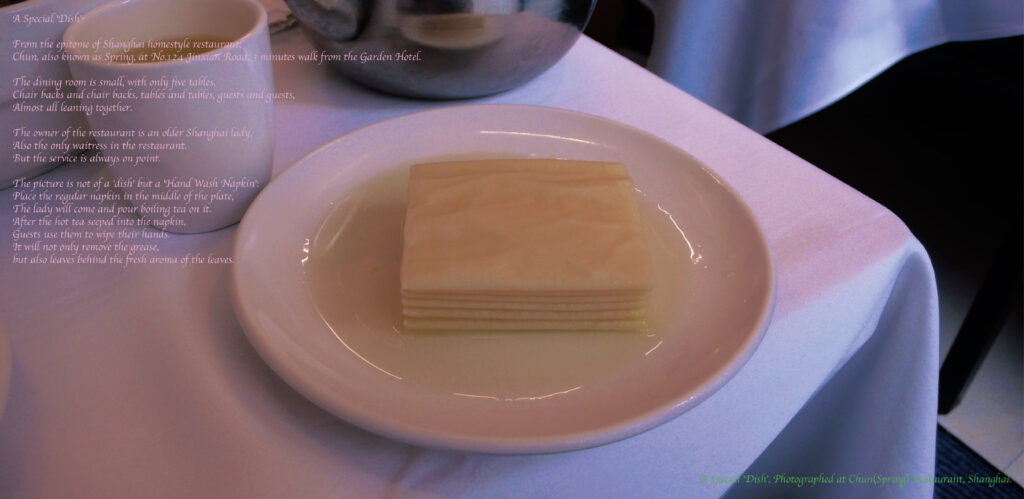
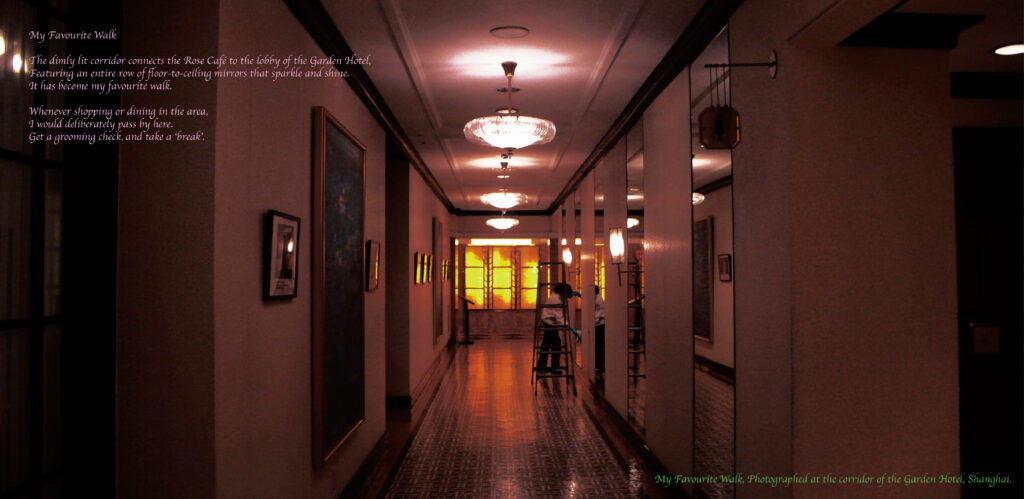
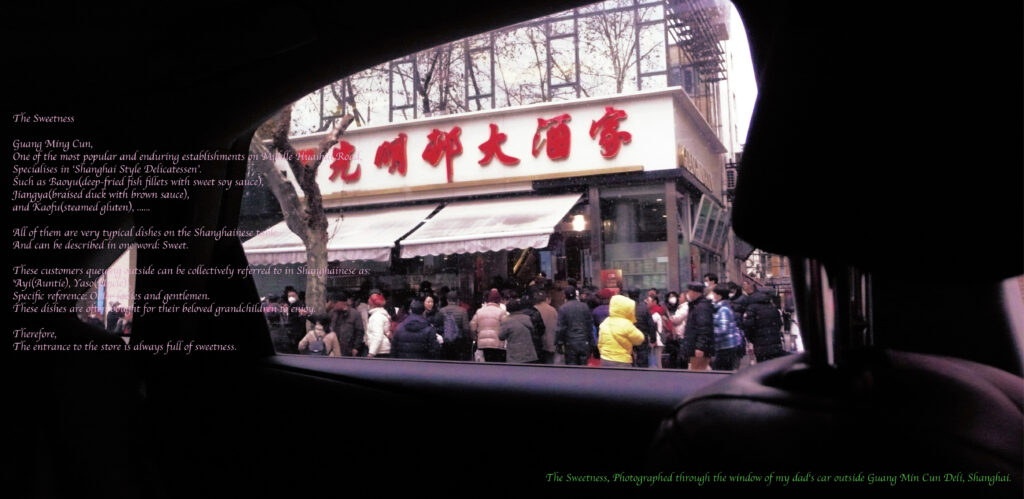
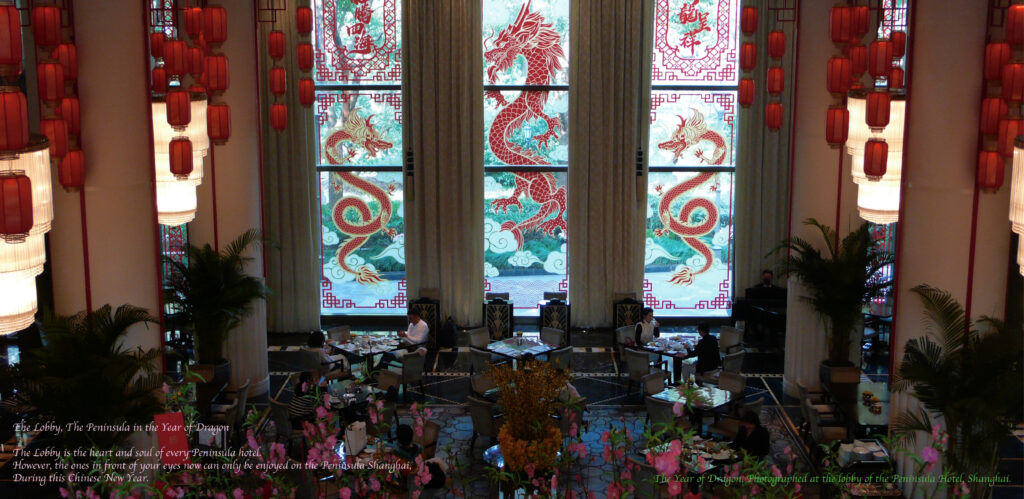
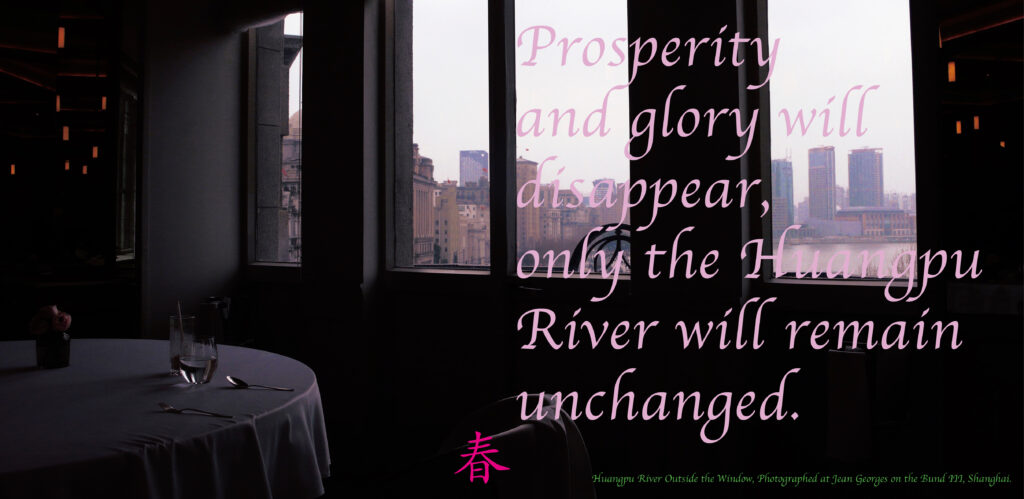
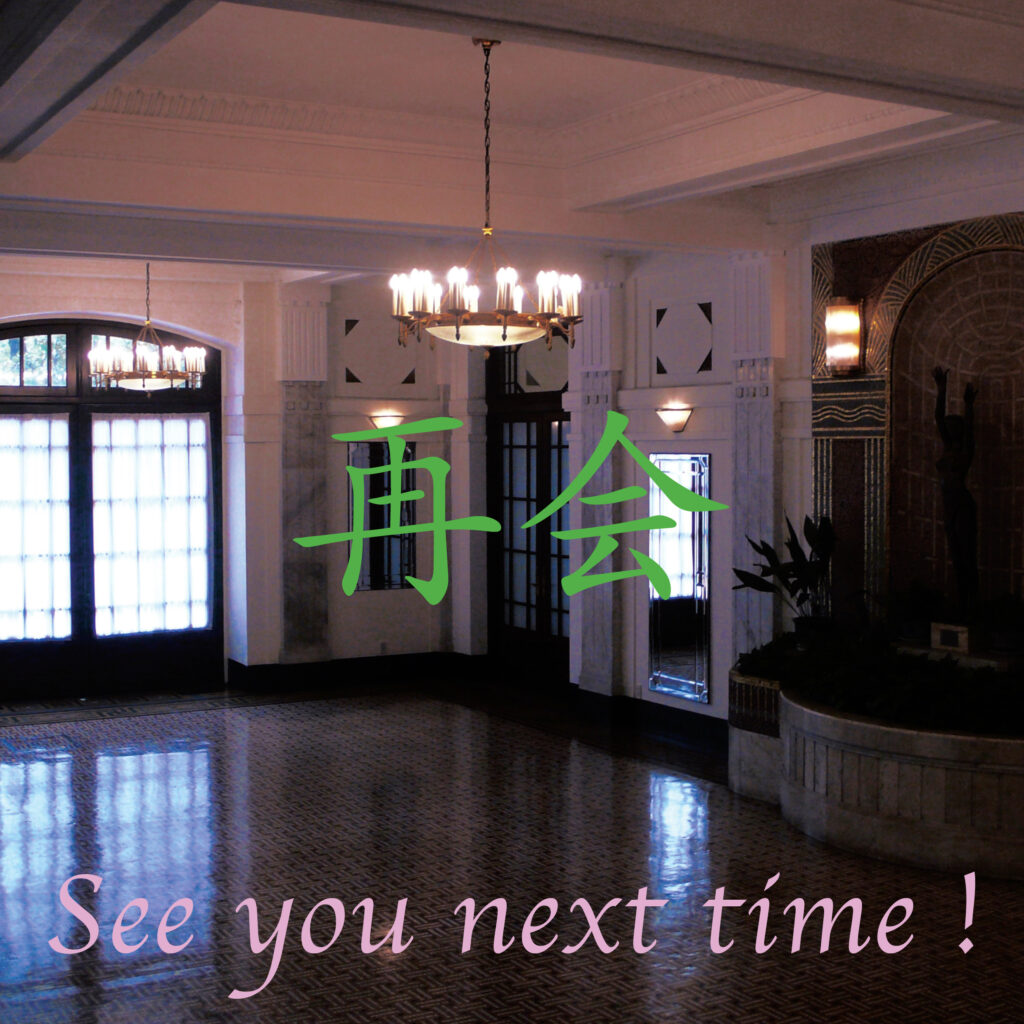
Blossoms Shanghai (春) is an artist photo book constructed as a personal travel guide to Shanghai, viewed through the lens of memory, longing, and cinematic nostalgia. Inspired by Wong Kar-wai’s television series of the same name (Blossoms Shanghai) and created during the Chinese New Year period while living abroad, the work reflects my emotional attempt to reconnect with the city I call home. Rather than documenting Shanghai objectively, the project presents the city as I emotionally remember and experience it — fragmented, romanticised, crowded, luminous, and constantly slipping between past and present.
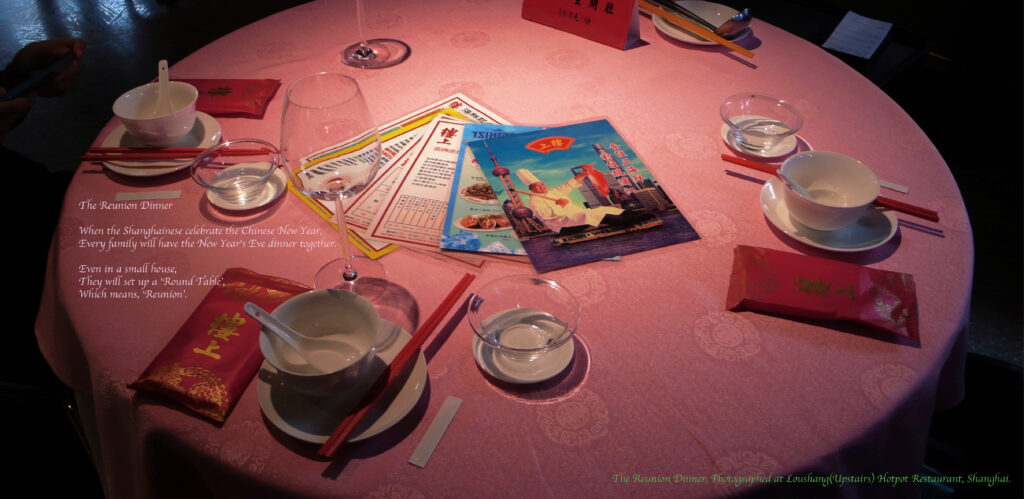
The book moves through hotels, restaurants, corridors, dining tables, river views, and streetscapes that carry traces of both old Shanghai elegance and rapid contemporary transformation. Through saturated colour, dim lighting, reflective surfaces, and stylised typography, the images echo the visual language of Wong Kar-wai: spaces become emotionally charged rather than purely documentary. The city is portrayed not as a fixed geography, but as an atmosphere shaped by migration, memory, and desire.
Text fragments throughout the work function as intimate annotations, combining observations, family memories, urban folklore, and personal reflections. These writings mimic the format of a travel handbook while simultaneously resisting its authority. Instead of offering practical directions, the book guides the viewer through emotional coordinates — where to witness reunion dinners, where prosperity feels fragile, where sweetness lingers, and where nostalgia quietly accumulates within everyday rituals.
Created from the perspective of someone temporarily separated from home, Blossoms Shanghai explores the tension between cultural intimacy and distance. The project reflects on how cities continue to exist within the imagination after departure, becoming reconstructed through longing and selective remembrance. Influenced by the melancholic temporality found in Blossoms Shanghai, the work embraces impermanence: restaurants may disappear, skylines may transform, prosperity may fade, yet certain gestures, flavours, and atmospheres remain suspended within personal memory.
Ultimately, the book becomes both a love letter and a temporary archive — an attempt to preserve fleeting encounters with Shanghai before they dissolve into nostalgia.
Blind Date, 2023
Blind Date is a performative video work inspired by the matchmaking culture of Shanghai’s People’s Square marriage market, Chinese television dating shows like If You Are the One, and Marina Abramović’s performance artwork The Artist Is Present. The work follows a single protagonist seated in the same location throughout one day while different people rotate in and out of the frame. Each scene transition marks a new encounter, capturing subtle emotional shifts through silence, eye contact, awkward conversation, attraction, and discomfort.
By keeping the protagonist physically fixed while the surrounding figures continuously change, the work transforms dating into a repetitive social ritual shaped by judgment, expectation, and self-performance. Inspired by the durational stillness of The Artist Is Present, the project focuses on presence itself — how emotion can emerge through waiting, observation, and brief human interaction.
At the same time, the work approaches these encounters with humour, irony, and subtle satire. Influenced by the retro aesthetics of classic American cinema, the film adopts stylised framing, nostalgic costumes, and exaggerated editing rhythms to create an overly romantic atmosphere that contrasts with the awkwardness. The repetition of introductions, forced charm, polite smiles, and uncomfortable silences gradually exposes the absurd theatricality embedded within contemporary dating culture.
Through this humorous yet melancholic structure, Blind Date reflects on how modern intimacy is increasingly shaped by performance and evaluation, questioning whether genuine emotional connection can survive endlessly repeated cycles of first impressions.