Betty O’Connell-Rogers
(She/Her)
Betty O’Connell-Rogers Is an Artist and Photographer. Her work often takes many different forms. Often beginning by exploring a topic photographically, she then expands into sculpture, installation, sound and whatever comes naturally. She tends to begin with a subject matter and theme, then find the form through the subject. Drawing on ideas around the human condition and bringing in questions of genuinity, human instinct and societal norms. Even what we see as natural behaviours can seem like a system or code in our lives. She unpacks our everyday movements to see what makes us all need to behave in similar ways, like a hive. In a time of immense change in digital technology, the human condition is taking a major shift. Betty explores these topics in a somewhat playful way, sometimes using humour alongside something that may have more cynical connotations. She is interested in how viewers may interpret my work and is open to whatever theories people want to imagine from it.
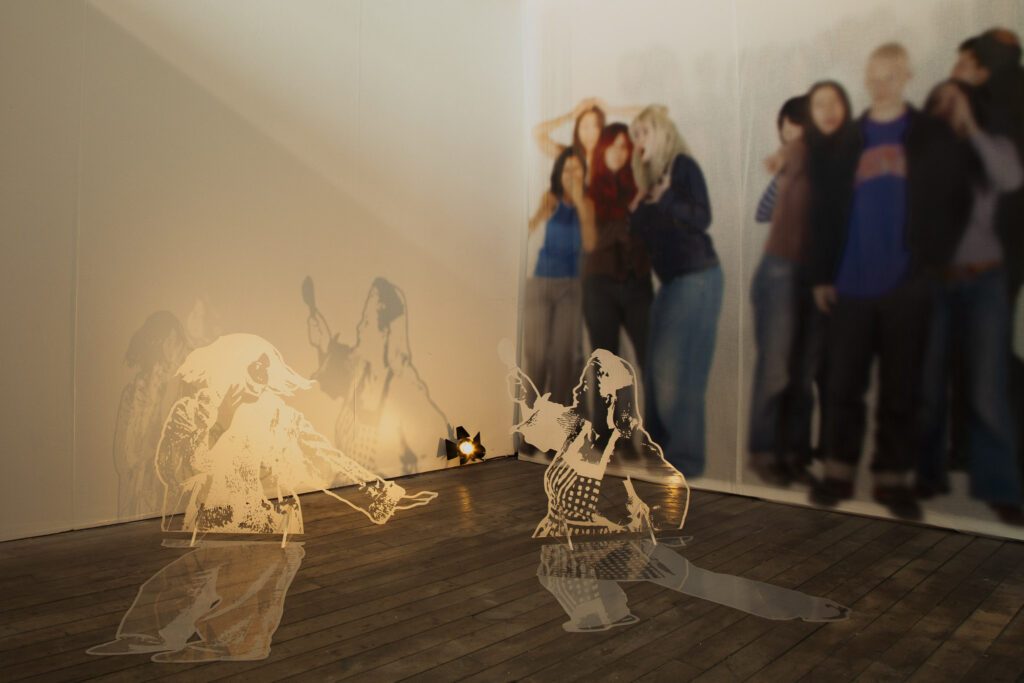
You should’ve seen it, she completely lost it in front of everyone
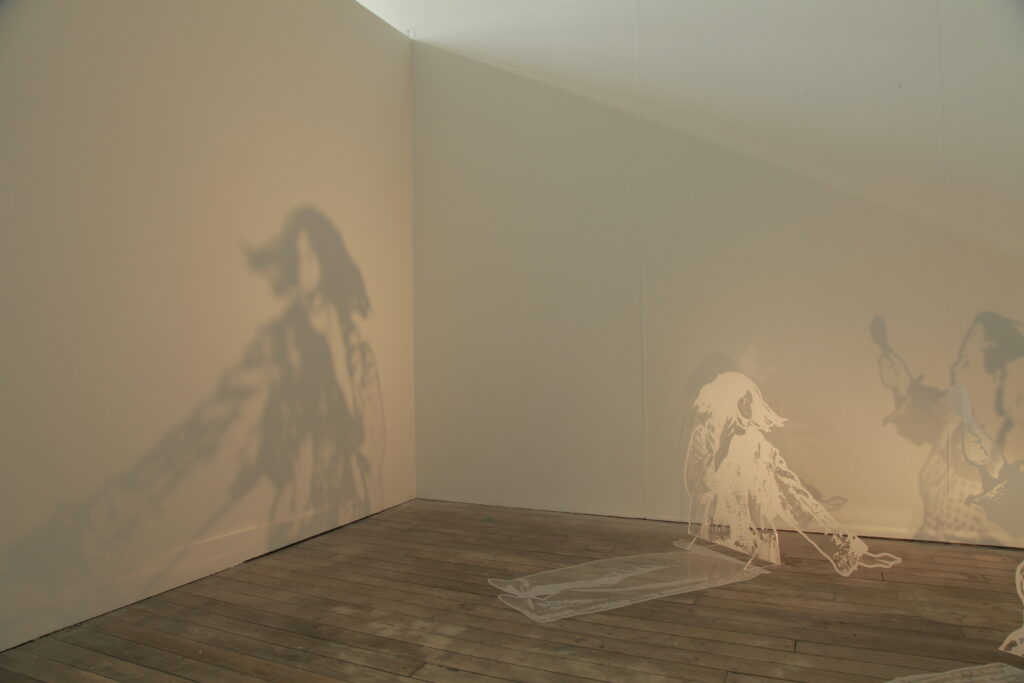
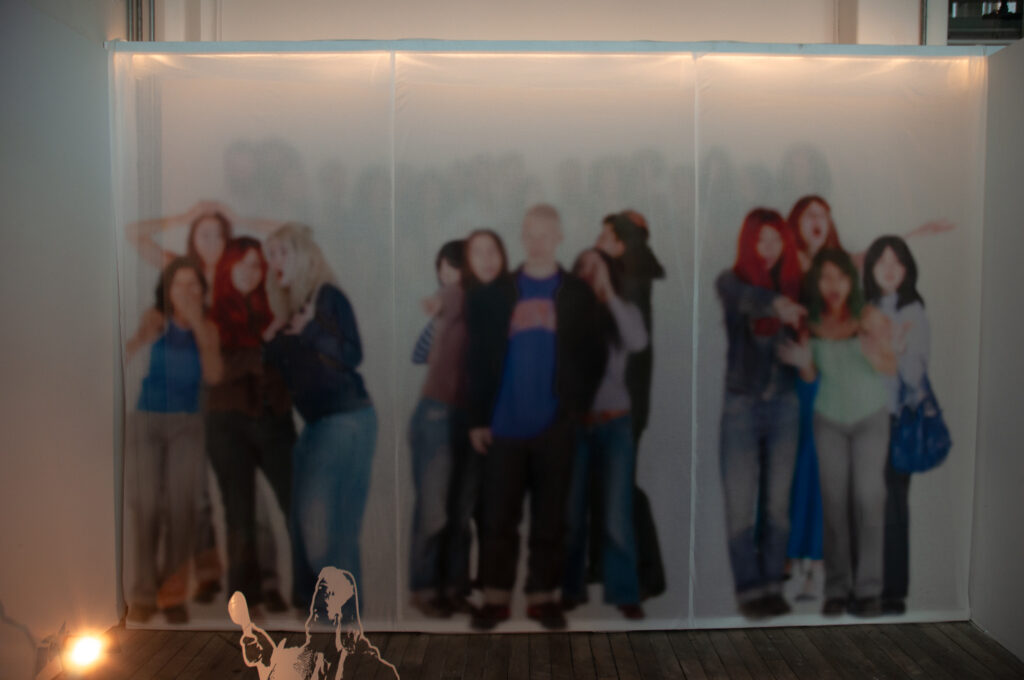
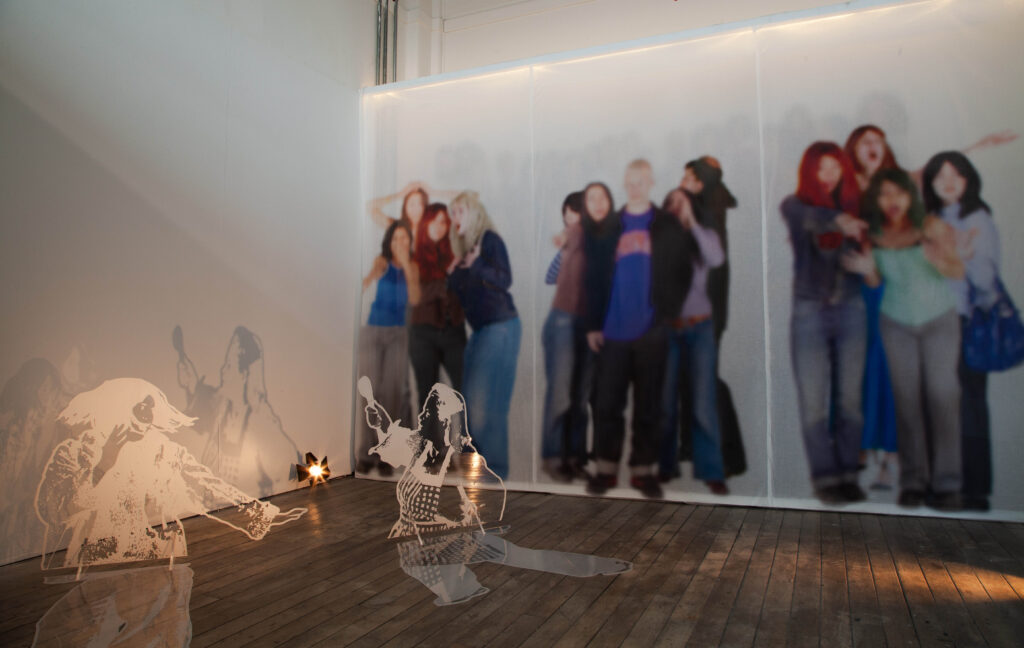
Gossip is something often described with words such as ‘idle’, ‘Malicious’, ‘Immature’. Yet we cannot escape it. It has a huge impact on how we live our lives and form relationships. In this work I make something normally kept secret and, if anything, hidden (treated almost as sin). I present it blatantly in front of the viewer. I have created a scene, inspired by a stock images search for the word, ‘Gossip’. My research and project have been to look for the benefits of gossip and why it is so vital to being human
The installation includes sculptures and a photographic print on fabric, as well as this there is a sound piece which plays recordings of gossip constantly.
Here is a section from my dissertation, “Weak Minds Discuss People”: Reframing Gossip as Necessity
Using the Getty Images search tool, I typed in ‘Gossip’ in anticipation of the kind of images it would generate. It gave me a clear idea of how gossip is percieved. I saw a selection of staged images. The majority depicted women whispering in casual settings . Men appeared sometimes, but if they did, they were either businessmen who appeared serious, or were described as ‘gay’. The written descriptions that captioned these images also contained meaning. Some were detailed and told the backstory and feelings of the characters in frame; others were simpler: ‘Two women whispering secrets’. The searches were evidence of something I had suspected: gossip is encoded with a kind of judgmentalism. It is rendered naive, as mainly a woman’s activity, and somewhat immoral.