Eilidh Duffy
(She/Her)
My work is driven by an interest in how architecture can foster connection within a world increasingly shaped by social fragmentation, passive consumption, and environmental neglect. With experience in Edinburgh and Melbourne, I have developed a diverse skillset and built on my understanding of architecture’s role within the challenges of today’s social, cultural, and environmental landscapes. I am interested in how prevailing systems and cultures of ‘uncare’ shape our civic and ecological environments, and in our capacity to either perpetuate or challenge these conditions. Through both studio projects and research, I aim to demonstrate how an attentiveness to the realities and trajectories of place, alongside lessons drawn from time-tested materials, vernacular practices, and collective social models, can inform more inclusive and grounded systems of design. By de-abstracting social and material systems, there is potential to reconnect people with one another and with their environments through design that is socially attuned, legible, and rooted in everyday experience.
Education & Experience:
Architecture (MA Hons) – University of Edinburgh (2019-2023) First Class Honours
Architectural Assistant – Genton, Melbourne (Feb 2024 – Apr 2025)
Part 1 Architectural Assistant – Morgan Architects, Edinburgh (Jan – July 2022)
Upcoming Exchange Semester – Oslo School of Architecture and Design
Urban Housing: From Fragments to Formwork
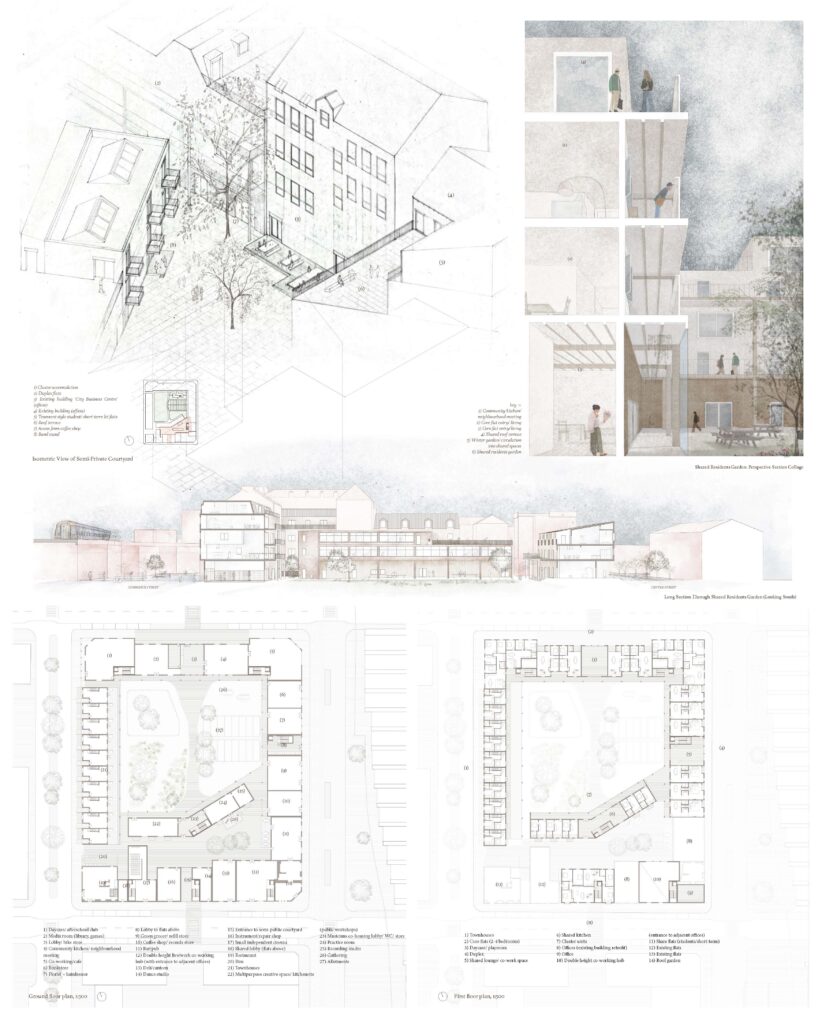
Housing is the essence of architectural practice and how we think about the patterns of everyday life, as it is symbiotic with other city functions and cannot survive without essential organs of amenity and community life. Tradeston, like much of Glasgow, has a feeling of fragmentation – an urban condition resulting from decades of continual making and unmaking. Rejecting the tabula rasa approach which the city has come to know so well, my approach aims to acknowledge what was, supports what is, and anticipate what might return. The project reconsiders the urban housing block as a set of relationships – between street and courtyards, fronts and backs, permanent and temporary residents. Positioned within a three-block study in the heart of Tradeston, access and circulation are treated as opportunities for communication and social exchange. The massing responds to Glasgow’s historic fabric, reinstating fine-grain plot rhythms and positively defining the street. Incorporating aspects of co-living and shared amenity, the proposal supports varied, individual needs whilst advocating for collective stewardship and a sense of community.
The arrangement of flat types around the site brings together a mix of dwelling typologies originally derived from Glasgow housing type studies and later adapted through co-living research. New dwellings range from long-term core flats to short-stay cluster units, supporting a mixed community with varied rhythms of occupation.
Let People Make Glasgow: A Civic Tool for Conviviality
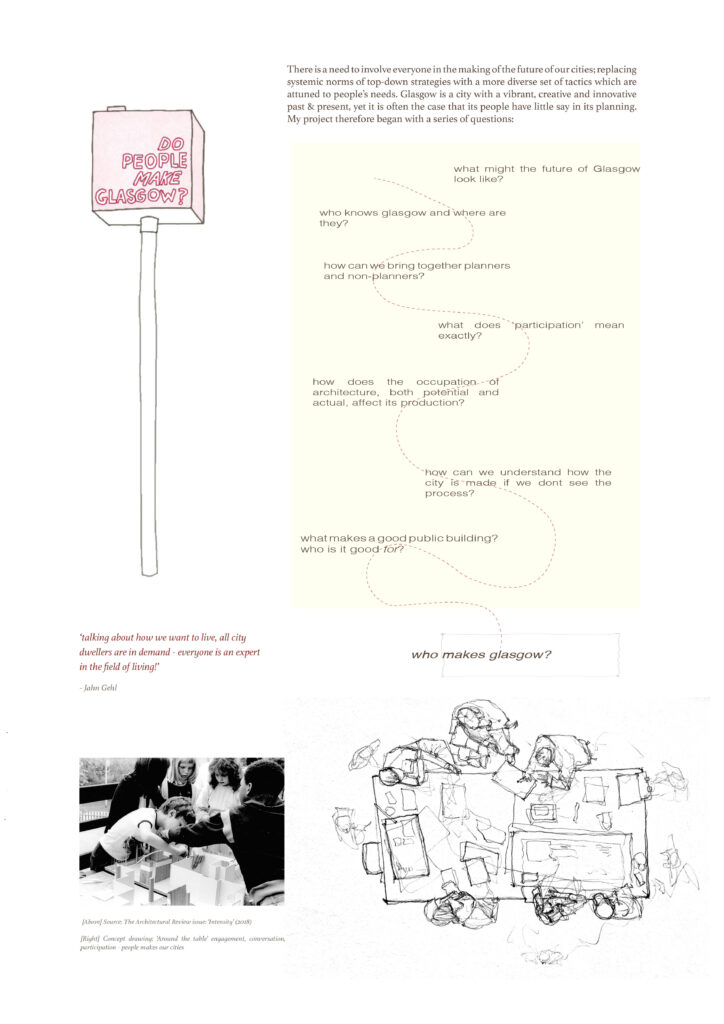
Cities are not abstract compositions of objects; they are shaped daily by the lives, negotiations and improvisations of the people who inhabit them. Glasgow is a city of nuance and resilience, yet in the post-industrial era it is increasingly subject to neoliberal systems that distance citizens from those who commission, design and control the city. Decision-making feels abstracted, participation procedural, and the building and planning process a mystery to those who experience its outputs. The result is an often fragmented urban condition in which engagement – with place and with one another – is somewhat diminished. As Sarah Wigglesworth notes, “Any discipline which denies the everyday will be denied everyday”, underscoring the need for architecture to engage directly with lived reality rather than retreat from it. This is particularly relevant in the context of one of the most pressing challenges of our time: the contested nature of public space and the shaping of collective pysche.
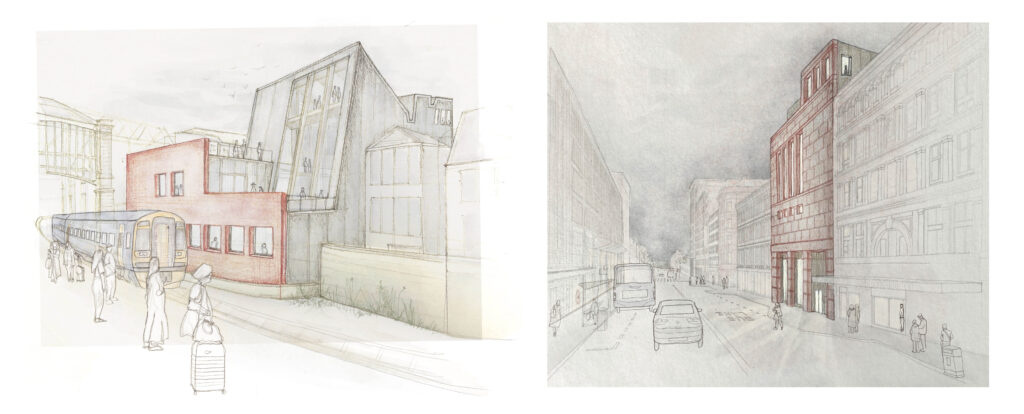
The project therefore began with a series of questions: Who makes Glasgow? Who knows it and where are they? How can planners and non-planners meet?
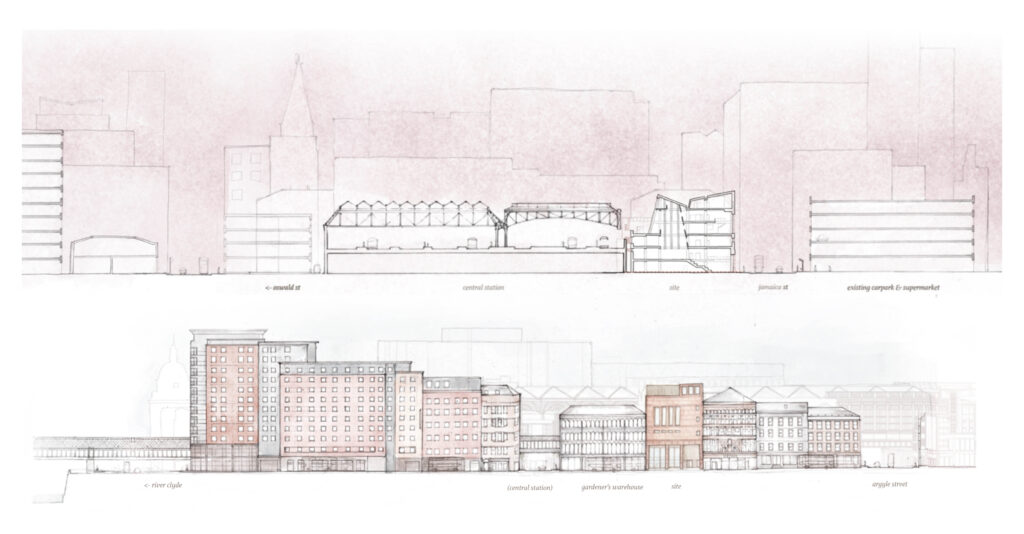
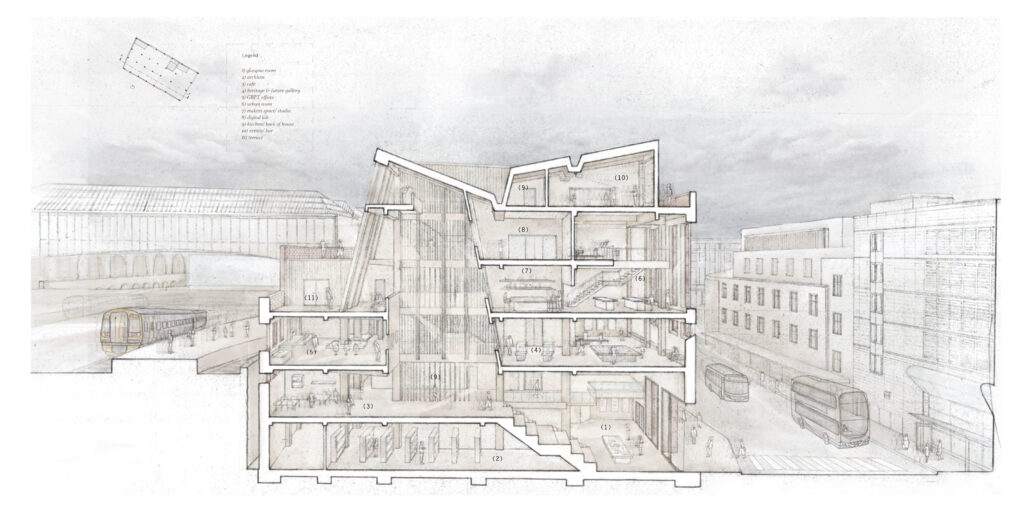
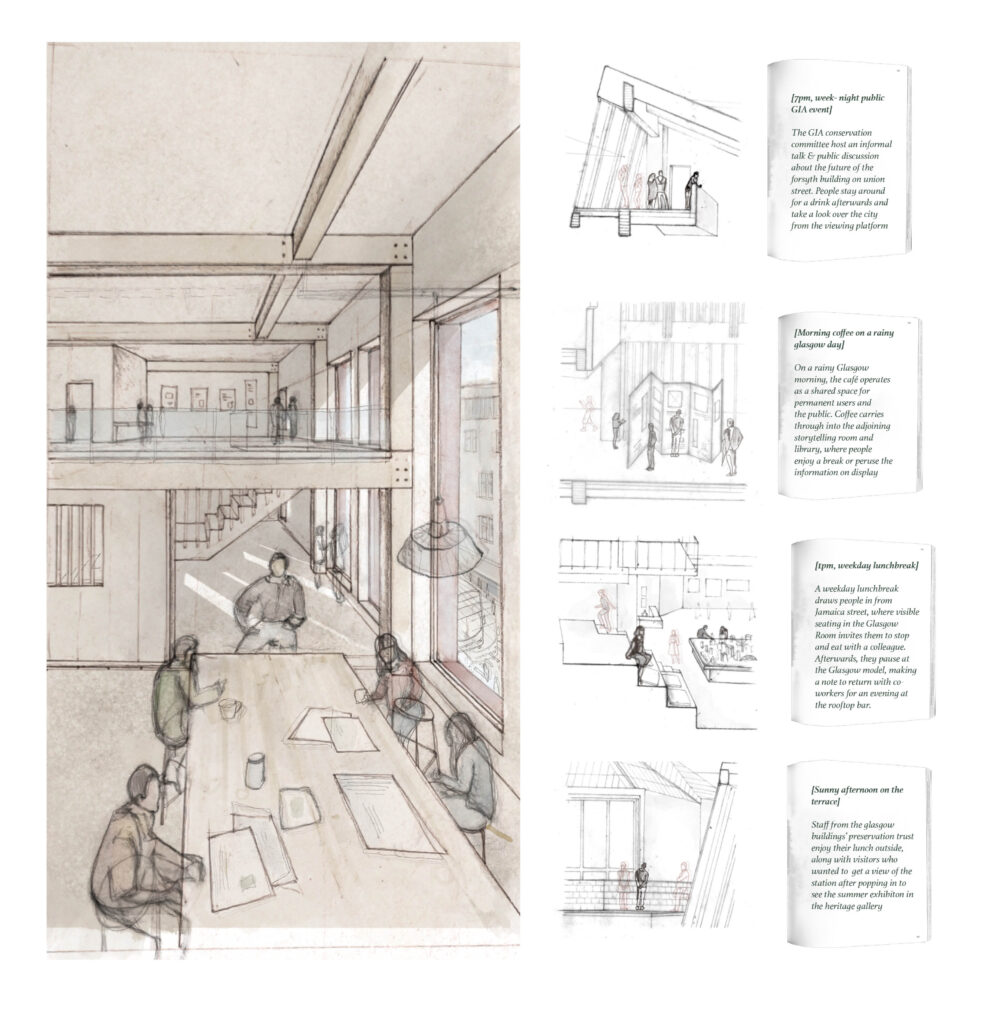
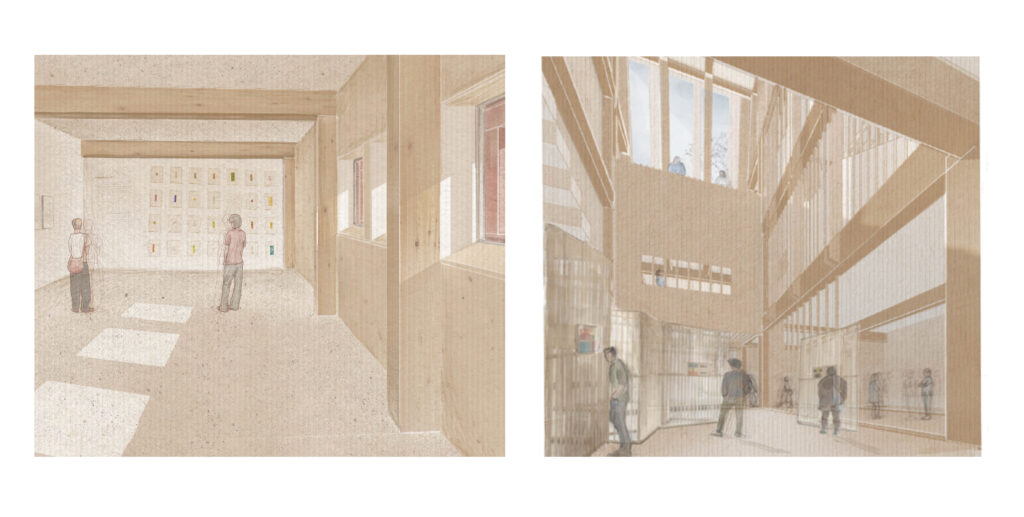
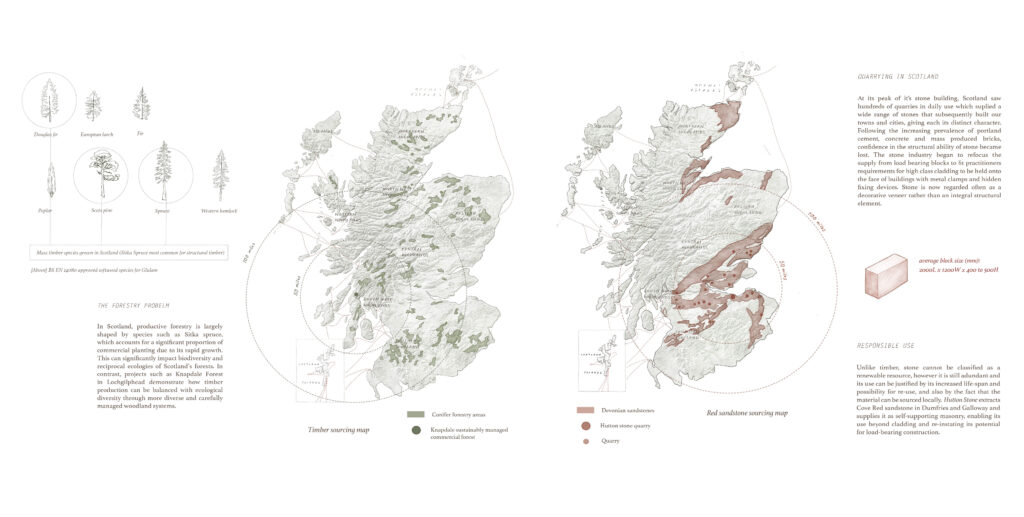
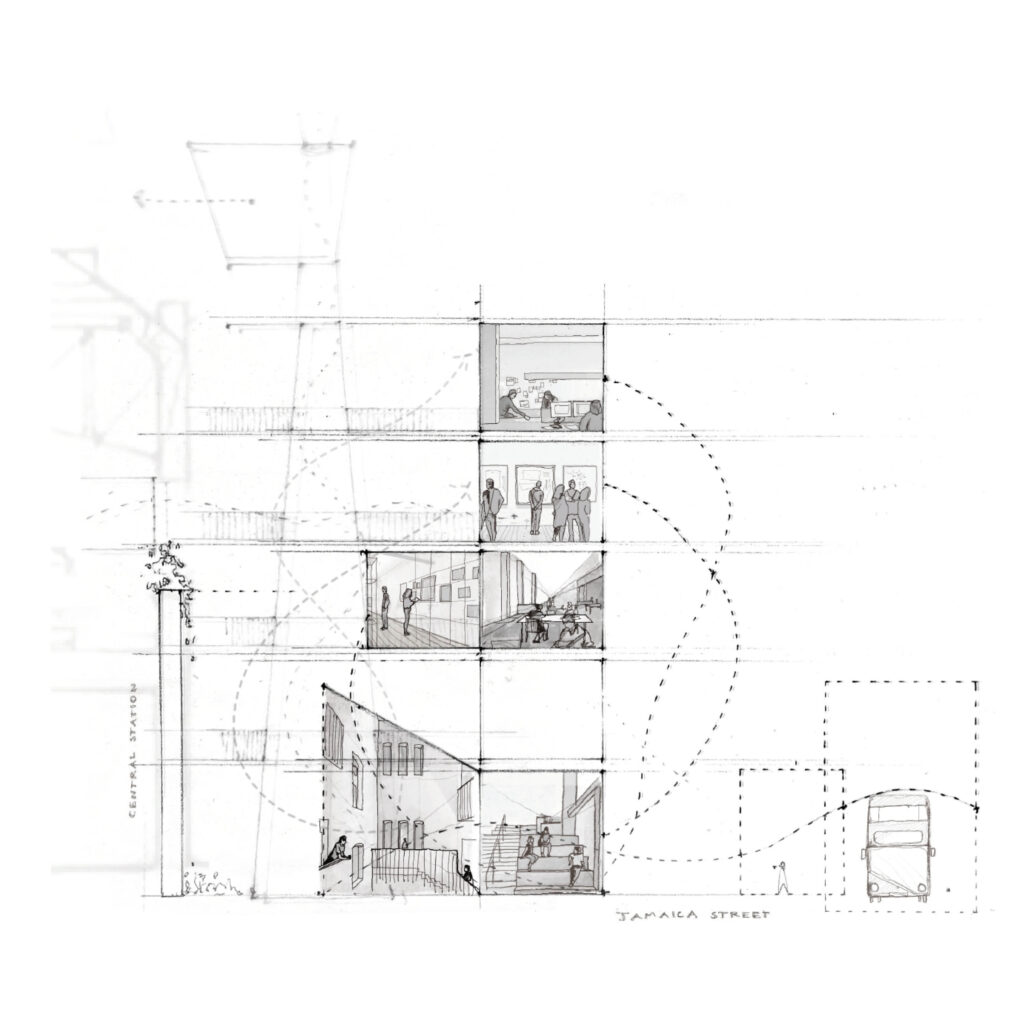
Framed through Ivan Illich’s concept of Conviviality, the project proposes a new civic building in the centre of Glasgow which will act as a place of discourse for the future planning and making of the city; housing clients such as the Glasgow Institute of Architects and Glasgow Buildings Preservation Trust. In this context, conviviality refers to autonomy realised through interdependence: the capacity for individuals to shape their environment while acting in relation to others. The building acts as a ‘convivial tool’ which returns a sense of autonomy to the people of Glasgow, achieved through low barrier entry and a contextual response which acknowledges lived reality. Seeking to restore civic agency by creating a permeable piece of infrastructure which amplifies everyday urban life, the proposal brings together an assemblage of users and values – therefore challenging silo mentality and reinforcing the importance of shared systems that work for the common good. The design spatialises conviviality through mechanisms of spatial permeability, tectonic legibility and programme overlap, resulting in a piece of civic infrastructure which supports a truly sustainable future for Glasgow by emboldening grassroots agency while acknowledging the fundamentally nuanced and collective nature of city-making.
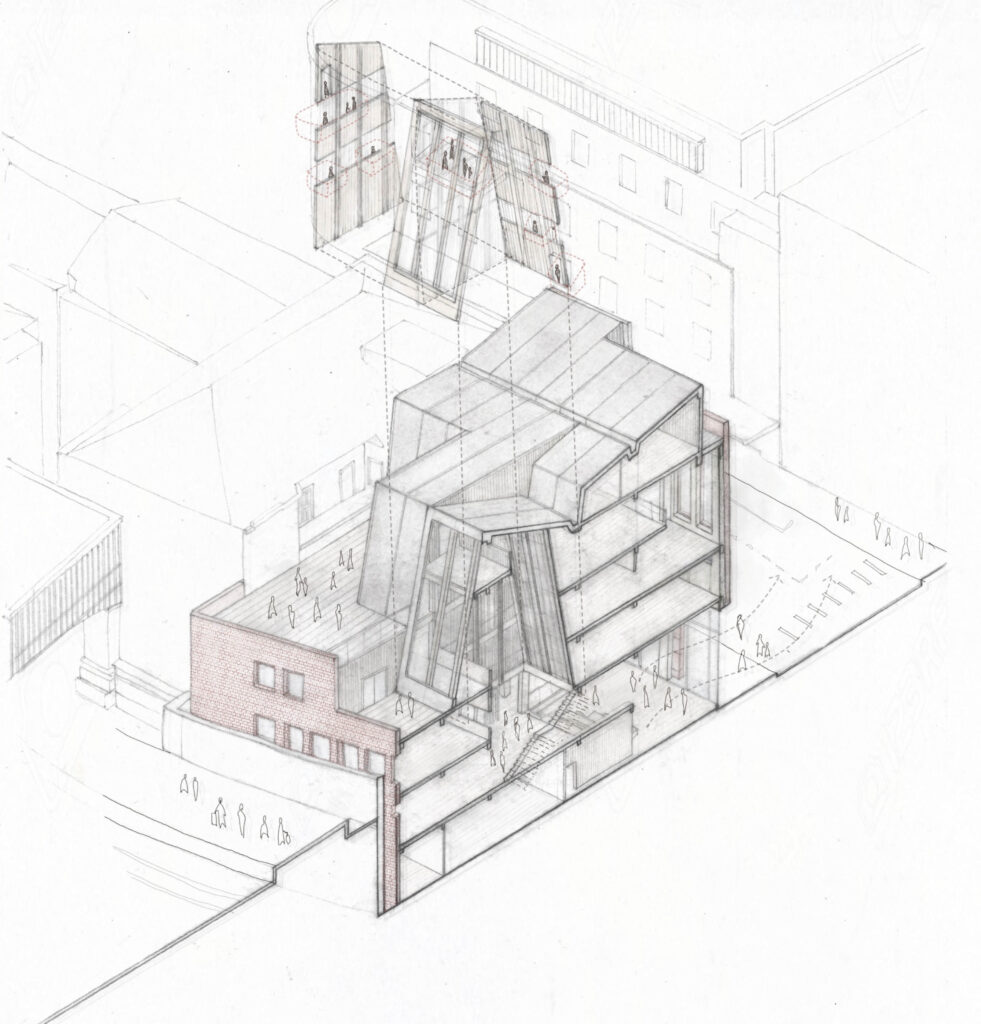
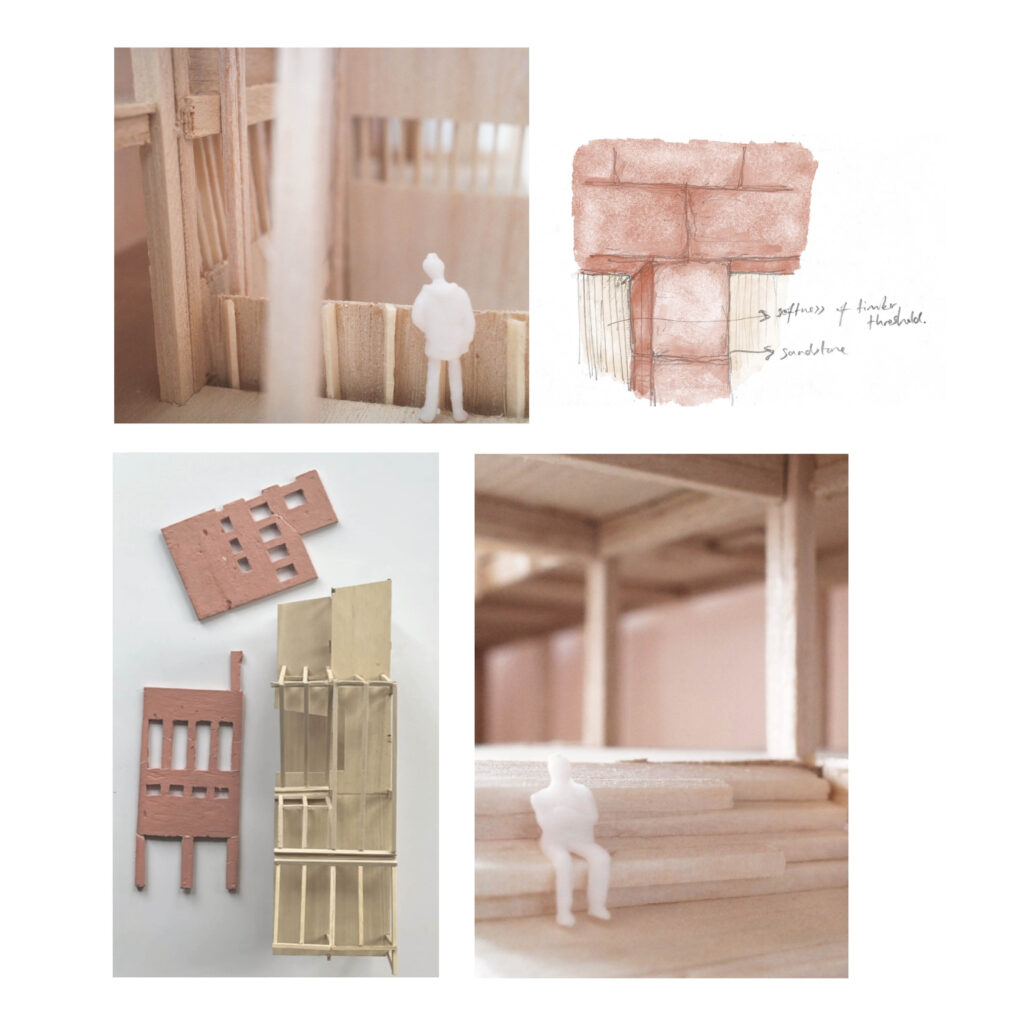
Emerging from the civic and convivial ambitions, the tectonic approach seeks to demystify systems and empower users through legible, honest and environmentally responsible construction. It is crucial that timber is used structurally (not simply as cladding or partitions) as the primary frame is exposed, celebrating joints, structural members and assembly logic. The making of the building is not wrapped up in its finishes, but is felt and understood. In doing so, the building communicates how it stands, how it was made, bridging the gap between making and people, the city and the everyday.