Ethan Phillips
(He/him)
My work attempts to bring skilfully executed, contemporary design while upholding compassion for built heritage and a commitment to sustainable outcomes.
CV available and Portfolio available on request
Architecture of Dissent
Synopsis –
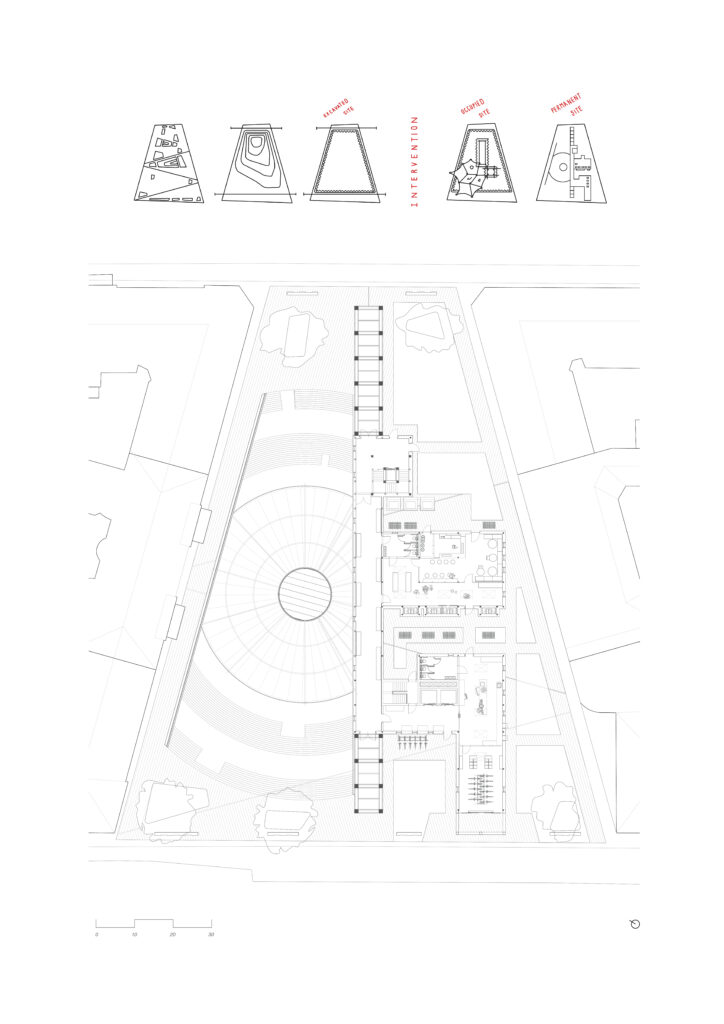
Thesis question – How can I address protest and civic dialogue within the city of Copenhagen through the creation of a permanent, legible and active architectural intervention, which also aims to empower marginalized voices in the city, bridging the ‘city edge’?
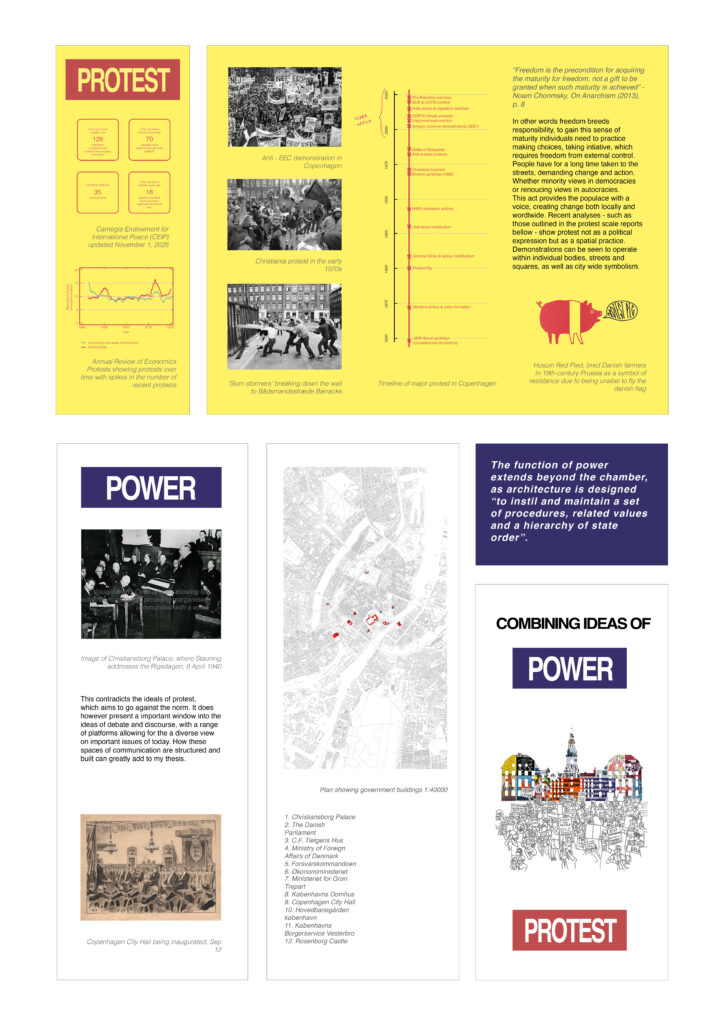
Protest is a powerful tool for Social Change, according to the Cambridge dictionary defined as ‘a strong complaint expressing disagreement, disapproval, or opposition’ .
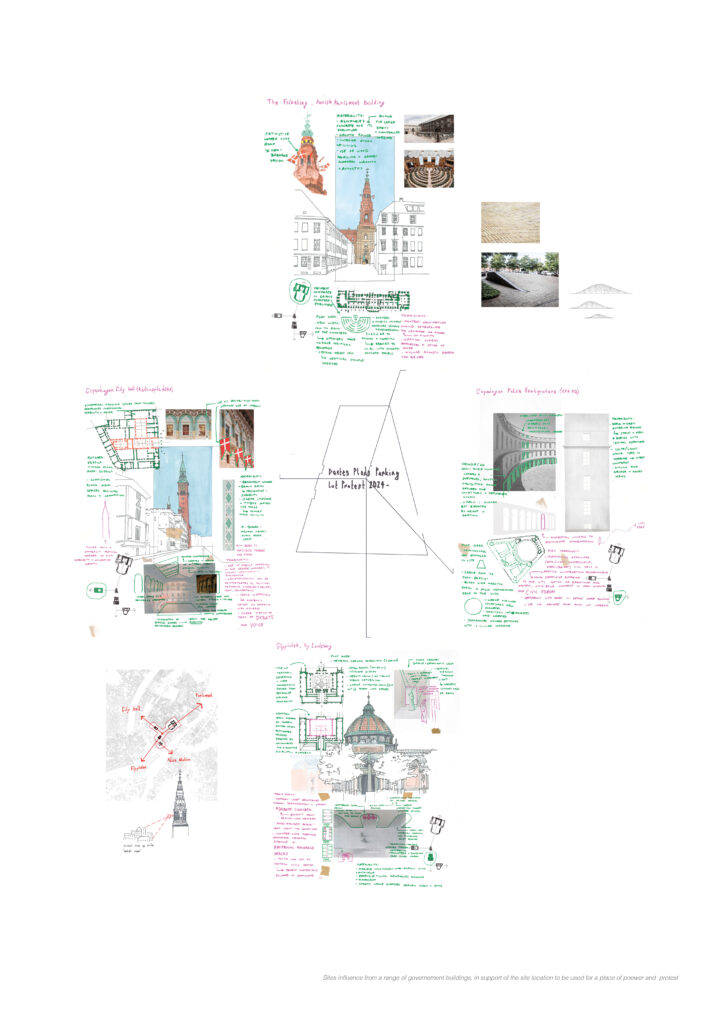
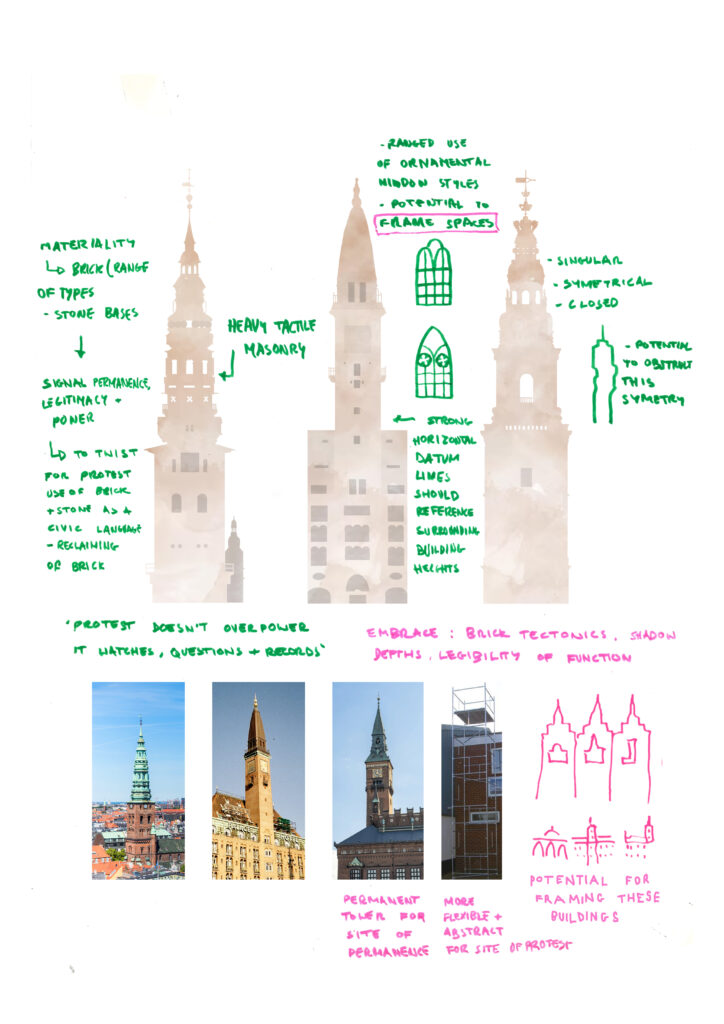
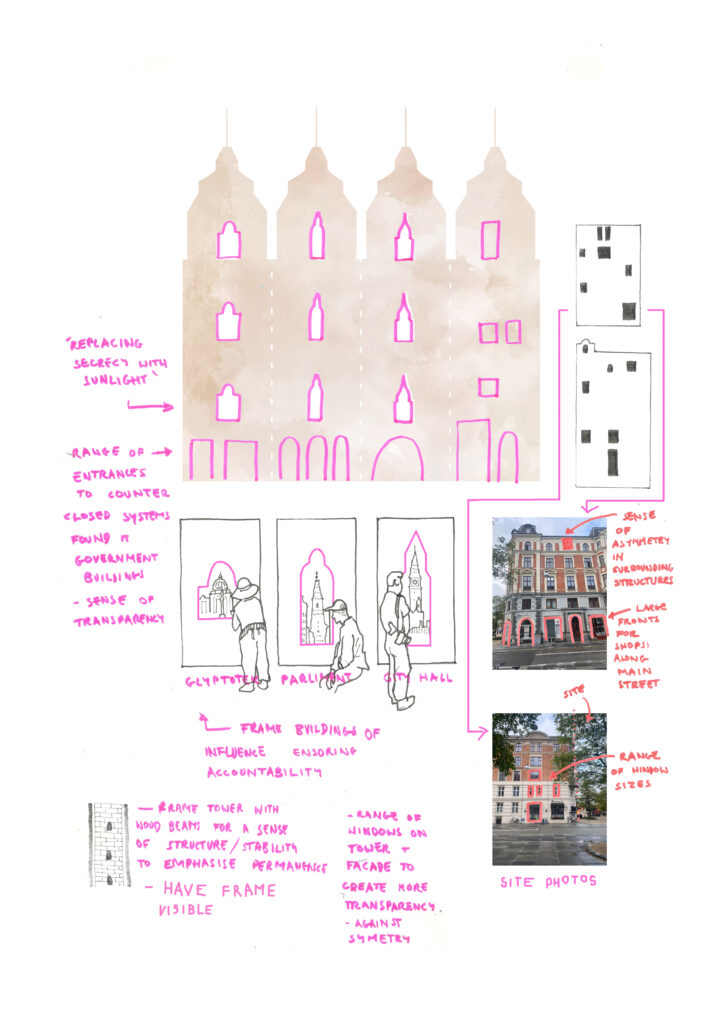
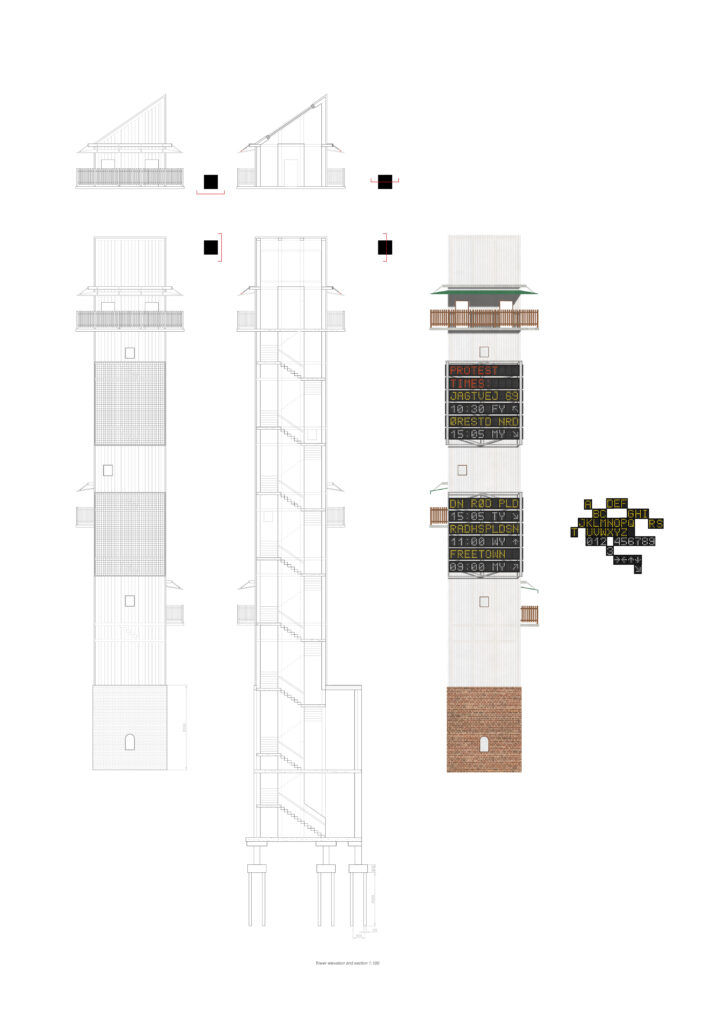
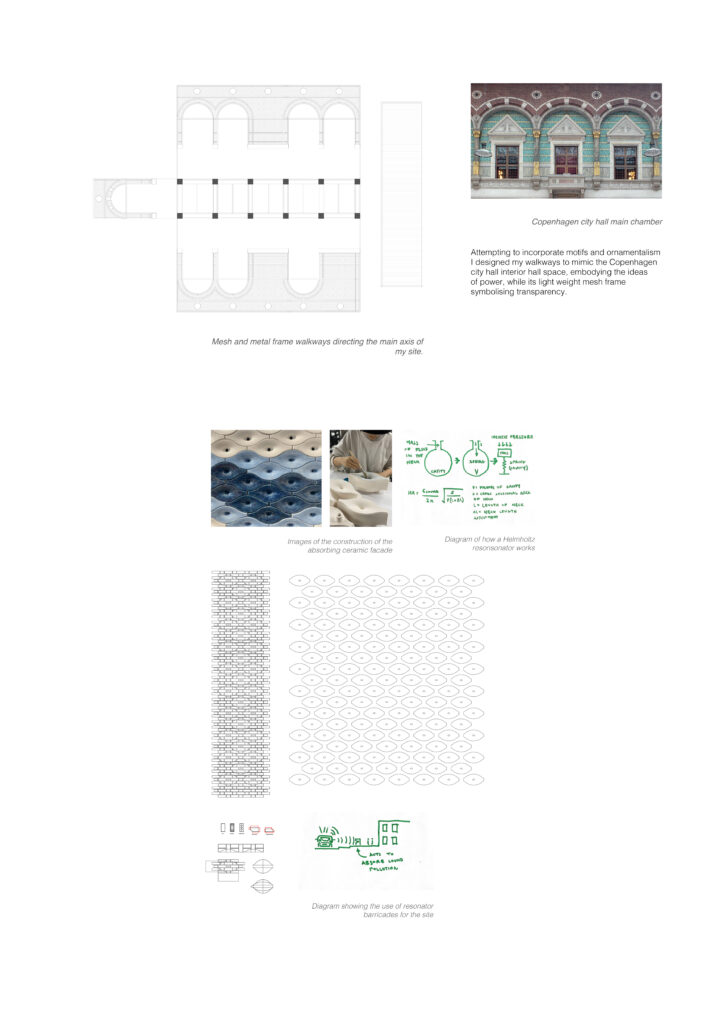
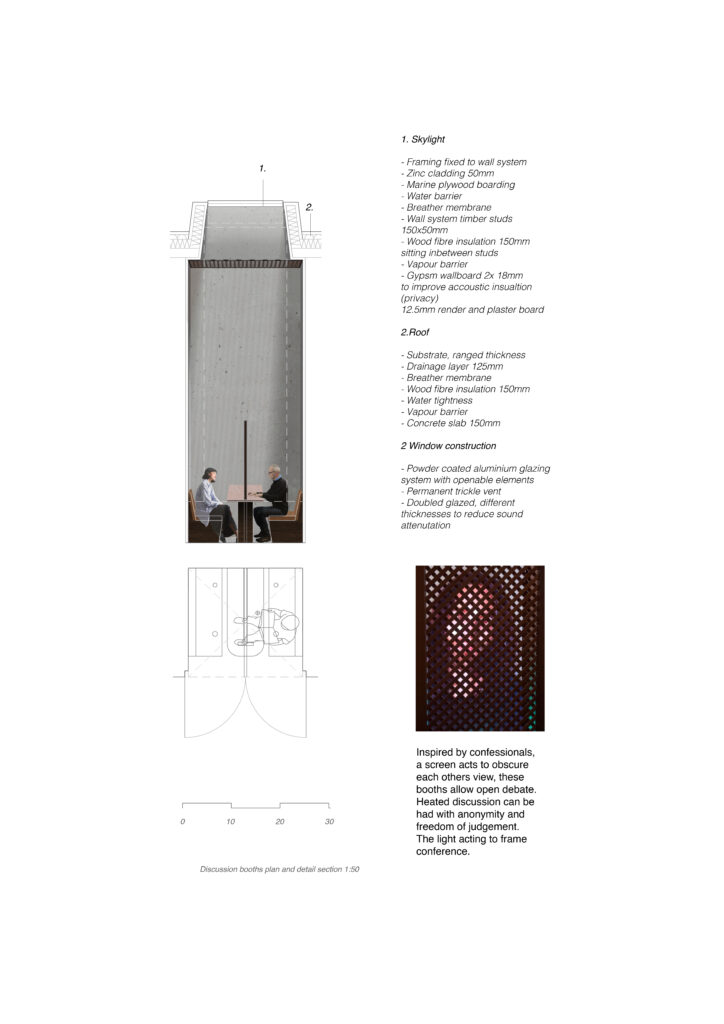
The thesis aims to challenge the traditional roles of civic architecture, and how it represents a static symbol of the unified and unyielding concept of state power. The proposition underlies an architecture that should act as an active instrument, pushing constructive and visual interactive dialogue, highlighting political conflict and dissent as a fundamental of its design. Rather than ‘silent complicity’ of the status quo, building shall seek to formalize and celebrate the necessary disruptions via the act of protest, through sound, image, social association, enablement of assembly and visibility.
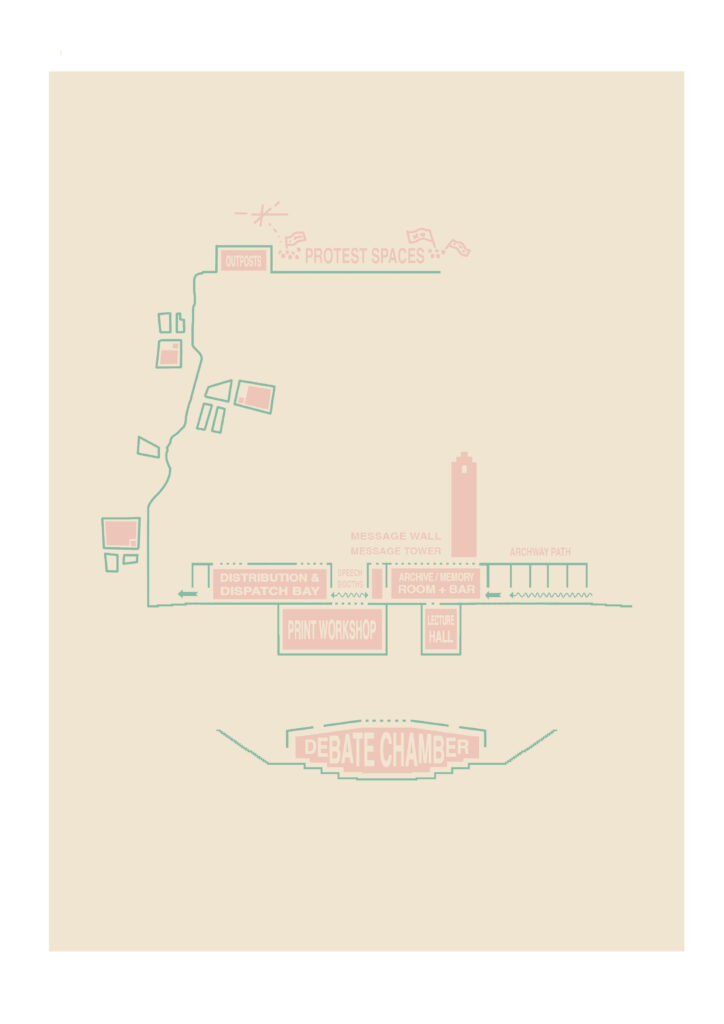
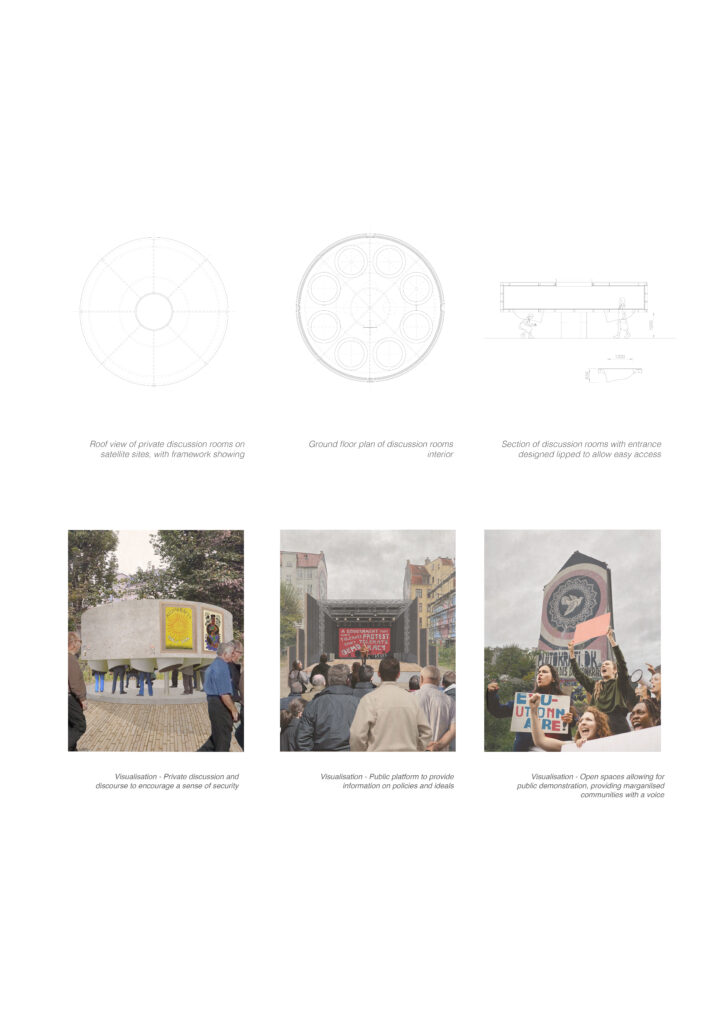
The design focuses on three integrated strategies:
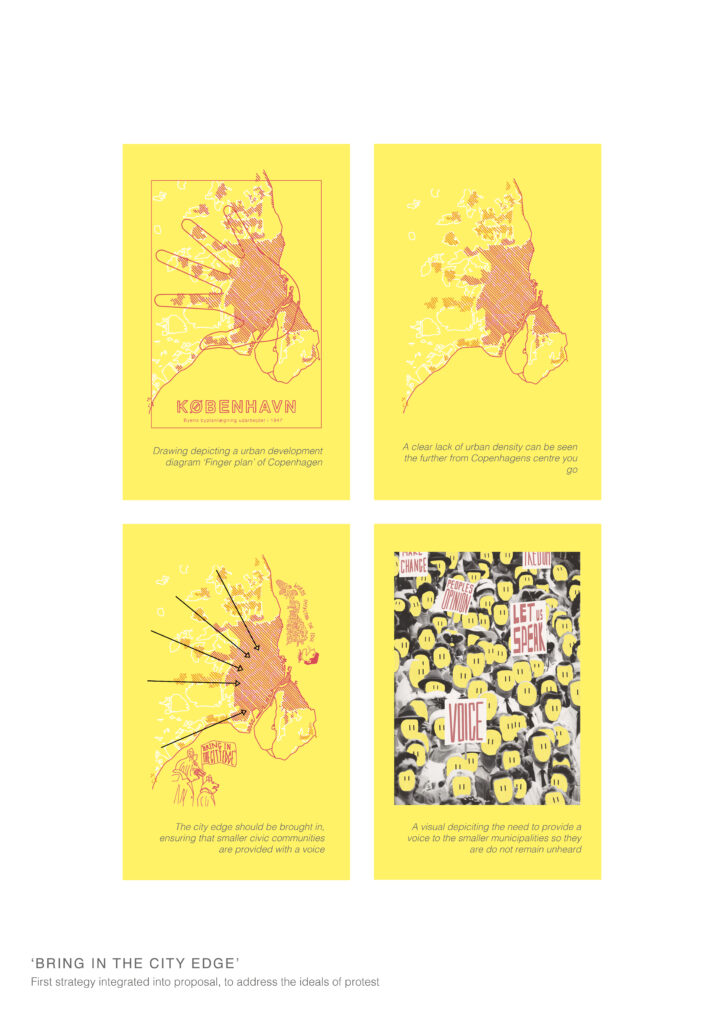
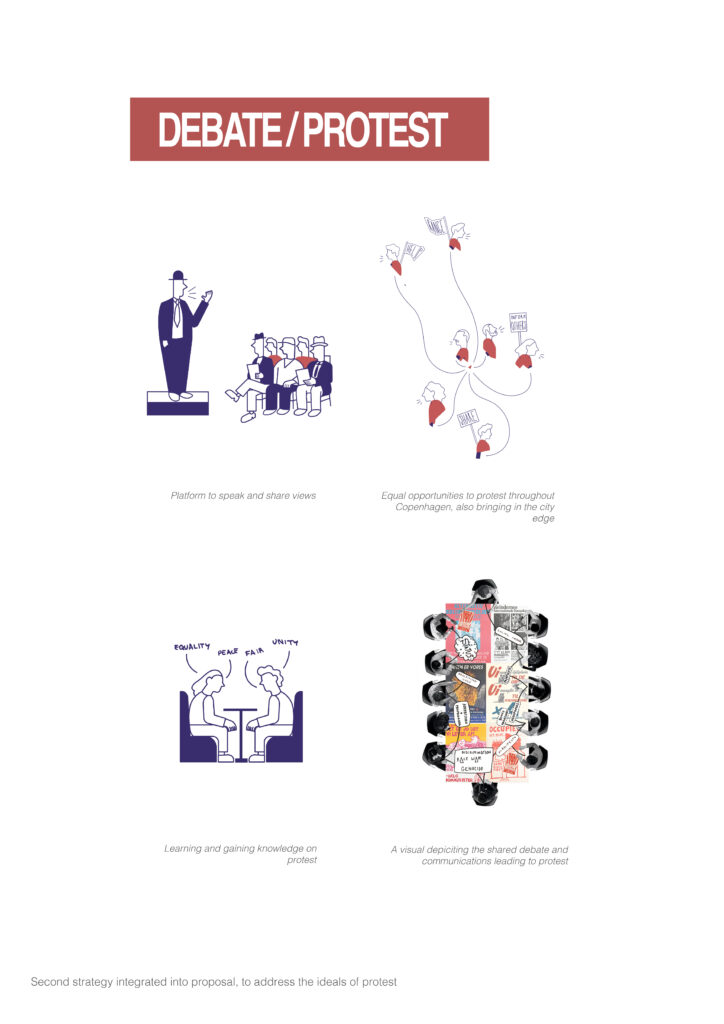
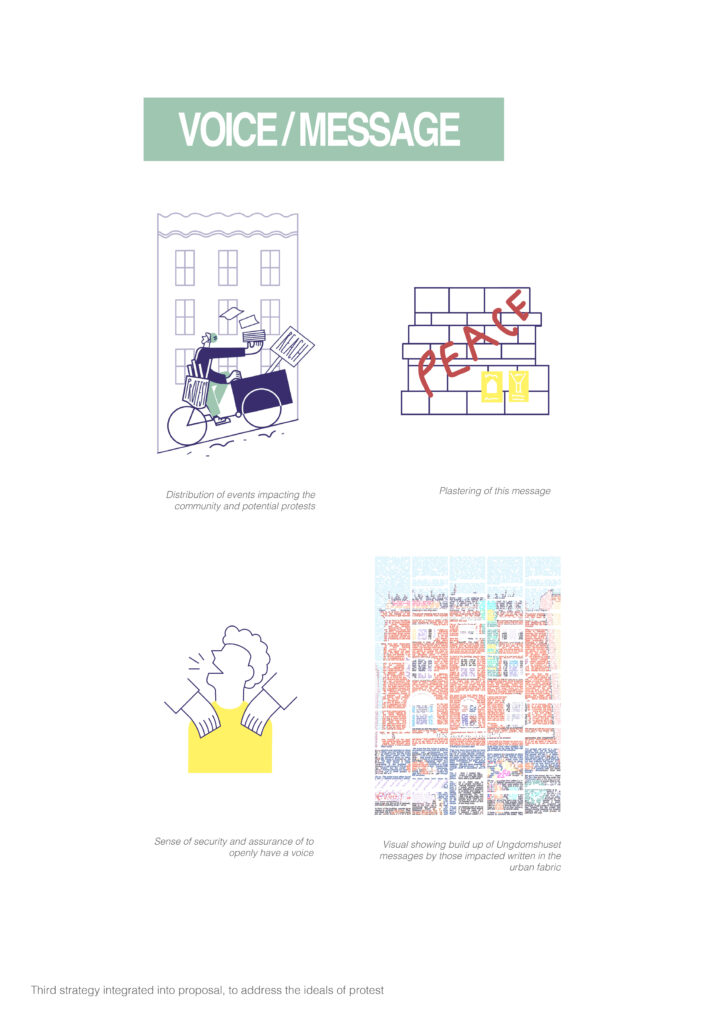
‘Bring in the edge’ Debate/ Protest Voice/ Message
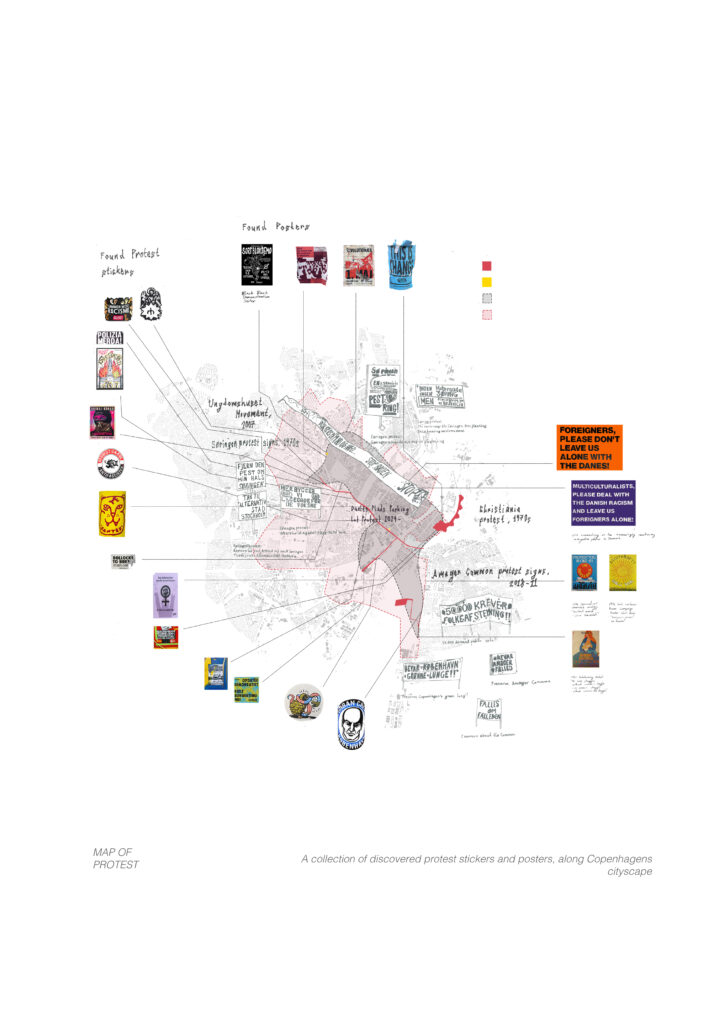
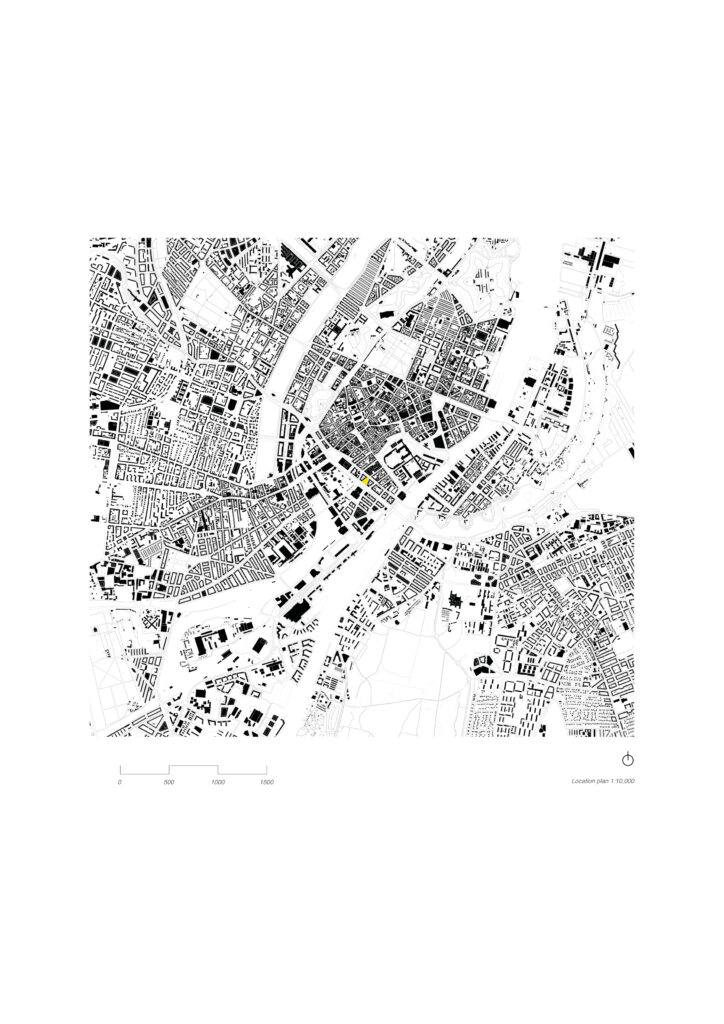
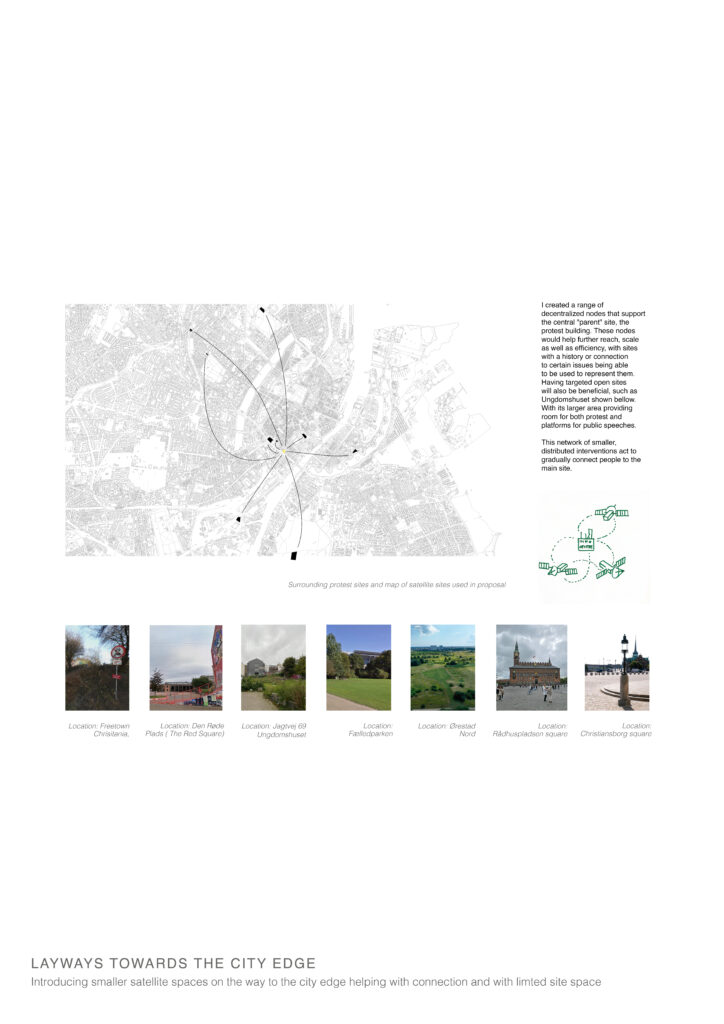
Within Copenhagen the connections between the ‘city edge’ and the institutional core can be seen to be divided, both symbolically and physically, with more rural areas lacking a voice. By dismantling this barrier, I aim to bring in the ‘city edge’, to the periphery, allowing for interaction and debate between the conflicting needs of each zone.
A non-centralist platform for this direct exchange will ensure that the acts of protest are not merely a passing act of disruption, but a more permanent one. The relative density of the urban electorate and the abundance of their infrastructure, facilities and services allow centralist areas to form the key battlegrounds in political campaigns. By fostering a suitable environment of spaces for confrontation and social expression, rather than for example, awaiting a convoy of angry tractor drivers, or providing a visual kit of parts to create a sense of permanence and recognition, democracy, for more than just the entitled urban electorate, has the chance to flourish.
To further amplify the message, the use of a publishing space permitting permanent murals or graphic projections and images, spatial biases can be overcome, with media production, archiving and the presenting of ideals promoting a more equal distribution of resources and opportunity, to a range of communities.
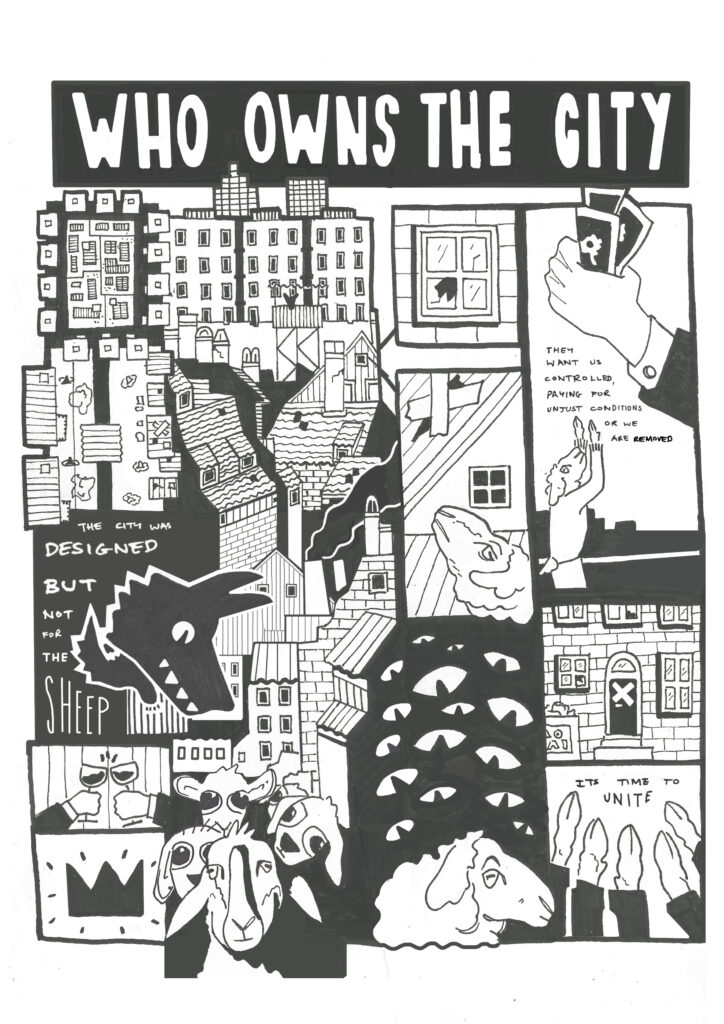
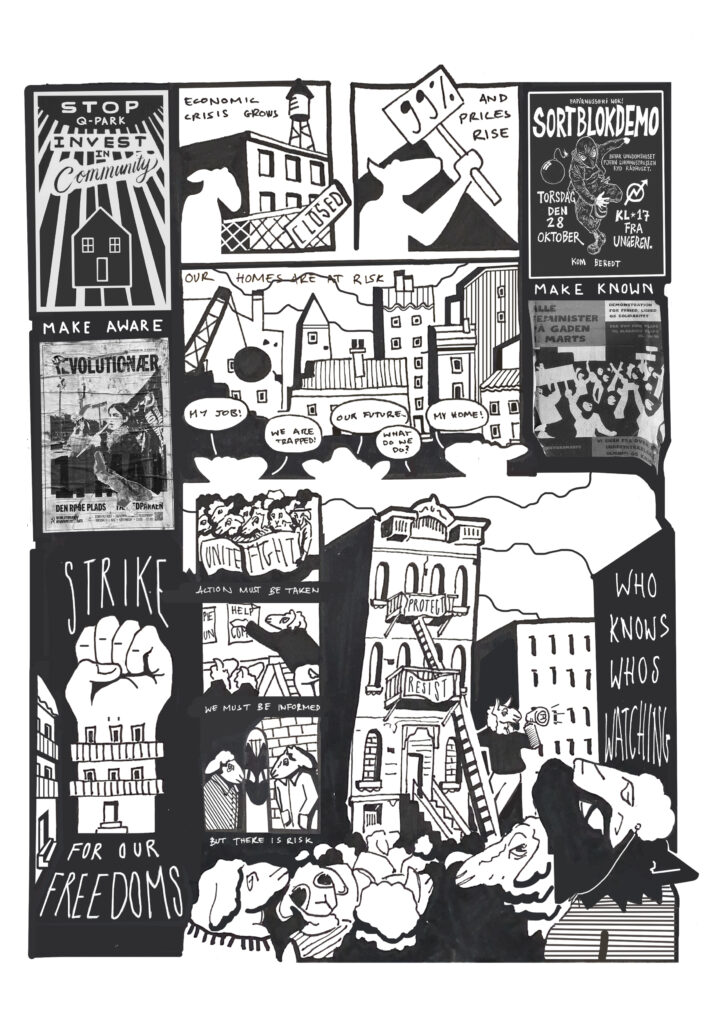
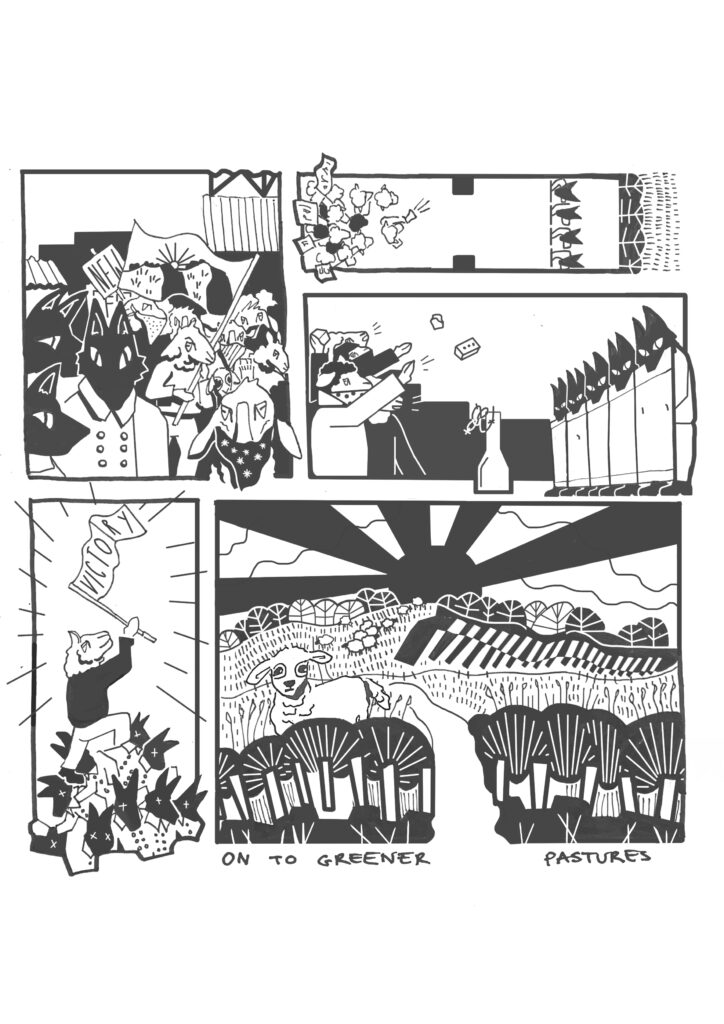
Comic Books Supportive statement: “Who Owns The City?”
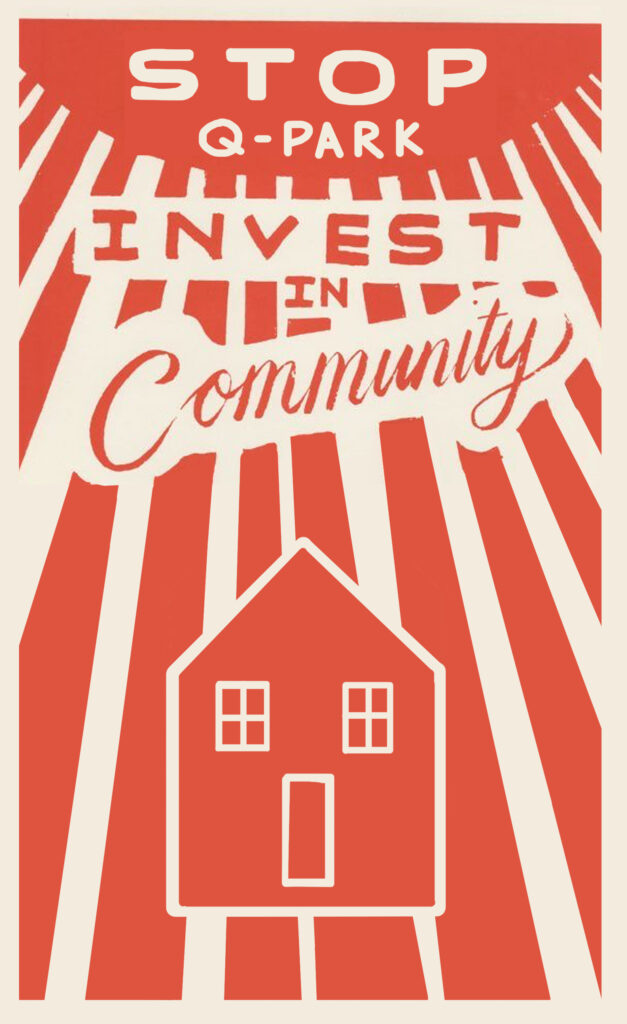
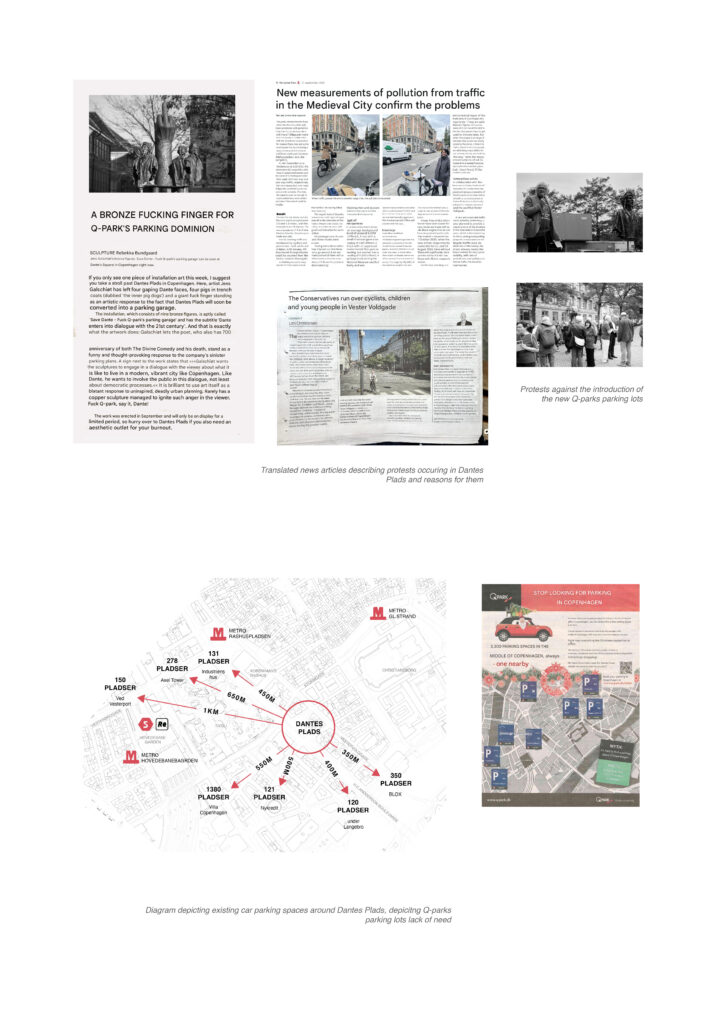
Having recently visited Copenhagen both as part of my Architecture course and as a tourist, I became interested in the social axis between politics and society within the city. I discovered that there was quite a tradition of protest and public displays of dissatisfaction towards policies and proposal, often through the use of posters and stickers. The display of media and symbols act the as an effective method of raising awareness, as well as unification of many strata’s within the Copenhagen society. The limited space to rely on text only furthers the importance the images have – conveying both strong emotions and narratives throughout creative and catchy images. This led me to question, how could comic art be used as a tool to enact protest? Pushing both a constructive narrative and visual interactive dialogue, and highlighting political conflict and dissent as a fundamental of its design. Within Copenhagen the connections between the ‘city edge’ and the institutional core can be seen to be divided, both symbolically and physically, with more rural areas lacking a voice. This further developed my theme, with the idea of providing this voice to my fictional characters, similar to the movie “District 9”, where an alien race is subjugated and forced to live in slums, when finally given a voice they gain their freedom and independence to go home.