
Gregory Anderson
(He/Him)
Sustainability is at the core of my practice as a designer, driving a research-led and innovation-focused approach to addressing some of the most urgent challenges facing humanity. Through design, I seek to uncover new opportunities by translating complex information, identifying unexpected connections, and constructing new narratives that allow me to engage deeply with the systems and issues at the heart of contemporary problems.

turn Systems
Industrial development often leaves behind contaminated soil, creating derelict brownfield sites that can remain abandoned for decades. These landscapes pose risks to both communities and the environment, while the high cost of conventional remediation often makes redevelopment uneconomic for local authorities, regeneration companies, and landowners.
Turn Systems is a speculative nature-based remediation service that uses phytoremediation and bioremediation to restore contaminated land through ecological processes. Carefully selected plants, fungi, and microbes are deployed across sites to absorb, stabilise, and break down pollutants commonly found in post-industrial landscapes, including heavy metals and hydrocarbons.
The project combines living systems with emerging monitoring technologies. A distributed network of soil probes and underground electrodes interfaces with plant root systems and mycelial networks, translating biological and electrochemical activity within the soil into real-time environmental data. This allows remediation progress and soil conditions to be monitored in real time, enabling adaptive management of moisture, pH, nutrients, and microbial activity to optimise the remediation process.
Rather than leaving brownfield sites inactive while awaiting redevelopment, Turn Systems reimagines them as active landscapes of ecological recovery. The system positions phytoremediation as an interim land-use strategy that can improve biodiversity, reconnect communities with nature, and contribute towards Net Zero and biodiversity gain targets while preparing land for future development.
Rooted in systems thinking, sustainability, and stewardship, Turn Systems explores how design can work with natural processes to restore damaged landscapes and create new relationships between people, ecology, and the post-industrial city.
Poster for turn-Systems
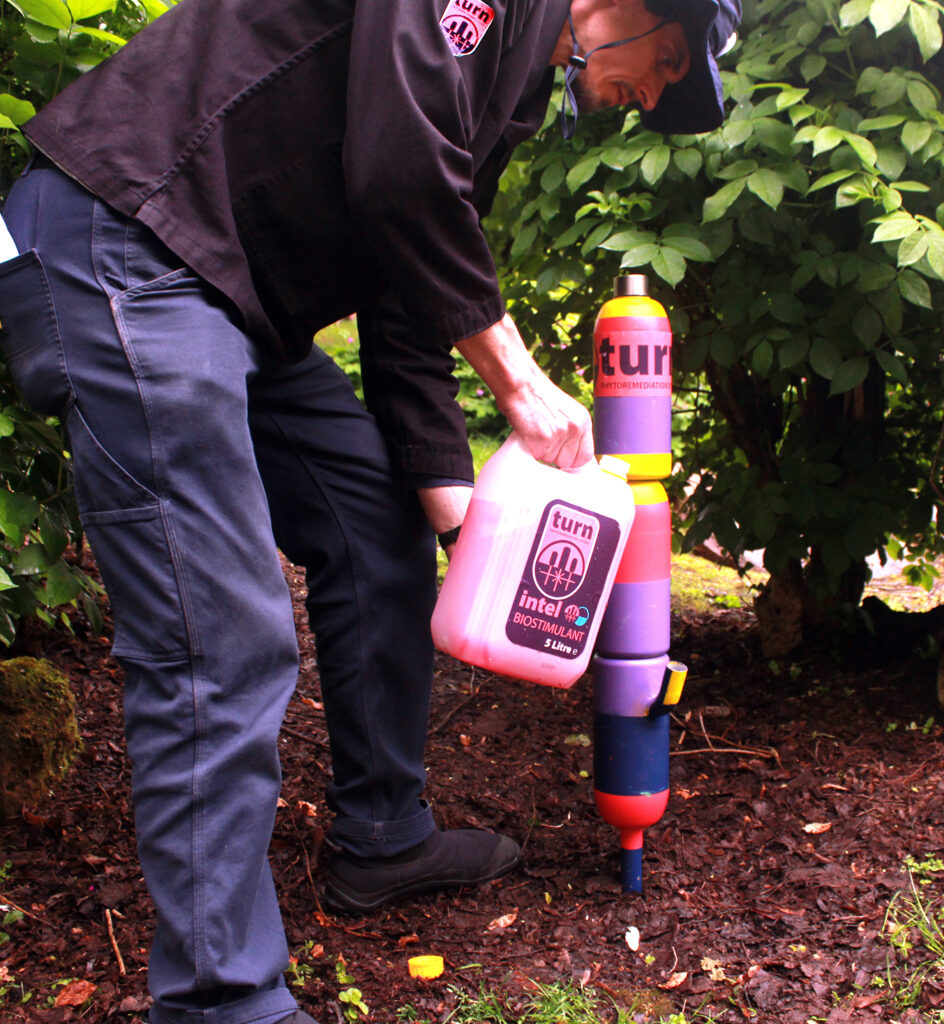
A Turn Systems Steward is inputting Biostimulant.
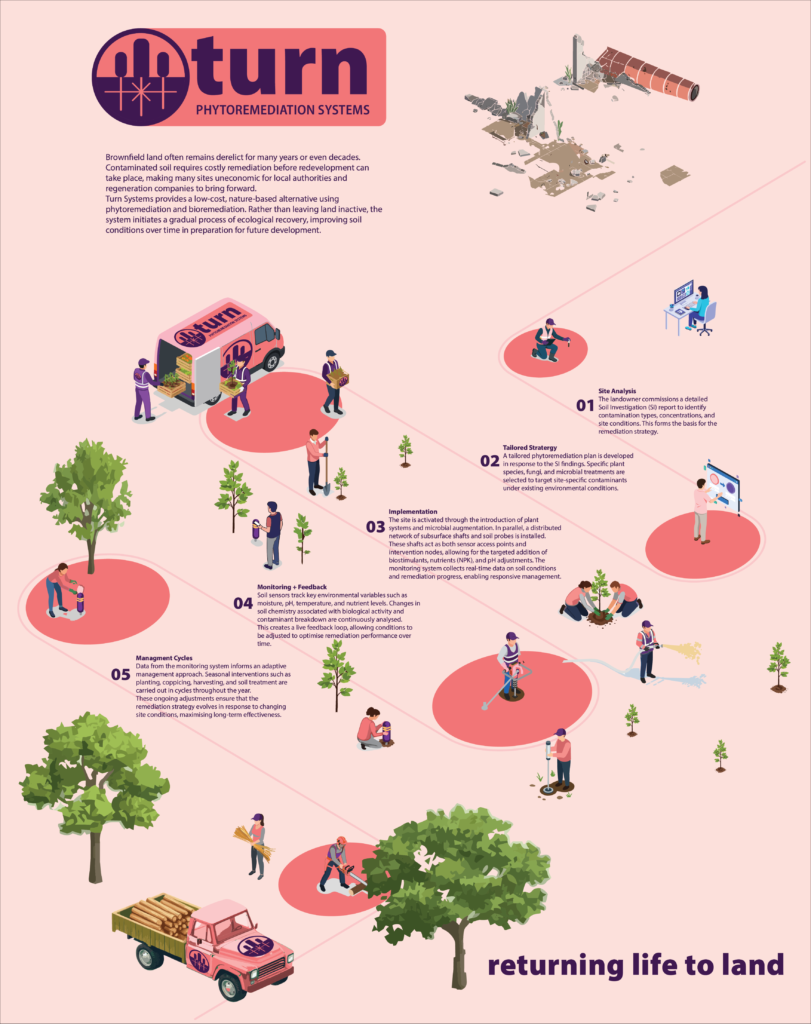
The user journey of a turn system process.
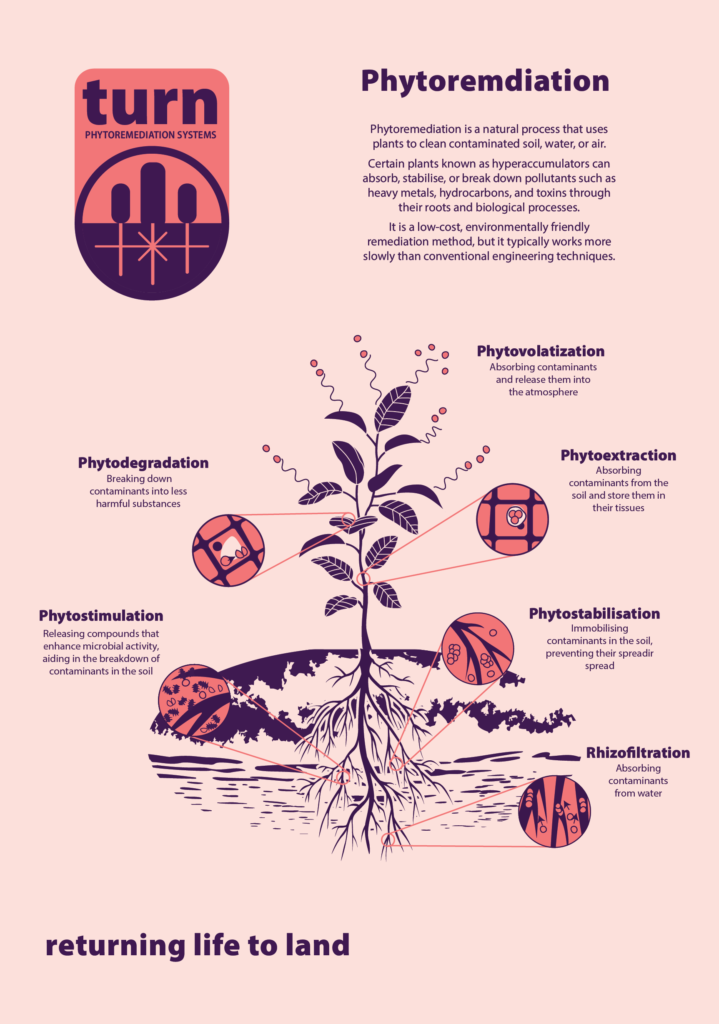
The natural process of remediation
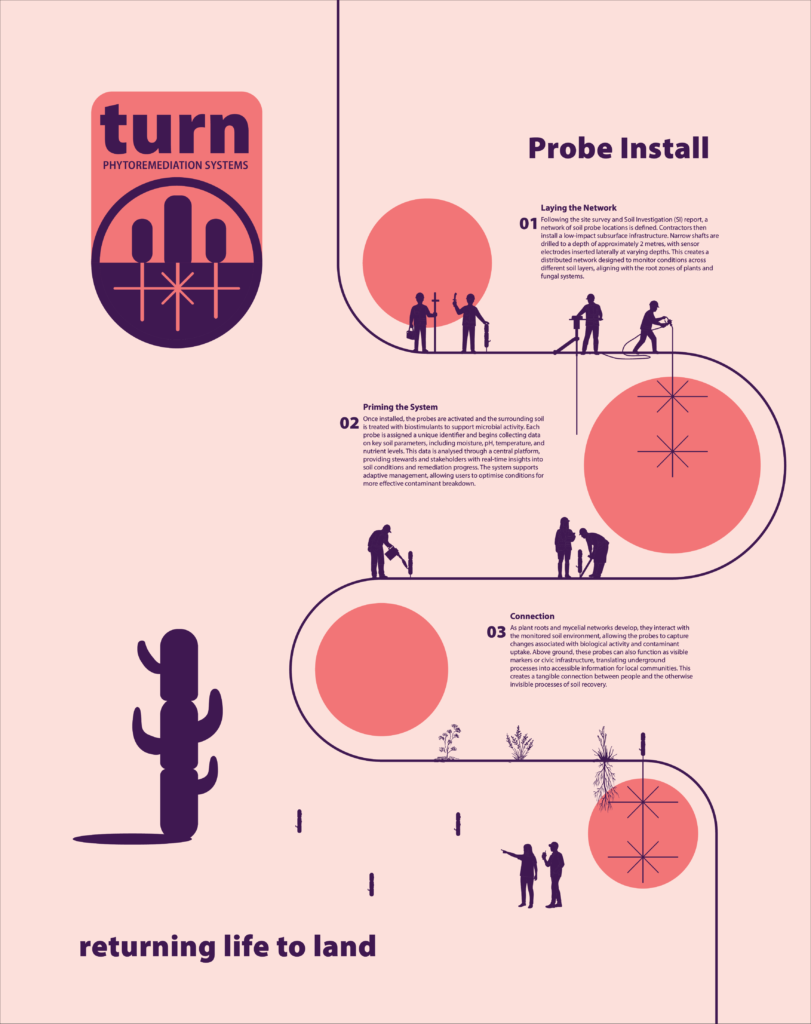
How the soil monitoring probes would be deployed during the implementation of a phytoremediation stratergy
Across multiple brownfield sites, a distributed network of soil-monitoring probes continuously analyses soil conditions and interprets signals from plant roots and microbial networks, translating this biological activity into data that can optimise the remediation process.
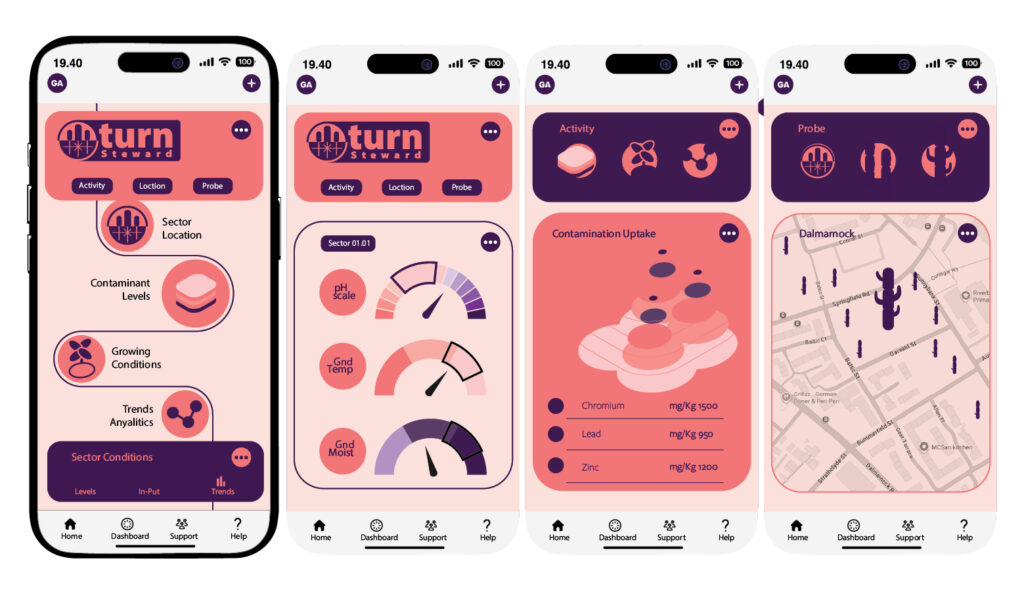
App support for turn-Stewards
EARTH TOKEN
Earth Token Exchange is a non-profit monetary system designed to help communities thrive within ecological limits and social foundations.
The Earth Token app is part of a wider civic framework that rewards environmentally and socially responsible choices through tax reductions and community incentives. Past purchases can be audited to reveal environmental and social impact. Where harm is identified, government penalties are applied in accordance with the Polluter Pays Principle. Although introduced in 1992, the Polluter Pays Principle was not meaningfully enforced until 2035.
As the world transitions toward an economy that accounts for ecological and social realities, Earth Tokens support regenerative decision-making, enabling people to flourish within planetary and social boundaries.
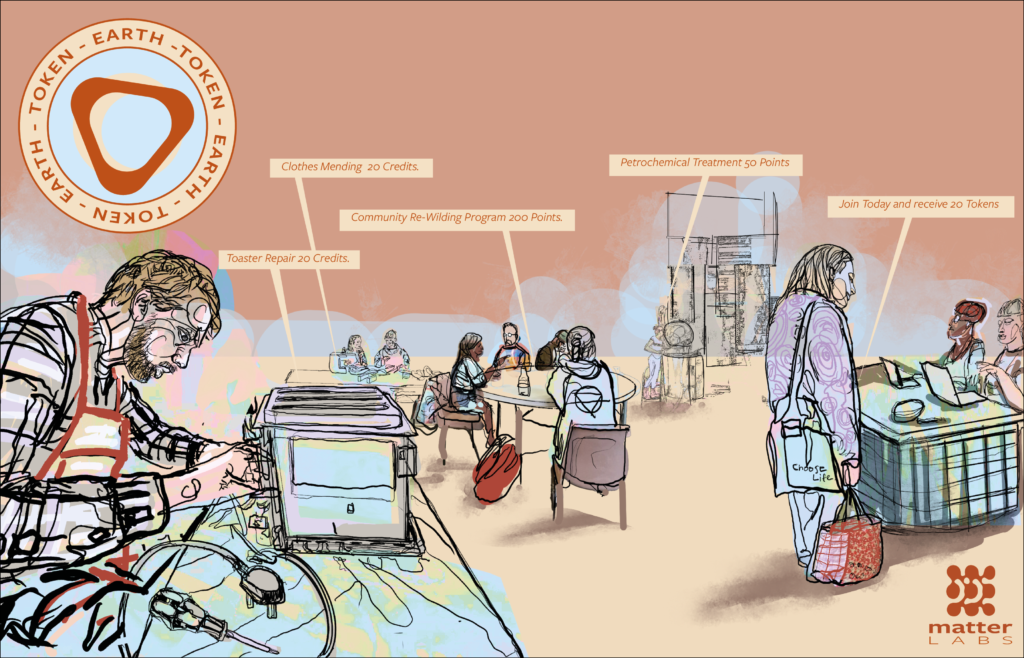
Matter Labs restore café powered by Earth Token

The home page of the Earth Token App
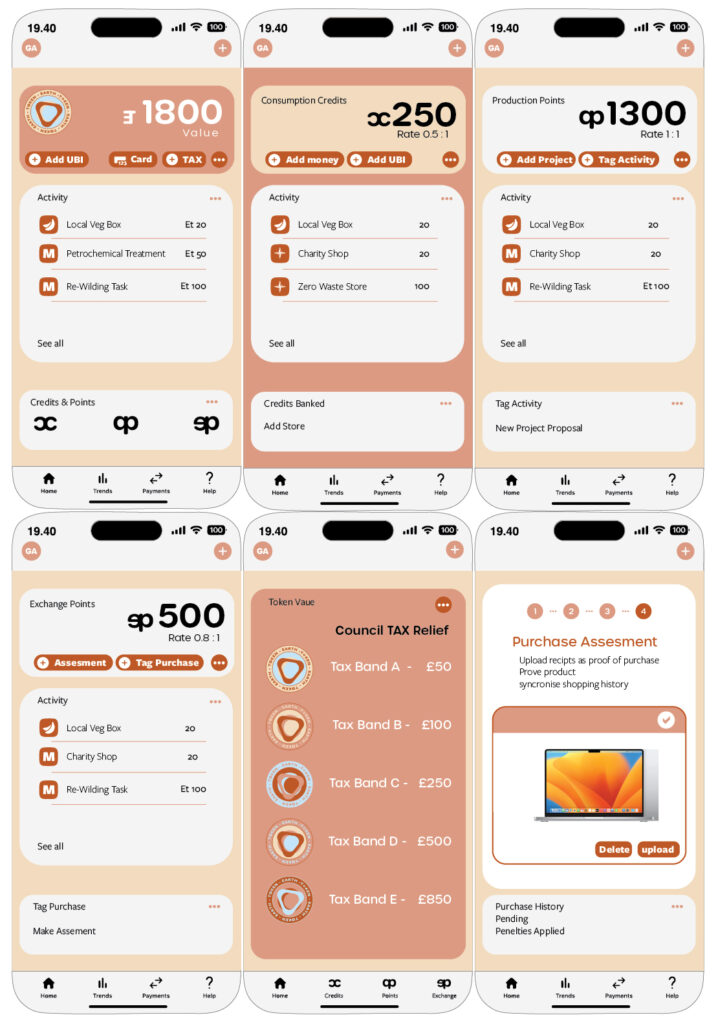
The Earth Token App is an alternative community exchange that facilitates socially and environmentally responsible decision-making.
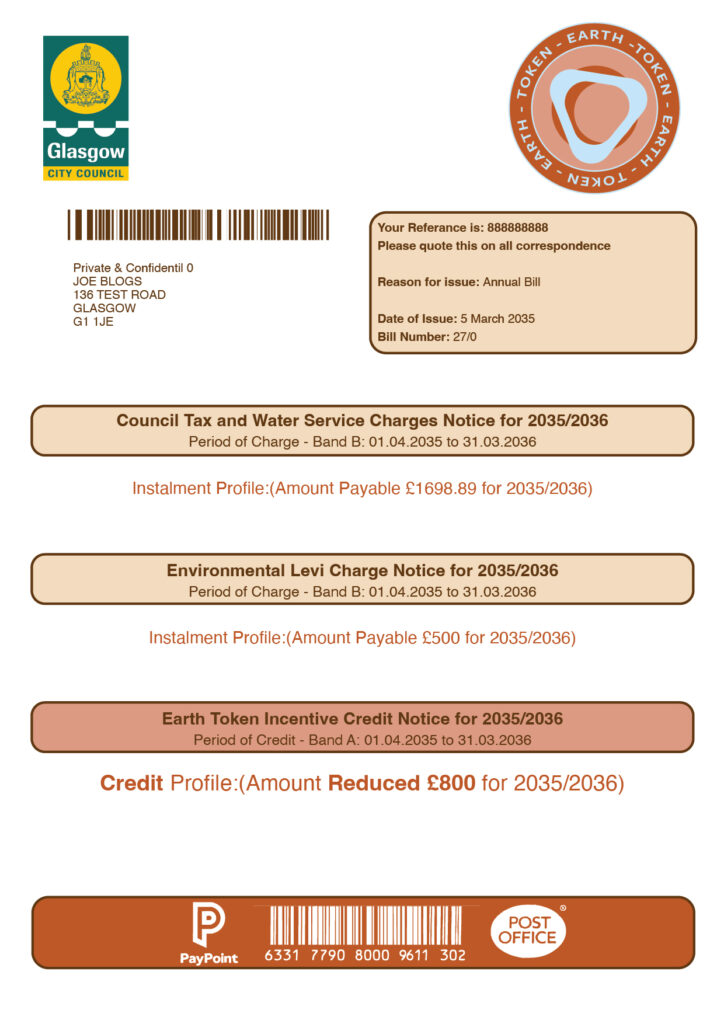
Council Tax and Levi Notice
Matter Labs
From our collaborative project Creating Future Worlds, exhibited at the Advanced Research Centre in Glasgow, our group employed an iterative, research-led approach to develop this design proposal in response to the theme of Planetary Health: Civic. To contextualise the project, we developed a future narrative grounded in current trajectories and plausible environmental and socio-political shifts.
In 2035, the climate crisis reached a critical tipping point, triggering widespread global restructuring and the strict enforcement of the Polluter Pays Principle. This shift led to a dramatic reduction in material extraction, petrochemical manufacturing, and exploitative labour practices, compelling industries to account for the environmental and social costs embedded within global production systems.
As these systemic changes unfolded, society began to confront the toxic material cultures that had long underpinned consumerism and industrial growth. Efforts toward ecological repair became inseparable from broader attempts to restore relationships with land, reconfigure material circulation, and reshape collective attitudes toward consumption and responsibility.
However, despite these transformations, harmful substances remain embedded in everyday life, from synthetic fibres shedding microplastics to toxic dyes and chemical residues persisting within products and environments. This raises a central question: how can society address the long-term legacy of contamination already woven into modern material culture?
In response, the team behind MatterLabs™ emerged to confront the consequences of historic manufacturing practices through a series of remediation technologies and treatment processes. Their work enables society to continue using existing materials and products while actively reducing their environmental and biological harm.
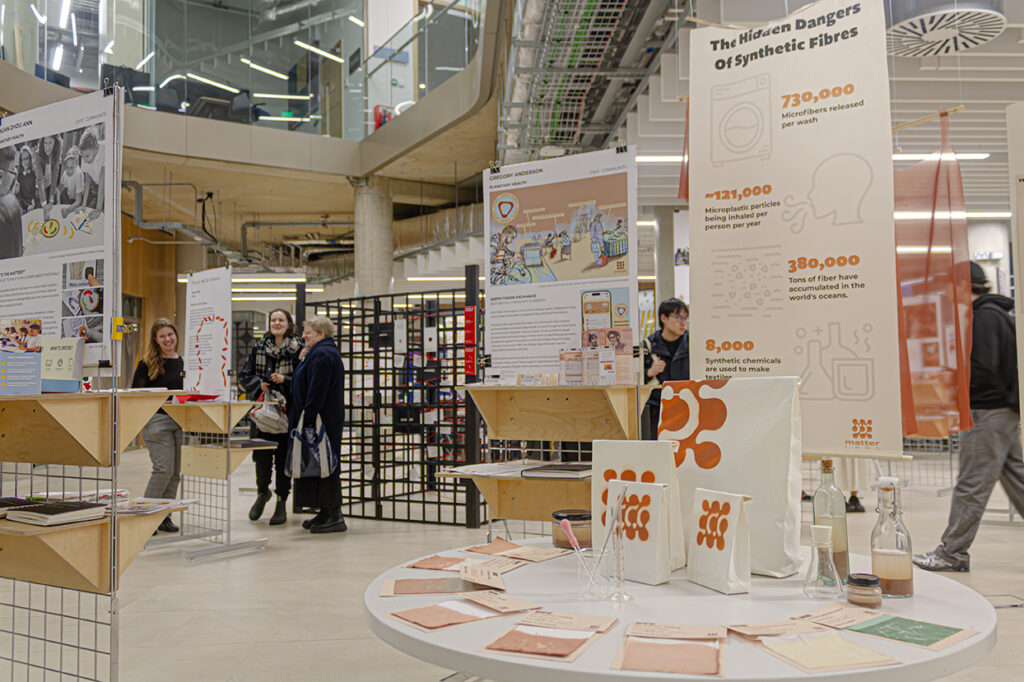
Display of Matter Labs Products After Treatment
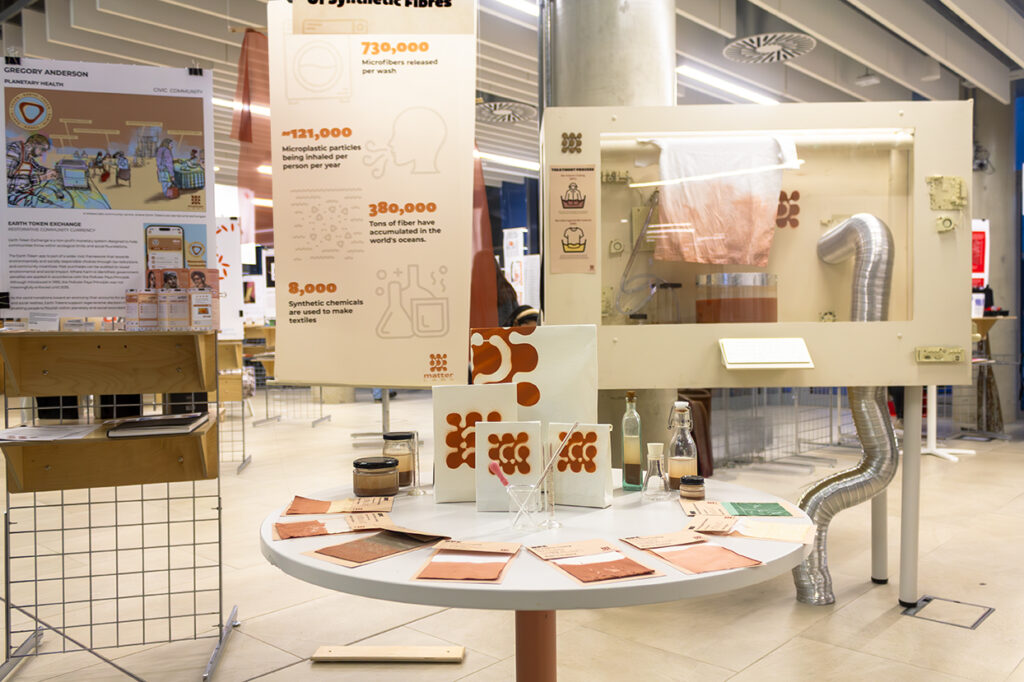
Display of Matter Labs Treatment Facility and Samples
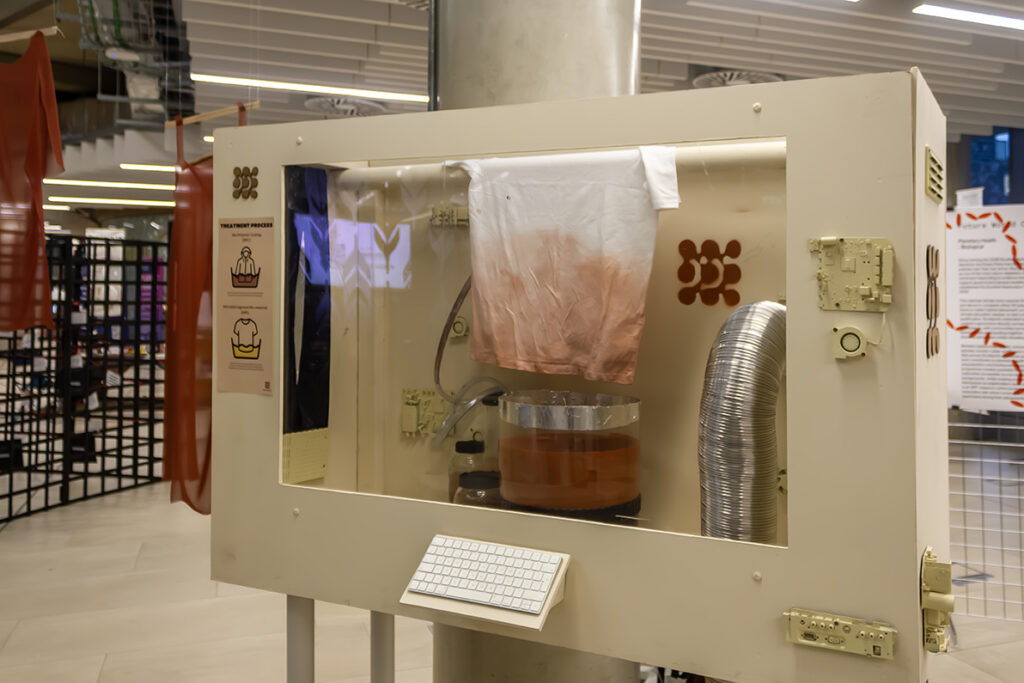
A polyester T-shirt is undergoing neutralisation at a Matter Labs facility, where protective coatings are applied to suppress microplastic shedding and chemical emissions.
Earth Return
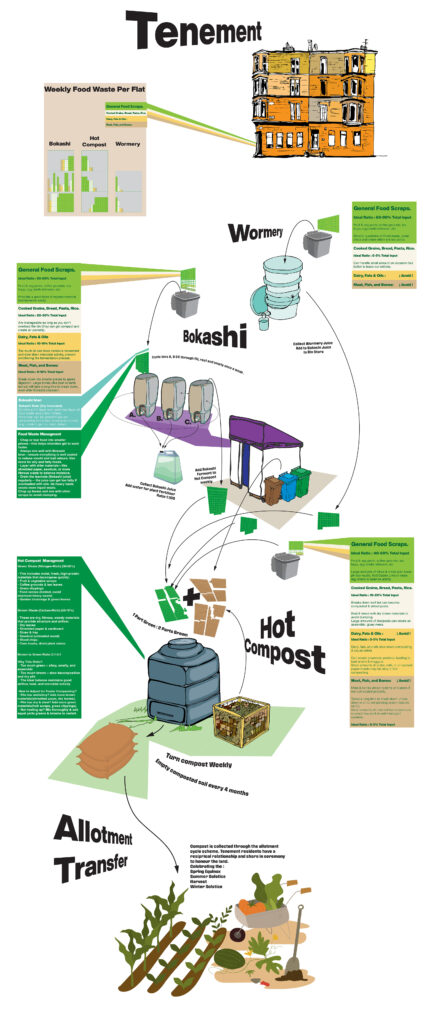
A systems-led design proposal that reimagines household waste as a valuable community resource. In this example, food waste from Glasgow tenements is redirected away from landfill and reintegrated into local ecological cycles. Rather than being lost through ineffective municipal waste systems, organic waste becomes compost that can support community allotments, urban food growing, and environmental restoration projects. The proposal demonstrates how systems thinking can transform waste from a neglected by-product into a shared resource that strengthens both community resilience and ecological relationships.
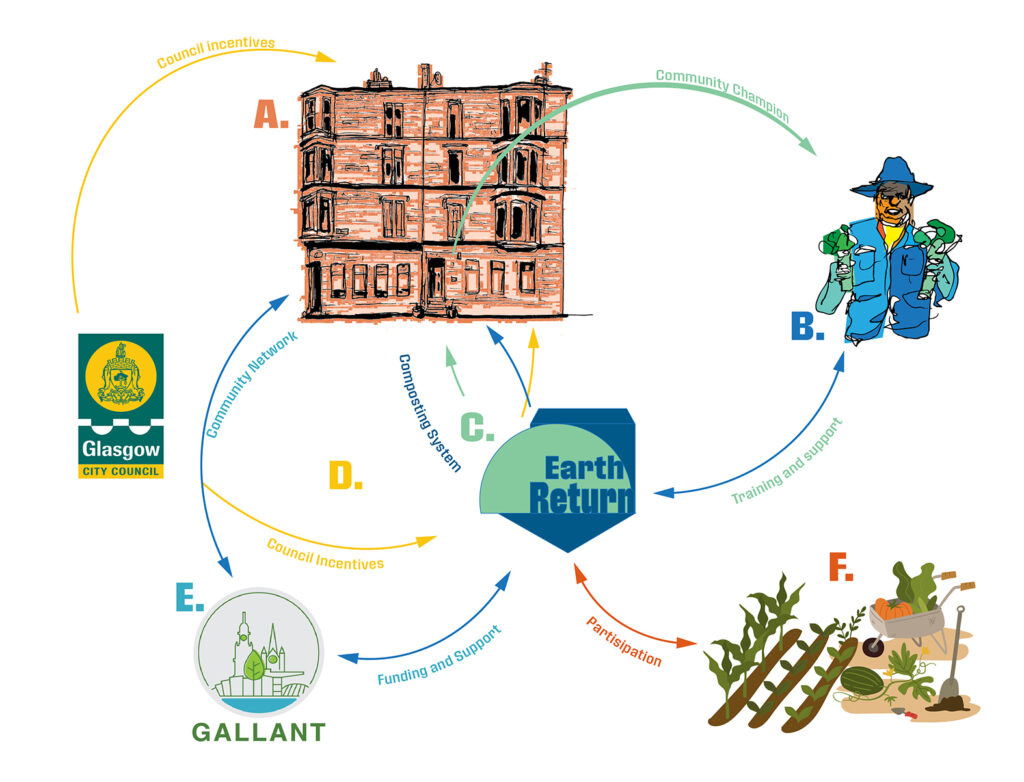
System Map