
Jiayi Wang (Skylar)
(She/Her)
I am a multidisciplinary designer with a background in fine art and product design, working across behavioural systems, emotional interaction, UX strategy, and service design. My practice explores how digital and physical systems shape human behaviour, perception, and everyday experience.
I combine systems thinking with commercial awareness, translating complex ideas from early concept development into intuitive, adaptive, and future-oriented design experiences.
Mycelia
Most emotional technologies reduce feelings into labels, reports, and behavioural optimisation, treating emotion as measurable data rather than lived experience.
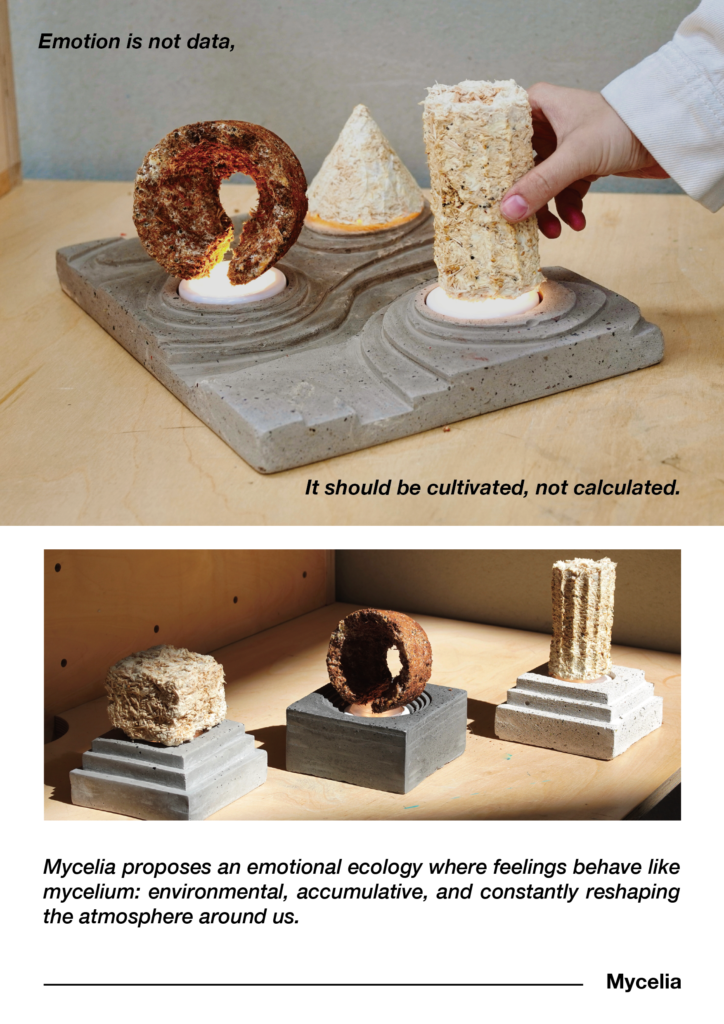
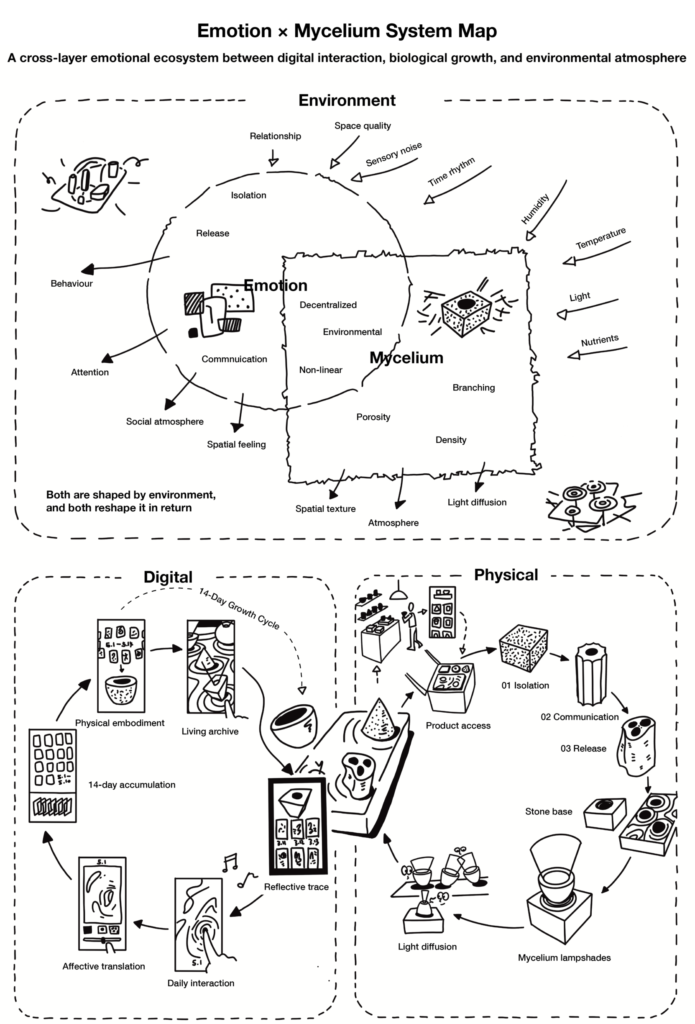
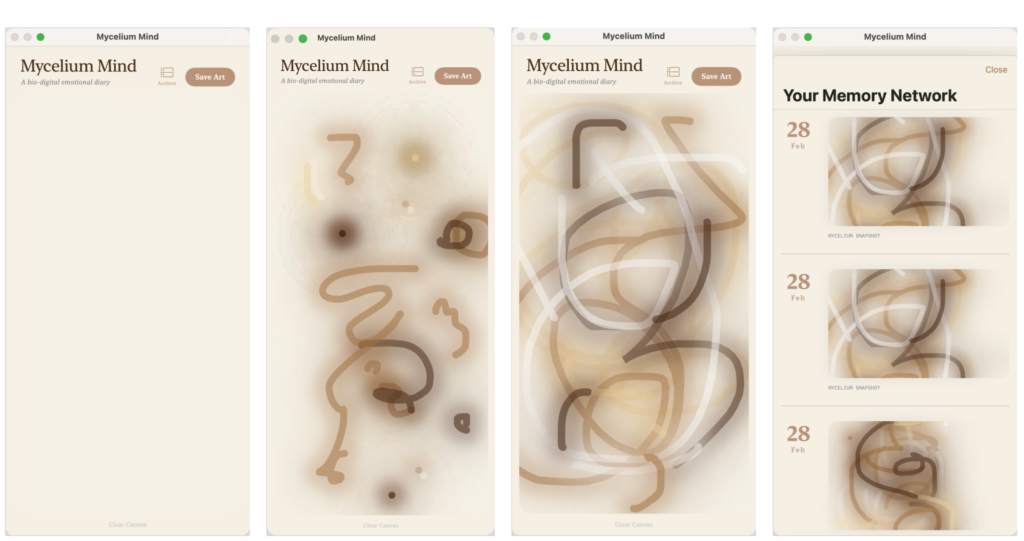
Mycelia proposes an alternative emotional ecology where emotion behaves more like mycelium than information. Instead of assigning fixed emotional categories or symbolic colour systems, the project expresses emotion through abstract growth patterns, tactile interaction, and atmospheric change.
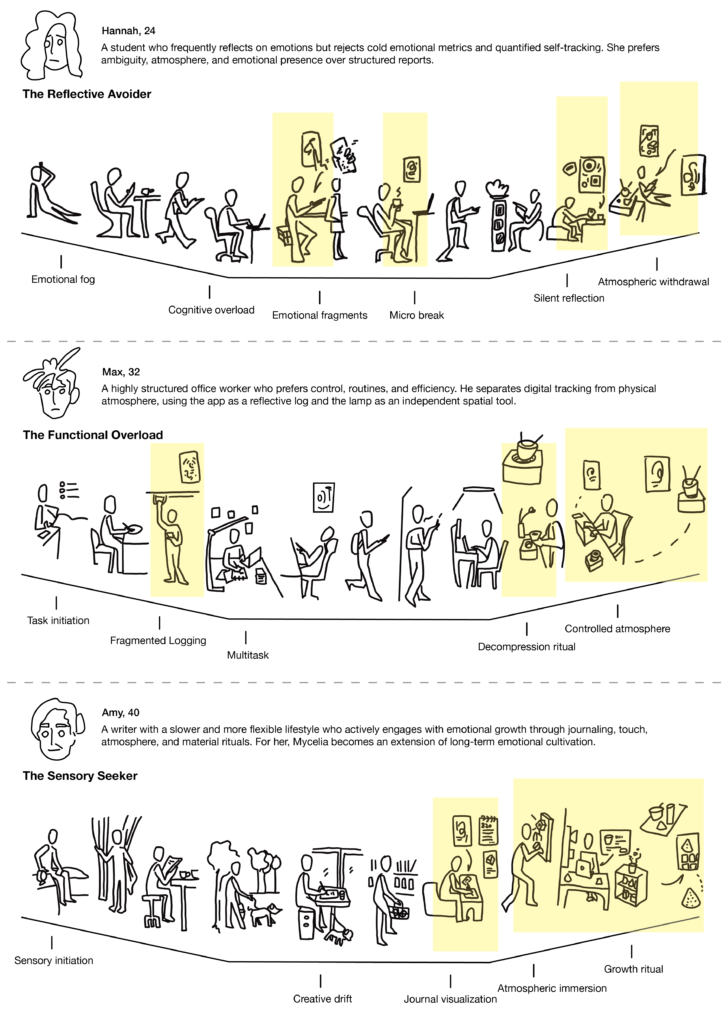
Combining a digital interface with a material lighting system, Mycelia translates non verbal behaviours including touch, pressure, hesitation, and absence into evolving visual and spatial traces. These interactions accumulate through a slower 14 day growth cycle inspired by mycelial cultivation, allowing emotion to gradually settle and transform over time.
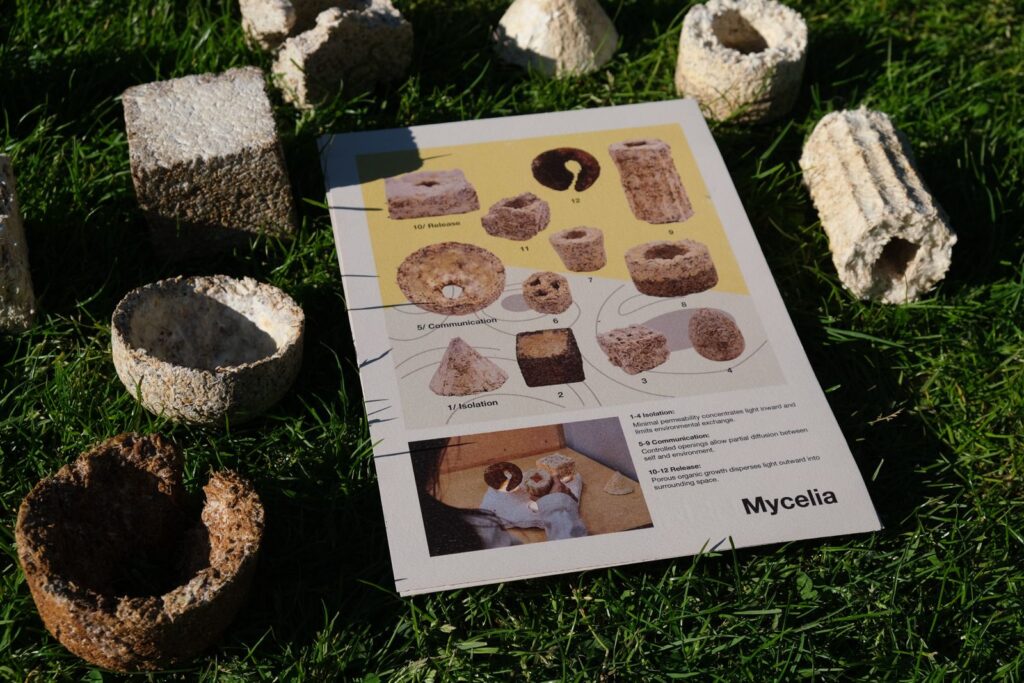
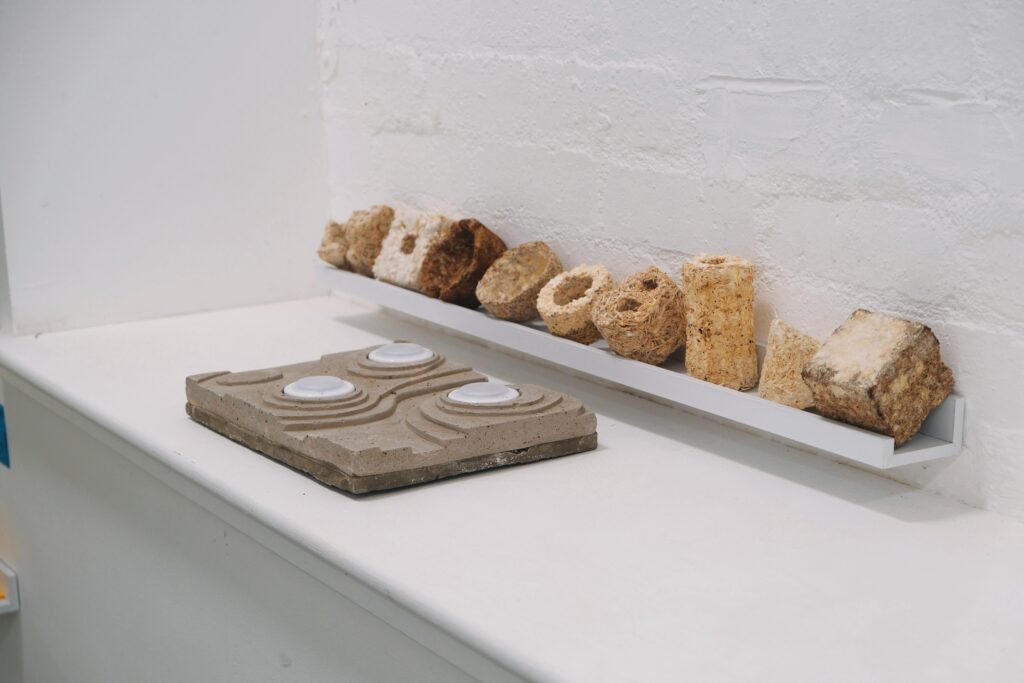
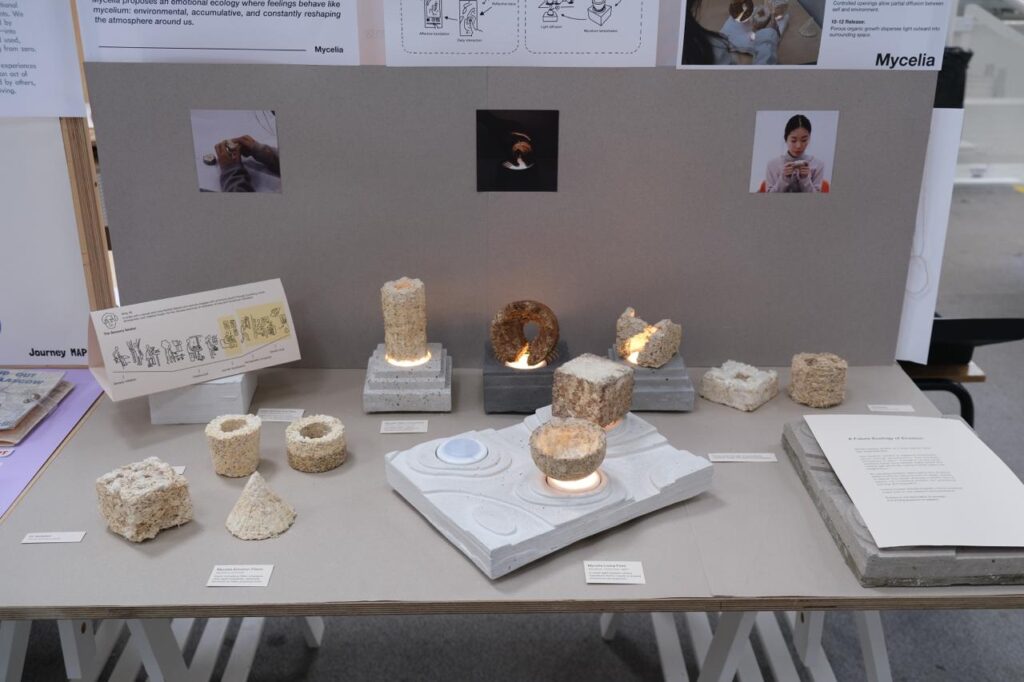
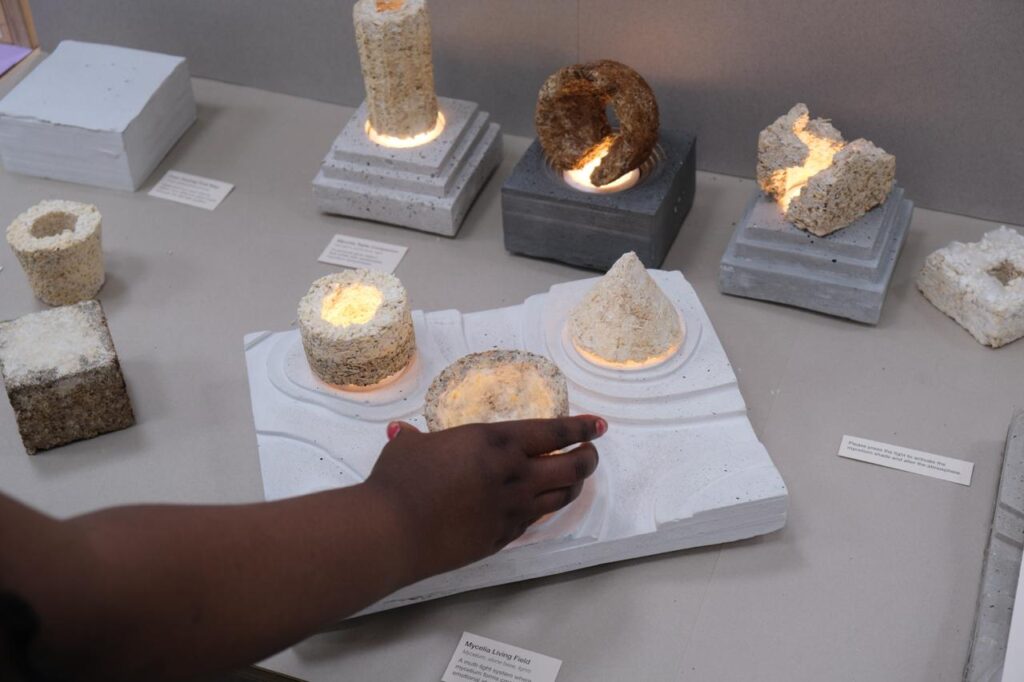
The resulting traces develop into tactile mycelium lampshades that invite touch, scent, and sensory interaction. Through three emotional permeability conditions, Isolation, Communication, and Release, the lampshades alter how light diffuses and atmosphere is experienced within space.
Situated within quiet moments of everyday life, Mycelia explores how emotion can be cultivated, lived with, and reshaped through light, material, atmosphere, and time.


Data Legacy System
Select, Curate, Preserve, And Choose To Forget
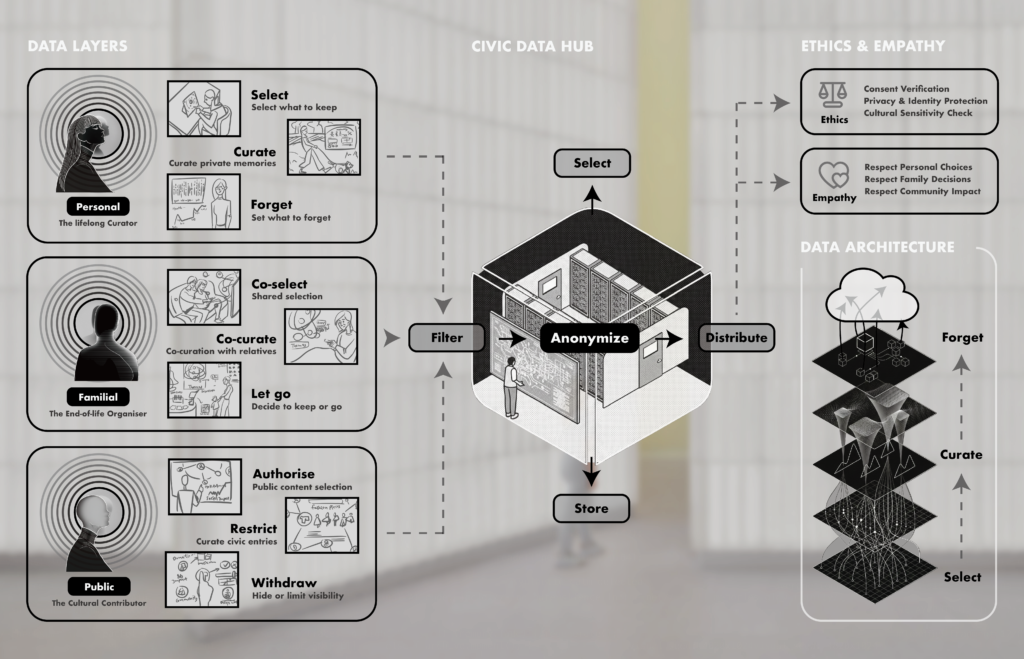
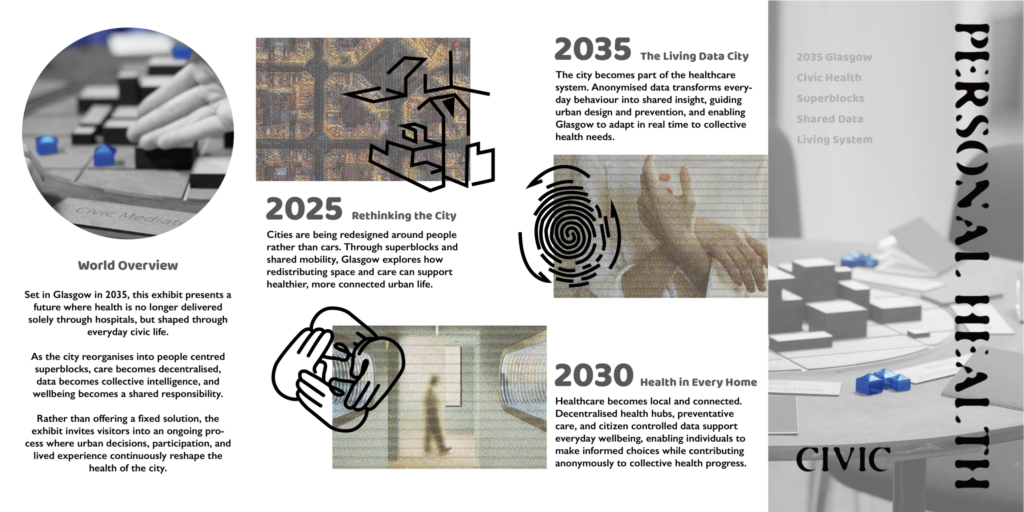
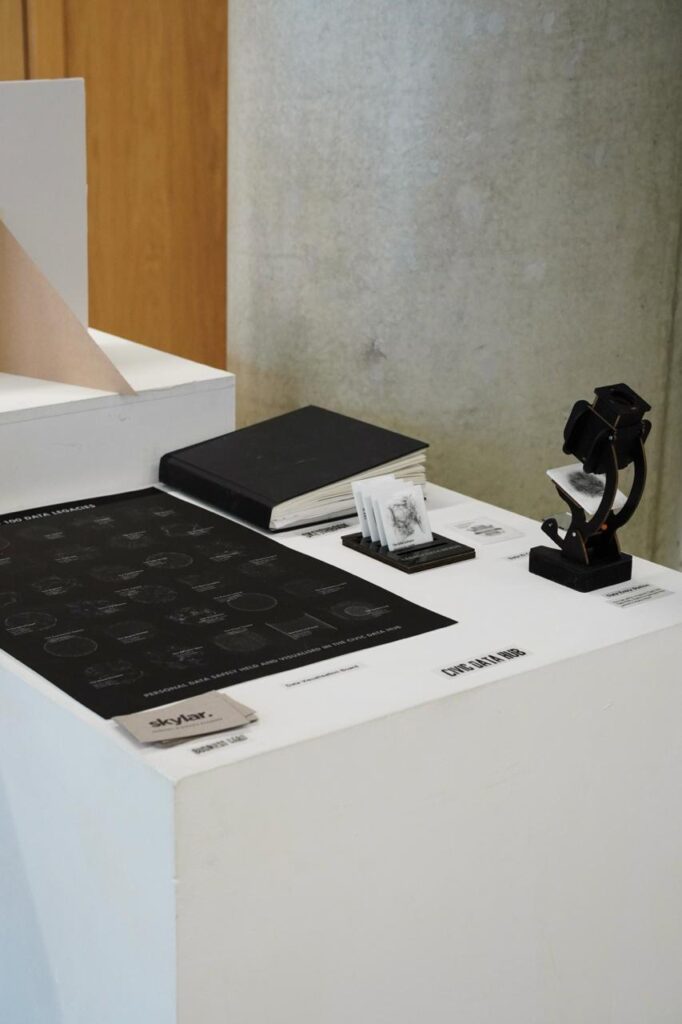
In 2035, constant data generation creates overload, privacy risk, and low accessibility. This is a digital legacy system that empowers people to take back control of their data.
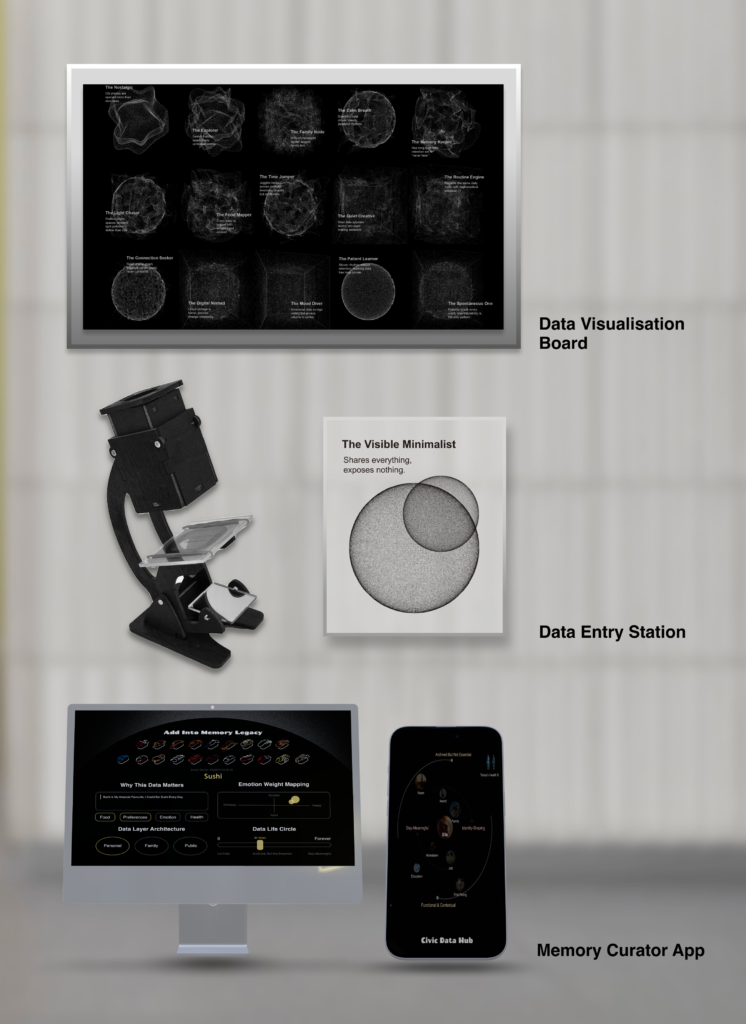
Users can selectively keep, curate, or allow the system to gradually forget data over time. It is structured across personal, familial, and public layers, offering clear privacy boundaries.
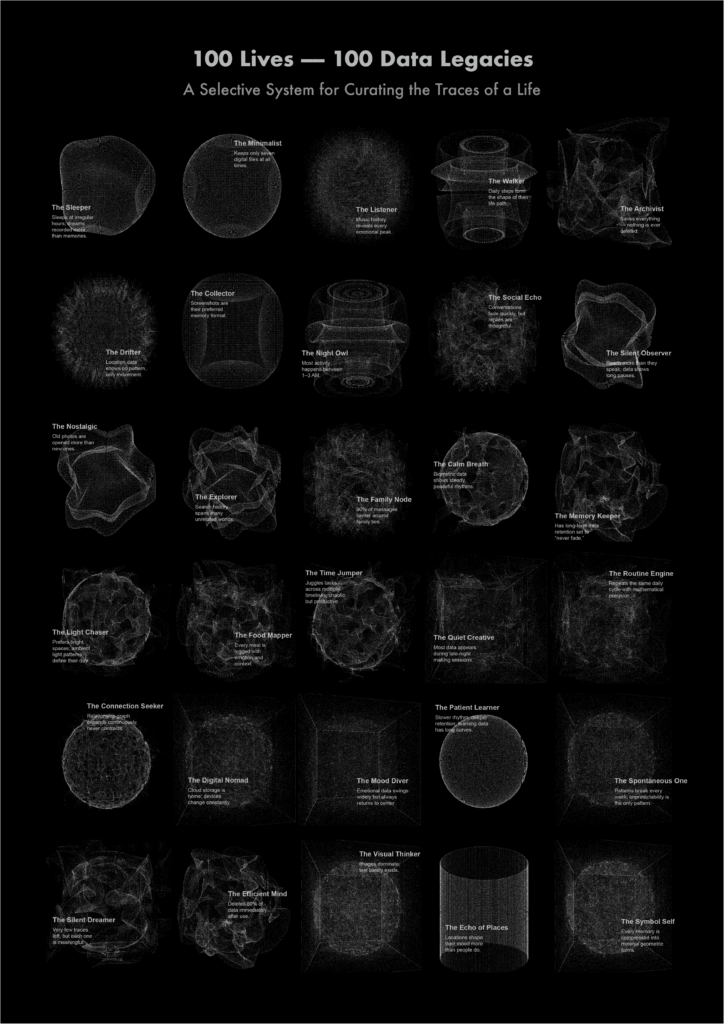
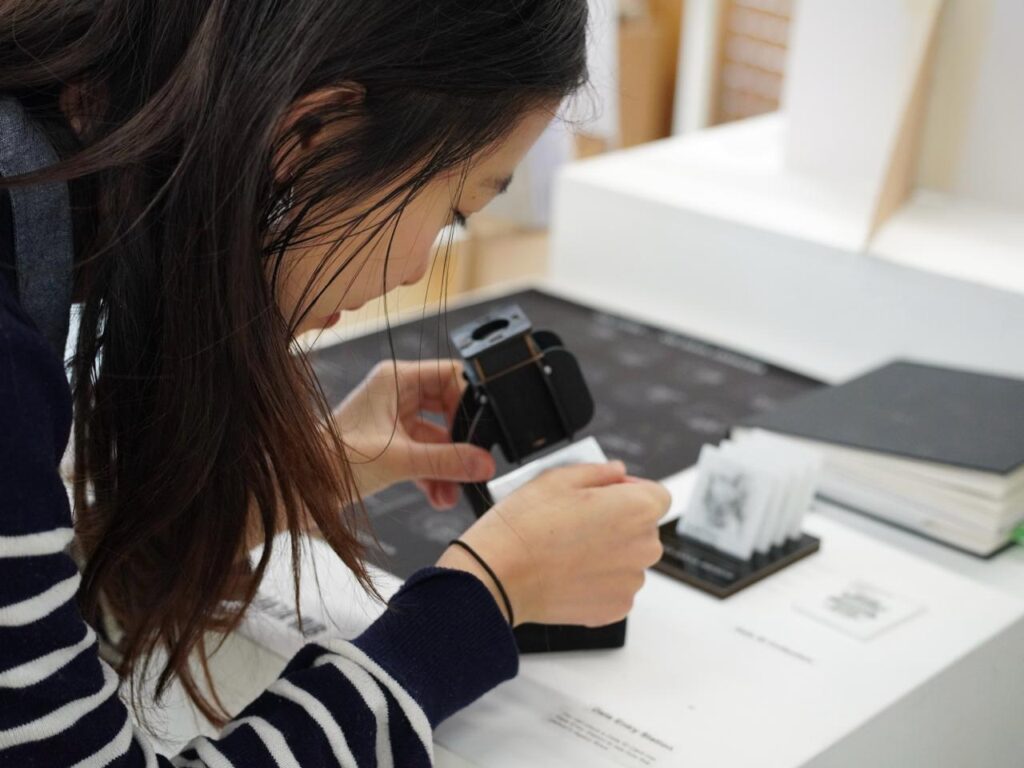
The system visualises each user’s data flow and offers new interaction formats such as narrative and cinematic views. It provides people with long-term control, greater clarity, and ethical management of their digital memories.