Kate Turnbull
Sprout & Spoon
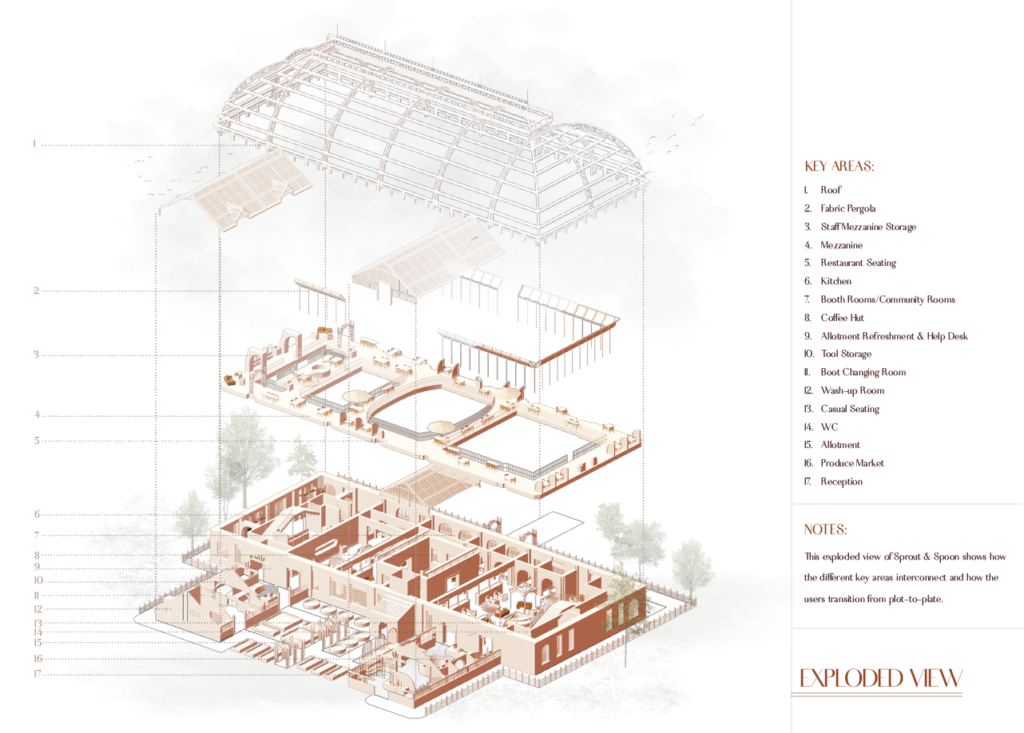
For my chosen site – Springburn Winter Gardens – I decided to create a mixed-use space focusing on the sustainable journey from plot-to-plate through a community allotment supported by produce market, cafe and restaurant. The aim of the project is to transform the historic site and create a welcoming space that supports everyday life, well-being through spaces where users can share skills and ideas through hands on interactions as well as relaxing, brining the community together,
The design of the space offers a range of activities supporting a wide target audience from outdoor activities, fresh food, learning and relaxed leisurely atmosphere. It responds to ethical issues in Springburn like lack of local facilities and fills the gaps and requests in ongoing community projects. My proposal builds upon the existing interests of the community by creating a place where they can continue to grow and connect together. The project focuses on community engagement, helping reinforce the identity of Springburn in the redevelopment of the site that non only benefits but belongs to the locals.
A key part of the projects concept is the adaptive reuse and preservation of Springburn Winter Gardens. Rather than replacing elements of its historic structure I aimed to build upon it through materiality to respect its significance in Springburns early development. The location of the site within Springburn Park supports the chosen typology of the project. The park itself already creates a baseline of well-being benefits for the community as it centres around nature and growth. The existing popularity of the park guarantees a frequent and reliable footfall to the site.
Overall the project looks to efficiently create an ideal balance of preserving well-being, leisure and the community of Springburn. Through the restoration of the landmark it will create a local social hub supporting the everyday life and connection of users.
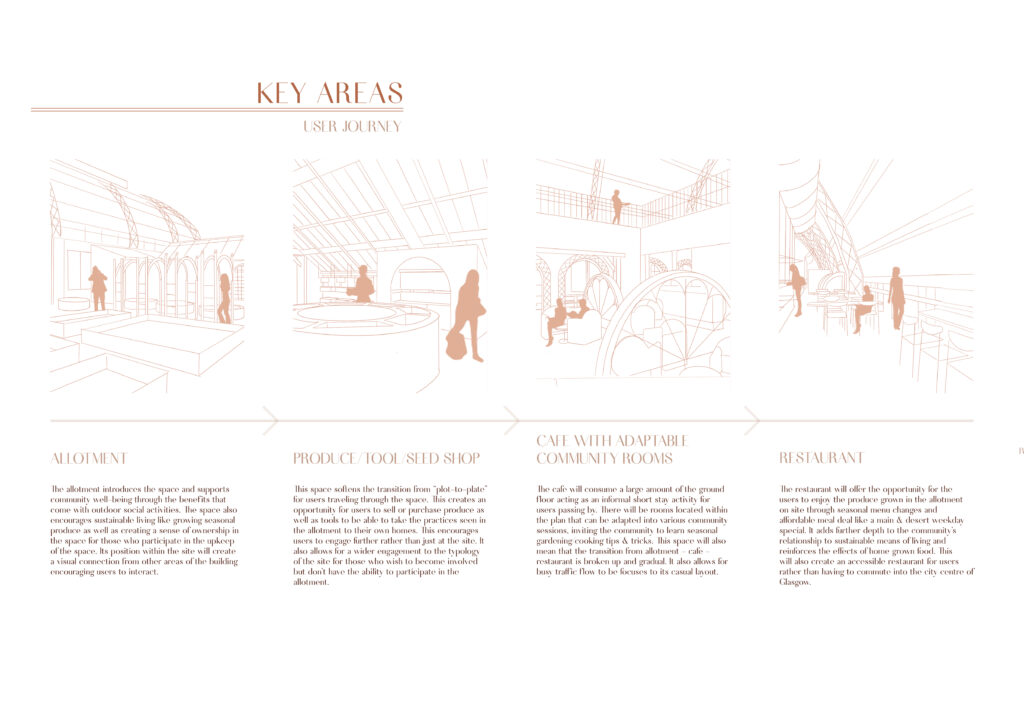
Key Areas
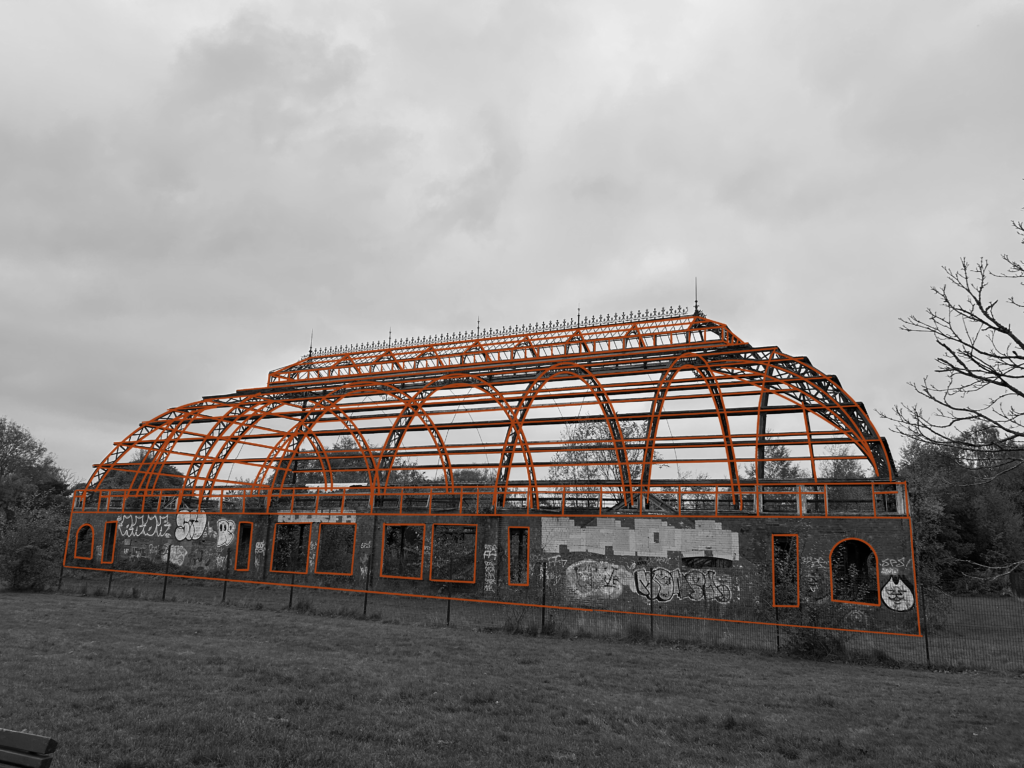
Site Analysis
Springburn Winter Gardens once a striking civic building within Springburn fell into disuse after significant storm damage. Despite this the structure of the Victorian Glasshouse remains strong. It consists of a now eroding solid red brick base supporting its weathered detailed steel roof made up of archways. The contrast of the delicate archways with its heavy industrial materials is what builds up the sites character. Its interior remains open plan and many original details of the sites previous function still remain within the site like its raised flower beds and mezzanine.
It proves to have great potential for redevelopment and restoration to support a new multifunctional concept through its large spaces and great vertical hight.
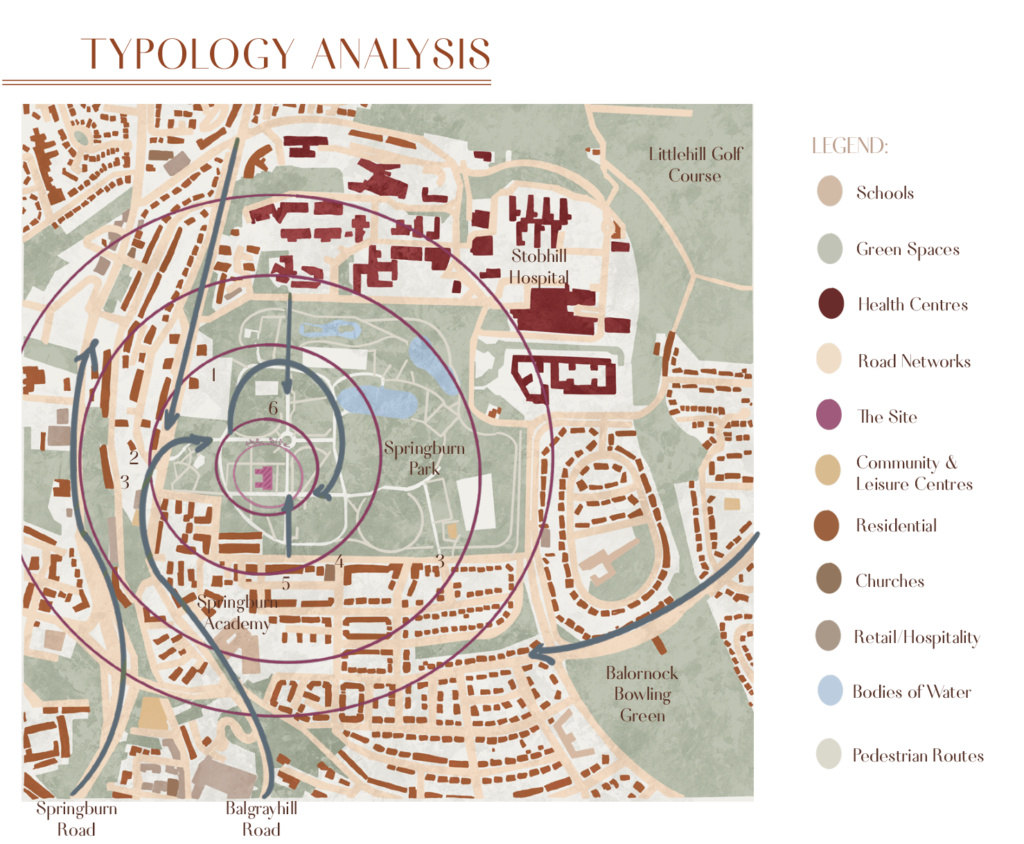
The typology analysis displays a large percentage of the area is residential and green spaces however also highlights a lack of retail and hospitality facilities for users to utilise without having to travel into Glasgow City Centre. This highlights opportunity for my project to focus on typology’s involving hospitality and retail facilities to engage the community. Combining these through a multifunctional space will increase the target attraction to the site by increasing the activities the site supports.
The rings and arrows on the map show the connectivity and main traffic flow of the site. This displays the number of entrance roots into the park which helps to reduce congestion.
The smallest ring shows a 5 minuet walk time, then 7 minuet, 9 minuet & finally 14 minuet. This emphasises how accessible the site is for the local residents and highlights how large of a footfall I will have to account for as well as how wide of an impact the project can have on the surrounding area.
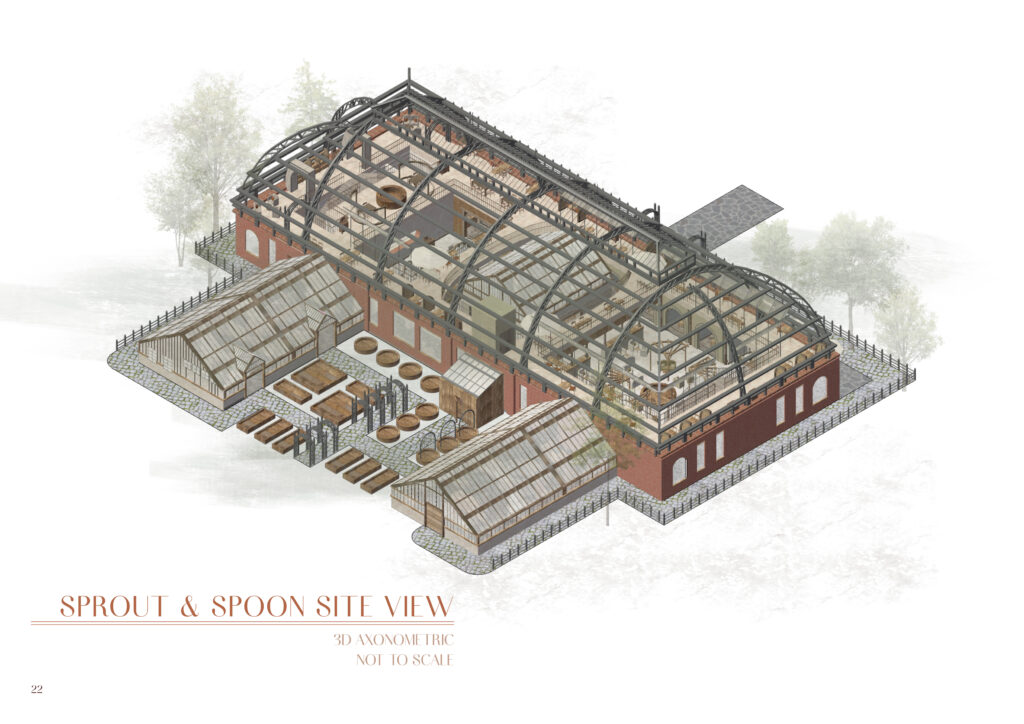
Sprout & Spoon Site View and Exploded View
The images below display an overall site view of my project proposal followed by an exploded view displaying how each key area interacts within the site.
Ground Floor
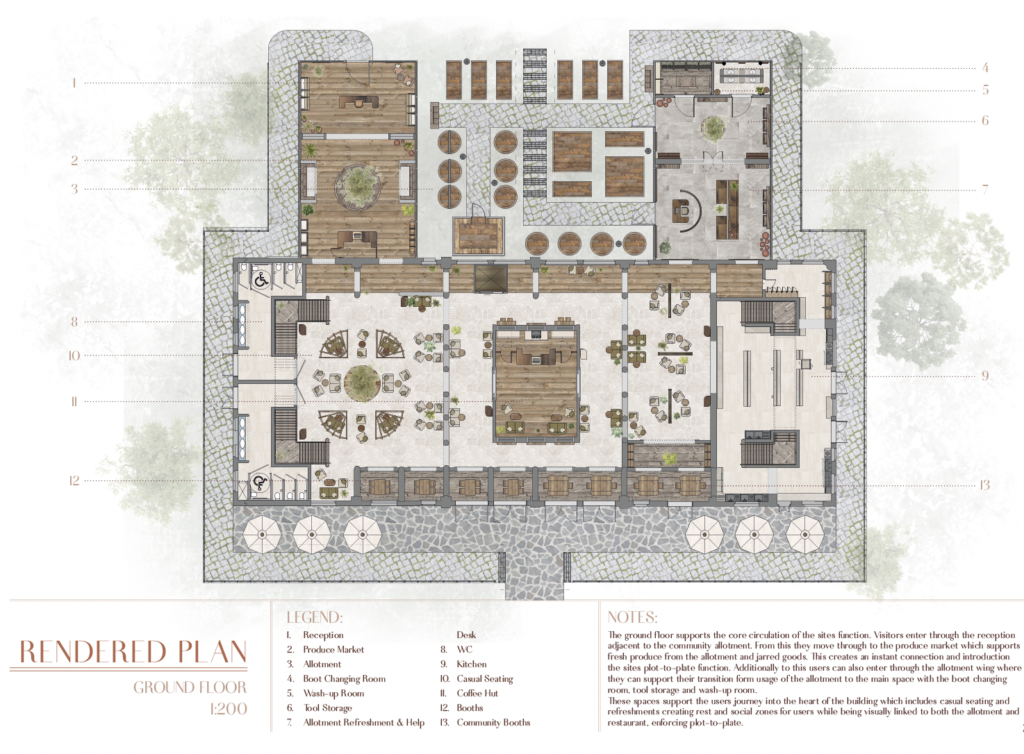
Left Wing Key Areas
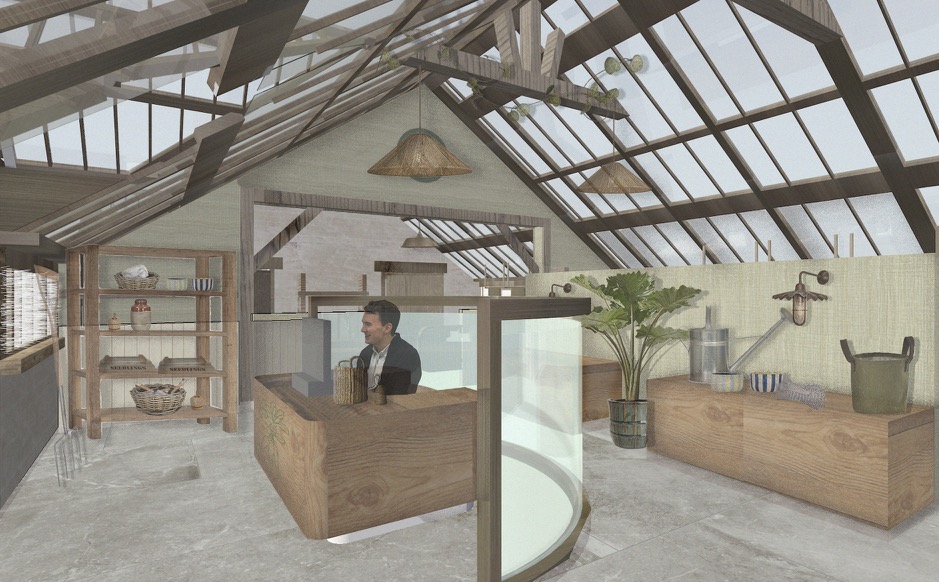
Reception – The reception is where users are first introduced to the site and function. It is a welcoming build-up of materiality and sets the tone for the rest of the users journey. The reception desk will provide guidance for users to identify what area of the site they wish to utilise which supports user way finding. This is where most user groups will interact with each other as they split up into their desired key area.
Produce Shop – The produce market is a space where users can first hand purchase and utilise the seasonal goods produced from the community allotment. This gives them an experience of what is currently being utilised within the restaurant within. The market also supports jarred goods, seeds and gardening tools. This encourages users to take the sustainable practices of the site back to their own homes. It also encourages shared community efforts as the allotment is supported by the community and volunteers. The warm colour pallet supports the transition between spaces as it visually connects the wing to the red brick of the main area of the building.
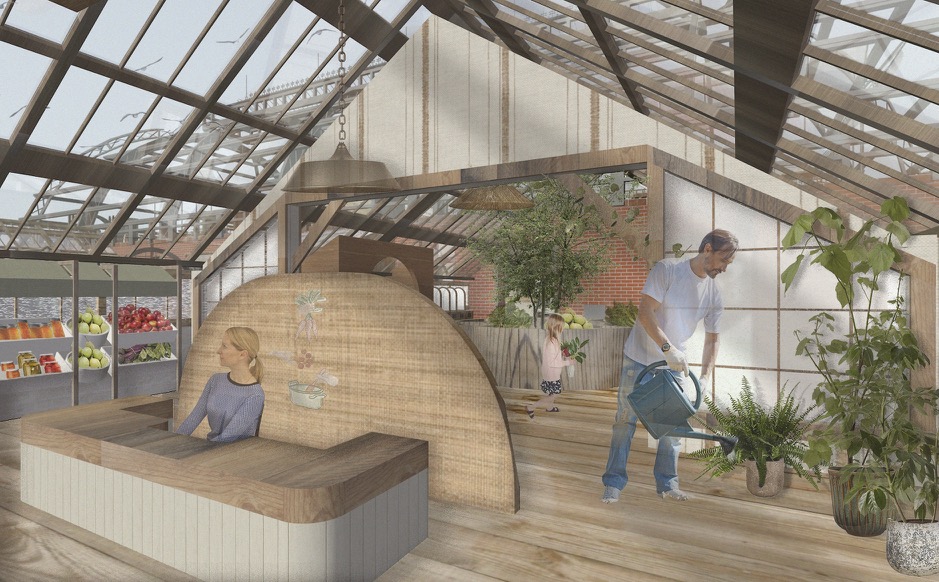
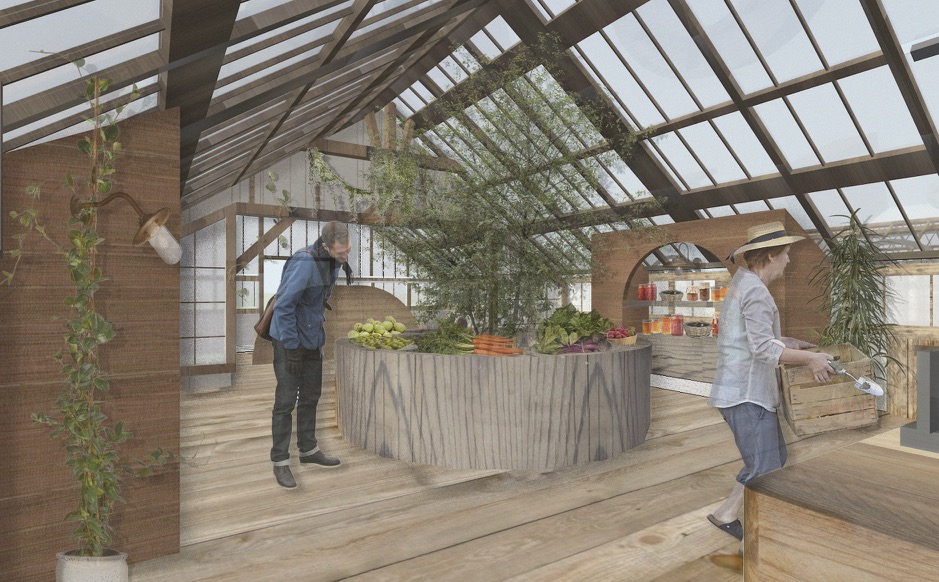
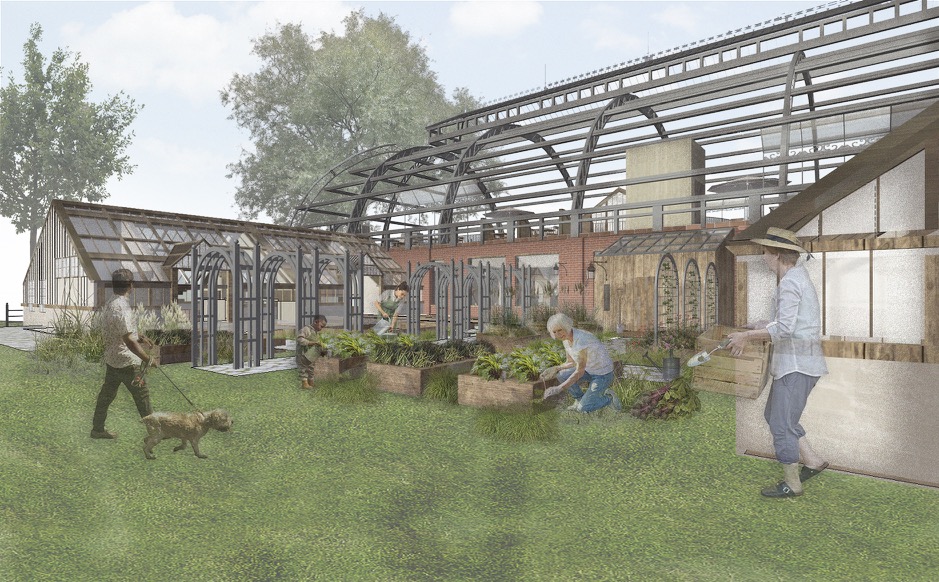
Allotment
Allotment – The community allotment runs as the heart of the site. It supports social well-being of users as they grow and learn together also creating a real sense of ownership of the project as they work together at a team to grow and produce goods. The allotment starts the journey of users through it being the plot of the sites plot-to-plate function. Additionally it supports the natural ethos of the building as a whole due to the seasonal produce being grown dictates what is sold in the market and what meals are made in the allotment. Key users to interact in this area are volunteers, retirees & local schools.
Right Wing Key Areas
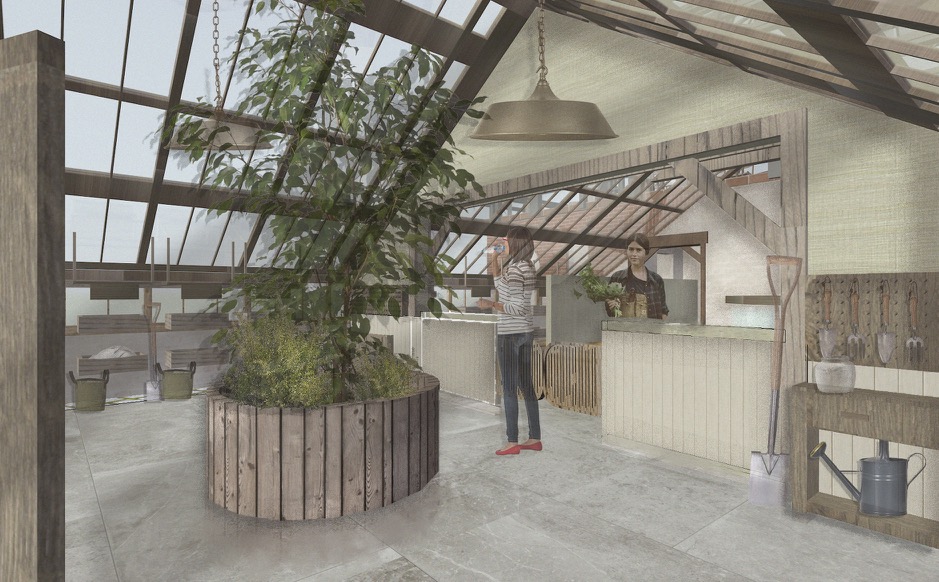
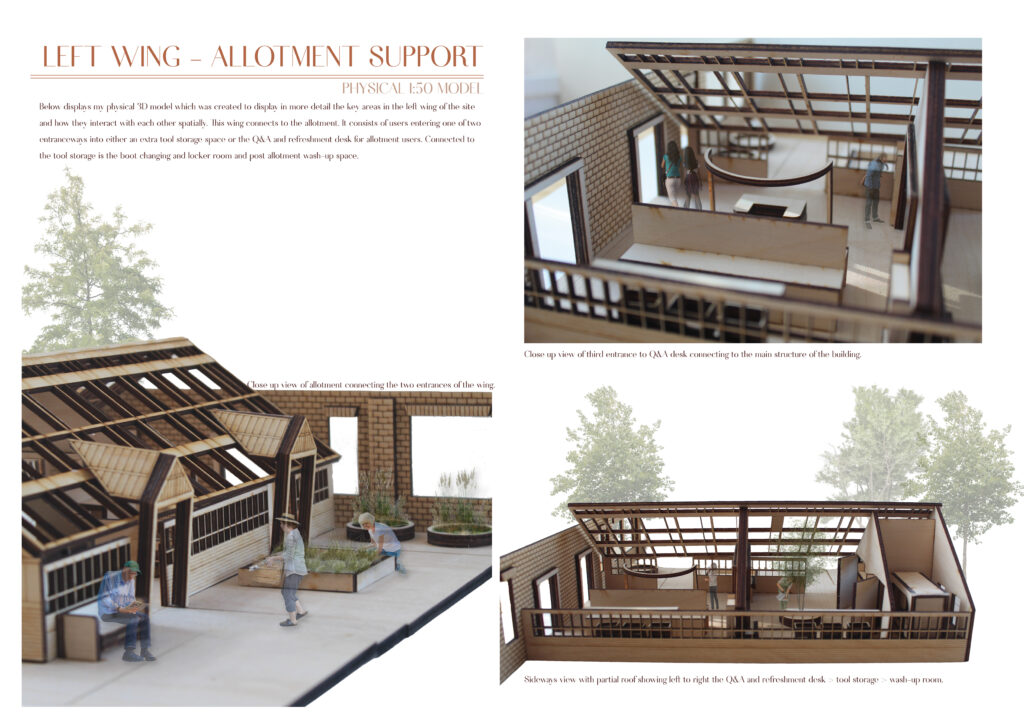
Allotment Help & Refreshment Desk – This space supports the users of the allotment by providing refreshments, assistance and guidance for any issues encountered within the allotment. This encourages users who don’t have as much experience with gardening to try getting involved and ask questions to grow their understanding in an approachable setting.
Tool Storage – This additional tool space supports the number of users that will be utilising the space. It creates accessible and practical storage for duplicates of tools and equipment that cannot be stored in the garden shed. This also means that users of the allotment can frequent more casually as they don’t need to turn up with their own equipment to participate. This reflects the sites community focus to welcome in new and experienced users to interact with the space and support daily participation. The neutral and green colour pallet of the materiality reinforces the garden connection of the space.
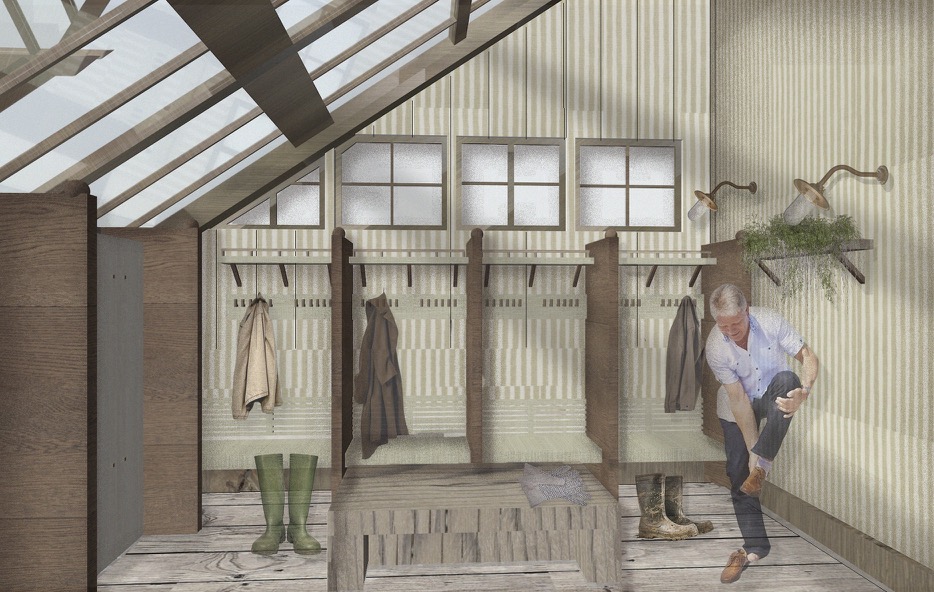
Boot Changing Room – This space provides a comfortable space for users to change muddy boots from walking through the park or gardening in the allotment before they transition further into the site. It also has hooks for coats and lockers for any belongings users wish to lock away when spending time in the allotment. It makes longer stays through multiple functions of the site more accessible and flexible for users as they can comfortably and safely adapt to whatever activity they wish to do.
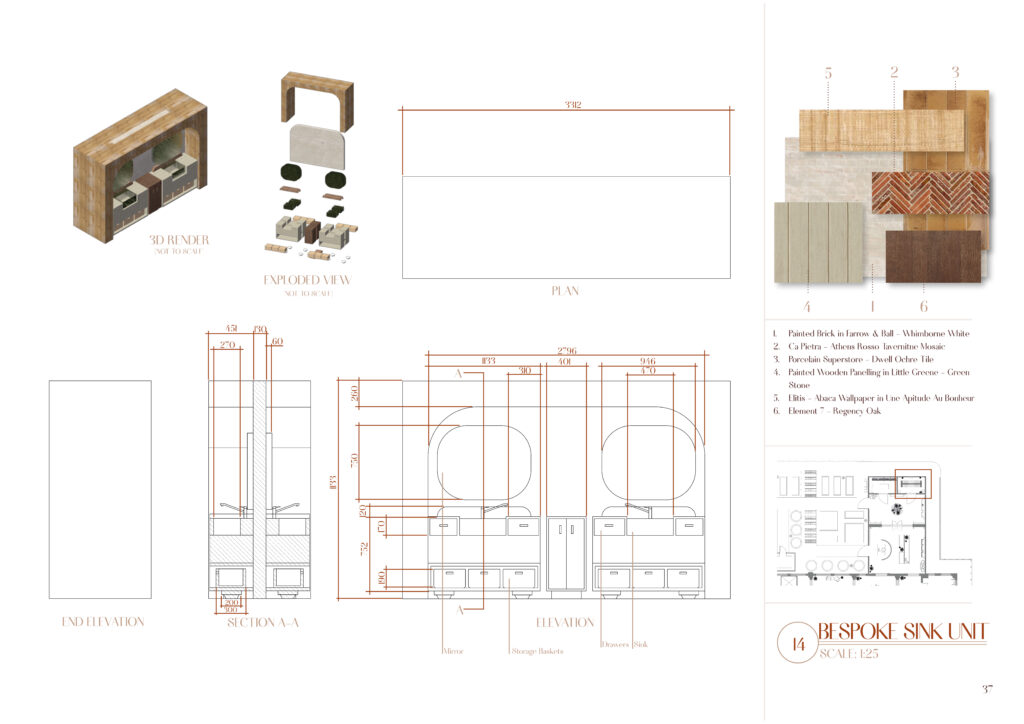
Wash-up Room – This space like the boot room also provides a comfortable transition area for users. Users of the allotment can come here with their muddy hands and wash-up in a clean private space before they move onto other activities. The sink units provide storage for soaps and towels. Users can also use his area to wash their muddy tools before returning them to the tool storage area. This space supports practicality and community-focus as it supports their experience and comfort while experiencing the contrasting facilities within the site.
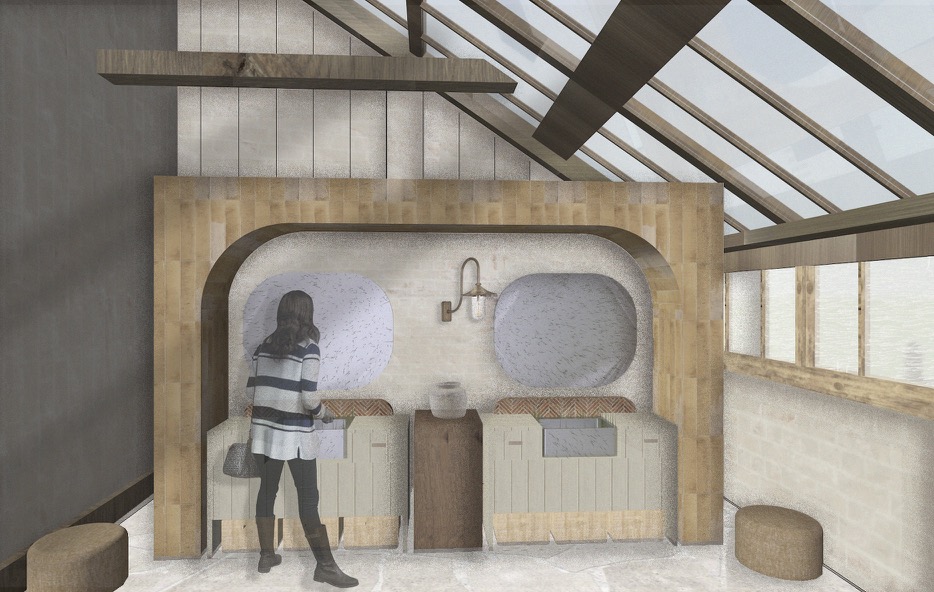
Bespoke Sink Unit
Below displays my bespoke sink unit designed for the post allotment wash-up space.
Physical 1:50 Model
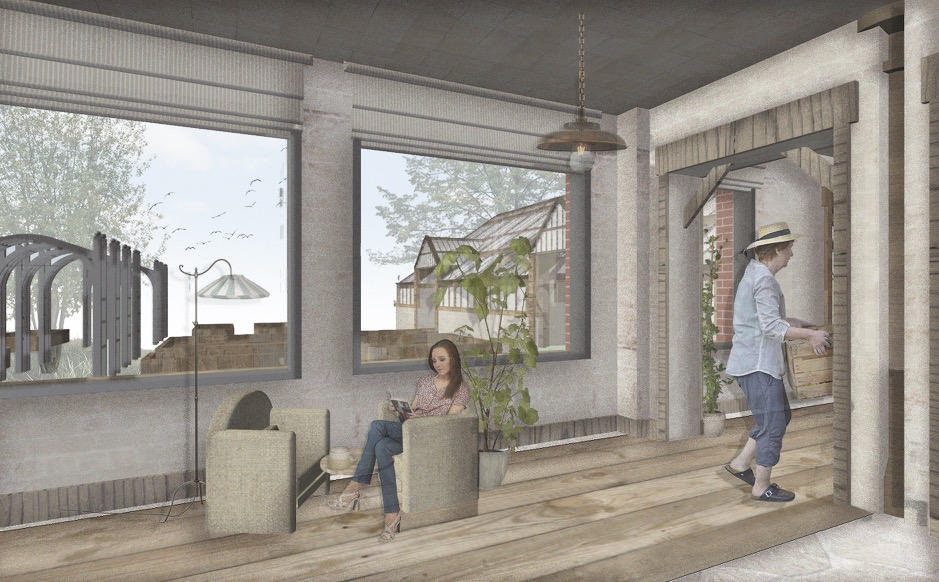
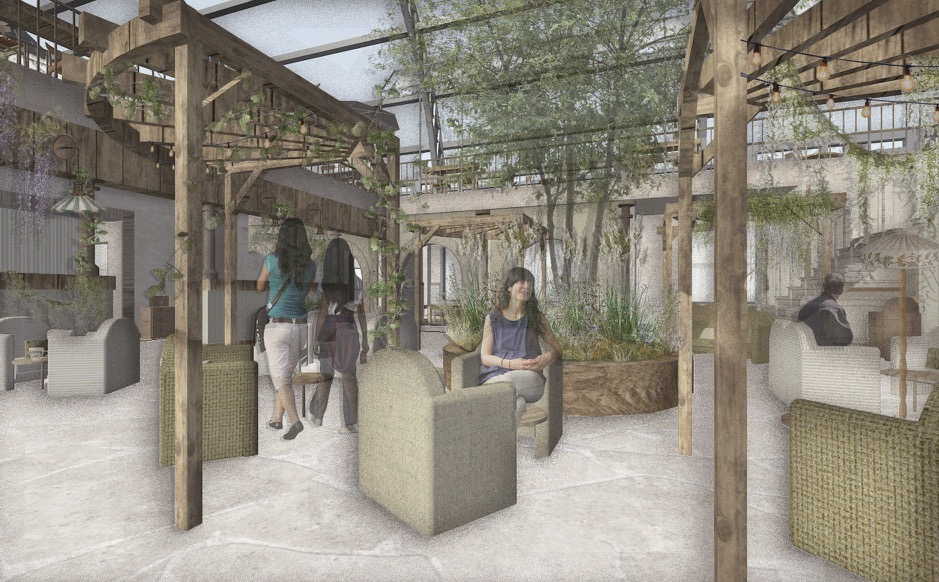
Ground Floor Space
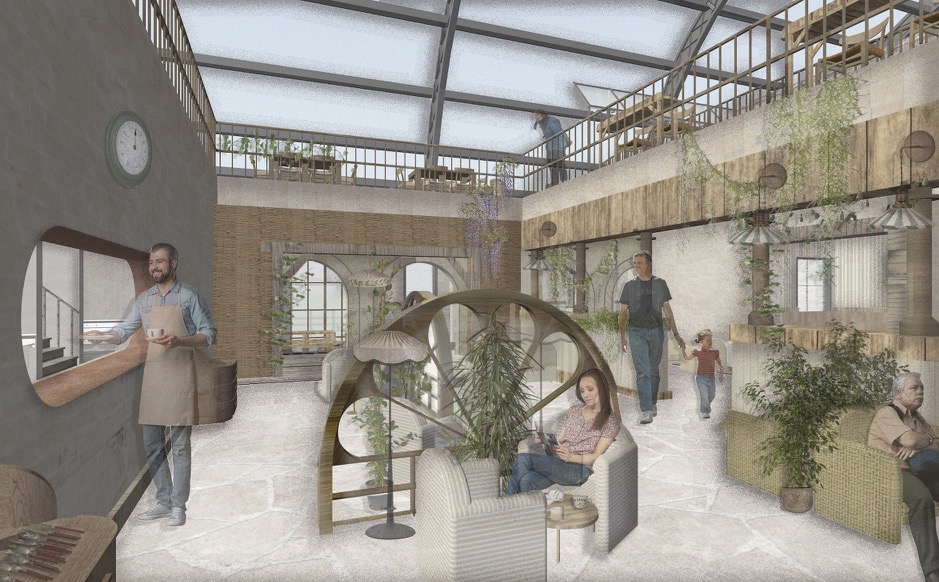
Allotment View – This casual seating area is located right as users enter the main area of the site. It overlooks the allotment creating a visual connection for the plot-to-plate as well as allowing users enjoying refreshments to observe the activities within a relaxed environment.
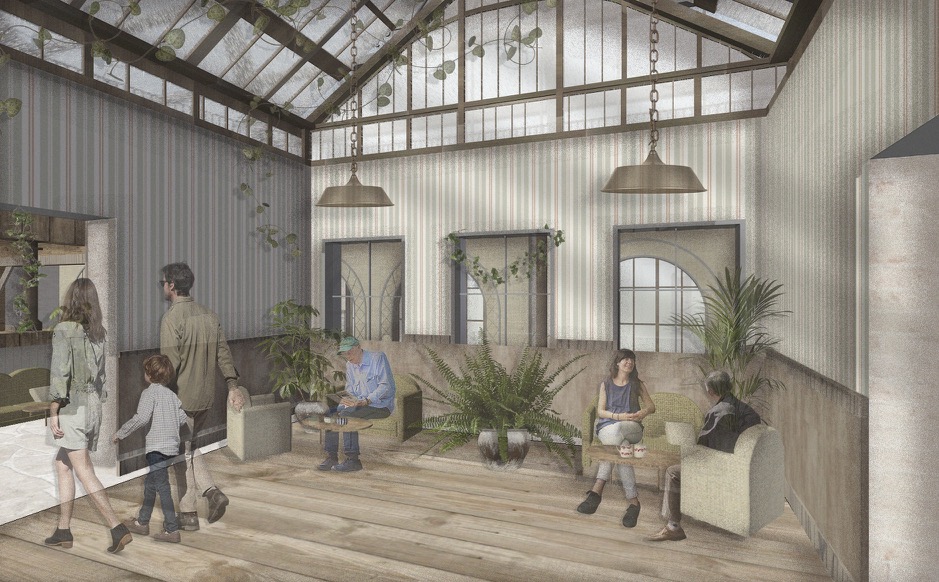
Casual Seating – This casual seating area is one of the key areas in the ground floor. The pergolas and winding plants create a connection to the allotment, linking the spaces and smoothing the transition. It also creates a more intimate experience as it subtly lowers the ceiling without creating such a complete barrier and blocking light. Here users can relax and socialise at their leisure. The green tones of the fabrics create a link back to the allotment within its design function enforcing the circular cycle of the sites function.
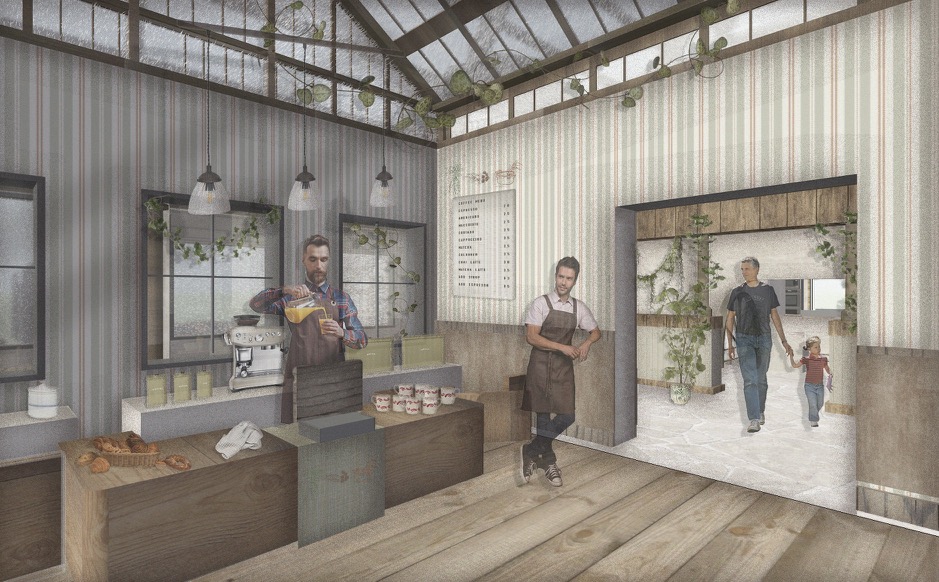
Coffee Hut – This space provides accessible and quick snacks and refreshments for those looking to have a quick stay after engaging in activities in the park, participating in the allotment or just socially passing through. The users interacting in this space will be young adults working, families and elderlies. The space has been designed like a garden hut, breaking up the large open plan space, containing the coffee bar to a distinct area. It will help control the noise of the coffee machine from impacting the rest of the building. The materiality of the space has been designed to reflect natural textures and colours found outside. Additionally the blend of the green and red stripes of the wallpaper display the connection between the red brick of Springburn Winter Gardens and its new organic function.
Bespoke Seating – This casual seating arrangement is divided up by bespoke glass panels which create a natural gentle boundary that offers both privacy for users sitting on either side of it but also has a subtly floral motive in its design linking back to the circular function of plot-to-plate. Alongside this the users in the space have a view of the kitchen servers hatch, here they can see first hand the produce from the allotment being prepared for the restaurant above. This visually shows the turning point of the allotments to the plates. This engages the users as it can encourage them to repeat these practices at home as they watch and learn or encourage them to transition upstairs to the restaurant for a longer experience and to try the food.
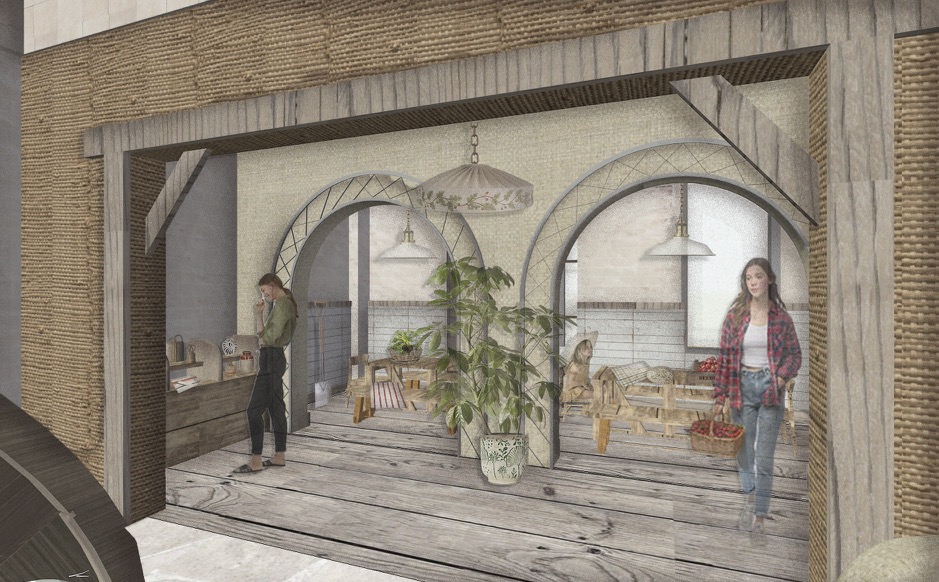
Community Booths – The booth rooms offer flexible function for a more private relaxing experience for users enjoying beverages from the coffee hut. Alternatively they can be transformed into community rooms for learning experiences supporting classes and workshops centred around produce preparation for cooking run by volunteers. This reinforces the ethos of the sight educating users on the bridge between plot and plate so they can continue the practices of sustainable living learnt from their experiences at the site into their own homes. The classes will be fun and engaging allowing hands on tactile learning. Upcoming classes will be advertised. This reinforces the projects focus on community well-being and enjoyment through its layered learning that continues through each space of the site applying to more than one target audience.
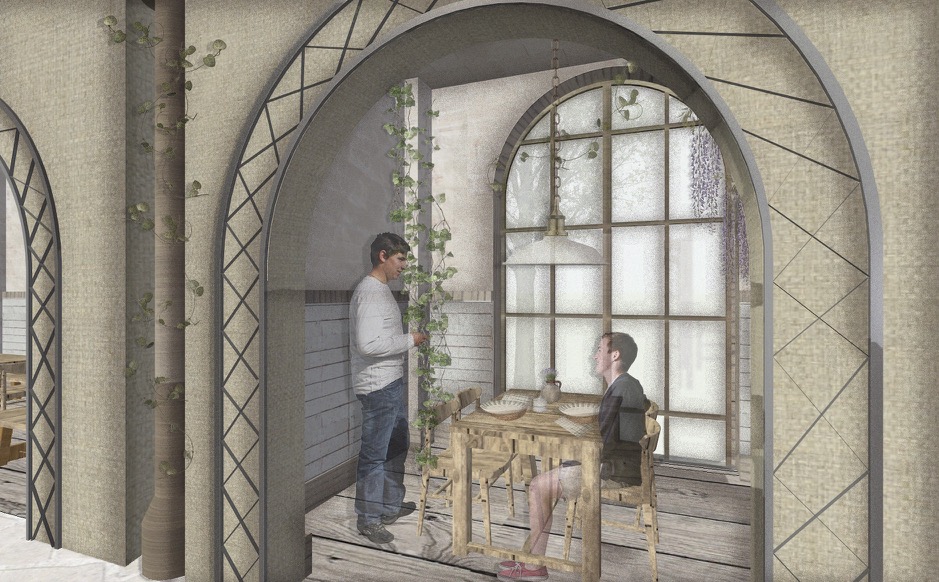
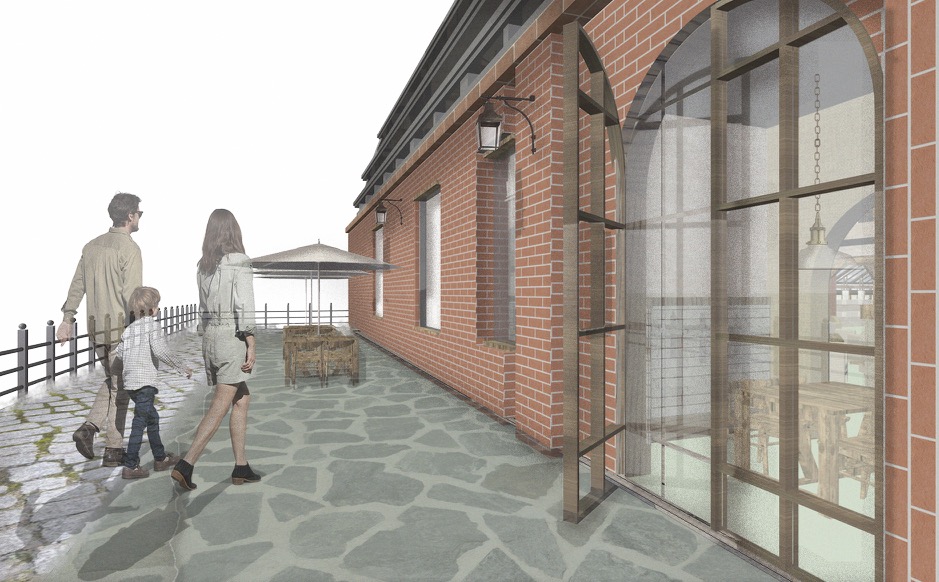
Flexible Booths – The booths provide a more private experience for users without being fully closed off. The metal detailing of the archways mirror the recognisable roof structure linking back to the significance of the historical structure. Some of the booths have flexible doors that open outward allowing the rooms to extend into outdoor seating during the warmer months, This creates a more versatile experience for users who have spent time in the park on a hot day and looking for refreshments outside, This will also be an attractive feature for users approaching the site or passing by through the park. It additionally connect indoor activities to the garden activities strengthening the link between different areas of the site.
Section
Mezzanine Plan
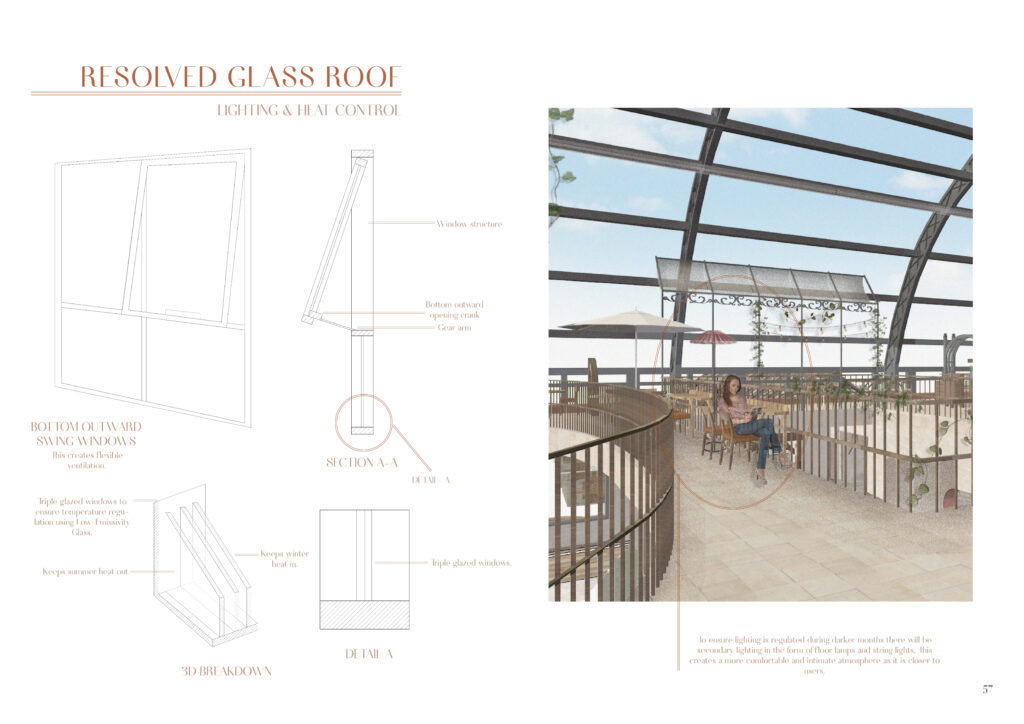
Resolving Issue With Glass Roof
Mezzanine Restaurant
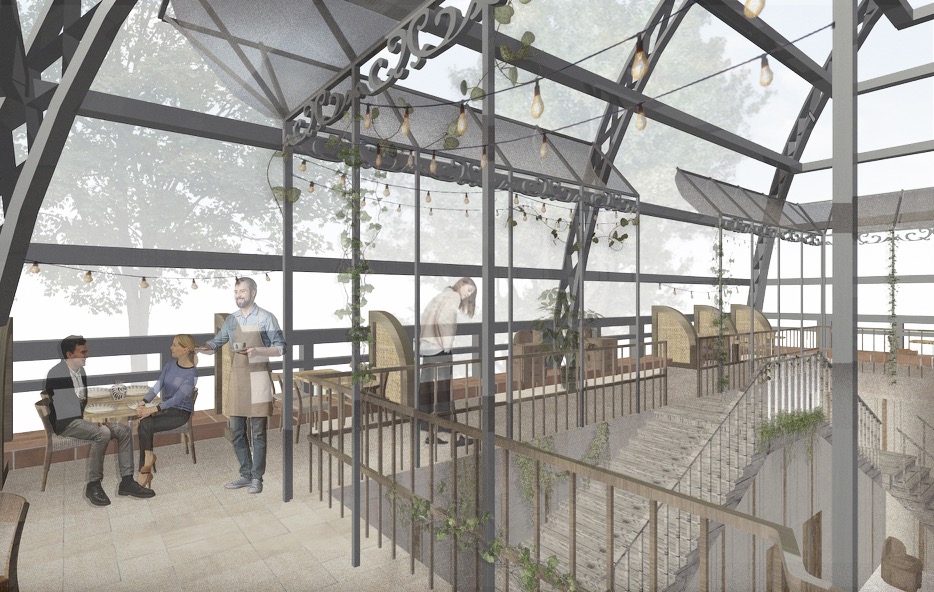
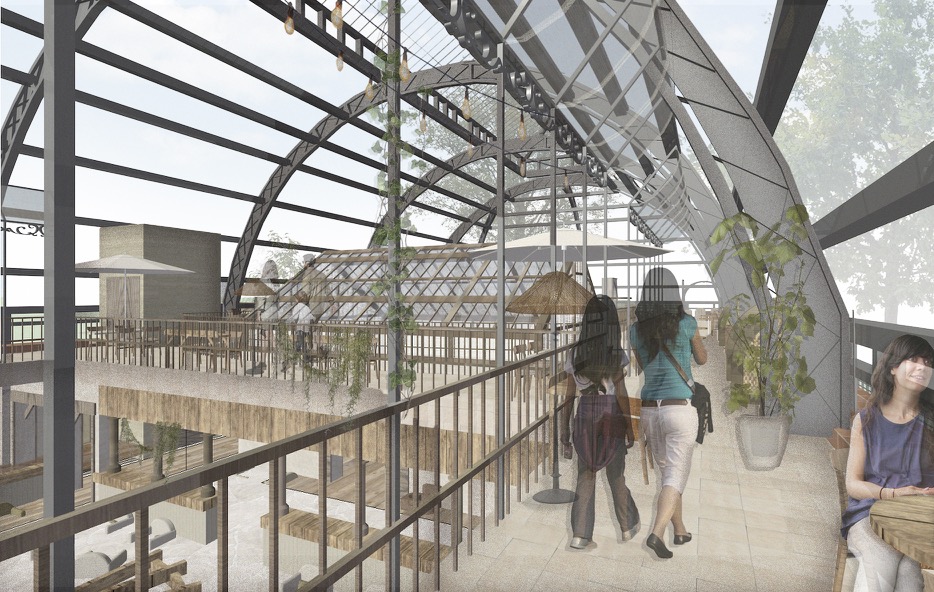
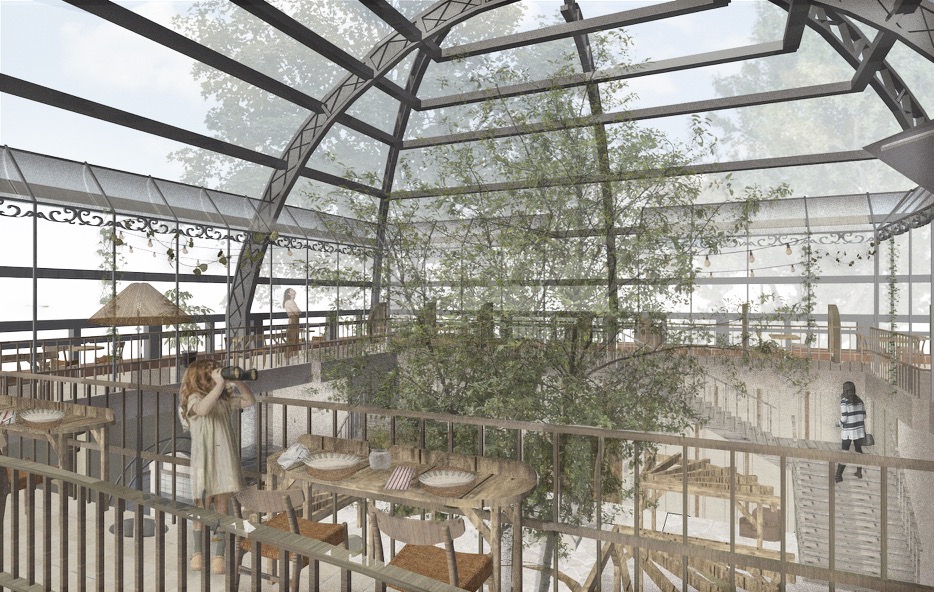
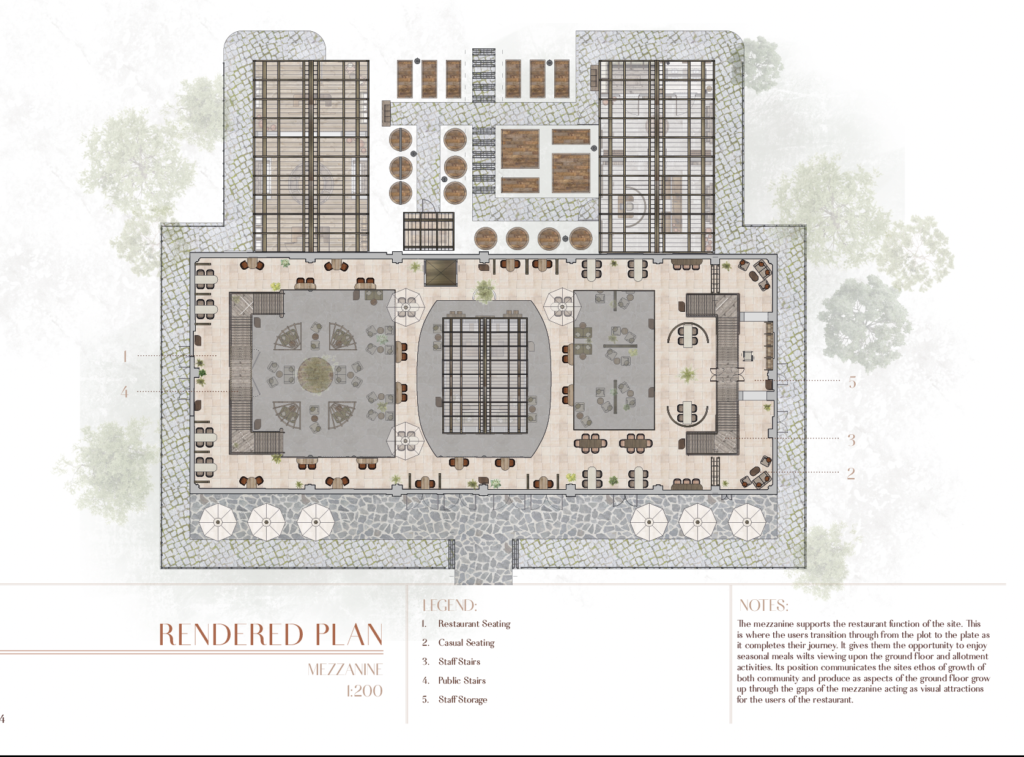
Restaurant Seating – The mezzanine level supports the end of the user journey with the restaurant. It is a social experience where visitors can enjoy seasonal healthy meals made from the produce grown on site. Raffia separators create a natural barrier to create privacy between tables alone side the string lights and plants enforcing a natural grown atmosphere throughout the space. Together these components create a comfortable experience and connection to natural textures for users of the space of their new local dining experience.
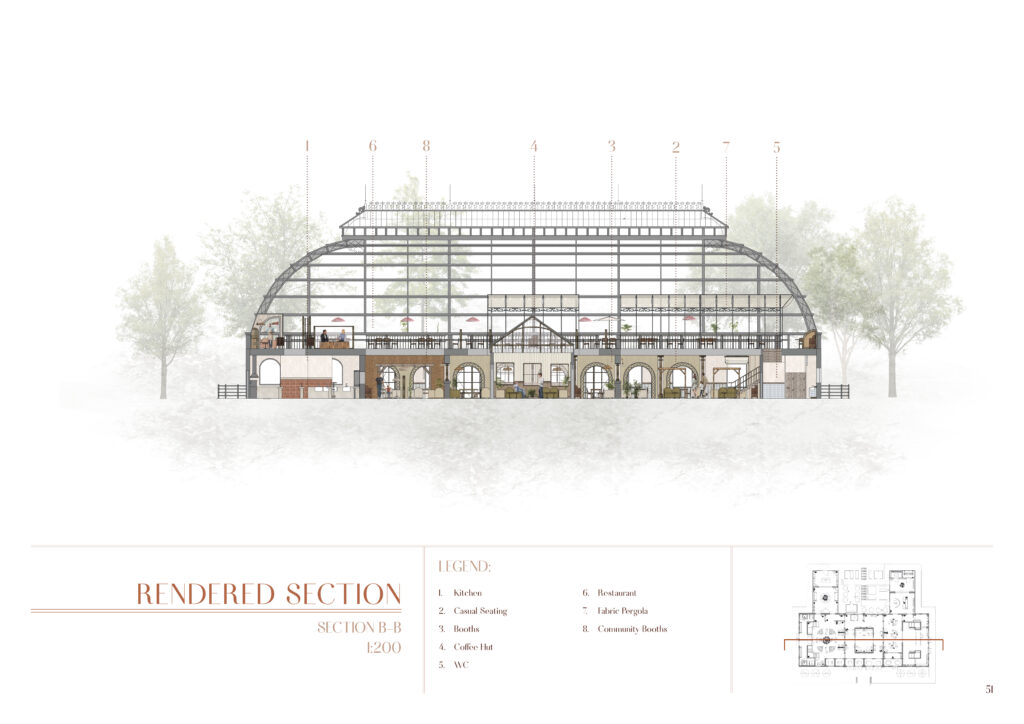
These additional views of the mezzanine display how ground floor features pass up through the mezzanine. The layering of the restaurant upon the casual seating, community activities and allotment below reinforces visually the full cycle of the plot-to-plate journey the users have taken through the space. Users can see the locally grown and prepared food that they are about to enjoy, additionally how their fellow community members have contributed in producing it. This supports community centred activities and ownership of the function of the site. The floor lights provide an intimate, comfortable and warm source of lighting for the restaurant during darker months.