
Katherine Chapman
(She/They)
My practice is autobiographical, rooted in oil painting and expanded through watercolour, drawing media, photography and occasional sculptural or three dimensional elements. I use making as a way to process lived experience and translate it into visually charged narratives that sit between documentation and construction. Much of my work begins with personal reference material such as photographs, screenshots, written notes, and observed details, before developing into images that shift between realism and distortion, using symbol, heightened colour, and altered proportions.
Narrative is central to how I organise and develop work. Rather than treating each piece as a standalone outcome, I build bodies of work through sequences, repetition, and recurring motifs that function like scenes or chapters. Over time, I create an evolving internal mythology where characters and symbols reappear across projects and mediums, allowing separate experiences to speak to each other and form a wider practice. This approach is informed by film, particularly framing, cropping, montage, and the psychological charge of partial visibility. Surrealism is also a continuing influence, not as escapism, but as a way to intensify reality so emotional experience can be made visible without becoming illustrative.
My work is further shaped by experiences of anxiety, depression, and ADHD, particularly the fluctuating cycles of focus, motivation, and emotional intensity associated with dopamine regulation. I am interested in how internal psychological states affect perception, behaviour, and memory, and I often use these experiences as a starting point for image making. Periods of hyperfocus, obsession, overstimulation, exhaustion, and emotional dysregulation influence both the content of the work and the way it is produced, allowing painting to function as a form of reflection and documentation. Rather than separating personal experience from artistic process, I treat these mental and emotional shifts as material that can be translated into visual form.
The body is a persistent site within my practice and a vehicle for exploring intimacy, shame, desire, power, and autonomy. I am interested in how identity is constructed through looking, behaviour, and self image, and how images can hold contradiction without resolving it. I often work through withholding as a formal strategy, using cropping, partial visibility, and redaction to control access and keep the viewer aware of what is missing. These decisions allow an implied narrative to carry tension, rather than spelling everything out.
Material behaviour is integral to the work. Oil paint allows for slow layering, revision, and restraint, while watercolour carries immediacy through staining and bloom, making process visible on the page. Across my practice, I aim to balance intensity with clarity, and emotional specificity with openness. I want the work to invite close looking while resisting fixed interpretation, so the viewer senses what is revealed, what is withheld, and how personal experience can become a shared visual language.
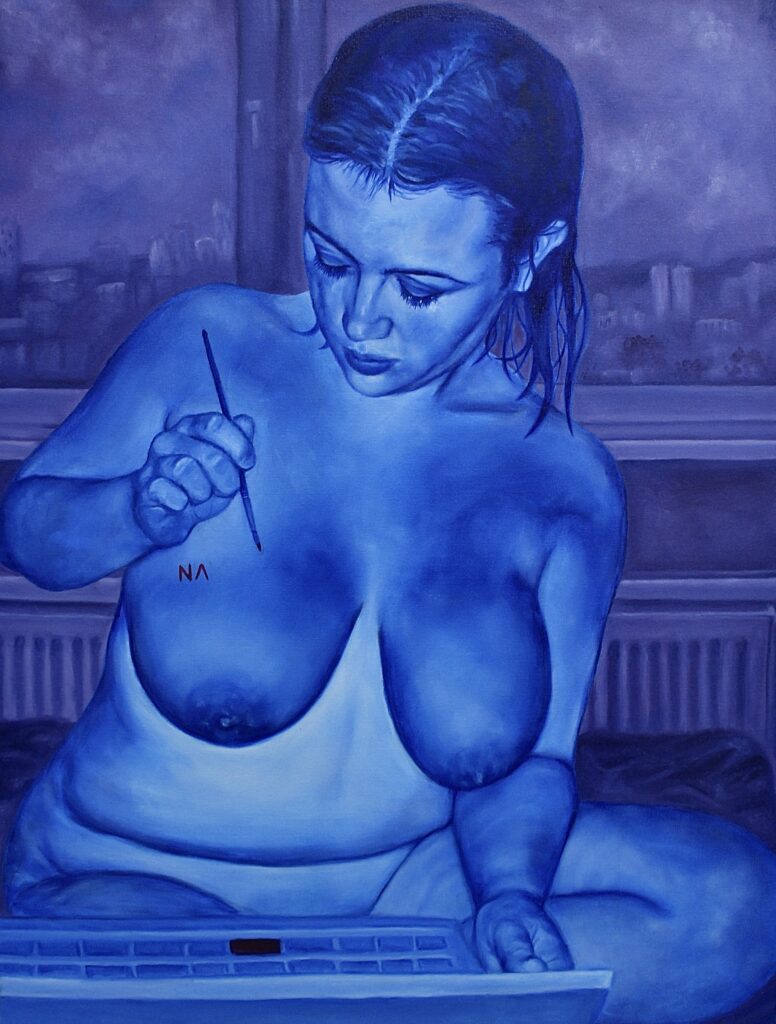
Power Trip
Power Trip began as an exploration of power within sexual intimacy; how control, surrender, desire, and choice move between people through the body. Drawing from autobiographical experiences, the project initially focused on a specific relationship, using painting to examine the tension between vulnerability and agency.
As the work developed, it became less about documenting a relationship and more about documenting the process of thinking about one. Influenced by my experiences of ADHD, the project reflects the dopamine-driven cycles of fixation, repetition, and return that shape how I process emotionally significant experiences. Rather than moving directly from experience to finished painting, the work expands outward through cyanotypes, watercolours, drawings, photographs, and repeated studies. These pieces function as a visual map of thought, recording the continual revisiting, reworking, and reframing of the same subjects.
Digital intervention became increasingly important to the project. The relationship at its centre was largely mediated through phones, dating applications, social media, photographs, and messaging platforms, making digital space inseparable from lived experience. Screenshots, dating app prompts, song lyrics, photographs, fragments of conversation, and emotionally significant objects appear throughout the work as traces of attachment and memory. Rather than treating digital material as secondary documentation, the project acknowledges it as a primary site where contemporary intimacy is formed, performed, archived, and revisited. The accumulation of these digital and physical fragments reflects both the experience of online dating and the way emotionally significant relationships continue to exist through endless acts of looking, scrolling, saving, and returning.
The finished oil paintings act as moments of resolution within this larger network of images. In contrast, the surrounding studies reveal the instability of memory, desire, and perception, showing how meaning shifts through repetition. Power Trip therefore became not only an investigation into power dynamics within intimacy, but also an exploration of how attraction, obsession, and emotional intensity are processed through image-making in an increasingly digital world.
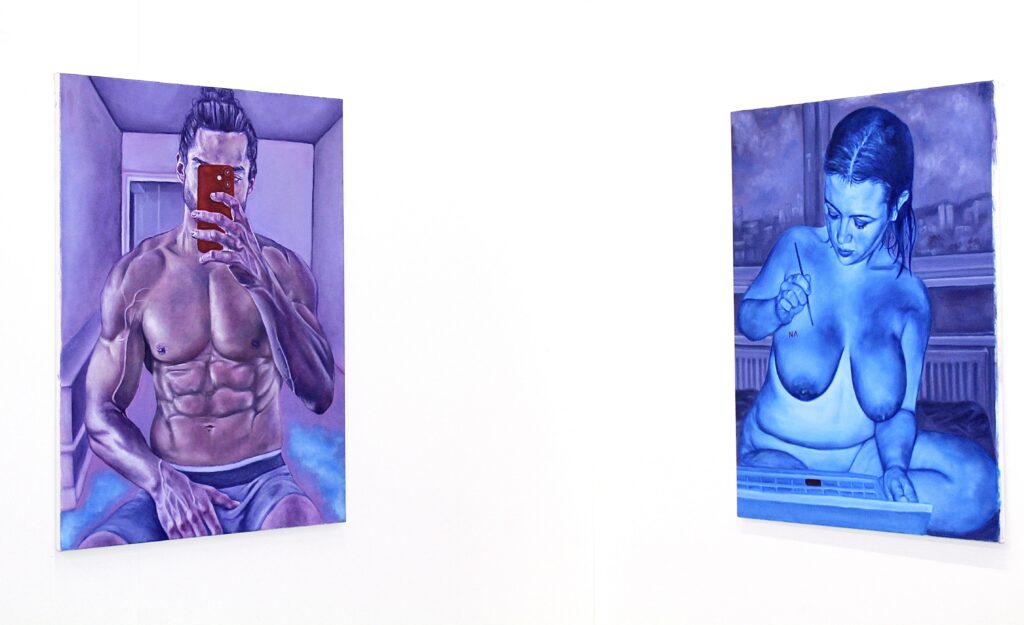
Oil on canvas, 60x80cm, 2025
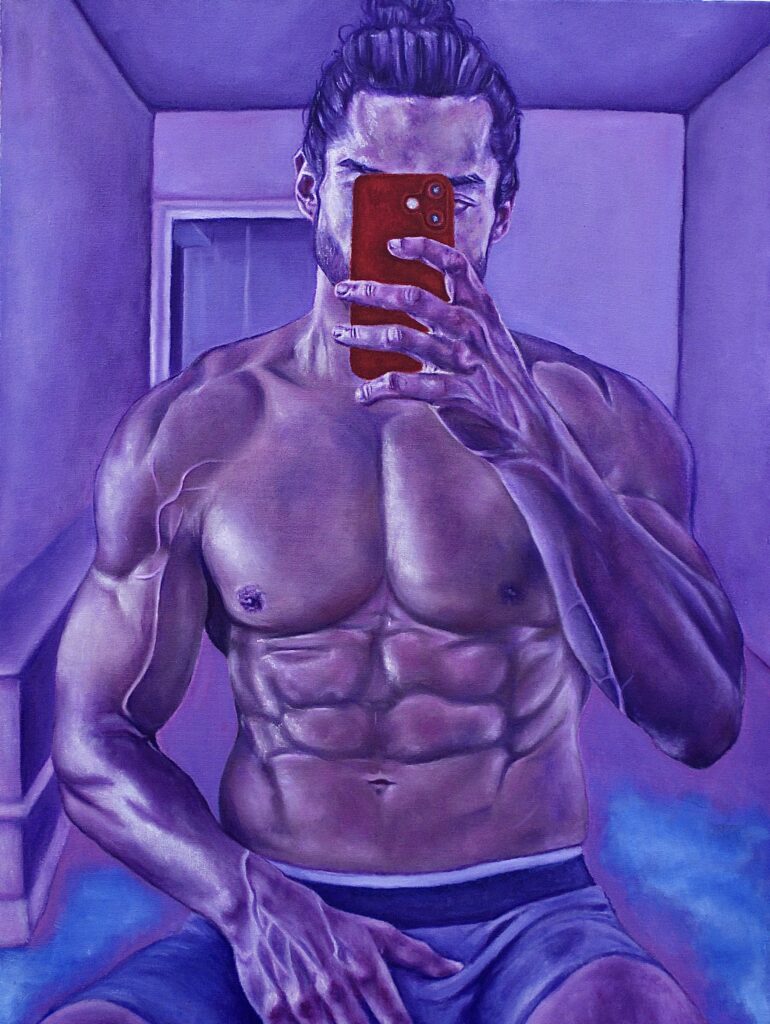
Oil on canvas, 60x80cm, 2026
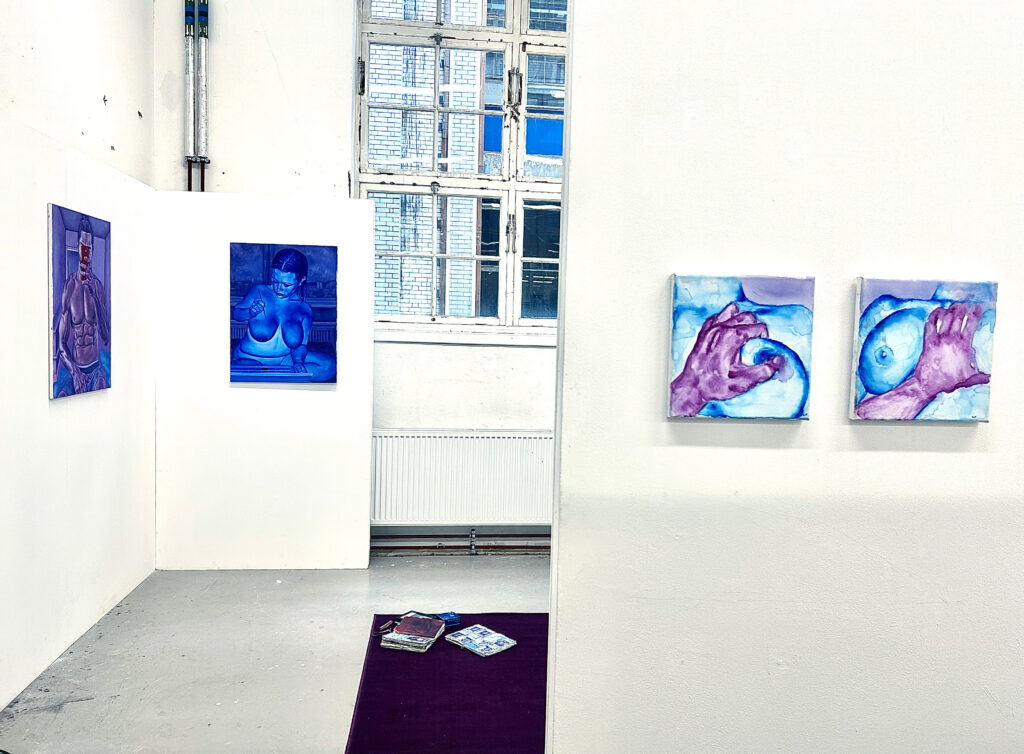
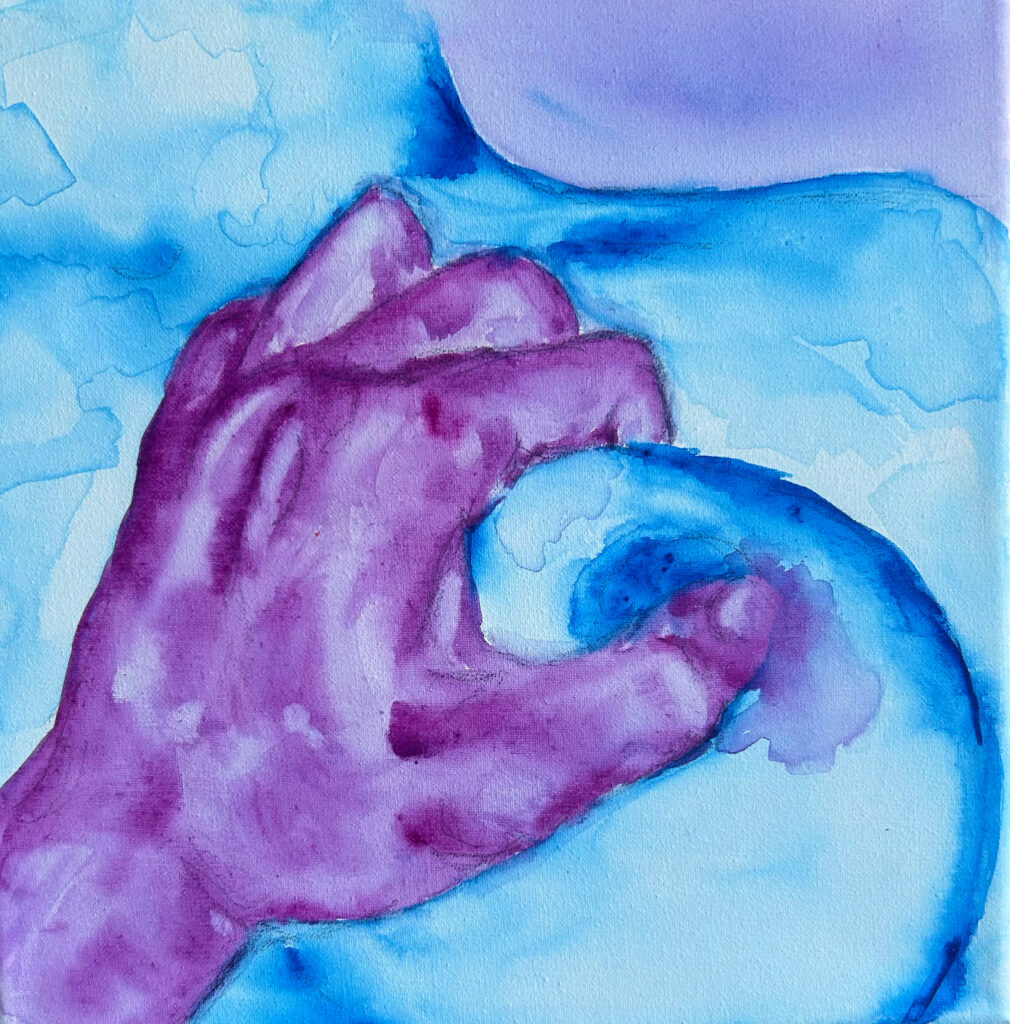
Watercolour on canvas, 20x20cm, 2025
For Sale: Price on Request
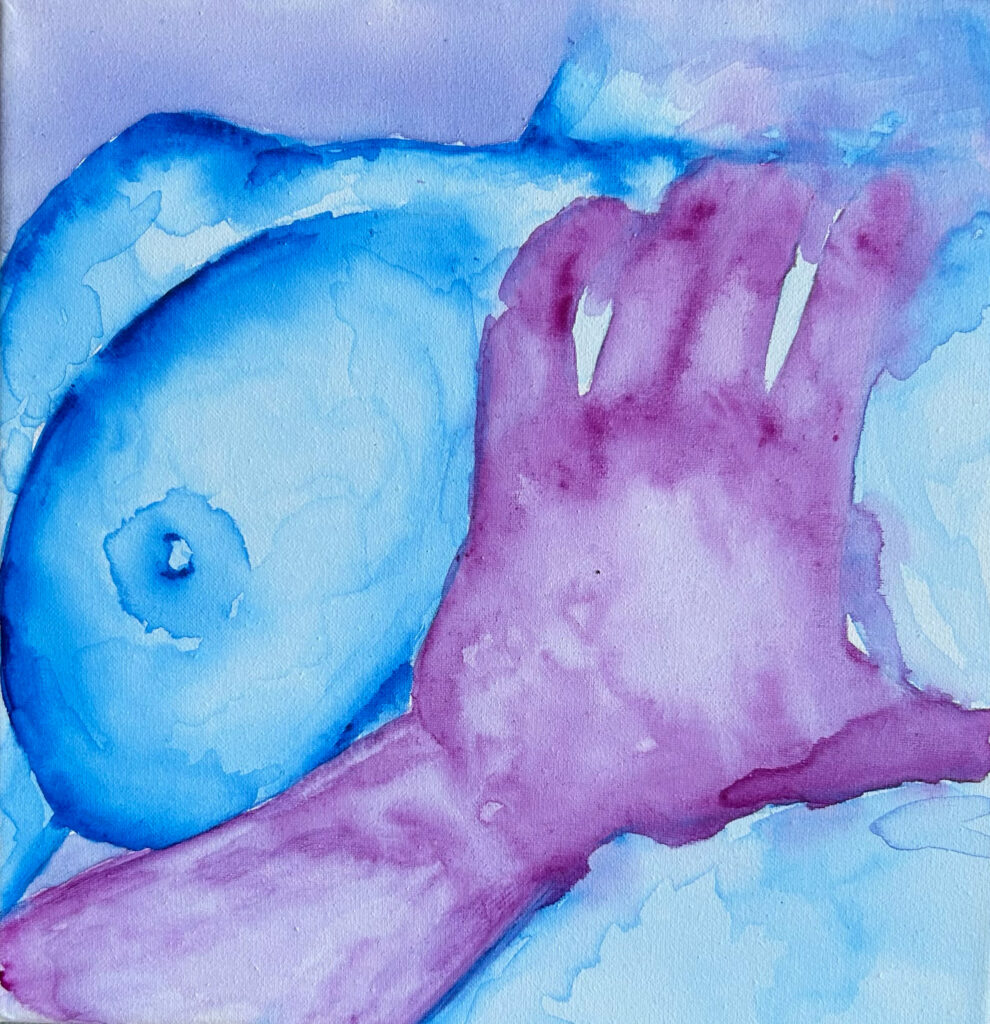
Watercolour on canvas, 20x20cm, 2025
For Sale: Price on Request
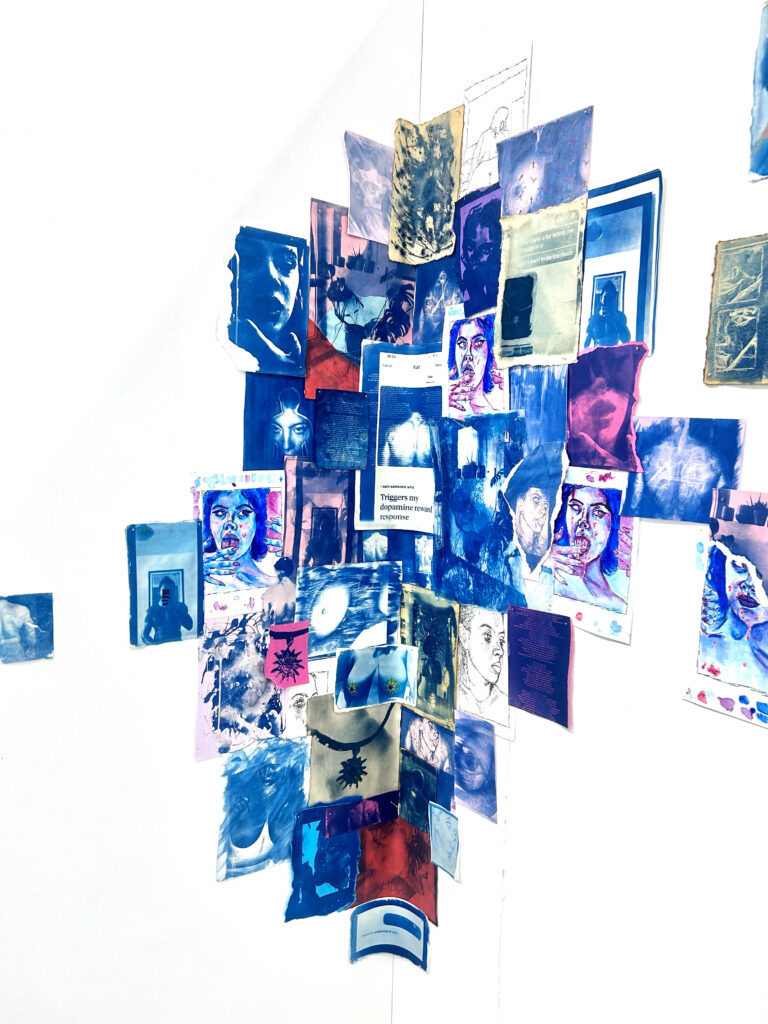
Series of cyanotypes, watercolours and pen drawings, mixed sizes and paper type, 2026
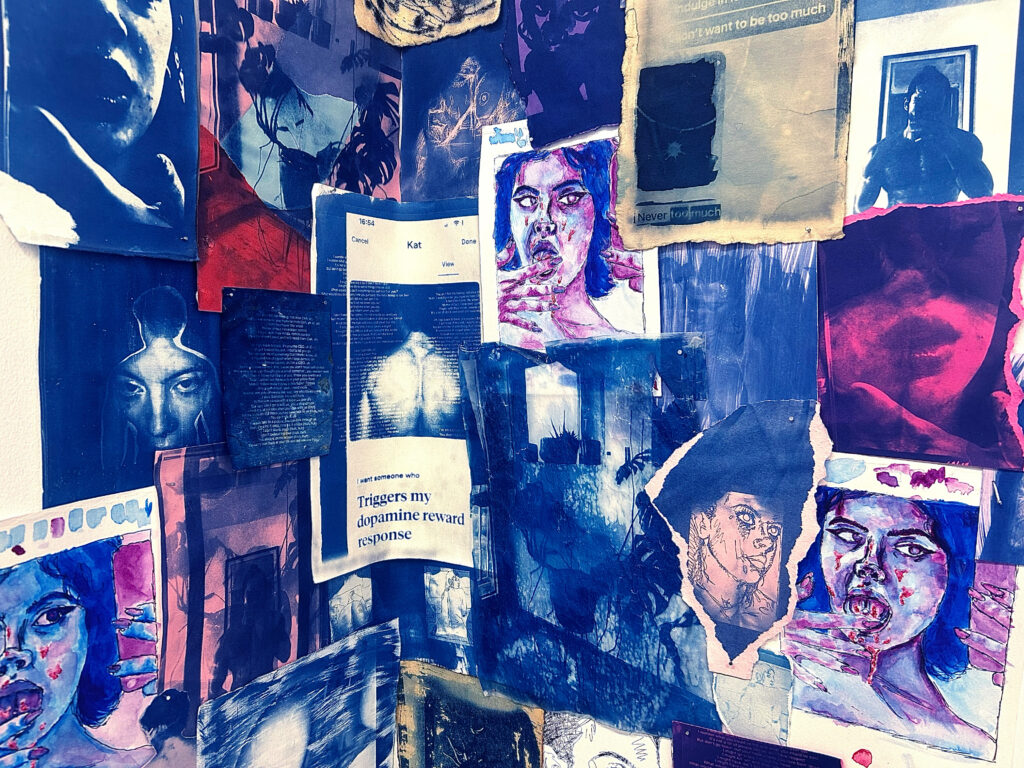
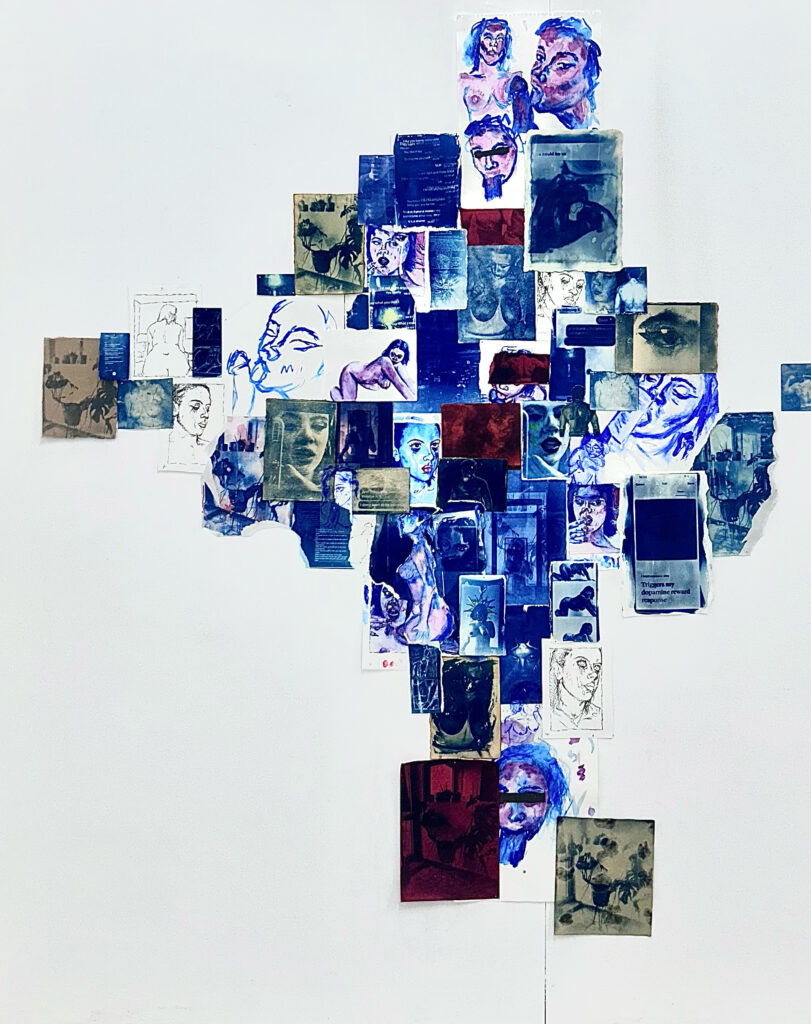
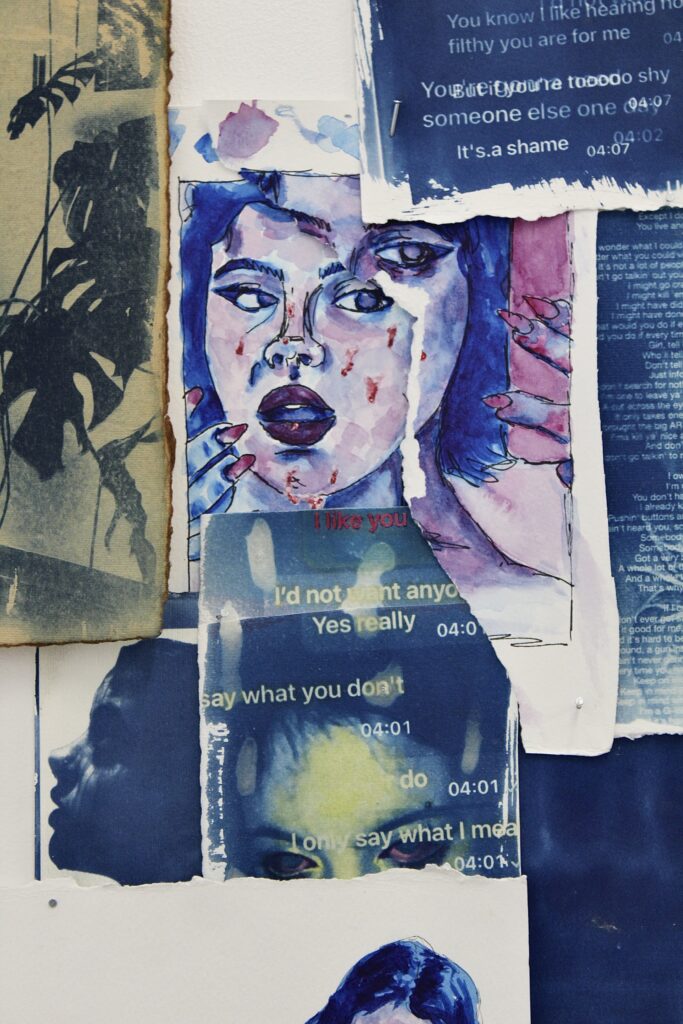
Watercolour, cyanotypes and oil on cyanotype print, watercolour paper, mixed sizes, 2026
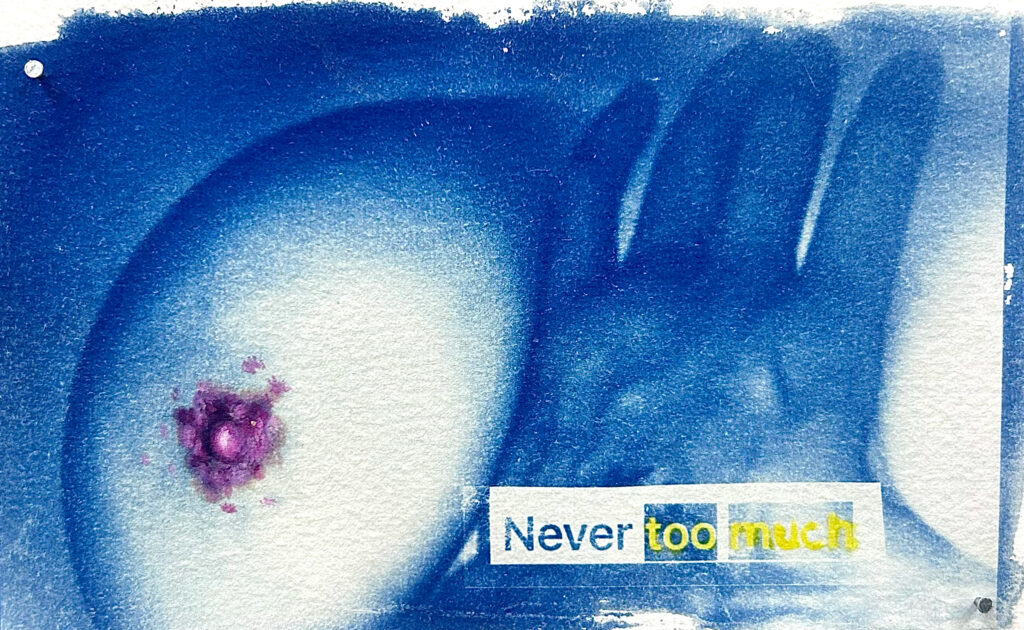
Oil on cyanotype printed on cotton paper, A5, 2026
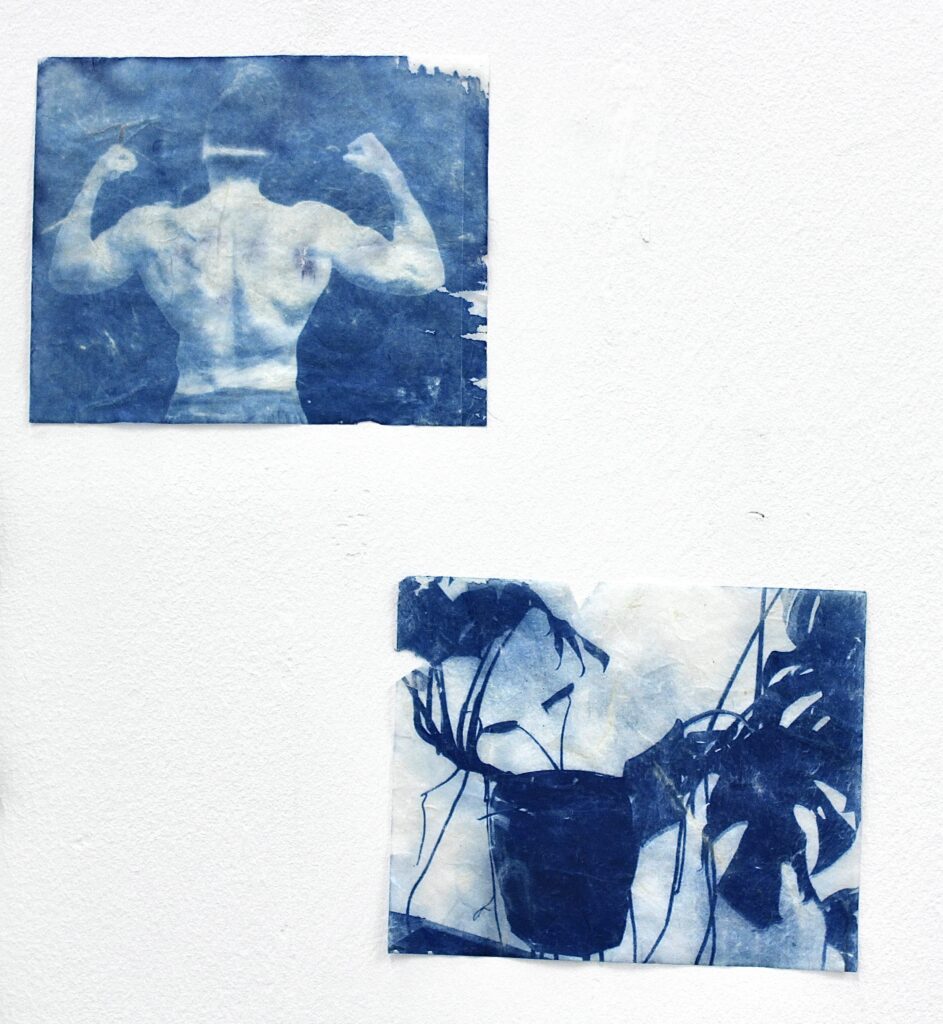
Cyanotypes on tissue paper, 2026
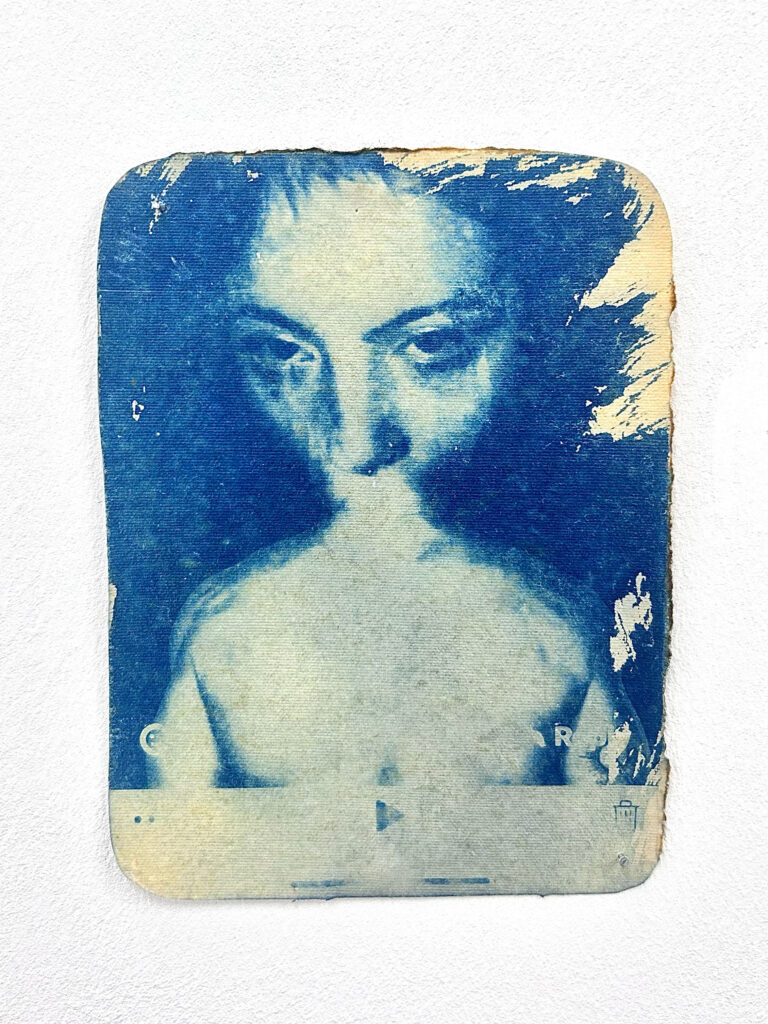
Cyanotype on cotton paper, A5, 2026
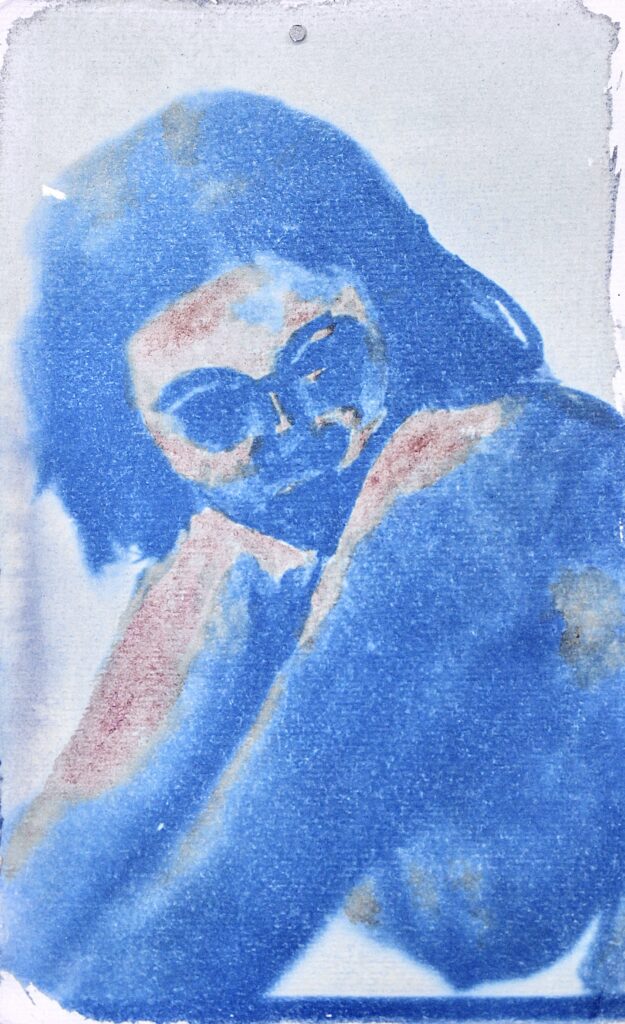
Menstrual blood painted cyanotype on cotton paper, A5, 2026
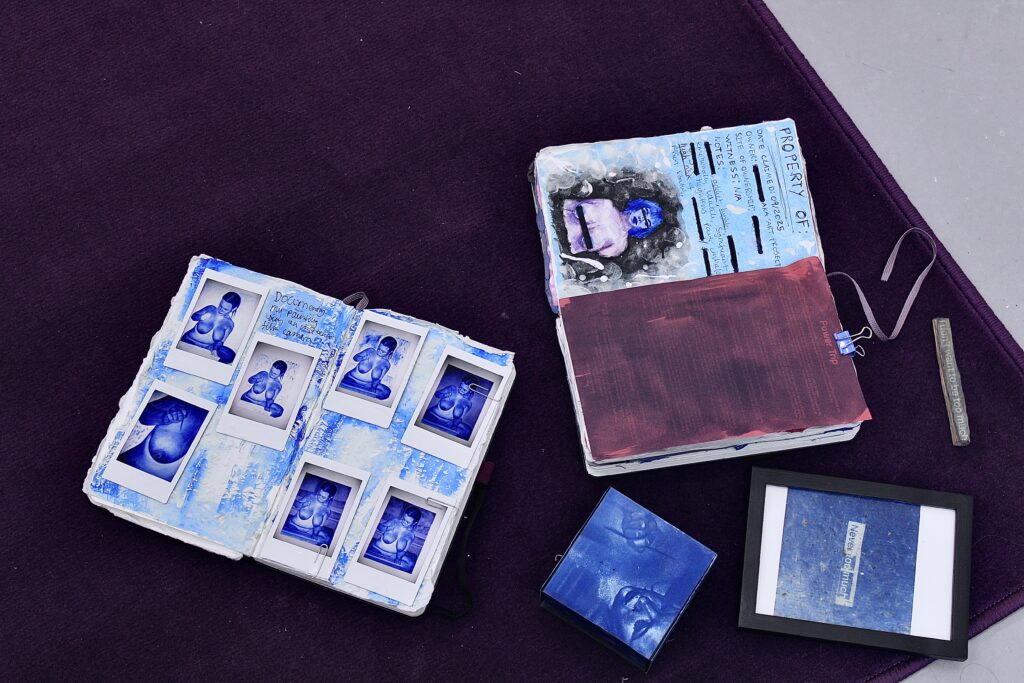
Sketchbooks, jewellery box with printed cyanotypes on coloured paper, cyanotype on plant pressed paper in frame and cyanotype printed on wooden stick, 2026