

Kimberley Coyne
(she/her)
Kimberley Coyne is an interior and spatial designer focused on adaptive reuse, hospitality and experiential environments. Her work explores how atmosphere, movement and materiality shape the way people interact with space, combining contemporary interventions with existing architectural character.
Her final year project, The Alexander, reimagines the Category A-listed Egyptian Halls by Alexander “Greek” Thomson as a hybrid cultural destination integrating galleries, immersive exhibition spaces and an ap’Art Hotel within Glasgow city centre. The proposal balances cultural programming with hospitality, creating a layered public experience that moves between exhibition, social interaction and residence.
With an interest in the revitalisation of city-centre environments, Kimberley’s work explores how hospitality, culture and public interaction can contribute to the regeneration of existing buildings and urban spaces.
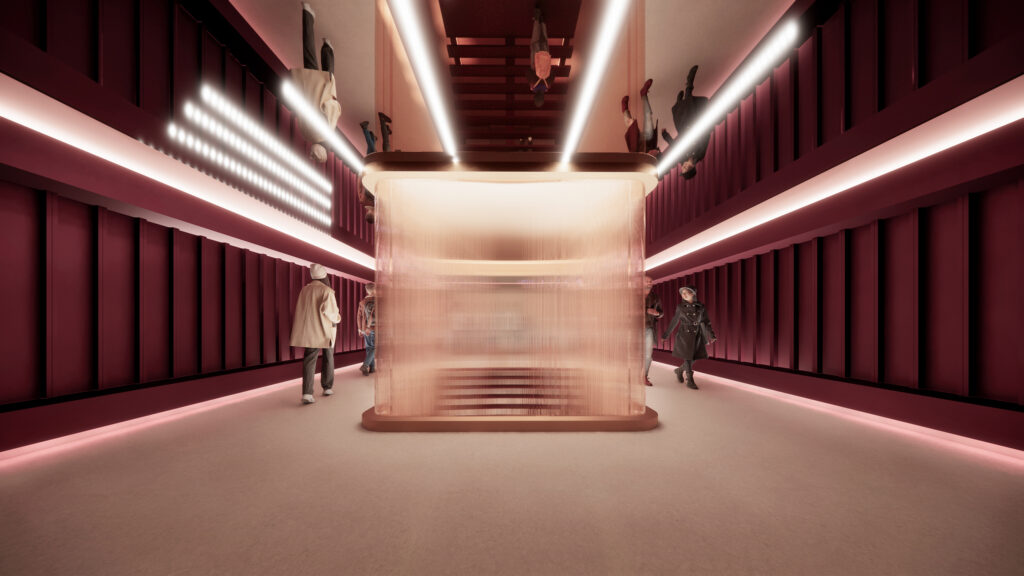
The Alexander
Contemporary Galleries & ap’Art Hotel
The Alexander reimagines Glasgow’s historic Egyptian Halls as a hybrid cultural destination integrating contemporary galleries, immersive exhibition spaces and an ap’Art Hotel within the city centre.
The proposal combines hospitality, culture and public interaction within a single layered environment, balancing public exhibition spaces with short-stay residential accommodation.
Through a sequence of interconnected programmes, visitors move between gallery spaces, social environments and private residence, creating a continuous spatial experience throughout the building.
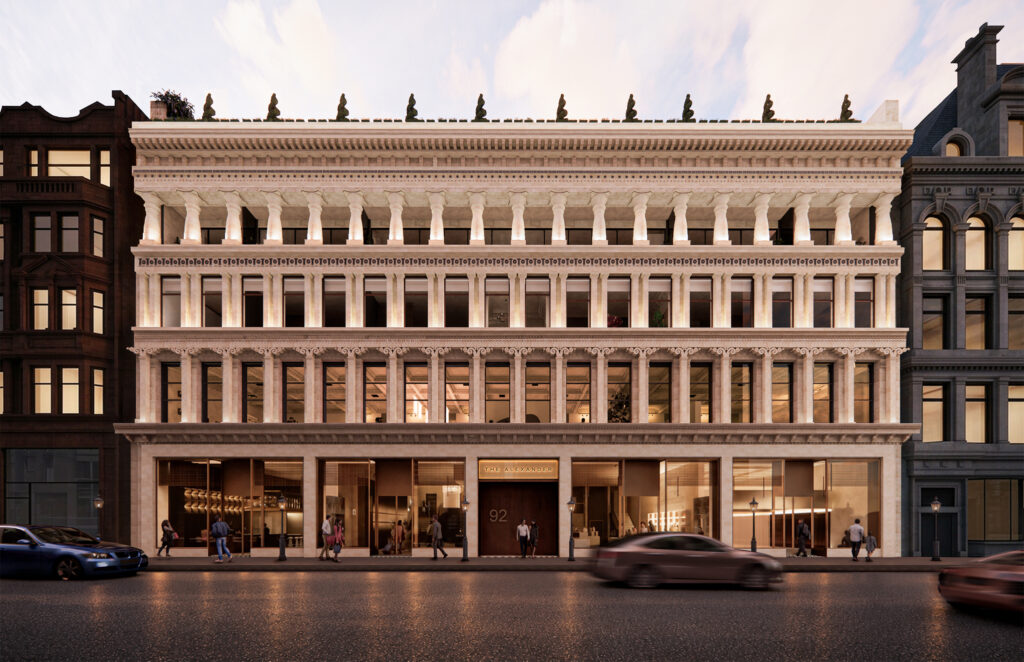
Reinterpreted public frontage integrating hospitality, exhibition and residential programmes within the existing Category A-listed façade.
▼ Spatial Concept
The Alexander
The project explores the contrast between the historic architectural shell of Egyptian Halls and contemporary spatial interventions designed to support exhibition, hospitality and immersive public experience. Light, reflection, material contrast and controlled atmosphere are used to create a continuous transition between gallery, social and residential environments.
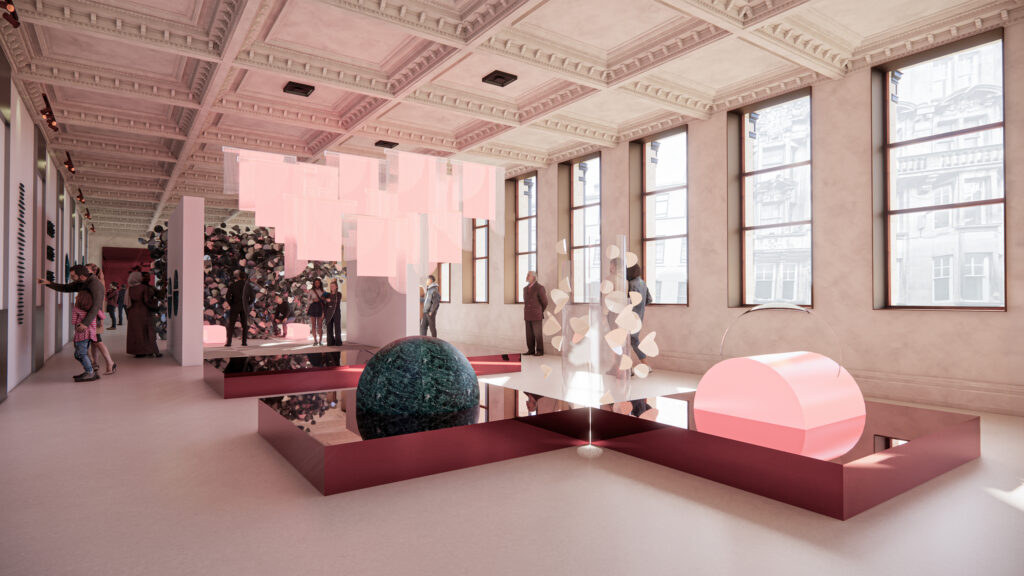
Flexible exhibition space designed to support rotating installations and changing curatorial layouts organised around an integrated ceiling grid.
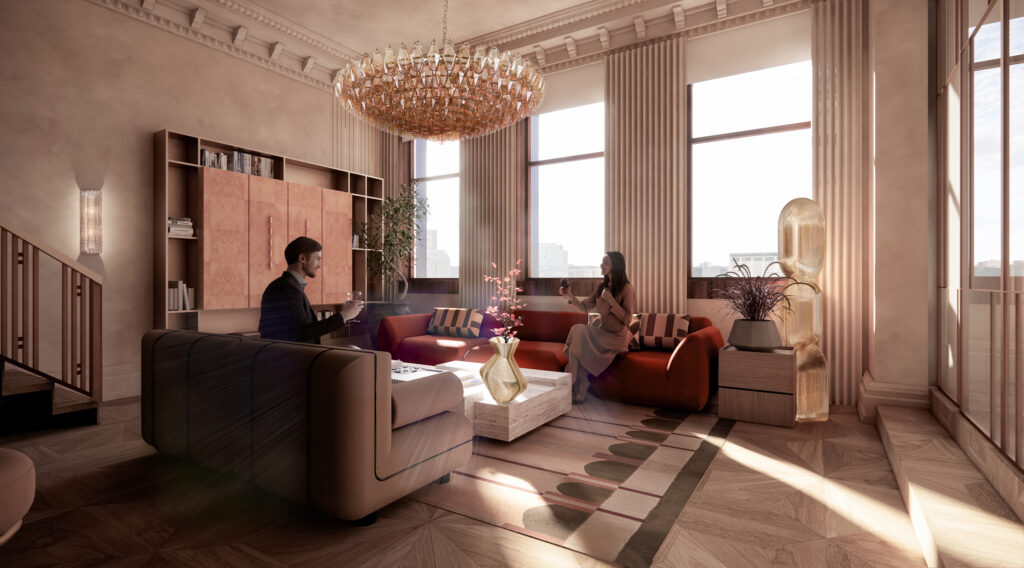
Residential hospitality space combining restored architectural detailing with contemporary furnishings, warm material tones and integrated atmospheric lighting.
▼ Site & Context
The Alexander
The Alexander is located within Glasgow city centre at the intersection of Union Street and Gordon Street, adjacent to Central Station and positioned within the city’s commercial “Golden Z” corridor. The project responds to the changing role of the city centre by introducing a mixed-use cultural and hospitality destination within the existing Egyptian Halls building, supporting increased activity, public engagement and long-term urban regeneration.
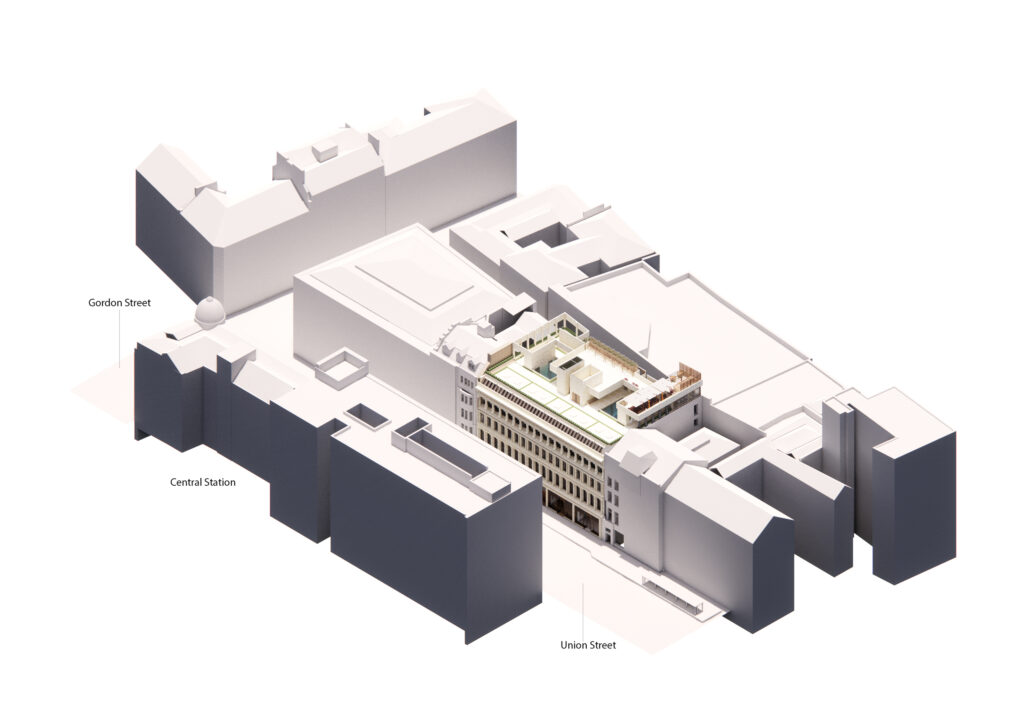
Category A-listed Egyptian Halls within the surrounding urban block between Union Street and Gordon Street, adjacent to Glasgow Central Station.
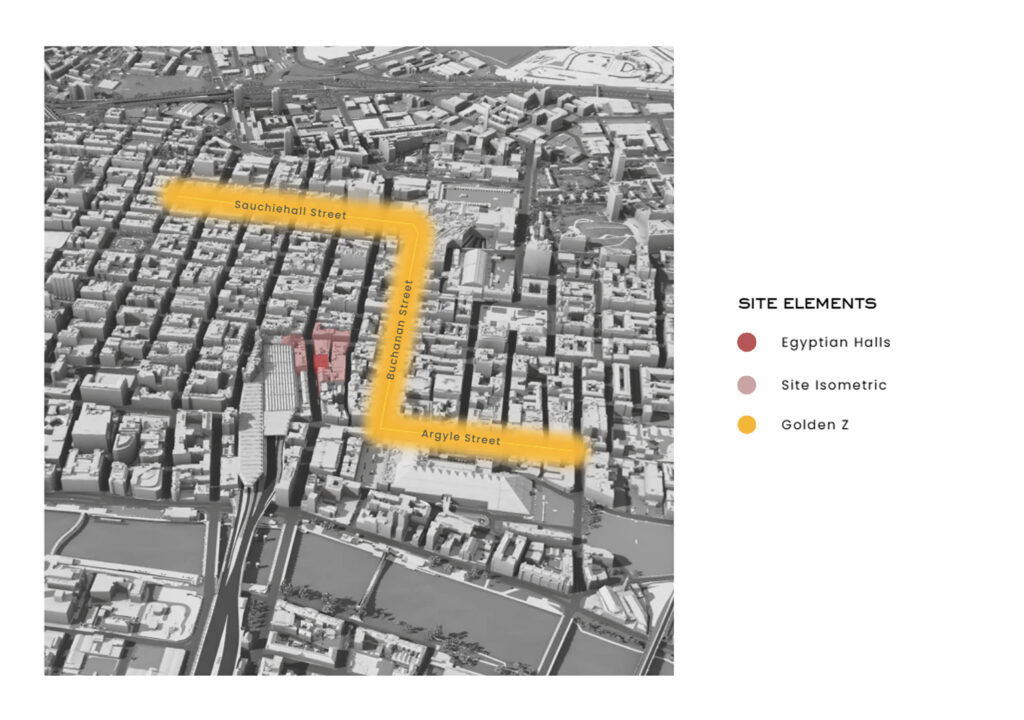
Project location within Glasgow’s primary commercial and movement corridor connecting Sauchiehall Street, Buchanan Street and Argyle Street.
▼ Building Overview
The Alexander
The proposal reorganises Egyptian Halls as a mixed-use cultural destination combining gallery, hospitality and residential programmes within a single structure. Public functions activate the lower levels, immersive experiences occupy the basement, and private accommodation is positioned above, culminating in a shared roof terrace and upper deck overlooking Glasgow city centre.
Movement through the building is organised through programme-specific entry points and a clear vertical hierarchy, allowing multiple user groups to navigate the building simultaneously while maintaining spatial connection between public and private areas.
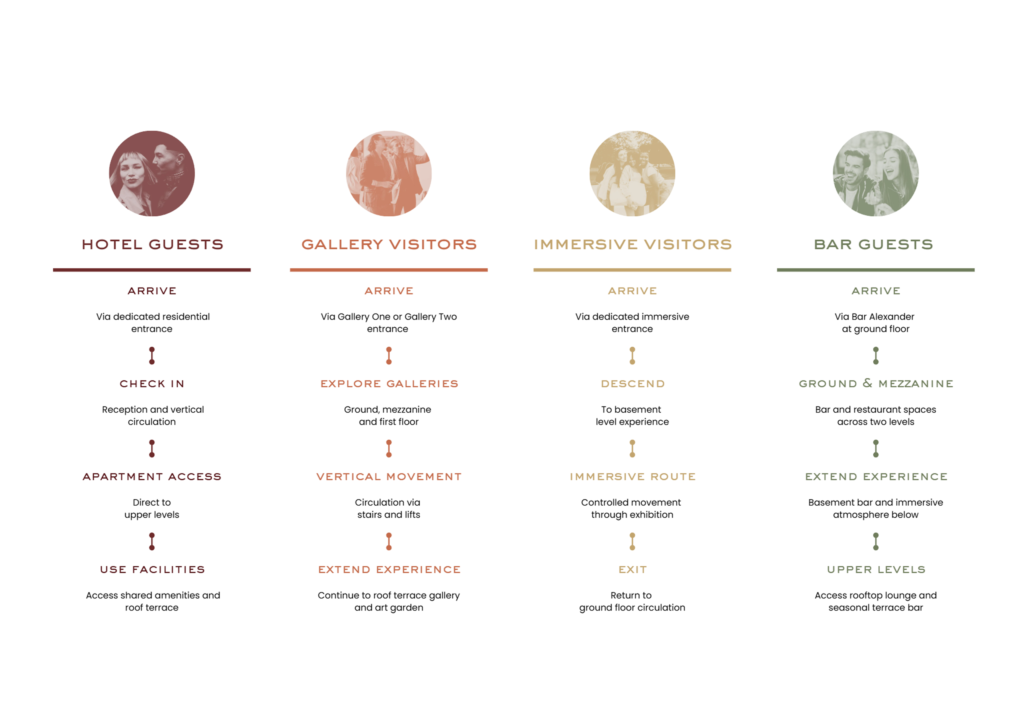
Programme-specific circulation strategy illustrating how hotel guests, gallery visitors, immersive visitors and hospitality users move through the building via dedicated entrances, vertical circulation routes and shared public spaces.
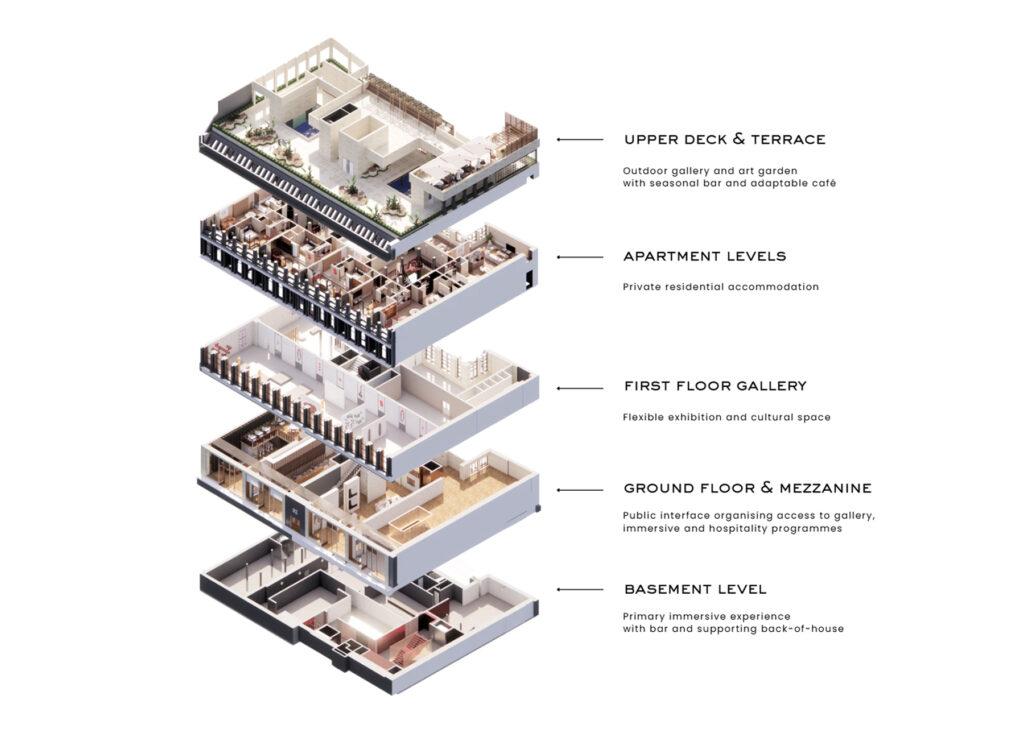
Exploded isometric illustrating the organisation of public, cultural and residential programmes throughout the building, from immersive basement experiences to rooftop hospitality and shared terrace spaces.
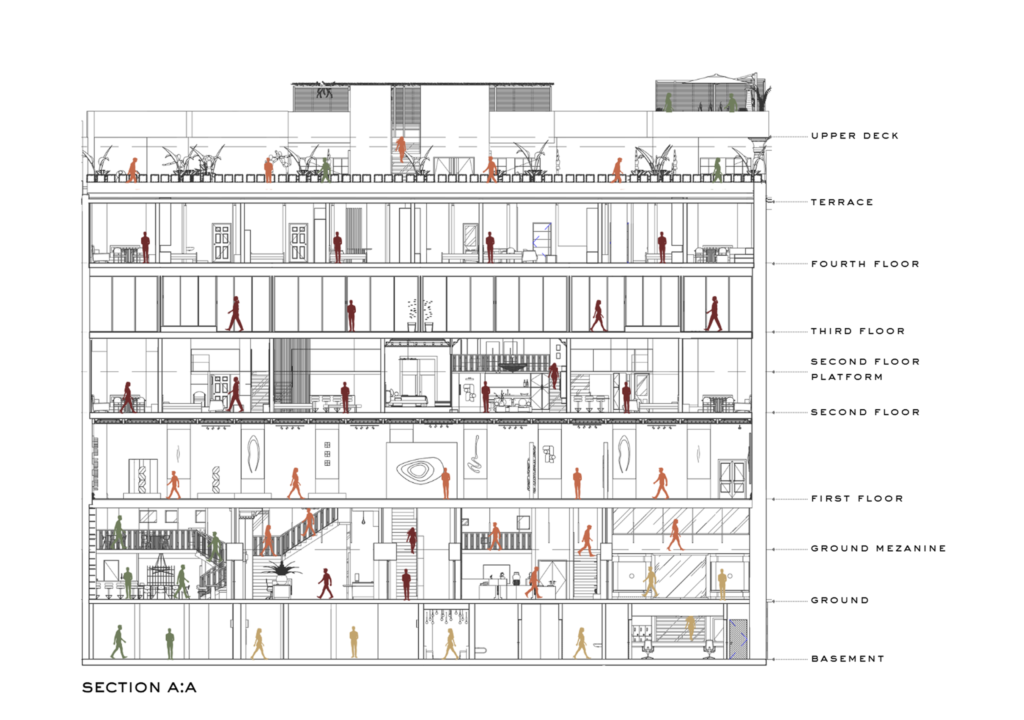
Sectional study illustrating the relationship between programme, circulation and vertical hierarchy across the building, highlighting how different user groups interact with public, cultural and residential spaces.
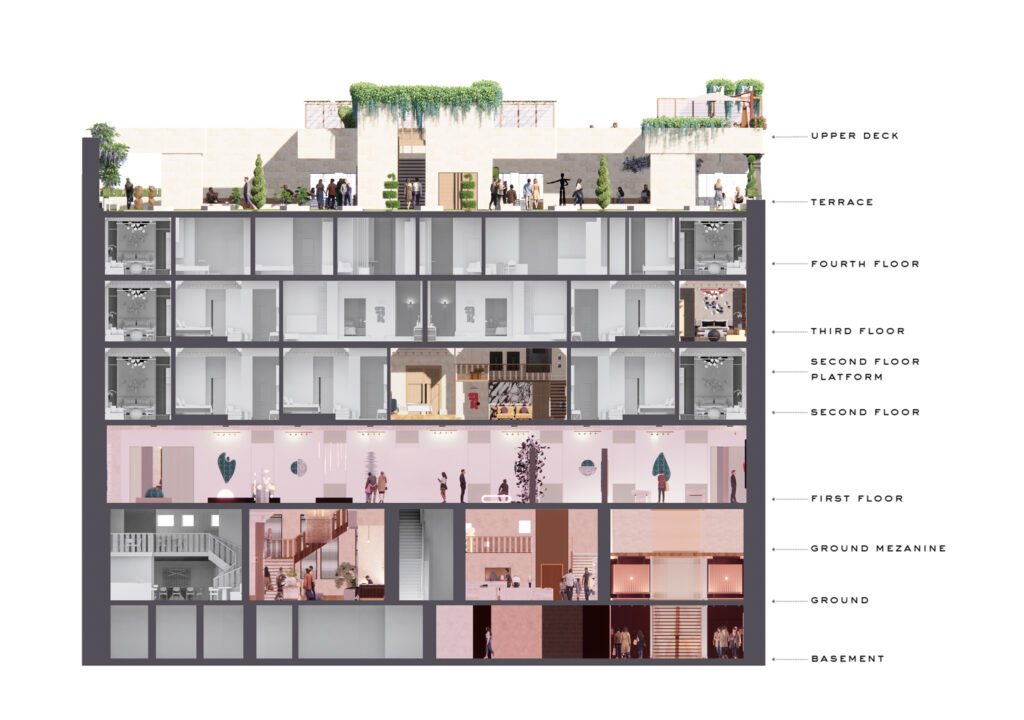
Rendered building section illustrating the relationship between gallery, hospitality, immersive and residential programmes throughout the proposal. Highlighted spaces indicate key interior environments explored within the project.