
Laura Mameri
(she/her)
IMPACT*
The system rewards those who know what to say. Say the right thing and you might get a referral. Say the wrong thing and you leave with nothing but a suggestion to try paracetamol. There are buzzwords that open doors and buzzwords that close them. Women and girls are systemically under-treated for pain. This is the pain gap, a documented, measurable failure of healthcare systems to take female pain seriously.
IMPACT* helps patients communicate their pain clearly the first time, reducing the need to “find the right words” and accelerating access to appropriate care. By combining guided prompts, proactive conversation support, and an expanded visual vocabulary, IMPACT* translates subjective pain into structured, clinically useful insights.
Designed for women, made for everyone.
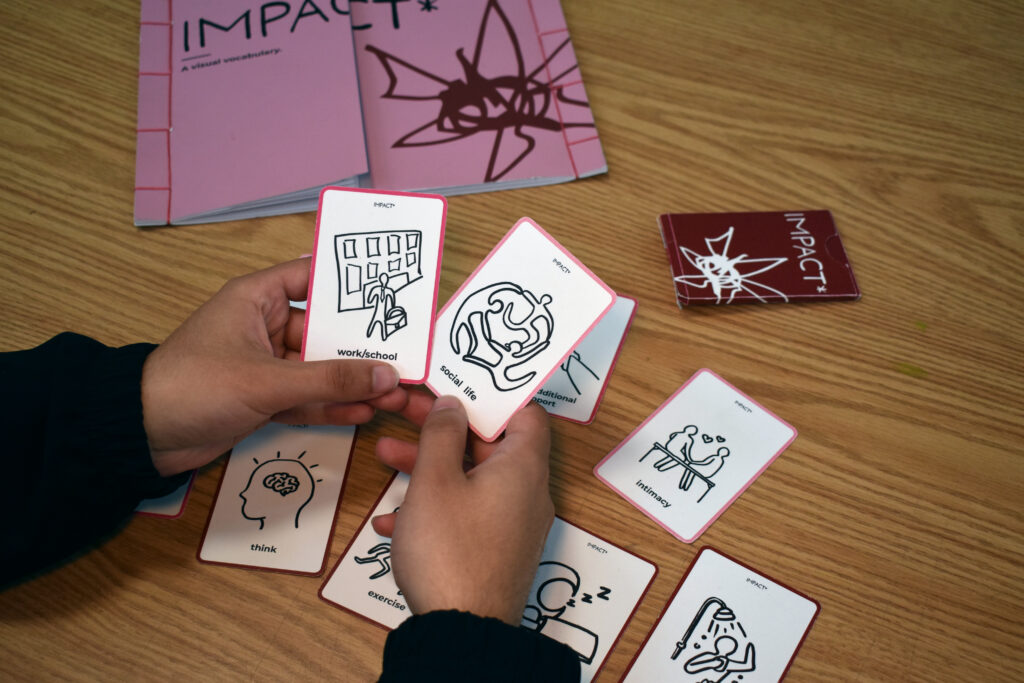
A visual vocabulary book guides patients through each region of the body to recognise patterns, prompting questions about relationships between symptoms rather than individual complaints. Paired with a card system, pain becomes legible through its consequences, the activities stopped, the relationships strained, the days lost; Building a better understanding of severity, through its impact.
IMPACT* does not provide answers. It provides the conditions for better questions.
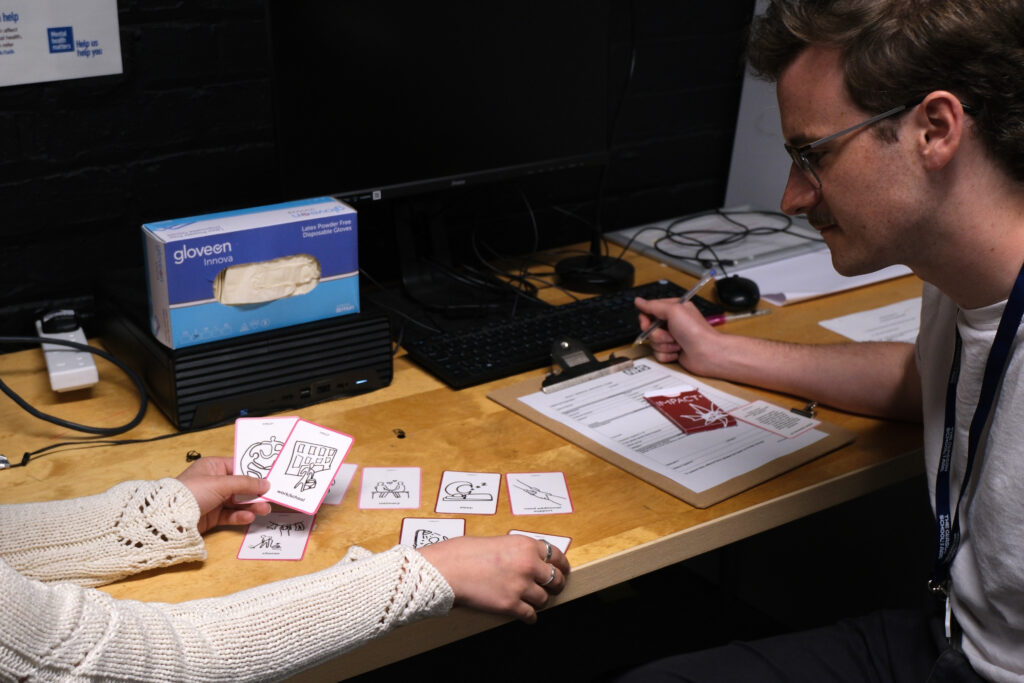
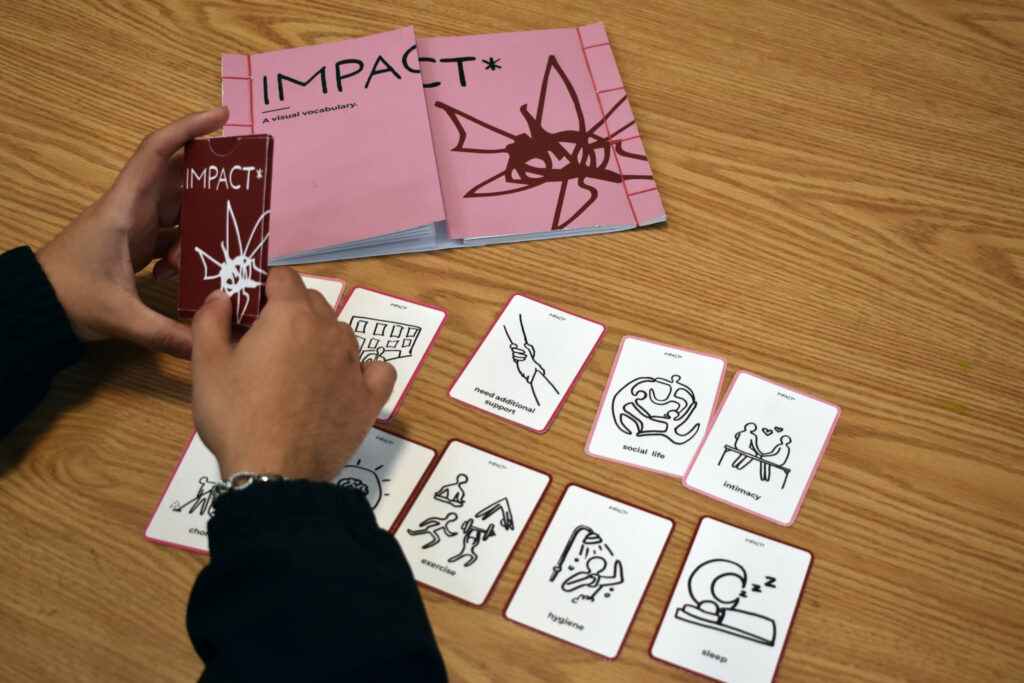
A patient saying “I’m missing school” tells a you more than “It’s an 8 out of 10.” Pain becomes legible when it is expressed through its consequences: the activities stopped, the relationships strained, the days lost. Through understanding impact we can express the severity of pain more effectively. Open up the conversation about pain with IMPACT* Present the patient with the IMPACT* cards and allow them to show you which aspects of their life have been affected due to their pain. No rehearsals needed.
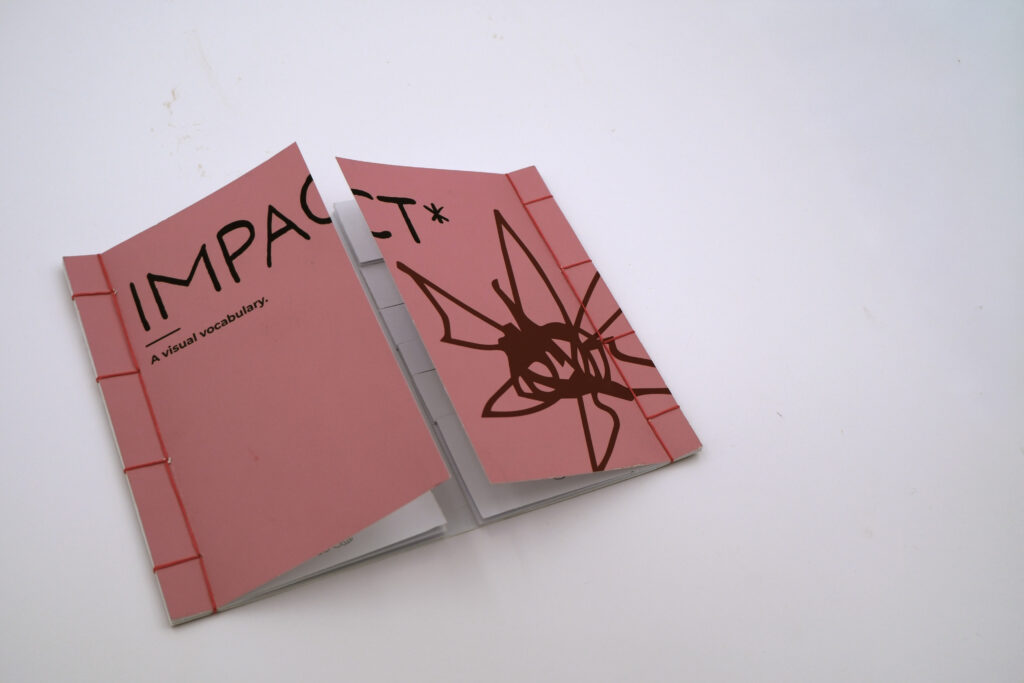
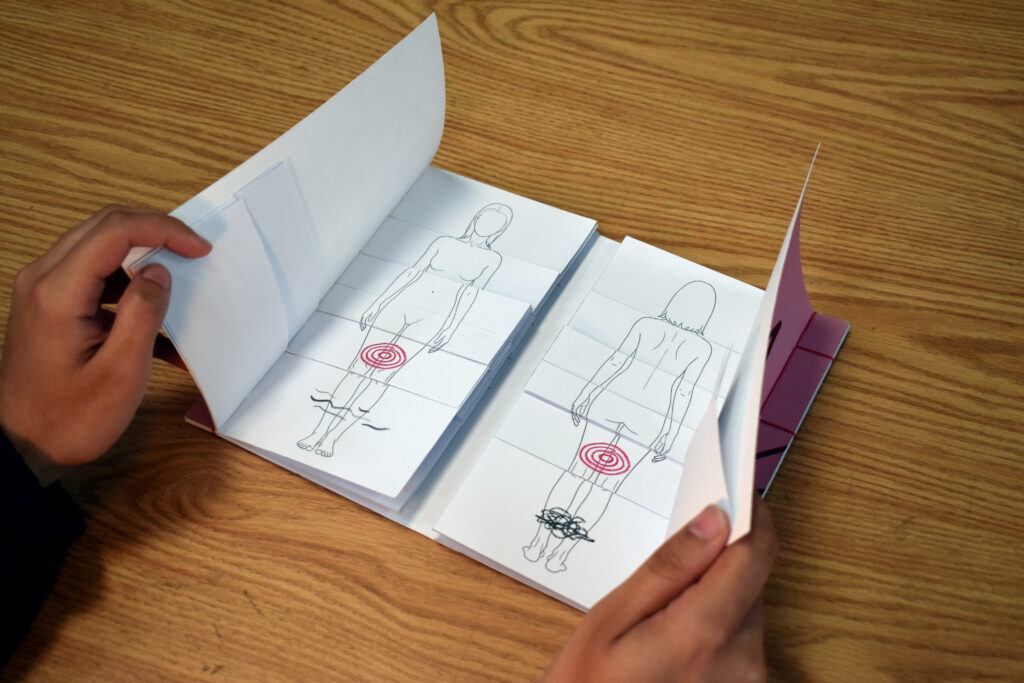
The pain flipbook opens up the consultation by making visible what is usually left unspoken. By mapping pain quality and location across the whole body simultaneously, it allows a clinician to recognise patterns and connections. A patient may mention a headache in passing and pelvic pain as the main complaint, without ever connecting the two. The flip-book shows both at once, prompting the clinician to ask not just about individual symptoms but about relationships between them. It is these questions; does the pain in your back always come with the pelvic pain, does the headache arrive before or after? that draw out the richer, more clinically useful responses. Simultaneously, the abstract visual language creates distance from the discomfort of describing certain pain directly. Symptoms in areas that feel taboo or embarrassing to name aloud, such as bowel pain, or pain during sex, can be indicated through a mark on a body region without requiring the patient to find the words for something they may never have said out loud before.
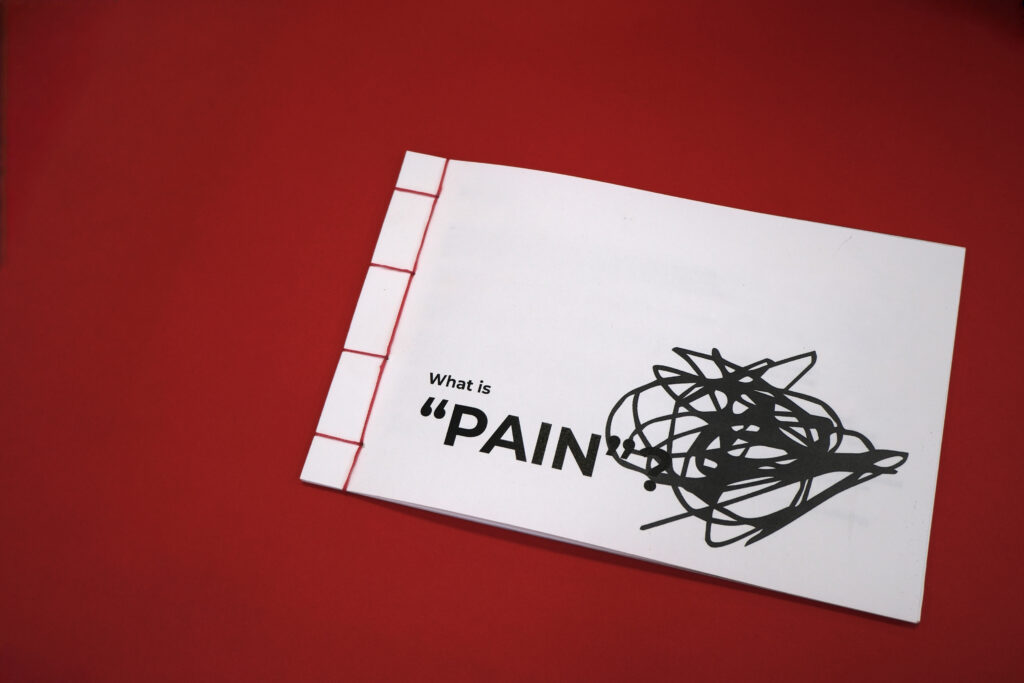
Book created using co-design where women drew their pain.
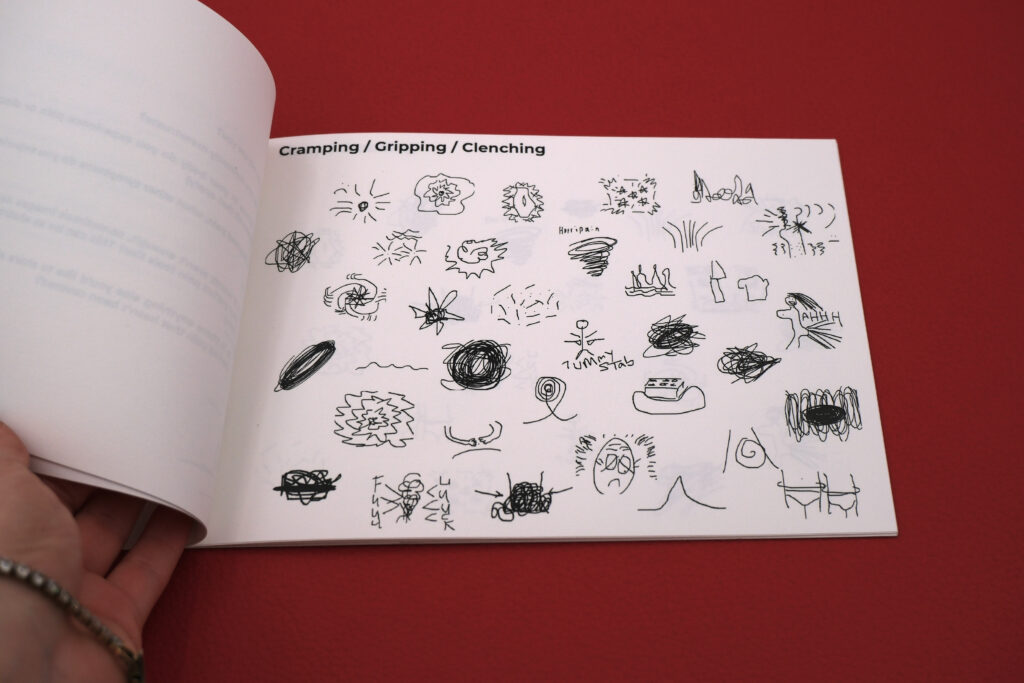
Cramping output from my development book created using co-design.
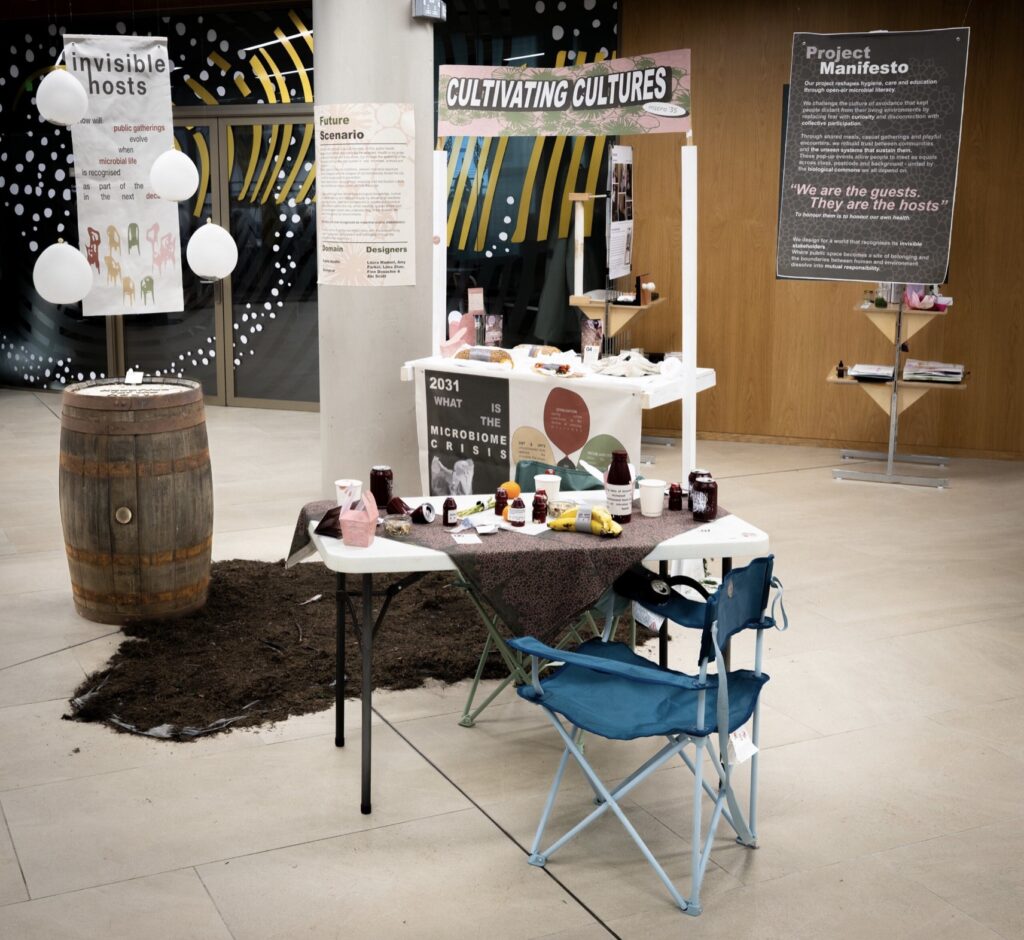
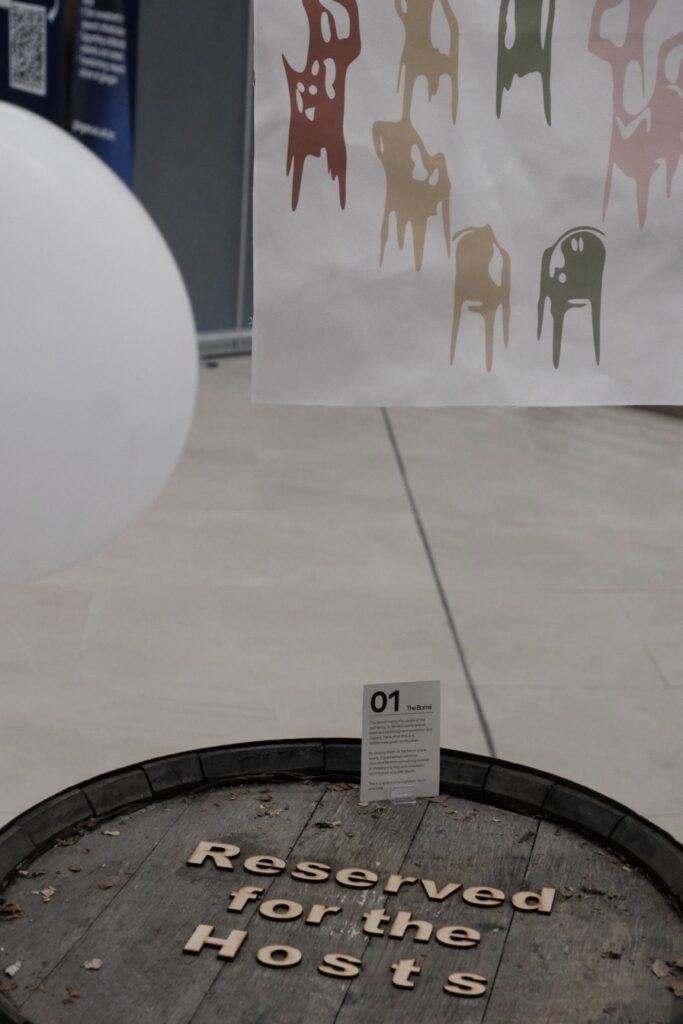
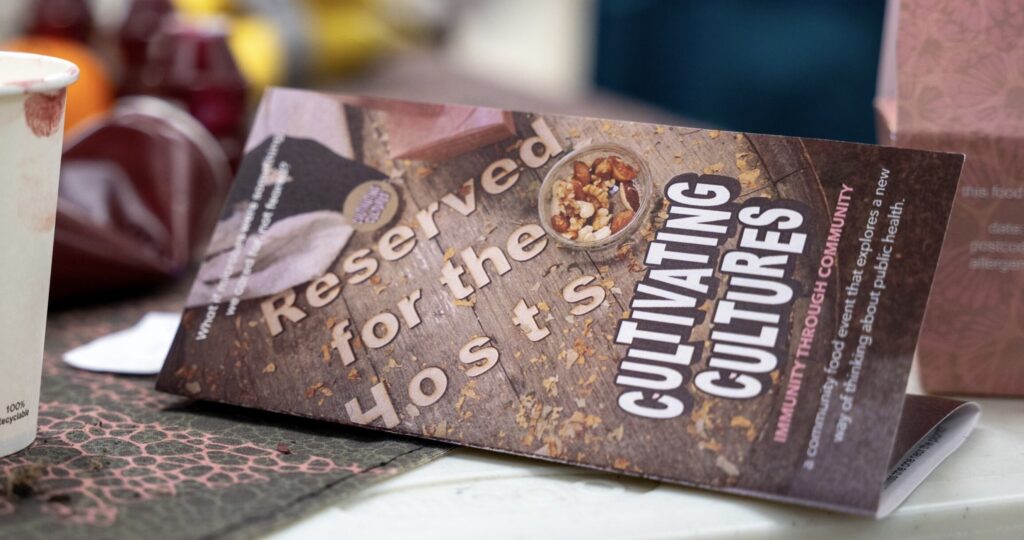
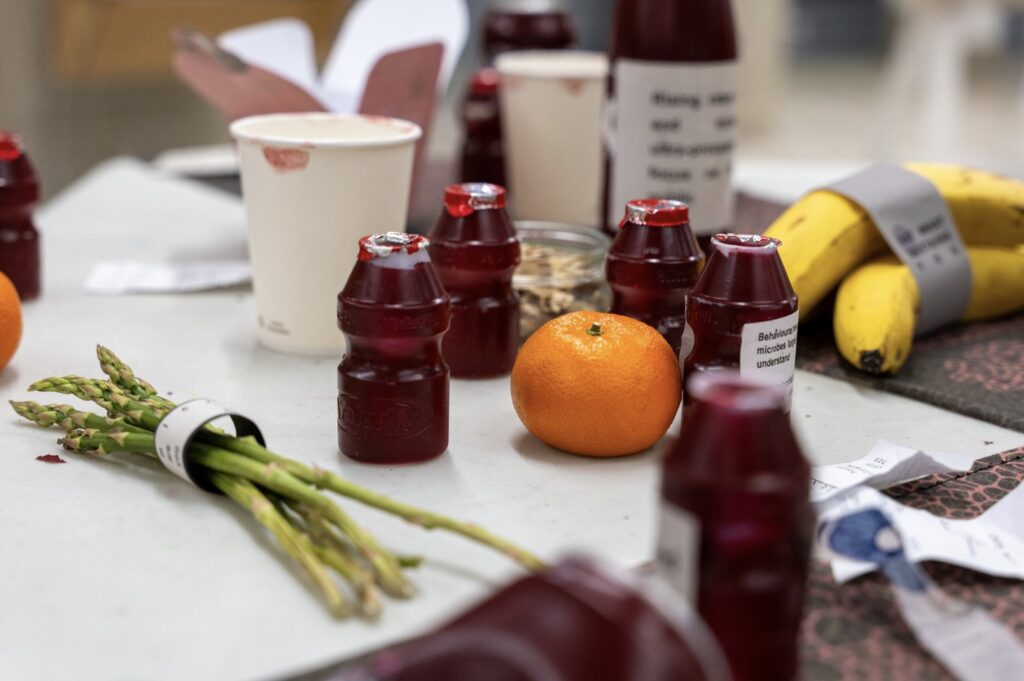
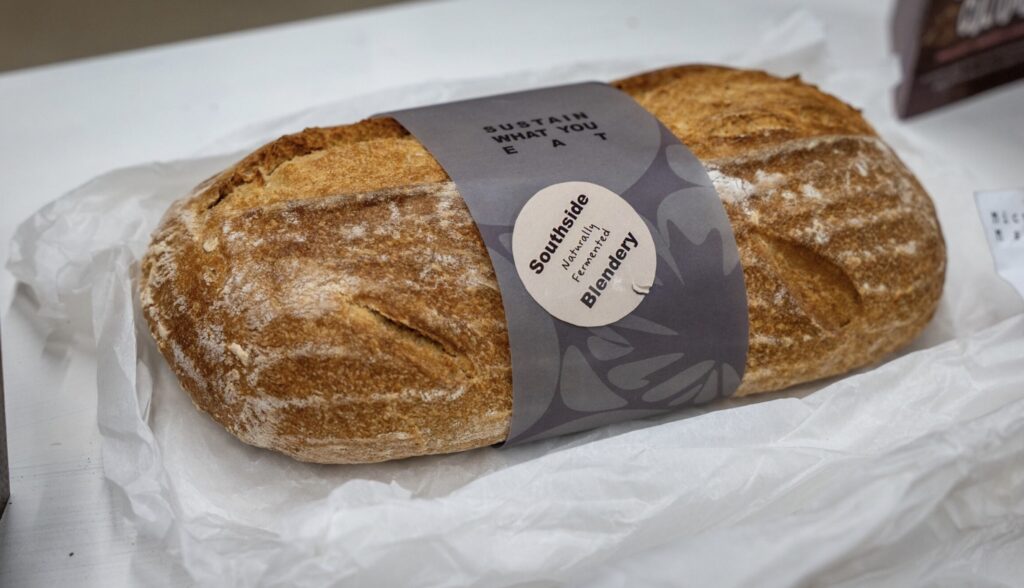
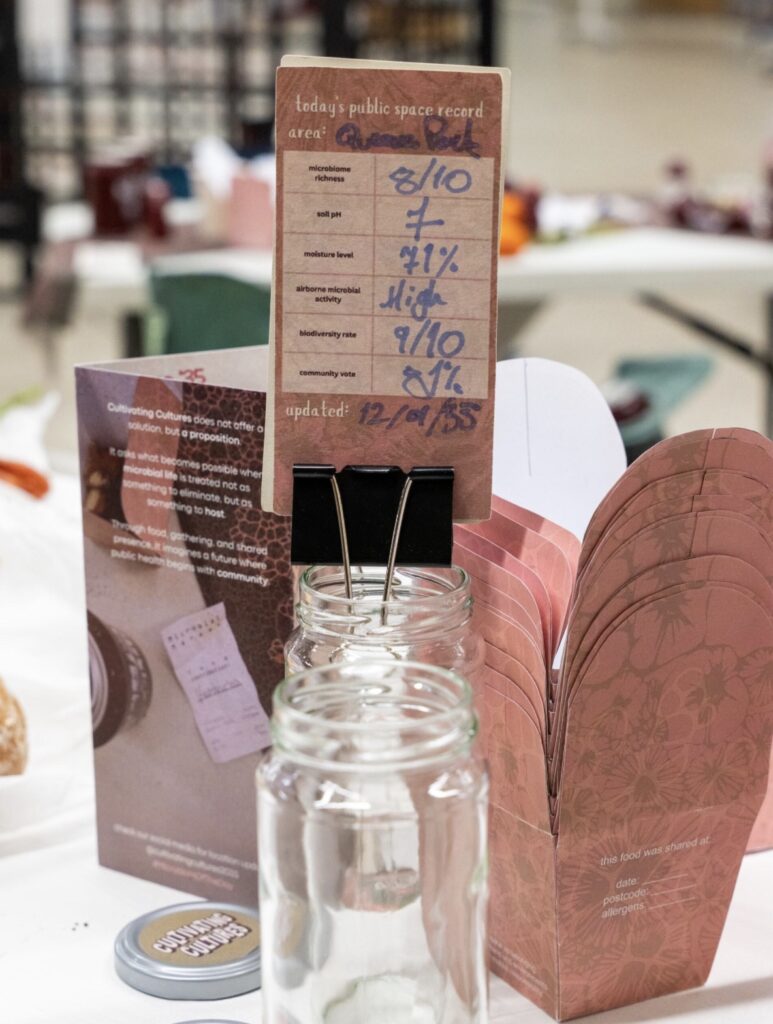
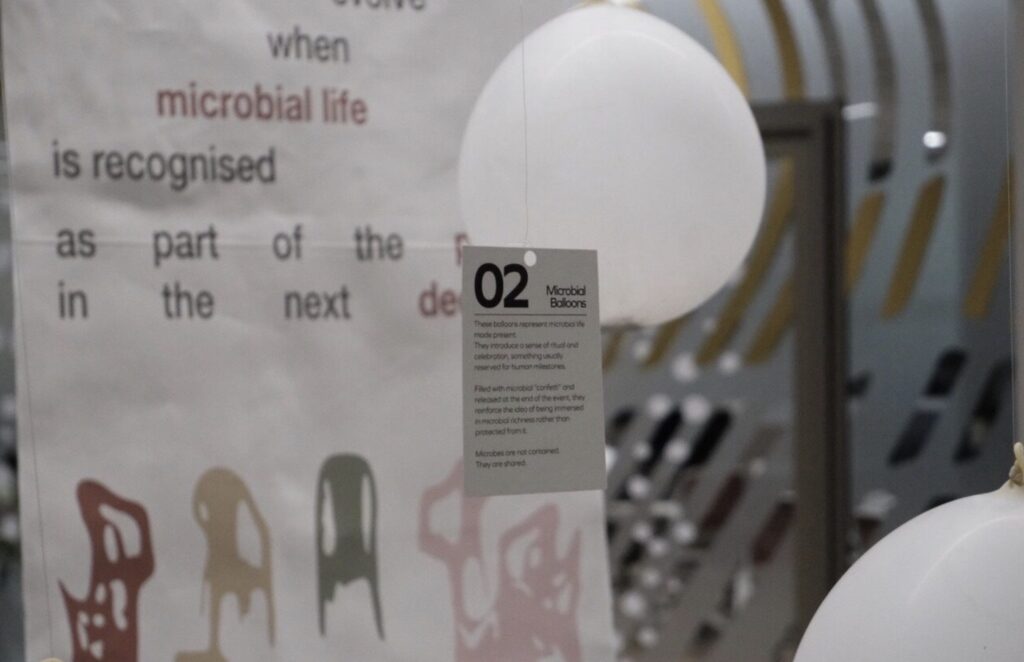
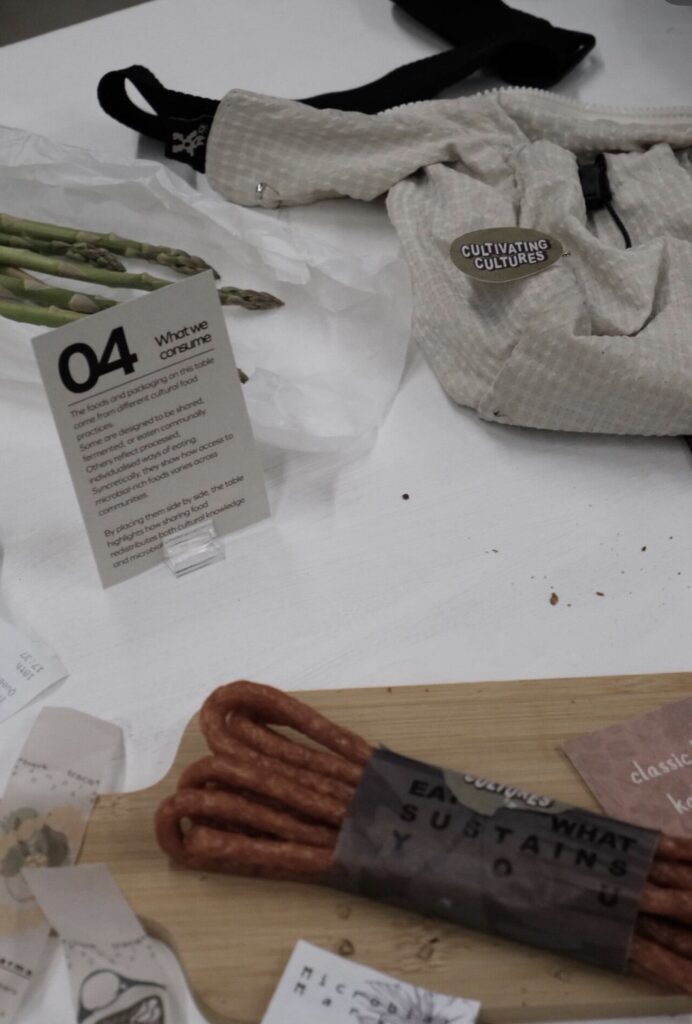
Cultivating Cultures
Year 4 Project
In a world where health is collective
Health, in this world, is not something possessed, it is something practised together.
The body no longer ends at the skin. Wellbeing is shaped by shared air, shared soil,
shared food, and the invisible life moving between us. As ecological loss and social
inequality intensified through the 2030s, communities began to treat microbial diversity
as a common good.
Public gatherings replaced clinical encounters. Care is practised
through touch,
fermentation, storytelling, and play. Public parks, gardens, and streets became sites of
exchange where food, microbes, and knowledge circulate freely.
Here, participation matters more than optimisation. Health circulates through
relationships rather than prescriptions. To belong is to contribute, to receive, and to care
for the living systems that sustain us, human and non-human alike.