
Layla Hassani Watson
(She/Her)
Layla Hassani Watson is a graduating Immersive Systems Design student and 3D environment artist specialising in cinematic, culturally-informed spaces. Her work is driven by careful attention to detail and visual cohesion, combining architecture, materials, lighting, and composition to craft richly layered digital worlds.
Drawing inspiration from cultural research, environmental storytelling in games, and personal heritage, her work focuses on creating atmospheric digital spaces shaped by symbolism, detail, and a strong sense of place.
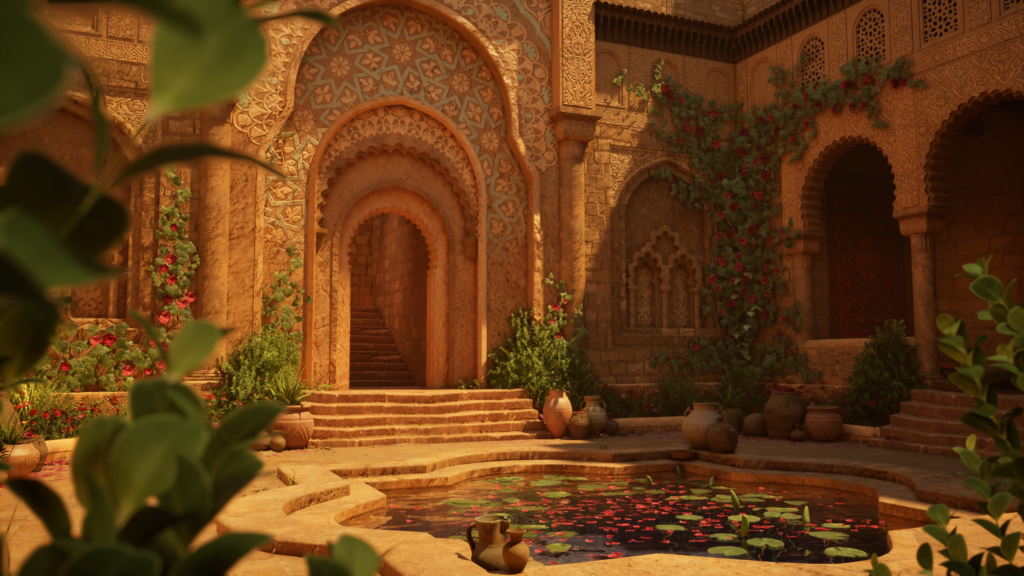
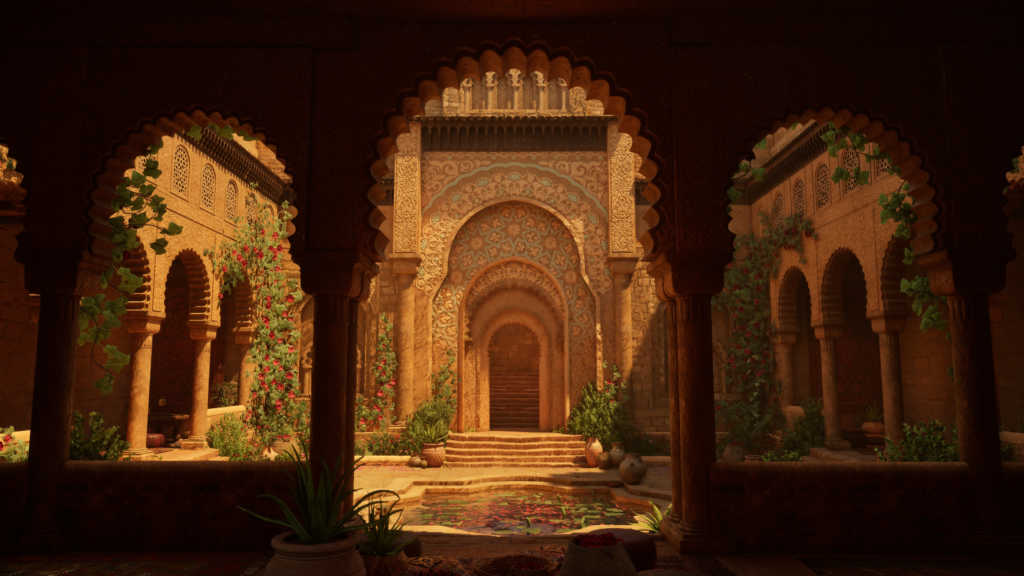
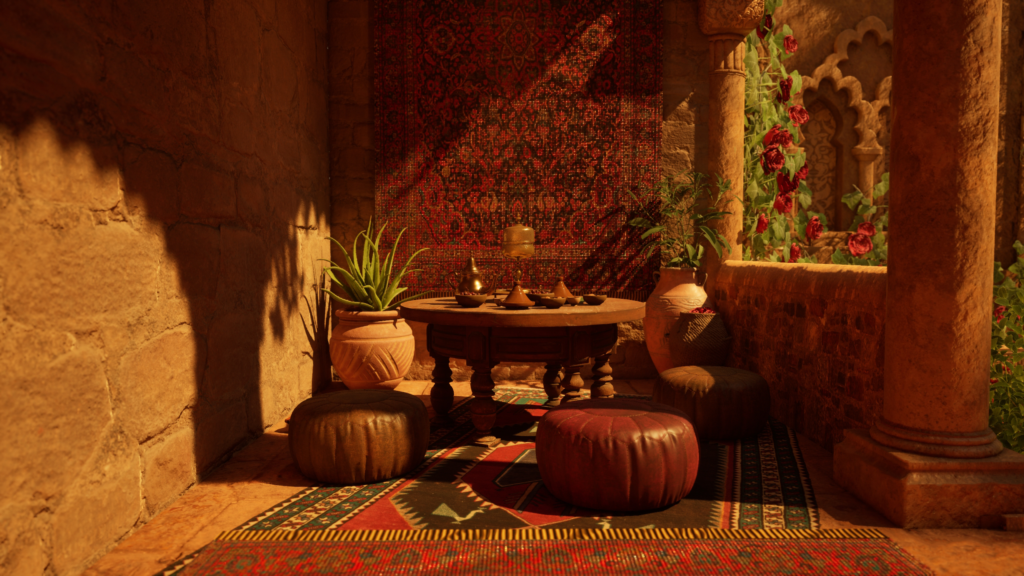
Echoes of the Riad
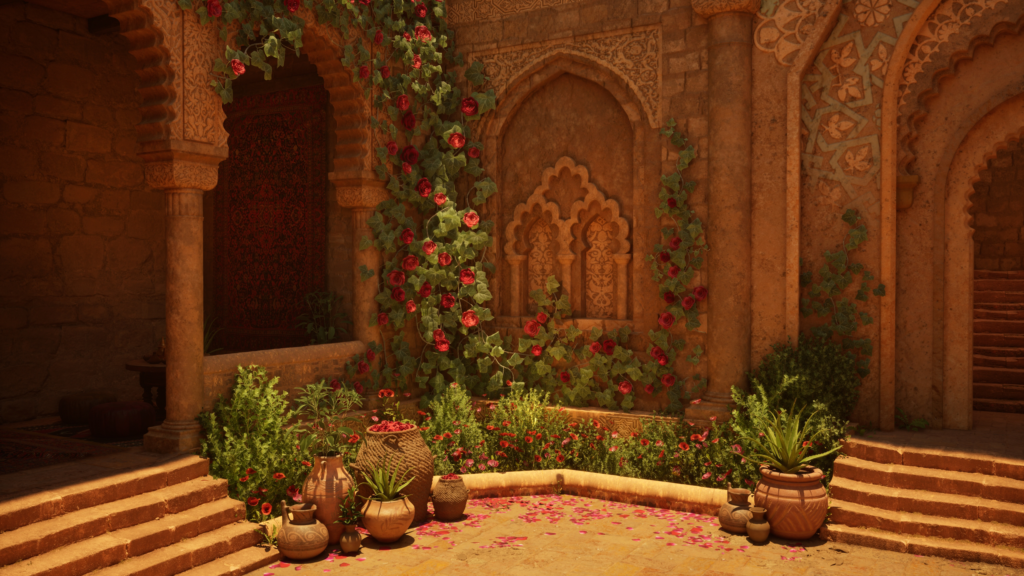
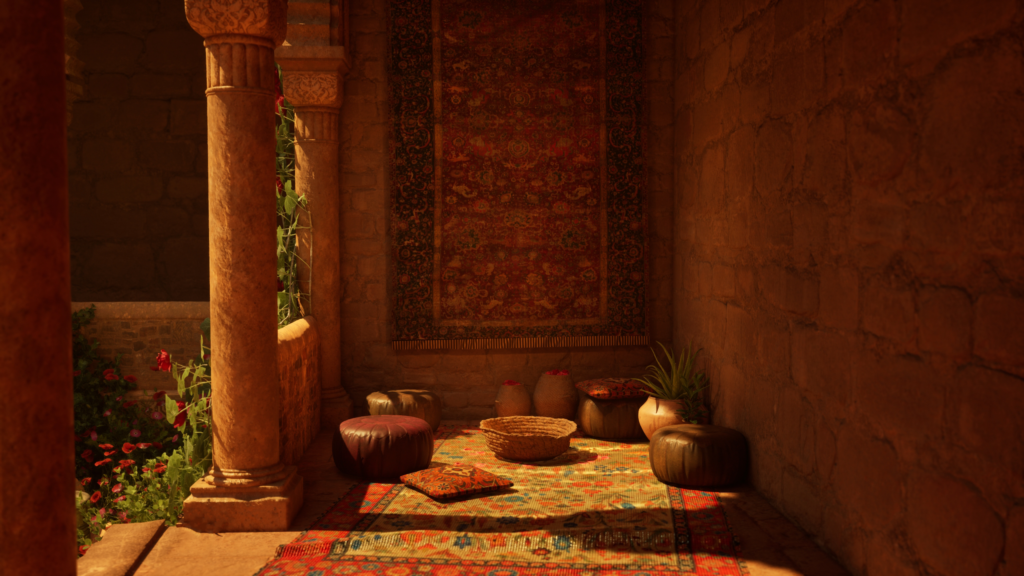
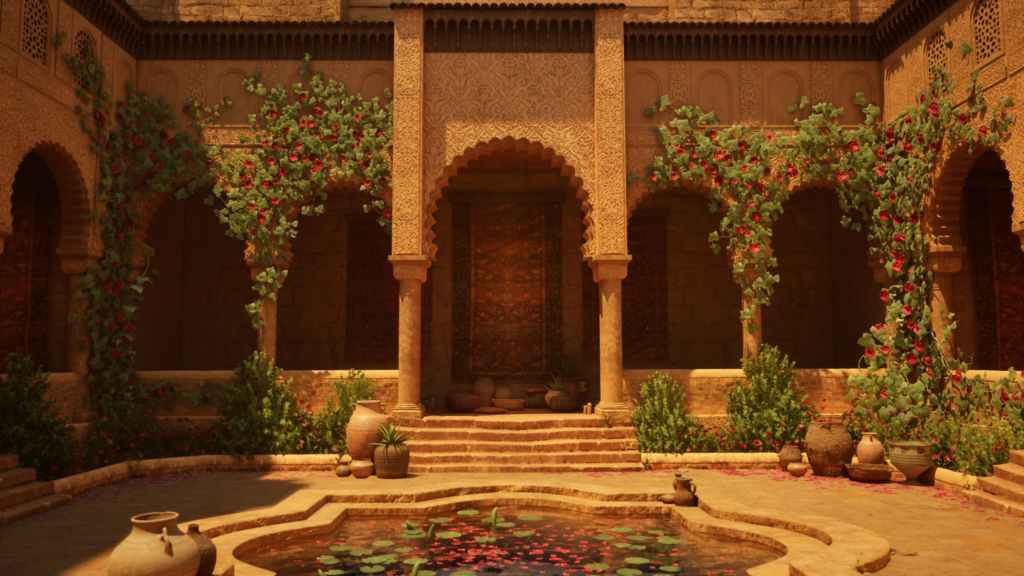
Echoes of the Riad is a cinematic 3D environment inspired by 12th-century Moroccan Almohad architecture and the shared visual language of al-Andalus. Following the passing of my father, the project became an opportunity to reconnect with and explore a part of my Moroccan heritage that I had long felt distant from, allowing myself to engage more openly with its cultural history while processing complex feelings of identity, grief, and belonging. I created the environment as a reflective ‘mind palace’, using symbolism and environmental storytelling to explore themes of heritage, memory, and emotional healing.
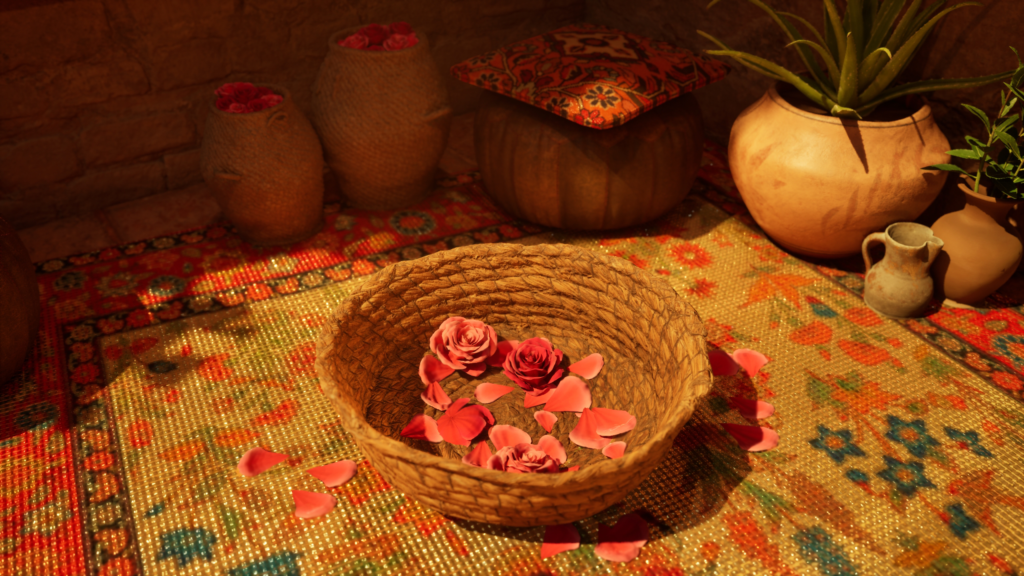
Symbolism plays an important role throughout the space. The Damask rose, Morocco’s national flower, appears throughout the environment as a recurring symbol of love, healing, and reconnection. At the same time, water holds symbolic importance in Islamic art and architecture as a source of reflection, tranquillity, and spiritual renewal.
Technically, the project combines modular modelling, custom materials, lighting, and real-time rendering to create a cohesive, atmospheric digital environment. Developed using 3ds Max, Substance Designer/Painter, and Unreal Engine 5.
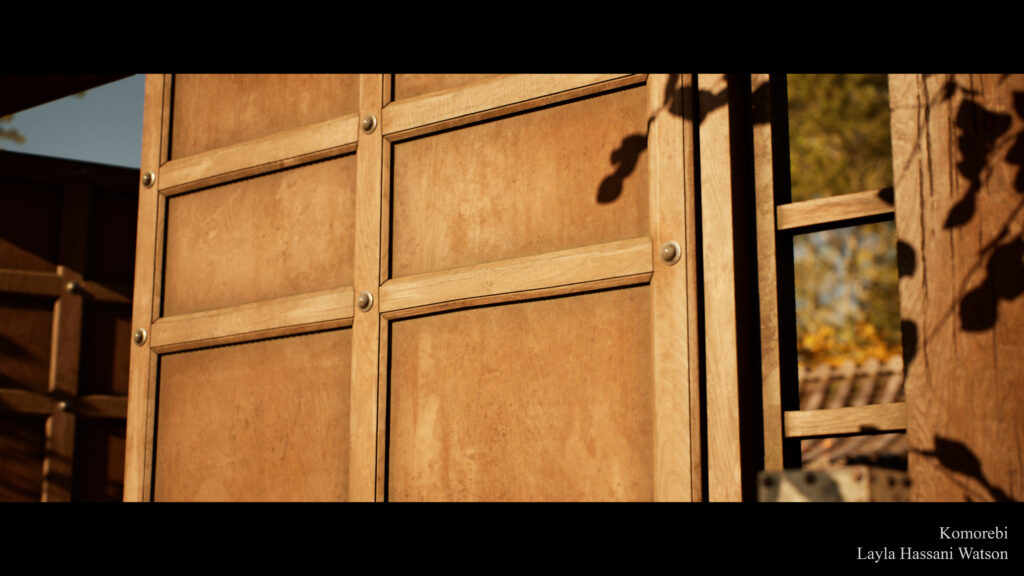
Komorebi
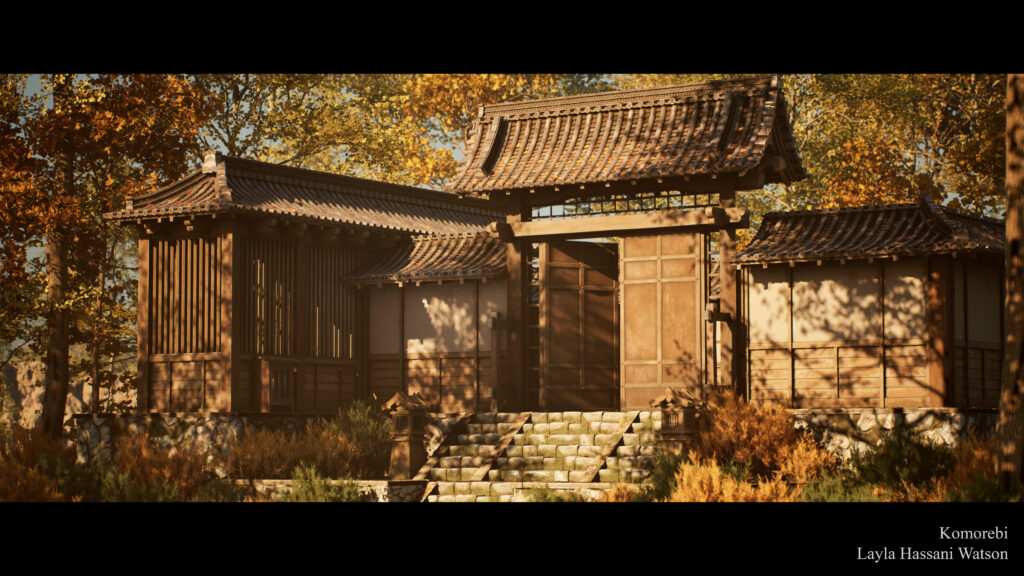
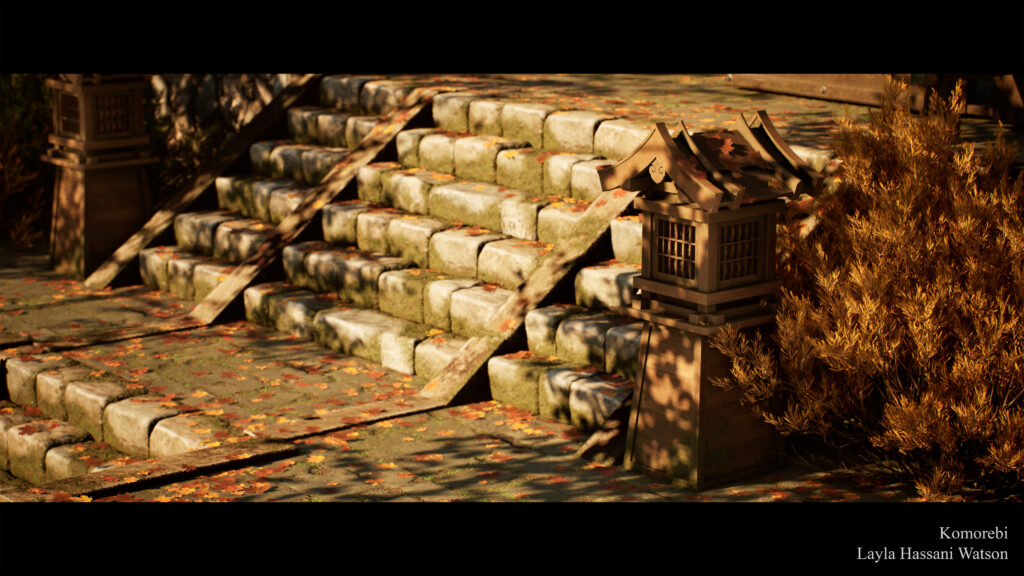
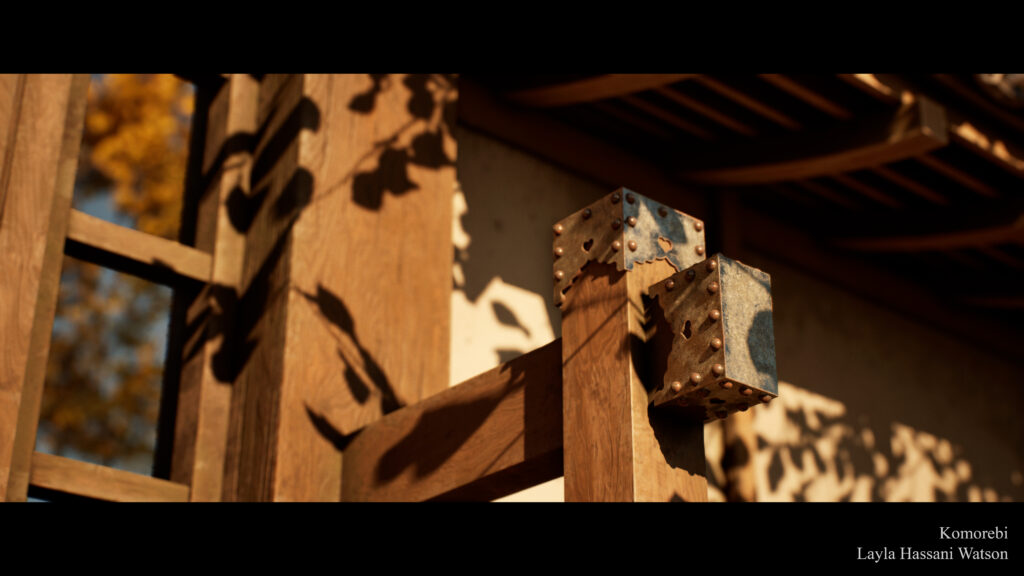
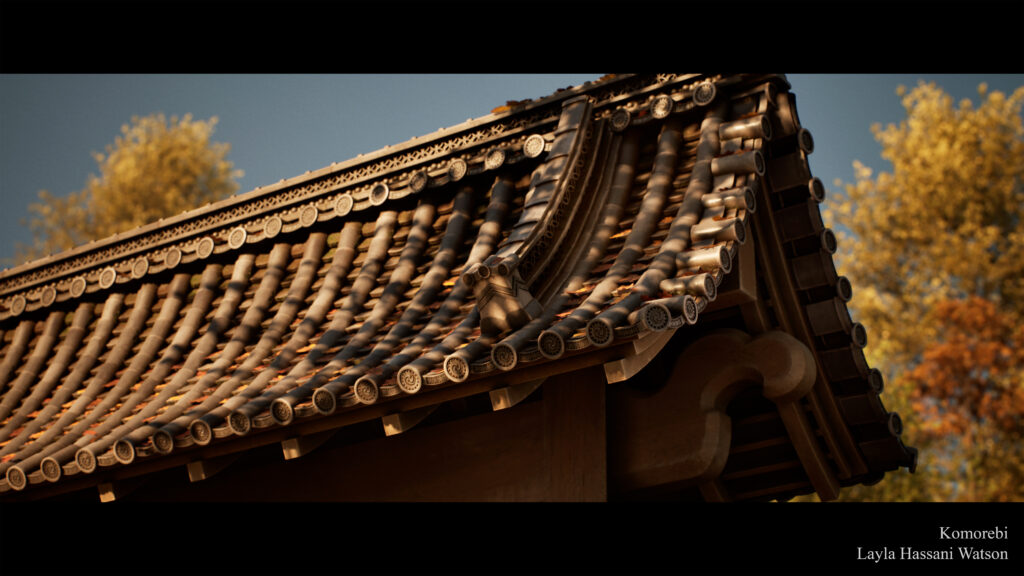
Komorebi is a real-time environment project created in Unreal Engine 5, inspired by Sengoku-era Japanese architecture and autumn landscapes. The title, Komorebi, is a Japanese word describing sunlight dappling through leaves, inspired by the warm filtered lighting present throughout the final environment renders.
The project was developed using a modular workflow, with assets created across 3ds Max, Zbrush, Substance Designer/Painter, and Unreal Engine 5. I focused on achieving a highly realistic visual style through detailed material work, advanced UE5 material workflows, atmospheric lighting, and foliage composition. Particular attention was given to environmental detail and cinematic presentation to create an immersive space inspired by traditional Japanese architecture and natural environments.
The final project was presented through a series of rendered shots and a cinematic showcase.