Lia McDonald
(she/her)
Project Concept
Make Space is a community art centre and social hub for the creatives of Glasgow’s West End.
A place for experimentation and self-expression through the acts of making, exploring and connecting.
The ambition of the centre is to make art more accessible physically and financially to the residents of Hillhead and it’s
surrounding areas.
Make Space aims to encourage visitors to expand their skill library and explore their relationship with various creative practices, with the hope of benefiting physical and mental well-being.
The Site
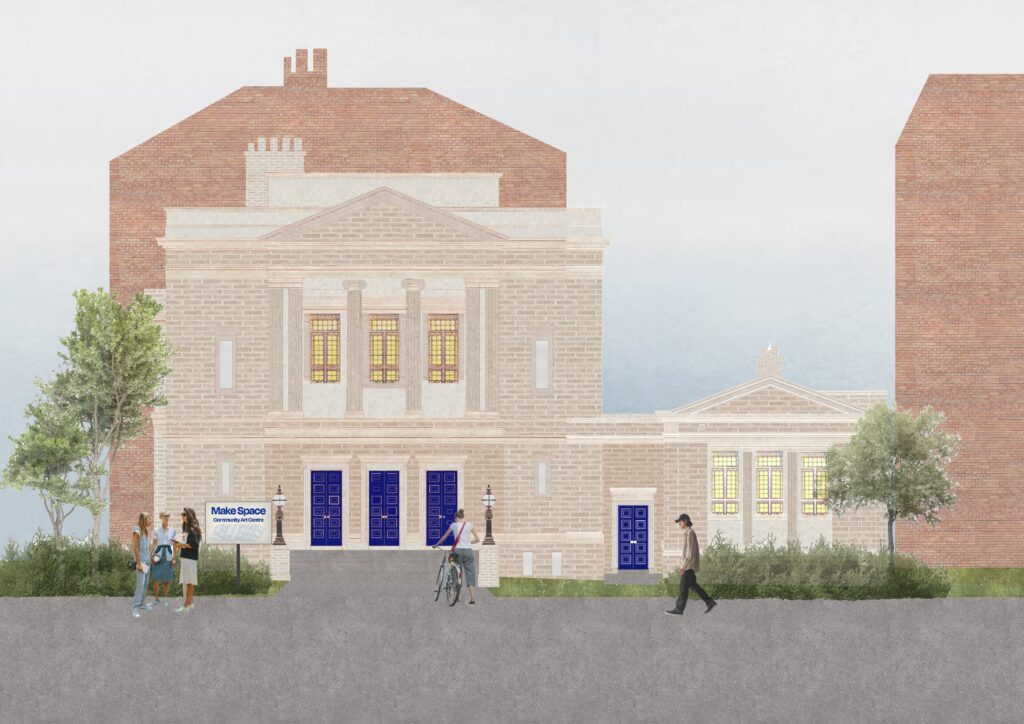
Make Space is located in the heart of Hillhead, based in the old Hillhead Baptist Church at 33 Cresswell Street.
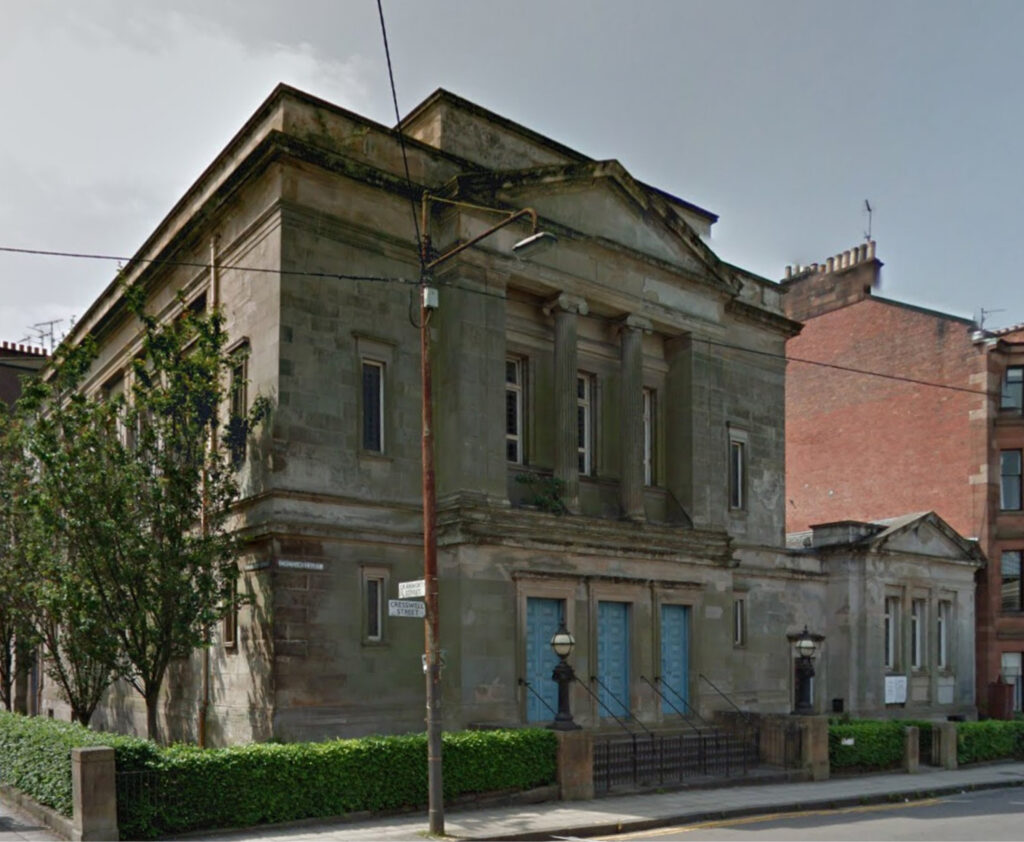
The site was built in 1883 by Scottish Architect Thomas Lennox Watson in the Greek Revival style. In 1884, the Hillhead Baptist Church Congregation moved into the building, remaining there until 2015 when structural issues forced them to vacate. Eleven years later, the church still remains unoccupied.
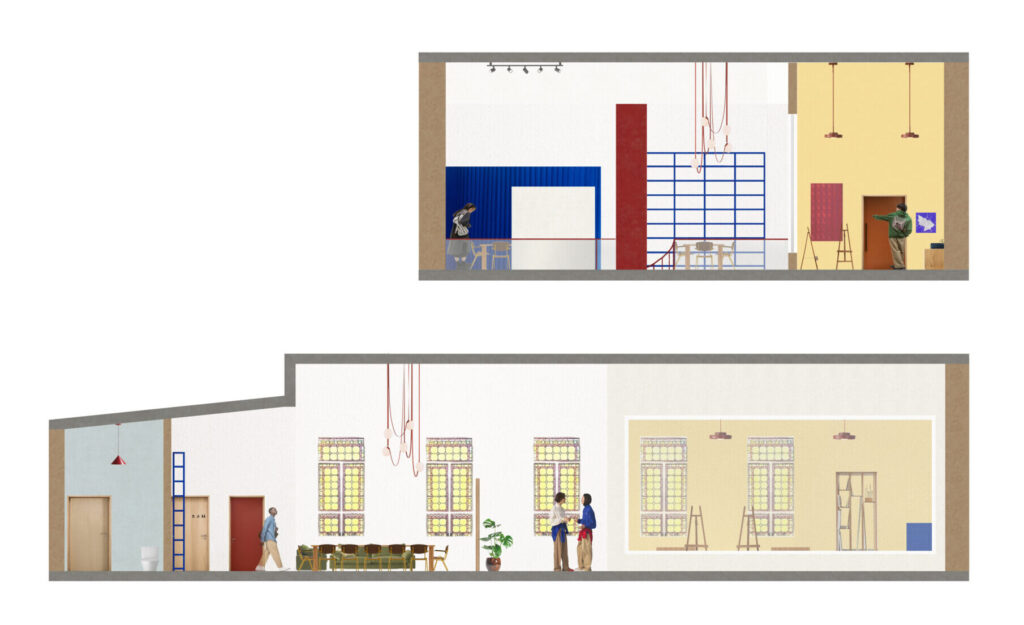
The building has two entrances, both located on Cresswell Street, which lie at different floor heights due to the street’s incline. The multiple entrance heights divide the site into two distinct sections: The Main Gallery & Tryst Hall. The main gallery, consists of three floors and can be accessed through one of the three primary blue doors, which are framed by two cast iron lamps. Tryst Hall is a double-height space with a mezzanine on the North wall. It sits a metre below the main gallery and is the secondary entrance to the site.
Ground Floor
The ground floor is where the user journey begins.
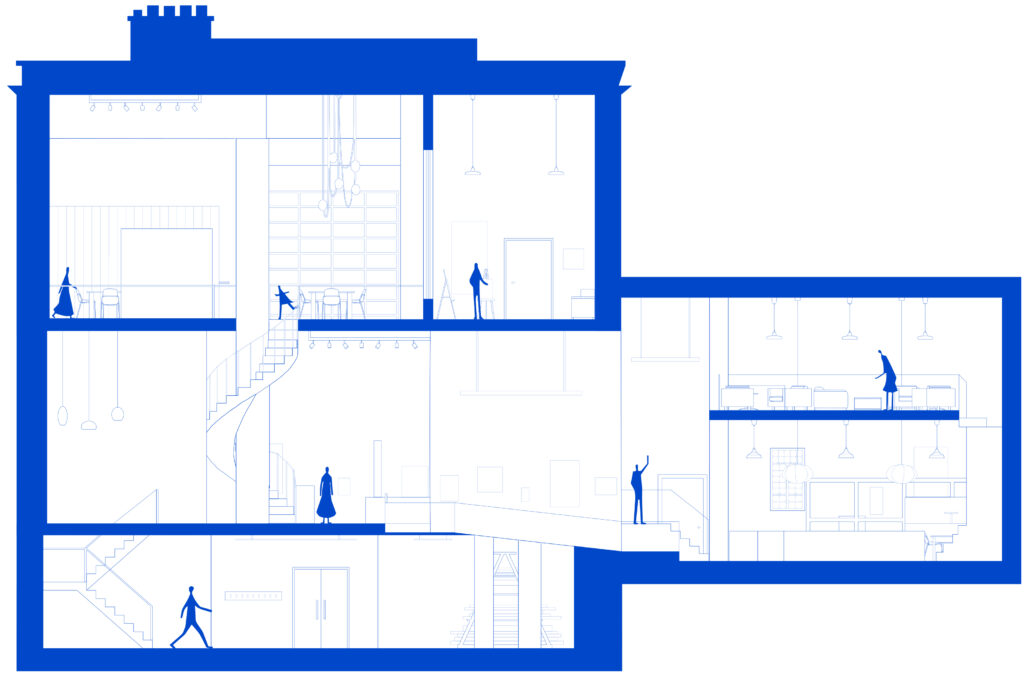
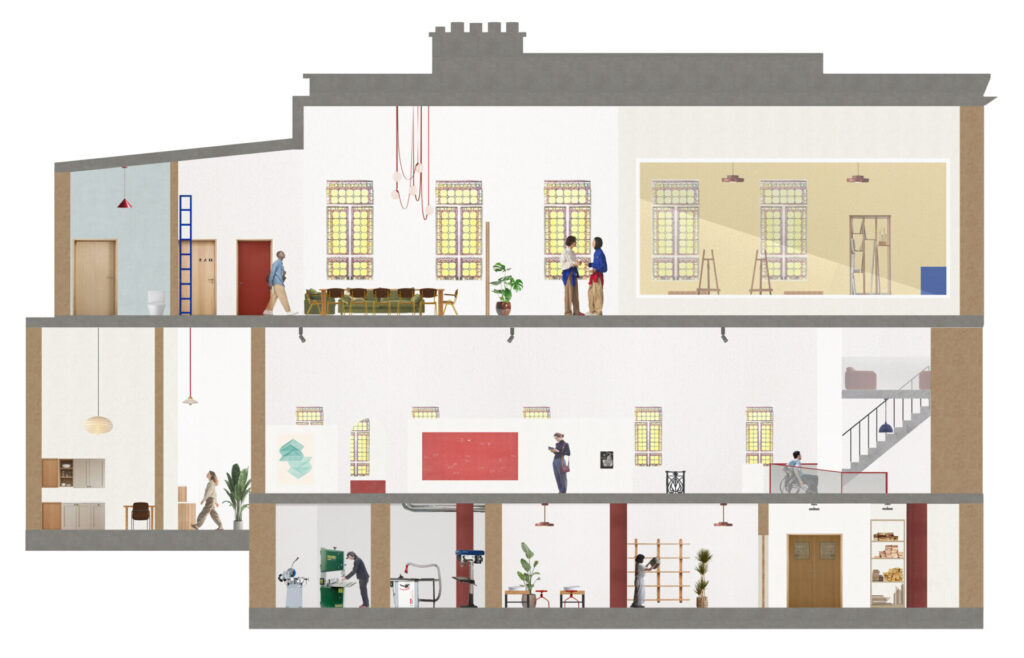
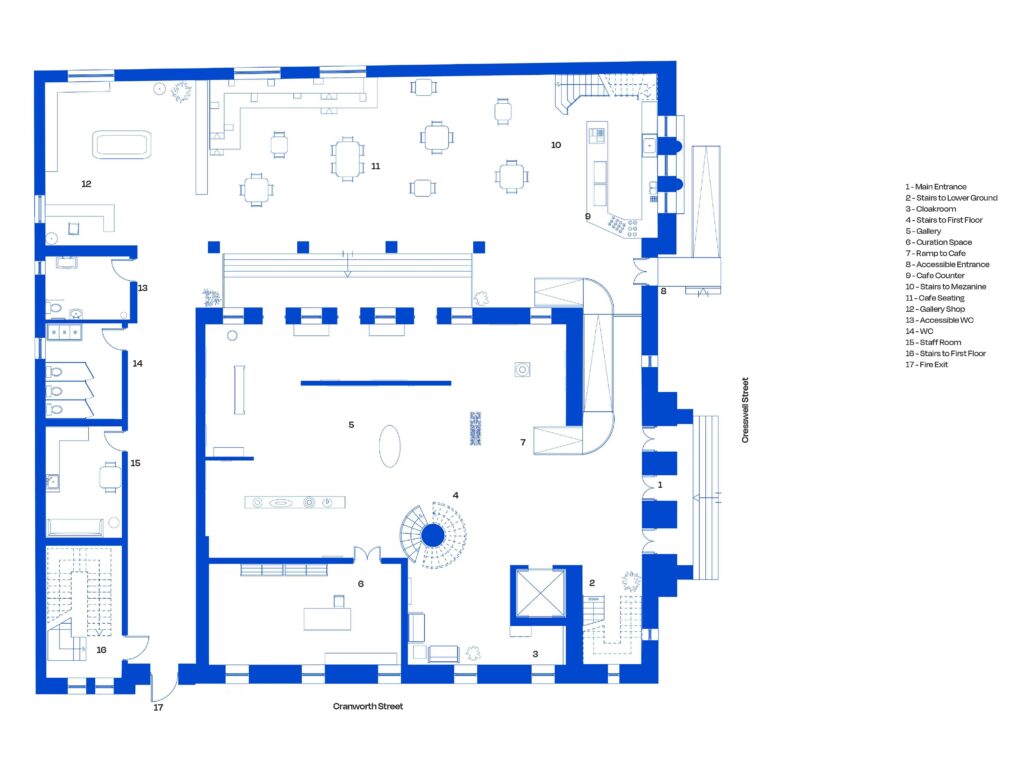
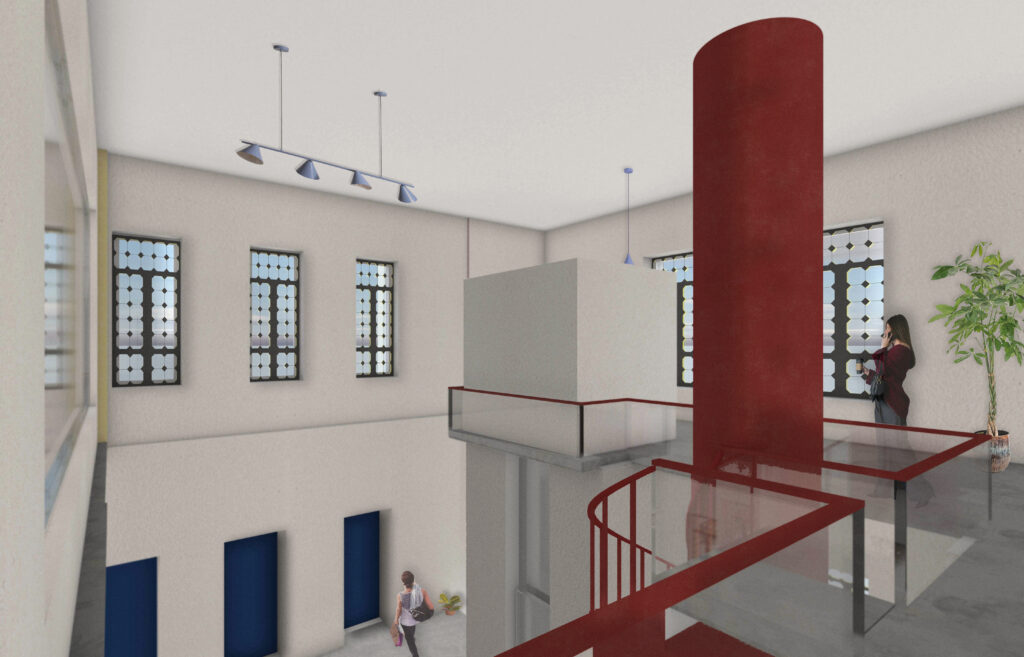
Upon walking through the main doors, visitors are greeted by the gallery, hosting an in-house exhibition. Visitors can enter the building through one of two entrances: the tryst hall leading to the cafe or the main doors leading to the gallery. Those using the main doors will enter into a double-height space, created by a void in the first floor, measuring 11.1m high. To the of left of the main doors are stairs leading down to the basement, where the wood workshop and pottery studio are located. Makers using those spaces will head down the stairs to sign in and prepare for their session.
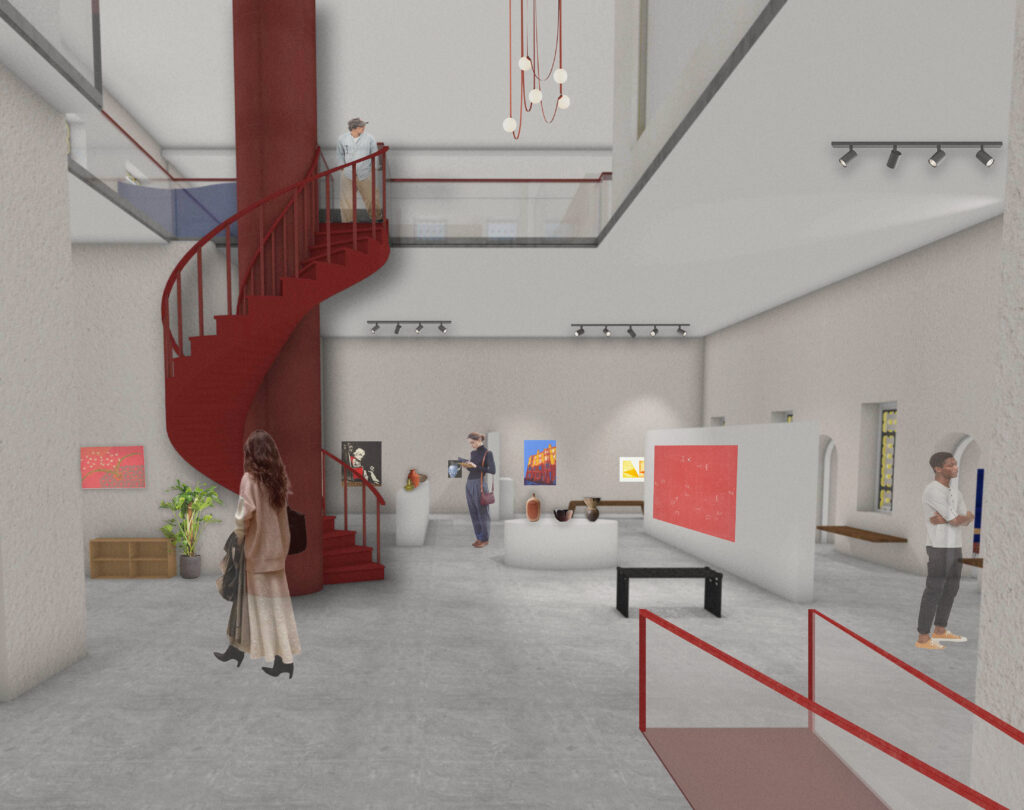
The wall separating the stairs from the gallery hides a spacious lift, with access to all three floors. Beside the lift is a small seating area tucked into the corner, allowing for a private moment or rest before viewing the gallery. Opposite this is a cloakroom with lockers to leave coats, prams, and any belongings that visitors don’t wish to take with them. Turning back towards the gallery is a striking red spiral staircase and support beam which leads to the first floor. The stairs mark the boundary of the gallery, separating the two spaces. Curving round the staircase to the east wall is the curration space, where plans for upcoming exhibitions are made and executed.
The Gallery
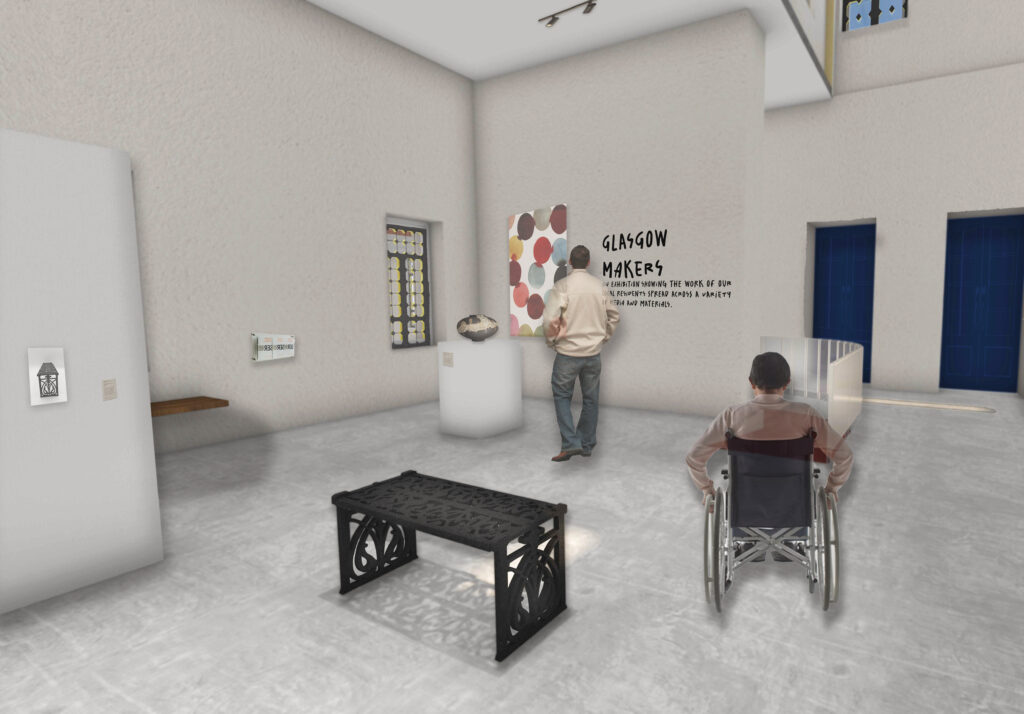
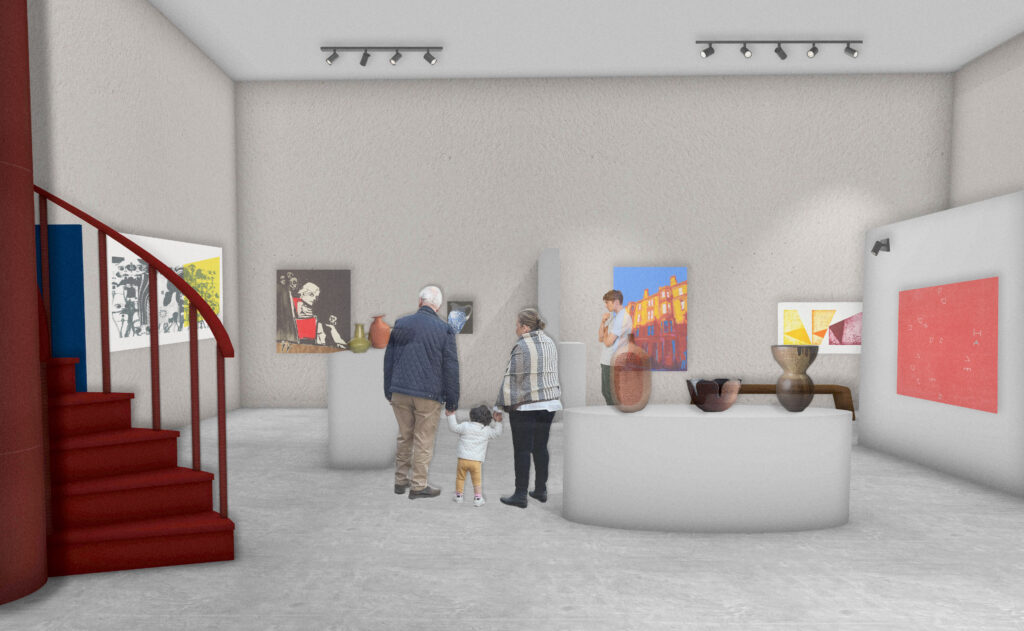
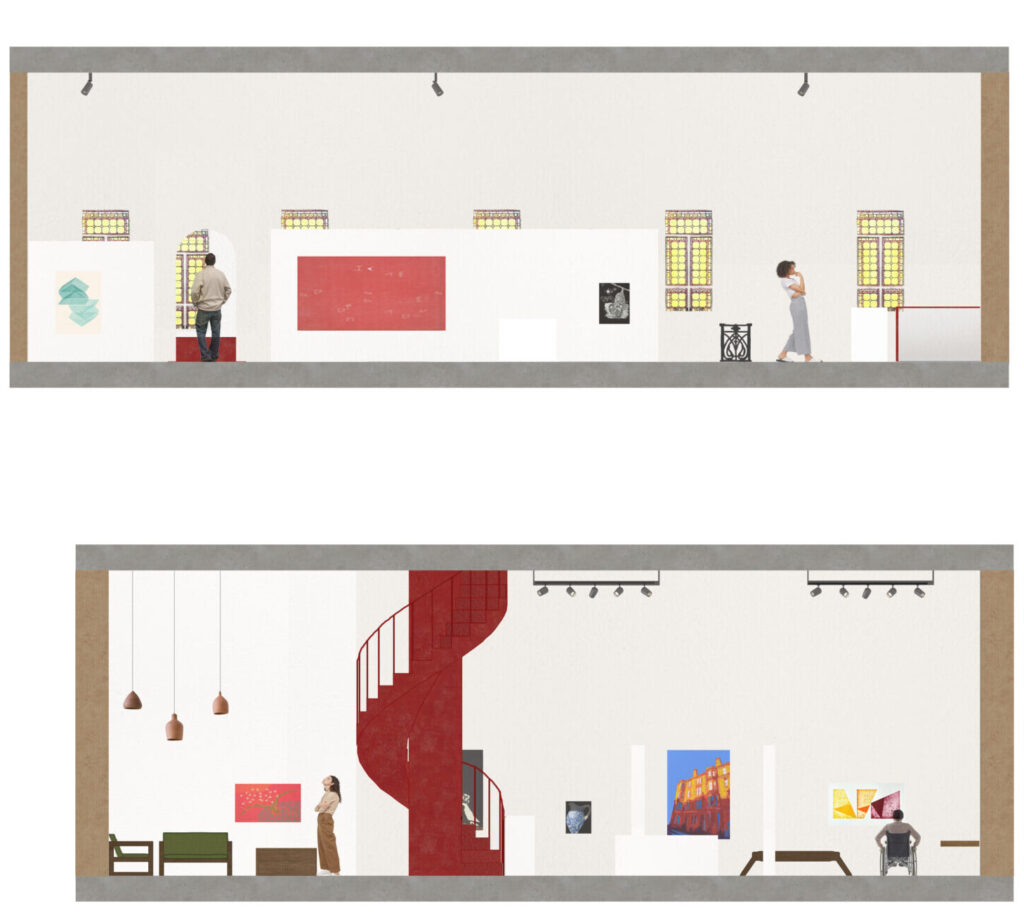
The gallery is the focal point of Make Space. Located in the centre of the building this is the first room seen by anyone entering through the main doors. Everything in the building leads to and from the gallery, making it the perfect space to inspire visitors who aren’t sure whether they want to try making. Here is where the hard work of the site’s users is showcased.
Each month a new exhibition is installed and the space layout is changed to fit the artist’s work. During the months of June and December in-house exhibitions are held, where the work from the centres makers is collated and displayed for the community
to see. The galleries layout changes with each exhibition, allowed by it’s temporary walls, movable displays and open plan space. Each new exhibition comes with a different viewer journey and experience. Without artwork the gallery is a blank canvas with endless possibilities.
The Cafe
The cafe is the social hub of Make Space.
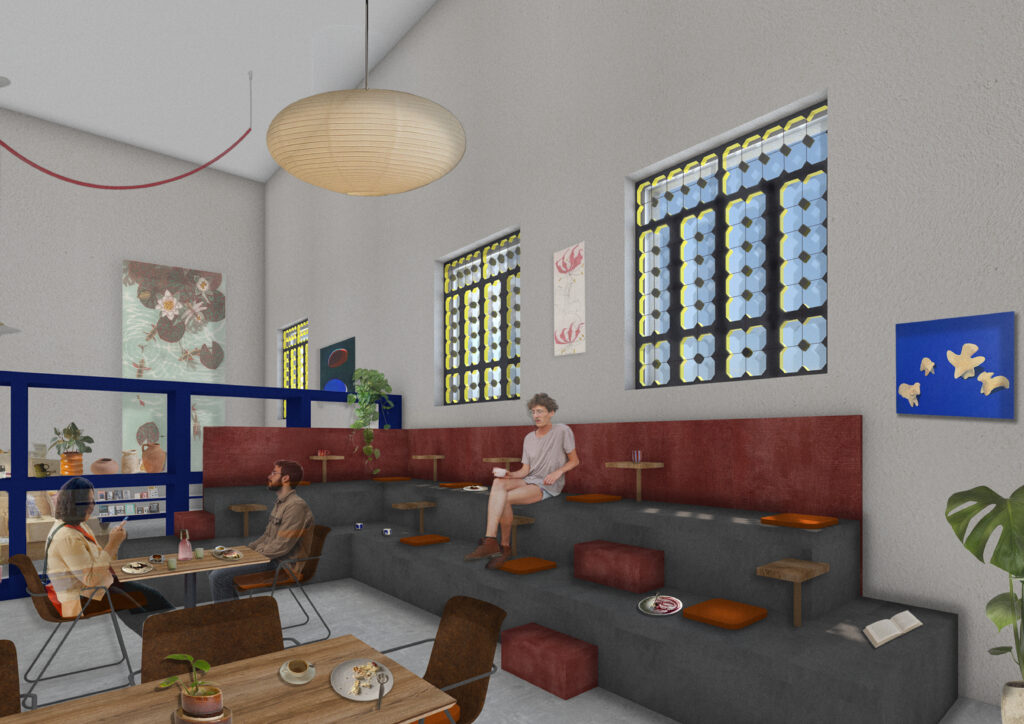
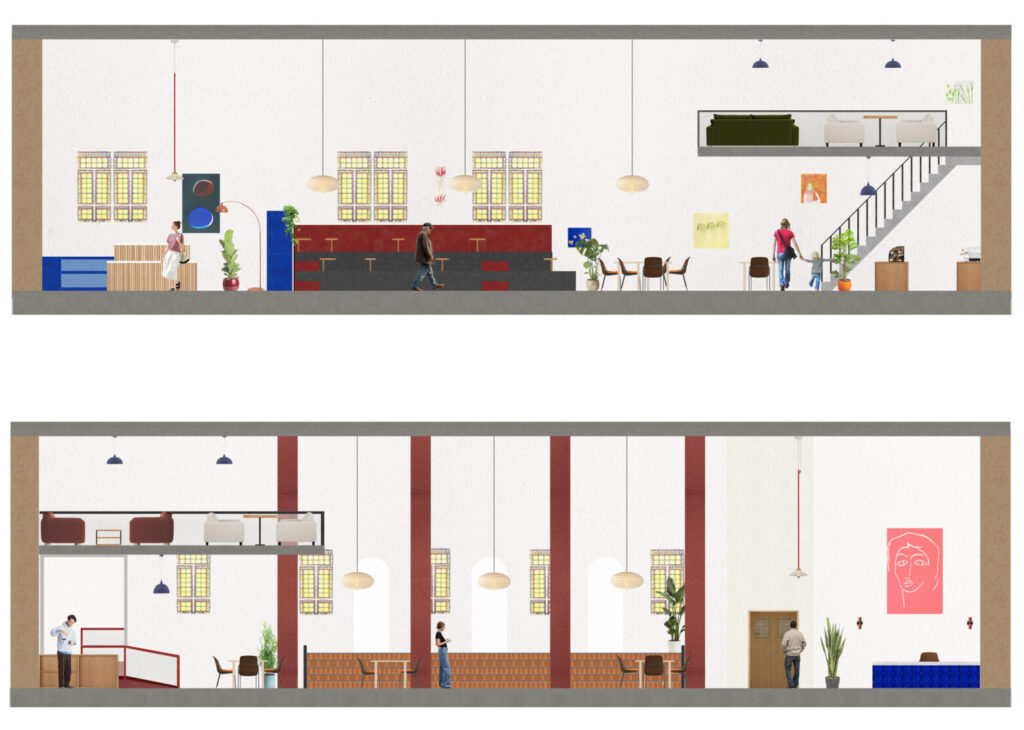
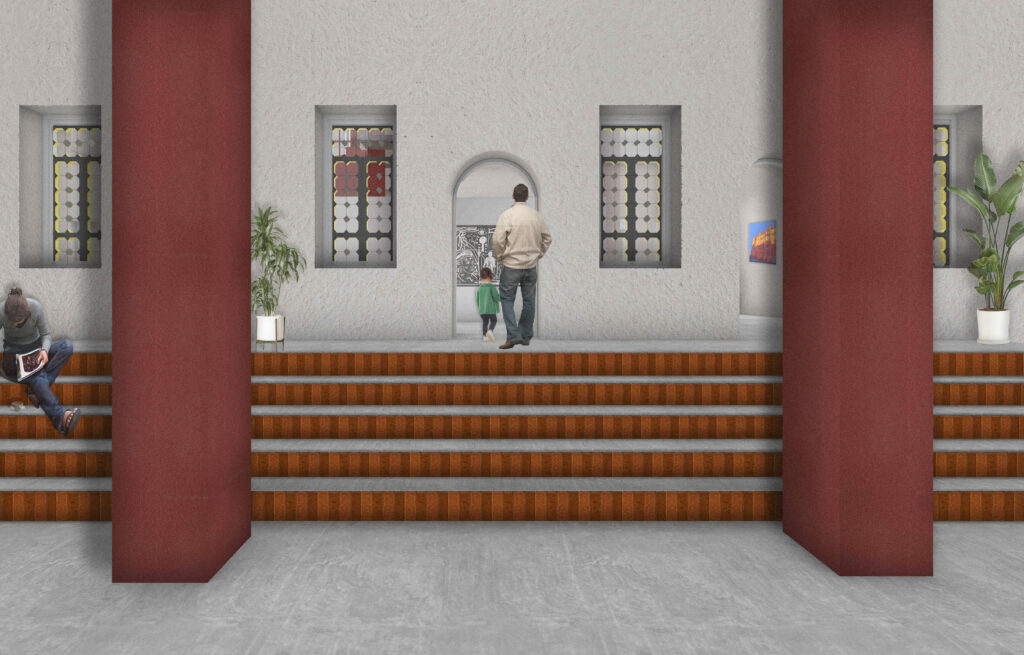
This is the meeting place for both visitors and makers, where everyone comes to connect and decompress. Large arched doorways cut into the West wall of the Gallery connect it with the cafe. Users can walk through the archways and down the terracotta tiled stairs to enter the space. Alternatively the red concrete ramp can be used, which curves around the boundary of the gallery and leads to the order counter.
The counter is situated beneath the vast stained glass windows that look onto Cresswell Street and sits beside the secondary entrance to the building.
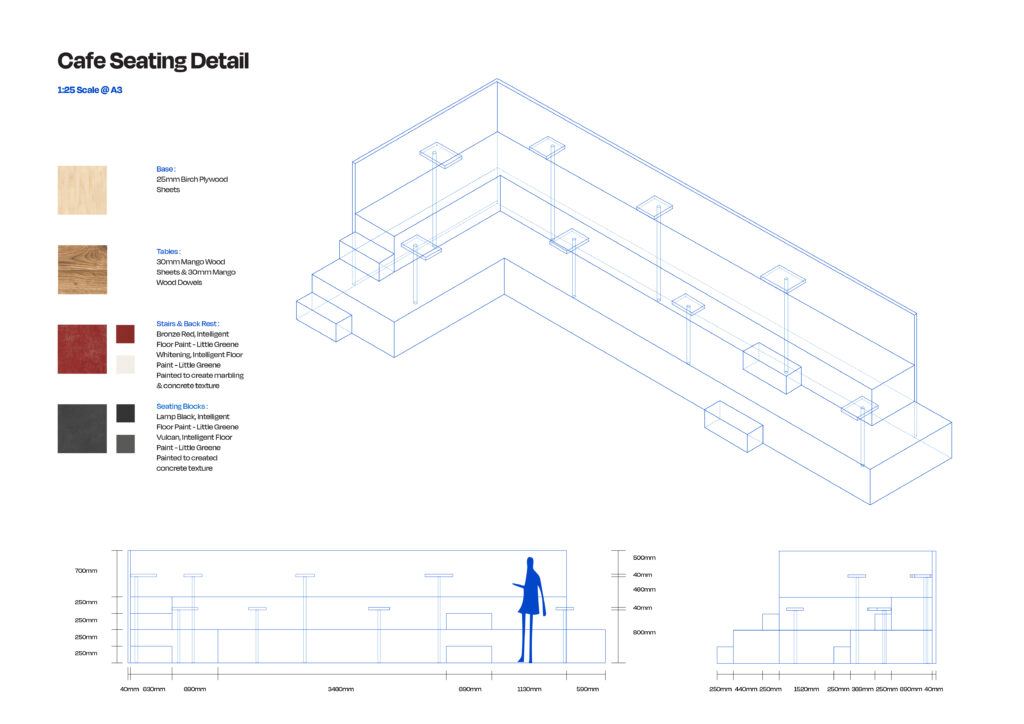
To the left of the order counter are a narrow set of stairs that lead to the mezanine, a comfortable and relaxed area sitting 3.5m above the cafes floor. Here visitors can sit and catch up with friends, brainstorm project ideas, or watch the room bellow them. In the centre of the space are a mix of tables which can be moved and connected to accommodate larger groups. On the West wall of the cafe is a bespoke multiple-height seating block, designed for small groups and solo visitors. The structure’s height allows users to sit at eye-level with the original windows, instead of bellow them. Opposite this is the terracotta tiled stairs that lead up to the gallery, which also function as seating for days when the cafe is busy.
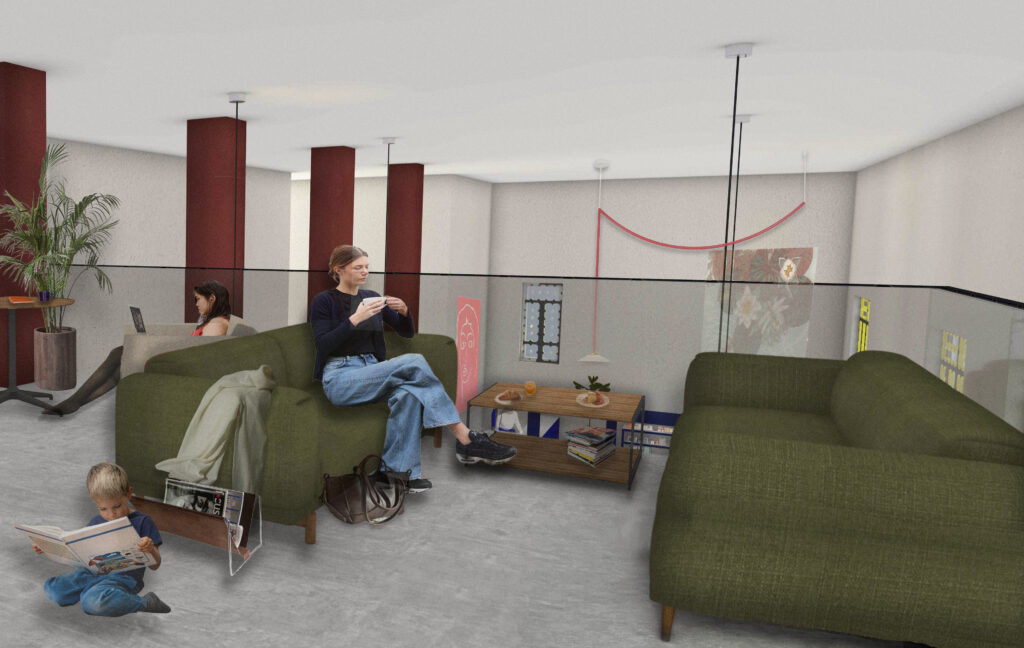
Makers Shop
The makers’ shop sits to the South of the cafe, tucked into the corner. Selling a variety of products made in-house or by local businesses, the shop is the perfect place to pick up a memento of your visit whilst supporting Make Space and its artists. In the centre of the shop is a large layered display table, exhibiting smaller products such as ceramic mugs, postcards and candle holders. The rest of the space is laid out to frame this central display, shelving is kept to the boundaries of the shop creating a circular path around the unit.
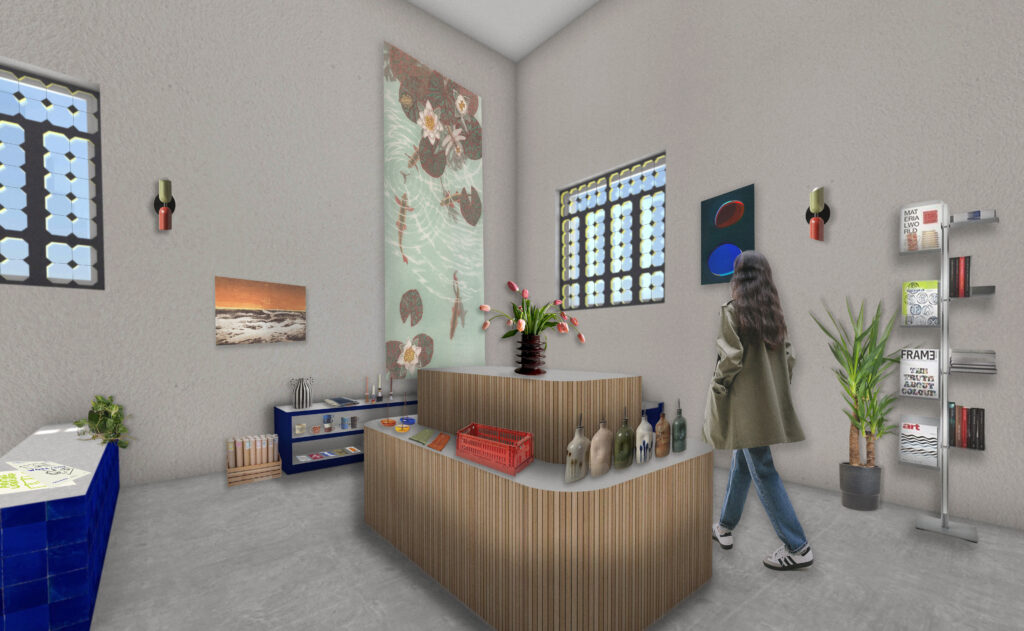
First Floor
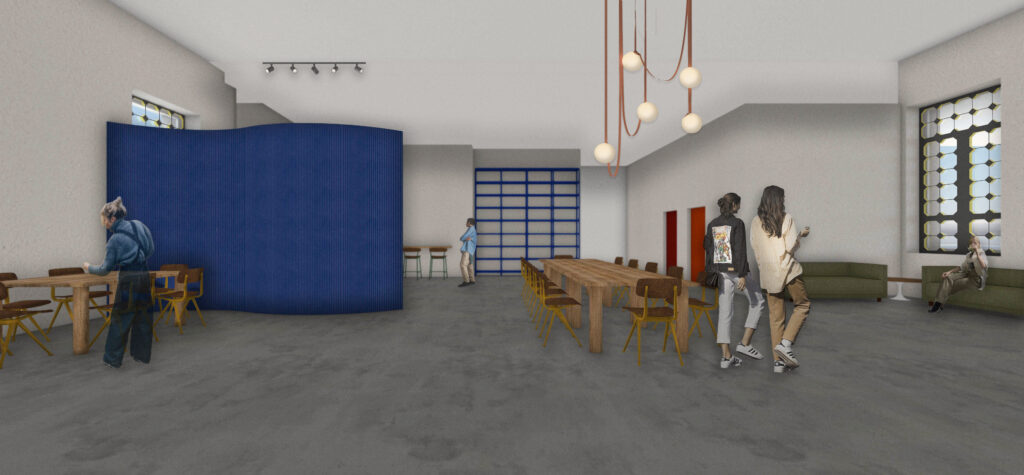
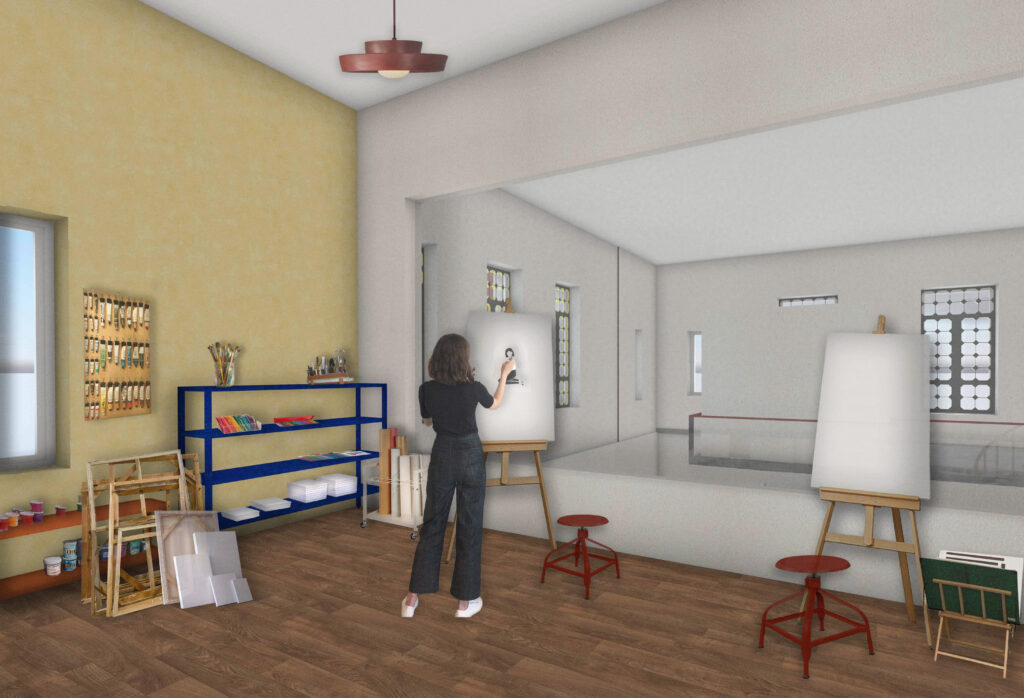
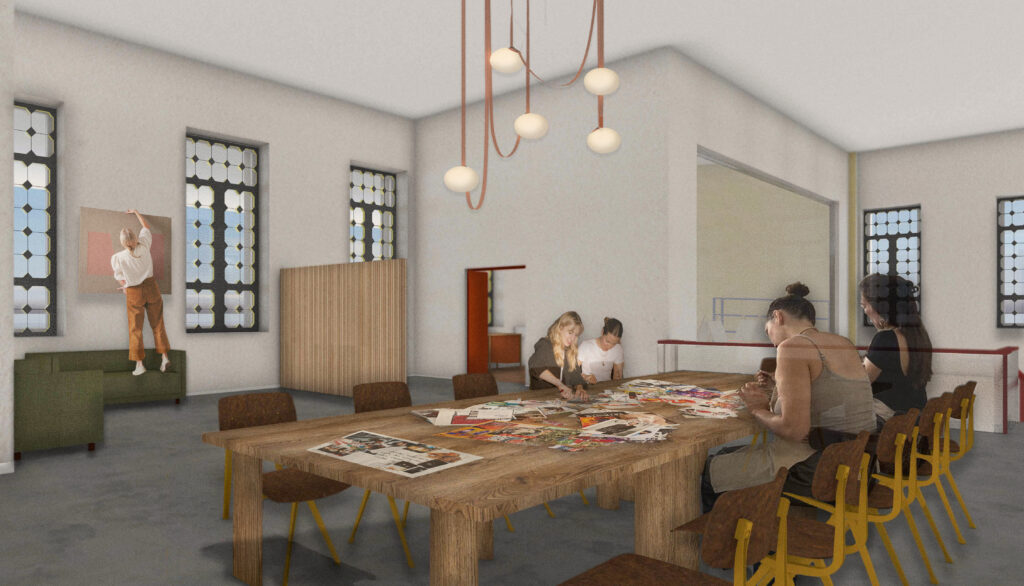
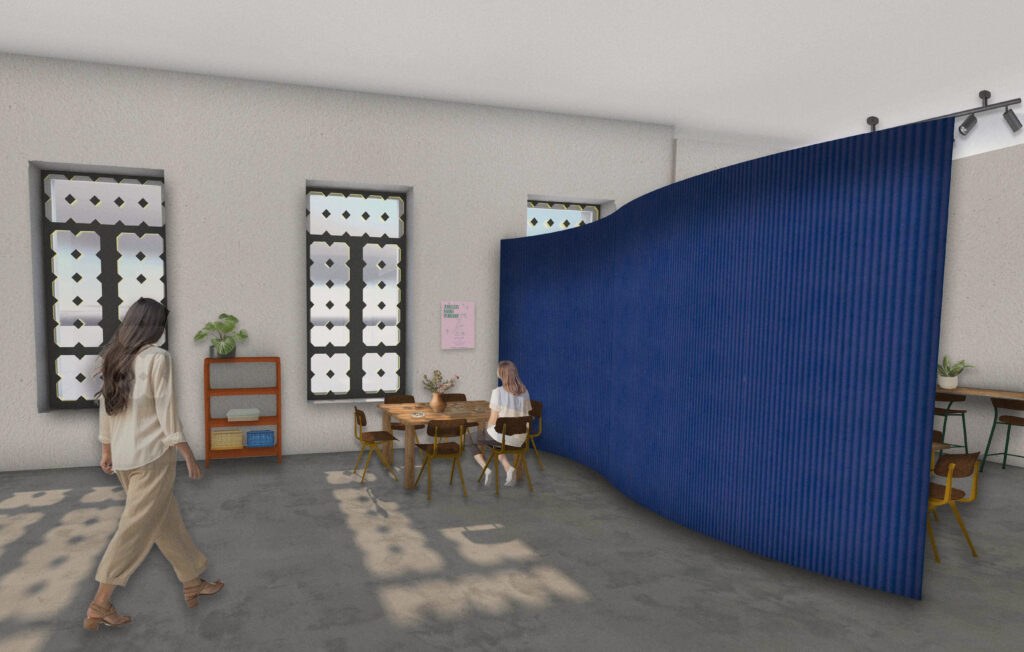
The ground and first floor are connected by a vast red steel spiral staircase and support beam measuring 10m tall. The stairs are placed within the large void cut into the north quarter of the first floor, allowing a perfect view down onto the gallery as the stairs are ascended. Once at the top of the stairs users are greeted with a view of the collaboration space, a multifunctional open plan area centred around three crafting tables. To the left is lift access and a breakout area, partitioned by a 3m tall paper room divider that can be folded away to connect the two zones. To the right of the staircase lies the painting studio, a small and bright room overlooking the gallery and entrance. Opposite the painting studio is a small seating area, sat beneath one of the 3m stained glass windows. Around the corner from this is a small corridor leading to the toilets and a storage room containing all the materials needed for any class taking place in the collaboration space.
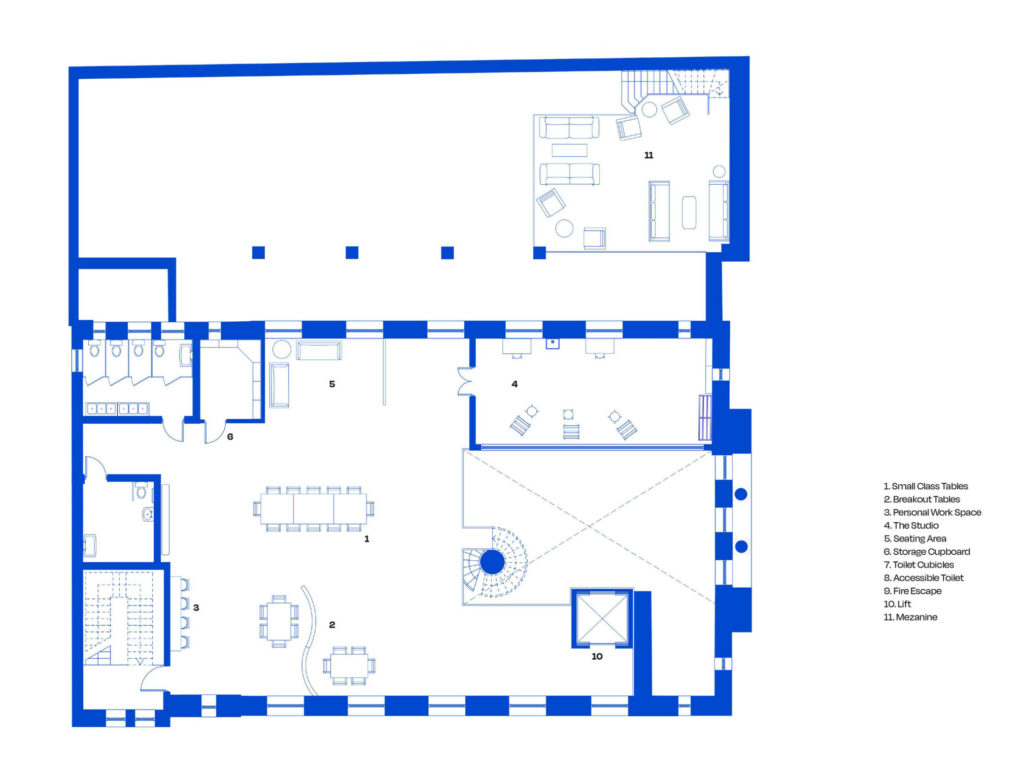
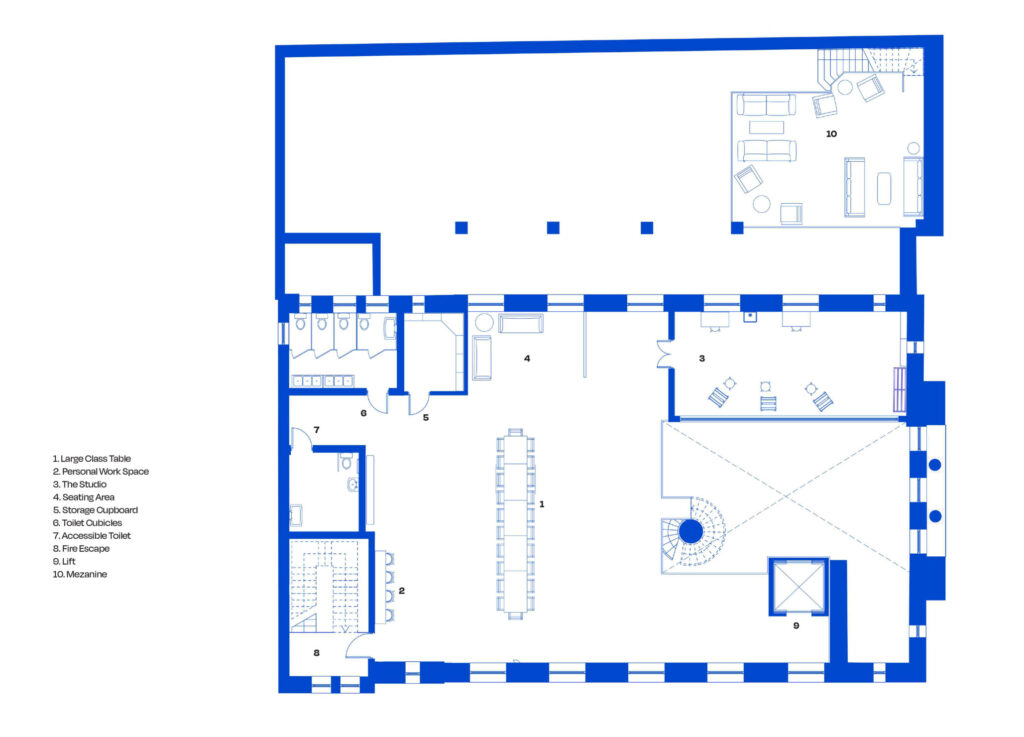
The Studio
The painting studio is where creative visions are brought to life, whilst looking down on the gallery where they will be exhibited in. One of the smaller spaces in the building, the studio can host three users at one time and must be booked in advance for either a class or personal use. To the left of the entry door is a 9m x 4m window that spans across the entire wall, giving artists a view of the entire space around them.
Collaboration Space
The collaboration space is where creatives come together to brainstorm, work together and create. Day to day the area is split into three, one creation table and two breakout zones. This layout can be changed for larger classes by combining the tables
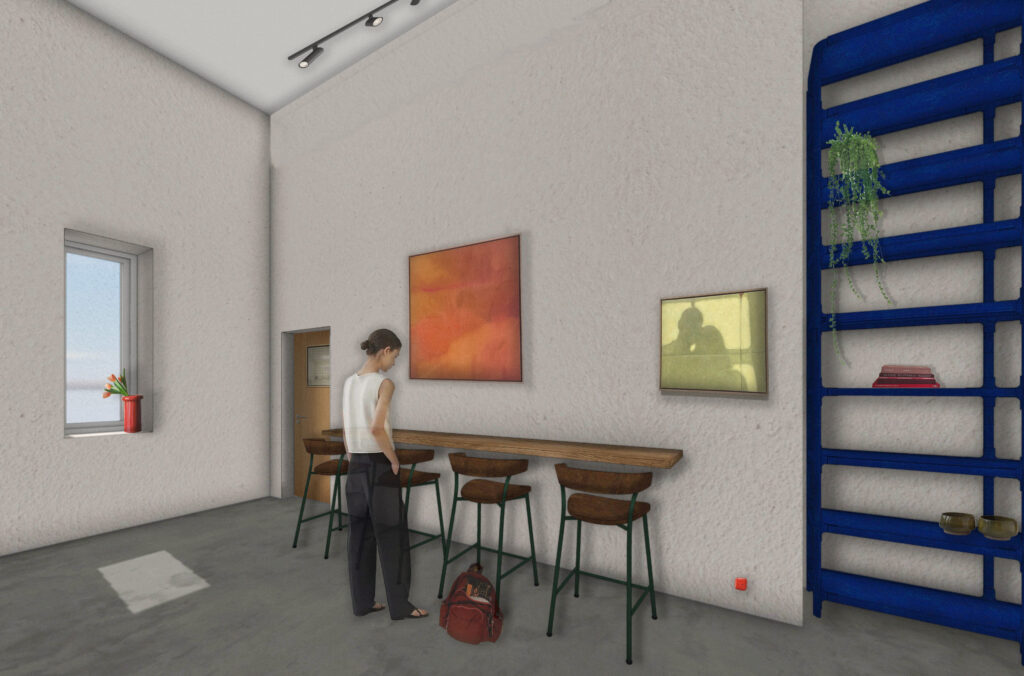
and folding away the partition into the wall. The collaboration space is where a majority of the craft-based classes are held in the building. Centred around the large tables, users can partake in jewelry making, collaging, painting and a range of other unique classes. In the right corner of the space is a private personal work area, the perfect space to plan out upcoming projects or spend some time sketching
Basement
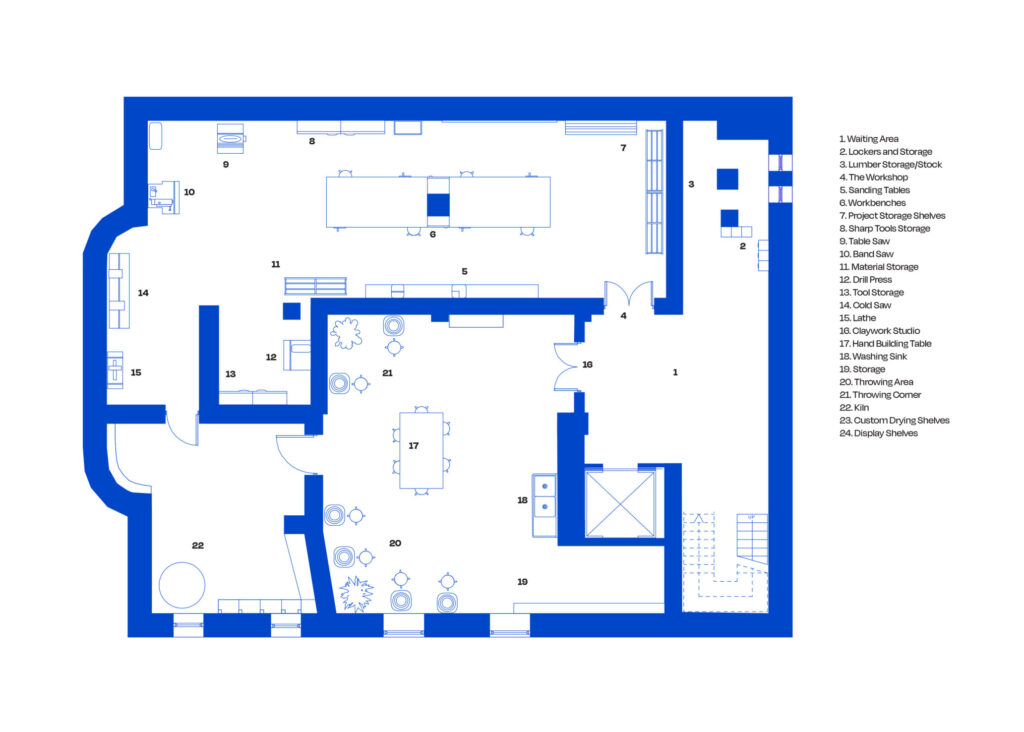
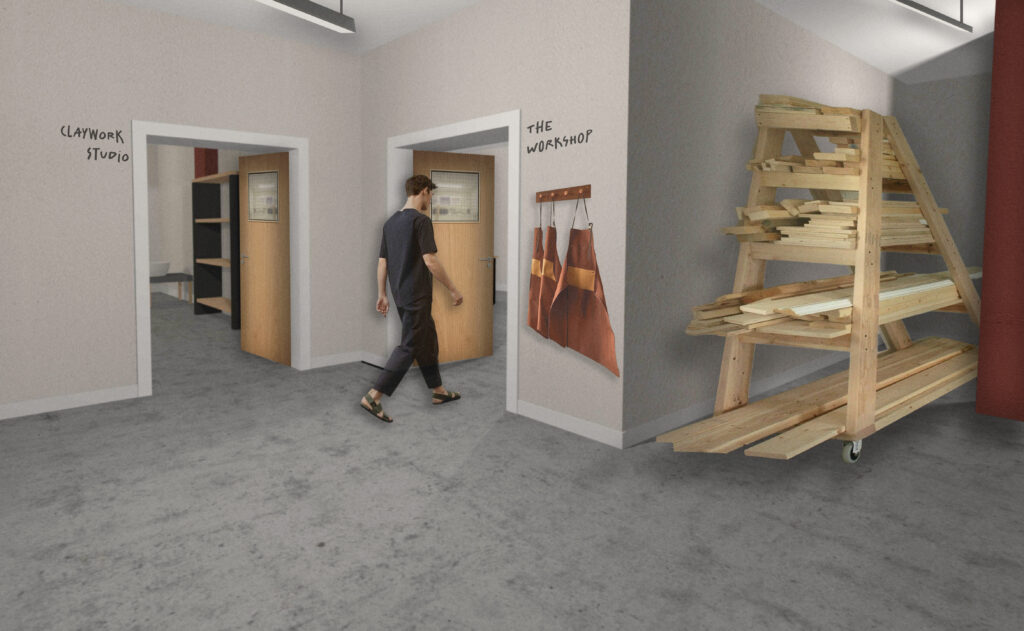
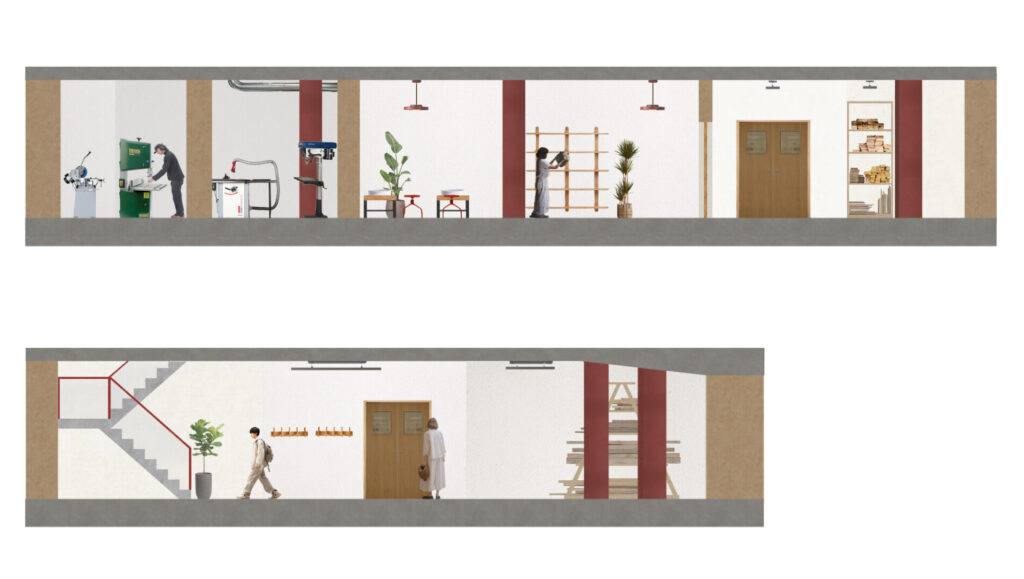
The basement is the home of 3D making in the centre, a loud and messy space for makers to get hands on with their projects. Accessed by a set of stairs to the left of the main entrance, users booked in for classes or personal use can make their way down the stairs into the waiting area. Here, there are a variety of lockers, hangers and benches to store your belongings before heading into one of the spaces. There are two workshops in the basement: the Clay Studio and Wood Workshop. In the corner opposite the stairs, materials for the classes are stored and able to be purchased for whatever the makers needs.
The Workshop
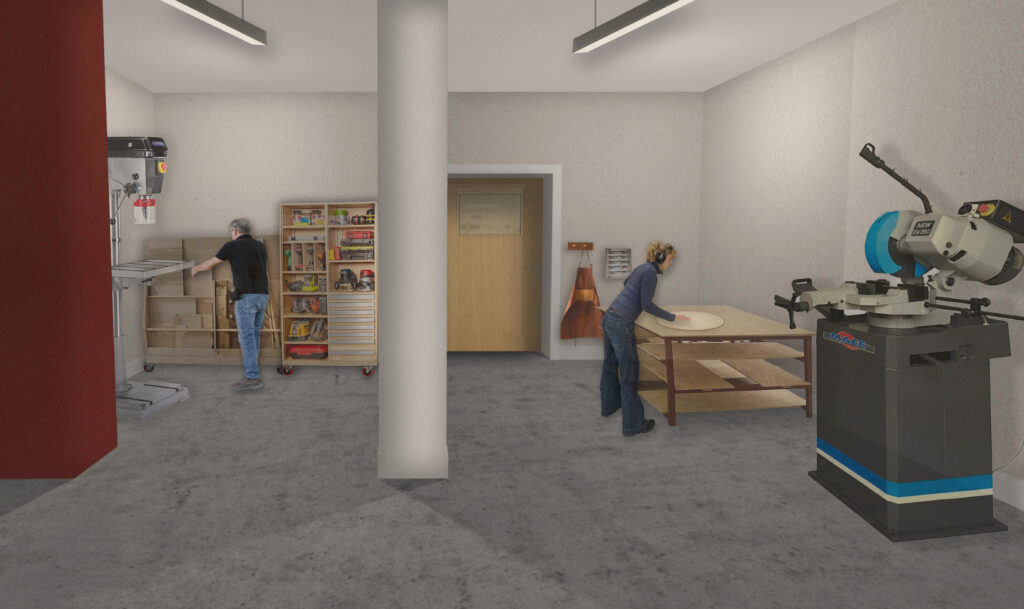
The workshop is broken into two halves, the hand tools area and the machine work area, and can hold a maximum of six makers at one time. The space is accessed by the double doors opposite the stairs that lead up to the ground floor. In front of
the entry way are two project shelving units where, work can be stored before finishing. To the left are the four main workbenches where projects can be sanded, glued and finished. Separating the workbenches is a structural column
with built-in storage to allow easy access to tools while working. A sanding station runs along the east wall of the workshop, leading to the machine work area. This half of the space contains all of the heavy-duty machinery that makers can use to cut, drill and shape their pieces. To the left, around the corner is another small workbench for drawing up plans and making small adjustments to projects.
Clay Studio
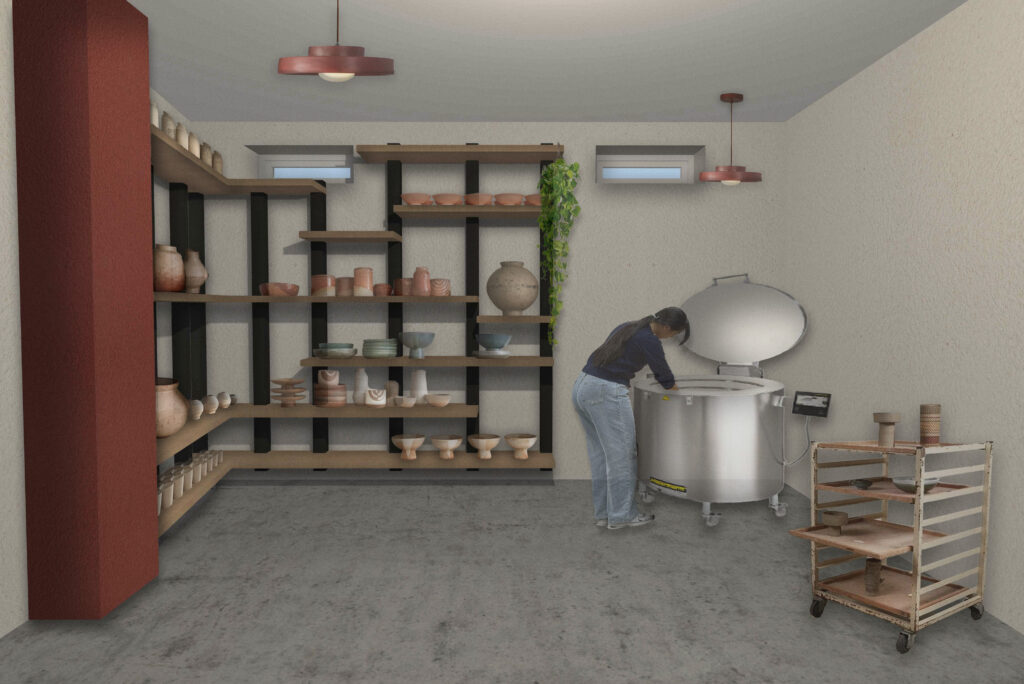
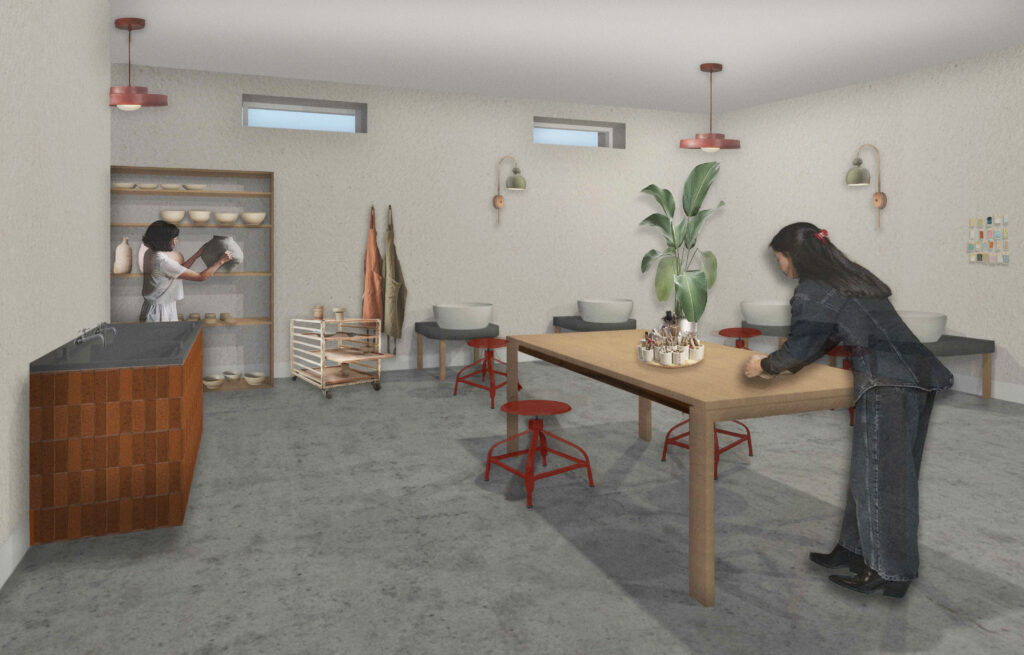
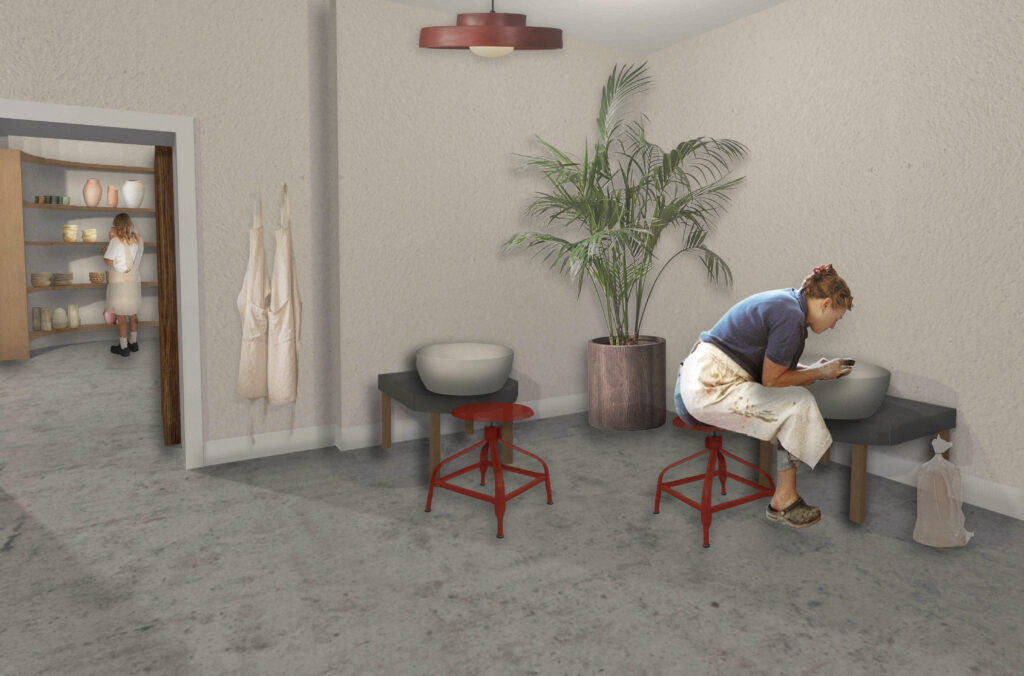
The clay studio is the most popular workshop in Make Space, hosting multiple classes a week for a variety of levels. The studio is centred around the hand-building table, a large social table where each user’s visit starts. Around the perimeter of the space are the pottery wheels, each with a small surround table to place work on. To the left of the entrance is the tiled sink for cleaning tools at the end of each class. Behind this tucked around the corner is a large drying and display shelf, used to store unfinished projects. Opposite the central hand building table is the door that leads into the firing room, which contains the kiln.
The space also hosts two large custom drying racks that have been built into the walls, mimicking their unique shapes.