Lima Zhao
(She/Her)
As a Product Designer, my curiosity drives me to explore how people experience and connect with the world around them. I believe design is about creating meaningful interactions that reveal overlooked perspectives and encourage deeper emotional engagement. Through storytelling, sound and multi-sensory experiences, I investigate how user experience can shape the way people perceive places, narratives and everyday encounters.
At the core of my practice, I aim to create immersive and reflective experiences that invite people to slow down, notice and reconnect. I have a passion for visual communication and experience-led design, crafting thoughtful outcomes that resonate emotionally and encourage new ways of engaging with people, environments and hidden stories.
Drift
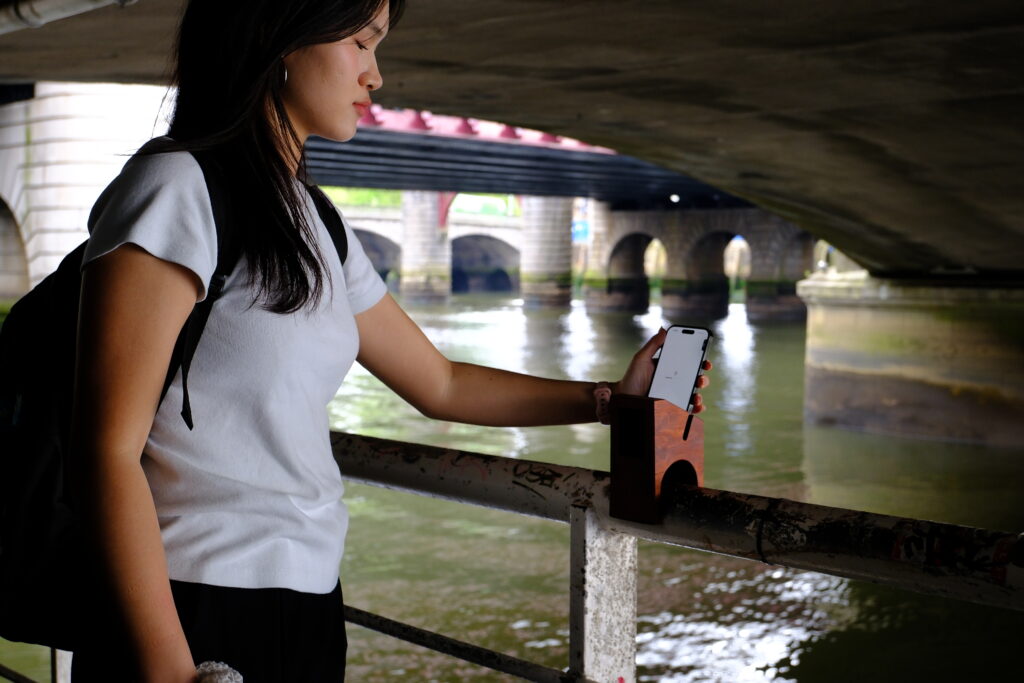
Drift is a multi-sensory invitation to meet the River Clyde.
“Along the Broomielaw, four stations invite you to experience the river through touch, sound, sight and smell. Through the smell of the sea at low tide, the texture of a railing, the acoustics beneath a bridge and the light on the water at the right moment.
Drift cards speak in the river’s own voice, guiding you between stations without telling you what you’ll find. Clyde’s Logbook is found in cafés, libraries and public
spaces across the city. It travels with you through the experience, recording what you discover along the way.
There is no fixed route.
No destination.
The river decides what you encounter and when.
All you have to do is pause.”
This project explores how people might reconnect with the River Clyde through a more-than-human and multi-sensory experience. Rather than presenting the river as a backdrop or a historical object, the project approaches the Clyde as an active participant with its own rhythms, memories and presence.
Through research into psychogeography, ecology, public interaction and place-based storytelling, the project proposes a series of sensory encounters designed to encourage slower observation and renewed attention. The developed outcome focuses on listening as one example station within a wider multi-sensory framework. Visitors are invited to engage with a curated soundtrack that reveals hidden layers of the river; including traces of shipbuilding, environmental change and contemporary soundscapes. Supported by a physical speaker amplifier, interface concept and accompanying printed artefacts.
Alongside this, the Clyde’s Logbook and drifting cards act as interpretive tools, encouraging reflection, curiosity and moments of pause. Together, these elements create an experience that asks: what changes when we stop ignoring the river, and begin looking to it instead?
Rather than explaining the Clyde, the project creates space for people to notice, imagine and build new relationships with it, ultimately encouraging a renewed sense of appreciation, pride and emotional connection, allowing the river to once again feel special within everyday life.
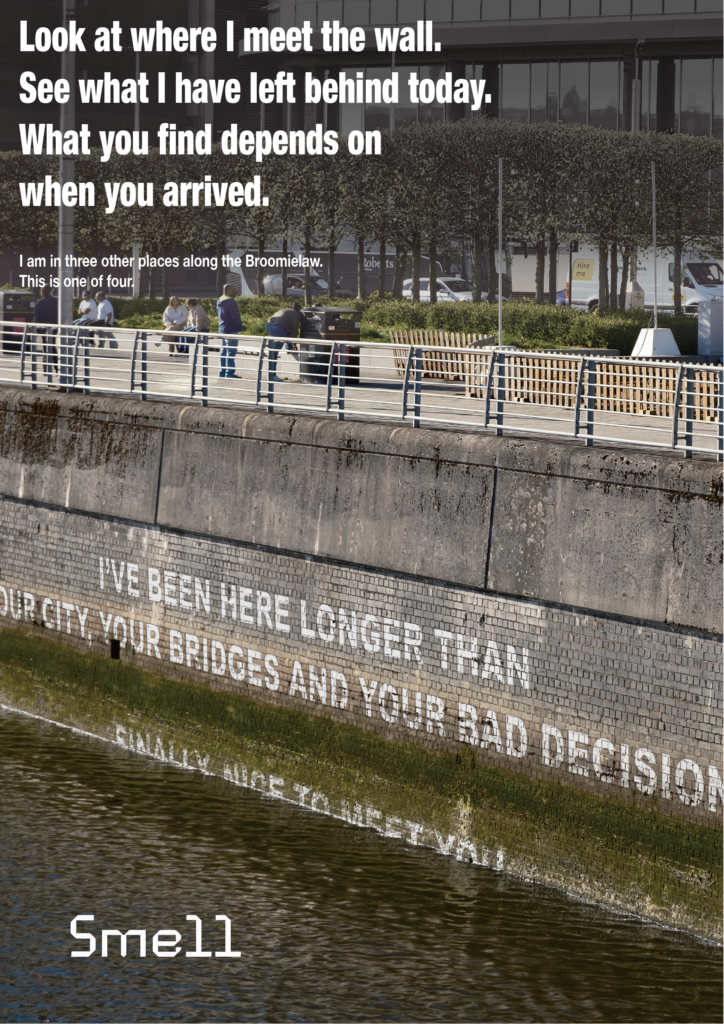
Smell Station
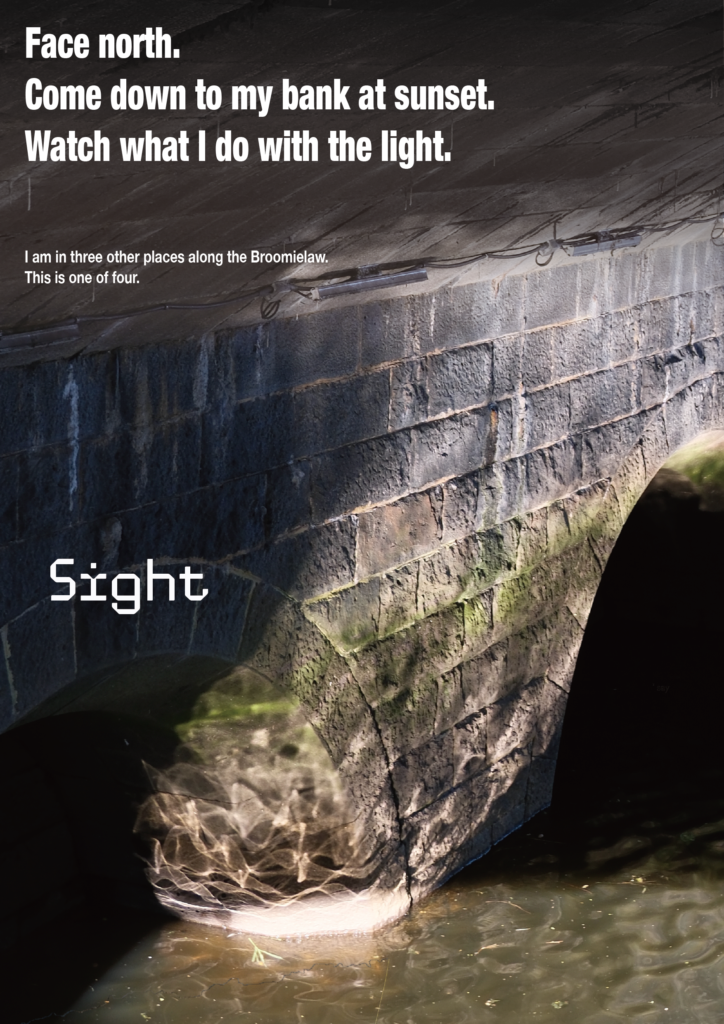
Sight Station
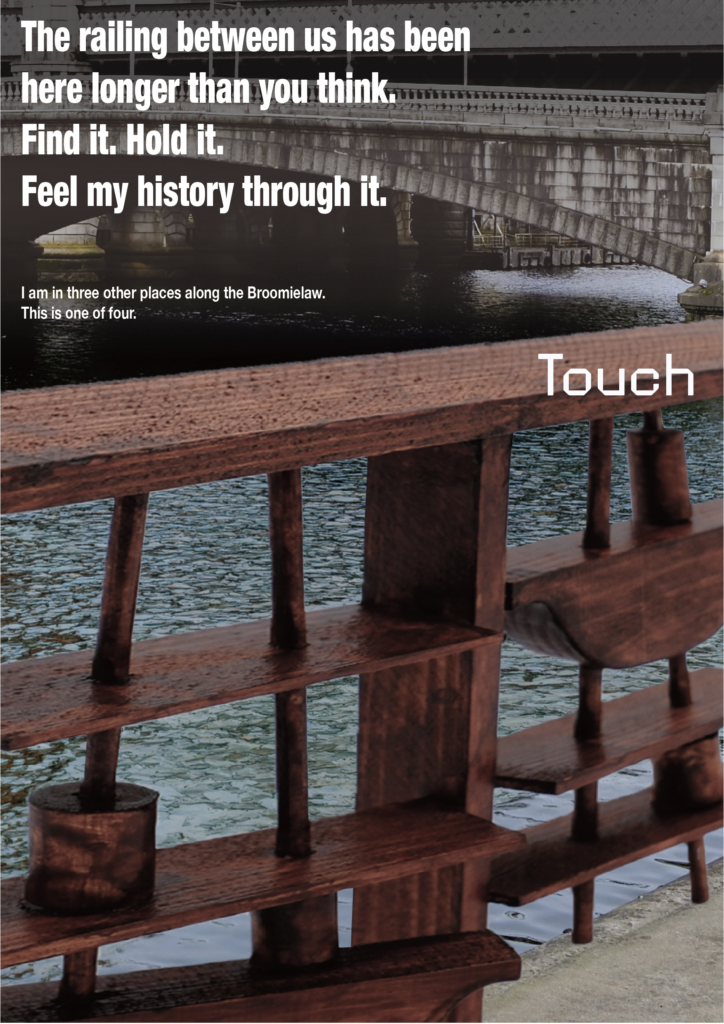
Touch Station
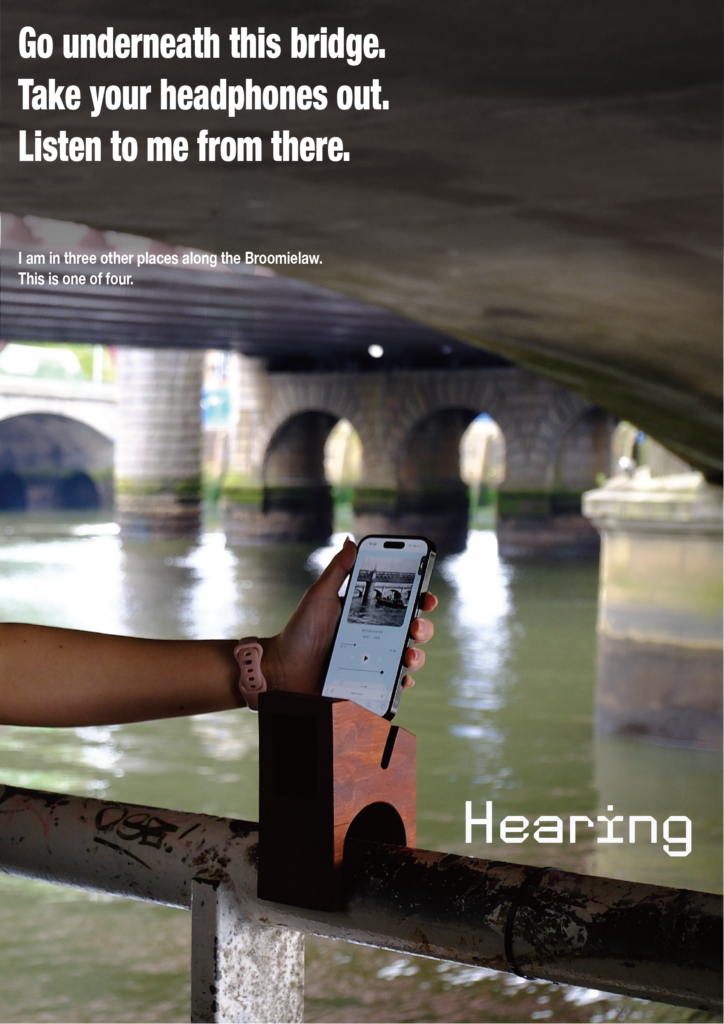
Hearing Station
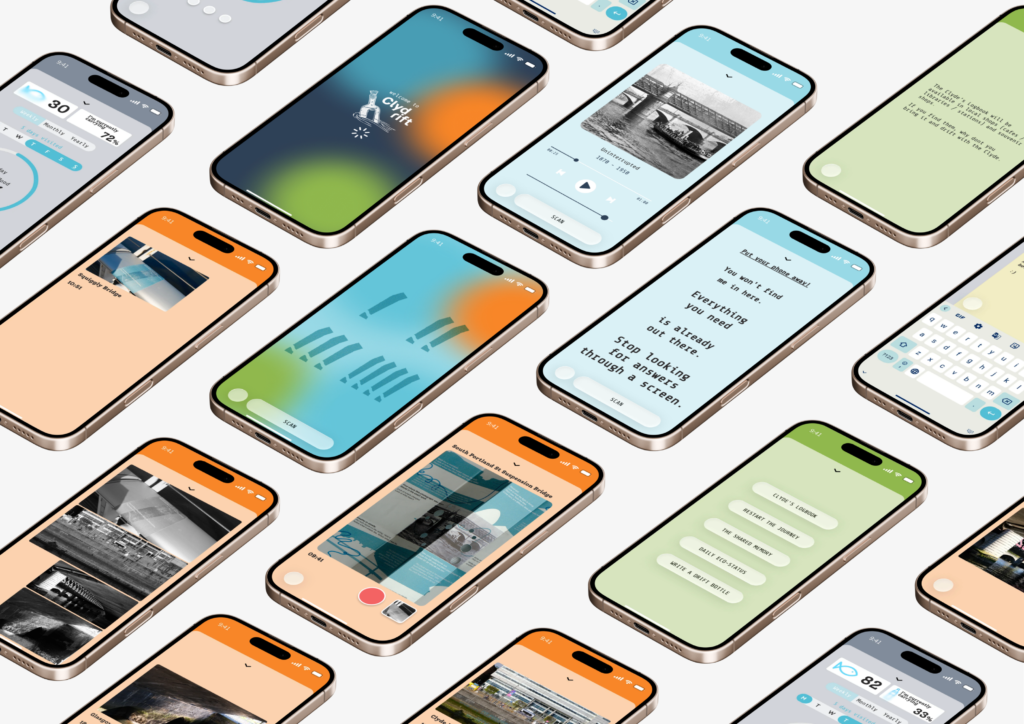
Clydrift App Interfaces
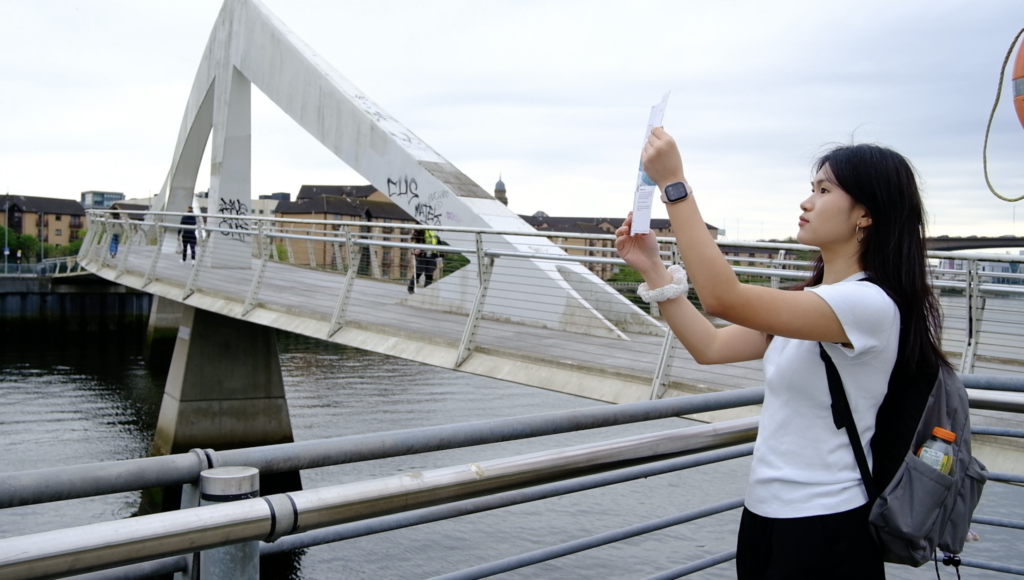
Exploring the River with Clyde's Logbook
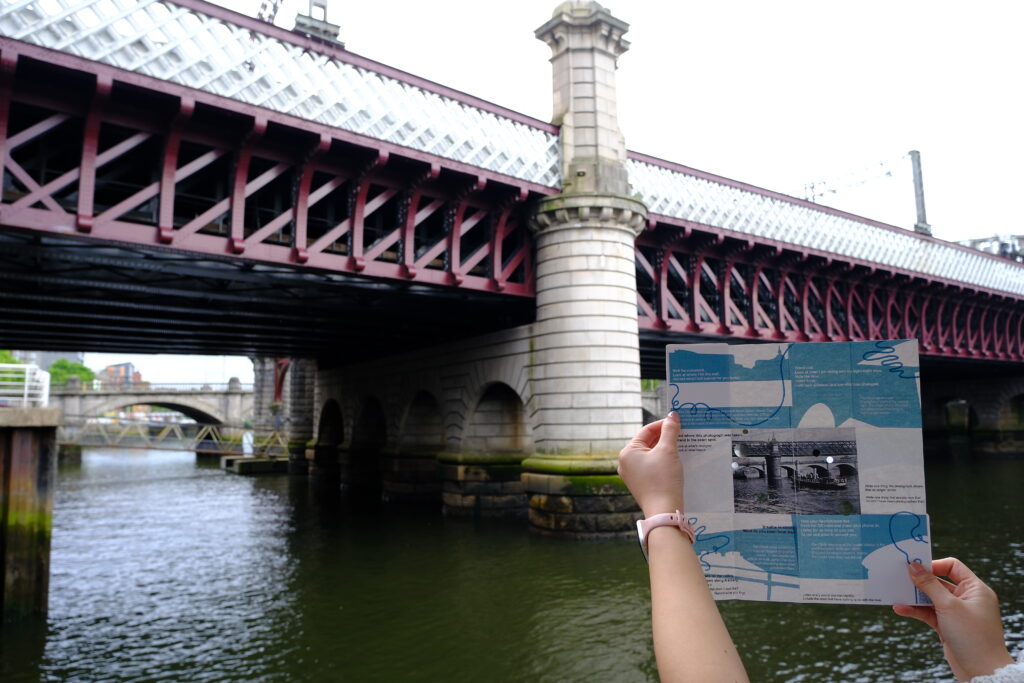
One of the activities
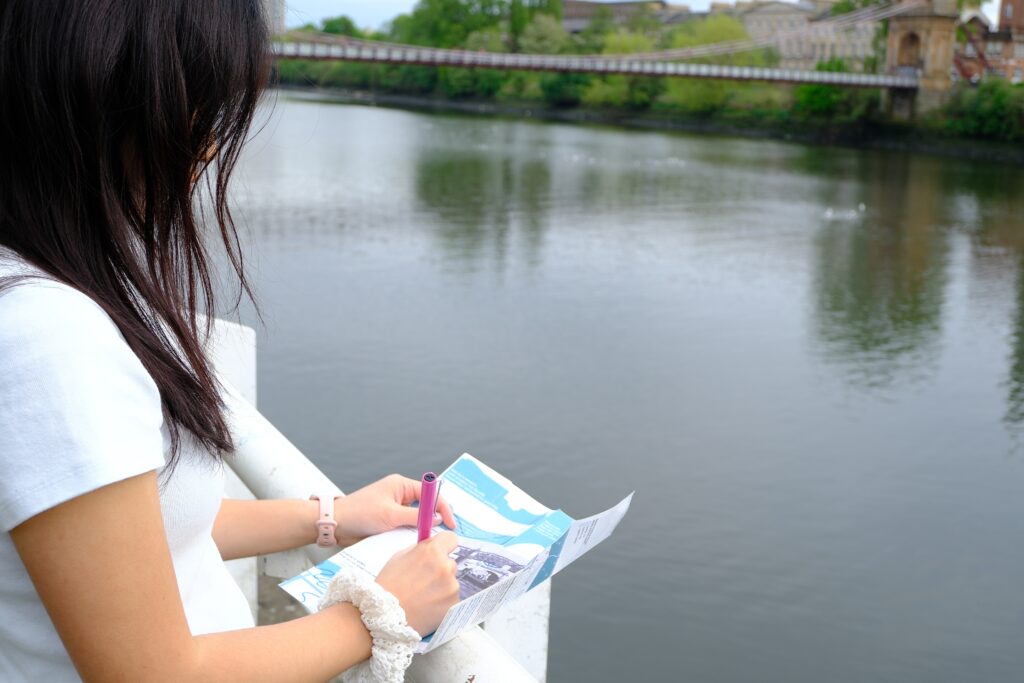
Reflecting with the Clyde
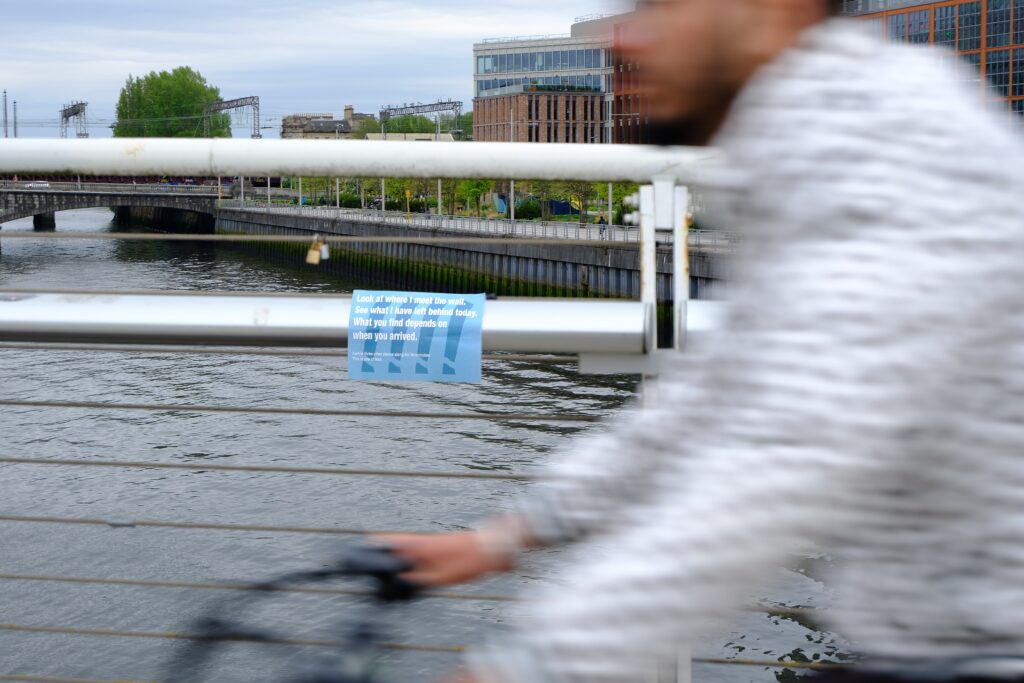
Drift Card
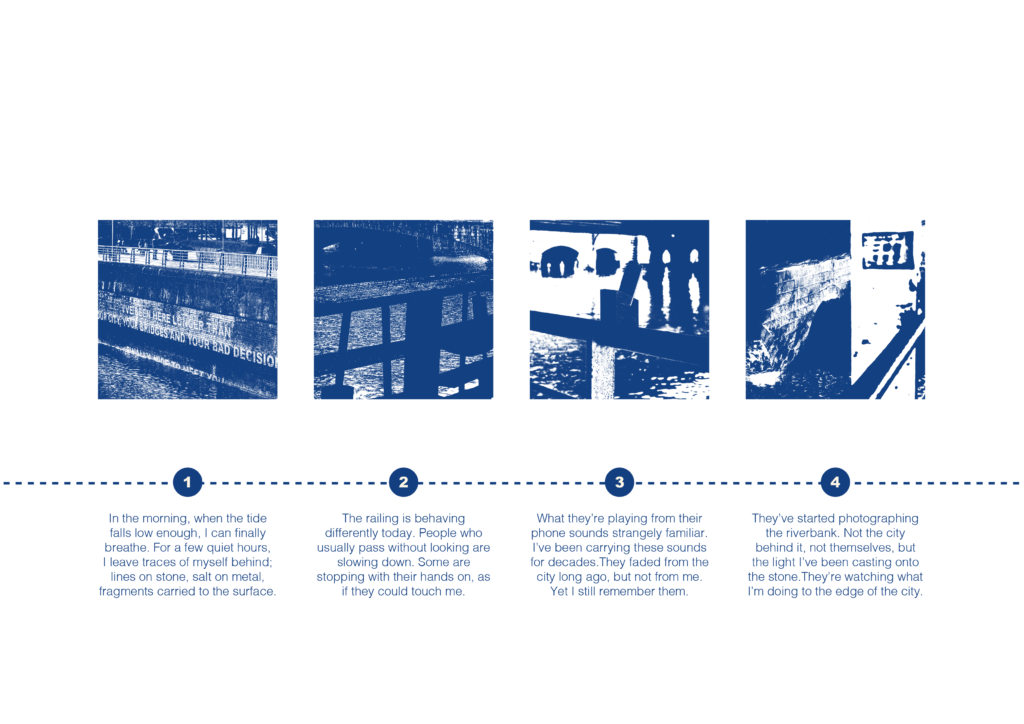
Clyde's Experience Map
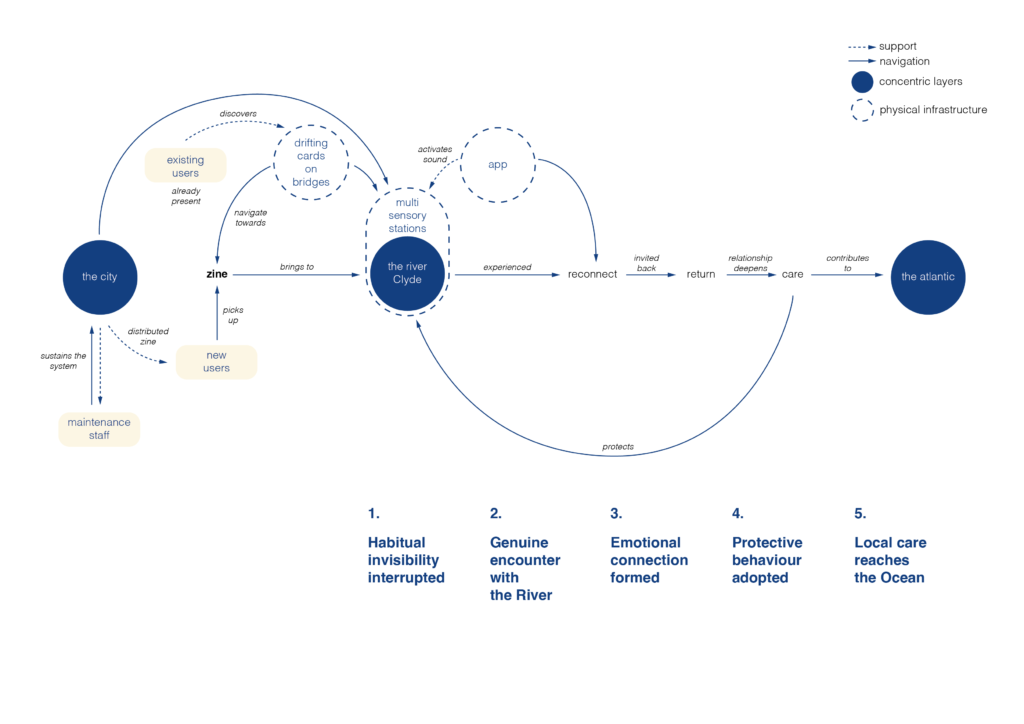
System Map
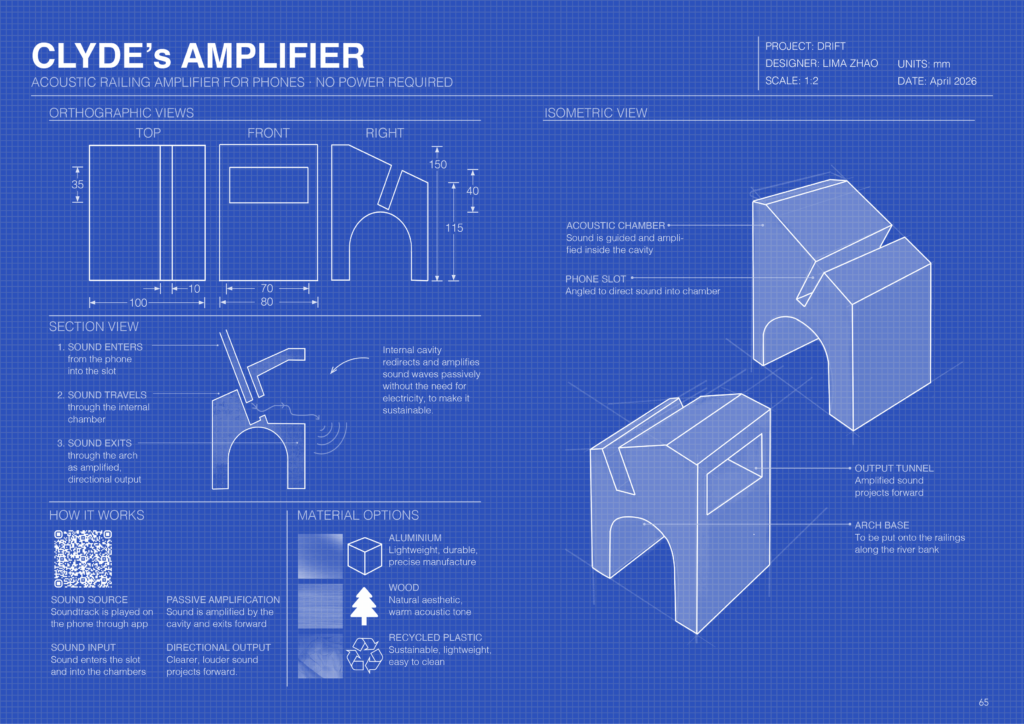
Speaker Amplifier Blueprint
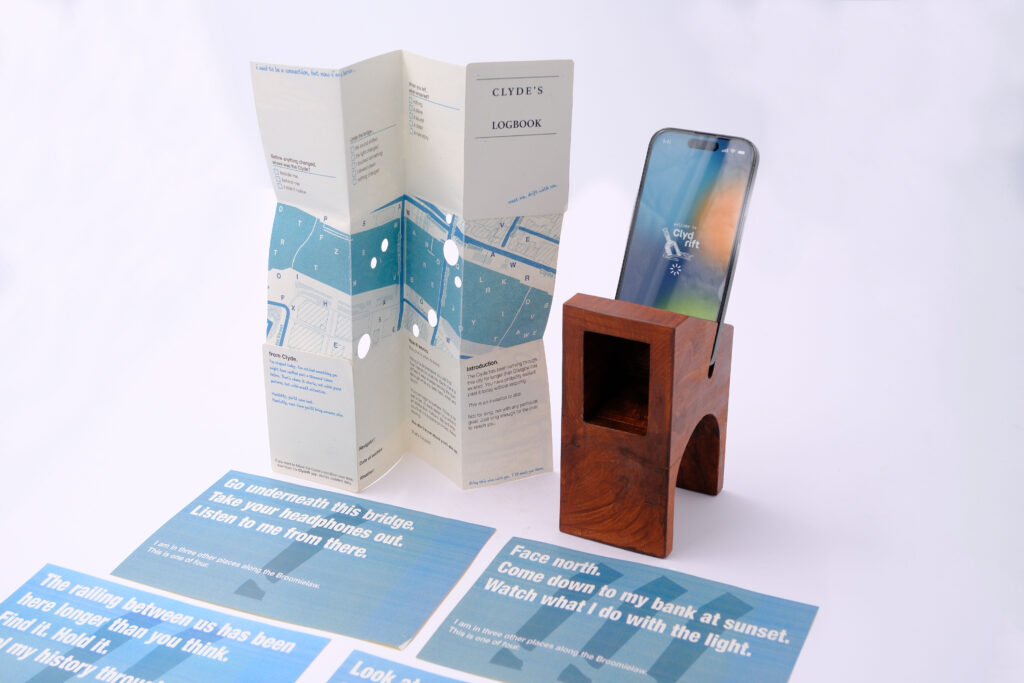
Physical artefacts developed for the listening station, including the Clyde's Logbook, drift cards and speaker amplifier.
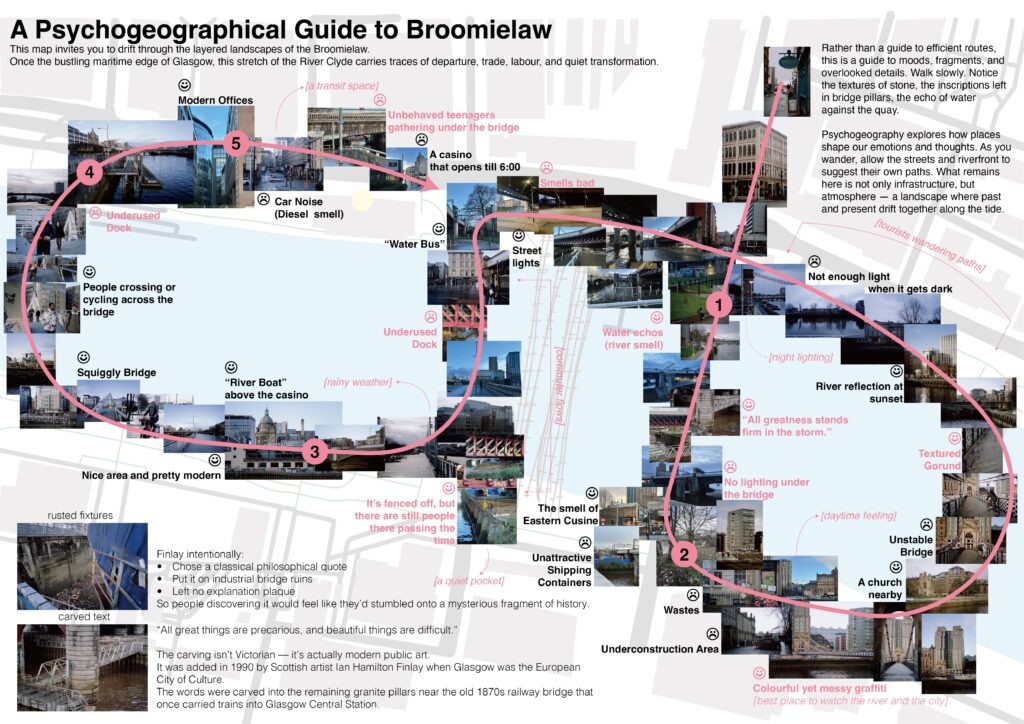
Psychogeographical Guide
ClydeGO
‘ClydeGO‘ is an annual summer festival (experience-led project) that invites people to celebrate the River Clyde by imagining what it might sound like if the river had a voice. Through music, storytelling and collective participation, the project repositions the Clyde not as a backdrop to the city, but as an active presence with its own memories, emotions and changing rhythms.
Throughout the year, Glaswegians are invited to contribute recordings, photographs, written reflections and poems created from the perspective of the river. These submissions become a growing archive of imagined ecological voices and lived experiences along the Clyde. At the centre of the project is ‘Auraland’, a speculative music label that transforms these collected materials into original musical releases, each representing a different month of the year and reflecting seasonal, environmental and cultural changes experienced by the river. Positioned between music, activism and place-based experience, Auraland treats sound as a medium for representation; transforming overlooked ecological stories into listening experiences that invite emotional engagement rather than passive consumption. Through curated sonic identities and narrative-led releases, the project explores how music can act as a bridge between people and environments that are often unheard.
The resulting soundtracks are revealed annually at the ‘ClydeGO Festival’, creating a moment where communities gather to listen, reflect and celebrate together.
Using the River Clyde as its context, ClydeGO proposes an alternative way of experiencing urban ecology: one that encourages audiences to listen more carefully to the places around them and recognise their changing conditions. Rather than speaking for nature, the project creates opportunities for ecological voices to be interpreted, shared and felt through sound, visual and storytelling.
By giving space to the imagined voice of the Clyde, the project encourages people to form deeper emotional connections with the river and rediscover a sense of appreciation, pride and care for it as a living part of Glasgow.
Ultimately, Auraland aims to build renewed appreciation, care and collective pride for local ecologies, encouraging people to see them not as background landscapes, but as places with stories worth hearing.
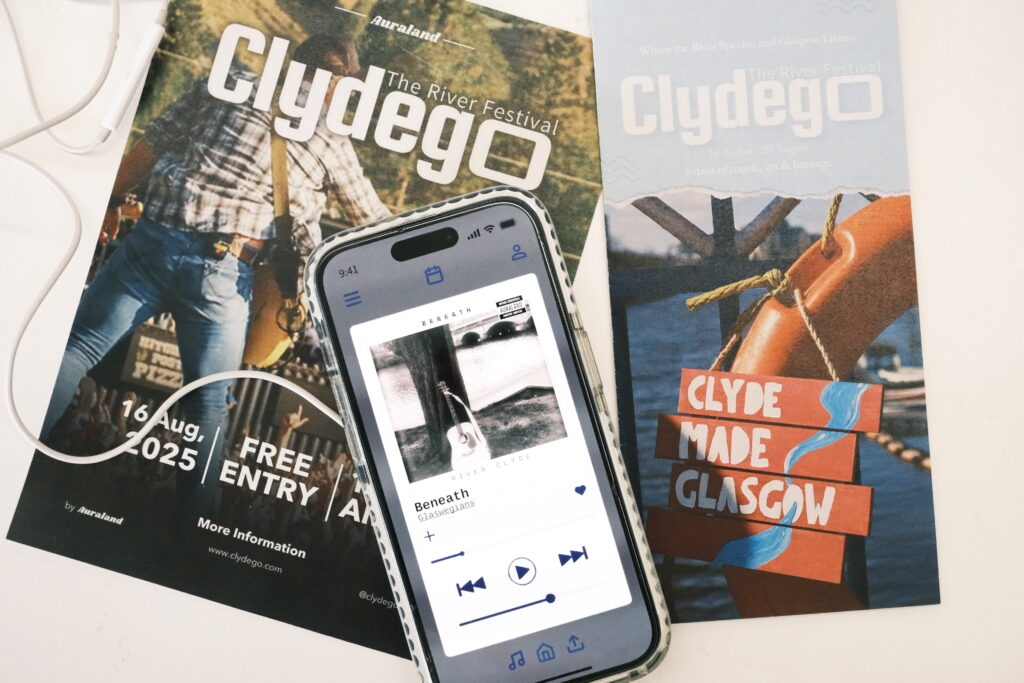
ClydeGO Festival
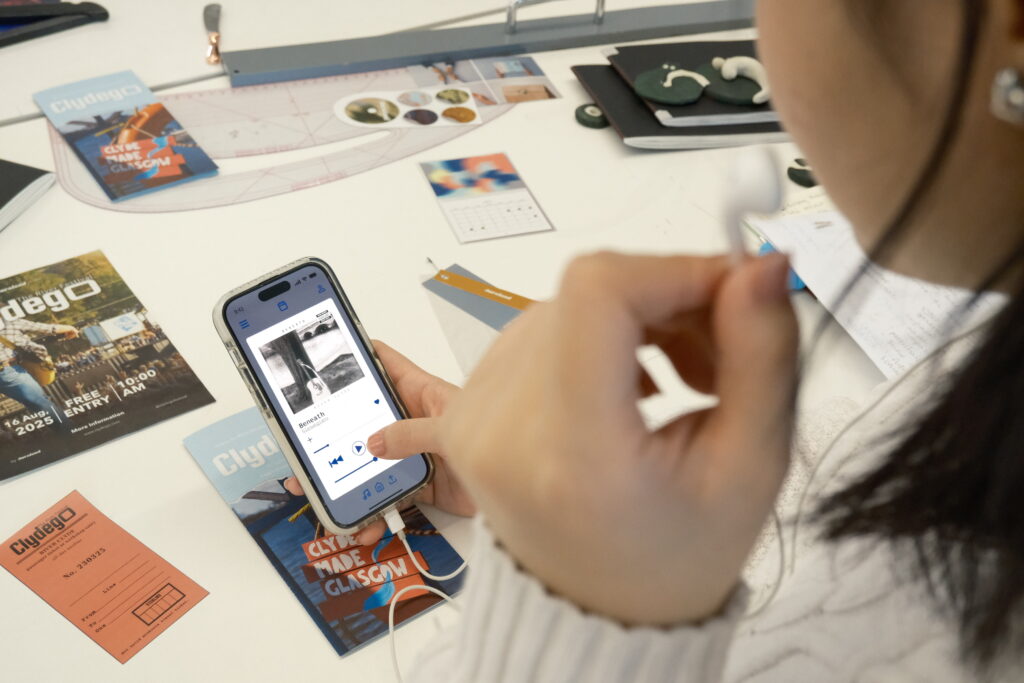
ClydeGO Streaming App
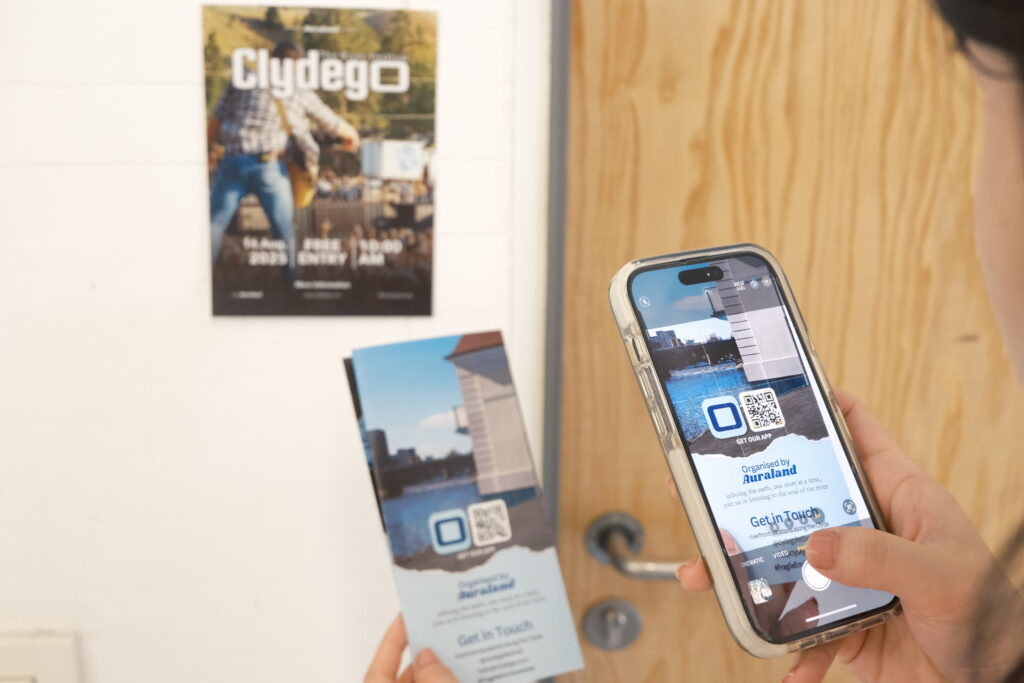
Touchpoints
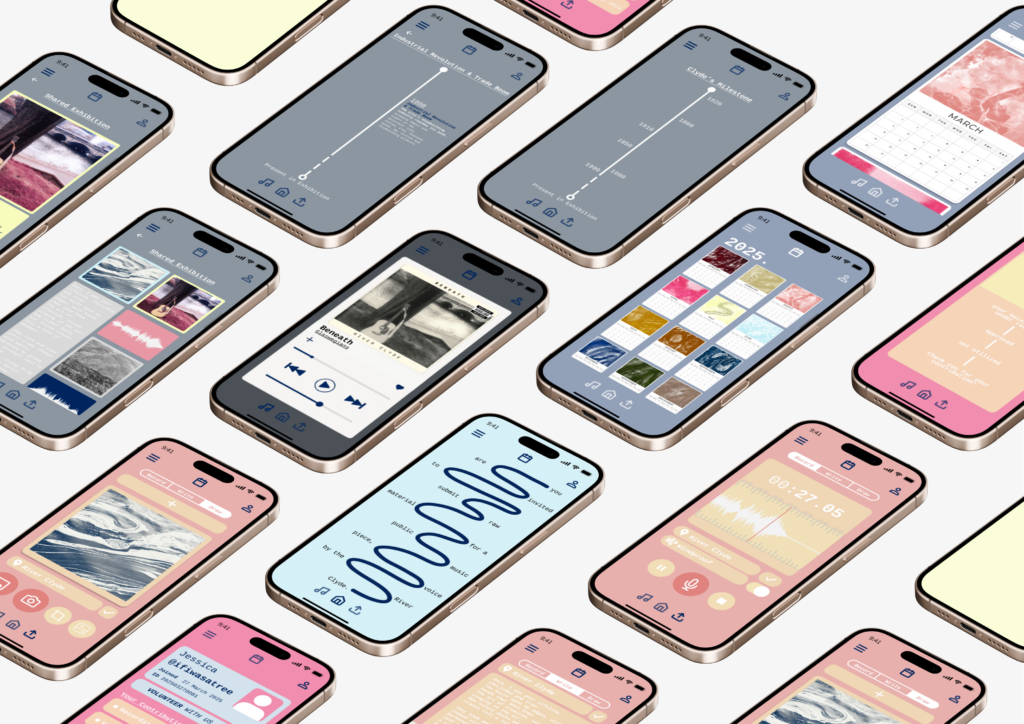
ClydeGO App Interfaces
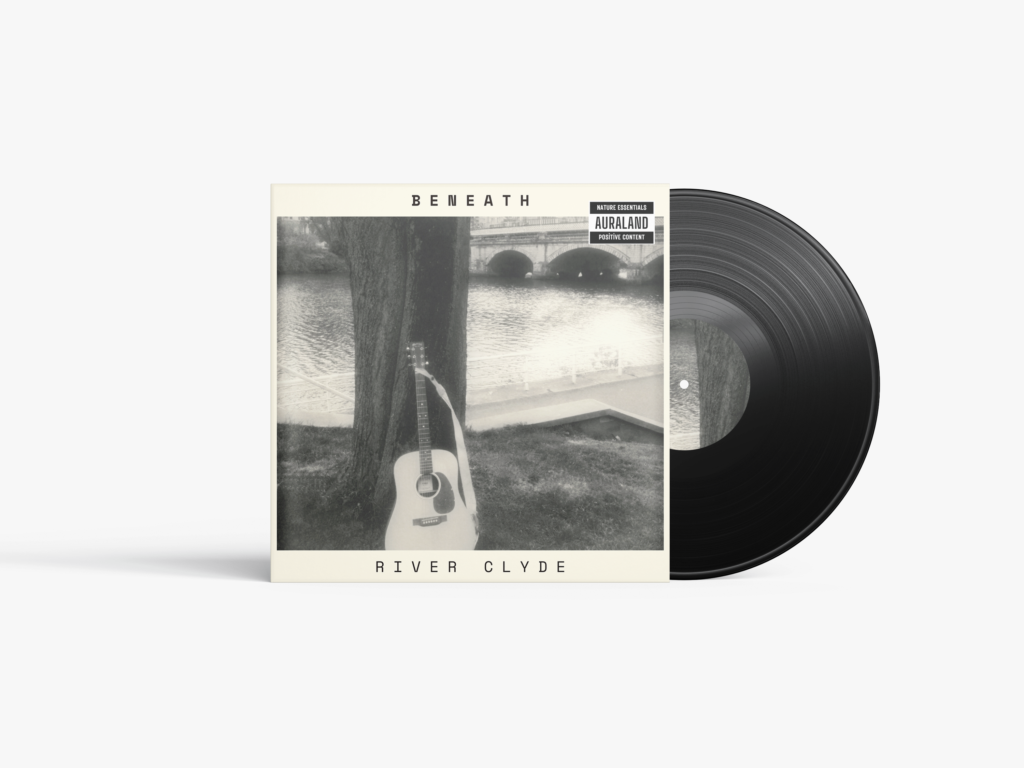
ClydeGO Album 2025
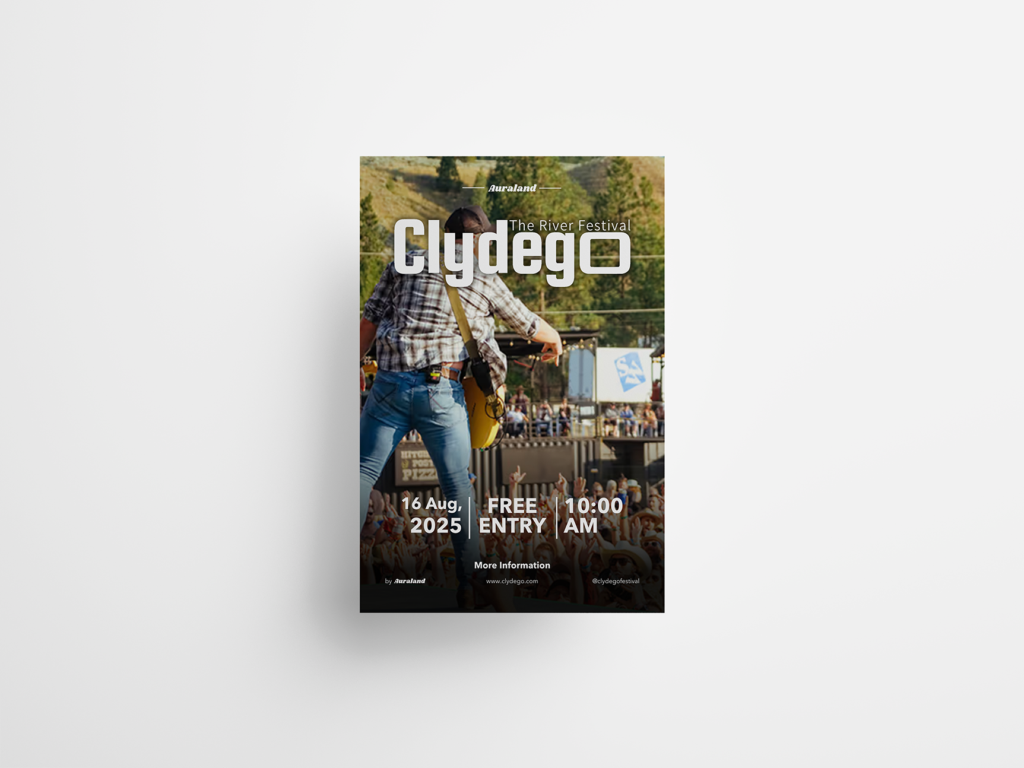
ClydeGO Festival Poster
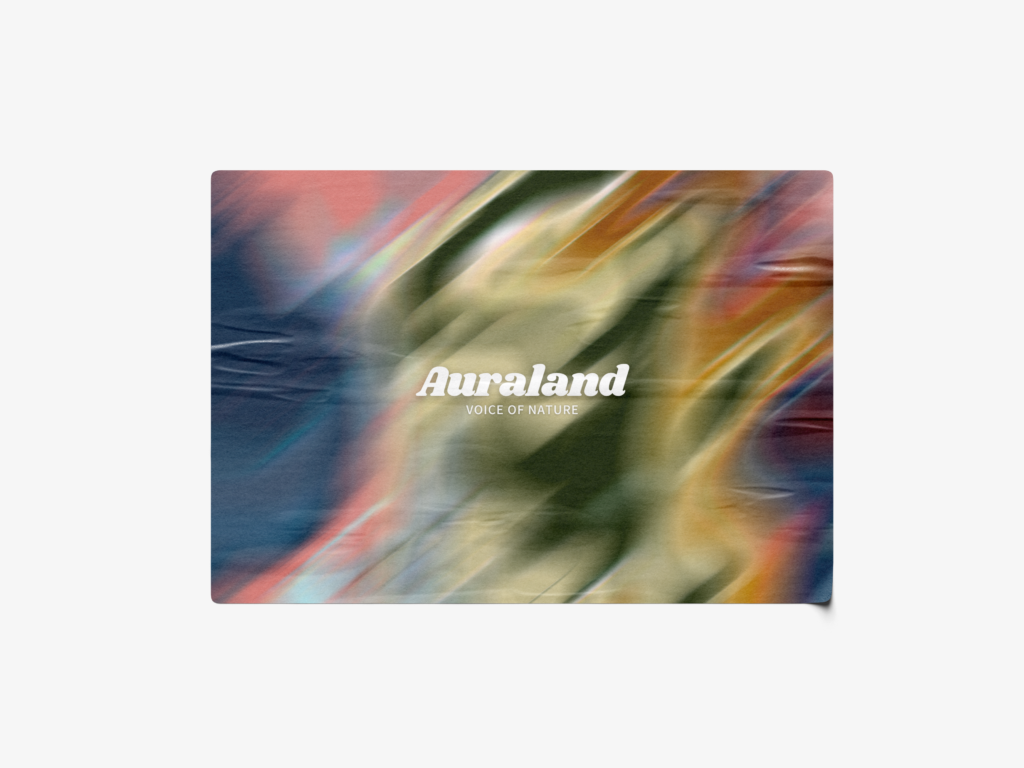
Brand Sticker
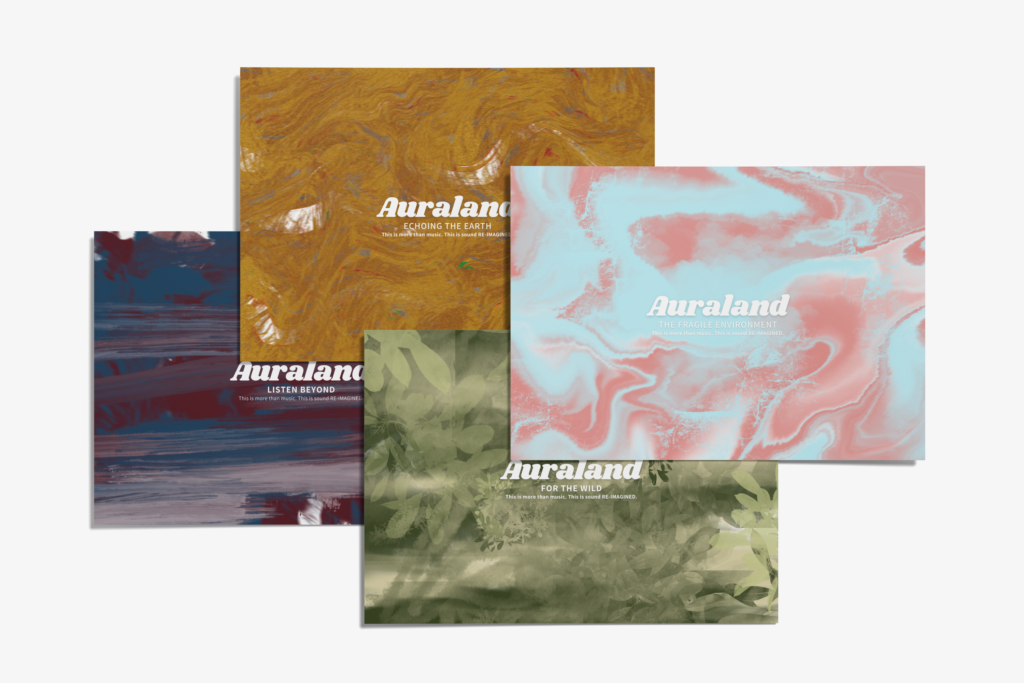
4 Seasons representing the year
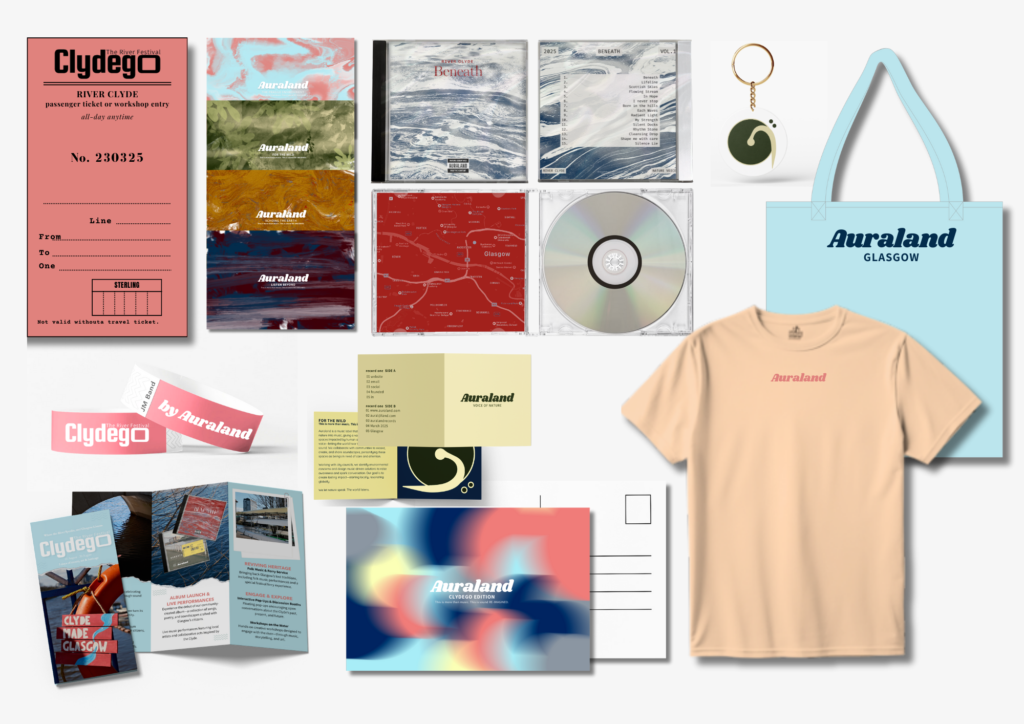
Branded Merchandise
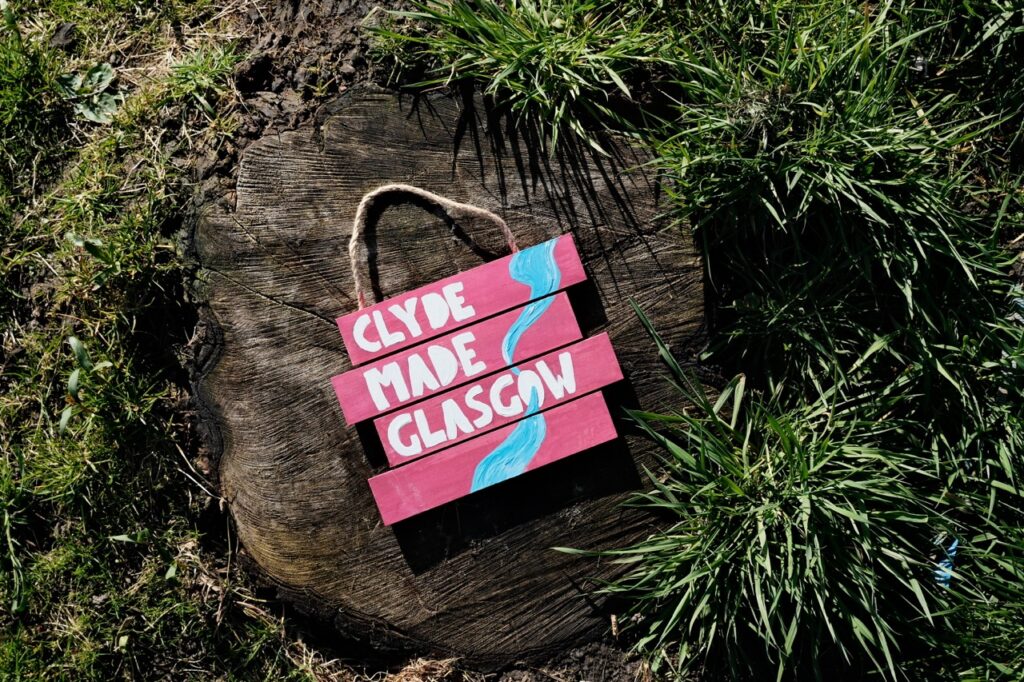
Daily Signage
Living Threshold Biome
A Doorway Into Richer Microbial Living Domestic
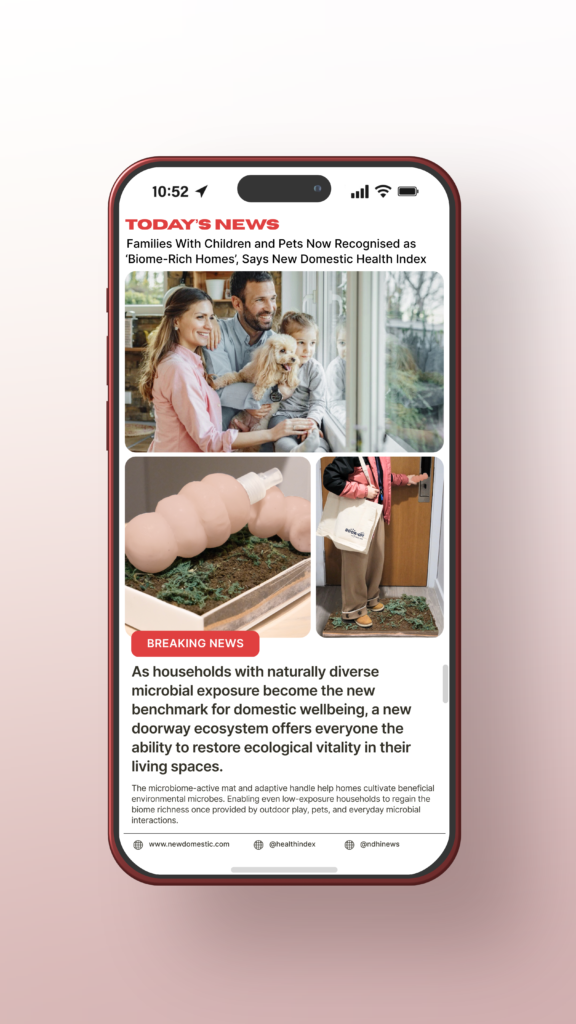
This project explores how domestic environments might become active participants in supporting human health. The project proposes a speculative doorway ecosystem consisting of a microbiome-active entry mat and an adaptive door handle that work together to capture, cultivate, and circulate beneficial environmental microbes within the home.
Emerging from reflections on post-pandemic lifestyles, the project responds to increasing sanitisation practices and more interiorised patterns of living that have reduced everyday microbial exposure. While hygiene has become associated with safety, diminished contact with environmental microbiota may also contribute to less diverse domestic ecosystems and reduced opportunities for immune adaptation.
Positioned at the threshold between inside and outside, the doorway is reimagined as a site of ecological exchange rather than separation. Through everyday interactions; stepping in, touching a handle, entering home, the system quietly reintroduces microbial diversity into daily life with minimal behavioural change required from residents.
Extending beyond the individual household, the project introduces a community tile-exchange system that enables microbial circulation between homes, forming a shared microbial commons. By redistributing ecological health benefits collectively, the proposal explores new relationships between domestic care, environmental connection, and long-term wellbeing.
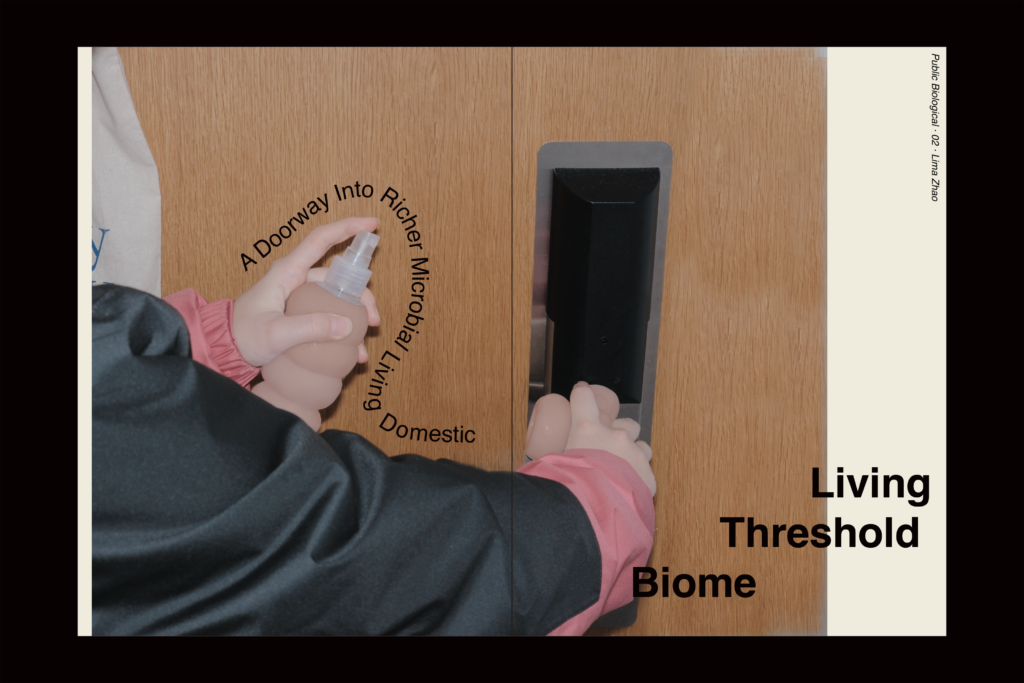
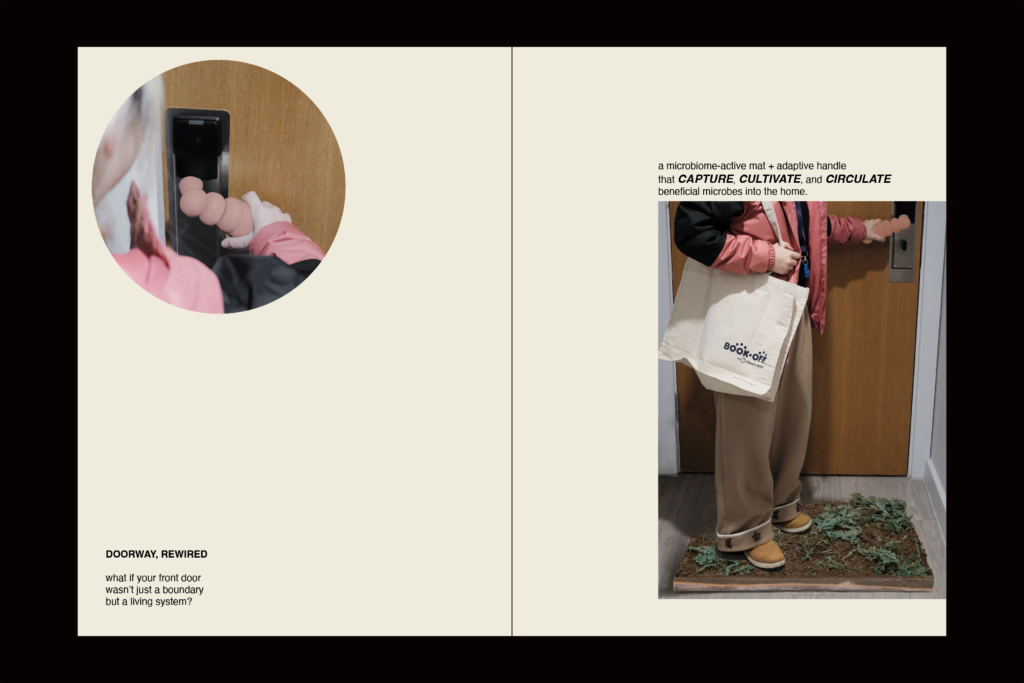
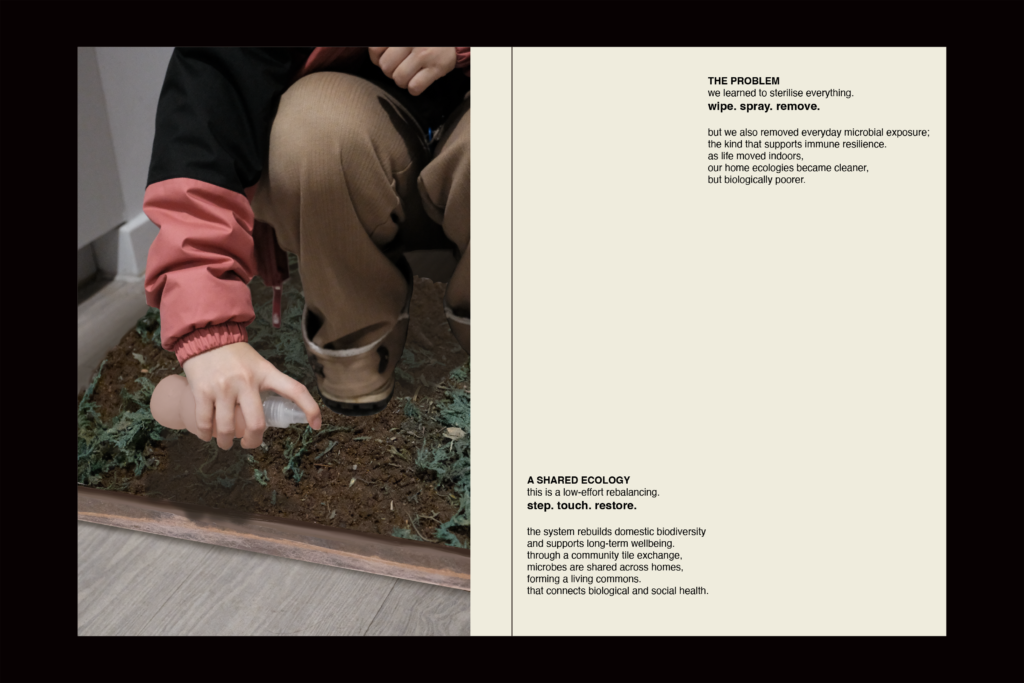
A zine illustrating the potential user journey.
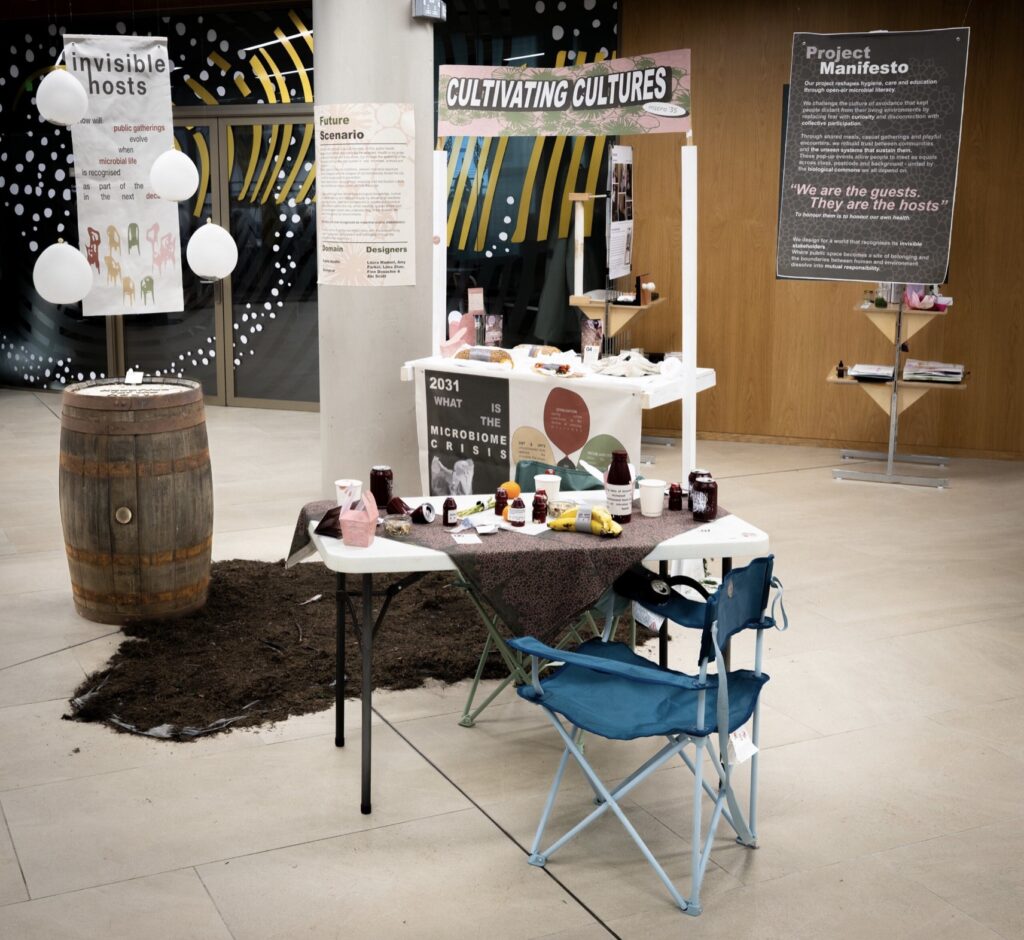
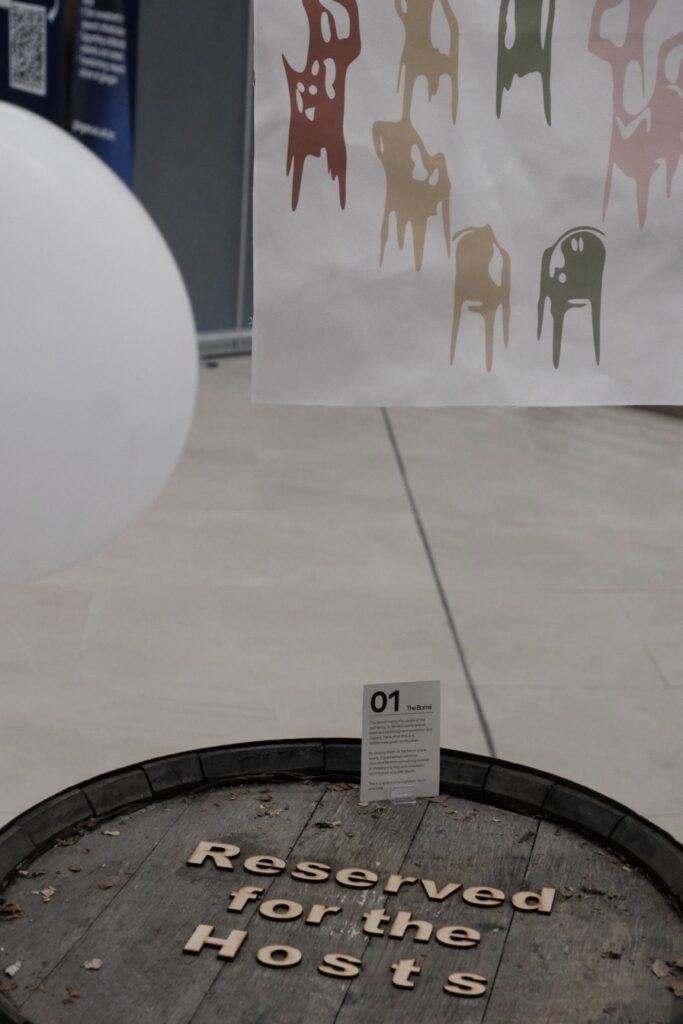
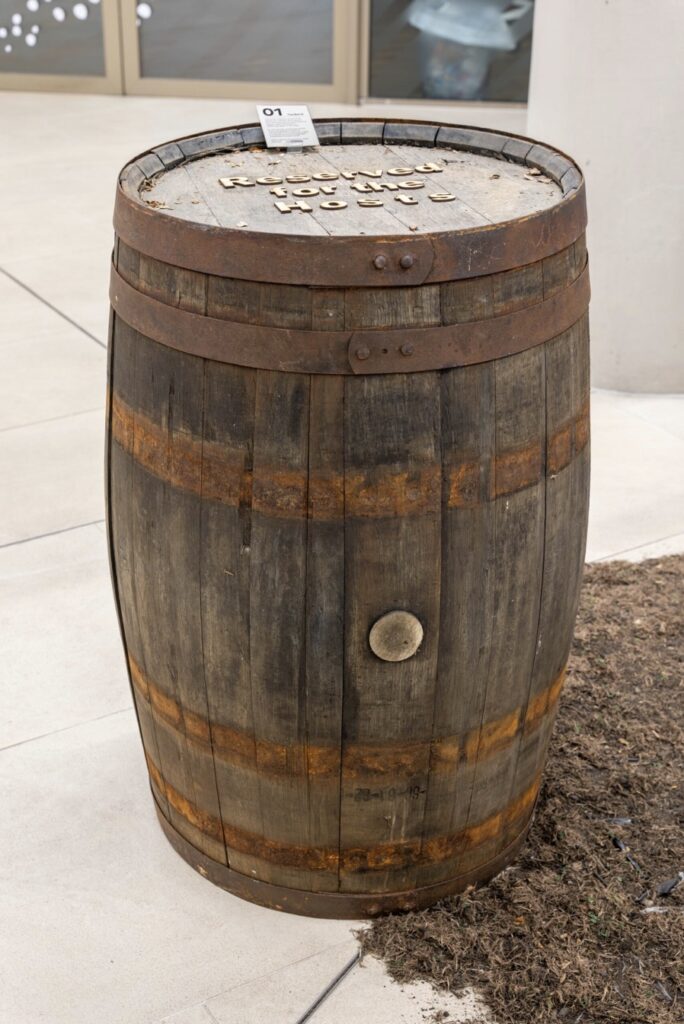
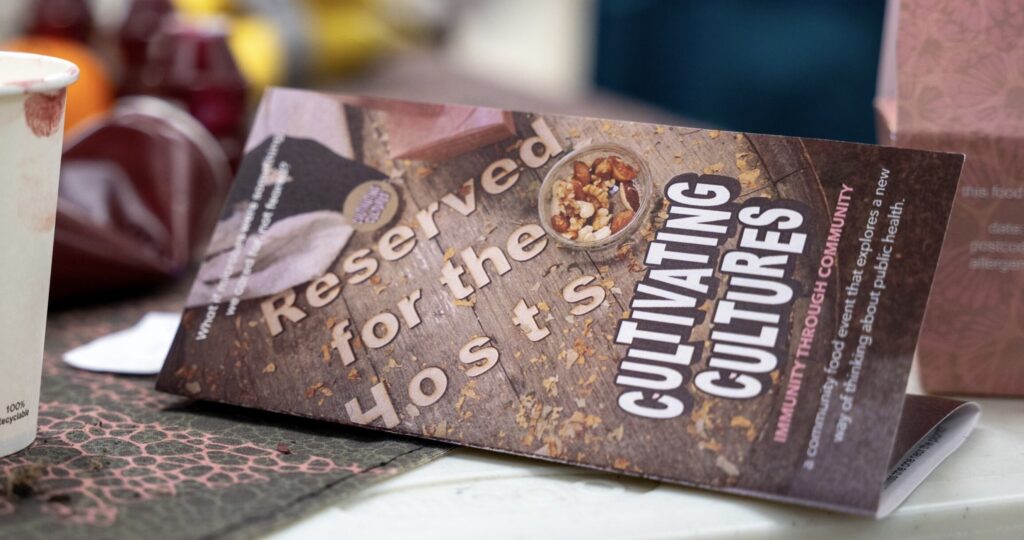
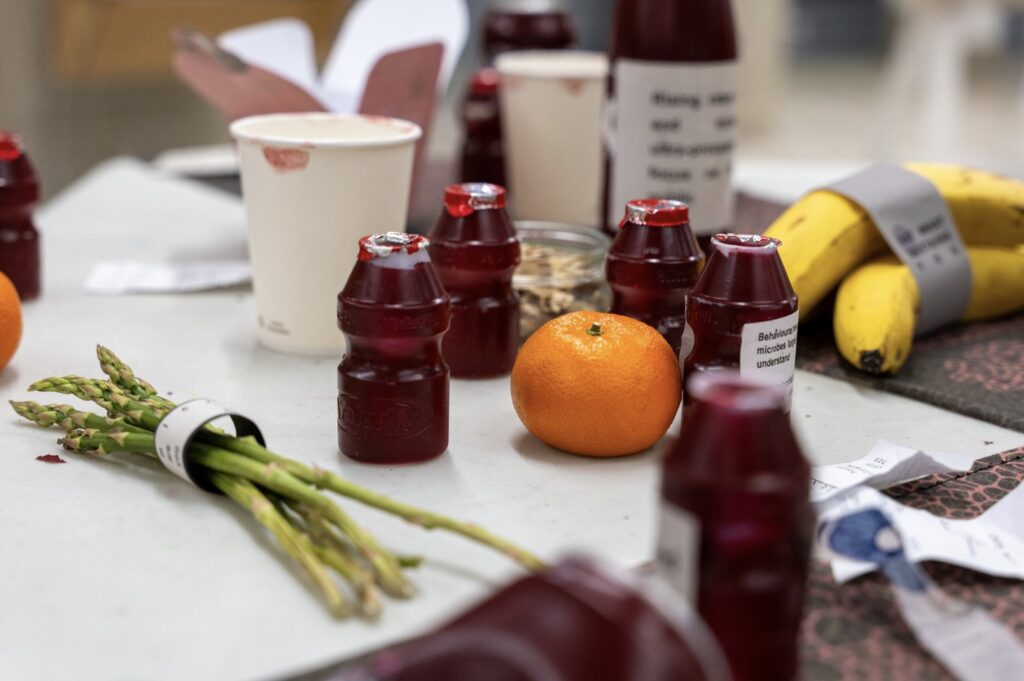
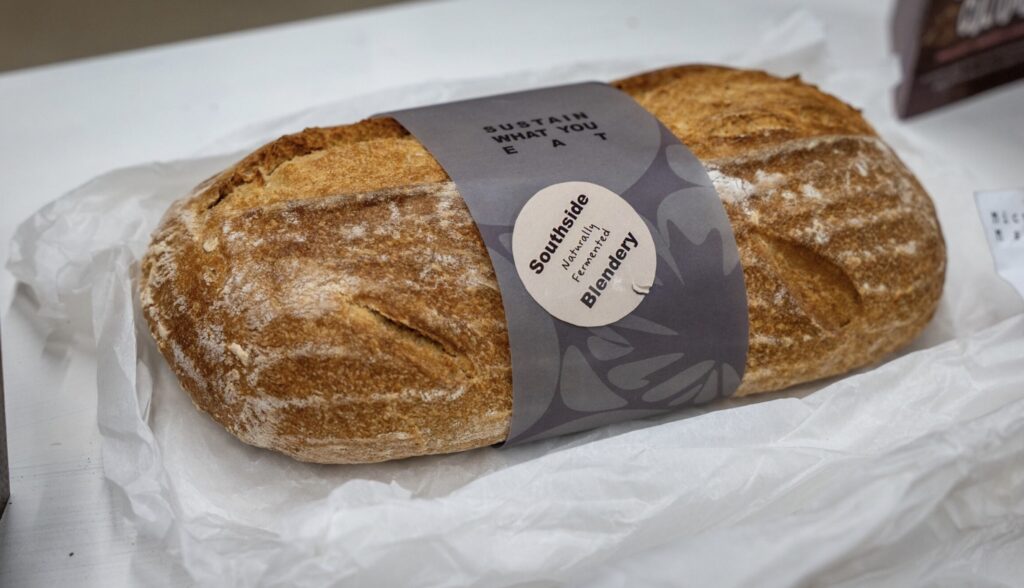
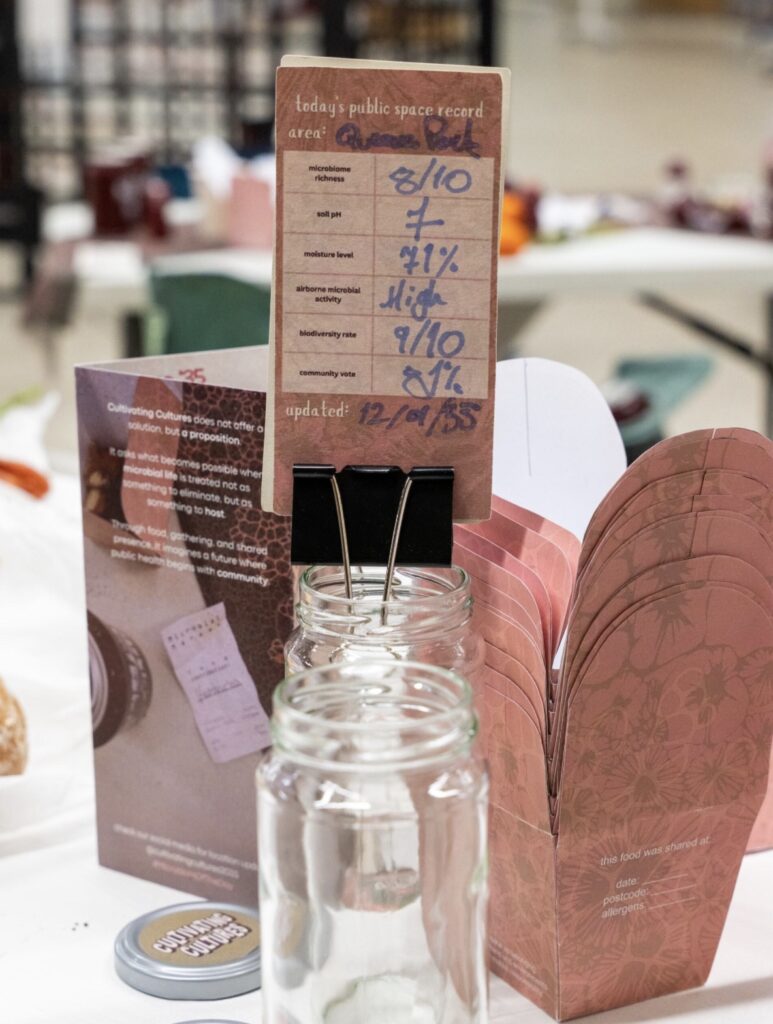
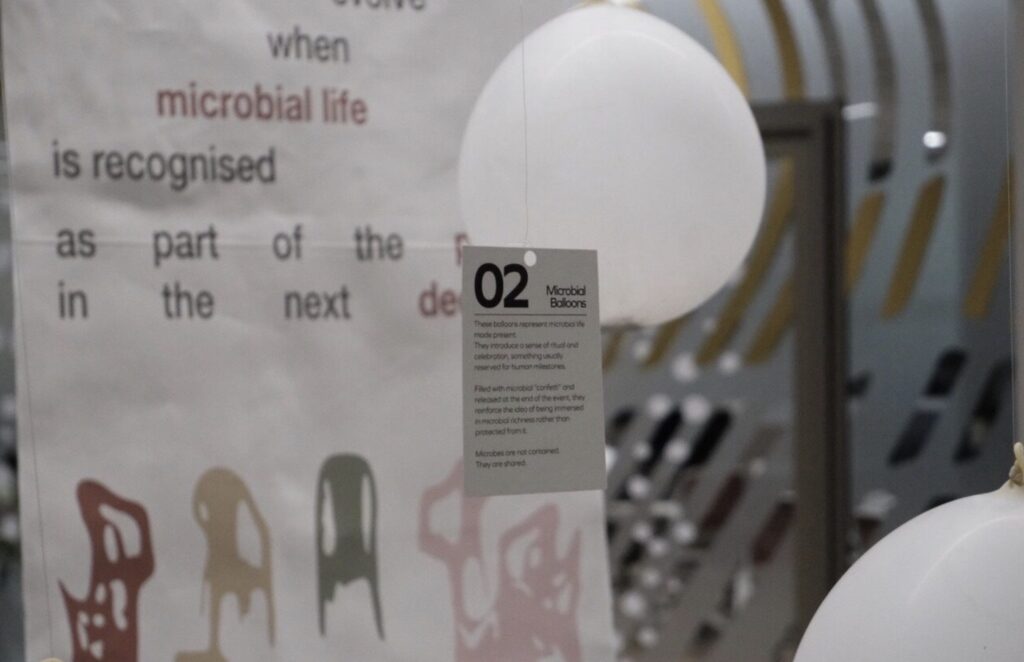
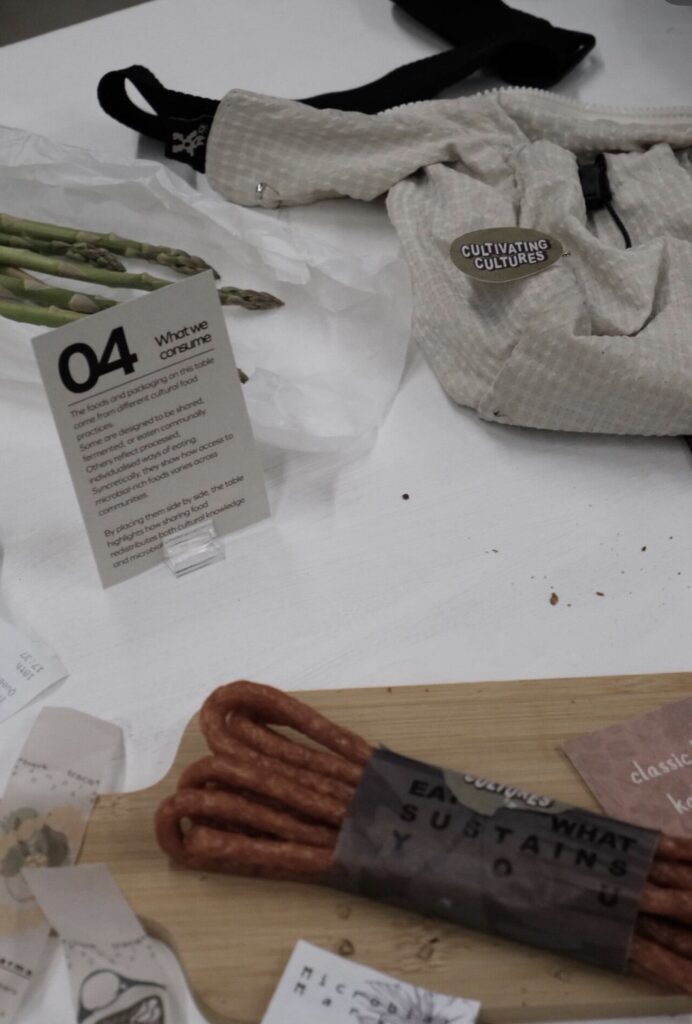
Cultivating Cultures
Year 4 Project
In a world where health is collective
Health, in this world, is not something possessed, it is something practised together.
The body no longer ends at the skin. Wellbeing is shaped by shared air, shared soil,
shared food, and the invisible life moving between us. As ecological loss and social
inequality intensified through the 2030s, communities began to treat microbial diversity
as a common good.
Public gatherings replaced clinical encounters. Care is practised
through touch,
fermentation, storytelling, and play. Public parks, gardens, and streets became sites of
exchange where food, microbes, and knowledge circulate freely.
Here, participation matters more than optimisation. Health circulates through
relationships rather than prescriptions. To belong is to contribute, to receive, and to care
for the living systems that sustain us, human and non-human alike.