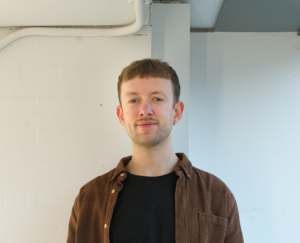
Louis Deane
I am a Product Design Engineer working between industrial design, engineering and critical practice. I am interested in how everyday products shape behaviour, ownership and consumption, and how design can make those systems visible without losing sight of function, manufacture or use.
My work moves between practical product development and more speculative questioning. I see both as valuable and mutually reinforcing: one grounds ideas in use, manufacture and engineering, while the other opens up space to challenge assumptions. I enjoy designing objects that are simple, usable and mechanically resolved, but I am also interested in how products can question repair, longevity, value and waste. Recently, this has led me to question the systems that incentivise unsustainable behaviour, recognising that the issue is often not just the product itself, but the structures that shape how it is made, used and replaced.
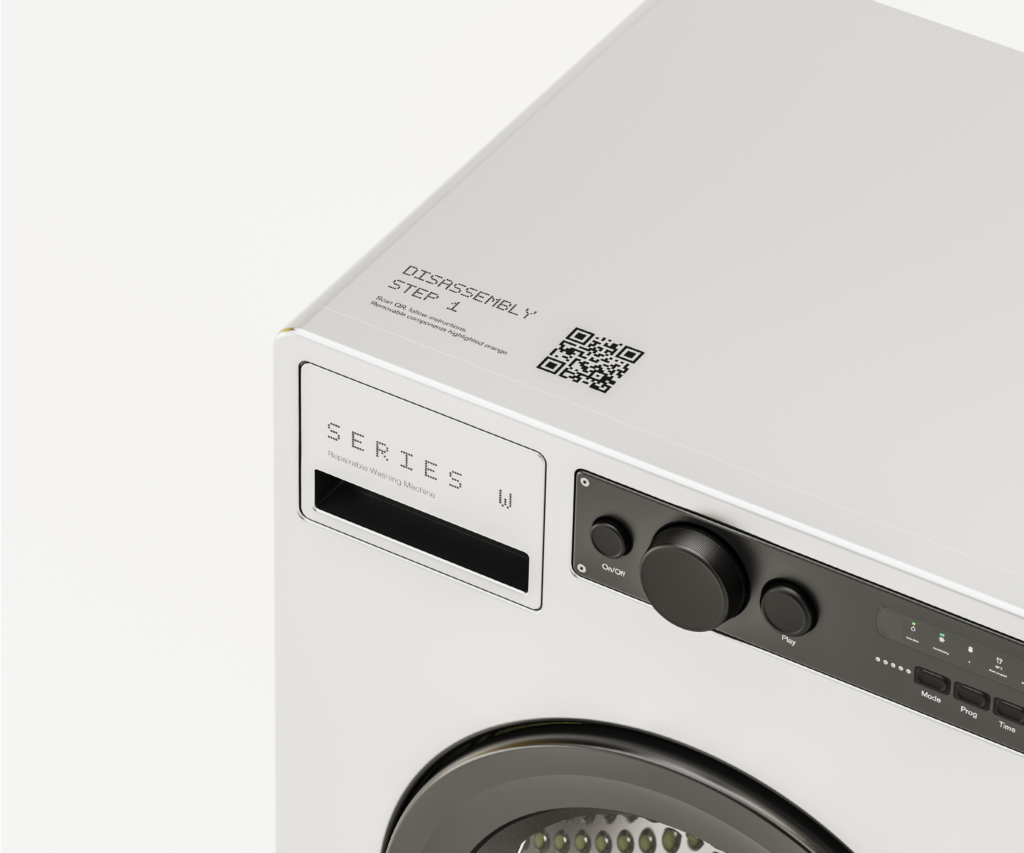
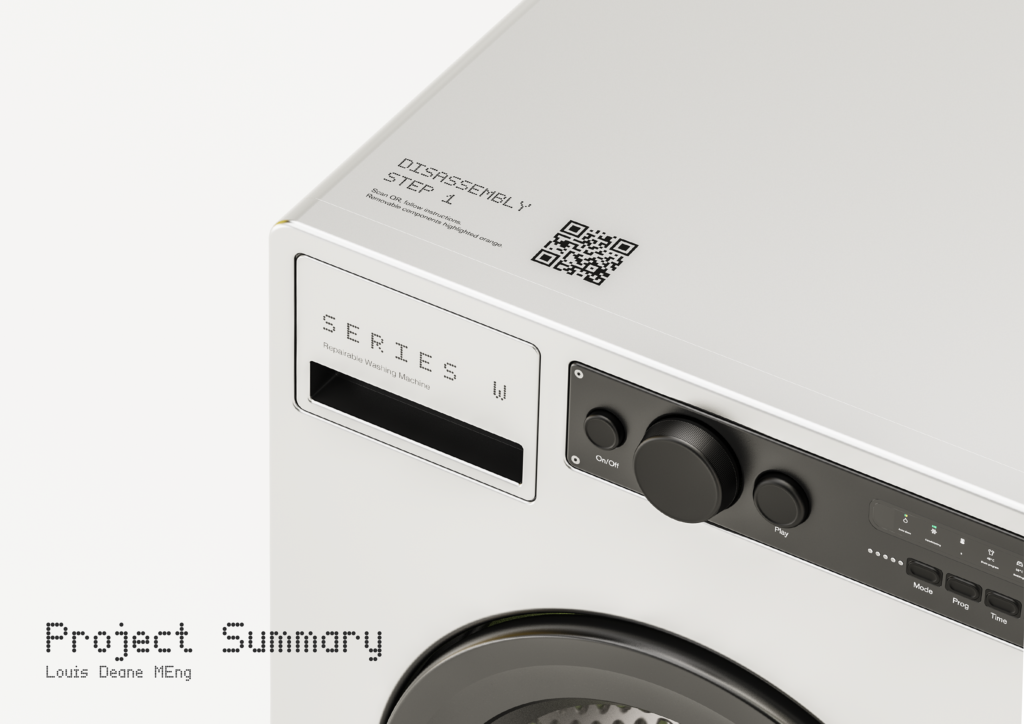
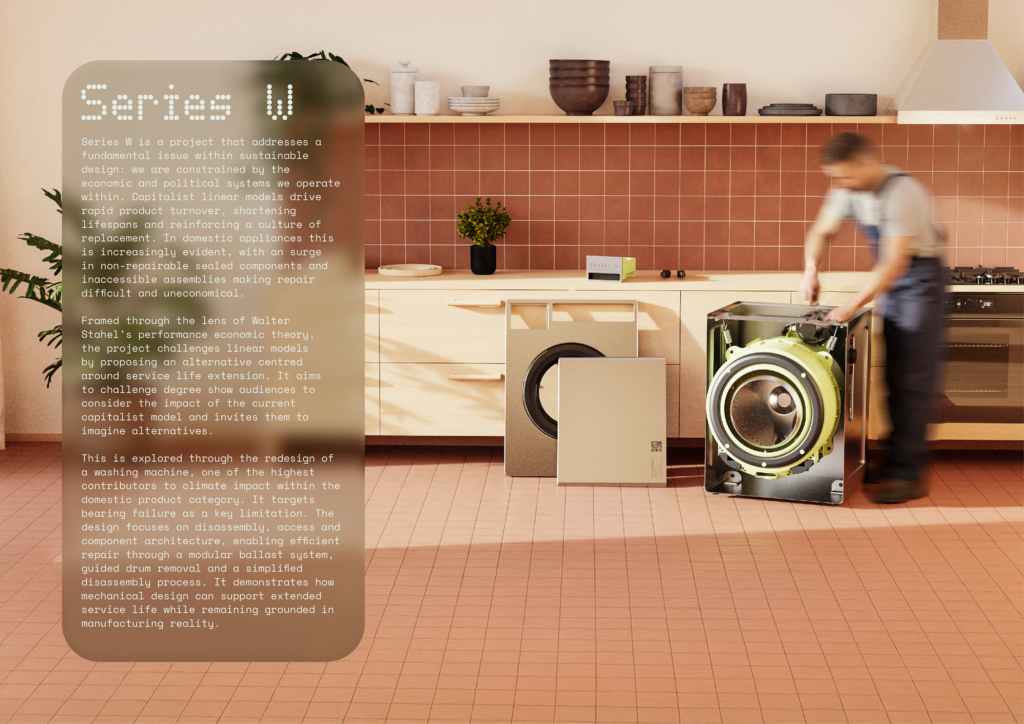
Series W
Series W began from a frustration with the way sustainability is often framed within large corporations: appearing responsible, but rarely challenging the culture of consumption and product replacement that it incentivises.
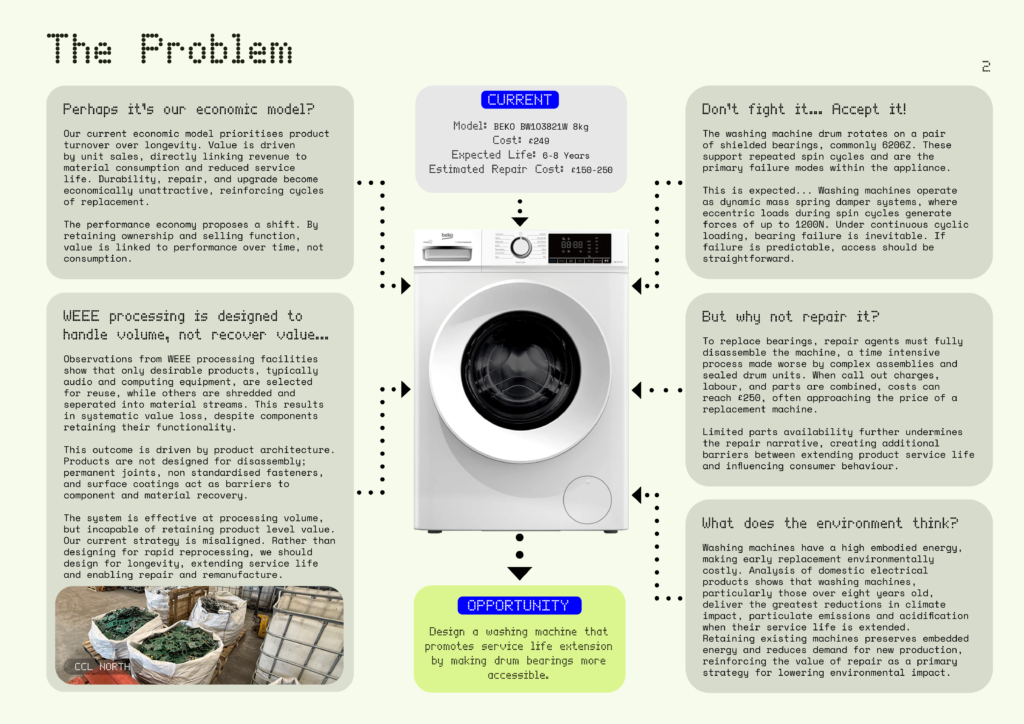
Framed through Walter R. Stahel’s performance economy, the project challenges linear models of ownership and proposes an alternative centred on service-life extension, asking what products might become if there was a systemic change in how we value them.
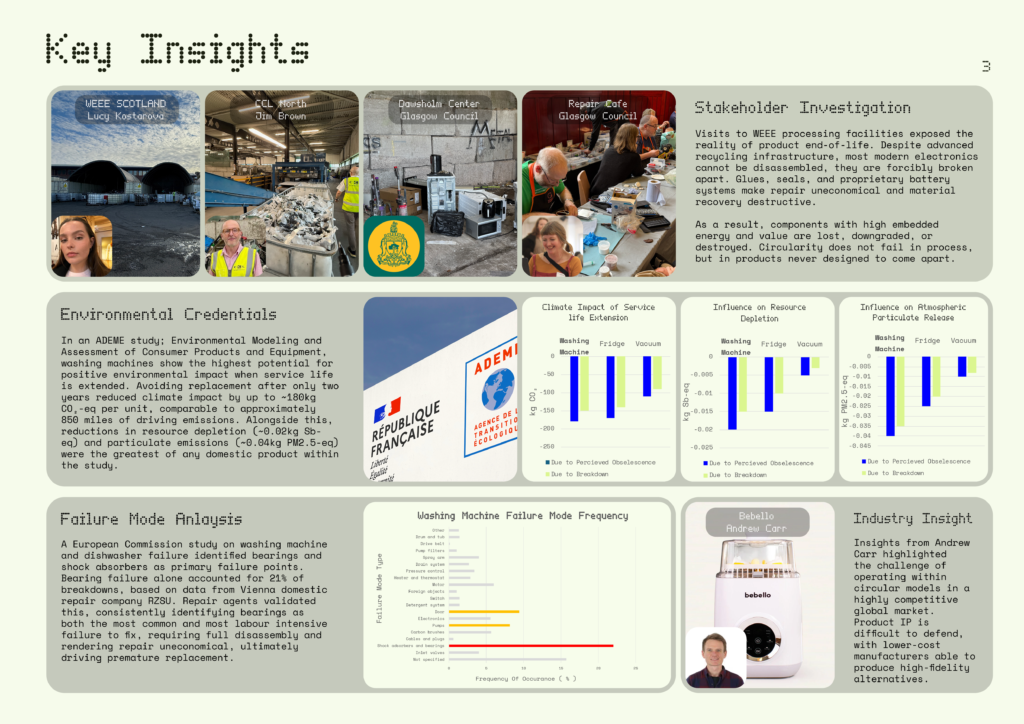
Through visits to council waste sites, material recovery and WEEE processing facilities, and Repair Café Glasgow, I became more aware of the realities of end-of-life processing, and the need to preserve product value before reaching that point. Speaking with circular business leaders also helped me understand the commercial challenges of operating circular models within our economy.
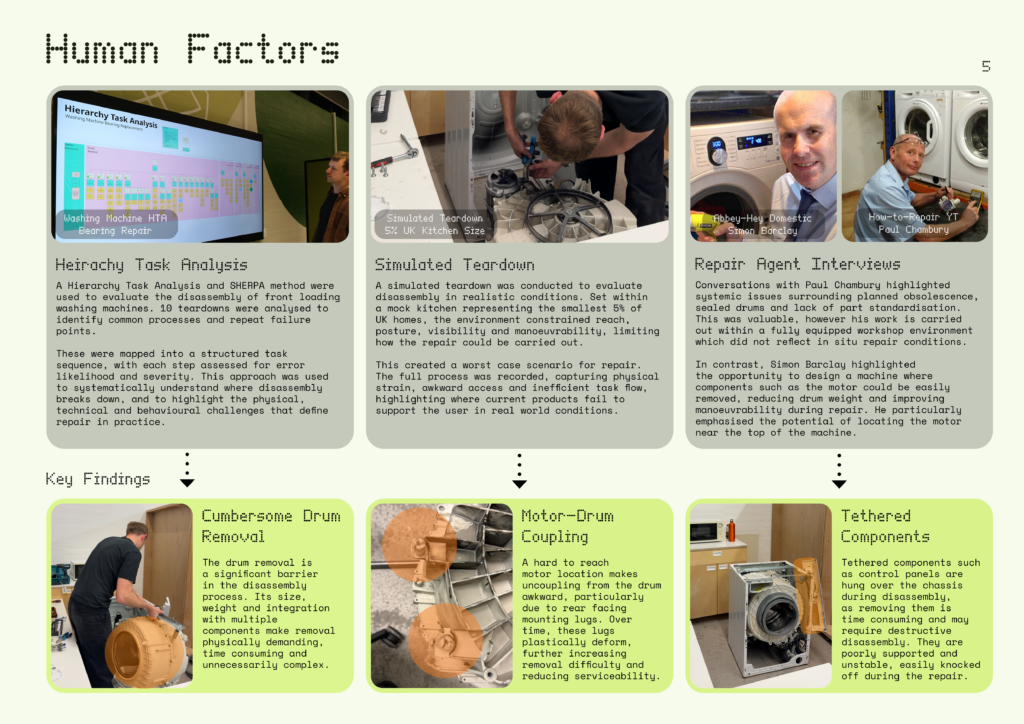
Combined with research from ADEME identified washing machines as the strongest opportunity for service-life extension within the domestic product category. From there, failure mode analysis narrowed the project to bearing failure: the primary failure mode, and one that presents the greatest repair challenge. Conversations with repair agents and human factors simulation then highlighted the realities of in-situ repair, where access, labour time, sealed assemblies and awkward working conditions often make repair lengthy and uneconomical.
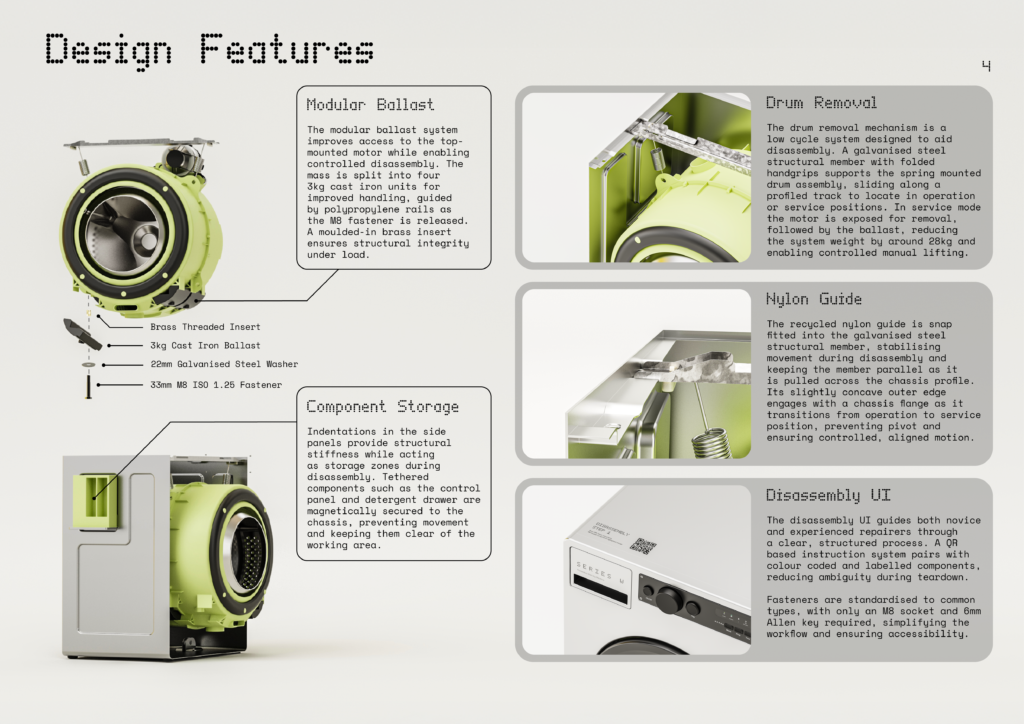
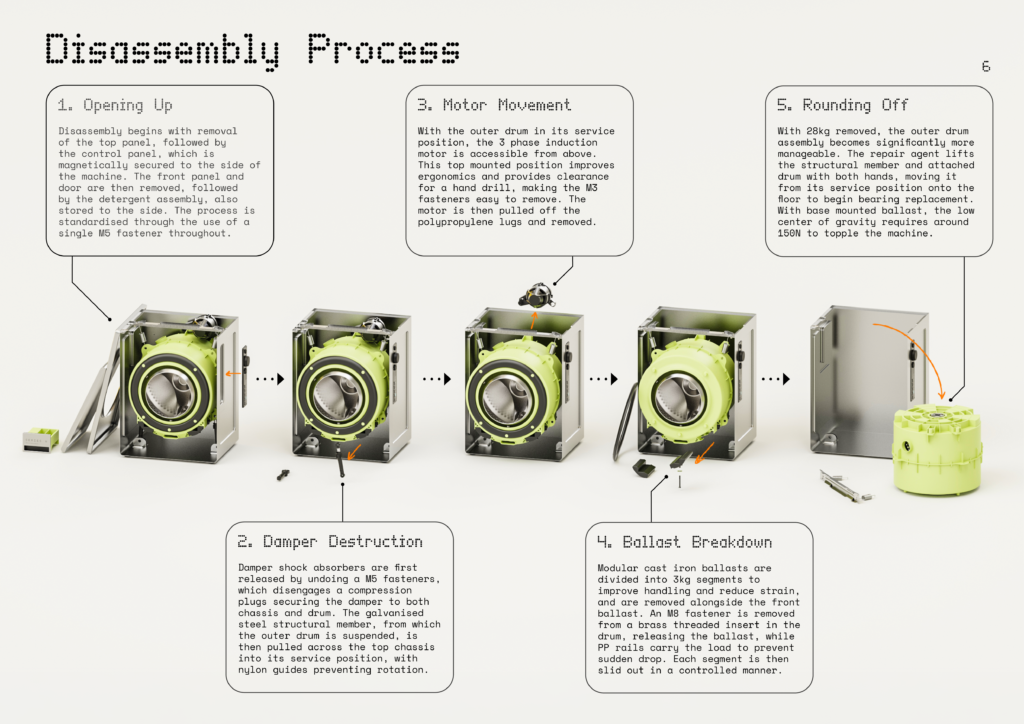
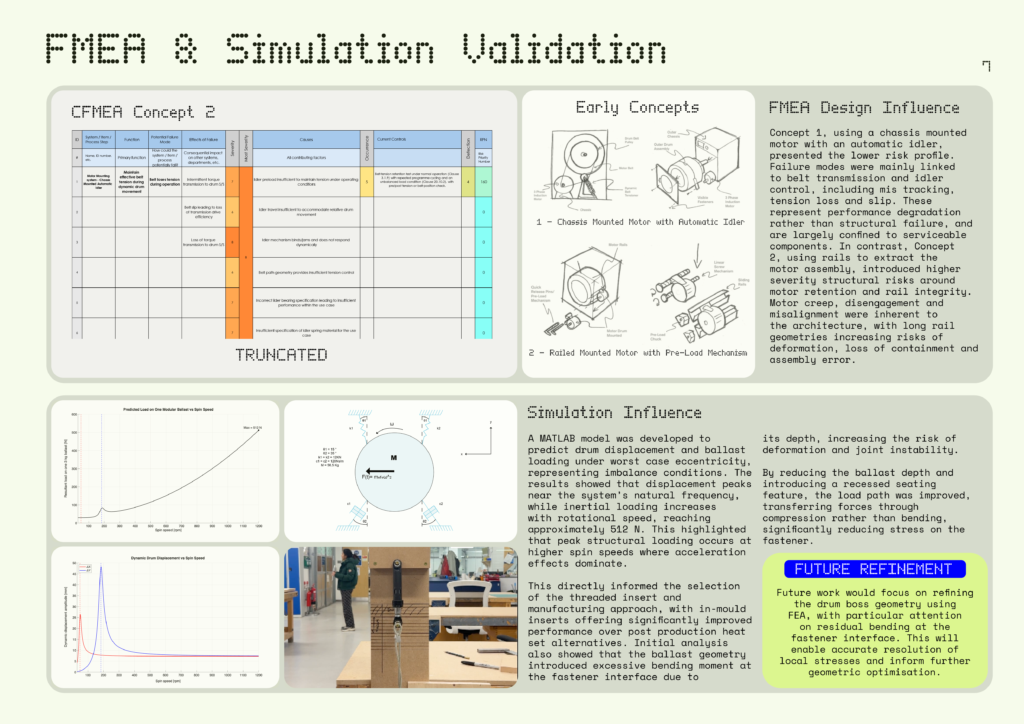
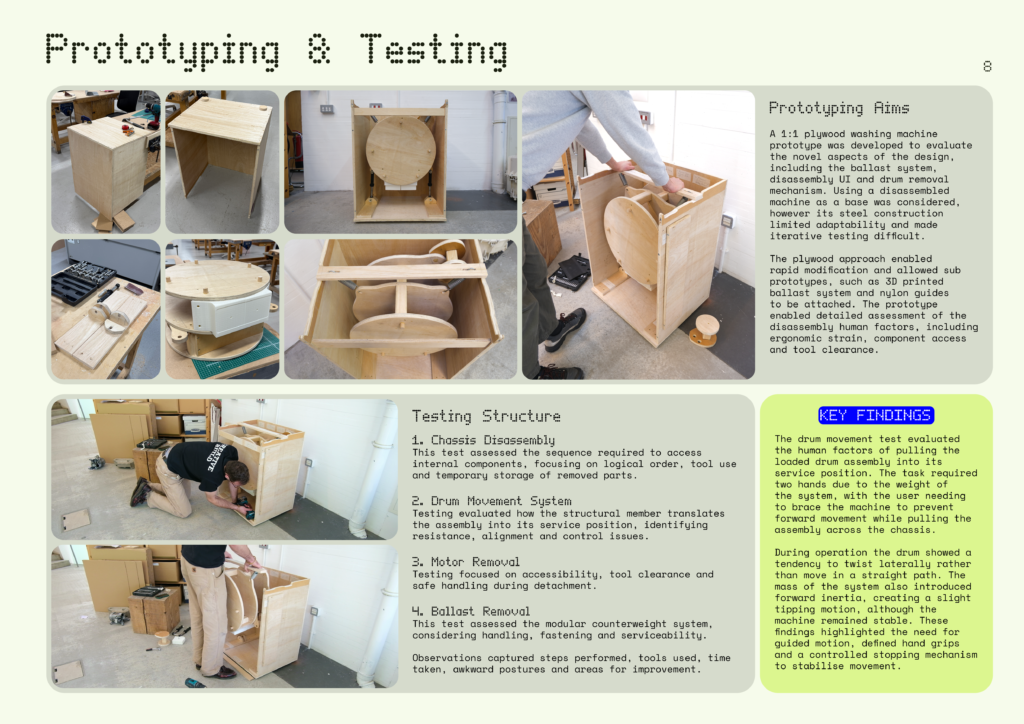
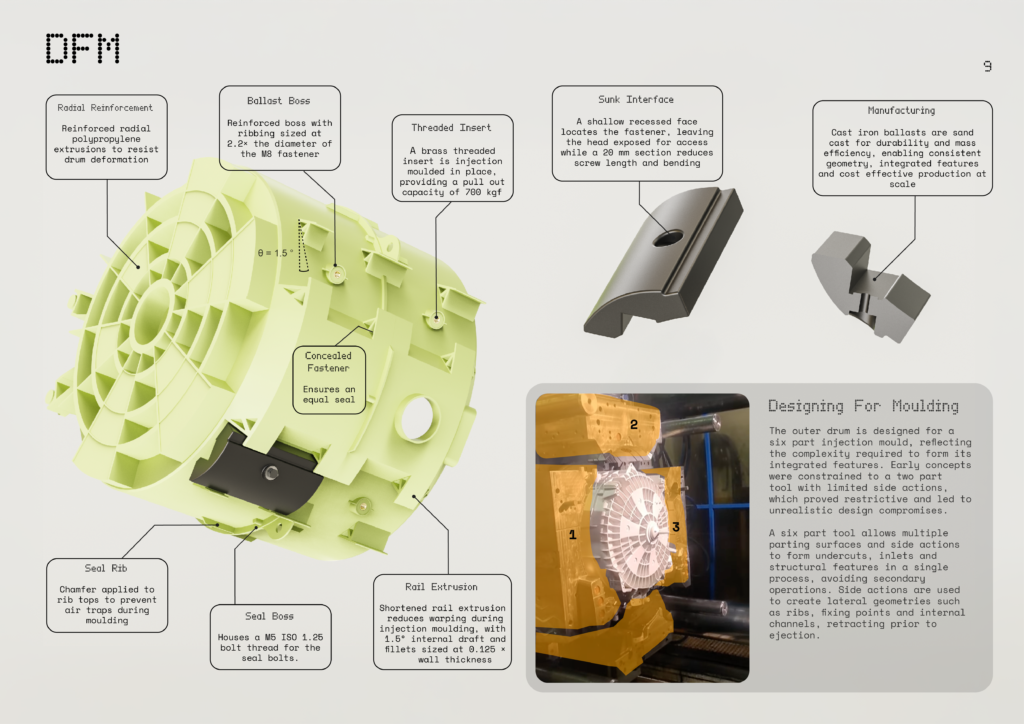
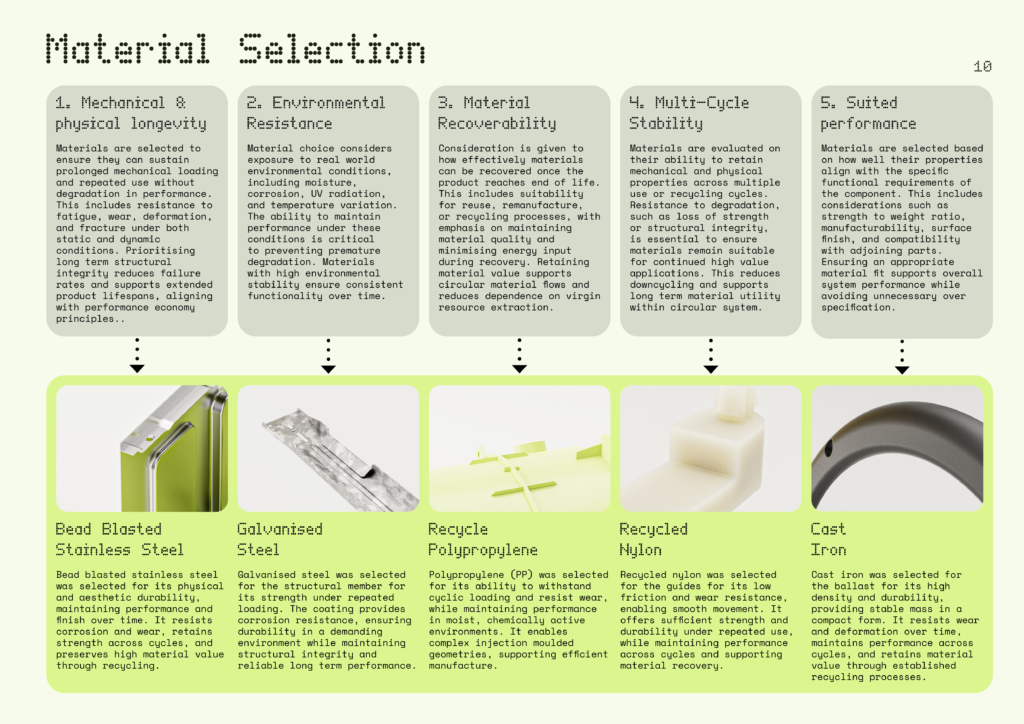
Series W responds with a controlled, guided sliding drum access system, top-access motor, modular counterweight system, chassis component storage, standardised fasteners and a disassembly UI, validated through FMEA, dynamic modelling and full-scale prototyping.
Conic
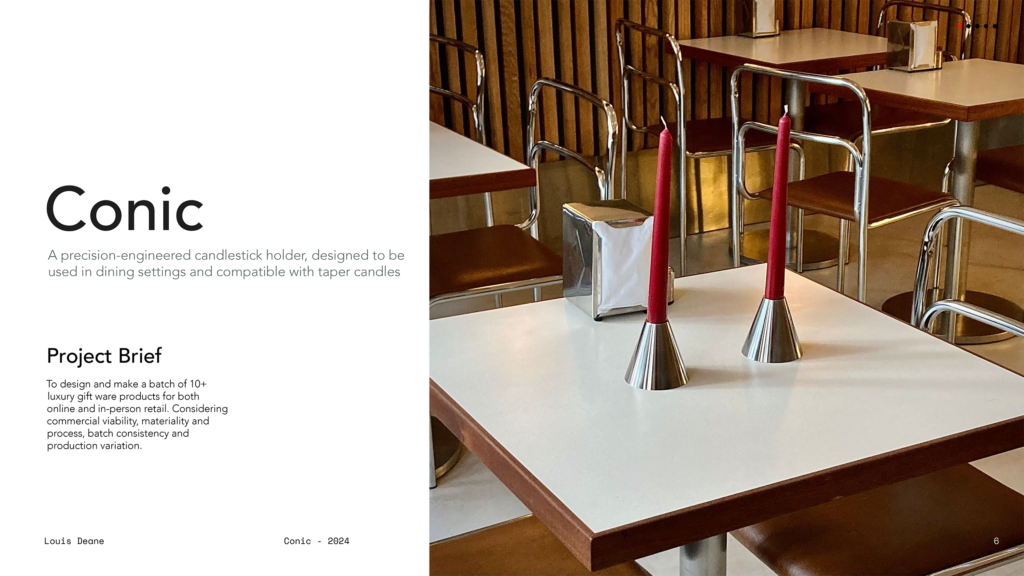
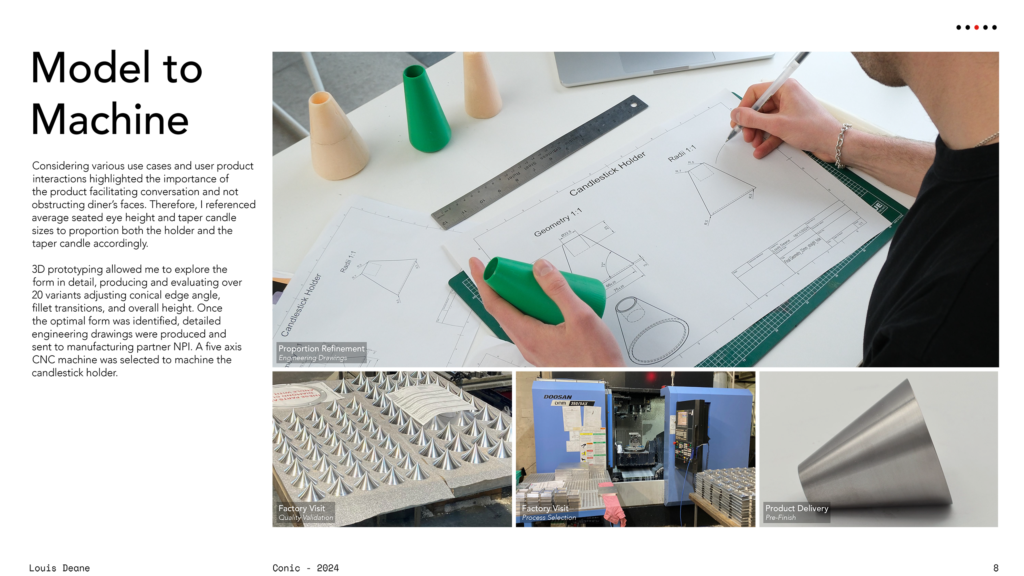
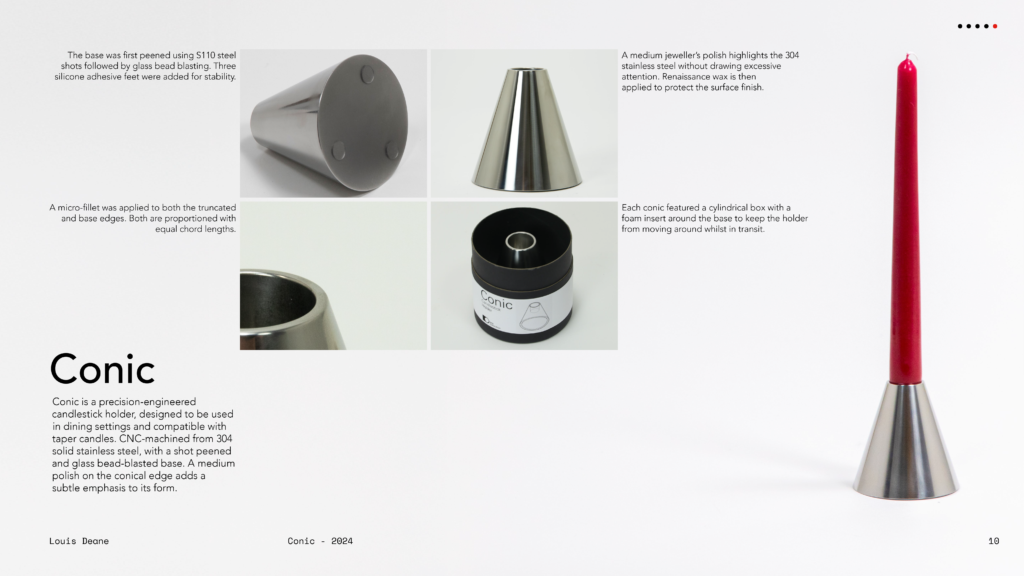
Conic is a precision-engineered candlestick holder designed for dining settings and taper candles. CNC-machined from 304 solid stainless steel, the object was developed as a direct response to throwaway culture, exploring how a familiar domestic object could be made physically and emotionally durable.
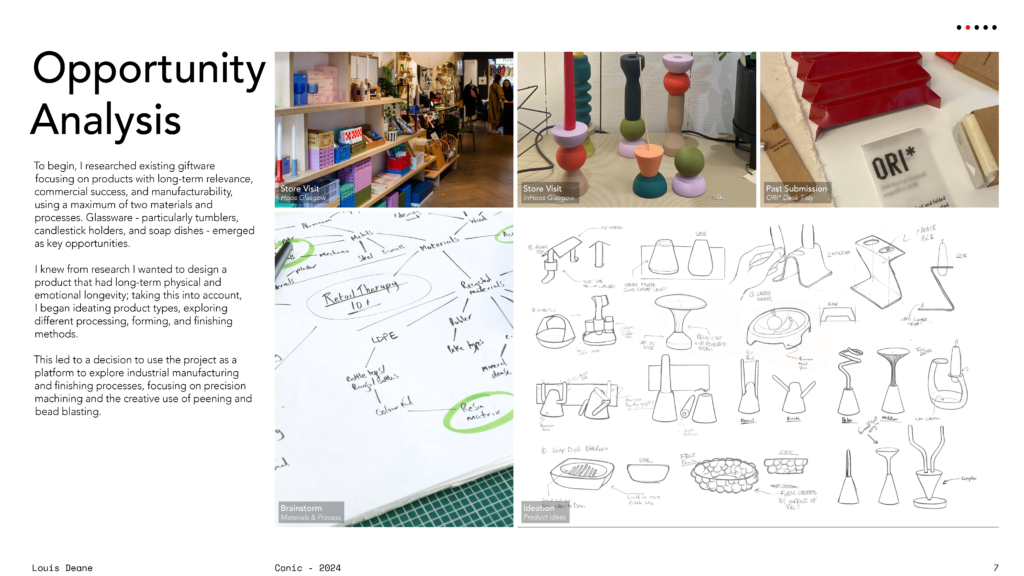
The project began as an investigation into luxury giftware, commercial viability and batch production. Through research, prototyping and factory collaboration, the final form was refined around table use: ensuring the candle remains present without obstructing conversation.
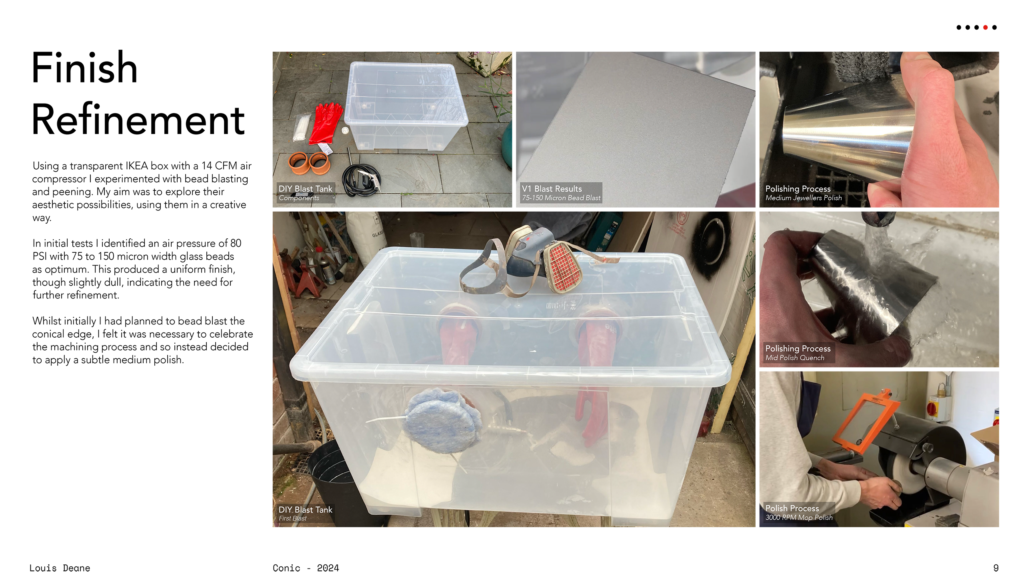
Its surface finish uses a shot-peened and glass bead-blasted base, contrasted with a medium polish on the conical edge to subtly emphasise the machined form. The result is a simple, durable object shaped by proportion, material honesty and long-term relevance.