
Natalie Court
(she/her)
Do you ever get that feeling in the pit of your stomach that will not be ignored? The feeling that something is not right. Not kosher. This feeling inspires my creative practice.
I am a maker who uses new media technology to tell stories about contestation. My engagement with peer reviewed literature allows me to map my own personal experiences of contestation onto the wider social trend towards extreme relativism at the expense of well evidenced and well reasoned arguments.
My focus this year has been on investigating the effect new media technology has on the culture of childbirth through digitising the traditional medium of rubbing. In the Venn Diagram of disciplines my work exists in the overlap between new media theory and digital humanities whereby digital technologies and processes serve as both the object and the mode of interrogation.
Digital Rubbing
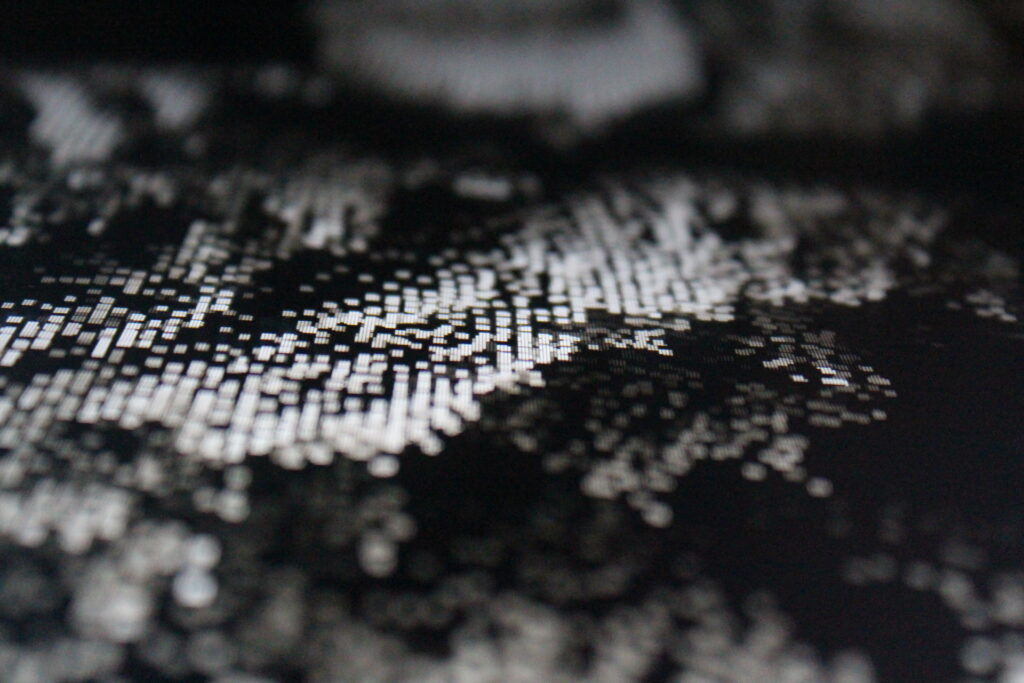
Processing, Touchscreen, Projection, Audio
Digital Rubbing realises my determination to digitise the traditional medium of rubbing. I reflect on what is lost and gained when traditional media undergoes a process of digitisation. My work provokes questions about the properties of media and their respective affordances. It traverses the contested space between realism and relativism and resolves them by situating a perspective from which to gaze out at the world finding resonance with the perspectives of others.
Importantly though resonance is not harmony. Digital Rubbing casts contestation as a valuable tool for increasing the opacity on illogical knowledge claims to expose the perspectives from whence they came and the agendas they aim to reproduce.
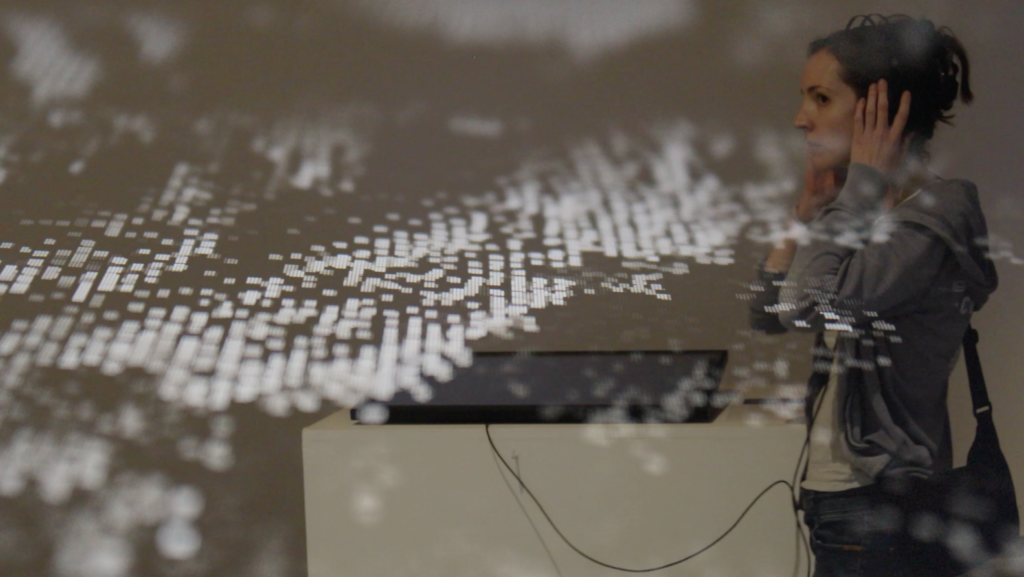
Considering the intentionality behind rubbing to record the 3D form of cultural artefacts as 2D visuals, new media technology affords me the multimedia approach I craved. Democratising the tools so that everyone might rub and adding the extra layer of audio to share my memories. I chose to use my sonograms as artefacts because they hold a great deal of sentimental meaning. The rubbing motion releases my memories as audio which vibrates the text in the projection, nudging it up gradually until it becomes legible.
Inspiration
I was inspired by the work of Korean born Artist Do Ho Suh which saw a to scale 3D resurrection of the artists childhood home assembled from 2D rubbings in the Tate Modern. My frustration over not being able to touch work for which the highly tactile process of rubbing had been so integral to the process of its creation was palpable. In addition the limits of analog rubbing meant the memories Do Ho Suh released through rubbing could not be shared audibly.
Rubbing it seemed to me needed to be brought into the 21st century. It was with cautionary tales from the likes of ‘The Buggles’ and Lev Manovich ringing in my ears that I set out to digitise rubbing.
Throughout this project I developed a sensitivity to what was lost and what was gained through the digitisation process. Traditionally rubbing translates three dimensional form into two dimensional form. Depth is represented through tonal differentiation. How would I recreate depth digitally?
Process _making
I started experimenting with analog rubbing. Feeling the vibrations and the way the properties of graphite afforded different results to say charcoal.
My fascination with properties and their affordances continued as I experimented with etching. Preparing a steel plate so that the acid might gnaw away at particular parts of the image whilst sparing other parts.
Grounded in the analog I brought those same ways of working to my digital experiments. Taking the time to prepare my grounds so that I could understand the relationship between the properties of pixels and their affordances. I learned that higher contrast images had more scope for creating depth. Using Processing, an open source coding software, I mapped brightness to depth making the brightest pixels appear closer and the darker pixels appear further away. This perfectly encapsulated the true nature of rubbing.
Considering the intentionality behind rubbing to record the 3D form of cultural artefacts as 2D visuals, new media technology affords me the multimedia approach I craved. Democratising the tools so that everyone might rub and adding the extra layer of audio to share my memories. I chose to use my sonograms as artefacts because they hold a great deal of sentimental meaning. The rubbing motion releases my memories as audio which vibrates the text in the projection, nudging it up gradually until it becomes legible.
Process _theory
Digital Rubbing takes this one step further using depth as a metaphor for the space between assumptions and reason that new media technology collapses. Without this space it is hard to see clearly. In the immortal words of Father Ted is the cow just ‘small (or) far away’? The point is we employ perspective to make sense of the world.
It is biologically imperative to employ past experience to interpret reality because with the ever-increasing scale of cows we don’t have time to hang around! Shortcuts to expedite our ability to act fast under pressure are called heuristics. The problem is that these heuristics are assumptions meaning they don’t always hold up in real world contexts.
The relationship between memory and perspective is controversial. Traditionally knowledge can’t count as legitimate unless this relationship is hidden. Knowledge created from hidden agendas constitutes a view from nowhere. The researcher detaches themselves from their earthly ties transcending challenges to their legitimacy by appeals to objectivity. When knowledge is created this way the heuristics used to justify its creation are also ignored and can end up negatively affecting people’s experiences when knowledge is applied to real world contexts unproblematically.
Originally hailed as the ultimate equaliser new media has democratised the tools for self expression and levelled the playing field. But what is lost when the playing field is levelled? I suggest we have lost our ability to see whether the cows are just small or far away. Without this perspective and the acknowledgement of the memories that led to our learning to recognise the conditions under which perceptual shortcuts should or should not be applied we are vulnerable to exploitation. On social media this can look like accepting knowledge claims from people on the basis that they would not traditionally have had the opportunity to make claims instead of on the basis of well-reasoned arguments.
In the immortal words of new media theorist Marshal McLuhen ‘the message of any medium or technology is the change of scale, pace or pattern that it introduces to human affairs’.
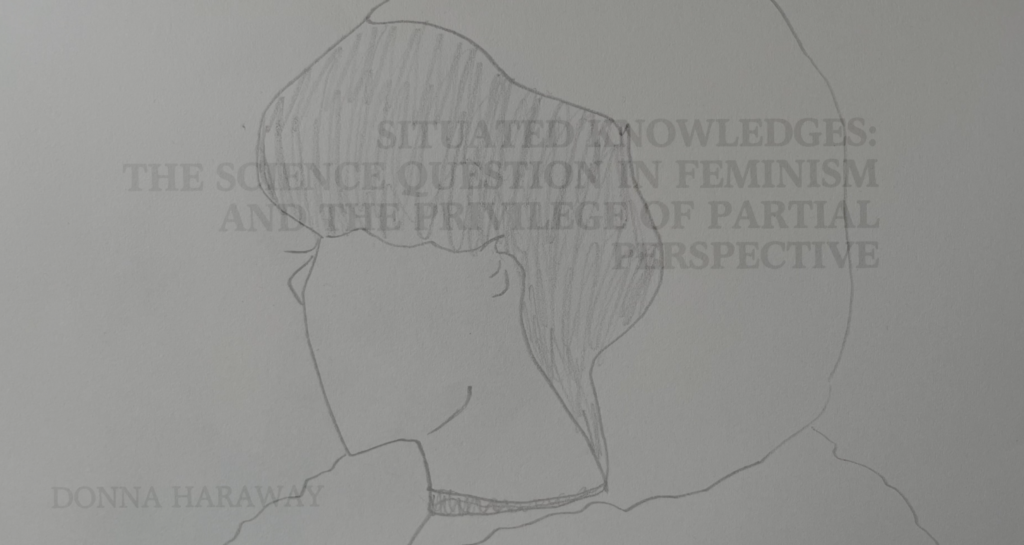
New media theorist Lev Manovich extends McLuhen’s statement likening the effect of software on culture to the introduction of a new coordinate to every point in space. As I investigate what effect new media software has on the culture of childbirth I came up against an age old struggle; the science problem in feminism. Philosopher and scientist Donna Haraway describes a feminist objectivity by recalibrating the standard of objectivity from either transcendence as we have seen with realist knowledge systems or subjectivity as we have seen with relativist knowledge systems instead situating a perspective from which to gaze out at the world finding resonance with the perspectives of others.
Importantly though resonance is not harmony. Digital Rubbing takes heed of advice from Jodi Dean that contestation is a valuable tool for increasing the opacity on illogical knowledge claims to expose the perspectives from whence they came and the agendas they reproduce.
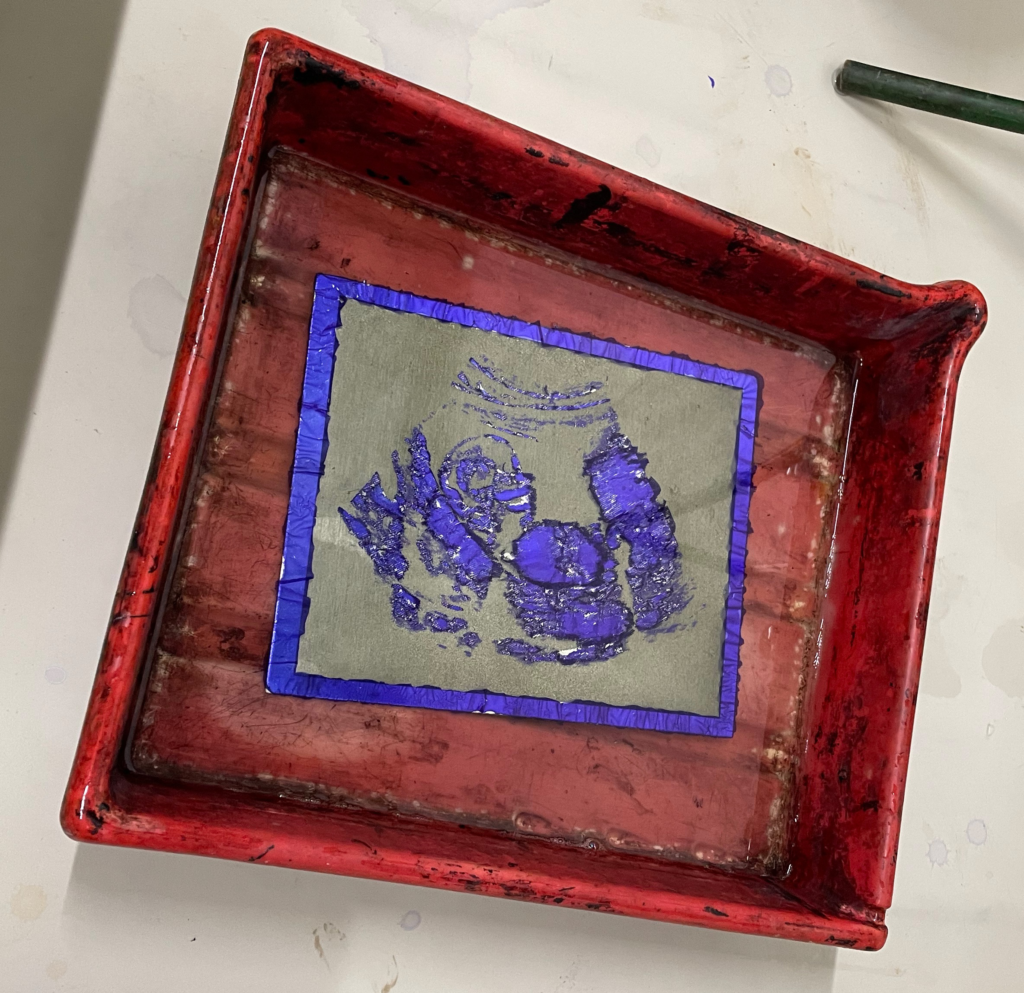
Washing my plate
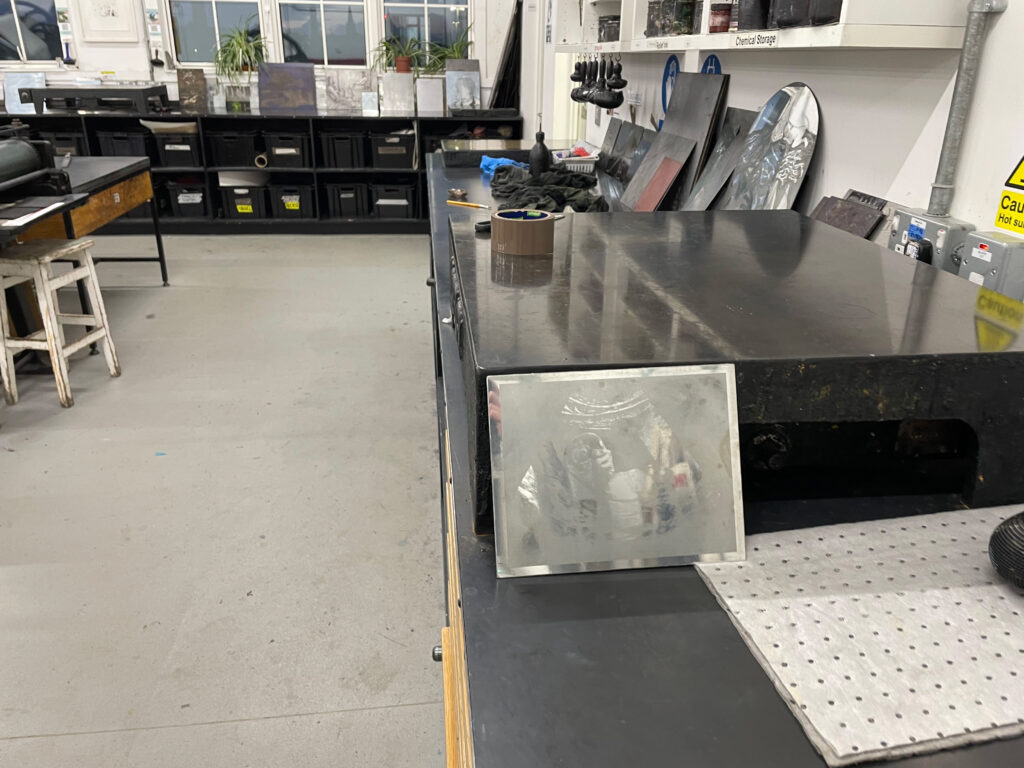
Drying my plate
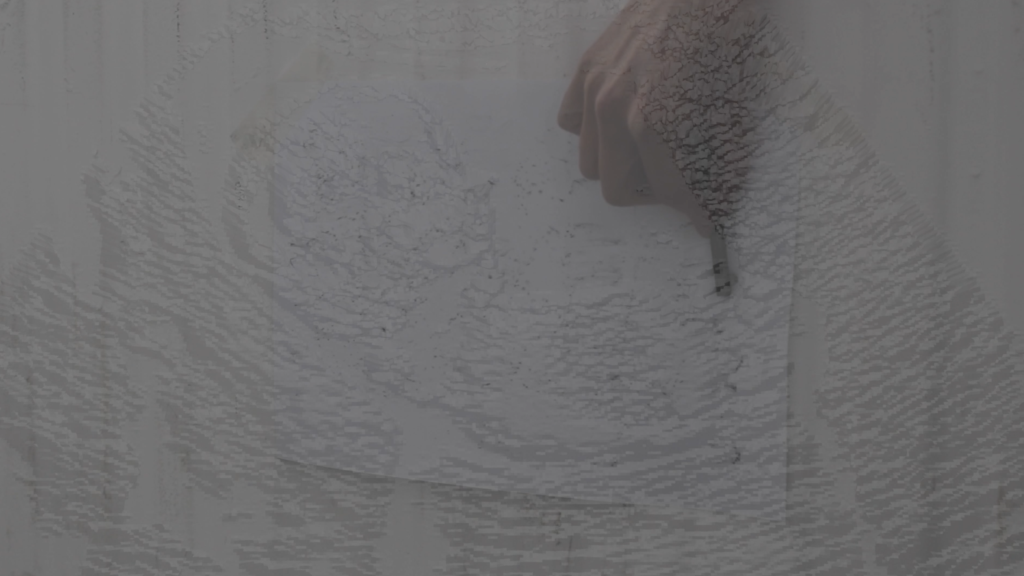
Feeling the vibrations and seeing the mark making
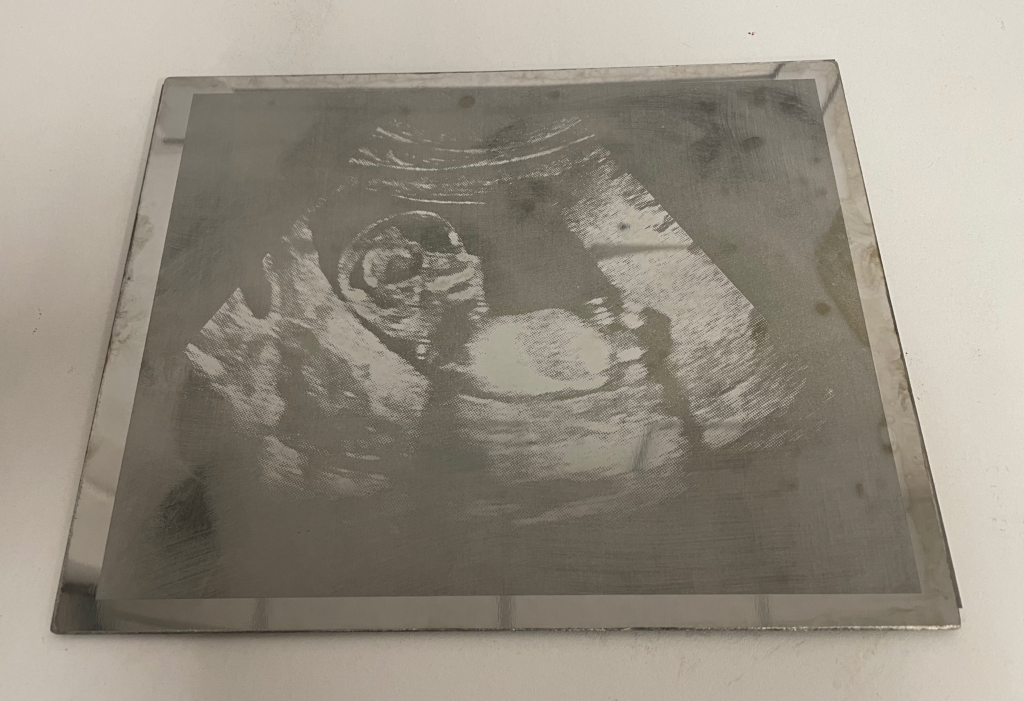
Etched plate
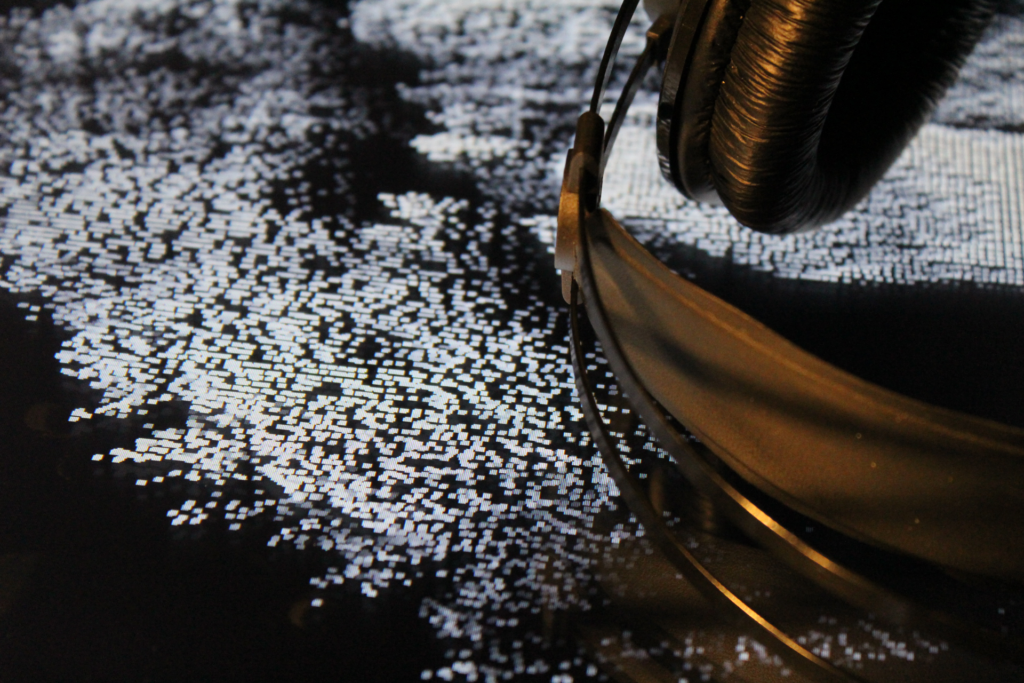
Touchscreen and headphones
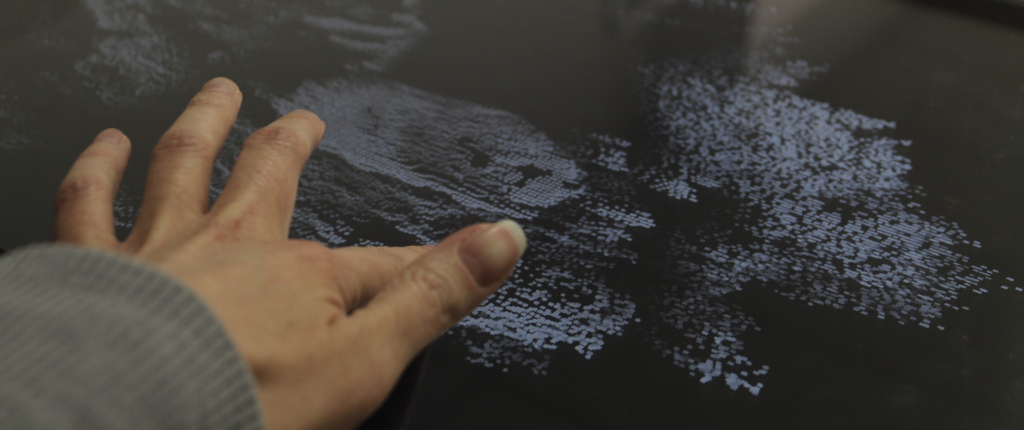
Touchscreen interaction