Paul Anton Huth
(he/ him)
Exchange student from Bauhaus University Weimar.
The An Sailean Project – Lime Burning in Scotland
Phantoms of the past as suggestion of what was – Understanding and appreciation through participation – Crating complexity through adding to existing layers
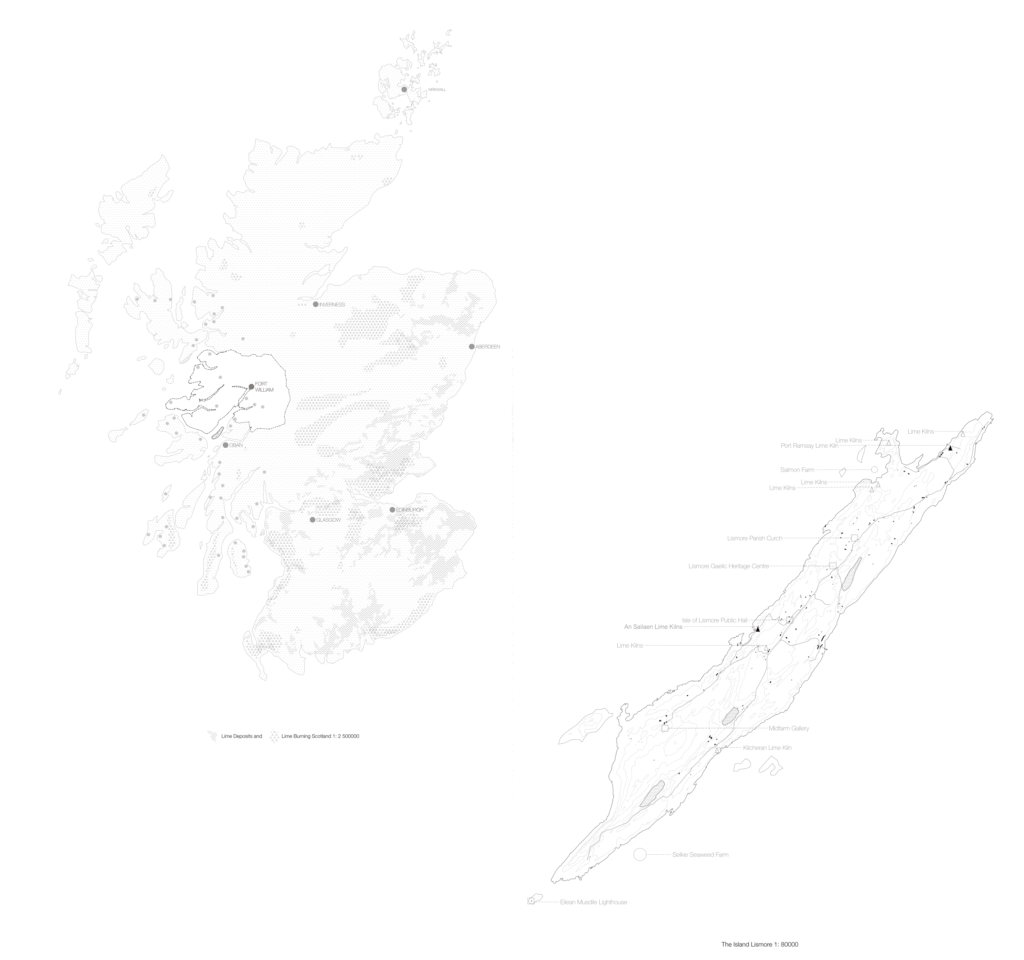
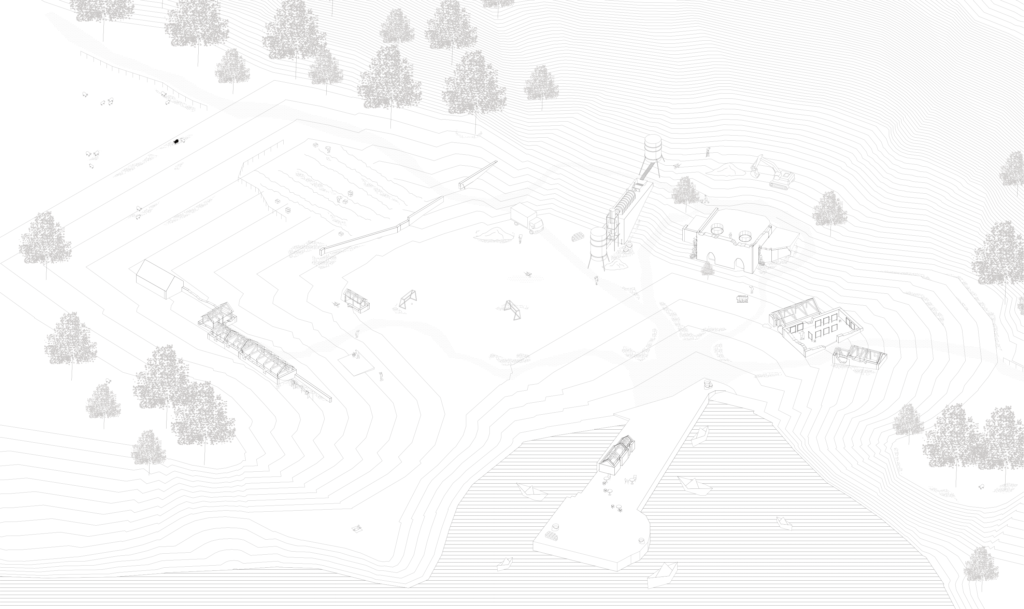
The An Sailean Lime works were one of the biggest quicklime producers in Scotland and were in use until the 1930s. Today the ruins lie quietly with no further purpose, the roofs of the surrounding houses gone, grass covering what remains of the walls. This site used to be a bustling harbour and production hub, shipping and producing quicklime for the West coast of Scotland. The quicklime fertilised the sour grounds, built modern cities of the 1800s – primarily used as mortar – and brightened spaces as limewash and proto-lightbulbs ‚lime lights‘.
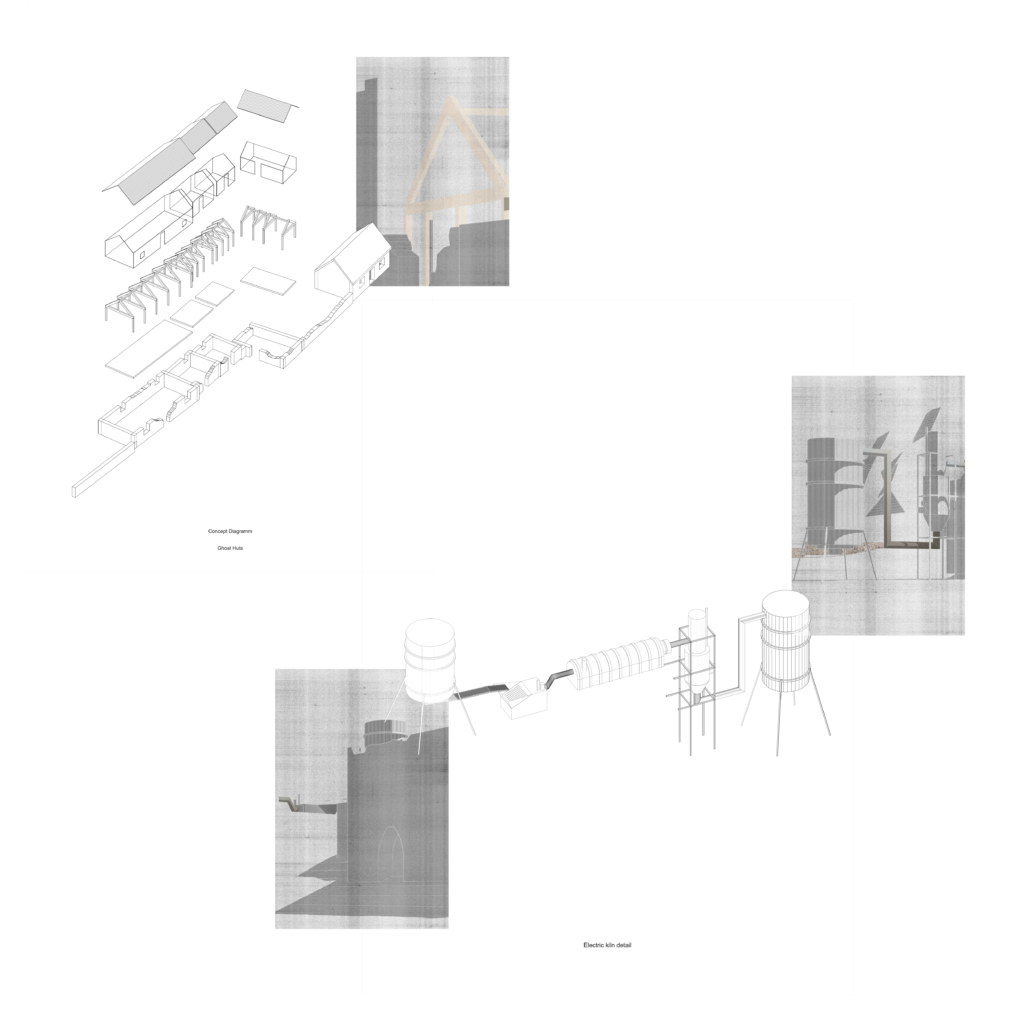
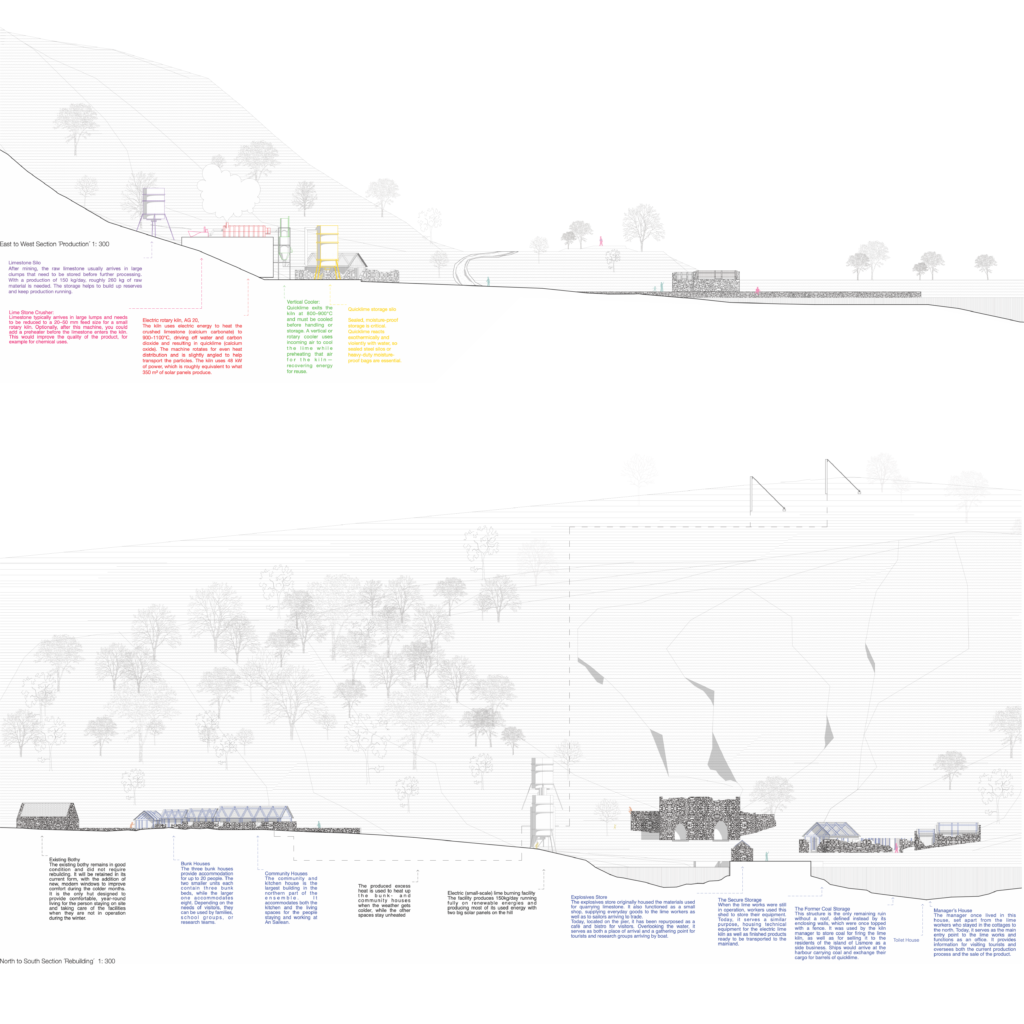
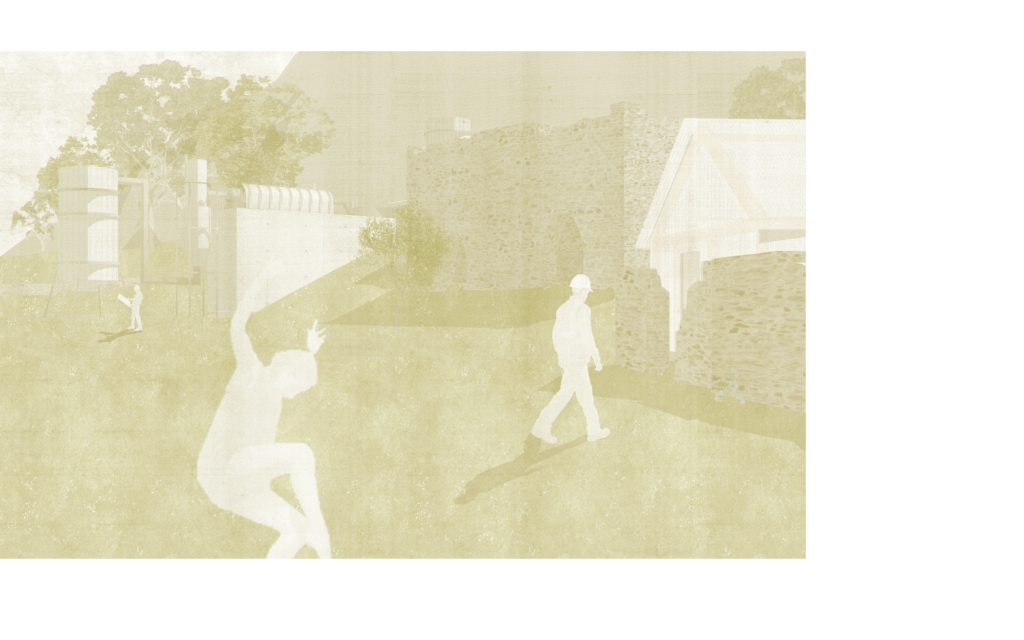
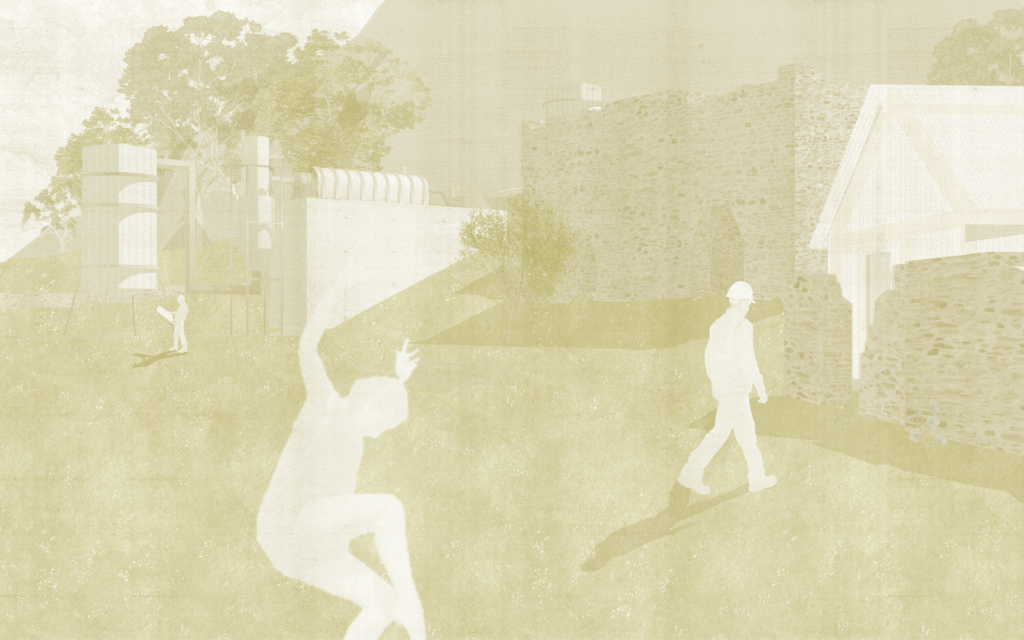
This project aims to restore this historic place and give it a new purpose and nature. A negotiation between the past and the present. A modern, electric quicklime production facility is introduced, standing in dialogue with its bygone sibling. It is the first quicklime facility in Scotland and is set to produce the quicklime to restore the heritage buildings on the west coast.
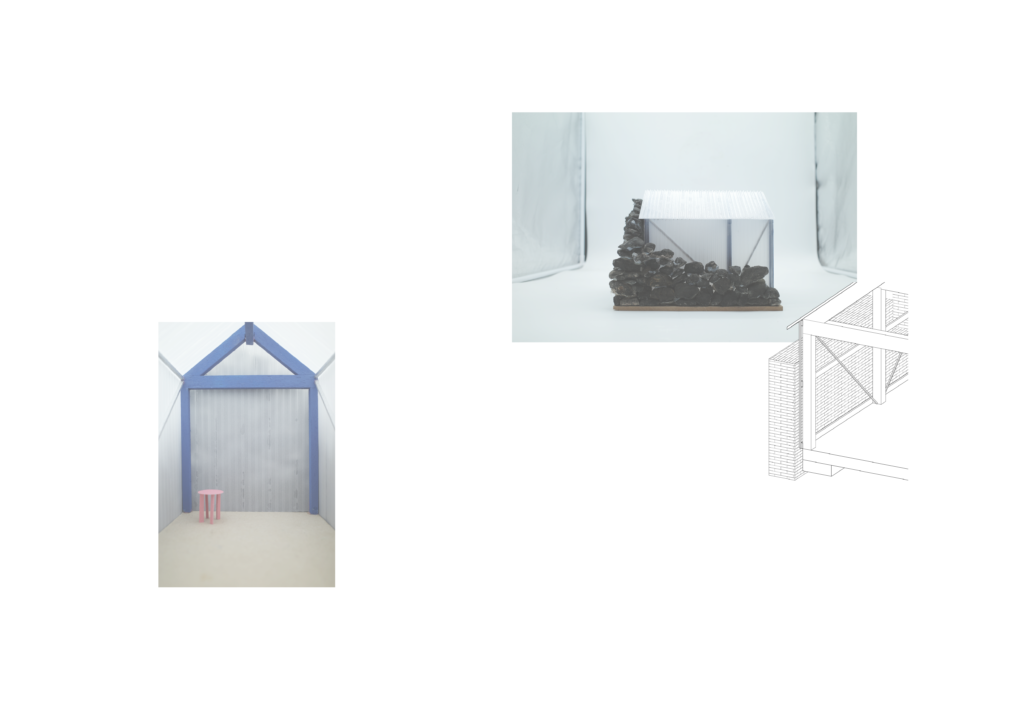
The second intention is restoration of the compound. Light timber-polycarbonate structures are delicately inserted within the wall ruins, indicating the lost volumes of the original village. This approach does not aim to recreate but to give a suggestion of what it once was. The historic past becomes tangible while maintaining the line between past and present.
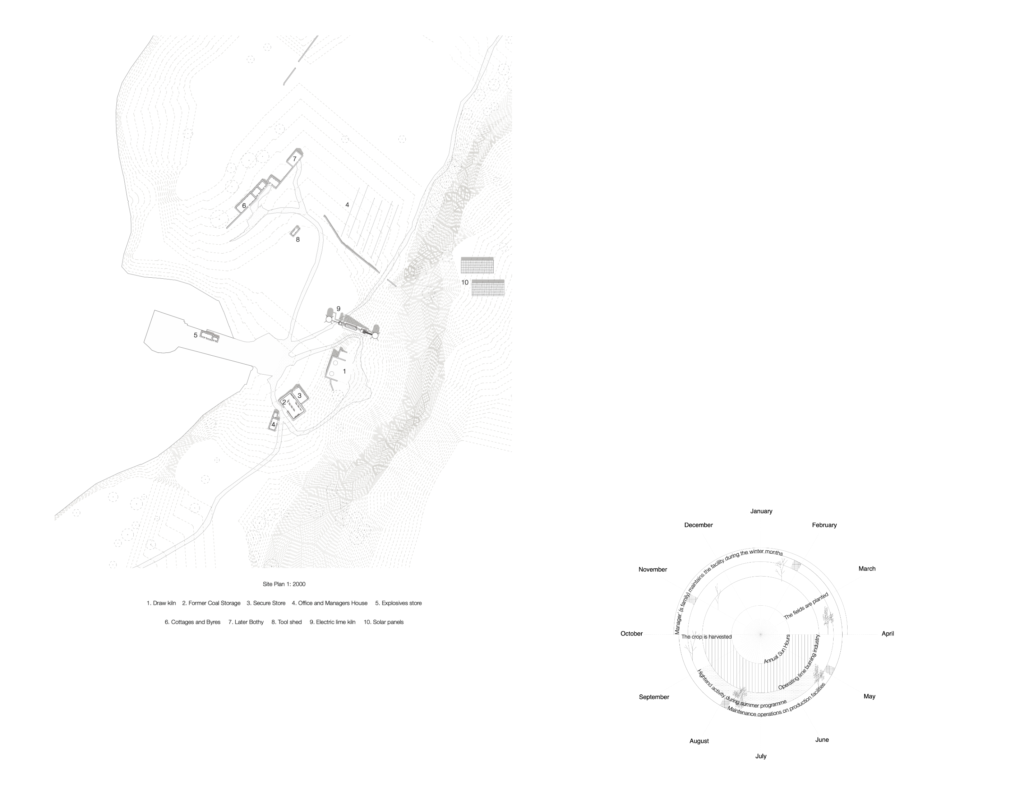
The entire intervention runs in different intensities throughout the year. Technicians produce sustainable quicklime, school trips and researchers alike are accommodated, while the site acts as a museum for the lime burning history of Scotland and An Sailean.