Philippa Cook
Pippa Cook has recently completed PG Dip Arch whilst studying part-time alongside her work at Collective Architecture. Over the course of her studies she has continually explored themes of participatory democracy, active citizenship, bioregional construction and William Morris’ notion of joyful labour; culminating in her thesis project The Council for Adaptation, Defence and Loss based in Copenhagen.
Her move into architecture follows a rewarding career as a contemporary art commissioner in Sheffield. Her expertise has seen her deliver major new commissions for galleries, festivals and public bodies such as Sheffield Children’s Hospital and the Art Sheffield biennial. In practice, Pippa specialises in community engagement and strategic planning and is currently collaborating with a community council in the north-east of Glasgow to create a new civic space on a vacant site in the heart of their neighbourhood.
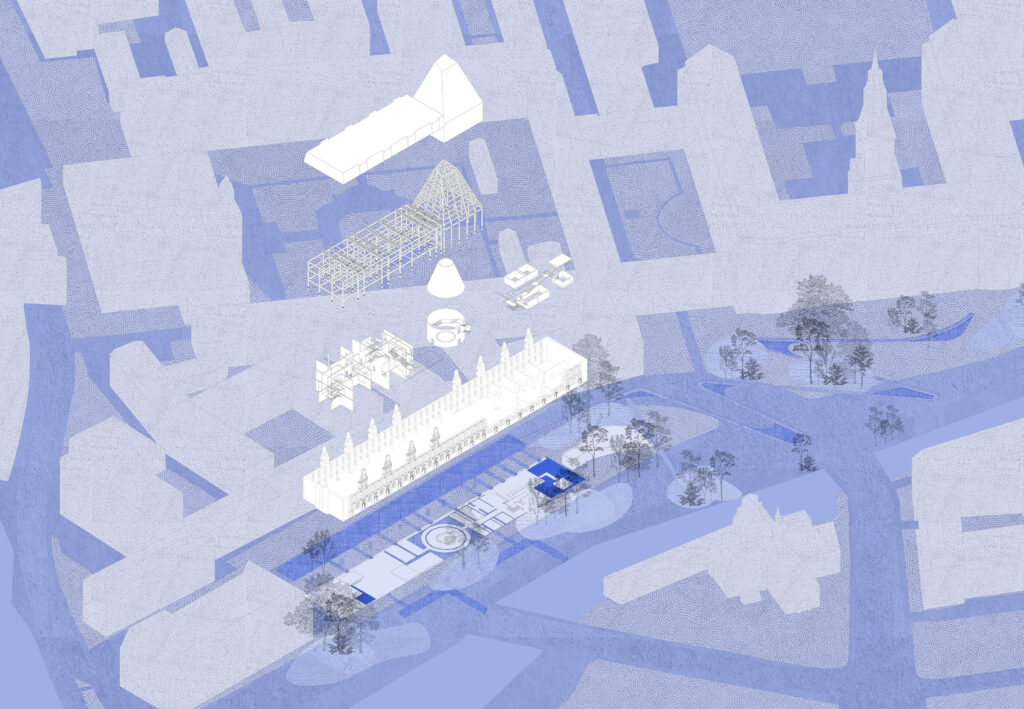
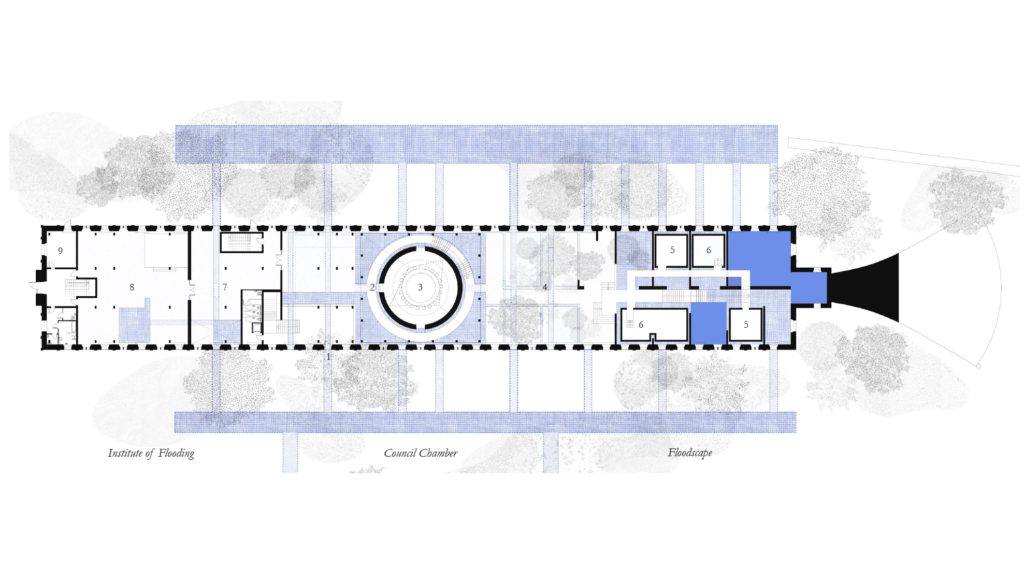
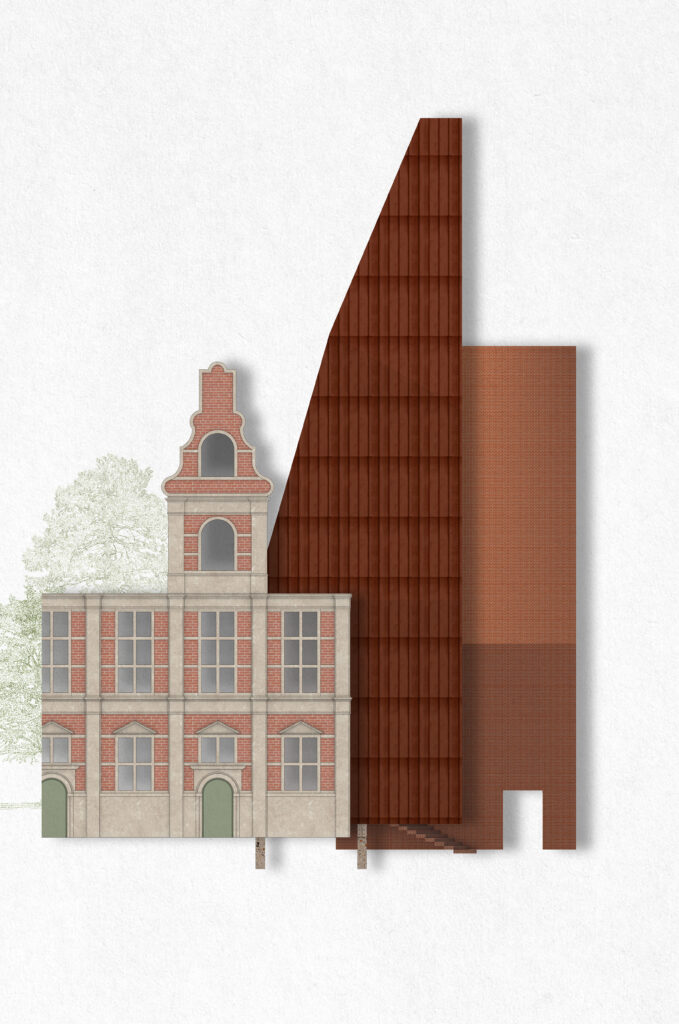
The Council of Adaptation, Defence and Loss
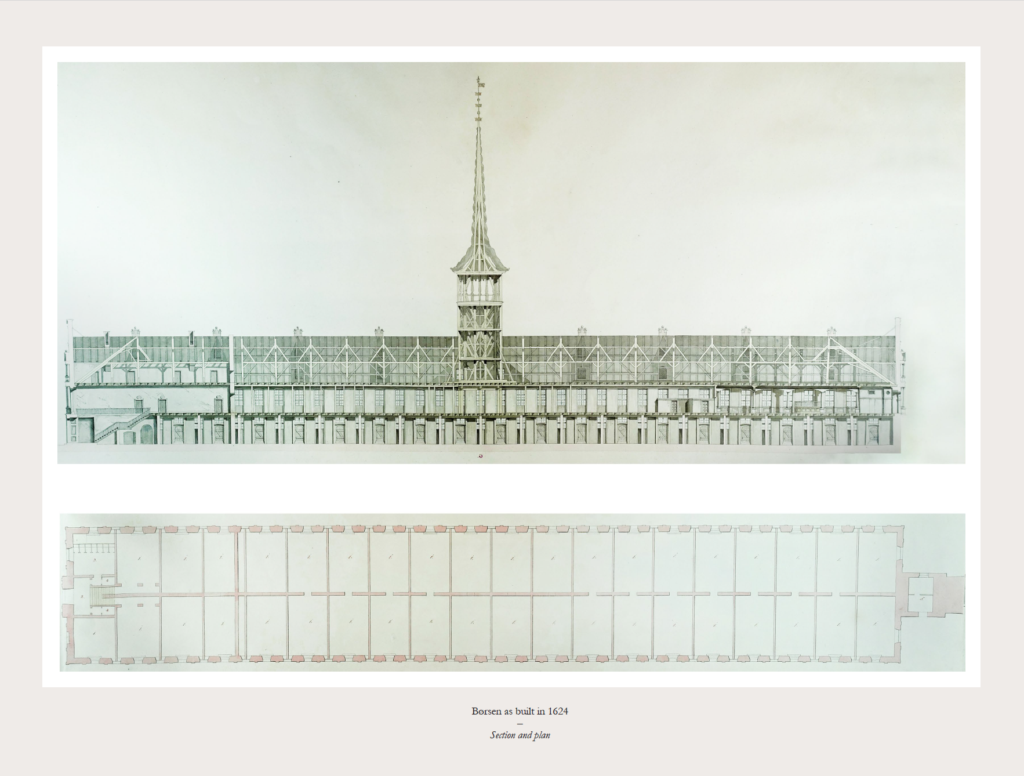
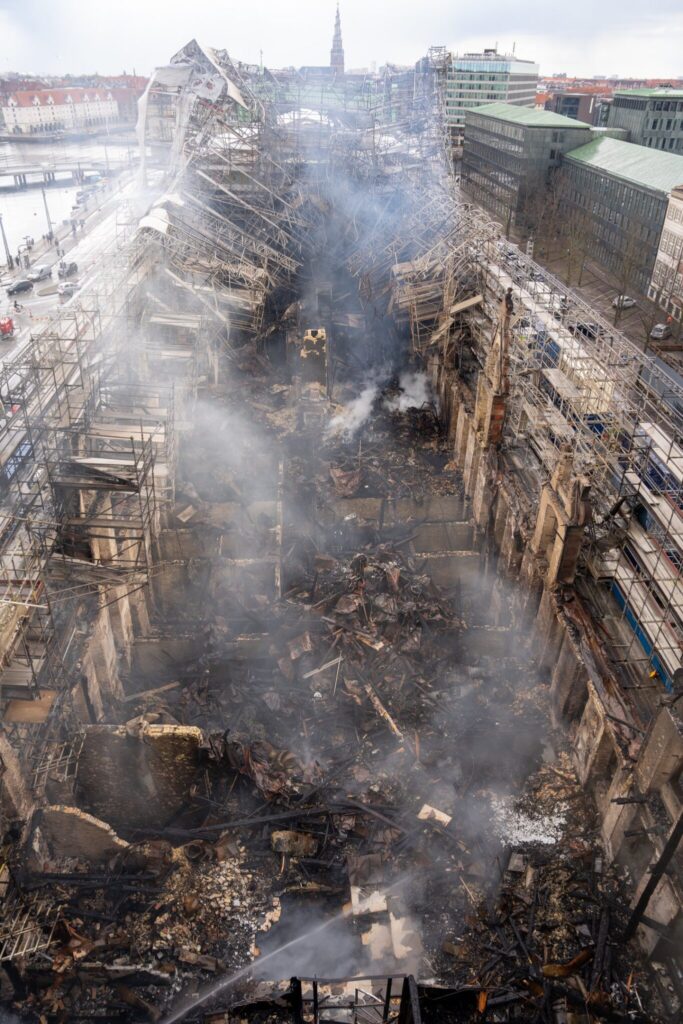
The island of Slotsholmen in Copenhagen has served as a seat of power since the founding of the city by Bishop Absalon, who built the first castle there, in 1167. A constant amongst an ever-changing landscape, Slotsholmen is now home to all of Denmark’s major structural institutions of power: executive, legislative, judicial, economic and monarchical.
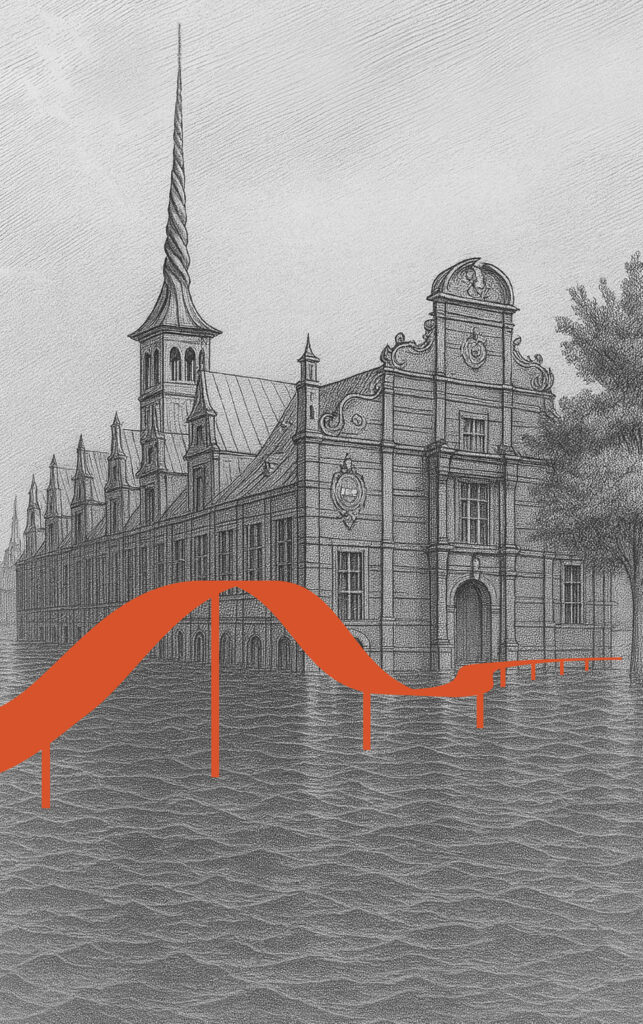
Copenhagen is facing a multidimensional threat from water in the form of storm surges, cloudbursts, rising groundwater levels and sea level rise. As a city raised from the sea, its low-lying position makes it particularly vulnerable to these threats which climate predictions show could conspire in bringing flood levels over 4m by 2125.
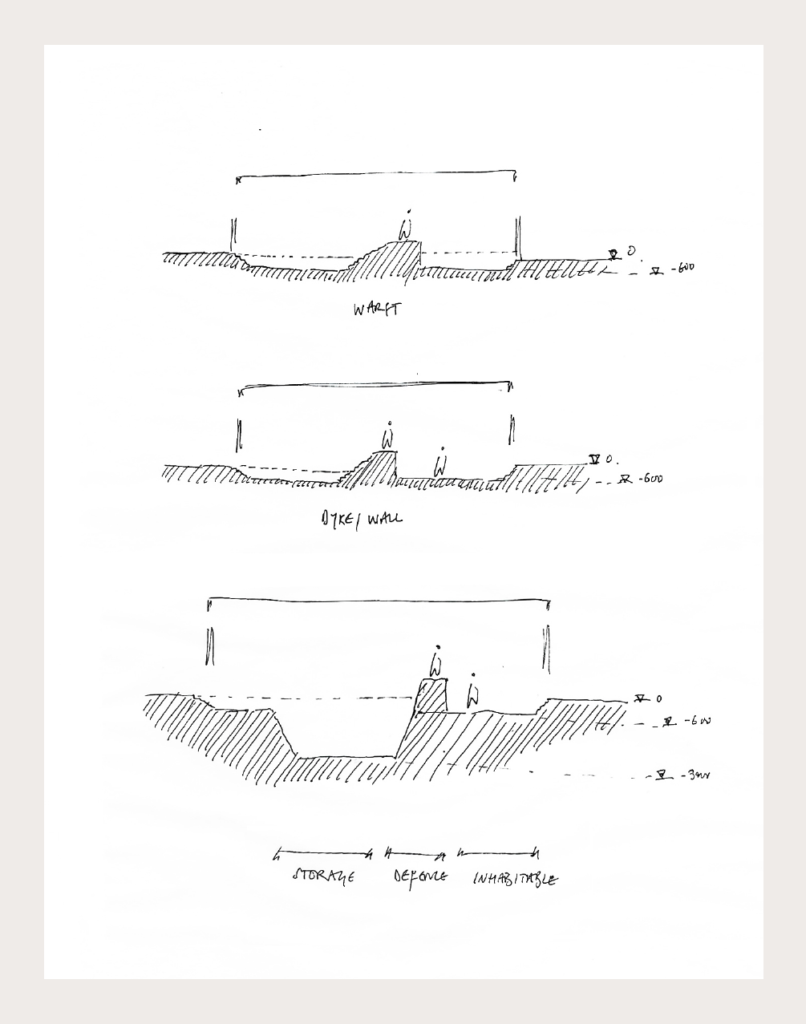
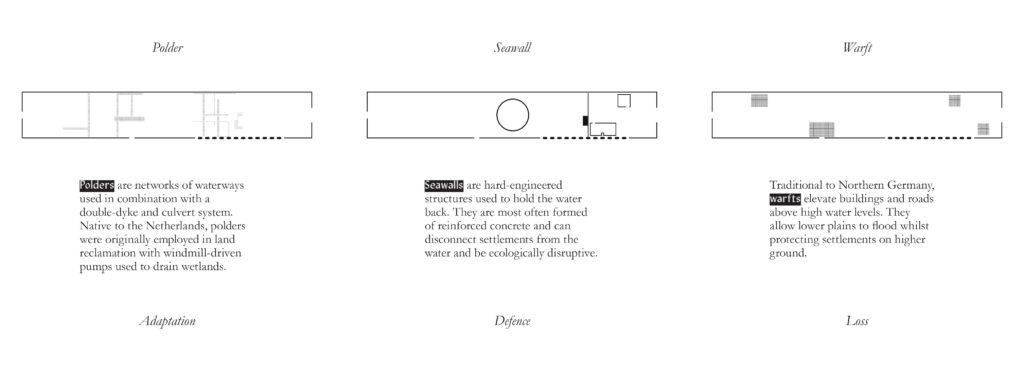
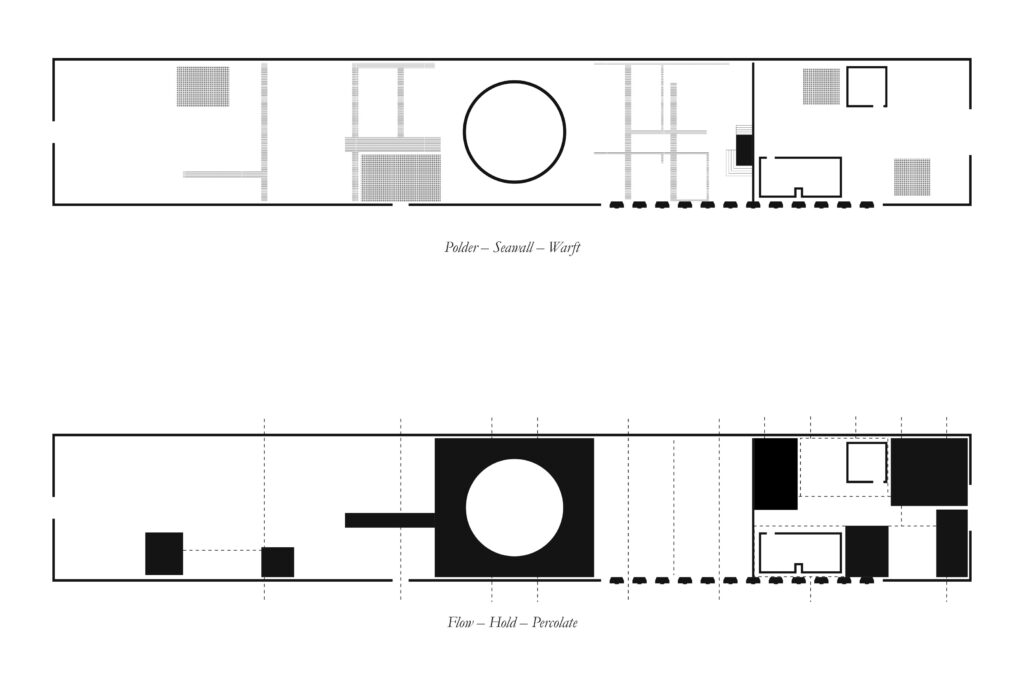
In Ethics for the City, Richard Sennett proposes two approaches to urban planning under the threat of water: defence or adaptation – to which I would add a Ruskinian notion of loss.
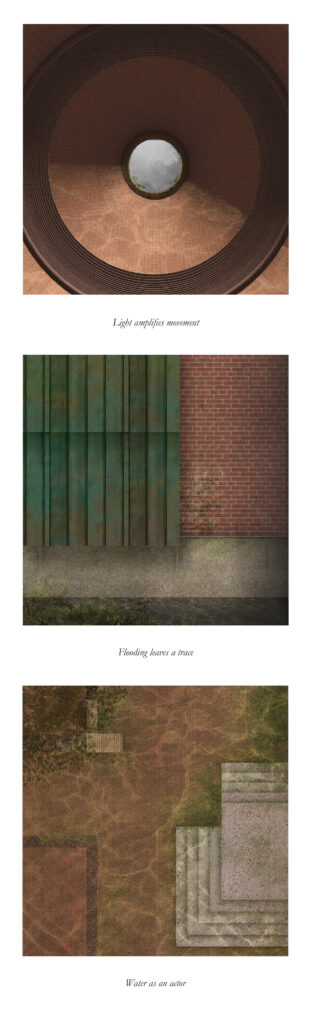
On Slotsholmen, water becomes another dimension of power; and with the threat of it, comes the inevitability of loss.
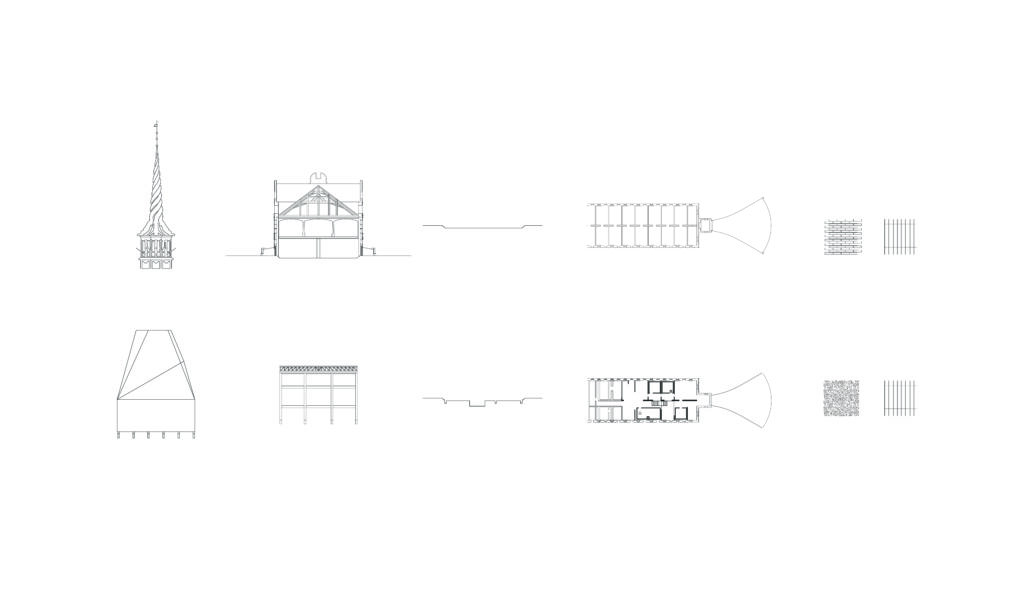
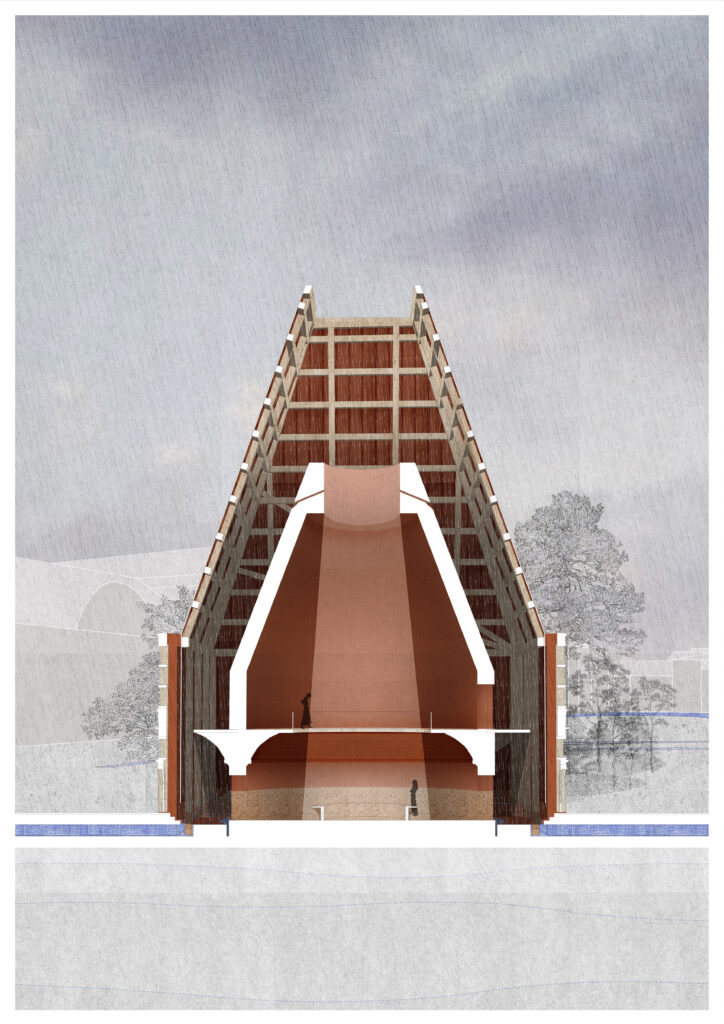
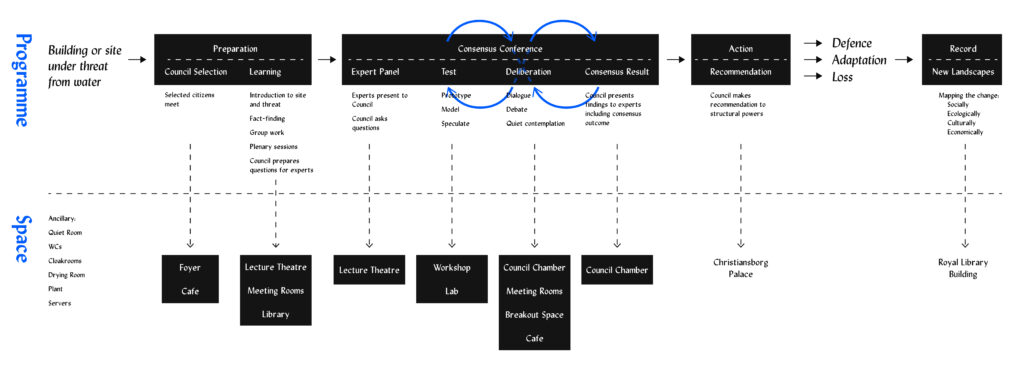
This thesis project examines how new systems of power disrupt the status quo and become an opportunity to imagine a climate-responsive city built on participatory democracy.
The Council of Adaption, Defence and Loss raises questions about how our cities navigate a future under existential threat, and who gets to decide what should be saved or what might be reclaimed by the sea.
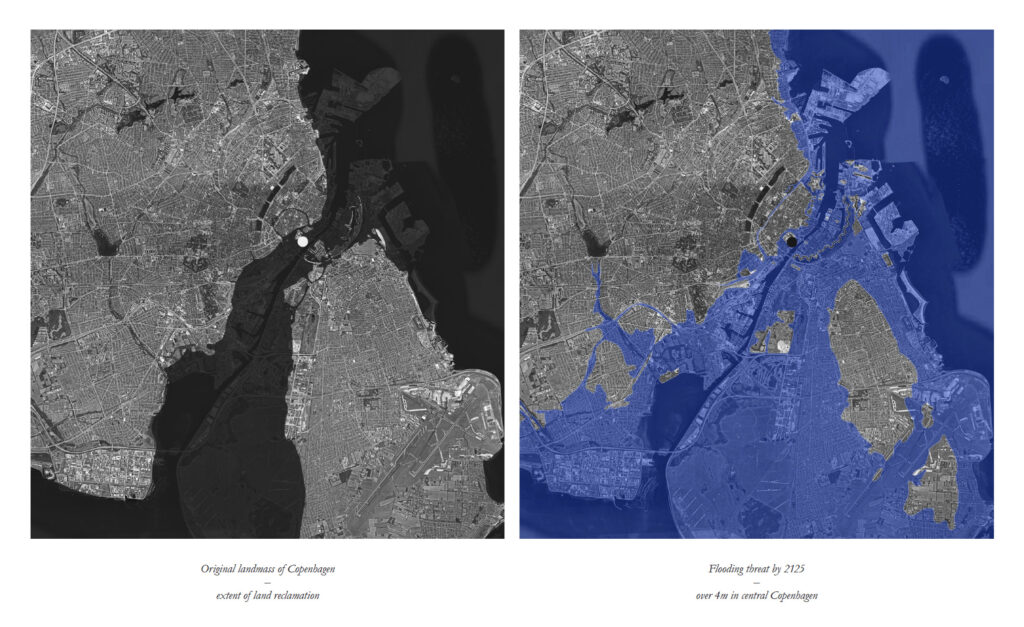
Extent of Land Reclamation in Copenhagen and predicted flood risk by 2125