Rhemshah Sajid
Sensing Shelter
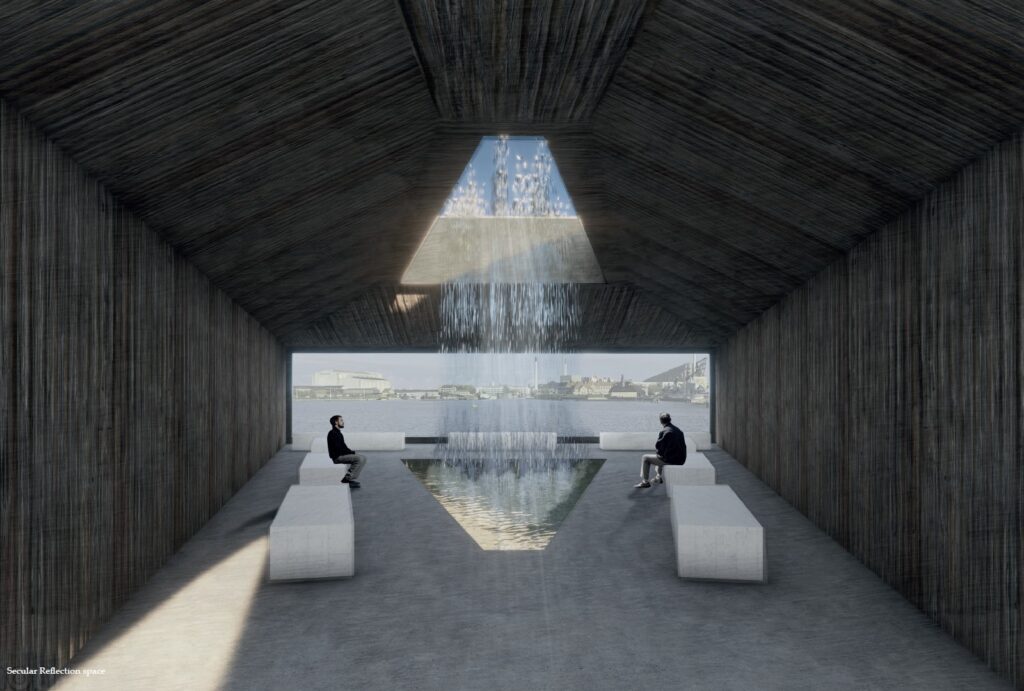
Architecture is deeply connected to the philosophical questions of the self and the world, time and duration, life and death. Within Denmark’s secular society, the spatial absence of seeking existential comfort constitutes a space for reflection, slowing down time and addressing mortality. Answering these questions through architecture creates a sense of belonging not only to human beings but also within the urban fabric of the city itself.
This thesis explores the concept of redefining the views on mortality through the lens of phenomenology within the city of Copenhagen. Displacing it to medical environments results in an isolating experience and leaves the public disconnected and uncomfortable from the collective rituals of grieving and remembrance. Bringing death to the forefront of the city allows for acceptance, growth and reawakens presence, which encourages a renewed appreciation of lived existence.
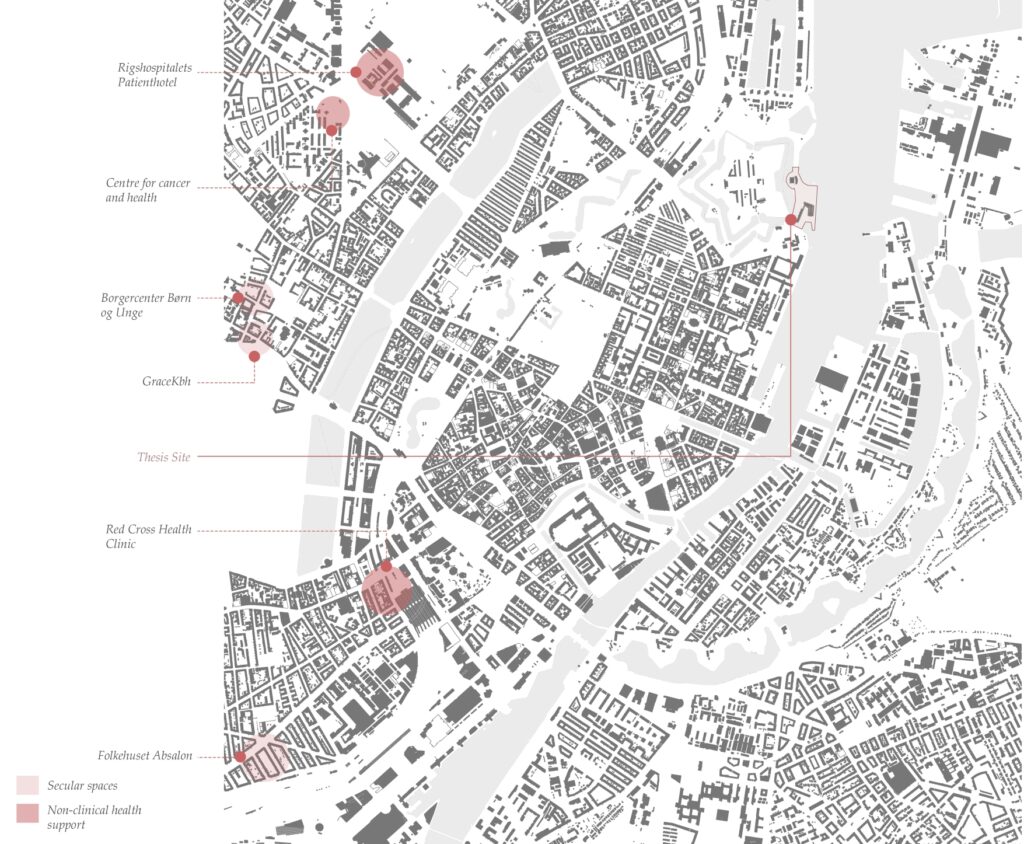
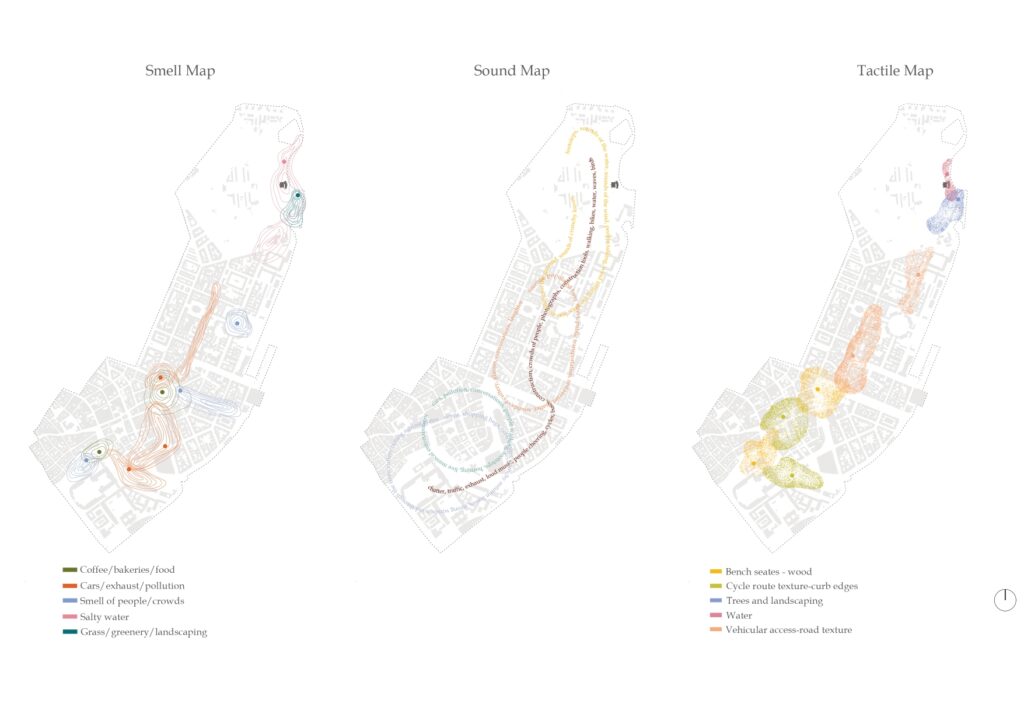
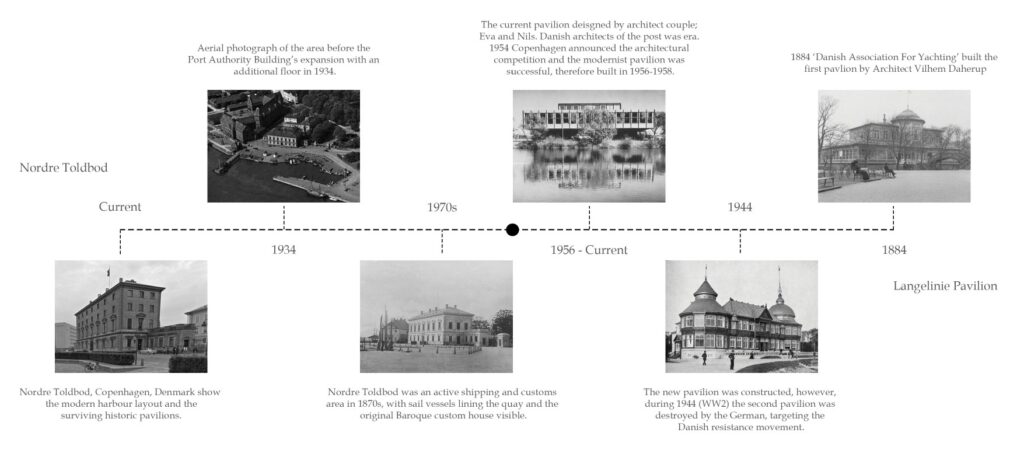
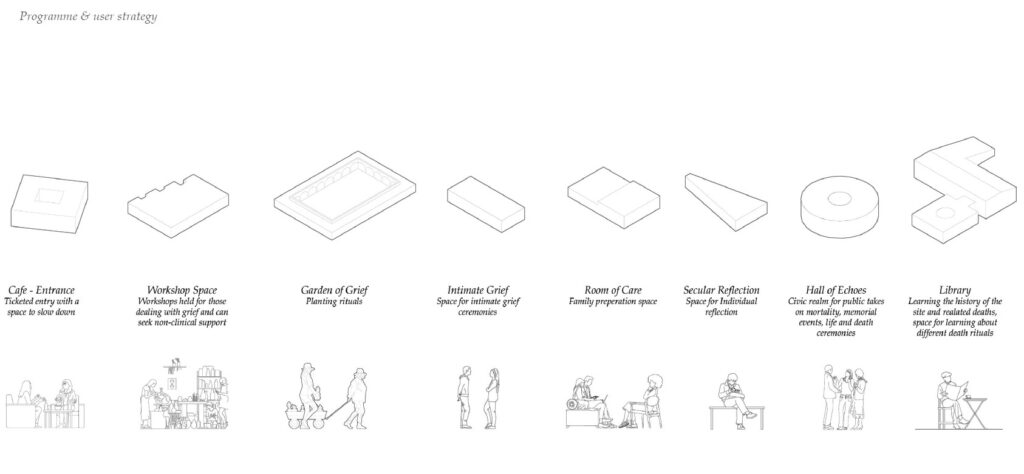
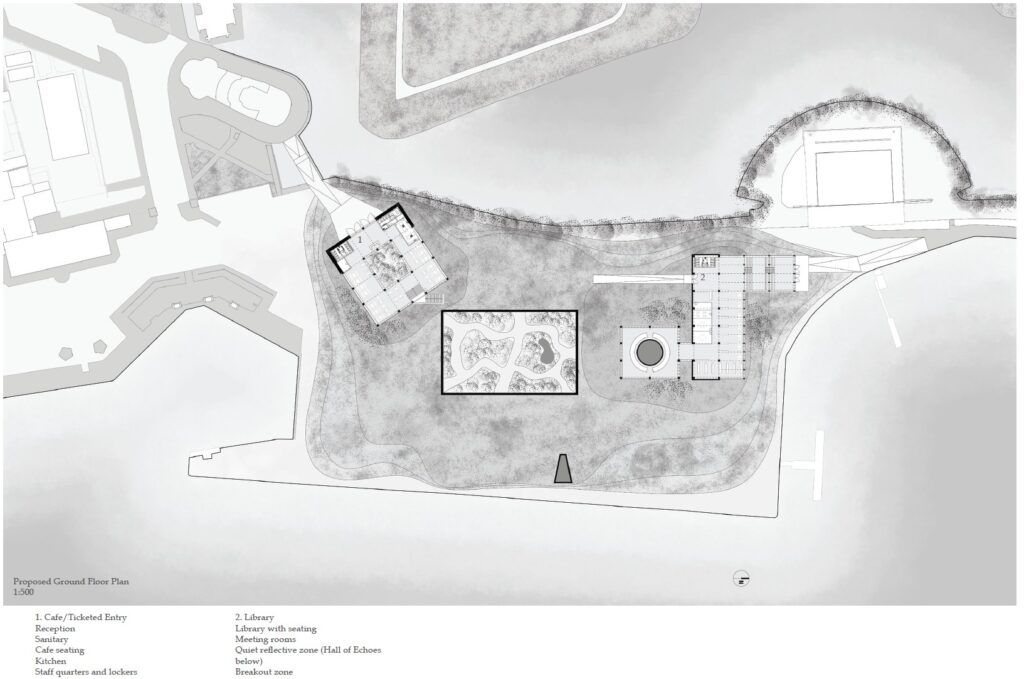
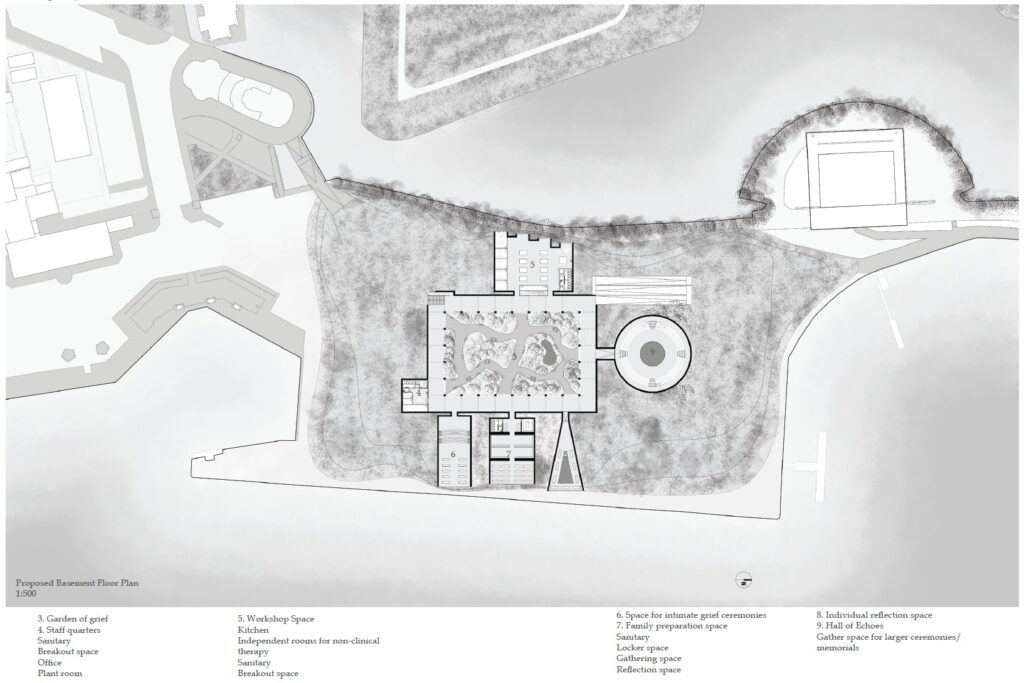
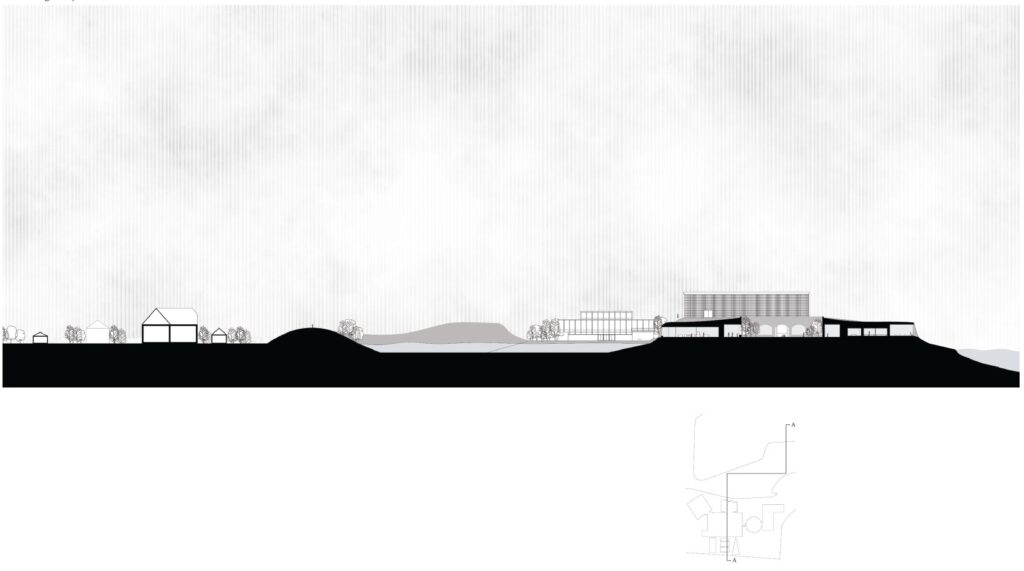
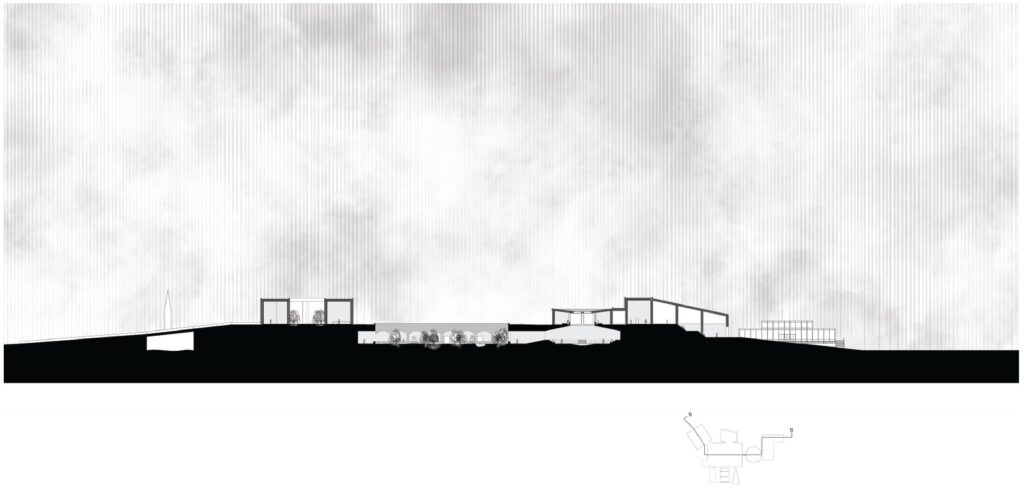
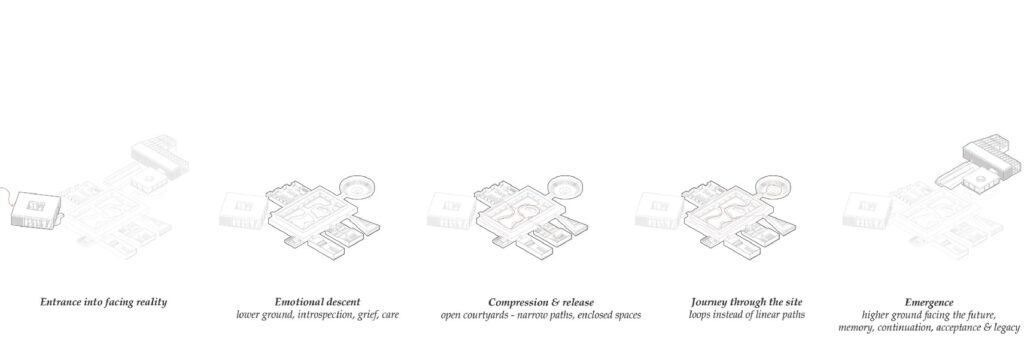
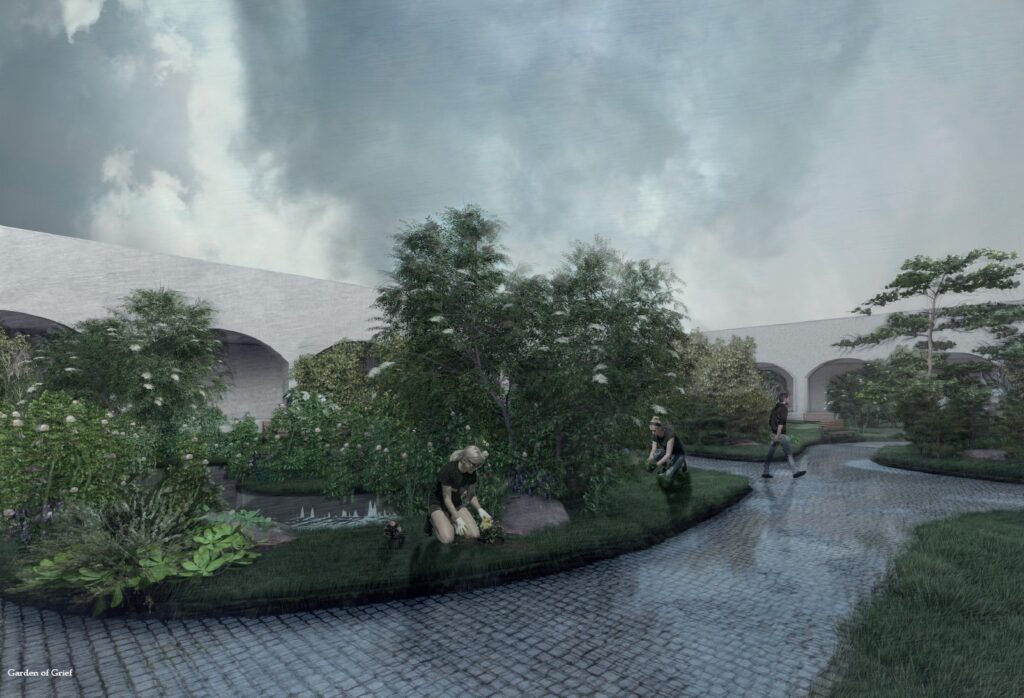
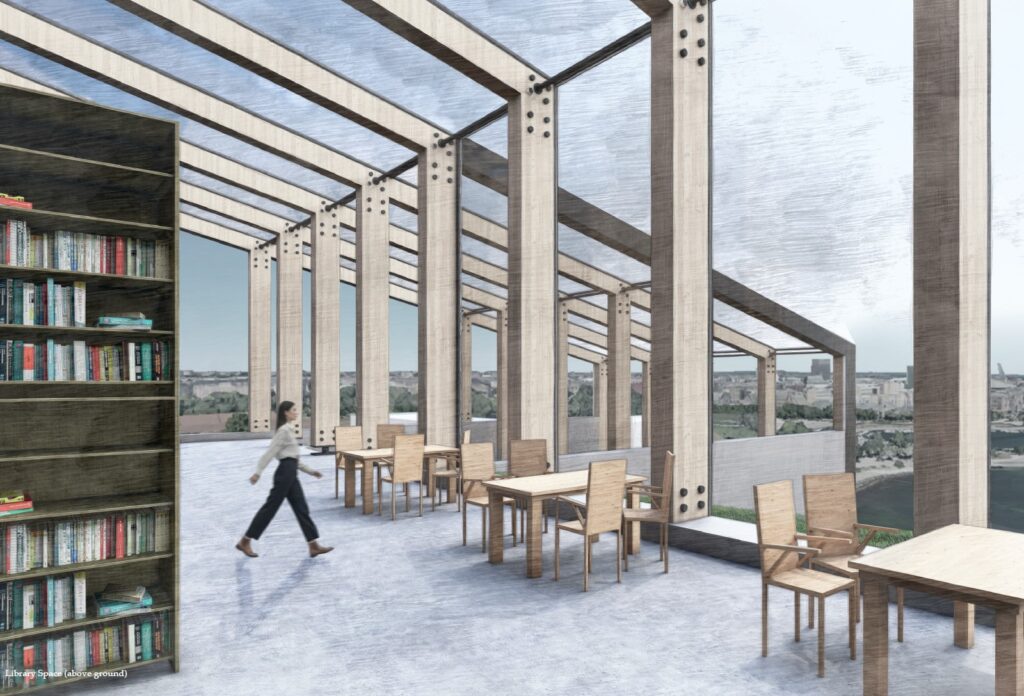
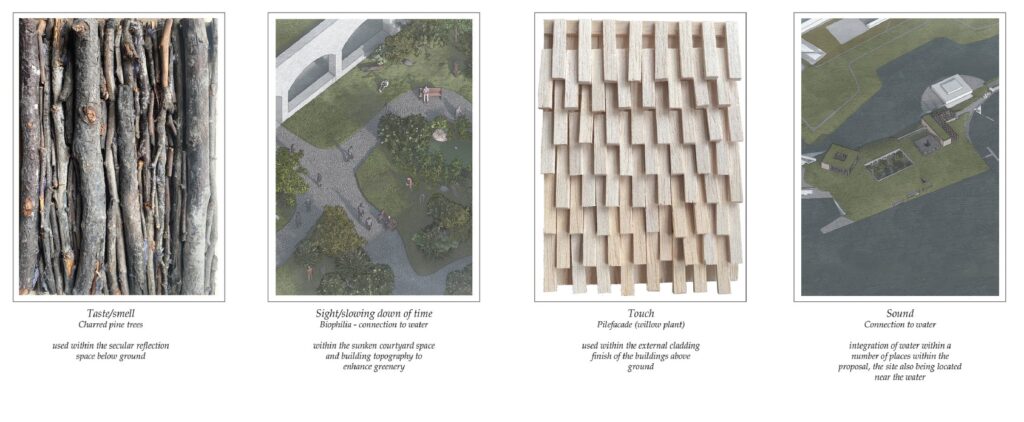
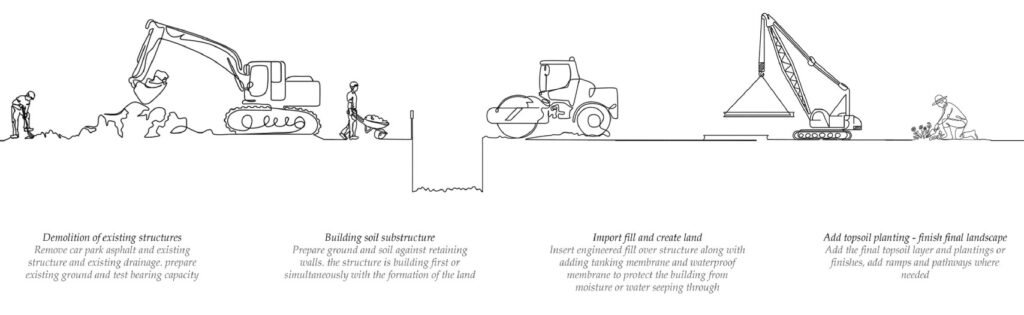
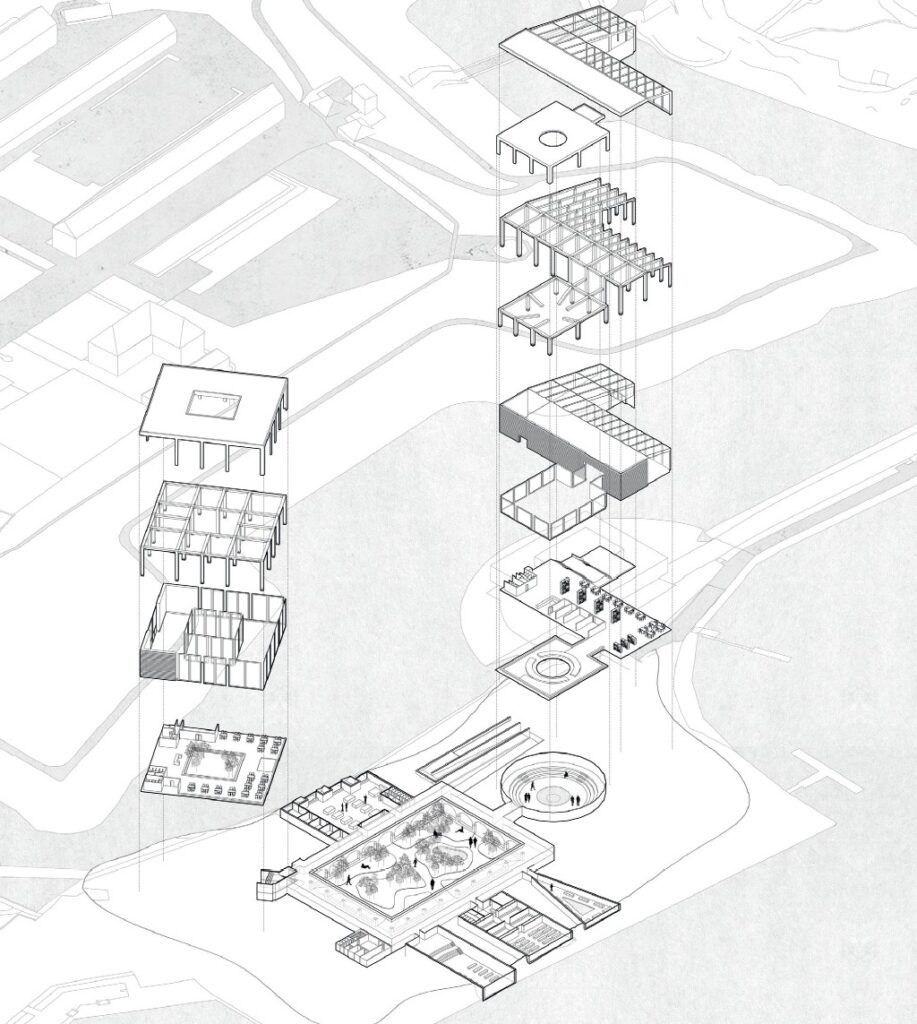
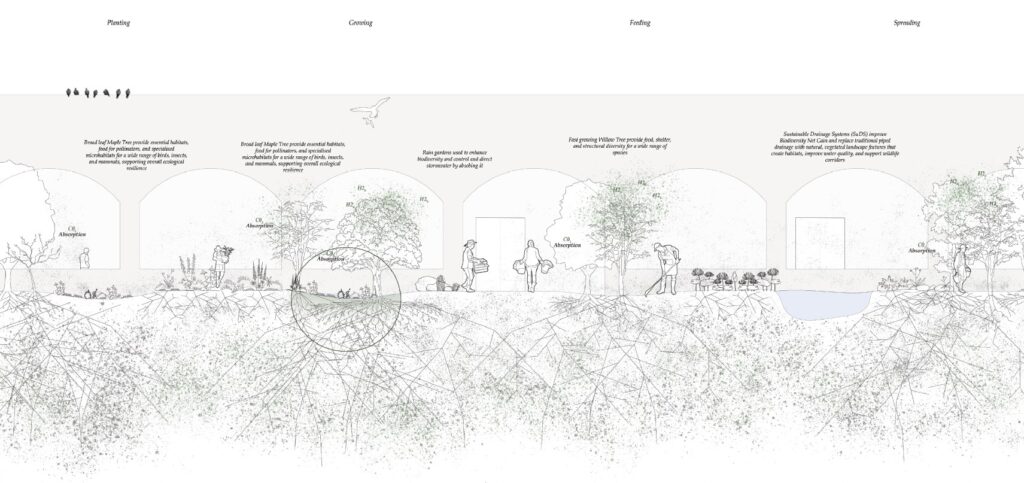
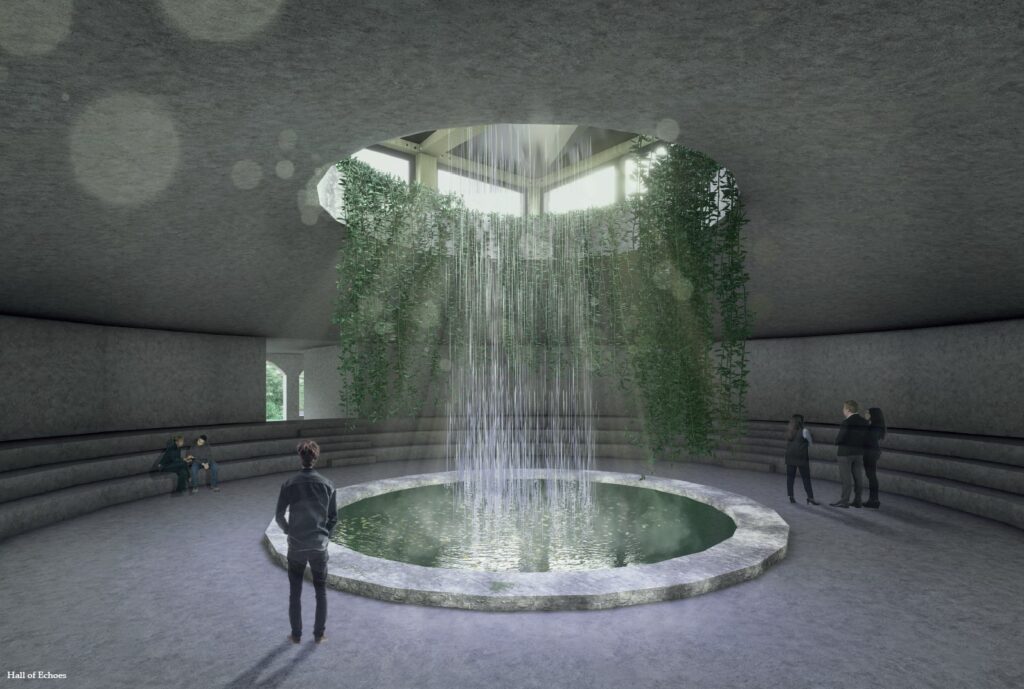
This site is located on the Langelinie promenade – a site known for its tourist attraction and historically linked to the Citadel’s military fortification and post war reconstruction. The thesis challenges the site’s history with memory and mortality. Proposing a civic gathering space that provides a remembrance gallery, a space for reflection, contemplation and a break from day-to-day busy lives. With a place of care for those grieving or terminally ill and dealing with death directly. Providing non-clinical support, including reflection gardens and workshop spaces. This will be further achieved by exploring land-forming to allow the threshold spaces of public and intimate spaces through biophilia. Incorporating courtyards and acoustic buffering zones.
This thesis re-imagines the coastal promenade of Copenhagen, where vulnerability, care and reintroducing the site’s historical memories become central to urban life.