Rongrong Luo
Rewoven: A Community Wellness Hub for Social Reactivation
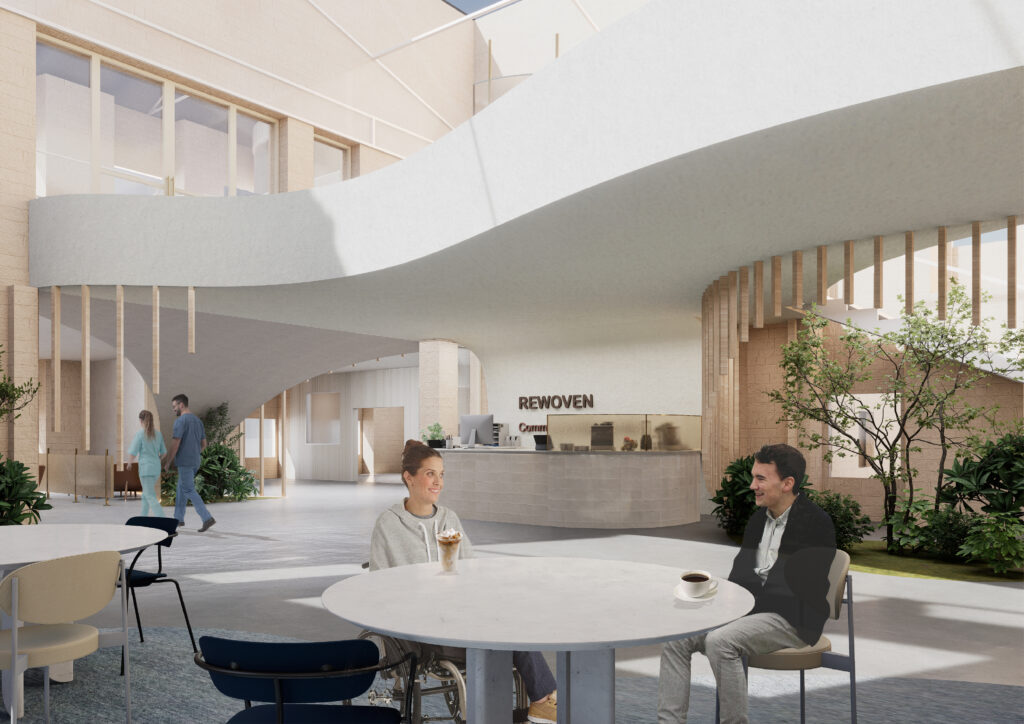
This project explores how spatial design can support people who have experienced trauma in gradually recovering and reintegrating into society by converting an abandoned police station into a community wellness hub. Named Rewoven, it symbolises how, within this space, people who were once socially isolated can be tightly woven back into society, forming a harmonious and flourishing whole.
The big idea for this project stems from an interest in social space design, especially places that respond to users’ emotions and psychological needs. This project is an emphasis that space is not just a passive container, but a medium that can play an active role in healing, transition, and connection.
As a community-oriented community wellness centre, the project serves mainly four types of people: those in physical recovery, in institutional transition, in PTSD trauma recovery, and in emotional distress. Glasgow, as a city with a tradition of social diversity and public welfare, provides a realistic context for such spaces, and the project seeks to respond to the city’s search for non-medical, dignified, and supportive spaces.
The Former Calton Police Station is chosen for its size, public attributes, and symbolism. As a former place of power and control, it is reused as a space for care and support, which has strong social and spatial translation significance. At the same time, it is located in Glasgow’s East End, which has a higher presence of potential users than other urban areas, and the nearby transportation also ensures convenience and accessibility.
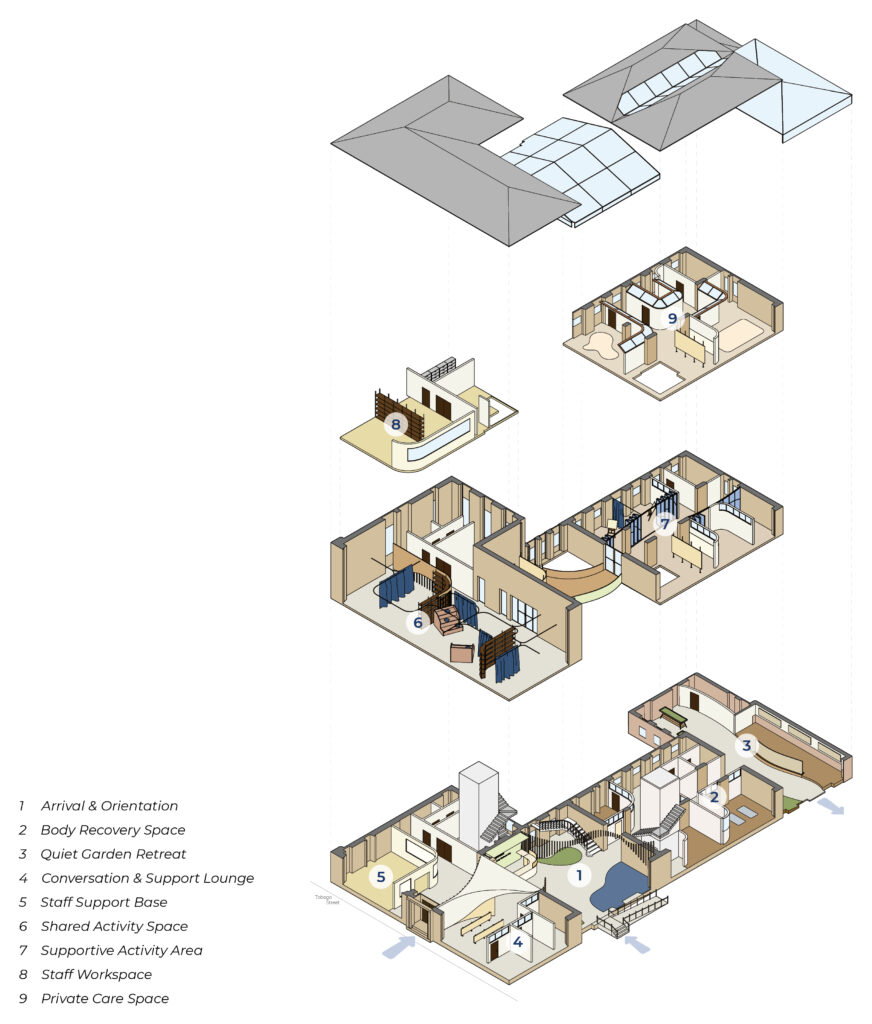
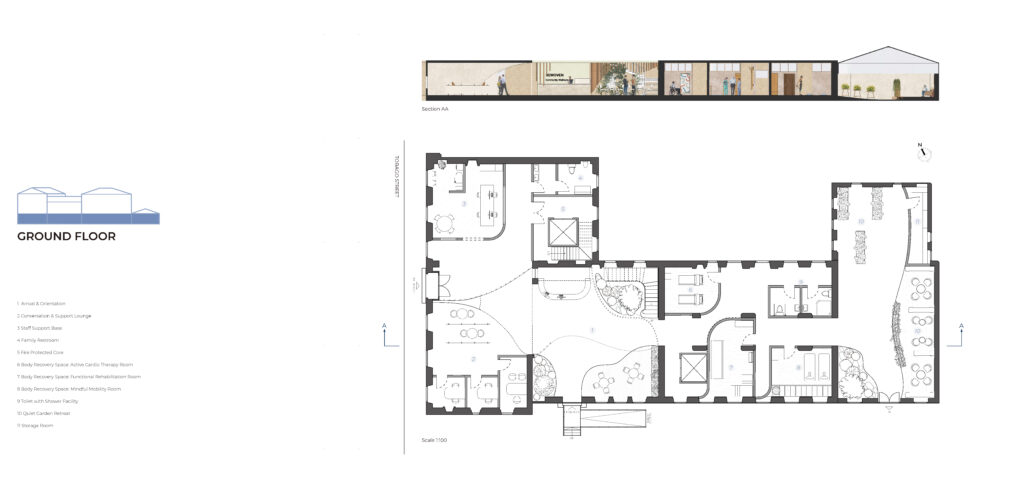
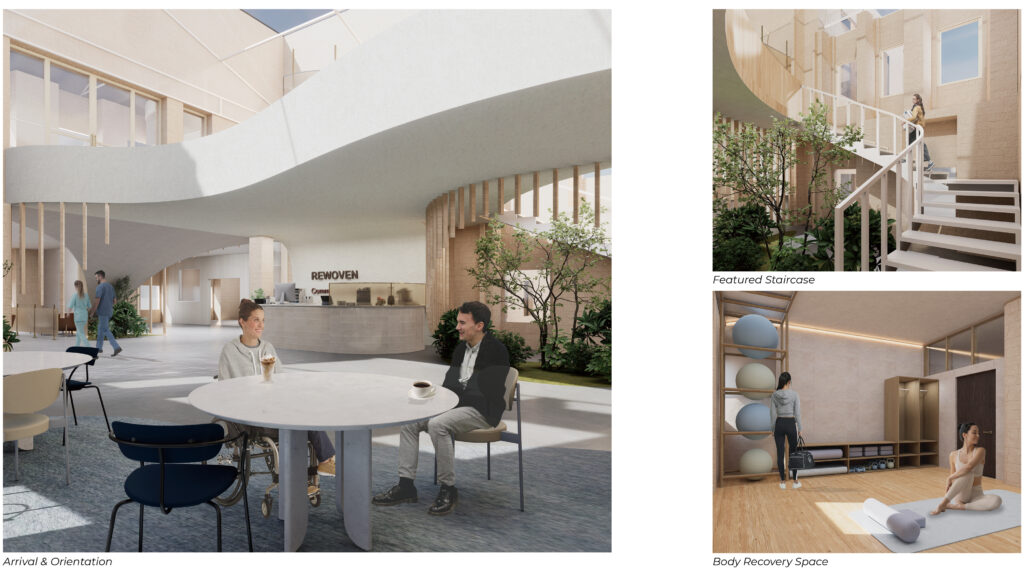
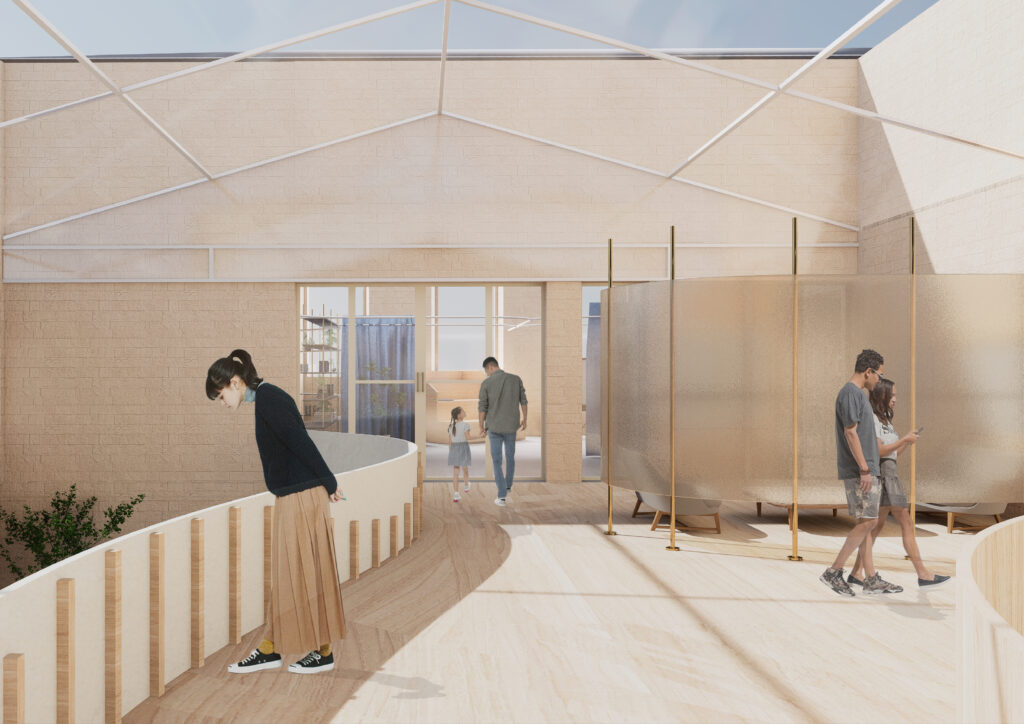
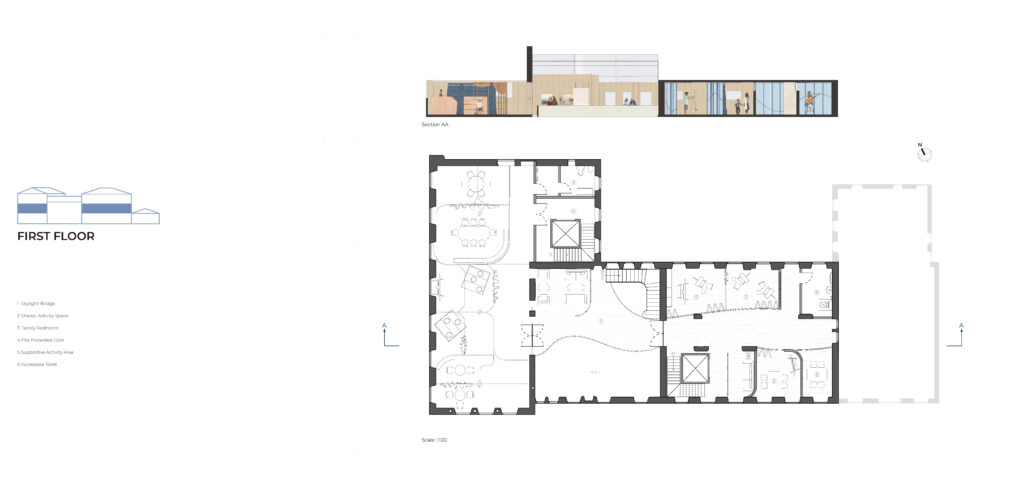
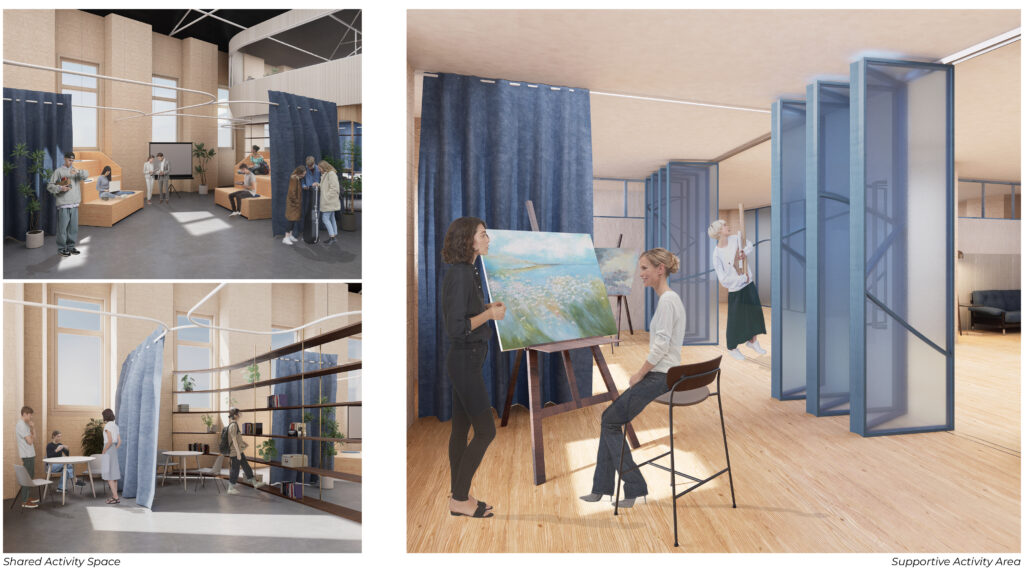
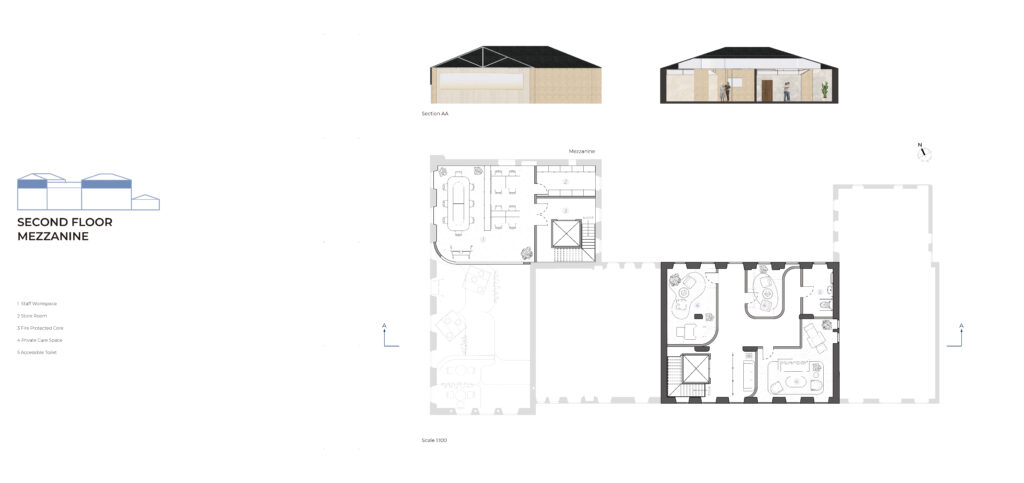
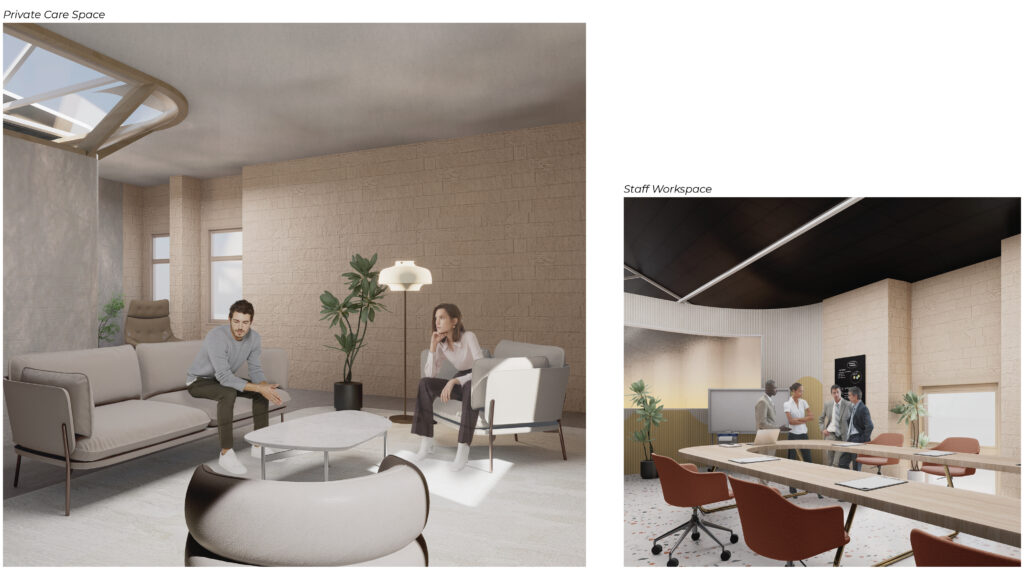
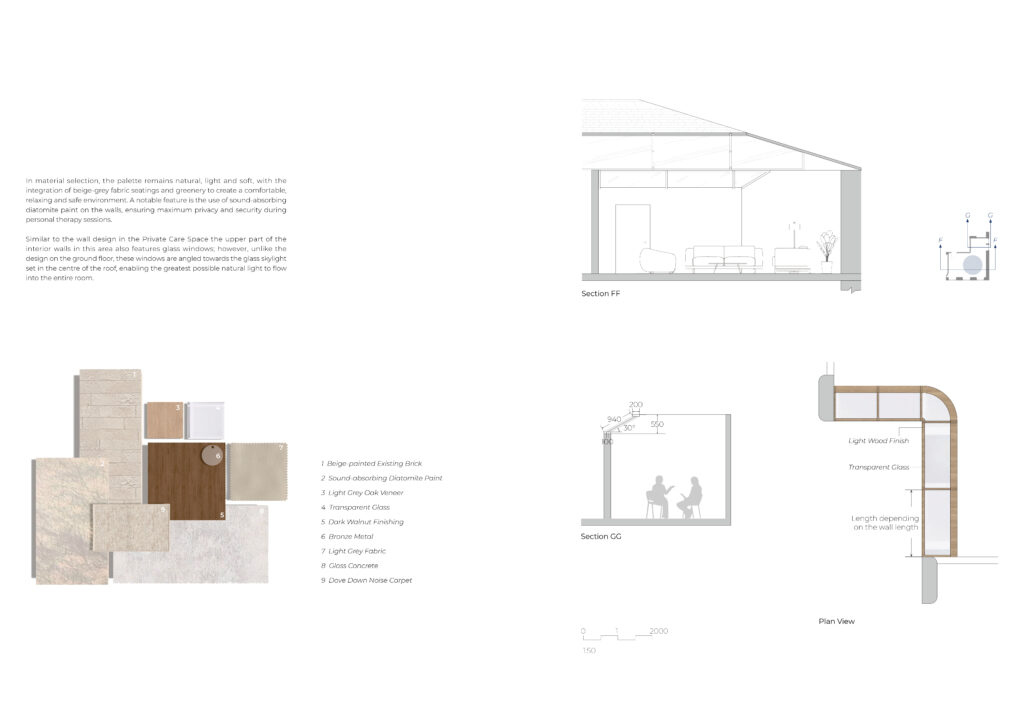
The design principles for this project are: to organise user activities according to energy levels—from active to passive—across different zones in the site, guiding users through a gradual transition from a closed and defensive state to an open and participatory mode; to soften the original, rigid spatial form with curved lines; and, as part of the adaptive reuse design, to improve the oppressive atmosphere by introducing natural light through the atrium and roof. At the ethical level, the project would avoid “display trauma” and address dignity, agency and psychological safety, with the building serving both the individual and the community as a whole.
Weaving: Digitial Extension of Rewoven as a Site-Specific Service Applicatiion
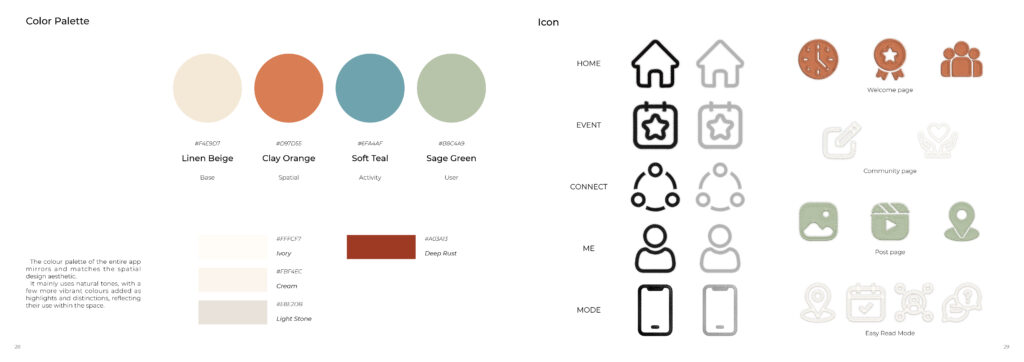
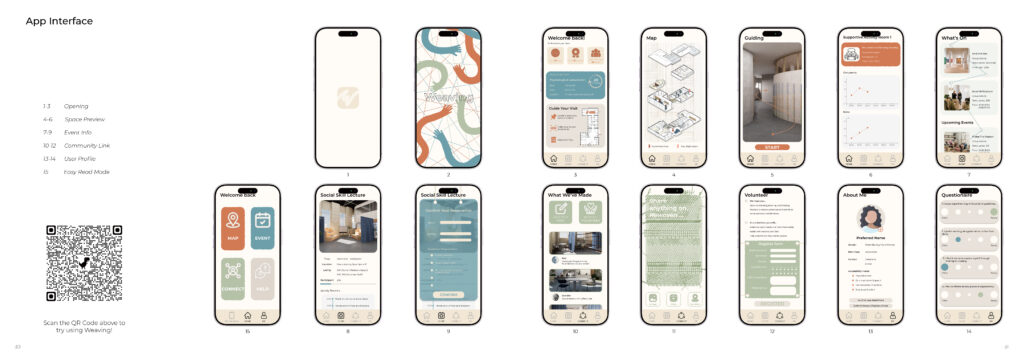
Weaving is a digital extension of the Rewoven community support centre proposal, designed to continue the experience of care, connection, and participation beyond the physical space. The app supports users before, during, and after visiting the centre through activity booking, personalised support pathways, community sharing, and volunteer engagement. Inspired by the concept of weaving, the interface translates spatial ideas of gathering, repair, and emotional connection into a digital environment through layered navigation, soft interaction, and warm visual language. Rather than functioning as a purely practical tool, the app aims to strengthen continuity between people, space, and community experience.