Silas Mendez Theilfarth
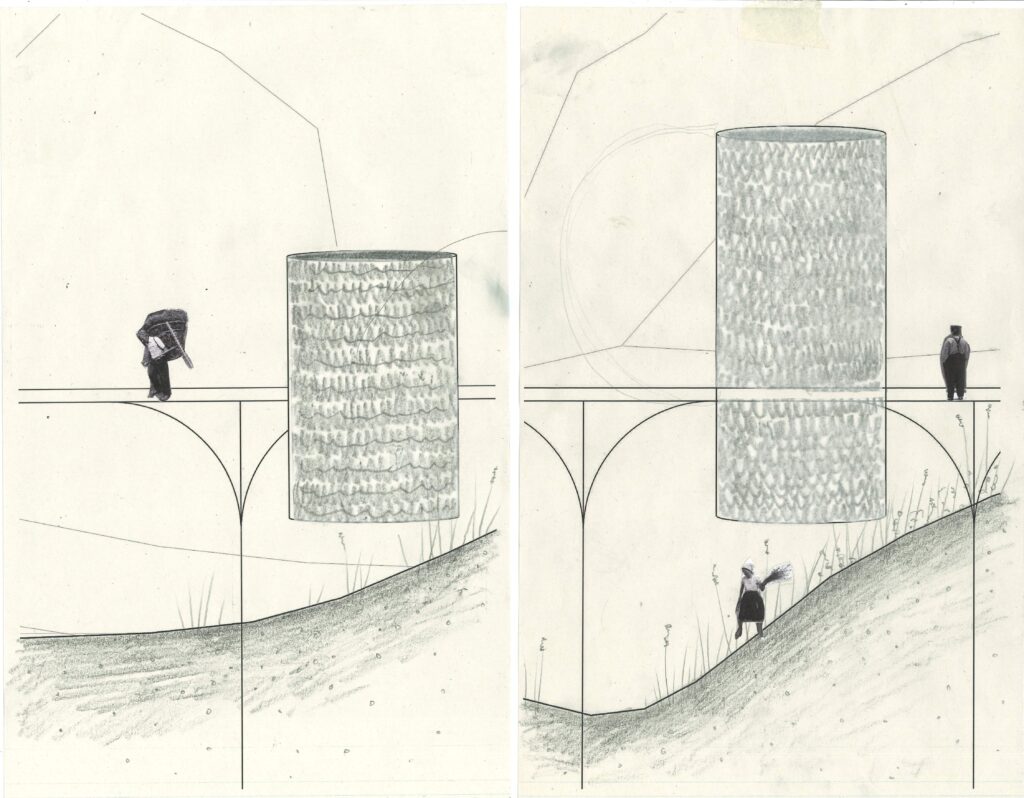
Hands in the Marram
How can reviving a lost craft and Scottish material culture
help rejuvenate a forgotten coastal dune landscape ?
The Clearances depopulated vast areas of the Scottish Highlands, rupturing
communities, their culture, and ultimately the landscapes they inhabited.
Through extensive intergenerational knowledge, these communities created
a reciprocal ecology based on craft, material culture, and self-sufficiency.
Lost to time and extraction, this understanding of land now clings to history.
As stewards of the land, the highlanders followed ancestral rhythms dictating
their harvesting, cultivation and building practices. These low-level
activities sustained dynamic systems in the land that now sit stagnant. My
research-led project examines an overlooked coastal landscape that has
supplied material to coastal communities across Scotland for thousands of
years.
The Marram biotope is a coastal sand dune system that is inherently dynamic,
previously managed through grazing and harvesting, but now often
lies still, arguably due to human inactivity. My project aims to regenerate this
overlooked landscape on a conceptual local-industrial scale through necessary
human intervention and craft revival.
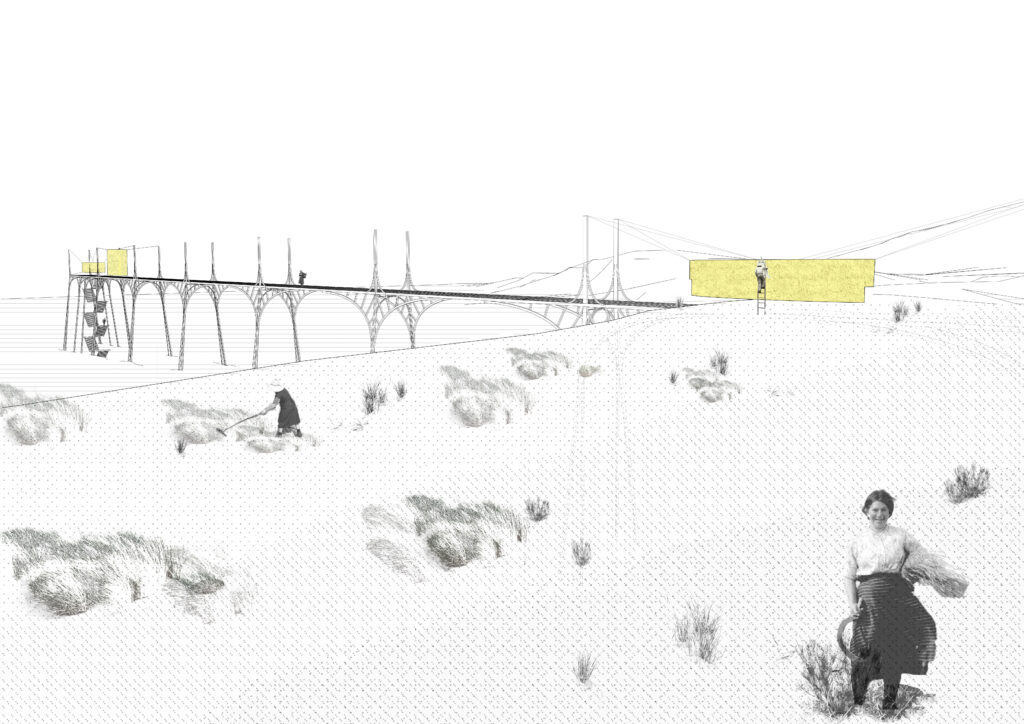
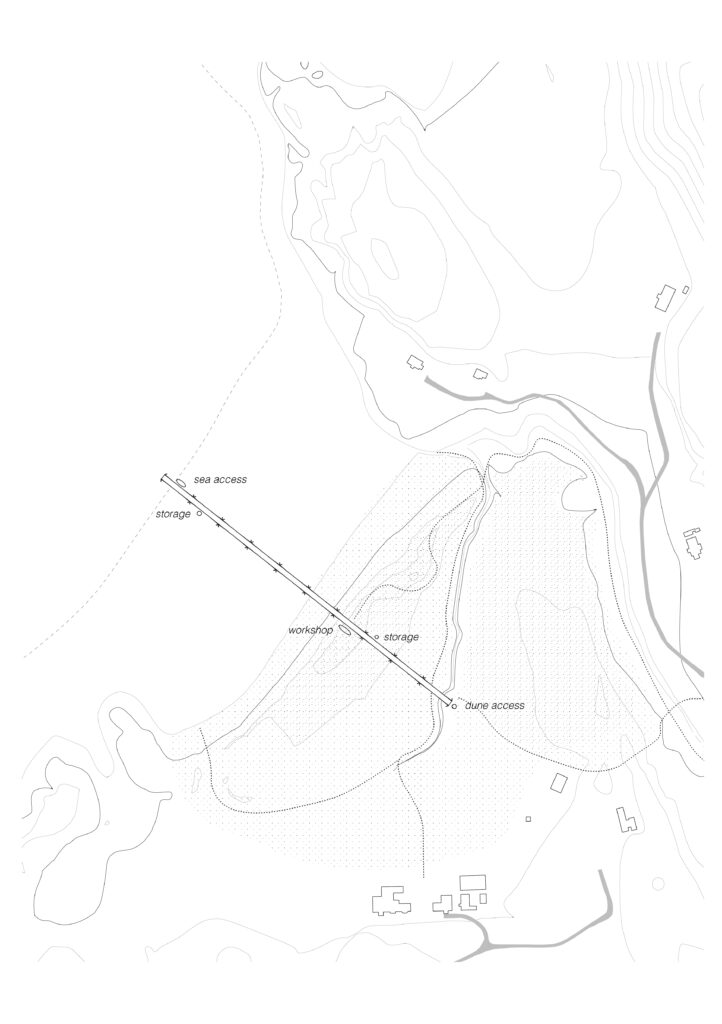
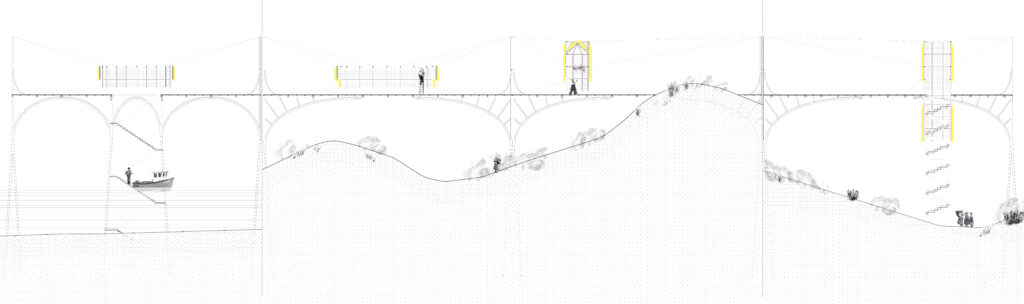
The theoretical design proposes a Pier that dissects the densely vegetated,
stagnant dune of Cambusdarach Beach — part of the Silver Sands of Morar
coastline, a mainland hotspot of sand dune environments on the west coast
of Scotland. The Pier stands within the Marram biotope as a piece of craft
infrastructure, enabling the observation, research and ultimately regeneration
of the landscape. Through the harvesting of Marram, heather, and
Grouse in over-established areas of the dune, large areas of sand can be
exposed to the wind, creating sinks of mobile sand. The material is then processed
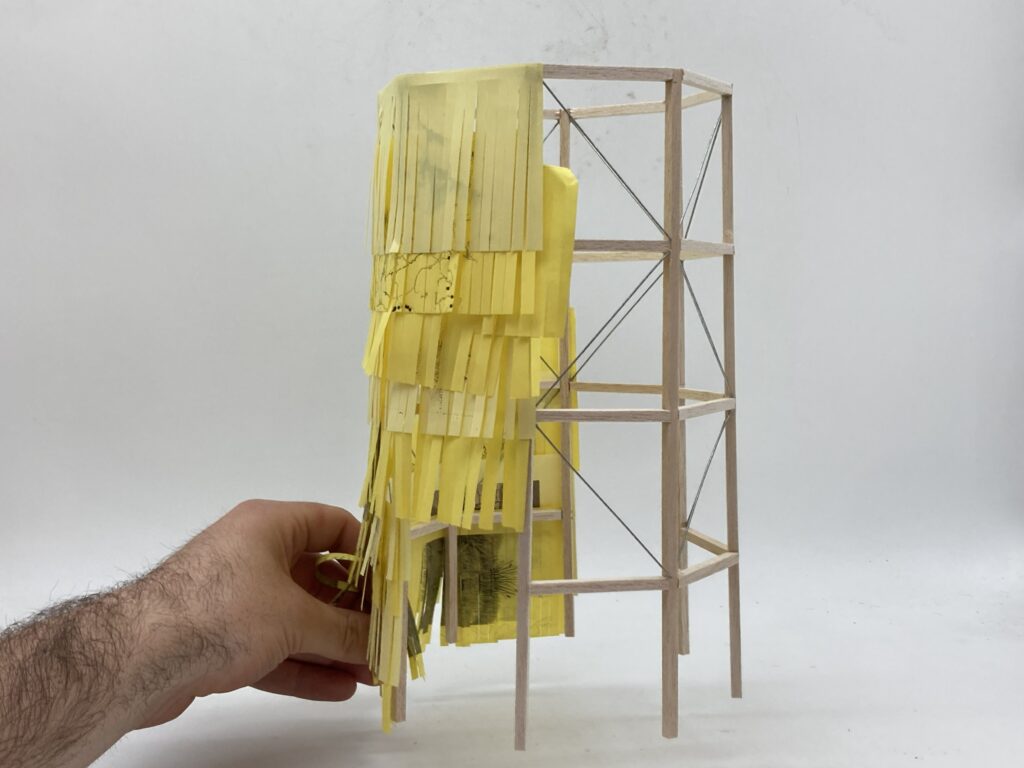
and thatched into contemporary modular panels, which are used to establish
“Silos” of storage and learning on the Pier.
The pier becomes a framework through which lost craft is not simply remembered,
but practised, enabling the restroation of the sand dune’s
dynamic cycle.
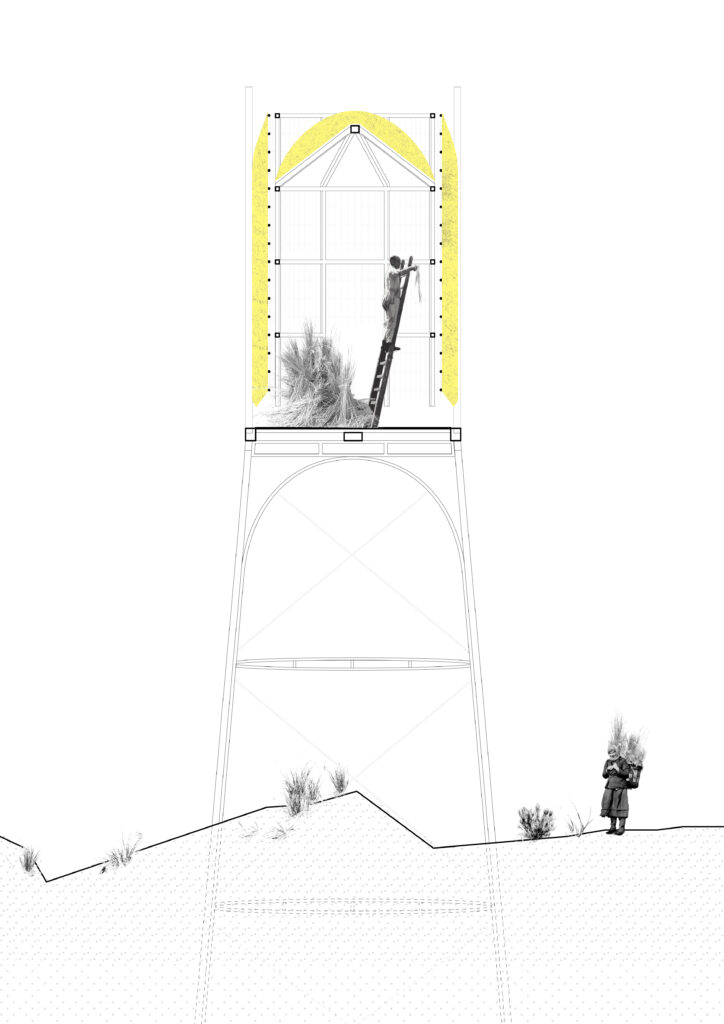
1: 50
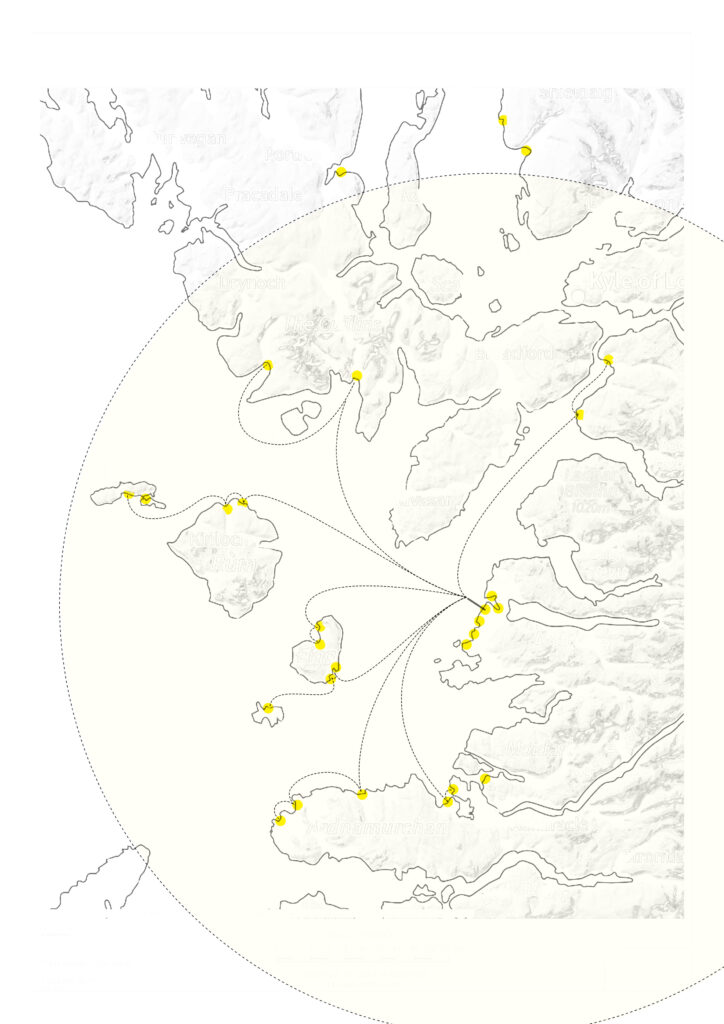
Boat routes to surrounding Marram Dunes
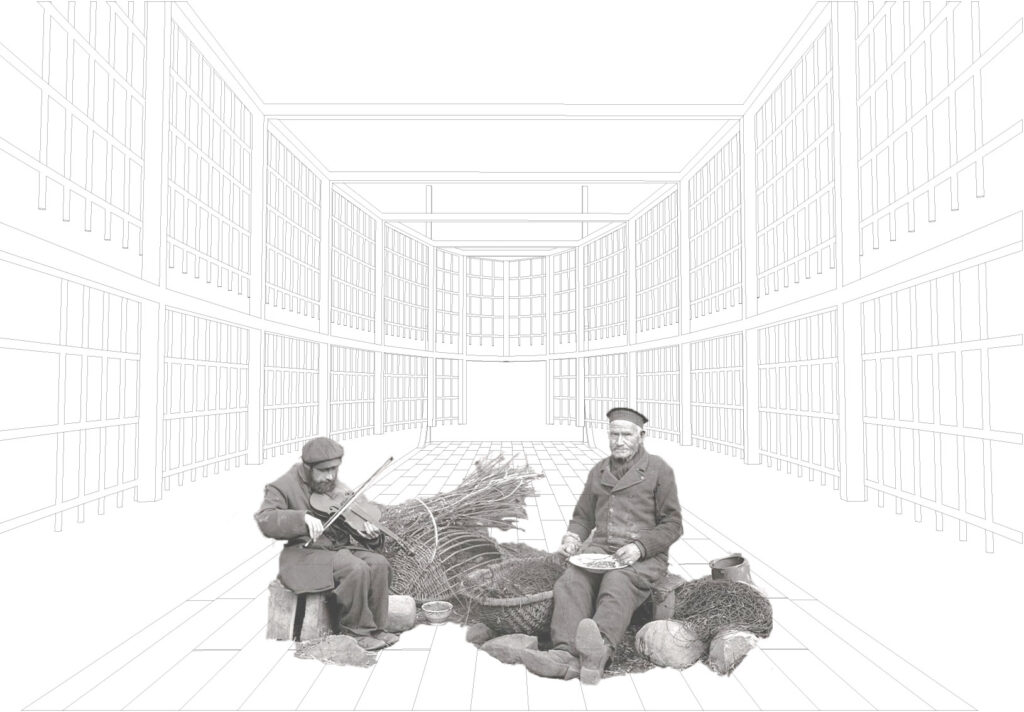
View through workshop
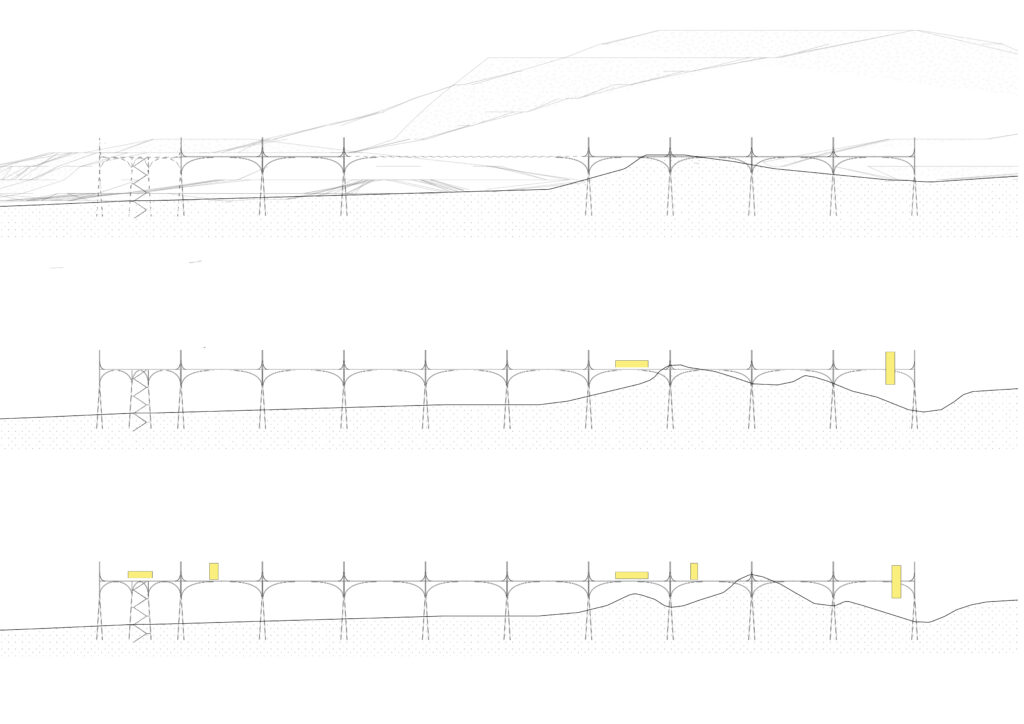
harvest and extraction followed by the thatching of marram silos
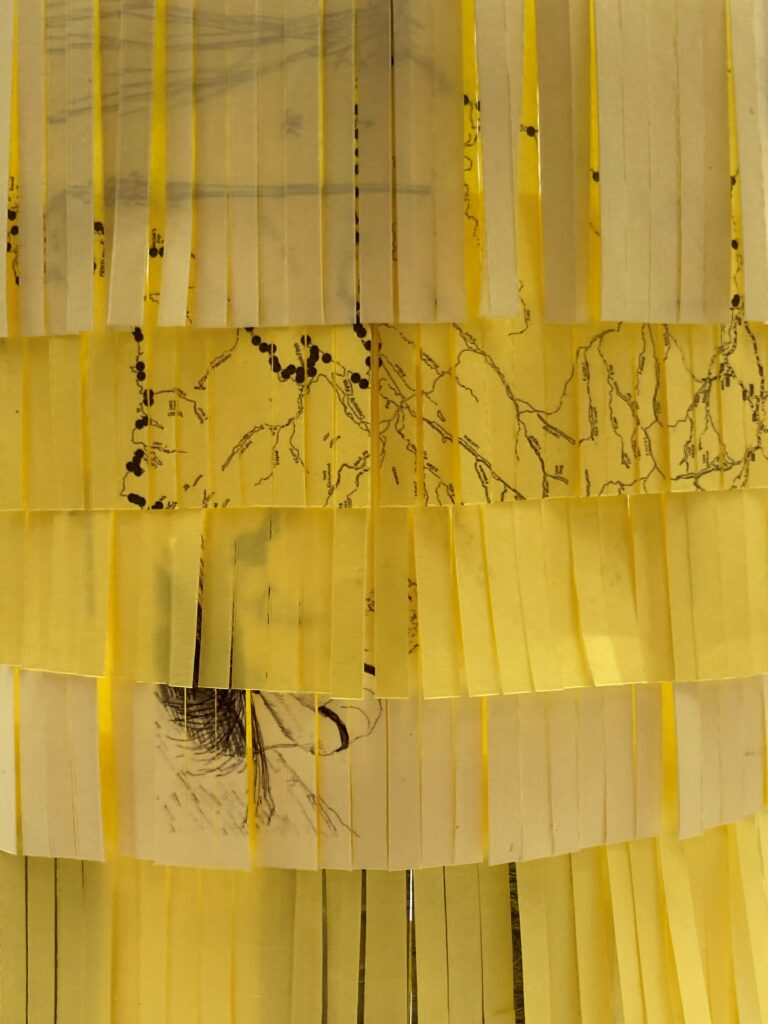
Marram Field Guide: Harvest & Thatch
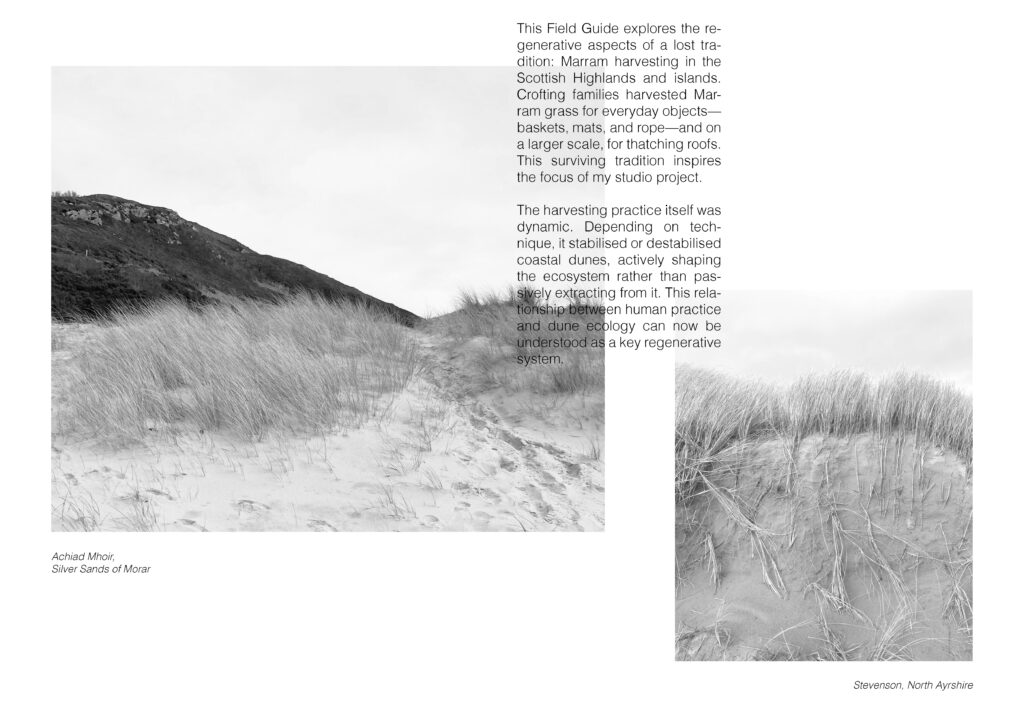
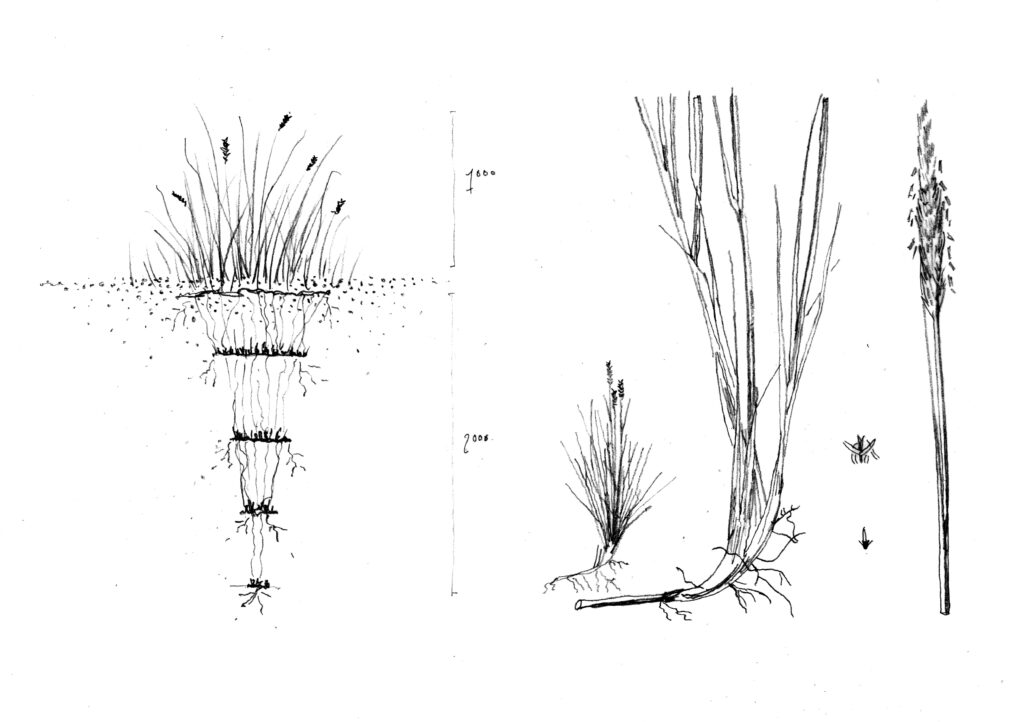
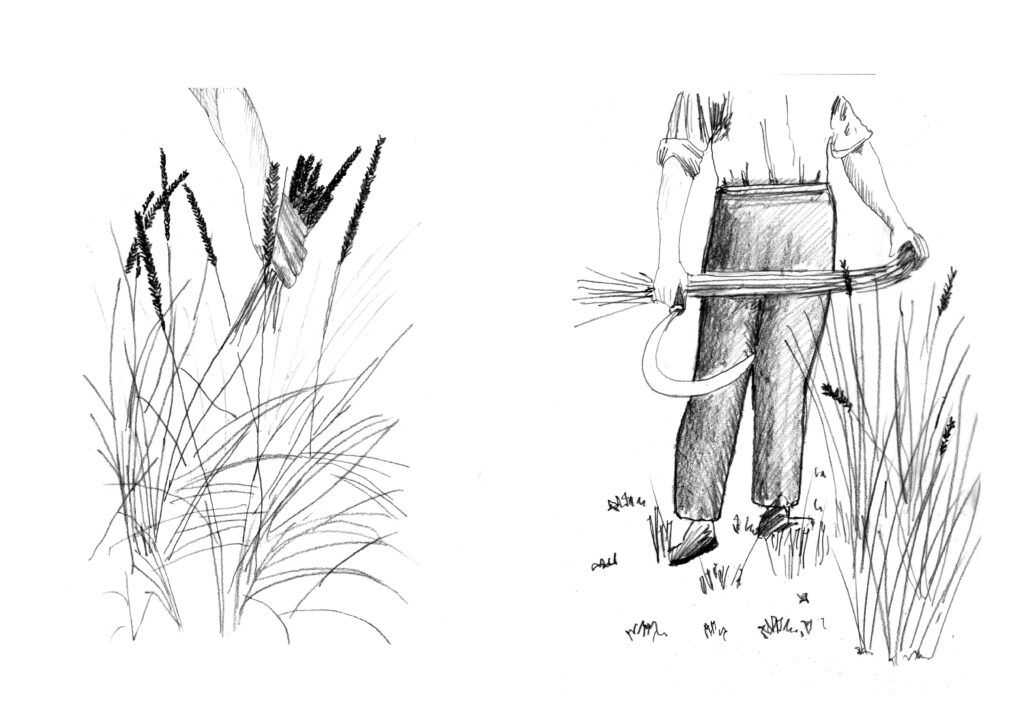
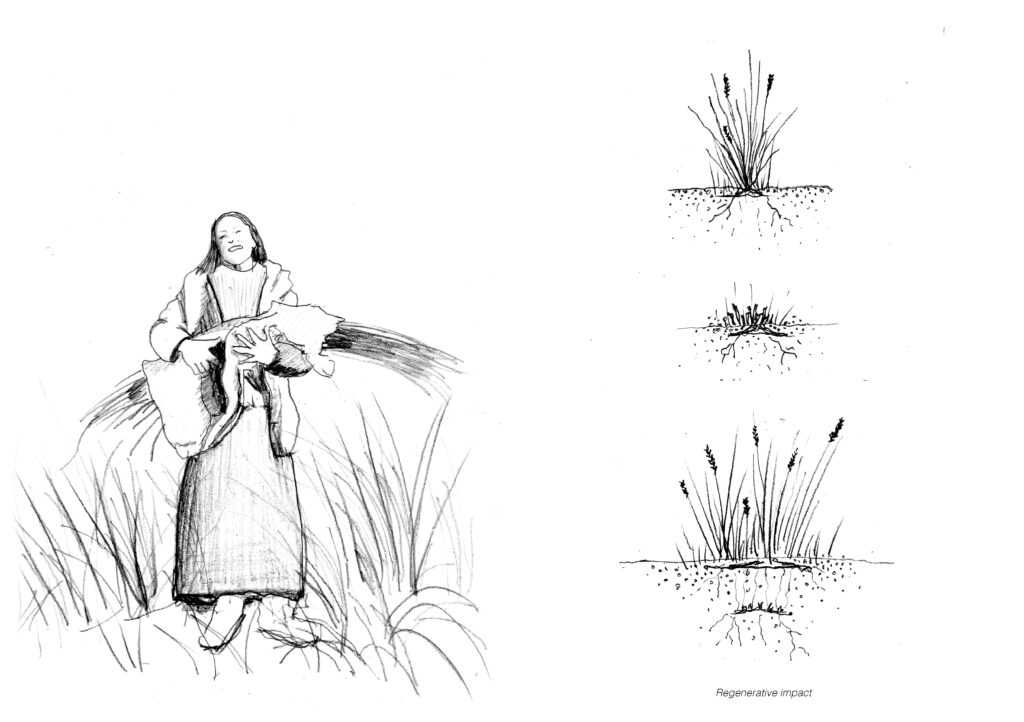
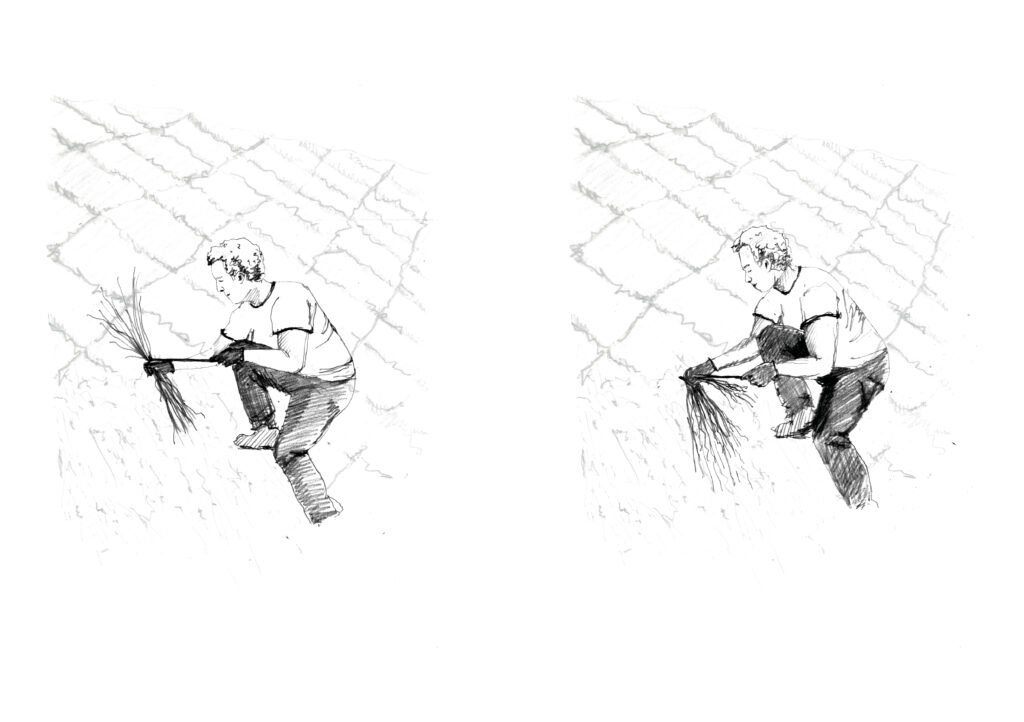
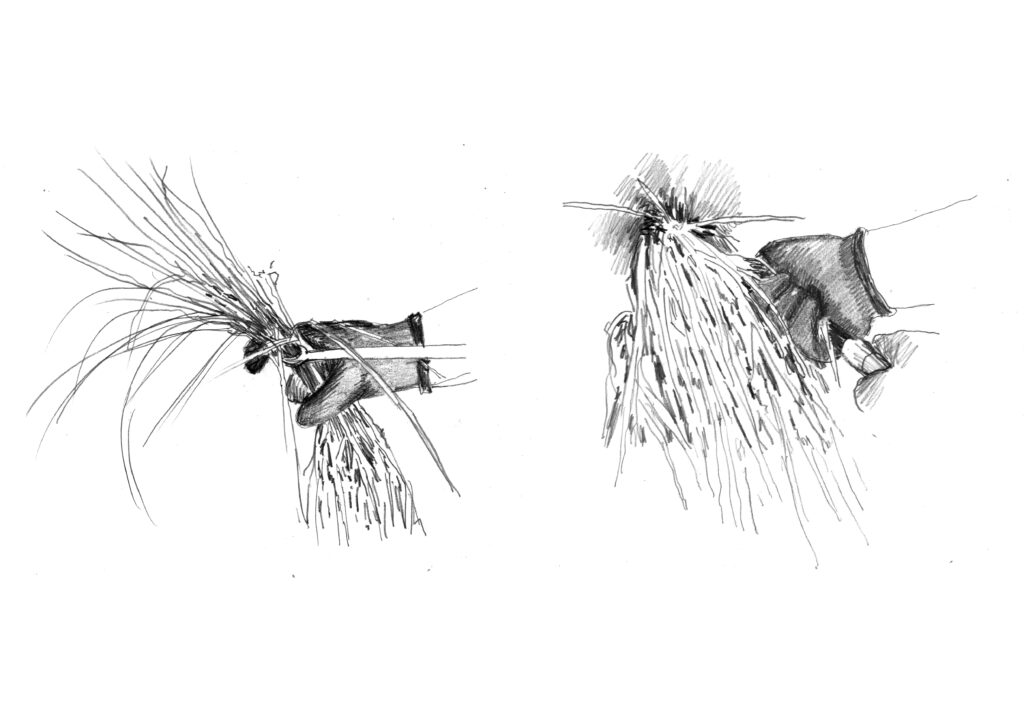
The Marram Field Guide is a small publication that documents the research that forms the basis of my semester two studio project: Hands in the Marram
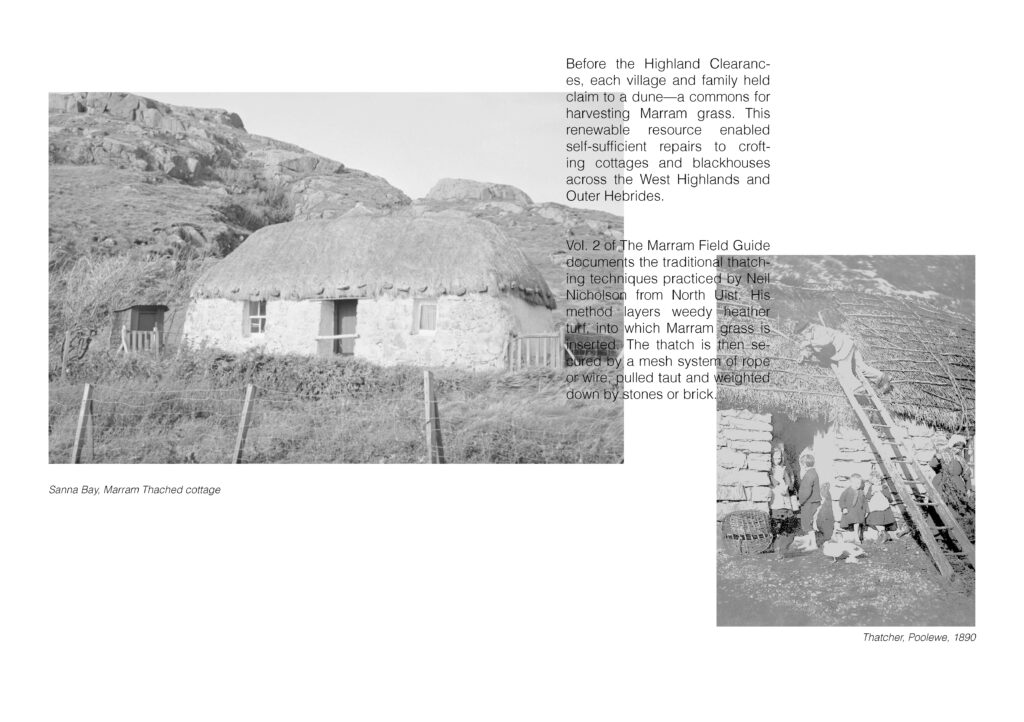
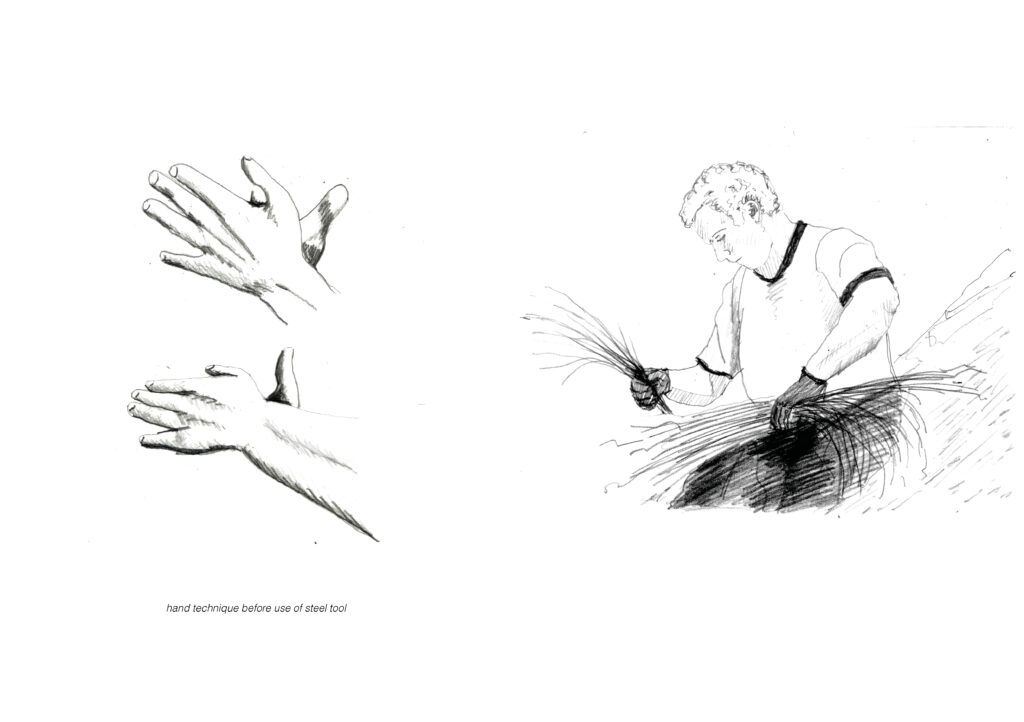
It traces the traditions of land management and craft of the highlands; Vol. 1 looks at the management of land through harvest and regeneration. Vol. 2 explores the living tradition of thatching, through the work of Neil Nicholson on the Outer Hebrides.
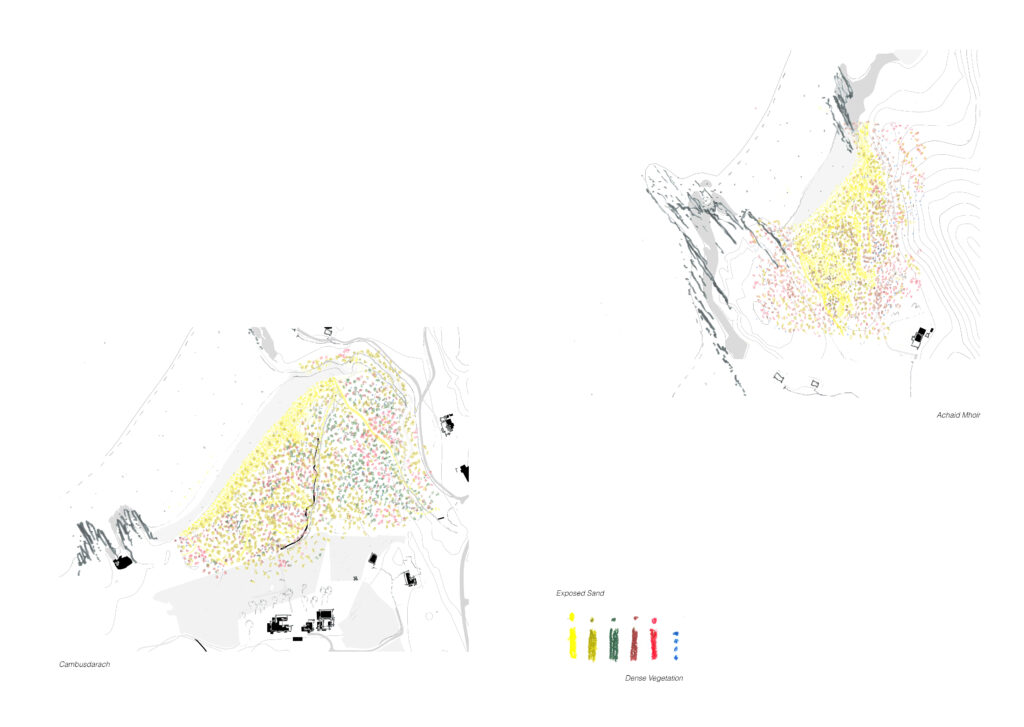
Using the Welsh Marram Weavers and the Welsh governments dune regeneration trials as cultural and ecological precedent, the publication exhibits my studies of the sand dune environments around the Silver sands of Morar, through drawings that explore the vegetation and establishment of the dunes.
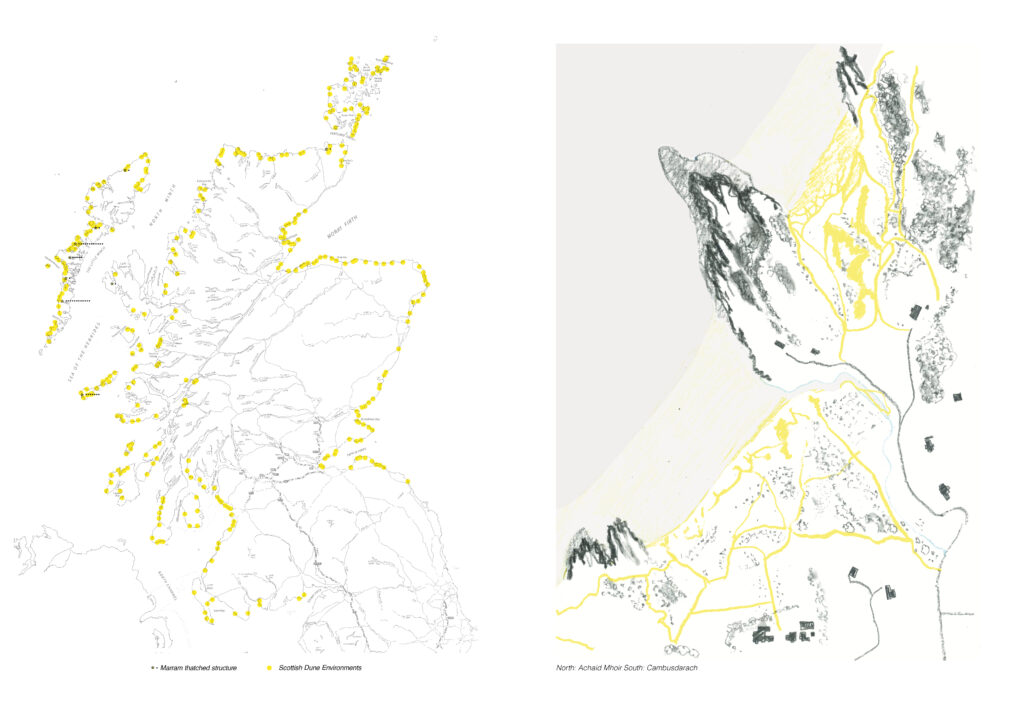
sand dunes and marram thatched structures, Cambusdarach and Achaid Mhoir land study
The Civic Close
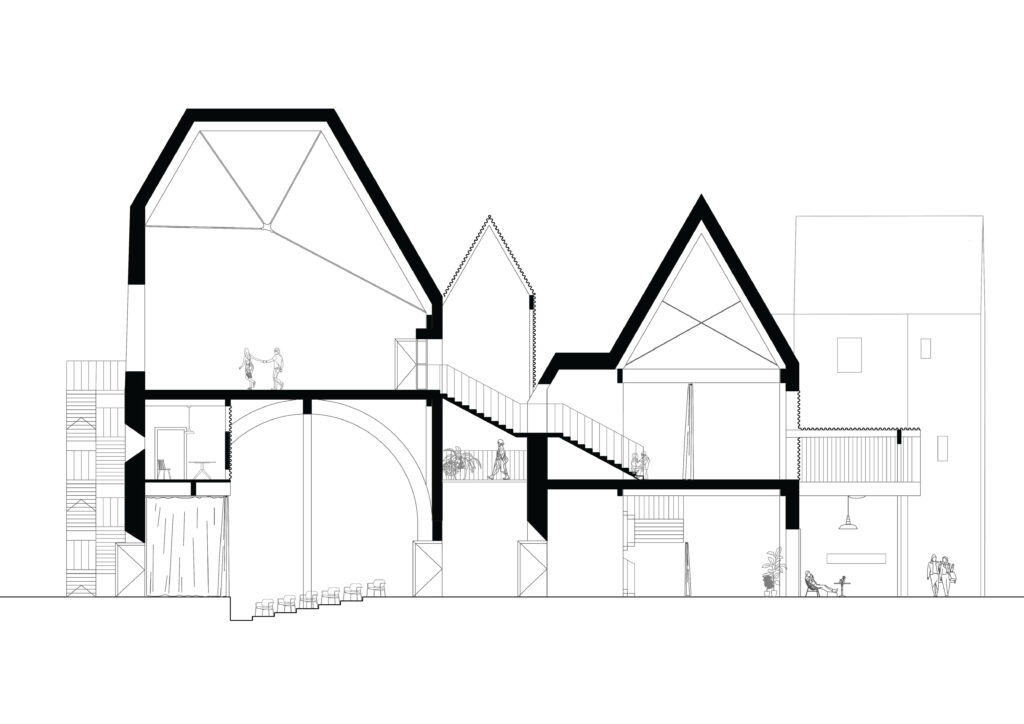
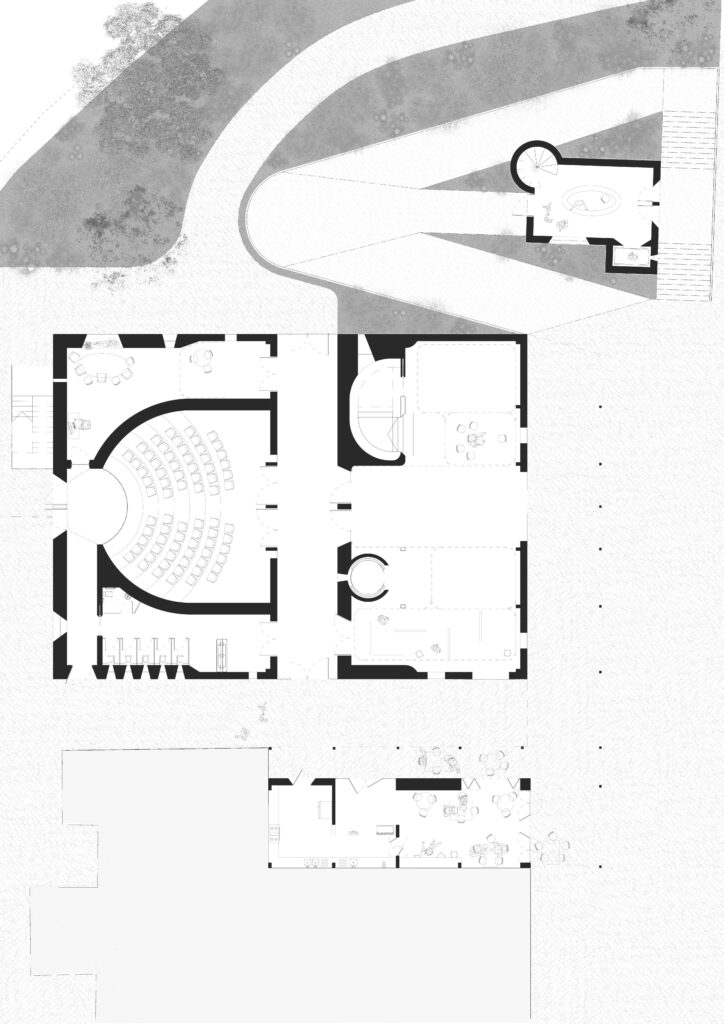
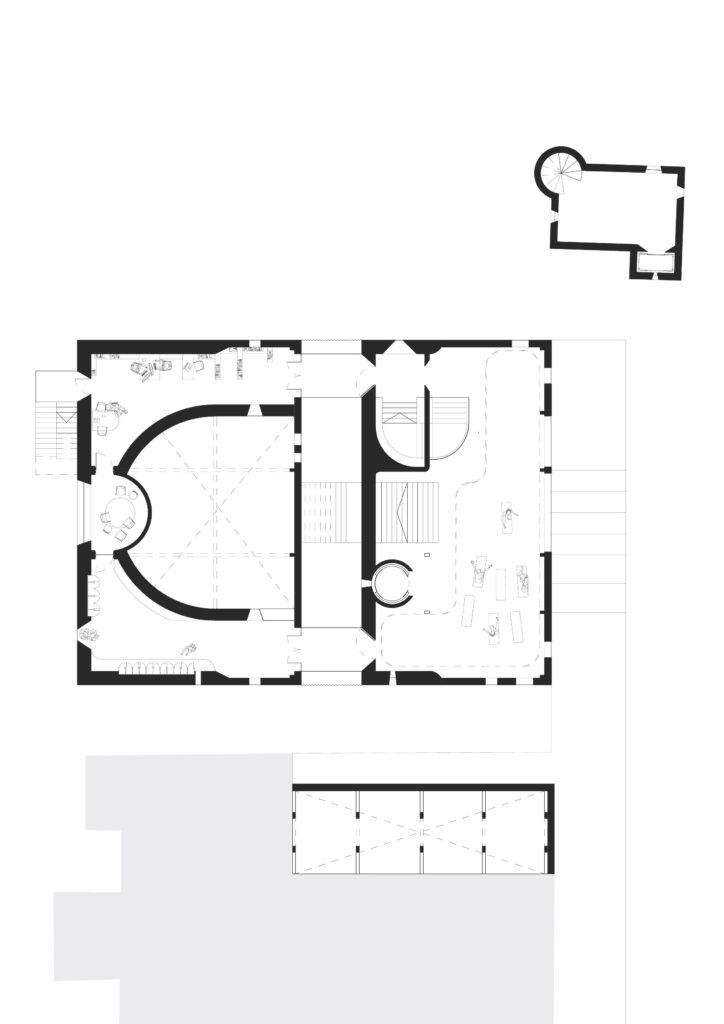
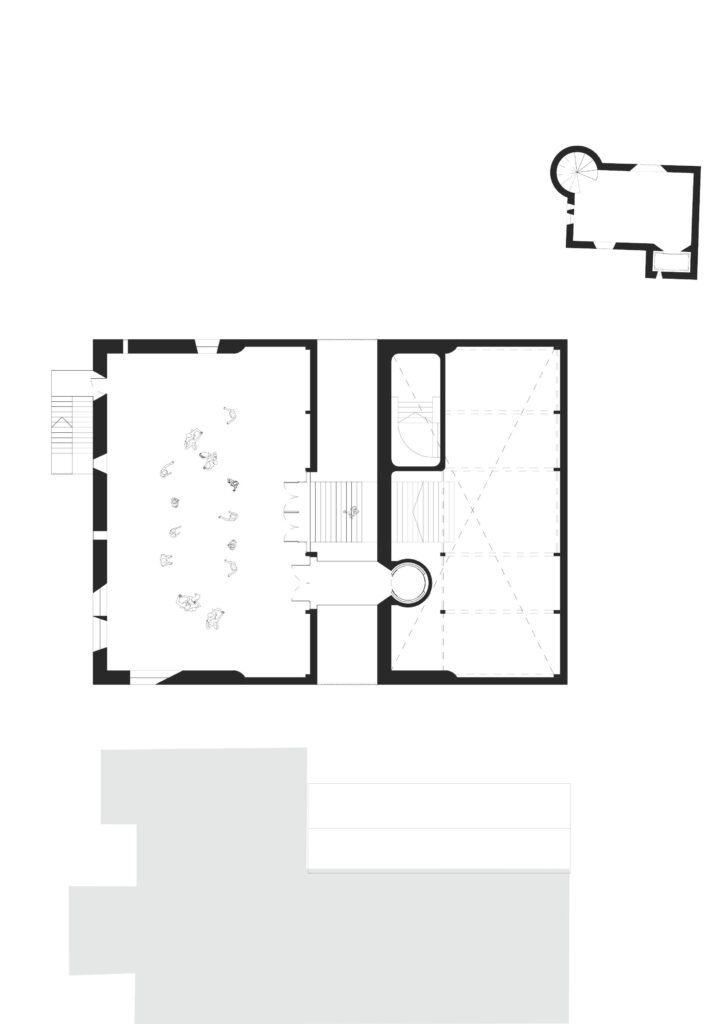
This project proposes a new Town Hall for Fort William, positioned at the threshold of community and large-scale infrastructure. Located at the end of the high street, my proposal occupies a complex urban position, marking the arrival at the high street from major transport routes across the A82 underpass, while also punctuating the end of the high street.
My design draws from local vernacular forms found on Fort Williams High Street, interpreting masses and roof profiles into an abstracted architectural language that references Fort Williams’ traditional town planning and architecture to create a contemporary communal identity.
Responding to the town’s urban fabric, the town hall reintroduces a forgotten lane into a more recently developed corner of the high street, whilst creating a defensive boundary against the scale, noise and speed of the neighbouring highway. The building acts as a shelter from infrastructure, creating buffer zones for the public.
A natural material palette of stone and timber grounds the scheme in the context of the West Highlands. These materials were chosen for their connection to the landscape and their long-lasting, tactile qualities, creating an architecture that responds to both the West Highland climate of prevailing winds and rainfall, as well as the community’s needs in Fort William.
Ultimately, my proposal serves as a marker and a mediator, anchoring the high street, defending against infrastructure, and providing the town with the needed communal spaces, rooted in place, material culture, and community.
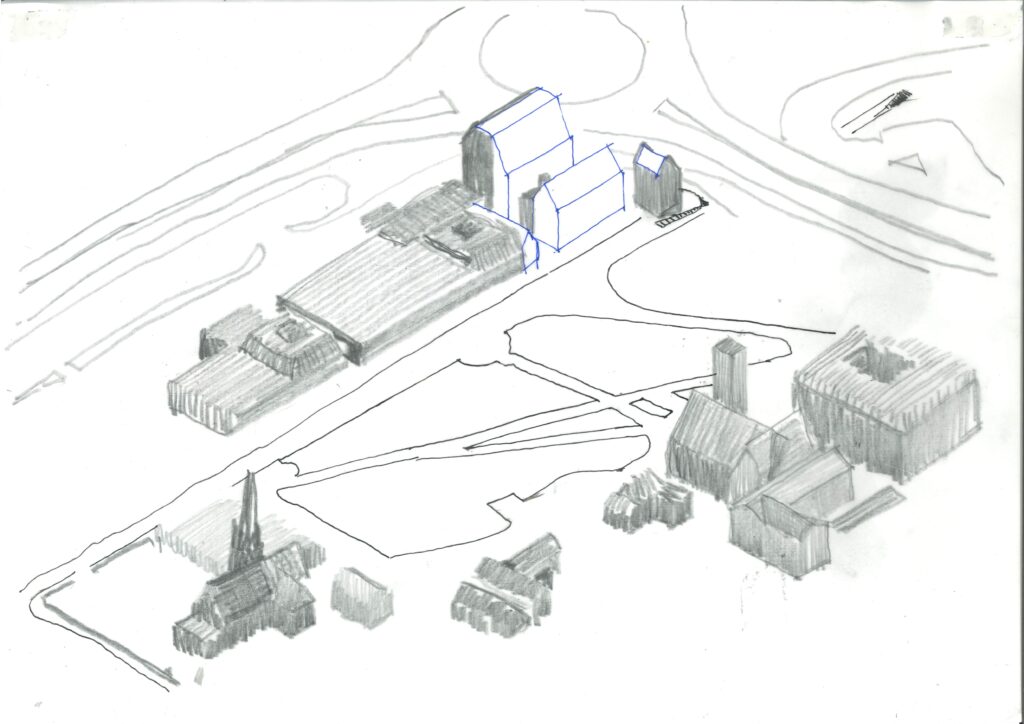
in conext of the Parade and A82
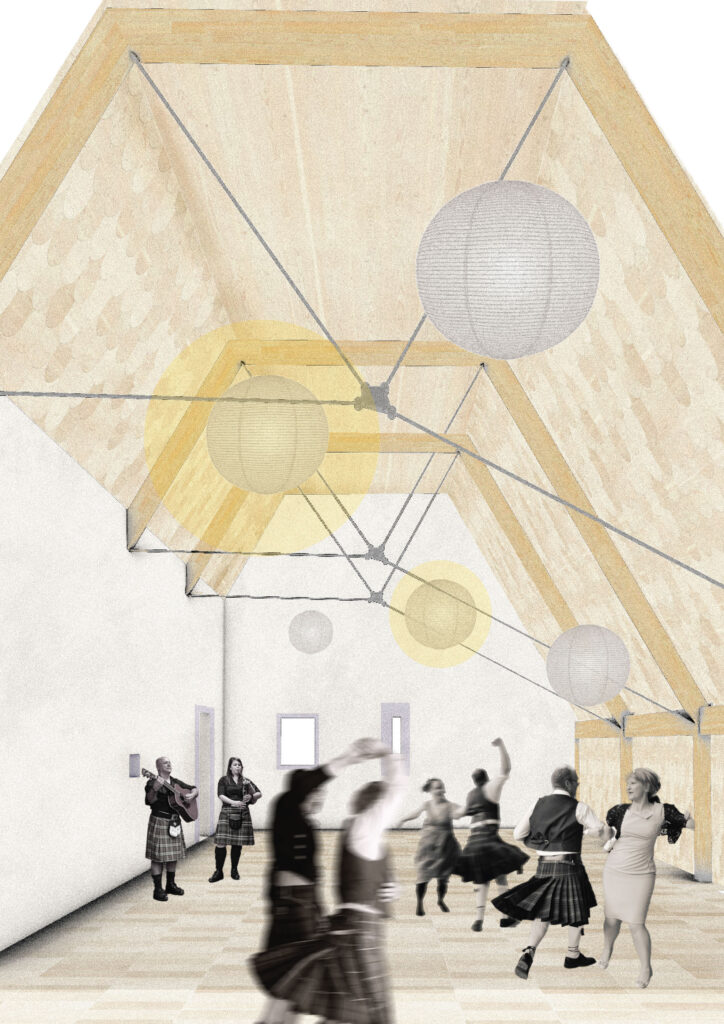
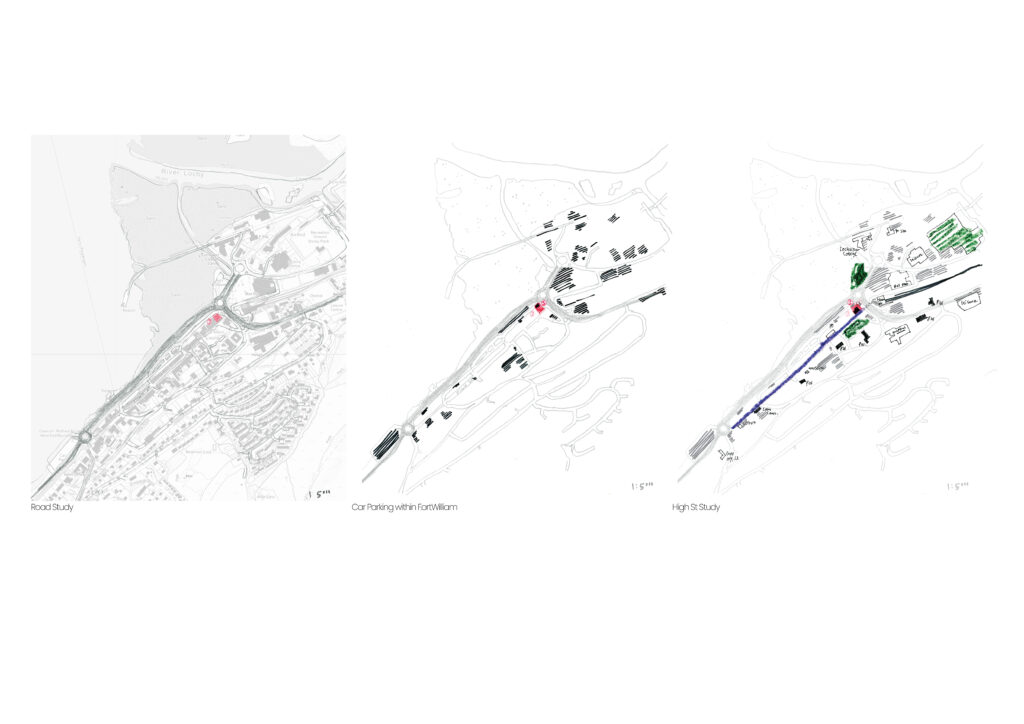
1. car infrastructure, 2. car parking, 3. High St
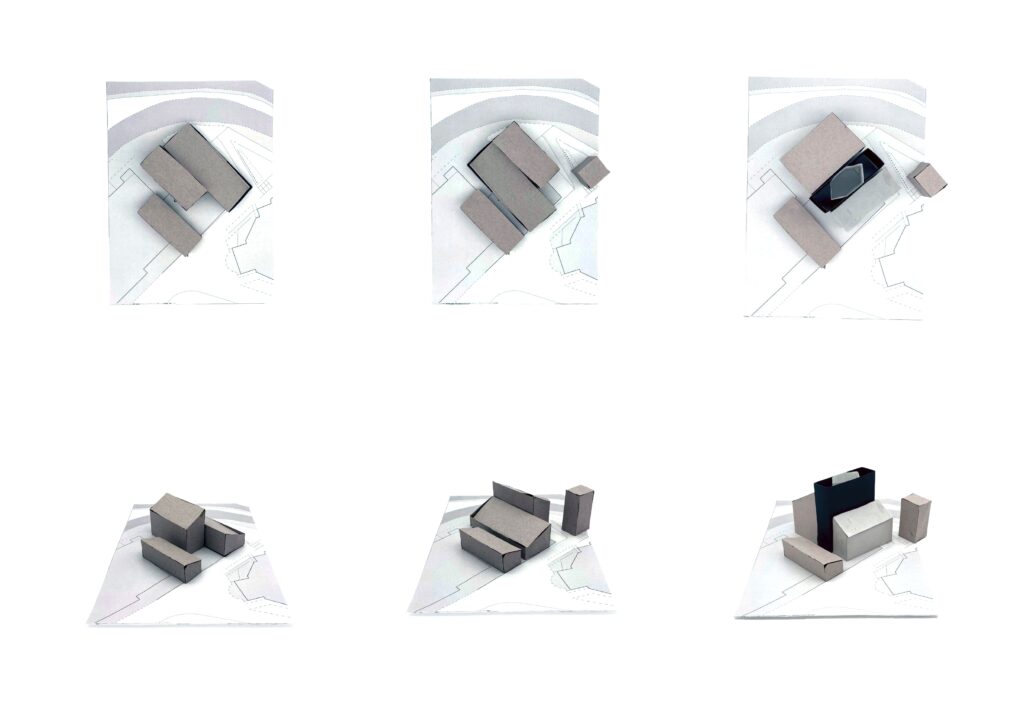
Exploration of form and orientation of scheme
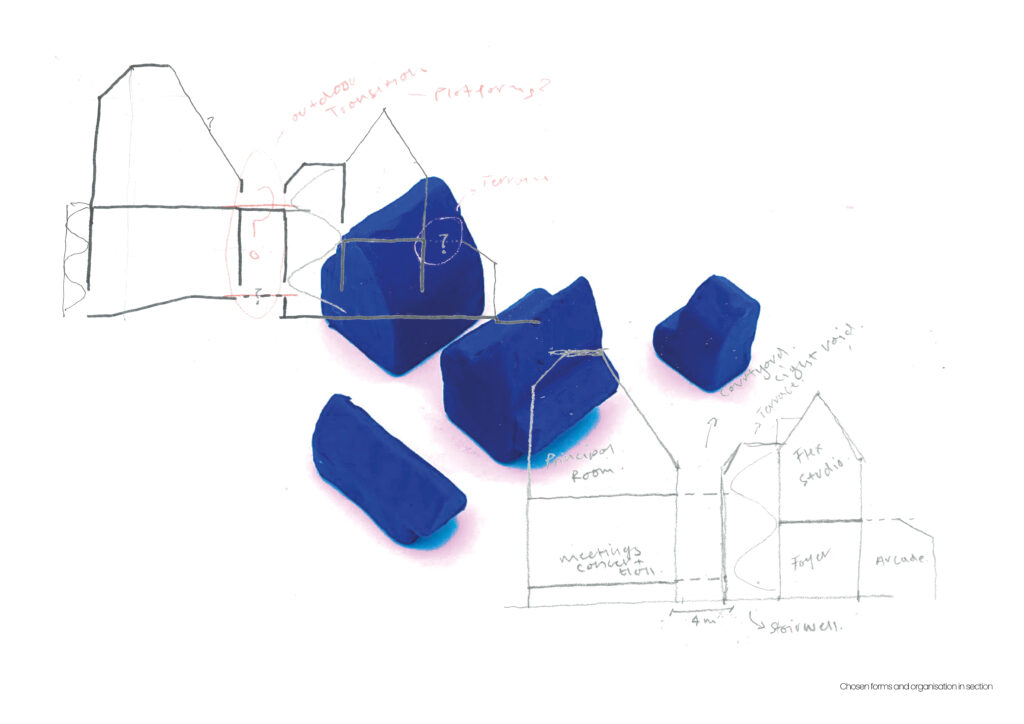
finding final form and exploring program
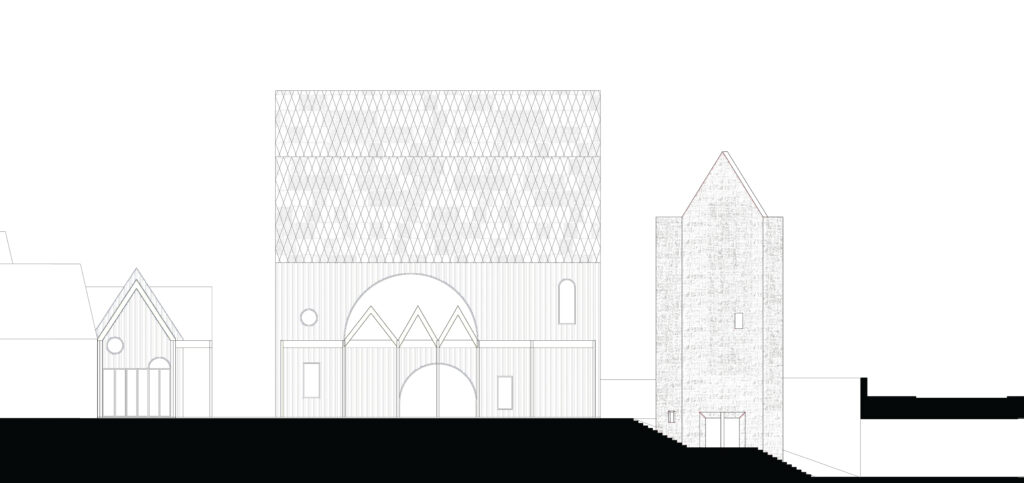
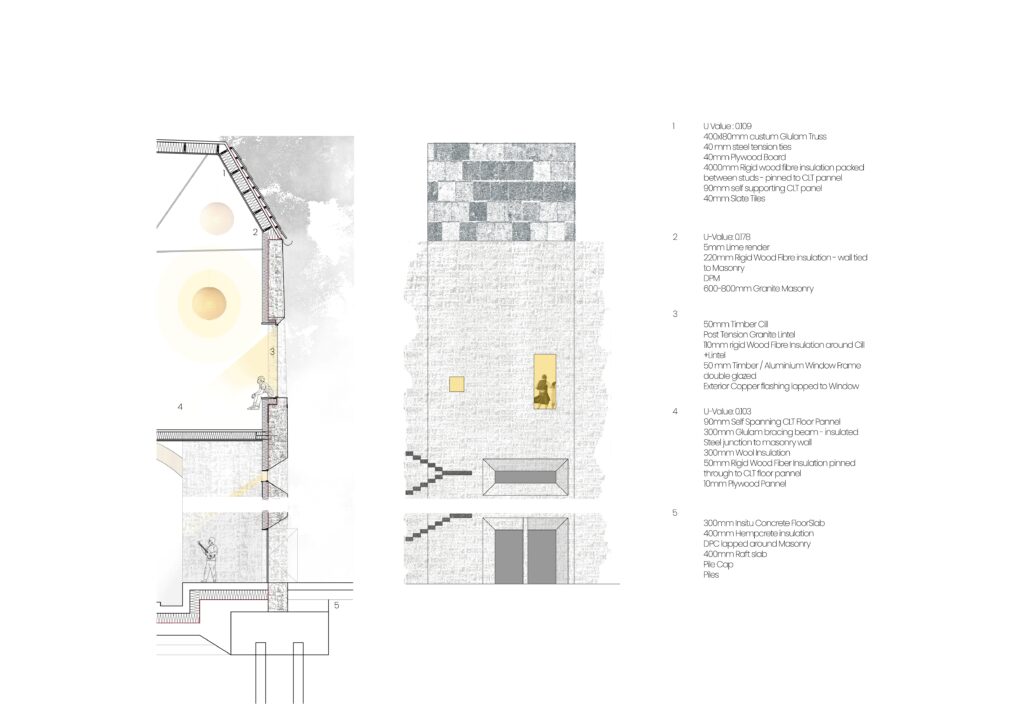
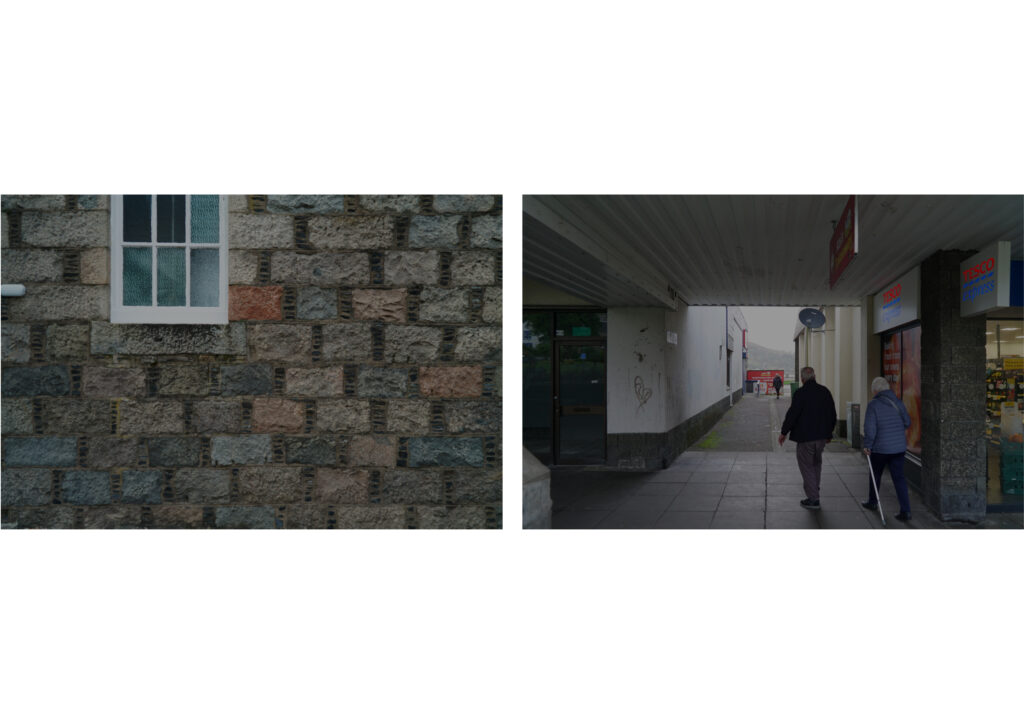
local granite masonry, Lane typology