Sophie Mills Blackburn
(she/her)
Glasgow/Liverpool
CONTACT:
sophiemillsblackburn@gmail.com
S.Blackburn1@student.gsa.ac.uk
A Sickle for a Bike
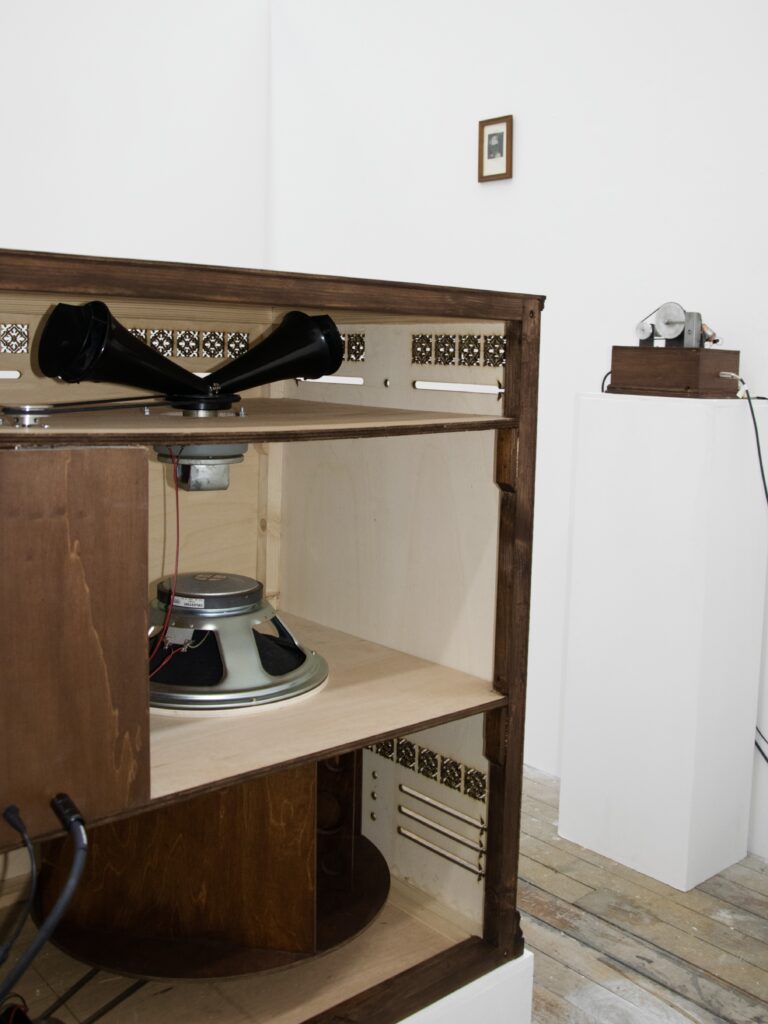
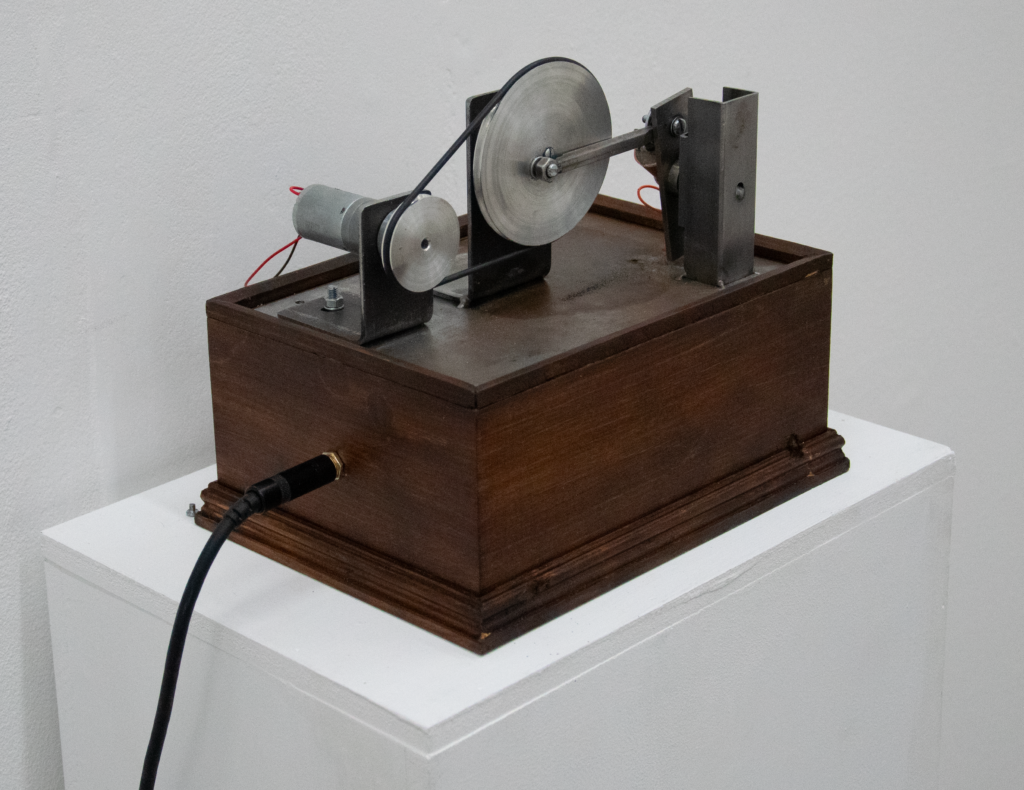
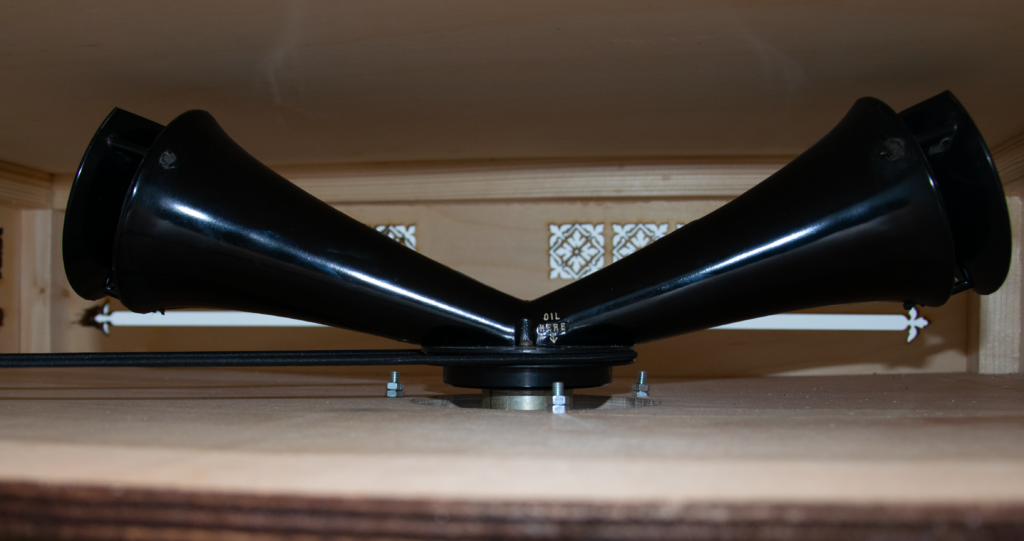
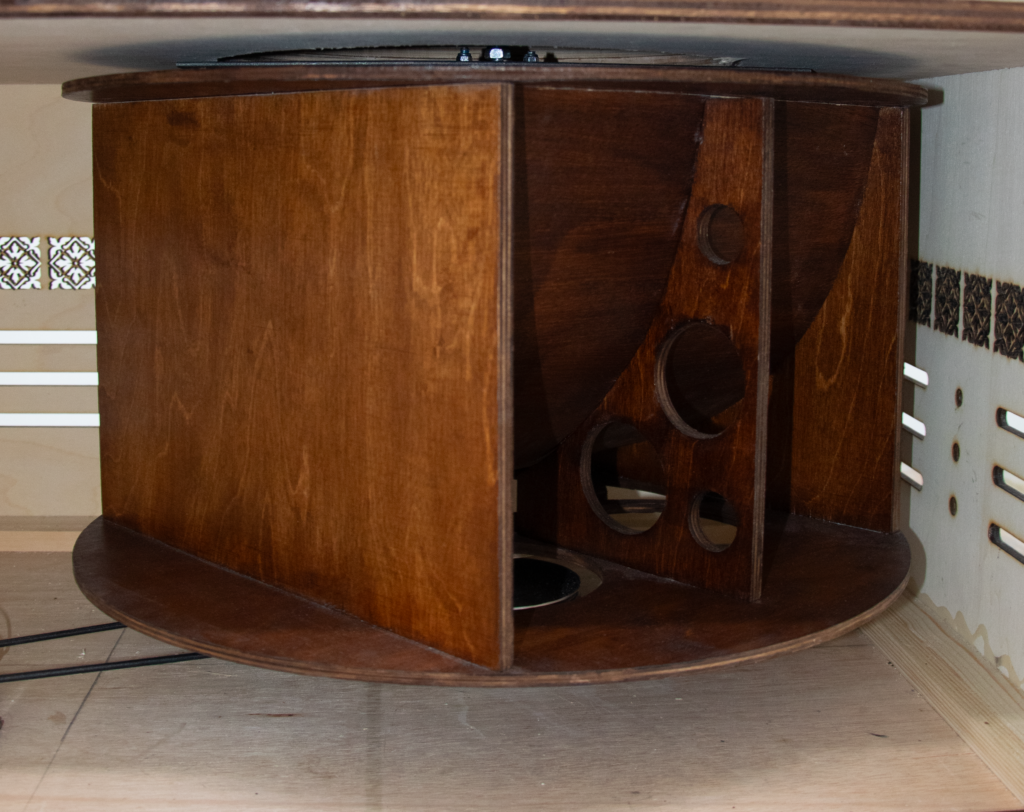
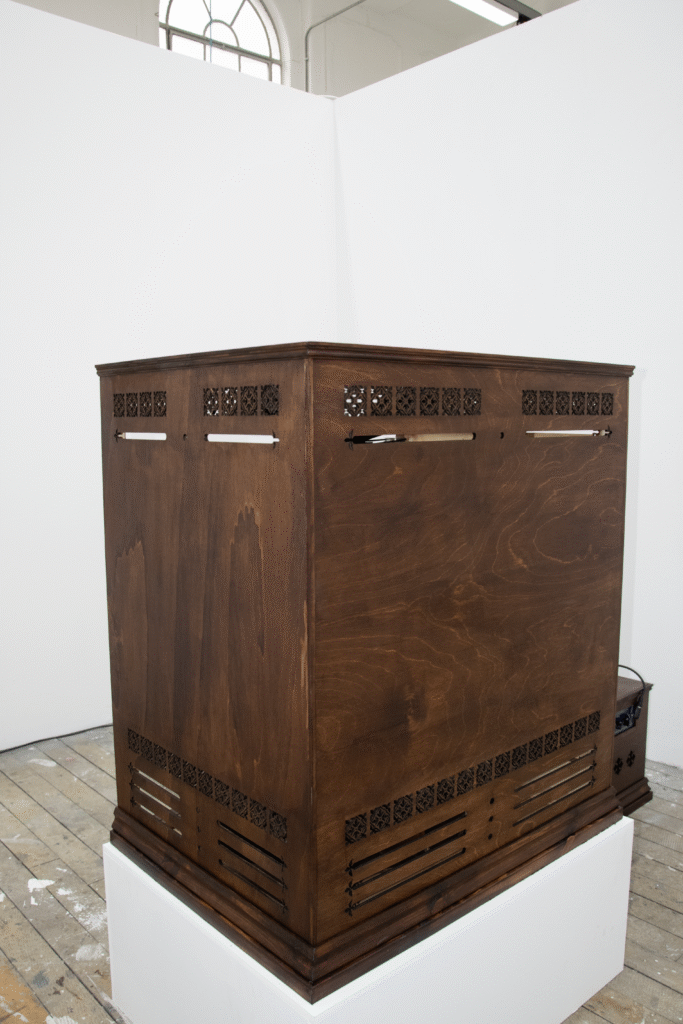
Sound Installation, Effects Cabinets.
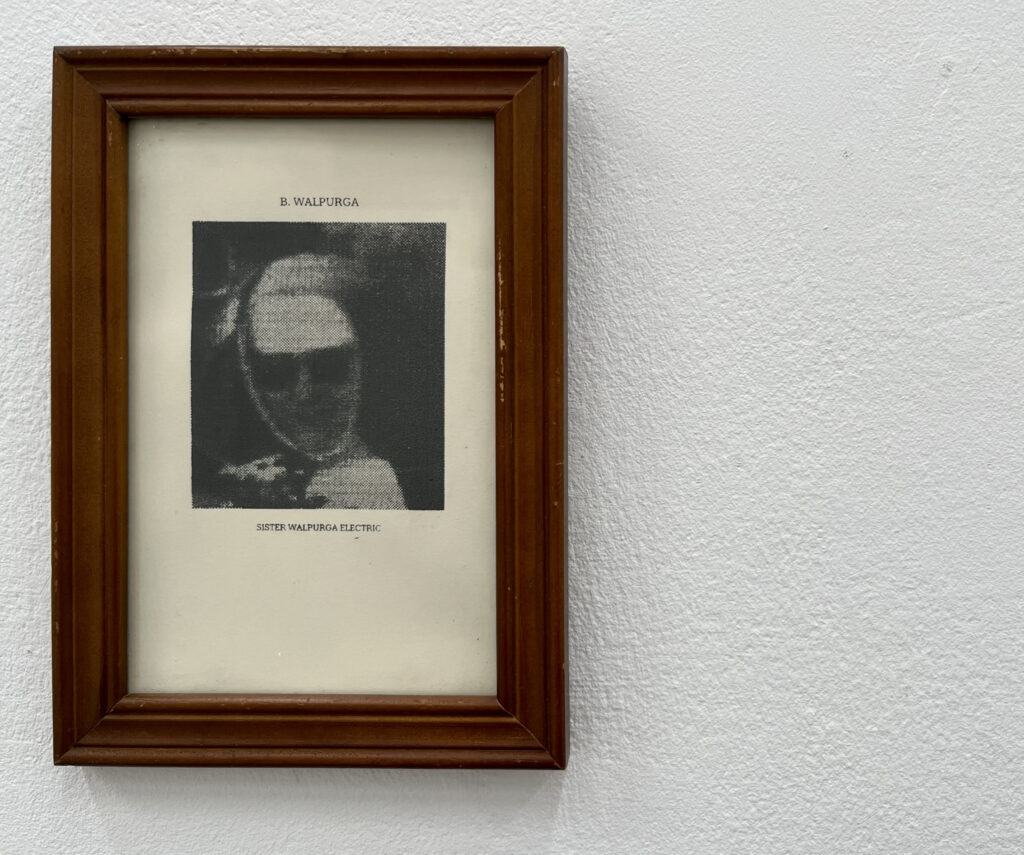
In 1967, Sister Barbara Walpurga travelled 769 miles west to San Francisco from her home convent, St. Benedict’s Hospital, at 30th Street and Polk in the hills of Utah beneath the towering heights of Mount Ogden, 30 miles north of Salt Lake City. The hospital was operated by The Sisters of the Order of St. Benedict, St. Joseph, Minnesota, whose order had established missions and hospitals across the American West, brought to the people of Weber County by Monsignor Giroux of St. Joseph’s Catholic Church.
Sister Barbara Walpurga worked as the parish organist for St. Joseph’s Catholic Church and spent long harvest seasons working on the convent’s wheat fields before returning to nursing at St. Benedict’s Hospital in 1964. Behind the hospital, Highway 89 carried the Hill Air Force Base military traffic, freight lorries, drifters and bikers through northern Utah. Walpurga fled the convent on a motorbike provided for local nurse duties after frequently sighting the Hells Angels riding north beyond Ogden cutting through the sagebrush flats. Clad in her habit, with sand whipping through her veil, Walpurga emerged crouched beneath the throttle, far behind the Hells Angels and rode west through Nevada and into California. Caught between the vows of her faith and the asphalt strips that crossed the American West, Walpurga began making solitary rides traveling with little more than patch cords and an organ to perform sonic Freak Hymns.
Freak Hymns first became known through small cream-coloured invitation cards printed in mimeograph ink used for the church bulletins, the cards carried only the words FREAK HYMN, and directions to the event. Folding chairs were arranged around salvaged amplifiers, reel-to-reel tape machines, and modified organs wired through homemade effects units. Humming oscillators and whirring liturgical synthesised organ, her habit intact, with a fistful of peyote buttons and modular dials at 100mph across America.
A Sickle for a Bike is a response to reading about the modernisation of European and American convents in the sixties during the civil rights movement and the Vietnam anti-war protests, featuring youth-led counterculture, communal living, recreational drug experimentation and sexual revolution. The decline in church membership and the number of clergy was apparent. Amidst the steering of American counterculture and social ferment, the Second Vatican Council of Pope John XXIII (Vatican II 1962-1965) propositioned for the establishment of new religious order and a less authoritarian approach to the governing of the Church. With a desire for greater individualism, relevance and autonomy, Sisters led some convents to more liberal idea of contemporary dress, flexible prayer times and developing ministries beyond health and education as opposed to their mandated purposes and routines to actively serve the modern world seeking social justice roles and alternative cultural influence through art and music.
Through Walter Benjamin’s theory of ‘thought figures’, A Sickle for a Bike attempts to present the remains of a Benedictine sister, Sister Barbara Walpurga, medical nurse and organist at a convent in the hills of Utah.