Concept

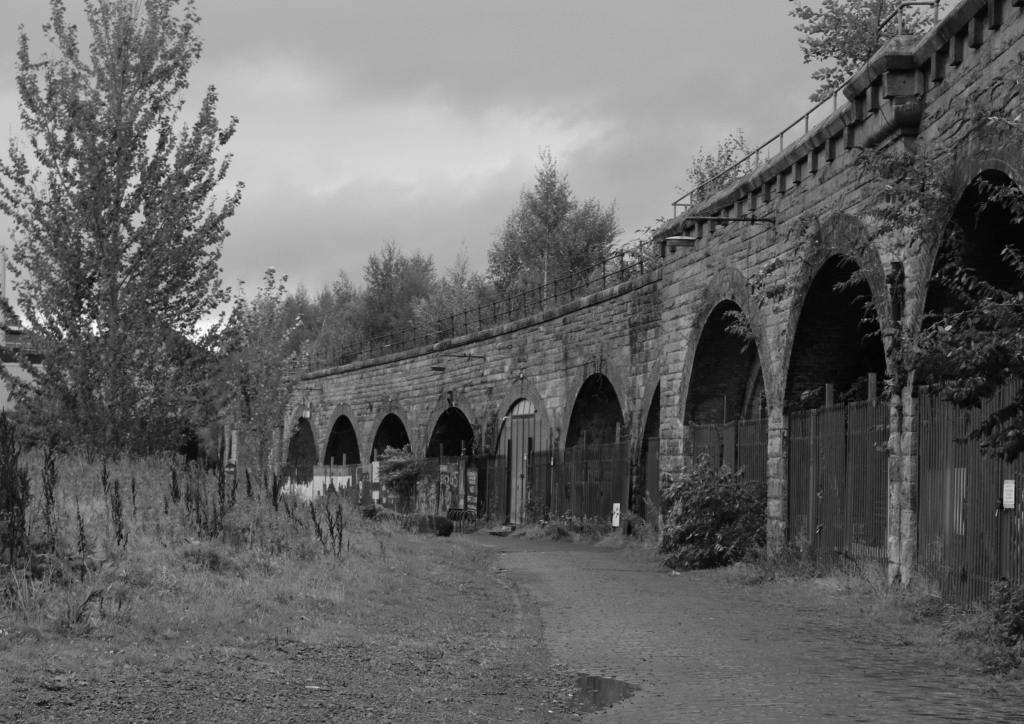
Hidden beneath the railway arches of the Gorbals, Citizens Art Quarter reimagines forgotten infrastructure as a vibrant village of making, learning, and performance. The project transforms twelve arches into a network of studios where artists and visitors can share the process of making and experience creativity as part of everyday life. 

This project aims to support the wider regeneration of the area following the ambitions of Page\Park Architects, reclaiming a large derelict site and transforming it to provide unique facilities and a new point of attraction.

Citizens Art Quarter seeks to contribute to this transformation by introducing spaces that provide local people with skills and engagement in the arts, including studios for dance, ceramics, woodworking, jewellery making, textiles, and print, alongside an exhibition space where creative work can be shared with the public. The design encourages circulation between artists and visitors, inviting people to explore the space more confidently as a potential novice.

Collaboration and connectivity

The arches are linked by an internal passage that connects all disciplines, encouraging movement through the entire site. Artistic expression extends into the public realm through street art, workshops, and an outdoor performance area.

Citizens Art Quarter aims to blur the boundaries between artist and visitor, creating a fresh cultural experience for Glasgow that supports the city’s rise as a global creative destination.
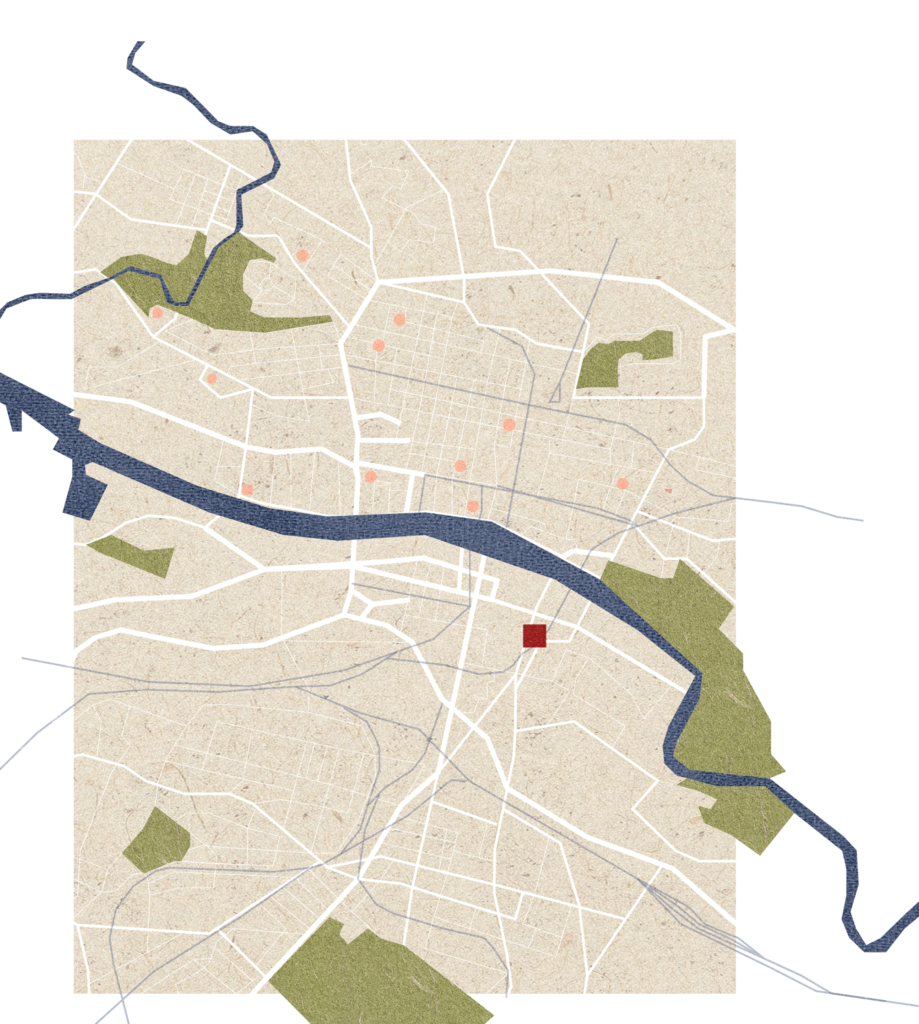
Glasgow Art Map

Concept

Reawakening the Building

The Trackhouse reimagines a large retail building that has stood vacant since 2016, bringing new life to a place once central to the City.
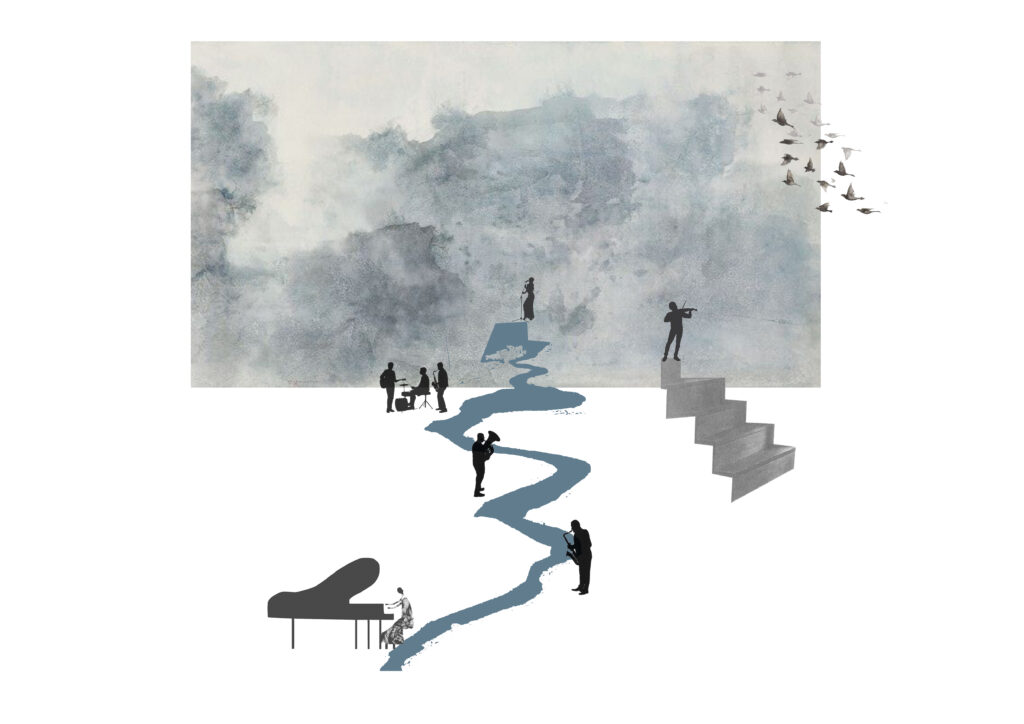
Set within Glasgow, a UNESCO City of Music, the project positions music as part of everyday life, encountered through informal performance, shared listening and moments of discovery, rather than confined to a stage.

Music is widely recognised for its role in supporting emotional wellbeing, reducing stress, strengthening learning and creating bonds socially. Live music environments demonstrate how sound can shape mood, and create shared experiences

Research identifies a decline in music education, with reduced school funding limiting opportunities for those unable to afford lessons.In response, the project opens the building to everyday encounter, making music part of daily life rather than a singular destination.

Music as Everyday Life

A multifunctional music centre supporting performance, production, education and wellbeing. Designed for a broad demographic, from professional musicians to those simply encountering music, it complements Glasgow’s existing music culture, supporting professional practice while encouraging engagement through playing, listening, learning and encountering, with strong links to community and education.


At the Heart of the City

Located on Sauchiehall Street, the former BHS building presents a strong opportunity for transformation. Its scale, central position and visibility make it well suited to a new social, cultural use, contributing to the regeneration of the city centre.


A Sequence of Moments

The Trackhouse is a flexible music hub combining rehearsal, recording, performance and listening areas, alongside a vinyl library, café, bar and central courtyard. These elements are arranged to make music more accessible, supporting making listening and social interaction while connecting to Glasgow’s wider music network.
The building has been reconfigured to create a more engaging journey and adaptability ensures longevity, allowing the building to evolve.
Designing for People, Place and Planet
Adaptive reuse and low-impact materials reduce environmental impact, while balancing openness and visibility. The design supports inclusivity, mental well-being, and community access, ensuring a positive contribution to people, place and planet.

CONCEPT

HILLHEAD RESORT & SPA
WHO? WHAT? WHY?
WHO?

Influencers e.g Leisure and wellness seekers
Locals & Tourists
Couples and Special occasions
Groups eg friends, hens, birthdays,Business and Corporate guests

AGE?

18-50

LOOKING FOR?

A space that is easy to get to, worth the money, relaxing and holds a great overall experiences.
Accessible

Quality within space eg products and activities. Great accommodation
Good range of treatments available
Amazing atmosphere surrounding site
SPECIFIC ACTIVITIES?

Within space there will be great accommodation.
Great range of treatments available such as messages and healing spac- es.
Cocktail master-classes
Event space for larger groups.

TYPICAL OR UNIQUE?

Unique space,
By creating the base theme based off of Glasgow hosting experience eg The Commonwealth Games, i hope to bring both locals and tourists to the space to see what’s on offer which some signature experiences will be the Scottish sourced drinks class for guests.
Alongside this having also locally sourced and locally inspired treat- ments for guests makes this unique to this space only.
The setting and atmosphere of this space allows guests to experience this more classical and historical design of Greek style, natural lighting illuminates space greatly and allows a welcoming feel all around. Aspects of the activities allows guests to create and take away memora- ble extras home with them.

ATMOSPHERE

Welcoming to all
More community driven by using local produce and giving back to the community as well as welcoming tourists into space.
Very calm and reflective spa space.
Very social and interactive to guests staying due to many activities being held within
WHY GLASGOW?

Very accessible to everyone
Glasgow has a large population which allows locals yo visit creating a strong demand to visit here.
Strong tourism market eg city breaks along side Glasgow has loads to offer such as music, art and history all around
Close by Botanic Gardens which is a popular green space.
Glasgow is a major hub for Business and corporate.
There is a growing wellness trending happening all around Glasgow , the past couple years and is continuing to grow.
Large target market which will attract more to visit.
Glasgow continues to host events very successfully which allows more people to visit and come to see other experiences we host.

WHY THIS AREA?

Located in prime West-end this space is a very trendy and well known space and has lots on offer surrounding such as shops, cafés and cul- ture.
The area attracts a large diverse genre of people such as students, pro- fessionals and higher income residents

Amazing transports links such as the subway, buses and trains On site parking available
Within Hillhead there is a high demand for more stress relief and health spaces

Hillhead is a tourism hotspot due to there being Kelvingrove art gal- lery, University of Glasgow and the botanic gardens close by
There is the idea this space could be seen as a more ‘hidden’ retreat space?

WHY THIS BUILDING?

This space has a large open interior which creates loads of potential A calm and peaceful atmosphere surrounding
Lots of natural light potential
Amazing architectural features which allows space to stand out. Prime location within Hillhead

Creates a ‘escape from the city’ idea

WHY THIS TYPOLOGY?

Hospitality and wellness
Living space
Social space
I have chosen these typologies as these bring all aspects that are ex- tremely successfully not only within the West End but in Glasgow, this opens many potentials to experiment and show what Glasgow really has to offer compared to other places within the UK.

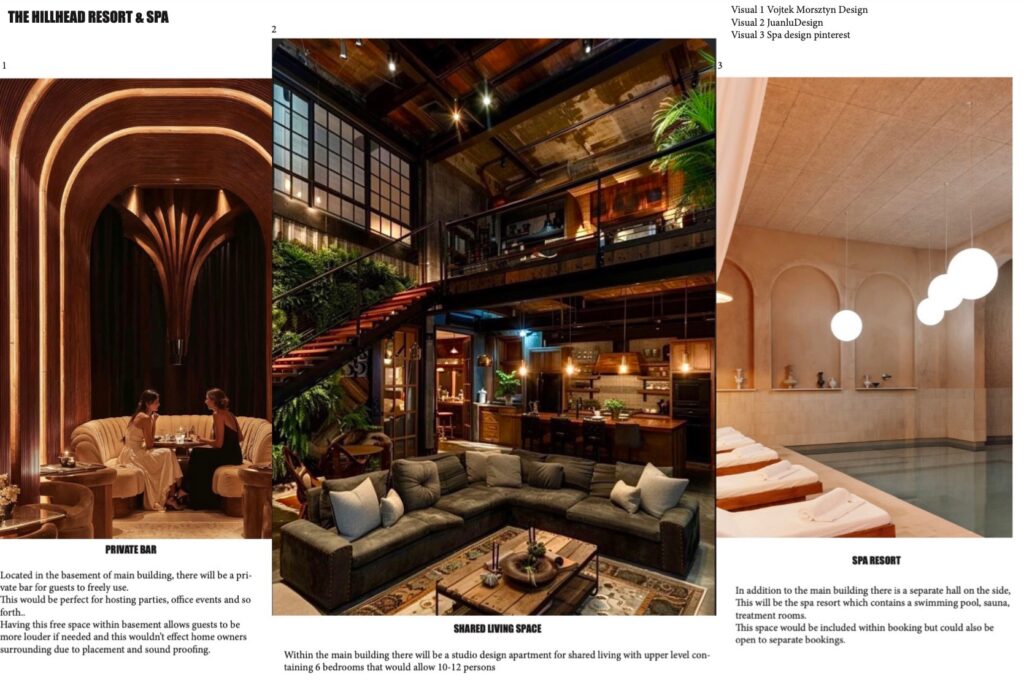
3 separate space board
Concept
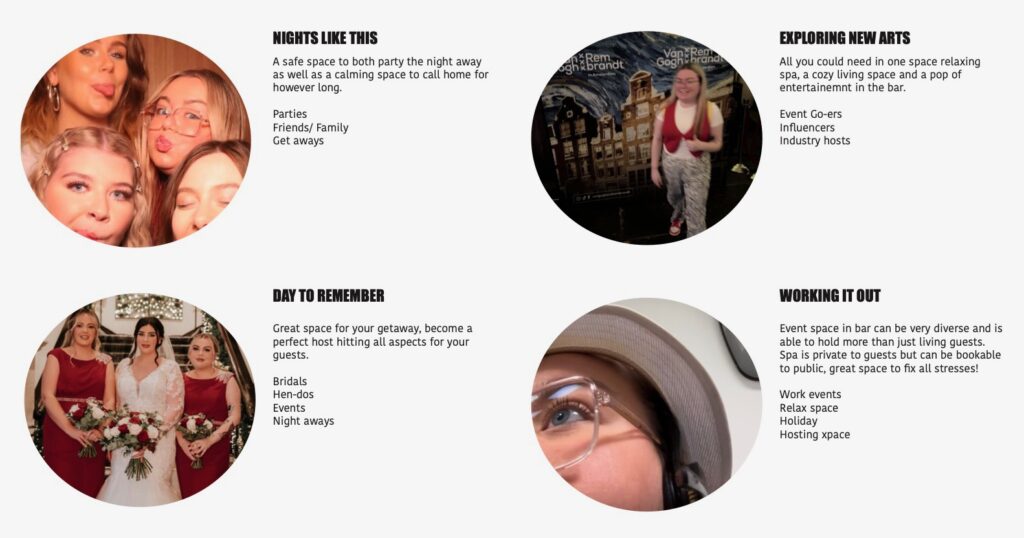
user board
users
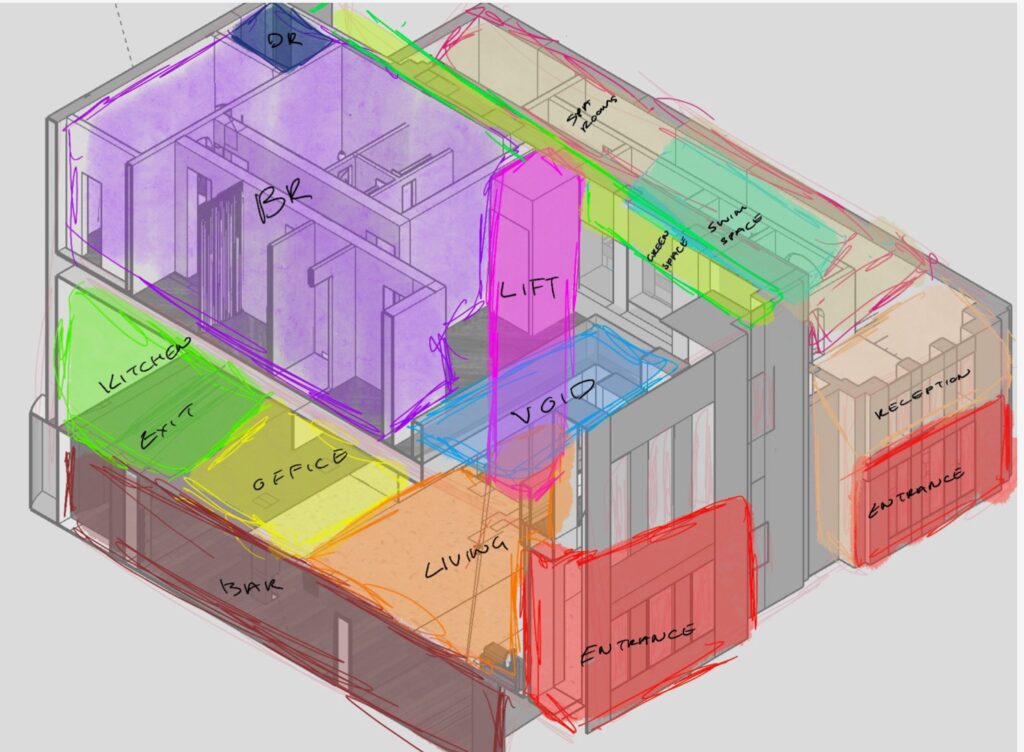
zone drawing
sketch zones

Concept

Healthcare systems can often feel complex and difficult to navigate, particularly for women whose experiences are not always fully understood. While traditional healthcare plays a vital role, it can sometimes overlook the broader emotional, mental, and lifestyle factors that shape overall well-being. This can leave many women feeling disconnected from their own health, unsure of how to move forward, or lacking the knowledge and support needed to make informed decisions.

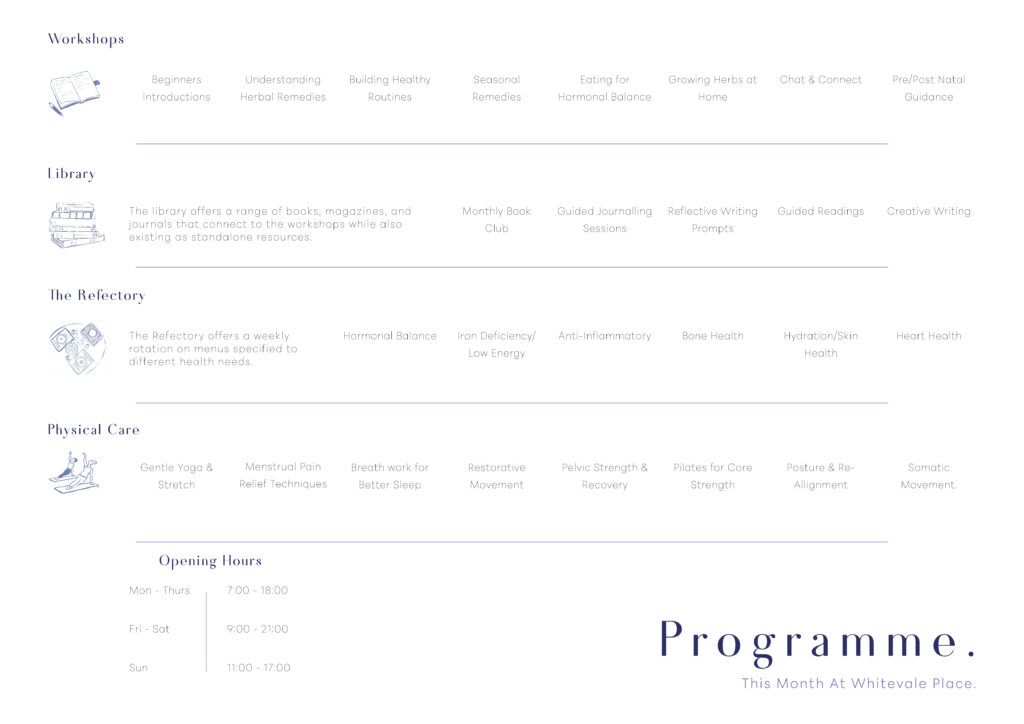
Whitevale Place is a wellbeing space centred on holistic practices, designed for women and those experiencing conditions such as polycystic ovary syndrome, endometriosis, hormonal imbalances, and fertility challenges. It acts as a starting point for a woman’s journey into wellness, while continuing to support her as she grows through conversation, education, and both mental and physical care. The environment encourages meaningful connections, allowing women to feel supported as they move forward in their own way.

The space aims to create an accessible and welcoming environment where women feel comfortable engaging with holistic health without intimidation or complexity. It is designed to encourage a natural and supported starting point, while promoting continued involvement and confidence in building sustainable practices that can be integrated into everyday life.

To reinforce the idea of taking control, the space is designed to feel non-intimidating and far removed from a clinical setting. It is organised into different typologies of support: nutrition, education, physical healing, treatment, and self-guided learning. Thus, allowing each woman to move through the space at her own pace. This approach recognises that every journey is different, reducing any sense of pressure or overwhelm while creating a more comfortable experience.

Concept

Inspiration
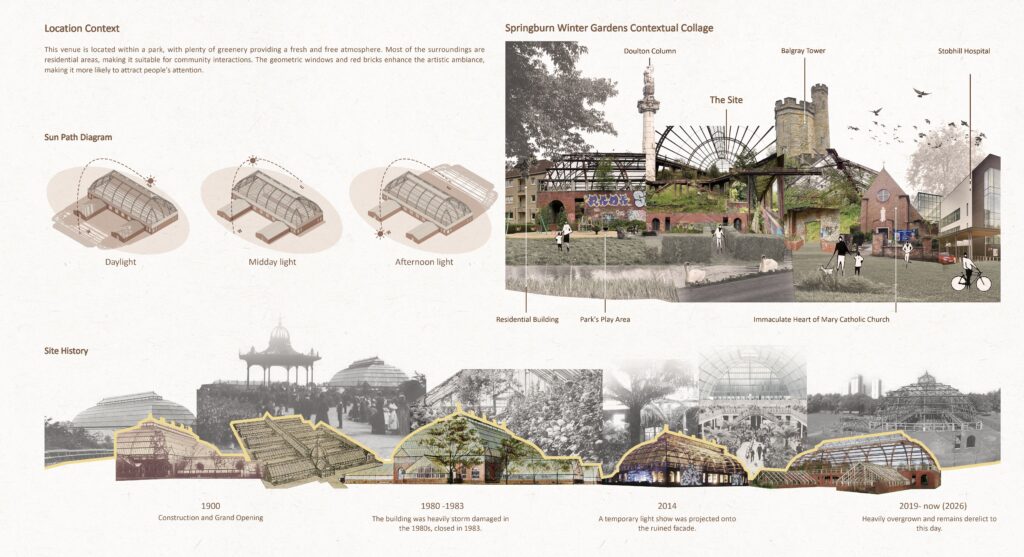
The project is rooted in the interior of an abandoned Victorian glasshouse, specifically the ruined Winter Gardens of Springburn Park, where the rigid, man-made grid of iron and glass has been shattered and reclaimed by wild vegetation.
This space serves as a visual manifestation of the collapse of human control, representing a spatial condition where architecture surrenders to autonomous ecological forces, blurring the boundary between interior and exterior.

Design Concept & Spatial Narrative 
Inspired by the tension between the artificial grid and wild overgrowth, the project translates this “reclaimed interior” into an ecological critique of the traditional library. While traditional libraries represent rigid control and taxonomy, gardens embody unruly, autonomous growth. The design rejects the “caging” of knowledge, reimagining a derelict greenhouse as a library typology where information and ecology grow in untamed synergy.

Design Strategy
To achieve this, the design actively introduces wild vegetation into the interior through bespoke planter-bookshelves, creating an organic landscape where books and plants intertwine. This is supported by a dual lighting system—combining natural daylight, horticultural grow lights, and warm reading lamps—to sustain both the untamed ecosystem and the readers’ comfort.

Outcome 
This project demonstrates how a “reclaimed interior” can challenge the traditional archiving of knowledge. It proves that by integrating architectural structures with autonomous ecological forces, we can create spaces that nurture collective memory and support a more inclusive, democratic knowledge ecosystem.


In Collage:

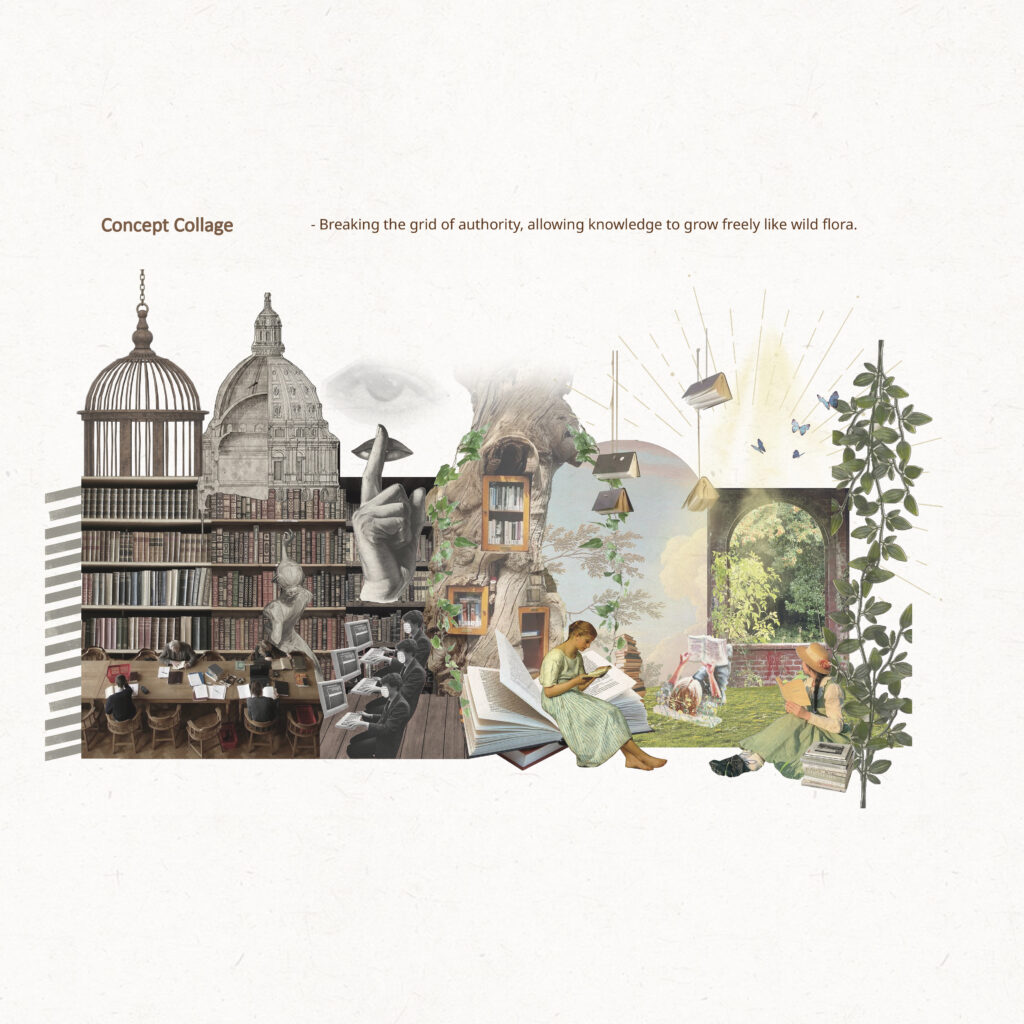
The spatial logic of traditional libraries is rooted in “classification and control,” often imposing a sense of strict authority and oppressive solemnity. This project seeks to break this rigid order, transforming static bookshelves into a dynamic “landscape of knowledge.” Inspired by the organic growth of plants, the design creates a boundless and liberated reading environment, encouraging visitors to explore and read in a relaxed, instinctive state.

Design focuses on the following strategies:

1. Blurring Boundaries with Nature:
By introducing rich indoor plants and maximizing natural light through the vaulted roof, the design will blur the line between the artificial building and the natural environment.

2. Liberating the Body:
The layout gets rid of traditional, rigid desks and chairs, making the circulation much more flexible. It provides multi-scaled reading areas—from custom fold-down chairs in the corridors to stepped readingw platforms. This allows readers to sit, lean, or lounge freely, just as they would outdoors.

3. Maximizing Spatial Experience:
Custom furniture is arranged at varying heights. This staggered layout not only maximizes the use of vertical space but also creates an uneven, playful landscape, bringing the “organic form” concept to life.

concept collage
site context

Concept

Project Summary

Project Co-Z aims to transform the former C&A Building on Sauchiehall Street into a hybrid co-working, co-living space. The building’s prime corner location, impressive footfall and Art Deco heritage make it an attractive proposition. The building’s scale and openness create an ideal environment for flexible working, living and community spaces.


Co-Z is an adaptive reuse project, restoring the building’s original elegance, while introducing modern layers that support contemporary work-life patterns. The project celebrates the Art Deco through facade materials with a modern twist, improving visibility of the building’s architectural prowess.


Key areas incorporate the atrium, cafe, social zone, quiet pods and shared desks. The atrium is accentuated to flood the building with natural light, the cafe and social zone provide a strong street connection. Quiet pods, shared desks and alternate spaces cater to various working styles and neurotypes.


The design palette draws inspiration from the facade, featuring warm tones, metal detailing and geometric patterns. Those elements also feature in the wall designs, ceiling details and more broadly in the building.


This Co-Z proposal supports the urgent need to preserve our high street and Glasgow’s architectural heritage. It directly addresses Glasgow City Council’s Golden Z Plan, focused on regenerating the City Centre. Reactivating a vacant landmark, the project reinforces the value of preserving heritage while adapting it for contemporary use that addresses economic and social needs.

Concept

Problem

With a large number of inclusive performance companies in Glasgow, most are forced to practice in church halls or venues far out of Glasgow City Centre. With limited accessible transport options.

Solution

To create an inclusive performance space in the centre of Glasgow near accessible transport links that removes the physical and social barriers preventing people in Glasgow from fully participating in the performing arts.

Importance

It matters to create an accessible venue in Glasgow so that everyone, regardless of mobility or sensory needs, can confidently participate in the performing arts without facing barriers or exclusion.

Process

For the space to take shape, several key accessibility aspects are essential for me, as a wheelchair user, to create a fully accessible space.

– ramp system for independent access
– multiple lifts for each floor to allow for lifts breaking
– tactile guidance
– clear, well-lit sightlines
– curved seating

Taking Inspiration from the Human Body

All bodies matter, whatever form it comes in. The idea of my building taking inspiration from the human form isn’t to say that one body is “normal”. It’s about showing that wholeness comes from connection, through spaces that support, listen, hold and move with people.

By using the body as a metaphor, I’m saying that the building is alive. It breathes like lungs, gathers people like the heart and supports movement like a spine. Not everyone has these parts, and not everybody works with the same, but everyone deserves a place built with dignity, care and access at its core.

This drawing shows a variety of line drawn people with unobstructed lines
Access for All