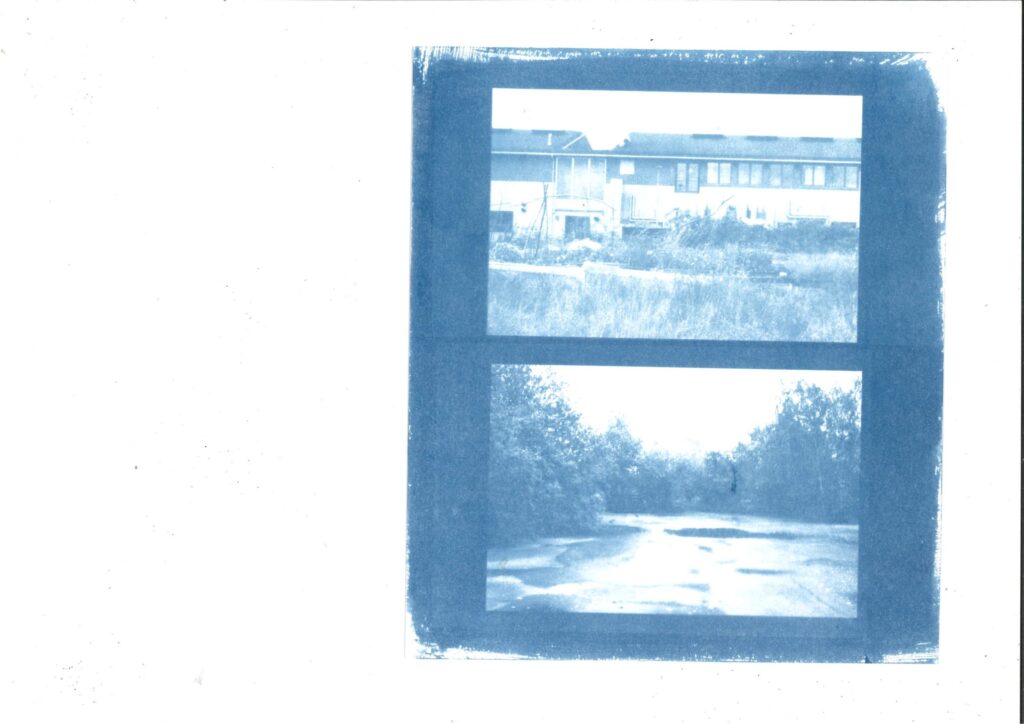
Fælles Vand
The thesis, Fælles Vand, translates from Danish as Common Water. The proposal looks to establish counter-infrastructures for local flood resilience, as a direct response to major infrastructural climate adaptations currently taking place throughout the city of Copenhagen due to climate-change related rainfall and sea rise increases.
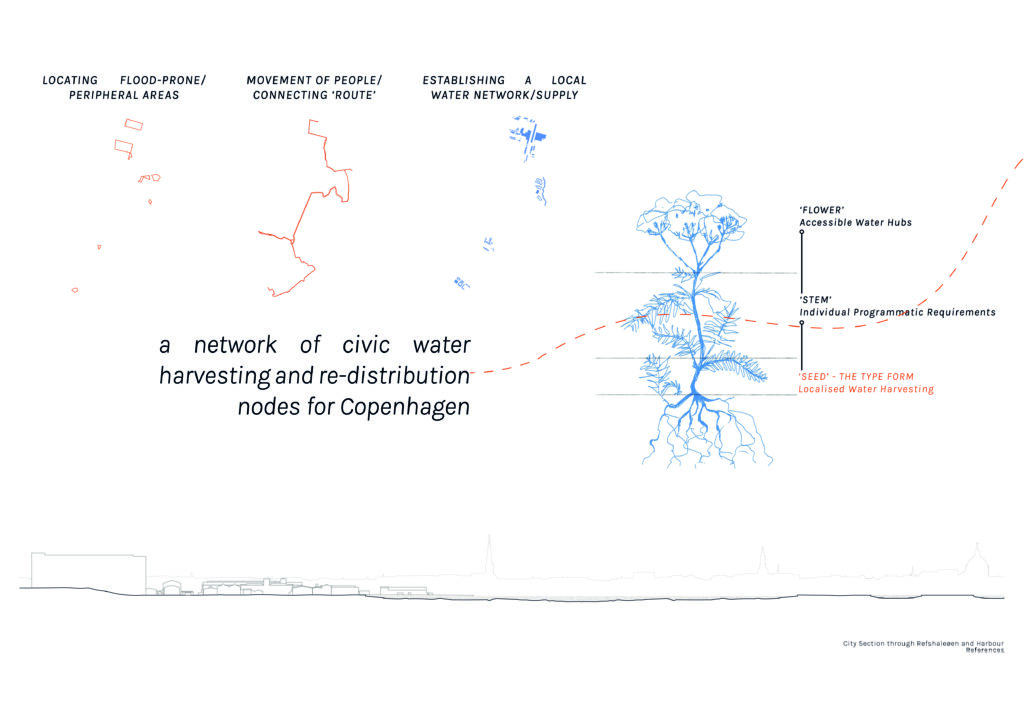
The Stage 5 brief the Ethical City provoked an investigation into Copenhagen’s relationship to water, through the lens of sociologist Richard Sennett’s theories outlined in his book Building and Dwelling: Ethics for the City. In the book Sennett mentions the concept of Seed-Planning:
“the same seed sown in different circumstances of water, wind and soil produces different colonies of plants …The seeds serve as type-forms whose manifestations – plants – change character in different circumstances.”
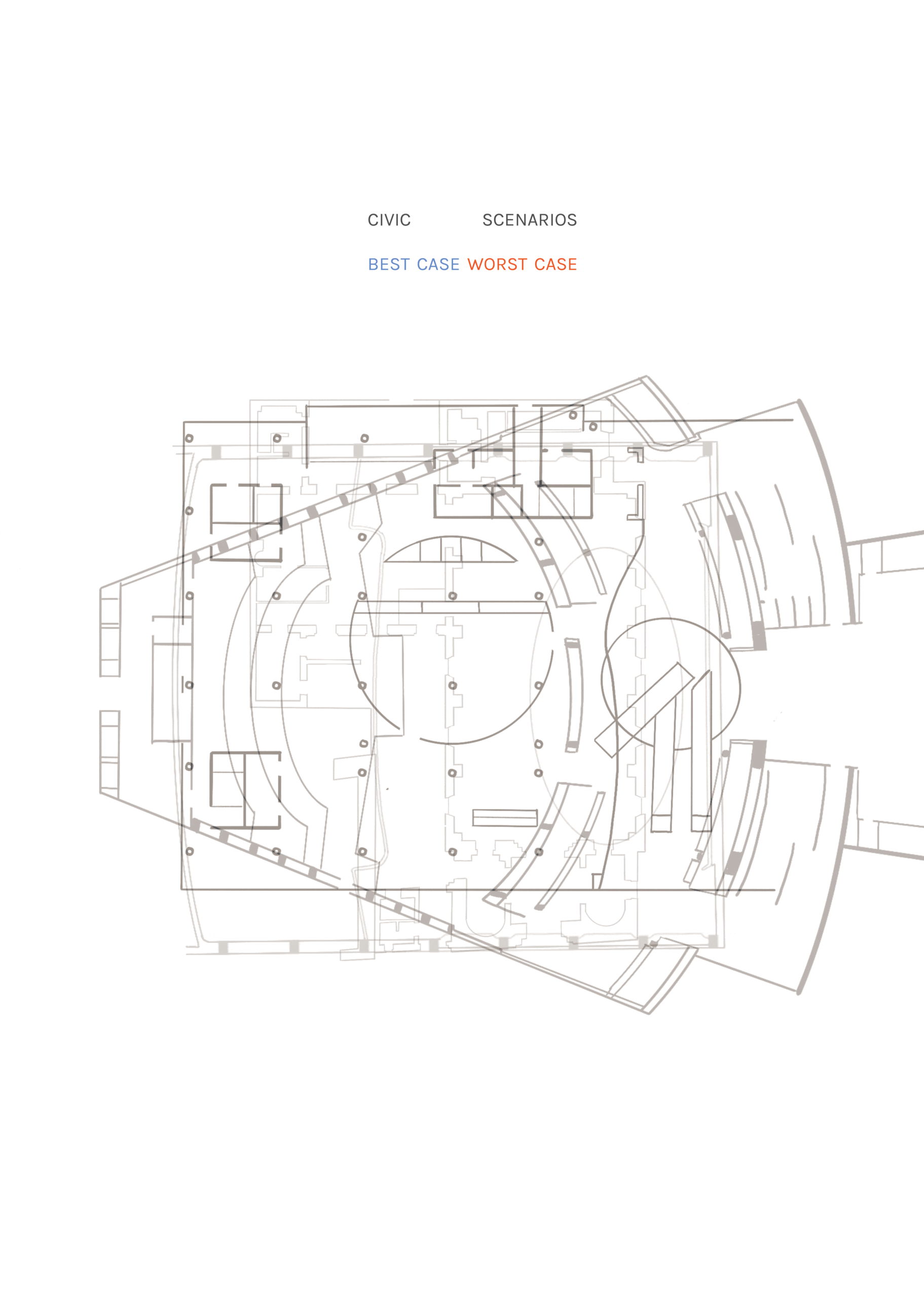
Sennett describes the ways in which it could be possible to work towards the creation of ethical cities, and this concept combined with my desire to address the impact of the climate crisis upon contemporary cities (even one already considered to be a leading world example in its mitigation) led to the development of Fælles Vand’s programme, a network of civic water harvesting and re-distribution nodes for Copenhagen.
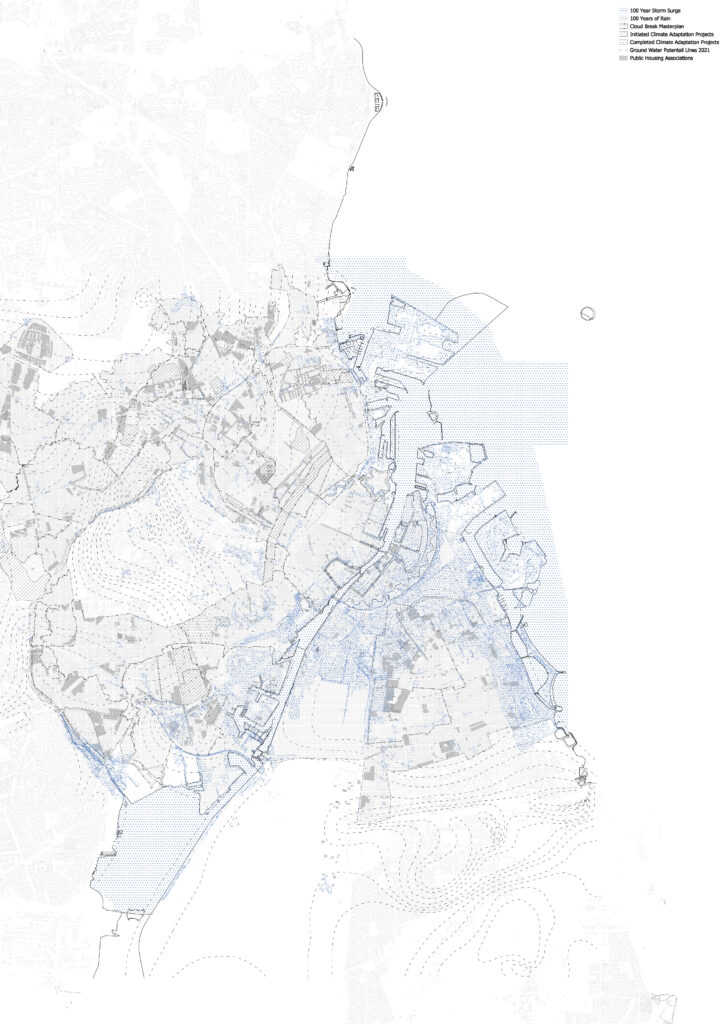
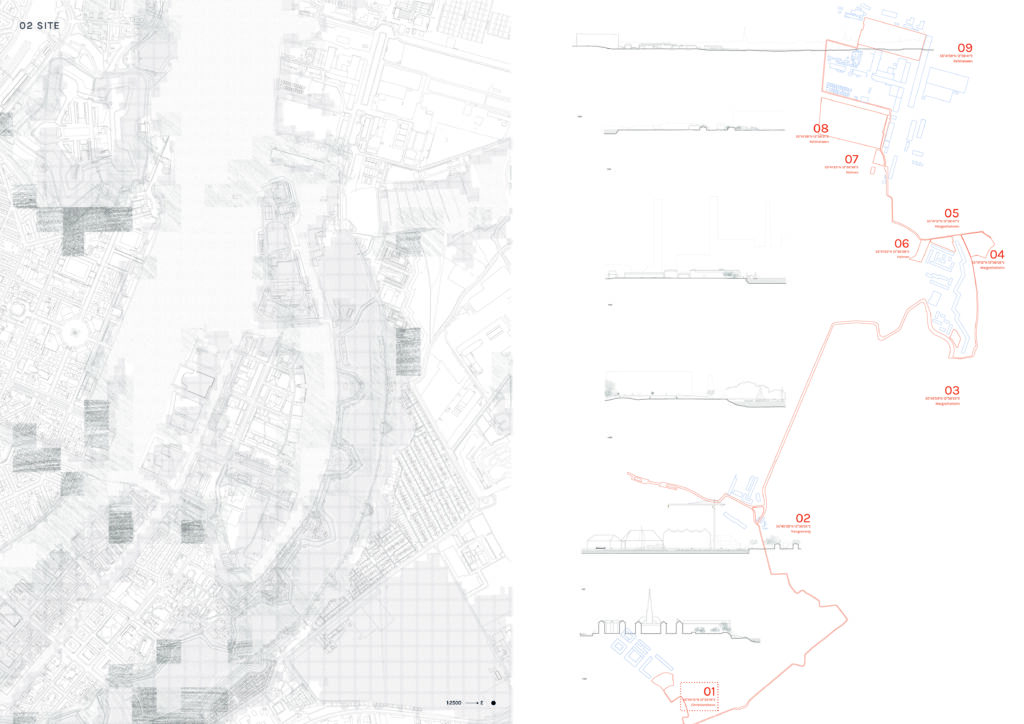
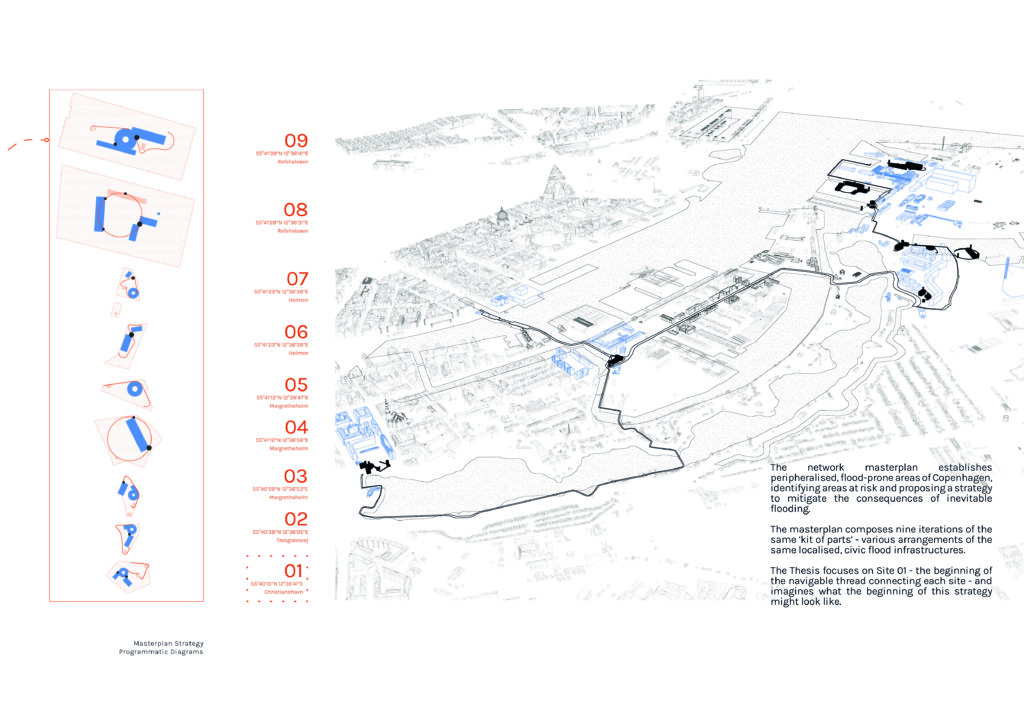
Through analysis of the current urban context and its most flood-prone sites, I was firstly able to determine the imagined locations of my project, (or, the varying conditions of water, wind and soil for which the seeds could be planted) located throughout peripheralized areas of the city and acting as a conceptual continuation of its already-defined medieval core.
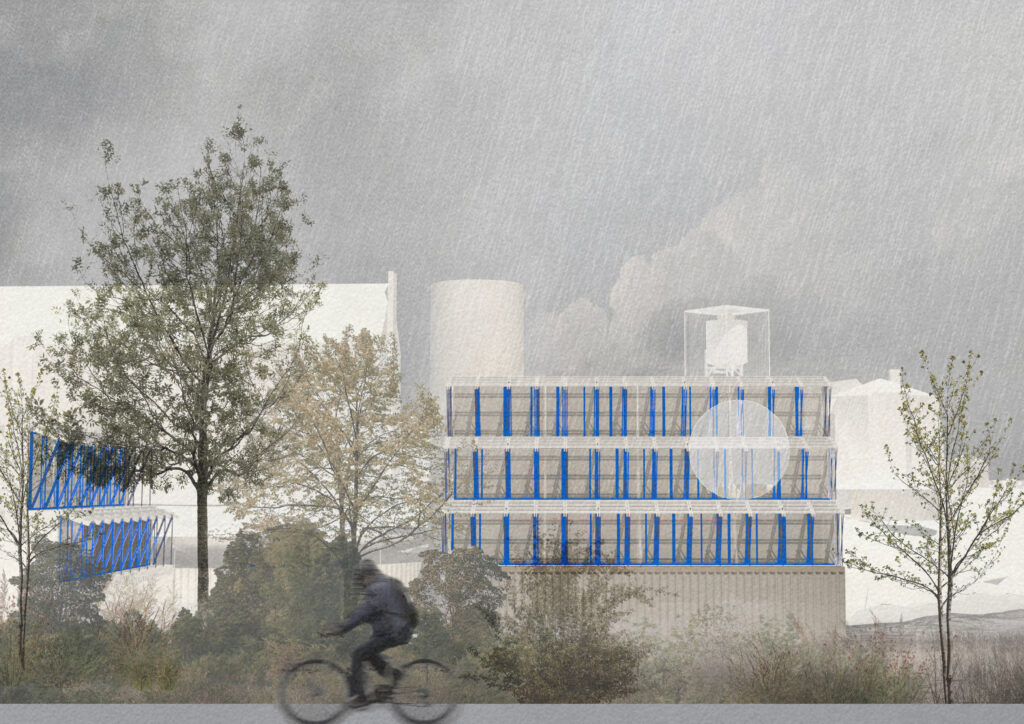
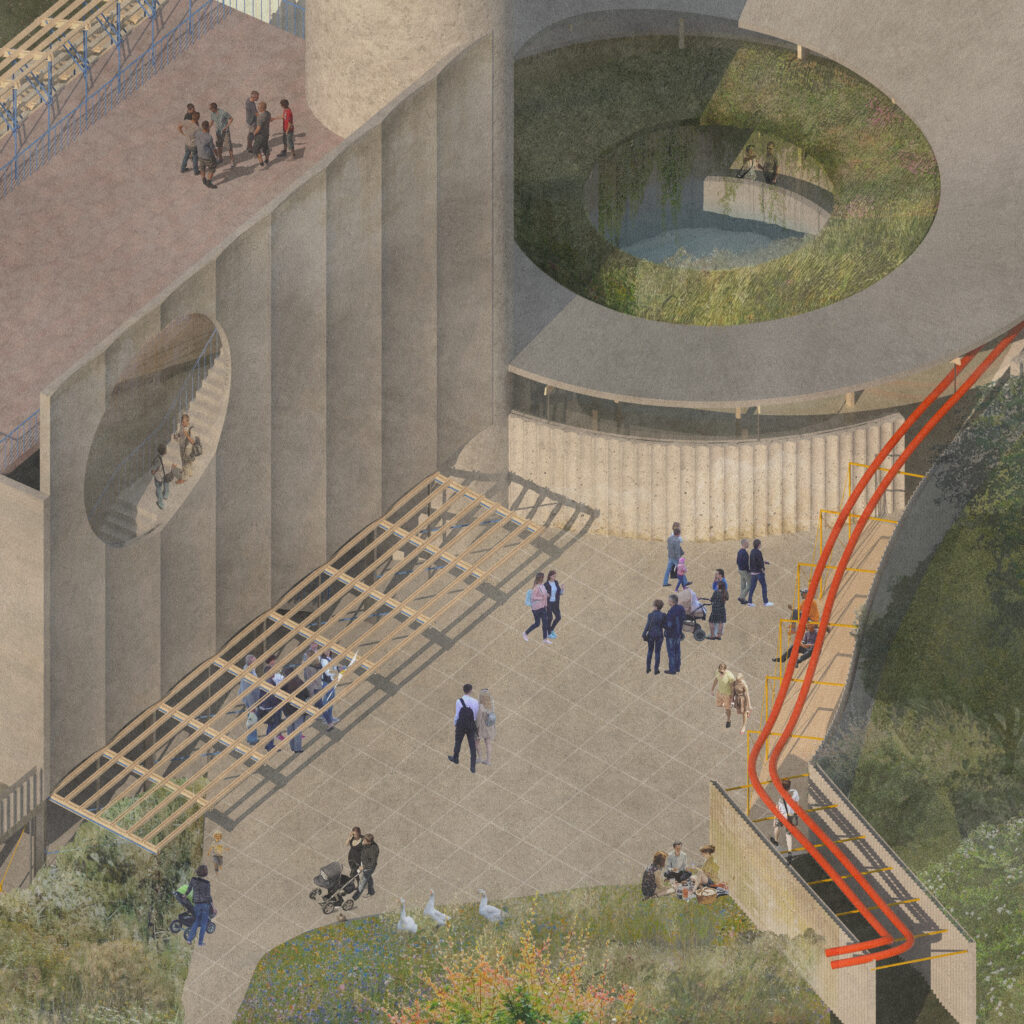
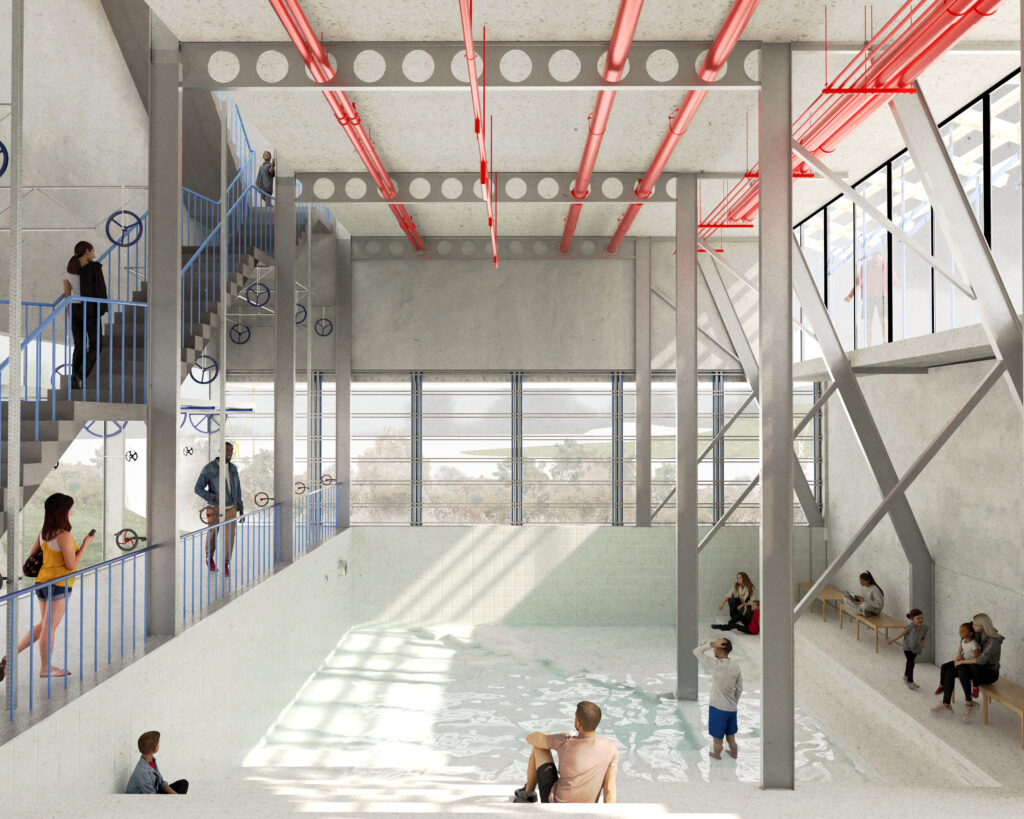
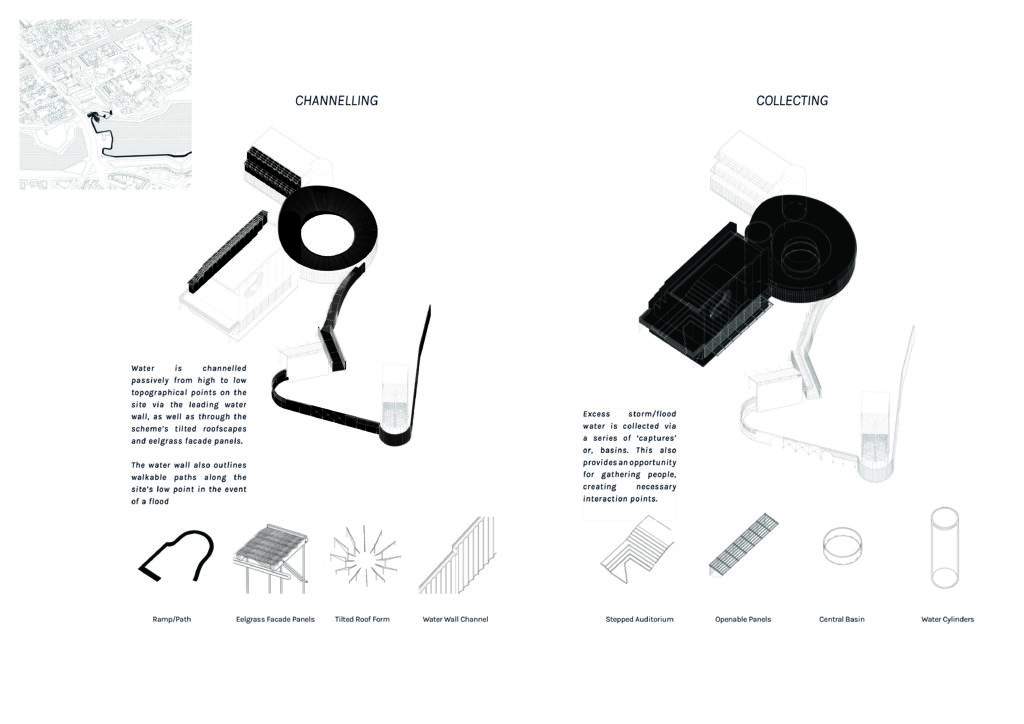
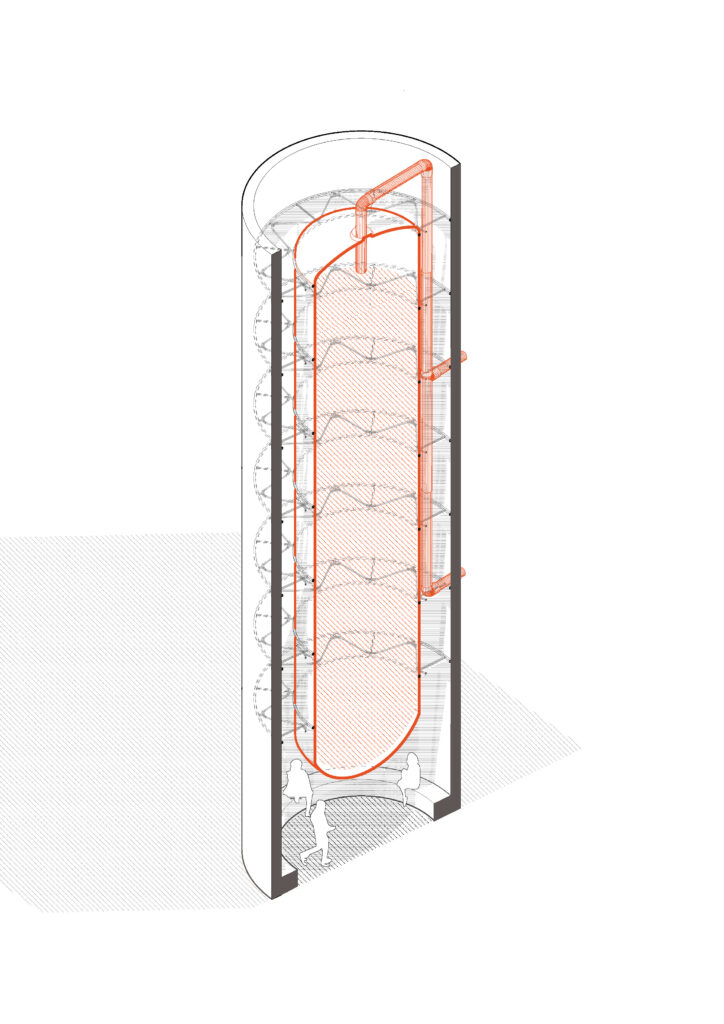
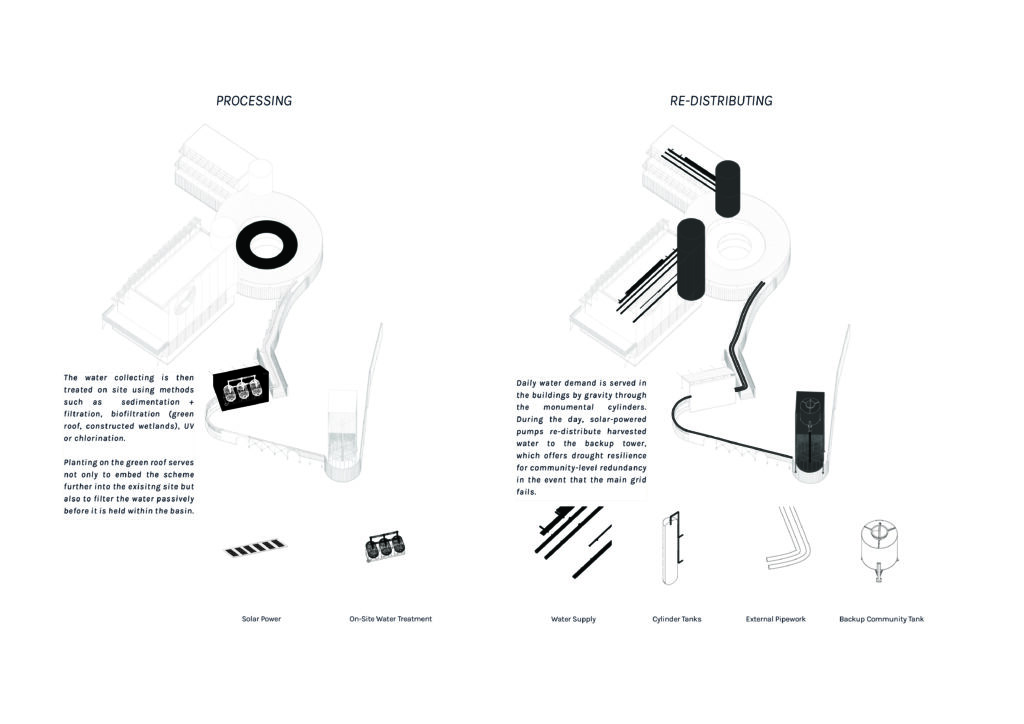
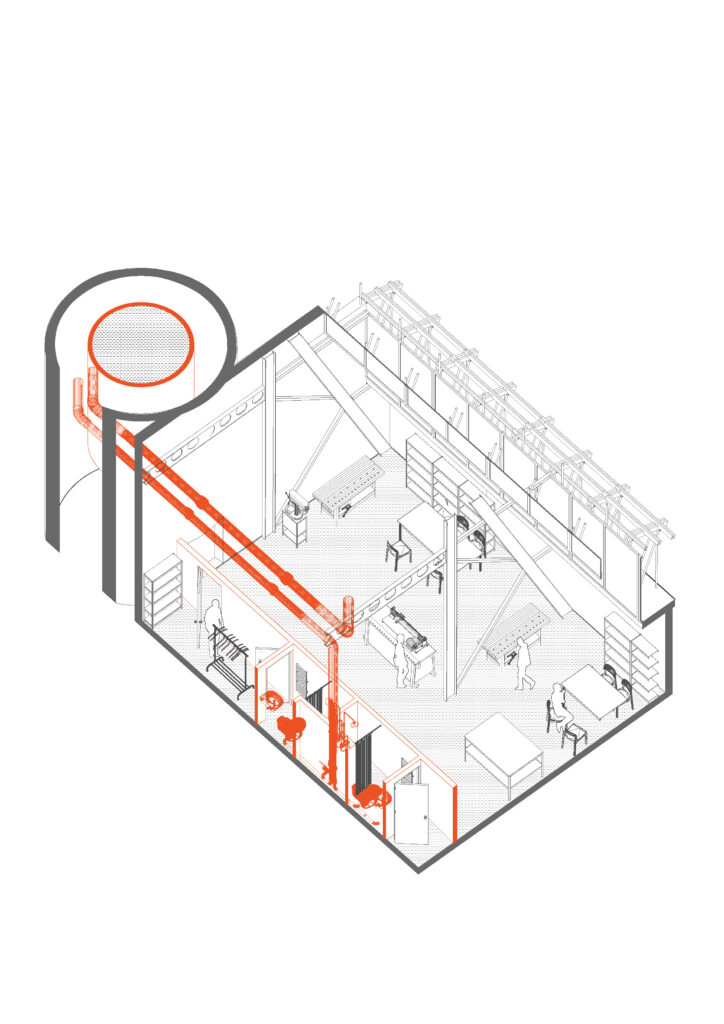
The architecture aims to decentralise the power of top-down planning infrastructures, empowering local communities in the face of a changing environmental and political climate. Through the establishment of flexible, free-to-access, community-driven programmes, these nodes not only serve to manage the impending crisis of excess water, but to autonomously collect, channel, process and re-distribute it for the benefit of the locale.
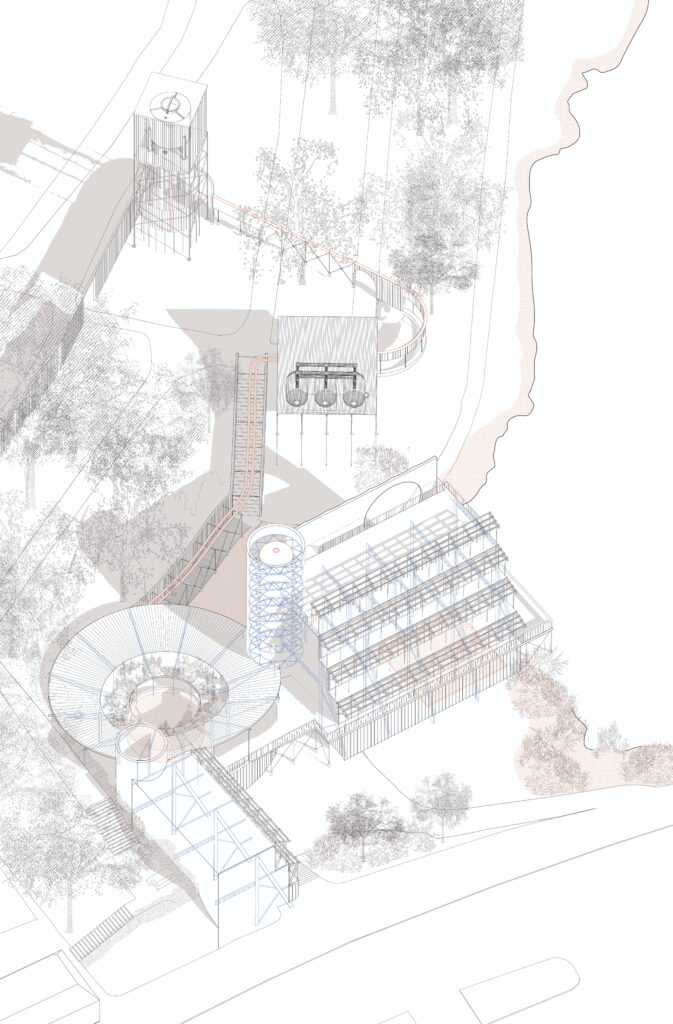
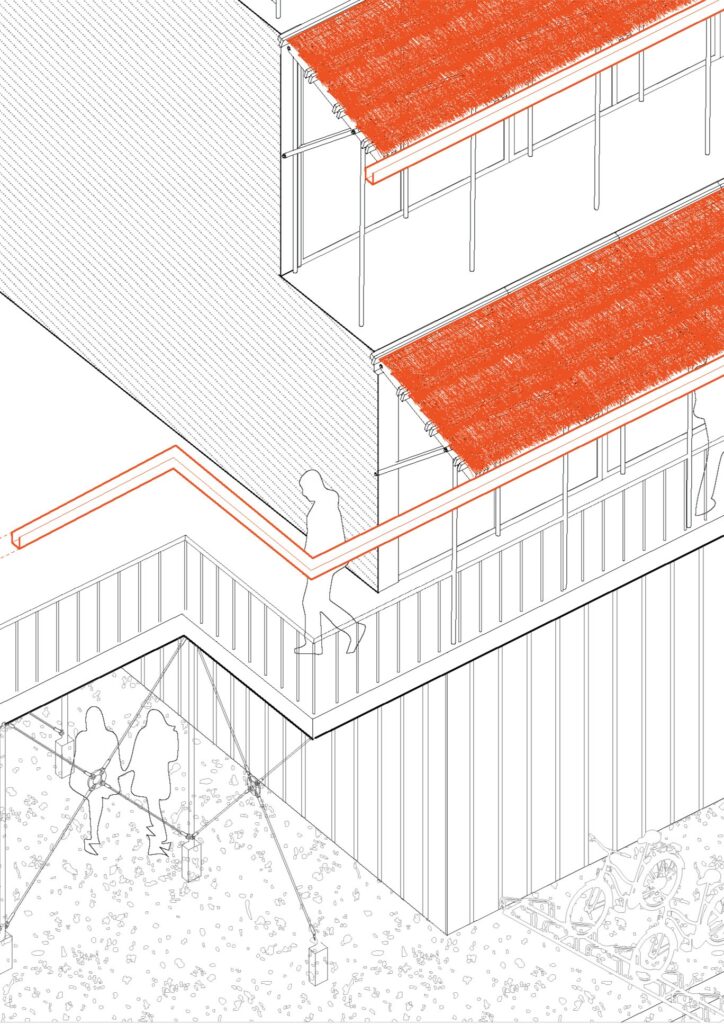
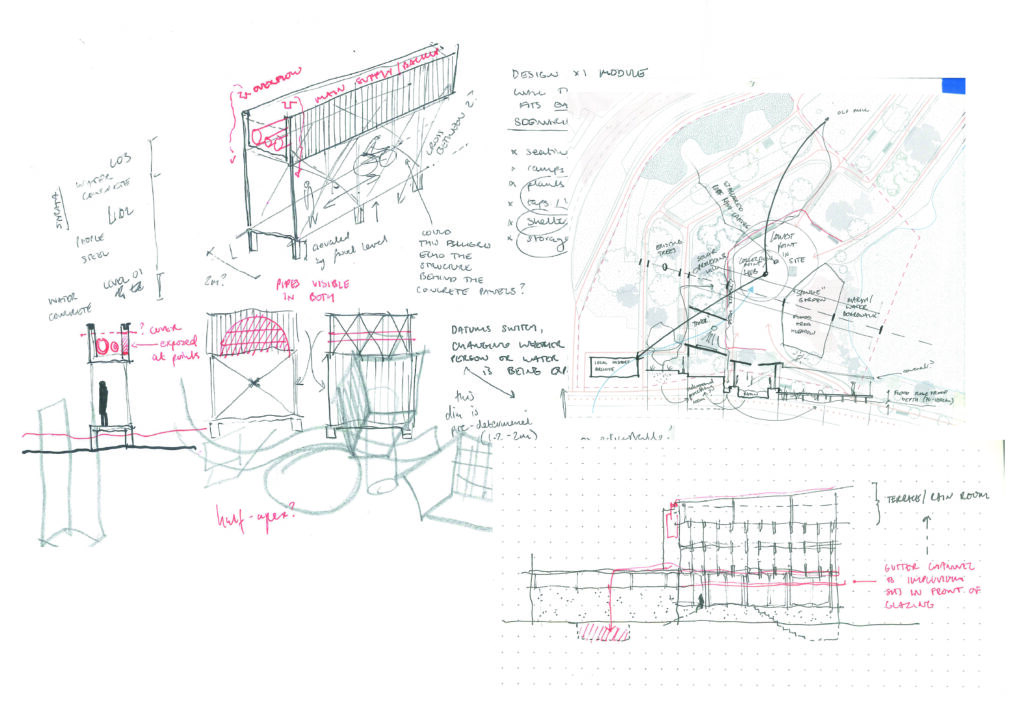
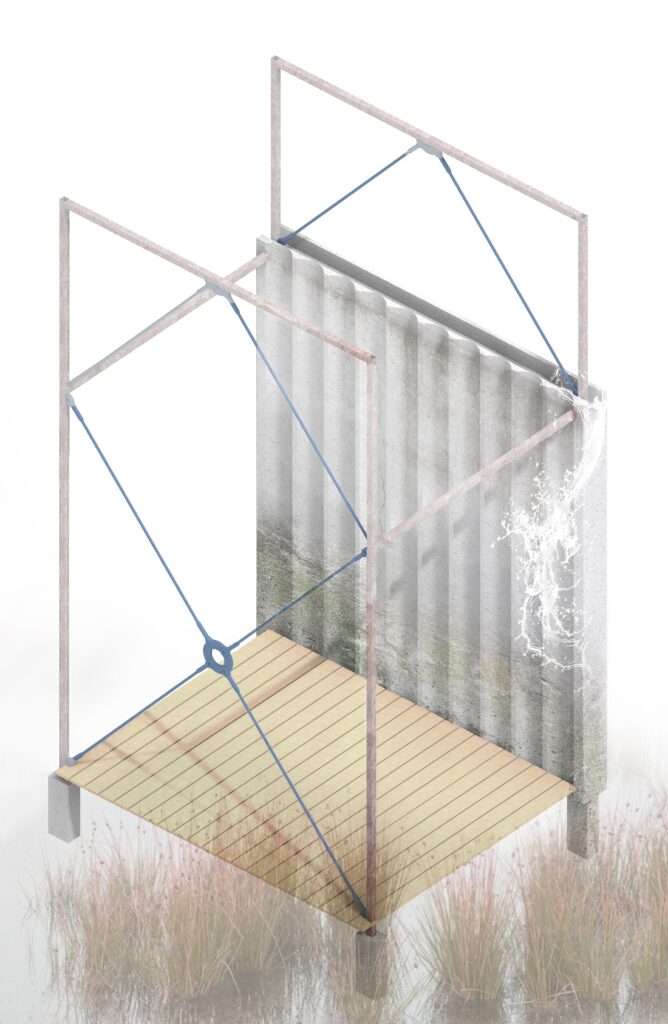
A highlighted floodline connects each site by outlining a safely navigable route directing the movement of people, and is poetically echoed within the scheme through the movement of water via a water wall, acting not only as the main channel for each civic building but also as an interactive pathway. Through water-harvesting systems, the project re-frames stormwater management: water becomes a civic asset, a medium for gathering and a fundamental resource.

A1, 25000
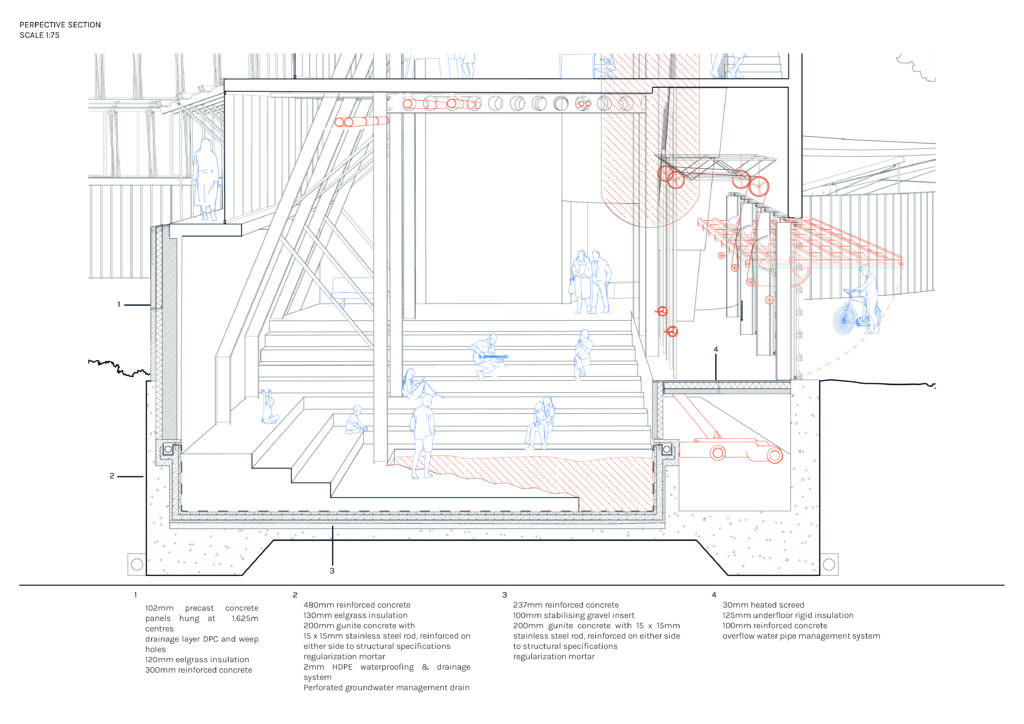
1:75
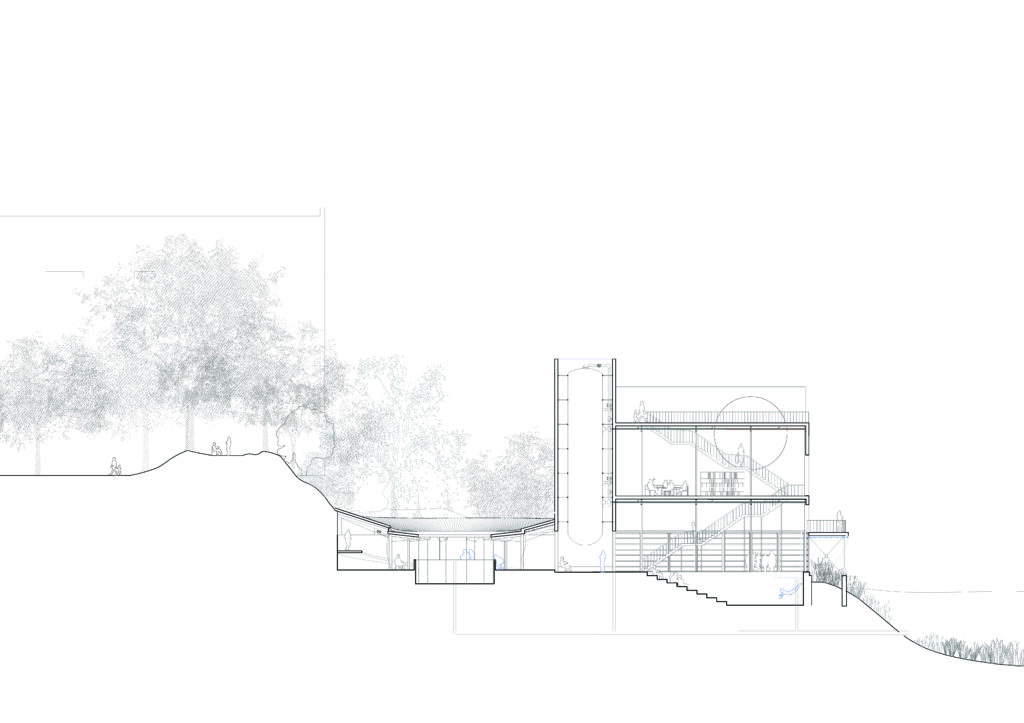
A1 - 1:100
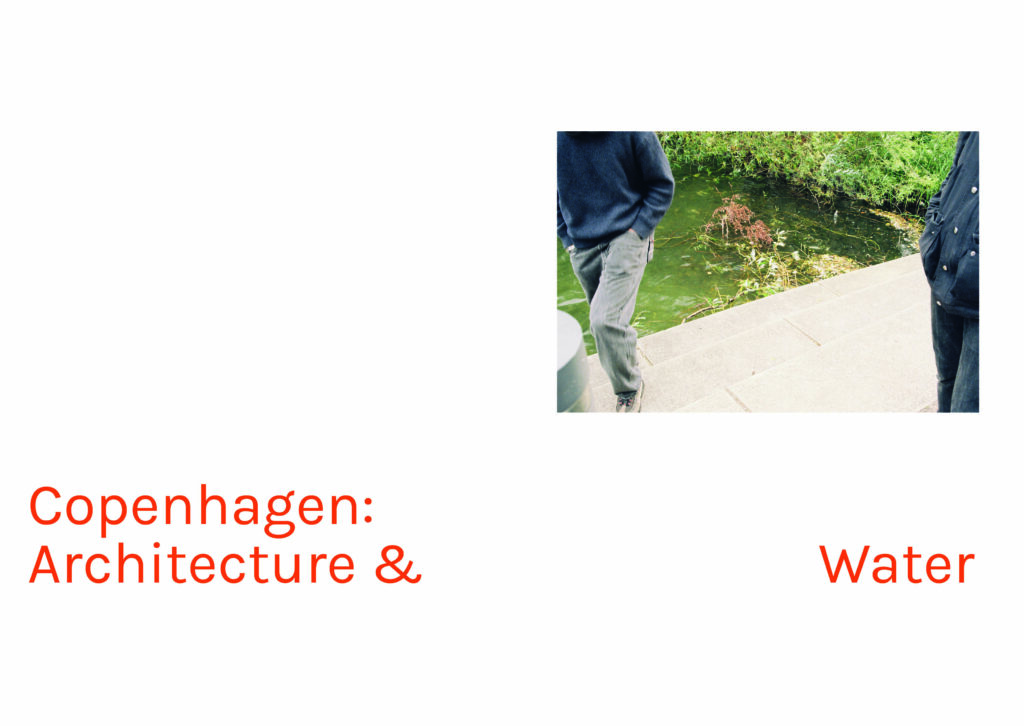
Film made from city visit (October 2025)