
Infill: New urban housing strategy for Tradeston
The morphology of Tradeston, like many districts to the south of central Glasgow, is characterized by fragmentation. The effects of post-war renewal programmes, the decline of its port industry in the 80s and recent large scale public infrastructure projects have left many of its buildings in varying states of vacancy and disrepair, which, since 2011 new regeneration and housing initiatives have been looking to address. This project draws on an understanding of these proposed schemes, as well as on Tradeston’s existing morphology to present a new approach to urban housing in the area. Taking the site of three blocks between Centre Street and the railway that passes through Tradeston, this study aimed to look for a way of integrating housing that encourages an open-ended planning strategy for the neighbourhood’s future.
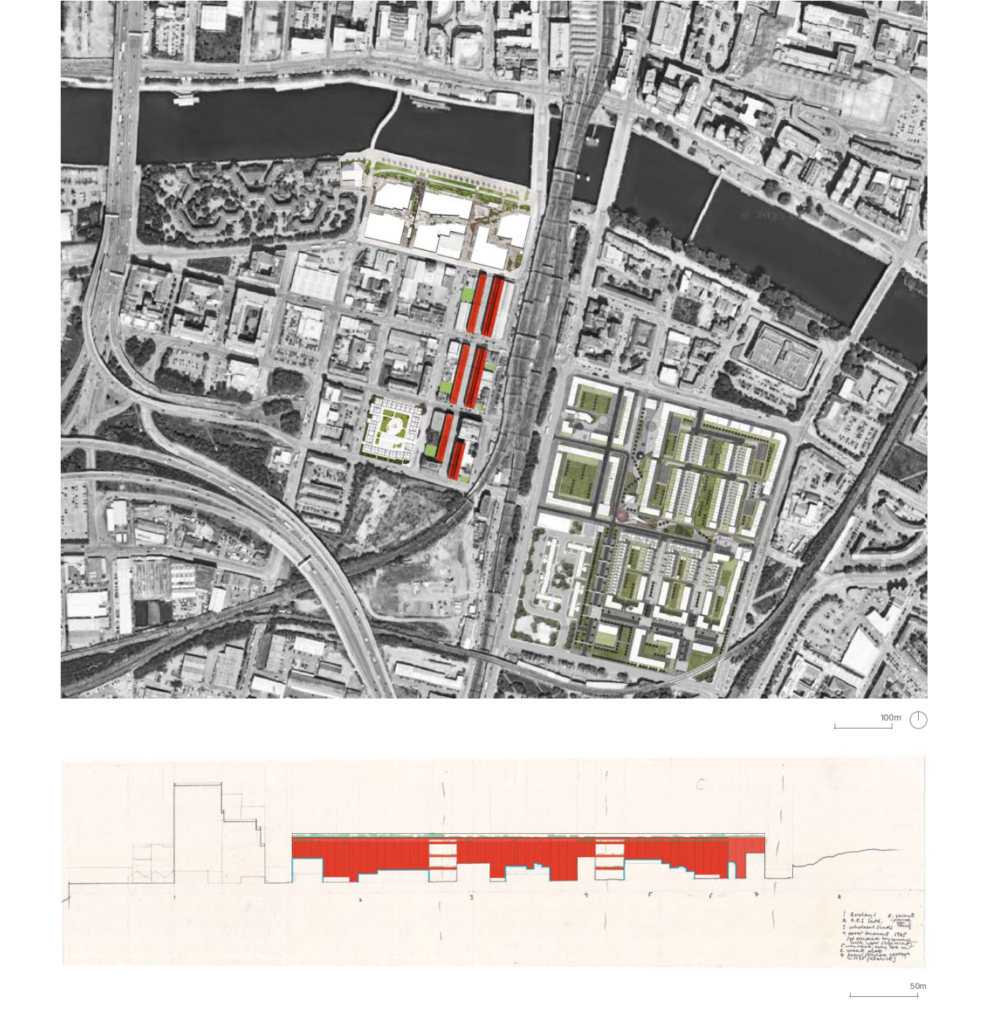
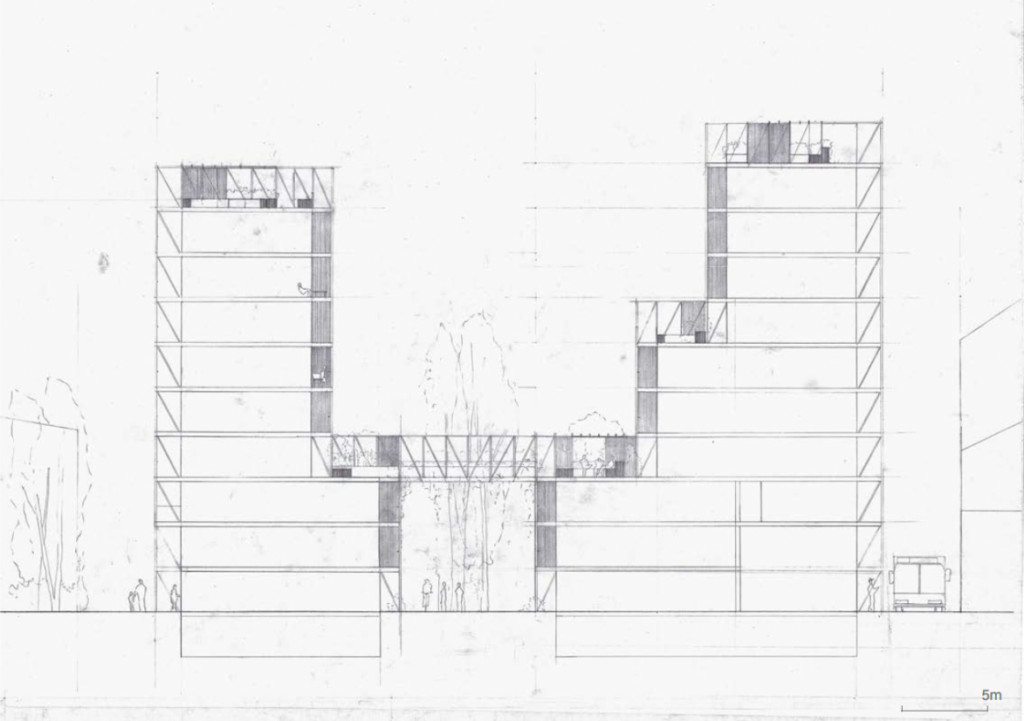
Housing as linear infill of the urban block in Tradeston, Glasgow. (Above) final proposal for a new infrastructure along with other recent proposals. 1.5000; (Below) section AA [north-south] from the river Clyde to Cook Street, with the proposal in elevation.
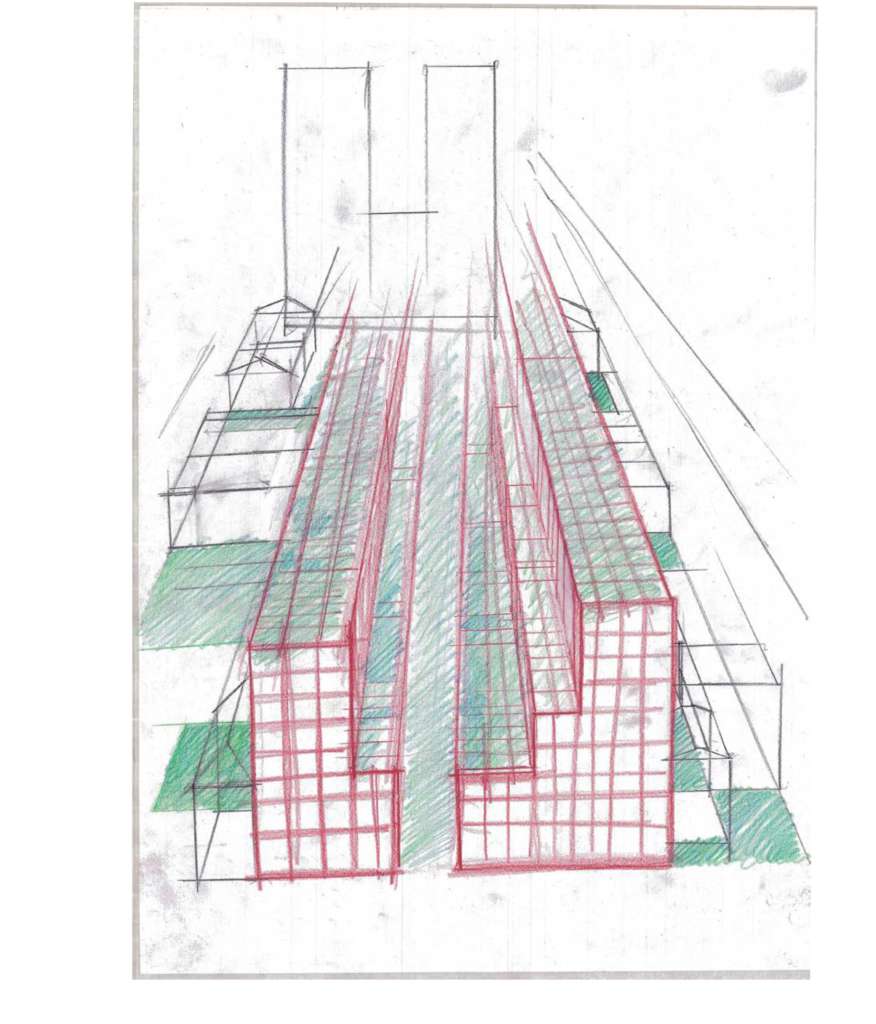
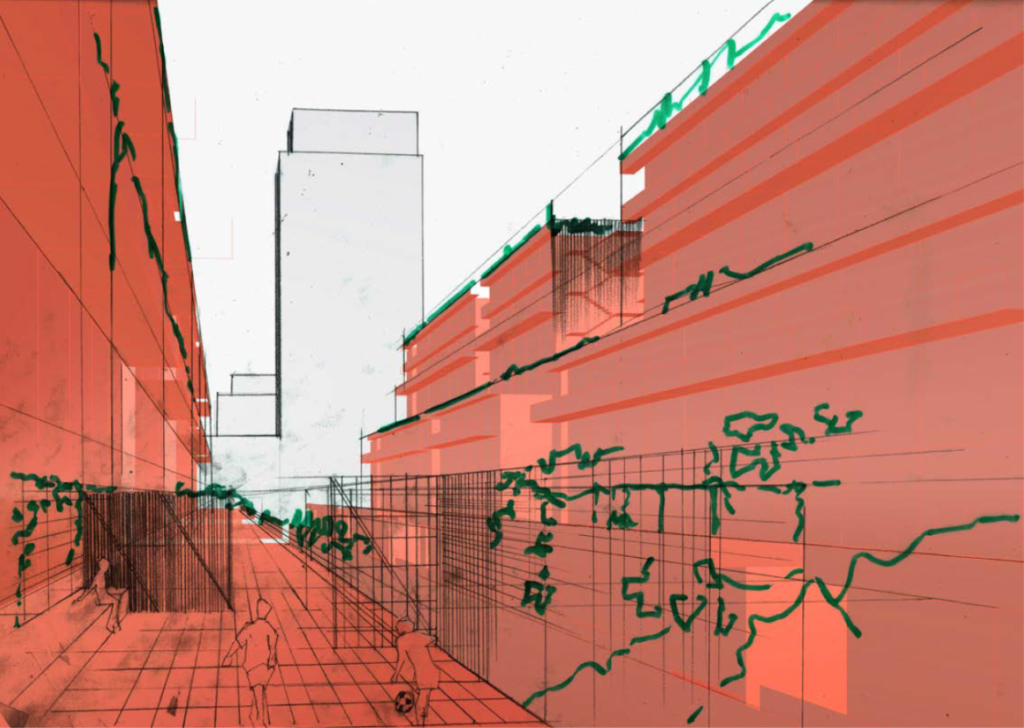
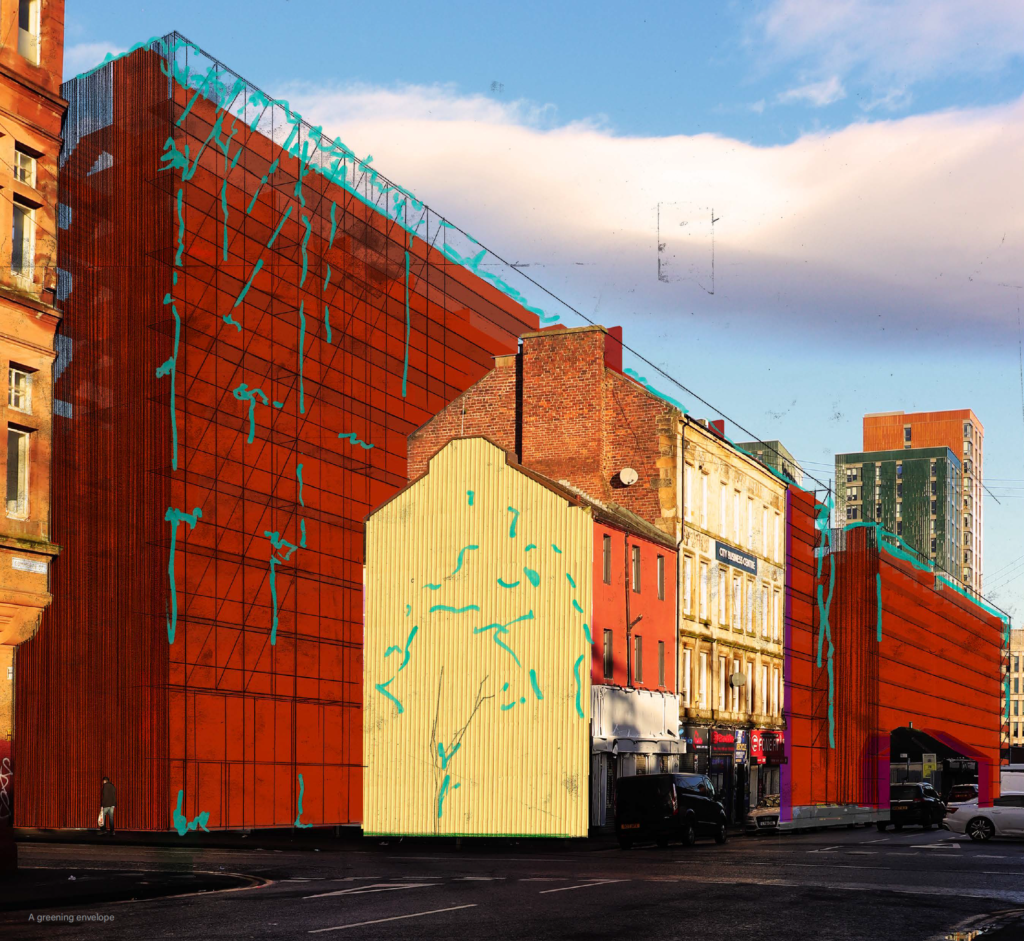
An infrastrucutre to support new urban life. Partial in its occupation of the block yet in itself a complete composition.
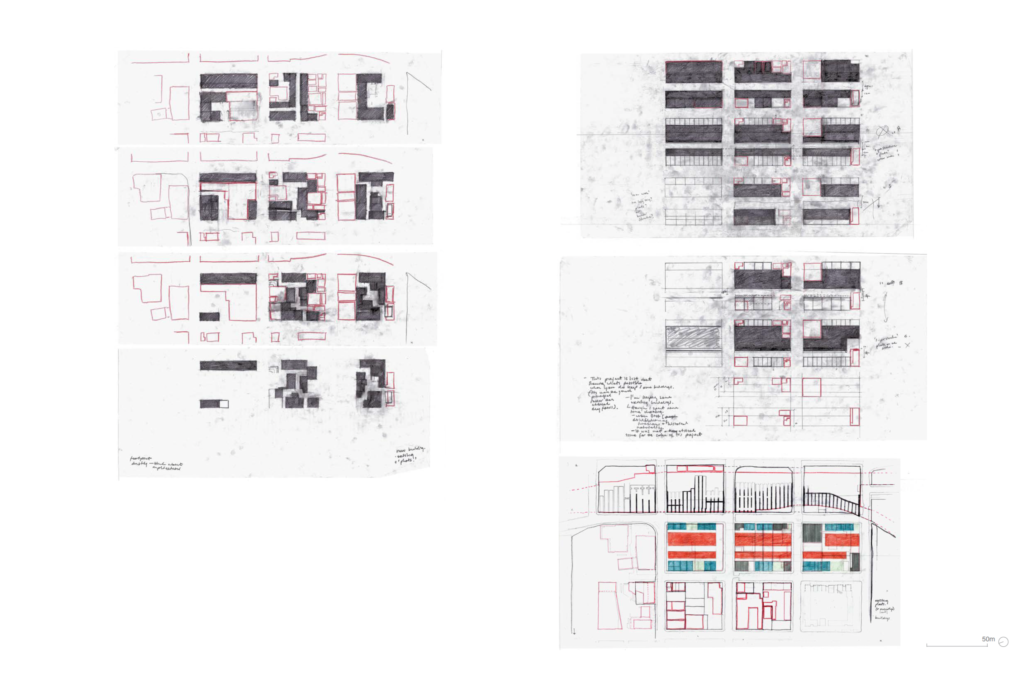
Early iterations of the new housing footprint in relation to existing buildings. Fragmented vs linear.
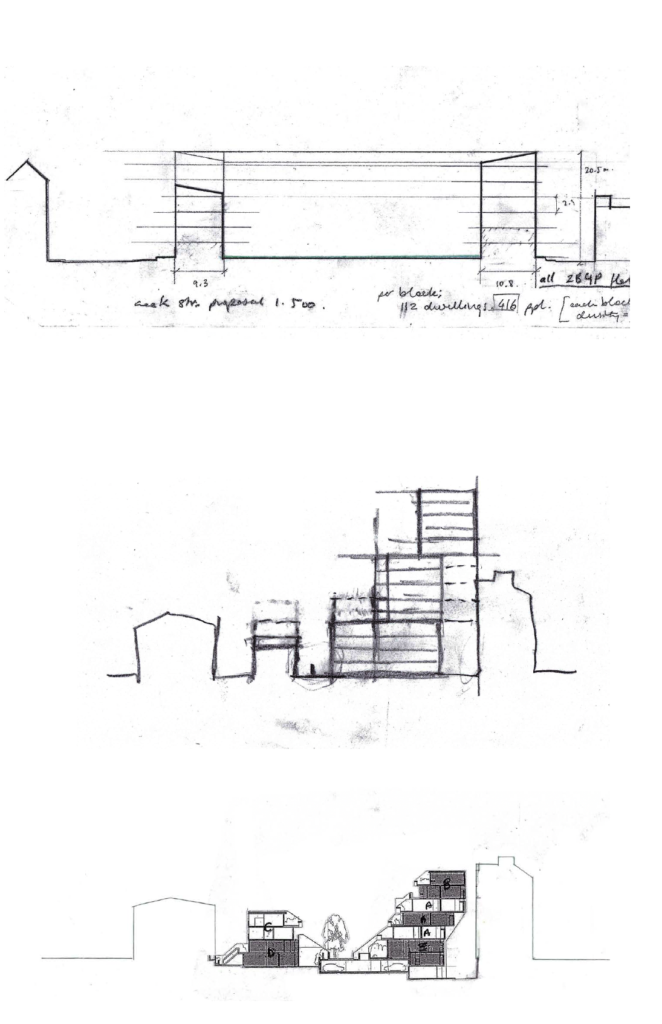
Initial section studies, west-east through the block, 1:500. Top- Proposed housing development on an adjacent block by Stallan Brand architects; Middle- responsive sketch on new proposal site, matching the density; Bottom- New proposal site with a section through Neave Brown's Alexander Road estate superimposed.
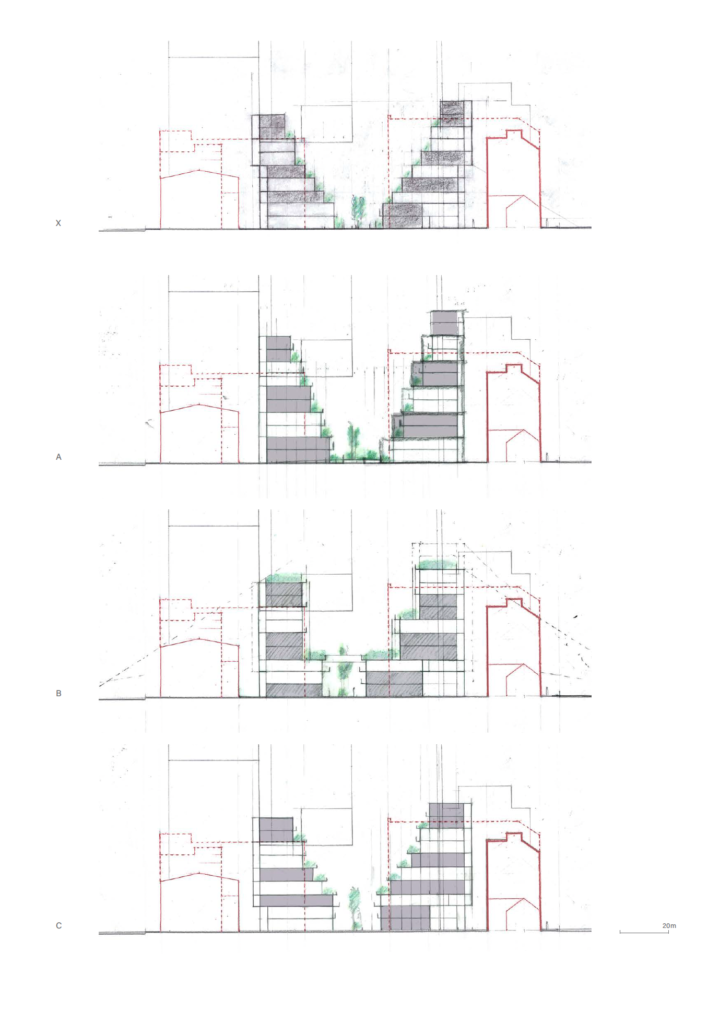
Stepping form and typology development: Reconfiguring Neave Brown's Alexander Road in section. X- first iteration; A- maisonettes with a private garden terrace each and a shared garden at ground level; B- maisonettes with private balconies, shared garden terraces and a planted avenue at ground level; C- flats with a private garden terrace each and a planted avenue at ground level.
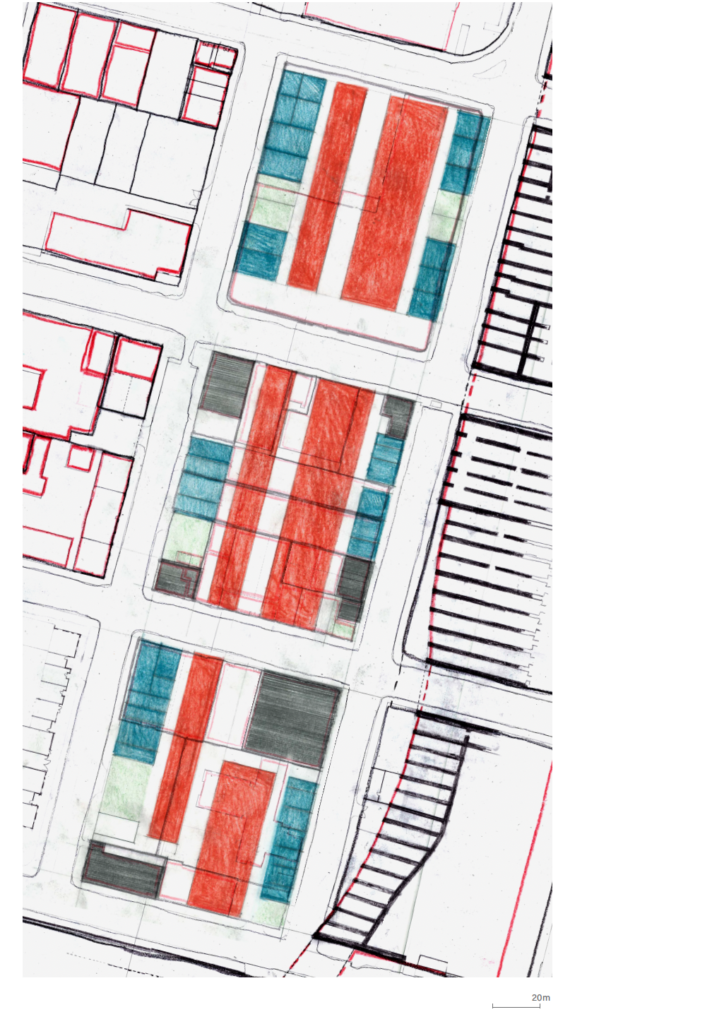
New housing footprint [Red] drawn at 1:1000, among existing buildings [grey], plots for future building [blue], and new pocket parks [green].
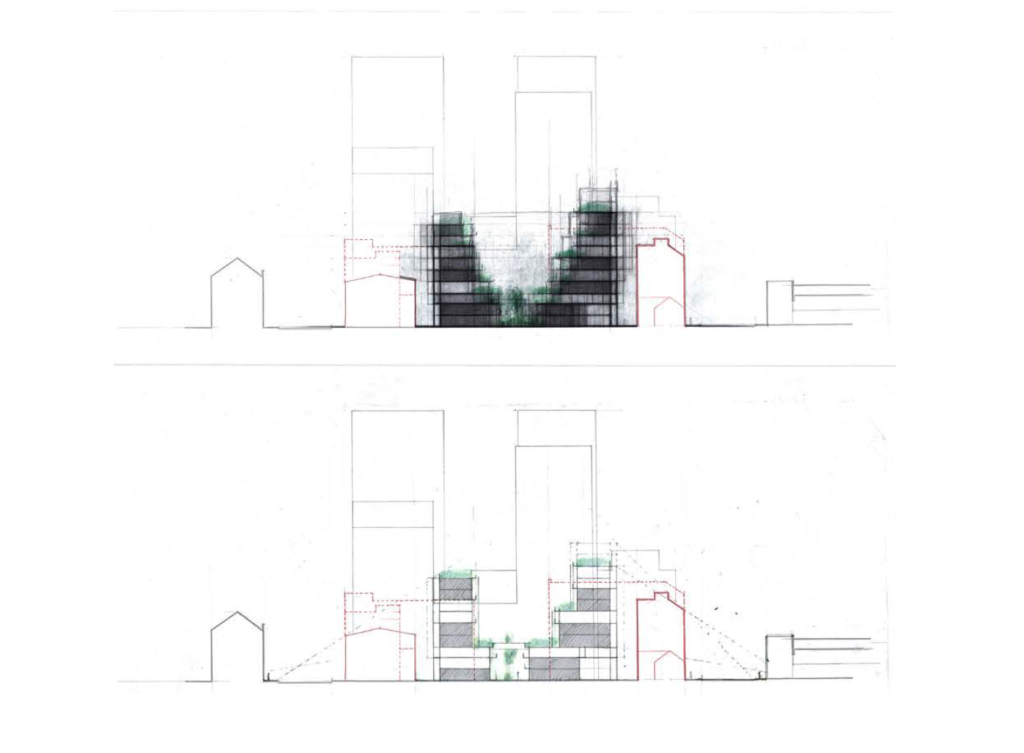
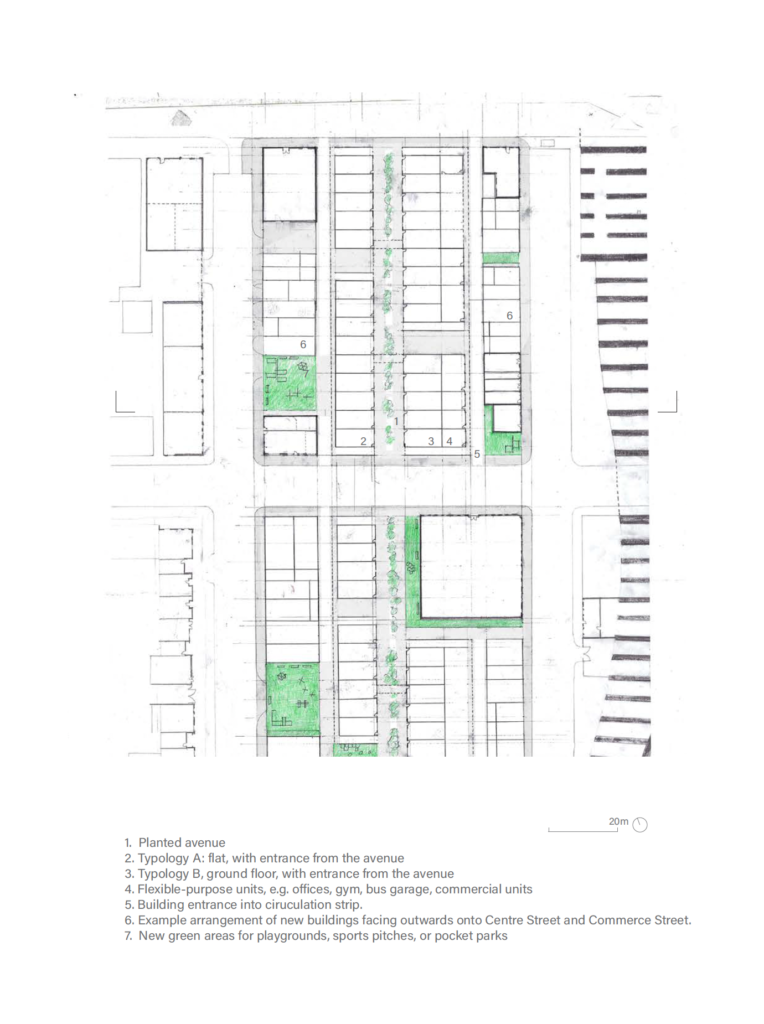
Above: All options overlaid. Below: Final version of the stepping form using three typologies [B] and corresponding site plan.
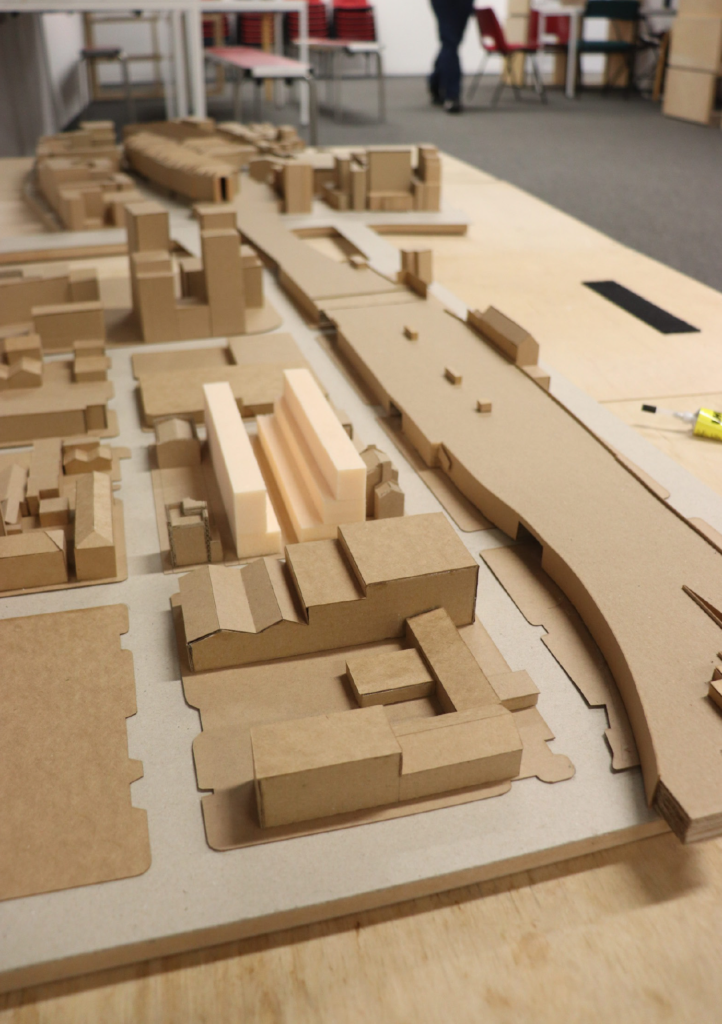
Final massing. 1:500 model.