
Methods and Context
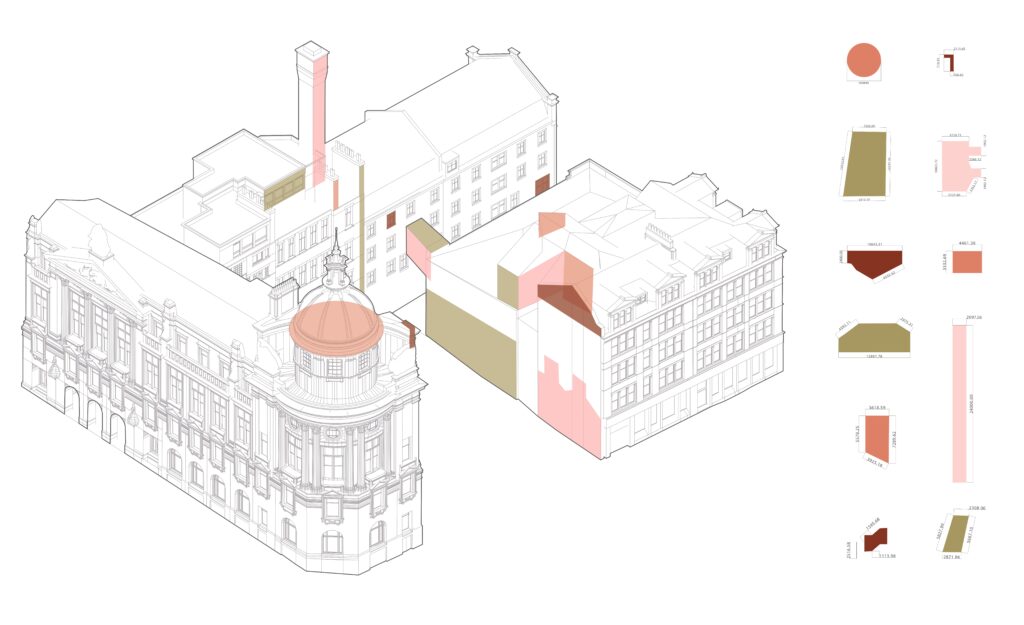
Drawing on the approach employed by Herzog and de Meuron's Serpentine Pavilion (2012), I developed a methodology wherein geometries from the site's internal facades were to become formative volumes within my new structure. The later evolution of these volumes allowed a playfulness to develop around the approach to plan, void and the spaces between floors.
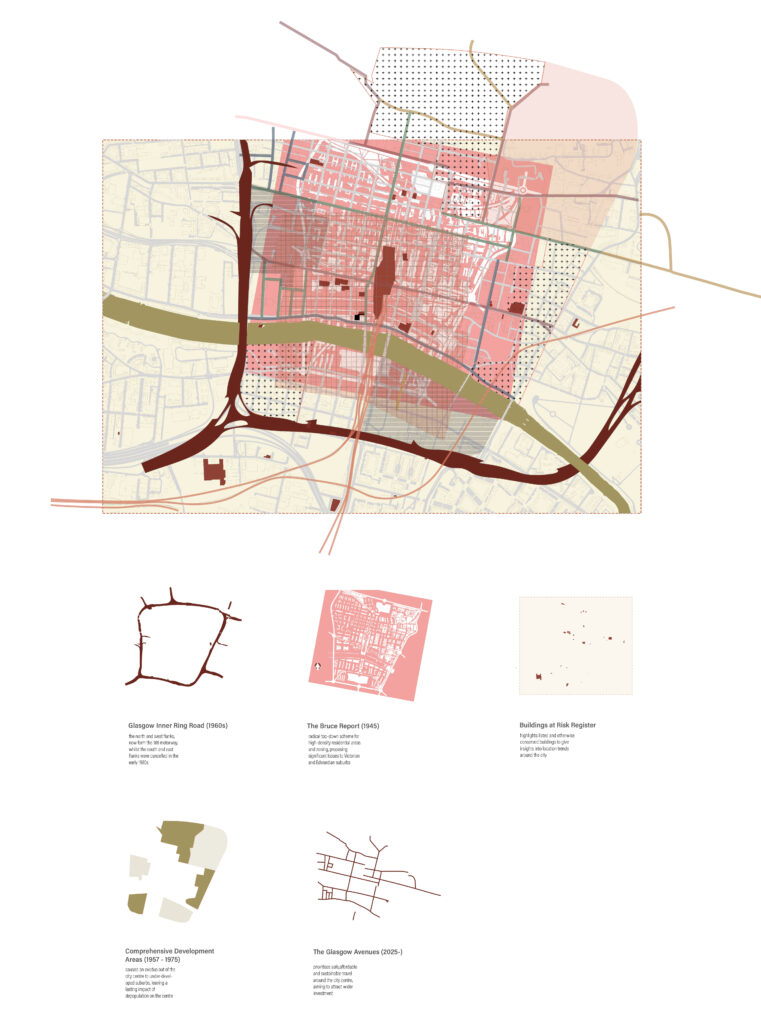
How have previous schemes pushing for the city's 'best functioning' succeeded or failed? I argue that all-encompassing, top-down approaches often fail to tailor to the needs of an inclusive civic realm. Instead, piecemeal methods can perhaps more effectively acknowledge ground conditions and real needs.
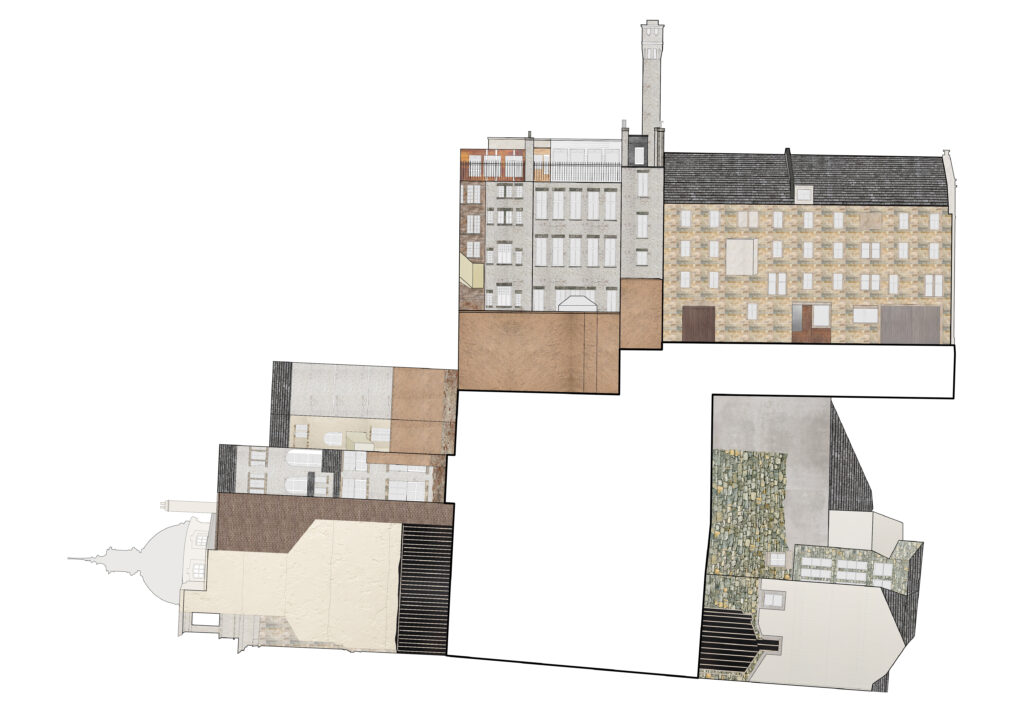
A detailed material study deep dive allowed me to collate a 'library' documenting existing site material to inform the path of new additions, focused on the internal elevations to reference the unique conditions provided by urban gap sites.