SUSPENSION – Process
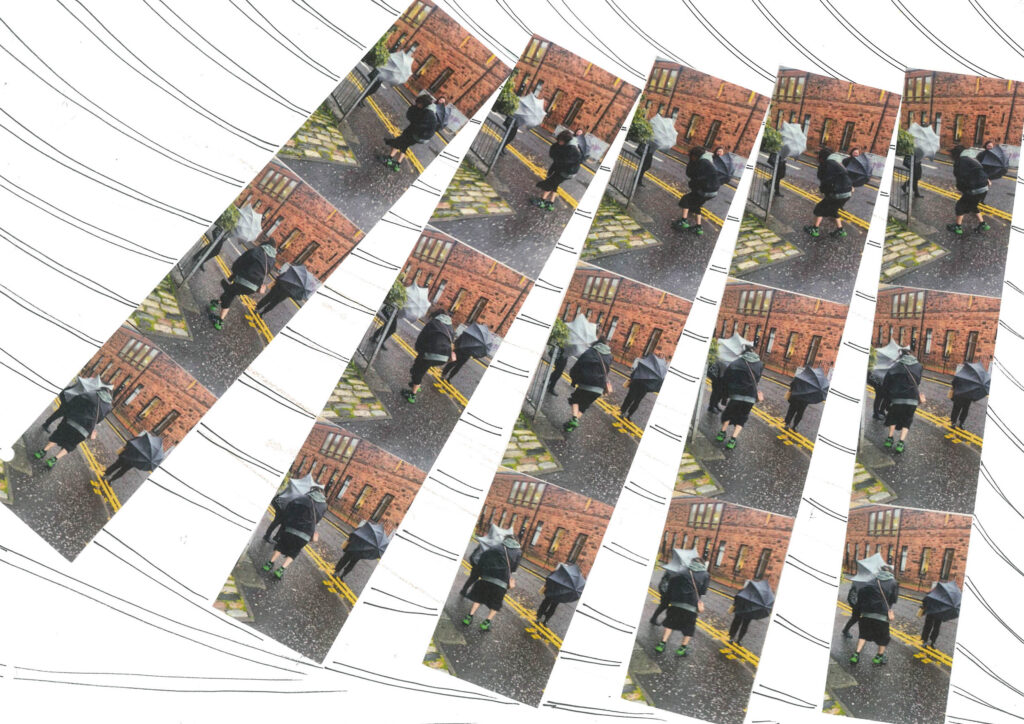
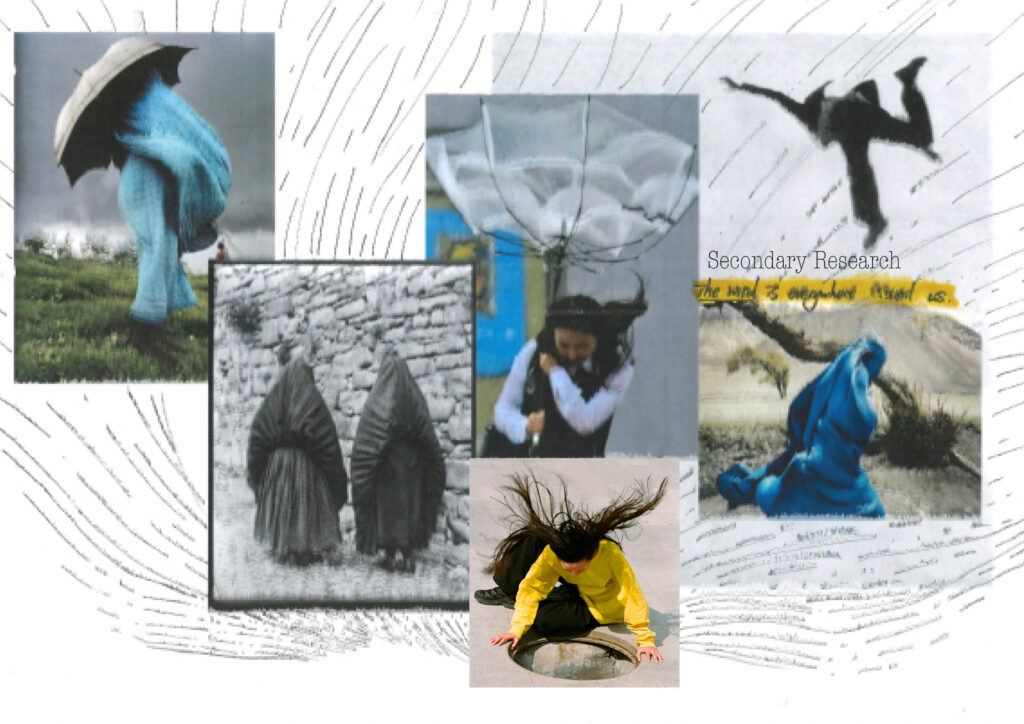
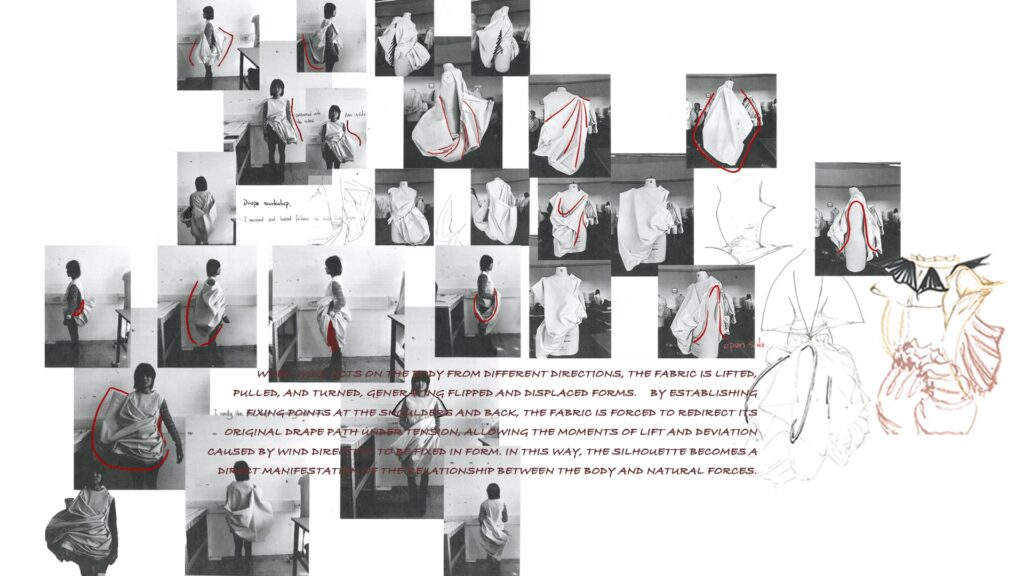
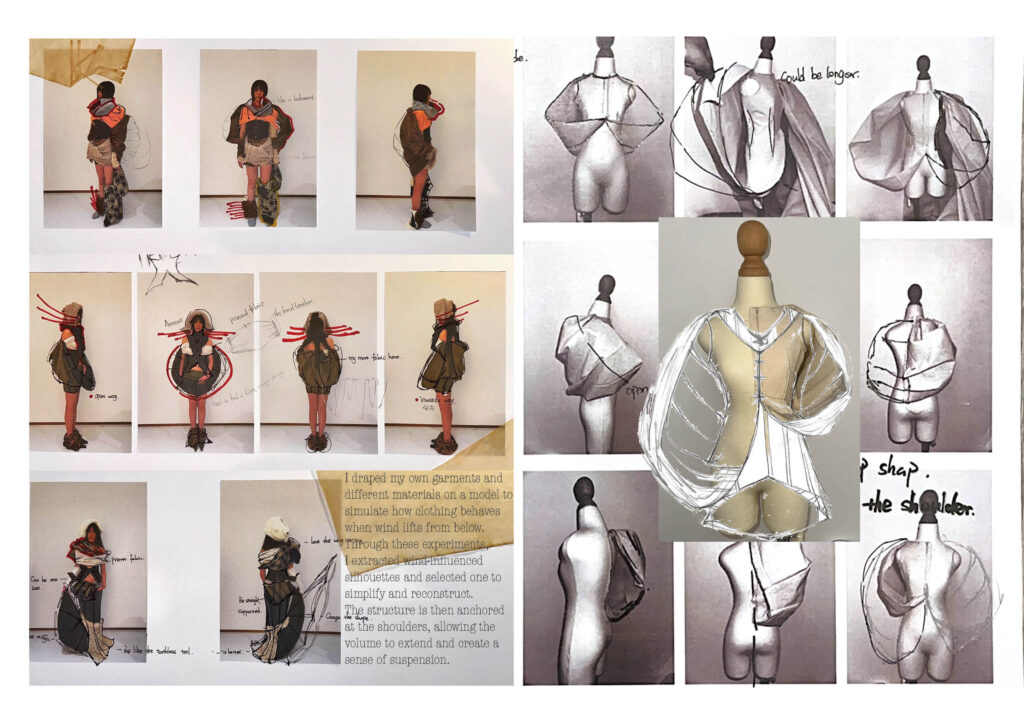
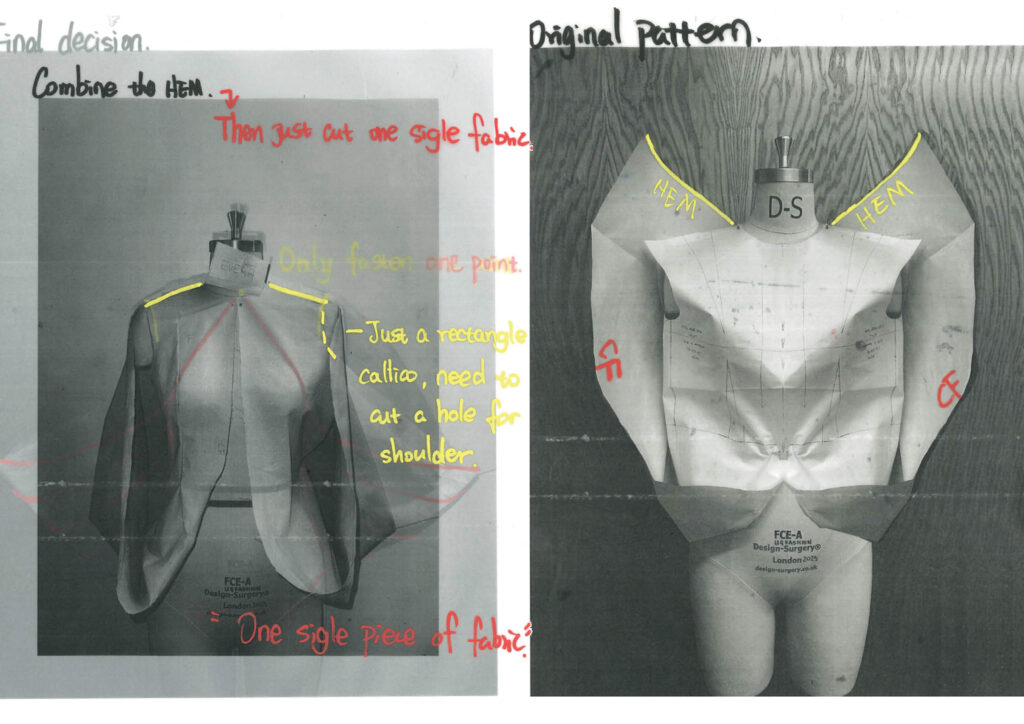
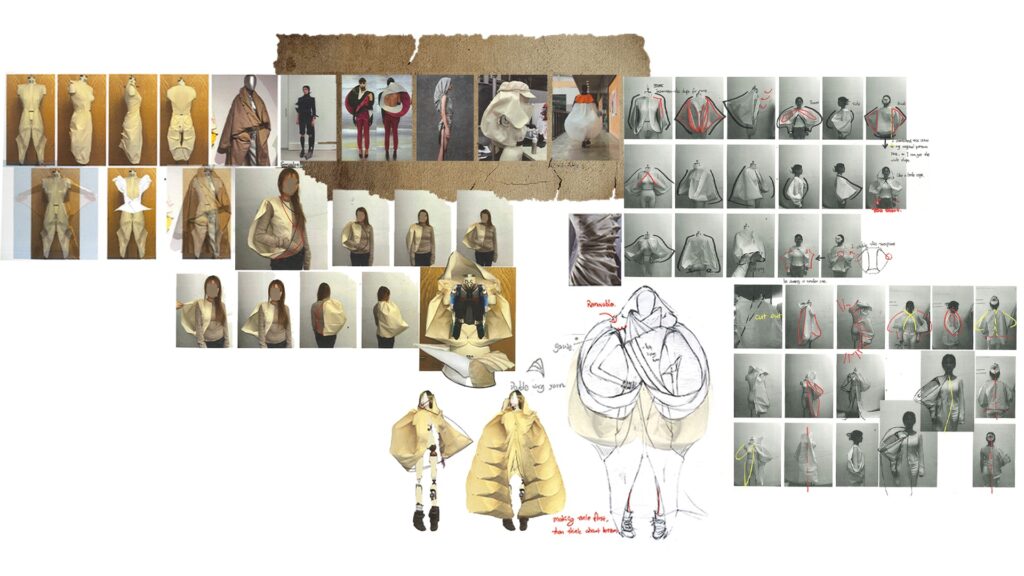
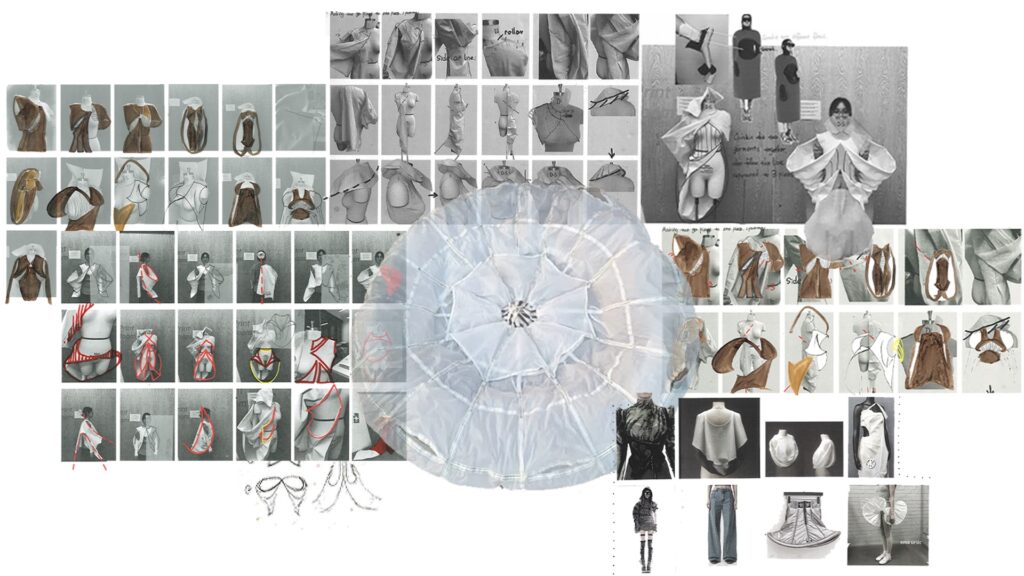
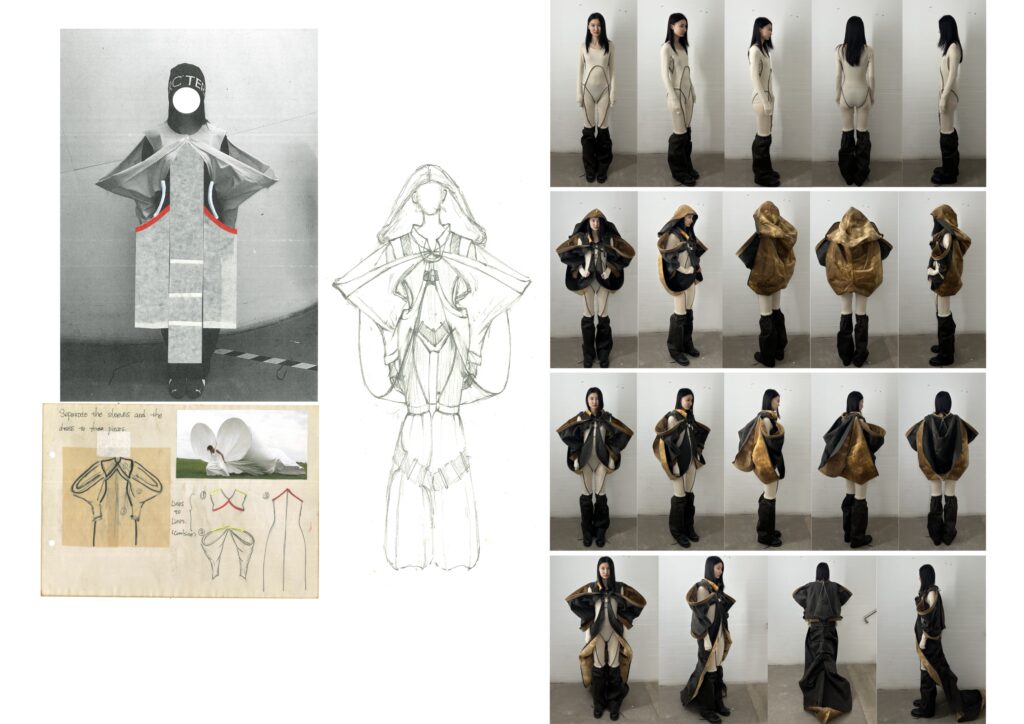
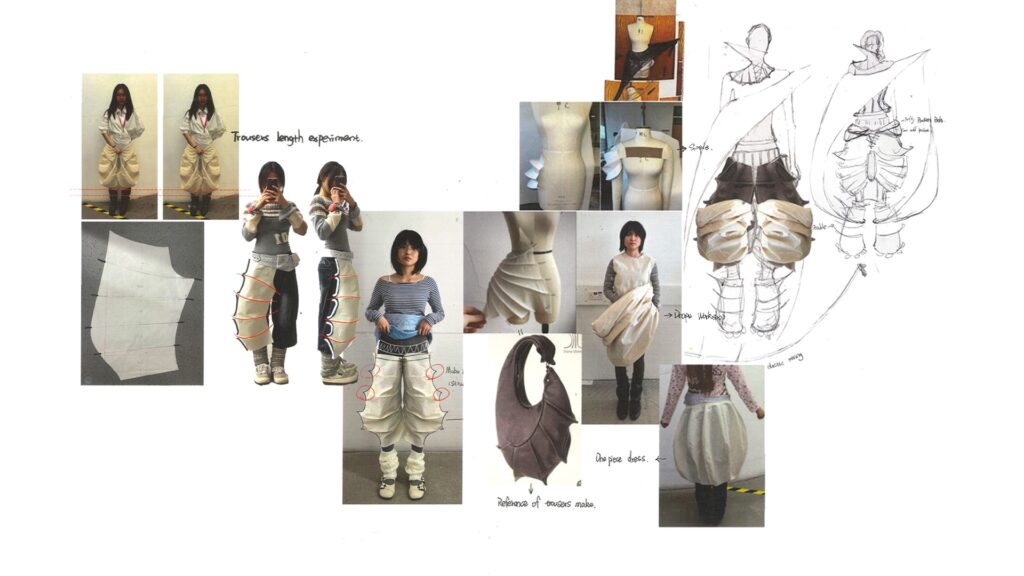
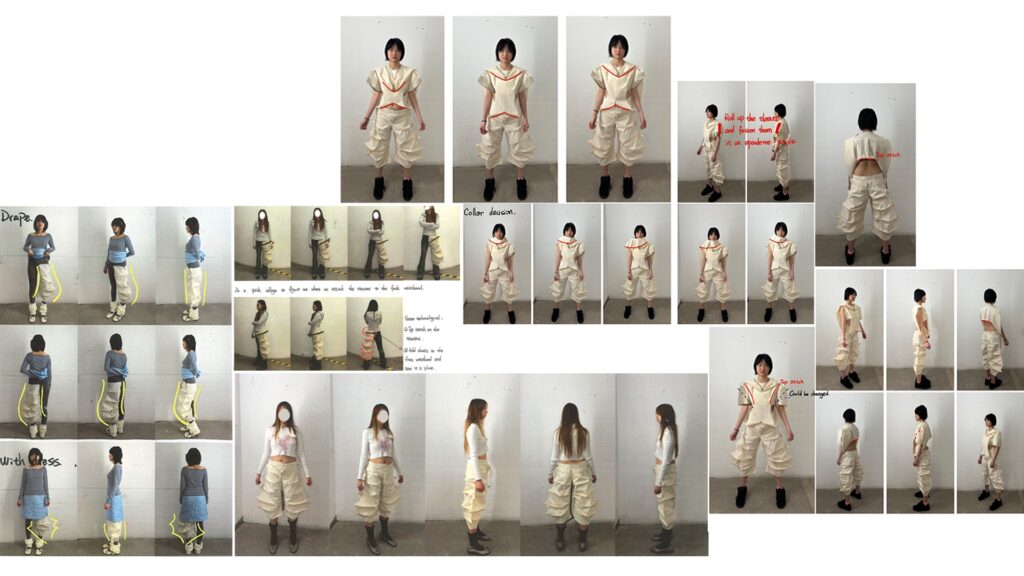
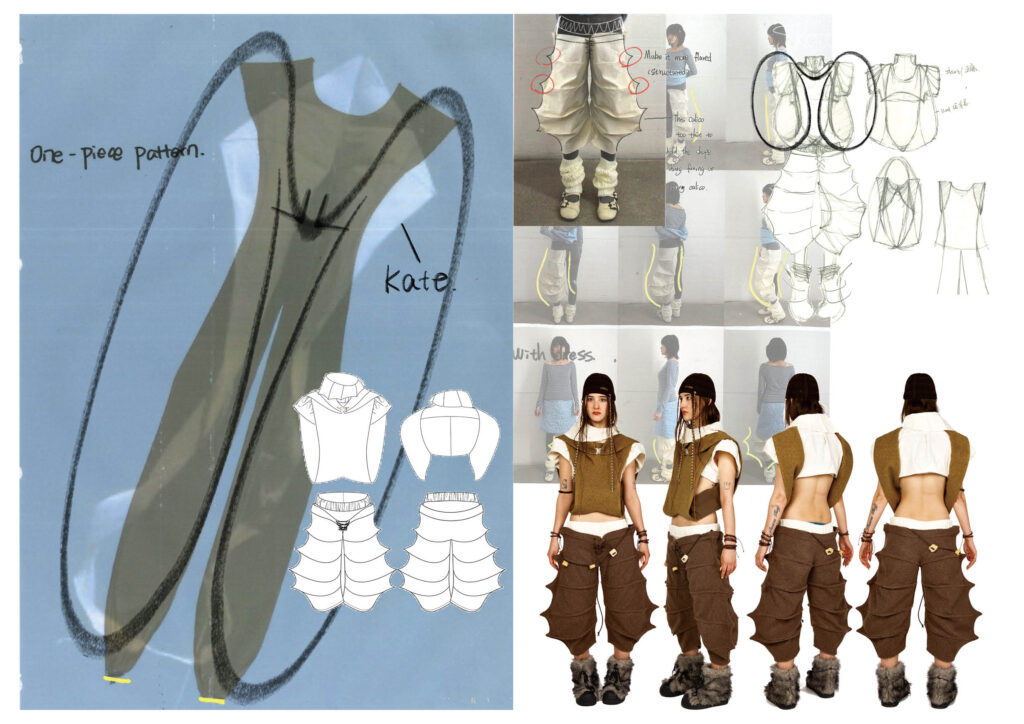
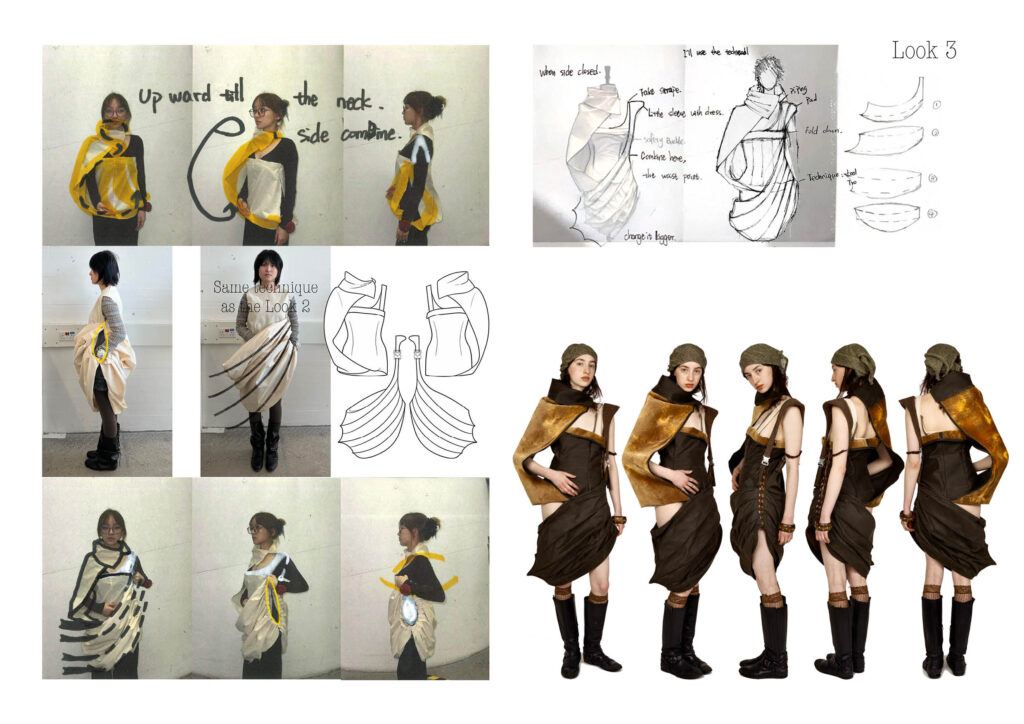
Suspension developed through self-recorded observations of bodies, clothing, and everyday objects exposed to strong wind conditions. The project examines how textiles respond under external force — fabric is pulled, lifted, compressed, opened, and displaced, generating moments of tension, drag, restraint, and release. These observations form the foundation of a garment language constructed through wrapping, tethering, anchoring, and weighted drape.
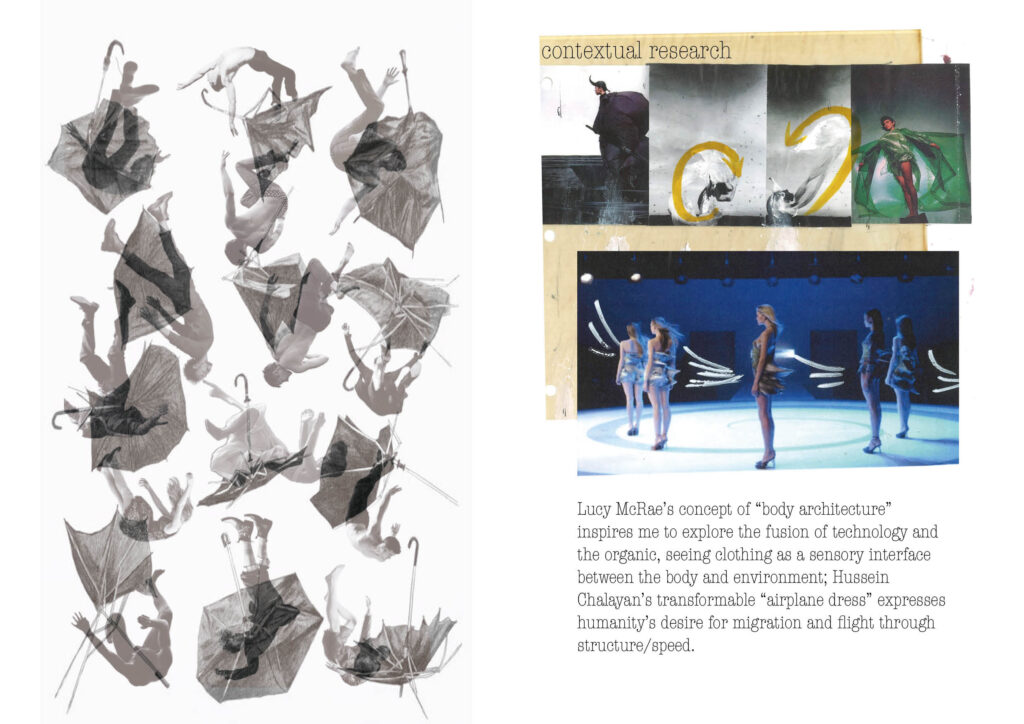
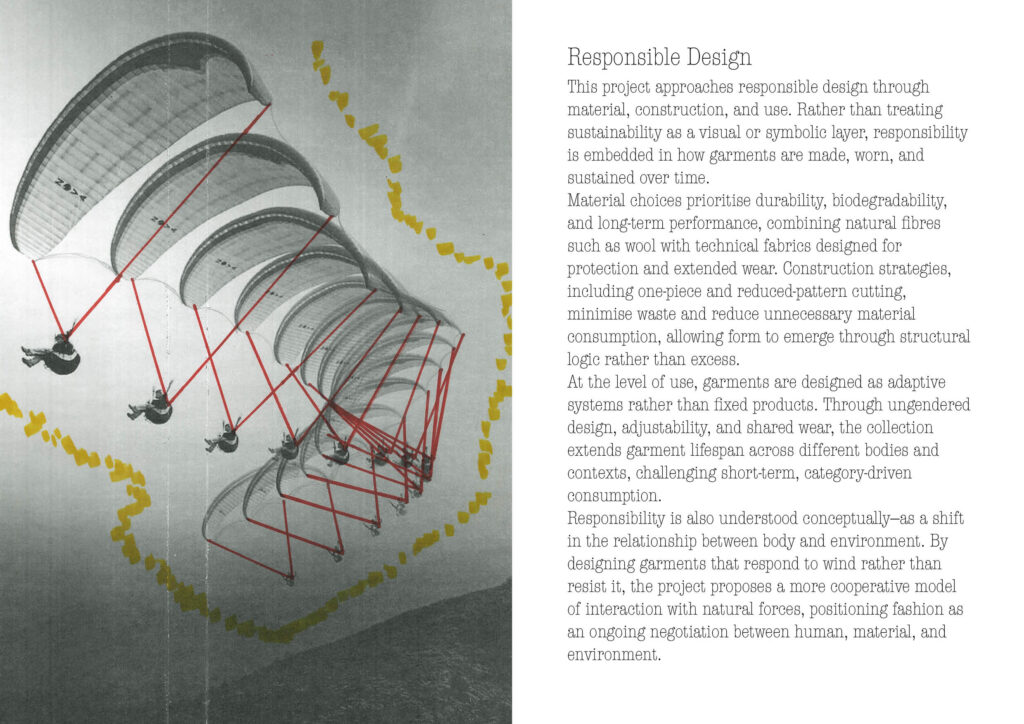
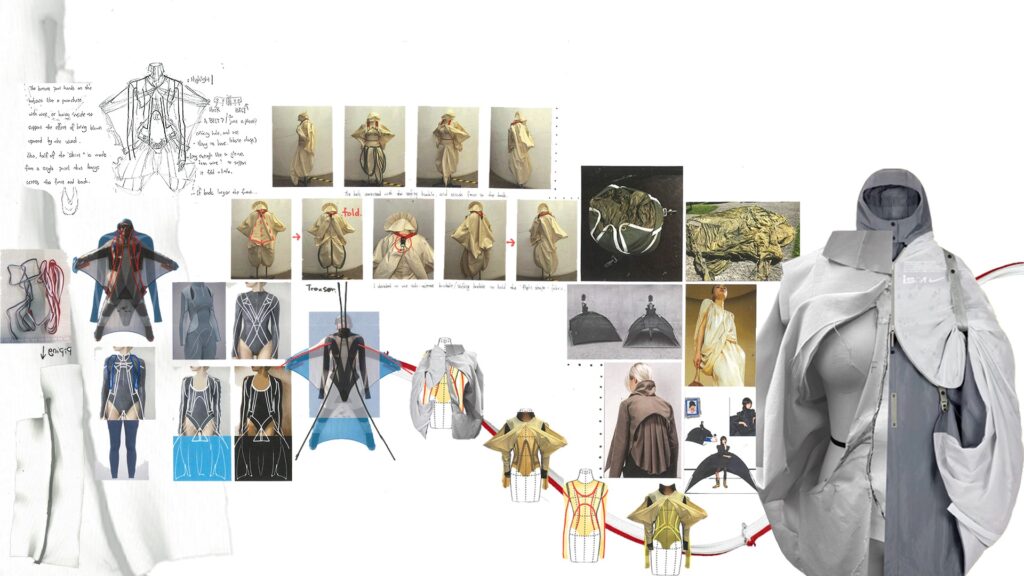
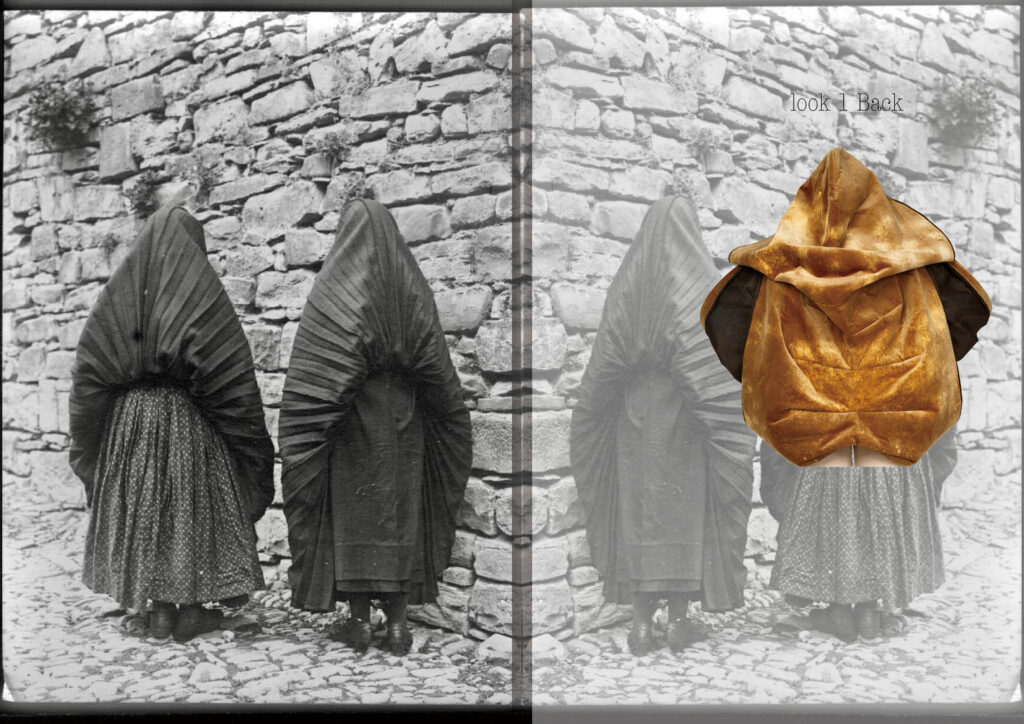
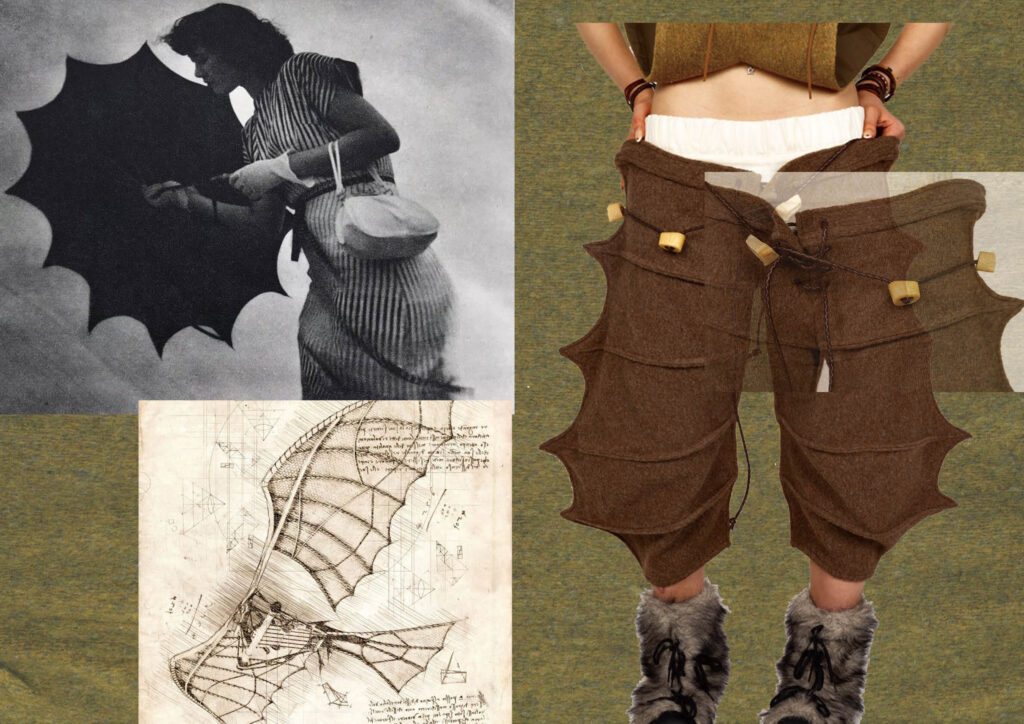
Referencing wingsuits, parachutes, and harness systems, the work explores how aerodynamic principles can be translated into wearable structures. Increased surface area, directional tension, and points of restraint are used to investigate how garments can support the body, slow movement, and make air physically present. Rather than simply suggesting flight, the garments embody the sensation of being pushed, supported, restricted, and guided by wind.
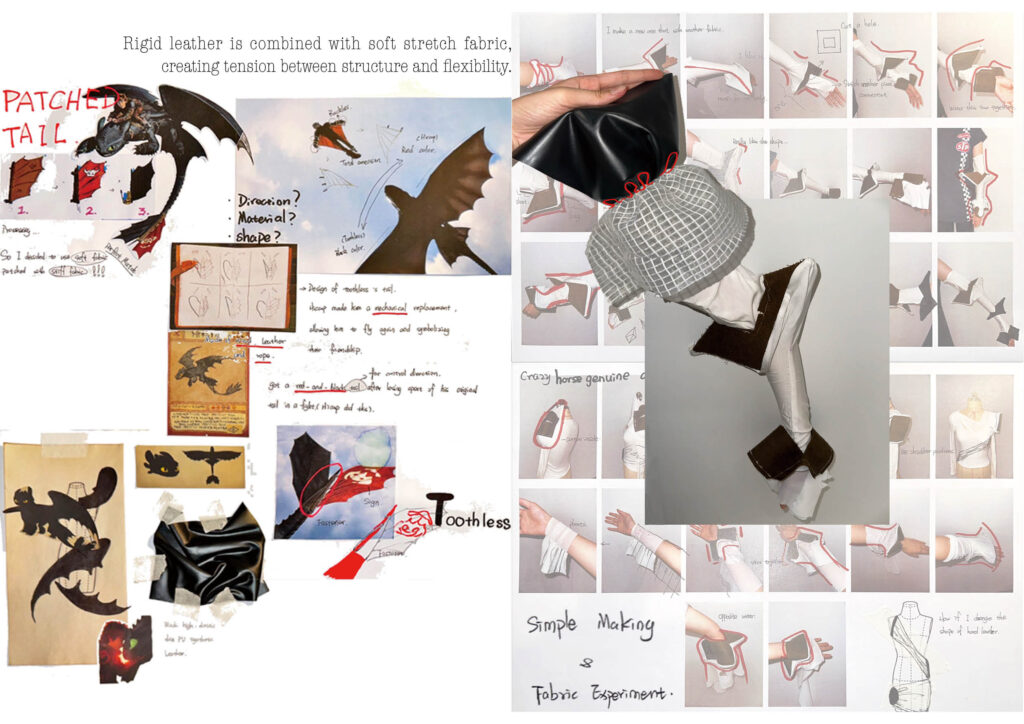
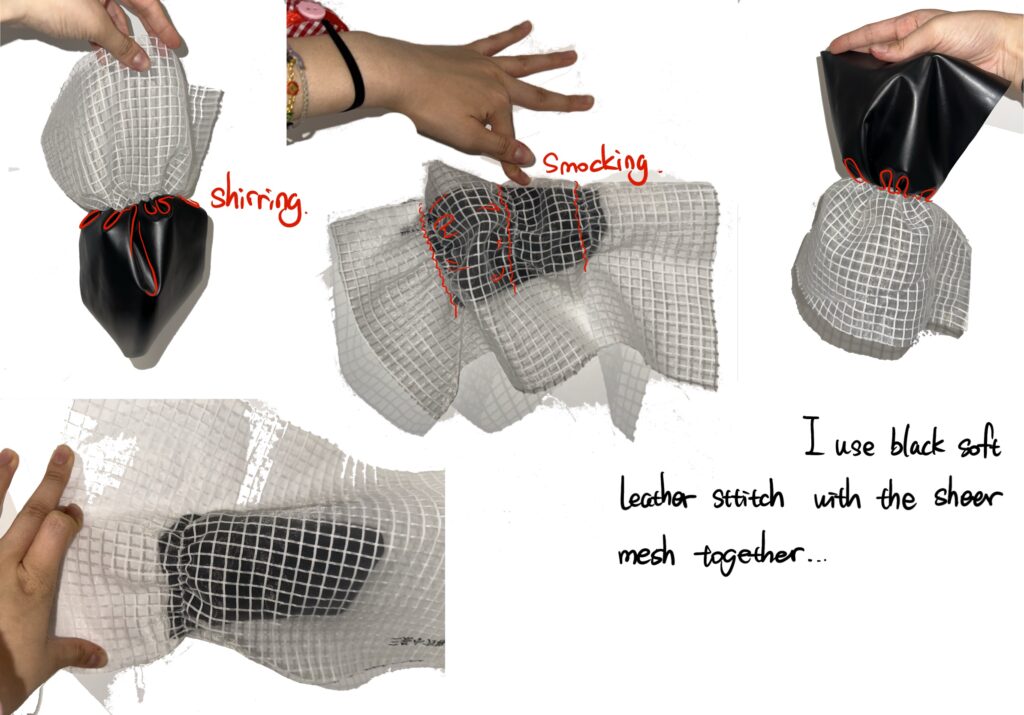
Fabric becomes reactive rather than static — a surface that records pressure and movement. Through minimal construction, one-piece forms, and tactile systems of connection, the garments emerge through force rather than decoration. The body exists suspended between protection and exposure, movement and stillness, control and surrender.
The project positions wind as an active collaborator, allowing invisible force to become visible through textile, silhouette, and bodily negotiation.
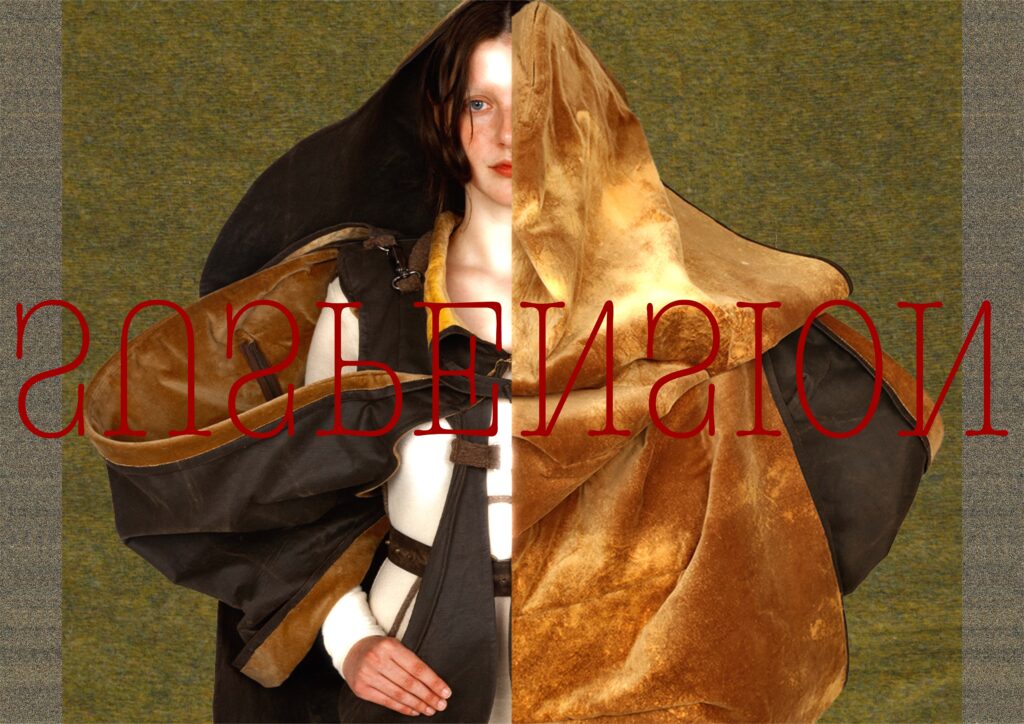
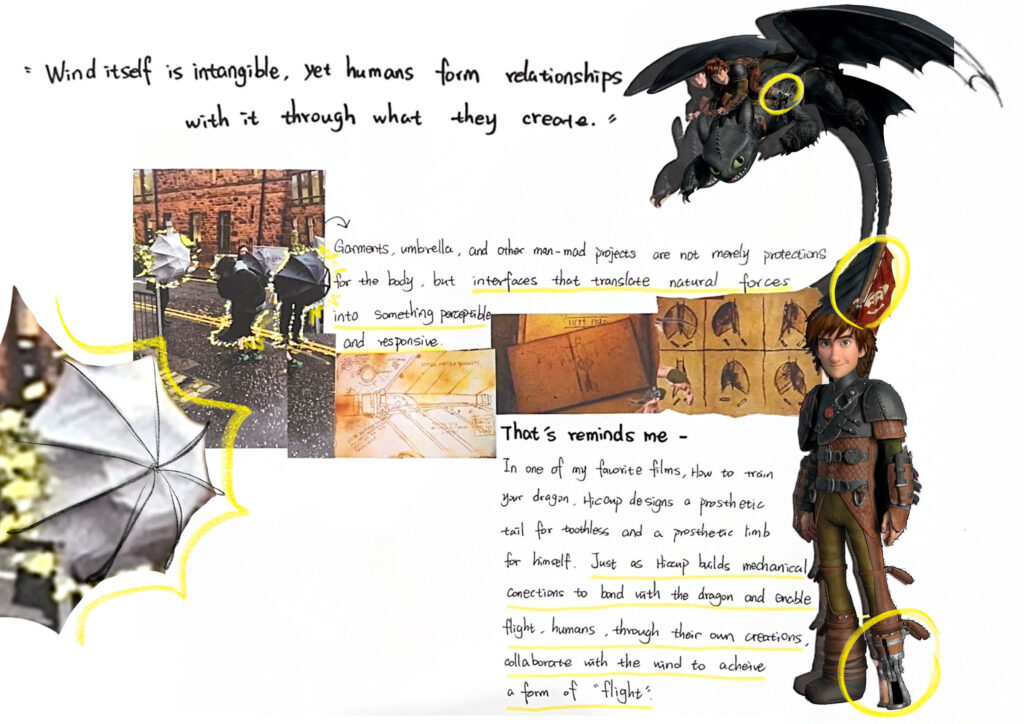
30 September 2022 marked the beginning of my experience studying in the UK. On a cold, rainy, and windy day, I recorded how bodies, garments, umbrellas, and everyday objects reacted to strong wind. I became fascinated by the way air could distort movement, reshape silhouettes, and alter the relationship between the body and its surroundings. This moment became the starting point for a project exploring wind as an invisible force capable of shaping form, tension, resistance, and movement through garment construction.