The People’s Framework – Urban Building
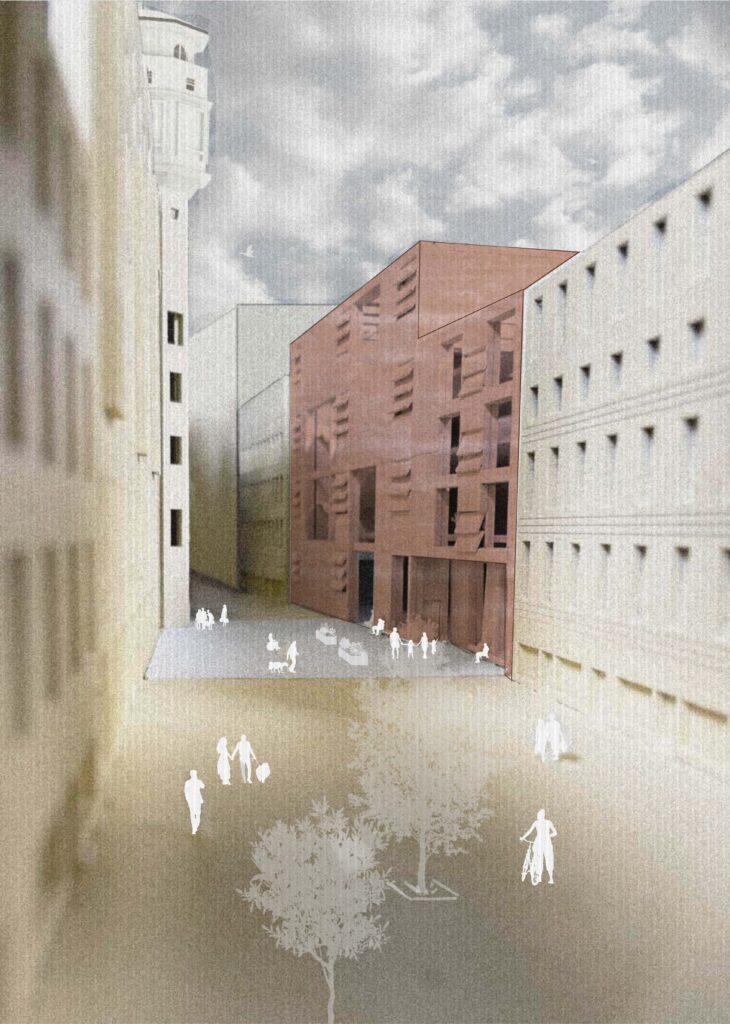
This project began with an observation of disconnection within the contemporary city, where despite constant digital connectivity, meaningful social interaction in places like Glasgow’s city centre has diminished. The site at Mitchell Street, currently occupied by a car park, became a catalyst for challenging this condition, highlighting how urban priorities have historically favoured vehicles over people. Through this, the project set out to reclaim space for civic use and reintroduce opportunities for connection, discussion, and shared ownership within the city.
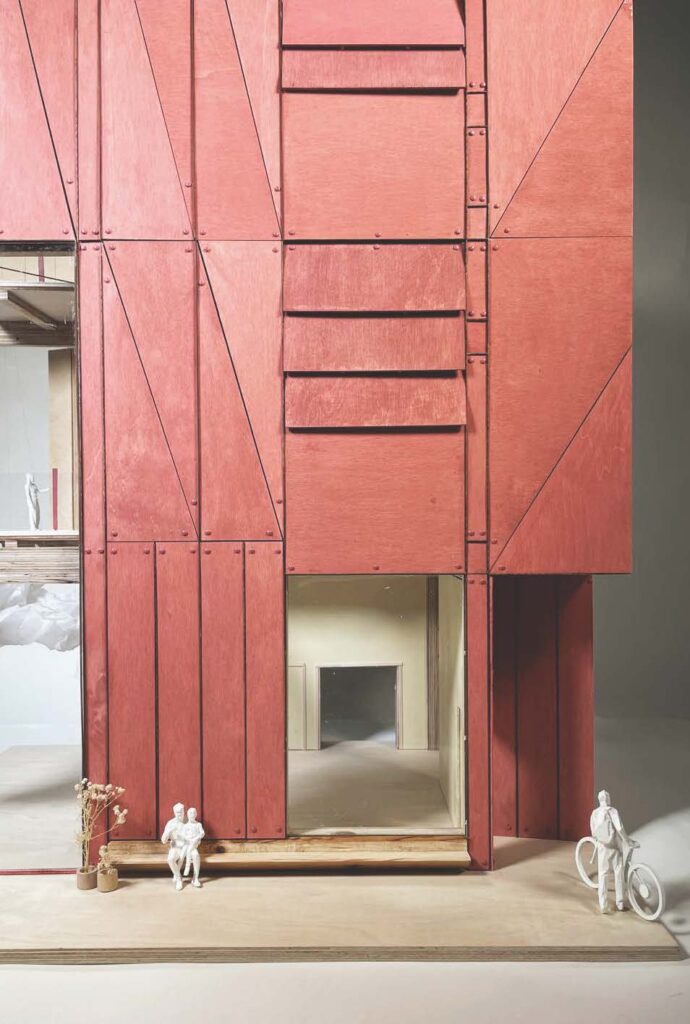
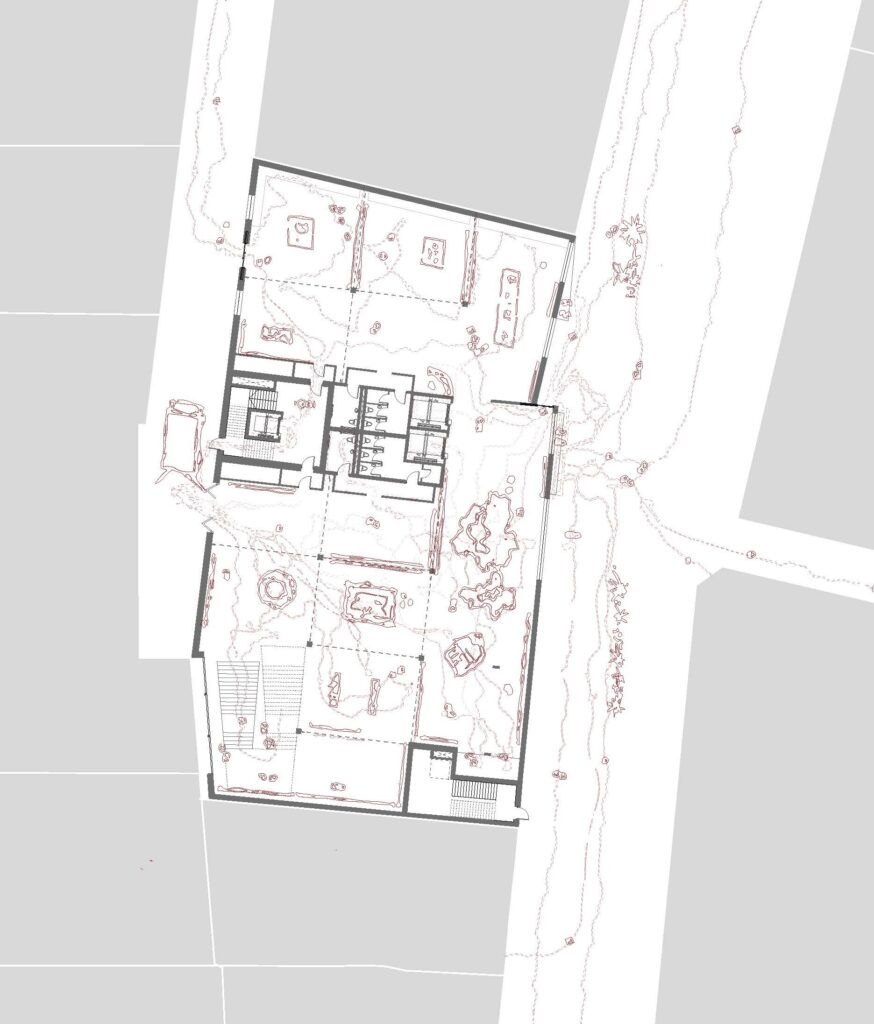
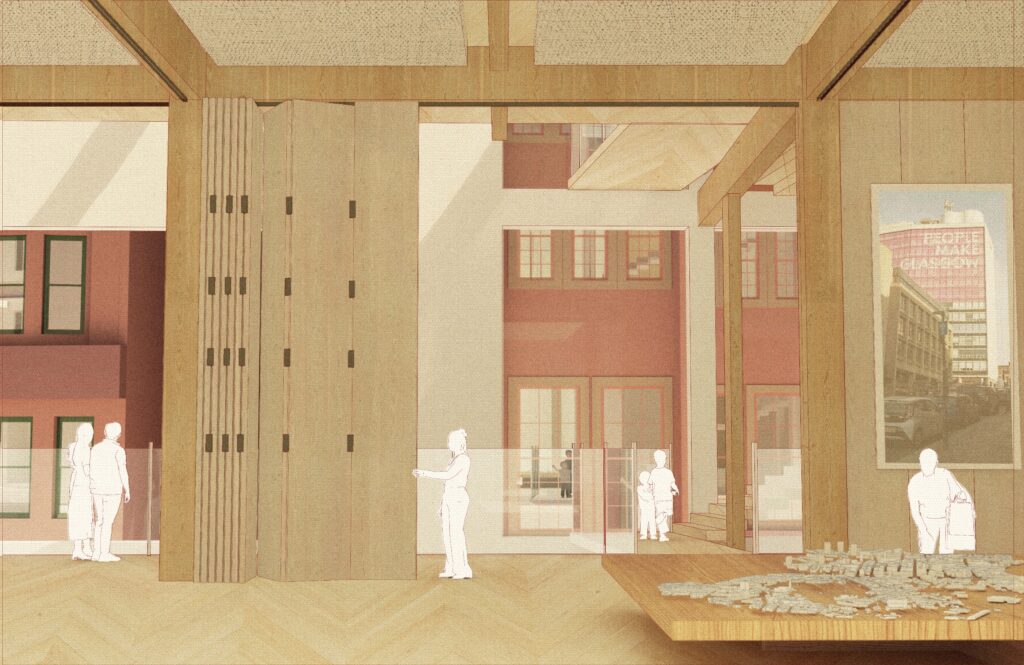
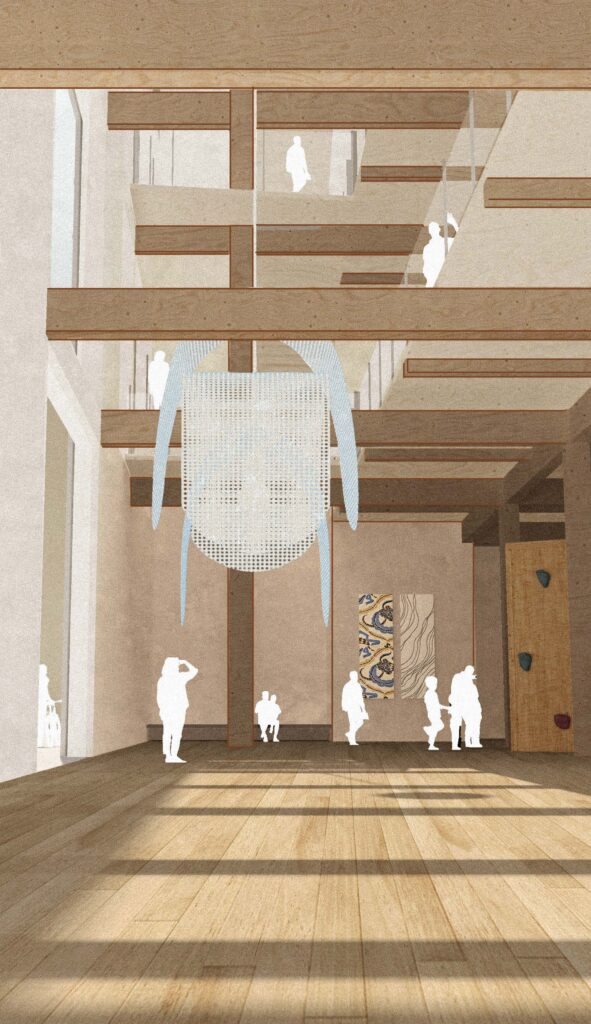
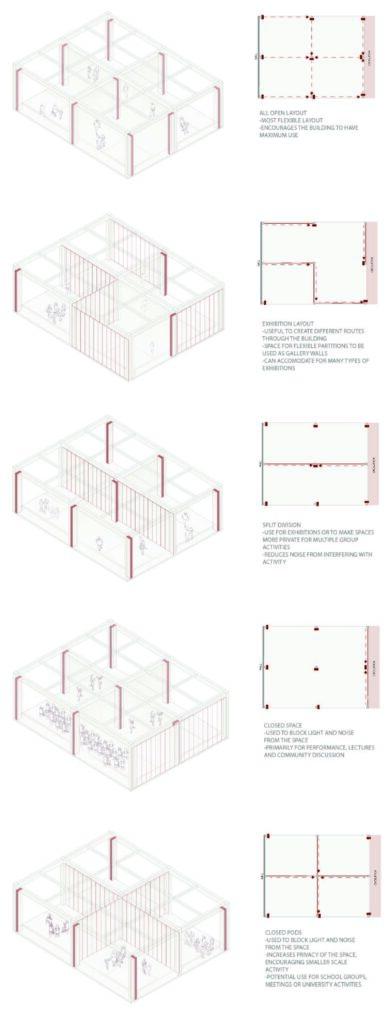
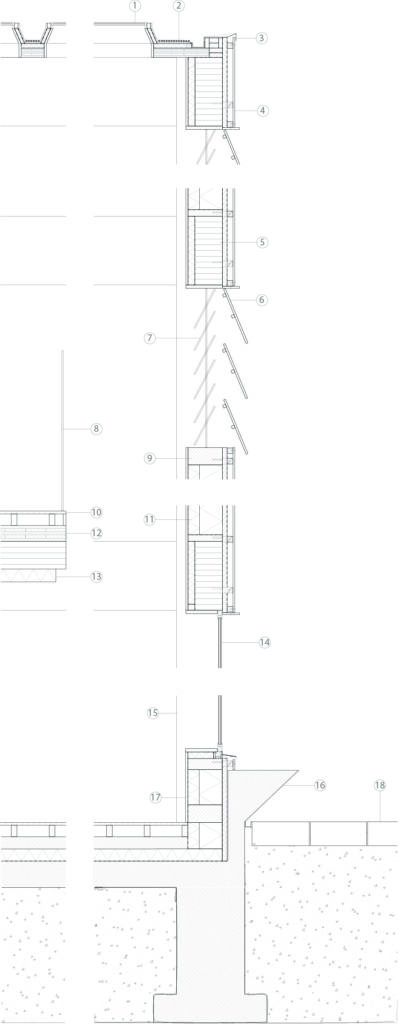
The development of The People’s Framework reflects a shift from designing fixed programmes to creating an adaptable architectural system. Early iterations revealed that overly prescriptive layouts limited the building’s potential, leading to a more resolved approach based on loose-fit principles, modular structure, and flexible spatial arrangements. The use of a glulam structural frame and movable partitions supports this idea, allowing the building to evolve over time in response to its users rather than remaining static. This adaptability reinforces the project’s ambition to create a civic space that is inclusive, accessible, and responsive to change.
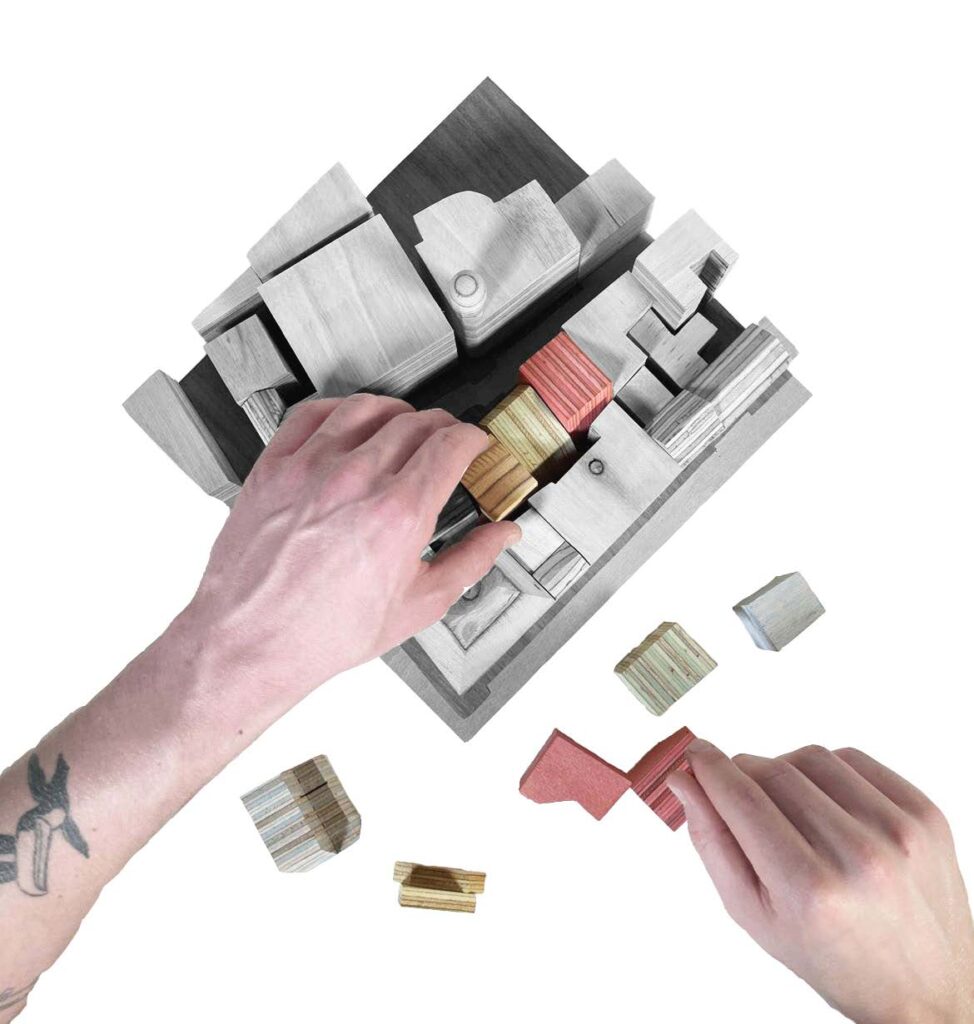
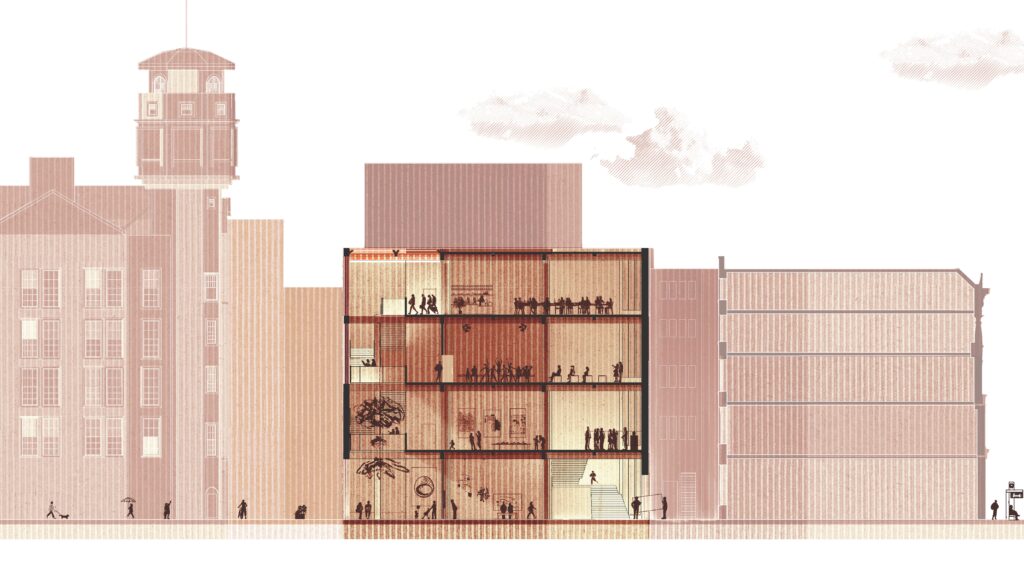
A key learning throughout the process was the importance of methodology. By incorporating playful, physical modelling techniques inspired by participatory practices, the design process itself began to reflect the project’s ethos of collaboration and experimentation. This approach allowed for a deeper understanding of scale, massing, and spatial relationships, particularly in addressing challenges such as daylighting and the integration of the building within its dense urban context.
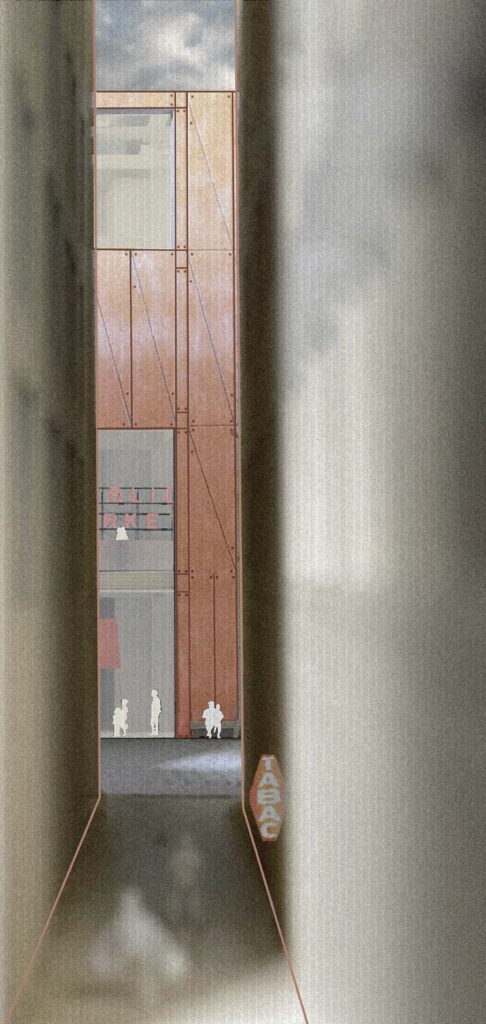
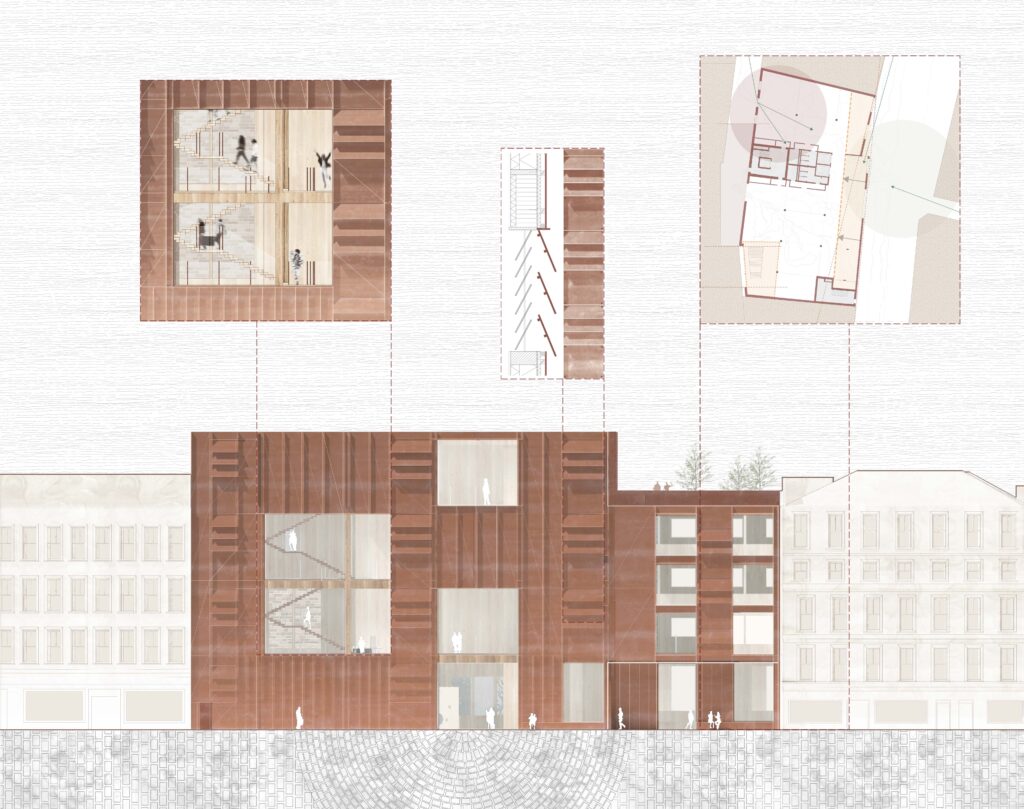
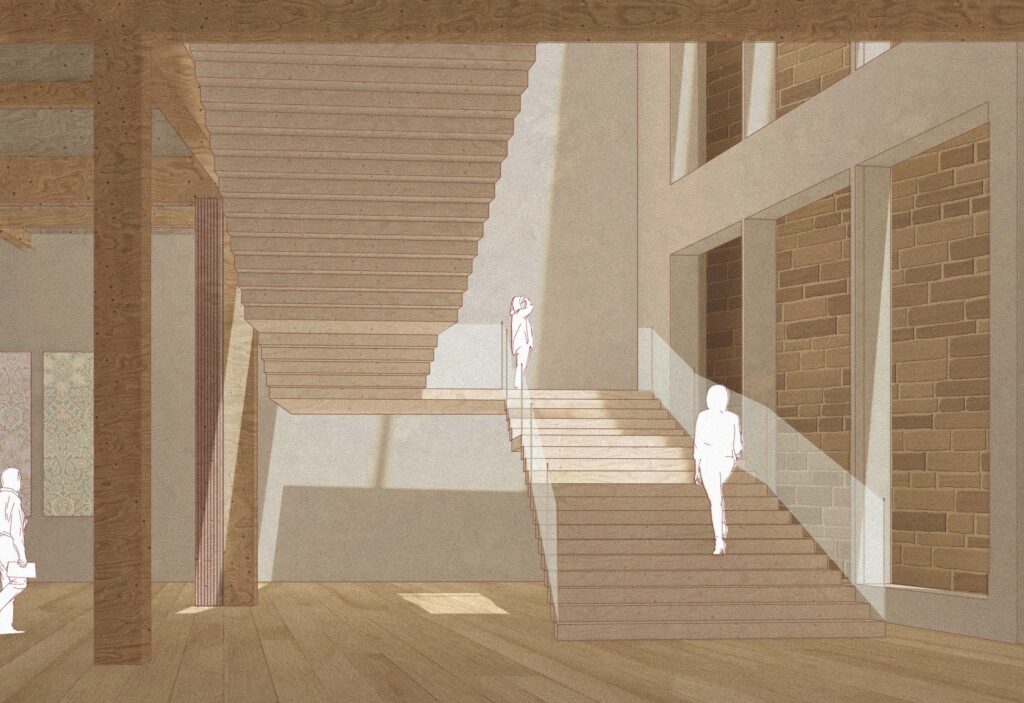
The final proposal demonstrates how architecture can act as a framework rather than a finished object, supporting a wide range of uses, encouraging participation, and fostering a sense of ownership among its users. By prioritising pedestrian movement, activating the street edge, and introducing new public routes and spaces, the project contributes to a broader urban strategy that reconnects fragmented parts of the city.
Ultimately, this project suggests that adaptable architecture has the potential to address social disconnection by creating environments that invite engagement, negotiation, and collective use. While the design resolves many spatial and conceptual challenges, it also acknowledges that the success of such a building depends on its continued occupation and reinterpretation over time. In this sense, The People’s Framework is not a completed solution, but an ongoing process, one that relies on the people of Glasgow to define its purpose, shape its use, and sustain its relevance into the future.