Zoe Dowman
(She/Her)
I am a designer interested in how space can shape connection, wellbeing, and everyday experience. Currently completing a BA(Hons) in Interior Design at the Glasgow School of Art, my current work focuses on adaptive reuse and a culturally driven space that brings people together through architecture, sound, and interaction. Through continually developing both my technical knowledge and creative process, I aim to create interiors that respond not only to function but also to emotion. For me, interior design goes beyond aesthetics alone, becoming a way to shape experience, support communities, and bring new energy and purpose into the built environment.
The Trackhouse
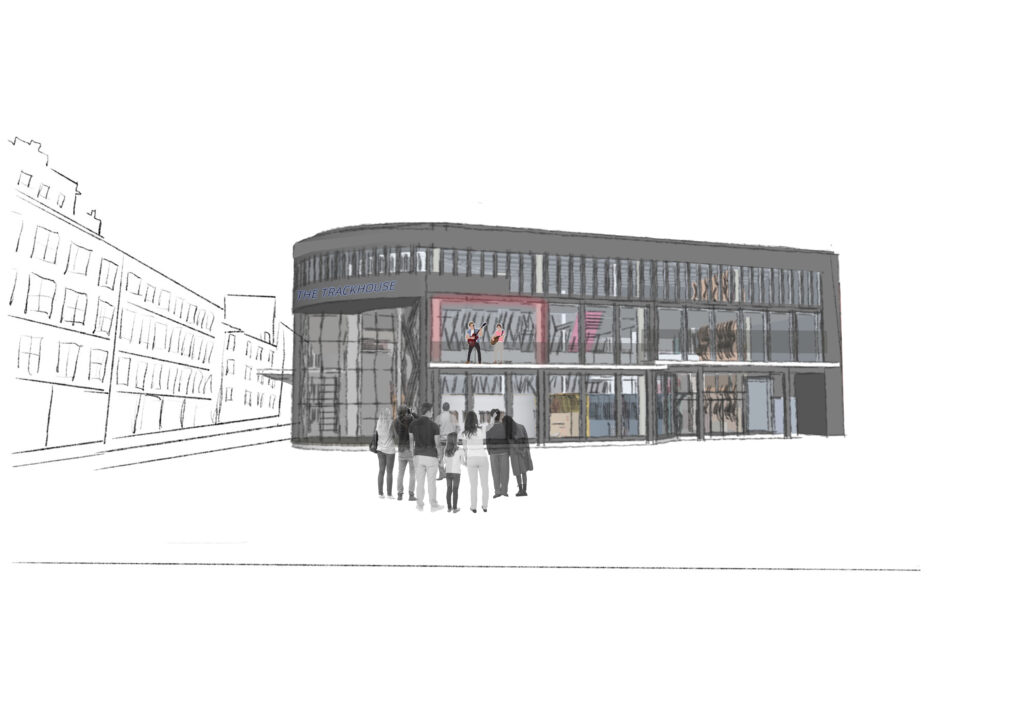
The Trackhouse reimagines the former BHS Building on Sauchiehall Street as a multifunctional music centre. Designed as a place for encounter rather than a singular destination, it encourages everyday interaction through music and shared experiences. The project brings together performance, rehearsal, recording, and listening spaces alongside a vinyl library, café, courtyard and informal performance areas. This creates an environment that feels open, immersive and socially engaging. Rooted in adaptive reuse, the proposal aims to give a new purpose to a long-vacant city-centre building while supporting Glasgow’s wider cultural and musical landscape.
Concept
Reawakening the Building
The Trackhouse reimagines a large retail building that has stood vacant since 2016, bringing new life to a place once central to the City.
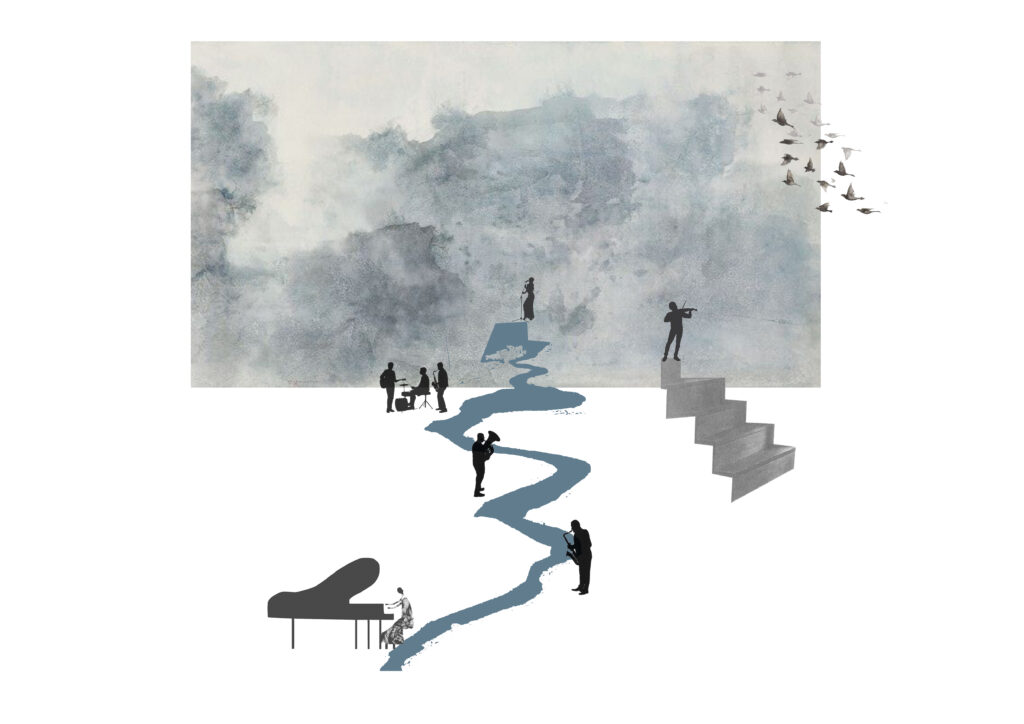
Set within Glasgow, a UNESCO City of Music, the project positions music as part of everyday life, encountered through informal performance, shared listening and moments of discovery, rather than confined to a stage.
Music is widely recognised for its role in supporting emotional wellbeing, reducing stress, strengthening learning and creating bonds socially. Live music environments demonstrate how sound can shape mood, and create shared experiences
Research identifies a decline in music education, with reduced school funding limiting opportunities for those unable to afford lessons.In response, the project opens the building to everyday encounter, making music part of daily life rather than a singular destination.
Music as Everyday Life
A multifunctional music centre supporting performance, production, education and wellbeing. Designed for a broad demographic, from professional musicians to those simply encountering music, it complements Glasgow’s existing music culture, supporting professional practice while encouraging engagement through playing, listening, learning and encountering, with strong links to community and education.
At the Heart of the City
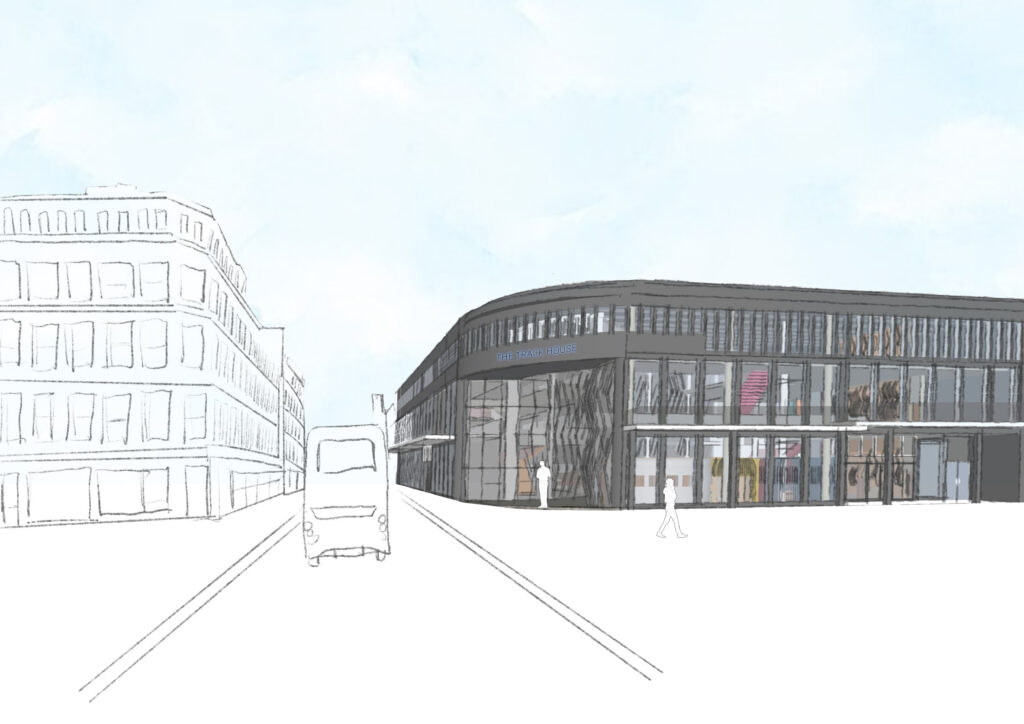
Located on Sauchiehall Street, the former BHS building presents a strong opportunity for transformation. Its scale, central position and visibility make it well suited to a new social, cultural use, contributing to the regeneration of the city centre.
A Sequence of Moments
The Trackhouse is a flexible music hub combining rehearsal, recording, performance and listening areas, alongside a vinyl library, café, bar and central courtyard. These elements are arranged to make music more accessible, supporting making listening and social interaction while connecting to Glasgow’s wider music network.
The building has been reconfigured to create a more engaging journey and adaptability ensures longevity, allowing the building to evolve.
Designing for People, Place and Planet
Adaptive reuse and low-impact materials reduce environmental impact, while balancing openness and visibility. The design supports inclusivity, mental well-being, and community access, ensuring a positive contribution to people, place and planet.
The Site
A Building in the Right Place
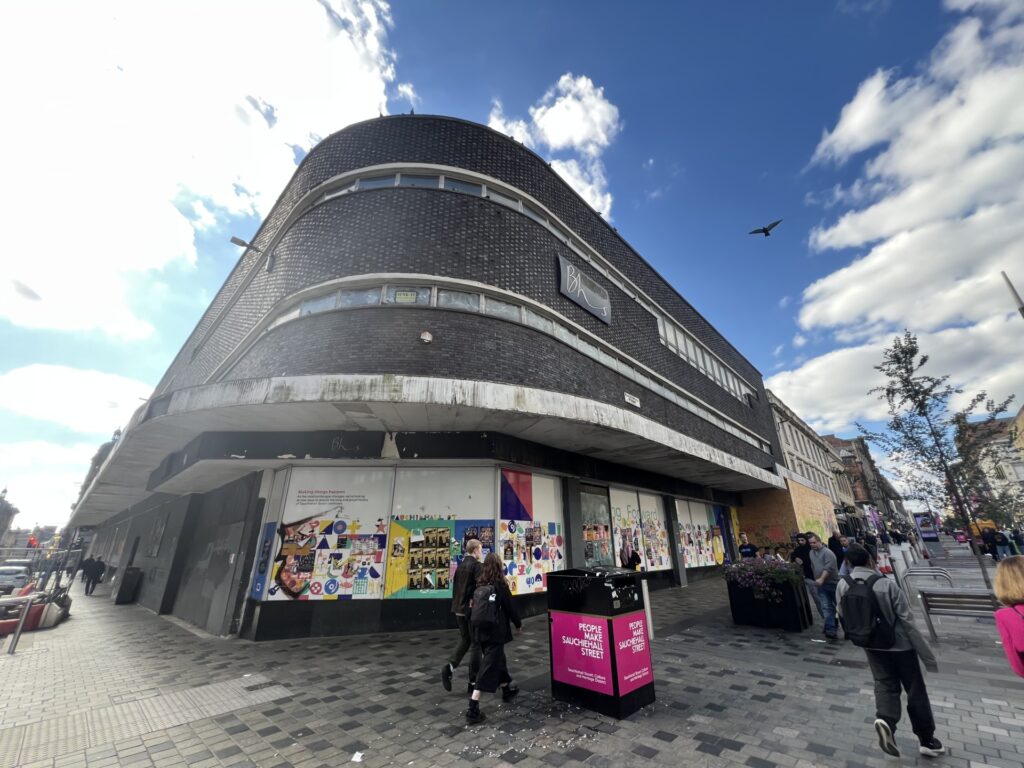
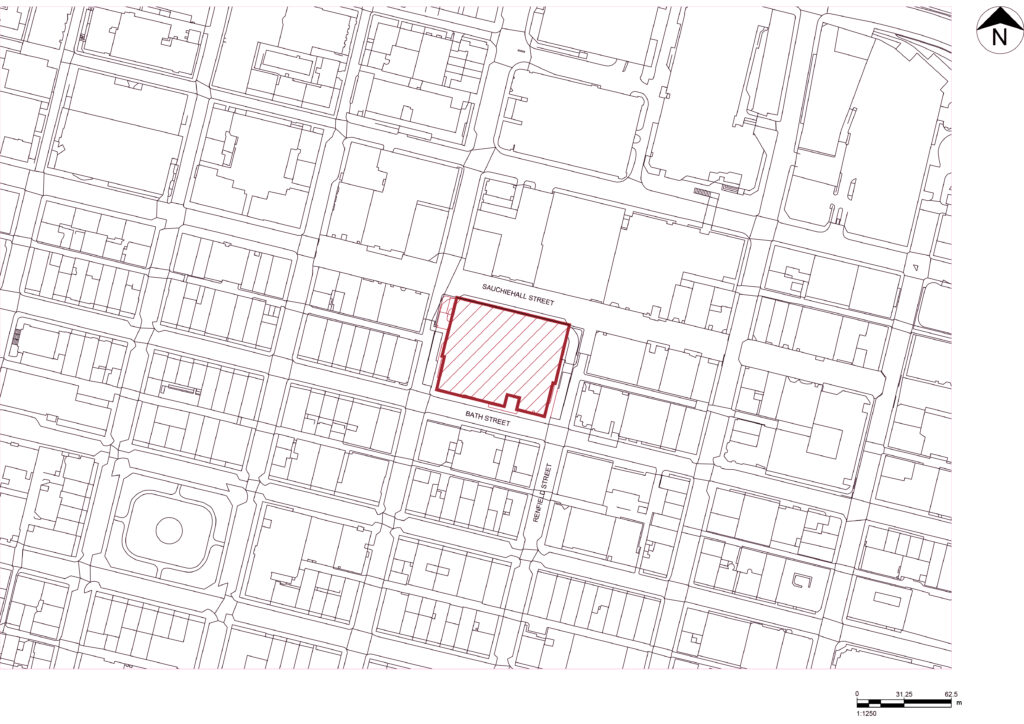
The former British Home Stores Building occupies a prominent position on Sauchiehall Street. Surrounded by key routes, public transport links, in close proximity to the Royal Concert Hall, Conservatoire and many small local grass route venues, it sits in a location that feels naturally suited to a new kind of public, cultural use. Its centrality and visibility make it particularly appropriate for a music centre. Somewhere that depends on accessibility, footfall, connection to the wider urban fabric and music venues. The building itself is substantial in scale, offering generous footplates that could accommodate a mix of performance, rehearsal and community spaces.
A Building Waiting to be Reimagined
The building was built in 1964 by GW Clarke is a strong example of modernist design – solid, repetitive and unapologetically bold. Its façade can feel stern, even unwelcoming at first glance, with a heaviness that sets it apart from the more decorative historic surroundings. Yet, the more time you spend looking at it, the more the harshness begins to soften. There is a quiet rhythm to it that becomes increasingly compelling. Having stood empty since 2016 and, more recently, been added to the building’s at-risk register in 2024, it now stands in stark contrast to its past life as a hive of retail activity. Where it once contributed to the energy and movement of the street, it now feels paused, waiting. There is a strong sense that it doesn’t need replacing, but rather reimagined. Its robust, enduring structure suggests potential, waiting for new life to be breathed into it, transforming it into an open, active and culturally driven space once again
USERS
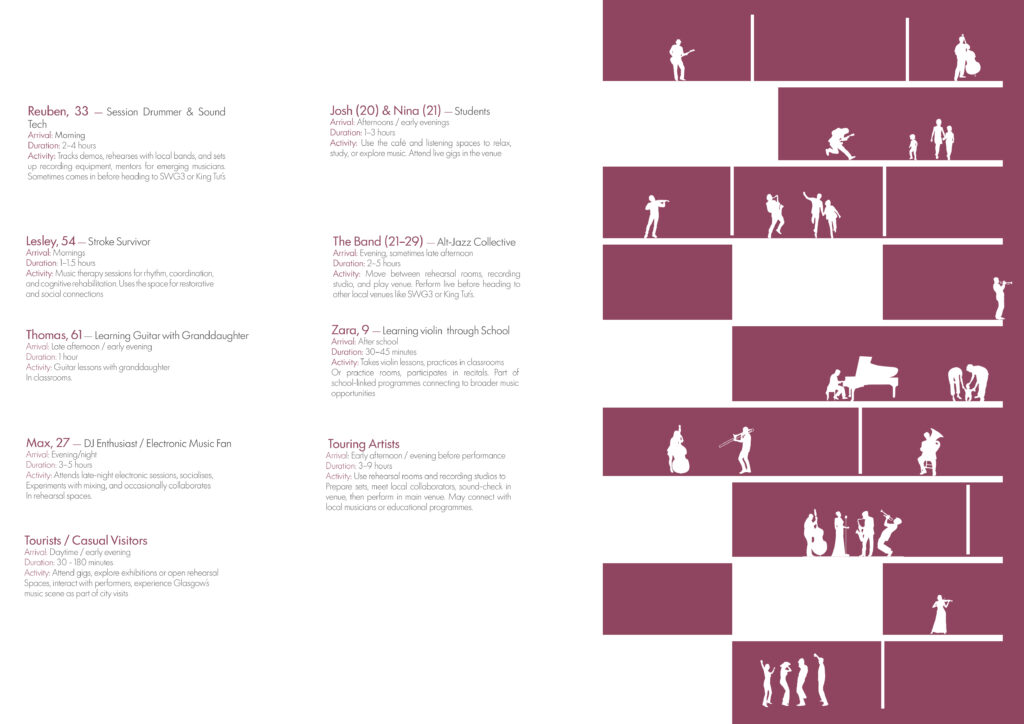
Designed for a wide range of users, the Trackhouse welcomes everyone from professional musicians and students to local residents and people simply passing through the city.
Reworking the Existing
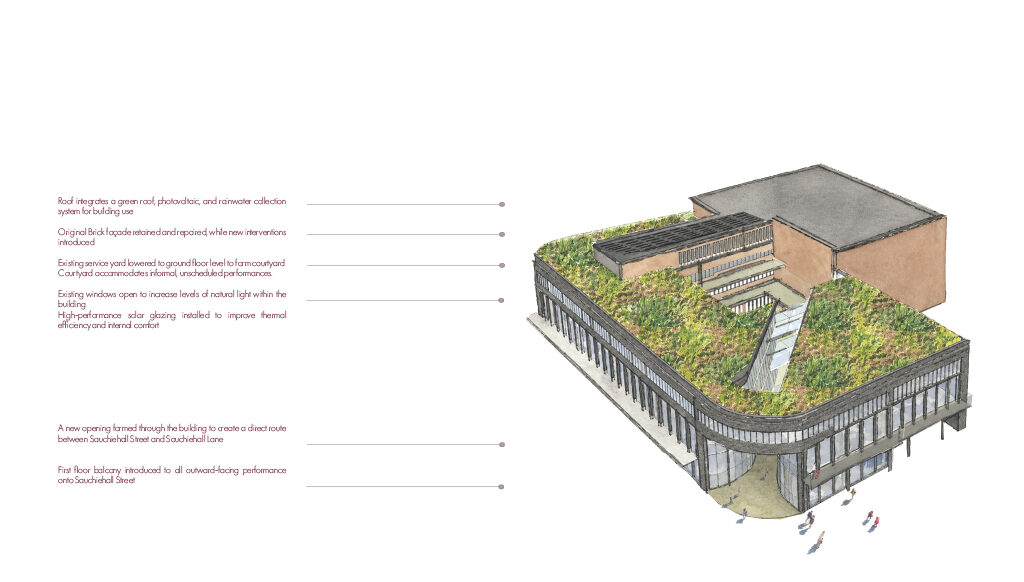
The building comprises of three floors and a basement. However, this proposal does not fully utilise the third floor, which is reserved for future development. Currently, it accommodates building services, including new tanks for rainwater harvesting, and provides access to the roof, allowing for the integration of solar panels and a green roof.
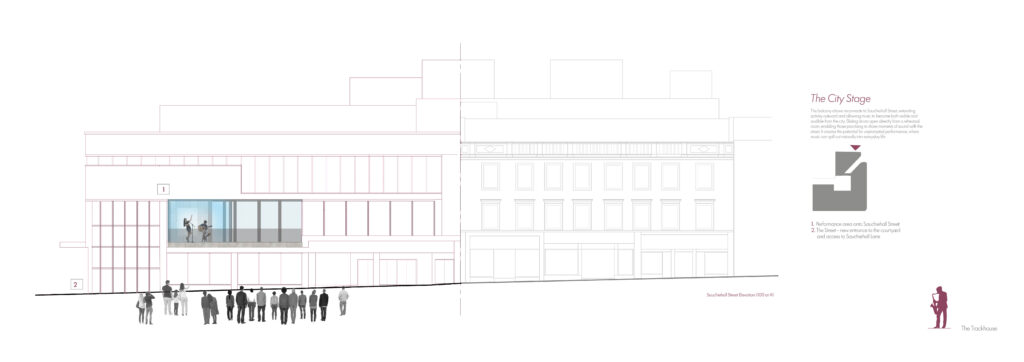
Creating a welcoming, open building has been a key driver in the design, with sustainability considered throughout. Energy performance is improved through the enlargement of windows, maximising natural daylight, while solar glass has been used to maintain internal temperatures. Alongside the introduction of solar panels, a green roof and rainwater harvesting. Opening up access from the street through to the courtyard creates a clear flow through the building, activating the lane and introducing an additional performance space
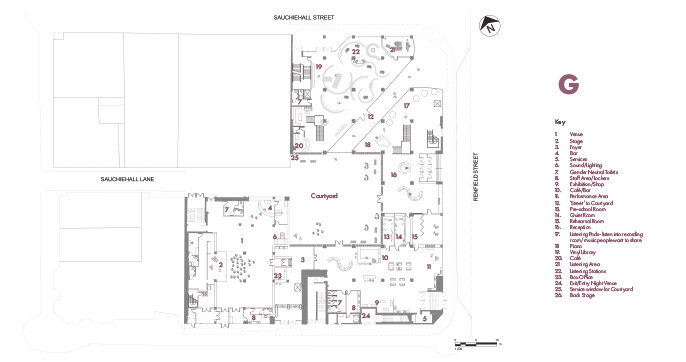
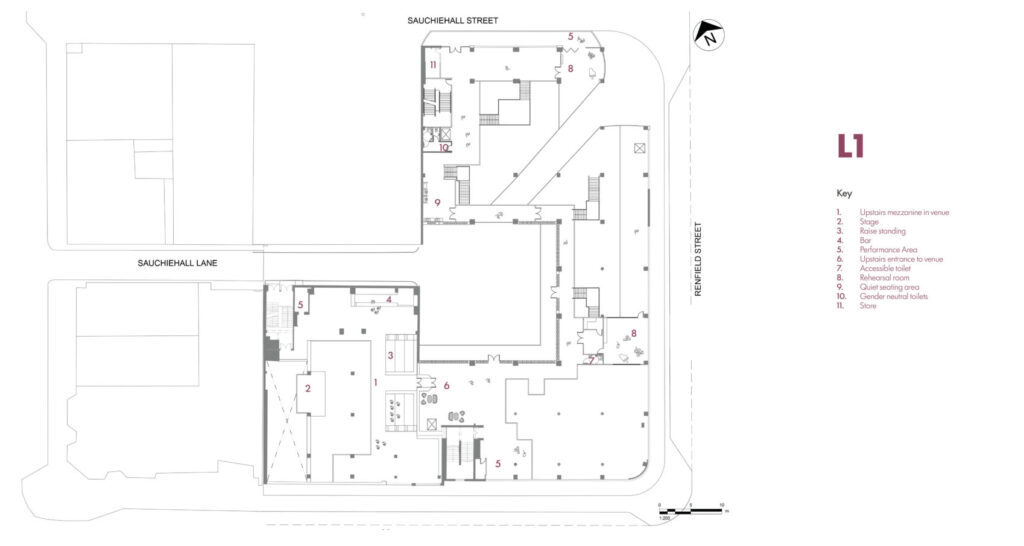
Ground Floor Plan
What’s Inside
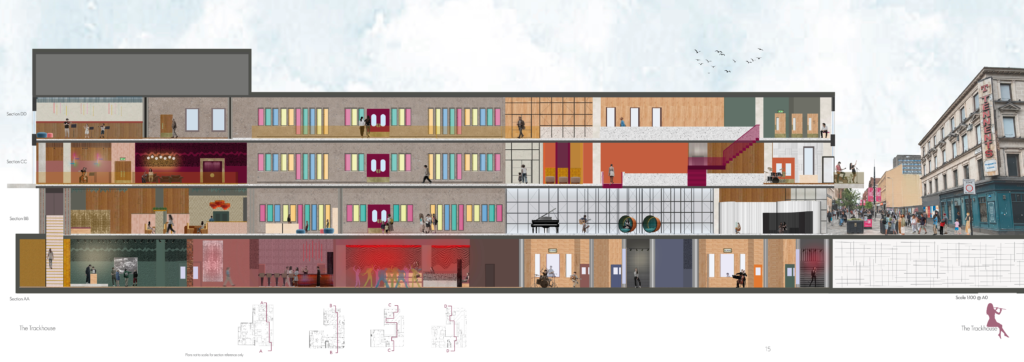
The Path of Music
Movement
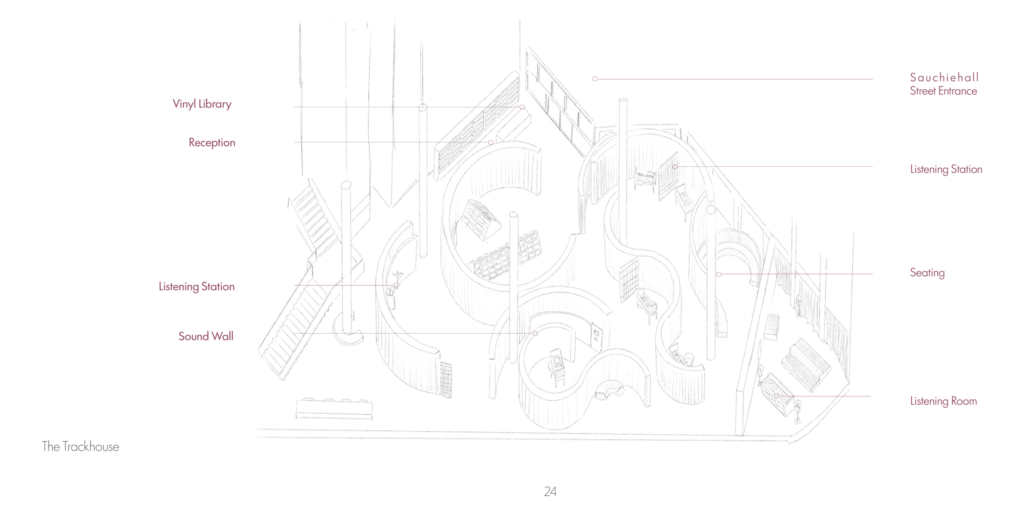
Movement through the building becomes an experience in itself, a sequence of shifting atmospheres where sound, light and activity unfold gradually. Rather than following fixed routes, pathways encourage exploration, encounter and choice. Performance areas are dotted throughout the building, allowing people to interact with music as they move through the space. You might see live music being performed, pause at a listening station to hear what is happening in the rehearsal rooms, or catch a glimpse of musicians through internal windows. These moments of unexpected discovery aim to bring joy, making music a visible and accessible part of everyday life.
Paths to Participation
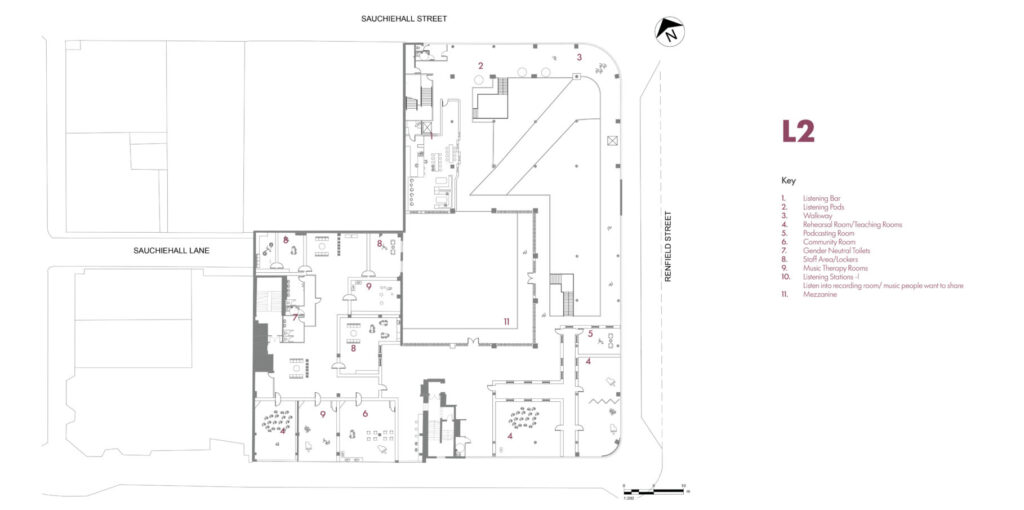
Whether arriving as a professional musician, a student attending lessons, or someone taking part in music therapy, visitors are welcomed at reception and can sign in to access a wide range of facilities. These include recording studios, rehearsal rooms, the community room, music therapy spaces, and music classes for both children and adults. Users may also book opportunities to perform, supporting everyone from emerging talent to established artists.

The Street
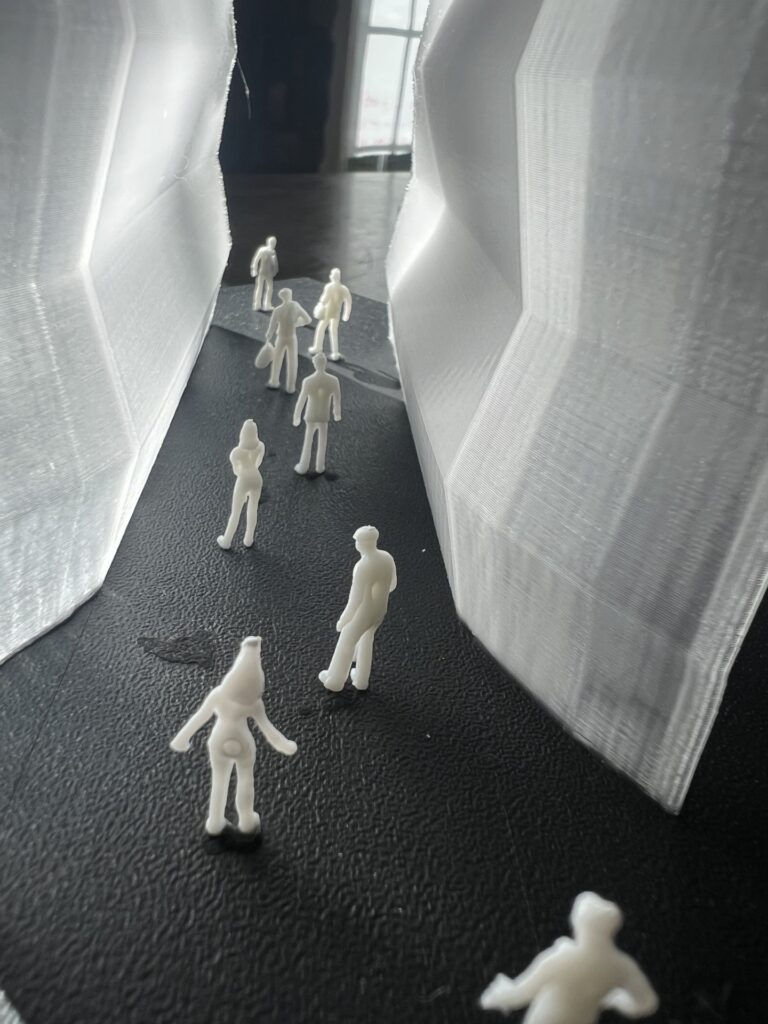
Connecting Sauchiehall Street to Sauchiehall Lane creates a threshold where people can pass through, pause and encounter music unexpectedly. This space supports informal interaction and spontaneous performance. By embedding moments of listening and participation along a natural route, the design encourages a more accessible and inclusive relationship with music within the city
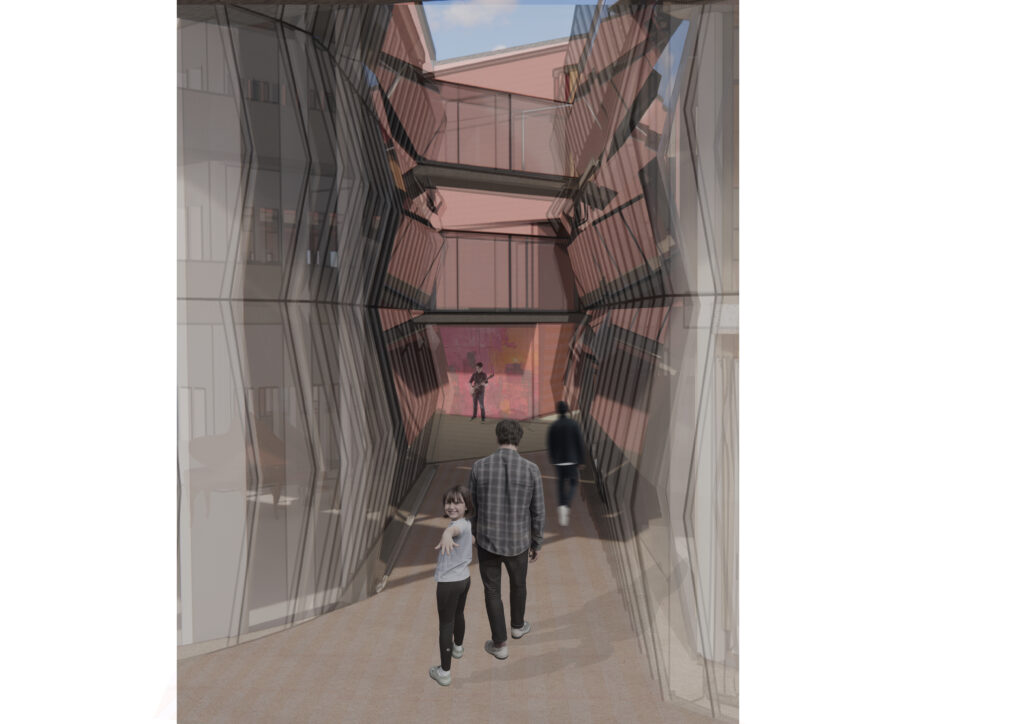
The Inner Pause
The courtyard forms a shared outdoor room at the heart of the building, offering a quieter setting for gathering, rehearsal and small-scale performance. Accessible from the street, lane and building itself, with balconies above for both viewing and performance, it introduces daylight and fresh air, whilst creating a setting where music can unfold in a more relaxed and spontaneous way. Busking slots could be offered on a rotational basis, providing local musicians and emerging talent with opportunities to showcase their work to a wider audience. Direct access from the café allows drinks to be served to the courtyard, supporting its use as an everyday social space, as well as a venue for performance.
.
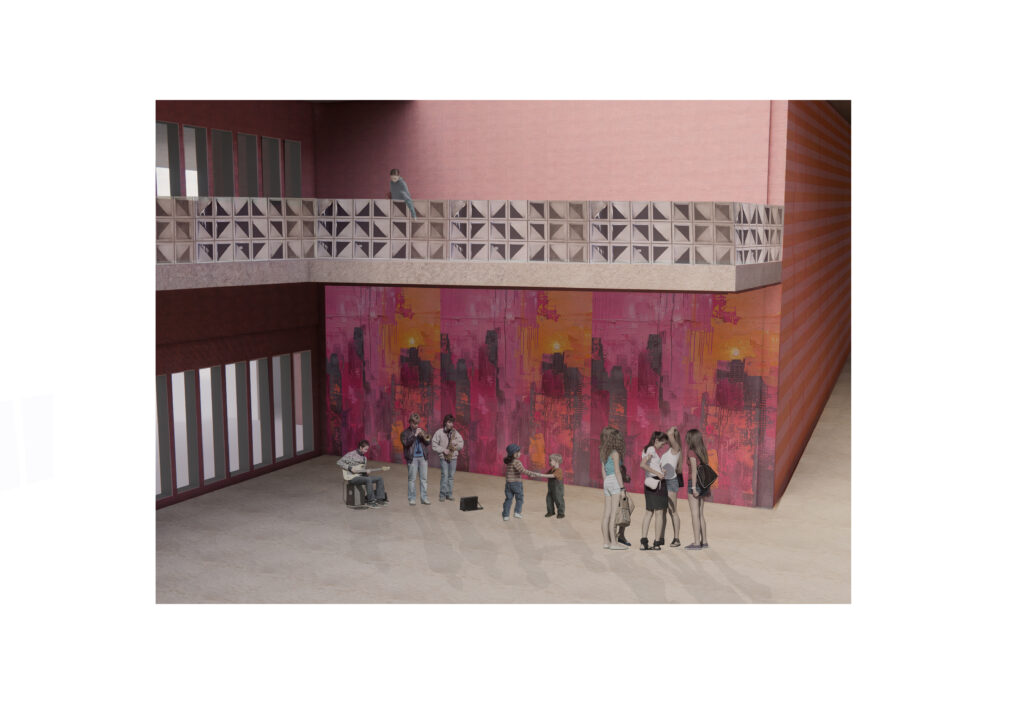
Rhythm and Reinterpretation
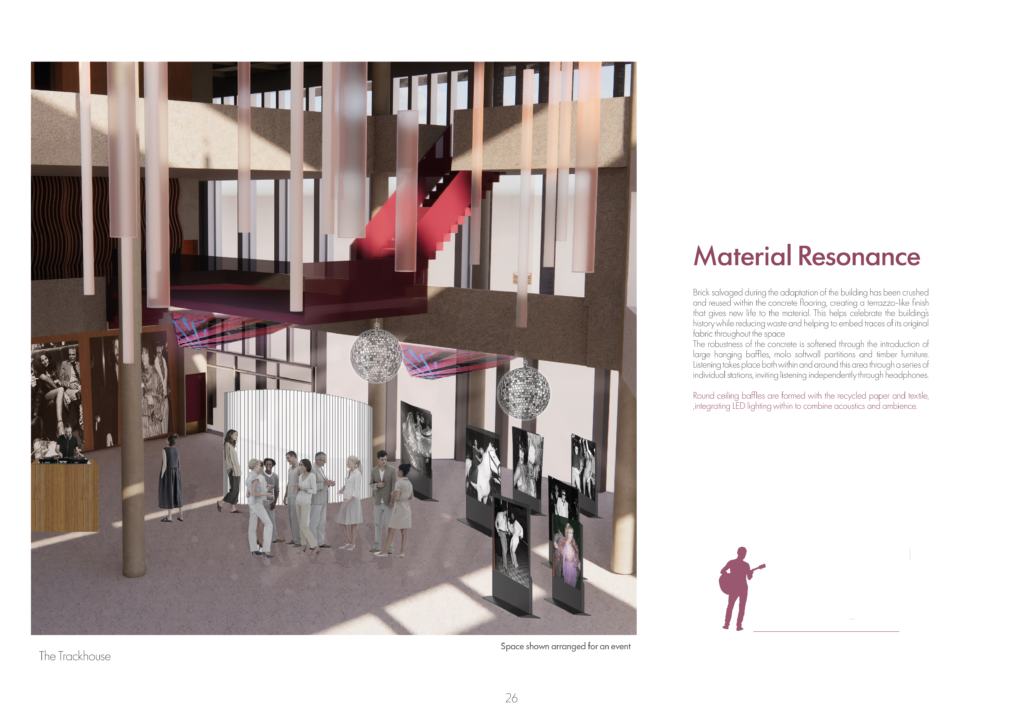
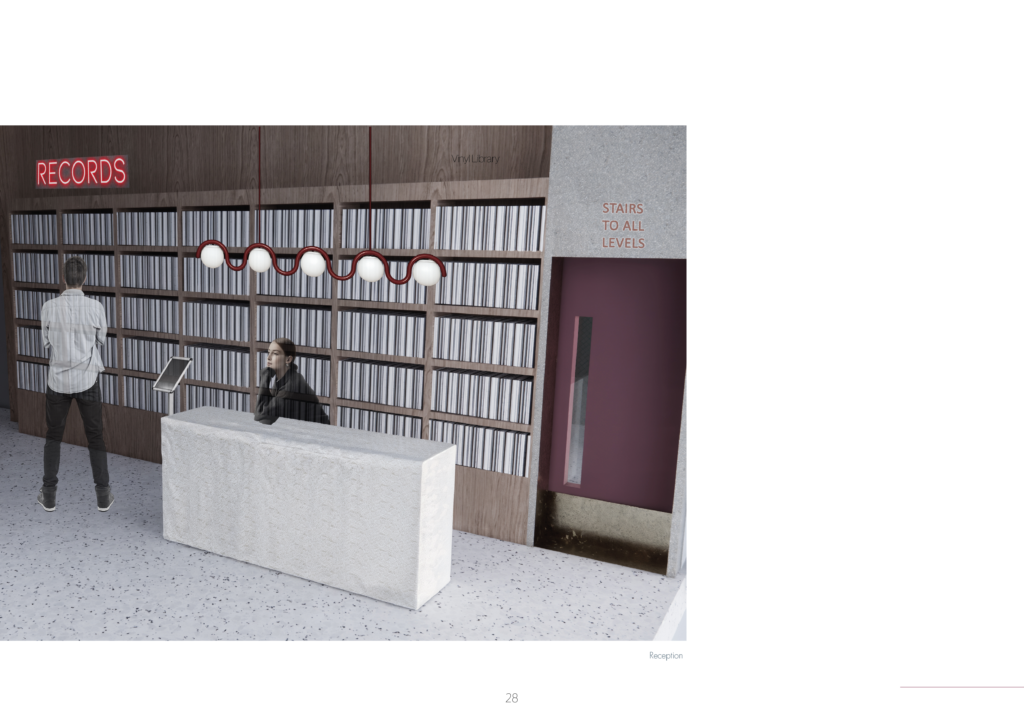
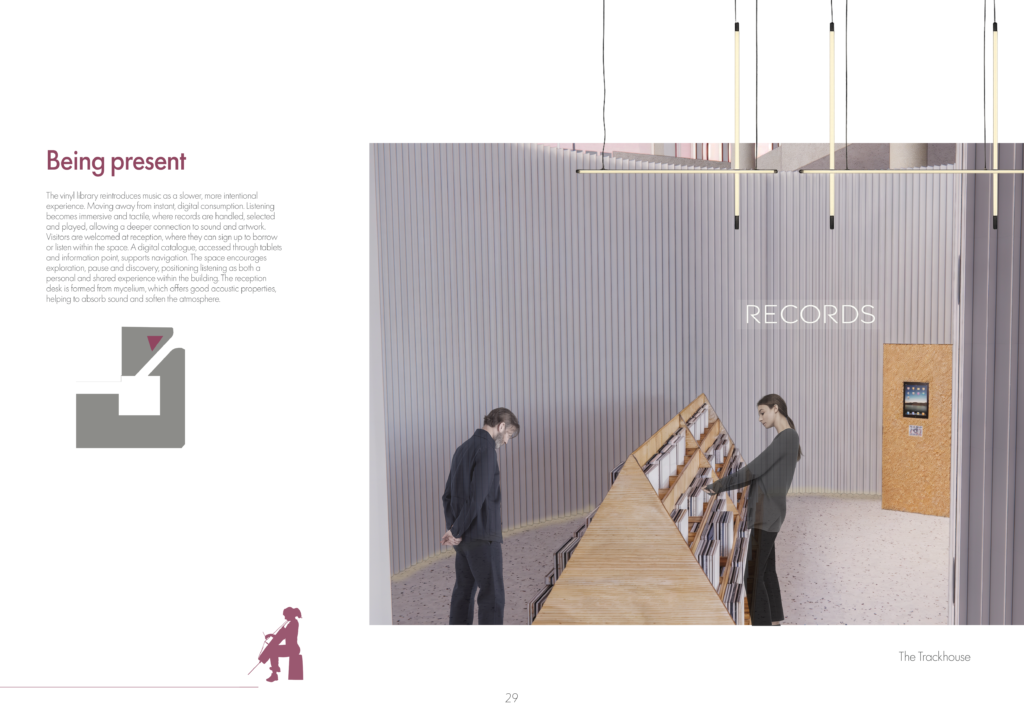
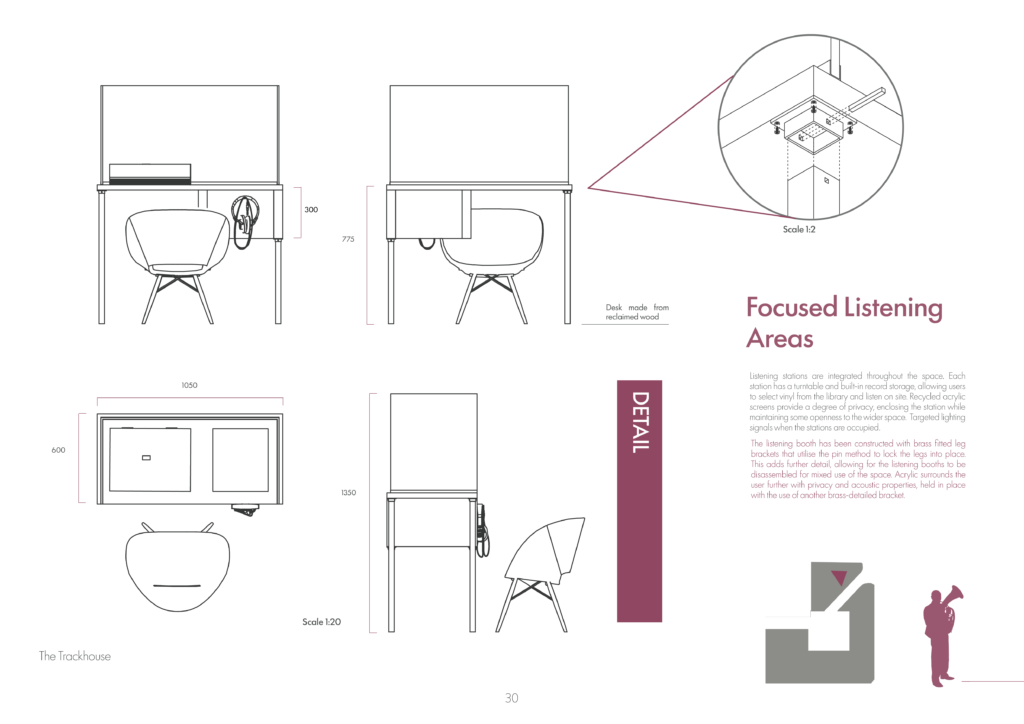
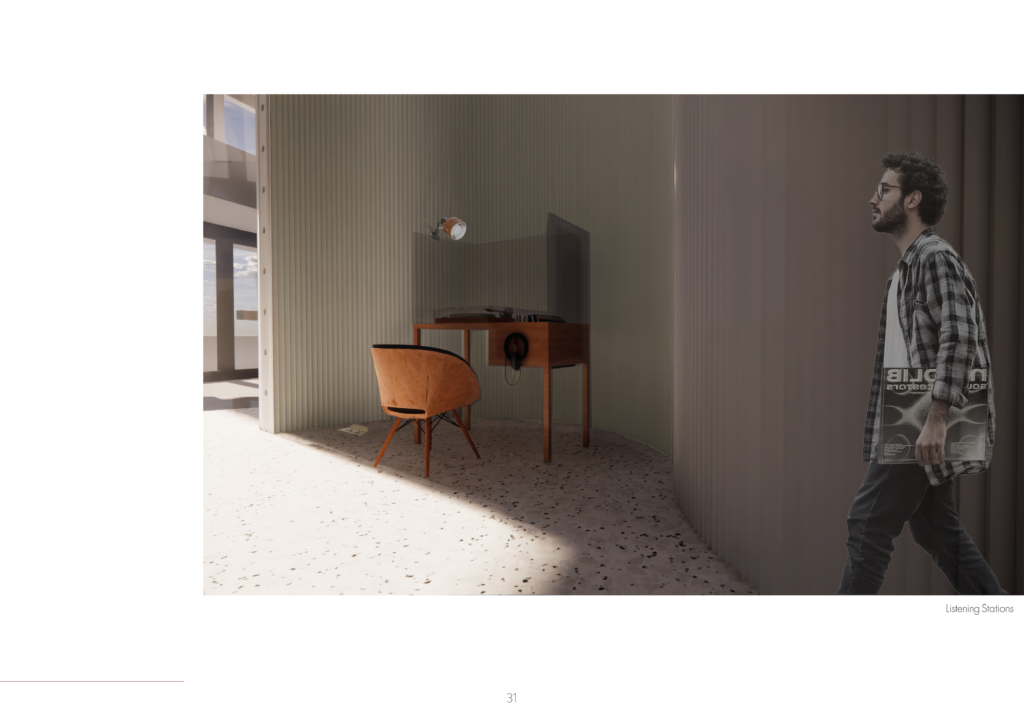
This area brings together a range of listening and social experiences; it is welcoming for all. It includes a vinyl library, a small listening room and a café/juice bar. Designed to be flexible, the space can shift in use, with folding walls allowing it to open up for events, exhibitions or large gatherings. Informal performance is encouraged throughout the space. A listening bar on the upper level and the listening room on the ground floor offer a more focused immersive experience. The flexibility of the space supports diverse uses, ensuring it remains active and inclusive.
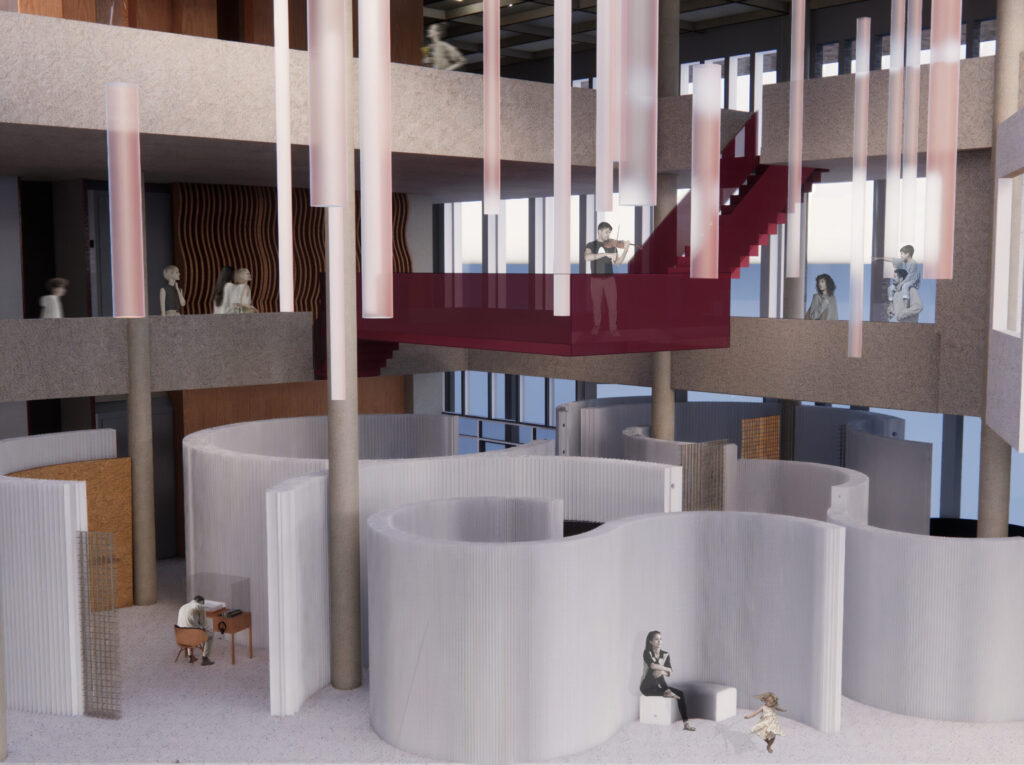
Flexibility
Vinyl Library
Where to Listen
Feeling Sound
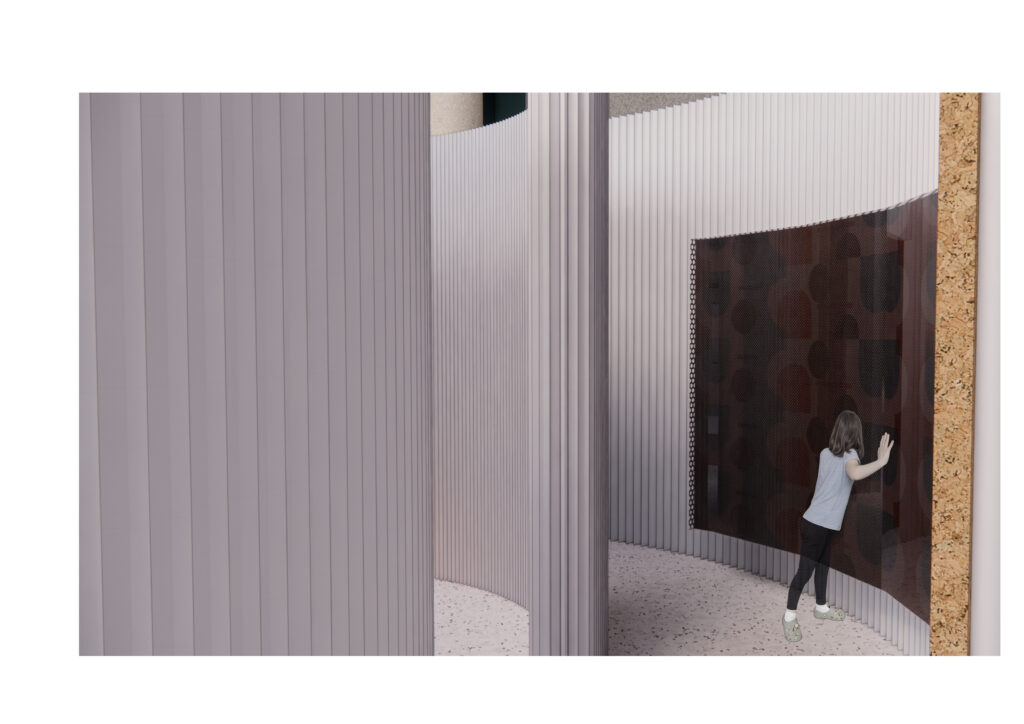
A small vibration wall allows sound to be experienced differently, producing something that can be felt through the body. This creates a more multi-sensory environment and offers alternative means of engaging with music. It also provides an engaging and playful feature for children, encouraging them to explore sound through touch. The intensity and pattern of the vibrations can be adjusted through a small control panel, allowing the experience to be tailored to different users and types of music.
A Place to refuel
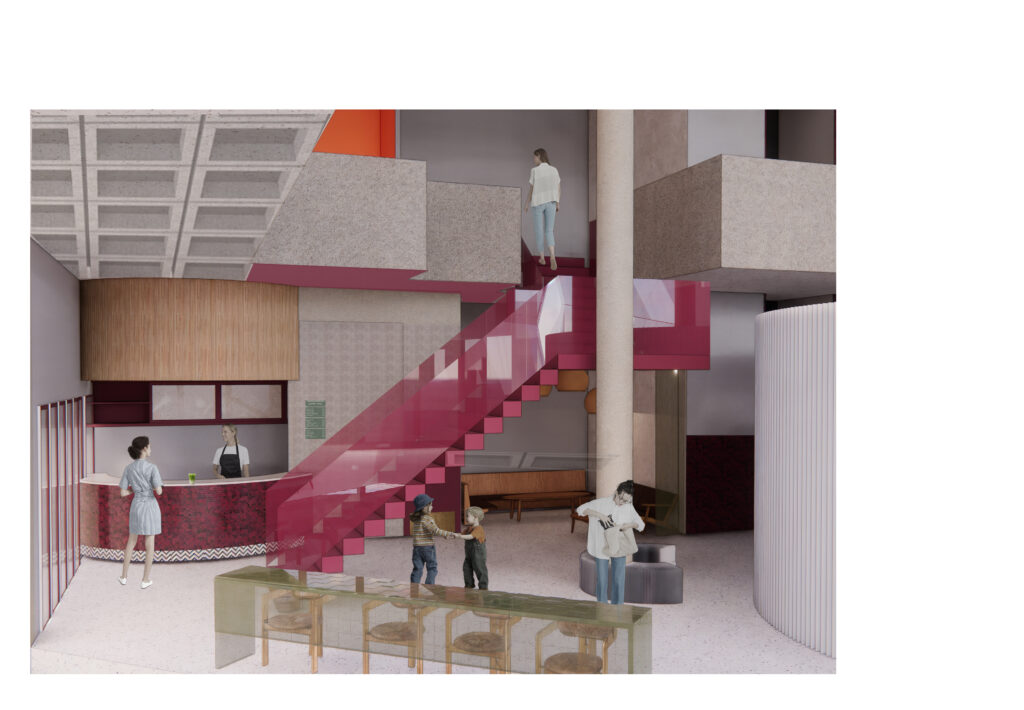
A ground-floor café and juice bar activate the base of the building, with a service hatch extending this into the courtyard, supporting outdoor engagement with music. Full-height curtain wall glazing runs along one side of the building façade, maintaining visibility to the outside and reinforcing the building’s openness.
A Place to Listen
A dedicated listening space for 6-8 people. Acoustically considered and deliberately intimate, the room encourages slow, attentive listening, reconnecting people with sound.
Every material within the room has been carefully selected to shape the acoustic experience. A lowered ceiling creates a more enclosed atmosphere, while wood wool panels line the walls to absorb and diffuse sound. Timber flooring introduces warmth and soft acoustic curtains can be drawn to further control the space.
Level 1 Floor Plan
The City Stage
Level 2 Floor Plan
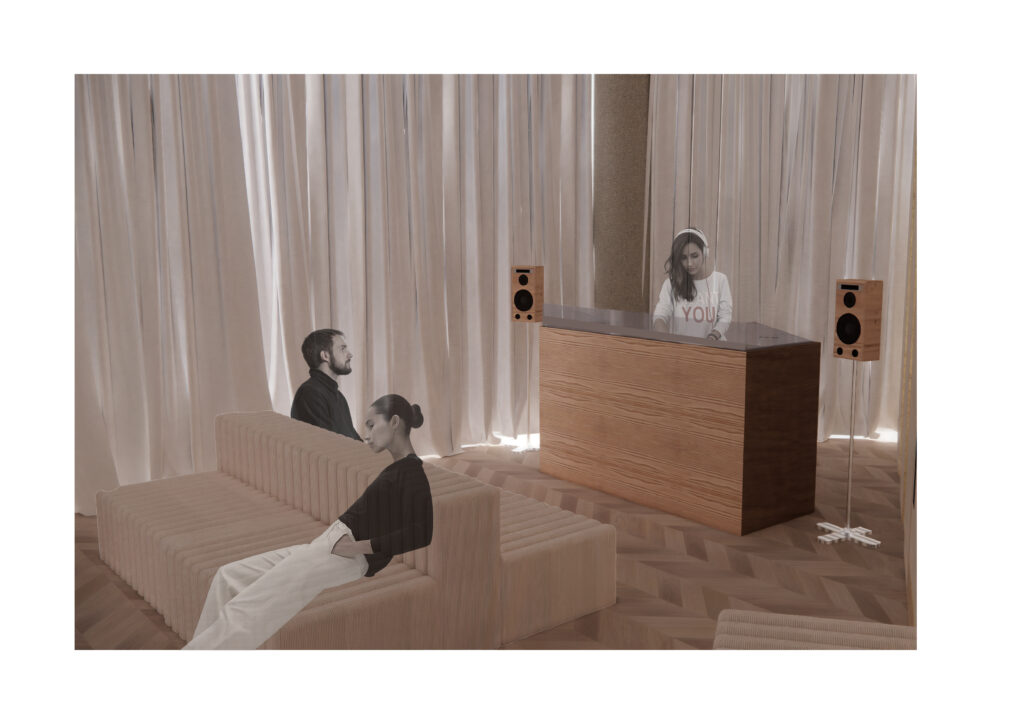
The Listening Bar
Where Sound is Given Time:
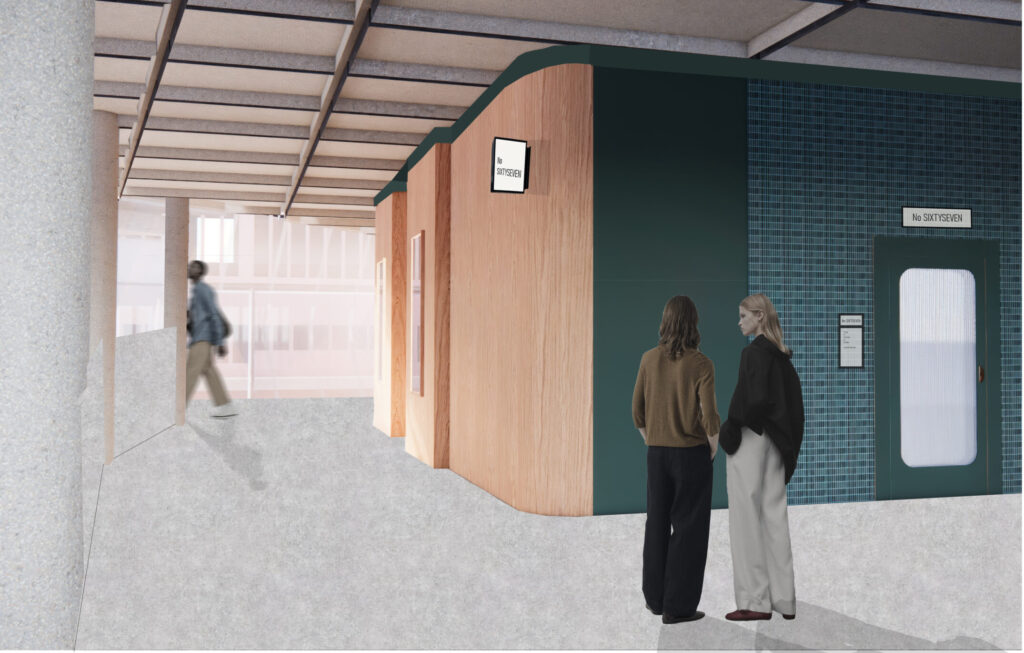
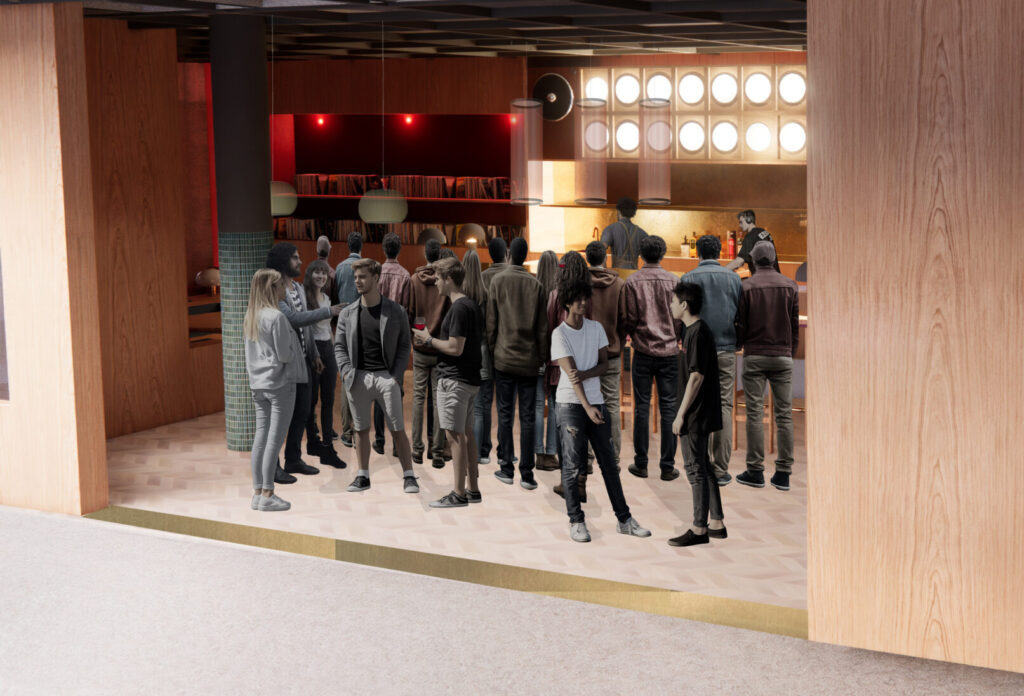
The listening bar is designed as a small, acoustically controlled space for focused, immersive listening. While typically intimate in scale, it can open out to accommodate larger events such as album launches, allowing activity to extend onto the mezzanine walkway. This enables people to gather, observe, and experience music beyond the confines of the room. Opening the space shifts the acoustic conditions, moving from a controlled listening environment to a more social acoustic environment. The adaptability of the space ensures longevity, allowing it to transition from day to night and between more intimate and collective moments.
The Listening Bar
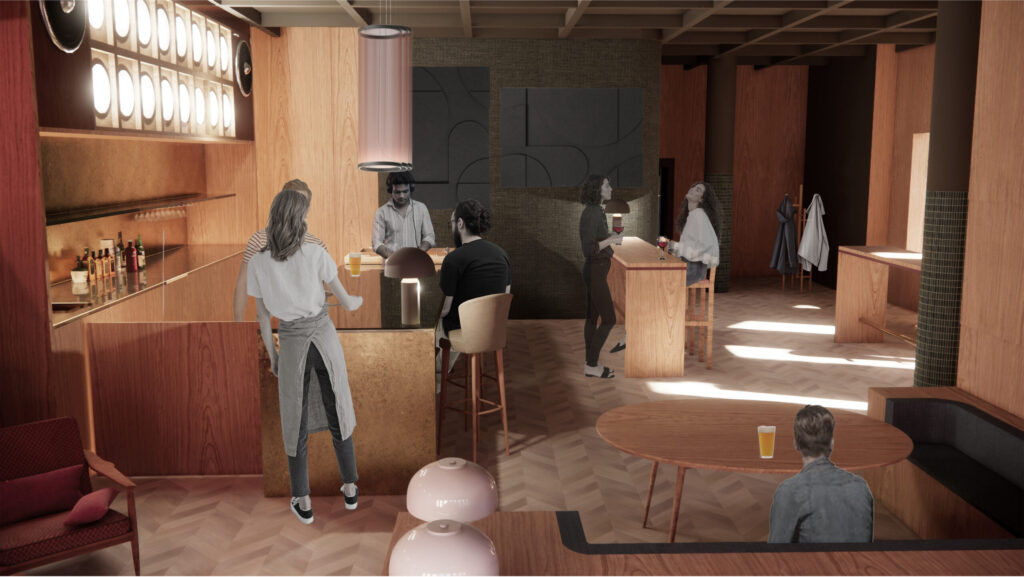
The first image looks towards the entrance. A built-in DJ booth is integrated into the bar itself, placing music at the centre of the space. The bar is designed to encourage people to gather, placing music at the centre of the space. The bar is designed to encourage people to gather, listen, and socialise, creating an environment where sound is given as much consideration as the food and drink on offer.
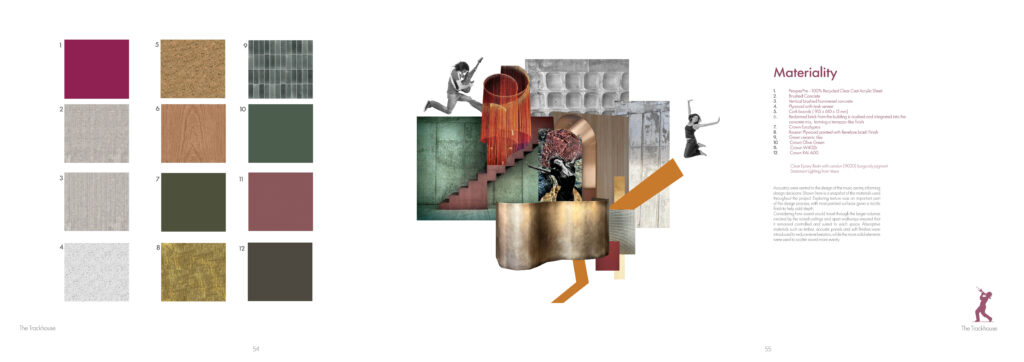
The material palette has been carefully selected to support the acoustic quality of the rooms. Timber, acoustic art panels and brass-finished plywood is used in place of solid metal surfaces, helping reduce reverberations while maintaining a warm and refined atmosphere.
The sound system is integrated around the room, with large speakers displayed behind the DJ, making it part of the design. A variety of seating, including high tables and more relaxed arrangements, allows visitors to enjoy views of the DJ while experiencing the music in a more focused yet social setting.
The second image looks at the back of the room.
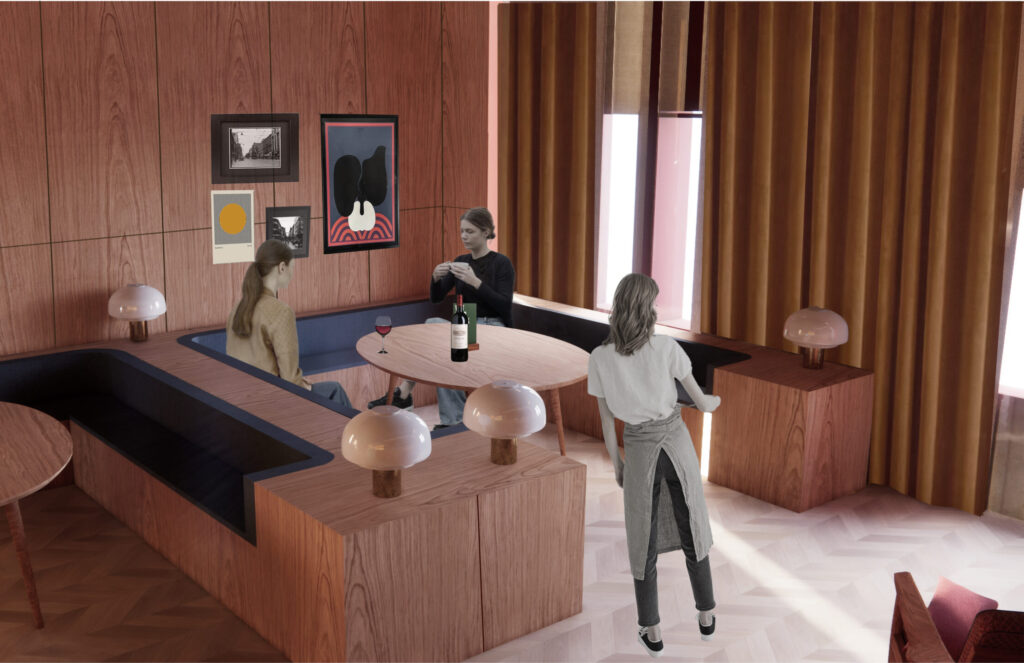
Banquette seating made from recycled timber runs around the back corner of the listening bar/ The gentle curved seating back is inspired by mid-century design. Integrated cupboards and under-seat access provide space for storage for the bar. Concealed wiring allows lighting and power to be neatly incorporated
The seating creates a relaxed and social setting, encouraging people to sit for extended periods while listening to music. Following the edges of the room, it helps maximise seating capacity. Upholstered cushions also introduce a softer surface, contributing to the acoustic quality of the room
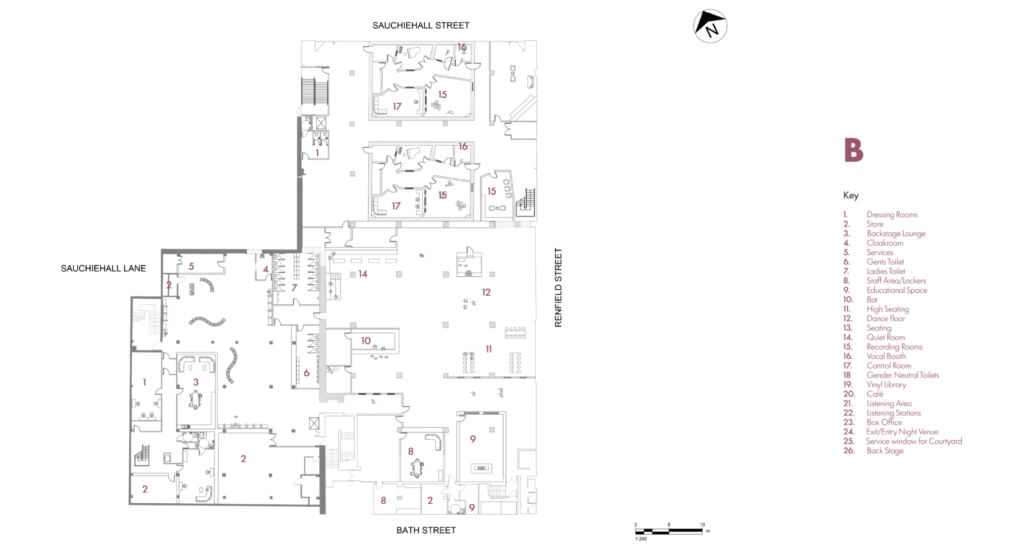
Basement Floor Plan
The Venue
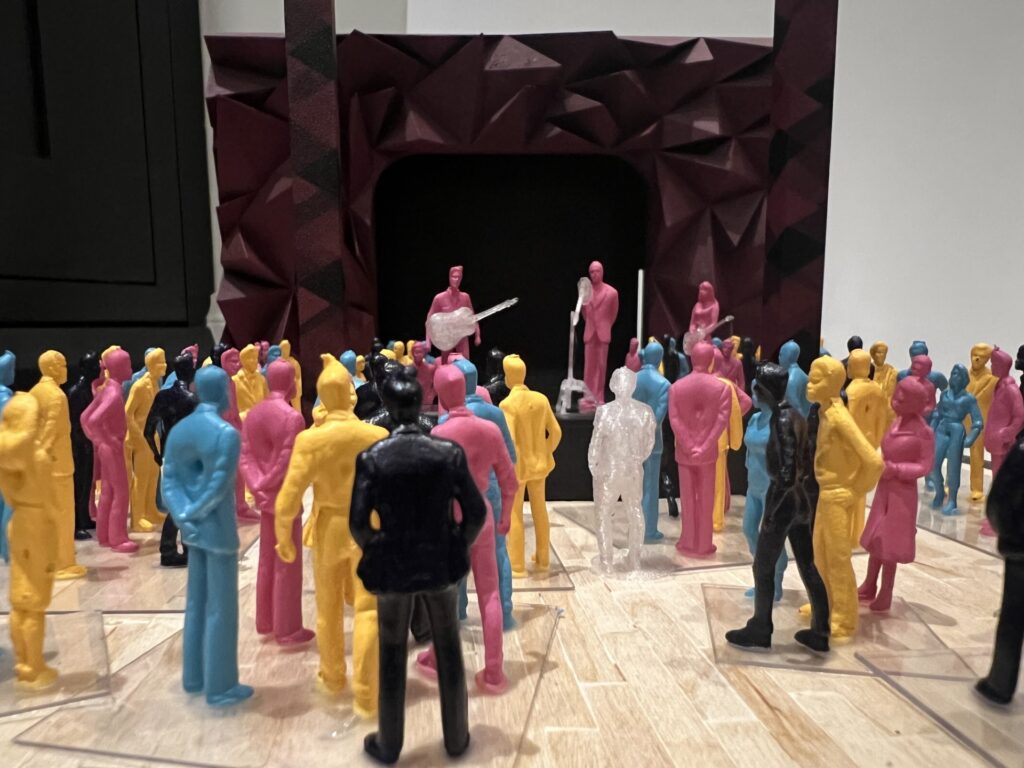
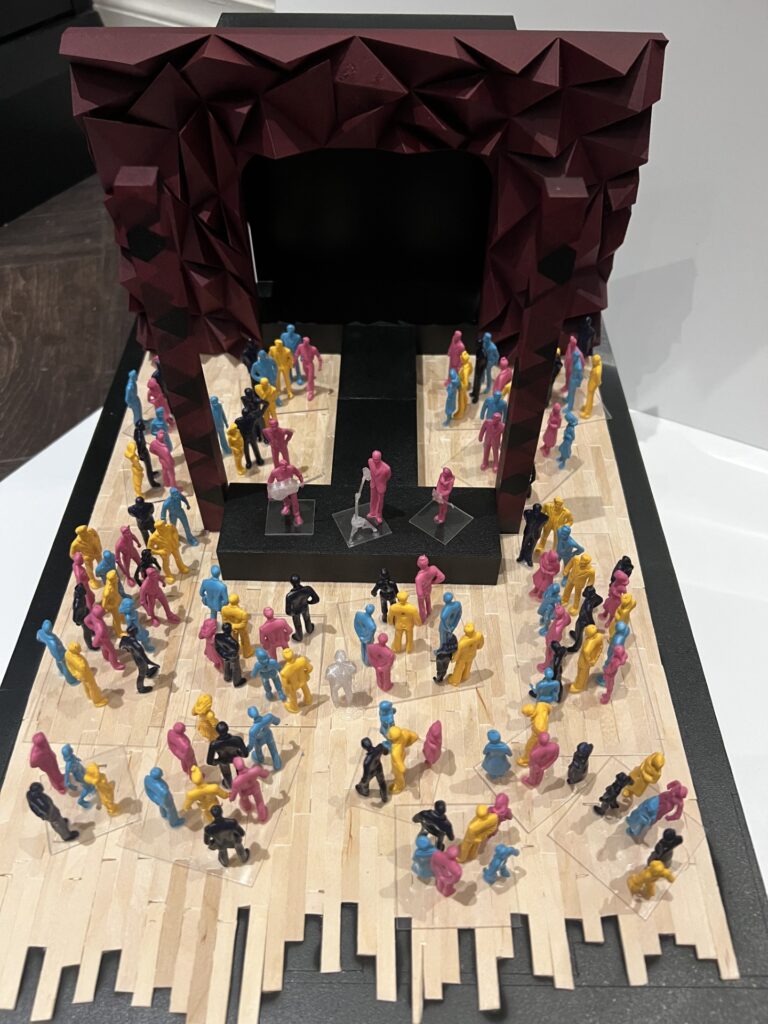
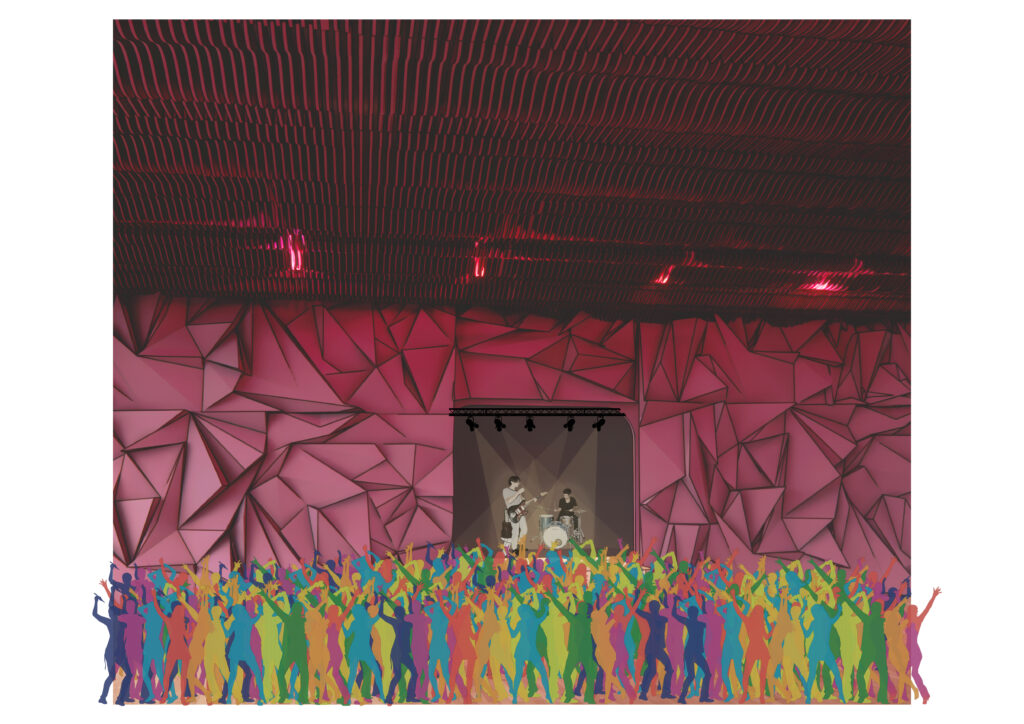
Performance is at the heart of the building. The venue accommodates approximately 450 people standing, with balcony capable of being closed off to create a smaller setting when required. This flexibility allows the space to operate effectively at a range of scales, ensuring it remains active and financially sustainable.
A modular stage system allows the performance area to expand or be reconfigured to suit different events, from live concerts to workshops and private functions. Above, variable ceiling panels can be raised or lowered in response to changing acoustics. In the view shown, the ceiling is lowered.
Beneath the centre of the floor, a sonic floor transmits low-frequency vibrations, enabling music to be felt through the body. This offers an alternative way of engaging with sound, particularly benefiting those with hearing impairments, reinforcing the project’s commitment to inclusive design.
Materiality
Models